MN 551 Advanced Pathophysiology Final Exam
A female neonate has been in respiratory distress since delivery and is unresponsive to
oxygen therapy. Endoscopy has confirmed a diagnosis of esophageal atresia and
tracheoe
...
MN 551 Advanced Pathophysiology Final Exam
A female neonate has been in respiratory distress since delivery and is unresponsive to
oxygen therapy. Endoscopy has confirmed a diagnosis of esophageal atresia and
tracheoesophageal fistula (EA/TEF). Which of the following explanations should the care
team provide to the infant's parents?
Question options:
“We will have to perform surgery to correct the hole in her throat to make sure that she normally.”
“This problem will require respiratory therapy and supplementary feeding, but it will likely “The biggest risk that will face your daughter until this is fixed is the danger of malnutrition “The priority in our immediate treatment prior to her surgery will be pain management, her lungs.”
Question 2
The father of an 18-month-old girl noticed a small vesicle on her face several days
ago. The lesion ruptured and left a straw-colored crust that remained on the girl's
face. The eruption of new vesicles has prompted him to bring the child to the emergency
department. Which of the following treatments for the child's skin problem is most
likely?
Question options:
A topical antifungal ointment
An oral corticosteroid
An antiviral ointment
A topical antibiotic
Question 3
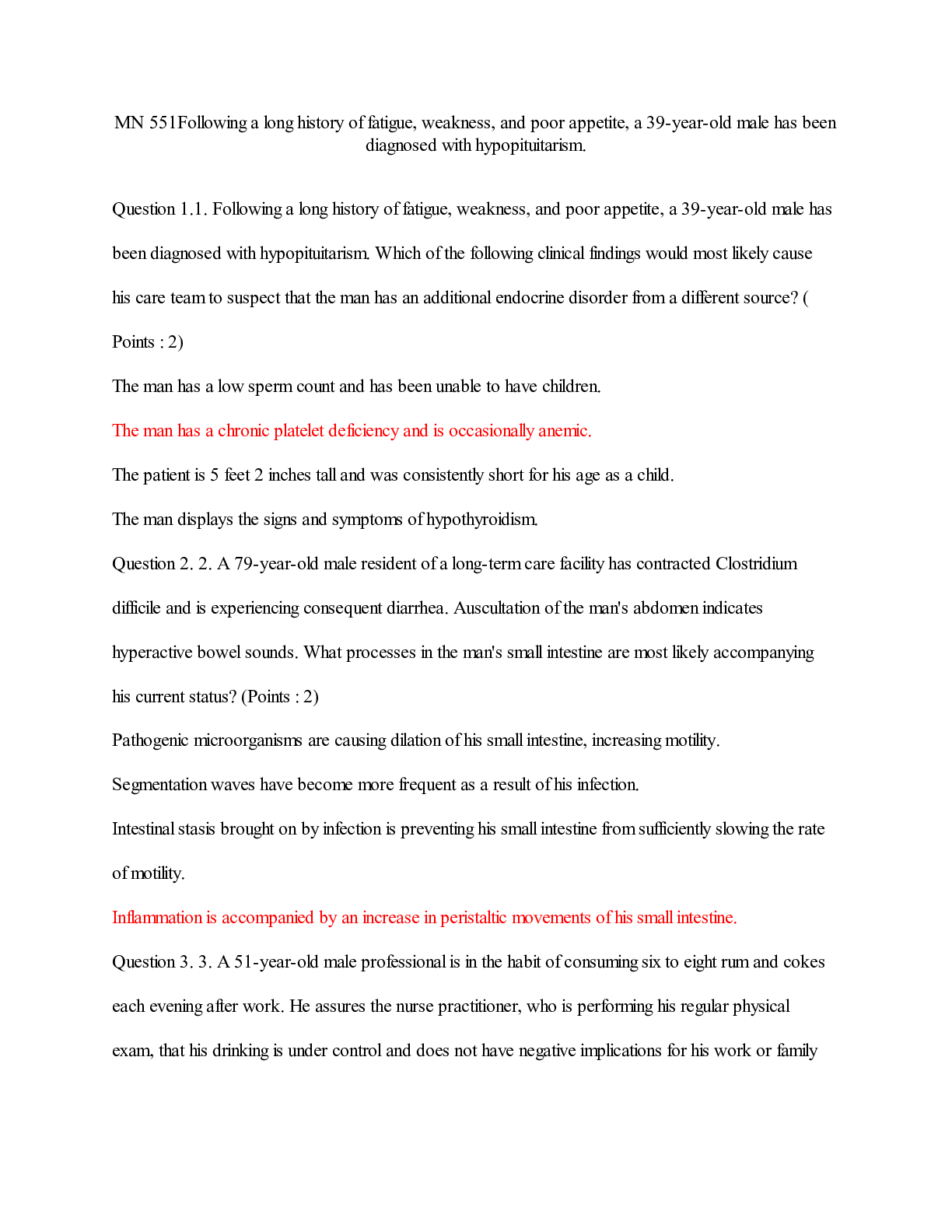
Following a long history of fatigue, weakness, and poor appetite, a 39-year-old male
has been diagnosed with hypopituitarism. Which of the following clinical findings would
most likely cause his care team to suspect that the man has an additional endocrine
disorder from a different source?
Question options:
The man has a low sperm count and has been unable to have children.
The man has a chronic platelet deficiency and is occasionally anemic.
The patient is 5 feet 2 inches tall and was consistently short for his age as a child.
The man displays the signs and symptoms of hypothyroidism.
Question 4
A 46-year-old male has presented to the emergency department because of the eye pain,
severe headache, and blurred vision that have followed an eye exam at an optometrist's
office earlier in the day. The patient tells the triage nurse that he received eyedrops
during the exam “to keep my pupils wide open.” What differential diagnosis will the
care team first suspect?
Question options:
Infectious conjunctivitis
Keratitis
Corneal trauma
Angle-closure glaucoma
Question 5
A nurse practitioner is providing care for a 40-year-old male who is experiencing
chronic insomnia in recent months while going through a divorce and child custody
proceedings. The man is requesting a prescription for “sleeping pills” to help him
through this time. Which of the following statements forms a valid basis for the nurse
practitioner's plan for treatment?
Question options:
Sedative and hypnotic drugs will not provide safe relief of the man's health problem.
The man is suffering from primary insomnia.
Melatonin supplements will be the safest and most effective long-term pharmacological treatment.
Behavioral therapies, counseling, and education may be of some use to the patient.
Question 6
A 24-year-old woman undergoing a premarital screening test is found to have elevated
levels of AST, ALT, and IgG, but no antibody-specific markers for viral hepatitis. A
liver biopsy reveals inflammation and cellular damage. Which of the following
treatments is most likely to be effective for her?
Question options:
Lamivudine
Peginterferon and ribavirin
Interferon-alfa-2b
Corticosteroids and immunosuppressant drugs
Question 7
A 51-year-old woman who has been receiving estrogen and progesterone therapy (EPT) for
the last 5 years has visited her care provider because her peers have told her about
the risks of heart disease, stroke, and breast cancer that could accompany hormone
therapy (HT). How should her care provider respond to her concerns?
Question options:
“There is a demonstrable increase in breast cancer risk with HT, but the risk of stroke slightly.”
“All things considered, the benefits of HT outweigh the slightly increased risks of heart “HT is actually associated with a decrease in heart disease risk, but there is an increase connection is still unclear.”
“There's in fact a slight protective effect against stroke associated with HT, but this heart disease and breast cancer.”
.................Continued..............
[Show More]