Philosophy > EXAM > PHIL 347Week 6 Checkpoint new questions and answer exam 2021 (All)
PHIL 347Week 6 Checkpoint new questions and answer exam 2021
Document Content and Description Below
Last updated: 3 years ago
Preview 1 out of 5 pages
Instant download
.png)
Buy this Document to get the Full Access Instantly
Provided by Students Who Aced it
We Verify Document Content to Gurantee Accuracy
Reviews( 0 )
Document information
Connected school, study & course
About the document
Uploaded On
Feb 16, 2021
Number of pages
5
Written in
All

Additional information
This document has been written for:
Uploaded
Feb 16, 2021
Downloads
0
Views
174
Topic Tags
Related Subjects & Courses
Explore similar study resources and related concepts.
Recommended For You
Get more on EXAM »
CSTU 100 Quiz 7 Liberty University | Contains 30 Questions and...

PHI 2000 Introduction to Ethics Final Exam Sophia Course/PHI 2...
PHI 105 Topic 4 Quiz: Fallacies In Everyday Life Quiz (Latest...
PSI Cosmetology Practice Test 100 questions (and correct answe...
PHIl Ethics_ Sophia final Milestone, Latest 2020/2020, Complet...
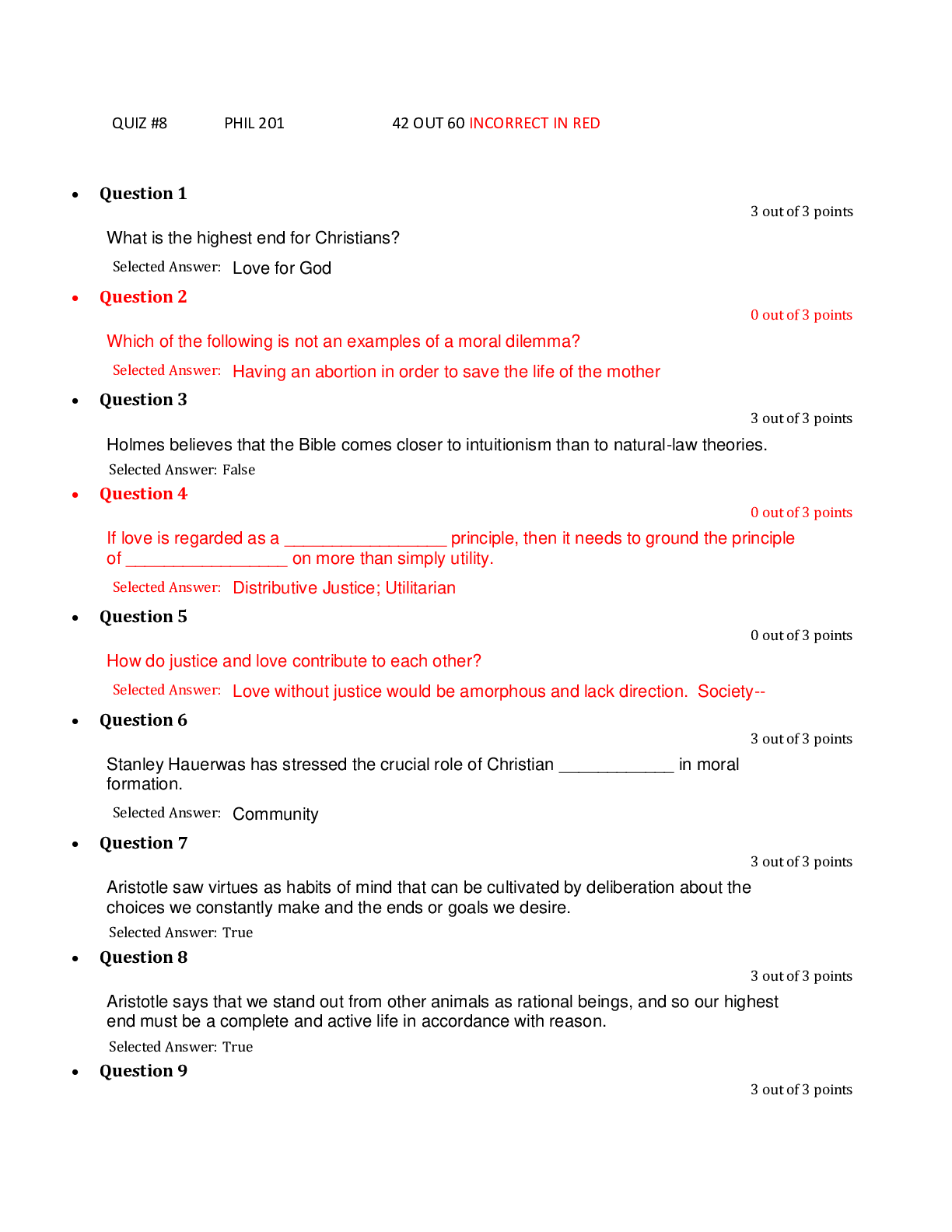
West Georgia Technical College - PHILOSOPHY 201 QUIZ 8 > PHIL...
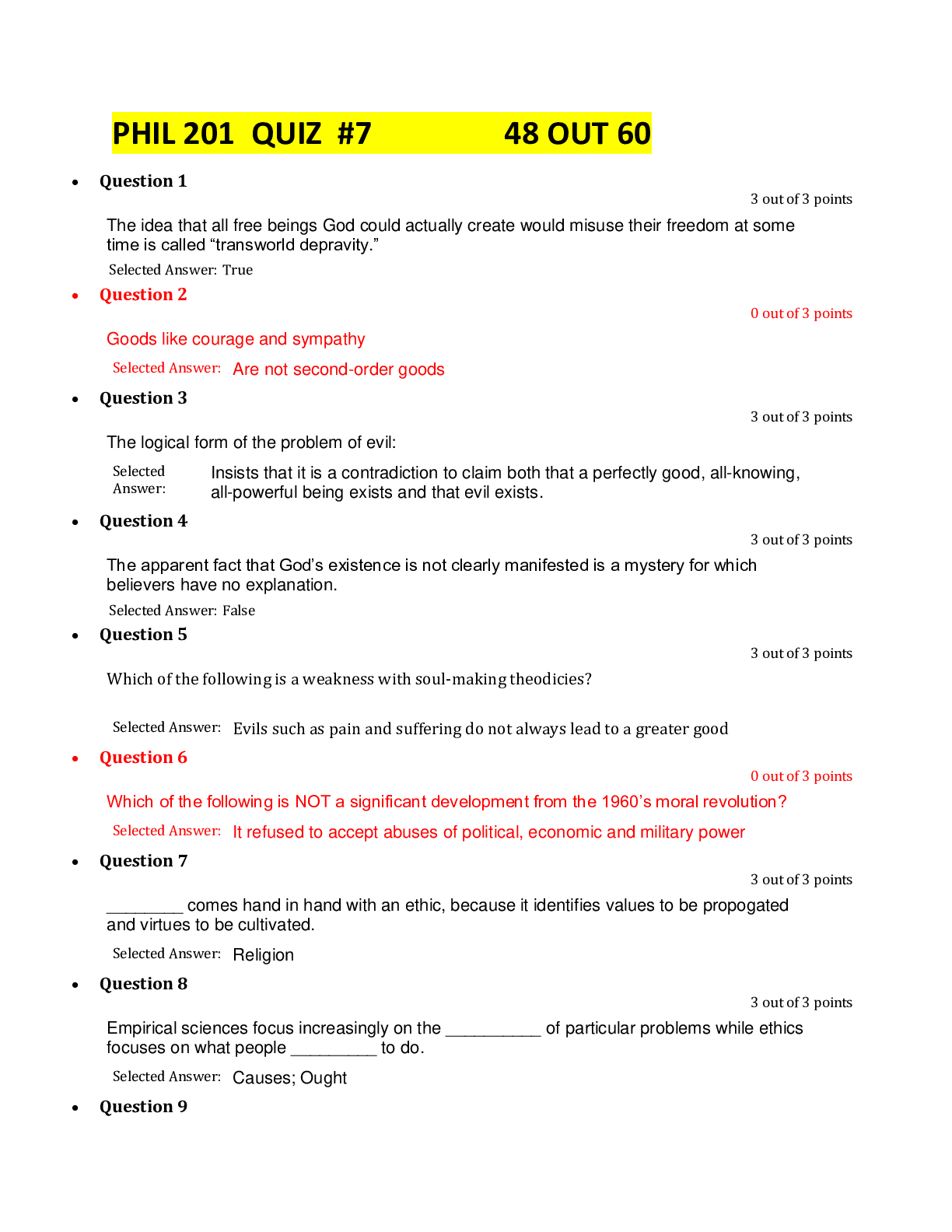
State University Of West Georgia > PHILOSOPHY 201 : PHIL 201...

West Georgia Technical College - PHILOSOPHY 201 > Quiz #5 -PHI...

West Georgia Technical College - PHILOSOPHY 201 : PHIL 201 Qui...

Liberty University Online Academy - PHIL 201 Test 3 Questions...

West Georgia Technical College - PHILOSOPHY 201 > QUIZ 3 Lates...

West Georgia Technical College - PHILOSOPHY 201 > 2019 Latest...