Philosophy > EXAM > PHIL 347 Critical Thinking Week Two Checkpoint Quiz GRADED 2021 score 50/50 points (All)
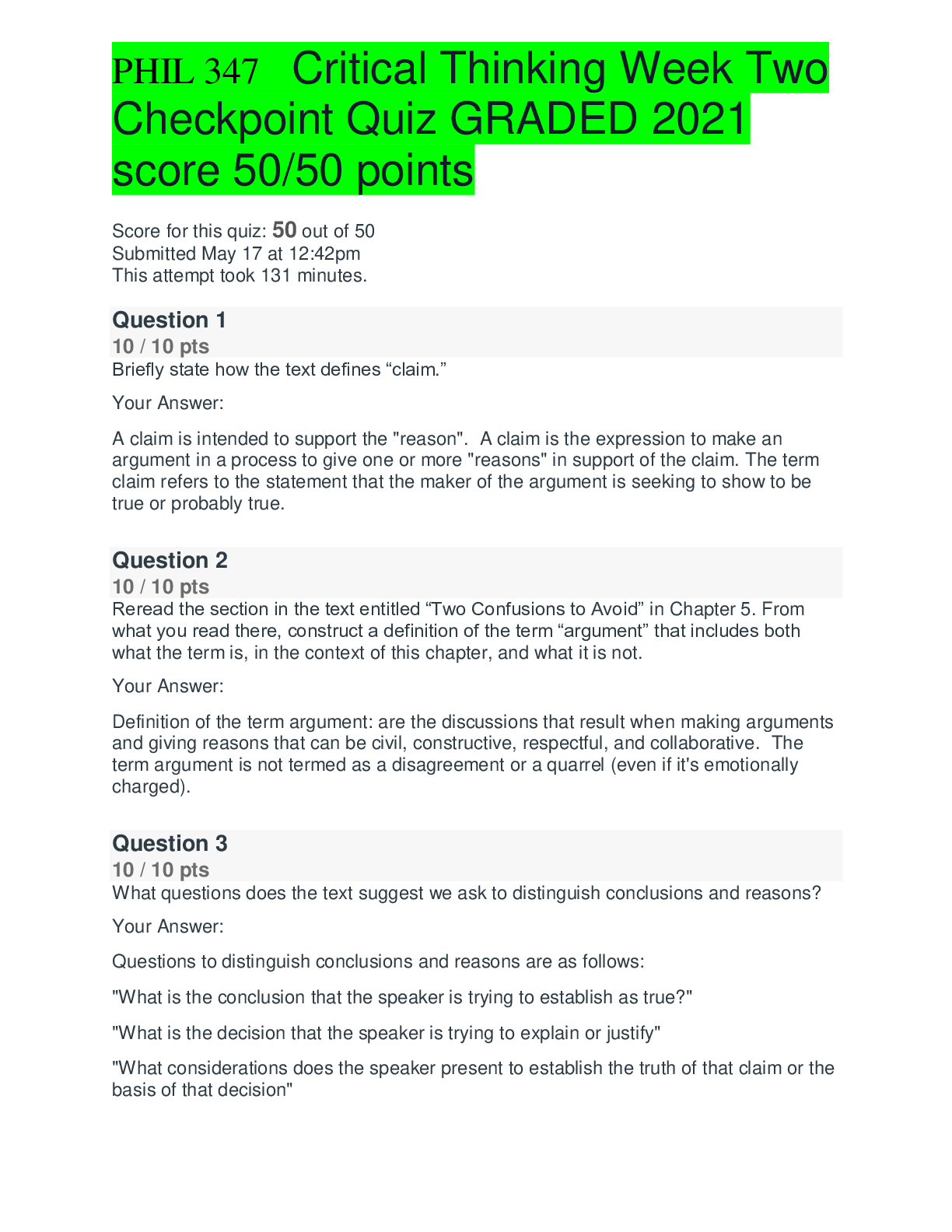
PHIL 347 Critical Thinking Week Two Checkpoint Quiz GRADED 2021 score 50/50 points
Document Content and Description Below
Last updated: 3 years ago
Preview 1 out of 2 pages
Instant download
Buy this Document to get the Full Access Instantly
Provided by Students Who Aced it
We Verify Document Content to Gurantee Accuracy
Reviews( 0 )
Document information
Connected school, study & course
About the document
Uploaded On
Feb 16, 2021
Number of pages
2
Written in
All

Additional information
This document has been written for:
Uploaded
Feb 16, 2021
Downloads
0
Views
137
Topic Tags
Related Subjects & Courses
Explore similar study resources and related concepts.
Recommended For You
Get more on EXAM »
PHIL 347N Final Exam (Retired) PHIL 347 Critical Reasoning -...
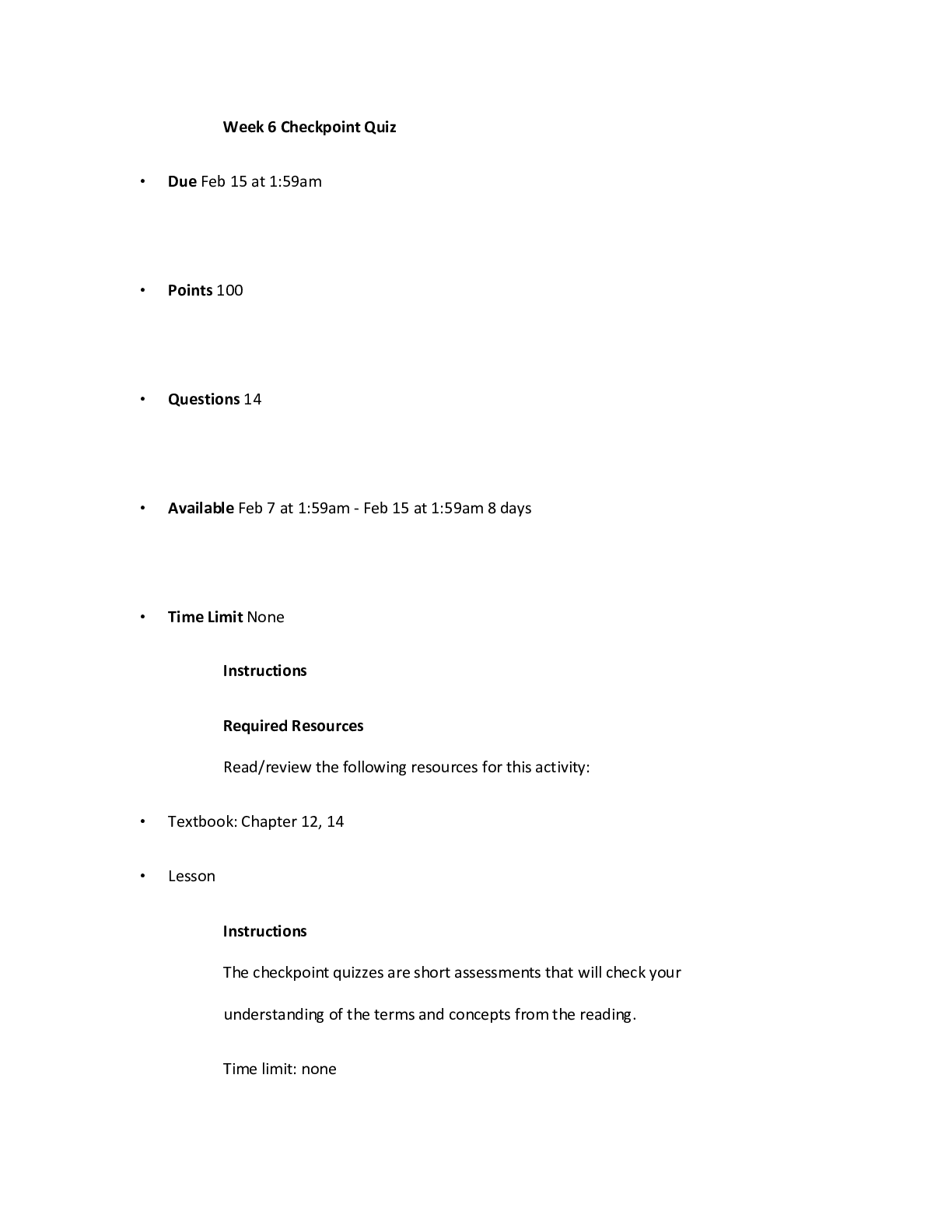
PHIL 347 Week 6 Checkpoint Quiz PHIL 347 Critical Reasoning -...


PHIL 347N Final Exam updated 2025 PHIL347 Critical Reasoning

PHIL 347N Week 3 Checkpoint Quiz tested exam solution 2021

PHIL 347 Final exam Quiz | Complete Solution Updated Fall 2024...

PHIL 347N Week 4 Assignment: Deductive Reasoning Worksheet, At...

PHIL 347 Week 4 Homework Assignment | Attempt Score 60 out of...


PHIL 347 Week 4 Checkpoint_100% Answers and Explanations.

week_4_journal2.docx Chamberlain University PHIL347:Criti...

week_2_journal.docx (1) Chamberlain University PHIL347:Cr...

PHI 2000 Introduction to Ethics Final Exam Sophia Course/PHI 2...

Liberty University PHIL 201 quiz 1 complete solutions correct...
Test Bank for Archetypes of Wisdom An Introduction to Philosop...

Our Origins Discovering Physical Anthropology 4th Edition By C...