Health Care > EXAM > NSG 526 EXAM 2 QUESTIONS 2023 SOLVED 100% CORRECT (All)
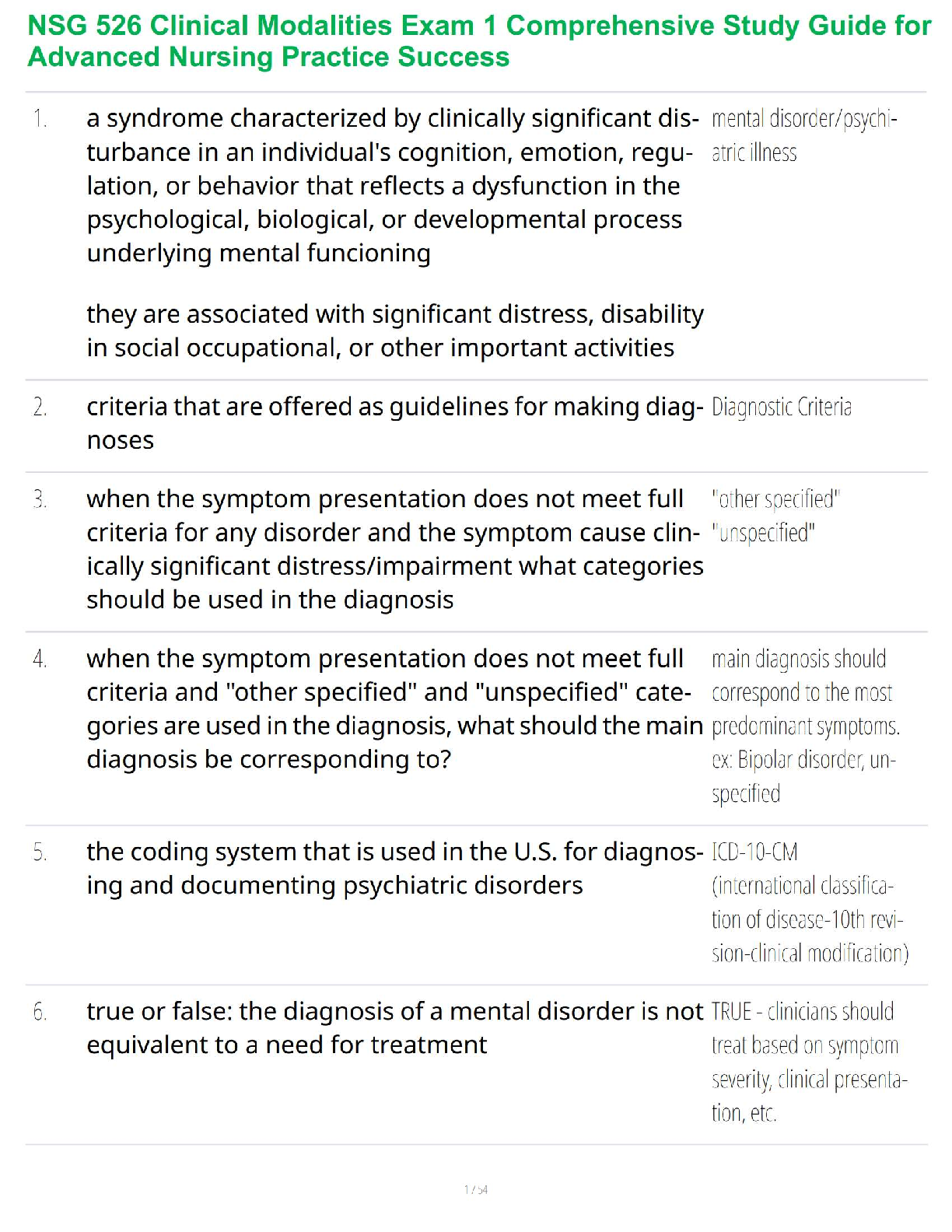
NSG 526 EXAM 2 QUESTIONS 2023 SOLVED 100% CORRECT
Document Content and Description Below
Last updated: 3 years ago
Preview 1 out of 31 pages
Instant download
Buy this Document to get the Full Access Instantly
Provided by Students Who Aced it
We Verify Document Content to Gurantee Accuracy
Reviews( 0 )
Document information
Connected school, study & course
About the document
Uploaded On
Aug 16, 2023
Number of pages
31
Written in
All

Additional information
This document has been written for:
Uploaded
Aug 16, 2023
Downloads
0
Views
123
Topic Tags
Related Subjects & Courses
Explore similar study resources and related concepts.
Recommended For You
Get more on EXAM »
CMS - Certified Sommelier Exam / WSET Advanced Exam 2024/25 So...
PSI Life Insurance Exam Questions And Answers - Solved 100% 2...
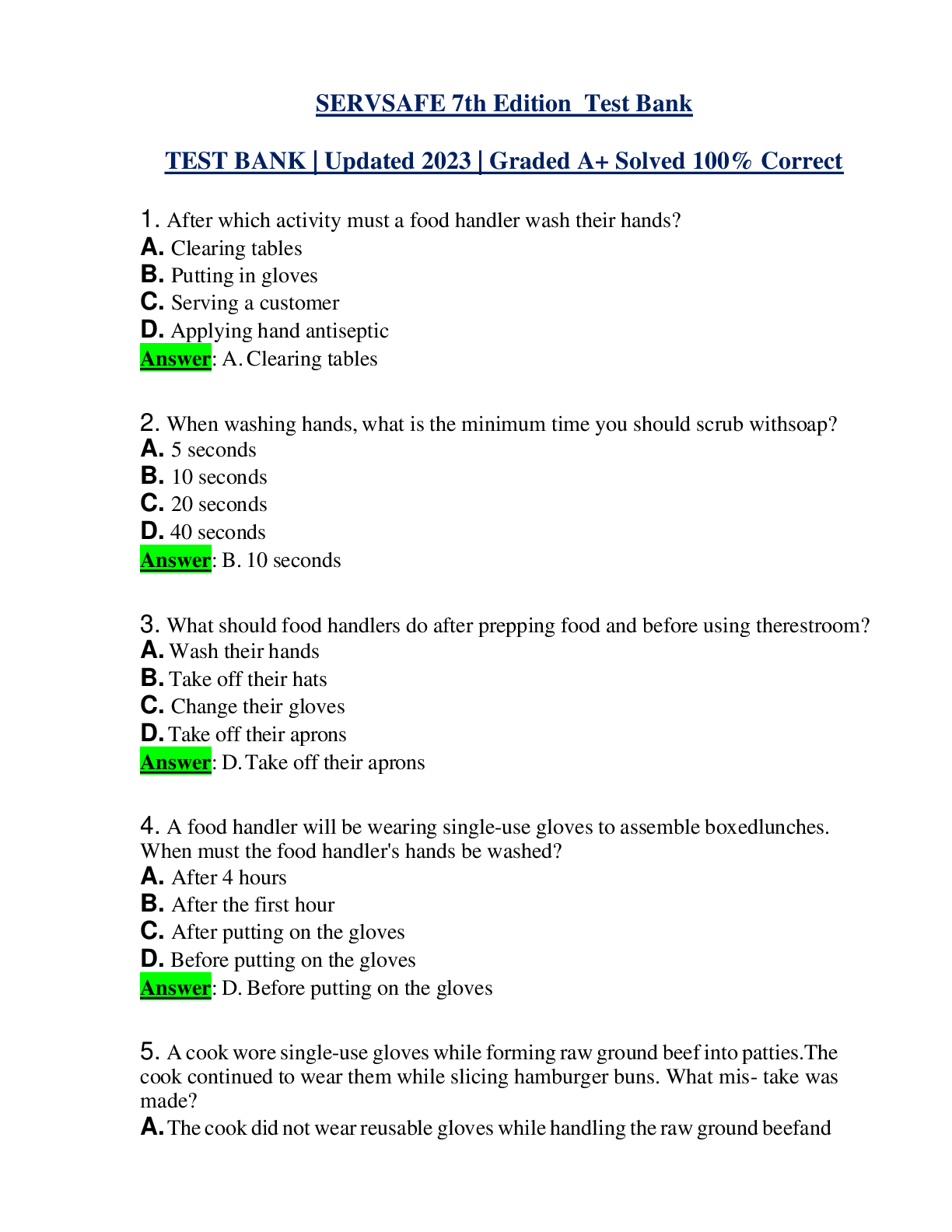
SERVSAFE-7th-Edition-Test-Bank | Updated 2023 | Graded A+ Solv...

Bloomberg market concepts test, solved 100%; distinction solut...
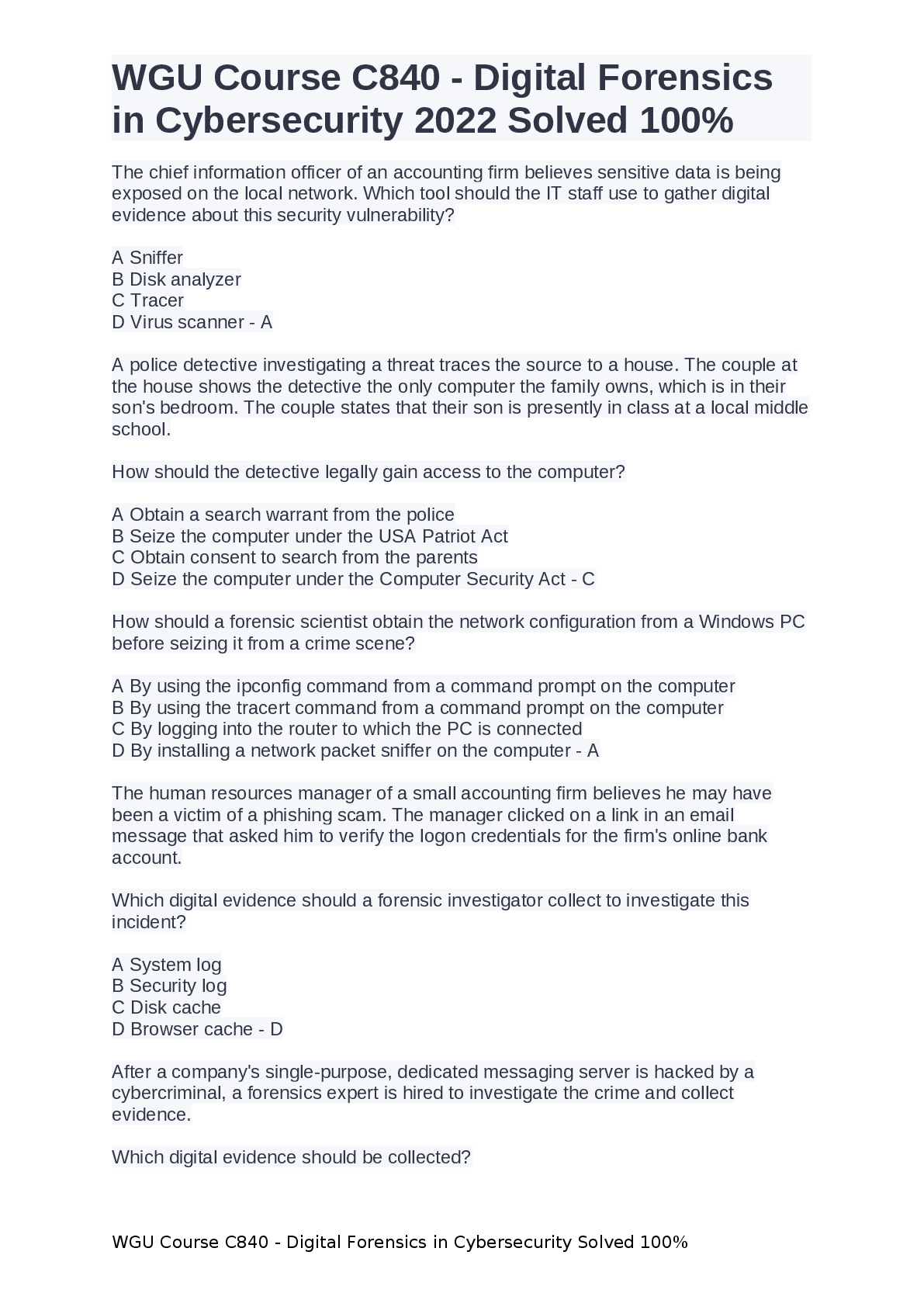
WGU Course C840 - Digital Forensics in Cybersecurity Solved 10...
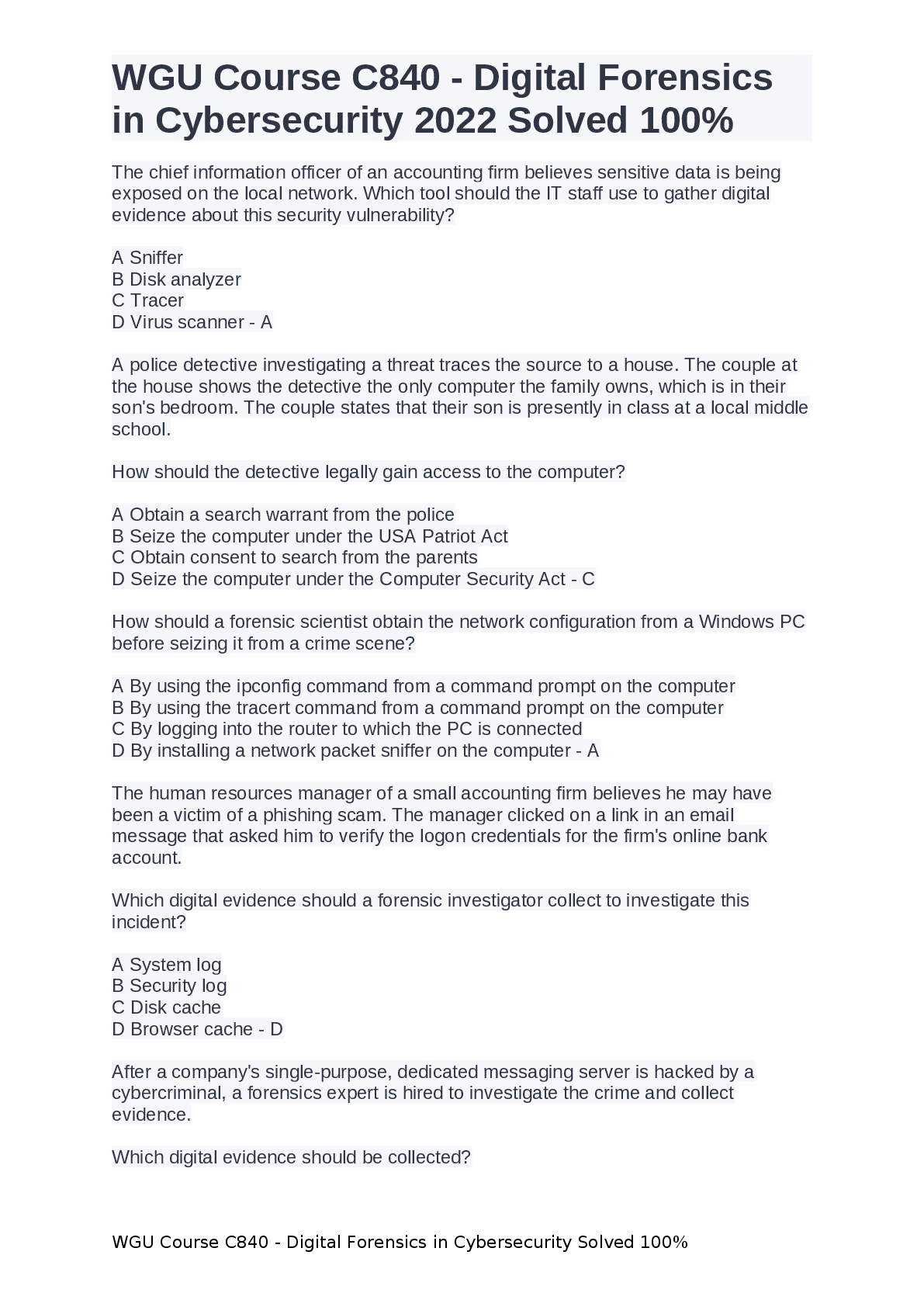
WGU Course C840 - Digital Forensics in Cybersecurity Solved 10...
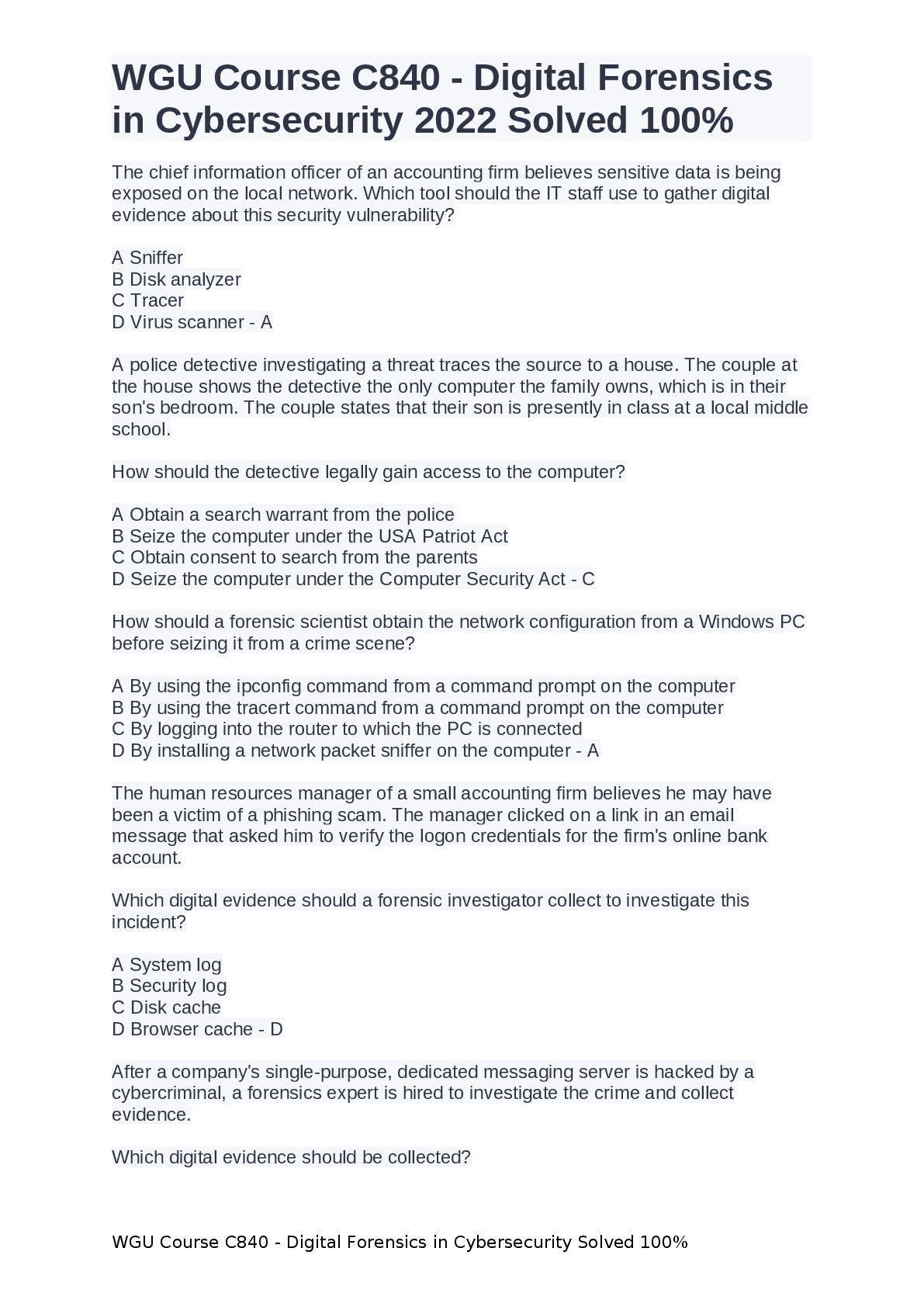
WGU Course C840 - Digital Forensics in Cybersecurity Solved 10...
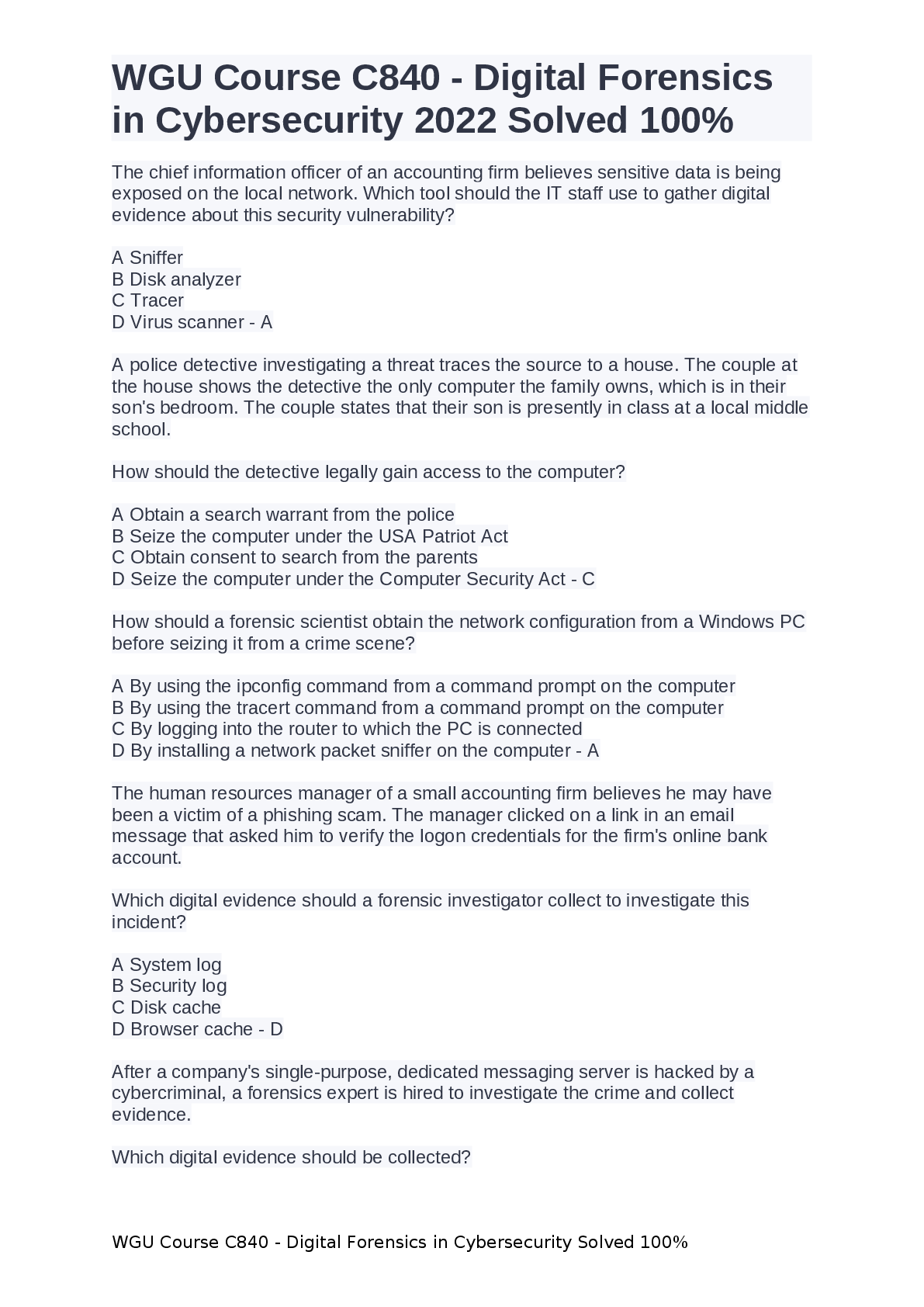
WGU Course C840 - Digital Forensics in Cybersecurity Solved 10...

CNL Certification Exam Test Bank. (Solved 100%). Clinical Nur...