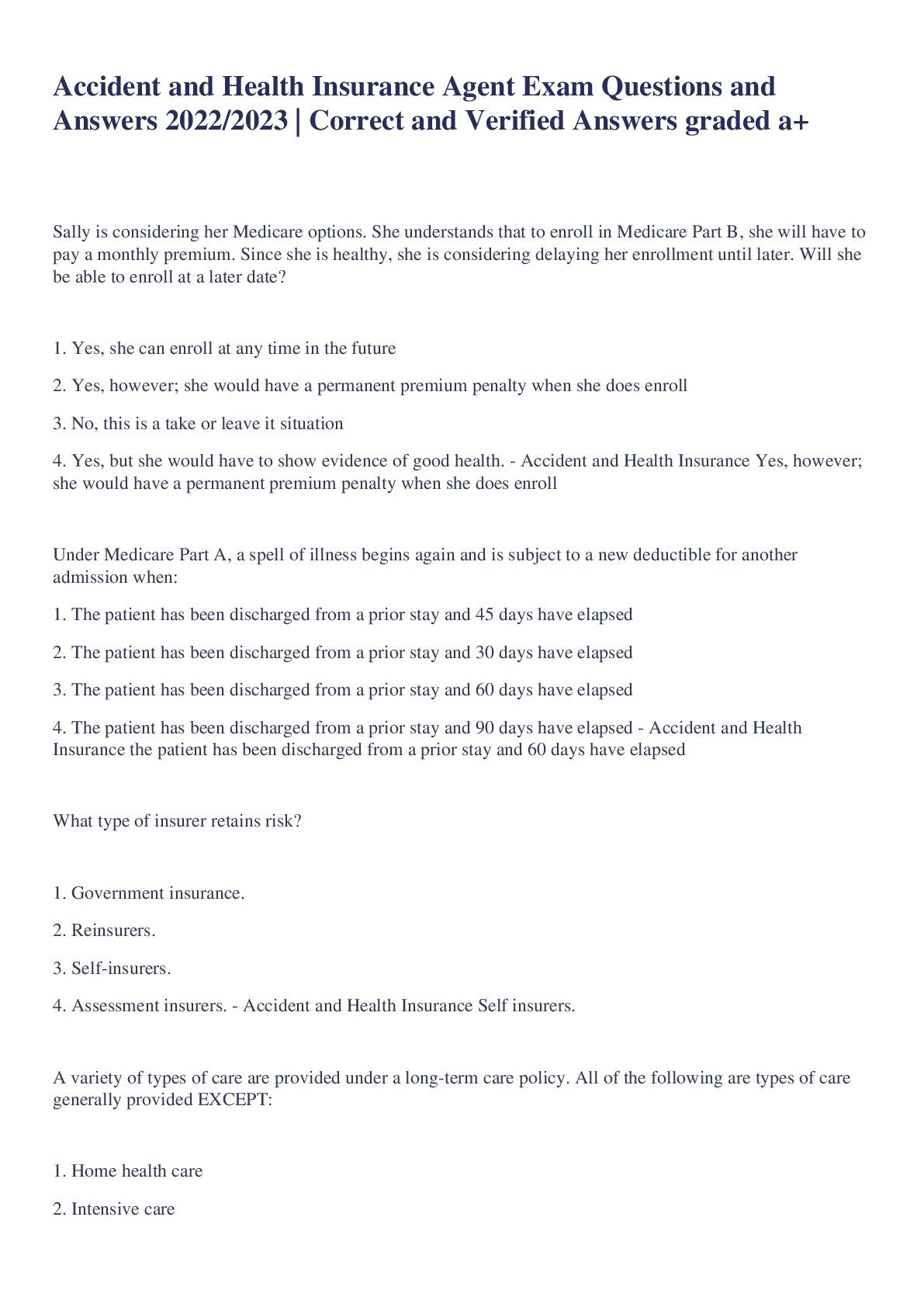
healthcare > QUESTIONS and ANSWERS > DEMENTIA CARE – MAKING A DIFFERENCE: WORK BOOK HCA202 - HEALING 2: CARING FOR INDIVIDUALS EXPERIE (All)
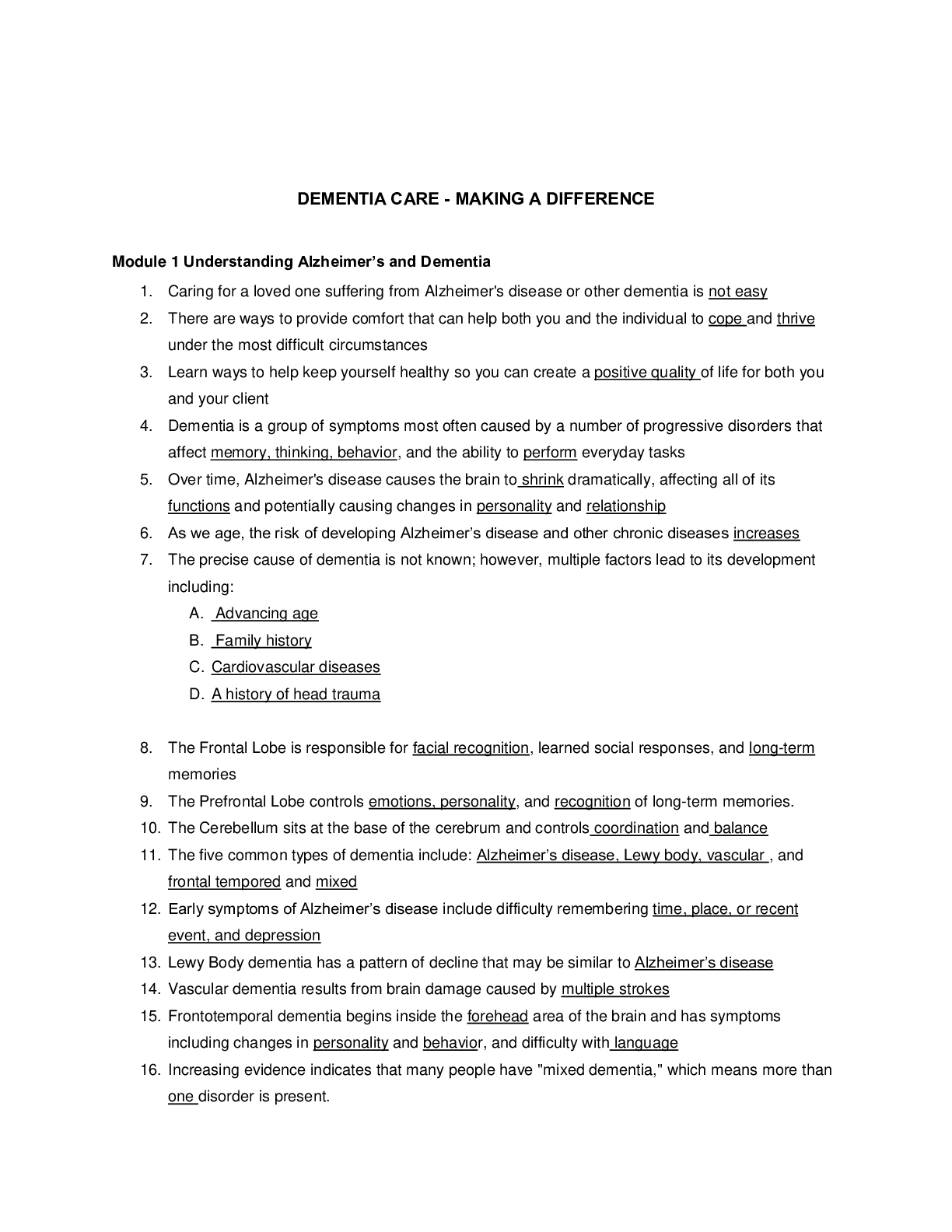
DEMENTIA CARE – MAKING A DIFFERENCE: WORK BOOK HCA202 - HEALING 2: CARING FOR INDIVIDUALS EXPERIENCING COGNITIVE CHALLENGES GRADED A+
Document Content and Description Below
Last updated: 3 years ago
Preview 1 out of 8 pages
Instant download
Buy this Document to get the Full Access Instantly
Provided by Students Who Aced it
We Verify Document Content to Gurantee Accuracy
Reviews( 0 )
Document information
Connected school, study & course
About the document
Uploaded On
Aug 21, 2023
Number of pages
8
Written in
All

Additional information
This document has been written for:
Uploaded
Aug 21, 2023
Downloads
0
Views
137
Topic Tags
Recommended For You
Get more on QUESTIONS and ANSWERS »
eBook Research Methods in Kinesiology and the Health Sciences...

TEST BANK FOR Health Informatics An Interprofessional Approach...
Solution Manual For DHO Health Science, 9th Student Edition 9t...
Healthcare Professions / Roles, Education & Work Environments...

Principles of Healthcare Reimbursement and Revenue Cycle 8th E...

TEST BANK for Human Resources in Healthcare: Managing for Succ...
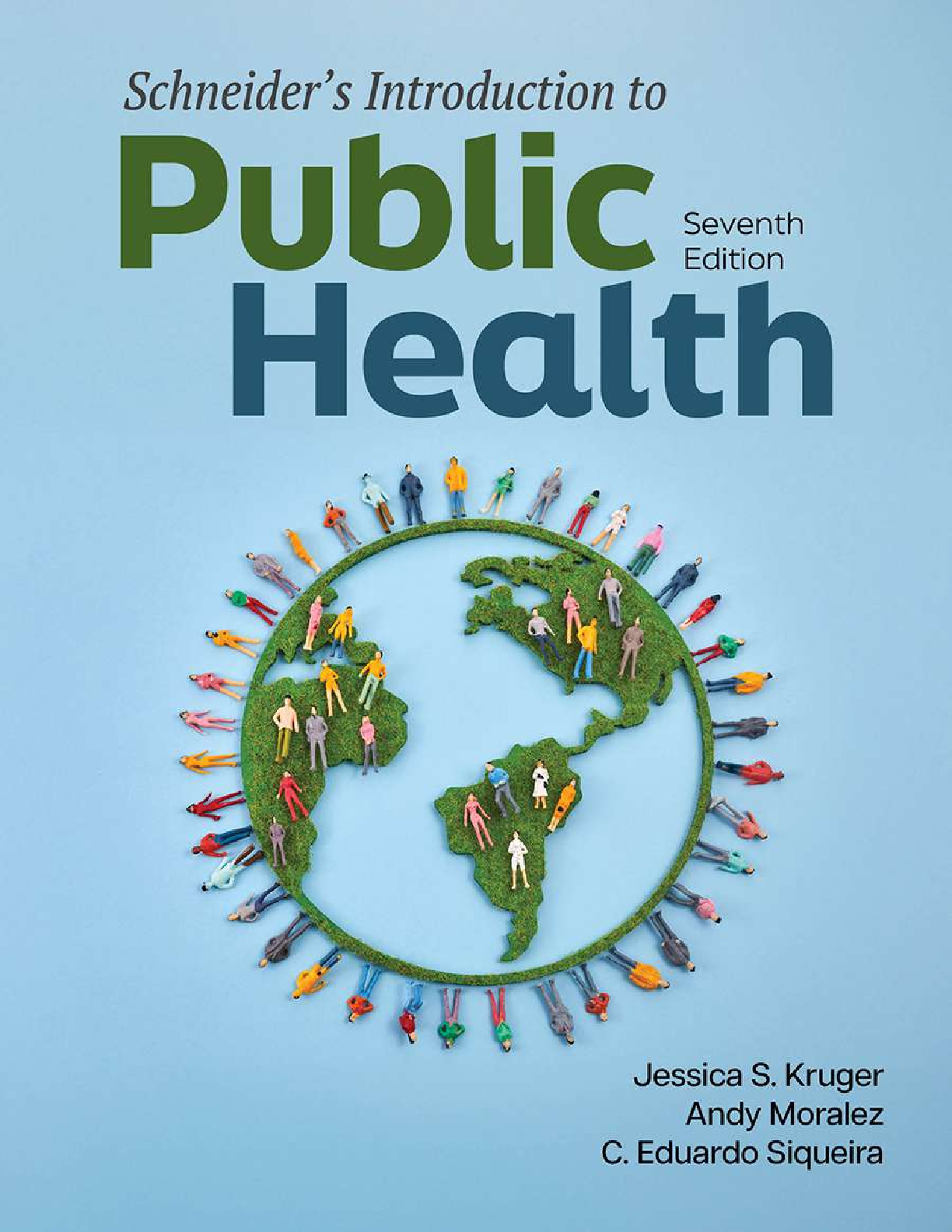
EPUB Schneider’s Introduction to Public Health 7th Edition By...