UNIT I: The Cell
Chapter 01: Cellular Biology 4
Chapter 02: Altered Cellular and Tissue Biology: Environmental Agents 18
Chapter 03: The Cellular Environment: Fluids and Electrolytes, Acids and Bases 31
UNIT II: Gene
...
UNIT I: The Cell
Chapter 01: Cellular Biology 4
Chapter 02: Altered Cellular and Tissue Biology: Environmental Agents 18
Chapter 03: The Cellular Environment: Fluids and Electrolytes, Acids and Bases 31
UNIT II: Gene and Gene Environment interaction
Chapter 04: Genes and Genetic Diseases 44
Chapter 05: Genes, Environment-Lifestyle, and Common Diseases 55
Chapter 06: Epigenetics and Disease 63
UNIT III: Mechanisms of Self-defence
Chapter 07: Innate Immunity: Inflammation and Wound Healing 68
Chapter 08: Adaptive Immunity 83
Chapter 09: Alterations in Immunity and Inflammation 95
Chapter 10: Infections 108
Chapter 11: Stress and Disease 117
UNIT IV:Cellular proliferation: Cancer
Chapter 12: Cancer Biology 124
Chapter 13: Cancer Epidemiology 137
Chapter 14: Cancer in Children 143
UNIT V: The Neurologic System
Chapter 15: Structure and Function of the Neurologic System 148
Chapter 16: Pain, Temperature Regulation, Sleep, and Sensory Function 159
Chapter 17: Alterations in Cognitive Systems, Cerebral Hemodynamics, and Motor Function 174
Chapter 18: Disorders of the Central and Peripheral Nervous Systems and the Neuromuscular Junction
.................................................................................................................................................................. 188
Chapter 19: Neurobiology of Schizophrenia, Mood Disorders, and Anxiety Disorders 199
Chapter 20: Alterations of Neurologic Function in Children 206
UUNIT VI: The Endocrine System
Chapter 21: Mechanisms of Hormonal Regulation 213
Chapter 22: Alterations of Hormonal Regulation 222
>Chapter 23: Obesity and Stavationand Anorexia of Aging 234
UNIT VII: The Reproductive System
Chapter 24: Structure and Function of the Reproductive Systems 239
Chapter 25: Alterations of the Female Reproductive System 249
Chapter 26: Alterations of the Male Reproductive System 259
Chapter 27: Sexually Transmitted Infections 265
UNIT VIII:The Hematologic System
Chapter 28: Structure and Function of the Hematologic System 273
Chapter 29: Alterations of Erythrocytes, Platelets, and Hemostatic Function 283
Chapter 30: Alterations of Leukocyte and Lymphoid Function 293
UNIT IX:The Cardiovascular and Lymphatic System
Chapter 31: Structure and Function of the Cardiovascular and Lymphatic Systems 300
Chapter 32: Alterations of Cardiovascular Function 311
Chapter 33: Alterations of Cardiovascular Function in Children 324
UNIT X: The Pulmnary System
Chapter 34: Structure and Function of the Pulmonary System 346
Chapter 35: Alterations of Pulmonary Function 356
Chapter 36: Alterations of Pulmonary Function in Children 373
UNIT XI: The Renal and Urologic System
Chapter 37: Structure and Function of the Renal and Urologic Systems 381
Chapter 38: Alterations of Renal and Urinary Tract Function 391
Chapter 39: Alterations of Renal and Urinary Tract Function in Children 401
UNIT XII: The Digestive System
Chapter 40: Structure and Function of the Digestive System 409
Chapter 41: Alterations of Digestive Function 421
Chapter 42: Alterations of Digestive Function in Children 432
UNIT XIII: The Muscoskeletal System
Chapter 43: Structure and Function of the Musculoskeletal System 441
Chapter 44: Alterations of Musculoskeletal Function 453
Chapter 45: Alterations of Musculoskeletal Function in Children 466
UNIT XIV: The Integumentary System
Chapter 46: Structure, Function, and Disorders of the Integument 475
Chapter 47: Alterations of the Integument in Children 486
UNIT XV: Multiple Interacting systems
Chapter 48: Shock, Multiple Organ Dysfunction Syndrome, and Burns in Adults 481
Chapter 49: Shock, Multiple Organ Dysfunction Syndrome, and Burns in Children 491
UNIT I: THE CELL
Chapter 01: Cellular Biology
McCance & Huethers: Pathophysiology the Biological Basis for Disease in Adults and Children 9th Edition, 2023 file
MULTIPLE CHOICE
1. Which statement best describes the cellular function of metabolic absorption?
a. Cells can produce proteins.
b. Cells can secrete digestive enzymes.
c. Cells can take in and use nutrients.
d. Cells can synthesize fats.
ANS: C
In metabolic absorption, all cells take in and use nutrients and other substances from their surroundings. The remaining options are not inclusive in their descriptions of cellular metabolic absorption.
PTS: 1 DIF: Cognitive Level: Remembering
2. Most of a cell’s genetic information, including RNA and DNA, is contained in the?
a. Mitochondria
b. Ribosome
c. Nucleolus
d. Lysosome
ANS: C
The nucleus contains the nucleolus, a small dense structure composed largely of RNA, most of the cellular DNA, and the DNA-binding proteins, such as the histones, which regulate its activity. The mitochondria are responsible for cellular respiration and energy production.
Ribosomes’ chief function is to provide sites for cellular protein synthesis. Lysosomes function as the intracellular digestive system.
PTS: 1 DIF: Cognitive Level: Remembering
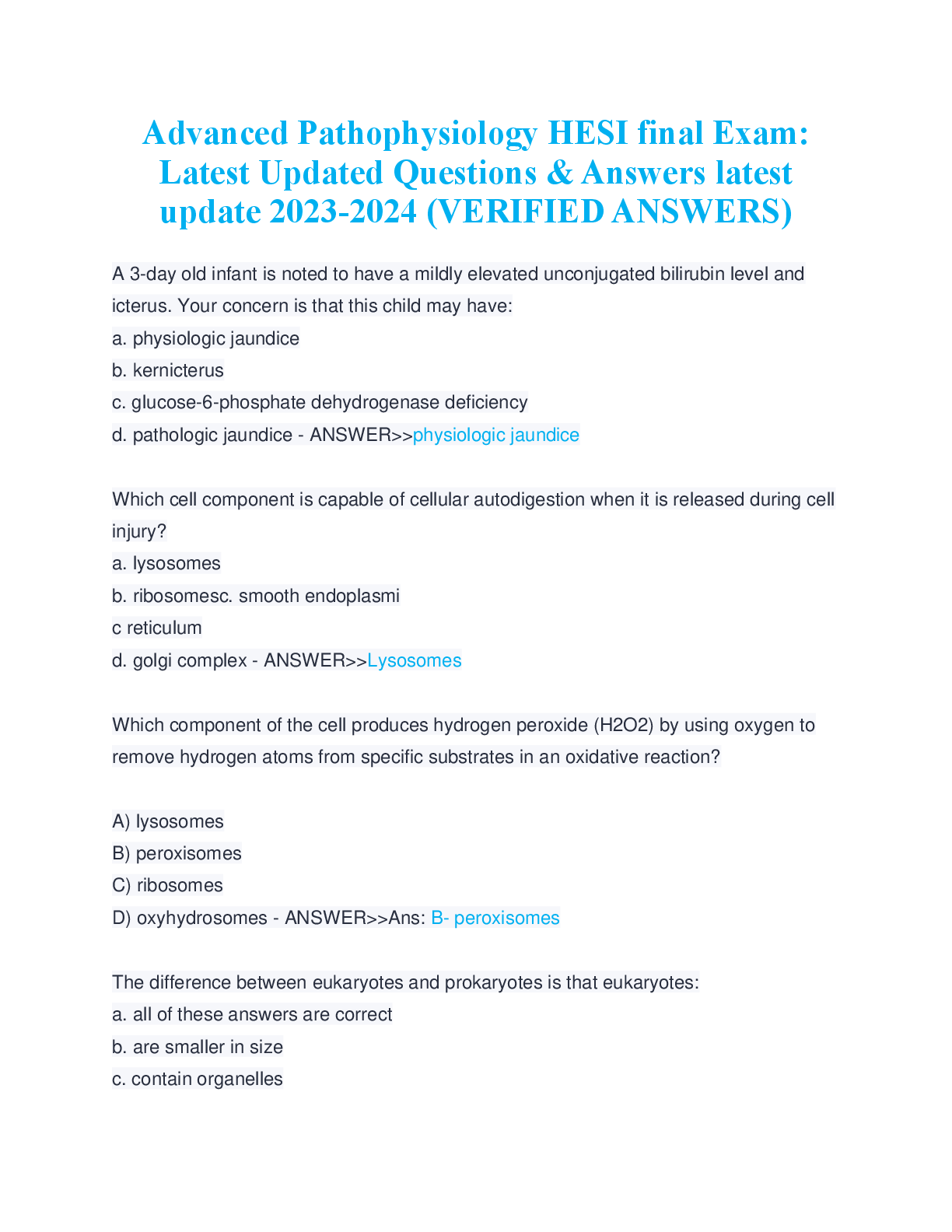
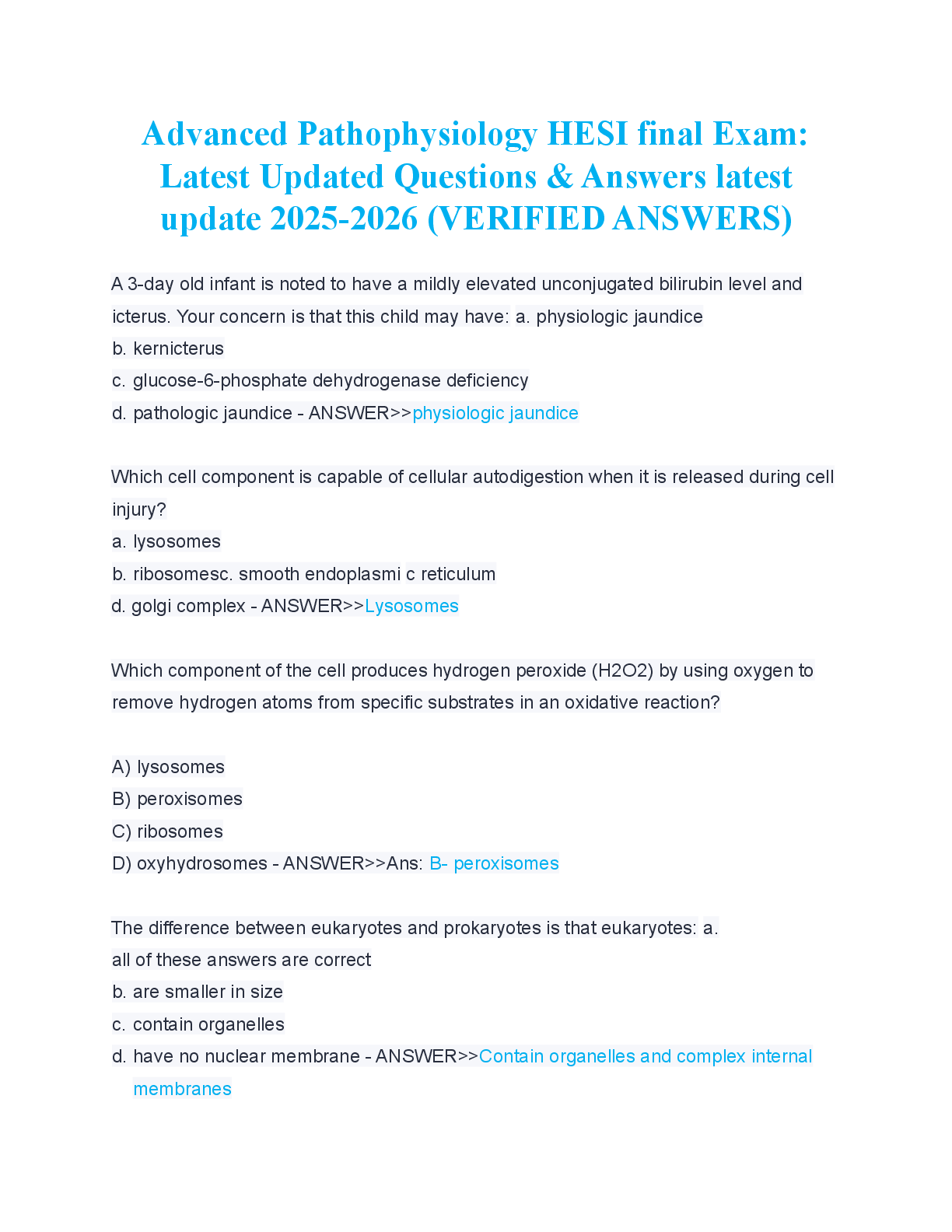
3. Which component of the cell produces hydrogen peroxide (H2O2) by using oxygen to remove hydrogen atoms from specific substrates in an oxidative reaction?
a. Lysosomes
b. Peroxisomes
c. Ribosomes
d. Endosome
ANS: B
Peroxisomes are so named because they usually contain enzymes that use oxygen to remove hydrogen atoms from specific substrates in an oxidative reaction that produces H2O2, which is a powerful oxidant and potentially destructive if it accumulates or escapes from peroxisomes.
Ribosomes are RNA-protein complexes (nucleoproteins) that are synthesized in the nucleolus and secreted into the cytoplasm through pores in the nuclear envelope called nuclear pore complexes. Lysosomes are saclike structures that originate from the Golgi complex and contain more than 40 digestive enzymes called hydrolases, which catalyze bonds in proteins, lipids, nucleic acids, and carbohydrates. An endosome is a vesical that has been pinched off from the cellular membrane.
PTS: 1 DIF: Cognitive Level: Remembering
4. Which cell component is capable of cellular autodigestion when it is released during cell injury?
a. Ribosome
b. Golgi complex
c. Smooth endoplasmic reticulum
d. Lysosomes
ANS: D
The lysosomal membrane acts as a protective shield between the powerful digestive enzymes within the lysosome and the cytoplasm, preventing their leakage into the cytoplasmic matrix. Disruption of the membrane by various treatments or cellular injury leads to a release of the lysosomal enzymes, which can then react with their specific substrates, causing cellular self- digestion. The chief function of a ribosome is to provide sites for cellular protein synthesis. The Golgi complex is a network of flattened, smooth vesicles and membranes often located near the cell nucleus. The smooth endoplasmic reticulum is involved in steroid hormone production and removing toxic substances from the cell.
PTS: 1 DIF: Cognitive Level: Remembering
5. Which cAMP-mediated response is related to antidiuretic hormone?
a. Increased heart rate and force of contraction
b. Secretion of cortisol
c. Increased retention of water
d. Breakdown of fat
ANS: C
Antidiuretic hormone leads to increased retention of water in the body. Epinephrine causes increases in heart rate and force of contraction. Increased cortisol secretion is due to ACTH. Breakdown of fat is due to glucagon.
PTS: 1 DIF: Cognitive Level: Remembering
6. During which phase of the cell cycle is DNA synthesized?
a. G1
b. S
c. G2
d. M
ANS: B
The four designated phases of the cell cycle are: (1) the G1 phase (G = gap), which is the period between the M phase (M = mitosis) and the start of DNA synthesis; (2) the S phase (S = synthesis), during which DNA is synthesized in the cell nucleus; (3) the G2 phase, during which RNA and protein synthesis occurs, the period between the completion of DNA synthesis and the next phase (M); and (4) the M phase, which includes nuclear and cytoplasmic division.
PTS: 1 DIF: Cognitive Level: Remembering
7. What organic compound facilitates transportation across cell membranes by acting as receptors, transport channels for electrolytes, and enzymes to drive active pumps?
a. Lipids
b. Proteases
c. Proteins
d. Carbohydrates
ANS: C
Proteins have several functions, including acting as receptors, transport channels for electrolytes, and enzymes to drive active pumps Lipids help act as the “glue” holding cell membranes together. Proteases cause the breakdown of protein. Carbohydrates are involved in cellular protection and lubrication and help produce energy via oxidative phosphorylation.
PTS: 1 DIF: Cognitive Level: Remembering
8. Understanding the various steps of proteolytic cascades may be useful in designing drug therapy for which human diseases?
a. Cardiac and vascular disorders
b. Autoimmune and malignant disorders
c. Gastrointestinal and renal disorders
d. Endocrine and gastrointestinal disorders
ANS: B
Understanding the various steps involved in this process is crucial for designing drug interventions. Dysregulation of proteases features prominently in many human diseases, including cancer, autoimmunity, and neurodegenerative disorders. Cardiac, vascular, gastrointestinal, renal, and endocrine disorders do not involve this process.
PTS: 1 DIF: Cognitive Level: Remembering
9. Which structure prevents water-soluble molecules from entering cells across the plasma membrane?
a. Carbohydrate chains
b. Glycoprotein channels
c. Membrane channel proteins
d. Lipid bilayer
ANS: D
The bilayer’s structure accounts for one of the essential functions of th
[Show More]