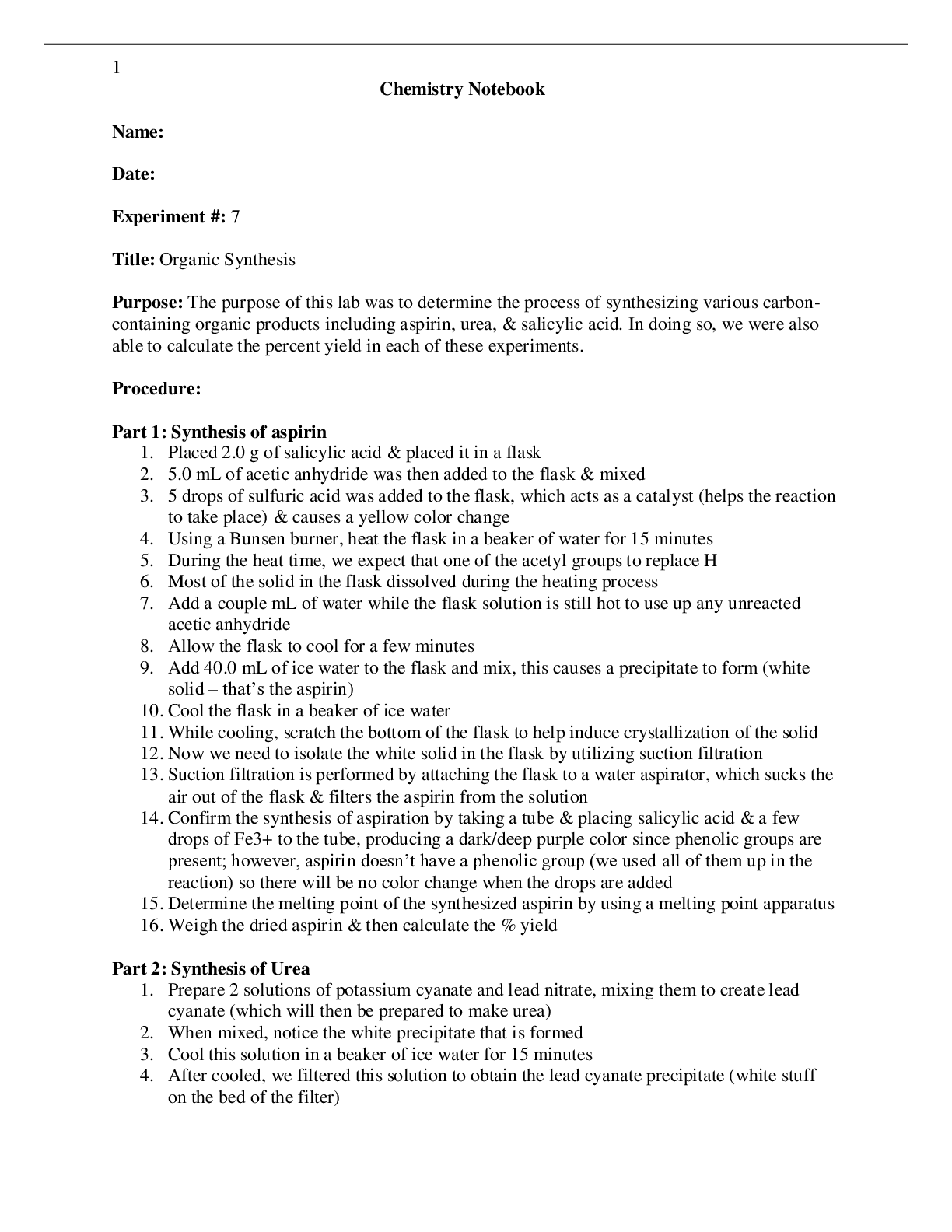
CHEM 104 Experiment 7 Organic Synthesis - Portage Learning
Document Content and Description Below
Last updated: 3 years ago
Preview 1 out of 4 pages
Instant download
Buy this Document to get the Full Access Instantly
Provided by Students Who Aced it
We Verify Document Content to Gurantee Accuracy
Also available in bundle (1)
Click Below to Access Bundle(s)

CHEM 104 EXPERIMENT 1-8 BUNDLE - PORTAGE LEARNING
CHEM 104 EXPERIMENT 1-8 BUNDLE - PORTAGE LEARNING
By Nurse Henny 3 years ago
$50
8
Reviews( 0 )
Document information
Connected school, study & course
About the document
Uploaded On
Aug 25, 2023
Number of pages
4
Written in
All

Additional information
This document has been written for:
Uploaded
Aug 25, 2023
Downloads
0
Views
135
Topic Tags
Related Subjects & Courses
Explore similar study resources and related concepts.
Recommended For You
Get more on EXAM »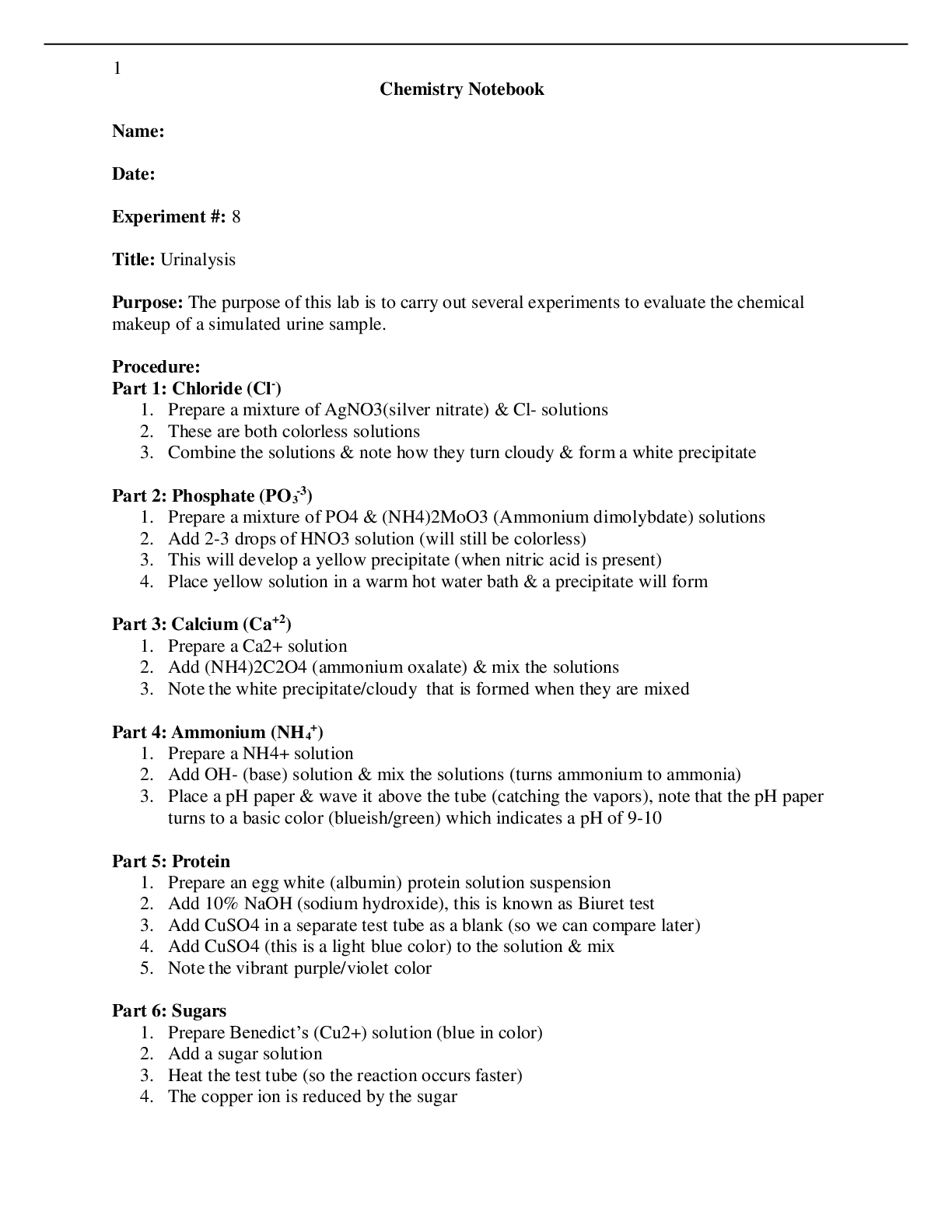
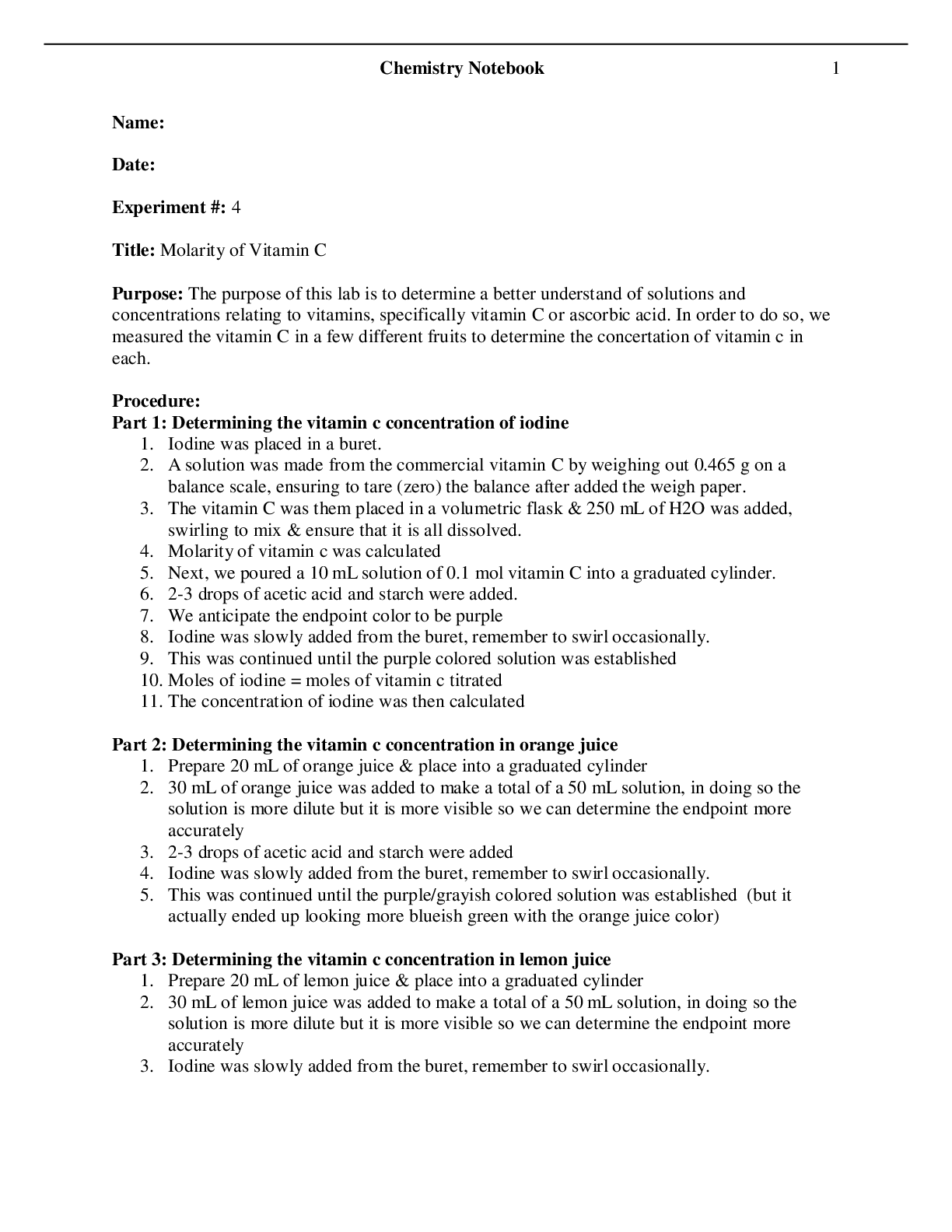
CHEM 104 Experiment 4: Molarity of Vitamin C - Portage Learnin...
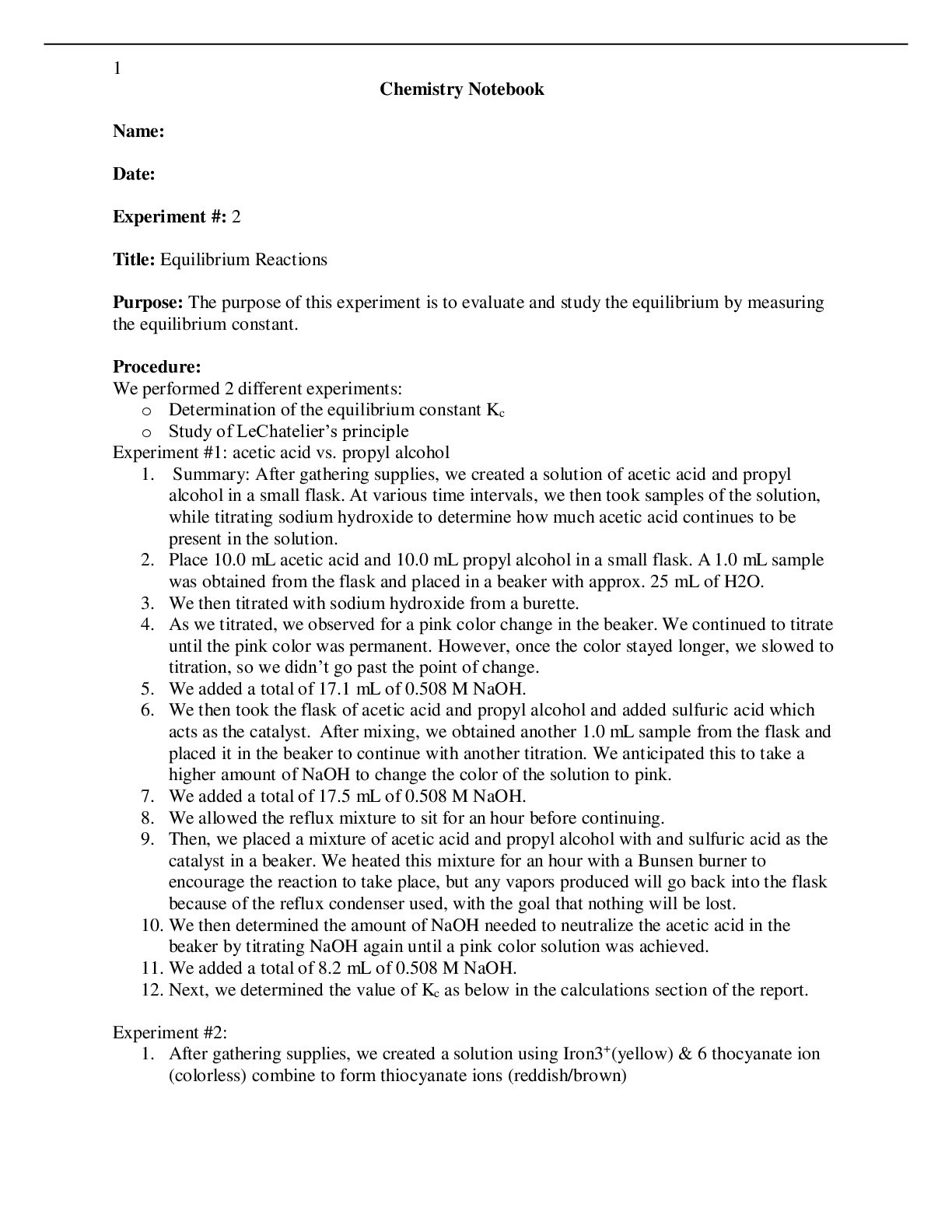
CHEM 104 Experiment 2 Equilibrium Reactions - Portage Learning

Portage Learning Chem 104: M6 Exam- Requires Respondus LockDow...
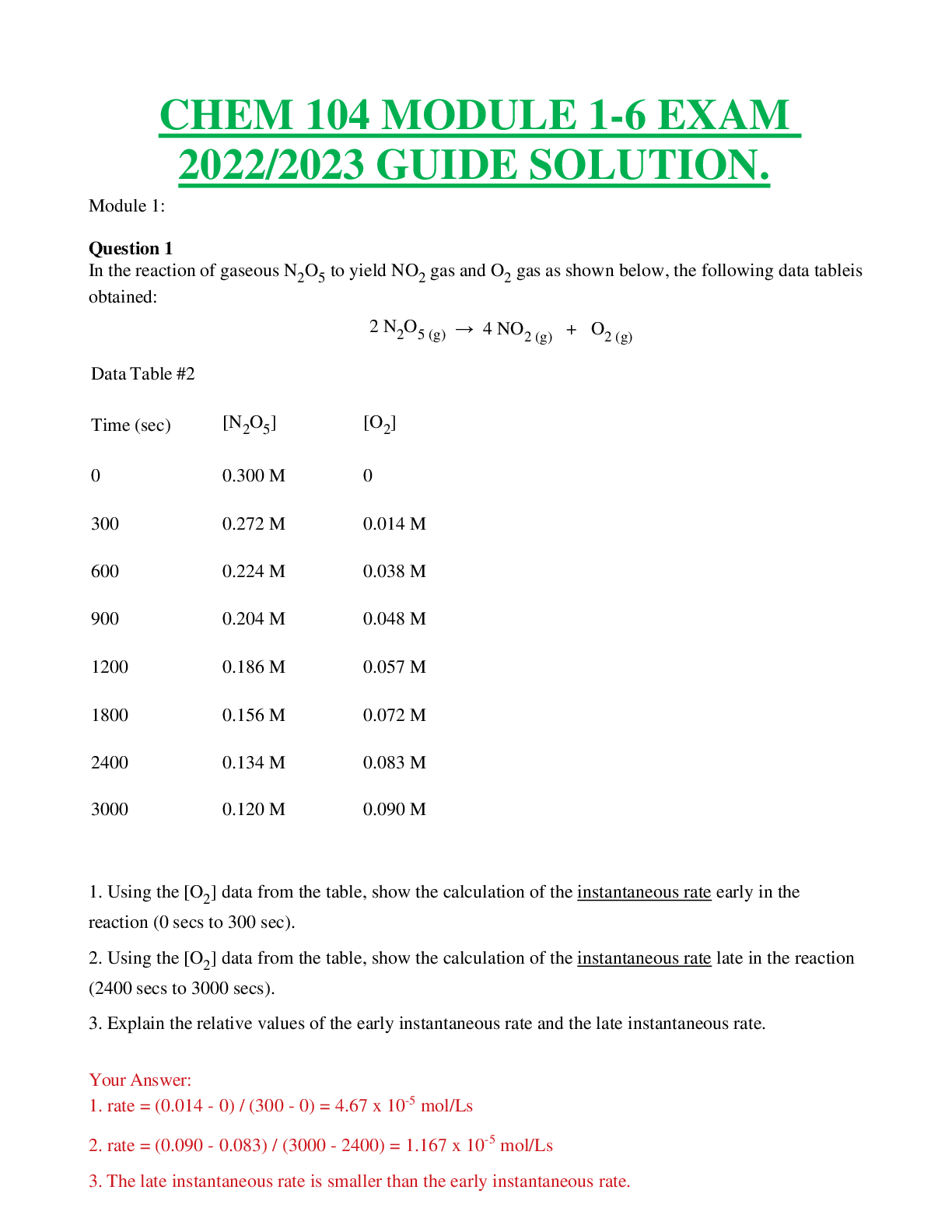
PORTAGE LEARNING CHEM 104, MODULE 1-6 2022/2023 DOWNLOAD TO BO...
CHEM 104 -Module 1 to 6 Exam-with 100% verified solutions-2022...
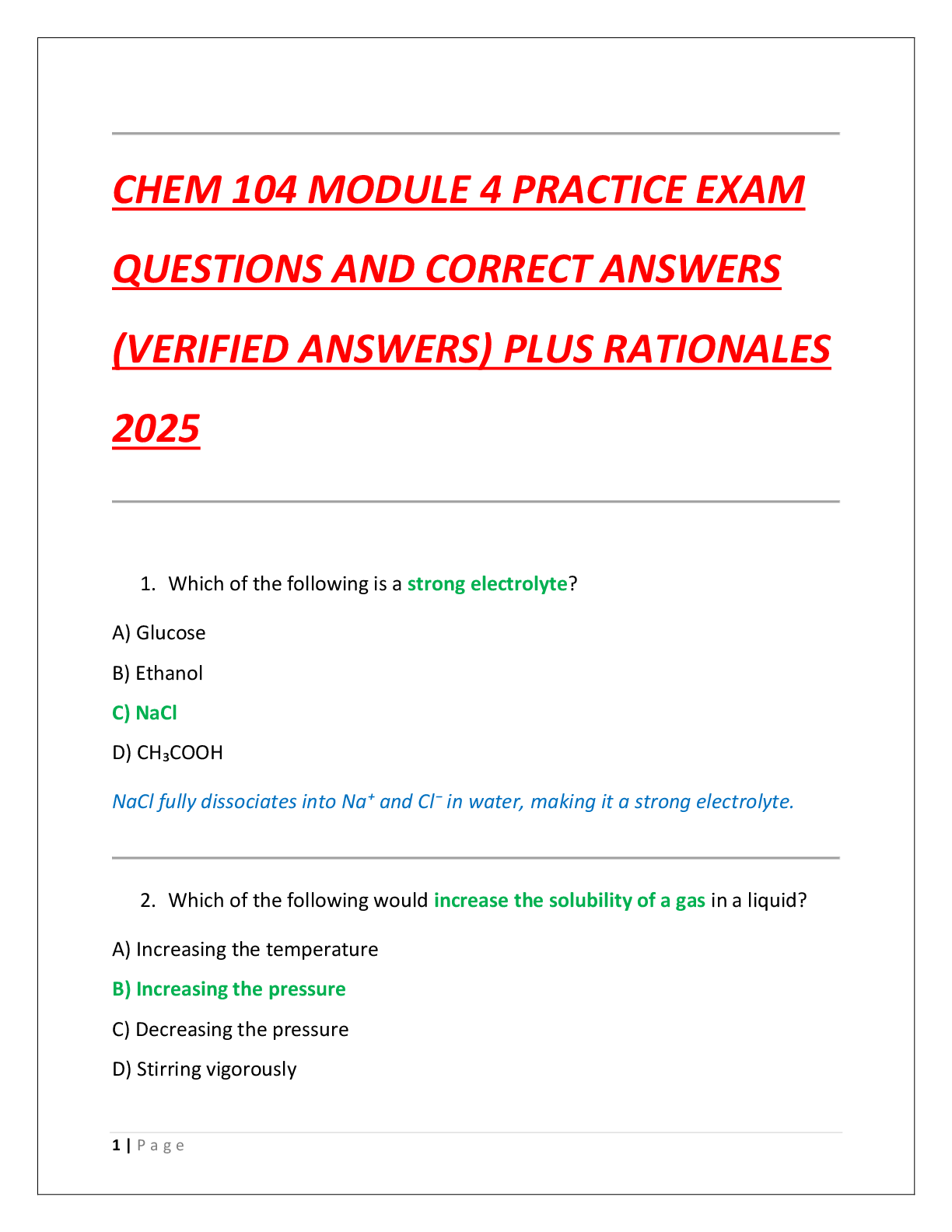
CHEM 104 MODULE 4 PRACTICE EXAM QUESTIONS AND CORRECT ANSWERS...
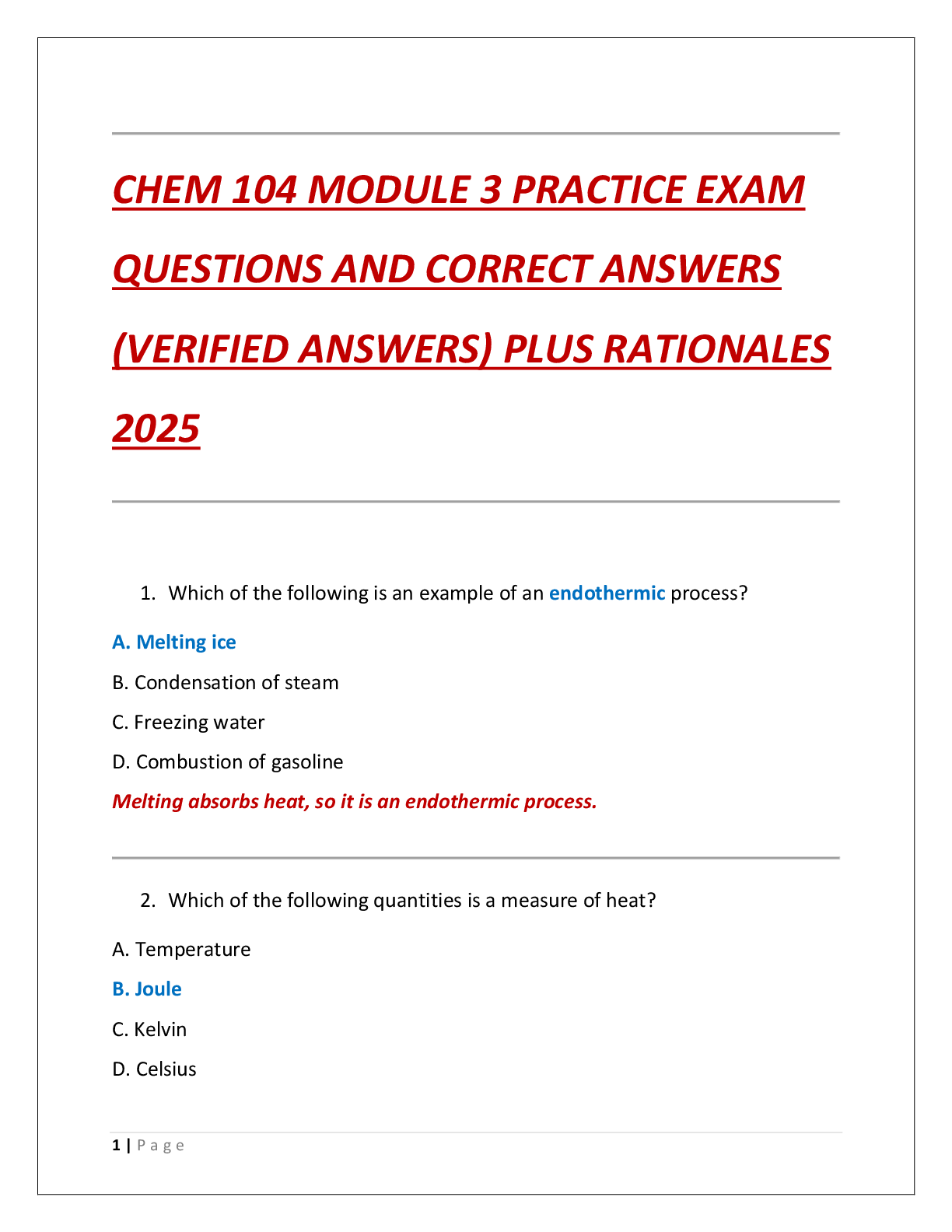
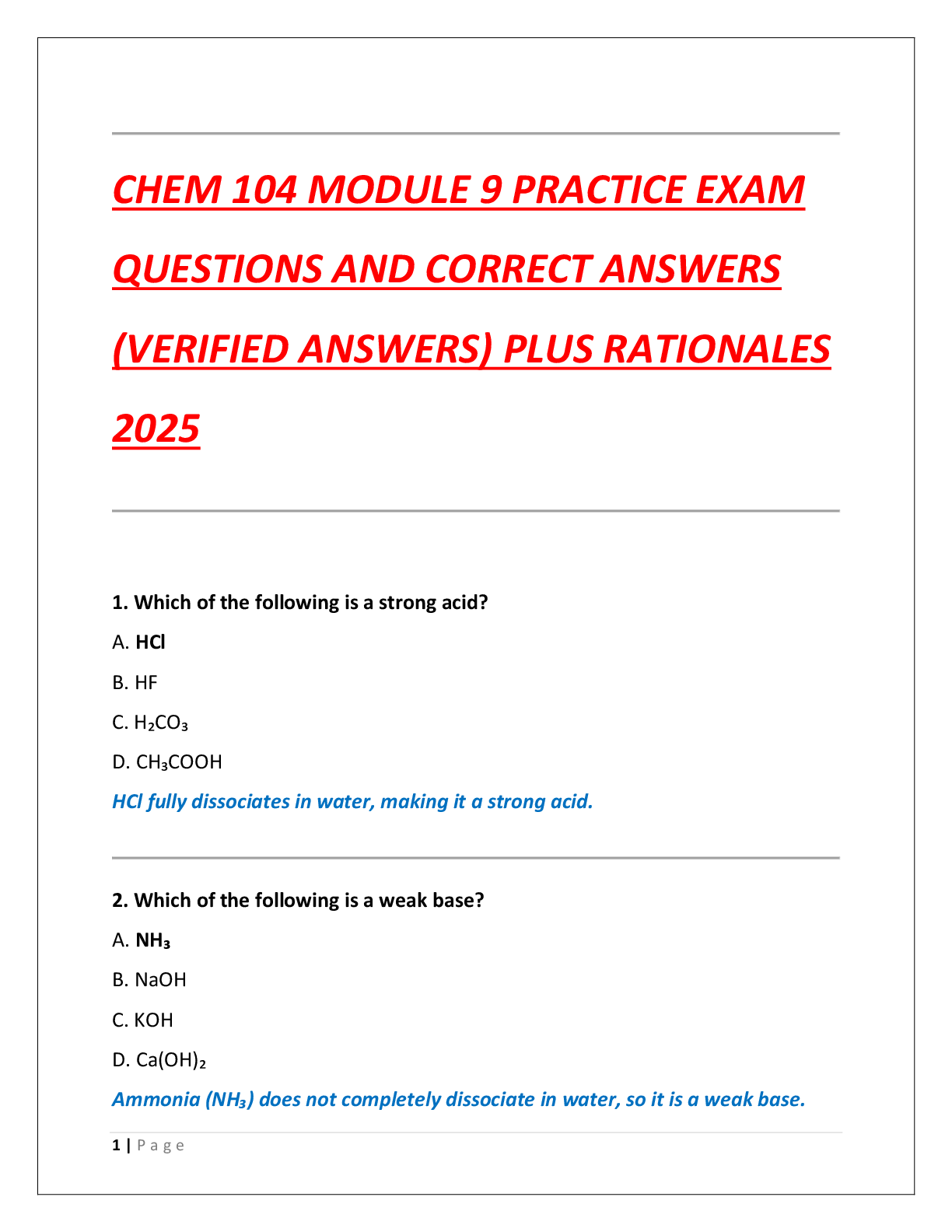
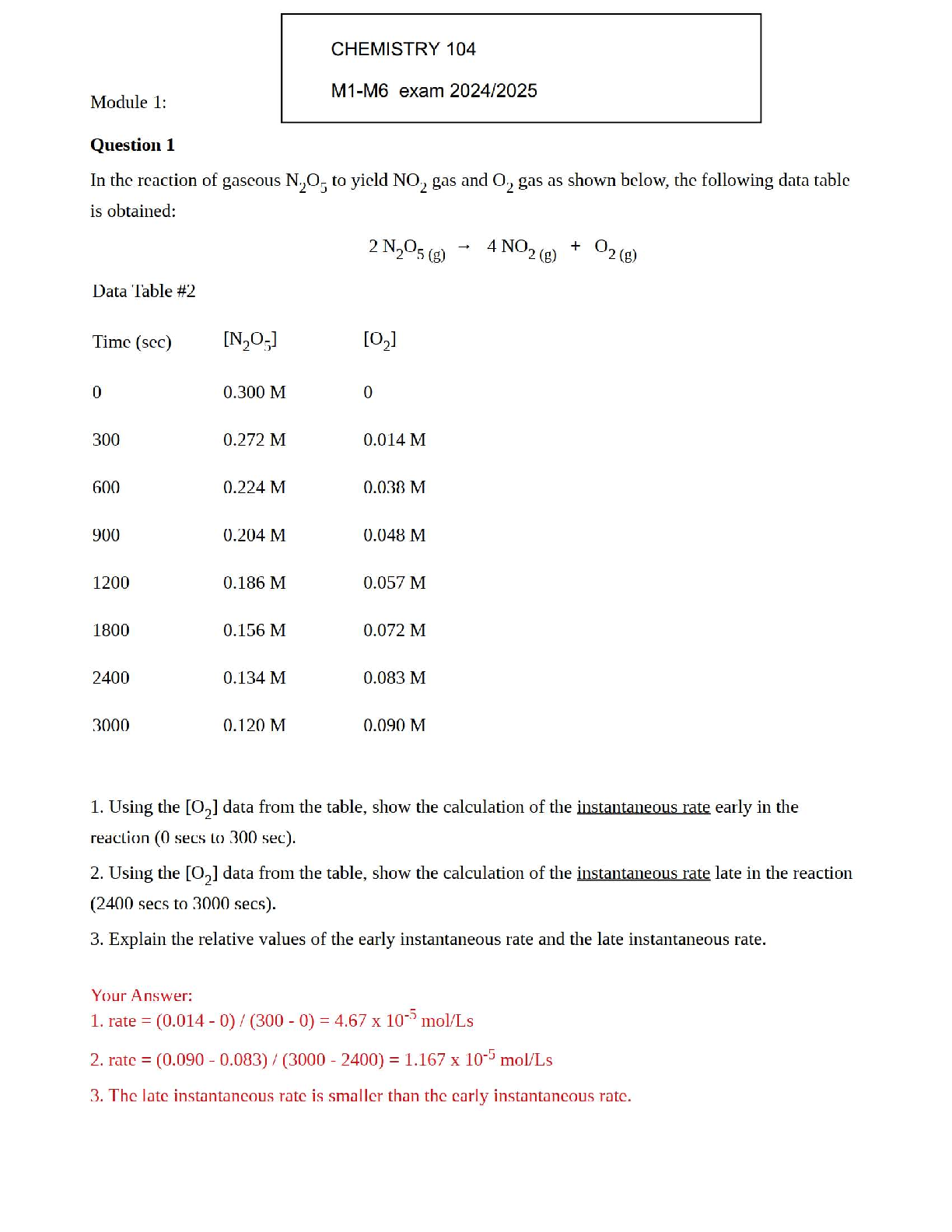
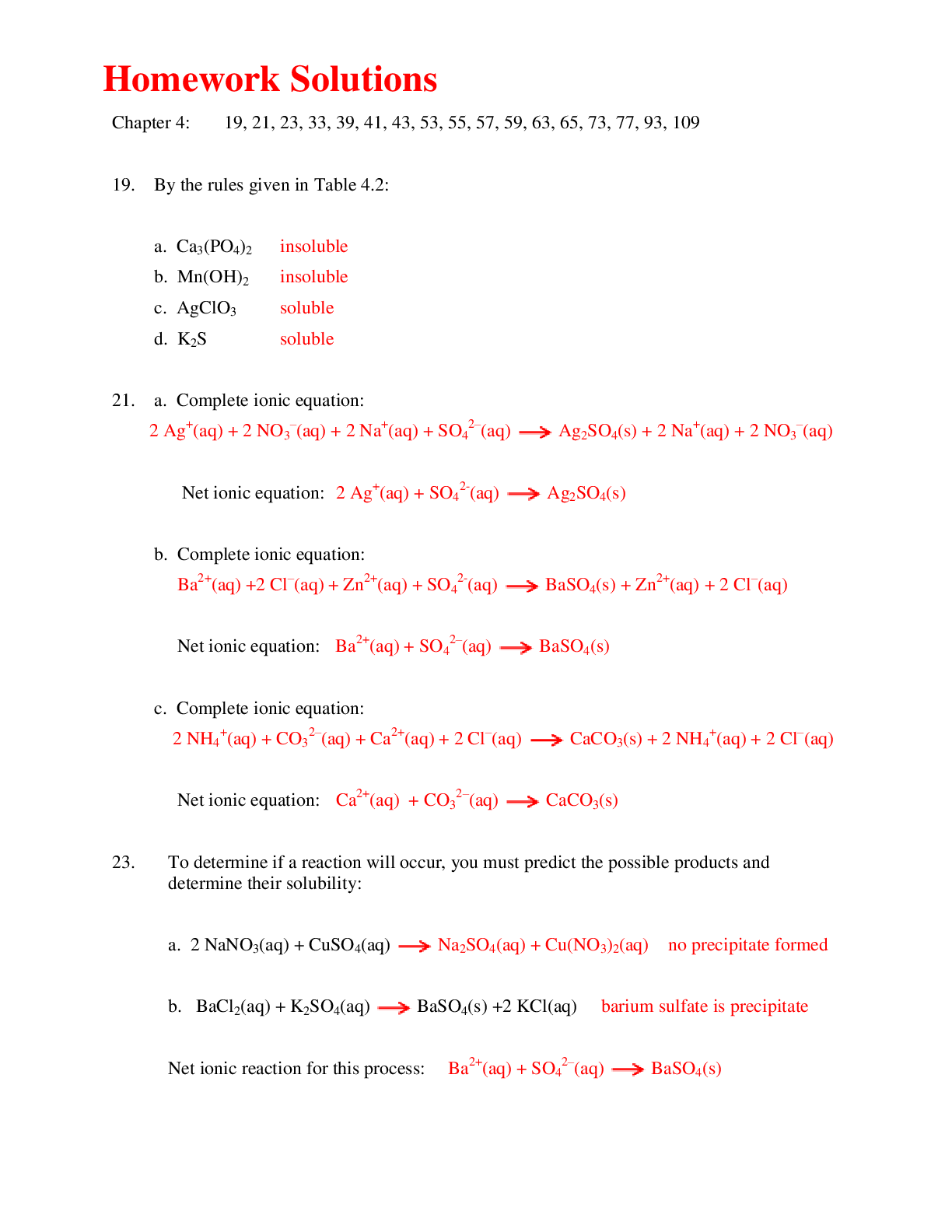
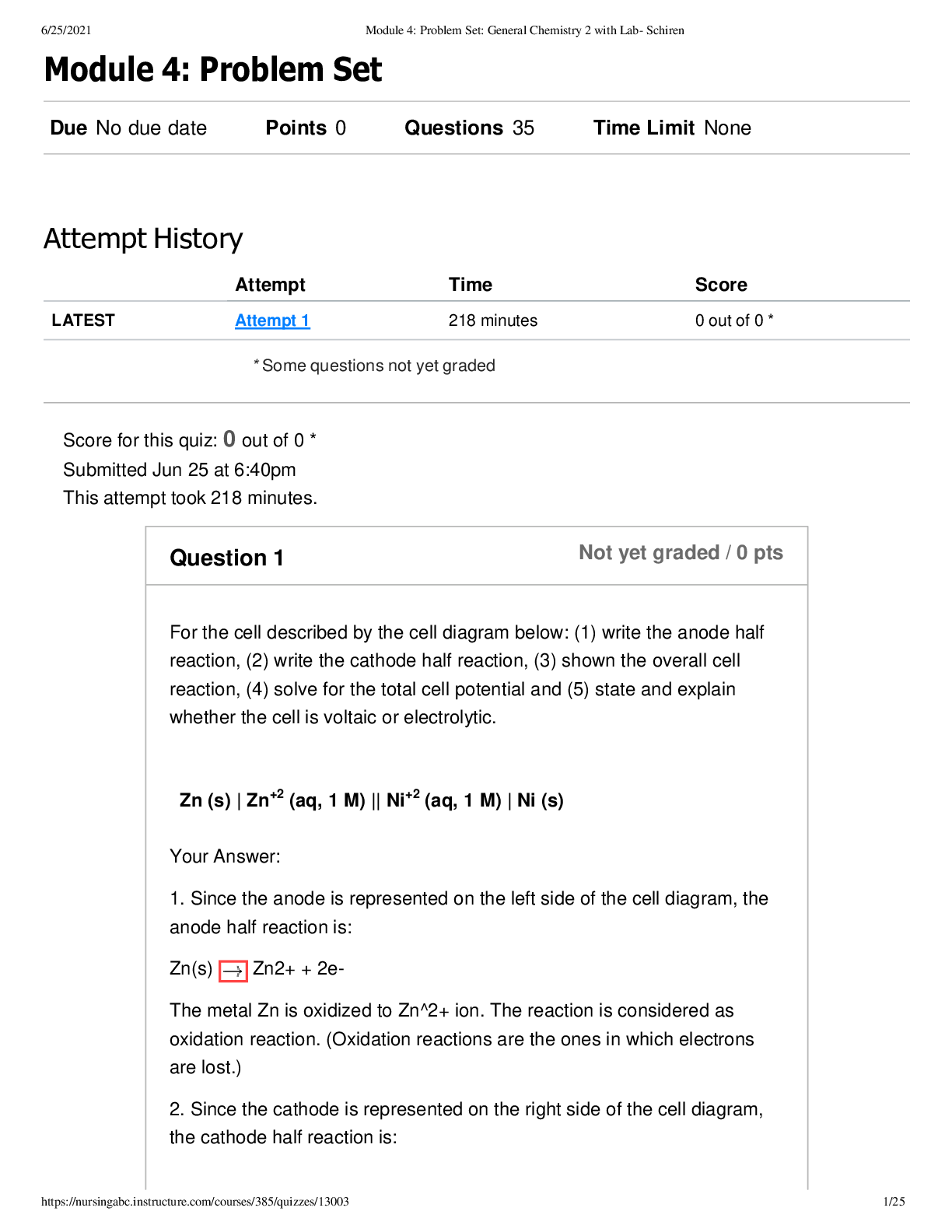
Portage Learning CHEM 104 Module 4: Problem Set: General Chemi...

Portage learning chem 104 final exam study guide questions and...
Solutions Manual for Organic Chemistry Student Study Guide 3rd...
General Organic and Biological Chemistry 1st Edition by Kalyn...