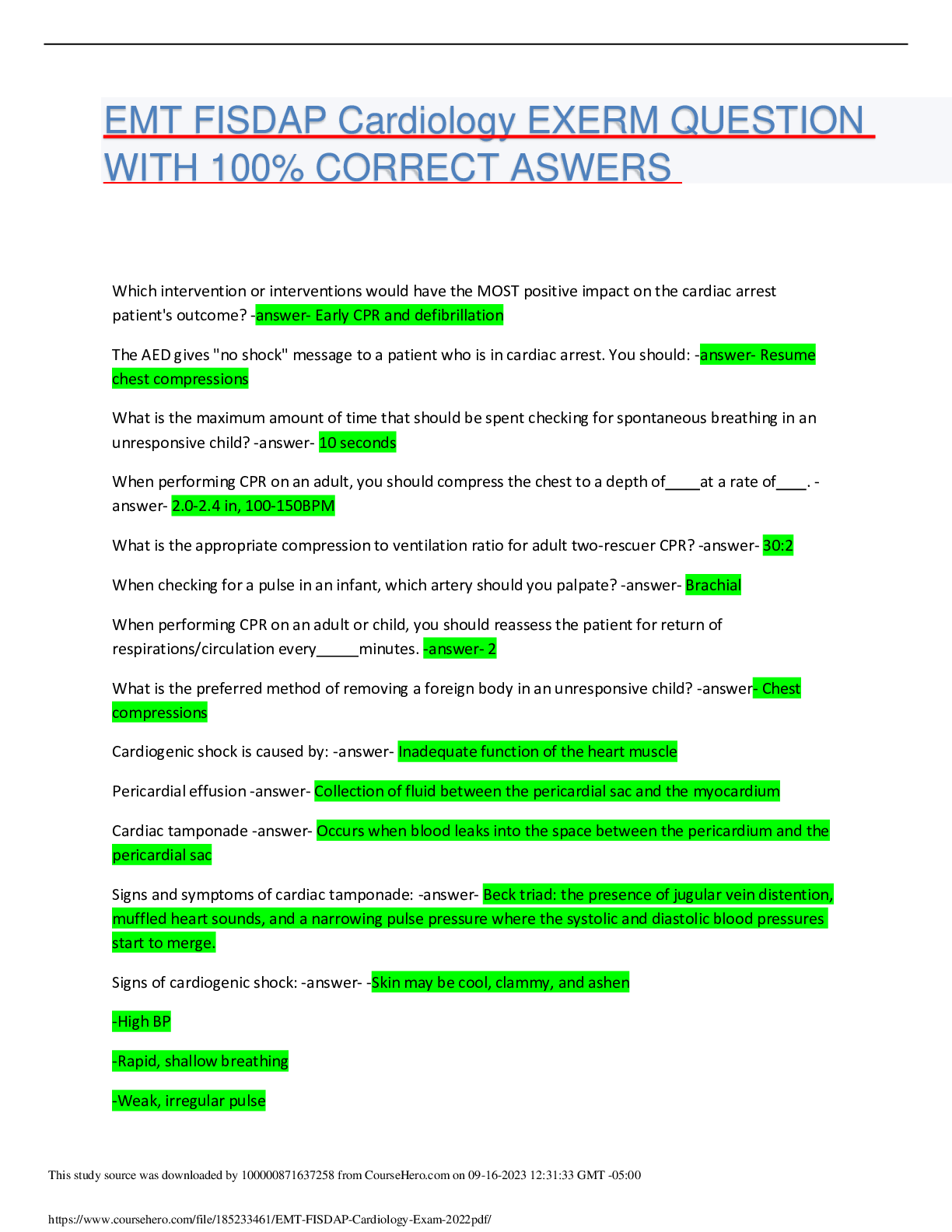
EMT FISDAP Cardiology EXERM QUESTION WITH 100% CORRECT ASWERS
Document Content and Description Below
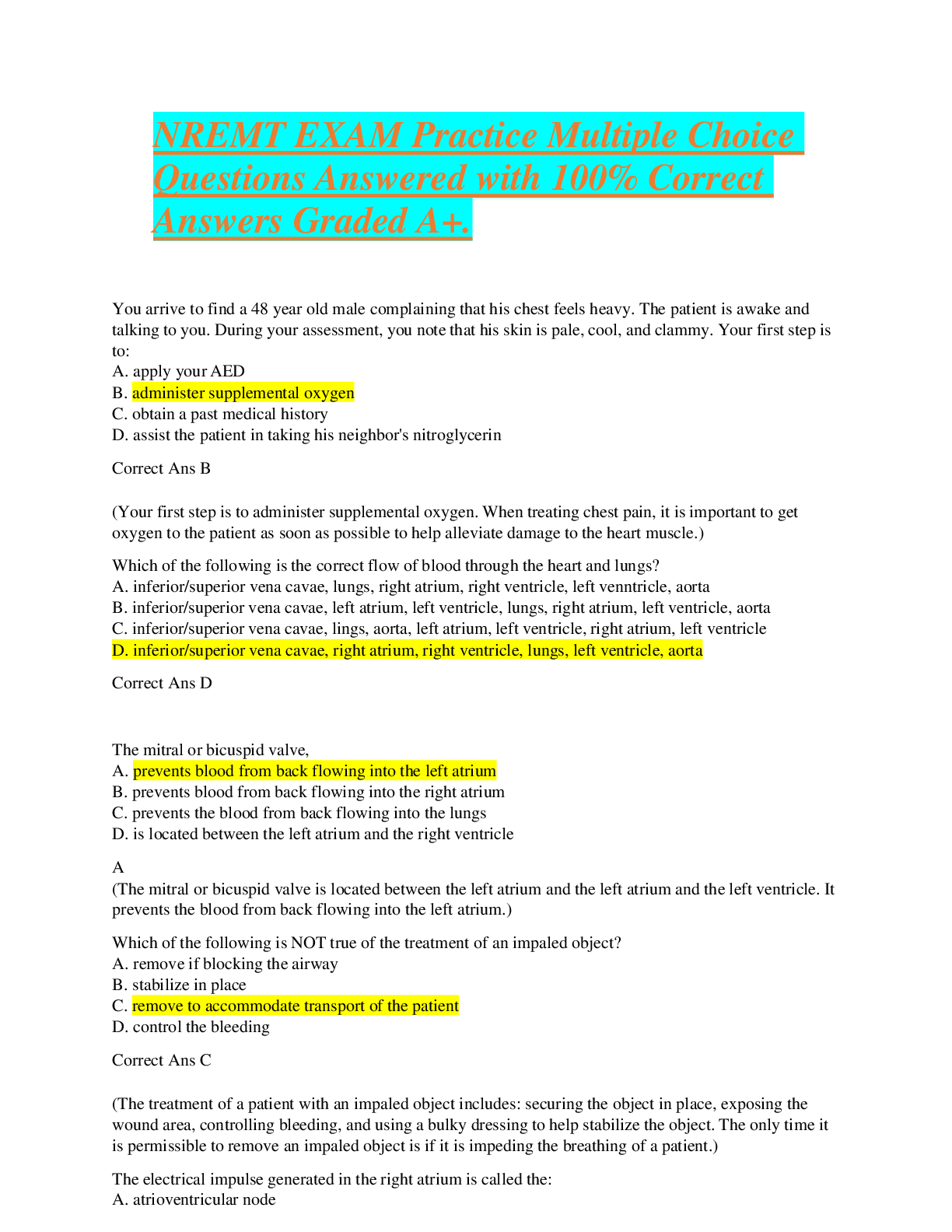
Which intervention or interventions would have the MOST positive impact on the cardiac arrest patient's outcome? -answer- Early CPR and defibrillation
The AED gives "no shock" message to a patient who is in cardiac ar
...
[Show More]
Last updated: 3 years ago
Preview 1 out of 6 pages
Instant download
Buy this Document to get the Full Access Instantly
Provided by Students Who Aced it
We Verify Document Content to Gurantee Accuracy
Reviews( 0 )
Document information
Connected school, study & course
About the document
Uploaded On
Sep 16, 2023
Number of pages
6
Written in
All

Additional information
This document has been written for:
Uploaded
Sep 16, 2023
Downloads
0
Views
123
Topic Tags
Recommended For You
Get more on EXAM »

$17
333 Pages
Complete Test Bank For Lehnes Pharmacotherapeutics for Advance...
$24
993 Pages
Test Bank for Brunner & Suddarth's Textbook of Medical-Surgica...
More related documents below