ETHC 445 Week 8 Final Exam 1
with Answers
Page 1
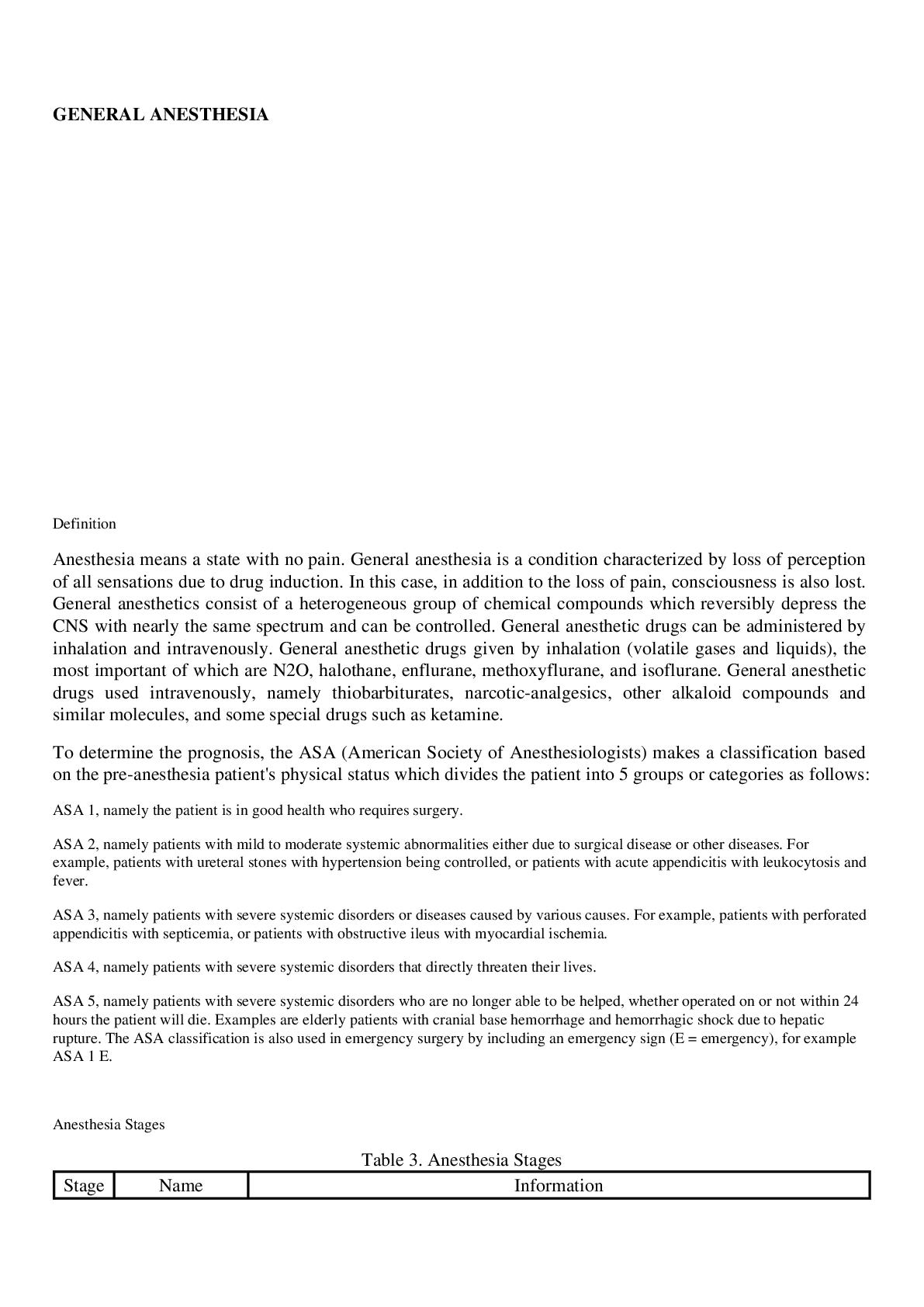
This exam covers all 14 TCO's.
For each of the following multiple choice questions, please select the Philosophy (and/or Philosopher)
which best goes with each descri
...
ETHC 445 Week 8 Final Exam 1
with Answers
Page 1
This exam covers all 14 TCO's.
For each of the following multiple choice questions, please select the Philosophy (and/or Philosopher)
which best goes with each description below.
1. (TCOs 2, 4, 5, 6) The idea that the assisted suicide of terminally ill patients should be allowed
simply at the patient's direction reflects what type of ethics? (Points : 5)
Hobbes' State of Nature
Rand's Objectivism
Aristotle's concept of Virtue
Thomas Aquinas' concept of conscience
Socrates' concept of excellence
2. (TCOs 1, 2, 7) What is the moral ideal of temperance? (Points : 5)
Exercising control over one's own desires & inclinations
Keeping one's temper under control
Minimizing the impact of one's decisions
Seeking the good of others before one's own
Overcoming one's passions
3. (TCOs 1, 2) One of the common errors in Ethics is that of the hasty conclusions. Hasty
conclusions consist of what? (Points : 5)
Rushed work under pressure
Comparing unknown cases to known ones to find precedents
Embracing conclusions before examining cases fully
Judging cases by the source of their origin
Belief that first impressions are valid until challenged
4. (TCO 2) Prescriptive language is commonly used in ethics for what reason? (Points : 5)
To indicate what is prohibited or impossible
To indicate that one choice is better than others
To show what actions are legal
To convey requirements & obligations
To indicate that there are really no choices available
5. (TCOs 7, 8) Ethical Egoism proposes that all decisions should be made to promote what? (Points :
5)
Our fiduciary responsibilities
The good will of others
Our self-interests
The welfare of the community
Stronger relationships
6. (TCOs 2, 4, 9) Free people are motivated toward forming social structures according to a social
contract in order to overcome what problem identified by Thomas Hobbes? (Points : 5)
The need to overcome disagreements
A perpetual state of warfare
The establishment of a monarchy
Taxation to support the costs of government
Organized ways to select leaders
7. (TCOs 3, 6) Agricultural biofuels are not properly a renewable source of energy in the
environmental ethics debate. Which of the following also is not a renewable source of
energy? (Points : 5)
Windmill turbines
Hydroelectric power
Tidal flow generators
Biomass waste systems
Solar cells
8. (TCOs 3, 6, 7) The notion that the only thing good without qualification is a good will is attributed
to whom? (Points : 5)
St. Thomas Aquinas
Socrates
John Locke
Immanuel Kant
Oliver Cromwell
9. (TCOs 8, 9) Which ethical concept is organized & directed toward following the greatest
happiness principle? (Points : 5)
Natural ethics & law
Justice & mercy
Rights & responsibilities
Virtue-ethics of excellence
Principle of utility
10. (TCOs 3, 6, 7) Syllogisms in formal deductive logic are called "valid" when: (Points : 5)
the correct form of the syllogism style is used.
the premise statements are true.
the syllogism is first determined to be "sound."
the verbs are written in present tense.
the conclusion proceeds from the premises.
11. (TCOs 1, 2) When choosing one course of action while working with a dilemma, the other
courses of action are lost & become unavailable. This makes ethical choices in dilemma situations
particularly what? (Points : 5)
Incoherent
Complicated
Illogical
Painful
Cruel
12. (TCOs 1, 2, 7) What is the role of conscience as Thomas Aquinas sees it? (Points : 5)
To teach ethical principles
To disclose & build religious faith
To enable rational thought about consequences
To align personal ethics with those of others
To guide actions through a view of right & wrong
13. (TCOs 2, 8) The rule or principle to be applied in making decisions is an example of which kind
of ethical discovery process? (Points : 5)
Principle of utility
A posteriori rationality
A priori rationality
Empirical rationality
Scientific method
14. (TCOs 1, 2, 5) The Social Contract theorist whose troubled childhood was most clearly reflected
in his theories was who? (Points : 5)
Thomas Aquinas
Thomas Jefferson
Jean-Jacques Rousseau
Thomas Hobbes
John Locke
15. (TCOs 3, 6, 7) Kant's concern that people choose to observe universal laws as their duty is
expressed through what actions? (Points : 5)
Their habits
Their maxims
Their desires
Their loves
Their loyalties
16. (TCOs 2, 7, 8) Aristotle's Ethics of Virtue have found modern application for business & industry
through what practice? (Points : 5)
Resolution models applications
Goals & objectives
Core values of organizations
Business models
Professional codes of discipline
17. (TCOs 2, 8) Professional codes of conduct serve what function for business & industry? (Points :
5)
Allow businesses to avoid training professional staffers
Enable transfer of valued employees across state lines
Enable contracting of temporary employees
Specify continuing education needs & requirements
Providing assurance of the professional qualifications of members
18. (TCOs 2, 7) Aristotle's Ethical Doctrine of the Mean measured personal virtues on a scale that
included the virtue itself, the excess of it, & the deficiency of it.
If the virtue is COURAGE & the deficiency is COWARDICE, what is the excess?
(Points : 5)
Wisdom
Moderation
There is no excess
Recklessness
Love
19. (TCOs 8, 9) In personal or organizational conflict, what benefits accrue to all parties when a
leader or consultant employees one of the ethical conflict resolution models of Week 6? (Points : 5)
Objectives of what winning the conflict means get refined & better understood
Conflict management gets slowed down & settled.
Conflict can be handled in a sequential, step-by-step manner
Parties can be reconciled without solving the issues
Personal relationships can be separated from issues
20. (TCOs 1, 2) The Latin term a priori describes the origin of knowledge developed rationally, & the
term a posteriori describes knowledge developed through observation & experience. What is an
example of ethics is best described as discovered in an a postiori manner? (Points : 5)
Social ethics
Care-based ethics
Consequentialist ethics
Theological ethics
Operational ethics
Page 2 - Essays
1. (TCOs 1, 2, 3, 7) In support of TCO #7 & in the Week 7 discussions, you developed & placed into
the threaded discussions your personalized ethics statement of what has become important to
you in the practice of ethics as you have practiced ethics during the course. Your first task in this
question is to briefly present that personalized statement in just a few sentences before
continuing with the question. Much of the rest of the exam will involve your working with that
personalized statement through brief applications & cases.
Use your ethical philosophy to solve the following ethical situation. Explain how your philosophy
helped you make your decision.
Should citizens have an ethical obligation to serve their country when it is at war? Under what
circumstances, if any, is it ethical for a person to refuse to serve?
A significant number of people believe war is always wrong, & that no circumstances justify one
nation's taking up arms against another. Is this view ethically sound? How about realistically?
Please state which side you agree with, & why. Explain & defend your position using your ethical
position statement.
In answering, be sure to look at both sides of war: that is, a country defending itself against
aggression & of a strong country coming to the aid of a weaker country that has been attacked
unjustly. Then, explain how your ethical philosophy affected how you answered this problem.
(Points : 30)
Answer – My ethical statement was “you should treat people like you like to be treated. If people
look at life like that i think the world would be a better place”. This is based on the reasoning that if
people are kind to other people, just as they would want others to be to them, then everyone would
be doing the right thing & not want to cause harm to other people.
As long as the war is in the best long term interests of the country & the reasons for the war are
justified, it is the obligation of every citizen to come to the aid of their country, even when it’s at
war. However, when wars are being waged due to selfish reasons of politicians & people’s life are
being put at risk to meet the ambition of a few, then citizens should have a choice & an ethical
reason of not wanting to take any part in the war.
Applying the ethical statement of trying to do to others, what we expect others to do to us, a
country would never want to initiate or start a war. However if another rogue country is attacking
our interests or trying to attack or partner countries, then we can retaliate in order to protect the
country & its interests. In comingto the above thinking, the ethical statement very effectively put a
context & perspective around thesituation that helped to think in a more rational manner.
2. (TCOs 1, 2, 7) Analyze the folloing ethical situation using YOUR ethical philosophy. Read the
situation & then in your answer, explain why this is an ethical situation, what the "issues" are, &
how an "ethical" person would rsolve them. Explain how YOUR ethical philosophy has helped you
read a conclusion about how to rsolve or analyze this situation.
Employees' worth to their emploers may diminish before they are eligible for retirement. In such
cases, the employer is faced withthe dilemma of choosing between retaining an old & trusted yet
unproductive worker for 5 or 10 ore years, or firing that worker & jeopardizing his or her
retirement benefits. 1. Should an employer have an ethical obligation to keep such unproductive,
but loyal employees? What if the employee had been a problem his or her entire career? Are
there certain circumstances where your answer to these questions would be different?
2. What is the duty of an unproductive employee to his or her employer? Is there an ethical
obligation to retire when productivity begins to wane? If a person is simply "coasting" for his or
her last few years, is that person "unethical?" Be sure to explain your answer. (Points : 30)
1. Given that a company through its lifetime goes through multiple cycles of highs & lows, its
employees always stick with the company & work to ensure its long term success. In a
similar way. It is the duty of the employer to take care of the welfare of its employees, &
help them plan a career & also ensure that they are well taken care of post their working
life. Therefore, in my opinion, employers have an ethical obligation & should ensure they are
planning on how they can best use the knowledge & experience of loyal employees to make
for a long term mutually beneficial relationship with the company. However, in case of
employees that cause trouble to the company & to other employees, & are not loyal & are
actually bringing down the efforts of others, then the company would be within its rights to
fire them as they are not working in alignment with the company objectives & its benefit,
even when the company is doing good & taking care of them.
2. It is the duty of every employee to learn something, apply their knowledge & experience &
work with the right spirit to ensure that they are contributing to the overall good of the
company. Yes, they may not be able to work at 100% productivity, however they should
show interest & motivation to do something that would help the company. If the person is
just coasting & wasting their last few years of time in the company, & harming the company
& other employees, then it is not ethical as they are taking undue advantage of the company
that is being nice to them.
3. (TCOs 1, 7, 9) How do you feel St. Thomas Aquinas would have solved the above ethical
situation differently or the same as you did using your philosophy? Please explain the reasons for
the similarities or differences. (Points : 40)
Answer – As per St. Thomas Aquinas, reason discloses natural law & ethics in such a way that people
should make their ethical decisions in accordance with what is true in the natural law, which then
discloses the God who created the natural systems. This essentially translates into one doing what is
considered good as per natural law. From this, I feel that St. Thomas Aquinas would have also solved
the ethical situation presented above in the same manner, as it would be doing the right thing as per
natural law to ensure that an employer takes care of people who work for them & also people who
are working do it in a manner that they are useful & can live it up to their consciences that they have
put in their best efforts to ensure that they have done work to justify their salaries.
4. (TCOs 1, 2, 4, 9) A first-term junior senator has placed a bill before the Senate that promises to
correct tax inequities that affect thousands of workers. However, the bill is being held up in
committee. The senior senator who serves as Sub-Committee Chairperson is responsible. The
senator, however, has learned of a secret scandal in the Chairperson's personal life. The junior
senator visits the Chairperson & tells him that unless the bill is released from committee, he will
divulge the scandal to the press. The Chairperson then releases the bill from committee & it is
passed—and becomes law.
Identify & tell what ethical philosophy the senior & junior senators are using, if any.
Now, use your ethical philosophy to analyze the situation. Explain how, using your philosophy,
you would have solved this situation either the same way as the characters in the situation did, or
differently. Why? (Points : 30)
Answer – The junior senator is using the consequentiality Ethics of Utility, which is based on the
proposition that actions are judged right & wrong solely on their consequences & to assess
consequences, the only thing that matters is the amount of happiness & unhappiness caused.
Therefore, for him having to blackmail the senior senator in order to have a bill passed that would
have a good consequence for multiple members of the society is justified. On the other hand, the
senior senator is using the ethics of Self-Interest & the theory of objectivism, where the senator’s
course of action is determined by ensuring his own best self-interests.
Applying my ethical statement to the situation, I would not have done what the junior senator did &
would not have responded in the manner that the senior senator responded. I would have thought
through the bill on its merits & demerits & have tried to speak to the other party & reach a logical
agreement that would have been in the best interests of the society that both the people are
obligated to serve.
5. (TCOs 5, 6) You work for a grocery store & a new manager is hired to oversee your department.
He comes into your department (the butcher shop) & explains to you that for the past 6 months,
your department has been losing money for the store because of the waste & spoilage going on
from having to discard unsold meat & poultry. He tells you that from now on, he wants you to
package ground meat in smaller, more compact packages, with older meat on the bottom of the
package (so it is not visible to the customer) & the fresher meat on the top, where it is visible to
the customers. In this way, you can move more of the older meat & still receive the top dollar for
it. As he leaves the department where you were having the discussion, he turns & says, "And by
the way, one more month of losses like we had last month from this department, & you can kiss
your job goodbye."
Will you repackage the meat in the way he requested?
Why or why not? Explain what ethical analysis you used to come to this conclusion. (Points : 30)
Answer – Applying the same ethical statement of trying to do to others what I want others to do to
me, I would not want to package old meat & sell it along with the new meat. In this situation, I will
try & bring to the notice of my supervisor & if required to any other higher official within the store
so that they can then decide on what should be the best course of action. Not only will packaging
older meat with newer meat impact the trust that customers have with the store, but it can really
harm the reputation of the business if ever the story leaked out & became public. Applying all this, I
would really not want to repackage the meat in the way that has been requested, & at the same
time try some other options on how the profitability of the department could be improved.
6. (TCOs 6, 8) Analyze your answer above using the Front Page of the Newspaper ethical dilemma
resolution model. Show your steps. (Points : 40)
Answer – If the request for repackaging meat is carried out, & the story gets published in the
newspaper on the front page with the headline reading as “Grocery store selling old meat as new” or
“Grocery store cheating customers into buying old meat” etc. I would not want this to be seen as the
person who has been involved in this & would not want any of my family or friends to see this.
Therefore, I would not implement the manager’s request of repackaging the meat with old meat
mixed with new, as it is clearly unethical & against ethical principles.
18) The strategy that deals with product & process innovation &
improvement is known as a ________ strategy.
A. marketing
B. R&D
C. operations
D. financial
E. human resource management
19) The hiring of new people with new skills, firing of people with
inappropriate or substandard skills, and/or training existing
employees to learn new skills are included the process of
A. training
B. staffing
C. structuring
D. operating
E. financing
20) The strategy implementation tool used to determine what
actions are going to be taken, by whom, during what time frame,
& with what expected results is called a(n)
A. mission statement
B. action plan
C. MBO
D. TQM
E. succession plan
21) Executives with a particular mix of skills & experiences may
be classified as an executive type & paired with
a specific personal characteristic
. a specific corporate strategy
C. a certain educational background
D. a specific experience background
E. a specific industry
22) According to the text, what is the "key" to effective
management of change in culture?
A. Planning
B. Operationalization
C. Evaluation
D. Staffing
E. Communication
[Show More]


.png)
.png)

.png)
![Preview of ETHC 445N Week 3 Assignment: Greater Good Analysis Paper [GRADED A]](https://scholarfriends.com/storage/Week_3_Greater_Good_Analysis.png)
![Preview of [GRADED A] ETHC-445N Week 3: Greater Good Analysis Presentation.](https://scholarfriends.com/storage/Week_3_Greater_Good_Analysis_PPT.png)