CHAMBERLAIN NR599 MIDTERM
General principles of nursing informatics
essential skills related to informatics deemed appropriate
Nursing informatics
integrates nursing science with multiple information and analytica
...
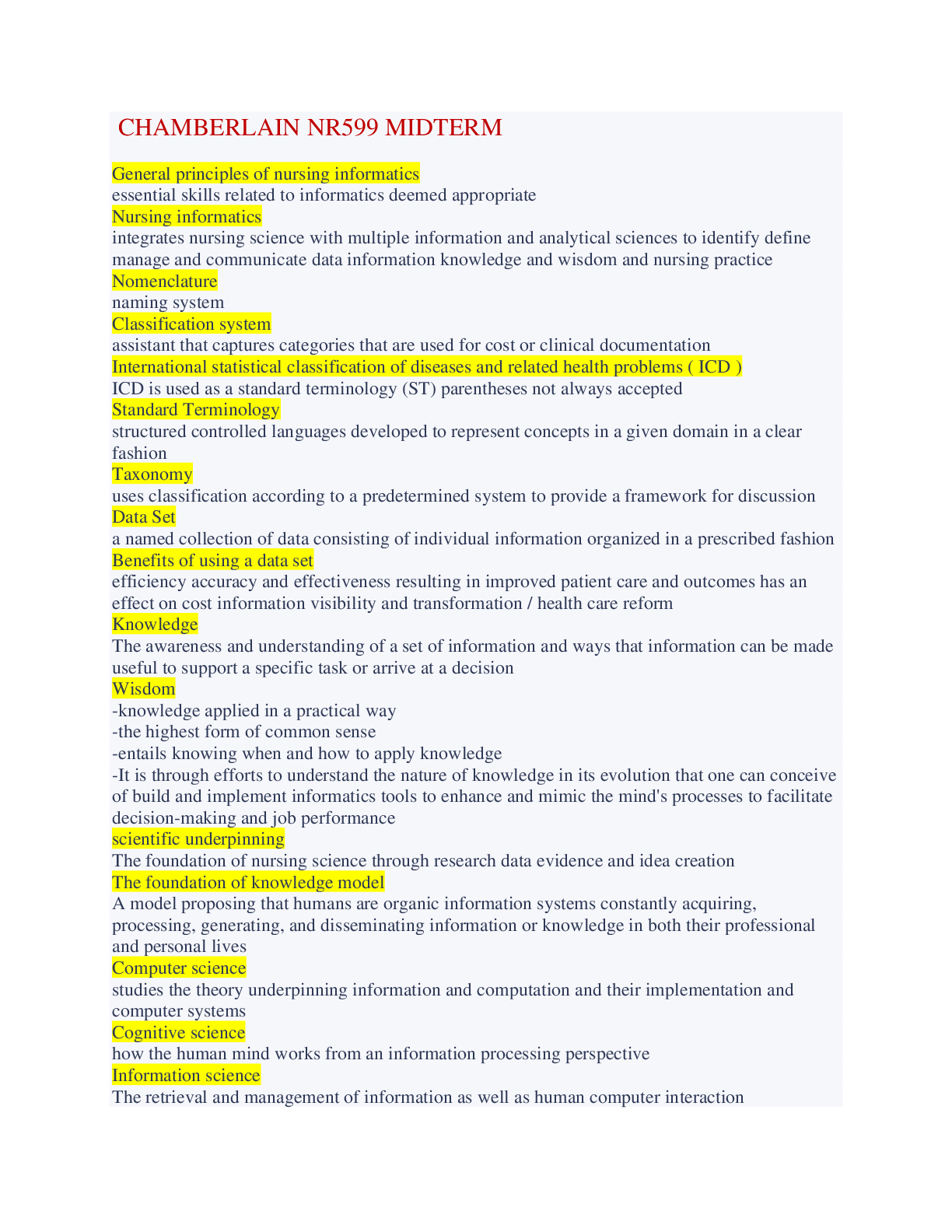
CHAMBERLAIN NR599 MIDTERM
General principles of nursing informatics
essential skills related to informatics deemed appropriate
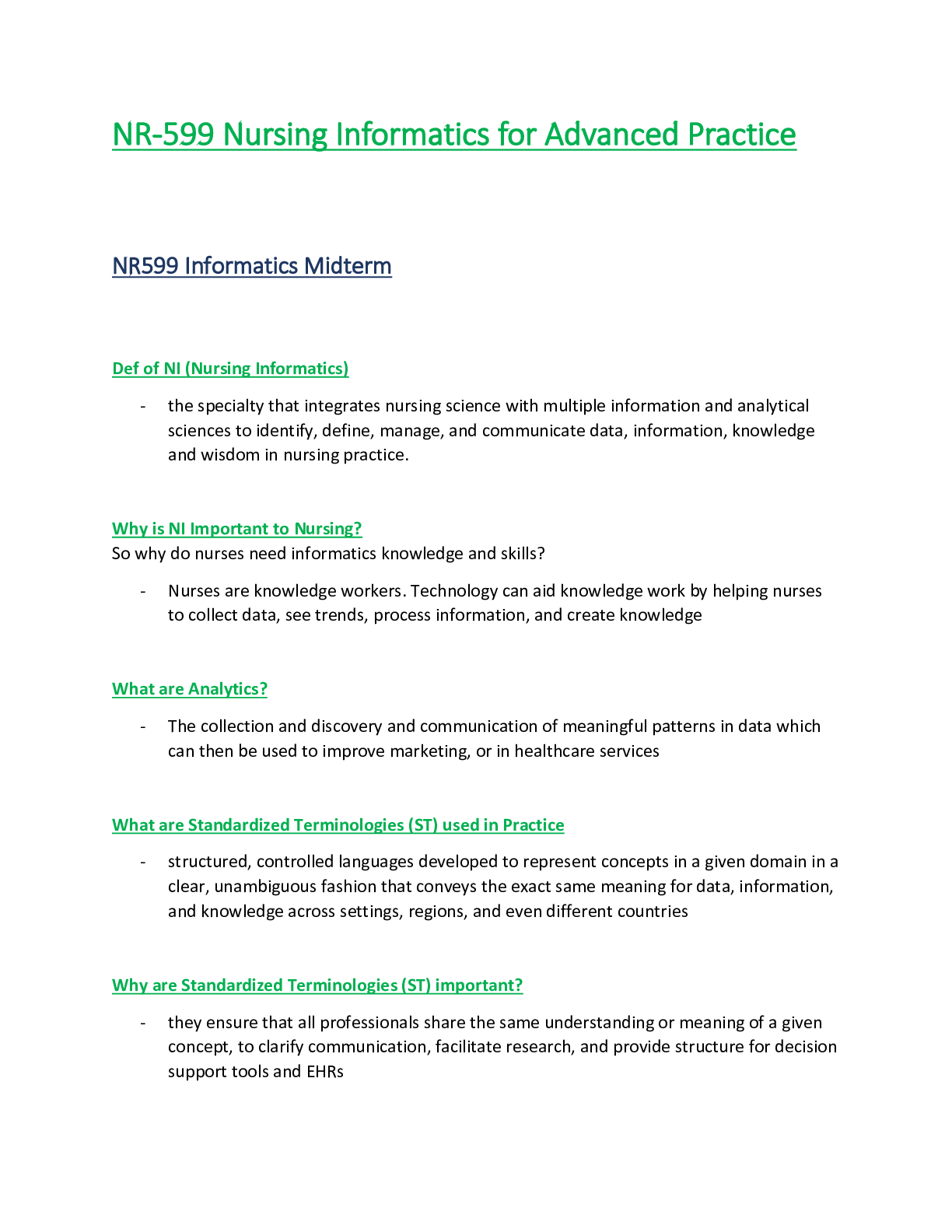
Nursing informatics
integrates nursing science with multiple information and analytical sciences to identify define manage and communicate data information knowledge and wisdom and nursing practice
Nomenclature
naming system
Classification system
assistant that captures categories that are used for cost or clinical documentation
International statistical classification of diseases and related health problems ( ICD )
ICD is used as a standard terminology (ST) parentheses not always accepted
Standard Terminology
structured controlled languages developed to represent concepts in a given domain in a clear fashion
Taxonomy
uses classification according to a predetermined system to provide a framework for discussion
Data Set
a named collection of data consisting of individual information organized in a prescribed fashion
Benefits of using a data set
efficiency accuracy and effectiveness resulting in improved patient care and outcomes has an effect on cost information visibility and transformation / health care reform
Knowledge
The awareness and understanding of a set of information and ways that information can be made useful to support a specific task or arrive at a decision
Wisdom
-knowledge applied in a practical way
-the highest form of common sense
-entails knowing when and how to apply knowledge
-It is through efforts to understand the nature of knowledge in its evolution that one can conceive of build and implement informatics tools to enhance and mimic the mind's processes to facilitate decision-making and job performance
scientific underpinning
The foundation of nursing science through research data evidence and idea creation
The foundation of knowledge model
A model proposing that humans are organic information systems constantly acquiring, processing, generating, and disseminating information or knowledge in both their professional and personal lives
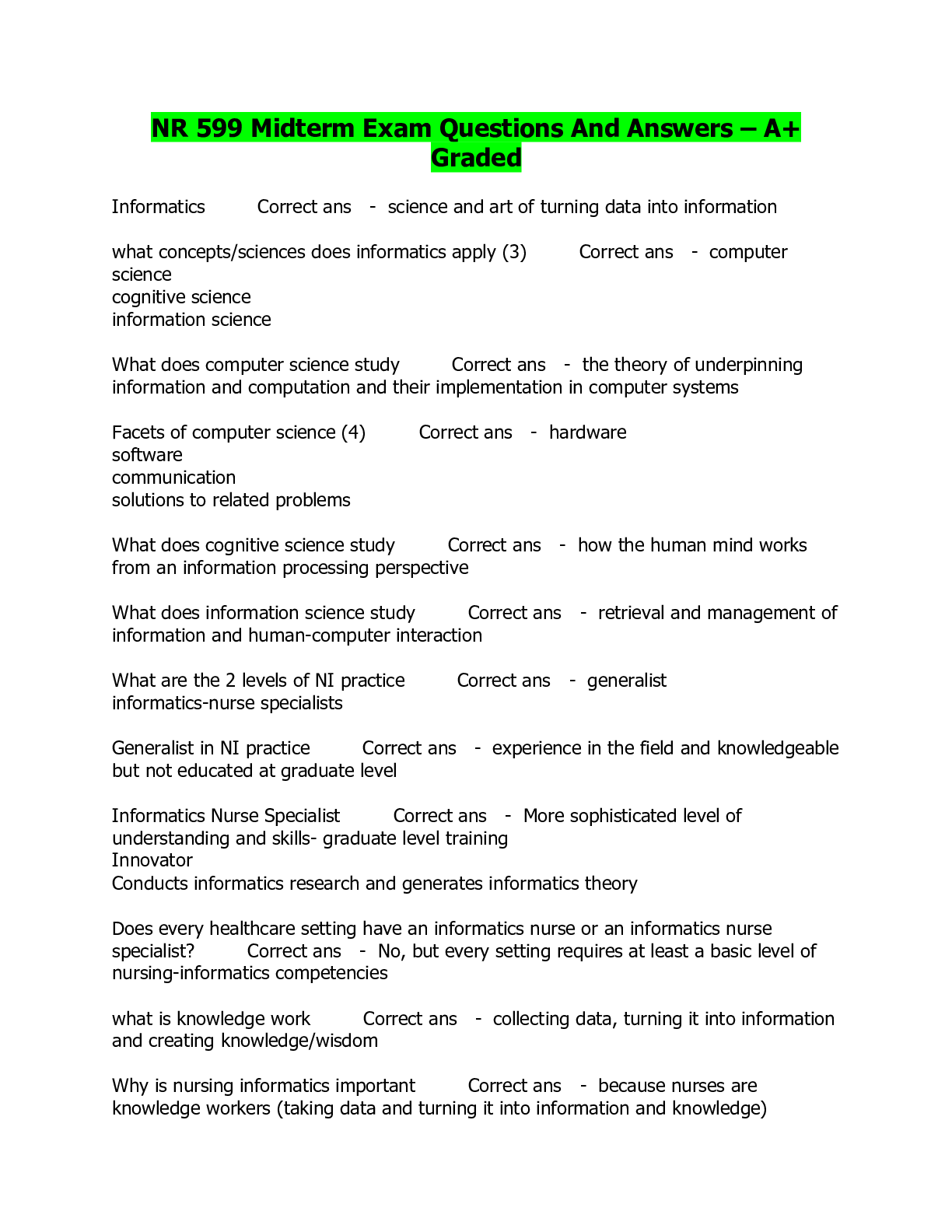
Computer science
studies the theory underpinning information and computation and their implementation and computer systems
Cognitive science
how the human mind works from an information processing perspective
Information science
The retrieval and management of information as well as human computer interaction
two types of informatics competencies
1. generalist- knowledgeable with experience
2. nurse specialist- graduate level education specialized education
Information literacy
The ability to identify when information is needed as well as the skills to find evaluate ineffectively use the same information
Health literacy
The degree to which individuals have the capacity to obtain, process, and understand basic health information and services needed to make appropriate health decisions
meaningful use
using technology and health information to increase the quality of care delivered
Patient-centered information systems
patient-centered information systems focused on collecting data and disseminating information related to direct care
Four most common types of PCS systems
clinical documentation systems pharmacy information systems laboratory information systems radiology information systems
Clinical decision support systems
a computer-based program designed to assist clinicians in making clinical decisions by filtering or integrating vast amounts of information and providing suggestions for clinical intervention
Electronic medical records / electronic health record
a database of an individual's healthcare data during healthcare encounters and/or comprised of any patient data stored in electronic form
Electronic health record system
The database management software enabling the many functions needed to create and maintain an EHR
POE/CPOE/CDS
POE- practitioner order entry, CPOE- computerized practitioner order entry, CDS- clinical decision support
Human technology interface
The hardware and software through which the user interacts with any technology. for example computers patient monitors and telephones. The human technology interface addresses the user's ability and the technologies functionality to complete the task demand.
Health information technologies ( h i t )
hardware software integrated technologies are related licenses intellectual property upgrades or packaged solutions sold as services that are designed for or support the use by healthcare entities or patients for the electronic creation maintenance access or exchange of health information
Alarm fatigue
multiple false alarms by smart technology that cause workers to ignore or respond slowly to them
Digital natives
a person born or brought up during the age of digital technology and therefore familiar with computers and the internet from an early age
Information literacy competency standards for nursing
able to recognize when information is needed and having the ability to locate evaluate and use effectively the needed information
HITECH Act of 2009
-Provided incentive payments to hospitals and healthcare providers to adopt health IT.
tiger based nursing informatics competencies model
-technology informatics guiding education reform team
-a plan to include informatics courses and all levels of nursing education when the effort is complete they will examine how to get the information out to practicing nurses who are not currently enrolled in an academic program
Meaningful use
the use of certified electronic health record technology to achieve health and efficiency goals, with a financial incentive from Medicare and Medicaid
[Show More]