NCLEX Practice Questions Review
Leopold maneuvers
• 1st maneuver- determines fetal part lying in fundus and fetal presentation
• 2nd- which direction fetus back facing
• Third maneuver determines part of fetus at
...
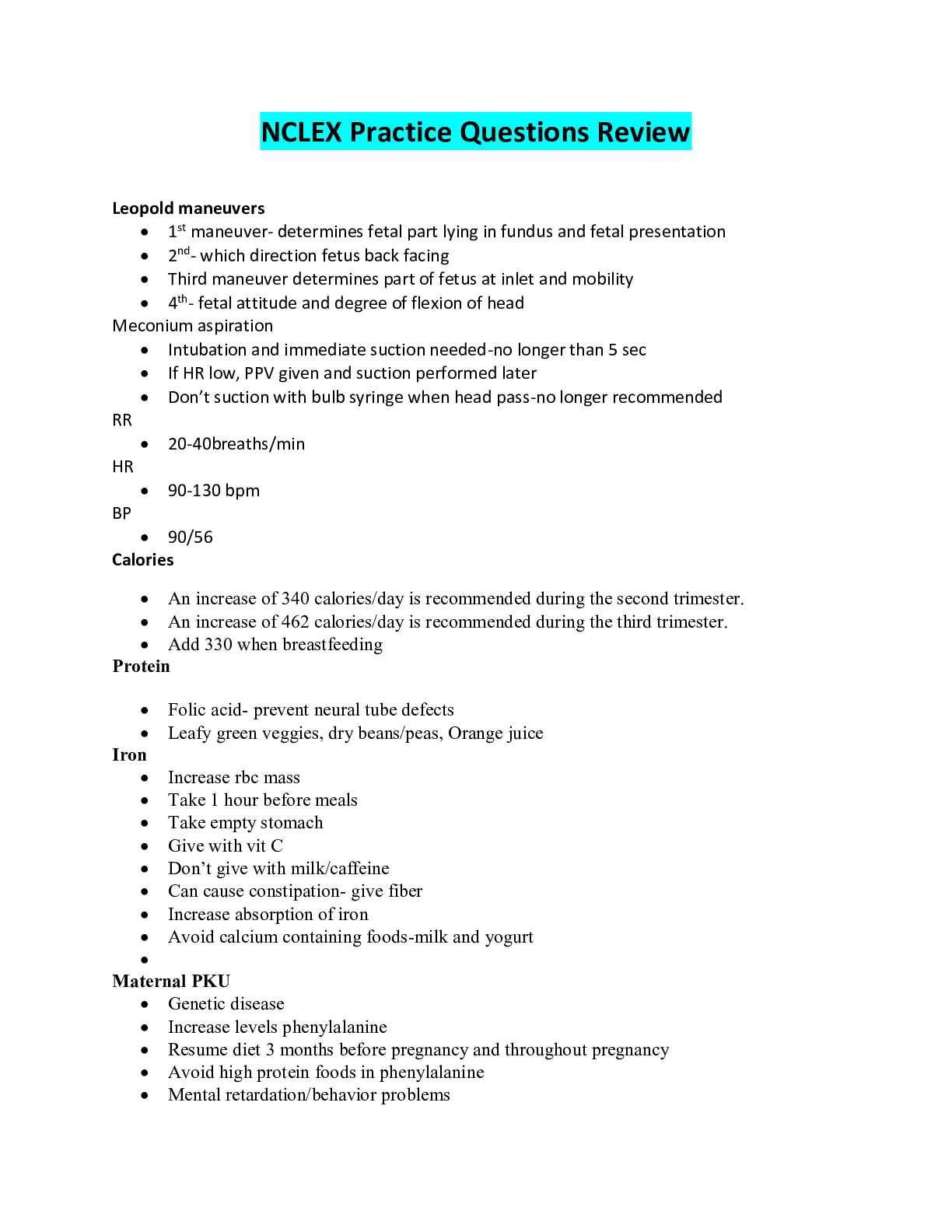
NCLEX Practice Questions Review
Leopold maneuvers
• 1st maneuver- determines fetal part lying in fundus and fetal presentation
• 2nd- which direction fetus back facing
• Third maneuver determines part of fetus at inlet and mobility
• 4th- fetal attitude and degree of flexion of head
Meconium aspiration
• Intubation and immediate suction needed-no longer than 5 sec
• If HR low, PPV given and suction performed later
• Don’t suction with bulb syringe when head pass-no longer recommended
RR
• 20-40breaths/min
HR
• 90-130 bpm
BP
• 90/56
Calories
• An increase of 340 calories/day is recommended during the second trimester.
• An increase of 462 calories/day is recommended during the third trimester.
• Add 330 when breastfeeding
Protein
• Folic acid- prevent neural tube defects
• Leafy green veggies, dry beans/peas, Orange juice
Iron
• Increase rbc mass
• Take 1 hour before meals
• Take empty stomach
• Give with vit C
• Don’t give with milk/caffeine
• Can cause constipation- give fiber
• Increase absorption of iron
• Avoid calcium containing foods-milk and yogurt
•
Maternal PKU
• Genetic disease
• Increase levels phenylalanine
• Resume diet 3 months before pregnancy and throughout pregnancy
• Avoid high protein foods in phenylalanine
• Mental retardation/behavior problems
Pap Smear
• Class 1 through Class V
• Class 3- indicate abnormal but doesn’t confirm cancer diagnosis
• Reveal abnormal cervical cell growth
Supine Hypotension
• Vena cava syndrome
• Dizziness common sign
Epidural anesthesia
• Maternal blood pressure decrease(hypotension)-give fluids
• CNS depressant
• Most effective in active labor
• Cause bradycardia in fetus-bolus mom with 500 mL of IV fluid before inserting epidural catheter
• Given before active phase of labor- prolongs the labor-take longer for cervix to dilate and efface
Spinal anesthesia
• headaches
Fundus
• Displaced when bladder full
• Post-delivery- found firm at midline
Magnesium sulfate
• Calcium gluconate antidote-reverse CNS depression
• Given to women to prevent preterm labor/stop contractions
• Can cause resp depression in mom
• Treat PIH- decrease BP
• Prevent seizures in pre-eclamptic women
• Cause CNS depression in neonate-monitor for respiration depression
• Smooth muscle relaxant
• Report decreased U/O
• Reduce RR
• Depressed or absent reflexes
• Hypotension
• Decreased cardiac function
• AE
o Decreased bp
o Depressed dtr
o Lethargy
Nalbuphine
• Opioid pain relief
Pre-eclampsia/PIH
• Cause HTN and proteinuria-monitor closely
• Edema of hands and face common finding
• Indicate hepatic involvement
• Report epigastric pain
• Report pitting edema of ankles
• Expect 3+ deep tendon reflex
• Oliguria
• Proteinuria greater than 0.3 q 24 hrs
• Expect blurred vision and photophobia
• Symptoms- sudden weight gain, swelling, edema, severe headache, reports of seeing spots, blood in urine, dizziness, nausea, vomiting
• When worsened- baby may need to be delivered or mag sulfate given IV to prevent seizures
• Call 911 to be evaluated
• Can last for many weeks after delivery
• Rest sidelying-increase tissue perfusion
• Daily fetal kick count
Drug Addiction
• Increased muscle tone
• Respirations greater than 60
• Hyperactivity –CNS irritability
• Don’t stimulate infant-need calm environment with minimal stimulation to promote rest and reduce stress
Active Labor
• Check cervix before giving pain meds
• Given too close to delivery can cause resp depression in neonate
Contraction Stress Test
• Fetus repeated decels of FHR response to contractions
• Don’t give oxytocin for positive CST at 38 weeks- compromise fetal oxygen supply
• Positive-abnormal-late decels
• Neg- normal-no late decels
• Nipple stiumation
Ectopic Preg
• Fertilized egg implant outside uterus
• Scarring from tubal infection/surgery- PID
Betamethasone(Celestone)
• Glucocorticoid
• Prevent resp distress syndrome in premature infants
• No effect on neonatal VS
• No effect on baby temp
• Given at 30 weeks gestation
• Given to stimulate fetal lung maturity-prevent resp distress
• Cause hyperglycemia in mom
• Can cause baby to have hypoglycemia 1st few hours after delivery
PIH
• Develop edema, elevated BP, proteinuria
• Reflex normally plus 2
Nonstress Test(20 min)
• Measure FHR accelerations with normal movement
• Fetal acc. Positive sign
• Increase 15/min and last 15 sec
• Nonreactive- no acc.
• Reactive- norm baseline/moderate variability
• Sit in reclining chair or on left side/don’t walk
• Give mom OJ and crackers to stimulate fetus movement
• Press button when feel fetal movement
FHR
• V C- variable decels cord compression
• E H-early decels- head compression
• A O-accelerations ok
• L P-late decels placenta insufficiency
Oxytocin
• Stimulate contractions
• Can cause decreased FHR and hypoxia due to increased uterine pressure
•
• AE- subarachnoid hemorrhage, seizure, coma, HTN, abruption placenta
• Don’t bolus
• Give through IV pump
• Always monitor FHR
• Discontinue when contractions q 1-2 min lasting 90-100 sec
Weight Gain
• 25-30 lbs entire preg
• 4 lb- 1st tri
• 12 lb- 2/3 tri
• normal- 1-3kg/month 2nd/3rd trimester
ITP
• Autoimmune response with decreased platelet count
• Increased megakaryocytes
6 weeks gestation + 24 weeks
• GBS done at 35-37 weeks
• Rubella titer done at initial prenatal visit to determine rubella immunity
•
Glucose tolerance test
• 3 hour gtt done in women with elevated glucose levels after 1 hour test is done at 28 weeks
LGA(macrosomnic infant)
• heel stick glucose 50 normal
• respirations 50 notmal
• acrocynaosis normal
• jittery is sign of hypoglycemia
Breastfeeding and engorgement
• apply cold cabbage to relieve pain
• breast binders suppress lactation
• breast shells for patients with inverted nipples or flat or pts with sore nipples
Prolapsed umbilical cord
• call for help
• apply internal upward pressure to presenting part
Abruptio placenta
• cocaine use increase risk for vasoconstriction and abrupted placenta
Infant safety
• set hot water heater no higher than 49 C 120 F
• crib slats no more than 6.3 cm 2 3/8 in apart
• no comforter in crib
hyperemesis gravidarum
• eat to taste to avoid nausea
• eat healthy snack at bedtime
• alternate liquids and solids every 2 hour
• eat protein following sweet snack
Vaginal hematoma
• pressure in vagina
• persistent vaginal pain
terbutaline
• protect from light
• relax smooth muscle
• primary action- bronchodilation
• subqqa 4 hrs no longer than 24 hr
• AE- headache, dizzy, arrhythmias, nausea, paradoxical bronchospasms, tachycardia, hyperglycemia, hypoklemia
Hydatidiform mole
• Placental abnormal
• Chorionic villi of placenta develop into grape like mass-clear vesicles
• With or w/o fetus present
• Avoid preg for 1 year
• As cells slough- discharge dark brown vaginal
Jaundice
• Pathological- 1st 24 hrs, inform HCP- stat bilirubin test
• Physiological- breastfed after 24 hours
Late decels
• Placental insufficiency
• Pressure on IVC-decrease O2 to placenta and fetus
• Turn on left side, give O2, then give fluids
Naloxone
• Reverse respiratory depression, hypotension of opiods
• AE- seizures, pulmonary edema, tachycardia, HTN, V FIB
Diaphragm
• Remove after 24 hrs-clean with mild soap water
• Replace q 2 years
• Insert on empty bladder
• Weight gain greater/less 10-15 lbs refitted
• Keep in place 6 hours after sex
Chadwick sign
• Blue discoloration in cervix, vagina
Low Back pain
• Posterior-face mom back
• Rub lower back-help relax muscles in low back and relieve pressure of fetus head
Cerclage
• Reinforce weak cervix
• Use sutures that go around cervix, hold it close
• Go to hospital first sign of labor
• Can have sex
Polyhydramnios
• Excessive fluid surrounding fetus
• Increased fundal height
• Increased weight gain
• Increased urination
• GI fetal malformations and neuro disorders-anticipate
Oligohydraminos
• Volume amniotic fluid less than 300
• Fetal renal dysfunction
• Obstructive uropathy
• Confirmed by US
• IUGR
Mineral oil
• Treat constipation
• Take at bedtime on empty stomach
•
Abruption placentae
• Premature separation of placenta from uterine wall
• Platelet count decreased
• Prolonged partial thromboplastin
• Decreased fibrinogen
• Normal clotting time
• Abdominal pain-sharp painful bleeding
Placenta previa
• Placenta attach low in uterus
• Painless vaginal bleeding
• Life threatening-need continued hospitalization and close monitoring
• Near or covering cervix opening- partially or totally
• Don’t perform vaginal exams
• Monitor fetal heart tones- continuous EFM
• Take vs q 15 min
• Most common in 3rd trimester
Abdominal US
• Need full bladder
• Ask when last voided
Rubella
• When mom titer neg, give another after delivery
• Avoid preg at least one month after vaccine
• Mild rash and joint ache 7-10 days after
• Get each preg
• May have low grade fever
Erythromycin ophthalmic
• Give within 1st hour
• Gonorrhea/chlamydia
Hep B vaccine
• Given several hours after birth
• Parent consent
Vitamin K
• Used for synthesis of clotting factors in liver
• Given to prevent bleeding
• Newborns risk of bleeding-lack of intestinal flora needed to make vit K
Cephalhematoma
• 2-6 weeks for edema and discoloration to disappear
• no treatment needed
caput succedaneum
• resolve 2-3 days
Ergotamine
• treat migraine
• one tab at onset of migraine
• max 3 in 24 hr period
•
Methylergonovine(methergine)
• treat PP hemorrhage
• monitor VS and vag bleeding
• AE- seizures, stroke, headache, nausea, chest pain, palpitations, increased BP
• CI- high BP
Bethanechol
• Cholinergic stimulate muscarinic receptors
Phenytoin
• Don’t take with mil or calcium
• Less than 10mcg subtherapeutic-cause seizures
• Levels more than 20 toxic effects
• Cause gingival hyperplasia- tell dentist
• Report nystagmus
Anticholinergic drugs
• Worsen urinary retention
• Atropine
• Scopolamine
• Benztropine
o Constipation
o Tachycardia
o
Glucose in infants
• Normal ranges 40-95 mg/dL
• Fasting glucose 60-90 for pregnant
Bilirubin
• Report greater than 8
Hct
• Normal 48-69%
LGA
• Weight above 90th percent
• Increase risk for hypoglycemia
Congenital hip dysplasia
• Limited abduction indicate head femur slipped out of acetabulum
• Limited abduction of hip
• Asymmetrical gluteal folds
Stepping reflex
• Should be gone by 4 weeks
Moro reflex aka startle reflex
• 8 weeks
Babinski reflex
• 1 years
• Stroke bottom of foot
Extrusion
• Infant spit out food
tonic neck
• 3-4 months
Jet hydrotherapy
• Doppler device, fetoscope, wireless external monitor safe
• Don’t use internal electrode
Newborn assessment
• Posterior fontanel should be larger than anterior
• Assess apical pulse for 1 full minute-when baby quiet
• Overlapping suture line
• Lanugo over shoulders normal
• Breast nodules up to 10mm
• T 36.5-37.2C
• Weight 2.5-4 kg
• Length 45-55cm
• Chest circumference in term 2 cm less than head circumference-measured at nipples
• Head circumference greater than 37cm or less than 33cm investigate for neurologic involvement
Neonatal sepsis
• Temp instability
• Tachypnea
• Hypotonia
• Lethargy
• Nasal flaring
• Irritability
Vaginal hematoma
• Pressure in vagina
• Persistent vaginal pain
Infant safety
• Hot water heater no higher than 49 C 120 F
• Crib slats no more than 2 3/8 inch
• No loose bedding in crib
Amniocentesis
• Rhogam given following procedure
• Potential of fetal RBC entering maternal circulation
• Given at 28 wks
Circumcision
• Sterile gauze for bleed
• Petroleum jelly each change
• Don’t wipe off yellow exudate- normal
• Document voids after- secondary
• Change diaper at least q 4 hours
• Avoid soap and water
• Rim usually fall off in 1 wk
• 1st priority is to monitor for bleeding q 15 min for 1st hour after procedure
• DON’T APPLY petroleum jelly after circumcision when plastibell used
• Complications-hemorrhage, infection, urethral fistula formation
Mastitis
• Unilateral breast pain with tenderness
Reposition, increase fluids, give oxygen 8L
Itp
• Decreased platelet
• Increased megakaryocytes
GBS
• 35-37 wks
3 hr glucose
• 28 wks
Heparin
• don’t take aspirin
• bedrest
• don’t massage
• apply warm compress not cold
hperbilirubinemia
• yellow mucous membranes, bron or gold urine, maculopapular rask normal
• irritable complication
Uterine Inversion
• Don’t remove placenta if still attached- can cause larger SA for bleeding
• Large amt blood suddenly gush from vagina
• Fundus not palpable in abdomen
• Don’t give oxytocics- compounds the inversion
• Assess VS and establish IV access and fluids
• Discontinue uterotonic drugs-allow uterine relaxation for replacement
Pharmacology NCLEX practice questions
Acetazolamide
• Diuretic
• For chronic open angle glaucoma, epilepsy, edema
• AE
o Paresthesia-tingling fingers
o Hyperglycemia
Oxybutynin
• For urinary incontinence
• Anticholinergic effects-dry mouth, photophobia, constipation, blurred vision, tachycardia
Dopamine
• Increase BP in cardiogenic shock
• Cardiac stimulation
• No effect on RR
• Increase renal circulation- incr UO
Doxycycline
• Tetracycline antibiotic
• CI
o Pregnancy
o Effects on developing bone and teeth
Regular insulin
• Manage gestational diabetes
Baclofen
• Decrease seizure threshold in pt with epilepsy
• Decr freq and severity of muscle spasms
• No effect on cognition
• Inhibits reflexes at spinal level
Tamoxifen
• Treat breast cancer
• AE
o Menstrual irregular
o Hot flashes-anti estrogen
o Bruising
Inhibitor overdose
• Antidote- atropine sulfate
Neuromuscular blocker overdose
• Neostigmine- cause nausea, increased salivation, bradycardia
Clindamycin
• Can cause C dif-watery diarrhea
• Topical application cause face swelling
• Generalized muscle aches
Sedative hypnotic anxiolytics
Benzodiazepines
• Prototype
o Alprazolam
• Antidote
o Flumazenil
• Meds
o Diazepam
o Lorazepam
o Oxazepam
o Clonazepam
o Clorazepate
o Chlordiazepoxide
• Complications
o CNS depression
Sedation, lighthead
o Anterograde amnesia
o Resp Depression
Hypotension
Cardiac/resp arrest
Gastric lavage
Activated charcoal
Monitor VS
o Paradoxical response
Insomnia
Euphoria
Anxiety
Rage
o Withdrawal effects
Taper off over few weeks
• Contraindication
o Sleep apnea
o Glaucoma
o Resp depression
o Liver disease
o Used short term due to dependency
• Interactions
o CNS depressants
Alcohol
Opioids
Barbituates
Anticonvulsants
Antihistamines
o Grapefruit
Reduce metabolism
o Fatty meals
Reduce absorption
• Considerations
o Take at bedtime
o Take with meals
Atypical anxiolytic/nonbarbituate
• Prototype
o Buspirone
• Action
o Bind serotonin and dopamine receptor
o Dependency less likely
o 2-6 wks full effect
o Take on schedule
• Complications
o Dizzy
o Nausea
o Lighthead
o Agitation
o Constipation
o Suicide ideation
o Take with food
• Contraindications
o MAOI use- 14 days after use- hypertensive crisis
• Interactions
o Erythromycin
o Ketoconazole
o St johns wort
o Grapefruit juice
Increase effects of buspirone
Avoid use
o Increase risk for serotonin syndrome with SSRI
Monitor for SS
• Fever
• Tremor
• Diarrhea
• Delirium
• Considerations
o Take with meals
o A week to notice effects
o Take on regular basis
o Tolerance, dependence not issue
SSRI-antidepressants
• Prototype- paroxetine
• Other
o Sertraline
o Citalopram
o Escitalopram
o Fluoxetine
o Fluvoxamine
• Action
o Inhibit ssri reuptake
o Paroxetine
produce CNS stimulation –insomnia, wt loss and decreased appetite
increase risk for birth defects
o Long half life
o Up to 4 weeks for therapeutic
• Complications
o Serotonin syndrome 2-72 hrs after
o Nausea
o Diaphoresis
o Agitation
o Confusion
o Anxiety
o Hallucinations
o
o Tremor
o Headache
o Dry mouth
o Fatigue
o Drowsy
o Sex dysfunction
Med holiday
Sildenafil and buspirone use
o Wt gain
o GI bleed
Report dark stool
Coffee ground emesis
o Hyponatremia
o Serotonin syndrome
Agitation
Confusion
Difficult concentration
Tachycardia
Abdominal pain- diarrhea
Cardiovascular shock
Hypertension
Seizures
death
Myoclonus-spastic jerky muscle contractions
Hyperreflexia
Fever
Begin 2-72 hrs after
Report manifestations
o Bruxism
Grinding of teeth during sleep
Use mouth guard
Treat with low dose buspirone
o Postural hypotension
o Suicide ideation
o Rash
o GI bleed
• Contraindications
o Paroxetine- avoid alcohol
o Use cautious pts with liver/renal dysfunction, seizure disorder, GI bleeding
o MAOI or TCA use
• Interactions
o MAOI and TCAs and lithium
Cause SS
o Antiplatelet meds/anticoagulants
Increase bleed risk
Warfarin
• Monitor PT/INR levels
o St john wort- don’t take with
o Considerations
Take with food
CNS stimulation
• Take¬ in morning
Take on daily basis
4 weeks to be therapeutic
Don’t take with NSAIDS- can take Tylenol
o
Digoxin
o Normal therapeutic range 0.5-2 ng/mL
o Greater than that toxic call HCP
o Cause blurred vision AE
Depressive disorders
SSRI- see above
SNRI
• Prototype
o Venlafaxine
• Other meds
o Desvenlafaxine
o Duloxetine
• Action
o Block reuptake NE
• Complications
o Nausea
o Anorexia
o Wt loss
o Headache
o Insomnia
o Anxiety
o HTN
o Tachycardia
o Dizzy
o Blurred vision
o Withdrawal syndrome
o Suicide risk
o Sex dysfunction
o SSRIbronchitis
o Dyspnea
• Contraindications
o SSRI
o MAOI
o TCA
o Discontinue 2 weeks before starting MAOI
• Interactions
o Neuroleptic malignant syndrome if given with MAOIS
Don’t take
o NSAIDS/anticoag
Increase bleed risk
o Alcohol
Increase risk CNS effects
o Kava, Valerian
Increase risk for CNS depression
• Avoid
Atypical antidepressants
• Prototype
o Bupropion
• Other meds
o Vilazodone
o Mirtazapine
o Reboxetine
o Trazadone
• Action
o Inhibit NE and dopamine uptake
o For pts who cant tolerate sex dysfunction
o Smoking cessation
• Complications-anticholinerggic effects
o Headache
o Dry mouth
o GI distress
o Constipation
o Tachycardia
o Htn
o Restlessness
o Insomnia
o N/V/anorexia, wt loss
o Seizures
• Contraindication
o MAOIs use
o Seizure and eating disorders
• Interactions
o MAOIs-phenelzine
Increase toxicity risk
TCAs
• Prototype
o Amitriptyline
o Take with food or immediately after
• Other meds
o Imipramine
o Doxepin
o Amoxapine
o Trimipramine
o Desipramine
o Clomipramine
o Notriptyline
• Action
o Block serotonin and NE reuptake
o 10-14 days or longer for effects 4-8 wks
o Fibromyalgia
o Neuropathic pain
• Complications
o Orthostatic hypotension
Monitor BP and HR before and 1 hr after giving
o Anticholinergic effects
o Htn
o Bluish green urine
o Constipation
o Tachycardia
o Photophobia
o Sedation
o Toxicity
Cardiac dysrhythmias
Mental confusion
Seizures
Coma
Death
o Decreased seizure threshold
o Excessive sweating
• Contraindications
o Seizure disorders with MI
o Cautious in diabetics, CAD, BPH, resp disorders
o 1 wk supply for suicide risk increase
• Interactions
o MAOI/st john wort
o Antihistamines
o Anticholinergics
o TCAs
o Alcohol
MAOI
• Prototype
o phenylzine
• other meds
o isocarboxazid
o tranylcypromine
o selegine-transdermal MAOI
• Action
o Increase NE, serotonin, dopamine and tyramine
o Tyramine can cause hypertensive crisis
• Complications
o CNS stimulation
o Orthostatic hypotension
Monitor BP and HR before and after
Hold less than 60
o HTN crisis
Vasoconstriction and stimulation of heart
Headache/N/increased HR and BP
Give phentolamine IV- rapid acting adrenergic blocker or nifedipine
Continuous cardiac monitoring and resp support
o Considerations
Reduce tyraine
MED SURGE REVIEW
Respiratory ATI Practice questions
Crepitus
o Aka subQ emphysema
o Coarse crackling sensation palpated over skin surface
o Indicate air leak ino subQ tissue
o Indicate pneumothorax
Friction rub
o Scratching/squeaking sound
o Don’t clear with coughing
o Indicate pericarditis or pleurisy
Cheyne stoke respirations
o Rhythmic increase and decrease in rate with periods of apnea
o Reflect severe brain dysfunction
ARDS
o Life threatening
o Inflammation of lungs and accumulation of fluid in alveoli cause hypoxia
o Initial manifestations- increased restlessness, apprehension, anxiety, increased respirations, dyspnea, air hunger, retraction of accessory muscles, cyanosis
o Verconium- neuromuscular blocking agent facilitate vent and decrease o2 consumption
o Gentamicn- nephrotoxic
o PAWP(preload) normal in pt
o Fluid in alveoli from increased permeability of the alveolar-cap membrane
o
o Increased RR indicate decline in condition-earliest sign
ARF
o Increased CO2
o Decreased pH- resp acidosis
o Decrease in O2 sat
o Lower pp oxygen
Pneumonestomy
o Must clear secretions from remaining lung
o Pt splint incision while coughing
o demonstrates dyspnea, cough, frothy sputum, crackles, and possibly cyanosis.
o Pain with deep breathing is expected and is managed with analgesics.
o The client with pneumonectomy most likely will not have a chest tube because the lung has been removed
o May cause increased airway pressure because of resistance to lung inflation
Pneumothorax
o Pt has severe diminished or absent breath sounds on affected side
o SOB
o Chest pain
o Hyperresonance on affected side
Emphysema
o Purse lipped breathing greatest effect on exhalation not inhalation- breath in through nose and out through lips
o Help rid of CO2
COPD
o Resp acidosis-hypoventilation dec ph increased co2
o Venturi mask- delivers most oxygen conc.
o Delivers precise amt o2
o Manifestations- hypoxemia, hypercapnia, dyspnea on exertion or rest, accessory muscle use, oxygen desat
o X-ray reveal hyperinflated chest, diaphragm flattened
o PFT- decreased vital capactity
o Difficult exhaling CO2-loss elastic recoil in lungs
o Vomiting and diarrhea cause metabolic alkalosis
o Schedule resp treatments before meals
o Give diet high in calories and protein, low in carbs
o Schedule short activities
o Clubbing expected
o Purse lip breathing expected-promote )2 elimination
o Low o2 sat expected
Chest physiotherapy
o Helps mobilize secretions in airway- percussion and vibration performed
Thoracentesis
o Aspirate fluid or air from pleural space
o Upright position sitting and leaning over bedside table
o Wear goggles and mask
o Cleanse area with antiseptic
o Remain completely still
o Apply pressure to site after removing needle
........................continued............................
[Show More]