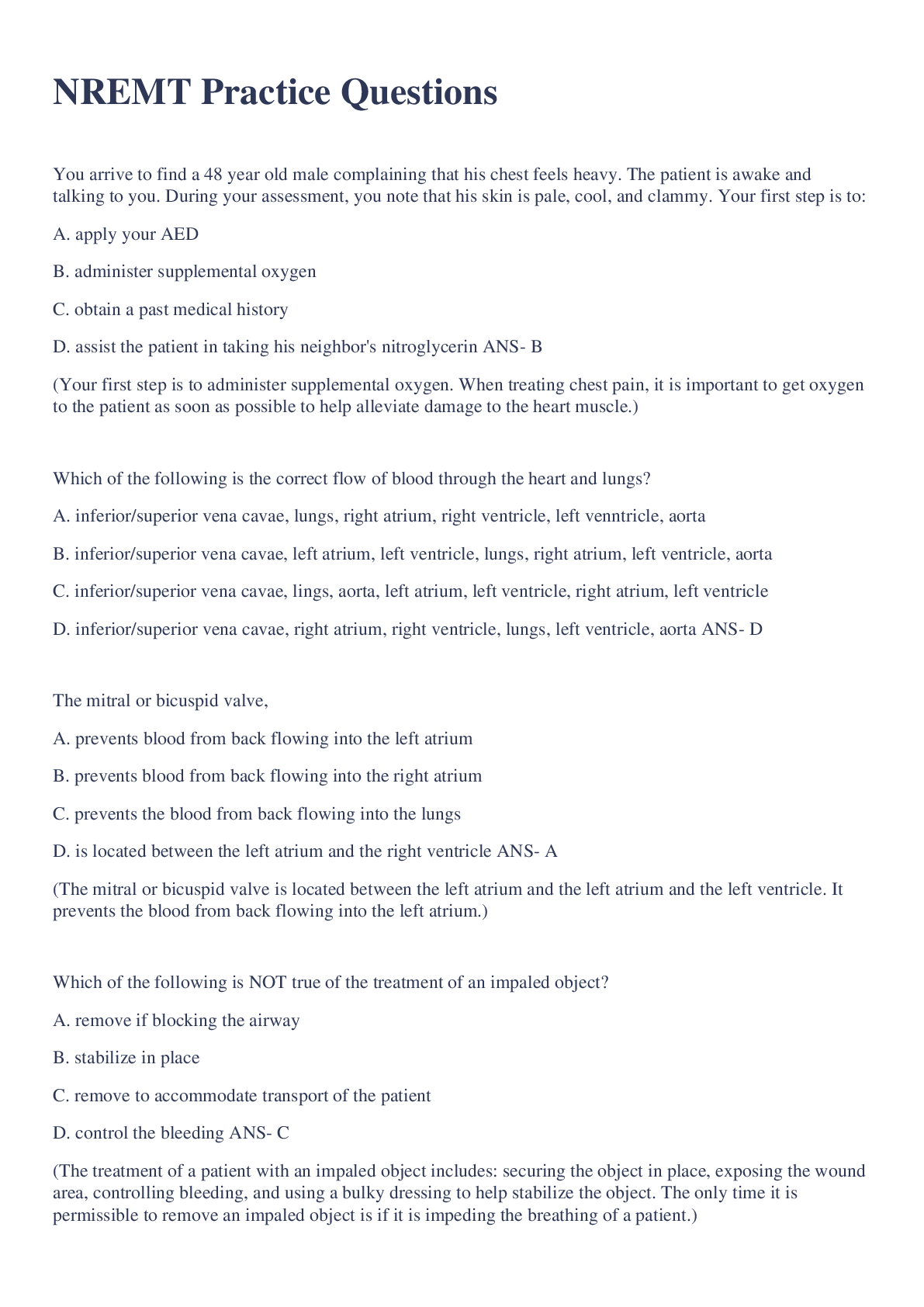
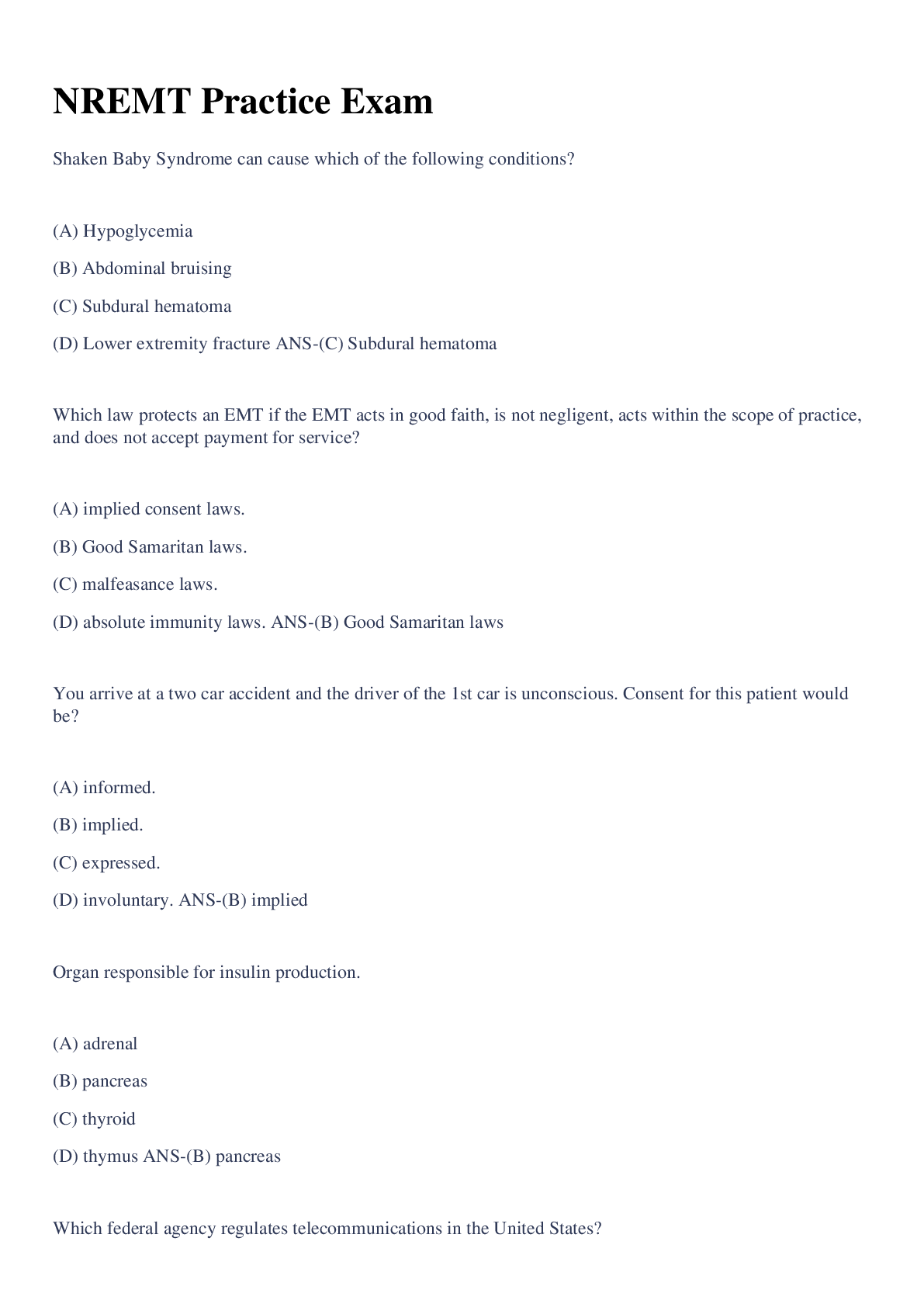
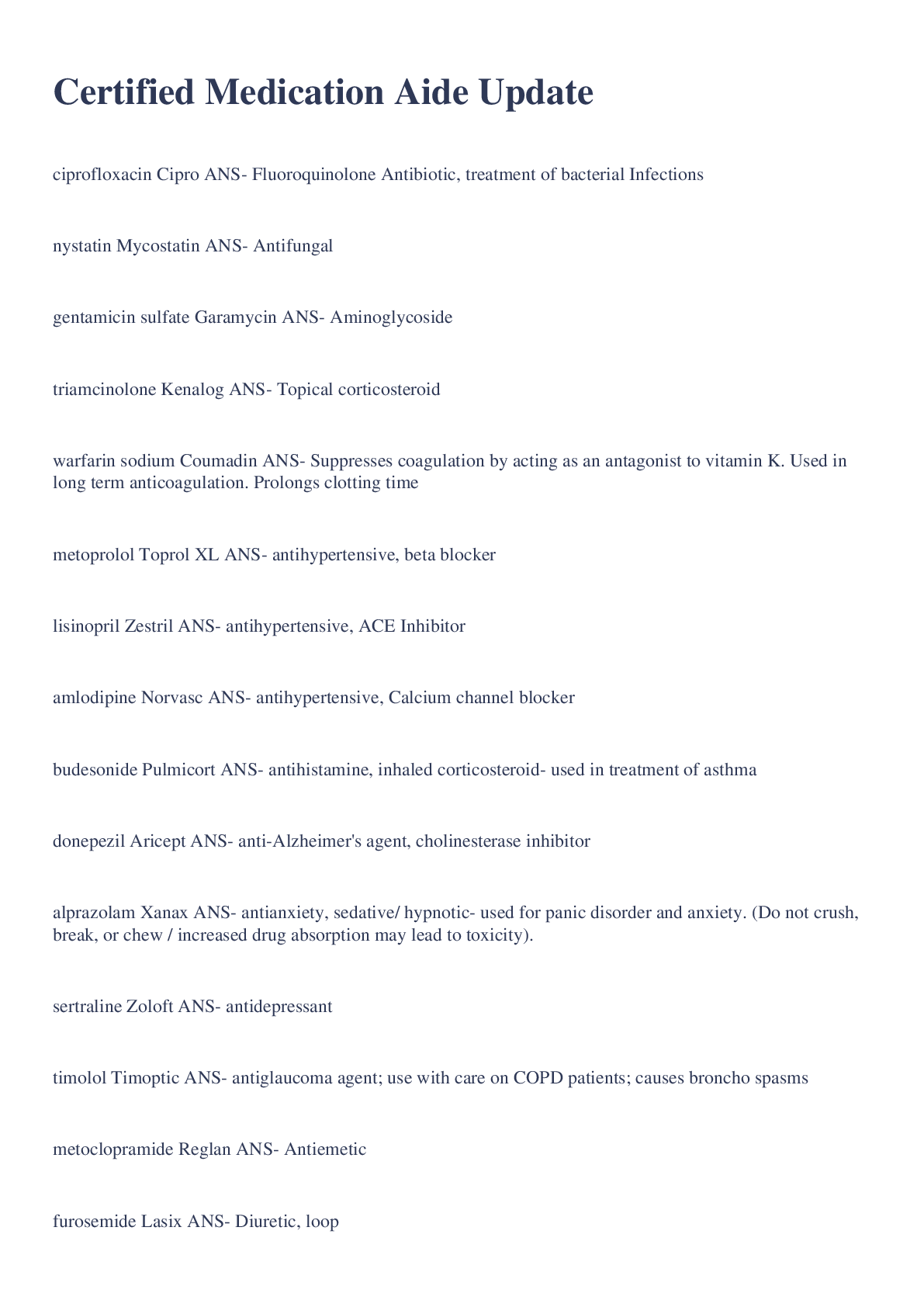
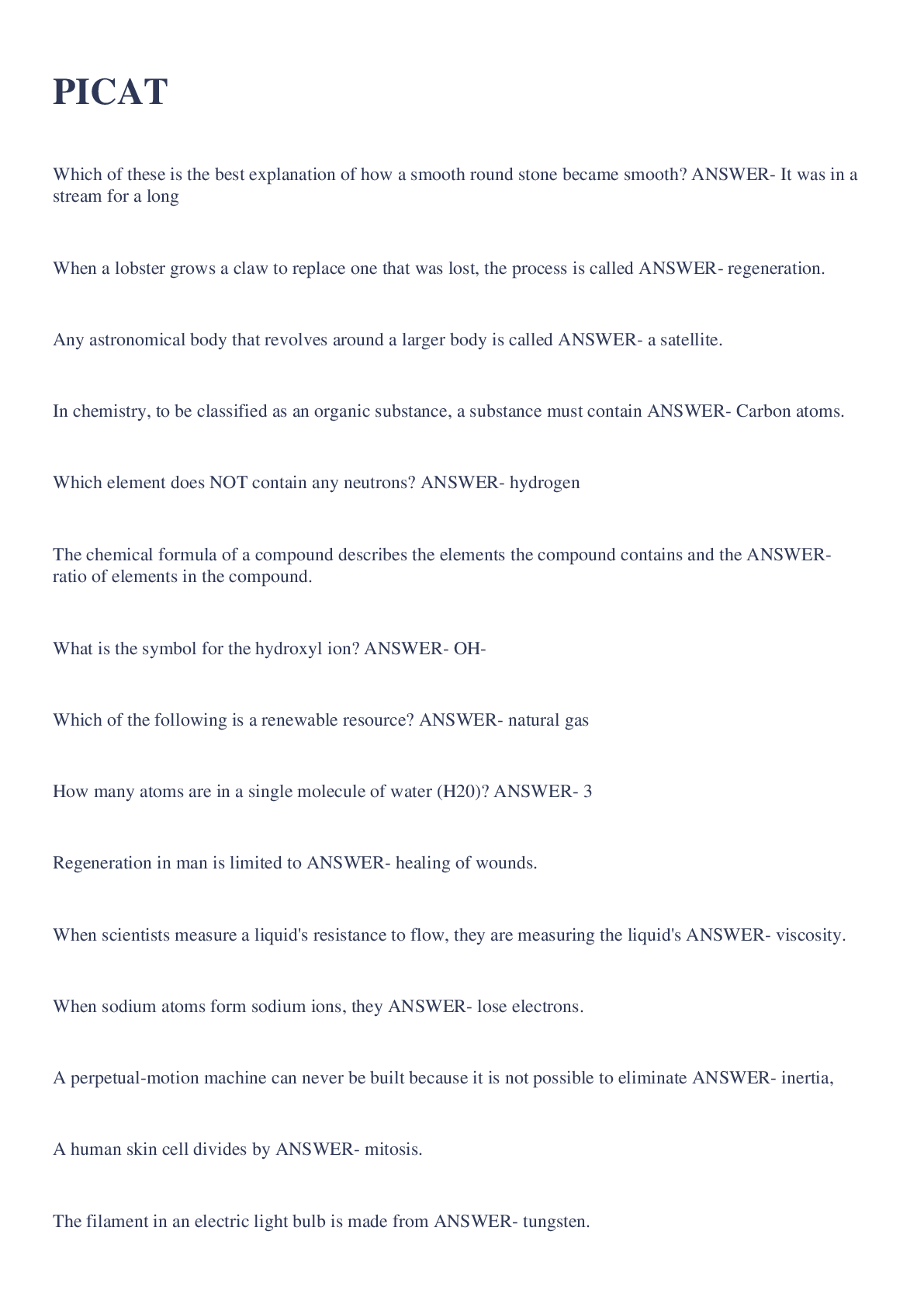
Medicine > QUESTION PAPER & MARK SCHEME > NREMT Exam Questions and Answers LATEST 2023 GRADED CORRECTLY (All)
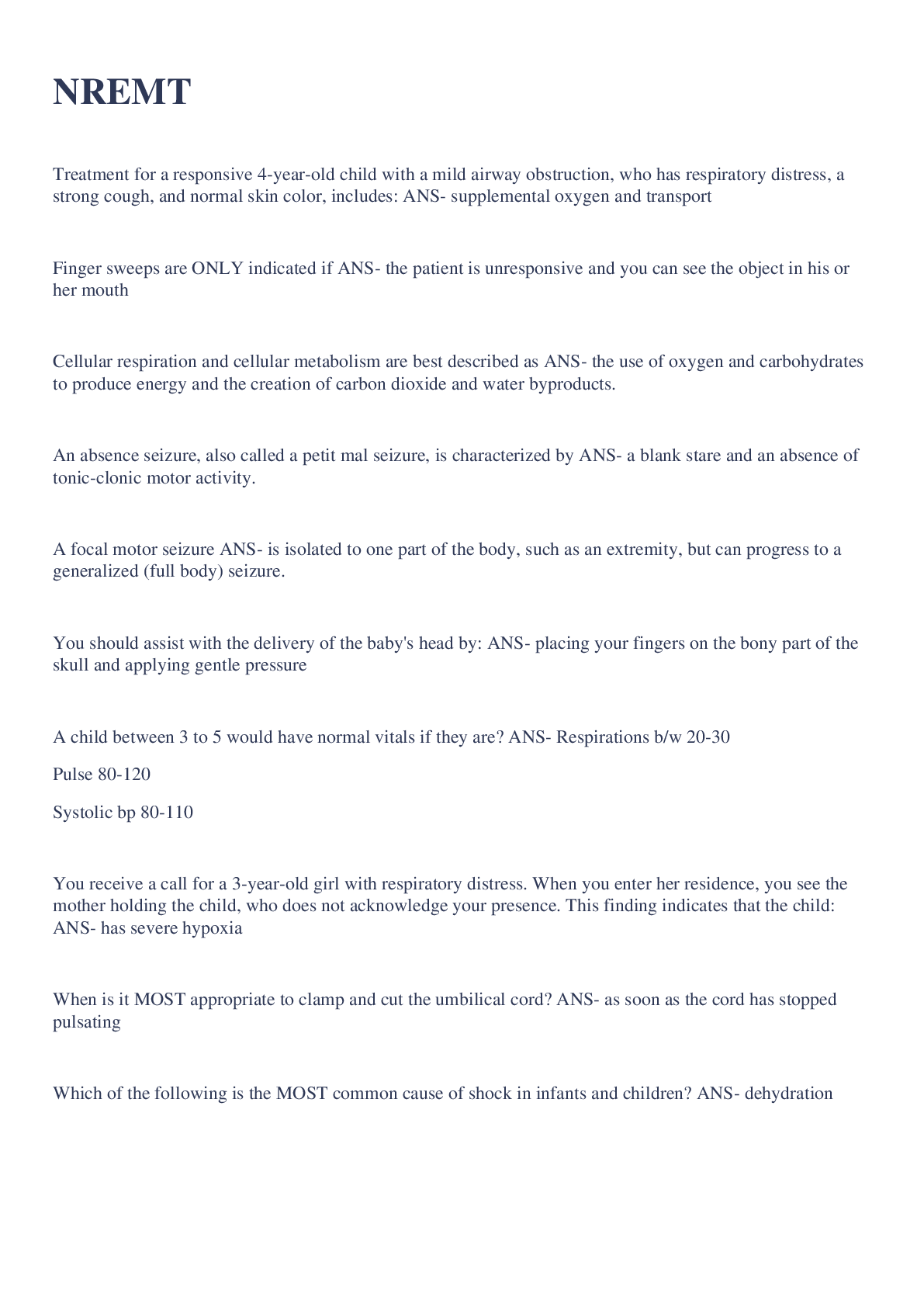
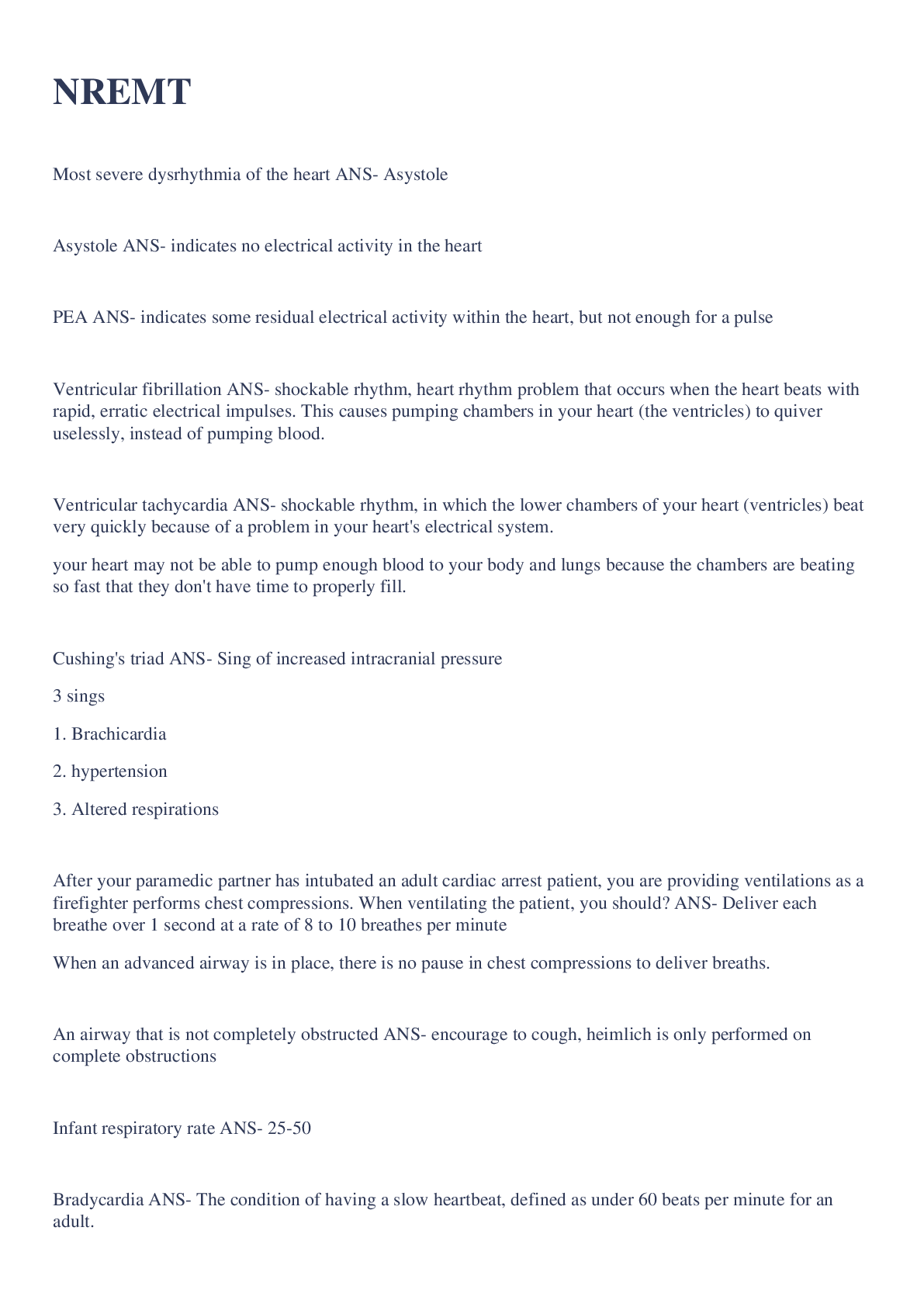
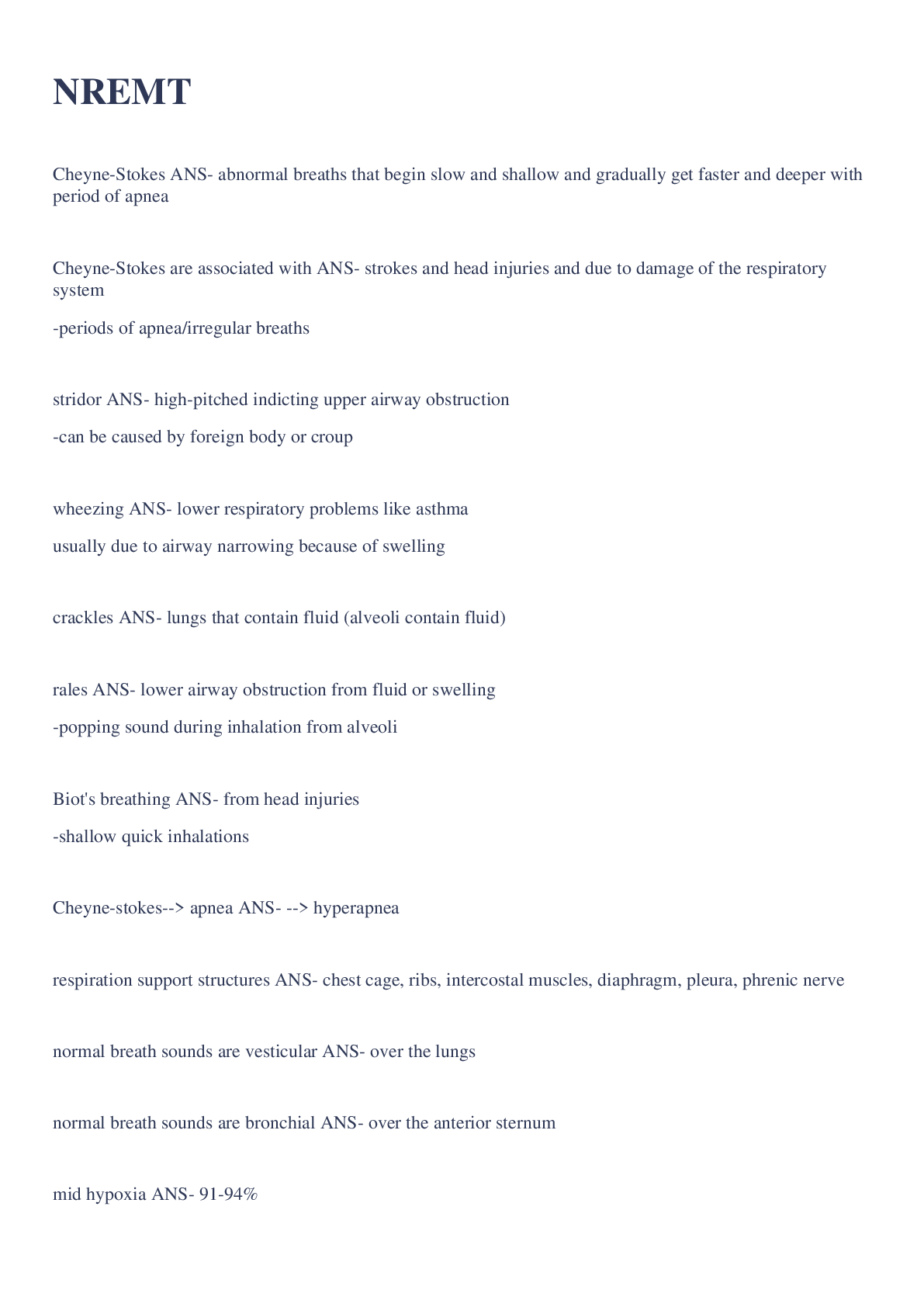
NREMT Exam Questions and Answers LATEST 2023 GRADED CORRECTLY
Document Content and Description Below
Last updated: 3 years ago
Preview 1 out of 28 pages
Instant download
Buy this Document to get the Full Access Instantly
Provided by Students Who Aced it
We Verify Document Content to Gurantee Accuracy
Reviews( 0 )
Document information
Connected school, study & course
About the document
Uploaded On
Oct 04, 2023
Number of pages
28
Written in
All

Additional information
This document has been written for:
Uploaded
Oct 04, 2023
Downloads
0
Views
180
Topic Tags
Recommended For You
Get more on QUESTION PAPER & MARK SCHEME »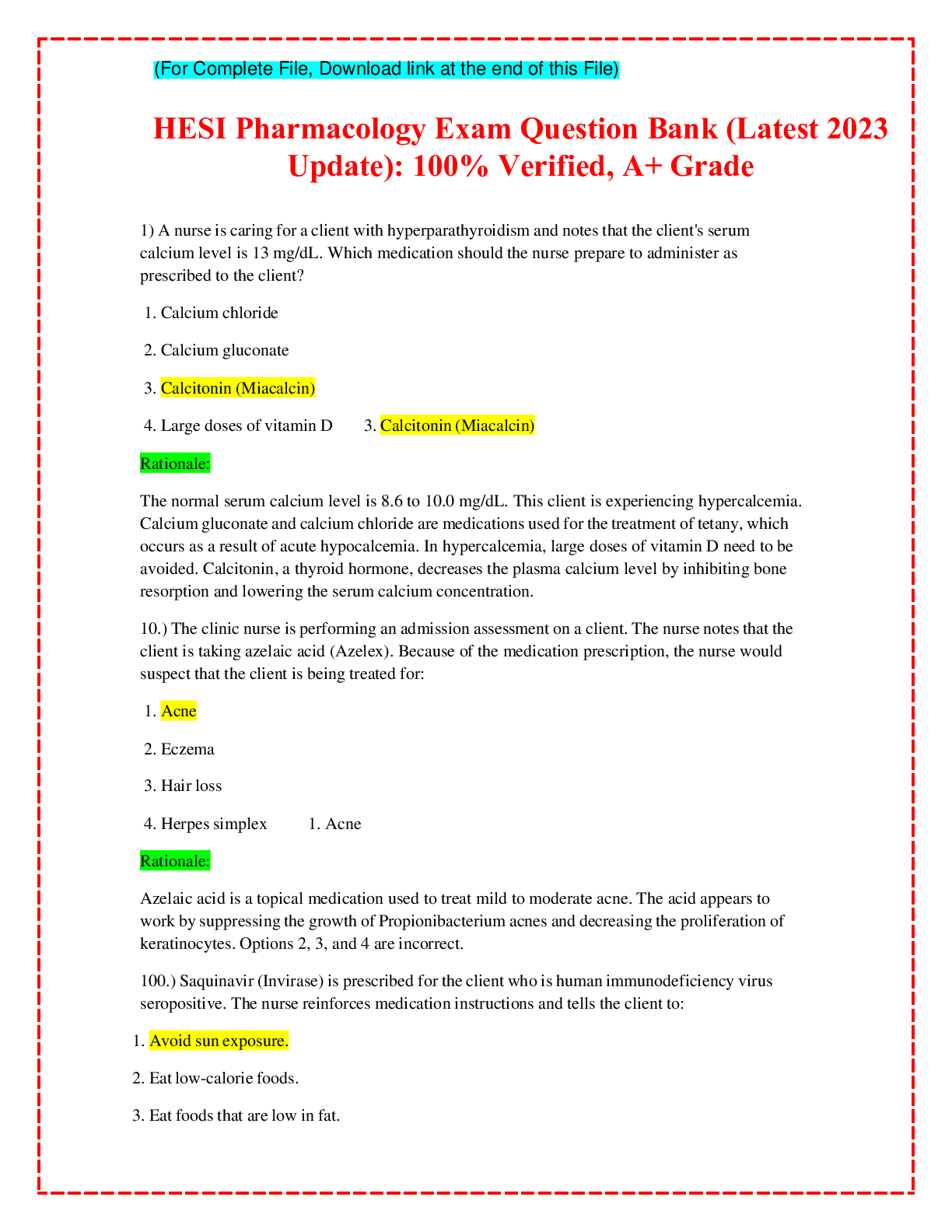
HESI Pharmacology Exam Question Bank (Latest 2023 Update)

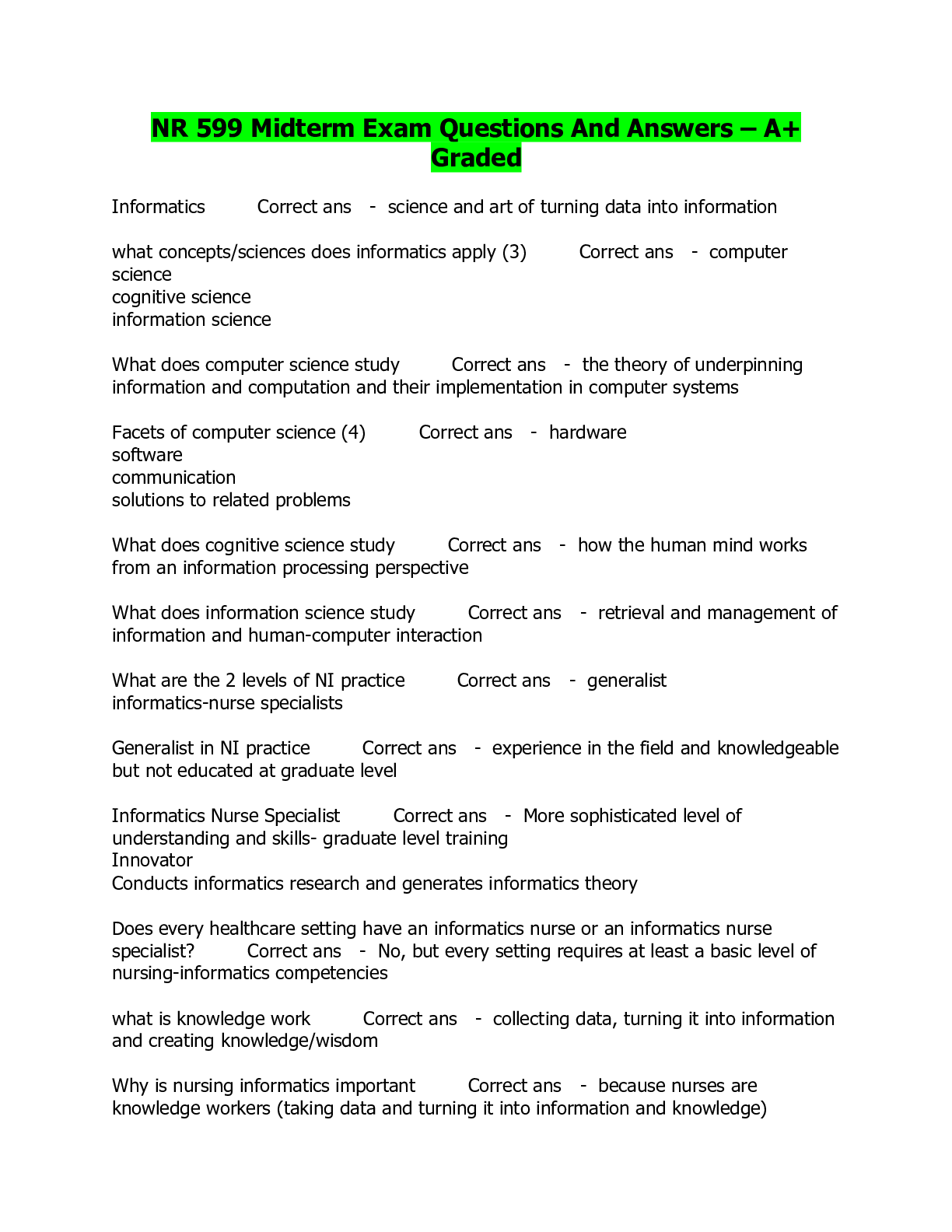
NR 599 / NR599 Midterm Exam (Latest 2023 / 2024) Nursing Infor...
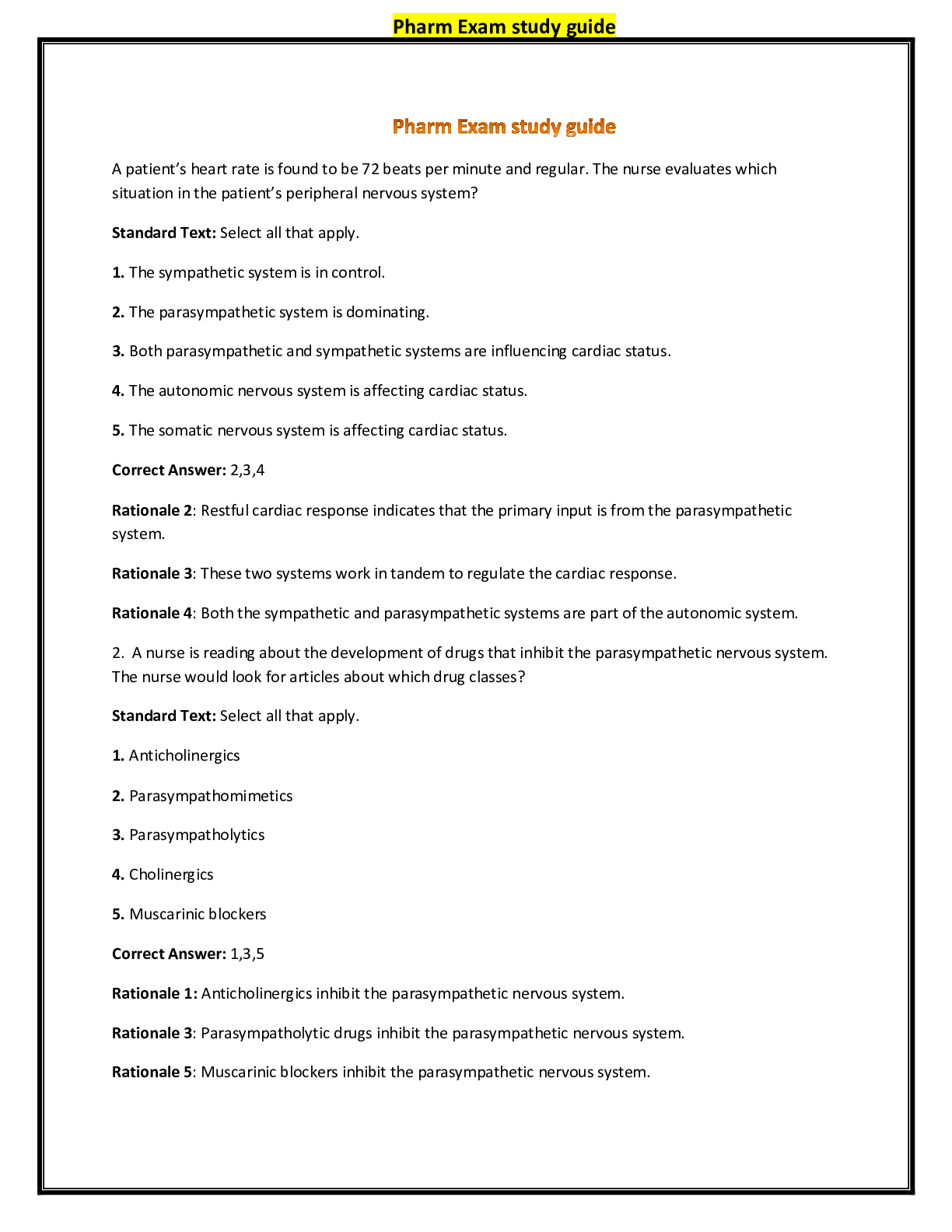
Pharmacology Exam Study Guide Test Bank_Complete Latest 2023 |...
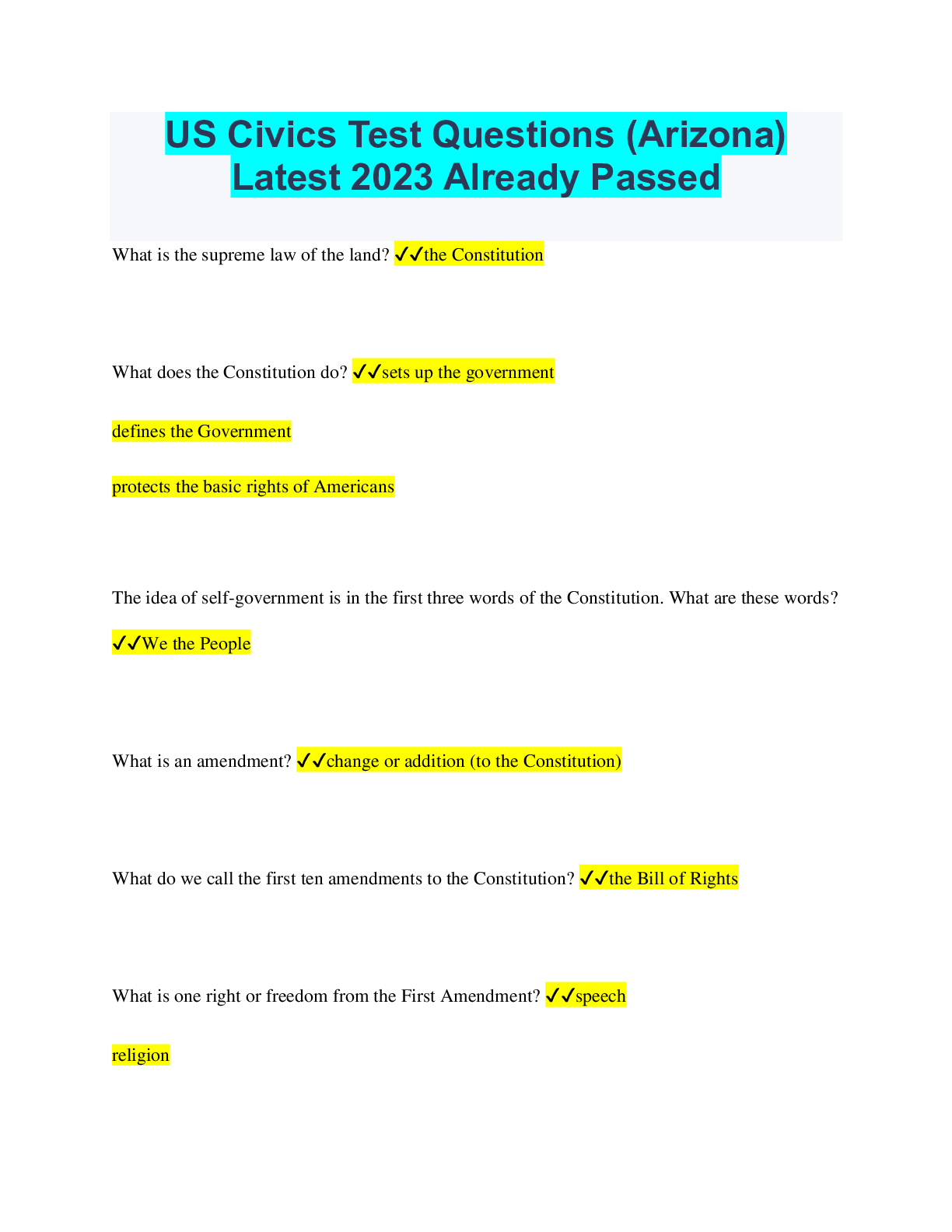
US Civics Test Questions (Arizona) Latest 2023 Already Passed
.png)

Solutions Manual for Fluid Mechanics Fundamentals and Applicat...
Magnetic Nanoparticles in Human Health and Medicine Current Me...

NEW RPSGT EXAM- Study Guide and Practice Test Latest Update Gr...

Edexcel Level 3 GCE 9CH0/02 Chemistry Advanced PAPER 2_ Advanc...

OCR A Level Business H431/02 The UK business environment Resou...
.png)
OCR A Level Classical Civilisation H408/24 Greek Art/ A Level...
.png)