NURSING > EXAM > NR 443 Chapter 16: Cognitive Disorders: Delirium, Dementia, and Amnestic Disorders (All)
NR 443 Chapter 16: Cognitive Disorders: Delirium, Dementia, and Amnestic Disorders
Document Content and Description Below
Last updated: 4 years ago
Preview 1 out of 15 pages
Instant download

Buy this Document to get the Full Access Instantly
Provided by Students Who Aced it
We Verify Document Content to Gurantee Accuracy
Reviews( 0 )
Document information
Connected school, study & course
About the document
Uploaded On
Feb 23, 2021
Number of pages
15
Written in
All

Additional information
This document has been written for:
Uploaded
Feb 23, 2021
Downloads
0
Views
58
Topic Tags
Recommended For You
Get more on EXAM »
Test Bank for Lewis\'s Medical-Surgical Nursing, 12th Edition...
Latest Test Bank For Lewis's Medical-Surgical Nursing, 12th Ed...
PNM 300 Pharmacology Test Bank Chapter 1-6 | Questions and VE...
BIOS 1404 Chapter 16 Questions and Answers (Verified Answers...
NR 331 Test 1 Practice Questions Chapter 16-19, 26-29, 32 Qu...
BIOS 105 Chapter 16 Questions and Answers (Verified Answers)
TEST BANK for Medical-Surgical Nursing: Concepts for Interprof...
Test Bank For Lewis's Medical-Surgical Nursing, 12th Edition...
Lewis’s Medical Surgical Nursing 12th Edition Harding Test Ban...
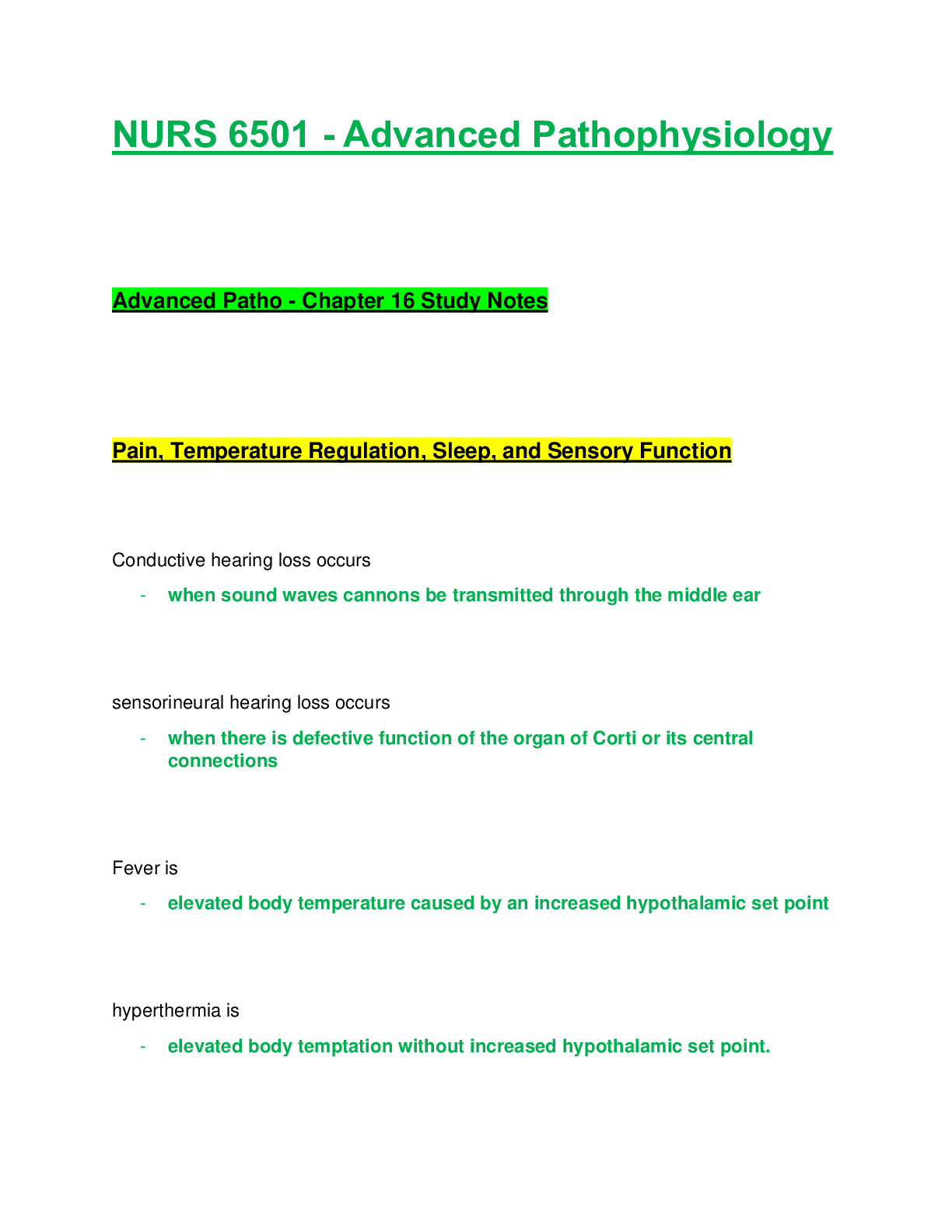
NURS 6501 / NURS6501: Advanced Pathophysiology - Chapter 16 St...

NR566 / NR 566: Advanced Pharmacology for Care of the Family W...
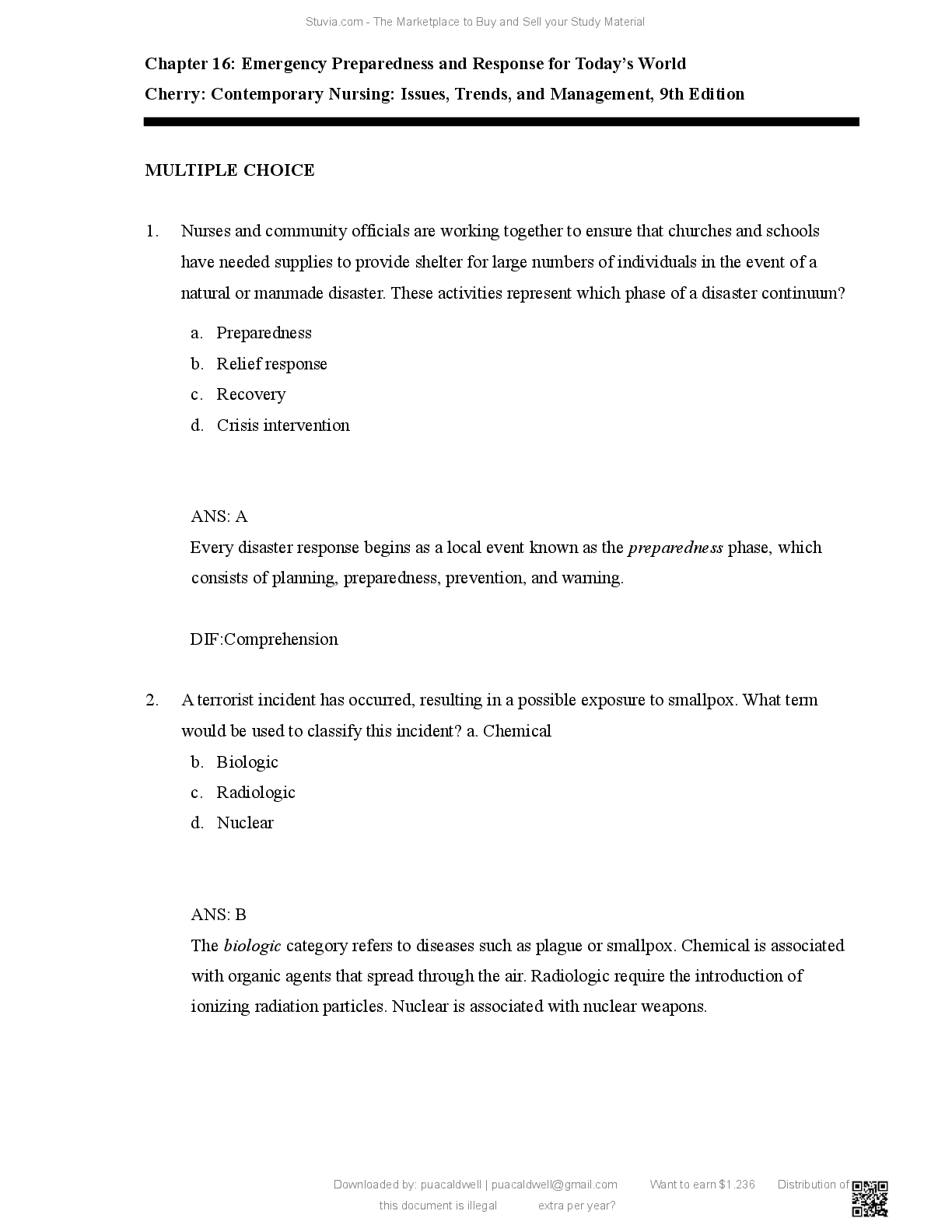
CONTEMPORARY NURSING ISSUES TRENDS AND MANAGEMENT CHAPTER16 9T...
.png)
ESSENTIAL CELL BIOLOGY, FOURTH EDITION CHAPTER 16: CELL SIGNAL...

Liberty University - BUSI 681 Quiz 8 - BO1 LUO Quiz 8 - Chapte...
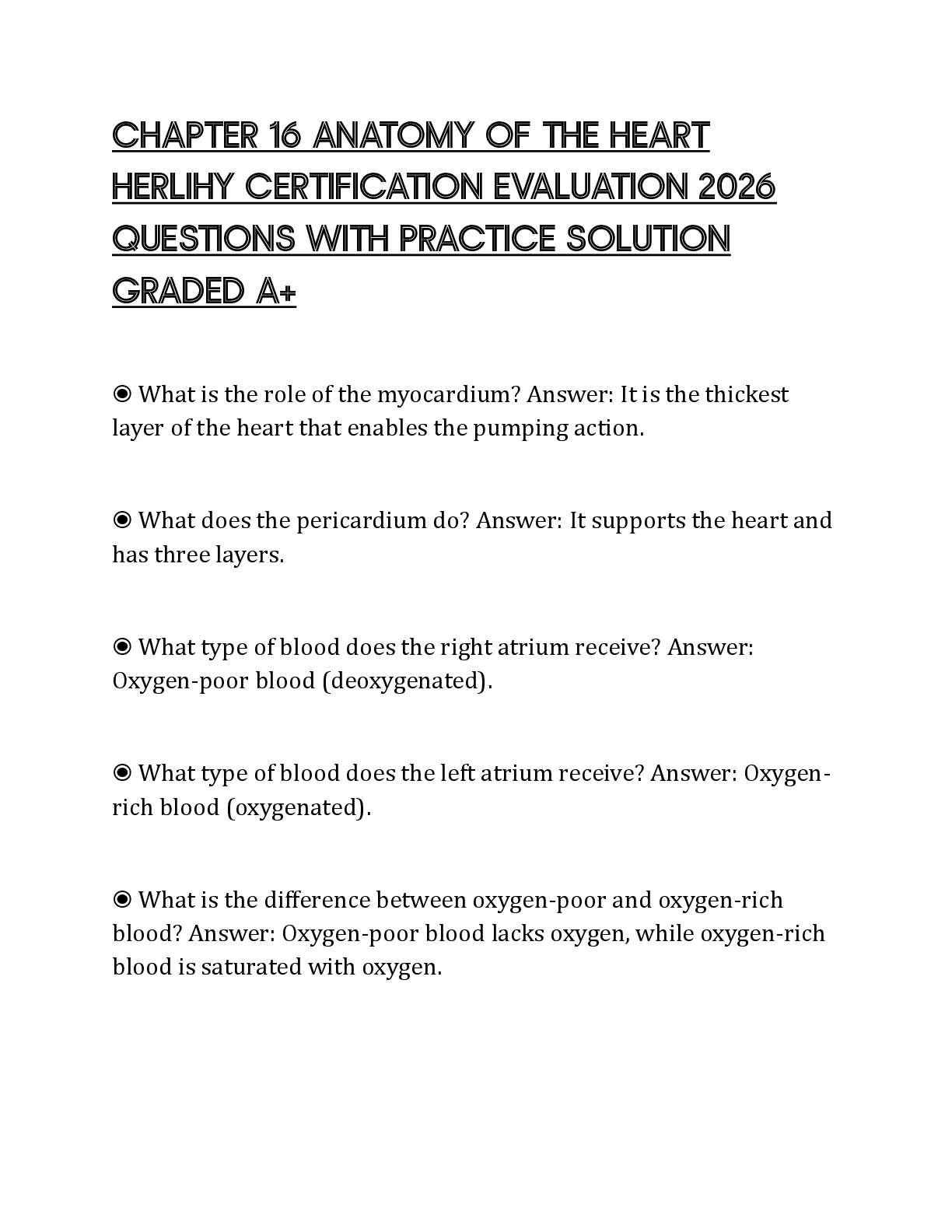
CHAPTER 16 ANATOMY OF THE HEART HERLIHY CERTIFICATION EVALUATI...
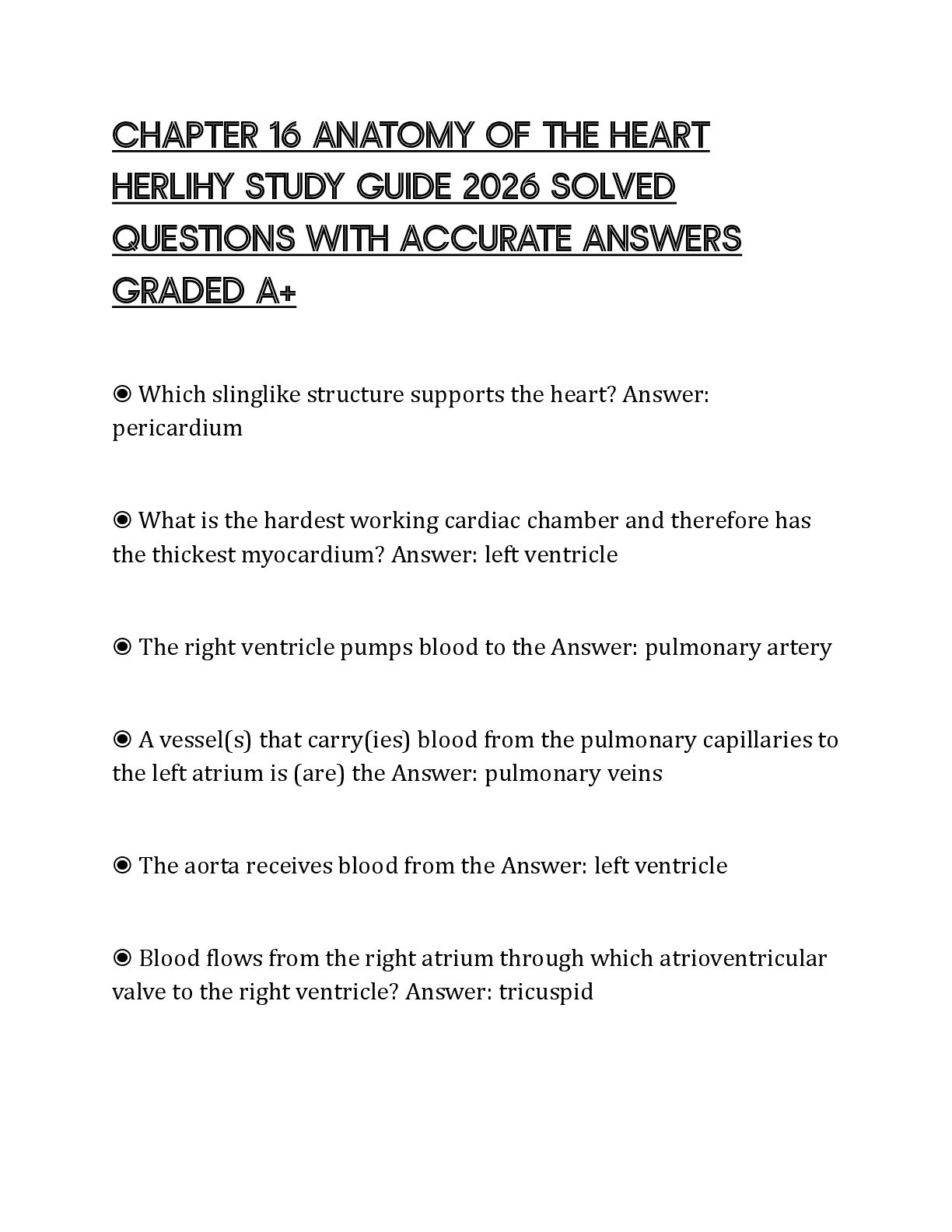
CHAPTER 16 ANATOMY OF THE HEART HERLIHY STUDY GUIDE 2026 SOLVE...

St. Johns University - ACC 624 Chapter 16 Connect Home Work