Introduction to CNN Exam 19 Questions with Verified Answers,100% CORRECT
Document Content and Description Below
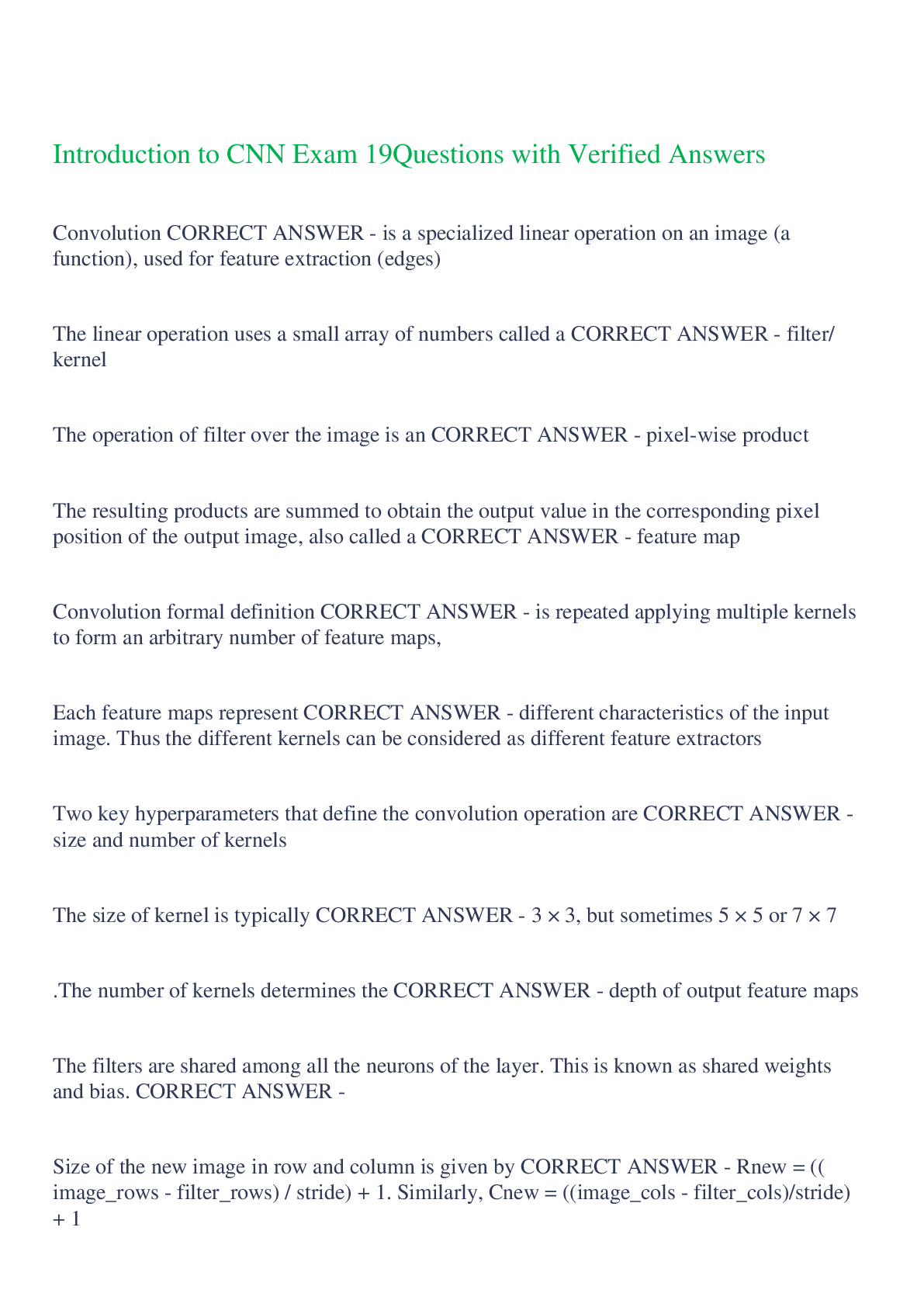
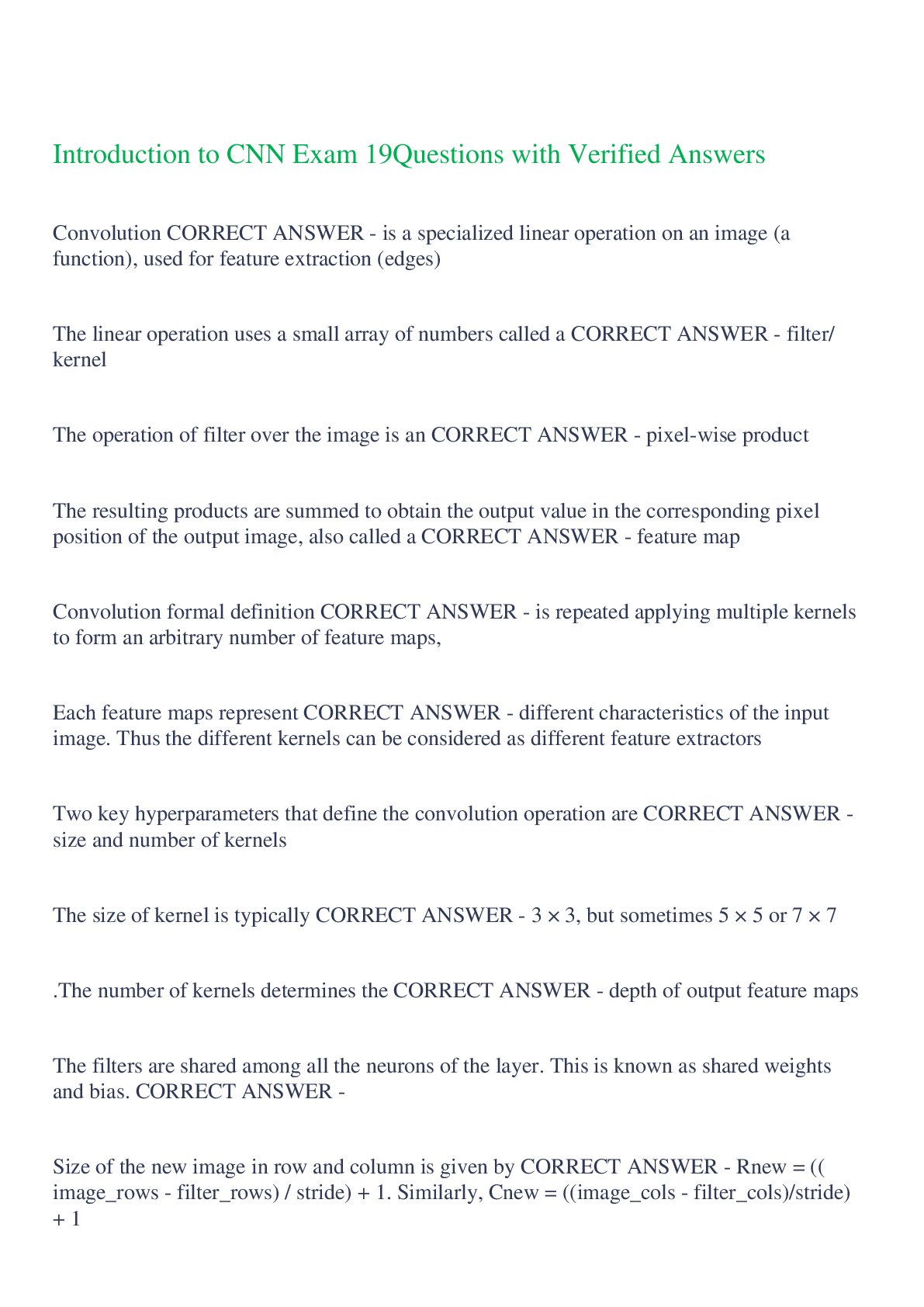
Introduction to CNN Exam 19Questions with Verified Answers
Convolution CORRECT ANSWER - is a specialized linear operation on an image (a function), used for feature extraction (edges)
The linear operation uses a sm
...
[Show More]
Last updated: 3 years ago
Preview 1 out of 3 pages
Instant download
Buy this Document to get the Full Access Instantly
Provided by Students Who Aced it
We Verify Document Content to Gurantee Accuracy
Reviews( 0 )
Document information
Connected school, study & course
About the document
Uploaded On
Oct 27, 2023
Number of pages
3
Written in
All

Additional information
This document has been written for:
Uploaded
Oct 27, 2023
Downloads
0
Views
114
Topic Tags
Recommended For You
Get more on EXAM »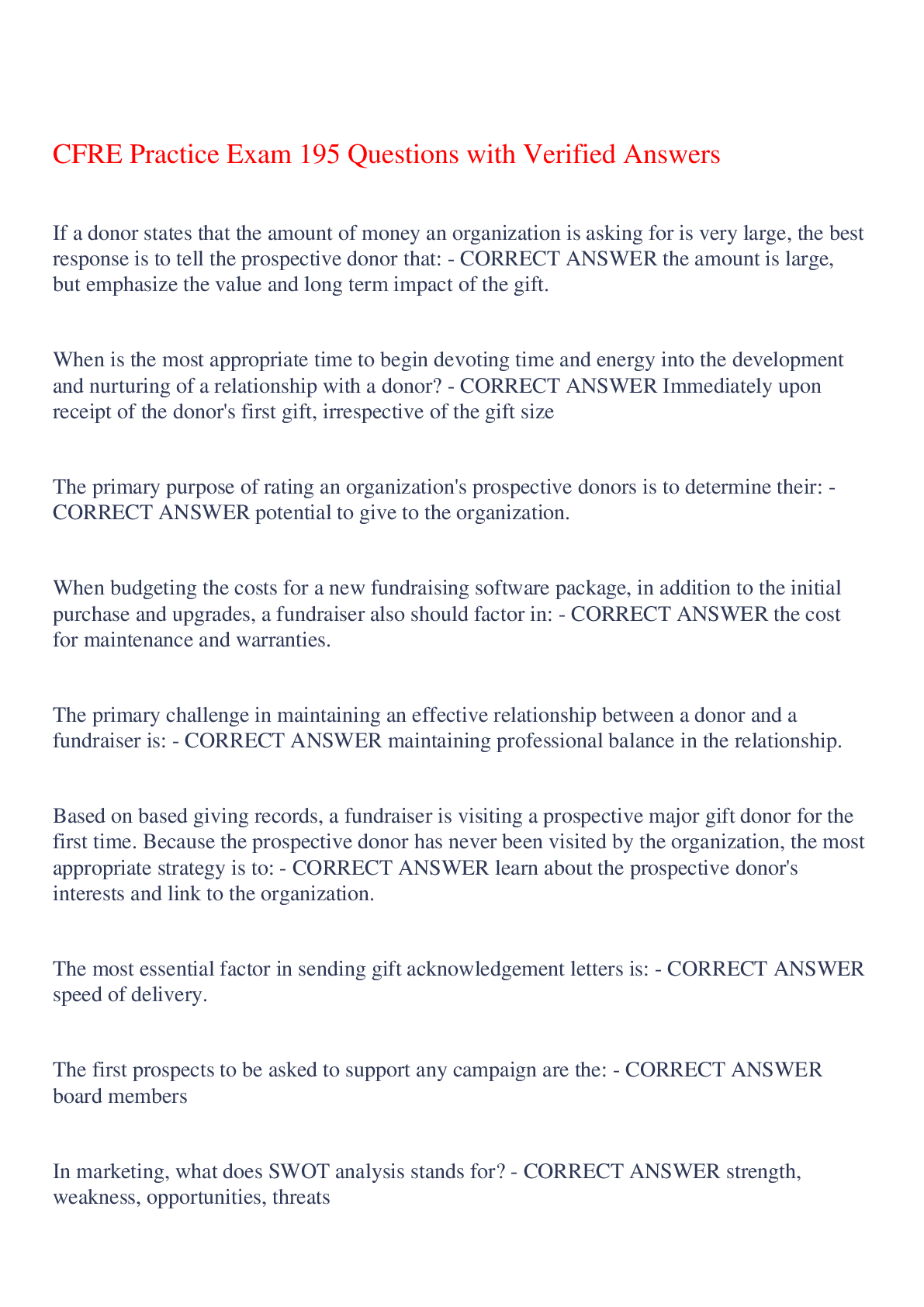
$10.5
19 Pages
CFRE Practice Exam 195 Questions with Verified Answers,100% CO...
$10.5
30 Pages
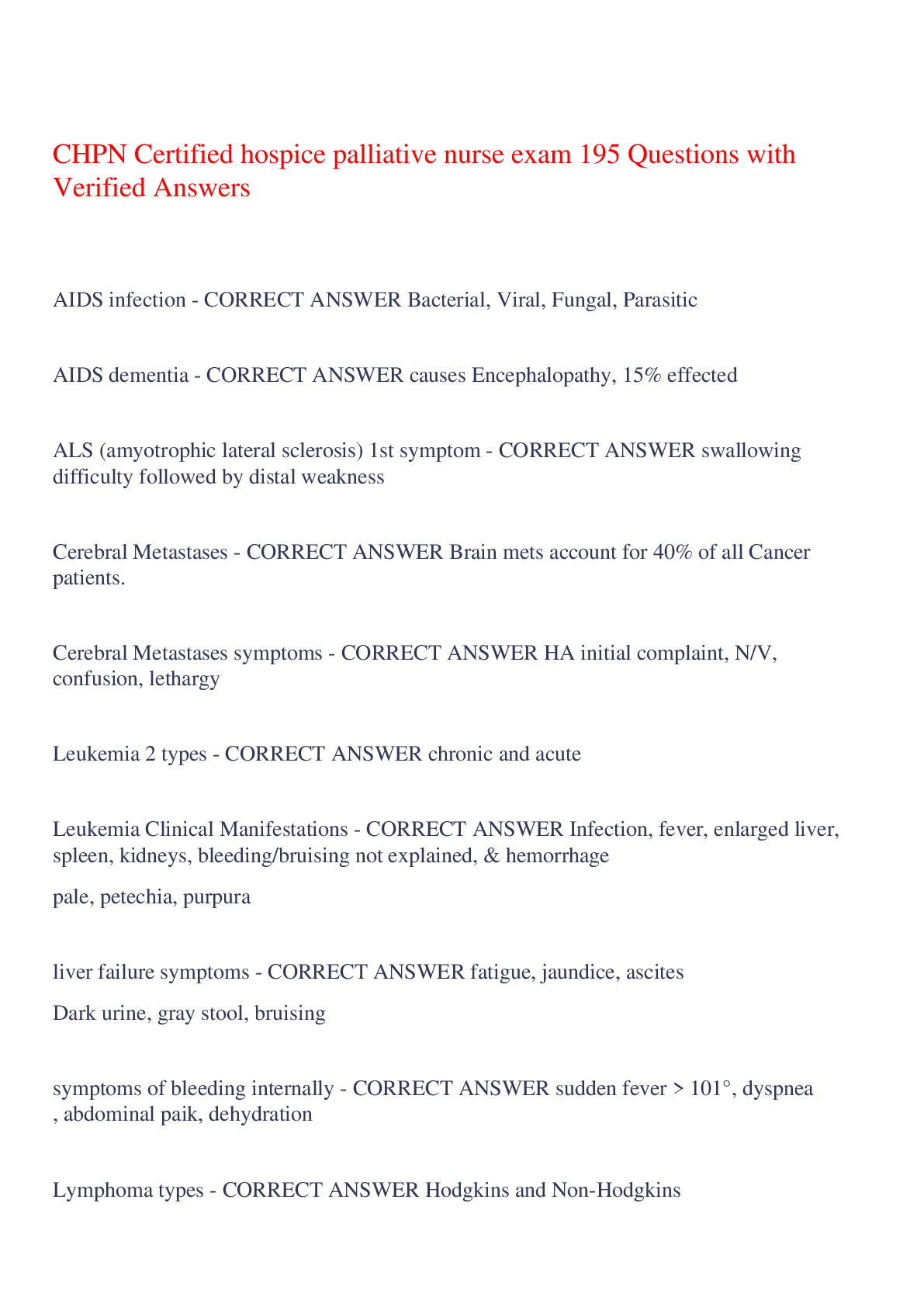
CHPN Certified hospice palliative nurse exam 195 Questions wit...
$7.5
3 Pages
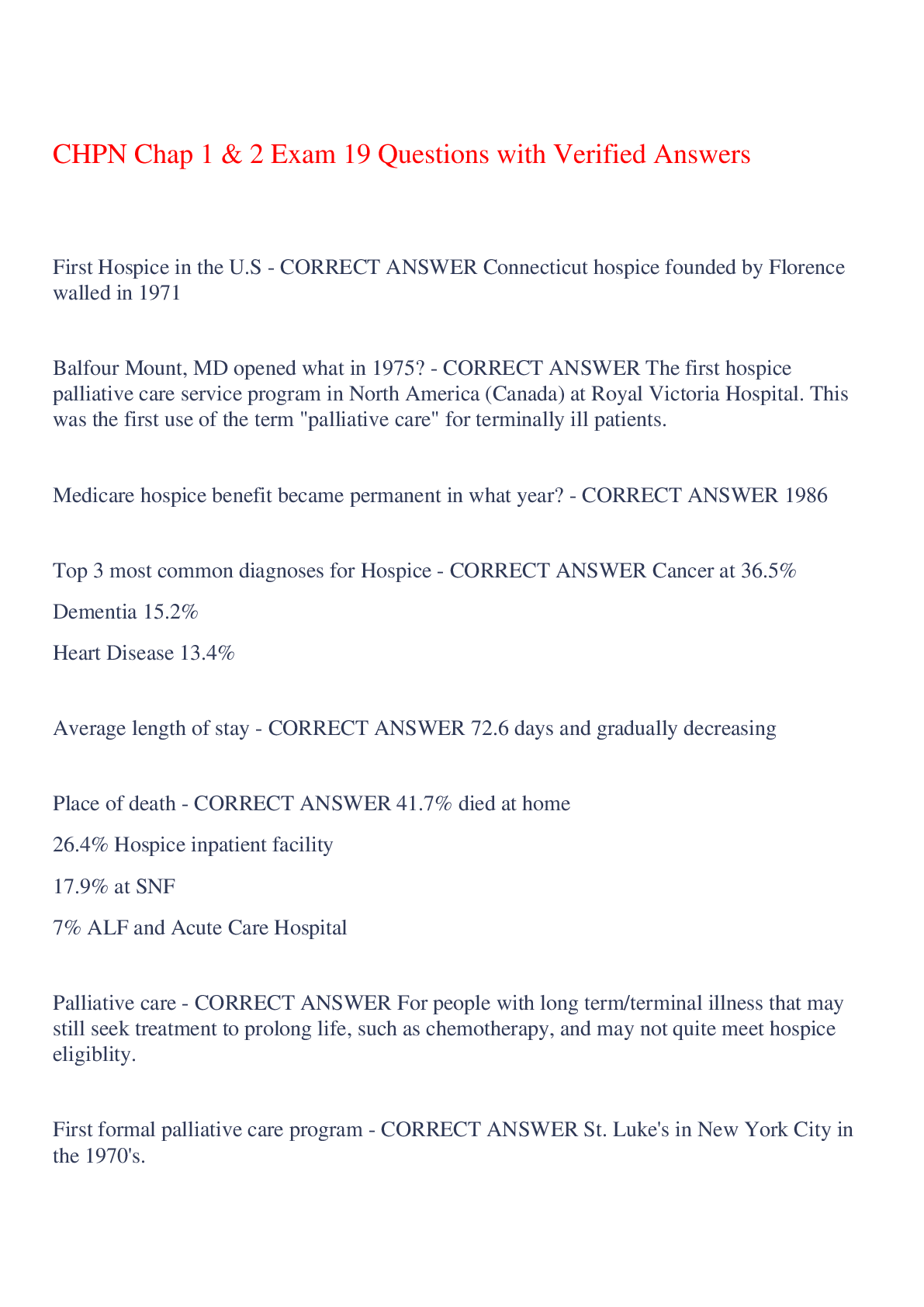
CHPN Chap 1 & 2 Exam 19 Questions with Verified Answers,100% C...
$7.5
3 Pages
Introduction to CNN Exam 19 Questions with Verified Answers,10...
$10
19 Pages
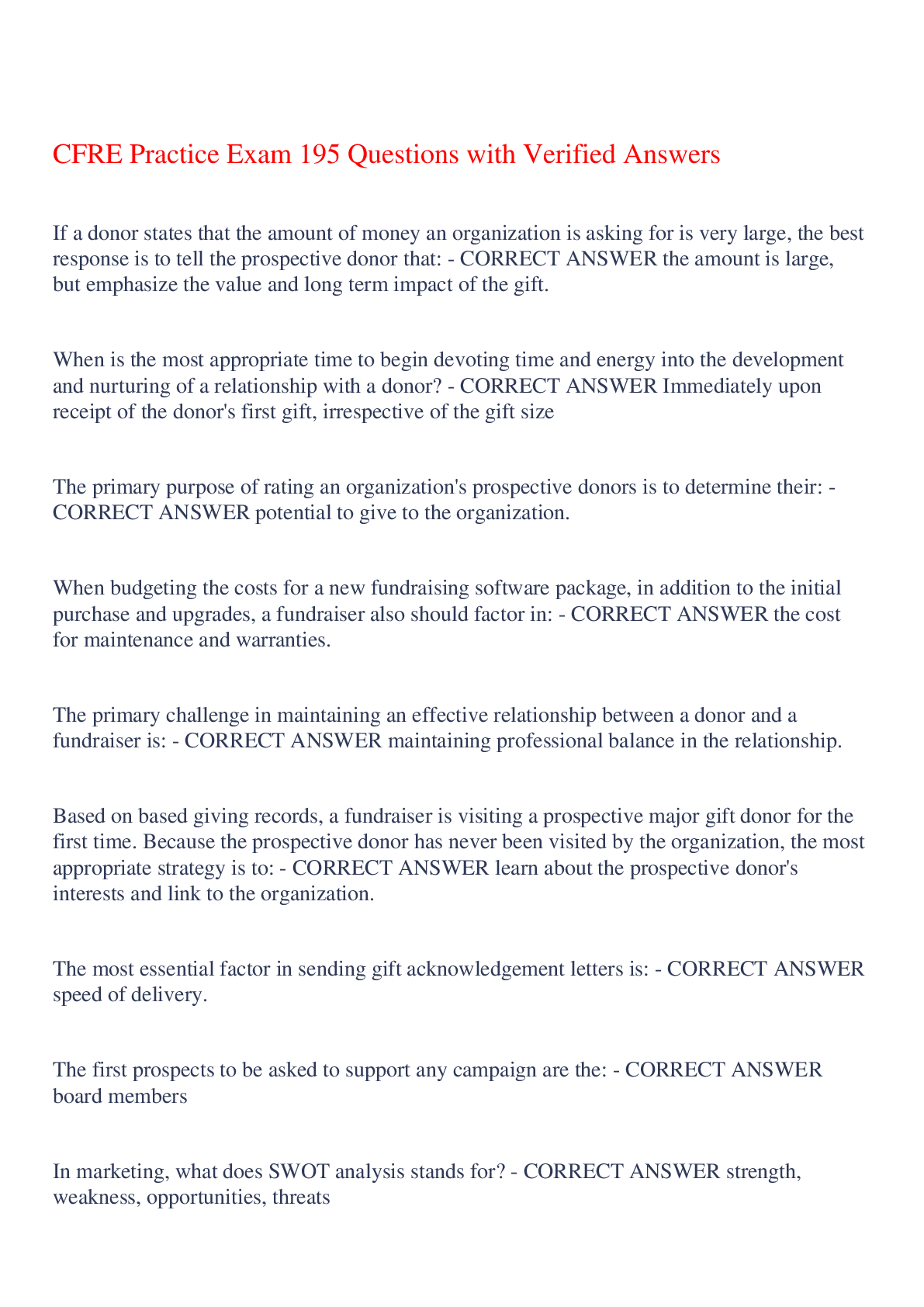
CFRE Practice Exam 195 Questions with Verified Answers,100% CO...
$11
30 Pages
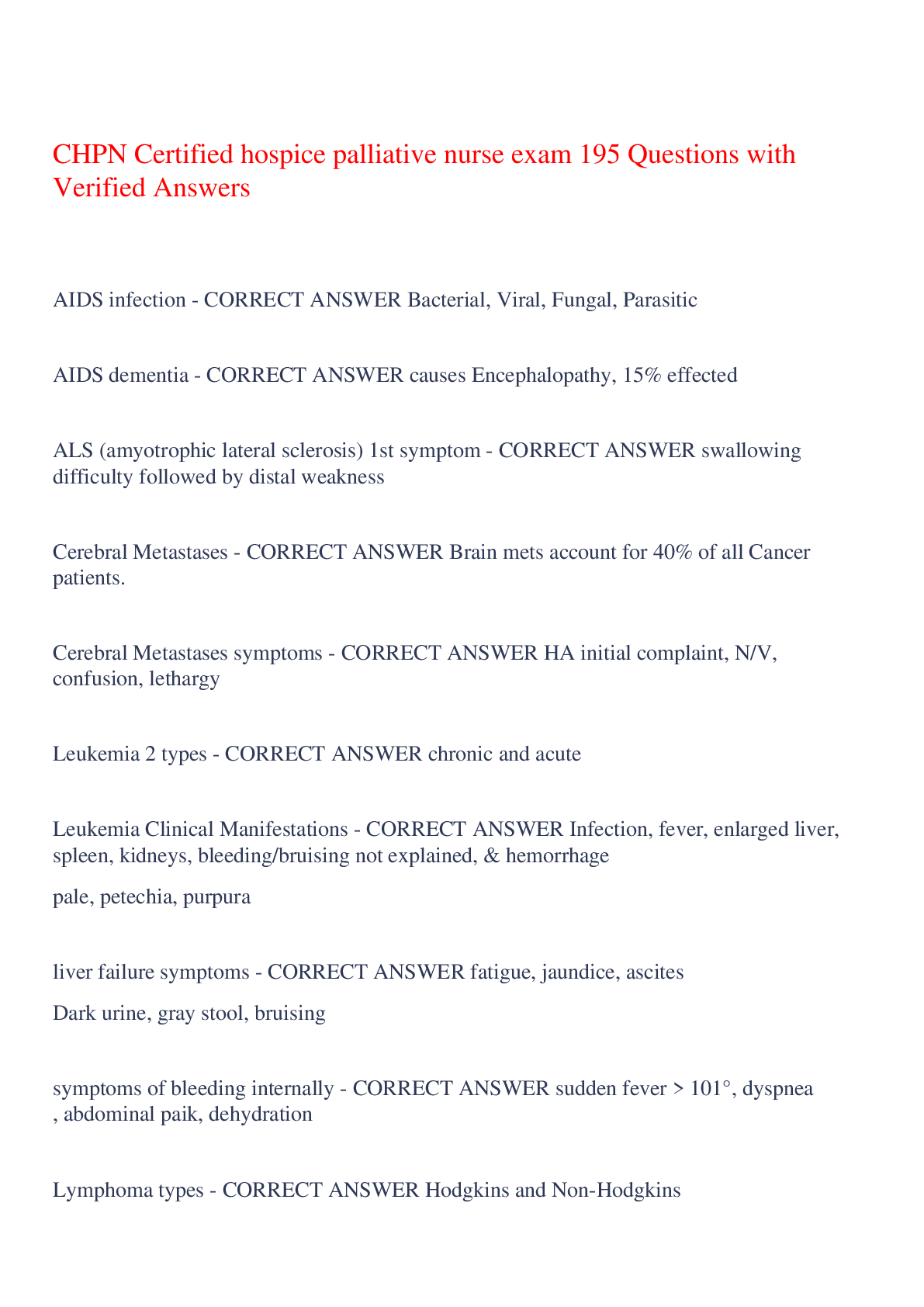
CHPN Certified hospice palliative nurse exam 195 Questions wit...
$22.5
307 Pages
TEST BANK for Davis Advantage for Psychiatric Mental Health Nu...
$17
588 Pages
Test Bank For Fundamentals of Nursing 11th Edition Potter Perr...
$16
496 Pages
TEST BANK for Essentials of Psychiatric Mental Health Nursing:...
$19
553 Pages
Essentials of Psychiatric Nursing 2nd Edition Boyd TEST BANK
$16
554 Pages
TEST BANK for Essentials of Psychiatric Nursing 2nd Edition by...
$15
554 Pages
Test Bank for Essentials of Psychiatric Nursing 2nd Edition by...
More related documents below