CFRN Practice Test 210 Questions with Verified Answers
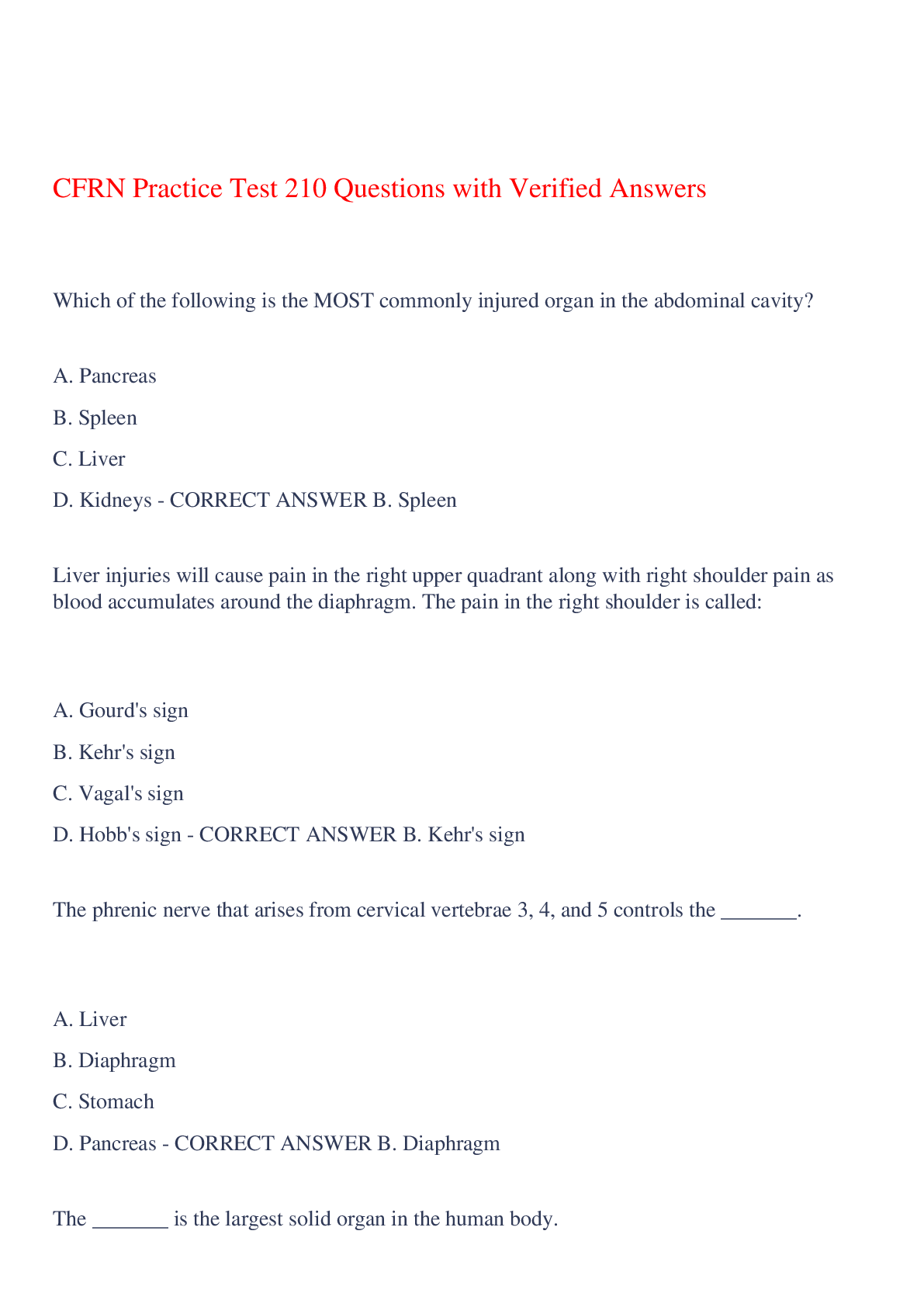
Which of the following is the MOST commonly injured organ in the abdominal cavity?
A. Pancreas
B. Spleen
C. Liver
D. Kidneys - CORRECT ANSWER B. Spleen
...
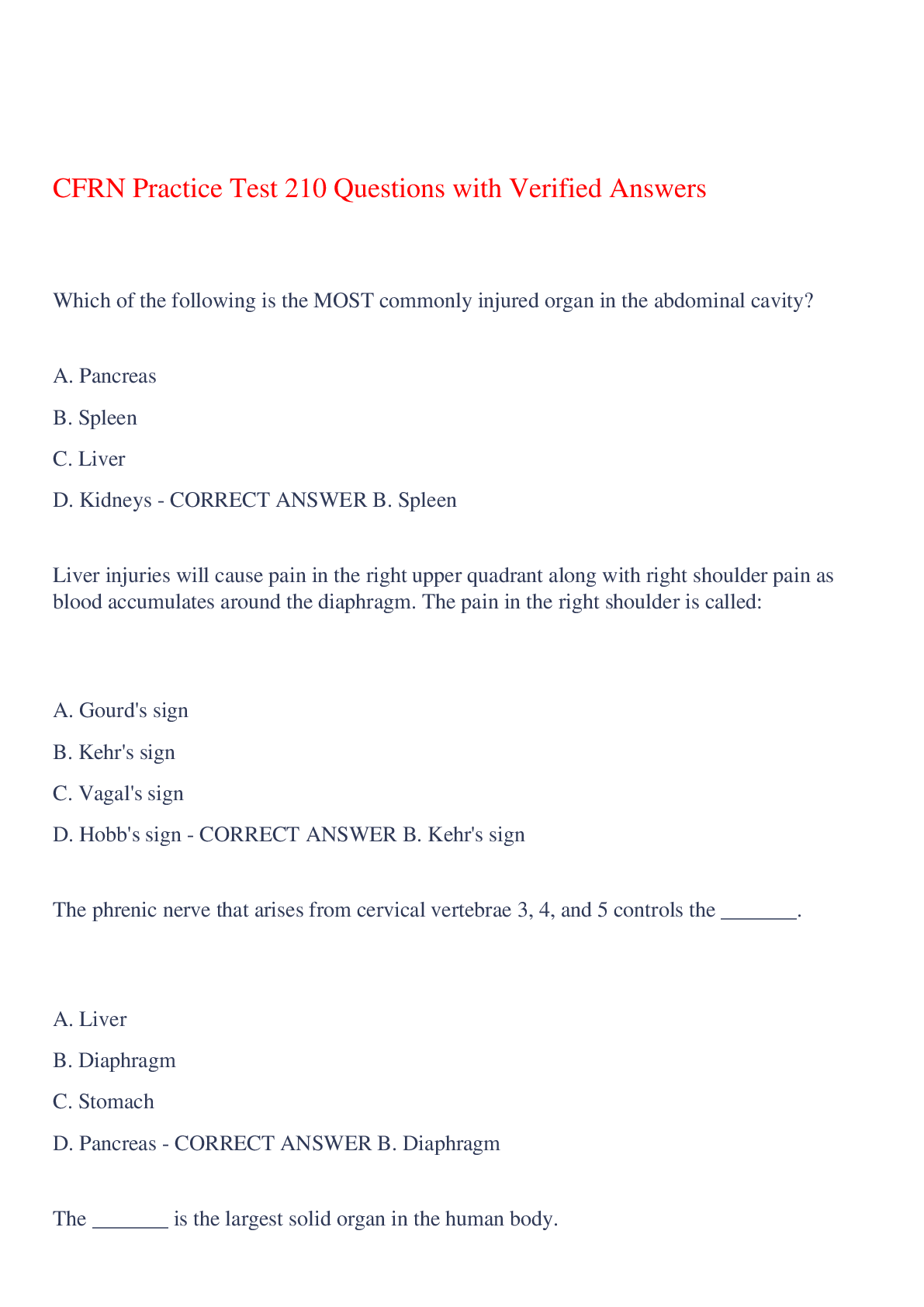
CFRN Practice Test 210 Questions with Verified Answers
Which of the following is the MOST commonly injured organ in the abdominal cavity?
A. Pancreas
B. Spleen
C. Liver
D. Kidneys - CORRECT ANSWER B. Spleen
Liver injuries will cause pain in the right upper quadrant along with right shoulder pain as blood accumulates around the diaphragm. The pain in the right shoulder is called:
A. Gourd's sign
B. Kehr's sign
C. Vagal's sign
D. Hobb's sign - CORRECT ANSWER B. Kehr's sign
The phrenic nerve that arises from cervical vertebrae 3, 4, and 5 controls the _______.
A. Liver
B. Diaphragm
C. Stomach
D. Pancreas - CORRECT ANSWER B. Diaphragm
The _______ is the largest solid organ in the human body.
A. Brain
B. Pancreas
C. Spleen
D. Liver - CORRECT ANSWER D. Liver
A root cause of esophageal varices is/are:
A. Mallory-Weiss syndrome
B. Reactive gastritis
C. Cirrhosis
D. Peptic ulcers - CORRECT ANSWER C. Cirrhosis
The most common cause of lower GI bleeding is:
A. Ulcerative colitis
B. Diverticulosis
C. Inflammatory bowel disease (IBD)
D. Angiodysplasia - CORRECT ANSWER B. Diverticulosis
The appearance of dark, tarry blood in the stool is known as:
A. Hematemesis
B. Melena
C. Hematochezia
D. Crohn's disease - CORRECT ANSWER B. Melena
The most common cause of pancreatitis is:
A. Gallstones
B. Alcohol abuse
C. Hypercalcemia
D. Tumors - CORRECT ANSWER A. Gallstones
Development of peripheral edema, ascites, and pulmonary edema in the patient with liver failure is a result of a decreased production of:
A. Bilirubin
B. Aspartate amniotransferase
C. Albumin
D. Creatinine - CORRECT ANSWER C. Albumin
Fulminant hepatic failure is most commonly caused by:
A. Alcohol abuse
B. Idiosyncratic drug reactions
C. Hepatitis
D. Acetaminophen toxicity - CORRECT ANSWER D. Acetaminophen toxicity
In young children, the narrowest part of the trachea is the:
A. Vallecula
B. Cricoid ring
C. Epiglottis
D. Hyoid - CORRECT ANSWER B. Cricoid ring
In a child, it may be normal for the liver and spleen to:
A. Be enlarged
B. Bleed easily
C. Be palpated below the costal margin
D. Push up against the diaphragm, causing decreased vital capacity - CORRECT ANSWER C. Be palpated below the costal margin
In infants, the minimum expected urine output is:
A. 1 mL/kg/hr.
B. 2 mL/kg/hr.
C. 3 mL/kg/hr.
D. 4 mL/kg/hr. - CORRECT ANSWER B. 2 mL/kg/hr
Which of the following is a major factor that makes children susceptible to hypothermia?
A. The inability to shiver
B. Fewer glycogen stores
C. A larger proportion of body fat
D. All of the above - CORRECT ANSWER A. The inability to shiver
All pediatric assessments should begin with forming a general impression using the Pediatric:
A. Trauma score
B. Assessment triangle
C. Perfusion score
D. Faces scale - CORRECT ANSWER B. Assessment triangle
Due to the relatively large tongue of a child in proportion to his or her mouth, successful intubation requires: proper blade size, proper positioning, and proper:
A. Suctioning
B. Sedation
C. Sweeping of the tongue
D. Cricoid pressure - CORRECT ANSWER C. Sweeping of the tongue
Physical assessment of a child's cardiovascular system begins with:
A. Observing the child's general appearance and level of consciousness
B. Checking the child's central pulse rate
C. Feeling the child's skin temperature
D. Placing the child on a cardiac monitor - CORRECT ANSWER A. Observing the child's general appearance and level of consciousness
An increase in _______ is the chief compensatory mechanism in children to increase end-organ perfusion and to maintain blood pressure.
A. Heart rate
B. Stroke volume
C. Contractility
D. Peripheral vasoconstriction - CORRECT ANSWER A. Heart rate
Epiglottitis is a medical emergency in the pediatric population. Remember the four Ds, which stand for:
A. Dysphagia, dysphonia, drooling, and distress
B. Diaphoresis, diplopia, diarrhea, and distress
C. Dilated (pupils), drooling, distress, and diaphoresis
D. Drooling, dysphagia, distant lung sounds, and distress - CORRECT ANSWER A. Dysphagia, dysphonia, drooling, and distress
Options to relieve a foreign body airway obstruction in a pediatric includes:
A. Abdominal thrusts only
B. One attempt at nasotracheal intubation
C. Carotid massage
D. Chest thrusts, Heimlich maneuver, and laryngoscopy with Magill forceps - CORRECT ANSWER D. Chest thrusts, Heimlich maneuver, and laryngoscopy with Magill forceps
A child in shock will fail quickly when the child's compensatory systems:
A. Are in overdrive
B. Fail
C. Thrive
D. Are functioning normally - CORRECT ANSWER B. Fail
In a child in shock, the heart rate is the:
A. Only compensatory mechanism
B. Last compensatory mechanism
C. Primary compensatory mechanism
D. None of the above - CORRECT ANSWER C. Primary compensatory mechanism
Trauma is the pediatric patient is the most common cause of ___________________ shock.
A. Anaphylactic
B. Hypovolemic
C. Neurogenic
D. Cardiogenic - CORRECT ANSWER B. Hypovolemic
Causes of cardiogenic shock in the pediatric patient include all of the following EXCEPT:
A. Hyperammonemia
B. Drug toxicity
C. Myocarditis
D. Arrhythmias - CORRECT ANSWER A. Hyperammonemia
The primary treatments for distributive / neurogenic shock include:
A. Lasix and nitroglycerin
B. Volume replacement and epinephrine
C. Dobutamine and metoprolol
D. Albuterol - CORRECT ANSWER B. Volume replacement and epinephrine
An example of a cardiac defect that does not cause cyanosis in the pediatric patient is:
A. Transposition of the Great Arteries
B. Tetralogy of Fallot
C. Pulmonary Stenosis
D. All of the above - CORRECT ANSWER C. Pulmonary Stenosis
Common diagnostic cardiac tests for the pediatric patient include of the following EXCEPT:
A. 12-lead ECG
B. Palpating pulses
C. Feeling the child's skin temperature
D. Assessing capillary refill - CORRECT ANSWER A. 12-lead ECG
Prolonged, unrelieved obstruction causes irreversible damage is typically seen in what type of renal disorder?
A. Postrenal disorders
B. Suprarenal disorders
C. Obstructed venous disorders
D. Lateral renal disorders - CORRECT ANSWER A. Postrenal disorders
Head injuries are the leading cause of ______________________ in the pediatric population.
A. Pneumonia
B. Degenerate spinal disease
C. Death
D. All of the above - CORRECT ANSWER C. Death
Which of the following statements about congenital heart defects is TRUE?
A. The term infant is at the highest risk for an undiagnosed congenital heart defect.
B. Congenital heart defects are classified as either cyanotic or acyanotic.
C. A child with a relatively small lesion may go on to age 8 to 12 months before it is detected.
D. The pattern of cyanosis, decreased mental status, and lethargy may mimic hypoglycemia. - CORRECT ANSWER B. Congenital heart defects are classified as either cyanotic or acyanotic.
While caring for a critical patient with profound hypoxia, you recall that changes in the V/Q ratio is one of the most common causes of hypoxemia. Which of the following best describes the V/Q ratio?
A. A marker for inflammation when a blood clot may be present
B. A measure of the coaguability of the pulmonary blood flow
C. A measurement of how much blood flow must be present at the alveolar capillary membrane for perfusion to take place
D. A serologic measurement of pulmonary injury - CORRECT ANSWER C. A measurement of how much blood flow must be present at the alveolar capillary membrane for perfusion to take place
In the presence of midface trauma with instability, which airway maneuver would be contraindicated?
A. Digital intubation
B. Oropharyngeal suctioning of foreign bodies
C. Oral intubation
D. Nasotracheal intubation - CORRECT ANSWER D. Nasotracheal intubation
You are on scene with a 37 year-old male involved in an MVC, combative and confused on-scene. Patient was intubated with a 8.0 ETT, 24 cm at the lips. Quantitative ETCO2 monitoring shows a ETCO2 of 50. Which action should be undertaken by the flight/transport nurse?
A. Slightly hyperventile the patient
B. Switch to a litmus paper ETCO2 detector
C. Advance ETT 1 cm, then reassess
D. Continue ventilating at 12 bpm with 100% FiO2 - CORRECT ANSWER A. Slightly hyperventile the patient
When assessing your patient's airway prior to intubation, you use the Mallampati classification. Your physical assessment reveals that the posterior pharynx is partially exposed. Based on your knowledge of this classification, you know that this is a Mallampati grade class of:
A. I.
B. II.
C. III.
D. IV. - CORRECT ANSWER B. II.
During intubation, the operator may use the BURP technique. This acronym stands for:
A. Bag the patient, use pressure, reverse, placement
B. Bilateral, upwards, replace, position
C. Backward, upward, rightward, pressure
D. Beneath, under, rearward, posterior - CORRECT ANSWER C. Backward, upward, rightward, pressure
You have just orally intubated your patient. When listening to breath sounds, you note that there are air sounds over the epigastrium. It is difficult to determine the presence of lung sounds. There is no significant chest rise or fall with revelations. The most appropriate action at this point is to:
A. Deflate the cuff and pull back the tube 2 to 3 cm.
B. Deflate the cuff and advance the tube 1 to 2 cm.
C. Continue to ventilate for another minute and then reassess.
D. Deflate the cuff, re - CORRECT ANSWER D. Deflate the cuff, remove the tube, and repeat the steps for oral
After several failed intubation attempts, your patient still requires an advanced airway. There is a significant chance your patient has an airway obstruction as well. You are considering doing a surgical cricothyrotomy. Which of the following is a TRUE statement regarding this procedure?
A. It would be contraindicated in a 10-year-old patient.
B. It requires more than just a scalpel and an endotracheal tube.
C. It is not necessary to visualize anatomic landmarks.
D. It is indicated if intu - CORRECT ANSWER D. It is indicated if intubation is not
Rapid sequence intubation (RSI) is a critical skill used by the RN. Which of the following is a TRUE statement regarding RSI?
A. The indications are markedly different than those for endotracheal intubation.
B. Use of the Sellick maneuver helps to reduce the risk of aspiration.
C. It is indicated if you are unable to ventilate the patient adequately.
D. RSI makes no assumptions about the timing of the patient's last meal. - CORRECT ANSWER B. Use of the Sellick maneuver helps to reduce the risk of aspiration.
When selecting a sedative/induction agent to use during RSI, sodium thiopental and methohexital are ultra-short-acting barbiturates. Their short duration of action makes them attractive to use; however, they do have potential complications and may not always be the ideal agent to use. Which of the following statements best reflects the concern about using these particular agents?
A. They are expensive.
B. They must be stored in a controlled environment.
C. They may cause a significant intera - CORRECT ANSWER D. They have a propensity to precipitate myocardial depression and hypotension
Which of the following is an example of a depolarizing neuromuscular blocking agent?
A. Vecuronium (Norcuron)
B. Rocuronium (Zemuron)
C. Succinylcholine (Anectine)
D. Atracurium (Tricium) - CORRECT ANSWER C. Succinylcholine (Anectine)
Normal heart sounds are designated as:
A. S1, S2, and S3
B. S1 and S2
C. S3 and S4
D. S1, S2, S3, and S4 - CORRECT ANSWER B. S1 and S2
The pulmonary vein moves:
A. Oxygen-deficient blood from the heart to the lungs
B. Oxygen-deficient blood from the lungs to the heart
C. Oxygen-rich blood from the heart to the lungs
D. Oxygen-rich blood from the lungs to the heart - CORRECT ANSWER D. Oxygen-rich blood from the lungs to the heart
Distension of the external jugular veins is indicative of:
A. Right-sided heart failure
B. Left-sided heart failure
C. Hypotension
D. Myocardial infarction - CORRECT ANSWER A. Right-sided heart failure
Chemoreceptors respond to changes in which of the following indicators in blood?
A. pH, glucose, and PCO2
B. Glucose, PO2, and PCO2
C. pH, PCO2, and HCO3
D. pH, PCO2, and PO2 - CORRECT ANSWER D. pH, PCO2, and PO2
Cardiac output (CO) equals:
A. Stroke volume x heart rate
B. Stroke volume ÷ systemic resistance
C. Heart rate - mean arterial pressure
D. Heart rate ÷ stroke - CORRECT ANSWER A. Stroke volume x heart rate
On a 12-lead ECG, the augmented leads are:
A. I, II, and III
B. V1 to V6
C. aVR, aVL, and aVF
D. RA, LA, LL, and RL - CORRECT ANSWER C. aVR, aVL, and aVF
When evaluating a chest pain patient's 12-lead ECG, you note that lead aVR is positively deflected. This is indicative of:
A. Posterior wall MI
B. Lead misplacement
C. The patient in the left lateral recumbent position
D. Septal wall MI - CORRECT ANSWER B. Lead misplacement
Extreme right axis deviation (RAD) can be seen in:
A. SA node failure
B. Ventricular tachycardia (VT)
C. Septal wall MI
D. A left bundle branch block - CORRECT ANSWER B. Ventricular tachycardia (VT)
A left axis deviation is normally seen:
A. In children
B. In pregnant women
C. Due to dextrocardia
D. Due to hypokalemia - CORRECT ANSWER B. In pregnant women
Your patient is short of breath and complaining of chest pain. He is seated in a tripod position, which he says improves his condition. When analyzing his 12-lead ECG, you note that all complexes are low-voltage, with ST segment elevation and T-wave inversion in all leads. You suspect:
A. Improper lead placement
B. A global MI
C. Pericarditis
D. WPW syndrome - CORRECT ANSWER C. Pericarditis
Shock, sepsis, and multi-organ dysfunction syndrome (MODS) share which of the following common denominators?
A. Dilation of great vessels
B. Inability of oxygen supply to meet demand
C. Cellular function
D. A carbon dioxide deficit - CORRECT ANSWER C. Cellular function
Glycolysis, the citric acid cycle, and the electron transport chain are the three essential components of which of the following processes?
A. Oxidative respiration
B. Adenosine triphosphate (ATP) breakdown
C. Semi-permeable membrane respiration
D. Cellular respiration - CORRECT ANSWER D. Cellular respiration
The primary energy-carrying molecule in the body is:
A. Adenosine triphosphate (ATP)
B. Adenosine diphoshate (ADP)
C. Creatinine kinase (CK)
D. Pyruvic acid (PA) - CORRECT ANSWER A. Adenosine triphosphate (ATP)
The three components of cellular respiration can work together in either a (an):
A. Acid or alkali environment
B. Aerobic or an anaerobic environment
C. Lactic or lactulose environment
D. Open or closed environment - CORRECT ANSWER B. Aerobic or an anaerobic environment
_______ is maintained when the supply of oxygen is sufficient to meet the cellular demands of the body.
A. pH balance
B. Homeostasis
C. Hemostasis
D. Lactic acid - CORRECT ANSWER B. Homeostasis
A rightward shift in the oxy-hemoglobin dissociation curve causes _______ for oxygen by hemoglobin.
A. Decreased affinity
B. Increased affinity
C. Unchanged affinity
D. Decreased unloading ability - CORRECT ANSWER A. Decreased affinity
A leftward shift in the oxy-hemoglobin dissociation curve causes _______ for oxygen by hemoglobin.
A. Decreased affinity
B. Increased unloading ability
C. Increased affinity
D. Unchanged affinity - CORRECT ANSWER C. Increased affinity
Initially, compensatory shock mechanisms help keep clinical signs normal, but serum lactate rises due to:
A. Aerobic metabolism
B. Hypermetabolic output
C. Hyperdynamic balance
D. Anaerobic metabolism - CORRECT ANSWER D. Anaerobic metabolism
A patient in compensatory shock will increase his or her respiratory rate to bring about which of the following changes?
A. A decrease in pH and an increase in minute volume
B. Increased oxygen intake to blow off excess carbon dioxide
C. A decrease in minute volume and an increase in pH
D. Dilation of the capillary bed and diffusion gradient - CORRECT ANSWER B. Increased oxygen intake to blow off excess carbon dioxide
Your patient's lab states the current lactate level is 5.3mmol/L. This value suggests:
A. Nothing
B. Aerobic metabolism is occurring
C. Anaerobic metabolism is occurring and is a biomarker for morbidity and mortality
D. Metabolic acidosis - CORRECT ANSWER C. Anaerobic metabolism is occurring and is a biomarker for morbidity and mortality
Which of the following information about burns is FALSE?
A. There are approximately 1 million burn injuries every year in the United States.
B. Two percent of burn center admissions do not survive.
C. Serious burns occur most often in males.
D. The first 24 hours of burn care are crucial. - CORRECT ANSWER B. Two percent of burn B. Two percent of burn center admissions do not survive
A systemic inflammatory response is initiated in burns greater than:
A. 5%
B. 10%
C. 15%
D. 25% - CORRECT ANSWER D. 25%
Major burn injuries include all of the following EXCEPT:
A. Partial-thickness burns of 15% to 25% in adults
B. High-voltage electrical injury
C. Full-thickness burns involving more than 10% of body surface area (BSA)
D. Burns caused by caustic chemicals - CORRECT ANSWER A. Partial-thickness burns of 15% to 25% in adults
Inhalation should always be expected in all of the following EXCEPT:
A. Facial burns
B. High-voltage electrical shock
C. Carbonaceous sputum
D. Stridor or progressive hoarseness - CORRECT ANSWER B. High-voltage electrical shock
A variety of causes are thought to result in decreased cardiac output in burned patients, including all of the following EXCEPT:
A. The inflammatory response and its mediators
B. Cyanide poisoning
C. Carbon monoxide poisoning
D. Constrictive cardiomyopathy - CORRECT ANSWER D. Constrictive cardiomyopathy
Although succinylcholine (Anectine) is the drug of choice in rapid sequence intubation (RSI), it is contraindicated in patients with burn injuries greater than _______ hours old.
A. 24
B. 48
C. 72
D. 96 - CORRECT ANSWER B. 48
In a failed intubation attempt with a burn patient, the CCTP should be prepared to:
A. Perform a surgical airway intervention
B. Place a rescue airway
C. Perform an escharotomy
D. Ventilate using a bag-valve-mask device - CORRECT ANSWER A. Perform a surgical airway intervention
Which of the following is the MOST commonly used resuscitation formula the first 24 hours after a burn?
A. Brooke formula
B. Parker's formula
C. Parkland formula
D. Cincinnati formula - CORRECT ANSWER C. Parkland formula
Which of the following is the BEST monitor of fluid replacement in adults, children, or neonates?
A. Heart rate
B. Urine output
C. Clear breath sounds
D. Absence of myoglobinuria - CORRECT ANSWER B. Urine output
Renal dysfunction that results from the mobilization of muscle proteins that impair filtration is a condition known as:
A. Myoglobinuria
B. Methylglobinuria
C. Rhabdomyoglobin
D. Rhabdomyolsis - CORRECT ANSWER D. Rhabdomyolsis
An inanimate object that can transmit infectious organisms from one individual to another is known as a(n):
A. Vector
B. Fomite
C. Atrogenic
D. Contaminant - CORRECT ANSWER B. Fomite
The humoral, or antibody-mediated, response primarily occurs when the:
A. Immune cells encounter a specific antigen for the first time
B. Antigen responds to the antibody
C. Immune cells encounter an antibody for the first time
D. Antigen is properly opsonized by the antibody - CORRECT ANSWER A. Immune cells encounter a specific antigen for the first time
_______ is a serious allergic reaction that has a rapid onset of symptoms and, if unrecognized, can lead to respiratory arrest.
A. Hypersensitivity
B. A localized reaction
C. Anaphylaxis
D. A toxicity reaction - CORRECT ANSWER C. Anaphylaxis
_______ occurs when one or more of the components of the immune system is damaged or non-functioning.
A. Infection
B. Immunocompromise
C. Immunodeficiency
D. Hypersensitivity - CORRECT ANSWER C. Immunodeficiency
The prevention of colonization by pathogenic bacteria is attributed to:
A. Broad-spectrum antibiotics
B. Antifungal soaps and creams
C. Adequate hand washing
D. The presence of normal flora - CORRECT ANSWER D. The presence of normal flora
Microorganisms capable of causing disease are called:
A. Pathogens
B. Fomites
C. Vectors
D. Hosts - CORRECT ANSWER A. Pathogens
Properties of microbes that influence their virulence include all of the following EXCEPT:
A. Invasion of host tissues
B. Evasion of host defenses
C. Toxicity
D. Fomitic class of invader - CORRECT ANSWER D. Fomitic class of invader
All of the following are typical portals of entry EXCEPT the:
A. Skin
B. Hair follicles
C. Conjunctiva of the eye
D. Mucous membranes of the genitourinary tract - CORRECT ANSWER A. Skin
What are the two types of toxins produced by bacteria?
A. Endogenous and exogenous
B. Mild and fulminating
C. Exotoxins and endotoxins
D. Pyrogenic and exogenic - CORRECT ANSWER C. Exotoxins and endotoxins
Which of the following lactate (lactic acid) levels would be indicative of a septic shock?
A. 4 mg/dl
B. 9 mg/dl
C. >18 mg/dl
D. 2 mg/dl - CORRECT ANSWER C. >18 mg/dl
Which of the following is NOT a risk factor that predisposes people to environmental emergencies?
A. Being in a poor state of health
B. Being a thrill seeker
C. Extremes of age
D. Taking certain medications - CORRECT ANSWER B. Being a thrill seeker
The body's ability to ensure and maintain a balance between heat production and heat elimination is known as:
A. Homogenesis
B. Thermogenesis
C. Thermolysis
D. Thermoregulation - CORRECT ANSWER D. Thermoregulation
The heat produced at rest from normal metabolic functions is referred to as the:
A. Basic metabolism rate
B. Base metabolic rate
C. Basal metabolic rate
D. Basic metabolic requirement - CORRECT ANSWER C. Basal metabolic rate
Heat cramps are a result of:
A. Hyperthermia
B. Water loss
C. Water-sodium imbalance
D. Sodium gain - CORRECT ANSWER C. Water-sodium imbalance
Which of the following is NOT a symptom of heat exhaustion?
A. Altered mental status
B. Headache
C. Nausea
D. Fatigue - CORRECT ANSWER A. Altered mental status
Rhabdomyolysis may release excess potassium from:
A. The intravascular compartment
B. The destruction of muscle tissue
C. Relative hypocalcemia
D. Relative hyponatremia - CORRECT ANSWER B. The destruction of muscle tissue
The MOST common anesthetic trigger for malignant hyperthermia is:
A. Succinylcholine (Anectine)
B. Propofol (Diprivan)
C. Pancuronium (Pavulon)
D. Vecuronium (Norcuron) - CORRECT ANSWER A. Succinylcholine (Anectine
The most serious complication of frostbite is seen with:
A. Excessive moisture
B. Dry cold
C. Refreezing
D. Field rewarming - CORRECT ANSWER C. Refreezing
Hypothermia may be a result of any of the following EXCEPT:
A. Impaired thermogenesis
B. Excessive thermolysis
C. Excessive environmental cold stress
D. Hyperdynamic cardiac states - CORRECT ANSWER D. Hyperdynamic cardiac states
Passive external rewarming can be accomplished through the use of all EXCEPT:
A. Removal of wet clothing
B. Use of blankets
C. Use of heat packs
D. Infusion of cold saline - CORRECT ANSWER D. Infusion of cold saline
The MOST common critical care transport crew configuration is:
A. Nurse and paramedic
B. Two Nurses
C. Nurse and physician
D. Paramedic and EMT - CORRECT ANSWER
Patients with acute myocardial infarction, cerebrovascular accident, severe traumatic brain injury, and abdominal aneurysm are all examples of patients who:
A. Will not tolerate the altitude changes associated with air medical transport
B. Will require a respiratory therapist during transport
C. Are good candidates for rotor-wing transportation
D. Are too critical to transport - CORRECT ANSWER C. Are good candidates for rotor-wing transportation
_______ requires the use of specialized equipment and specialized training for paramedics and nurses.
A. Advanced life support
B. Fixed-wing air medical evacuation
C. Specialty care transport, as defined by CMS
D. Interfacility transport - CORRECT ANSWER C. Specialty care transport, as defined by CMS
The percentage of oxygen in the atmosphere at 250,000' (76 km) is:
A. 16%
B. 18%
C. 21%
D. 25% - CORRECT ANSWER C. 21%
A patient's pneumothorax increasing in size as altitude increases is an example of _______ Law.
A. Charles'
B. Boyle's
C. Dalton's
D. Fick's - CORRECT ANSWER B. Boyle's
The primary gas law dealing with diffusion of gasses across the alveolar membrane is:
A. Graham's Law
B. Boyle's Law
C. Dalton's Law
D. Fick's Law - CORRECT ANSWER D. Fick's Law
Reduced atmospheric pressure causing a reduced alveolar PO2 is an example of _______ hypoxia.
A. Hypoxic
B. Histotoxic
C. Stagnant
D. Hypemic - CORRECT ANSWER A. Hypoxic
8. You are preparing a trauma patient with a closed head injury and blunt chest trauma for a 2-hour, fixed-wing transport. The patient is intubated, paralyzed, and sedated. Vital signs are: blood pressure, 110/76 mm Hg; respirations, 16 breaths/minute by ventilator; heart rate, 118 beats/minute and showing sinus tachycardia on the monitor; and an SaO2 of 96% with 0.5 FIO2. The CT scan shows a moderate subarachnoid bleed and chest x-ray reveals a 25% pneumothorax on the right. You are currently a - CORRECT ANSWER D. Place a chest tube prior to departure to counteract the effects of Boyle's Law.
A "sterile cockpit" refers to a:
A. Method of decontaminating the aircraft.
B. Communication technique during critical phases of flight.
C. Pilot's absolute control over radio communications.
D. Completely locked and separate cockpit. - CORRECT ANSWER B. Communication technique during critical phases of flight.
An aircraft flying from airport to airport during very poor weather conditions is:
A. Likely operating under visual flight rules (VFR)
B. Likely operating under instrument flight rules (IFR)
C. Likely being vectored by air traffic control
D. Unable to complete a patient transport - CORRECT ANSWER B. Likely operating under instrument flight rules (IFR)
Management of acute renal failure focuses on ________________ the GFR (glomerular filtration rate).
A. Increasing
B. Decreasing
C. Eliminating
D. None of the above - CORRECT ANSWER A. Increasing
The function of the kidney is to perform all of the following, EXCEPT?
A. Filter blood
B. Maintain balance between acids and bases
C. Produce bile for digestion Correct
D. Discard toxins and excesses by producing urine - CORRECT ANSWER C. Produce bile for digestion Correct
Acute renal failure can be classified as all of the following, EXCEPT:
A. Superior renal
B. Prerenal
C. Intrarenal
D. Postrenal - CORRECT ANSWER A. Superior renal
Pathology where fluid accumulates around the testicle and is common in infants is known as:
A. Hydronephrosis
B. Angina
C. Polyphagia
D. Hydrocele - CORRECT ANSWER
What potentially fatal diagnosis must be ruled out as cause of lower abdominal / pelvic pain in the fertile female?
A. Ectopic pregnancy
B. Gastroenteritis
C. Cholelithiasis
D. None of the above - CORRECT ANSWER A. Ectopic pregnancy
A prolonged erection of the penis, which typically occurs in male patients with a spinal cord injury, sickle cell anemia, penile vessel spasm or clot formation is called a:
A. Polyuria
B. Priapism
C. Kehr's sign
D. None of the above - CORRECT ANSWER B. Priapism
Three risk factors that predispose a patient for a hematology emergency include all of the following EXCEPT:
A. Glaucoma
B. Genetic predisposition
C. Environmental exposures
D. Infectious exposures - CORRECT ANSWER A. Glaucoma
A patient presenting with a viral infection would typically demonstrate a / an ______________________ number of lymphocytes.
A. Unchanged
B. Varied
C. Increased
D. Decreased - CORRECT ANSWER D. Decreased
A patient presenting with a bacterial infection would typically demonstrate a / an ______________________ number of lymphocytes.
A. Unchanged
B. Decreased
C. Increased
D. Varied - CORRECT ANSWER C. Increased
The three primary categories of common anemias include all of the following EXCEPT:
A. Increased RBC destruction
B. Increased RBC production
C. Decreased RBC production
D. Acute / chronic blood loss - CORRECT ANSWER B. Increased RBC production
The MOST important part of responding to a scene involving man-made disasters is:
A. Speed of response
B. Crew and Patient Safety
C. Treatment delivery
D. Crew integration to the scene - CORRECT ANSWER B. Crew and Patient Safety
Universal organizational structure for scene responses is known as:
A. NIMS/ICS
B. Incident management
C. Resource management
D. People skills - CORRECT ANSWER A. NIMS/ICS
What is the best resource available to responders at the awareness level to determine any hazardous materials present at scene?
A. Regional response book
B. Protocol book
C. Emergency Response Guidebook (ERG)
D. Scene Response Guidebook - CORRECT ANSWER C. Emergency Response Guidebook (ERG)
Which of the following organizations deals with Industrial accidents?
A. FEMA
B. TJC
C. CAMTS
D. OSHA - CORRECT ANSWER D. OSHA
When responding to a hazardous materials scene, medical personnel are to treat the patient only after which process has been completed?
A. Scene Brief
B. Checking in with Incident Commander
C. Patient Decontamination
D. Hazard has been tested - CORRECT ANSWER C. Patient Decontamination
The best definition of a Mass Casualty Incident (MCI) is:
A. Any scene involving two or more patients
B. More than five vehicles in an accident
C. Two or more injured patients that need rapid transport to the hospital
D. Any incident in which local resources are stressed - CORRECT ANSWER D. Any incident in which local resources are stressed
Why do we practice Triage on the scene of an MCI?
A. To count the number of patients
B. To prioritize care
C. As a reminder of who we have assessed or not assessed
D. Triage is no longer used - CORRECT ANSWER B. To prioritize care
According to the START Triage criteria, which color represents the expectant or DEAD patients?
A. Red
B. Yellow
C. Green
D. Black - CORRECT ANSWER D. Black
What are the Four Assessment areas to the START Triage System?
A. Airway, Breathing, Circulation, Disability
B. Ability to walk (ambulation), Respirations, Perfusion, Mental Status
C. Alertness, Verbal stimulus, Painful Stimulus, Unresponsive
D. Eye movement, Secretions, Hazardous materials, Patient mentation - CORRECT ANSWER B. Ability to walk (ambulation), Respirations, Perfusion, Mental Status
Biological warfare agents such as bacteria, viruses, and fungi are used to:
A. Kill or incapacitate
B. Spread over large areas
C. Strengthen and awaken
D. Conduct wartime research - CORRECT ANSWER A. Kill or incapacitate
The dicrotic notch on an arterial pressure waveform is caused by the:
A. Pulmonic valve closing
B. Tricuspid valve opening
C. Aortic valve closing
D. Pulmonic valve opening - CORRECT ANSWER C. Aortic valve closing
An increase in heart rate will:
A. Increase coronary perfusion pressures
B. Decrease coronary perfusion time
C. Increase coronary perfusion time
D. Decrease myocardial oxygen consumption - CORRECT ANSWER B. Decrease coronary perfusion time
The intra-aortic balloon pump (IABP) catheter offers a mechanical means of balancing _______ and _______.
A. Heart rate; stroke volume (SV)
B. Ventricular ejection; ventricular filling
C. Myocardial oxygen supply; oxygen demand
D. Blood pressure (BP); heart rate - CORRECT ANSWER C. Myocardial oxygen supply; oxygen demand
Correct IABP timing inflates the balloon when:
A. The ventricles are contracting
B. The coronary arteries are filling
C. Systole is occurring
D. The aortic valve is open - CORRECT ANSWER B. The coronary arteries are filling
The counterpulsation balloon deflates at the end of _______ just prior to _______.
A. Systole; ventricular relaxation
B. Diastole; atrial relaxation
C. Diastole; ventricular ejection
D. Systole; ventricular contraction - CORRECT ANSWER C. Diastole; ventricular ejection
The most reliable trigger of IABP inflation and deflation is the:
A. Electrocardiogram (ECG)
B. Arterial pressure
C. Pacemaker
D. Internally programmed rate - CORRECT ANSWER A. Electrocardiogram (ECG)
_______ is maintained when the supply of oxygen is sufficient to meet the cellular demands of the body.
A. pH balance
B. Homeostasis
C. Hemostasis
D. Lactic acid - CORRECT ANSWER B. Homeostasis
Intra-aortic balloon pump tubing ______________ for transport.
A. Can be coiled up
B. Should always be taped together
C. Should never be taped together
D. A. & B. - CORRECT ANSWER C. Should never be taped together
If significant movement of the intra-aortic balloon pump occurs during transport, consider ______________ IABP therapy after consultation with medical control.
A. Continuing
B. Increasing
C. Discontinuing
D. Removing - CORRECT ANSWER C. Discontinuing
The most common type of pacing that the CCTP will initially use if emergency pacing is needed is called ___________________.
A. A permanent pacemaker
B. A biventricular pacemaker
C. Transcutaneous pacing
D. Epicardial pacing - CORRECT ANSWER C. Transcutaneous pacing
You are caring for a patient who is being mechanically ventilated. The current ventilator settings are as follows: tidal volume of 600 mL, respiratory rate of 12 breaths/min, FIO2 of 40%. While considering normal respiratory parameters, you recall that the minute ventilation is measured by the:
A. Respiratory rate x the SaO2
B. Tidal volume x the AA gradient
C. PaO2 x the respiratory rate
D. Respiratory rate x the tidal volume - CORRECT ANSWER D. Respiratory rate x the tidal volume
Which of the following is considered the respiratory component of the ABG values?
A. PaO2
B. PaCO2
C. HCO3
D. pH - CORRECT ANSWER B. PaCO2
You are preparing to transport a critical patient who is being mechanically ventilated. As part of your patient assessment, you note that the most recent arterial blood gas (ABG) results were: pH, 7.44; PaO2, 78 mm Hg; PaCO2, 43 mm Hg; and SaO2, 98 mm Hg. Which of the following is an indicator of the effectiveness of ventilation?
A. pH
B. PaO2
C. PaCO2
D. SaO2 - CORRECT ANSWER C. PaCO2
You must assess the respiratory status of a critical patient who is being mechanically ventilated. One of the tools available to you is a pulse oximeter. Based on your understanding of how the pulse oximeter works and the limitations of conventional pulse oximetry, which of the following statements is TRUE?
A. Pulse oximetry is useful in the patient who has experienced carbon monoxide poisoning.
B. Pulse oximetry can be used in a patient suffering from hypotension.
C. Pulse oximetry may be u - CORRECT ANSWER D. Pulse oximetry readings may be affected in the patient with peripheral vascular disease due to reduced blood flow to the extremities.
During transport of a mechanically ventilated patient the ventilator goes off with a high pressure alarm. To trouble shoot the high pressure alarm, you recall the DOPE mnemonic. What does the P in DOPE stand for ?
A. Pressure
B. Pneumothorax
C. Puncture
D. Pulmonary obstruction - CORRECT ANSWER B. Pneumothorax
When utilizing the SIMV mode of ventilation, what adjunct features should be utilized in conjunction with SIMV ?
A. Volume
B. Pressure Support
C. Pressure Control
D. No other features needed - CORRECT ANSWER B. Pressure Support
Potential hazards of positive-pressure mechanical ventilation are pneumothorax, subcutaneous emphysema, and which of the following?
A. Over-oxygenation
B. Cardiac tamponade
C. Decreased cardiac output
D. Widening pulse pressures - CORRECT ANSWER C. Decreased cardiac output
When considering which type of ventilation is most appropriate for the patient, the use of noninvasive ventilation methods such as bilevel positive airway pressure (BiPAP) may be an option. Which of the following statements is TRUE regarding BiPAP ventilation?
A. It maintains a constant airway pressure throughout the entire breathing cycle.
B. It is not considered traditional "life support."
C. It delivers a preset pressure to the lungs during nonspontaneous breathing.
D. It decreases the - CORRECT ANSWER B. It is not considered traditional "life support."
Your patient has been mechanically ventilated for several days following respiratory failure. The current therapy is aimed at weaning the patient off the ventilator. The ventilator has a set respiratory rate and tidal volume that is delivered in synchrony with each patient-initiated breath. The machine will deliver a certain number of mandatory breaths regardless. All other breaths are spontaneous and the patient's own rate and depth. Which of the following ventilator modes best fits this descri - CORRECT ANSWER A. Synchronized intermittent mandatory ventilation (SIMV)
You are preparing to transport a patient who is being mechanically ventilated. You are reviewing the ventilator mode, settings, and parameters. You note that the patient is receiving a tidal volume of 500 mL. Which of the following statements is TRUE regarding tidal volume?
A. It is the peak pressure generated during ventilation.
B. It is the pressure applied in volume ventilation to the small airways.
C. It is the volume of gas delivered with each machine breath.
D. It is the percentage of - CORRECT ANSWER C. It is the volume of gas delivered with each machine breath
The thyroid gland secretes calcitonin directly into the bloodstream when serum calcium levels are:
A. Above normal
B. Below normal
C. Normal
D. Either high or normal - CORRECT ANSWER A. Above normal
Endogenous catecholamines (sympathetic stimulation) are involved in regulating all of the following autonomic functions EXCEPT:
A. Increasing the heart rate
B. Decreasing the respiratory rate
C. Increasing the respiratory rate
D. Increasing blood pressure - CORRECT ANSWER B. Decreasing the respiratory rate
The body's response to physical or emotional stress is referred to as the:
A. Exogenous catecholamine release
B. Endogenous catecholamine release
C. Fight-or-flight response
D. Fright-or-spite response - CORRECT ANSWER C. Fight-or-flight response
What are the main hormones secreted by the pancreas that are responsible for the regulation of blood glucose levels?
A. Glucagon and glycogen
B. Glucagon and insulin
C. Insulin and glycogen
D. Glucose and insulin - CORRECT ANSWER B. Glucagon and insulin
Normally, blood glucose levels should be:
A. Between 150 mg/ dL and 200 mg/dL
B. Greater than 100 mg/dL
C. Between 40 mg/dL and 85 mg/dL
D. Between 70 mg/dL and 110 mg/dL - CORRECT ANSWER D. Between 70 mg/dL and 110 mg/dL
What are the two hallmark signs associated with diabetic ketoacidosis (DKA)?
A. Vomiting and diarrhea
B. Thirst and hypotension
C. Nausea and confusion
D. Rapid respirations and fruity breath - CORRECT ANSWER D. Rapid respirations and fruity breath
Patients with HHNS primarily present with all of the following, EXCEPT?
A. Severe dehydration
B. Tachycardia and hypotension due to dehydration
C. Polyphagia, polydipsia, and polyuria
D. Elevated sodium and carbon dioxide levels - CORRECT ANSWER D. Elevated sodium and carbon dioxide levels
All of the following may cause central diabetes insipidus EXCEPT:
A. Traumatic head injury
B. Neurosurgery
C. Genetic abnormalities
D. Hypovolemic shock - CORRECT ANSWER D. Hypovolemic shock
Which of the following signs and symptoms is NOT associated with pheochromocytoma?
A. Acute myocardial infarction
B. Congestive heart failure
C. Cerebrovascular accident
D. Gastrointestinal bleeding - CORRECT ANSWER D. Gastrointestinal bleeding
Which of the following is NOT a sign or symptom of hypothyroidism?
A. Weight gain
B. Lethargy
C. An increase in body temperature
D. Muscle aches and weakness - CORRECT ANSWER C. An increase in body temperature
Which of the following is NOT a disadvantage of Spinal Immobilization?
A. Airway Compromise
B. Risk of Aspiration
C. Pressure Ulcers
D. Pain Reduction - CORRECT ANSWER D. Pain Reduction
Which of these is NOT considered a positive finding on the NEXUS Criteria?
A. Intoxication
B. Distracting Injury
C. GCS of 15
D. Focal Neurological Deficit - CORRECT ANSWER C. GCS of 15
All of these are possible causes of Seizures EXCEPT:
A. Fever
B. MI
C. Glucose Imbalance
D. Head Injury - CORRECT ANSWER B. MI
Which of the following questions is NOT an example of a questions you would want to ask first, in regards to a seizure patient?
A. How long was the seizure?
B. Has the patient ever had a seizure before?
C. Is the patient postictal?
D. Did the patient eat breakfast? - CORRECT ANSWER D. Did the patient eat breakfast?
Which is the most common seizure we deal with in emergency medicine?
A. Complex Partial Seizures
B. Petit Mal Seizures
C. Tonic/Clonic Seizures
D. Psuedoseizures - CORRECT ANSWER C. Tonic/Clonic Seizures
Cerebral Edema occurs in approximately what percentage of ischemic stroke patients?
A. 10% to 20%
B. 15% to 25%
C. 20% to 30%
D. Over 30% - CORRECT ANSWER A. 10% to 20%
Signs and Symptoms of Duchenne Muscular Dystrophy include all of the following EXCEPT:
A. Waddling Gait
B. Heel Walking
C. Frequent Falls
D. Dilated Cardiomyopathy - CORRECT ANSWER B. Heel Walking
Los Angeles Prehospital Stroke Scale Include all of the following EXCEPT:
A. Age > 45
B. Symptoms >24 hrs
C. Blood Glucose between 60 and 400 mg/dL
D. History of seizures or epilepsy - CORRECT ANSWER B. Symptoms >24 hrs
How many types of Spinal Muscular Atrophy are there?
A. 2
B. 3
C. 4
D. 5 - CORRECT ANSWER C. 4
What is the most common type of space occupying lesion?
A. Hematoma
B. Abscess
C. Tumor
D. Hydropcephalus - CORRECT ANSWER C. Tumor
Trauma is generally classified into one of two categories:
A. Open or closed
B. Blunt or penetrating
C. Penetrating or burning
D. Open or deceleration - CORRECT ANSWER B. Blunt or penetrating
The trigeminal nerve is a cranial nerve with distinct:
A. Motor function
B. Sensory function
C. Neither A nor B
D. Both A and B - CORRECT ANSWER D. Both A and B
Cranial nerves IX and X are both indicators of:
A. Carotid reflexes
B. Swallowing and gag reflexes
C. Elevation of the tongue
D. Involuntary visceral muscle activity of the heart - CORRECT ANSWER B. Swallowing and gag reflexes
Impact that occurs on one side of the head and causes injury internally to the opposite side of the brain as it moves inside the cranium is called a:
A. Diffuse axonal injury
B. Concussion
C. Contrecoup injury
D. Secondary brain injury - CORRECT ANSWER C. Contrecoup injury
The pathophysiology of traumatic brain injury (TBI) emphasizes the importance of which two types of injury?
A. Direct and indirect
B. Hypoxia and ischemia
C. P derangement and loss of consciousness
D. Swelling and vasospasm - CORRECT ANSWER A. Direct and indirect
All of the following are possible causes of secondary brain injury EXCEPT:
A. Hypoxia
B. Hypercarbia
C. Hyponatremia
D. Hematoma - CORRECT ANSWER D. Hematoma
Current guidelines identify the ideal cerebral perfusion pressure (CPP) to be:
A. 15 to 25 mm Hg
B. 30 to 40mm Hg
C. 45 to 60 mm Hg
D. 50 to 70 mm Hg - CORRECT ANSWER D. 50 to 70 mm Hg
An epidural hematoma is often the result of a blow to the temporal region of the skull that involves the:
A. Bridging veins of the skull
B. Middle meningeal artery
C. Anterior fossae artery
D. Vertebral artery - CORRECT ANSWER B. Middle meningeal artery
The Monroe-Kellie doctrine describes the contents of the cranial vault as:
A. Brain, neurons and blood
B. Brain, blood and cerebrospinal fluid
C. Cerebrospinal fluid, air and blood
D. Brain, blood and air - CORRECT ANSWER B. Brain, blood and cerebrospinal fluid
As ICP rises to the level of arterial pressure, the cascade of events know as Cushing's triad begins. Cushing's triad is BEST described as:
A. Widened pulse pressure, bradycardia, and abnormal respiratory pattern
B. MAP greater that 120 mm Hg, tachycardia, and abnormal respiratory pattern
C. Tachypnea, widened pulse pressure, and tachycardia
D. Apnea, bradycardia, and systolic blood pressure greater than 180 mm Hg - CORRECT ANSWER A. Widened pulse pressure, bradycardia, and abnormal respiratory pattern
Bilateral closed femur fractures could result in a blood loss of:
A. 500 ml
B. 1,000 ml
C. 1,500 ml
D. 2,000 ml - CORRECT ANSWER D. 2,000 ml
The following statements about compartment syndrome are correct EXCEPT for:
A. Can be caused by burns, external compression and crushing injury
B. Pain from compartment syndrome can be described as easily relieved by medication
C. Can affect any extremity and the buttocks
D. Can develop over a period of hours - CORRECT ANSWER B. Pain from compartment syndrome can be described as easily relieved by medication
The vertebrae are stabilized by both:
A. Fat and connective tissue
B. Spinal cord and nerves
C. Cranial plate and foramen magnum
D. Ligaments and muscles - CORRECT ANSWER D. Ligaments and muscles
Nerve roots occasionally converge in a cluster called a _____________.
A. Plexus
B. Foramen
C. Nerve root base
D. Ligaments - CORRECT ANSWER A. Plexus
Test the patient's ability to perceive various types of sensation with their eyes _______________.
A. Closed
B. Open
C. Focused on you, the provider
D. Focused on a pen light - CORRECT ANSWER A. Closed
Which of the following is NOT an example of incomplete spinal cord syndromes?
A. Jordan Syndrome
B. Central Cord Syndrome
C. Brown Sequard Syndrome
D. Anterior Cord Syndrome - CORRECT ANSWER A. Jordan Syndrome
Which of the following is NOT an assessment for spinal cord injury?
A. Gross manipulation of the patient's neck
B. Visual inspection and light palpation for deformities and crepitus
C. Evaluation of the patient's airway prior to transport
D. Taking precautions to immobilize the patient to prevent more injury - CORRECT ANSWER A. Gross manipulation of the patient's neck
Treatment for pelvic injuries include all EXCEPT :
A. Consideration of TXA administration
B. Closing the potential space, created by the pelvic fracture
C. Minimizing pelvic stabilization
D. Application of a pelvic binder - CORRECT ANSWER C. Minimizing pelvic stabilization
Extremity trauma includes all of the following EXCEPT:
A. Fractures
B. Dislocations / subluxations
C. Depressed skull fracture
D. Compartment syndrome - CORRECT ANSWER C. Depressed skull fracture
Soft tissue injury treatment includes all of the following EXCEPT:
A. Stabilization
B. Reducing swelling
C. Escharotomy
D. Pain management - CORRECT ANSWER C. Escharotomy
The differential diagnosis is best described as:
A. The most likely diagnosis for a patient's condition.
B. The least likely diagnosis for a patient's condition.
C. A list of possible diagnostic considerations for a patient's possible condition.
D. Including the projected diagnosis. - CORRECT ANSWER C. A list of possible diagnostic considerations for a patient's possible condition.
Which of the following is associated with assessment prior to scene transport?
A. Copies of radiologic films
B. Copies of lab tests
C. Care provided before the CCTP arrival
D. Patient history - CORRECT ANSWER C. Care provided before the CCTP arrival
Which of the following are part of the cardiovascular assessment?
A. Skin color, edema, central venous pressure (CVP) monitoring, and reactivity of pupils
B. Nail beds, edema, ECG tracing, and deep tendon reflexes
C. ECG tracing, hepatojugular reflex, nail beds, and peripheral pulses
D. Edema, ECG tracing, CVP monitoring, and presence of thyromegaly - CORRECT ANSWER C. ECG tracing, hepatojugular reflex, nail beds, and peripheral pulses
Which of the following is TRUE regarding work of breathing?
A. Palpation of the accessory muscles can identify increased work of breathing.
B. Intercostal retractions and nasal flaring may indicate increased work of breathing.
C. Due to higher energy levels, children can tolerate an increased work of breathing better than adults.
D. The fatigue associated with increased work of breathing results in a decreased metabolism. - CORRECT ANSWER B. Intercostal retractions and nasal flaring may indicate increased work of breathing.
The Glasgow Coma Scale (GCS) measures the patient's:
A. Clarity of speech, clear thought process, and vibratory sense.
B. Best eye opening, best gait, and best speech.
C. Gait, balance, and proprioception.
D. Best verbal effort, best motor response, and best eye opening. - CORRECT ANSWER D. Best verbal effort, best motor response, and best eye opening.
Decerebrate posturing is characterized by which of the following?
A. Hyperextension of the neck and stiff, extended extremities
B. Hyperflexion of the neck and flexed extremities
C. Hyperextension of the neck and clenched extremities
D. Hyperflexion of the neck and extension of the upper extremities - CORRECT ANSWER A. Hyperextension of the neck and stiff, extended extremities
You are caring for a patient who has sustained a significant head injury. During a routine neurologic assessment, you pay close attention to the patient's GCS. During the examination, you note that the previous GCS score was 13 and now it is 9. Based on this finding, you might suspect which of the following?
A. This is a normal response.
B. You have calculated the GCS incorrectly.
C. The intracranial pressure is increasing.
D. Hypertension is increasing. - CORRECT ANSWER C. The intracranial pressure is increasing
Which of the following is most consistent with a pathology of upper gastrointestinal bleeding?
A. Dark, melanotic stool
B. Dark stool with bright red blood
C. Passage of blood clots per rectum
D. Hematochezia - CORRECT ANSWER A. Dark, melanotic stool
A standard and key assessment of the critical care musculoskeletal system is:
A. Checking for neurovascular status of each extremity
B. Measuring compartment pressures
C. Checking for hepato-jugular reflux
D. Auscultation of a popliteal bruit - CORRECT ANSWER A. Checking for neurovascular status of each extremity
Which of the following is associated with assessment prior to an inter-facility transport?
A. Frequently, there is little information available.
B. Requires knowledge of anticipated transport time to differentiate "need to know" from "helpful to know" information.
C. Report is received from Emergency Medical Services (EMS).
D. There is no need for a thorough equipment check. - CORRECT ANSWER B. Requires knowledge of anticipated transport time to differentiate "need to know" from "helpful to know" information.
You have a 25-year-old male patient who was involved in a motorcycle crash. He has absent lungs sounds on the right. What other sign would you expect to find if you were considering a tension pneumothorax?
A. Hypertension
B. Bradycardia
C. Hypotension
D. Muffled Heart Tones - CORRECT ANSWER C. Hypotension
What is the biggest threat to your patient who is in a shock state?
A. Hypoxia
B. Hypoglycemia
C. Hypertension
D. Adrenal Insufficiency - CORRECT ANSWER A. Hypoxia
You suspect your multi-system trauma patient is in the Compensatory Stage of Shock. Which of the following answer options would not support your suspicion?
A. Heart rate Increases
B. Respiratory rate increases
C. MAP increases
D. Altered renal status - CORRECT ANSWER D. Altered renal status
A 48-year-old male suffered multi-system trauma after an automobile accident. Physical Exam revealed decreased heart tones, JVD and hypotension. What is the appropriate immediate intervention for this condition?
A. Pericardiocentesis
B. Needle decompression
C. Chest tube insertion
D. ET Intubation - CORRECT ANSWER A. Pericardiocentesis
One of the most important INITIAL interventions in General Shock Management is _____.
A. Obtain IV Access
B. Stop any major bleeding
C. Use the PASG
D. Obtain a 12 Lead ECG - CORRECT ANSWER B. Stop any major bleeding
What causes hypotension in neurogenic shock?
A. Loss of fluid
B. Decreased contractility in the heart
C. Decrease in systemic vascular resistance
D. Decreased heart rate - CORRECT ANSWER C. Decrease in systemic vascular resistance
You have a 68 year- old diabetic patient who is complaining of general weakness and shortness of breath. Upon exam you determine the patient is hypotensive, diaphoretic, tachycardic with pulmonary edema. What type of shock are you suspecting?
A. Hypovolemic
B. Cardiogenic
C. Anaphylactic
D. Septic - CORRECT ANSWER B. Cardiogenic
What is the first line pharmacologic treatment for the patient suffering from an anaphylactic reaction?
A. Diphenhydramine
B. Decadron
C. Albuterol
D. Epinephrine - CORRECT ANSWER D. Epinephrine
The quickSOFA (qSOFA) score is a diagnostic tool used to help diagnosis Sepsis in your patient's. Which of these would NOT qualify as warning signs of a Sepsis patient:
A. Altered Mental Status
B. Respiratory Rate 28
C. Heart Rate 104
D. Systolic BP 86 - CORRECT ANSWER C. Heart Rate 104
Common treatment modalities for all sepsis patients would include all of the following EXCEPT:
A. Normal saline or Lactated Ringers infusion for volume expansion
B. Vasopressor medication
C. Antibiotics
D. ET Intubation - CORRECT ANSWER D. ET Intubation
In a critically ill pregnant patient, the key to a viable fetus is:
A. Early delivery if gestation is over 20 weeks
B. Maintaining adequate perfusion of the mother
C. Getting a neonatal consult as soon as possible
D. Having the labor and delivery team on standby - CORRECT ANSWER B. Maintaining adequate perfusion of the mother
The umbilical cord contains:
A. One vein and one artery
B. Two veins and one artery
C. One vein and two arteries
D. Two veins and two arteries - CORRECT ANSWER C. One vein and two arteries
During an abdominal exam of a known pregnant patient, the CCTP palpates the top of the uterus just above the symphisis pubis. Based on this finding, the pregnancy is at least _______ weeks' gestation.
A. 8
B. 12
C. 20
D. 24 - CORRECT ANSWER B. 12
Compared with the pregnant mother, the oxygen content of the fetus is:
A. Lower
B. Higher
C. The same
D. Indeterminate - CORRECT ANSWER A. Lower
Increased ventilation during pregnancy causes changes in the pCO2 level, resulting in a state of:
A. Respiratory alkalosis
B. Respiratory acidosis
C. Metabolic acidosis
D. Metabolic alkalosis - CORRECT ANSWER A. Respiratory alkalosis
On assessment, your pregnant patient has vaginal bleeding, abdominal pain, back pain, and a lack of fetal heart tones. You suspect:
A. Abruptio placenta
B. Placenta previa
C. Threatened abortion
D. Ectopic pregnancy - CORRECT ANSWER A. Abruptio placenta
The only true treatment for eclampsia is:
A. IV magnesium
B. IV valium
C. IV oxytocin
D. Delivery of the neonate - CORRECT ANSWER D. Delivery of the neonate
Signs and symptoms of PIH include:
A. BP greater than 140/90 mm Hg and proteinuria
B. BP greater than 160/100 mm Hg and hematuria
C. BP greater than 170/105 mm Hg and increased deep tendon reflexes
D. BP greater than 180/100 mm Hg and visual changes - CORRECT ANSWER A. BP greater than 140/90 mm Hg and proteinuria
While auscultating the fetal heart, the heart rate is noted to be 155 beats/min. This rate is:
A. Bradycardic
B. Normal
C. Tachycardic
D. Abnormal - CORRECT ANSWER B. Normal
Treatment for postpartum hemorrhage includes padding, Oxytocin IV drip and ____.
A. IV magnesium
B. IV valium
C. IV oxytocin
D. Fundal massage - CORRECT ANSWER D. Fundal massage
[Show More]