Gerontological Nursing Exam Questions with Verified Answers
Trace the historic development of gerontologic nursing as a specialty. - CORRECT ANSWER 60-70 firsts; 1973: Certified RN; 1987,1995, 2010: Scope and practic
...
Gerontological Nursing Exam Questions with Verified Answers
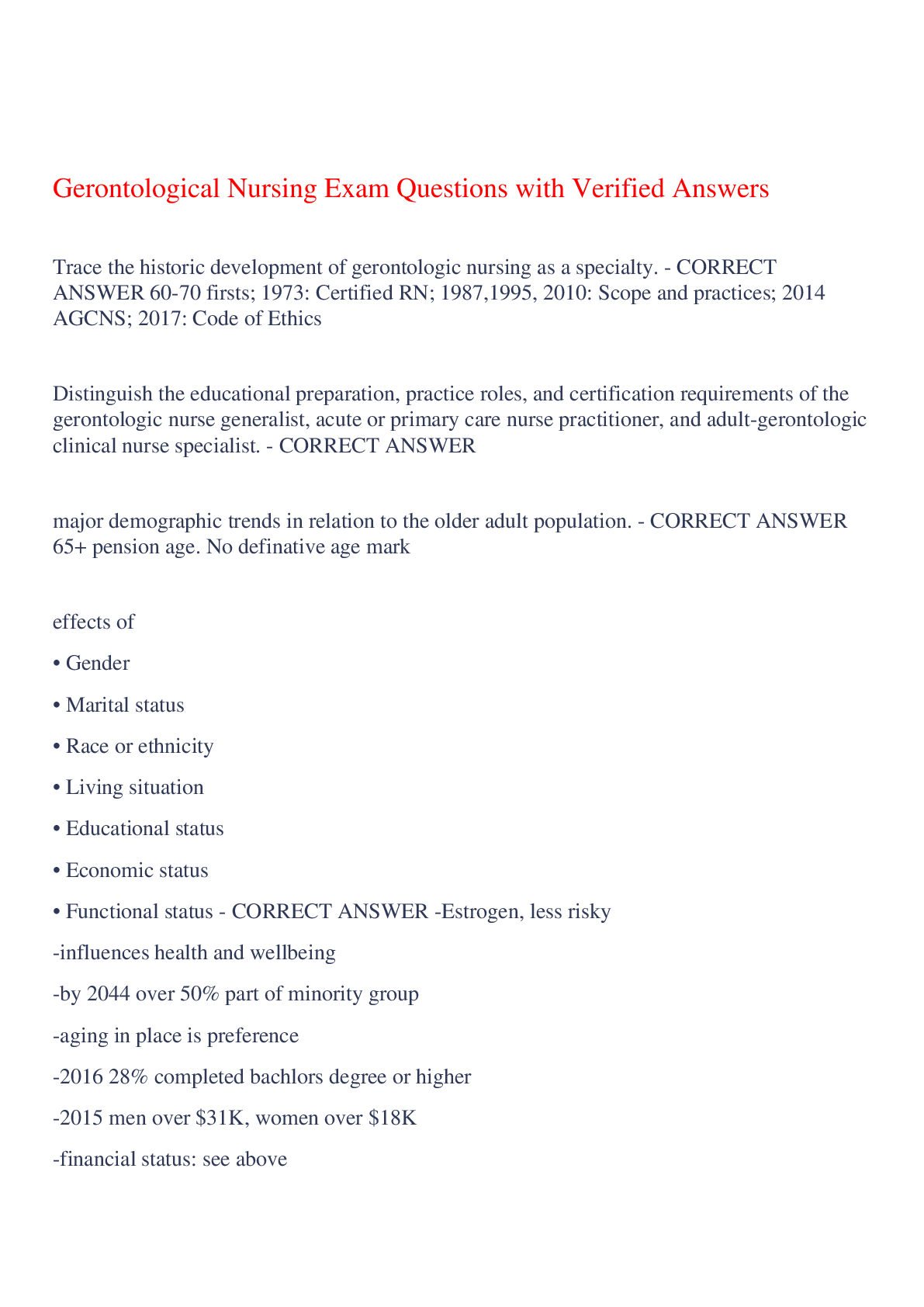
Trace the historic development of gerontologic nursing as a specialty. - CORRECT ANSWER 60-70 firsts; 1973: Certified RN; 1987,1995, 2010: Scope and practices; 2014 AGCNS; 2017: Code of Ethics
Distinguish the educational preparation, practice roles, and certification requirements of the gerontologic nurse generalist, acute or primary care nurse practitioner, and adult-gerontologic clinical nurse specialist. - CORRECT ANSWER
major demographic trends in relation to the older adult population. - CORRECT ANSWER 65+ pension age. No definative age mark
effects of
• Gender
• Marital status
• Race or ethnicity
• Living situation
• Educational status
• Economic status
• Functional status - CORRECT ANSWER -Estrogen, less risky
-influences health and wellbeing
-by 2044 over 50% part of minority group
-aging in place is preference
-2016 28% completed bachlors degree or higher
-2015 men over $31K, women over $18K
-financial status: see above
5. Discuss how the aging of society will affect the future of health care delivery. - CORRECT ANSWER
concept of ageism as it relates to the care of older adults in various settings. - CORRECT ANSWER viewed as a threat, discrimination
issues influencing gerontologic nursing education. - CORRECT ANSWER Portland experience. Students enjoyed experiences
issues affecting gerontologic nursing research. - CORRECT ANSWER phamocotherapy, advance directives, staff development and management, legal issues, patient and caregiver education, infection control, and relevant topics.
Acute care settings vs Community based settings - CORRECT ANSWER Although the shift is away from the acute care setting toward a wide array of community-based alternatives, a segment of the older adult population will continue to need care in a hospital setting
geriatrics - CORRECT ANSWER meaning "old age," branch of medicine that deals with the diseases and problems
General focus for nurses working with older adults - CORRECT ANSWER Gerontic nursing
Risks of polypharmacy in older adults - CORRECT ANSWER falls, overdoses, memory problems, and death
Ageism - CORRECT ANSWER prejudice and discrimination against older people
Delegation to Unlicensed Assistive Personnel - CORRECT ANSWER The purpose to share tasks as appropriate by decreasing the overall workload of the primary nurse.
When the nurse delegates nursing care activities to another person, that person is authorized to act in the place of the nurse, while the nurse retains the responsibility and accountability for the activities performed. The nurse is accountable for reviewing the data collected by another person and ensures it is done appropriately.
When delegating a skill, it must be within the scope of the RN to delegate it, the unlicensed nursing assistant (UNA) or unlicensed assistive personnel (UAP) must be qualified to perform the skill.
Functional abilities of older patients - CORRECT ANSWER defined as the capacity to carry out the basic self-care activities that ensure overall health and well-being. Functional ability is classified in many measurement tools by activities of daily living (ADLs), such as bathing, dressing, eating, transferring, and toileting
What percent of the population will be over 65 shortly? - CORRECT ANSWER 20%
Fall risks - CORRECT ANSWER major health concern related to environment, meds, disease processes
Gerontological nursing specialty and credentialing - CORRECT ANSWER Gerontological (RN-BB)
Adult Gerontological Acute Care (AGACNP-BC)
Adult Gerontological (AGAPCNP-BC)
Adult Gerontological Clinic Specialist
DEMOGRAPHICS TRENDS OF SENIORS - CORRECT ANSWER The older adult population is rapidly aging with many individuals living longer subsequent to greater access to medical care, technological advancements, and initiatives focused on health promotion and disease prevention. 14.9% of the United States with the baby boomers accounting for the majority, creating a substantial demographic shift. Gender and race are significant factors that impact the degree of disparities and financial strains on the older adult's health.
SOCIAL IMPACTS ON SENIORS - CORRECT ANSWER Individuals age 65 and older are more likely to require management of one or more chronic health conditions or functional losses. As one grows older, there is an increase in acute health events and co-morbidities that require greater utilization of primary, acute, and long-term care; this leads to greater risks of polypharmacy. Cancer, cardiovascular diseases and Chronic Obstructive Pulmonary Disease (COPD) are leading causes of mortality and morbidity in the older adult population
ECONOMICS OF SENIORS - CORRECT ANSWER care is shifting away from acute care settings to community-based settings such as long-term care facilities, home care, and ambulatory care. Conversely, a segment of the older adults will continue to need acute care services despite innovative health measures. Millions of older adults live below the poverty level which significantly affects health and lifestyle behaviors. In addition, gender, race, education and literacy levels can significantly impact the older adult's health behaviors and compliance with medical treatment. As trends prevail, nursing care will grow in complexity as older adult clients continue to tax the healthcare system.
POLITICS OF SENIORS - CORRECT ANSWER Through Medicare, the federal government funds most of the healthcare costs for individuals 65 and older or those younger than 65 with a documented disability or End-Stage Renal Disease (ESRD). Ongoing political movements toward lowering social and economic constraints secondary to older adult health complexities will ensure.
- CORRECT ANSWER
[Show More]