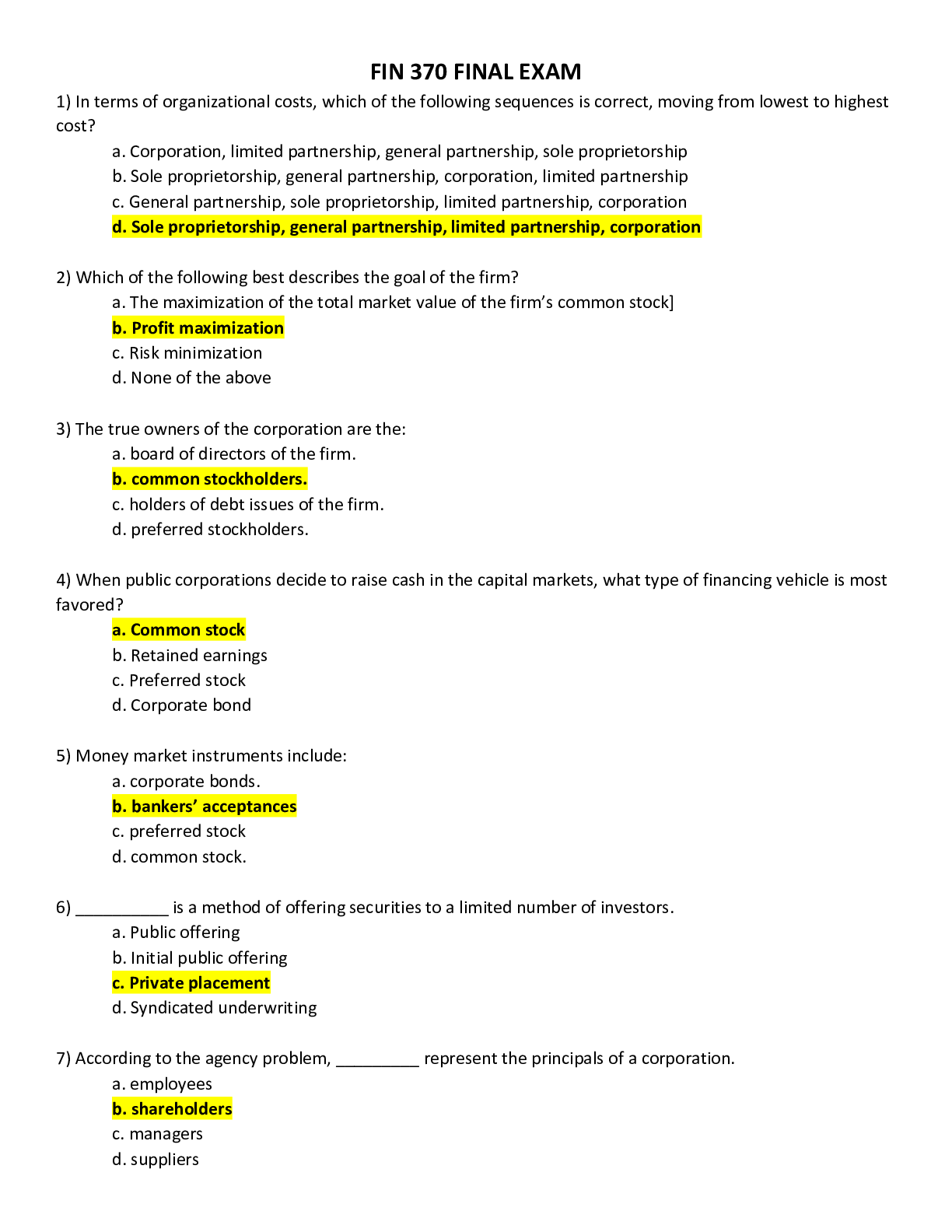
FIN 370 /FIN 370 WEEK 5Final Exam. A+ GRADED
Document Content and Description Below
FIN 370 /FIN 370 WEEK 5Final Exam. A+ GRADED.Exam Details
Summary header Summary value
Your exam has been submitted
Status: Submitted on Apr 13, 2017, 11:10 AM
Results: 30/30 (100%)
Number of Questions: 30 questions
...
[Show More]
Last updated: 3 years ago
Preview 1 out of 8 pages
Instant download

Buy this Document to get the Full Access Instantly
Provided by Students Who Aced it
We Verify Document Content to Gurantee Accuracy
Reviews( 0 )
Document information
Connected school, study & course
About the document
Uploaded On
Feb 23, 2021
Number of pages
8
Written in
All

Additional information
This document has been written for:
Uploaded
Feb 23, 2021
Downloads
0
Views
90
Topic Tags
Related Subjects & Courses
Explore similar study resources and related concepts.
Recommended For You
Get more on EXAM »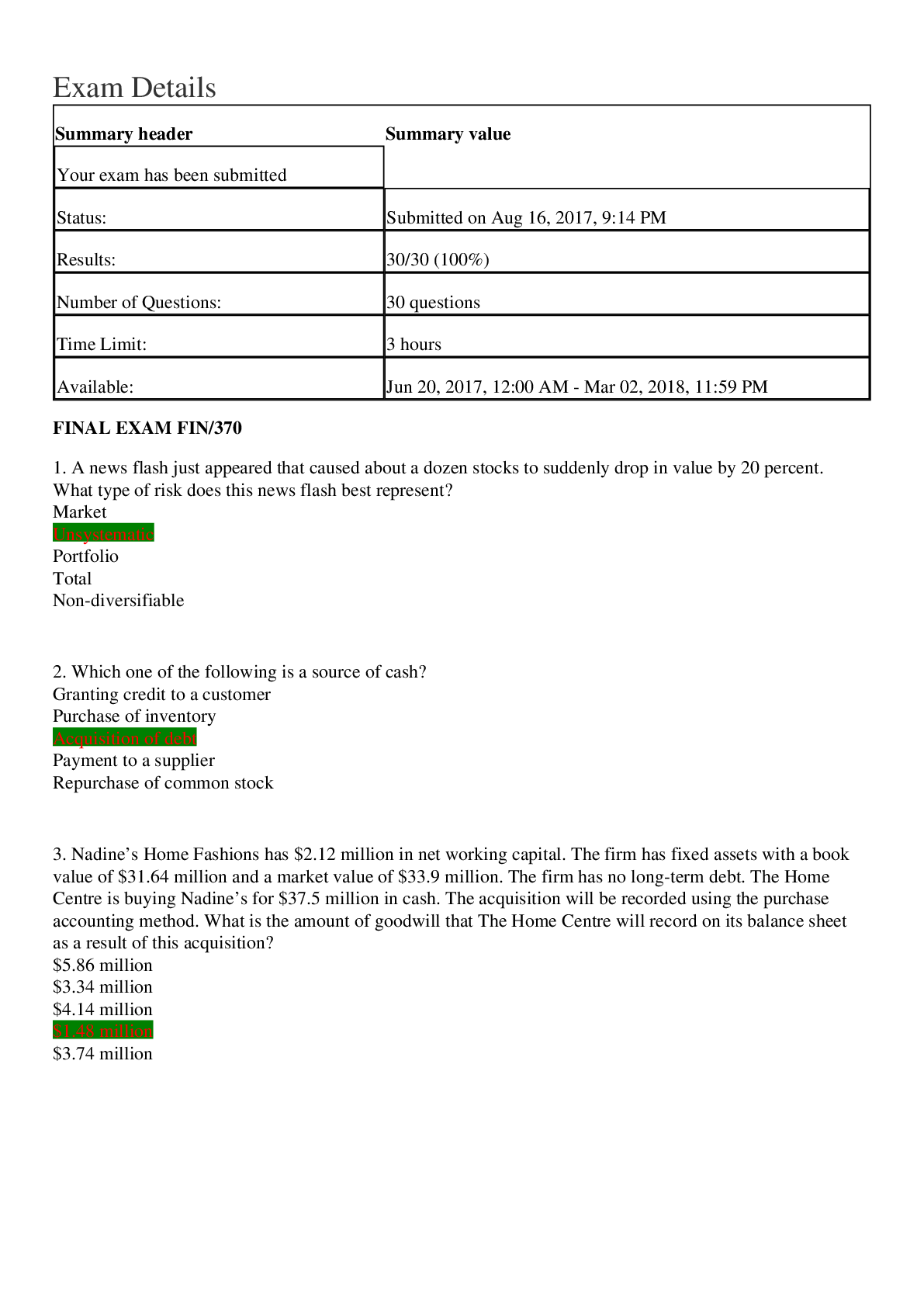
$10
7 Pages
FIN 370 /FIN 370 FINAL EXAM Finance for Business. (Latest)
$11
5 Pages
FIN 370 /FIN 370 FINAL EXAM (100% CORRECT) QUESTIONS AND ANSW...

$9.5
5 Pages
University of Phoenix - FIN 370: FIN370_WK4_CHAPTER 9 P1_RISK...

$9.5
6 Pages
University of Phoenix - FIN 370Week 3 practice problems. 37 Qu...
.png)



$11.5
9 Pages
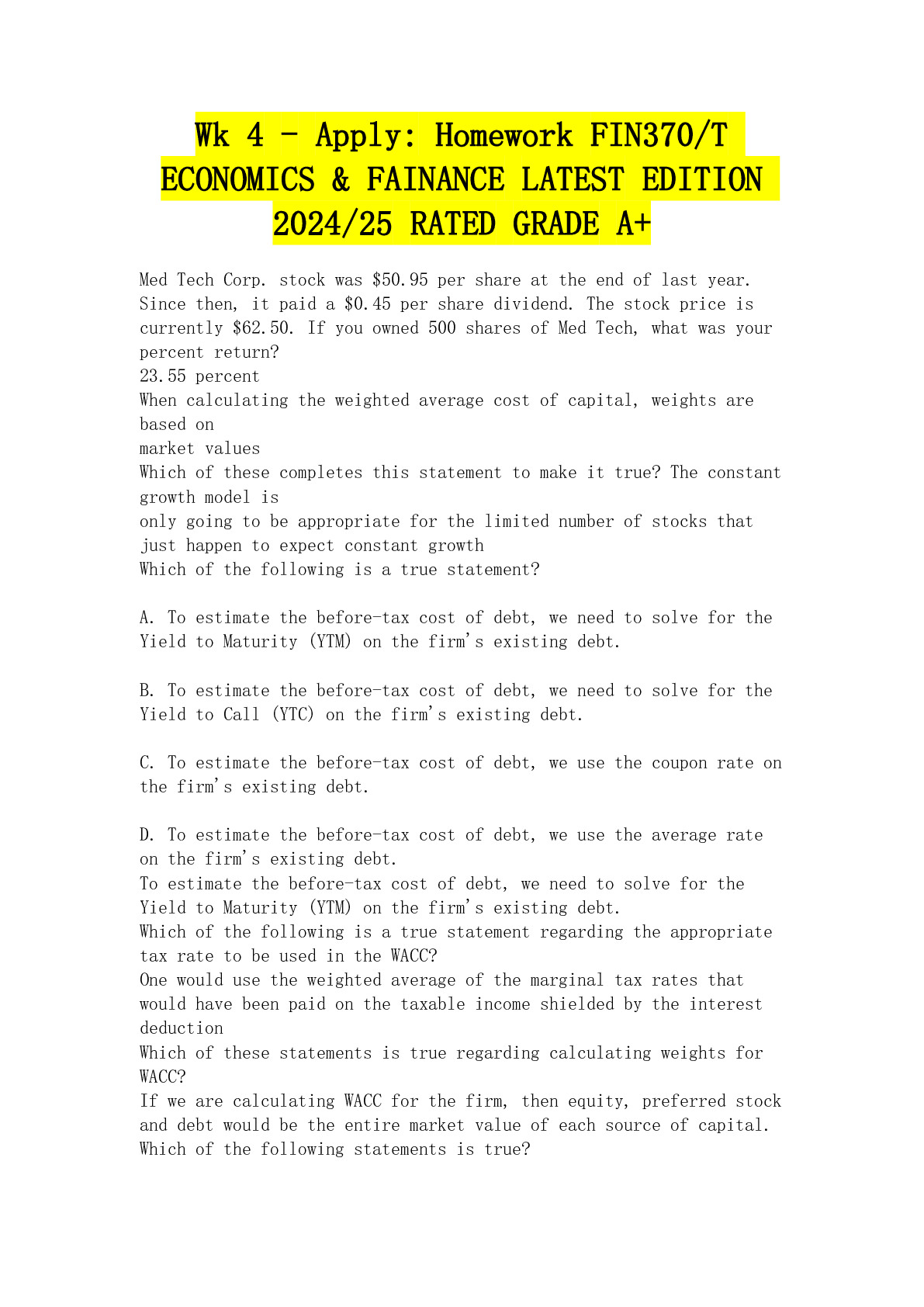
Wk 4 - Apply: Homework FIN370/T ECONOMICS & FAINANCE LATEST ED...
.png)
$25
1084 Pages
Fundamentals of Corporate Finance, 5e Robert Parrino, David K...
.png)
$25
219 Pages
Financial Management for Public, Health, and Not-for-Profit Or...
.png)
$25
852 Pages
Fundamentals of Corporate Finance, 5e Robert Parrino, David K...
More related documents below


.png)


.png)