NRS 429 Exam 1 - Questions and Answers Principles of systems thinking theory -thinking of the bigger picture -balancing short and long term objectives -recognizing the dynamic, complex, and interdependent nature of syst
...
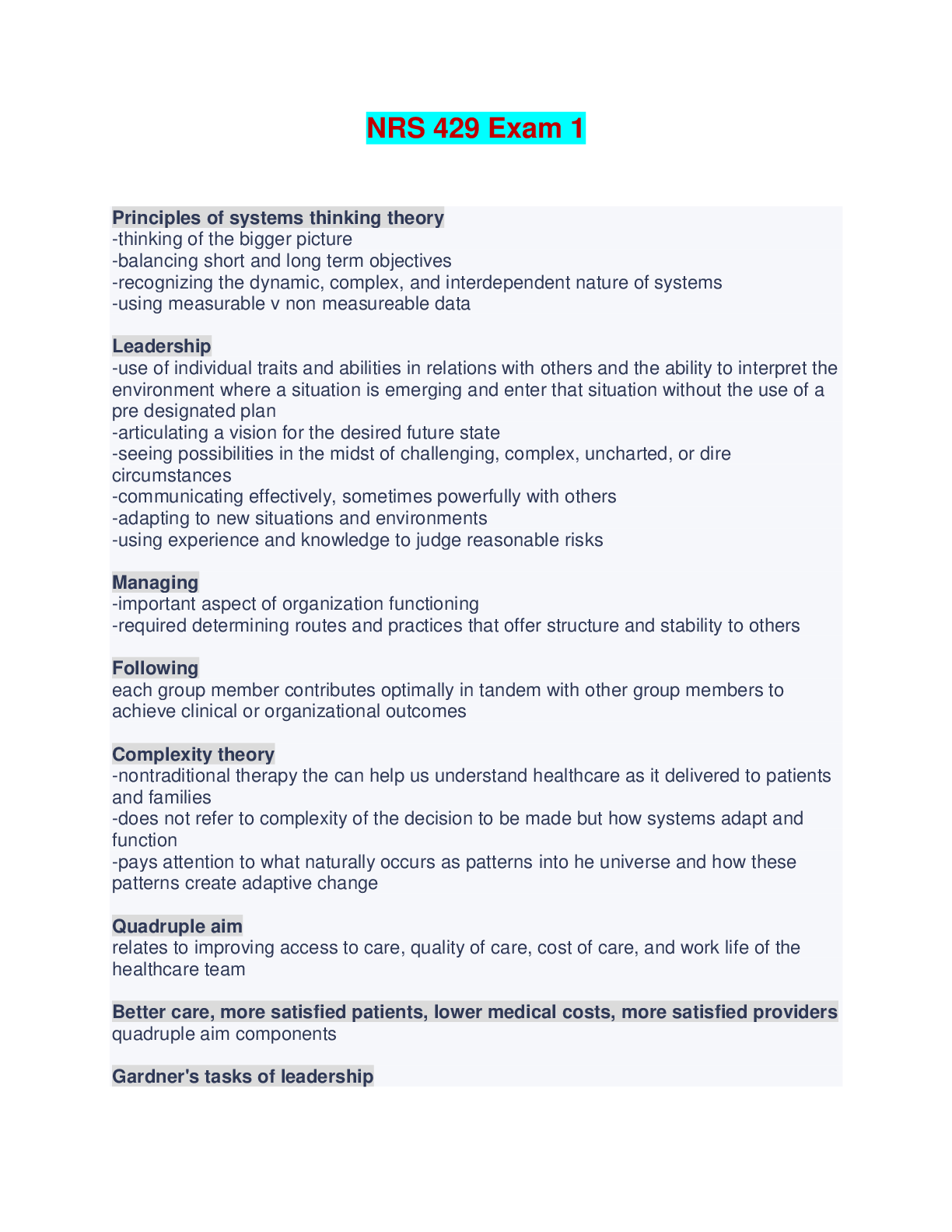
NRS 429 Exam 1 - Questions and Answers Principles of systems thinking theory -thinking of the bigger picture -balancing short and long term objectives -recognizing the dynamic, complex, and interdependent nature of systems -using measurable v non measureable data Leadership -use of individual traits and abilities in relations with others and the ability to interpret the environment where a situation is emerging and enter that situation without the use of a pre designated plan -articulating a vision for the desired future state -seeing possibilities in the midst of challenging, complex, uncharted, or dire circumstances -communicating effectively, sometimes powerfully with others -adapting to new situations and environments -using experience and knowledge to judge reasonable risks Managing -important aspect of organization functioning -required determining routes and practices that offer structure and stability to others Following each group member contributes optimally in tandem with other group members to achieve clinical or organizational outcomes Complexity theory -nontraditional therapy the can help us understand healthcare as it delivered to patients and families -does not refer to complexity of the decision to be made but how systems adapt and function -pays attention to what naturally occurs as patterns into he universe and how these patterns create adaptive change Quadruple aim relates to improving access to care, quality of care, cost of care, and work life of the healthcare team Better care, more satisfied patients, lower medical costs, more satisfied providers quadruple aim components Gardner's tasks of leadership -demonstrates leading, managing, and following are relevant to nurses who hold clinical positions, formal management positions, and executive leadership positions COMPONENTS -envisioning goals -affirming values -motivating -managing -achieving workable unity -developing trust -explaining -serving as a symbol -representing the group -renewing Bleich's task of management identifies systems and processes that require responsibility and accountability and specify who owns the process Emotional intelligence the ability to perceive, express, understand, and regulate emotions Trait theory -leaders have a certain set of physical and emotional characteristics that are crucial for inspiring others toward a common goal -may be inherited or developed Style theory -group and exchange theory -focus on relationships and context -feedback from all employee centered Situational contingency theory -relationship between tasks at hand, interpersonal skills, and favorable news of the work situation -consider the challenges of a situation and encourage adaptivity Transformational theory -leader attends to needs and motives of followers with aim of interactions increasing motivation and morale -leader as a role model who inspires through optimism, intellectual stimulations, and encouragement of creativity -what might improve are Hierarchy of needs -lower level needs drive behavior before higher level needs will be addressed -safety and security override creativities and innovation
[Show More]