*NURSING > QUESTIONS & ANSWERS > Chamberlain College Of Nursing > NURSING > NR291ROK Exam 2 (All)
Chamberlain College Of Nursing > NURSING > NR291ROK Exam 2
Document Content and Description Below
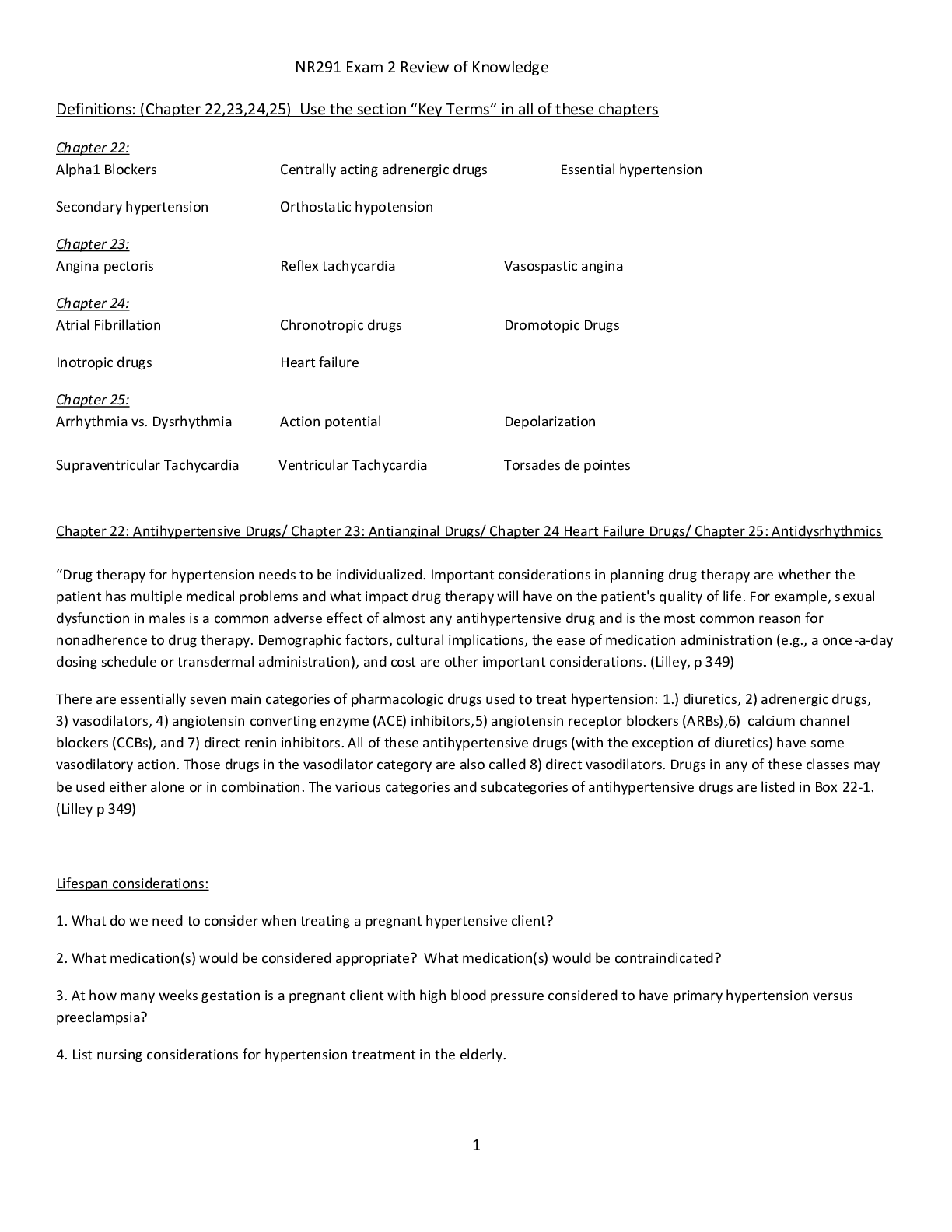
Definitions: (Chapter 22,23,24,25) Use the section “Key Terms” in all of these chapters Chapter 22: Alpha1 Blockers Centrally acting adrenergic drugs Essential hypertension Secondary hyper ... tension Orthostatic hypotension Chapter 23: Angina pectoris Reflex tachycardia Vasospastic angina Chapter 24: Atrial Fibrillation Chronotropic drugs Dromotopic Drugs Inotropic drugs Heart failure Chapter 25: Arrhythmia vs. Dysrhythmia Action potential Depolarization Supraventricular Tachycardia Ventricular Tachycardia Torsades de pointes Chapter 22: Antihypertensive Drugs/ Chapter 23: Antianginal Drugs/ Chapter 24 Heart Failure Drugs/ Chapter 25: Antidysrhythmics “ Lifespan considerations: 1. What do we need to consider when treating a pregnant hypertensive client? 2. What medication(s) would be considered appropriate? What medication(s) would be contraindicated? 3. At how many weeks gestation is a pregnant client with high blood pressure considered to have primary hypertension versus preeclampsia? 4. List nursing considerations for hypertension treatment in the elderly. Briefly describe how each drug class generally works: The sampling of drugs we will be focusing on are listed below. Drug class Brief: Mechanism of Action Central Acting Alpha2Adrenergic (Clonidine & Methydopa) Alpha blockers-peripheral acting (Prazosin, Doxasozin) Beta Blockers- (cardioselective & noncardioselective) (Atenolol; Labetolol; Metoprolol) Dual-Action Alpha1 & Beta receptor blocker (carvedilol) Angiotensin-converting enzyme inhibitors (ACE inhibitors) (Lisinopril) Angiotensin II receptor blockers (ARBS) (Losarten) Calcium channel blockers (Amlodipine, Dilitiazem, Procardia) Vasodilators Diuretics ( Discuss in detail for Chapter 28) Nitropursside (hypertensive crisis) Matching: (*Please note, some terms will be used in future chapters) 1. Caine a. Oral hypoglycemic (diabetes) 2. Dine b. Antivirals 3. Ide c. Antibiotic 4. dipine d. Opoid analgesic (narcotics for pain) 5. mide & zide e. Beta Blockers (hypertension & other cardiac indications) 6.. sartan f. Neuromuscular blocking agent 7. olol g. Steroids 8. pam & lam h. Diuretic 9. sone i. H2 Blockers (ulcers, GERD) 10. vir j. Anti-lipemics (cholesterol lowering) 11. cillin k. Antibiotic 12. done l. ACE-inhibitor (cardiovascular drug) 13. oxacin m. Antianxiety 14. mycin n. Local anesthetic 15. nium o. ARB (Angiotensin II receptor blockers) 16. pril p. Antibiotics 17. statin q. Calcium channel blocker (there are other endings for some calcium channel blockers) Put the following drug class into the appropriate indication: (not every column will be completely filled): Diuretics Angiotensin converting enzyme inhibitors (ACE inhibitors) Alpha Blocker Alpha1 & Beta receptor blockers-Dual-Action (ex. carvedilol & labetalol) Angiotensin II receptor blockers (ARB’s) Calcium channel blockers Vasodilators Beta Blocker Nitrites Indications for medication classes: Hypertension Heart Failure Angina Antidysrhythmics Fill in the blank: 1. High blood pressure associated with renal, pulmonary, endocrine and vascular diseases is known as hypertension. 2. Elevated systemic arterial blood pressure for which no cause can be found is known as hypertension. 3. A common adverse effect of adrenergic drugs involving a sudden drop in blood pressure when clients change position is known as hypotension. 4. These drugs are used in the management of hypertensive emergencies: . 5. The primary effect of these drugs is to decrease plasma and extracellular fluid volumes: . 6. Drugs that are often used as first-line drugs in the treatment of both heart failure and hypertension are known by the acronym inhibitor. 7. The blood pressure medication frequently used during pregnancy is but the class of drugs that should be avoided is . True/False: 1. Antihypertensive drugs that can cause a hypertensive crisis if abruptly stopped include clonidine & beta blockers. T or F 2. You do not need to monitor any lab values if taking an ACE or ARB blood pressure medication for hypertension. T or F 3. Erectile dysfunction can occur with antihypertensive medications. T or F 4. The elderly population tolerates antihypertensive medication without increase in side effects. T or F 5. Propanolol (Inderal) may be prescribed for migraines and anxiety, such as public speaking. T or F Fill in the medication information charts: Antihypertensives (*Diuretics are antihypertensives -discussed in Chapter 28) ADRENERGICS: Clonidine (Catapress) Methyldopa (Aldomet) Labetolol Atenolol Metoprolol Carvedilol (Coreg) Drug Classification: Centrally Acting adrenergic drug Centrally Acting Adrenergic drug Beta-blockers Dual-Action Alpha & Beta blockers Indication for drug: Contraindications: Common Adverse Effects: (side effects) Major Interactions: (ex. CYP450) Nursing Considerations: Age Considerations: (if applicable) Renal or Hepatic Considerations (if applicable) Drug name: Lisinopril Losartan (Cozaar) Amlodipine (Norvasc) Dilitiazem (Cardizem) Nifedipine (Procardia) Drug Classification: Ace Inhibitor ARB Calcium channel blockers Indication for drug: Contraindications: Common Adverse Effects: (side effects) Major Interactions: (ex. CYP450) (if applicable) Nursing Considerations: Age Considerations? (if applicable) Renal or Hepatic Considerations?? 1. When administering angiotensin-converting enzyme (ACE) inhibitors, the nurse keep in mind that which are possible adverse effects? (Select all that apply) a. Diarrhea b. Fatigue c. Restlessness d. Headaches e. Dry cough f. Tremors 2. A beta1 blocker is prescribed for a client with heart failure and hypertension. Which adverse effects, if present, may indicate a serious problem is developing while the client is on this medication? (Select all that apply.) a. Edema b. Nightmares c. Shortness of Breath d. Nervousness e. Constipation Fill in the medication information charts: Drug name: Hydralazine Prazosin Doxasozin Nitroprusside (Nipride) Drug Classification: Vasodilator Peripherally acting Alpha-1 blockers (arterial effects) Vasodilator (arteriolar & venous effects) Indication for drug: Contraindications: Common Adverse Effects: (side effects) Major Interactions: (ex. CYP450) (if applicable) Nursing Considerations: Age Considerations? (if applicable) Renal or Hepatic Considerations?? (if applicable) *Read page 365 & 367 & study the “Patient Teaching Tips” *Be able to identify general recommendations and counseling for a client on antihypertensive medication. Chapter 23: Antianginal Drugs “When the heart's supply of blood carrying oxygen and energy-rich nutrients is insufficient to meet the demands of the heart, the heart muscle (or myocardium) aches. This is called angina pectoris, or chest pain. The pain of chronic stable angina is commonly intense, but subsides within 15 minutes of either rest or appropriate antianginal drug therapy. Vasospastic angina results from spasms in the layer of smooth muscle that surrounds atherosclerotic coronary arteries. In contrast to chronic stable angina, this type of pain often occurs at rest and without any precipitating cause. This type of angina is also called Prinzmetal angina or variant angina. Dysrhythmias and electrocardiogram (ECG) changes often accompany these different types of anginal attacks” (Lilley, p 369) . “The three main classes of drugs used to treat angina pectoris are the nitrates and nitrites, the beta blockers, and the calcium channel blockers (CCBs). Their various therapeutic effects are summarized and compared in Table 23-1, p 370. The overall goal of antianginal drug therapy is to increase blood flow to ischemic myocardium, decrease myocardial oxygen demand, or both. Evidence exists to suggest that drug therapy may be at least as effective as angioplasty in treating angina”. (Lilley, p 369) “Nitrates have long been the mainstay for both the prophylaxis & treatment for angina and other cardiac problems. Today there are several chemical derivatives of the early precursors, all of which are organic nitrate esters. They are available in a variety of preparations, including sublingual & oral tablets; capsules; ointments; patches; a translingual spray; & intravenous solutions” p. 370 “The beta-adrenergic blockers, more commonly referred to as beta blockers, have become the mainstay in the treatment of several cardiovascular diseases. These include angina, MI, hypertension, and dysrhythmias. Those beta blockers approved as antianginal drugs are atenolol, metoprolol, and propranolol.” (Lilley, p. 372 “Calcium channel blockers all block calcium channels, but their chemical structures, and therefore their mechanisms of action, differ slightly. More than nine CCBs are available today. Those that are used for the treatment of chronic stable angina are amlodipine, diltiazem, nifedipine (*prinzmenal angina), and verapamil.” (Lilley, p 374 (You do not need to repeat information on drugs you ALREADY completed: But, PUT ANY SPECIFIC INFORMATION FOR ANGINA) Drug name: Nitroglycerin Atenolol, Metoprolol Propanolol Amlodipine Diltiazem Nifedipine Drug Classification: Nitrates Beta Blockers Calcium channel blockers Indication for drug: Contraindications: Common Adverse Effects: (side effects) Major Interactions: (ex. CYP450) (if applicable) Nursing Considerations: Age Considerations? (if applicable) Renal or Hepatic Considerations?? Short answer: 1. When teaching a client how to take sublingual nitroglycerin for angina, what are specific recommendations you must advise the client to practice . Make sure to include information about taking care of the medication: . 2. Explain why nitroglycerin is given sublingually for acute angina: . 3. What is/are the most common reason(s) a client will need to discontinue an ACE inhibitor or ARB? . 4. A concern about long acting nitroglycerin is so a recommendation for care would be . *READ PAGE 379-380 for “Patient Teaching Tips” & be aware of appropriate client teaching for drugs that treat angina. Chapter 24: Heart Failure Drugs “Heart failure is a not a specific disease per se but rather a clinical syndrome caused by numerous different cardiac disorders. When a person has heart failure, the heart cannot then meet the increased demands, and the blood supply to certain organs is reduced”. This chapter focuses on the positive inotropic drugs, phosphodiesterase inhibitors and cardiac glycosides, as well as the newest class of medications for heart failure, B-type natriuretic peptides. Although several other drugs are used in the treatment of heart failure, they are discussed in detail in other chapters; for example, angiotensin-converting enzyme (ACE) inhibitors and angiotensin receptor blockers (ARBs) are covered in Chapter 22; beta blockers are discussed in Chapters 19, 22 and 23; and diuretics are discussed in Chapter 28.” (Lilley, p 384) “The approach to the treatment of chronic heart failure revolves around reducing the effects of the renin-angiotensin-aldosterone system and the sympathetic nervous system. Therefore, the drugs of choice at the start of therapy are the ACE inhibitors (lisinopril, enalapril, captopril, and others) or the angiotensin II receptor blockers” (Lilley, p 384) (Review prior pages of your ROK) Fill in the medication information charts: Drug name: Nesiritide Digoxin Milrinone Drug Classification: B-Type Natriuretic Cardiac Glycoside Phosphodiesterase inhibitor Indication for drug: Contraindications: Common Adverse Effects: (side effects) Major Interactions: (ex. CYP450) (if applicable) Nursing Considerations: Age Considerations? (if applicable) Renal or Hepatic Considerations?? (if applicable) Culture & Ethnicity have a role in current and future medication treatment. For example: “Hydralazine/isosorbide dinitrate (BiDil) was the first drug approved for a specific ethnic group, namely African Americans. This combination of two older drugs contains 37.5 mg of hydralazine and 20 mg of isosorbide dinitrate. The individual drugs are discussed in detail in Chapter 22 (hydralazine) and Chapter 23 (isosorbide). Peak plasma levels of hydralazine/isosorbide dinitrate are achieved in 1 hour” (Lilley, p 385). Short Answer: Digoxin Facts… 1. Digoxin requires monitoring, and has a therapeutic index. can increase the risk of toxicity. Signs and symptoms to look for in a digoxin toxic client include: . The medication should be held for a heart of: and then the prescriber should be contacted immediately. A client who is found to be toxic, can be treated with . *READ PAGE 394 for “Patient Teaching Tips” & be aware of appropriate client teaching for drugs that treat heart failure. NCLEX Questions: 1. Before giving oral digoxin (lanoxin) the nurse discovers that the patient’s radial pulse is 52 beats/min. What will be the nurse’s first action? a. Give the dose. b. Delay the dose until later. c. Hold the dose and notify the physician. d. Check the apical pulse for 1 minute. 2. When caring for a client who is taking digoxin, the nurse will monitor for which signs and symptoms of toxicity? (Select all that apply) a. Anorexia b. Diarrhea c. Visual Changes d. Nausea and vomiting e. Headache f. Bradycardia Chapter 25: Antidysrhythmic Drugs “Dysrhythmias are usually serious and may require treatment with an antidysrhythmic drug or nonpharmacologic therapies; however, not all dysrhythmias require medical treatment. A cardiologist is usually consulted to make the judgment. Disturbances in cardiac rhythm are the result of abnormally functioning cardiac cells” (Lilley, p 397)” Dysrhythmias are subdivided into several broad categories depending on their anatomic site of origin in the heart. Supraventricular dysrhythmias originate above the ventricles in the SA or AV node or atrial myocardium. Among the supraventricular dysrhythmias, atrial fibrillation is a very common condition and is notable in that it predisposes the patient to stroke. Ventricular dysrhythmias originate below the AV node, and can lead to life threatening dysrhythmias”, such as ventricular tachycardia or torsades de pointes, that can deteriorate into ventricular fibrillation and cardiac arrest. (Lilley, p 402). Fill in the medication information charts: Drug name: Quinidine Propanolol Sotalol Amiodarone Drug Classification: Indication for drug: Contraindications: Common Adverse Effects: (side effects) Major Interactions: (ex. CYP450) (if applicable) Nursing Considerations: Age Considerations? (if applicable) Renal or Hepatic Considerations?? (if applicable) Fill in the medication information charts: Drug name: Verapamil Adenosine (Adenocard) Cordarone Drug Classification: Indication for drug: Contraindications: Common Adverse Effects: (side effects) Major Interactions: (ex. CYP450) (if applicable) Nursing Considerations: Age Considerations? (if applicable) Renal or Hepatic Considerations?? (if applicable) NCLEX Questions: 1. When monitoring a client who takes quinidine (quinidex), the nurse observes for which possible adverse effects of this drug? (Select all that apply) a. Weakness b. Tachycardia c. Gastrointestinal upset d. Tinnitus e. Ventricular ectopic beats 2. The nurse is administering amiodarone (Cordarone) and should monitor for which potential adverse effect? a. Pulmonary toxicity b. Hypertension c. Urinary retention d. Constipation 3. A nurse is preparing to administer adenosine (Adenocard). Which is the correct administration technique for this drug? a. Give as a fast intravenous push. b. Give intravenously, slowly, over at least 5 minutes c. Should be taking with food or milk. d. Should be given as an intravenous drip infusion *READ PAGE 416 for “Patient Teaching Tips” & be aware of appropriate client teaching for drugs that treat cardiac dysrhythmias. Part 2: Chapter 28: Diuretics: “Diuretics are drugs that accelerate the rate of urine formation via a variety of mechanisms. The result is the removal of sodium and water from the body. A primary role of diuretics, especially the thiazides, is as first-line drugs in the treatment of hypertension. The hypotensive activity of diuretics is due to many different mechanisms. They cause direct arteriolar dilation, which decreases peripheral vascular resistance. They also reduce extracellular fluid volume, plasma volume, and cardiac output, which may account for the decrease in blood pressure. They have long been the mainstay of therapy not only for hypertension but also for heart failure. Two of their advantages are their relatively low cost and their favorable safety profile. The main problem with their use is the metabolic adverse effects that can result from excessive fluid and electrolyte loss. These effects are usually dose related and are controllable with dosage titration (careful adjustment)”. (Lilley 460) Drug name: Hydrochlorothiazide (Hydrodiuril) Furosemide (Lasix) Spironolactone (Aldactone) Drug Classification: Thiazide Loop diuretics Potassium sparing Indication for drug: CHF, Edema & Pulmonary Edema Contraindications: Common Adverse Effects: (side effects) LOW POTASSIUM LOW POTASSIUM ;ELECTROYLYTE IMABLANCES, DEHYDRATION HIGH POTASSIUM Major Interactions: (ex. CYP450) (if applicable) Nursing Considerations: Age Considerations?? (if applicable) Renal or Hepatic Considerations?? (if applicable) Drug name: Mannitol Diamox Drug Classification: Osmotics Carbonic Anhydrase Inhibitor Indication for drug: Contraindications: Common Adverse Effects: (side effects) METABOLOIC ALKALOSIS Major Interactions: (ex. CYP450) (if applicable) Nursing Considerations: Age Considerations?? (if applicable) Renal or Hepatic Considerations?? PATIENT TEACHING TIPS (Lilley, p 471) • “Patients taking diuretics need to maintain proper nutritional intake and fluid volume and eat potassium-rich foods, except when contraindicated or when potassium-sparing diuretics are used. Foods high in potassium include bananas, oranges, apricots, dates, raisins, broccoli, green beans, potatoes, tomatoes, meats, fish, wheat bread, and legumes. • Potassium supplementation may be recommended by a prescriber, depending on the symptoms the patient presents and the serum levels. Normal serum potassium levels are 3.5-5 mEq/L (see Chapter 29). • Frequent laboratory tests may be indicated at the beginning of and during therapy with diuretics. These tests may include measurement of electrolytes, uric acid, and blood gases. • Encourage patients to change positions slowly and to rise slowly after sitting or lying to prevent dizziness and possible fainting (syncope). • Forcing of fluids may be needed (if not contraindicated) to prevent dehydration and minimize constipation. Increased consumption of fiber may also help with constipation. • Any unusual adverse effects or problems, such as excessive dizziness, syncope, weakness, or muscle aches, need to be reported immediately to the prescriber. • Advise the patient to keep a daily journal; entries should include weight, how the patient feels each day, dosage of diuretic, and any other important information related to the diagnosis and medical treatment. • Educate the patient about the signs and symptoms of hypokalemia, such as anorexia, nausea, lethargy, muscle weakness, mental confusion, and hypotension. In addition, emphasize the importance of being cautious with hot climates, excessive sweating, fever, and the use of saunas or hot tubs. Heat raises core body temperature and causes further loss of potassium, sodium, and water through sweat, which may increase the risk of more problems with hypotension and fluid-electrolyte imbalances. Fluid volume and electrolyte loss may also occur with vomiting and diarrhea. • If the patient is taking a diuretic along with digoxin, educate the patient, family members, and anyone involved in the patient's care about how to monitor pulse rate. The warning signs & symptoms of digoxin toxicity include headache, dizziness, confusion, nausea, visual disturbances, and bradycardia. A pulse rate of 60 beats/min or lower is often used as a guideline, but always check facility policy or guidelines. • Educate patients with diabetes who are also taking thiazide and/or loop diuretics about the need for close monitoring of blood glucose levels:” (p 471). KEY POINTS:• “The five main types of diuretics are CAIs, loop, osmotic, potassium-sparing, and thiazide and thiazide-like diuretics. • The loop, potassium-sparing, and thiazide diuretics are the most commonly used. Remember that the loop diuretics are more potent than the thiazides, combination diuretics, and potassium-sparing diuretics. • It is important to have a thorough knowledge of renal anatomy and physiology and how it relates to the action of the various diuretics; for example, if a loop diuretic is given, its site of action is the loop of Henle and it causes the excretion of sodium, potassium, and chloride into the urine. • Methods for monitoring excess and deficit fluid volume states include assessment of skin and mucous membranes, blood pressure, pulse rate, intake and output, and daily weights. • With diuretics, always be concerned about the more vulnerable patient populations, such as the elderly, those with chronic illnesses, and patients with altered renal or liver function”. (Lilley 471-472) Lilley, Linda L., Shelly Collins, Julie Snyder. Pharmacology and the Nursing Process, 7th Edition. Mosby, Part 2: Chapter 28: Diuretics: “Diuretics are drugs that accelerate the rate of urine formation via a variety of mechanisms. The result is the removal of sodium and water from the body. A primary role of diuretics, especially the thiazides, is as first-line drugs in the treatment of hypertension. The hypotensive activity of diuretics is due to many different mechanisms. They cause direct arteriolar dilation, which decreases peripheral vascular resistance. They also reduce extracellular fluid volume, plasma volume, and cardiac output, which may account for the decrease in blood pressure. They have long been the mainstay of therapy not only for hypertension but also for heart failure. Two of their advantages are their relatively low cost and their favorable safety profile. The main problem with their use is the metabolic adverse effects that can result from excessive fluid and electrolyte loss. These effects are usually dose related and are controllable with dosage titration (careful adjustment)”. (Lilley 460) Complete the tables below: Drug name: Hydrochlorothiazide (Hydrodiuril) (Also comes in numerous combo products) Furosemide (Lasix) Spironolactone (Aldactone) Drug Classification: Thiazide diuretic Forms: Loop diuretics Forms: Potassium sparing diurectic Forms: Indication for drug: CHF, Edema, HTN, & pulmonary edema Contraindications: Common Adverse Effects: (side effects) LOW POTASSIUM; ELECTROYLYTE IMABLANCES, DEHYDRATION LOW POTASSIUM HIGH POTASSIUM Major Interactions: (ex. CYP450) (if applicable) Nursing Considerations: Age Considerations?? (if applicable) Renal or Hepatic Considerations?? (if applicable) Drug name: Mannitol (Osmitrol) Acetazolamide (Diamox) Metolazone (Zaroxylone) Drug Classification: Osmotics diuretic Forms: IV only Carbonic Anhydrase Inhibitor diuretic Forms: Thiazide-like diuretic Indication for drug: Contraindications: Common Adverse Effects: (side effects) METABOLOIC ALKALOSIS Hypokalemia Major Interactions: (ex. CYP450) (if applicable) Nursing Considerations: Age Considerations?? (if applicable) Renal or Hepatic Considerations?? PATIENT TEACHING TIPS (Lilley, p 471) • “Patients taking diuretics need to maintain proper nutritional intake and fluid volume and eat potassium-rich foods, except when contraindicated or when potassium-sparing diuretics are used. Foods high in potassium include bananas, oranges, apricots, dates, raisins, broccoli, green beans, potatoes, tomatoes, meats, fish, wheat bread, and legumes. • Potassium supplementation may be recommended by a prescriber, depending on the symptoms the patient presents and the serum levels. Normal serum potassium levels are 3.5-5 mEq/L (see Chapter 29). • Frequent laboratory tests may be indicated at the beginning of and during therapy with diuretics. These tests may include measurement of electrolytes, uric acid, and blood gases. • Encourage patients to change positions slowly and to rise slowly after sitting or lying to prevent dizziness and possible fainting (syncope). • Adequate, consistent fluid intake is needed (if not contraindicated) to prevent dehydration and minimize constipation. Increased consumption of fiber may also help with constipation. • Any unusual adverse effects or problems, such as excessive dizziness, syncope, weakness, or muscle aches, need to be reported immediately to the prescriber. • Educate the patient about the signs and symptoms of hypokalemia, such as anorexia, nausea, lethargy, muscle weakness, mental confusion, and hypotension. In addition, emphasize the importance of being cautious with hot climates, excessive sweating, fever, and the use of saunas or hot tubs. Heat raises core body temperature and causes further loss of potassium, sodium, and water through sweat, which may increase the risk of more problems with hypotension and fluid-electrolyte imbalances. Fluid volume and electrolyte loss may also occur with vomiting and diarrhea. • Educate patients with diabetes who are also taking thiazide and/or loop diuretics about the need for close monitoring of blood glucose levels:” • If the patient is taking a diuretic along with digoxin, educate the patient, family members, and anyone involved in the patient's care about how to monitor pulse rate. The warning signs & symptoms of digoxin toxicity include headache, dizziness, confusion, nausea, visual disturbances, and bradycardia. A pulse rate of 60 beats/min or lower is often used as a guideline, but always check facility policy or guidelines. (p 471). KEY POINTS: • “The five main types of diuretics are CAIs, loop, osmotic, potassium-sparing, and thiazide and thiazide-like diuretics. • The loop, potassium-sparing, and thiazide diuretics are the most commonly used. Remember that the loop diuretics are more potent than the thiazides, combination diuretics, and potassium-sparing diuretics. • It is important to have a thorough knowledge of renal anatomy and physiology and how it relates to the action of the various diuretics; for example, if a loop diuretic is given, its site of action is the loop of Henle and it causes the excretion of sodium, potassium, and chloride into the urine. • Methods for monitoring excess and deficit fluid volume states include assessment of skin and mucous membranes, blood pressure, pulse rate, intake and output, and daily weights. • With diuretics, always be concerned about the more vulnerable patient populations, such as the elderly, those with chronic illnesses, and patients with altered renal or liver function”. (Lilley 471-472) Lilley, Linda L., Shelly Collins, Julie Snyder. Pharmacology and the Nursing Process, 7th Edition. Mosby, Chapter 27: Antilipemic Drugs: “The decision to prescribe antilipemic drugs as an adjunct to dietary therapy in patients with an elevated cholesterol level is based on the patient's clinical profile. This includes the patient's age, sex, menopausal status for women, family history, and response to dietary treatment, as well as the presence of risk factors (other than hyperlipidemia) for premature CHD (diabetes, hypertension, etc) and the cause, duration, and phenotypic pattern of the patient's hyperlipidemia”. “A major source of guidance for antilipemic treatment in the United States has been the NCEP (National cholesterol education program), which is developed in close cooperation with major professional organizations such as the AHA (American Heart Association). One of the basic tenets of the NCEP guidelines is that all reasonable nonpharmaceutical means of controlling the blood cholesterol level (e.g., diet, exercise) are to be tried for at least 6 months and found to fail before drug therapy is considered. This is because the drug treatment for hyperlipidemias entails a long-term commitment to the therapy”. (Lilley 447) Drug name: Simvastain (Zocor) Atorvastatin (Lipitor) Rosuvastatin (Crestor) Gemfibrozil (Lopid) Ezetimide Drug Classification: HMG-CoA Inhibitors Folic Acid Derivatives Cholesterol Absorption Inhibitor Indication for drug: Contraindications: Common Adverse Effects: (side effects) Major Interactions: (ex. CYP450) (if applicable) Nursing Considerations: Age Considerations? (if applicable) Renal or Hepatic Considerations?? (if applicable) Complete the tables below: Drug name: Nicotinic Acid (Niacin, B3) Choleycystyramine, Colestipol HCL Drug Classification: Nicotinic Acid Bile Acid Sequestrants Indication for drug: Contraindications: Common Adverse Effects: (side effects) Major Interactions: (ex. CYP450) (if applicable) Nursing Considerations: Age Considerations? (if applicable) Renal or Hepatic Considerations?? (if applicable) Case Study: Read the scenario & answer the following questions. Case Study – Lipid Management A client has been diagnosed with hyperlipidemia and has been prescribed atorvastatin (Lipitor). He acts thrilled with the news, and says, “Great! Now I don’t have to worry about watching my diet because I am on this medication!” 1. Is he right? What type of dietary guidelines should he follow on this therapy, such as foods to avoid & foods that will help in lowering his cholesterol? When do you instruct the client to take the medication? 2. What therapeutic effects to you hope to see as a result of his taking this medication? 3. After 2 months of therapy, you note that his liver enzyme levels are slightly elevated. Is this a concern? What other laboratory values will be monitored while the client is taking atorvastatin. 4. The client calls the office to complain about bilateral arm and legs muscle pain for the past week. He thought he had pulled a muscle during tennis, but the pain has not improved in 1 week. Is this a concern? Why? What do you recommend the client do next? NCLEX Questions: 1. Clients taking choleystyramine (Questran) may experience which adverse effects? (Select all that apply) a. Constipation b. Diarrhea c. Belching and bloating d. reduced absorption of other medications e. Interference with distribution of fat-soluble vitamins to a nursing infant 2. A client prescribed niacin complains that he “hates the side effects”. Which statement by the nurse is nost appropriate? a. “You will soon build up a tolerance to the side effects”. b. “ you need to take the niacin on an empty stomach.” c. You can take the niacin every other day if the side effects are bothersome.” d. “Try taking your baby aspirin or an advil 30 minutes before the niacin dose.” 3. The nurse will instruct the client who is on antilipemic drugs about which dietary measures? (Select all that apply) a. Taking supplements of fat-soluble vitamins b. Drinking 8 to 10 glasses of water daily, unless contraindicated c. Taking extra supplements of the B & C vitamins d. Increasing the intake of raw vegetables, fruit, and bran e. choosing foods that are lower in cholesterol and saturated fats. Chapter 26: Coagulation Modifiers “Drugs that affect coagulation are some of the most dangerous drugs used today, and numerous factors can affect their action. They can be broken down into several main categories based on their actions. Anticoagulants inhibit the action or formation of clotting factors and therefore prevent clots from forming. Antiplatelet drugs prevent platelet plugs from forming by inhibiting platelet aggregation, which can be beneficial in preventing heart attacks and strokes. Hemorheologic drugs alter platelet function without preventing the platelets from working. Sometimes clots form and totally block a blood vessel. When this happens in one of the coronary arteries, a heart attack occurs, and the clot must be lysed to prevent or minimize damage to the myocardial muscle. Thrombolytic drugs lyse (break down) clots, or thrombi, that have already formed. This is a unique difference between thrombolytics and anticoagulants, which can only prevent the formation of a clot. Antifibrinolytic drugs, also known as hemostatic drugs, have the opposite effect of these other classes of drugs; they actually promote blood coagulation and are helpful in the management of conditions in which excessive bleeding would be harmful.” (Lilley 421) Lilley, Linda L., Shelly Collins, Julie Snyder. Pharmacology and the Nursing Process, 7th Edition. Mosby, 2013. VitalBook file. Complete the tables below: Drug name: Heparin: Low Molecular Weight Heparins (LMWH- Lovenox); Coumadin Aspirin; Clopidogrel Eptifibatide Drug Classification: Anticoagulants Antiplatelets ADP Inhibitors Indication for drug: Contraindications: Common Adverse Effects: (side effects) Major Interactions: (ex. CYP450) (if applicable) Nursing Considerations: Age Considerations? (if applicable) Renal or Hepatic Considerations?? (if applicable) Drug name: Pentoxifyllline Alteplase Desmopressin: Aminocaproic acid Drug Classification: Hemorheologic drug Thrombolytic Antifibrinolytics Indication for drug: Contraindications: Common Adverse Effects: (side effects) Major Interactions: (ex. CYP450) (if applicable) Nursing Considerations: Age Considerations? (if applicable) Renal or Hepatic Considerations?? (if applicable) Fill in the blank: 1. For a Heparin overdose, the drug of choice will be treatment with and the route will be . Heparin therapy is monitored with the lab test: . 2. For a warfarin (Coumadin) overdose, the treatment of choice will be . Coumadin therapy is monitored with the lab test: i 3. The are the types of anticoagulants used for a clot in an artery. A would be a contraindication for use of these drugs. 4. Examples of signs & symptoms of anticoagulant overdose include: 1. 2. 3. . 5. Indications for thrombolytic medications would be : 1. 2. 3. . 6. Clients prescribed anticoagulants and antiplatelets need to educated to: 1. 2. 3. .4. . *STUDY: Box 26-1, page 437: ANTICOAGULATION THERAPY AND RELATED NURSING CONSIDERATIONS STUDY: “PATIENT TEACHING TIPS”, PAGE 440-441. Chapter 54: Anemia “Iron is a mineral that is essential for the proper function of all biologic systems in the body. It is stored in many sites throughout the body (liver, spleen, and bone marrow). Deficiency of this mineral is the principal nutritional deficiency resulting in anemia. Individuals who require the highest amount of iron are women (especially pregnant women) and children, and they are the groups most likely to develop iron-deficiency anemia. (Lilley 880-881) Iron overdose is the most common cause of pediatric poisoning deaths reported to U.S. poison control centers. (Lilley 881)”. Pernicious anemia is caused by a deficiency in intrinsic factor and thus Vitamin B12 cannot be absorbed well, contributing to a B12 anemia. A chronically ill client can develop anemia of chronic disease. A chronic kidney disease client or chemotherapy client may develop anemia, and this can be treated with epoetin alfa. STUDY: “PATIENT TEACHING TIPS”, PAGE 886. Drug name: Ferrous fumarate, ferrous sulfate Folic Acid (Folate) Cyanocobalamin (Vitamin B12) Drug Classification: Iron preparations Indication for drug: Contraindications: Common Adverse Effects: (side effects) Major Interactions: (ex. CYP450) (if applicable) Nursing Considerations: Age Considerations? (if applicable) Renal or Hepatic Considerations?? (if applicable) Drug name: Epoetin alfa Drug Classification: Indication for drug: Contraindications: Common Adverse Effects: (side effects) Major Interactions: (ex. CYP450) (if applicable) Nursing Considerations: Age Considerations? (if applicable) Renal or Hepatic Considerations?? (if applicable) Fill in the blank:_____________________ 1. The treatment for iron deficiency anemia is . 2. The treatment for pernicious anemia is . 3. The use of folic acid is for preventing . 4. The appropriate way to give an iron infusion is: . NCLEX Questions 1. When teaching a patient about oral iron preparations, the nurse will include which instructions? (Select all that apply.) a. Mix the liquid iron preparations with antacids to reduce gastrointestinal distress. b. Take the iron with meals if gastrointestinal distress occurs. c. Liquid forms should be taken through a straw to avoid discoloration of tooth enamel. d. Oral forms should be taken with juice or water, not milk. e. Iron products will turn the stools black." 2. A patient is about to receive folic acid supplementation. The nurse knows that indications for folic acid supplementation include which of the following? (Select all that apply.) a. Iron-deficiency anemia b. Tropical sprue c. Prevention of fetal neural tube defects d. Pernicious anemia e. Hemolytic anemia [Show More]
Last updated: 3 years ago
Preview 1 out of 18 pages
Buy this document to get the full access instantly
Instant Download Access after purchase
Buy NowInstant download
We Accept:

Reviews( 0 )
$10.00
Can't find what you want? Try our AI powered Search
Document information
Connected school, study & course
About the document
Uploaded On
Apr 17, 2020
Number of pages
18
Written in
All

Additional information
This document has been written for:
Uploaded
Apr 17, 2020
Downloads
0
Views
124