Chapter 01: Professional Nursing Practice
Lewis: Medical-Surgical Nursing, 10th Edition
MULTIPLE CHOICE
1. The nurse completes an admission database and explains that the plan of care and discharge
goals will be dev
...
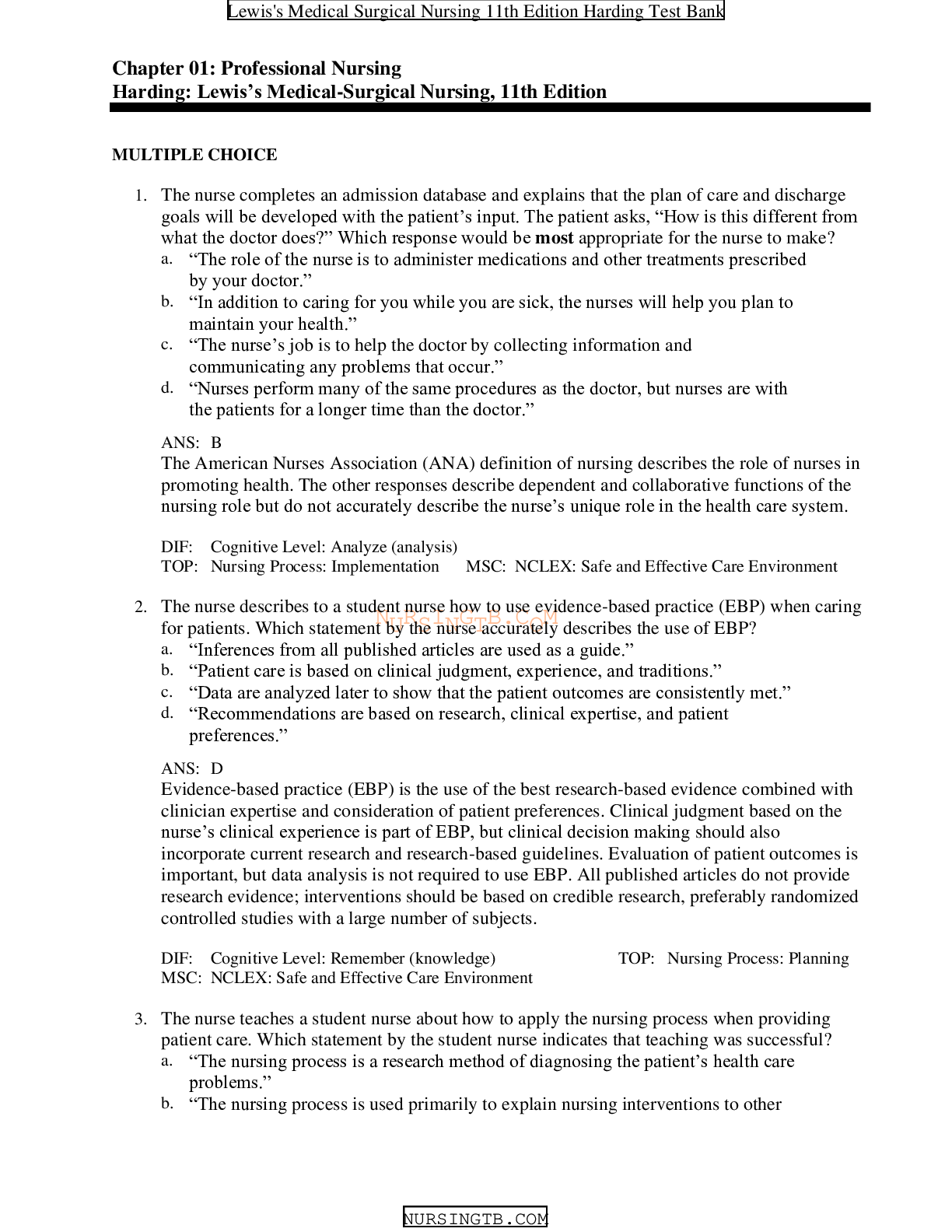
Chapter 01: Professional Nursing Practice
Lewis: Medical-Surgical Nursing, 10th Edition
MULTIPLE CHOICE
1. The nurse completes an admission database and explains that the plan of care and discharge
goals will be developed with the patient’s input. The patient states, “How is this different from
what the doctor does?” Which response would be most appropriate for the nurse to make?
a. “The role of the nurse is to administer medications and other treatments prescribed
by your doctor.”
b. “The nurse’s job is to help the doctor by collecting information and
communicating any problems that occur.”
c. “Nurses perform many of the same procedures as the doctor, but nurses are with
the patients for a longer time than the doctor.”
d. “In addition to caring for you while you are sick, the nurses will assist you to
develop an individualized plan to maintain your health.”
ANS: D
This response is consistent with the American Nurses Association (ANA) definition of
nursing, which describes the role of nurses in promoting health. The other responses describe
some of the dependent and collaborative functions of the nursing role but do not accurately
describe the nurse’s role in the health care system.
DIF: Cognitive Level: Understand (comprehension) REF: 3
TOP: Nursing Process: Implementation MSC: NCLEX: Safe and Effective Care Environment
2. The nurse describes to a student nurse how to use evidence-based practice guidelines when
caring for patients. Which statement, if made by the nurse, would be the most accurate?
a. “Inferences from clinical research studies are used as a guide.”
b. “Patient care is based on clinical judgment, experience, and traditions.”
c. “Data are evaluated to show that the patient outcomes are consistently met.”
d. “Recommendations are based on research, clinical expertise, and patient
preferences.”
ANS: D
Evidence-based practice (EBP) is the use of the best research-based evidence combined with
clinician expertise. Clinical judgment based on the nurse’s clinical experience is part of EBP,
but clinical decision making should also incorporate current research and research-based
guidelines. Evaluation of patient outcomes is important, but interventions should be based on
research from randomized control studies with a large number of subjects.
DIF: Cognitive Level: Remember (knowledge) REF: 15
TOP: Nursing Process: Planning MSC: NCLEX: Safe and Effective Care Environment
3. The nurse teaches a student nurse about how to apply the nursing process when providing
patient care. Which statement, if made by the student nurse, indicates that teaching was
successful?
a. “The nursing process is a scientific-based method of diagnosing the patient’s
health care problems.”
b. “The nursing process is a problem-solving tool used to identify and treat patients’
health care needs.”
c. “The nursing process is used primarily to explain nursing interventions to other
health care professionals.”
d. “The nursing process is based on nursing theory that incorporates the
biopsychosocial nature of humans.”
ANS: B
The nursing process is a problem-solving approach to the identification and treatment of
patients’ problems. Diagnosis is only one phase of the nursing process. The primary use of the
nursing process is in patient care, not to establish nursing theory or explain nursing
interventions to other health care professionals.
DIF: Cognitive Level: Understand (comprehension) REF: 5
TOP: Nursing Process: Implementation MSC: NCLEX: Safe and Effective Care Environment
4. A patient has been admitted to the hospital for surgery and tells the nurse, “I do not feel
comfortable leaving my children with my parents.” Which action should the nurse take next?
a. Reassure the patient that these feelings are common for parents.
b. Have the patient call the children to ensure that they are doing well.
c. Gather more data about the patient’s feelings about the child-care arrangements.
d. Call the patient’s parents to determine whether adequate child care is being
provided.
ANS: C
Because a complete assessment is necessary in order to identify a problem and choose an
appropriate intervention, the nurse’s first action should be to obtain more information. The
other actions may be appropriate, but more assessment is needed before the best intervention
can be chosen.
DIF: Cognitive Level: Apply (application) REF: 6
OBJ: Special Questions: Prioritization TOP: Nursing Process: Assessment
MSC: NCLEX: Psychosocial Integrity
5. A patient who is paralyzed on the left side of the body after a stroke develops a pressure ulcer
on the left hip. Which nursing diagnosis is most appropriate?
a. Impaired physical mobility related to left-sided paralysis
b. Risk for impaired tissue integrity related to left-sided weakness
c. Impaired skin integrity related to altered circulation and pressure
d. Ineffective tissue perfusion related to inability to move independently
ANS: C
The patient’s major problem is the impaired skin integrity as demonstrated by the presence of
a pressure ulcer. The nurse is able to treat the cause of altered circulation and pressure by
frequently repositioning the patient. Although left-sided weakness is a problem for the patient,
the nurse cannot treat the weakness. The “risk for” diagnosis is not appropriate for this patient,
who already has impaired tissue integrity. The patient does have ineffective tissue perfusion,
but the impaired skin integrity diagnosis indicates more clearly what the health problem is.
DIF: Cognitive Level: Apply (application) REF: 7
TOP: Nursing Process: Diagnosis MSC: NCLEX: Physiological Integrity
6. A patient with a bacterial infection has a nursing diagnosis of deficient fluid volume related to
excessive diaphoresis. Which outcome would the nurse recognize as appropriate for this
patient?
a. Patient has a balanced intake and output.
b. Patient’s bedding is changed when it becomes damp.
c. Patient understands the need for increased fluid intake.
d. Patient’s skin remains cool and dry throughout hospitalization.
ANS: A
This statement gives measurable data showing resolution of the problem of deficient fluid
volume that was identified in the nursing diagnosis statement. The other statements would not
indicate that the problem of deficient fluid volume was resolved.
DIF: Cognitive Level: Apply (application) REF: 7
TOP: Nursing Process: Planning MSC: NCLEX: Physiological Integrity
7. A nurse asks the patient if pain was relieved after receiving medication. What is the purpose
of the evaluation phase of the nursing process?
a. To determine if interventions have been effective in meeting patient outcomes
b. To document the nursing care plan in the progress notes of the medical record
c. To decide whether the patient’s health problems have been completely resolved
d. To establish if the patient agrees that the nursing care provided was satisfactory
ANS: A
Evaluation consists of determining whether the desired patient outcomes have been met and
whether the nursing interventions were appropriate. The other responses do not describe the
evaluation phase.
DIF: Cognitive Level: Understand (comprehension) REF: 5
TOP: Nursing Process: Evaluation MSC: NCLEX: Safe and Effective Care Environment
8. The nurse interviews a patient while completing the health history and physical examination.
What is the purpose of the assessment phase of the nursing process?
a. To teach interventions that relieve health problems
b. To use patient data to evaluate patient care outcomes
c. To obtain data with which to diagnose patient problems
d. To help the patient identify realistic outcomes for health problems
ANS: C
During the assessment phase, the nurse gathers information about the patient to diagnose
patient problems. The other responses are examples of the planning, intervention, and
evaluation phases of the nursing process.
DIF: Cognitive Level: Understand (comprehension) REF: 5
TOP: Nursing Process: Assessment MSC: NCLEX: Safe and Effective Care Environment
9. Which nursing diagnosis statement is written correctly?
a. Altered tissue perfusion related to heart failure
b. Risk for impaired tissue integrity related to sacral redness
c. Ineffective coping related to response to biopsy test results
d. Altered urinary elimination related to urinary tract infection
ANS: C
This diagnosis statement includes a NANDA nursing diagnosis and an etiology that describes
a patient’s response to a health problem that can be treated by nursing. The use of a medical
diagnosis as an etiology (as in the responses beginning “Altered tissue perfusion” and
“Altered urinary elimination”) is not appropriate. The response beginning “Risk for impaired
tissue integrity” uses the defining characteristic as the etiology.
DIF: Cognitive Level: Understand (comprehension) REF: 7
TOP: Nursing Process: Diagnosis MSC: NCLEX: Safe and Effective Care Environment
10. The nurse admits a patient to the hospital and develops a plan of care. What components
should the nurse include in the nursing diagnosis statement?
a. The problem and the suggested patient goals or outcomes
b. The problem with possible causes and the planned interventions
c. The problem, its cause, and objective data that support the problem
d. The problem with an etiology and the signs and symptoms of the problem
ANS: D
When writing nursing diagnoses, this format should be used: problem, etiology, and signs and
symptoms. The subjective, as well as objective, data should be included in the defining
characteristics. Interventions and outcomes are not included in the nursing diagnosis
statement.
DIF: Cognitive Level: Remember (knowledge) REF: 7
TOP: Nursing Process: Diagnosis MSC: NCLEX: Safe and Effective Care Environment
11. A nurse is caring for a patient with heart failure. Which task is appropriate for the nurse to
delegate to experienced unlicensed assistive personnel (UAP)?
a. Monitor for shortness of breath or fatigue after ambulation.
b. Instruct the patient about the need to alternate activity and rest.
c. Obtain the patient’s blood pressure and pulse rate after ambulation.
d. Determine whether the patient is ready to increase the activity level.
ANS: C
UAP education includes accurate vital sign measurement. Assessment and patient teaching
require registered nurse education and scope of practice and cannot be delegated.
DIF: Cognitive Level: Apply (application) REF: 11
OBJ: Special Questions: Delegation TOP: Nursing Process: Planning
MSC: NCLEX: Safe and Effective Care Environment
12. A nurse is caring for a group of patients on the medical-surgical unit with the help of one float
registered nurse (RN), one unlicensed assistive personnel (UAP), and one licensed
practical/vocational nurse (LPN/LVN). Which assignment, if delegated by the nurse, would
be inappropriate?
a. Measurement of a patient’s urine output by UAP
b. Administration of oral medications by LPN/LVN
c. Check for the presence of bowel sounds and flatulence by UAP
d. Care of a patient with diabetes by RN who usually works on the pediatric unit
ANS: C
Assessment requires RN education and scope of practice and cannot be delegated to an
LPN/LVN or UAP. The other assignments made by the RN are appropriate.
DIF: Cognitive Level: Apply (application) REF: 11
OBJ: Special Questions: Delegation TOP: Nursing Process: Planning
MSC: NCLEX: Safe and Effective Care Environment
13. Which task is appropriate for the nurse to delegate to a licensed practical/vocational nurse
(LPN/LVN)?
a. Complete the initial admission assessment and plan of care.
b. Document teaching completed before a diagnostic procedure.
c. Instruct a patient about low-fat, reduced sodium dietary restrictions.
d. Obtain bedside blood glucose on a patient before insulin administration.
ANS: D
The education and scope of practice of the LPN/LVN include activities such as obtaining
glucose testing using a finger stick. Patient teaching and the initial assessment and
development of the plan of care are nursing actions that require registered nurse education and
scope of practice.
DIF: Cognitive Level: Apply (application) REF: 11
OBJ: Special Questions: Delegation TOP: Nursing Process: Planning
MSC: NCLEX: Safe and Effective Care Environment
14. A nurse is assigned as a case manager for a hospitalized patient with a spinal cord injury. The
patient can expect the nurse functioning in this role to perform which activity?
a. Care for the patient during hospitalization for the injuries.
b. Assist the patient with home care activities during recovery.
c. Determine what medical care the patient needs for optimal rehabilitation.
d. Coordinate the services that the patient receives in the hospital and at home.
ANS: D
The role of the case manager is to coordinate the patient’s care through multiple settings and
levels of care to allow the maximal patient benefit at the least cost. The case manager does not
provide direct care in either the acute or home setting. The case manager coordinates and
advocates for care but does not determine what medical care is needed; that would be
completed by the health care provider or other provider.
DIF: Cognitive Level: Apply (application) REF: 9
TOP: Nursing Process: Implementation MSC: NCLEX: Safe and Effective Care Environment
15. The nurse is caring for an older adult patient who had surgery to repair a fractured hip. The
patient needs continued nursing care and physical therapy to improve mobility before
returning home. The nurse will help to arrange for transfer of this patient to which facility?
a. A skilled care facility c. A transitional care facility
b. A residential care facility d. An intermediate care facility
ANS: C
Transitional care settings are appropriate for patients who need continued rehabilitation before
discharge to home or to long-term care settings. The patient is no longer in need of the more
continuous assessment and care given in acute care settings. There is no indication that the
patient will need the permanent and ongoing medical and nursing services available in
intermediate or skilled care. The patient is not yet independent enough to transfer to a
residential care facility.
DIF: Cognitive Level: Apply (application) REF: 8
TOP: Nursing Process: Planning MSC: NCLEX: Safe and Effective Care Environment
16. A home care nurse is planning care for a patient who has just been diagnosed with type 2
diabetes mellitus. Which task is appropriate for the nurse to delegate to the home health aide?
a. Assist the patient to choose appropriate foods.
b. Help the patient with a daily bath and oral care.
c. Check the patient’s feet for signs of breakdown.
d. Teach the patient how to monitor blood glucose.
ANS: B
Assisting with patient hygiene is included in home health-aide education and scope of
practice. Assessment of the patient and instructing the patient in new skills, such as diet and
blood glucose monitoring, are complex skills that are included in registered nurse education
and scope of practice.
DIF: Cognitive Level: Apply (application) REF: 11
OBJ: Special Questions: Delegation TOP: Nursing Process: Implementation
MSC: NCLEX: Safe and Effective Care Environment
17. The nurse is providing education to nursing staff on quality care initiatives. Which statement
is an accurate description of the impact of health care financing on quality care?
a. “If a patient develops a catheter-related infection, the hospital receives additional
funding.”
b. “Payment for patient care is primarily based on clinical outcomes and patient
satisfaction.”
c. “Hospitals are reimbursed for all costs incurred if care is documented
electronically.”
d. “Because hospitals are accountable for overall care, it is not nursing’s
responsibility to monitor care delivered by others.”
ANS: B
Payment for health care services programs reimburses hospitals for their performance on
overall quality-of-care measures. These measures include clinical outcomes and patient
satisfaction. Nurses are responsible for coordinating complex aspects of patient care,
including the care delivered by others, and identifying issues that are associated with poor
quality care. Payment for care can be withheld if something happens to the patient that is
considered preventable (e.g., acquiring a catheter-related urinary tract infection).
DIF: Cognitive Level: Apply (application) REF: 4
TOP: Nursing Process: Implementation MSC: NCLEX: Safe and Effective Care Environment
18. The nurse documenting the patient’s progress in the care plan in the electronic health record
before an interprofessional discharge conference is demonstrating competency in which
QSEN category?
a. Patient-centered care c. Evidence-based practice
b. Quality improvement d. Informatics and technology
ANS: D
The nurse is displaying competency in the QSEN area of informatics and technology. Using a
computerized information system to document patient needs and progress and communicate
vital information regarding the patient with the interprofessional care team members provides
evidence that nursing practice standards related to the nursing process have been maintained
during the care of the patient.
DIF: Cognitive Level: Apply (application) REF: 13
TOP: Nursing Process: Implementation MSC: NCLEX: Safe and Effective Care Environment
MULTIPLE RESPONSE
1. Which information will the nurse consider when deciding what nursing actions to delegate to
a licensed practical/vocational nurse (LPN/LVN) who is working on a medical-surgical unit
(select all that apply)?
a. Institutional policies
b. Stability of the patient
c. State nurse practice act
d. LPN/LVN teaching abilities
e. Experience of the LPN/LVN
ANS: A, B, C, E
The nurse should assess the experience of LPN/LVNs when delegating. In addition, state
nurse practice acts and institutional policies must be considered. In general, whereas the
LPN/LVN scope of practice includes caring for patients who are stable, registered nurses
should provide most of the care for unstable patients. Because the LPN/LVN scope of practice
does not include patient education, this will not be part of the delegation process.
DIF: Cognitive Level: Apply (application) REF: 11
OBJ: Special Questions: Delegation TOP: Nursing Process: Planning
MSC: NCLEX: Safe and Effective Care Environment
2. The nurse is administering medications to a patient. Which actions by the nurse during this
process are consistent with promoting safe delivery of care (select all that apply)?
a. Throws away a medication that is not labeled
b. Uses a hand sanitizer before preparing a medication
c. Identifies the patient by the room number on the door
d. Checks laboratory test results before administering a diuretic
e. Gives the patient a list of current medications upon discharge
ANS: A, B, D, E
National Patient Safety Goals have been established to promote safe delivery of care. The
nurse should use at least two reliable ways to identify the patient such as asking the patient’s
full name and date of birth before medication administration. Other actions that improve
patient safety include performing hand hygiene, disposing of unlabeled medications,
completing appropriate assessments before administering medications, and giving a list of the
current medicines to the patient and caregiver before discharge.
DIF: Cognitive Level: Apply (application) REF: 12
TOP: Nursing Process: Implementation MSC: NCLEX: Safe and Effective Care Environment
OTHER
1. The nurse uses the Situation-Background-Assessment-Recommendation (SBAR) format to
communicate a change in patient status to a health care provider. In which order should the
nurse make the following statements? (Put a comma and a space between each answer choice
[A, B, C, D].)
a. “The patient needs to be evaluated immediately and may need intubation and mechanical
ventilation.”
b. “The patient was admitted yesterday with heart failure and has been receiving furosemide
(Lasix) for diuresis, but urine output has been low.”
c. “The patient has crackles audible throughout the posterior chest, and the most recent
oxygen saturation is 89%. Her condition is very unstable.”
d. “This is the nurse on the surgical unit. After assessing the patient, I am very concerned
about increased shortness of breath over the past hour.”
ANS:
D, B, C, A
The order of the nurse’s statements follows the SBAR format.
DIF: Cognitive Level: Apply (application) REF: 11
OBJ: Special Questions: Prioritization TOP: Nursing Process: Implementation
MSC: NCLEX: Safe and Effective Care Environment
Chapter 02: Health Disparities and Culturally Competent Care
Lewis: Medical-Surgical Nursing, 10th Edition
MULTIPLE CHOICE
1. The nurse is obtaining a health history from a new patient. Which data will be the focus of
patient teaching?
a. Age and gender c. Hispanic/Latino ethnicity
b. Saturated fat intake d. Family history of diabetes
ANS: B
Behaviors are strongly linked to many health care problems. The patient’s saturated fat intake
is a behavior that the patient can change. The other information will be useful as the nurse
develops an individualized plan for improving the patient’s health, but will not be the focus of
patient teaching.
DIF: Cognitive Level: Apply (application) REF: 18
TOP: Nursing Process: Planning MSC: NCLEX: Health Promotion and Maintenance
2. The nurse works in a clinic located in a community with many Hispanics. Which strategy, if
implemented by the nurse, would decrease health care disparities for the Hispanic patients?
a. Improve public transportation to the clinic.
b. Update equipment and supplies at the clinic.
c. Obtain low-cost medications for clinic patients.
d. Teach clinic staff about Hispanic health beliefs.
ANS: D
Health care disparities are caused by stereotyping, biases, and prejudice of health care
providers. The nurse can decrease these through staff education. The other strategies may also
be addressed by the nurse but will not directly impact health disparities.
DIF: Cognitive Level: Apply (application) REF: 19
TOP: Nursing Process: Planning MSC: NCLEX: Health Promotion and Maintenance
3. What information should the nurse collect when assessing the health status of a community?
a. Air pollution levels c. Most common causes of death
b. Number of health food stores d. Education level of the individuals
ANS: C
Health status measures of a community include birth and death rates, life expectancy, access
to care, and morbidity and mortality rates related to disease and injury. Although air pollution,
access to health food stores, and education level are factors that affect a community’s health
status, they are not health measures.
DIF: Cognitive Level: Understand (comprehension) REF: 18
TOP: Nursing Process: Assessment MSC: NCLEX: Health Promotion and Maintenance
4. The nurse is caring for a Native American patient who has traditional beliefs about health and
illness. Which action by nurse is most appropriate?
a. Avoid asking questions unless the patient initiates the conversation.
b. Ask the patient whether it is important that cultural healers are contacted.
c. Explain the usual hospital routines for meal times, care, and family visits.
d. Obtain further information about the patient’s cultural beliefs from a family
member.
ANS: B
Because the patient has traditional health care beliefs, it is appropriate for the nurse to ask
whether the patient would like a visit by a shaman or other cultural healer. There is no cultural
reason for the nurse to avoid asking the patient questions because these questions are
necessary to obtain health information. The patient (rather than the family) should be
consulted about personal cultural beliefs. The hospital routines for meals, care, and visits
should be adapted to the patient’s preferences rather than expecting the patient to adapt to the
hospital schedule.
DIF: Cognitive Level: Apply (application) REF: 24
TOP: Nursing Process: Implementation MSC: NCLEX: Psychosocial Integrity
5. The nurse is caring for an Asian patient who is being admitted to the hospital. Which action
would be most appropriate for the nurse to take when interviewing this patient?
a. Avoid eye contact with the patient.
b. Observe the patient’s use of eye contact.
c. Look directly at the patient when interacting.
d. Ask a family member about the patient’s cultural beliefs.
ANS: B
Observation of the patient’s use of eye contact will be most useful in determining the best way
to communicate effectively with the patient. Looking directly at the patient or avoiding eye
contact may be appropriate, depending on the patient’s individual cultural beliefs. The nurse
should assess the patient, rather than asking family members about the patient’s beliefs.
DIF: Cognitive Level: Apply (application) REF: 25
TOP: Nursing Process: Implementation MSC: NCLEX: Psychosocial Integrity
6. A female staff nurse is assessing a male patient of Arab descent who is admitted with
complaints of severe headaches. It is most important for the charge nurse to intervene if the
nurse takes which action?
a. The nurse explains the 0 to 10 intensity pain scale.
b. The nurse asks the patient when the headaches started.
c. The nurse sits down at the bedside and closes the privacy curtain.
d. The nurse calls for a male nurse to bring a hospital gown to the room.
ANS: C
Many men of Arab ethnicity do not believe it is appropriate to be alone with any female
except for their spouse. The other actions are appropriate.
DIF: Cognitive Level: Apply (application) REF: 25
TOP: Nursing Process: Implementation MSC: NCLEX: Psychosocial Integrity
7. The nurse is caring for a patient who speaks a different language. If an interpreter is not
available, which action by the nurse is most appropriate?
a. Talk slowly so that each word is clearly heard.
b. Speak loudly in close proximity to the patient’s ears.
c. Repeat important words so that the patient recognizes their significance.
d. Use simple gestures to demonstrate meaning while talking to the patient.
ANS: D
The use of gestures will enable some information to be communicated to the patient. The
other actions will not improve communication with the patient.
DIF: Cognitive Level: Understand (comprehension) REF: 31
TOP: Nursing Process: Implementation MSC: NCLEX: Psychosocial Integrity
8. The nurse plans care for a hospitalized patient who uses culturally based treatments. Which
action by the nurse is best?
a. Encourage the use of diagnostic procedures.
b. Coordinate the use of folk treatments with ordered medical therapies.
c. Ask the patient to discontinue the cultural treatments during hospitalization.
d. Teach the patient that folk remedies will interfere with orders by the health care
provider.
ANS: B
Many culturally based therapies can be accommodated along with the use of Western
treatments and medications. The nurse should attempt to use both traditional folk treatments
and the ordered Western therapies as much as possible. Some culturally based treatments can
be effective in treating “Western” diseases. Not all folk remedies interfere with Western
therapies. It may be appropriate for the patient to continue some culturally based treatments
while he or she is hospitalized.
DIF: Cognitive Level: Apply (application) REF: 22
TOP: Nursing Process: Planning MSC: NCLEX: Psychosocial Integrity
9. The nurse is caring for a newly admitted patient. Which intervention is the best example of a
culturally appropriate nursing intervention?
a. Insist family members provide most of the patient’s personal care.
b. Maintain a personal space of at least 2 feet when assessing the patient.
c. Ask permission before touching a patient during the physical assessment.
d. Consider the patient’s ethnicity as the most important factor in planning care.
ANS: C
Many cultures consider it disrespectful to touch a patient without asking permission, so asking
a patient for permission is always culturally appropriate. The other actions may be appropriate
for some patients but are not appropriate across all cultural groups or for all individual
patients. Ethnicity may not be the most important factor in planning care, especially if the
patient has urgent physiologic problems.
DIF: Cognitive Level: Understand (comprehension) REF: 28
TOP: Nursing Process: Implementation MSC: NCLEX: Psychosocial Integrity
10. A staff nurse expresses frustration that a Native American patient always has several family
members at the bedside. Which action by the charge nurse is most appropriate?
a. Remind the nurse that family support is important to this family and patient.
b. Have the nurse explain to the family that too many visitors will tire the patient.
c. Suggest that the nurse ask family members to leave the room during patient care.
d. Ask about the nurse’s personal beliefs about family support during hospitalization.
ANS: D
The first step in providing culturally competent care is to understand one’s own beliefs and
values related to health and health care. Asking the nurse about personal beliefs will help
achieve this step. Reminding the nurse that this cultural practice is important to the family and
patient will not decrease the nurse’s frustration. The remaining responses (suggest that the
nurse ask family members to leave the room and have the nurse explain to family that too
many visitors will tire the patient) are not culturally appropriate for this patient.
DIF: Cognitive Level: Apply (application) REF: 23
TOP: Nursing Process: Implementation MSC: NCLEX: Psychosocial Integrity
11. An older Asian American patient tells the nurse that she has lived in the United States for 50
years. The patient speaks English and lives in a predominantly Asian neighborhood. Which
action by the nurse is most appropriate?
a. Include a shaman when planning the patient’s care.
b. Avoid direct eye contact with the patient during care.
c. Ask the patient about any special cultural beliefs or practices.
d. Involve the patient’s oldest son to assist with health care decisions.
ANS: C
Further assessment of the patient’s health care preferences is needed before making further
plans for culturally appropriate care. The other responses indicate stereotyping of the patient
based on ethnicity and would not be appropriate initial actions.
DIF: Cognitive Level: Apply (application) REF: 23
TOP: Nursing Process: Planning MSC: NCLEX: Psychosocial Integrity
12. The nurse plans health care for a community with a large number of recent immigrants from
Vietnam. Which intervention is the most important for the nurse to implement?
a. Hepatitis testing c. Contraceptive teaching
b. Tuberculosis screening d. Colonoscopy information
ANS: B
Tuberculosis (TB) is endemic in many parts of Asia, and the incidence of TB is much higher
in immigrants from Vietnam than in the general U.S. population. Teaching about
contraceptive use, colonoscopy, and testing for hepatitis may also be appropriate for some
patients but is not generally indicated for all members of this community.
DIF: Cognitive Level: Apply (application) REF: 28
TOP: Nursing Process: Planning MSC: NCLEX: Physiological Integrity
13. When doing an admission assessment for a patient, the nurse notices that the patient pauses
before answering questions about the health history. Which action by the nurse is most
appropriate?
a. Interview a family member instead.
b. Wait for the patient to answer the questions.
c. Remind the patient that you have other patients who need care.
d. Give the patient an assessment form listing the questions and a pen.
ANS: B
Patients from some cultures take time to consider a question carefully before answering. The
nurse will show respect for the patient and help develop a trusting relationship by allowing the
patient time to give a thoughtful answer. Asking the patient why the answers are taking so
much time, stopping the assessment, and handing the patient a form indicate that the nurse
does not have time for the patient.
DIF: Cognitive Level: Apply (application) REF: 30
TOP: Nursing Process: Assessment MSC: NCLEX: Psychosocial Integrity
14. Which strategy should be a priority when the nurse is planning care for a diabetic patient who
is uninsured?
a. Obtain less expensive medications.
b. Follow evidence-based practice guidelines.
c. Assist with dietary changes as the first action.
d. Teach about the impact of exercise on diabetes.
ANS: B
The use of standardized evidence-based guidelines will reduce the incidence of health care
disparities among various socioeconomic groups. The other strategies may also be
appropriate, but the priority concern should be that the patient receives care that meets the
accepted standard.
DIF: Cognitive Level: Apply (application) REF: 28
OBJ: Special Questions: Prioritization TOP: Nursing Process: Planning
MSC: NCLEX: Health Promotion and Maintenance
15. A Hispanic patient complains of abdominal cramping caused by empacho. Which action
should the nurse take first?
a. Ask the patient what treatments are likely to help.
b. Massage the patient’s abdomen until the pain is gone.
c. Administer prescribed medications to decrease the cramping.
d. Offer to contact a curandero(a) to make a visit to the patient.
ANS: A
Further assessment of the patient’s cultural beliefs is appropriate before implementing any
interventions for a culture-bound syndrome such as empacho. Although medication, a visit by
a curandero(a), or massage may be helpful, more information about the patient’s beliefs is
needed to determine which intervention(s) will be most helpful.
DIF: Cognitive Level: Apply (application) REF: 29
OBJ: Special Questions: Prioritization TOP: Nursing Process: Assessment
MSC: NCLEX: Psychosocial Integrity
16. The nurse performs a cultural assessment with a patient from a different culture. Which action
by the nurse should be taken first?
a. Request an interpreter before interviewing the patient.
b. Wait until a family member is available to help with the assessment.
c. Ask the patient about any affiliation with a particular cultural group.
d. Tell the patient what the nurse already knows about the patient’s culture.
ANS: C
An early step in performing a cultural assessment is to determine whether the patient feels an
affiliation with any cultural group. The other actions may be appropriate if the patient does
identify with a particular culture.
DIF: Cognitive Level: Apply (application) REF: 30
OBJ: Special Questions: Prioritization TOP: Nursing Process: Assessment
MSC: NCLEX: Psychosocial Integrity
17. The nurse working in a clinic in a primarily African American community notes a higher
incidence of uncontrolled hypertension in the patients. To correct this health disparity, which
action should the nurse take first?
a. Initiate a regular home-visit program by nurses working at the clinic.
b. Schedule teaching sessions about low-salt diets at community events.
c. Assess the perceptions of community members about the care at the clinic.
d. Obtain low-cost antihypertensive drugs using funding from government grants.
ANS: C
Before other actions are taken, additional assessment data are needed to determine the reason
for the disparity. The other actions also may be appropriate, but additional assessment is
needed before the next action is selected.
DIF: Cognitive Level: Apply (application) REF: 29
OBJ: Special Questions: Prioritization TOP: Nursing Process: Assessment
MSC: NCLEX: Health Promotion and Maintenance
MULTIPLE RESPONSE
1. The nurse is performing an admission assessment for a non–English-speaking patient who is
from China. Which actions could the nurse take to enhance communication (select all that
apply)?
a. Use an electronic translation application.
b. Use a telephone-based medical interpreter.
c. Wait until an agency interpreter is available.
d. Ask the patient’s teenage daughter to interpret.
e. Use exaggerated gestures to convey information.
ANS: A, B, C
Electronic translation applications, telephone-based interpreters, and agency interpreters are
all appropriate to use to communicate with non–English-speaking patients. When no
interpreter is available, family members may be considered, but some information that will be
needed in an admission assessment may be misunderstood or not shared if a child is used as
the interpreter. Gestures are appropriate to use, but exaggeration of the gestures is not needed.
DIF: Cognitive Level: Apply (application) REF: 31
TOP: Nursing Process: Assessment MSC: NCLEX: Psychosocial Integrity
Chapter 03: Health History and Physical Examination
Lewis: Medical-Surgical Nursing, 10th Edition
MULTIPLE CHOICE
1. A patient who is actively bleeding is admitted to the emergency department. Which approach
is best for the nurse to use to obtain a health history?
a. Briefly interview the patient while obtaining vital signs.
b. Obtain subjective data about the patient from family members.
c. Omit subjective data collection and obtain the physical examination.
d. Use the health care provider’s medical history to obtain subjective data.
ANS: A
In an emergency situation, the nurse may need to ask only the most pertinent questions for a
specific problem and obtain more information later. A complete health history will include
subjective information that is not available in the health care provider’s medical history.
Family members may be able to provide some subjective data, but only the patient will be
able to give subjective information about the bleeding. Because the subjective data about the
cause of the patient’s bleeding will be essential, obtaining the physical examination alone will
not provide sufficient information.
DIF: Cognitive Level: Apply (application) REF: 40
TOP: Nursing Process: Assessment MSC: NCLEX: Health Promotion and Maintenance
2. Immediate surgery is planned for a patient with acute abdominal pain. Which question by the
nurse will elicit the most complete information about the patient’s coping-stress tolerance
pattern?
a. “Can you rate your pain on a 0 to 10 scale?”
b. “What do you think caused this abdominal pain?”
c. “How do you feel about yourself and your hospitalization?”
d. “Are there other major problems that are a concern right now?”
ANS: D
The coping–stress tolerance pattern includes information about other major stressors
confronting the patient. The health perception–health management pattern includes
information about the patient’s ideas about risk factors. Feelings about self and the
hospitalization are assessed in the self-perception–self-concept pattern. Intensity of pain is
part of the cognitive–perceptual pattern.
DIF: Cognitive Level: Apply (application) REF: 37
TOP: Nursing Process: Assessment MSC: NCLEX: Psychosocial Integrity
3. During the health history interview, a patient tells the nurse about periodic fainting spells.
Which question by the nurse will best elicit any associated clinical manifestations?
a. “How frequently do you have the fainting spells?”
b. “Where are you when you have the fainting spells?”
c. “Do the spells tend to occur at any special time of day?”
d. “Do you have any other symptoms along with the spells?”
ANS: D
Asking about other associated symptoms will provide the nurse more information about all the
clinical manifestations related to the fainting spells. Information about the setting is obtained
by asking where the patient was and what the patient was doing when the symptom occurred.
The other questions from the nurse are appropriate for obtaining information about
chronology and frequency.
DIF: Cognitive Level: Apply (application) REF: 35
TOP: Nursing Process: Assessment MSC: NCLEX: Health Promotion and Maintenance
4. The nurse records the following general survey of a patient: “The patient is a 50-yr-old Asian
female attended by her husband and two daughters. Alert and oriented. Does not make eye
contact with the nurse and responds slowly, but appropriately, to questions. No apparent
disabilities or distinguishing features.” What additional information should the nurse add to
this general survey?
a. Nutritional status
b. Intake and output
c. Reasons for contact with the health care system
d. Comments of family members about his condition
ANS: A
The general survey also describes the patient’s general nutritional status. The other
information will be obtained when doing the complete nursing history and examination but is
not obtained through the initial scanning of a patient.
DIF: Cognitive Level: Understand (comprehension) REF: 39
TOP: Nursing Process: Assessment MSC: NCLEX: Health Promotion and Maintenance
5. A nurse performs a health history and physical examination with a patient who has a right leg
fracture. Which assessment would be a pertinent negative finding?
a. Patient has several bruised and swollen areas on the right leg.
b. Patient states that there have been no other recent health problems.
c. Patient refuses to bend the right knee because of the associated pain.
d. Patient denies having pain when the area over the fracture is palpated.
ANS: D
The nurse expects that a patient with a leg fracture will have pain over the fractured area. The
bruising and swelling and pain with bending are positive findings. Having no other recent
health problems is neither a positive nor a negative finding with regard to a leg fracture.
DIF: Cognitive Level: Apply (application) REF: 39
TOP: Nursing Process: Assessment MSC: NCLEX: Health Promotion and Maintenance
6. The nurse who is assessing an older adult with rectal bleeding asks, “Have you ever had a
colonoscopy?” The nurse is performing what type of assessment?
a. Focused assessment c. Detailed health assessment
b. Emergency assessment d. Comprehensive assessment
ANS: A
A focused assessment is an abbreviated assessment used to evaluate the status of previously
identified problems and monitor for signs of new problems. It can be done when a specific
problem is identified. An emergency assessment is done when the nurse needs to obtain
information about life-threatening problems quickly while simultaneously taking action to
maintain vital function. A comprehensive assessment includes a detailed health history and
physical examination of one body system or many body systems. It is typically done on
admission to the hospital or onset of care in a primary care setting.
DIF: Cognitive Level: Understand (comprehension) REF: 40
TOP: Nursing Process: Assessment MSC: NCLEX: Health Promotion and Maintenance
7. The nurse is preparing to perform a focused assessment for a patient complaining of shortness
of breath. Which equipment will be needed?
a. Flashlight c. Tongue blades
b. Stethoscope d. Percussion hammer
ANS: B
A stethoscope is used to auscultate breath sounds. The other equipment may be used for a
comprehensive assessment but will not be needed for a focused respiratory assessment.
DIF: Cognitive Level: Understand (comprehension) REF: 40
TOP: Nursing Process: Assessment MSC: NCLEX: Health Promotion and Maintenance
8. The nurse plans to complete a physical examination of an alert, older patient. Which
adaptations to the examination technique should the nurse include?
a. Avoid the use of touch as much as possible.
b. Use slightly more pressure for palpation of the liver.
c. Speak softly and slowly when talking with the patient.
d. Organize the sequence to minimize the position changes.
ANS: D
Older patients may have age-related changes in mobility that make it more difficult to change
position. There is no need to avoid the use of touch when examining older patients. Less
pressure should be used over the liver. Because the patient is alert, there is no indication that
there is any age-related difficulty in understanding directions from the nurse.
DIF: Cognitive Level: Apply (application) REF: 40
TOP: Nursing Process: Assessment MSC: NCLEX: Health Promotion and Maintenance
9. While the nurse is taking the health history, a patient states, “My mother and sister both had
double mastectomies and were unable to be very active for weeks.” Which functional health
pattern is represented by this patient’s statement?
a. Activity–exercise
b. Cognitive–perceptual
c. Coping–stress tolerance
d. Health perception–health management
ANS: D
The information in the patient statement relates to risk factors and important information
about the family history. Identification of risk factors falls into the health perception–health
maintenance pattern.
DIF: Cognitive Level: Understand (comprehension) REF: 37
TOP: Nursing Process: Assessment MSC: NCLEX: Health Promotion and Maintenance
10. A patient is seen in the emergency department with severe abdominal pain and hypotension.
Which type of assessment should the nurse do at this time?
a. Focused assessment c. Emergency assessment
b. Subjective assessment d. Comprehensive assessment
ANS: C
Because the patient is hemodynamically unstable, an emergency assessment is needed.
Comprehensive and focused assessments may be needed after the patient is stabilized.
Subjective information is needed, but objective data such as vital signs are essential for the
unstable patient.
DIF: Cognitive Level: Understand (comprehension) REF: 40
TOP: Nursing Process: Assessment MSC: NCLEX: Health Promotion and Maintenance
11. The registered nurse (RN) cares for a patient who was admitted a few hours previously with
back pain after falling. Which action can the RN delegate to unlicensed assistive personnel
(UAP)?
a. Finish documenting the admission assessment.
b. Determine the patient’s priority nursing diagnoses.
c. Obtain the health history from the patient’s caregiver.
d. Take the patient’s temperature, pulse, and blood pressure.
ANS: D
The RN may delegate vital signs to the UAP. Obtaining the health history, documentation of
the admission assessment, and determining nursing diagnoses require the education and scope
of practice of the RN.
DIF: Cognitive Level: Apply (application) REF: 36
OBJ: Special Questions: Delegation TOP: Nursing Process: Planning
MSC: NCLEX: Safe and Effective Care Environment
12. When assessing for formation of a possible blood clot in the lower leg of a patient, which
action should the nurse take first?
a. Visually inspect the leg.
b. Feel for the temperature of the leg.
c. Check the patient’s pedal pulses using the fingertips.
d. Compress the nail beds to determine capillary refill time.
ANS: A
Inspection is the first of the major techniques used in the physical examination. Palpation and
auscultation are then used later in the examination.
DIF: Cognitive Level: Apply (application) REF: 39
OBJ: Special Questions: Prioritization TOP: Nursing Process: Assessment
MSC: NCLEX: Health Promotion and Maintenance
13. When assessing a patient’s abdomen during the admission assessment, which action should
the nurse take first?
a. Feel for any masses. c. Listen for bowel sounds.
b. Palpate the abdomen. d. Percuss the liver borders.
ANS: C
When assessing the abdomen, auscultation is done before palpation or percussion because
palpation and percussion can cause changes in bowel sounds and alter the findings. All of the
techniques are appropriate, but auscultation should be done first.
DIF: Cognitive Level: Understand (comprehension) REF: 39
OBJ: Special Questions: Prioritization TOP: Nursing Process: Assessment
MSC: NCLEX: Health Promotion and Maintenance
14. When admitting a patient who has just arrived on the unit with a severe headache, what should
the nurse do first?
a. Complete only basic demographic data before addressing the patient’s pain.
b. Inform the patient that the headache will be treated as soon as the health history is
completed.
c. Medicate the patient for the headache before doing the health history and
examination.
d. Take the initial vital signs and then address the headache before completing the
health history.
ANS: C
The patient priority in this situation will be to decrease the pain level because the patient will
be unlikely to cooperate in providing demographic data or the health history until the nurse
addresses the pain. However, obtaining information about vital signs is essential before using
either pharmacologic or nonpharmacologic therapies for pain control. The vital signs may
indicate hemodynamic instability that would need to be addressed immediately.
DIF: Cognitive Level: Apply (application) REF: 35
OBJ: Special Questions: Prioritization TOP: Nursing Process: Assessment
MSC: NCLEX: Physiological Integrity
OTHER
1. In what order will the nurse perform these actions when doing a physical assessment for a
patient admitted with abdominal pain? (Put a comma and a space between each answer
choice [A, B, C, D].)
a. Percuss the abdomen to locate any areas of dullness.
b. Palpate the abdomen to check for tenderness or masses.
c. Inspect the abdomen for distention or other abnormalities.
d. Auscultate the abdomen for the presence of bowel sounds.
ANS:
C, D, A, B
When assessing the abdomen, the initial action is to inspect the abdomen. Auscultation is
done next because percussion and palpation can alter bowel sounds and produce misleading
findings.
DIF: Cognitive Level: Understand (comprehension) REF: 39
TOP: Nursing Process: Assessment MSC: NCLEX: Physiological Integrity
Chapter 04: Patient and Caregiver Teaching
Lewis: Medical-Surgical Nursing, 10th Edition
MULTIPLE CHOICE
1. A patient with newly diagnosed colon cancer has a nursing diagnosis of deficient knowledge
about colon cancer. The nurse should initially focus on which learning goal for this patient?
a. The patient will state ways of preventing the recurrence of the cancer.
b. The patient will explore and select an appropriate colon cancer therapy.
c. The patient will demonstrate coping skills needed to manage the disease.
d. The patient will choose methods to minimize adverse effects of treatment.
ANS: B
Adults learn best when given information that can be used immediately. The first action the
patient will need to take after a cancer diagnosis is to explore and choose a treatment option.
The other goals may be appropriate as treatment progresses.
DIF: Cognitive Level: Apply (application) REF: 47
TOP: Nursing Process: Planning MSC: NCLEX: Health Promotion and Maintenance
2. After the nurse provides diet instructions for a patient with diabetes, the patient can restate the
information but fails to make the recommended diet changes. How would the nurse best
evaluate the patient’s situation?
a. Learning did not occur because the patient’s behavior did not change.
b. Choosing not to follow the diet is the behavior that resulted from learning.
c. The nurse’s responsibility for helping the patient make diet changes has been
fulfilled.
d. The teaching methods were ineffective in helping the patient learn about the
necessary diet changes.
ANS: B
Although the patient behavior has not changed, the patient’s ability to restate the information
indicates that learning has occurred, and the patient is choosing at this time not to change the
diet. The patient may be in the contemplation or preparation stage in the transtheoretical
model. The nurse should reinforce the need for change and continue to provide information
and assistance with planning for change.
DIF: Cognitive Level: Apply (application) REF: 47
TOP: Nursing Process: Evaluation MSC: NCLEX: Health Promotion and Maintenance
3. A patient is diagnosed with heart failure after being admitted to the hospital for shortness of
breath and fatigue. Which teaching strategy, if implemented by the nurse, is most likely to be
effective?
a. Assure the patient that the nurse is an expert on management of heart failure.
b. Teach the patient at each meal about the amounts of sodium in various foods.
c. Discuss the importance of medication control in maintenance of long-term health.
d. Refer the patient to a home health nurse for instructions on diet and fluid
restrictions.
ANS: B
Principles of adult education indicate that readiness and motivation to learn are high when
facing new tasks (e.g., learning about the sodium amounts in various food items) and when
demonstration and practice of skills are available. Although a home health referral may be
needed for this patient, teaching should not be postponed until discharge. Adult learners are
independent. The nurse should act as a facilitator for learning, rather than as the expert. Adults
learn best when the topic is of immediate usefulness. Long-term goals may not be very
motivating.
DIF: Cognitive Level: Apply (application) REF: 47
TOP: Nursing Process: Planning MSC: NCLEX: Health Promotion and Maintenance
4. A patient who was admitted to the hospital with hyperglycemia and newly diagnosed diabetes
mellitus is scheduled for discharge the second day after admission. When implementing
patient teaching, what is the priority action for the nurse?
a. Instruct about the increased risk for cardiovascular disease.
b. Provide detailed information about dietary control of glucose.
c. Teach glucose self-monitoring and medication administration.
d. Give information about the effects of exercise on glucose control.
ANS: C
When time is limited, the nurse should focus on the priorities of teaching. In this situation, the
patient should know how to test blood glucose and administer medications to control glucose
levels. The patient will need further teaching about the role of diet, exercise, various
medications, and the many potential complications of diabetes, but these topics can be
addressed through planning for appropriate referrals.
DIF: Cognitive Level: Apply (application) REF: 49
TOP: Nursing Process: Implementation MSC: NCLEX: Health Promotion and Maintenance
5. A patient states, “I told my husband I wouldn’t buy as much prepared food snacks, so I will
go the grocery store to buy fresh fruit, vegetables, and whole grains.” When using the
Transtheoretical Model of Health Behavior Change, the nurse identifies that this patient is in
which stage of change?
a. Preparation c. Maintenance
b. Termination d. Contemplation
ANS: A
The patient’s statement indicating that the plan for change is being shared with someone else
indicates that the preparation stage has been achieved. Contemplation of a change would be
indicated by a statement like “I know I should exercise.” Maintenance of a change occurs
when the patient practices the behavior regularly. Termination would be indicated when the
change is a permanent part of the lifestyle.
DIF: Cognitive Level: Understand (comprehension) REF: 48
TOP: Nursing Process: Assessment MSC: NCLEX: Health Promotion and Maintenance
6. While admitting a patient to the medical unit, the nurse determines that the patient has a
hearing impairment. How should the nurse use this information to plan teaching and learning
strategies?
a. Motivation and readiness to learn will be affected.
b. The family must be included in the teaching process.
c. The patient will have problems understanding information.
d. Written materials should be provided with verbal instructions.
ANS: D
The information that the patient has a hearing impairment indicates that the nurse should use
written and verbal materials in teaching along with other strategies. The patient does not
indicate a lack of motivation or an inability to understand new information. The patient’s
decreased hearing does not necessarily imply that the family must be included in the teaching
process.
DIF: Cognitive Level: Understand (comprehension) REF: 51
TOP: Nursing Process: Planning MSC: NCLEX: Health Promotion and Maintenance
7. A patient who is morbidly obese states, “I’ve recently made some changes in my life. I’ve
decreased my fat intake, and I’ve stopped smoking.” Which statement, if made by the nurse, is
the best initial response?
a. “Although those are important, it is essential that you make other changes, too.”
b. “Are you having any difficulty in maintaining the changes you have already
made?”
c. “Which additional changes in your lifestyle would you like to implement at this
time?”
d. “You have already accomplished changes that are important for the health of your
heart.”
ANS: D
Positive reinforcement of the learner’s achievements is critical in making lifestyle changes.
This patient is in the action stage of the Transtheoretical Model when reinforcement of the
changes being made is an important nursing intervention. The other responses are also
appropriate but are not the best initial response.
DIF: Cognitive Level: Apply (application) REF: 53
TOP: Nursing Process: Implementation MSC: NCLEX: Health Promotion and Maintenance
8. The nurse is planning a teaching session with a patient newly diagnosed with migraine
headaches. To assess a patient’s readiness to learn, which question should the nurse ask first?
a. “What kind of work and leisure activities do you do?”
b. “What information do you think you need right now?”
c. “Can you describe the types of activities that help you learn new information?”
d. “Do you have any religious beliefs that are inconsistent with the planned
treatment?”
ANS: B
Motivation and readiness to learn depend on what the patient values and perceives as
important. The other questions are also important in developing the teaching plan, but do not
address what information most interests the patient at present.
DIF: Cognitive Level: Apply (application) REF: 53
TOP: Nursing Process: Assessment MSC: NCLEX: Health Promotion and Maintenance
9. The nurse considers a nursing diagnosis of ineffective health maintenance related to low
motivation for a patient with diabetes. Which finding would the nurse most likely use to
support this nursing diagnosis?
a. The patient does not perform capillary blood glucose tests as directed.
b. The patient occasionally forgets to take the daily prescribed medication.
c. The patient states that dietary changes have not made any difference at all.
d. The patient cannot identify signs or symptoms of high and low blood glucose.
ANS: C
The patient’s motivation to follow a diabetic diet will be decreased if the patient believes that
dietary changes do not affect symptoms. The other responses do not indicate that the
ineffective health maintenance is caused by lack of motivation.
DIF: Cognitive Level: Apply (application) REF: 48
TOP: Nursing Process: Diagnosis MSC: NCLEX: Health Promotion and Maintenance
10. A patient with diabetic neuropathy requires teaching about foot care. Which learning goal
should the nurse include in the teaching plan?
a. The nurse will demonstrate the proper technique for trimming toenails.
b. The patient will list three ways to protect the feet from injury by discharge.
c. The nurse will instruct the patient on appropriate foot care before discharge.
d. The patient will understand the rationale for proper foot care after instruction.
ANS: B
Learning goals should state clear, measurable outcomes of the learning process.
Demonstrating technique for trimming toenails and providing instructions on foot care are
actions that the nurse will take rather than behaviors that indicate that patient learning has
occurred. A learning goal that states that the patient will understand the rationale for proper
foot care is too vague and nonspecific to measure whether learning has occurred.
DIF: Cognitive Level: Apply (application) REF: 54
TOP: Nursing Process: Planning MSC: NCLEX: Health Promotion and Maintenance
11. A patient needs to learn how to instill eye drops. Which teaching strategy, if implemented by
the nurse, would be most effective?
a. Peer teaching
b. Lecture-discussion
c. Printed instructions
d. Demonstration and return demonstration
ANS: D
Demonstration with return demonstration (show back) is best used to teach a patient how to
learn to perform a skill. Lecture-discussion, peer teaching, and printed materials are more
useful for other learning needs.
DIF: Cognitive Level: Understand (comprehension) REF: 56
TOP: Nursing Process: Planning MSC: NCLEX: Health Promotion and Maintenance
12. The nurse and the patient who is diagnosed with hypertension develop this goal: “The patient
will select a 2-gram sodium diet from the hospital menu for the next 3 days.” Which
evaluation method will be best for the nurse to use when determining whether teaching was
effective?
a. Have the patient list substitutes for favorite foods that are high in sodium.
b. Check the sodium content of the patient’s menu choices over the next 3 days.
c. Ask the patient to identify which foods on the hospital menus are high in sodium.
d. Compare the patient’s sodium intake before and after the teaching was
implemented.
ANS: B
All of the answers address the patient’s sodium intake, but the desired patient behaviors in the
learning objective are most clearly addressed by evaluating the sodium content of the patient’s
menu choices.
DIF: Cognitive Level: Apply (application) REF: 57
TOP: Nursing Process: Evaluation MSC: NCLEX: Health Promotion and Maintenance
13. The nurse prepares written handouts to be used as part of the standardized teaching plan for
patients who have been recently diagnosed with diabetes. What statement would be most
appropriate to include in the handouts?
a. Eating the right foods can help in keeping blood glucose at a near-normal level.
b. Polyphagia, polydipsia, and polyuria are common symptoms of diabetes mellitus.
c. Some patients with diabetes control blood glucose with oral medications,
injections, or dietary interventions.
d. Diabetes mellitus is characterized by chronic hyperglycemia and the associated
symptoms than can lead to long-term complications.
ANS: A
The reading level for patient teaching materials should be at the fifth grade level. The other
responses have words with three or more syllables, use many medical terms, or are too long.
DIF: Cognitive Level: Apply (application) REF: 52
TOP: Nursing Process: Planning MSC: NCLEX: Health Promotion and Maintenance
14. The hospital nurse implements a teaching plan to assist an older patient who lives alone to
independently accomplish daily activities. How would the nurse best evaluate the patient’s
long-term response to the teaching?
a. Make a referral to the home health nursing agency for home visits.
b. Have the patient demonstrate the learned skills at the end of the teaching session.
c. Arrange a physical therapy visit before the patient is discharged from the hospital.
d. Check the patient’s ability to bathe and get dressed without any assistance the next
day.
ANS: A
A home health referral would allow for the assessment of the patient’s long-term response
after discharge. The other actions allow evaluation of the patient’s short-term response to
teaching.
DIF: Cognitive Level: Apply (application) REF: 57
TOP: Nursing Process: Evaluation MSC: NCLEX: Health Promotion and Maintenance
15. A patient who smokes a pack of cigarettes per day tells the nurse, “I enjoy smoking and have
no plans to quit.” Which nursing diagnosis is most appropriate?
a. Health-seeking behaviors related to cigarette use
b. Ineffective health maintenance related to tobacco use
c. Readiness for enhanced self-health management related to smoking
d. Deficient knowledge related to long-term effects of cigarette smoking
ANS: B
The patient’s statement indicates that he or she is not considering smoking cessation.
Ineffective health maintenance is defined as the inability to identify, manage, or seek out help
to maintain health.
DIF: Cognitive Level: Apply (application) REF: 47
TOP: Nursing Process: Diagnosis MSC: NCLEX: Health Promotion and Maintenance
16. An older Asian patient, who is seen at the health clinic, is diagnosed with protein
malnutrition. What priority action should the nurse include in the teaching plan?
a. Suggest the use of liquid supplements as a way to increase protein intake.
b. Encourage the patient to increase the dietary intake of meat, cheese, and milk.
c. Ask the patient to record the intake of all foods and beverages for a 3-day period.
d. Focus on the use of combinations of beans and rice to improve daily protein intake.
ANS: C
Assessment is the first step in assisting a patient with health changes. The other answers may
be appropriate for the patient, but the nurse will not be able to determine this until the
assessment of the patient is complete.
DIF: Cognitive Level: Apply (application) REF: 49
OBJ: Special Questions: Prioritization TOP: Nursing Process: Planning
MSC: NCLEX: Health Promotion and Maintenance
17. A middle-aged patient who has diabetes tells the nurse, “I want to know how to give my own
insulin so I don’t have to bother my wife all the time.” What is the priority action of the
nurse?
a. Demonstrate how to draw up and administer insulin.
b. Discuss the use of exercise to decrease insulin needs.
c. Teach about differences between the various types of insulin.
d. Provide handouts about therapeutic and adverse effects of insulin.
ANS: A
Adult education is most effective when focused on information that the patient thinks is
needed right now. All of the indicated information will need to be included when planning
teaching for this patient, but the teaching will be most effective if the nurse starts with the
patient’s stated priority topic.
DIF: Cognitive Level: Apply (application) REF: 47
OBJ: Special Questions: Prioritization TOP: Nursing Process: Implementation
MSC: NCLEX: Health Promotion and Maintenance
18. The nurse plans to teach a patient and the caregiver how to manage high blood pressure (BP).
Which action should the nurse take first?
a. Give written information about hypertension to the patient and caregiver.
b. Have the dietitian meet with the patient and caregiver to discuss a low-sodium diet.
c. Teach the caregiver how to take the patient’s BP using a manual blood pressure
cuff.
d. Ask the patient and caregiver to select information from a list of high BP teaching
topics.
ANS: D
Because adults learn best when given information that they view as being needed
immediately, asking the caregiver and patient to prioritize learning needs is likely to be the
most successful approach to home management of health problems. The other actions may
also be appropriate, depending on what learning needs the caregiver and patient have, but the
initial action should be to assess what the learners feel is important.
DIF: Cognitive Level: Apply (application) REF: 47
OBJ: Special Questions: Prioritization TOP: Nursing Process: Assessment
MSC: NCLEX: Health Promotion and Maintenance
19. A postoperative patient and caregiver need discharge teaching. Which actions included in the
teaching plan can the nurse delegate to unlicensed assistive personnel (UAP)?
a. Evaluate whether the patient and caregiver understand the teaching.
b. Show the caregiver how to accurately check the patient’s temperature.
c. Schedule the discharge teaching session with the patient and caregiver.
d. Give the patient a pamphlet reinforcing teaching already done by the nurse.
ANS: D
Providing a pamphlet to a patient to reinforce previously taught material does not require
nursing judgment and can safely be delegated to UAP. Demonstration of how to take a
temperature accurately, determining the best time for teaching, and evaluation of the success
of patient teaching all require judgment and critical thinking and should be done by the
registered nurse.
DIF: Cognitive Level: Apply (application) REF: 46
OBJ: Special Questions: Delegation TOP: Nursing Process: Planning
MSC: NCLEX: Safe and Effective Care Environment
20. A family caregiver tells the home health nurse, “I feel like I can never get away to do anything
for myself.” Which action is best for the nurse to take?
a. Assist the caregiver in finding respite services.
b. Assure the caregiver that the work is appreciated.
c. Encourage the caregiver to discuss feelings openly with the nurse.
d. Tell the caregiver that family members provide excellent patient care.
ANS: A
Respite services allow family caregivers to have time away from their caregiving
responsibilities. The other actions may also be helpful, but the caregiver’s statement clearly
indicates the need for some time away.
DIF: Cognitive Level: Apply (application) REF: 49
TOP: Nursing Process: Implementation MSC: NCLEX: Psychosocial Integrity
MULTIPLE RESPONSE
1. The nurse plans to provide instructions about diabetes to a patient who has a low literacy
level. Which teaching strategies should the nurse use (select all that apply)?
a. Discourage use of the Internet as a source of health information.
b. Avoid asking the patient about reading abilities and level of education.
c. Provide illustrations and photographs showing various types of insulin.
d. Schedule one-to-one teaching sessions to practice insulin administration.
e. Obtain CDs and DVDs that illustrate how to perform blood glucose testing.
ANS: C, D, E
For patients with low literacy, visual and hands-on learning techniques are most appropriate.
The nurse will need to obtain as much information as possible about the patient’s reading
level in order to provide appropriate learning materials. The nurse should guide the patient to
Internet sites established by reputable heath care organizations such as the American Diabetes
Association.
DIF: Cognitive Level: Apply (application) REF: 52
TOP: Nursing Process: Implementation MSC: NCLEX: Health Promotion and Maintenance
Chapter 05: Chronic Illness and Older Adults
Lewis: Medical-Surgical Nursing, 10th Edition
MULTIPLE CHOICE
1. When caring for an older patient with hypertension who has been hospitalized after a transient
ischemic (TIA), which topic is the most important for the nurse to include in the discharge
teaching?
a. Effect of atherosclerosis on blood vessels
b. Mechanism of action of anticoagulant drug therapy
c. Symptoms indicating that the patient should contact the health care provider
d. Impact of the patient’s family history on likelihood of developing a serious stroke
ANS: C
One of the tasks for patients with chronic illnesses is to prevent and manage a crisis. The
patient needs instruction on recognition of symptoms of hypertension and TIA and
appropriate actions to take if these symptoms occur. The other information may also be
included in patient teaching but is not as essential in the patient’s self-management of the
illness.
DIF: Cognitive Level: Analyze (analysis) REF: 60
OBJ: Special Questions: Prioritization TOP: Nursing Process: Implementation
MSC: NCLEX: Physiological Integrity
2. The nurse performs a comprehensive assessment of an older patient who is considering
admission to an assisted living facility. Which question is the most important for the nurse to
ask?
a. “Have you had any recent infections?”
b. “How frequently do you see a doctor?”
c. “Do you have a history of heart disease?”
d. “Are you able to prepare your own meals?”
ANS: D
The patient’s functional abilities, rather than the presence of an acute or chronic illness, are
more useful in determining how well the patient might adapt to an assisted living situation.
The other questions will also provide helpful information but are not as useful in providing a
basis for determining patient needs or for developing interventions for the older patient.
DIF: Cognitive Level: Analyze (analysis) REF: 62
OBJ: Special Questions: Prioritization TOP: Nursing Process: Assessment
MSC: NCLEX: Health Promotion and Maintenance
3. An alert older patient who takes multiple medications for chronic cardiac and pulmonary
diseases lives with a daughter who works during the day. During a clinic visit, the patient
verbalizes to the nurse that she has a strained relationship with her daughter and does not
enjoy being alone all day. Which nursing diagnosis should the nurse assign as the priority for
this patient?
a. Social isolation related to fatigue
b. Risk for injury related to drug interactions
c. Caregiver role strain related to family employment schedule
d. Compromised family coping related to the patient’s care needs
ANS: B
The patient’s age and multiple medications indicate a risk for injury caused by interactions
between the multiple drugs being taken and a decreased drug metabolism rate. Problems with
social isolation, caregiver role strain, or compromised family coping are not physiologic
priorities. Drug–drug interactions could cause the most harm to the patient and are therefore
the priority.
DIF: Cognitive Level: Analyze (analysis) REF: 73
OBJ: Special Questions: Prioritization TOP: Nursing Process: Diagnosis
MSC: NCLEX: Health Promotion and Maintenance
4. Which method should the nurse use to gather the most complete assessment of an older
patient?
a. Review the patient’s health record for previous assessments.
b. Use a geriatric assessment instrument to evaluate the patient.
c. Ask the patient to write down medical problems and medications.
d. Interview both the patient and the primary caregiver for the patient.
ANS: B
The most complete information about the patient will be obtained through the use of an
assessment instrument specific to the geriatric population, which includes information about
both medical diagnoses and treatments and about functional health patterns and abilities. A
review of the medical record, interviews with the patient and caregiver, and written
information by the patient are all included in a comprehensive geriatric assessment.
DIF: Cognitive Level: Analyze (analysis) REF: 74
OBJ: Special Questions: Prioritization TOP: Nursing Process: Assessment
MSC: NCLEX: Health Promotion and Maintenance
5. Which intervention should the nurse implement to provide optimal care for an older patient
who is hospitalized with pneumonia?
a. Plan for transfer to a long-term care facility.
b. Minimize activity level during hospitalization.
c. Consider the preadmission functional abilities.
d. Use an approved standardized geriatric nursing care plan.
ANS: C
The plan of care for older adults should be individualized and based on the patient’s current
functional abilities. A standardized geriatric nursing care plan will not address individual
patient needs and strengths. A patient’s need for discharge to a long-term care facility is
variable. Activity level should be designed to allow the patient to retain functional abilities
while hospitalized and also to allow any additional rest needed for recovery from the acute
process.
DIF: Cognitive Level: Apply (application) REF: 69
TOP: Nursing Process: Planning MSC: NCLEX: Physiological Integrity
6. The nurse cares for an older adult patient who lives in a rural area. Which intervention should
the nurse plan to implement to meet this patient’s needs?
a. Suggest that the patient move closer to health care providers.
b. Obtain extra medications for the patient to last for 4 to 6 months.
c. Ensure transportation to appointments with the health care provider.
d. Assess the patient for chronic diseases that are unique to rural areas.
ANS: C
Transportation can be a barrier to accessing health services in rural areas. The patient living in
a rural area may lose the benefits of a familiar situation and social support by moving to an
urban area. There are no chronic diseases unique to rural areas. Because medications may
change, the nurse should help the patient plan for obtaining medications through alternate
means such as the mail or delivery services, not by purchasing large quantities of the
medications.
DIF: Cognitive Level: Apply (application) REF: 64
TOP: Nursing Process: Planning MSC: NCLEX: Health Promotion and Maintenance
7. Which nursing action will be most helpful in decreasing the risk for drug-drug interactions in
an older adult?
a. Teach the patient to have all prescriptions filled at the same pharmacy.
b. Make a schedule for the patient as a reminder of when to take each medication.
c. Instruct the patient to avoid taking over-the-counter (OTC) medications or
supplements.
d. Ask the patient to bring all medications, supplements, and herbs to each
appointment.
ANS: D
The most information about drug use and possible interactions is obtained when the patient
brings all prescribed medications, OTC medications, and supplements to every health care
appointment. The patient should discuss the use of any OTC medications with the health care
provider and obtain all prescribed medications from the same pharmacy, but use of
supplements and herbal medications also need to be considered in order to prevent drug–drug
interactions. Use of a medication schedule will help the patient take medications as scheduled,
but will not prevent drug–drug interactions.
DIF: Cognitive Level: Analyze (analysis) REF: 65
OBJ: Special Questions: Prioritization TOP: Nursing Process: Implementation
MSC: NCLEX: Physiological Integrity
8. A patient who has just moved to a long-term care facility has a nursing diagnosis of relocation
stress syndrome. Which action should the nurse include in the plan of care?
a. Remind the patient that making changes is usually stressful.
b. Discuss the reason for the move to the facility with the patient.
c. Restrict family visits until the patient is accustomed to the facility.
d. Have staff members write notes welcoming the patient to the facility.
ANS: D
Having staff members write notes will make the patient feel more welcome and comfortable at
the long-term care facility. Discussing the reason for the move and reminding the patient that
change is usually stressful will not decrease the patient’s stress about the move. Family
member visits will decrease the patient’s sense of stress about the relocation.
DIF: Cognitive Level: Apply (application) REF: 69
TOP: Nursing Process: Planning MSC: NCLEX: Psychosocial Integrity
9. An older patient complains of having “no energy” and feeling increasingly weak. The patient
has had a 12-lb weight loss over the past year. Which action should the nurse take initially?
a. Ask the patient about daily dietary intake.
b. Schedule regular range-of-motion exercise.
c. Discuss long-term care placement with the patient.
d. Describe normal changes associated with aging to the patient.
ANS: A
In a frail older patient, nutrition is frequently compromised, and the nurse’s initial action
should be to assess the patient’s nutritional status. Active range of motion may be helpful in
improving the patient’s strength and endurance, but nutritional assessment is the priority
because the patient has had a significant weight loss. The patient may be a candidate for
long-term care placement, but more assessment is needed before this can be determined. The
patient’s assessment data are not consistent with normal changes associated with aging.
DIF: Cognitive Level: Analyze (analysis) REF: 65
OBJ: Special Questions: Prioritization TOP: Nursing Process: Assessment
MSC: NCLEX: Health Promotion and Maintenance
10. The nurse is admitting an acutely ill, older patient to the hospital. Which action should the
nurse take?
a. Speak slowly and loudly while facing the patient.
b. Obtain a detailed medical history from the patient.
c. Perform the physical assessment before interviewing the patient.
d. Ask a family member to go home and retrieve the patient’s cane.
ANS: C
When a patient is acutely ill, the physical assessment should be accomplished first to detect
any physiologic changes that require immediate action. Not all older patients have hearing
deficits, and it is insensitive of the nurse to speak loudly and slowly to all older patients. To
avoid tiring the patient, much of the medical history can be obtained from medical records.
After the initial physical assessment to determine the patient’s current condition, then the
nurse could ask someone to obtain any assistive devices for the patient if applicable.
DIF: Cognitive Level: Apply (application) REF: 70
TOP: Nursing Process: Planning MSC: NCLEX: Health Promotion and Maintenance
11. The nurse cares for an alert, homeless older adult patient who was admitted to the hospital
with a chronic foot infection. Which intervention is the most appropriate for the nurse to
include in the discharge plan for this patient?
a. Teach the patient how to assess and care for the foot infection.
b. Refer the patient to social services for assessment of resources.
c. Schedule the patient to return to outpatient services for foot care.
d. Give the patient written information about shelters and meal sites.
ANS: B
An interprofessional approach, including social services, is needed when caring for homeless
older adults. Even with appropriate teaching, a homeless individual may not be able to
maintain adequate foot care because of a lack of supplies or a suitable place to accomplish
care. Older homeless individuals are less likely to use shelters or meal sites. A homeless
person may fail to keep appointments for outpatient services because of factors such as fear of
institutionalization or lack of transportation.
DIF: Cognitive Level: Analyze (analysis) REF: 65
TOP: Nursing Process: Implementation MSC: NCLEX: Safe and Effective Care Environment
12. The home health nurse cares for an older adult patient who lives alone and takes several
different prescribed medications for chronic health problems. Which intervention, if
implemented by the nurse, would best encourage medication compliance?
a. Use a marked pillbox to set up the patient’s medications.
b. Discuss the option of moving to an assisted living facility.
c. Remind the patient about the importance of taking medications.
d. Visit the patient daily to administer the prescribed medications.
ANS: A
Because forgetting to take medications is a common cause of medication errors in older
adults, the use of medication reminder devices is helpful when older adults have multiple
medications to take. There is no indication that the patient needs to move to assisted living or
that the patient does not understand the importance of medication compliance. Home health
care is not designed for the patient who needs ongoing assistance with activities of daily living
or instrumental ADLs.
DIF: Cognitive Level: Apply (application) REF: 73
TOP: Nursing Process: Implementation MSC: NCLEX: Physiological Integrity
13. The home health nurse visits an older patient with mild forgetfulness. Which new information
is of most concern to the nurse?
a. The patient tells the nurse that a close friend recently died.
b. The patient has lost 10 lb (4.5 kg) during the past month.
c. The patient is cared for by a daughter during the day and stays with a son at night.
d. The patient’s son uses a marked pillbox to set up the patient’s medications weekly.
ANS: B
A 10-pound weight loss may be an indication of elder neglect or depression and requires
further assessment by the nurse. The use of a marked pillbox and planning by the family for
24-hour care are appropriate for this patient. It is not unusual that an 86-yr-old would have
friends who have died.
DIF: Cognitive Level: Apply (application) REF: 74
TOP: Nursing Process: Assessment MSC: NCLEX: Physiological Integrity
14. Which statement, if made by an older adult patient, would be of most concern to the nurse?
a. “I prefer to manage my life without much help from other people.”
b. “I take three different medications for my heart and joint problems.”
c. “I don’t go on daily walks anymore since I had pneumonia 3 months ago.”
d. “I set up my medications in a marked pillbox so I don’t forget to take them.”
ANS: C
Inactivity and immobility lead rapidly to loss of function in older adults. The nurse should
develop a plan to prevent further deconditioning and restore function for the patient.
Self-management is appropriate for independently living older adults. On average, an older
adult takes seven different medications so the use of three medications is not unusual for this
patient. The use of memory devices to assist with safe medication administration is
recommended for older adults.
DIF: Cognitive Level: Apply (application) REF: 71
TOP: Nursing Process: Assessment MSC: NCLEX: Health Promotion and Maintenance
15. The nurse assesses an older patient who takes diuretics and has a possible urinary tract
infection (UTI). Which action should the nurse take first?
a. Palpate over the suprapubic area.
b. Inspect for abdominal distention.
c. Question the patient about hematuria.
d. Request the patient empty the bladder.
ANS: D
Before beginning the assessment of an older patient with a UTI and on diuretics, the nurse
should have the patient empty the bladder because bladder fullness or discomfort will distract
from the patient’s ability to provide accurate information. The patient may seem disoriented if
distracted by pain or urgency. The physical assessment data are obtained after the patient is as
comfortable as possible.
DIF: Cognitive Level: Analyze (analysis) REF: 69
OBJ: Special Questions: Prioritization TOP: Nursing Process: Assessment
MSC: NCLEX: Physiological Integrity
16. Which patient is most likely to need long-term nursing care management?
a. 72-yr-old who had a hip replacement after a fall at home
b. 64-yr-old who developed sepsis after a ruptured peptic ulcer
c. 76-yr-old who had a cholecystectomy and bile duct drainage
d. 63-yr-old with bilateral knee osteoarthritis who weighs 350 lb (159 kg)
ANS: D
Osteoarthritis and obesity are chronic problems that will require planning for long-term
interventions such as physical therapy and nutrition counseling. The other patients have acute
problems that are not likely to require long-term management.
DIF: Cognitive Level: Analyze (analysis) REF: 64
OBJ: Special Questions: Multiple Patients TOP: Nursing Process: Planning
MSC: NCLEX: Safe and Effective Care Environment
17. An older adult being admitted is assessed at high risk for falls. Which action should the nurse
take first?
a. Use a bed alarm system on the patient’s bed.
b. Administer the prescribed PRN sedative medication.
c. Ask the health care provider to order a vest restraint.
d. Place the patient in a “geri-chair” near the nurse’s station.
ANS: A
The use of the least restrictive restraint alternative is required. Physical or chemical restraints
may be necessary, but the nurse’s first action should be an alternative such as a bed alarm.
DIF: Cognitive Level: Analyze (analysis) REF: 74
OBJ: Special Questions: Prioritization TOP: Nursing Process: Implementation
MSC: NCLEX: Safe and Effective Care Environment
18. An older adult patient presents with a broken arm and visible scattered bruises healing at
different stages. Which action should the nurse take first?
a. Notify an elder protective services agency about possible abuse.
b. Make a referral for a home assessment visit by the home health nurse.
c. Have the family member stay in the waiting area while the patient is assessed.
d. Ask the patient how the injury occurred and observe the family member’s reaction.
ANS: C
The initial action should be assessment and interviewing of the patient. The patient should be
interviewed alone because the patient will be unlikely to give accurate information if the
abuser is present. If abuse is occurring, the patient should not be discharged home for a later
assessment by a home health nurse. The nurse needs to collect and document data before
notifying the elder protective services agency.
DIF: Cognitive Level: Analyze (analysis) REF: 69
OBJ: Special Questions: Prioritization TOP: Nursing Process: Assessment
MSC: NCLEX: Safe and Effective Care Environment
19. The family of an older patient with chronic health problems and increasing weakness is
considering placement in a long-term care (LTC) facility. Which action by the nurse will be
most helpful in assisting the patient to make this transition?
a. Have the family select a LTC facility that is relatively new.
b. Ask the patient’s preference for the choice of a LTC facility.
c. Explain the reasons for the need to live in LTC to the patient.
d. Request that the patient be placed in a private room at the facility.
ANS: B
The stress of relocation is likely to be less when the patient has input into the choice of the
facility. The age of the long-term care facility does not indicate a better fit for the patient or
better quality of care. Although some patients may prefer a private room, others may adjust
better when given a well-suited roommate. The patient should understand the reasons for the
move but will make the best adjustment when involved with the choice to move and the
choice of the facility.
DIF: Cognitive Level: Analyze (analysis) REF: 69
TOP: Nursing Process: Implementation MSC: NCLEX: Psychosocial Integrity
20. The nurse manages the care of older adults in an adult health day care center. Which action
can the nurse delegate to unlicensed assistive personnel (UAP)?
a. Obtain information about food and medication allergies from patients.
b. Take blood pressures daily and document in individual patient records.
c. Choose social activities based on the individual patient needs and desires.
d. Teach family members how to cope with patients who are cognitively impaired.
ANS: B
Measurement and documentation of vital signs are included in UAP education and scope of
practice. Obtaining patient health history, planning activities based on the patient assessment,
and patient education are all actions that require critical thinking and will be done by the
registered nurse.
DIF: Cognitive Level: Apply (application) REF: 75
OBJ: Special Questions: Delegation TOP: Nursing Process: Planning
MSC: NCLEX: Safe and Effective Care Environment
MULTIPLE RESPONSE
1. Which nursing actions will the nurse take to assess for possible malnutrition in an older adult
patient (select all that apply)?
a. Assess for depression.
b. Review laboratory results.
c. Determine food preferences.
d. Inspect teeth and oral mucosa.
e. Ask about transportation needs.
ANS: A, B, D, E
The laboratory results, especially albumin and cholesterol levels, may indicate chronic poor
protein intake or high-fat or high-cholesterol intake. Transportation affects the patient’s ability
to shop for groceries. Depression may lead to decreased appetite. Oral sores or teeth in poor
condition may decrease the ability to chew and swallow. Food likes and dislikes are not
necessarily associated with malnutrition.
DIF: Cognitive Level: Apply (application) REF: 65
TOP: Nursing Process: Assessment MSC: NCLEX: Health Promotion and Maintenance
Chapter 06: Stress and Stress Management
Lewis: Medical-Surgical Nursing, 10th Edition
MULTIPLE CHOICE
1. An adult patient who arrived at the triage desk in the emergency department (ED) with minor
facial lacerations after a motor vehicle accident has a blood pressure (BP) of 182/94. Which
action by the nurse is appropriate?
a. Start an IV line to administer antihypertensive medications.
b. Recheck the blood pressure after the patient has been assessed.
c. Discuss the need for hospital admission to control blood pressure.
d. Teach the patient about the stroke risk associated with uncontrolled hypertension.
ANS: B
When a patient experiences an acute stressor, the BP increases. The nurse should plan to
recheck the BP after the patient has stabilized and received treatment. This will provide a
more accurate indication of the patient’s usual blood pressure. Elevated BP that occurs in
response to acute stress does not increase the risk for health problems such as stroke, indicate
a need for hospitalization, or indicate a need for IV antihypertensive medications.
DIF: Cognitive Level: Apply (application) REF: 80
TOP: Nursing Process: Planning MSC: NCLEX: Physiological Integrity
2. A female patient who initially came to the clinic with incontinence was recently diagnosed
with endometrial cancer. She is usually well organized and calm, but the nurse who is giving
her preoperative instructions observes that the patient is irritable, has difficulty concentrating,
and yells at her husband. Which action should the nurse take?
a. Ask the health care provider for a psychiatric referral.
b. Focus teaching on preventing postoperative complications.
c. Try to calm the patient before repeating any information about the surgery.
d. Encourage the patient to combine the hysterectomy with surgery for bladder repair.
ANS: C
Because behavioral responses to stress include temporary changes such as irritability, changes
in memory, and poor concentration, patient teaching will need to be repeated. It is also
important to try to calm the patient by listening to her concerns and fears. Psychiatric referral
will not necessarily be needed for her but that can better be evaluated after surgery. Focusing
on postoperative care does not address the need for preoperative instruction such as the
procedure, NPO instructions before surgery, date and time of surgery, medications to be taken
or discontinued before surgery, and so on. The issue of incontinence is not immediately
relevant in the discussion of preoperative teaching for her hysterectomy.
DIF: Cognitive Level: Apply (application) REF: 81
TOP: Nursing Process: Implementation MSC: NCLEX: Psychosocial Integrity
3. An adult patient who is hospitalized after a motorcycle crash tells the nurse, “I didn’t sleep
last night because I worried about missing work at my new job and losing my insurance
coverage.” Which nursing diagnosis is appropriate to include in the plan of care?
a. Anxiety c. Ineffective denial
b. Defensive coping d. Risk prone health behavior
ANS: A
The information about the patient indicates that anxiety is an appropriate nursing diagnosis.
The patient data do not support defensive coping, ineffective denial, or risk prone health
behavior as problems for this patient.
DIF: Cognitive Level: Apply (application) REF: 78
TOP: Nursing Process: Diagnosis MSC: NCLEX: Psychosocial Integrity
4. A patient is extremely anxious about having a biopsy on a femoral lymph node. Which
relaxation technique would be the best choice for the nurse to facilitate during the procedure?
a. Yoga stretching c. Relaxation breathing
b. Guided imagery d. Mindfulness meditation
ANS: C
Relaxation breathing is an easy relaxation technique to teach and use. The patient should
remain still during the biopsy and not move or stretch any of his extremities. Meditation and
guided imagery require more time to practice and learn.
DIF: Cognitive Level: Apply (application) REF: 83
TOP: Nursing Process: Implementation MSC: NCLEX: Psychosocial Integrity
5. A patient who has frequent migraines tells the nurse, “My life feels chaotic and out of my
control. I could not manage if anything else happens.” Which response should the nurse make
initially?
a. “Regular exercise may get your mind off the pain.”
b. “Guided imagery can be helpful in regaining control.”
c. “Tell me more about how your life has been recently.”
d. “Your previous coping resources can be helpful to you now.”
ANS: C
The nurse’s initial strategy should be further assessment of the stressors in the patient’s life.
Exercise, guided imagery, or understanding how to use coping strategies that worked in the
past may be of assistance to the patient, but more assessment is needed before the nurse can
determine this.
DIF: Cognitive Level: Apply (application) REF: 86
OBJ: Special Questions: Prioritization TOP: Nursing Process: Implementation
MSC: NCLEX: Psychosocial Integrity
6. A nurse prepares an adult patient with a severe burn injury for a dressing change. The nurse
knows that this is a painful procedure and wants to try providing music to help the patient
relax. Which action is best for the nurse to take?
a. Use music composed by Mozart.
b. Play music that does not have words.
c. Ask the patient about music preferences.
d. Select music that has 60 to 80 beats/minute.
ANS: C
Although music with 60 to 80 beats/min, music without words, and music composed by
Mozart are frequently recommended to reduce stress, each patient responds individually to
music and personal preferences are important.
DIF: Cognitive Level: Analyze (analysis) REF: 85
TOP: Nursing Process: Implementation MSC: NCLEX: Psychosocial Integrity
7. The nurse teaches a patient who is experiencing stress at work how to use imagery as a
relaxation technique. Which statement by the nurse would be appropriate?
a. “Think of a place where you feel peaceful and comfortable.”
b. “Place the stress in your life into an image that you can destroy.”
c. “Repeatedly visualize yourself experiencing the distress in your workplace.”
d. “Bring what you hear and sense in your work environment into your image.”
ANS: A
Imagery is the use of one’s mind to generate images that have a calming effect on the body.
When using imagery for relaxation, the patient should visualize a comfortable and peaceful
place. The goal is to offer a relaxing retreat from the actual work environment. Imagery that is
not intended for relaxation purposes can target a disease, problem, or stressor.
DIF: Cognitive Level: Apply (application) REF: 84
TOP: Nursing Process: Implementation MSC: NCLEX: Psychosocial Integrity
8. An obese female patient who had enjoyed active outdoor activities is stressed because
osteoarthritis in her hips now limits her activity. Which action by the nurse will best assist the
patient to cope with this situation?
a. Have the patient practice frequent relaxation breathing.
b. Ask the patient what outdoor activities she misses the most.
c. Teach the patient to use imagery for reducing pain and stress.
d. Encourage the patient to consider weight loss to improve symptoms.
ANS: D
For problems that can be changed or controlled, problem-focused coping strategies, such as
encouraging the patient to lose weight, are most helpful. The other strategies also may assist
the patient in coping with her problem, but they will not be as helpful as a problem-focused
strategy.
DIF: Cognitive Level: Analyze (analysis) REF: 86
TOP: Nursing Process: Implementation MSC: NCLEX: Psychosocial Integrity
9. A hospitalized patient with diabetes tells the nurse, “I don’t understand why I can keep my
blood sugar under control at home with diet alone, but when I get sick, my blood sugar goes
up. This is so frustrating.” Which response by the nurse is accurate?
a. “The liver is not able to metabolize glucose as well during stressful times.”
b. “Your diet at the hospital is the most likely cause of the increased glucose.”
c. “The stress of illness causes release of hormones that increase blood glucose.”
d. “It is probably coincidental that your blood glucose is higher when you are ill.”
ANS: C
The release of cortisol, epinephrine, and norepinephrine increase blood glucose levels. The
increase in blood glucose is not coincidental. The liver does not control blood glucose. A
patient with diabetes who is hospitalized will be on an appropriate diet to help control blood
glucose.
DIF: Cognitive Level: Apply (application) REF: 79
TOP: Nursing Process: Implementation MSC: NCLEX: Physiological Integrity
10. A middle-aged male patient with usually well-controlled hypertension and diabetes visits the
clinic. Today he has a blood pressure of 174/94 mm Hg and a blood glucose level of 190
mg/dL. What patient information may indicate that additional intervention by the nurse is
needed?
a. The patient states that he takes his prescribed antihypertensive medications daily.
b. The patient states that both of his parents have high blood pressure and diabetes.
c. The patient indicates that he does blood glucose monitoring several times each
day.
d. The patient reports that he and his wife are disputing custody of their 8-yr-old son.
ANS: D
The increase in blood pressure and glucose levels possibly suggests that stress caused by his
divorce and custody battle may be adversely affecting his health. The nurse should assess this
further and develop an appropriate plan to assist the patient in decreasing his stress. Although
he has been very compliant with his treatment plan in the past, the nurse should assess
whether the stress in his life is interfering with his management of his health problems. The
family history will not necessarily explain why he has had changes in his blood pressure and
glucose levels.
DIF: Cognitive Level: Apply (application) REF: 79
TOP: Nursing Process: Assessment MSC: NCLEX: Physiological Integrity
11. A patient who is taking antiretroviral medication to control human immunodeficiency virus
(HIV) infection tells the nurse about feeling mildly depressed and anxious. Which additional
information about the patient is most important to communicate to the health care provider?
a. The patient takes vitamin supplements and St. John’s wort.
b. The patient recently experienced the death of a close friend.
c. The patient’s blood pressure has increased to 152/88 mm Hg.
d. The patient expresses anxiety about whether the drugs are effective.
ANS: A
St. John’s wort interferes with metabolism of medications that use the cytochrome P450
enzyme system, including many HIV medications. The health care provider will need to check
for toxicity caused by the drug interactions. Teaching is needed about drug interactions. The
other information will also be reported but does not have immediate serious implications for
the patient’s health.
DIF: Cognitive Level: Analyze (analysis) REF: 80
TOP: Nursing Process: Assessment MSC: NCLEX: Safe and Effective Care Environment
MULTIPLE RESPONSE
1. A patient who is hospitalized with a pelvic fracture after a motor vehicle accident just
received news that the driver of the car died from multiple injuries. What actions should the
nurse take based on knowledge of the physiologic stress reactions that may occur in this
patient (select all that apply)?
a. Assess for bradycardia.
b. Observe for decreased appetite.
c. Ask about epigastric discomfort.
d. Monitor for decreased respiratory rate.
e. Check for elevated blood glucose levels.
ANS: B, C, E
The physiologic changes associated with the acute stress response can cause changes in
appetite, increased gastric acid secretion, and increase blood glucose levels. In addition, stress
causes an increase in respiratory and heart rates.
DIF: Cognitive Level: Analyze (analysis) REF: 78
TOP: Nursing Process: Assessment MSC: NCLEX: Physiological Integrity
Chapter 07: Sleep and Sleep Disorders
Lewis: Medical-Surgical Nursing, 10th Edition
MULTIPLE CHOICE
1. A patient complains of difficulty falling asleep and daytime fatigue for the past 6 weeks. What
is the best initial action for the nurse to take in determining whether this patient has chronic
insomnia?
a. Schedule a polysomnograph (PSG).
b. Teach the patient how to use an actigraph.
c. Ask the patient to keep a 2-week sleep diary.
d. Arrange for the patient to have a sleep study.
ANS: C
The diagnosis of insomnia is made on the basis of subjective complaints and an evaluation of
a 1- to 2-week sleep diary completed by the patient. Actigraphy and PSG studies or sleep
studies may be used for determining specific sleep disorders but are not necessary to make an
initial insomnia diagnosis.
DIF: Cognitive Level: Apply (application) REF: 91
OBJ: Special Questions: Prioritization TOP: Nursing Process: Implementation
MSC: NCLEX: Physiological Integrity
2. A patient with chronic insomnia asks the nurse about ways to improve sleep quality. Which
response by the nurse is accurate?
a. Avoid exercise during the day.
b. Keep the bedroom temperature warm.
c. Read in bed for a few minutes each night.
d. Go to bed at the same time every evening.
ANS: D
A regular evening schedule is recommended to improve sleep time and quality. Aerobic
exercise may improve sleep quality but should occur at least 6 hours before bedtime. Reading
in bed is discouraged for patients with insomnia. The bedroom temperature should be slightly
cool.
DIF: Cognitive Level: Apply (application) REF: 94
TOP: Nursing Process: Implementation MSC: NCLEX: Physiological Integrity
3. Which patient statement indicates a need for further teaching about extended-release zolpidem
(Ambien CR)?
a. “I should take the medication on an empty stomach.”
b. “I will take the medication 1 to 2 hours before bedtime.”
c. “I should not take this medication unless I can sleep for at least 6 hours.”
d. “I will schedule activities that require mental alertness for later in the day.”
ANS: B
Benzodiazepine receptor agonists such as zolpidem work quickly and should be taken
immediately before bedtime. The other patient statements are correct.
DIF: Cognitive Level: Apply (application) REF: 94
TOP: Nursing Process: Evaluation MSC: NCLEX: Physiological Integrity
4. The nurse cares for an unstable patient in the intensive care unit (ICU). Which intervention
should the nurse include in the plan of care to improve this patient’s sleep quality?
a. Ask all visitors to leave the ICU for the night.
b. Lower the level of lighting from 8:00 PM until 7:00 AM.
c. Avoid the use of opioids for pain relief during the evening.
d. Schedule assessments to allow 4 hours of uninterrupted sleep.
ANS: B
Lowering the level of light will help mimic normal day/night patterns and maximize the
opportunity for sleep. Although frequent assessments and opioid use can disturb sleep
patterns, these actions are necessary for the care of unstable patients. For some patients,
having a family member or friend at the bedside may decrease anxiety and improve sleep.
DIF: Cognitive Level: Apply (application) REF: 96
TOP: Nursing Process: Planning MSC: NCLEX: Physiological Integrity
5. What teaching should be included in the plan of care for a patient with narcolepsy?
a. Driving an automobile may be possible with appropriate treatment of narcolepsy.
b. Changes in sleep hygiene are ineffective in improving sleep quality in narcolepsy.
c. Antidepressant drugs are prescribed to treat the depression caused by the disorder.
d. Stimulant drugs should be used for less than a month because of the risk for abuse.
ANS: A
The accident rate FOR patients with narcolepsy who are receiving appropriate treatment is
similar to the general population. Stimulant medications are used on an ongoing basis for
patients with narcolepsy. The purpose of antidepressant drugs in the treatment of narcolepsy is
the management of cataplexy, not to treat depression. Changes in sleep hygiene are
recommended for patients with narcolepsy to improve sleep quality.
DIF: Cognitive Level: Apply (application) REF: 98
TOP: Nursing Process: Planning MSC: NCLEX: Physiological Integrity
6. Which action should the nurse manager promote as an evidence-based practice to support
alertness for night shift nurses?
a. Arrange for older staff members to work most night shifts.
b. Provide a sleeping area for staff to use for napping at night.
c. Post reminders about the relationship of sleep and alertness.
d. Schedule nursing staff to rotate day and night shifts monthly.
ANS: B
Short onsite naps will improve alertness. Rotating shifts causes the most disruption in sleep
habits. Reminding staff members about the impact of lack of sleep on alertness will not
improve sleep or alertness. It is not feasible to schedule nurses based on their ages.
DIF: Cognitive Level: Apply (application) REF: 100
TOP: Nursing Process: Implementation MSC: NCLEX: Safe and Effective Care Environment
7. Which information regarding a patient’s sleep is most important for the nurse to communicate
to the health care provider?
a. A 21-yr-old student who takes melatonin to assist in sleeping when traveling from
the United States to Europe
b. A 64-yr-old nurse who works the night shift reports drinking hot chocolate before
going to bed in the morning
c. A 41-yr-old librarian who has a body mass index (BMI) of 42 kg/m2
says that the
spouse complains about snoring
d. A 32-yr-old accountant who is experiencing a stressful week uses
diphenhydramine (Benadryl) for several nights
ANS: C
The patient’s BMI and snoring suggest possible sleep apnea, which can cause complications
such as cardiac dysrhythmias, hypertension, and right-sided heart failure. Melatonin is safe to
use as a therapy for jet lag. Short-term use of diphenhydramine in young adults is not a
concern. Hot chocolate contains only 5 mg of caffeine and is unlikely to affect this patient’s
sleep quality.
DIF: Cognitive Level: Analyze (analysis) REF: 96
TOP: Nursing Process: Assessment MSC: NCLEX: Safe and Effective Care Environment
8. What is the first action the nurse should take in addressing a patient’s concerns about
insomnia and daytime fatigue?
a. Question the patient about the use of over-the-counter sleep aids.
b. Suggest that the patient decrease intake of caffeinated beverages.
c. Advise the patient to get out of bed if unable to fall asleep in 10 to 20 minutes.
d. Recommend that the patient use any prescribed sleep aids for only 2 to 3 weeks.
ANS: A
The nurse’s first action should be assessment of the patient for factors that may contribute to
poor sleep quality or daytime fatigue such as the use of OTC medications. The other actions
may be appropriate, but assessment is needed first to choose appropriate interventions to
improve the patient’s sleep.
DIF: Cognitive Level: Analyze (analysis) REF: 95
OBJ: Special Questions: Prioritization TOP: Nursing Process: Implementation
MSC: NCLEX: Physiological Integrity
9. A patient with sleep apnea who uses a continuous positive airway pressure (CPAP) device is
preparing to have inpatient surgery. Which instructions should the nurse provide to the
patient?
a. Schedule a preoperative sleep study.
b. Take your home device to the hospital.
c. Expect intubation with mechanical ventilation after surgery.
d. Avoid requesting pain medication while you are hospitalized.
ANS: B
The patient should be told to take the CPAP device to the hospital if an overnight stay is
expected. Many patients will be able to use their own CPAP equipment. Patients should be
treated for pain and monitored for respiratory depression. Another sleep study is not required
before surgery. A person with sleep apnea would not routinely be expected to require
postoperative intubation and mechanical ventilation.
DIF: Cognitive Level: Apply (application) REF: 96
TOP: Nursing Process: Implementation MSC: NCLEX: Physiological Integrity
10. When caring for patients with sleep disorders, which activity can the nurse appropriately
delegate to unlicensed assistive personnel (UAP)?
a. Assist a patient to place the CPAP device on correctly at bedtime.
b. Interview a patient about risk factors for obstructive sleep disorders.
c. Discuss the benefits of oral appliances in decreasing obstructive sleep apnea.
d. Help a patient choose a new continuous positive airway pressure (CPAP) mask.
ANS: A
Because a CPAP mask is consistently worn in the same way and will have been previously
fitted by a licensed health professional, a UAP can assist the patient with putting the mask on.
The other actions require critical thinking and nursing judgment by the RN.
DIF: Cognitive Level: Apply (application) REF: 100
OBJ: Special Questions: Delegation TOP: Nursing Process: Planning
MSC: NCLEX: Physiological Integrity
MULTIPLE RESPONSE
1. Which information obtained by the nurse about an older adult who complains of occasional
insomnia indicates a need for patient teaching (select all that apply)?
a. Drinks a cup of coffee every morning with breakfast
b. Eats a snack every evening 1 hour before going to bed
c. Reads or watches television in bed on most evenings
d. Takes a warm bath just before bedtime every night
e. Uses diphenhydramine as an occasional sleep aid
ANS: C, E
Reading and watching television in bed may contribute to insomnia. Older adults should avoid
the use of medications that have anticholinergic effects, such as diphenhydramine. Having a
snack 1 hour before bedtime or coffee early in the day should not affect sleep quality. Rituals
such as a warm bath before bedtime can enhance sleep quality.
DIF: Cognitive Level: Apply (application) REF: 95
TOP: Nursing Process: Assessment MSC: NCLEX: Physiological Integrity
Chapter 08: Pain
Lewis: Medical-Surgical Nursing, 10th Edition
MULTIPLE CHOICE
1. Which question asked by the nurse will give the most information about the patient’s
metastatic bone cancer pain?
a. “How long have you had this pain?”
b. “How would you describe your pain?”
c. “How often do you take pain medication?”
d. “How much medication do you take for the pain?”
ANS: B
Because pain is a multidimensional experience, asking a question that addresses the patient’s
experience with the pain will elicit more information than the more specific information asked
in the other three responses. All of these questions are appropriate, but the response beginning
“How would you describe your pain?” is the best initial question.
DIF: Cognitive Level: Analysis (analyze) REF: 102
TOP: Nursing Process: Assessment MSC: NCLEX: Physiological Integrity
2. A patient who has had good control for chronic pain using a fentanyl (Duragesic) patch
reports rapid onset pain at a level 9 (0 to 10 scale) and requests “something for pain that will
work quickly.” How will the nurse document the type of pain reported by this patient?
a. Somatic pain c. Neuropathic pain
b. Referred pain d. Breakthrough pain
ANS: D
Pain that occurs beyond the chronic pain already being treated by appropriate analgesics is
termed breakthrough pain. Neuropathic pain is caused by damage to peripheral nerves or the
central nervous system. Somatic pain is localized and arises from bone, joint, muscle, skin, or
connective tissue. Referred pain is pain that is localized in uninjured tissue.
DIF: Cognitive Level: Apply (application) REF: 108
TOP: Nursing Process: Implementation MSC: NCLEX: Physiological Integrity
3. The nurse teaches a student nurse about the action of ibuprofen. Which statement, if made by
the student, indicates that teaching was effective?
a. “The drug decreases pain impulses in the spinal cord.”
b. “The drug decreases sensitivity of the brain to painful stimuli.”
c. “The drug decreases production of pain-sensitizing chemicals.”
d. “The drug decreases the modulating effect of descending nerves.”
ANS: C
Nonsteroidal antiinflammatory drugs (NSAIDs) provide analgesic effects by decreasing the
production of pain-sensitizing chemicals such as prostaglandins at the site of injury.
Transmission of impulses through the spinal cord, brain sensitivity to pain, and the descending
nerve pathways are not affected by NSAIDs.
DIF: Cognitive Level: Understand (comprehension) REF: 104
TOP: Nursing Process: Implementation MSC: NCLEX: Physiological Integrity
4. A nurse assesses a patient with chronic cancer pain who is receiving imipramine (Tofranil) in
addition to long-acting morphine (MS Contin). Which statement, if made by the patient,
indicates to the nurse that the patient is receiving adequate pain control?
a. “I’m not anxious during the day.”
b. “Every night I get 8 hours of sleep.”
c. “I can accomplish activities without much discomfort.”
d. “I feel less depressed since I’ve been taking the Tofranil.”
ANS: C
Imipramine is being used in this patient to manage chronic pain and improve functional
ability. Although the medication is also prescribed for patients with depression, insomnia, and
anxiety, the evaluation for this patient is based on improved pain control and activity level.
DIF: Cognitive Level: Apply (application) REF: 116
TOP: Nursing Process: Evaluation MSC: NCLEX: Physiological Integrity
5. A patient with chronic back pain has learned to control the pain with the use of imagery and
hypnosis. The patient’s spouse asks the nurse how these techniques work. Which response by
the nurse is accurate?
a. “The strategies work by affecting the perception of pain.”
b. “These techniques block the pain pathways of the nerves.”
c. “These strategies prevent transmission of stimuli from the back to the brain.”
d. “The therapies slow the release of chemicals in the spinal cord that cause pain.”
ANS: A
Cognitive therapies affect the perception of pain by the brain rather than affecting efferent or
afferent pathways or influencing the release of chemical transmitters in the dorsal horn.
DIF: Cognitive Level: Apply (application) REF: 121
TOP: Nursing Process: Implementation MSC: NCLEX: Physiological Integrity
6. A patient who is receiving sustained-release morphine sulfate (MS Contin) every 12 hours for
chronic pain experiences level 9 (0 to 10 scale) breakthrough pain and anxiety. Which action
by the nurse is appropriate for treating this change in assessment?
a. Suggest amitriptyline 10 mg orally.
b. Administer lorazepam (Ativan) 1 mg orally.
c. Give ibuprofen (Motrin) 400 to 800 mg orally.
d. Offer immediate-release morphine 30 mg orally.
ANS: D
The severe breakthrough pain indicates that the initial therapy should be a rapidly acting
opioid, such as the immediate-release morphine. Lorazepam and amitriptyline may be
appropriate to use as adjuvant therapy, but they are not likely to block severe breakthrough
pain. Use of antianxiety agents for pain control is inappropriate because this patient’s anxiety
is caused by the pain.
DIF: Cognitive Level: Apply (application) REF: 108
TOP: Nursing Process: Implementation MSC: NCLEX: Physiological Integrity
7. A patient with chronic neck pain is seen in the pain clinic for follow-up. To evaluate whether
the pain management is effective, which question is best for the nurse to ask?
a. “Has there been a change in pain location?”
b. “Can you describe the quality of your pain?”
c. “How would you rate your pain on a 0 to 10 scale?”
d. “Does the pain keep you from activities that you enjoy?”
ANS: D
The goal for the treatment of chronic pain usually is to enhance function and quality of life.
The other questions are also appropriate to ask, but information about patient function is more
useful in evaluating effectiveness.
DIF: Cognitive Level: Apply (application) REF: 107
TOP: Nursing Process: Evaluation MSC: NCLEX: Physiological Integrity
8. A patient with a deep partial thickness burn has been receiving hydromorphone through
patient-controlled analgesia (PCA) for 1 week. The nurse caring for the patient during the
previous shift reports that the patient wakes up frequently during the night complaining of
pain. What action by the nurse is appropriate?
a. Administer a dose of morphine every 1 to 2 hours from the PCA machine while the
patient is sleeping.
b. Consult with the health care provider about using a different treatment protocol to
control the patient’s pain.
c. Request that the health care provider order a bolus dose of morphine to be given
when the patient awakens with pain.
d. Teach the patient to push the button every 10 minutes for an hour before going to
sleep, even if the pain is minimal.
ANS: B
PCAs are best for controlling acute pain. This patient’s history indicates a need for a pain
management plan that will provide adequate analgesia while the patient is sleeping.
Administering a dose of morphine when the patient already has severe pain will not address
the problem. Teaching the patient to administer unneeded medication before going to sleep
can result in oversedation and respiratory depression. It is illegal for the nurse to administer
the morphine for a patient through PCA.
DIF: Cognitive Level: Apply (application) REF: 107
TOP: Nursing Process: Implementation MSC: NCLEX: Physiological Integrity
9. The nurse assesses that a patient receiving epidural morphine has not voided for more than 10
hours. What action should the nurse take initially?
a. Place an indwelling urinary catheter.
b. Monitor for signs of narcotic overdose.
c. Ask if the patient feels the need to void.
d. Encourage the patient to drink more fluids.
ANS: C
Urinary retention is a common side effect of epidural opioids. Assess whether the patient feels
the need to void. Because urinary retention is a possible side effect, there is no reason for
concern of overdose symptoms. Placing an indwelling catheter requires an order from the
health care provider. Usually an in-and-out catheter is performed to empty the bladder if the
patient is unable to void because of the risk of infection with an indwelling catheter.
Encouraging oral fluids may lead to bladder distention if the patient is unable to void, but
might be useful if a patient who is able to void has a fluid deficit.
DIF: Cognitive Level: Apply (application) REF: 114
OBJ: Special Questions: Prioritization TOP: Nursing Process: Implementation
MSC: NCLEX: Physiological Integrity
10. The nurse assesses that a home hospice patient with terminal cancer who complains of severe
pain has a respiratory rate of 11 breaths/min. Which action should the nurse take?
a. Inform the patient that increasing the morphine will cause the respiratory drive to
fail.
b. Tell the patient that additional morphine can be administered when the respirations
are 12.
c. Titrate the prescribed morphine dose up until the patient indicates adequate pain
relief.
d. Administer a nonsteroidal antiinflammatory drug (NSAID) to improve patient pain
control.
ANS: C
The goal of opioid use in terminally ill patients is effective pain relief regardless of adverse
effects such as respiratory depression. A nonopioid analgesic such as ibuprofen would not
provide adequate analgesia or be absorbed quickly. The rule of double effect provides ethical
justification for administering an increased morphine dose to provide effective pain control
even though the morphine may further decrease the patient’s respiratory rate.
DIF: Cognitive Level: Apply (application) REF: 125
TOP: Nursing Process: Implementation MSC: NCLEX: Physiological Integrity
11. The nurse is completing the medication reconciliation form for a patient admitted with chronic
cancer pain. Which medication is of most concern to the nurse?
a. Amitriptyline 50 mg at bedtime
b. Ibuprofen 800 mg 3 times daily
c. Oxycodone (OxyContin) 80 mg twice daily
d. Meperidine (Demerol) 25 mg every 4 hours
ANS: D
Meperidine is contraindicated for chronic pain because it forms a metabolite that is neurotoxic
and can cause seizures when used for prolonged periods. The ibuprofen, amitriptyline, and
oxycodone are appropriate medications for long-term pain management.
DIF: Cognitive Level: Apply (application) REF: 114
TOP: Nursing Process: Assessment MSC: NCLEX: Physiological Integrity
12. Which medication should the nurse administer for a patient with cancer who describes the
pain as “deep, aching and at a level 8 on a 0 to 10 scale”?
a. Ketorolac tablets
b. Fentanyl (Duragesic) patch
c. Hydromorphone (Dilaudid) IV
d. Acetaminophen (Tylenol) suppository
ANS: C
The patient’s pain level indicates that a rapidly acting medication such as an IV opioid is
needed. The other medications may also be appropriate to use but will not work as rapidly or
as effectively as the IV hydromorphone.
DIF: Cognitive Level: Apply (application) REF: 112
TOP: Nursing Process: Implementation MSC: NCLEX: Physiological Integrity
13. The nurse is caring for a patient who has diabetes and complains of chronic, burning leg pain
even when taking oxycodone (OxyContin) twice daily. Which prescribed medication is the
best choice for the nurse to administer as an adjuvant to decrease the patient’s pain?
a. Aspirin c. Celecoxib (Celebrex)
b. Amitriptyline d. Acetaminophen (Tylenol)
ANS: B
The patient’s pain symptoms are consistent with neuropathic pain and the tricyclic
antidepressants are effective for treating this type of pain. The other medications are more
effective for nociceptive pain.
DIF: Cognitive Level: Apply (application) REF: 106
TOP: Nursing Process: Implementation MSC: NCLEX: Physiological Integrity
14. A patient who uses a fentanyl (Duragesic) patch for chronic abdominal pain caused by ovarian
cancer asks the nurse to administer the prescribed hydrocodone tablets, but the patient is
asleep when the nurse returns with the medication. Which action is best for the nurse to take?
a. Wake the patient and administer the hydrocodone.
b. Wait until the patient wakes up and reassess the pain.
c. Suggest the use of nondrug therapies for pain relief instead of additional opioids.
d. Consult with the health care provider about changing the fentanyl (Duragesic)
dose.
ANS: A
Because patients with chronic pain frequently use withdrawal and decreased activity as coping
mechanisms for pain, sleep is not an indicator that the patient is pain free. The nurse should
wake the patient and administer the hydrocodone.
DIF: Cognitive Level: Apply (application) REF: 107
TOP: Nursing Process: Implementation MSC: NCLEX: Physiological Integrity
15. The following medications are prescribed by the health care provider for a middle-aged
patient who uses long-acting morphine (MS Contin) for chronic back pain but still has
ongoing pain. Which medication should the nurse question?
a. Morphine c. Pentazocine (Talwin)
b. Dexamethasone d. Celecoxib (Celebrex)
ANS: C
Opioid agonist-antagonists can precipitate withdrawal if used in a patient who is physically
dependent on mu agonist drugs such as morphine. The other medications are appropriate for
the patient.
DIF: Cognitive Level: Apply (application) REF: 114
TOP: Nursing Process: Implementation MSC: NCLEX: Physiological Integrity
16. The nurse is caring for a patient who had abdominal surgery yesterday and is receiving
morphine through patient-controlled analgesia (PCA). What action by the nurse is a priority?
a. Assessing for nausea c. Checking the respiratory rate
b. Auscultating bowel sounds d. Evaluating for sacral redness
ANS: C
The patient’s respiratory rate is the highest priority of care while using PCA medication
because of the possible respiratory depression. The other areas also require assessment but do
not reflect immediately life-threatening complications.
DIF: Cognitive Level: Analysis (analyze) REF: 115
OBJ: Special Questions: Prioritization TOP: Nursing Process: Assessment
MSC: NCLEX: Physiological Integrity
17. A patient who has fibromyalgia reports pain at level 7 (0 to 10 scale). The patient tells the
nurse, “I feel depressed because I ache too much to play golf.” Which patient goal has the
highest priority when the nurse is developing the treatment plan?
a. The patient will report pain at a level 2 of 10.
b. The patient will be able to play a round of golf.
c. The patient will exhibit fewer signs of depression.
d. The patient will say that the aching has decreased.
ANS: B
For chronic pain, patients are encouraged to set functional goals such as being able to perform
daily activities and hobbies. The patient has identified playing golf as the desired activity, so a
pain level of 2 of 10 or a decrease in aching would be less useful in evaluating successful
treatment. The nurse should also assess for depression, but the patient has identified the
depression as being due to the inability to play golf, so the goal of being able to play golf is
the most appropriate.
DIF: Cognitive Level: Apply (application) REF: 107
OBJ: Special Questions: Prioritization TOP: Nursing Process: Planning
MSC: NCLEX: Physiological Integrity
18. A patient who has just started taking sustained-release morphine sulfate (MS Contin) for
chronic arthritic joint pain after a traumatic injury complains of nausea and abdominal
fullness. Which action should the nurse take initially?
a. Administer the ordered antiemetic medication.
b. Order the patient a clear liquid diet until the nausea decreases.
c. Tell the patient that the nausea should subside in about a week.
d. Consult with the health care provider about using a different opioid.
ANS: A
Nausea is frequently experienced with the initiation of opioid therapy, and antiemetics usually
are prescribed to treat this expected side effect. The best choice would be to administer the
antiemetic medication so the patient can eat. There is no indication that a different opioid is
needed, although if the nausea persists, the health care provider may order a change of opioid.
Although tolerance develops and the nausea will subside in about a week, it is not appropriate
to allow the patient to continue to be nauseated. A clear liquid diet may decrease the nausea
but may not provide needed nutrients for injury healing.
DIF: Cognitive Level: Analyze (analysis) REF: 114
OBJ: Special Questions: Prioritization TOP: Nursing Process: Implementation
MSC: NCLEX: Physiological Integrity
19. A patient with terminal cancer–related pain and a history of opioid abuse complains of
breakthrough pain 2 hours before the next dose of sustained-release morphine sulfate (MS
Contin) is due. Which action should the nurse take first?
a. Use distraction by talking about things the patient enjoys.
b. Suggest the use of alternative therapies such as heat or cold.
c. Administer the prescribed PRN immediate-acting morphine.
d. Consult with the doctor about increasing the MS Contin dose.
ANS: C
The patient’s pain requires rapid treatment, and the nurse should administer the
immediate-acting morphine. Increasing the MS Contin dose and use of alternative therapies
and distraction may also be needed, but the initial action should be to use the prescribed
analgesic medications.
DIF: Cognitive Level: Analyze (analysis) REF: 126
OBJ: Special Questions: Prioritization TOP: Nursing Process: Implementation
MSC: NCLEX: Physiological Integrity
20. Which nursing action could the nurse delegate to unlicensed assistive personnel (UAP) when
caring for a patient who is using a fentanyl (Duragesic) patch and a heating pad for treatment
of chronic back pain?
a. Check the skin under the heating pad.
b. Count the respiratory rate every 2 hours.
c. Ask the patient whether pain control is effective.
d. Monitor sedation using the sedation assessment scale.
ANS: B
Obtaining the respiratory rate is included in UAP education and scope of practice. Assessment
for sedation, pain control, and skin integrity requires more education and scope of practice.
DIF: Cognitive Level: Apply (application) REF: 123
OBJ: Special Questions: Delegation TOP: Nursing Process: Planning
MSC: NCLEX: Safe and Effective Care Environment
21. A patient who is using both a fentanyl (Duragesic) patch and immediate-release morphine for
chronic cancer pain develops new-onset confusion, dizziness, and a decrease in respiratory
rate. Which action should the nurse take first?
a. Remove the fentanyl patch.
b. Obtain complete vital signs.
c. Notify the health care provider.
d. Administer prescribed PRN naloxone
ANS: A
The assessment data indicate a possible overdose of opioid. The first action should be to
remove the patch. Naloxone administration in a patient who has been chronically using
opioids can precipitate withdrawal and would not be the first action. Notification of the health
care provider and continued monitoring are also needed, but the patient’s data indicate that
more rapid action is needed. The respiratory rate alone is an indicator for immediate action
before obtaining blood pressure, pulse, and temperature.
DIF: Cognitive Level: Analyze (analysis) REF: 118
OBJ: Special Questions: Prioritization TOP: Nursing Process: Implementation
MSC: NCLEX: Physiological Integrity
22. The nurse reviews the medication orders for an older patient with arthritis in both hips who
reports level 3 (0 to 10 scale) hip pain while ambulating. Which medication should the nurse
offer as initial therapy?
a. Naproxen 200 mg orally
b. Oxycodone 5 mg orally
c. Acetaminophen 650 mg orally
d. Aspirin (acetylsalicylic acid) 650 mg orally
ANS: C
Acetaminophen is the best first-choice medication. The principle of “start low, go slow” is
used to guide therapy when treating older adults because the ability to metabolize medications
is decreased and the likelihood of medication interactions is increased. Nonopioid analgesics
are used first for mild to moderate pain, although opioids may be used later. Aspirin and
nonsteroidal antiinflammatory drugs are associated with a high incidence of gastrointestinal
bleeding in older patients.
DIF: Cognitive Level: Analyze (analysis) REF: 112
OBJ: Special Questions: Prioritization TOP: Nursing Process: Implementation
MSC: NCLEX: Physiological Integrity
23. The nurse on a surgical inpatient unit is caring for several patients. Which patient should the
nurse assess first?
a. Patient with postoperative pain who received morphine sulfate IV 15 minutes ago
b. Patient who received hydromorphone (Dilaudid) 1 hour ago and is currently asleep
c. Patient who was treated for pain just prior to return from the postanesthesia care
unit
d. Patient with neuropathic pain who is scheduled to receive a dose of hydrocodone
(Lortab) now
ANS: C
The risk for oversedation is greatest in the first 4 hours after transfer from the postanesthesia
care unit. Patients should be reassessed 30 minutes after receiving IV opioids for pain. A
scheduled oral medication does not need to be administered exactly at the scheduled time. A
patient who falls asleep after pain medication can be allowed to rest.
DIF: Cognitive Level: Analyze (analysis) REF: 115
OBJ: Special Questions: Prioritization | Special Questions: Multiple Patients
TOP: Nursing Process: Planning MSC: NCLEX: Safe and Effective Care Environment
MULTIPLE RESPONSE
1. The health care provider orders a patient-controlled analgesia (PCA) machine to provide pain
relief for a patient with acute surgical pain who has never received opioids before. Which
nursing actions regarding opioid administration are appropriate at this time (select all that
apply)?
a. Assess for signs that the patient is becoming addicted to the opioid.
b. Monitor for therapeutic and adverse effects of opioid administration.
c. Emphasize that the risk of some opioid side effects increases over time.
d. Teach the patient about how analgesics improve postoperative activity levels.
e. Provide instructions on decreasing opioid doses by the second postoperative day.
ANS: B, D
Monitoring for pain relief and teaching the patient about how opioid use will improve
postoperative outcomes are appropriate actions when administering opioids for acute pain.
Although postoperative patients usually need a decreasing amount of opioids by the second
postoperative day, each patient’s response is individual. Tolerance may occur, but addiction to
opioids will not develop in the acute postoperative period. The patient should use the opioids
to achieve adequate pain control, so the nurse should not emphasize the adverse effects.
DIF: Cognitive Level: Apply (application) REF: 115
OBJ: Special Questions: Alternate item format: Multiple response
TOP: Nursing Process: Implementation MSC: NCLEX: Physiological Integrity
2. A nurse assesses a postoperative patient 2 days after chest surgery. What findings indicate that
the patient requires better pain management (select all that apply)?
a. Confusion
b. Hypoglycemia
c. Poor cough effort
d. Shallow breathing
e. Elevated temperature
ANS: A, C, D, E
Inadequate pain control can decrease tidal volume and cough effort, leading to complications
such as pneumonia with increases in temperature. Poor pain control may lead to confusion
through a variety of mechanism, including hypoventilation and poor sleep quality. Stressors
such as pain cause increased release of corticosteroids that can result in hyperglycemia.
DIF: Cognitive Level: Apply (application) REF: 103
OBJ: Special Questions: Alternate item format: Multiple response
TOP: Nursing Process: Assessment MSC: NCLEX: Physiological Integrity
OTHER
1. A patient with chronic pain who has been receiving morphine sulfate 20 mg IV over 24 hours
is to be discharged home on oral sustained-release morphine (MS Contin) administered twice
a day. What dosage of MS Contin will be needed for each dose to obtain an equianalgesic
dose for the patient? (Morphine sulfate 10 mg IV is equianalgesic to morphine sulfate 30 mg
orally.)
ANS:
MS Contin 30 mg/dose
Morphine sulfate 20 mg IV over 24 hours will be equianalgesic to MS Contin 60 mg in 24
hours. Because the total dose needs to be divided into two doses, each dose should be 30 mg.
DIF: Cognitive Level: Apply (application) REF: 117
OBJ: Special Questions: Alternate item format: Fill in the blank
TOP: Nursing Process: Implementation MSC: NCLEX: Physiological Integrity
Chapter 09: Palliative Care at End of Life
Lewis: Medical-Surgical Nursing, 10th Edition
MULTIPLE CHOICE
1. The nurse is caring for an unresponsive terminally ill patient who has 20-second periods of
apnea followed by periods of deep and rapid breathing. Which action by the nurse would be
appropriate?
a. Suction the patient’s mouth.
b. Administer oxygen via face mask.
c. Document Cheyne-Stokes respirations.
d. Place the patient in high Fowler’s position.
ANS: C
Cheyne-Stokes respirations are characterized by periods of apnea alternating with deep and
rapid breaths. Cheyne-Stokes respirations are expected in the last days of life and are not
position dependent. There is also no need for supplemental oxygen by face mask or suctioning
the patient.
DIF: Cognitive Level: Apply (application) REF: 132
TOP: Nursing Process: Assessment MSC: NCLEX: Physiological Integrity
2. The nurse is caring for an adolescent patient who is dying. The patient’s parents are interested
in organ donation and ask the nurse how the health care providers determine brain death.
Which response by the nurse accurately describes brain death determination?
a. “If CPR does not restore a heartbeat, the brain cannot function.”
b. “Brain death has occurred if there is not any breathing or brainstem reflexes.”
c. “Brain death has occurred if a person has flaccid muscles and does not awaken.”
d. “If respiratory efforts cease and no apical pulse is audible, brain death is present.”
ANS: B
The diagnosis of brain death is based on irreversible loss of all brain functions, including
brainstem functions that control respirations and brainstem reflexes. The other descriptions
describe other clinical manifestations associated with death but are insufficient to declare a
patient brain dead.
DIF: Cognitive Level: Apply (application) REF: 131
TOP: Nursing Process: Assessment MSC: NCLEX: Physiological Integrity
3. A patient in hospice is manifesting a decrease in all body system functions except for a heart
rate of 124 beats/min and a respiratory rate of 28 breaths/min. Which statement, if made by
the nurse to the patient’s family member, is most appropriate?
a. “These vital signs will continue to increase until death finally occurs.”
b. “These vital signs are an expected response now but will slow down later.”
c. “These vital signs may indicate an improvement in the patient’s condition.”
d. “These vital signs are a helpful response to the slowing of other body systems.”
ANS: B
An increase in heart and respiratory rate may occur before the slowing of these functions in a
dying patient. Heart and respiratory rate typically slow as the patient progresses further
toward death. In a dying patient, high respiratory and pulse rates do not indicate improvement
or compensation, and it would be inappropriate for the nurse to indicate this to the family.
DIF: Cognitive Level: Apply (application) REF: 132
TOP: Nursing Process: Implementation MSC: NCLEX: Physiological Integrity
4. A patient who has been diagnosed with inoperable lung cancer and has a poor prognosis plans
a trip across the country “to settle some issues with family members.” The nurse recognizes
that the patient is manifesting which psychosocial response to death?
a. Protesting the unfairness of death
b. Anxiety about unfinished business
c. Fear of having lived a meaningless life
d. Restlessness about the uncertainty of prognosis
ANS: B
The patient’s statement indicates that there is some unfinished family business that the patient
would like to address before dying. There is no indication that the patient is protesting the
prognosis, feels uncertain about the prognosis, or fears that life has been meaningless.
DIF: Cognitive Level: Apply (application) REF: 132
TOP: Nursing Process: Assessment MSC: NCLEX: Psychosocial Integrity
5. A patient with terminal cancer is being admitted to a family-centered inpatient hospice. The
patient’s spouse visits daily and cheerfully talks with the patient about wedding anniversary
plans for the next year. When the nurse asks about any concerns, the spouse says, “I’m busy at
work, but otherwise things are fine.” Which provisional nursing diagnosis is appropriate for
the patient’s spouse?
a. Ineffective coping related to lack of grieving
b. Anxiety related to complicated grieving process
c. Hopelessness related to knowledge deficit about cancer
d. Caregiver role strain related to spouse’s complex care needs
ANS: A
The spouse’s behavior and statements indicate the absence of anticipatory grieving, which
may lead to impaired adjustment as the patient progresses toward death. The spouse does not
appear to feel overwhelmed, hopeless, or anxious.
DIF: Cognitive Level: Apply (application) REF: 133
TOP: Nursing Process: Diagnosis MSC: NCLEX: Psychosocial Integrity
6. As the nurse admits a patient in end-stage renal disease to the hospital, the patient tells the
nurse, “If my heart or breathing stop, I do not want to be resuscitated.” Which action should
the nurse take first?
a. Place a “Do Not Resuscitate” (DNR) notation in the patient’s care plan.
b. Invite the patient to add a notarized advance directive in the health record.
c. Advise the patient to designate a person to make future health care decisions.
d. Ask if the decision has been discussed with the patient’s health care provider.
ANS: D
A health care provider’s order should be written describing the actions that the nurses should
take if the patient requires CPR, but the primary right to decide belongs to the patient or
family. The nurse should document the patient’s request but does not have the authority to
place the DNR order in the care plan. A notarized advance directive is not needed to establish
the patient’s wishes. The patient may need a durable power of attorney for health care (or the
equivalent), but this does not address the patient’s current concern with possible resuscitation.
DIF: Cognitive Level: Apply (application) REF: 136
TOP: Nursing Process: Implementation MSC: NCLEX: Safe and Effective Care Environment
7. A young adult patient with metastatic cancer, who is very close to death, appears restless. The
patient keeps repeating, “I am not ready to die.” Which action is best for the nurse to take?
a. Remind the patient that no one feels ready for death.
b. Sit at the bedside and ask if there is anything the patient needs.
c. Insist that family members remain at the bedside with the patient.
d. Tell the patient that everything possible is being done to delay death.
ANS: B
Staying at the bedside and listening allows the patient to discuss any unresolved issues or
physical discomforts that should be addressed. Stating that no one feels ready for death fails to
address the individual patient’s concerns. Telling the patient that everything is being done
does not address the patient’s fears about dying, especially because the patient is likely to die
soon. Family members may not feel comfortable staying at the bedside of a dying patient, and
the nurse should not insist that they remain there.
DIF: Cognitive Level: Analyze (analysis) REF: 138
TOP: Nursing Process: Implementation MSC: NCLEX: Psychosocial Integrity
8. The nurse is caring for a terminally ill patient who is experiencing continuous and severe pain.
How should the nurse schedule the administration of opioid pain medications?
a. Plan around-the-clock routine administration of analgesics.
b. Provide PRN doses of medication whenever the patient requests them.
c. Suggest small analgesic doses to avoid decreasing the respiratory rate.
d. Offer enough pain medication to keep the patient sedated and unaware of stimuli.
ANS: A
The principles of beneficence and nonmaleficence indicate that the goal of pain management
in a terminally ill patient is adequate pain relief even if the effect of pain medications could
hasten death. Administration of analgesics on a PRN basis will not provide the consistent
level of analgesia the patient needs. Patients usually do not require so much pain medication
that they are oversedated and unaware of stimuli. Adequate pain relief may require a dosage
that will result in a decrease in respiratory rate.
DIF: Cognitive Level: Apply (application) REF: 140
TOP: Nursing Process: Planning MSC: NCLEX: Safe and Effective Care Environment
9. The nurse is caring for a patient with lung cancer in a home hospice program. Which action
by the nurse is appropriate?
a. Discuss cancer risk factors and appropriate lifestyle modifications.
b. Teach the patient about the purpose of chemotherapy and radiation.
c. Encourage the patient to discuss past life events and their meanings.
d. Accomplish a thorough head-to-toe assessment several times a week.
ANS: C
The role of the hospice nurse includes assisting the patient with the important end-of-life task
of finding meaning in the patient’s life. Frequent head-to-toe assessments are not needed for
hospice patients and may tire the patient unnecessarily. Patients admitted to hospice forego
curative treatments such as chemotherapy and radiation for lung cancer. Discussion of cancer
risk factors and therapies is not appropriate.
DIF: Cognitive Level: Apply (application) REF: 139
TOP: Nursing Process: Implementation MSC: NCLEX: Psychosocial Integrity
10. A hospice nurse who has become close to a terminally ill patient is present in the home when
the patient dies and feels saddened and tearful as the family members begin to cry. Which
action should the nurse take at this time?
a. Contact a grief counselor as soon as possible.
b. Cry along with the patient’s family members.
c. Leave the home quickly to allow the family to grieve privately.
d. Consider leaving hospice work because patient losses are common.
ANS: B
It is appropriate for the nurse to cry and express sadness in other ways when a patient dies,
and the family is likely to feel that this is supportive. Contacting a grief counselor, leaving the
family to grieve privately, and considering whether hospice continues to be a satisfying place
to work are all appropriate actions as well, but the nurse’s initial action at this time should be
to share the grieving process with the family.
DIF: Cognitive Level: Apply (application) REF: 142
TOP: Nursing Process: Implementation MSC: NCLEX: Safe and Effective Care Environment
11. A middle-aged patient tells the nurse, “My mother died 4 months ago, and I just can’t get over
it. I’m not sure it is normal to still think about her every day.” Which nursing diagnosis is
most appropriate?
a. Hopelessness related to inability to resolve grief
b. Complicated grieving related to unresolved issues
c. Anxiety related to lack of knowledge about normal grieving
d. Chronic sorrow related to ongoing distress about loss of mother
ANS: C
The patient should be reassured that grieving activities such as frequent thoughts about the
deceased are considered normal for months or years after a death. The other nursing diagnoses
imply that the patient’s grief is unusual or pathologic, which is not the case.
DIF: Cognitive Level: Apply (application) REF: 133
TOP: Nursing Process: Diagnosis MSC: NCLEX: Psychosocial Integrity
12. The son of a dying patient tells the nurse, “Mother doesn’t really respond any more when I
visit. I don’t think she knows that I am here.” Which response by the nurse is appropriate?
a. “Cut back your visits for now to avoid overtiring your mother.”
b. “Withdrawal can be a normal response in the process of dying.”
c. “Most dying patients don’t know what is going on around them.”
d. “It is important to stimulate your mother so she can’t retreat from you.”
ANS: B
Withdrawal is a normal psychosocial response to approaching death. Dying patients may
maintain the ability to hear while not being able to respond. Stimulation will tire the patient
and is not an appropriate response to withdrawal in this circumstance. Visitors are encouraged
to be “present” with the patient, talking softly and making physical contact in a way that does
not demand a response from the patient.
DIF: Cognitive Level: Apply (application) REF: 138
TOP: Nursing Process: Implementation MSC: NCLEX: Psychosocial Integrity
13. Which patient should the nurse refer for hospice care?
a. A 70-yr-old patient with lymphoma whose children are unable to discuss issues
related to dying
b. A 60-yr-old patient with chronic severe pain as a result of spinal arthritis and
vertebral collapse
c. A 40-yr-old patient with AIDS-related dementia who needs palliative care and pain
management
d. A 50-yr-old patient with advanced liver failure whose family members can no
longer provide care in the home
ANS: C
Hospice is designed to provide palliative care such as symptom management and pain control
for patients at the end of life. Patients who require more care than the family can provide,
whose families are unable to discuss important issues related to dying, or who have severe
pain are candidates for other nursing services but are not appropriate hospice patients.
DIF: Cognitive Level: Apply (application) REF: 130
OBJ: Special Questions: Multiple Patients TOP: Nursing Process: Planning
MSC: NCLEX: Safe and Effective Care Environment
14. The nurse admits a terminally ill patient to the hospital. What is the first action that the nurse
should complete when planning this patient's care?
a. Determine the patient’s wishes regarding end-of-life care.
b. Emphasize the importance of addressing any family issues.
c. Discuss the normal grief process with the patient and family.
d. Encourage the patient to talk about any fears or unresolved issues.
ANS: A
The nurse’s initial action should be to assess the patient’s wishes at this time. The other
actions may be implemented if the patient or the family express a desire to discuss fears,
understand the grief process, or address family issues, but they should not be implemented
until the assessment indicates that they are appropriate.
DIF: Cognitive Level: Analyze (analysis) REF: 135
OBJ: Special Questions: Prioritization TOP: Nursing Process: Planning
MSC: NCLEX: Psychosocial Integrity
15. Which action is most important for the nurse to take to ensure culturally competent care for
an alert, terminally ill Filipino patient?
a. Let the family decide how to tell the patient about the terminal diagnosis.
b. Ask the patient and family about their preferences for care during this time.
c. Obtain information from Filipino staff members about possible cultural needs.
d. Remind family members that dying patients prefer to have someone at the bedside.
ANS: B
Because cultural beliefs may vary among people of the same ethnicity, the nurse’s best action
is to assess the expectations of both the patient and family. The other actions may be
appropriate, but the nurse can only plan for individualized culturally competent care after
assessment of this patient and family.
DIF: Cognitive Level: Analyze (analysis) REF: 134
TOP: Nursing Process: Assessment MSC: NCLEX: Safe and Effective Care Environment
MULTIPLE RESPONSE
1. Which nursing actions for the care of a dying patient can the nurse delegate to a licensed
practical/vocational nurse (LPN/LVN) (select all that apply)?
a. Provide postmortem care to the patient.
b. Encourage the family members to talk with and reassure the patient.
c. Determine how frequently physical assessments are needed for the patient.
d. Teach family members about commonly occurring signs of approaching death.
e. Administer the prescribed morphine sulfate sublingual as necessary for pain
control.
ANS: A, B, E
Medication administration, psychosocial care, and postmortem care are included in LPN/LVN
education and scope of practice. Patient and family teaching and assessment and planning of
frequency for assessments are skills that require registered nurse level education and scope of
practice.
DIF: Cognitive Level: Apply (application) REF: 142
OBJ: Special Questions: Delegation TOP: Nursing Process: Planning
MSC: NCLEX: Safe and Effective Care Environment
Chapter 10: Substance Use Disorders
Lewis: Medical-Surgical Nursing, 10th Edition
MULTIPLE CHOICE
1. Which assessment finding would alert the nurse to ask the patient about alcohol use?
a. Low blood pressure c. Elevated temperature
b. Decreased heart rate d. Abdominal tenderness
ANS: D
Abdominal pain associated with gastrointestinal tract and liver dysfunction is common in
patients with chronic alcohol use. The other problems are not associated with alcohol use.
DIF: Cognitive Level: Apply (application) REF: 151
TOP: Nursing Process: Assessment MSC: NCLEX: Psychosocial Integrity
2. The nurse plans postoperative care for a patient who smokes two packs of cigarettes daily.
Which goal should the nurse include in the plan of care for this patient?
a. Improve sleep c. Decrease diarrhea
b. Enhance appetite d. Prevent sore throat
ANS: A
Insomnia is a characteristic of nicotine withdrawal. Diarrhea, sore throat, and anorexia are not
symptoms associated with nicotine withdrawal.
DIF: Cognitive Level: Apply (application) REF: 150
TOP: Nursing Process: Planning MSC: NCLEX: Psychosocial Integrity
3. A young adult patient scheduled for an annual physical examination arrives in the clinic
smelling of cigarette smoke and carrying a pack of cigarettes. Which action will the nurse plan
to take?
a. Urge the patient to quit smoking as soon as possible.
b. Avoid confronting the patient about smoking at this time.
c. Wait for the patient to start a discussion about quitting smoking.
d. Explain that the “cold turkey” method is most effective in stopping smoking.
ANS: A
Current national guidelines indicate that health care professionals should urge patients who
smoke to quit smoking at every encounter. The other actions will not help decrease the
patient’s health risks related to smoking.
DIF: Cognitive Level: Apply (application) REF: 146
TOP: Nursing Process: Planning MSC: NCLEX: Health Promotion and Maintenance
4. A patient admitted to the hospital after an automobile accident is alert and does not appear to
be highly intoxicated. The blood alcohol concentration (BAC) is 110 mg/dL (0.11 mg%).
Which action by the nurse is appropriate?
a. Restrict oral and IV fluids.
b. Maintain the patient on NPO status.
c. Administer acetaminophen for headache.
d. Monitor for hyperreflexia and diaphoresis.
ANS: D
The patient’s assessment data indicate probable physiologic dependence on alcohol, and the
patient is likely to develop acute withdrawal such as anxiety, hyperreflexia, and sweating,
which could be life threatening. Acetaminophen is not recommended because it is
metabolized by the liver. Alcohol has a dehydrating effect so fluids should not be restricted
and there is no indication that the patient should be NPO.
DIF: Cognitive Level: Apply (application) REF: 155
TOP: Nursing Process: Implementation MSC: NCLEX: Psychosocial Integrity
5. An alcohol-intoxicated patient with a penetrating wound to the abdomen is undergoing
emergency surgery. What will the nurse expect the patient to need during the perioperative
period?
a. An increased dose of the general anesthetic medication
b. Interventions to prevent withdrawal symptoms within 2 hours
c. Frequent monitoring for bleeding and respiratory complications
d. Stimulation every hour to prevent prolonged postoperative sedation
ANS: C
Patients who are intoxicated at the time of surgery are at increased risk for problems with
bleeding and respiratory complications such as aspiration. In an intoxicated patient, a lower
dose of anesthesia is used because of the synergistic effect of the alcohol. Withdrawal is likely
to occur later in the postoperative course because the medications used for anesthesia,
sedation, and pain will delay withdrawal symptoms. The patient should be monitored
frequently for oversedation but does not need to be stimulated.
DIF: Cognitive Level: Apply (application) REF: 149
TOP: Nursing Process: Planning MSC: NCLEX: Psychosocial Integrity
6. A patient with alcohol dependence is admitted to the hospital with back pain following a fall.
Twenty-four hours after admission, the patient becomes tremulous and anxious. Which action
by the nurse is appropriate?
a. Encourage increased oral intake.
b. Insert an IV line and infuse fluids.
c. Provide a quiet, well-lit environment.
d. Administer opioids to provide sedation.
ANS: C
The patient’s symptoms suggest acute alcohol withdrawal, and a quiet and well-lit
environment will help decrease agitation, delusions, and hallucinations. There is no indication
that the patient is dehydrated. Benzodiazepines, rather than opioids, are used to prevent
withdrawal. IV lines are avoided whenever possible.
DIF: Cognitive Level: Apply (application) REF: 150
TOP: Nursing Process: Implementation MSC: NCLEX: Psychosocial Integrity
7. A patient with a history of heavy alcohol use is diagnosed with acute gastritis. Which
statement by the patient indicates a willingness to stop alcohol use?
a. “I am older and wiser now, and I can change my drinking behavior.”
b. “Alcohol has never bothered my stomach before. I think I have the flu.”
c. “People say that I drink too much, but I feel pretty good most of the time.”
d. “My drinking is affecting my stomach, but medication will help me feel better.”
ANS: A
The statement “I am older and wiser now, and I can change my drinking behavior” indicates
the patient expresses willingness to stop alcohol use and an initial commitment to changing
alcohol intake behaviors. In the remaining statements, the patient recognizes that alcohol use
is the reason for the gastritis but is not yet willing to make a change.
DIF: Cognitive Level: Apply (application) REF: 154
TOP: Nursing Process: Assessment MSC: NCLEX: Psychosocial Integrity
8. A patient who smokes a pack of cigarettes daily develops tachycardia and irritability on the
second day after abdominal surgery. What is the nurse’s best action at this time?
a. Escort the patient outside where smoking is allowed.
b. Request a prescription for a nicotine replacement agent.
c. Tell the patient to calm down and not to think about smoking.
d. Ask the patient’s family to bring in chewable tobacco products.
ANS: B
Nicotine replacement agents should be prescribed for patients who smoke and are hospitalized
to avoid withdrawal symptoms. Allowing the patient to smoke or use other tobacco products
encourages ongoing tobacco use. Telling the patient to calm down will not relieve withdrawal
symptoms.
DIF: Cognitive Level: Apply (application) REF: 150
TOP: Nursing Process: Implementation MSC: NCLEX: Psychosocial Integrity
9. A patient who is admitted to the hospital for wound debridement admits to using fentanyl
(Sublimaze) illegally. What withdrawal signs does the nurse expect?
a. Tremors and seizures c. Lethargy and disorientation
b. Vomiting and diarrhea d. Delusions and hallucinations
ANS: B
Symptoms of opioid withdrawal include gastrointestinal symptoms such as nausea, vomiting,
and diarrhea. The other symptoms are seen during withdrawal from other substances such as
alcohol, sedative-hypnotics, or stimulants.
DIF: Cognitive Level: Understand (comprehension) REF: 152
TOP: Nursing Process: Assessment MSC: NCLEX: Psychosocial Integrity
10. A newly admitted patient complains of waking frequently during the night. The nurse
observes the patient wearing a nicotine patch on the right upper arm. Which action should the
nurse take first?
a. Question the patient about use of the patch at night.
b. Suggest that the patient go to bed earlier in the evening.
c. Ask the health care provider about prescribing a sedative drug for nighttime use.
d. Remind the patient that the benefits of the patch outweigh the short-term insomnia.
ANS: A
Insomnia can occur when nicotine patches are used all night. This can be resolved by
removing the patch in the evening. The other actions may be helpful in improving the
patient’s sleep, but the initial action should be to ask about nighttime use of the patch and
suggest removal of the patch at bedtime.
DIF: Cognitive Level: Analyze (analysis) REF: 150
TOP: Nursing Process: Assessment MSC: NCLEX: Psychosocial Integrity
11. During physical assessment of a patient who has frequent nosebleeds, the nurse finds nasal
sores and necrosis of the nasal septum. The nurse should ask the patient specifically about the
use of which drug?
a. Heroin c. Tobacco
b. Cocaine d. Marijuana
ANS: B
Inhaled cocaine causes ischemia of the nasal septum, leading to nasal sores and necrosis.
These symptoms are not associated with the use of heroin, tobacco, or marijuana.
DIF: Cognitive Level: Apply (application) REF: 146
TOP: Nursing Process: Assessment MSC: NCLEX: Psychosocial Integrity
12. A patient admitted with shortness of breath and chest pain who is a pack-a-day smoker tells
the nurse, “I am just not ready to quit smoking yet.” Which response by the nurse is
appropriate for the patient’s stage of change?
a. “This would be a really good time to quit.”
b. “Your smoking is the cause of your chest pain.”
c. “Are you familiar with nicotine replacement products?”
d. “What health problems do you think smoking has caused?”
ANS: C
The patient is in the precontemplation stage of change, and the nurse’s role is to assist the
patient to become motivated to quit. The current Clinical Practice Guidelines indicate that the
nurse should ask the patient to identify any negative consequences from smoking. The
responses “This would be a really good time to quit” and “Your smoking is the cause of your
chest pain” express judgmental feelings by the nurse and are not likely to motivate the patient.
Providing information about the various nicotine replacement options would be appropriate
for a patient who has expressed a desire to quit smoking.
DIF: Cognitive Level: Apply (application) REF: 146
TOP: Nursing Process: Implementation MSC: NCLEX: Health Promotion and Maintenance
13. A disoriented and agitated patient comes to the emergency department and admits using
methamphetamine. Vital signs are blood pressure 164/94 mm Hg, heart rate 136 beats/min
and irregular, and respirations 32 breaths/min. Which action by the nurse is most important?
a. Reorient the patient at frequent intervals.
b. Monitor the patient’s electrocardiogram (ECG).
c. Keep the patient in a quiet and darkened room.
d. Obtain a health history including prior drug use.
ANS: B
The priority is to ensure physiologic stability given that methamphetamine use can lead to
complications such as myocardial infarction. The other actions are also appropriate but are not
of as high a priority.
DIF: Cognitive Level: Apply (application) REF: 146
TOP: Nursing Process: Implementation MSC: NCLEX: Psychosocial Integrity
14. A 73-yr-old patient is admitted for pancreatitis. Which tool would be the most appropriate for
the nurse to use during the admission assessment?
a. Mini-Mental State Examination
b. Drug Abuse Screening Test (DAST-10)
c. Screening Test-Geriatric Version (SMAST-G)
d. Clinical Institute Withdrawal Assessment of Alcohol Scale, Revised (CIWA-Ar)
ANS: C
Because alcohol use is a common factor associated with the development of pancreatitis, the
first assessment step is to screen for alcohol use using a validated screening questionnaire.
The SMAST-G is a short-form alcoholism screening instrument tailored specifically to the
needs of the older adult. If the patient scores positively on the SMAST-G, then the CIWA-Ar
would be a useful tool for determining treatment. The DAST-10 provides more general
information regarding substance use. The Mini-Mental State Examination is used to screen for
cognitive impairment.
DIF: Cognitive Level: Apply (application) REF: 156
TOP: Nursing Process: Assessment MSC: NCLEX: Physiological Integrity
15. An older adult patient who has been taking alprazolam (Xanax) calls the clinic asking for a
refill of the prescription 1 month before the alprazolam should need to be refilled. Which
response by the nurse is best?
a. “The prescription cannot be refilled for another month. What happened to all of
your pills?”
b. “Do you have muscle cramps and tremors if you don’t take the medication
frequently?”
c. “I will ask the health care provider to prescribe more pills, but you will not be able
to have them until next month.”
d. “I am concerned that you may be overusing those. Let’s make an appointment for
you with the health care provider.”
ANS: D
The patient should be assessed for problems that are causing overuse of alprazolam, such as
anxiety or memory loss. The other responses by the nurse will not allow for the needed
assessment and possible referral for support services or treatment of drug dependence.
DIF: Cognitive Level: Apply (application) REF: 152
TOP: Nursing Process: Implementation MSC: NCLEX: Psychosocial Integrity
16. A patient who has inhaled cocaine is admitted to the emergency department with palpitations
and shortness of breath. What should the nurse do first?
a. Infuse normal saline.
b. Check oxygen saturation.
c. Draw blood for drug screening.
d. Obtain a 12-lead echocardiogram (ECG).
ANS: B
The priority here is to ensure that oxygenation is adequate. The other orders also should be
accomplished as soon as possible but are not the first priority.
DIF: Cognitive Level: Analyze (analysis) REF: 151
OBJ: Special Questions: Prioritization TOP: Nursing Process: Implementation
MSC: NCLEX: Physiological Integrity
17. The nurse cares for an agitated patient who was admitted to the emergency department after
taking a hallucinogenic drug and attempting to jump from a third-story window. Which
nursing diagnosis should the nurse assign as the highest priority?
a. Risk for injury related to altered perception
b. Ineffective coping related to situational issues
c. Ineffective health maintenance related to drug use
d. Powerlessness related to loss of behavioral control
ANS: A
Although all the diagnoses may be appropriate for the patient, the highest priority is to address
the patient’s immediate risk for injury.
DIF: Cognitive Level: Analyze (analysis) REF: 152
OBJ: Special Questions: Prioritization TOP: Nursing Process: Diagnosis
MSC: NCLEX: Physiological Integrity
18. A 25-yr-old patient comes to the emergency department with severe chest pain and agitation.
Which action should the nurse take first?
a. Ask about use of stimulant drugs.
b. Start an IV for sedative administration.
c. Assess orientation to person, place, and time.
d. Check blood pressure, pulse, and respirations.
ANS: D
The patient has symptoms consistent with the use of cocaine or amphetamines and is at risk
for fatal tachydysrhythmias or complications of hypertension such as stroke or myocardial
infarction. The nurse also will ask about drug use and assess orientation, but these are not the
priority actions. Naloxone may be given if the patient develops symptoms of central nervous
system depression, but this patient’s current symptoms indicate stimulant use.
DIF: Cognitive Level: Analyze (analysis) REF: 151
OBJ: Special Questions: Prioritization TOP: Nursing Process: Implementation
MSC: NCLEX: Psychosocial Integrity
19. A patient presents to the emergency department with a blood alcohol concentration (BAC) of
0.18%. After reviewing the medication orders, which drug should the nurse administer first?
a. Oral multivitamin daily
b. Thiamine (vitamin B1) 100 mg daily
c. Lorazepam (Ativan) 1 mg as needed
d. Folic acid (Vitamin B9) 0.4 mg daily
ANS: B
Thiamine is given to all patients with alcohol intoxication to prevent Wernicke’s
encephalopathy. Because Wernicke’s encephalopathy can be precipitated by the
administration of glucose solutions, thiamine should be given before or concurrently with a
dextrose solution. Lorazepam would not be appropriate while the patient still has an elevated
BAC. Folic acid may also be administered but is not as important as thiamine.
DIF: Cognitive Level: Analyze (analysis) REF: 149
OBJ: Special Questions: Prioritization TOP: Nursing Process: Implementation
MSC: NCLEX: Psychosocial Integrity
20. Which information is most important for the nurse to report to the health care provider about a
patient who has been using varenicline (Chantix)?
a. The patient continues to smoke a few cigarettes every day.
b. The patient complains of headaches that occur almost daily.
c. The patient complains of new-onset sadness and depression.
d. The patient says, “I have decided that I am not ready to quit.”
ANS: C
Adverse effects of varenicline include depression and attempted suicide. The patient’s
symptoms require immediate assessment and discontinuation of the drug. The other
information will also be reported, but it does not indicate any life-threatening problems
associated with the medication.
DIF: Cognitive Level: Analyze (analysis) REF: 148
TOP: Nursing Process: Assessment MSC: NCLEX: Physiological Integrity
21. A patient who has a history of ongoing opioid use is hospitalized for surgery. After a visit by a
friend, the nurse finds that the patient is unresponsive with pinpoint pupils. Which prescribed
medication will the nurse administer?
a. Naloxone c. Clonidine (Catapres)
b. Diazepam (Valium) d. Methadone (Dolophine)
ANS: A
The patient’s assessment indicates an opioid overdose, and naloxone should be given to
prevent respiratory arrest. The other medications may be used to decrease symptoms
associated with opioid withdrawal but would not be appropriate for an overdose.
DIF: Cognitive Level: Apply (application) REF: 152
TOP: Nursing Process: Implementation MSC: NCLEX: Psychosocial Integrity
22. After receiving change-of-shift report on four patients who are undergoing substance use
treatment, which patient will the nurse assess first?
a. A patient who has just arrived for alcohol use treatment and states that the last
drink was 2 hours ago
b. A patient who is agitated and experiencing nausea, occasional vomiting, and
diarrhea while withdrawing from heroin
c. A patient who has tremors secondary to benzodiazepine withdrawal and whose last
benzodiazepine use was 4 days ago
d. A patient who is being treated for cocaine addiction and is irritable and
disoriented, with a pulse rate of 112 beats/min
ANS: C
The patient’s tremors indicate risk for seizures and possible cardiac/respiratory arrest, which
can occur with withdrawal from sedative-hypnotics. The greatest risk for these complications
is during days three to five after stopping the drug. Opioid and stimulant withdrawal are
uncomfortable but not life threatening. Symptoms of alcohol withdrawal do not occur until 4
to 6 hours after the last drink.
DIF: Cognitive Level: Analyze (analysis) REF: 152
OBJ: Special Questions: Prioritization | Special Questions: Multiple Patients
TOP: Nursing Process: Planning MSC: NCLEX: Safe and Effective Care Environment
23. After the nurse receives report, which patient should the nurse assess first?
a. Patient who has a respiratory rate of 14 after overdosing on oxycodone
(OxyContin)
b. Patient who is experiencing hallucinations and extreme anxiety after the use of
marijuana
c. Patient with a history of daily alcohol use who is complaining of insomnia and
diaphoresis
d. Patient admitted with cocaine use who has an irregular heart rate of 142
beats/minute and BP 186/92 mm Hg
ANS: D
Because the patient with cocaine use has symptoms suggestive of a possible fatal
dysrhythmia, this patient should be assessed immediately. The other patients should also be
seen as soon as possible, but their clinical manifestations do not suggest that life-threatening
complications may be occurring.
DIF: Cognitive Level: Analyze (analysis) REF: 151
OBJ: Special Questions: Prioritization | Special Questions: Multiple Patients
TOP: Nursing Process: Planning MSC: NCLEX: Safe and Effective Care Environment
24. Which nursing activity can the nurse delegate to unlicensed assistive personnel (UAP) who
are working in a family practice clinic?
a. Make referrals to community substance use treatment centers.
b. Teach patients about the use of prescribed nicotine replacement products.
c. Obtain patient histories regarding alcohol, tobacco, and other substance use.
d. Administer and score the Alcohol Use Disorders Identification Test (AUDIT).
ANS: D
No clinical judgment is needed to administer the AUDIT, which is a written questionnaire that
is given to patients for self-administration and scored based on patient answers. Making
appropriate referrals, patient teaching, and obtaining a patient history all require critical
thinking and RN education and scope of practice.
DIF: Cognitive Level: Apply (application) REF: 154
OBJ: Special Questions: Delegation TOP: Nursing Process: Planning
MSC: NCLEX: Safe and Effective Care Environment
OTHER
1. A patient is admitted to the emergency department for treatment of a possible opioid
overdose. Rank the nursing activities in the correct order from first activity to last activity.
(Put a comma and a space between each answer choice [A, B, C, D, E]).
a. Initiate IV access.
b. Take a health history.
c. Administer naloxone
d. Obtain a toxicology screen
e. Provide respiratory support with a bag-valve mask.
ANS:
E, A, C, D, B
Maintenance of the airway is the first priority for patients with possible depressant overdose.
Opioid antagonists are given before toxicology testing is done because reversal of the opioid
will prevent respiratory arrest. However, this will require IV access. The toxicology report
will help guide further treatment for possible multiple substance ingestions. The health history
will guide care after the initial emergency treatment phase.
DIF: Cognitive Level: Analyze (analysis) REF: 152
TOP: Nursing Process: Implementation MSC: NCLEX: Safe and Effective Care Environment
Chapter 11: Inflammation and Wound Healing
Lewis: Medical-Surgical Nursing, 10th Edition
MULTIPLE CHOICE
1. The nurse assesses a patient’s surgical wound on the first postoperative day and notes redness
and warmth around the incision. Which action by the nurse is appropriate?
a. Obtain wound cultures. c. Notify the health care provider.
b. Document the assessment. d. Assess the wound every 2 hours.
ANS: B
The incisional redness and warmth are indicators of the normal initial (inflammatory) stage of
wound healing by primary intention. The nurse should document the wound appearance and
continue to monitor the wound. Notification of the health care provider, assessment every 2
hours, and obtaining wound cultures are not indicated because the healing is progressing
normally.
DIF: Cognitive Level: Apply (application) REF: 165
TOP: Nursing Process: Assessment MSC: NCLEX: Physiological Integrity
2. A patient with an open leg lesion has a white blood cell (WBC) count of 13,500/µL and a
band count of 11%. What prescribed action should the nurse take first?
a. Obtain cultures of the wound.
b. Begin antibiotic administration.
c. Continue to monitor the wound for drainage.
d. Redress the wound with wet-to-dry dressings.
ANS: A
The increase in WBC count with the increased bands (shift to the left) indicates that the
patient probably has a bacterial infection, and the nurse should obtain wound cultures.
Antibiotic therapy and/or dressing changes may be started, but cultures should be done first.
The nurse will continue to monitor the wound, but additional actions are needed as well.
DIF: Cognitive Level: Analyze (analysis) REF: 161
OBJ: Special Questions: Prioritization TOP: Nursing Process: Planning
MSC: NCLEX: Physiological Integrity
3. A patient with a systemic bacterial infection feels cold and has a shaking chill. Which
assessment finding will the nurse expect next?
a. Skin flushing c. Rising body temperature
b. Muscle cramps d. Decreasing blood pressure
ANS: C
The patient’s complaints of feeling cold and shivering indicate that the hypothalamic set point
for temperature has been increased and the temperature is increasing. Because associated
peripheral vasoconstriction and sympathetic nervous system stimulation will occur, skin
flushing and hypotension are not expected. Muscle cramps are not expected with chills and
shivering or with a rising temperature.
DIF: Cognitive Level: Apply (application) REF: 164
TOP: Nursing Process: Assessment MSC: NCLEX: Physiological Integrity
4. A young adult patient who is receiving antibiotics for an infected leg wound has a temperature
of 101.8° F (38.7° C) The patient reports having no discomfort. Which action by the nurse is
appropriate?
a. Apply a cooling blanket.
b. Notify the health care provider.
c. Check the patient’s temperature again in 4 hours.
d. Give acetaminophen (Tylenol) prescribed PRN for pain.
ANS: C
Mild to moderate temperature elevations (<103° F) do not harm young adult patients and may
benefit host defense mechanisms. The nurse should continue to monitor the temperature.
Antipyretics are not indicated unless the patient is complaining of fever-related symptoms,
and the patient does not require analgesics if not reporting discomfort. There is no need to
notify the patient’s health care provider or to use a cooling blanket for a moderate temperature
elevation.
DIF: Cognitive Level: Apply (application) REF: 164
TOP: Nursing Process: Implementation MSC: NCLEX: Physiological Integrity
5. A patient’s 4 3-cm leg wound has a 0.4-cm black area in the center of the wound
surrounded by yellow-green semiliquid material. Which dressing should the nurse apply to the
wound?
a. Dry gauze dressing c. Hydrocolloid dressing
b. Nonadherent dressing d. Transparent film dressing
ANS: C
The wound requires debridement of the necrotic areas and absorption of the yellow-green
slough. A hydrocolloid dressing such as DuoDerm would accomplish these goals. Transparent
film dressings are used for clean wounds or approximated surgical incisions. Dry dressings
will not debride the necrotic areas. Nonadherent dressings will not absorb wound drainage or
debride the wound.
DIF: Cognitive Level: Apply (application) REF: 169
TOP: Nursing Process: Implementation MSC: NCLEX: Physiological Integrity
6. The nurse notes that a patient’s open abdominal wound widens as it extends deeper into the
abdomen. How would the nurse document this characteristic?
a. Eschar c. Maceration
b. Slough d. Undermining
ANS: D
Undermining is evident when a cotton-tipped applicator is placed in the wound and there is a
narrower “lip” around the wound, which widens as the wound deepens. Eschar is a crusted
cover over a wound. Slough and maceration refer to loosening friable tissue.
DIF: Cognitive Level: Understand (comprehension) REF: 166
TOP: Nursing Process: Assessment MSC: NCLEX: Physiological Integrity
7. A patient with rheumatoid arthritis has been taking oral corticosteroids for 2 years. Which
nursing action is most likely to detect early signs of infection in this patient?
a. Monitor white blood cell counts.
b. Check the skin for areas of redness.
c. Measure the temperature every 2 hours.
d. Ask about feelings of fatigue or malaise.
ANS: D
The earliest manifestation of an infection may be “just not feeling well.” Common clinical
manifestations of inflammation and infection are frequently not present when patients receive
immunosuppressive medications.
DIF: Cognitive Level: Analyze (analysis) REF: 164
TOP: Nursing Process: Assessment MSC: NCLEX: Physiological Integrity
8. The nurse should plan to use a wet-to-dry dressing for which patient?
a. A patient who has a pressure ulcer with pink granulation tissue
b. A patient who has a surgical incision with pink, approximated edges
c. A patient who has a full-thickness burn filled with dry, black material
d. A patient who has a wound with purulent drainage and dry brown areas
ANS: D
Wet-to-dry dressings are used when there is minimal eschar to be removed. A full-thickness
wound filled with eschar will require interventions such as surgical debridement to remove the
necrotic tissue. Wet-to-dry dressings are not needed on approximated surgical incisions.
Wet-to-dry dressings are not used on uninfected granulating wounds because of the damage to
the granulation tissue.
DIF: Cognitive Level: Apply (application) REF: 170
TOP: Nursing Process: Planning MSC: NCLEX: Physiological Integrity
9. A patient from a long-term care facility is admitted to the hospital with a sacral pressure ulcer.
The base of the wound involves subcutaneous tissue. How should the nurse classify this
pressure ulcer?
a. Stage I c. Stage III
b. Stage II d. Stage IV
ANS: C
A stage III pressure ulcer has full-thickness skin damage and extends into the subcutaneous
tissue. A stage I pressure ulcer has intact skin with some observable damage such as redness
or a boggy feel. Stage II pressure ulcers have partial-thickness skin loss. Stage IV pressure
ulcers have full-thickness damage with tissue necrosis, extensive damage, or damage to bone,
muscle, or supporting tissues.
DIF: Cognitive Level: Understand (comprehension) REF: 173
TOP: Nursing Process: Assessment MSC: NCLEX: Physiological Integrity
10. A young male patient with paraplegia has a stage II sacral pressure ulcer and is being cared
for at home by his family. To prevent further tissue damage, what instructions are most
important for the nurse to teach the patient and family?
a. Change the patient’s bedding frequently.
b. Apply a hydrocolloid dressing over the ulcer.
c. Change the patient’s position every 1 to 2 hours.
d. Record the size and appearance of the ulcer weekly.
ANS: C
The most important intervention is to avoid prolonged pressure on bony prominences by
frequent repositioning. The other interventions may also be included in family teaching.
DIF: Cognitive Level: Analyze (analysis) REF: 174
TOP: Nursing Process: Implementation MSC: NCLEX: Physiological Integrity
11. The nurse will perform which action when doing a wet-to-dry dressing change on a patient’s
stage III sacral pressure ulcer?
a. Administer prescribed PRN hydrocodone 30 minutes before the change.
b. Pour sterile saline onto the new dry dressings after the wound has been packed.
c. Apply antimicrobial ointment before repacking the wound with moist dressings.
d. Soak the old dressings with sterile saline 30 minutes before the dressing change
ANS: A
Mechanical debridement with wet-to-dry dressings is painful, and patients should receive pain
medications before the dressing change begins. The new dressings are moistened with saline
before being applied to the wound but not soaked after packing. Soaking the old dressings
before removing them will eliminate the wound debridement that is the purpose of this type of
dressing. Application of antimicrobial ointments is not indicated for a wet-to-dry dressing.
DIF: Cognitive Level: Apply (application) REF: 170
TOP: Nursing Process: Implementation MSC: NCLEX: Physiological Integrity
12. A new nurse performs a dressing change on a stage II left heel pressure ulcer. Which action by
the new nurse indicates a need for further teaching about pressure ulcer care?
a. The new nurse cleans the ulcer with half-strength peroxide.
b. The new nurse uses a hydrocolloid dressing (DuoDerm)on the ulcer.
c. The new nurse irrigates the pressure ulcer with saline using a 30-mL syringe.
d. The new nurse inserts a sterile cotton-tipped applicator into the pressure ulcer.
ANS: A
Pressure ulcers should not be cleaned with solutions that are cytotoxic, such as hydrogen
peroxide. The other actions by the new nurse are appropriate.
DIF: Cognitive Level: Apply (application) REF: 175
TOP: Nursing Process: Evaluation MSC: NCLEX: Safe and Effective Care Environment
13. A patient arrives in the emergency department with a swollen ankle after a soccer injury.
Which action by the nurse is appropriate?
a. Elevate the ankle above heart level.
b. Apply a warm moist pack to the ankle.
c. Ask the patient to try bearing weight on the ankle.
d. Assess the ankle’s passive range of motion (ROM).
ANS: A
Soft tissue injuries are treated with rest, ice, compression, and elevation (RICE). Elevation of
the ankle will decrease tissue swelling. Moving the ankle through the ROM will increase
swelling and risk further injury. Cold packs should be applied the first 24 hours to reduce
swelling. The nurse should not ask the patient to move or bear weight on the swollen ankle
because immobilization of the inflamed or injured area promotes healing by decreasing
metabolic needs of the tissues.
DIF: Cognitive Level: Apply (application) REF: 165
TOP: Nursing Process: Implementation MSC: NCLEX: Physiological Integrity
14. When admitting a patient with stage III pressure ulcers on both heels, which information
obtained by the nurse will have the most impact on wound healing?
a. The patient has had the heel ulcers for 6 months.
b. The patient takes oral hypoglycemic agents daily.
c. The patient states that the ulcers are very painful.
d. The patient has several incisions that formed keloids.
ANS: B
The use of oral hypoglycemics indicates diabetes, which can interfere with wound healing.
The persistence of the ulcers over the past 6 months is a concern, but changes in care may be
effective in promoting healing. Keloids are not disabling or painful, although the cosmetic
effects may be distressing for some patients. Actions to reduce the patient’s pain will be
implemented, but pain does not directly affect wound healing.
DIF: Cognitive Level: Analyze (analysis) Apply REF: 167
TOP: Nursing Process: Assessment MSC: NCLEX: Physiological Integrity
15. After receiving a change-of-shift report, which patient should the nurse assess first?
a. The patient who has multiple leg wounds with eschar to be debrided
b. The patient receiving chemotherapy who has a temperature of 102° F
c. The patient who requires analgesics before a scheduled dressing change
d. The newly admitted patient with a stage IV pressure ulcer on the coccyx
ANS: B
Chemotherapy is an immunosuppressant. Even a low fever in an immunosuppressed patient is
a sign of serious infection and should be treated immediately with cultures and rapid initiation
of antibiotic therapy. The nurse should assess the other patients as soon as possible after
assessing and implementing appropriate care for the immunosuppressed patient.
DIF: Cognitive Level: Analyze (analysis) REF: 164
OBJ: Special Questions: Prioritization TOP: Nursing Process: Assessment
MSC: NCLEX: Safe and Effective Care Environment
16. The nurse could delegate care of which patient to a licensed practical/vocational nurse
(LPN/LVN)?
a. The patient who reports increased tenderness and swelling around a leg wound
b. The patient who was just admitted after suturing of a full-thickness arm wound
c. The patient who needs teaching about home care for a draining abdominal wound
d. The patient who requires a hydrocolloid dressing change for a stage III sacral ulcer
ANS: D
LPN/LVN education and scope of practice include sterile dressing changes for stable patients.
Initial wound assessments, patient teaching, and evaluation for possible poor wound healing
or infection should be done by the registered nurse (RN).
DIF: Cognitive Level: Apply (application) REF: 170
OBJ: Special Questions: Delegation TOP: Nursing Process: Planning
MSC: NCLEX: Safe and Effective Care Environment
17. The nurse is caring for a patient with diabetes who had abdominal surgery 3 days ago. Which
finding is most important for the nurse to report to the health care provider?
a. Blood glucose of 136 mg/dL
b. Oral temperature of 101° F (38.3° C)
c. Separation of the proximal wound edges
d. Patient complaint of increased incisional pain
ANS: C
Wound separation 3 days postoperatively indicates possible wound dehiscence and should be
immediately reported to the health care provider. The other findings will also be reported but
do not require intervention as rapidly.
DIF: Cognitive Level: Analyze (analysis) REF: 167
OBJ: Special Questions: Prioritization TOP: Nursing Process: Assessment
MSC: NCLEX: Physiological Integrity
18. A patient who has diabetes is admitted for an exploratory laparotomy for abdominal pain.
When planning interventions to promote wound healing, what is the nurse’s highest priority?
a. Maintaining the patient’s blood glucose within a normal range
b. Ensuring that the patient has an adequate dietary protein intake
c. Giving antipyretics to keep the temperature less than 102° F (38.9° C)
d. Redressing the surgical incision with a dry, sterile dressing twice daily
ANS: A
Elevated blood glucose will have an impact on multiple factors involved in wound healing.
Ensuring adequate nutrition is also important for the postoperative patient, but a higher
priority is blood glucose control. A temperature of 102° F will not impact adversely on wound
healing, although the nurse may administer antipyretics if the patient is uncomfortable.
Application of a dry, sterile dressing daily may be ordered, but frequent dressing changes for a
wound healing by primary intention is not necessary to promote wound healing.
DIF: Cognitive Level: Analyze (analysis) REF: 167
OBJ: Special Questions: Prioritization TOP: Nursing Process: Planning
MSC: NCLEX: Physiological Integrity
19. Which finding is most important for the nurse to communicate to the health care provider
when caring for a patient who is receiving negative-pressure wound therapy?
a. Low serum albumin level
b. Serosanguineous drainage
c. Deep red and moist wound bed
d. Cobblestone appearance of wound
ANS: A
With negative pressure therapy, serum protein levels may decrease, which will adversely
affect wound healing. The other findings are expected with wound healing.
DIF: Cognitive Level: Analyze (analysis) REF: 169
OBJ: Special Questions: Prioritization MSC: NCLEX: Physiological Integrity
20. After the home health nurse teaches a patient’s family member about how to care for a sacral
pressure ulcer, which finding indicates that additional teaching is needed?
a. The family member uses a lift sheet to reposition the patient.
b. The family member uses clean tap water to clean the wound.
c. The family member dries the wound using a hair dryer on a low setting.
d. The family member places contaminated dressings in a plastic grocery bag.
ANS: C
Pressure ulcers need to be kept moist to facilitate wound healing. The other actions indicate a
good understanding of pressure ulcer care.
DIF: Cognitive Level: Apply (application) REF: 175
TOP: Nursing Process: Evaluation MSC: NCLEX: Physiological Integrity
SHORT ANSWER
1. A patient’s temperature has been 101° F (38.3° C) for several days. The patient’s normal
caloric intake to meet nutritional needs is 2000 calories per day. Knowing that the metabolic
rate increases 7% for each Fahrenheit degree above 100° in body temperature, how many total
calories should the patient receive each day?
ANS:
2140 calories
DIF: Cognitive Level: Apply (application) REF: 164
TOP: Nursing Process: Implementation MSC: NCLEX: Physiological Integrity
OTHER
1. A patient who has an infected abdominal wound develops a temperature of 104° F (40° C).
All the following interventions are included in the patient’s plan of care. In which order
should the nurse perform the following actions? (Put a comma and a space between each
answer choice [A, B, C, D]).
a. Administer IV antibiotics.
b. Sponge patient with cool water.
c. Perform wet-to-dry dressing change.
d. Administer acetaminophen (Tylenol).
ANS:
A, D, B, C
The first action should be to administer the antibiotic because treating the infection that has
caused the fever is the most important aspect of fever management. The next priority is to
lower the high fever, so the nurse should administer acetaminophen to lower the temperature
set point. A cool sponge bath should be done after the acetaminophen is given to lower the
temperature further. The wet-to-dry dressing change will not have an immediate impact on the
infection or fever and should be done last.
DIF: Cognitive Level: Analyze (analysis) REF: 164
OBJ: Special Questions: Prioritization TOP: Nursing Process: Planning
MSC: NCLEX: Physiological Integrity
Chapter 12: Genetics and Genomics
Lewis: Medical-Surgical Nursing, 10th Edition
MULTIPLE CHOICE
1. The sister of a patient diagnosed with BRCA gene–related breast cancer asks the nurse, “Do
you think I should be tested for the gene?” Which response by the nurse is most appropriate?
a. “In most cases, breast cancer is not caused by having the BRCA gene.”
b. “It depends on how you will feel if the test is positive for the BRCA gene.”
c. “There are many things to consider before deciding to have genetic testing.”
d. “You should decide first whether you are willing to have a bilateral mastectomy.”
ANS: C
Although presymptomatic testing for genetic disorders allows patients to take action (e.g.,
mastectomy) to prevent the development of some genetically caused disorders, patients also
need to consider that test results in their medical record may affect insurance, employability,
and so on. Telling a patient that a decision about mastectomy should be made before testing
implies that the nurse has made a judgment about what the patient should do if the test result
is positive. Although the patient may need to think about her reaction if the test is positive,
other issues (e.g., insurance) also should be considered. Although most breast cancers are not
related to BRCA gene mutations, the patient with a BRCA gene mutation has a markedly
increased risk for breast cancer.
DIF: Cognitive Level: Analyze (analysis) REF: 188
TOP: Nursing Process: Implementation MSC: NCLEX: Physiological Integrity
2. When counseling a couple in which the man has an autosomal recessive disorder and the
woman has no gene for the disorder, the nurse uses Punnett squares to show the couple the
probability of their having a child with the disorder. Which statement by the nurse is accurate?
a. “Each child would be a carrier of the disorder.”
b. “Each child would have 50% chance of having the disorder.”
c. “Your male children would display characteristics of the disorder.”
d. “Your female children would display characteristics of the disorder.”
ANS: A
When one parent has an autosomal recessive disorder and the other parent has no genes for the
autosomal recessive disorder, the children will be carriers of the autosomal recessive disorder.
The children will not have the disorder or display characteristics of the disorder, regardless of
gender.
DIF: Cognitive Level: Apply (application) REF: 181
TOP: Nursing Process: Implementation MSC: NCLEX: Physiological Integrity
3. A patient with a family history of cystic fibrosis (CF) asks for information about genetic
testing. Which response by the nurse is most appropriate?
a. Refer the patient to a qualified genetic counselor.
b. Ask the patient why genetic testing seems necessary.
c. Remind the patient that genetic testing has many social implications.
d. Tell the patient that cystic fibrosis is an autosomal recessive disorder.
ANS: A
A genetic counselor is best qualified to address the multiple issues involved in genetic testing
for a patient who is considering having children. Although genetic testing does have social
implications, the patient will be better served by a genetic counselor, who will have more
expertise in this area. CF is an autosomal recessive disorder, but the patient might not
understand the implications of this statement. Asking why the patient feels genetic testing is
important may imply to the patient that the nurse is questioning her value system.
DIF: Cognitive Level: Analyze (analysis) REF: 185
TOP: Nursing Process: Implementation MSC: NCLEX: Psychosocial Integrity
4. A male patient with hemophilia asks the nurse if his children will be hemophiliacs. Which
response by the nurse is accurate?
a. “All of your children will be at risk for hemophilia.”
b. “Hemophilia is a multifactorial inherited condition.”
c. “Only your male children are at risk for hemophilia.”
d. “Your female children will be carriers for hemophilia.”
ANS: D
Because hemophilia is caused by a mutation of the X chromosome, all female children of a
man with hemophilia are carriers of the disorder and can transmit the mutated gene to their
offspring. Sons of a man with hemophilia will not have the disorder. Hemophilia is caused by
a single genetic mutation and is not a multifactorial inherited condition.
DIF: Cognitive Level: Apply (application) REF: 181
TOP: Nursing Process: Implementation MSC: NCLEX: Health Promotion and Maintenance
5. When caring for a young adult patient who has abnormalities in the cytochrome P450 (CYP
450) gene, which action will the nurse include in the patient’s plan of care?
a. Teach that some medications may not work effectively.
b. Teach about genetic risk for cystic fibrosis in any children.
c. Encourage scheduling screening mammograms starting at age 30.
d. Encourage the patient to watch for early symptoms of heart disease.
ANS: A
The CYP 450 gene affects the metabolism of many medications, and they may not work as
effectively or may have unexpected toxic effects. The CYP 450 gene does not affect risk for
breast cancer, cystic fibrosis, or coronary artery disease.
DIF: Cognitive Level: Apply (application) REF: 186
TOP: Nursing Process: Planning MSC: NCLEX: Health Promotion and Maintenance
6. A patient tells the nurse, “I would like to use a home genetic test to see if I will develop breast
cancer.” Which is the nurse’s best initial response?
a. “Home genetic testing is very expensive.”
b. “Are you prepared to cope with a positive result?”
c. “Are you concerned about developing breast cancer?”
d. “Genetic testing only determines if you are at higher risk for breast cancer.”
ANS: C
Asking about the concern uses the communication technique of clarifying for further
assessment. The other options accurately indicate information about genetic testing, but the
initial response by the nurse should be focused on assessment.
DIF: Cognitive Level: Analyze (analysis) REF: 185
OBJ: Special Questions: Prioritization TOP: Nursing Process: Assessment
MSC: NCLEX: Health Promotion and Maintenance
7. The nurse in the outpatient clinic has obtained health histories for these new patients. Which
patient may need referral for genetic testing?
a. A 20-yr-old patient whose maternal grandparents died after strokes at ages 80 and
82
b. A 20-yr-old patient with a positive pregnancy test whose first child has cerebral
palsy
c. A 30-yr-old patient who has a sibling with newly diagnosed polycystic kidney
disease
d. A 30-yr-old patient with a history of cigarette smoking who is complaining of
dyspnea
ANS: C
The adult form of polycystic kidney disease is an autosomal dominant disorder and frequently
it is asymptomatic until the patient is older. Presymptomatic testing will give the patient
information that will be useful in guiding lifestyle and childbearing choices. The other
patients do not have any indication of genetic disorders or need for genetic testing.
DIF: Cognitive Level: Apply (application) REF: 182
OBJ: Special Questions: Multiple Patients
TOP: Nursing Process: Assessment MSC: NCLEX: Health Promotion and Maintenance
Chapter 13: Altered Immune Responses and Transplantation
Lewis: Medical-Surgical Nursing, 10th Edition
MULTIPLE CHOICE
1. The nurse provides discharge instructions to a patient who has an immune deficiency
involving the T lymphocytes. Which health screening should the nurse include in the teaching
plan for this patient?
a. Screening for allergies
b. Screening for malignancies
c. Screening for antibody deficiencies
d. Screening for autoimmune disorders
ANS: B
Cell-mediated immunity is responsible for the recognition and destruction of cancer cells.
Allergic reactions, autoimmune disorders, and antibody deficiencies are mediated primarily
by B lymphocytes and humoral immunity.
DIF: Cognitive Level: Apply (application) REF: 196
TOP: Nursing Process: Implementation MSC: NCLEX: Health Promotion and Maintenance
2. Which example should the nurse use to explain an infant’s “passive immunity” to a new
mother?
a. Vaccinations
b. Breastfeeding
c. Stem cells in peripheral blood
d. Exposure to communicable diseases
ANS: B
Colostrum in breast milk provides passive immunity through antibodies from the mother.
These antibodies protect the infant for a few months. However, memory cells are not retained,
so the protection is not permanent. Active immunity is acquired by being immunized with
vaccinations or having an infection. Stem cells are unspecialized cells used to repopulate a
person's bone marrow after high-dose chemotherapy.
DIF: Cognitive Level: Apply (application) REF: 192
TOP: Nursing Process: Implementation MSC: NCLEX: Physiological Integrity
3. A patient is being evaluated for possible atopic dermatitis. The nurse expects elevation of
which laboratory value?
a. IgE c. Basophils
b. IgA d. Neutrophils
ANS: A
Serum IgE is elevated in an allergic response (type 1 hypersensitivity disorders). The
eosinophil level will be elevated rather than neutrophil or basophil counts. IgA is located in
body secretions and would not be tested when evaluating a patient who has symptoms of
atopic dermatitis.
DIF: Cognitive Level: Apply (application) REF: 194
TOP: Nursing Process: Assessment MSC: NCLEX: Physiological Integrity
4. An older adult patient who is having an annual check-up tells the nurse, “I feel fine, and I
don’t want to pay for all these unnecessary cancer screening tests!” Which information should
the nurse plan to teach this patient?
a. Consequences of aging on cell-mediated immunity
b. Decrease in antibody production associated with aging
c. Impact of poor nutrition on immune function in older people
d. Incidence of cancer-associated infections in older individuals
ANS: A
The primary impact of aging on immune function is on T cells, which are important for
immune surveillance and tumor immunity. Antibody function is not affected as much by
aging. Poor nutrition can also contribute to decreased immunity, but there is no evidence that
it is a contributing factor for this patient. Although some types of cancer are associated with
specific infections, this patient does not have an active infection.
DIF: Cognitive Level: Apply (application) REF: 196
TOP: Nursing Process: Planning MSC: NCLEX: Physiological Integrity
5. A patient who collects honey to earn supplemental income has developed a hypersensitivity to
bee stings. Which statement, if made by the patient, would indicate a need for additional
teaching?
a. “I need to find a different way to earn extra money.”
b. “I will take oral antihistamines before going to work.”
c. “I will get a prescription for epinephrine and learn to self-inject it.”
d. “I should wear a Medic-Alert bracelet indicating my allergy to bee stings.”
ANS: B
Because the patient is at risk for bee stings and the severity of allergic reactions tends to
increase with added exposure to allergen, taking oral antihistamines will not adequately
control the patient’s hypersensitivity reaction. The other patient statements indicate a good
understanding of management of the problem.
DIF: Cognitive Level: Apply (application) REF: 197
TOP: Nursing Process: Evaluation MSC: NCLEX: Physiological Integrity
6. Which information about intradermal skin testing should the nurse teach to a patient with
possible allergies?
a. “Do not eat anything for about 6 hours before the testing.”
b. “Take an oral antihistamine about an hour before the testing.”
c. “Plan to wait in the clinic for 20 to 30 minutes after the testing.”
d. “Reaction to the testing will take about 48 to 72 hours to occur.”
ANS: C
Allergic reactions usually occur within minutes after injection of an allergen, and the patient
will be monitored for at least 20 minutes for anaphylactic reactions after the testing.
Medications that might modify the response, such as antihistamines, should be avoided before
allergy testing. There is no reason to be NPO for skin testing. Results with intradermal testing
occur within minutes.
DIF: Cognitive Level: Apply (application) REF: 200
TOP: Nursing Process: Implementation MSC: NCLEX: Physiological Integrity
7. The nurse reviewing a clinic patient’s medical record notes that the patient missed the
previous appointment for weekly immunotherapy. Which action by the nurse is appropriate?
a. Schedule an additional dose the following week.
b. Administer the scheduled dosage of the allergen.
c. Consult with the health care provider about giving a lower allergen dose.
d. Re-evaluate the patient’s sensitivity to the allergen with a repeat skin test.
ANS: C
Because there is an increased risk for adverse reactions after a patient misses a scheduled dose
of allergen, the nurse should check with the health care provider before administration of the
injection. A skin test is used to identify the allergen and would not be used at this time. An
additional dose for the week may increase the risk for a reaction.
DIF: Cognitive Level: Apply (application) REF: 203
TOP: Nursing Process: Implementation MSC: NCLEX: Physiological Integrity
8. The nurse taking a health history learns that the patient, who has worked in rubber tire
manufacturing, has allergic rhinitis and multiple food allergies. Which action by the nurse is
correct?
a. Recommend that the patient use latex gloves in preventing blood-borne pathogen
contact.
b. Document the patient’s history and teach about clinical manifestations of a type I
latex allergy.
c. Encourage the patient to carry an epinephrine kit in case a type IV allergic reaction
to latex develops.
d. Advise the patient to use oil-based hand creams to decrease contact with natural
proteins in latex gloves.
ANS: B
The patient’s allergy history and occupation indicate a risk of developing a latex allergy. The
patient should be taught about symptoms that may occur. Epinephrine is not an appropriate
treatment for contact dermatitis that is caused by a type IV allergic reaction to latex. Using
latex gloves increases the chance of developing latex sensitivity. Oil-based creams will
increase the exposure to latex from latex gloves.
DIF: Cognitive Level: Apply (application) REF: 203
TOP: Nursing Process: Implementation MSC: NCLEX: Physiological Integrity
9. What instructions about plasmapheresis should the nurse include in the teaching plan for a
patient diagnosed with systemic lupus erythematosus (SLE)?
a. Plasmapheresis eliminates eosinophils and basophils from blood.
b. Plasmapheresis decreases the damage to organs from T lymphocytes.
c. Plasmapheresis removes antibody-antigen complexes from circulation.
d. Plasmapheresis prevents foreign antibodies from damaging various body tissues.
ANS: C
Plasmapheresis is used in SLE to remove antibodies, antibody–antigen complexes, and
complement from blood. T lymphocytes, foreign antibodies, eosinophils, and basophils do not
directly contribute to the tissue damage in SLE.
DIF: Cognitive Level: Understand (comprehension) REF: 205
TOP: Nursing Process: Planning MSC: NCLEX: Physiological Integrity
10. The nurse should assess the patient undergoing plasmapheresis for which clinical
manifestation?
a. Shortness of breath c. Transfusion reaction
b. High blood pressure d. Extremity numbness
ANS: D
Numbness and tingling may occur as the result of the hypocalcemia caused by the citrate used
to prevent coagulation. The other clinical manifestations are not associated with
plasmapheresis.
DIF: Cognitive Level: Apply (application) REF: 205
TOP: Nursing Process: Evaluation MSC: NCLEX: Physiological Integrity
11. Which statement by a patient would alert the nurse to a risk for decreased immune function?
a. “I had a chest x-ray 6 months ago.”
b. “I had my spleen removed after a car accident.”
c. “I take one baby aspirin every day to prevent stroke.”
d. “I usually eat eggs or meat for at least two meals a day.”
ANS: B
Splenectomy increases the risk for septicemia from bacterial infections. The patient’s protein
intake is good and should improve immune function. Daily aspirin use does not affect immune
function. A chest x-ray does not have enough radiation to suppress immune function.
DIF: Cognitive Level: Apply (application) REF: 206
TOP: Nursing Process: Assessment MSC: NCLEX: Physiological Integrity
12. Which patient should the nurse assess first?
a. Patient with urticaria after receiving an IV antibiotic
b. Patient who is sneezing after subcutaneous immunotherapy
c. Patient who has graft-versus-host disease and severe diarrhea
d. Patient with multiple chemical sensitivities who has muscle stiffness
ANS: B
Sneezing after subcutaneous immunotherapy may indicate impending anaphylaxis and
assessment and emergency measures should be initiated. The other patients also have findings
that need assessment and intervention by the nurse, but do not have evidence of
life-threatening complications.
DIF: Cognitive Level: Analyze (analysis) REF: 203
OBJ: Special Questions: Prioritization | Special Questions: Multiple Patients
TOP: Nursing Process: Assessment MSC: NCLEX: Safe and Effective Care Environment
13. Ten days after receiving a bone marrow transplant, a patient develops a skin rash. What would
the nurse suspect is the cause of the rash?
a. The donor T cells are attacking the patient’s skin cells.
b. The patient needs treatment to prevent hyperacute rejection.
c. The patient’s antibodies are rejecting the donor bone marrow.
d. The patient is experiencing a delayed hypersensitivity reaction.
ANS: A
The patient’s history and symptoms indicate that the patient is experiencing graft-versus-host
disease, in which the donated T cells attack the patient’s tissues. The history and symptoms
are not consistent with rejection or delayed hypersensitivity.
DIF: Cognitive Level: Application (apply) REF: 210
TOP: Nursing Process: Evaluation MSC: NCLEX: Physiological Integrity
14. A patient seeks care in the emergency department after sharing needles for heroin injection
with a friend who has hepatitis B. To provide immediate protection from infection, what
medication will the nurse expect to administer?
a. Corticosteroids c. Hepatitis B vaccine
b. Gamma globulin d. Fresh frozen plasma
ANS: B
The patient should first receive antibodies for hepatitis B from injection of gamma globulin.
The hepatitis B vaccination series should be started to provide active immunity. Fresh frozen
plasma and corticosteroids will not be effective in preventing hepatitis B in the patient.
DIF: Cognitive Level: Apply (application) REF: 192
TOP: Nursing Process: Planning MSC: NCLEX: Physiological Integrity
15. The nurse teaches a patient about drug therapy after a kidney transplant. Which statement by
the patient would indicate a need for further instructions?
a. “I need to be monitored closely for development of malignant tumors.”
b. “After a couple of years I will be able to stop taking the cyclosporine.”
c. “If I develop acute rejection episode, I will need additional types of drugs.”
d. “The drugs are combined to inhibit different ways the kidney can be rejected.”
ANS: B
Cyclosporine, a calcineurin inhibitor, will need to be continued for life. The other patient
statements are accurate and indicate that no further teaching is necessary about those topics.
DIF: Cognitive Level: Apply (application) REF: 209
TOP: Nursing Process: Evaluation MSC: NCLEX: Physiological Integrity
16. An older adult patient has a prescription for cyclosporine following a kidney transplant.
Which information in the patient’s health history has implications for planning patient
teaching about the medication at this time?
a. The patient restricts salt to 2 grams per day.
b. The patient eats green leafy vegetables daily.
c. The patient drinks grapefruit juice every day.
d. The patient drinks 3 to 4 quarts of fluid each day.
ANS: C
Grapefruit juice can increase the toxicity of cyclosporine. The patient should be taught to
avoid grapefruit juice. Normal fluid and sodium intake or eating green leafy vegetables will
not affect cyclosporine levels or renal function.
DIF: Cognitive Level: Apply (application) REF: 209
TOP: Nursing Process: Planning MSC: NCLEX: Physiological Integrity
17. A patient is admitted to the hospital with acute rejection of a kidney transplant. Which
intervention will the nurse prepare for this patient?
a. Testing for human leukocyte antigen (HLA) match
b. Administration of immunosuppressant medications
c. Insertion of an arteriovenous graft for hemodialysis
d. Placement of the patient on the transplant waiting list
ANS: B
Acute rejection is treated with the administration of additional immunosuppressant drugs such
as corticosteroids. Because acute rejection is potentially reversible, there is no indication that
the patient will require another transplant or hemodialysis. There is no indication for repeat
HLA testing.
DIF: Cognitive Level: Apply (application) REF: 208
TOP: Nursing Process: Planning MSC: NCLEX: Physiological Integrity
18. The charge nurse is assigning semiprivate rooms for new admissions. Which patient could
safely be assigned as a roommate for a patient who has acute rejection of an organ transplant?
a. A patient who has viral pneumonia
b. A patient with second-degree burns
c. A patient who is recovering from an anaphylactic reaction to a bee sting
d. A patient with graft-versus-host disease after a recent bone marrow transplant
ANS: C
There is no increased exposure to infection from a patient who had an anaphylactic reaction.
Treatment for a patient with acute rejection includes administration of additional
immunosuppressants and the patient should not be exposed to increased risk for infection as
would occur from patients with viral pneumonia, graft-versus-host disease, and burns.
DIF: Cognitive Level: Apply (application) REF: 201
OBJ: Special Questions: Multiple Patients TOP: Nursing Process: Planning
MSC: NCLEX: Safe and Effective Care Environment
19. A patient in the health care provider’s office for allergen testing using the cutaneous scratch
method develops itching and swelling at the skin site. Which action should the nurse take
first?
a. Monitor the patient’s edema.
b. Administer a dose of epinephrine.
c. Provide a prescription for oral antihistamines
d. Ask the patient about the use of new skin products.
ANS: B
Rapid administration of epinephrine when excessive itching or swelling at the skin site is
observed can prevent the progression to anaphylaxis. The initial symptoms of anaphylaxis are
itching and edema at the site of the exposure. The nurse should not wait and assess for
development of additional edema. Hypotension, tachycardia, dilated pupils, and wheezes
occur later. Exposure to skin products does not address the immediate concern of a possible
anaphylactic reaction.
DIF: Cognitive Level: Analyze (analysis) REF: 202
OBJ: Special Questions: Prioritization TOP: Nursing Process: Assessment
MSC: NCLEX: Physiological Integrity
20. A patient is anxious and reports difficulty breathing after being stung by a wasp. What is the
nurse’s priority action?
a. Provide high-flow oxygen. c. Assess the patient’s airway.
b. Administer antihistamines. d. Remove the stinger from the site.
ANS: C
The initial action with any patient with difficulty breathing is to assess and maintain the
airway. The patient’s symptoms of anxiety and difficulty breathing may have other causes
than anaphylaxis, so additional assessment is warranted. The other actions are part of the
emergency management protocol for anaphylaxis, but the priority is airway assessment and
maintenance.
DIF: Cognitive Level: Analysis (analyze) REF: 202
OBJ: Special Questions: Prioritization TOP: Nursing Process: Implementation
MSC: NCLEX: Physiological Integrity
21. Immediately after the nurse administers an intracutaneous injection of an allergen on the
forearm, the patient complains of itching at the site, weakness, and dizziness. What action
should the nurse take first?
a. Apply antiinflammatory cream.
b. Place a tourniquet above the site.
c. Administer subcutaneous epinephrine.
d. Reschedule the patient’s other allergen tests.
ANS: B
Application of a tourniquet will decrease systemic circulation of the allergen and should be
the first reaction. The other actions may occur, but the tourniquet application slows the
allergen progress into the patient’s system, allowing treatment of the anaphylactic response. A
local antiinflammatory cream may be applied to the site of a cutaneous test if the itching
persists. Epinephrine will be needed if the allergic reaction progresses to anaphylaxis. Other
testing may be delayed and rescheduled after development of anaphylaxis.
DIF: Cognitive Level: Analysis (analyze) REF: 201
OBJ: Special Questions: Prioritization TOP: Nursing Process: Implementation
MSC: NCLEX: Physiological Integrity
22. A clinic patient is experiencing an allergic reaction to an unknown allergen. Which action is
appropriate for the registered nurse (RN) to delegate to a licensed practical/vocational nurse
(LPN/LVN)?
a. Perform a focused physical assessment.
b. Obtain the health history from the patient.
c. Teach the patient about the various diagnostic studies.
d. Administer a skin test by the cutaneous scratch method.
ANS: D
LPN/LVNs are educated and licensed to administer medications under the supervision of an
RN. RN-level education and the scope of practice include assessment of health history,
focused physical assessment, and patient teaching.
DIF: Cognitive Level: Apply (application) REF: 200
OBJ: Special Questions: Delegation TOP: Nursing Process: Planning
MSC: NCLEX: Safe and Effective Care Environment
23. The health care provider asks the nurse whether a patient’s angioedema has responded to
prescribed therapies. Which assessment should the nurse perform?
a. Obtain the patient’s blood pressure and heart rate.
b. Question the patient about any clear nasal discharge.
c. Observe for swelling of the patient’s lips and tongue.
d. Assess the patient’s extremities for wheal and flare lesions.
ANS: C
Angioedema is characterized by swelling of the eyelids, lips, and tongue. Wheal and flare
lesions, clear nasal drainage, and hypotension and tachycardia are characteristic of other
allergic reactions.
DIF: Cognitive Level: Apply (application) REF: 199
TOP: Nursing Process: Evaluation MSC: NCLEX: Physiological Integrity
24. A nurse has obtained donor tissue typing information about a patient who is waiting for a
kidney transplant. Which results should be reported to the transplant surgeon?
a. Patient is Rh positive and donor is Rh negative
b. Six antigen matches are present in HLA typing
c. Results of patient–donor crossmatching are positive
d. Panel of reactive antibodies (PRA) percentage is low
ANS: C
Positive crossmatching is an absolute contraindication to kidney transplantation because a
hyperacute rejection will occur after the transplant. The other information indicates that the
tissue match between the patient and potential donor is acceptable.
DIF: Cognitive Level: Apply (application) REF: 208
TOP: Nursing Process: Assessment MSC: NCLEX: Physiological Integrity
25. A patient who is receiving immunotherapy has just received an allergen injection. Which
assessment finding is most important to communicate to the health care provider?
a. The patient’s IgG level is increased.
b. The injection site is red and swollen.
c. The patient’s symptoms did not improve in 2 months.
d. There is a 2-cm wheal at the site of the allergen injection.
ANS: D
A local reaction larger than quarter size may indicate that a decrease in the allergen dose is
needed. An increase in IgG indicates that the therapy is effective. Redness and swelling at the
site are not unusual. Because immunotherapy usually takes 1 to 2 years to achieve an effect,
an improvement in the patient’s symptoms is not expected after a few months.
DIF: Cognitive Level: Analyze (analysis) REF: 203
OBJ: Special Questions: Prioritization TOP: Nursing Process: Assessment
MSC: NCLEX: Physiological Integrity
OTHER
1. A patient who is receiving an IV antibiotic develops wheezes and dyspnea. In which order
should the nurse implement these prescribed actions? (Put a comma and a space between
each answer choice [A, B, C, D, E]).
a. Discontinue the antibiotic.
b. Give diphenhydramine IV.
c. Inject epinephrine IM or IV.
d. Prepare an infusion of dopamine.
e. Provide 100% oxygen using a nonrebreather mask.
ANS:
A, E, C, B, D
The nurse should initially discontinue the antibiotic because it is the likely cause of the
allergic reaction. Next, oxygen delivery should be maximized, followed by treatment of
bronchoconstriction with epinephrine administered IM or IV. Diphenhydramine will work
more slowly than epinephrine, but will help prevent progression of the reaction. Because the
patient currently does not have evidence of hypotension, the dopamine infusion can be
prepared last.
DIF: Cognitive Level: Analyze (analysis) REF: 201
OBJ: Special Questions: Prioritization TOP: Nursing Process: Implementation
MSC: NCLEX: Physiological Integrity
Chapter 14: Infection and Human Immunodeficiency Virus Infection
Lewis: Medical-Surgical Nursing, 10th Edition
MULTIPLE CHOICE
1. The nurse is advising a clinic patient who was exposed a week ago to human
immunodeficiency virus (HIV) through unprotected sexual intercourse. The patient’s antigen
and antibody test has just been reported as negative for HIV. What instructions should the
nurse give to this patient?
a. “You will need to be retested in 2 weeks.”
b. “You do not need to fear infecting others.”
c. “Since you don’t have symptoms and you have had a negative test, you do not
have HIV).”
d. “We won’t know for years if you will develop acquired immunodeficiency
syndrome (AIDS).”
ANS: A
HIV screening tests detect HIV-specific antibodies or antigens, but typically it takes a several
week delay after initial infection before HIV can be detected on a screening test. Combination
antibody and antigen tests (also known as fourth-generation tests) decrease the window period
to within 3 weeks after infection. It is not known based on this information whether the patient
is infected with HIV or can infect others.
DIF: Cognitive Level: Apply (application) REF: 221
TOP: Nursing Process: Implementation MSC: NCLEX: Physiological Integrity
2. A patient who has a positive test for human immunodeficiency virus (HIV) antibodies is
admitted to the hospital with Pneumocystis jiroveci pneumonia (PCP) and a CD4+
T-cell
count of less than 200 cells/L. Based on diagnostic criteria established by the Centers for
Disease Control and Prevention (CDC), which statement by the nurse is correct?
a. “The patient will develop symptomatic HIV infection within 1 year.”
b. “The patient meets the criteria for a diagnosis of acute HIV infection.”
c. “The patient will be diagnosed with asymptomatic chronic HIV infection.”
d. “The patient has developed acquired immunodeficiency syndrome (AIDS).”
ANS: D
Development of PCP meets the diagnostic criteria for AIDS. The other responses indicate
earlier stages of HIV infection than is indicated by the PCP infection.
DIF: Cognitive Level: Understand (comprehension) REF: 221
TOP: Nursing Process: Assessment MSC: NCLEX: Physiological Integrity
3. A patient informed of a positive rapid antibody test result for human immunodeficiency virus
(HIV) is anxious and does not appear to hear what the nurse is saying. What action by the
nurse is most important at this time?
a. Teach the patient how to reduce risky behaviors.
b. Inform the patient about the available treatments.
c. Remind the patient about the need to return for retesting to verify the results.
d. Ask the patient to identify individuals who had intimate contact with the patient.
ANS: C
After an initial positive antibody test result, the next step is retesting to confirm the results. A
patient who is anxious is not likely to be able to take in new information or be willing to
disclose information about the HIV status of other individuals.
DIF: Cognitive Level: Analyze (analysis) REF: 222
TOP: Nursing Process: Implementation MSC: NCLEX: Psychosocial Integrity
4. A patient who is diagnosed with acquired immunodeficiency syndrome (AIDS) tells the nurse,
“I feel obsessed with morbid thoughts about dying.” Which response by the nurse is
appropriate?
a. “Thinking about dying will not improve the course of AIDS.”
b. “Do you think that taking an antidepressant might be helpful?”
c. “Can you tell me more about the thoughts that you are having?”
d. “It is important to focus on the good things about your life now.”
ANS: C
More assessment of the patient’s psychosocial status is needed before taking any other action.
The statements, “Thinking about dying will not improve the course of AIDS” and “It is
important to focus on the good things in life” or suggesting an antidepressant discourage the
patient from sharing any further information with the nurse and decrease the nurse’s ability to
develop a trusting relationship with the patient.
DIF: Cognitive Level: Apply (application) REF: 227
TOP: Nursing Process: Implementation MSC: NCLEX: Psychosocial Integrity
5. A pregnant woman with asymptomatic chronic human immunodeficiency virus (HIV)
infection is seen at the clinic. The patient states, “I am very nervous about making my baby
sick.” Which information will the nurse include when teaching the patient?
a. The antiretroviral medications used to treat HIV infection are teratogenic.
b. Most infants born to HIV-positive mothers are not infected with the virus.
c. Because it is an early stage of HIV infection, the infant will not contract HIV.
d. Her newborn will be born with HIV unless she uses antiretroviral therapy (ART).
ANS: B
Only 25% of infants born to HIV-positive mothers develop HIV infection, even when the
mother does not use ART during pregnancy. The percentage drops to 2% when ART is used.
Perinatal transmission can occur at any stage of HIV infection (although it is less likely to
occur when the viral load is lower). ART can safely be used in pregnancy, although some
ART drugs should be avoided.
DIF: Cognitive Level: Understand (comprehension) REF: 219
TOP: Nursing Process: Implementation MSC: NCLEX: Health Promotion and Maintenance
6. Which patient exposure by the nurse is most likely to require postexposure prophylaxis when
the patient’s human immunodeficiency virus (HIV) status is unknown?
a. Needle stick injury with a suture needle during a surgery
b. Splash into the eyes while emptying a bedpan containing stool
c. Needle stick with a needle and syringe used for a venipuncture
d. Contamination of open skin lesions with patient vaginal secretions
ANS: C
Puncture wounds are the most common means for workplace transmission of blood-borne
diseases, and a needle with a hollow bore that had been contaminated with the patient’s blood
would be a high-risk situation. The other situations described would be much less likely to
result in transmission of the virus.
DIF: Cognitive Level: Analyze (analysis) REF: 219
TOP: Nursing Process: Implementation MSC: NCLEX: Safe and Effective Care Environment
7. A young adult female patient who is human immunodeficiency virus (HIV) positive has a new
prescription for efavirenz (Sustiva). Which information is most important to include in the
medication teaching plan?
a. Take this medication on an empty stomach.
b. Take this medication with a full glass of water.
c. You may have vivid and bizarre dreams as a side effect.
d. Continue to use contraception while taking this medication.
ANS: D
To prevent harm, it is most critical to inform patients that efavirenz can cause fetal anomalies
and should not be used in patients who may be or may become pregnant. The other
information is also accurate, but it does not directly prevent harm. The medication should be
taken on an empty stomach with water and patients should be informed that many people who
use the drug have reported vivid and sometimes bizarre dreams.
DIF: Cognitive Level: Analyze (analysis) REF: 224
TOP: Nursing Process: Implementation MSC: NCLEX: Physiological Integrity
8. A patient who is human immunodeficiency virus (HIV)-infected has a CD4+ cell count of
400/µL. Which factor is most important for the nurse to determine before the initiation of
antiretroviral therapy (ART) for this patient?
a. CD4+
cell count trajectory
b. HIV genotype and phenotype
c. Patient’s tolerance for potential medication side effects
d. Patient’s ability to follow a complex medication regimen
ANS: D
Drug resistance develops quickly unless the patient takes ART medications on a strict, regular
schedule. In addition, drug resistance endangers both the patient and community. The other
information is also important to consider, but patients who are unable to manage and follow a
complex drug treatment regimen should not be considered for ART.
DIF: Cognitive Level: Analyze (analysis) REF: 223
TOP: Nursing Process: Assessment MSC: NCLEX: Physiological Integrity
9. The nurse will most likely prepare a medication teaching plan about antiretroviral therapy
(ART) for which patient?
a. Patient who is currently HIV negative but has unprotected sex with multiple
partners
b. Patient who was infected with HIV 15 years ago and now has a CD4+ count of
840/µL
c. HIV-positive patient with a CD4+ count of 160/µL who drinks a fifth of whiskey
daily
d. Patient who tested positive for HIV 2 years ago and now has cytomegalovirus
(CMV) retinitis
ANS: D
CMV retinitis is an AIDS-defining illness and indicates that the patient is appropriate for ART
even though the HIV infection period is relatively short. An HIV-negative patient would not
be offered ART. A patient with a CD4+ count in the normal range would not typically be
started on ART. A patient who drinks alcohol heavily would be unlikely to be able to manage
the complex drug regimen and would not be appropriate for ART despite the low CD4+
count.
DIF: Cognitive Level: Analyze (analysis) REF: 221
OBJ: Special Questions: Multiple Patients TOP: Nursing Process: Planning
MSC: NCLEX: Physiological Integrity
10. The nurse palpates enlarged cervical lymph nodes on a patient diagnosed with acute human
immunodeficiency virus (HIV) infection. Which action would be appropriate for the nurse to
take?
a. Instruct the patient to apply ice to the neck.
b. Explain to the patient that this is an expected finding.
c. Request that an antibiotic be prescribed for the patient.
d. Advise the patient that this indicates influenza infection.
ANS: B
Persistent generalized lymphadenopathy is common in the early stages of HIV infection. No
antibiotic is needed because the enlarged nodes are probably not caused by bacteria.
Lymphadenopathy is common with acute HIV infection and is therefore not likely the flu. Ice
will not decrease the swelling in persistent generalized lymphadenopathy
DIF: Cognitive Level: Apply (application) REF: 225
TOP: Nursing Process: Assessment MSC: NCLEX: Physiological Integrity
11. Which information about a patient population would be most useful to help the nurse plan for
human immunodeficiency virus (HIV) testing needs?
a. Age c. Symptoms
b. Lifestyle d. Sexual orientation
ANS: A
The current Centers for Disease Control and Prevention policy is to offer routine testing for
HIV to all individuals age 13 to 64 years. Although lifestyle, symptoms, and sexual
orientation may suggest increased risk for HIV infection, the goal is to test all individuals in
this age range.
DIF: Cognitive Level: Apply (application) REF: 226
TOP: Nursing Process: Planning MSC: NCLEX: Health Promotion and Maintenance
12. A patient who uses injectable illegal drugs asks the nurse about preventing acquired
immunodeficiency syndrome (AIDS). Which response by the nurse is best?
a. “Clean drug injection equipment before each use.”
b. “Ask those who share equipment to be tested for HIV.”
c. “Consider participating in a needle-exchange program.”
d. “Avoid sexual intercourse when using injectable drugs.”
ANS: C
Participation in needle-exchange programs has been shown to decrease and control the rate of
HIV infection. Cleaning drug equipment before use also reduces risk, but it might not be
consistently practiced. HIV antibodies do not appear for several weeks to months after
exposure, so testing drug users would not be very effective in reducing risk for HIV exposure.
It is difficult to make appropriate decisions about sexual activity when under the influence of
drugs.
DIF: Cognitive Level: Analyze (analysis) REF: 226
TOP: Nursing Process: Implementation MSC: NCLEX: Health Promotion and Maintenance
13. Which nursing action will be most useful in assisting a college student to adhere to a newly
prescribed antiretroviral therapy (ART) regimen?
a. Give the patient detailed information about possible medication side effects.
b. Remind the patient of the importance of taking the medications as scheduled.
c. Encourage the patient to join a support group for students who are HIV positive.
d. Check the patient’s class schedule to help decide when the drugs should be taken.
ANS: D
The best approach to improve adherence is to learn about important activities in the patient’s
life and adjust the ART around those activities. The other actions are also useful, but they will
not improve adherence as much as individualizing the ART to the patient’s schedule.
DIF: Cognitive Level: Apply (application) REF: 228
TOP: Nursing Process: Planning MSC: NCLEX: Physiological Integrity
14. A patient with human immunodeficiency virus (HIV) infection has developed Mycobacterium
avium complex infection. Which outcome would be appropriate for the nurse to include in the
plan of care?
a. The patient will be free from injury.
b. The patient will receive immunizations.
c. The patient will have adequate oxygenation.
d. The patient will maintain intact perineal skin.
ANS: D
The major manifestation of M. avium infection is loose, watery stools, which would increase
the risk for perineal skin breakdown. The other outcomes would be appropriate for other
complications (e.g., pneumonia, dementia, influenza) associated with HIV infection.
DIF: Cognitive Level: Apply (application) REF: 222
TOP: Nursing Process: Planning MSC: NCLEX: Physiological Integrity
15. A patient treated for human immunodeficiency virus (HIV) infection for 6 years has
developed fat redistribution to the trunk with wasting of the arms, legs, and face. What
recommendation will the nurse give to the patient?
a. Review foods that are higher in protein.
b. Teach about the benefits of daily exercise.
c. Discuss a change in antiretroviral therapy.
d. Talk about treatment with antifungal agents.
ANS: C
A frequent first intervention for metabolic disorders is a change in antiretroviral therapy
(ART). Treatment with antifungal agents would not be appropriate because there is no
indication of fungal infection. Changes in diet or exercise have not proven helpful for this
problem.
DIF: Cognitive Level: Apply (application) REF: 230
TOP: Nursing Process: Planning MSC: NCLEX: Physiological Integrity
16. The nurse prepares to administer the following medications to a hospitalized patient with
human immunodeficiency (HIV). Which medication is most important to administer at the
scheduled time?
a. Nystatin tablet
b. Oral acyclovir (Zovirax)
c. Oral saquinavir (Invirase)
d. Aerosolized pentamidine (NebuPent)
ANS: C
It is important that antiretrovirals be taken at the prescribed time every day to avoid
developing drug-resistant HIV. The other medications should also be given as close as
possible to the correct time, but they are not as essential to receive at the same time every day.
DIF: Cognitive Level: Analyze (analysis) REF: 228
TOP: Nursing Process: Implementation MSC: NCLEX: Physiological Integrity
17. To evaluate the effectiveness of antiretroviral therapy (ART), which laboratory test result will
the nurse review?
a. Viral load testing c. Rapid HIV antibody testing
b. Enzyme immunoassay d. Immunofluorescence assay
ANS: A
The effectiveness of ART is measured by the decrease in the amount of virus detectable in the
blood. The other tests are used to detect HIV antibodies, which remain positive even with
effective ART.
DIF: Cognitive Level: Apply (application) REF: 222
TOP: Nursing Process: Evaluation MSC: NCLEX: Physiological Integrity
18. The nurse is caring for a patient who is human immunodeficiency virus (HIV) positive and
taking antiretroviral therapy (ART). Which information is most important for the nurse to
address when planning care?
a. The patient complains of feeling “constantly tired.”
b. The patient can’t explain the effects of indinavir (Crixivan).
c. The patient reports missing some doses of zidovudine (AZT).
d. The patient reports having no side effects from the medications.
ANS: C
Because missing doses of ART can lead to drug resistance, this patient statement indicates the
need for interventions such as teaching or changes in the drug scheduling. Fatigue is a
common side effect of ART. The nurse should discuss medication actions and side effects
with the patient, but this is not as important as addressing the skipped doses of AZT.
DIF: Cognitive Level: Analyze (analysis) REF: 228
OBJ: Special Questions: Prioritization TOP: Nursing Process: Planning
MSC: NCLEX: Physiological Integrity
19. Eight years after seroconversion, a human immunodeficiency virus (HIV)-infected patient has
a CD4+
cell count of 800/µL and an undetectable viral load. What is the priority nursing
intervention at this time?
a. Encourage adequate nutrition, exercise, and sleep.
b. Teach about the side effects of antiretroviral agents.
c. Explain opportunistic infections and antibiotic prophylaxis.
d. Monitor symptoms of acquired immunodeficiency syndrome (AIDS).
ANS: A
The CD4+
level for this patient is in the normal range, indicating that the patient is the stage of
asymptomatic chronic infection when the body is able to produce enough CD4+ cells to
maintain a normal CD4+ count. Maintaining healthy lifestyle behaviors is an important goal
in this stage. AIDS and increased incidence of opportunistic infections typically develop when
the CD4+ count is much lower than normal. Although the initiation of ART is highly
individual, it would not be likely that a patient with a normal CD4+ level would receive ART.
DIF: Cognitive Level: Apply (application) REF: 220
OBJ: Special Questions: Prioritization TOP: Nursing Process: Implementation
MSC: NCLEX: Physiological Integrity
20. Which of these patients who have arrived at the human immunodeficiency virus (HIV) clinic
should the nurse assess first?
a. Patient whose rapid HIV-antibody test is positive
b. Patient whose latest CD4+ count has dropped to 250/µL
c. Patient who has had 10 liquid stools in the last 24 hours
d. Patient who has nausea from prescribed antiretroviral drugs
ANS: C
The nurse should assess the patient for dehydration and hypovolemia. The other patients also
will require assessment and possible interventions, but do not require immediate action to
prevent complications such as hypovolemia and shock.
DIF: Cognitive Level: Analyze (analysis) REF: 229
OBJ: Special Questions: Prioritization | Special Questions: Multiple Patients
TOP: Nursing Process: Assessment MSC: NCLEX: Safe and Effective Care Environment
21. An older adult with chronic human immunodeficiency virus (HIV) infection who takes
medications for coronary artery disease and hypertension has chosen to begin early
antiretroviral therapy (ART). Which information will the nurse include in patient teaching?
a. Many drugs interact with antiretroviral medications.
b. HIV infections progress more rapidly in older adults.
c. Less frequent CD4+
level monitoring is needed in older adults.
d. Hospice care is available for patients with terminal HIV infection.
ANS: A
The nurse will teach the patient about potential interactions between antiretrovirals and the
medications that the patient is using for chronic health problems. Treatment and monitoring of
HIV infection is not affected by age. A patient beginning early ART is not a candidate for
hospice. Progression of HIV is not affected by age although it may be affected by chronic
disease.
DIF: Cognitive Level: Apply (application) REF: 228
TOP: Nursing Process: Implementation MSC: NCLEX: Physiological Integrity
22. The registered nurse (RN) caring for an HIV-positive patient admitted with tuberculosis can
delegate which action to unlicensed assistive personnel (UAP)?
a. Teach the patient how to dispose of tissues with respiratory secretions.
b. Stock the patient’s room with the necessary personal protective equipment.
c. Interview the patient to obtain the names of family members and close contacts.
d. Tell the patient’s family members the reason for the use of airborne precautions.
ANS: B
A patient diagnosed with tuberculosis would be placed on airborne precautions. Because all
health care workers are taught about the various types of infection precautions used in the
hospital, the UAP can safely stock the room with personal protective equipment. Obtaining
contact information and patient teaching are higher-level skills that require RN education and
scope of practice.
DIF: Cognitive Level: Apply (application) REF: 218
OBJ: Special Questions: Delegation TOP: Nursing Process: Implementation
MSC: NCLEX: Safe and Effective Care Environment
23. The nurse designs a program to decrease the incidence of human immunodeficiency virus
(HIV) infection in the adolescent and young adult populations. Which information should the
nurse assign as the highest priority?
a. Methods to prevent perinatal HIV transmission
b. Ways to sterilize needles used by injectable drug users
c. Prevention of HIV transmission between sexual partners
d. Means to prevent transmission through blood transfusions
ANS: C
Sexual transmission is the most common way that HIV is transmitted. The nurse should also
provide teaching about perinatal transmission, needle sterilization, and blood transfusion, but
the rate of HIV infection associated with these situations is lower.
DIF: Cognitive Level: Analyze (analysis) REF: 218
OBJ: Special Questions: Prioritization TOP: Nursing Process: Planning
MSC: NCLEX: Physiological Integrity
MULTIPLE RESPONSE
1. The nurse is caring for a patient infected with human immunodeficiency virus (HIV) who has
just been diagnosed with asymptomatic chronic HIV infection. Which prophylactic measures
will the nurse include in the plan of care (select all that apply)?
a. Hepatitis B vaccine
b. Pneumococcal vaccine
c. Influenza virus vaccine
d. Trimethoprim-sulfamethoxazole
e. Varicella zoster immune globulin
ANS: A, B, C
Asymptomatic chronic HIV infection is a stage between acute HIV infection and a diagnosis
of symptomatic chronic HIV infection. Although called asymptomatic, symptoms (e.g.,
fatigue, headache, low-grade fever, night sweats) often occur. Prevention of other infections is
an important intervention in patients who are HIV positive, and these vaccines are
recommended as soon as the HIV infection is diagnosed. Antibiotics and immune globulin are
used to prevent and treat infections that occur later in the course of the disease when the CD4+
counts have dropped or when infection has occurred.
DIF: Cognitive Level: Apply (application) REF: 220
TOP: Nursing Process: Implementation MSC: NCLEX: Health Promotion and Maintenance
2. According to the Center for Disease Control and Prevention (CDC) guidelines, which
personal protective equipment will the nurse put on before assessing a patient who is on
contact precautions for Clostridium difficile diarrhea (select all that apply)?
a. Mask
b. Gown
c. Gloves
d. Shoe covers
e. Eye protection
ANS: B, C
Because the nurse will have substantial contact with the patient and bedding when doing an
assessment, gloves and gowns are needed. Eye protection and masks are needed for patients in
contact precautions only when spraying or splashing is anticipated. Shoe covers are not
recommended in the CDC guidelines.
DIF: Cognitive Level: Apply (application) REF: 218
TOP: Nursing Process: Implementation MSC: NCLEX: Safe and Effective Care Environment
3. The nurse plans a presentation for community members about how to decrease the risk for
antibiotic-resistant infections. Which information will the nurse include in the teaching plan
(select all that apply)?
a. Antibiotics may sometimes be prescribed to prevent infection.
b. Continue taking antibiotics until all of the prescription is gone.
c. Unused antibiotics that are more than a year old should be discarded.
d. Antibiotics are effective in treating influenza associated with high fevers.
e. Hand washing is effective in preventing many viral and bacterial infections.
ANS: A, B, E
All prescribed doses of antibiotics should be taken. In some situations, such as before surgery,
antibiotics are prescribed to prevent infection. There should not be any leftover antibiotics
because all prescribed doses should be taken. However, if there are leftover antibiotics, they
should be discarded immediately because the number left will not be enough to treat a future
infection. Hand washing is generally considered the single most effective action in decreasing
infection transmission. Antibiotics are ineffective in treating viral infections such as influenza.
DIF: Cognitive Level: Apply (application) REF: 216
TOP: Nursing Process: Implementation MSC: NCLEX: Health Promotion and Maintenance
Chapter 15: Cancer
Lewis: Medical-Surgical Nursing, 10th Edition
MULTIPLE CHOICE
1. A patient who is scheduled for a breast biopsy asks the nurse the difference between a benign
tumor and a malignant tumor. Which answer by the nurse is correct?
a. “Benign tumors do not cause damage to other tissues.”
b. “Benign tumors are likely to recur in the same location.”
c. “Malignant tumors may spread to other tissues or organs.”
d. “Malignant cells reproduce more rapidly than normal cells.”
ANS: C
The major difference between benign and malignant tumors is that malignant tumors invade
adjacent tissues and spread to distant tissues and benign tumors do not metastasize. The other
statements are inaccurate. Both types of tumors may cause damage to adjacent tissues.
Malignant cells do not reproduce more rapidly than normal cells. Benign tumors do not
usually recur.
DIF: Cognitive Level: Understand (comprehension) REF: 240
TOP: Nursing Process: Implementation MSC: NCLEX: Physiological Integrity
2. The nurse is caring for a patient receiving intravesical bladder chemotherapy. The nurse
should monitor for which adverse effect?
a. Nausea c. Hematuria
b. Alopecia d. Xerostomia
ANS: C
The adverse effects of intravesical chemotherapy are confined to the bladder. The other
adverse effects are associated with systemic chemotherapy.
DIF: Cognitive Level: Apply (application) REF: 252
TOP: Nursing Process: Evaluation MSC: NCLEX: Physiological Integrity
3. The nurse is caring for a patient who smokes two packs/day. Which action by the nurse could
help reduce the patient’s risk of lung cancer?
a. Teach the patient about the seven warning signs of cancer.
b. Plan to monitor the patient’s carcinoembryonic antigen (CEA) level.
c. Teach the patient about annual chest x-rays for lung cancer screening.
d. Discuss risks associated with cigarette smoking during each patient encounter.
ANS: D
Teaching about the risks associated with cigarette smoking is recommended at every patient
encounter because cigarette smoking is associated with multiple health problems. The other
options may detect lung cancer that is already present but do not reduce the risk.
DIF: Cognitive Level: Apply (application) REF: 237
TOP: Nursing Process: Implementation MSC: NCLEX: Health Promotion and Maintenance
4. The nurse should suggest which food choice when providing dietary teaching for a patient
scheduled to receive external-beam radiation for abdominal cancer?
a. Fruit salad c. Creamed broccoli
b. Baked chicken d. Toasted wheat bread
ANS: B
Protein is needed for wound healing. To minimize the diarrhea that is commonly associated
with bowel radiation, the patient should avoid foods high in roughage, such as fruits and
whole grains. Lactose intolerance may develop secondary to radiation, so dairy products
should also be avoided.
DIF: Cognitive Level: Apply (application) REF: 254
TOP: Nursing Process: Implementation MSC: NCLEX: Physiological Integrity
5. During a routine health examination, a 40-yr-old patient tells the nurse about a family history
of colon cancer. Which action should the nurse take next?
a. Obtain more information about the family history.
b. Schedule a sigmoidoscopy to provide baseline data.
c. Teach the patient about the need for a colonoscopy at age 50.
d. Teach the patient how to do home testing for fecal occult blood.
ANS: A
The patient may be at increased risk for colon cancer, but the nurse’s first action should be
further assessment. The other actions may be appropriate, depending on the information that is
obtained from the patient with further questioning.
DIF: Cognitive Level: Analyze (analysis) REF: 241
TOP: Nursing Process: Implementation MSC: NCLEX: Health Promotion and Maintenance
6. A patient who is diagnosed with cervical cancer classified as Tis, N0, M0 asks the nurse what
the letters and numbers mean. Which response by the nurse is accurate?
a. “The cancer involves only the cervix.”
b. “The cancer cells look like normal cells.”
c. “Further testing is needed to determine the spread of the cancer.”
d. “It is difficult to determine the original site of the cervical cancer.”
ANS: A
Cancer in situ indicates that the cancer is localized to the cervix and is not invasive at this
time. Cell differentiation is not indicated by clinical staging. Because the cancer is in situ, the
origin is the cervix. Further testing is not indicated given that the cancer has not spread.
DIF: Cognitive Level: Apply (application) REF: 241
TOP: Nursing Process: Implementation MSC: NCLEX: Physiological Integrity
7. The nurse teaches a patient who is scheduled for a prostate needle biopsy about the procedure.
Which statement, if made by the patient, indicates that teaching was effective?
a. “The biopsy will remove the cancer in my prostate gland.”
b. “The biopsy will determine how much longer I have to live.”
c. “The biopsy will help decide the treatment for my enlarged prostate.”
d. “The biopsy will indicate whether the cancer has spread to other organs.”
ANS: C
A biopsy is used to determine whether the prostate enlargement is benign or malignant and
determines the type of treatment that will be needed. A biopsy does not give information
about metastasis, life expectancy, or the impact of cancer on the patient’s life.
DIF: Cognitive Level: Apply (application) REF: 238
TOP: Nursing Process: Evaluation MSC: NCLEX: Physiological Integrity
8. The nurse teaches a postmenopausal patient with stage III breast cancer about the expected
outcomes of cancer treatment. Which patient statement indicates that the teaching has been
effective?
a. “After cancer has not recurred for 5 years, it is considered cured.”
b. “The cancer will be cured if the entire tumor is surgically removed.”
c. “I will need follow-up examinations for many years after treatment before I can be
considered cured.”
d. “Cancer is never cured, but the tumor can be controlled with surgery,
chemotherapy, and radiation.”
ANS: C
The risk of recurrence varies by the type of cancer. Some cancers are considered cured after a
shorter time span or after surgery, but stage III breast cancer will require additional therapies
and ongoing follow-up.
DIF: Cognitive Level: Apply (application) REF: 243
TOP: Nursing Process: Evaluation MSC: NCLEX: Physiological Integrity
9. A patient with a large stomach tumor attached to the liver is scheduled for a debulking
procedure. Which information should the nurse teach the patient about the outcome of this
procedure?
a. Pain will be relieved by cutting sensory nerves in the stomach.
b. Relief of pressure in the stomach will promote better nutrition.
c. Decreasing the tumor size will improve the effects of other therapy.
d. Tumor growth will be controlled by the removal of malignant tissue.
ANS: C
A debulking surgery reduces the size of the tumor and makes radiation and chemotherapy
more effective. Debulking surgeries do not control tumor growth. The tumor is debulked
because it is attached to the liver, a vital organ (not to relieve pressure on the stomach).
Debulking does not sever the sensory nerves, although pain may be lessened by the reduction
in pressure on the abdominal organs.
DIF: Cognitive Level: Understand (comprehension) REF: 245
TOP: Nursing Process: Implementation MSC: NCLEX: Physiological Integrity
10. External-beam radiation is planned for a patient with cervical cancer. What instructions
should the nurse give to the patient to prevent complications from the effects of the radiation?
a. Test all stools for the presence of blood.
b. Maintain a high-residue, high-fiber diet.
c. Clean the perianal area carefully after every bowel movement.
d. Inspect the mouth and throat daily for the appearance of thrush.
ANS: C
Radiation to the abdomen will affect organs in the radiation path, such as the bowel, and cause
frequent diarrhea. Careful cleaning of this area will help decrease the risk for skin breakdown
and infection. Stools are likely to have occult blood from the inflammation associated with
radiation, so routine testing of stools for blood is not indicated. Radiation to the abdomen will
not cause stomatitis. A low-residue diet is recommended to avoid irritation of the bowel when
patients receive abdominal radiation.
DIF: Cognitive Level: Apply (application) REF: 251
TOP: Nursing Process: Implementation MSC: NCLEX: Physiological Integrity
11. A patient with Hodgkin’s lymphoma who is undergoing external radiation therapy tells the
nurse, “I am so tired I can hardly get out of bed in the morning.” Which intervention should
the nurse add to the plan of care?
a. Minimize activity until the treatment is completed.
b. Establish time to take a short walk almost every day.
c. Consult with a psychiatrist for treatment of depression.
d. Arrange for delivery of a hospital bed to the patient’s home.
ANS: B
Walking programs are used to keep the patient active without excessive fatigue. Having a
hospital bed does not necessarily address the fatigue. The better option is to stay as active as
possible while combating fatigue. Fatigue is expected during treatment and is not an
indication of depression. Minimizing activity may lead to weakness and other complications
of immobility.
DIF: Cognitive Level: Apply (application) REF: 253
TOP: Nursing Process: Planning MSC: NCLEX: Physiological Integrity
12. The nurse is caring for a patient with colon cancer who is scheduled for external radiation
therapy to the abdomen. Which information obtained by the nurse would indicate a need for
patient teaching?
a. The patient has a history of dental caries.
b. The patient swims several days each week.
c. The patient snacks frequently during the day.
d. The patient showers each day with mild soap.
ANS: B
The patient is instructed to avoid swimming in salt water or chlorinated pools during the
treatment period. The patient does not need to change habits of eating frequently or showering
with a mild soap. A history of dental caries will not impact the patient who is scheduled for
abdominal radiation.
DIF: Cognitive Level: Apply (application) REF: 255
TOP: Nursing Process: Assessment MSC: NCLEX: Physiological Integrity
13. A patient undergoing external radiation has developed a dry desquamation of the skin in the
treatment area. The nurse teaches the patient about the management of the skin reaction.
Which statement, if made by the patient, indicates the teaching was effective?
a. “I can use ice packs to relieve itching.”
b. “I will scrub the area with warm water.”
c. “I can buy aloe vera gel to use on my skin.”
d. “I will expose my skin to a sun lamp each day.”
ANS: C
Aloe vera gel and cream may be used on the radiated skin area. Ice and sunlamps may injure
the skin. Treatment areas should be cleaned gently to avoid further injury.
DIF: Cognitive Level: Apply (application) REF: 255
TOP: Nursing Process: Evaluation MSC: NCLEX: Physiological Integrity
14. A patient with metastatic cancer of the colon experiences severe vomiting after each
administration of chemotherapy. Which action, if taken by the nurse, is appropriate?
a. Have the patient eat large meals when nausea is not present.
b. Offer dry crackers and carbonated fluids during chemotherapy.
c. Administer prescribed antiemetics 1 hour before the treatments.
d. Give the patient a glass of a citrus fruit beverage during treatments.
ANS: C
Treatment with antiemetics before chemotherapy may help prevent nausea. The patient should
eat small, frequent meals. Offering food and beverages during chemotherapy is likely to cause
nausea. The acidity of citrus fruits may be further irritating to the stomach.
DIF: Cognitive Level: Apply (application) REF: 251
TOP: Nursing Process: Implementation MSC: NCLEX: Physiological Integrity
15. The nurse administers an IV vesicant chemotherapeutic agent to a patient. Which action is
most important for the nurse to take?
a. Infuse the medication over a short period of time.
b. Stop the infusion if swelling is observed at the site.
c. Administer the chemotherapy through a small-bore catheter.
d. Hold the medication unless a central venous line is available.
ANS: B
Swelling at the site may indicate extravasation, and the IV should be stopped immediately.
The medication generally should be given slowly to avoid irritation of the vein. The size of
the catheter is not as important as administration of vesicants into a running IV line to allow
dilution of the chemotherapy drug. These medications can be given through peripheral lines,
although central vascular access devices are preferred.
DIF: Cognitive Level: Analyze (analysis) REF: 246
TOP: Nursing Process: Implementation MSC: NCLEX: Physiological Integrity
16. A chemotherapy drug that causes alopecia is prescribed for a patient. Which action should the
nurse take to support the patient’s self-esteem?
a. Encourage the patient to purchase a wig or hat to wear when hair loss begins.
b. Suggest that the patient limit social contacts until regrowth of the hair occurs.
c. Teach the patient to wash hair gently with mild shampoo to minimize hair loss.
d. Inform the patient that hair usually grows back once chemotherapy is complete.
ANS: A
The patient is taught to anticipate hair loss and to be prepared with wigs, scarves, or hats.
Limiting social contacts is not appropriate at a time when the patient is likely to need a good
social support system. The damage occurs at the hair follicles and will occur regardless of
gentle washing or use of a mild shampoo. The information that the hair will grow back is not
immediately helpful in maintaining the patient’s self-esteem.
DIF: Cognitive Level: Apply (application) REF: 256
TOP: Nursing Process: Planning MSC: NCLEX: Psychosocial Integrity
17. A patient who has ovarian cancer is crying and tells the nurse, “My husband rarely visits. He
just doesn’t care.” The husband indicates to the nurse that he does not know what to say to his
wife. Which nursing diagnosis is appropriate for the nurse to add to the plan of care?
a. Compromised family coping related to disruption in lifestyle
b. Impaired home maintenance related to perceived role changes
c. Risk for caregiver role strain related to burdens of caregiving responsibilities
d. Dysfunctional family processes related to effect of illness on family members
ANS: D
The data indicate that this diagnosis is most appropriate because poor communication among
the family members is affecting family processes. No data suggest a change in lifestyle or its
role as an etiology. The data do not support impairment in home maintenance or a burden
caused by caregiving responsibilities.
DIF: Cognitive Level: Apply (application) REF: 265
TOP: Nursing Process: Diagnosis MSC: NCLEX: Psychosocial Integrity
18. A patient receiving head and neck radiation for larynx cancer has ulcerations over the oral
mucosa and tongue and thick, ropey saliva. Which instructions should the nurse give to this
patient?
a. Remove food debris from the teeth and oral mucosa with a stiff toothbrush.
b. Use cotton-tipped applicators dipped in hydrogen peroxide to clean the teeth.
c. Gargle and rinse the mouth several times a day with an antiseptic mouthwash.
d. Rinse the mouth before and after each meal and at bedtime with a saline solution.
ANS: D
The patient should rinse the mouth with a saline solution frequently. A soft toothbrush is used
for oral care. Hydrogen peroxide may damage tissues. Antiseptic mouthwashes may irritate
the oral mucosa and are not recommended.
DIF: Cognitive Level: Apply (application) REF: 251
TOP: Nursing Process: Implementation MSC: NCLEX: Physiological Integrity
19. A patient has been assigned the nursing diagnosis of imbalanced nutrition: less than body
requirements related to painful oral ulcers. Which nursing action will be most effective in
improving oral intake?
a. Offer the patient frequent small snacks between meals.
b. Assist the patient to choose favorite foods from the menu.
c. Provide teaching about the importance of nutritional intake.
d. Apply prescribed anesthetic gel to oral lesions before meals.
ANS: D
Because the etiology of the patient’s poor nutrition is the painful oral ulcers, the best
intervention is to apply anesthetic gel to the lesions before the patient eats. The other actions
might be helpful for other patients with impaired nutrition but would not be as helpful for this
patient.
DIF: Cognitive Level: Analyze (analysis) REF: 254
TOP: Nursing Process: Planning MSC: NCLEX: Physiological Integrity
20. A widowed mother of four school-age children is hospitalized with metastatic ovarian cancer.
The patient is crying and tells the nurse that she does not know what will happen to her
children when she dies. Which response by the nurse is most appropriate?
a. “Don’t you have any friends that will raise the children for you?”
b. “Would you like to talk about options for the care of your children?”
c. “For now you need to concentrate on getting well and not worrying about your
children.”
d. “Many patients with cancer live for a long time, so there is time to plan for your
children.”
ANS: B
This response expresses the nurse’s willingness to listen and recognizes the patient’s concern.
The responses beginning “Many patients with cancer live for a long time” and “For now you
need to concentrate on getting well” close off discussion of the topic and indicate that the
nurse is uncomfortable with the topic. In addition, the patient with metastatic ovarian cancer
may not have a long time to plan. Although it is possible that the patient’s friends will raise
the children, more assessment information is needed before making plans.
DIF: Cognitive Level: Apply (application) REF: 265
TOP: Nursing Process: Implementation MSC: NCLEX: Psychosocial Integrity
21. A patient who has severe pain associated with terminal pancreatic cancer is being cared for at
home by family members. Which finding by the nurse indicates that teaching regarding pain
management has been effective?
a. The patient uses the ordered opioid pain medication whenever the pain is greater
than 5 (0 to 10 scale).
b. The patient agrees to take the medications by the IV route in order to improve
analgesic effectiveness.
c. The patient takes opioids around the clock on a regular schedule and uses
additional doses when breakthrough pain occurs.
d. The patient states that nonopioid analgesics may be used when the maximal dose
of the opioid is reached without adequate pain relief.
ANS: C
For chronic cancer pain, analgesics should be taken on a scheduled basis, with additional
doses as needed for breakthrough pain. Taking the medications only when pain reaches a
certain level does not provide effective pain control. Although nonopioid analgesics may also
be used, there is no maximum dose of opioid. Opioids are given until pain control is achieved.
The IV route is not more effective than the oral route, and usually the oral route is preferred.
DIF: Cognitive Level: Apply (application) REF: 264
TOP: Nursing Process: Evaluation MSC: NCLEX: Physiological Integrity
22. Interleukin-2 (IL-2) is used as adjuvant therapy for a patient with metastatic renal cell
carcinoma. Which information should the nurse include when explaining the purpose of this
therapy to the patient?
a. IL-2 enhances the body’s immunologic response to tumor cells.
b. IL-2 prevents bone marrow depression caused by chemotherapy.
c. IL-2 protects normal cells from harmful effects of chemotherapy.
d. IL-2 stimulates malignant cells in the resting phase to enter mitosis.
ANS: A
IL-2 enhances the ability of the patient’s own immune response to suppress tumor cells. IL-2
does not protect normal cells from damage caused by chemotherapy, stimulate malignant cells
to enter mitosis, or prevent bone marrow depression.
DIF: Cognitive Level: Understand (comprehension) REF: 258
TOP: Nursing Process: Implementation MSC: NCLEX: Physiological Integrity
23. The home health nurse is caring for a patient who has been receiving interferon therapy for
treatment of cancer. Which statement by the patient indicates a need for further assessment?
a. “I have frequent muscle aches and pains.”
b. “I rarely have the energy to get out of bed.”
c. “I experience chills after I inject the interferon.”
d. “I take acetaminophen (Tylenol) every 4 hours.”
ANS: B
Fatigue can be a dose-limiting toxicity for use of immunotherapy. Flulike symptoms, such as
muscle aches and chills, are common side effects with interferon use. Patients are advised to
use acetaminophen every 4 hours.
DIF: Cognitive Level: Apply (application) REF: 258
TOP: Nursing Process: Assessment MSC: NCLEX: Physiological Integrity
24. A patient with leukemia is considering whether to have hematopoietic stem cell
transplantation (HSCT). The nurse will include which information in the patient’s teaching
plan?
a. Donor bone marrow is transplanted through a sternal or hip incision.
b. Hospitalization is required for several weeks after the stem cell transplant.
c. The transplant procedure takes place in a sterile operating room to minimize the
risk for infection.
d. Transplant of the donated cells can be very painful because of the nerves in the
tissue lining the bone.
ANS: B
The patient requires strict protective isolation to prevent infection for 2 to 4 weeks after HSCT
while waiting for the transplanted marrow to start producing cells. The transplanted cells are
infused through an IV line so the transplant is not painful, nor is an operating room or incision
required.
DIF: Cognitive Level: Understand (comprehension) REF: 261
TOP: Nursing Process: Planning MSC: NCLEX: Physiological Integrity
25. The nurse teaches a patient with cancer of the liver about high-protein, high-calorie diet
choices. Which snack choice by the patient indicates that the teaching has been effective?
a. Lime sherbet c. Fresh strawberries
b. Blueberry yogurt d. Cream cheese bagel
ANS: B
Yogurt has high biologic value because of the protein and fat content. Fruit salad does not
have high amounts of protein or fat. Lime sherbet is lower in fat and protein than yogurt.
Cream cheese is low in protein.
DIF: Cognitive Level: Apply (application) REF: 261
TOP: Nursing Process: Evaluation MSC: NCLEX: Physiological Integrity
26. A patient with cancer has a nursing diagnosis of imbalanced nutrition: less than body
requirements related to altered taste sensation. Which nursing action would address the cause
of the patient problem?
a. Add protein powder to foods such as casseroles.
b. Tell the patient to eat foods that are high in nutrition.
c. Avoid giving the patient foods that are strongly disliked.
d. Add spices to enhance the flavor of foods that are served.
ANS: C
The patient will eat more if disliked foods are avoided and foods that the patient likes are
included instead. Additional spice is not usually an effective way to enhance taste. Adding
protein powder does not address the issue of taste. The patient’s poor intake is not caused by a
lack of information about nutrition.
DIF: Cognitive Level: Apply (application) REF: 262
TOP: Nursing Process: Implementation MSC: NCLEX: Physiological Integrity
27. During the teaching session for a patient who has a new diagnosis of acute leukemia, the
patient is restless and looks away without making eye contact. The patient asks the nurse to
repeat the information about the complications associated with chemotherapy. Based on this
assessment, which nursing diagnosis is appropriate for the patient?
a. Risk for ineffective adherence to treatment related to denial of need for
chemotherapy
b. Acute confusion related to infiltration of leukemia cells into the central nervous
system
c. Deficient knowledge: chemotherapy related to a lack of interest in learning about
treatment
d. Risk for ineffective health maintenance related to possible anxiety about leukemia
diagnosis
ANS: D
The patient who has a new cancer diagnosis is likely to have high anxiety, which may impact
learning and require that the nurse repeat and reinforce information. The patient’s history of a
recent diagnosis suggests that infiltration of the leukemia is not a likely cause of the
confusion. The patient asks for the information to be repeated, indicating that lack of interest
in learning and denial are not etiologic factors.
DIF: Cognitive Level: Apply (application) REF: 265
TOP: Nursing Process: Diagnosis MSC: NCLEX: Psychosocial Integrity
28. A hospitalized patient who has received chemotherapy for leukemia develops neutropenia.
Which observation by the nurse would indicate a need for further teaching?
a. The patient ambulates around the room.
b. The patient’s visitors bring in fresh peaches.
c. The patient cleans with a warm washcloth after having a stool.
d. The patient uses soap and shampoo to shower every other day.
ANS: B
Fresh, thinned-skin fruits are not permitted in a neutropenic diet because of the risk of bacteria
being present. The patient should ambulate in the room rather than the hospital hallway to
avoid exposure to other patients or visitors. Because overuse of soap can dry the skin and
increase infection risk, showering every other day is acceptable. Careful cleaning after having
a bowel movement will help prevent skin breakdown and infection.
DIF: Cognitive Level: Apply (application) REF: 253
TOP: Nursing Process: Evaluation MSC: NCLEX: Physiological Integrity
29. The nurse is caring for a patient diagnosed with stage I colon cancer. When assessing the need
for psychologic support, which question by the nurse will provide the most information?
a. “How long ago were you diagnosed with this cancer?”
b. “Do you have any concerns about body image changes?”
c. “Can you tell me what has been helpful to you in the past when coping with
stressful events?”
d. “Are you familiar with the stages of emotional adjustment to a diagnosis like
cancer of the colon?”
ANS: C
Information about how the patient has coped with past stressful situations helps the nurse
determine usual coping mechanisms and their effectiveness. The length of time since the
diagnosis will not provide much information about the patient’s need for support. The
patient’s knowledge of typical stages in adjustment to a critical diagnosis does not provide
insight into patient needs for assistance. Because surgical interventions for stage I cancer of
the colon may not cause any body image changes, this question is not appropriate at this time.
DIF: Cognitive Level: Apply (application) REF: 265
TOP: Nursing Process: Assessment MSC: NCLEX: Psychosocial Integrity
30. The nurse assesses a patient who is receiving interleukin-2. Which finding should the nurse
report immediately to the health care provider?
a. Generalized muscle aches
b. Crackles heard at the lung bases
c. Complaints of nausea and anorexia
d. Oral temperature of 100.6° F (38.1° C)
ANS: B
Capillary leak syndrome and acute pulmonary edema are possible toxic effects of
interleukin-2. The patient may need oxygen and the nurse should rapidly notify the health care
provider. The other findings are common side effects of interleukin-2.
DIF: Cognitive Level: Analyze (analysis) REF: 257
TOP: Nursing Process: Evaluation MSC: NCLEX: Physiological Integrity
31. The nurse obtains information about a hospitalized patient who is receiving chemotherapy for
colorectal cancer. Which information about the patient alerts the nurse to discuss a possible
change in cancer therapy with the health care provider?
a. Frequent loose stools
b. Nausea and vomiting
c. Elevated white blood count (WBC)
d. Increased carcinoembryonic antigen (CEA)
ANS: D
An increase in CEA indicates that the chemotherapy is not effective for the patient’s cancer
and may need to be modified. Gastrointestinal adverse effects are common with
chemotherapy. The nurse may need to address these, but they would not necessarily indicate a
need for a change in therapy. An elevated WBC may indicate infection but does not reflect the
effectiveness of the colorectal cancer therapy.
DIF: Cognitive Level: Apply (application) REF: 236
TOP: Nursing Process: Assessment MSC: NCLEX: Physiological Integrity
32. The nurse reviews the laboratory results of a patient who is receiving chemotherapy. Which
laboratory result is most important to report to the health care provider?
a. Hematocrit 30%
b. Platelets 95,000/µL
c. Hemoglobin 10 g/L
d. White blood cells (WBC) 2700/µL
ANS: D
The low WBC count places the patient at risk for severe infection and is an indication that the
chemotherapy dose may need to be lower or that WBC growth factors such as filgrastim
(Neupogen) are needed. Although the other laboratory data indicate decreased levels, they do
not indicate any immediate life-threatening adverse effects of the chemotherapy.
DIF: Cognitive Level: Apply (application) REF: 235
OBJ: Special Questions: Prioritization TOP: Nursing Process: Assessment
MSC: NCLEX: Physiological Integrity
33. When caring for a patient who is pancytopenic, which action by unlicensed assistive
personnel (UAP) indicates a need for the nurse to intervene?
a. The UAP assists the patient to use dental floss after eating.
b. The UAP adds baking soda to the patient’s saline oral rinses.
c. The UAP puts fluoride toothpaste on the patient’s toothbrush.
d. The UAP has the patient rinse after meals with a saline solution.
ANS: A
Use of dental floss is avoided in patients with pancytopenia because of the risk for infection
and bleeding. The other actions are appropriate for oral care of a pancytopenic patient.
DIF: Cognitive Level: Apply (application) REF: 261
OBJ: Special Questions: Delegation TOP: Nursing Process: Implementation
MSC: NCLEX: Safe and Effective Care Environment
34. The nurse supervises the care of a patient with a temporary radioactive cervical implant.
Which action by unlicensed assistive personnel (UAP), if observed by the nurse, would
require an intervention?
a. The UAP flushes the toilet once after emptying the patient’s bedpan.
b. The UAP stands by the patient’s bed for 30 minutes talking with the patient.
c. The UAP places the patient’s bedding in the laundry container in the hallway.
d. The UAP gives the patient an alcohol-containing mouthwash to use for oral care.
ANS: B
Because patients with temporary implants emit radioactivity while the implants are in place,
exposure to the patient is limited. Laundry and urine and feces do not have any radioactivity
and do not require special precautions. Cervical radiation will not affect the oral mucosa, and
alcohol-based mouthwash is not contraindicated.
DIF: Cognitive Level: Apply (application) REF: 250
OBJ: Special Questions: Delegation TOP: Nursing Process: Implementation
MSC: NCLEX: Safe and Effective Care Environment
35. The nurse receives change-of-shift report on the oncology unit. Which patient should the
nurse assess first?
a. A 35-yr-old patient who has wet desquamation associated with abdominal
radiation
b. A 42-yr-old patient who is sobbing after receiving a new diagnosis of ovarian
cancer
c. A 24-yr-old patient who received neck radiation and has blood oozing from the
neck
d. A 56-yr-old patient who developed a new pericardial friction rub after chest
radiation
ANS: C
Because neck bleeding may indicate possible carotid artery rupture in a patient who is
receiving radiation to the neck, this patient should be seen first. The diagnoses and clinical
manifestations for the other patients are not immediately life threatening.
DIF: Cognitive Level: Analyze (analysis) REF: 263
OBJ: Special Questions: Multiple Patients TOP: Nursing Process: Planning
MSC: NCLEX: Safe and Effective Care Environment
36. Which action should the nurse take when caring for a patient who is receiving chemotherapy
and complains of problems with concentration?
a. Teach the patient to rest the brain by avoiding new activities.
b. Teach that “chemo-brain” is a short-term effect of chemotherapy.
c. Report patient symptoms immediately to the health care provider.
d. Suggest use of a daily planner and encourage adequate rest and sleep.
ANS: D
Use of tools to enhance memory and concentration such as a daily planner and adequate rest
are helpful for patients who develop “chemo-brain” while receiving chemotherapy. Patients
should be encouraged to exercise the brain through new activities. Chemo-brain may be short
or long term. There is no urgent need to report common chemotherapy side effects to the
provider.
DIF: Cognitive Level: Apply (application) REF: 252
TOP: Nursing Process: Implementation MSC: NCLEX: Physiological Integrity
37. The nurse assesses a patient with non-Hodgkin's lymphoma who is receiving an infusion of
rituximab (Rituxan). Which assessment finding would require the most rapid action by the
nurse?
a. Shortness of breath
b. Shivering and chills
c. Muscle aches and pains
d. Temperature of 100.2° F (37.9° C)
ANS: A
Rituximab (Rituxan) is a monoclonal antibody. Shortness of breath should be investigated
rapidly because anaphylaxis is a possible reaction to monoclonal antibody administration. The
nurse will need to rapidly take actions such as stopping the infusion, assessing the patient
further, and notifying the health care provider. The other findings will also require action by
the nurse, but are not indicative of life-threatening complications.
DIF: Cognitive Level: Analyze (analysis) REF: 258
OBJ: Special Questions: Prioritization TOP: Nursing Process: Assessment
MSC: NCLEX: Physiological Integrity
38. A patient who is being treated for stage IV lung cancer tells the nurse about new-onset back
pain. Which action should the nurse take first?
a. Give the patient the prescribed PRN opioid.
b. Assess for sensation and strength in the legs.
c. Notify the health care provider about the symptoms.
d. Teach the patient how to use relaxation to reduce pain.
ANS: B
Spinal cord compression, an oncologic emergency, can occur with invasion of tumor into the
epidural space. The nurse will need to assess the patient further for symptoms such as
decreased leg sensation and strength and then notify the health care provider. Administration
of opioids or the use of relaxation may be appropriate but only after the nurse has assessed for
possible spinal cord compression.
DIF: Cognitive Level: Analyze (analysis) REF: 264
OBJ: Special Questions: Prioritization TOP: Nursing Process: Implementation
MSC: NCLEX: Physiological Integrity
39. The nurse is caring for a patient with left-sided lung cancer. Which finding would be most
important for the nurse to report to the health care provider?
a. Hematocrit of 32%
b. Pain with deep inspiration
c. Serum sodium of 126 mEq/L
d. Decreased breath sounds on left side
ANS: C
The syndrome of inappropriate antidiuretic hormone (and the resulting hyponatremia) is an
oncologic metabolic emergency and requires rapid treatment to prevent complications such as
seizures and coma. The other findings also require intervention but are common in patients
with lung cancer and not immediately life threatening.
DIF: Cognitive Level: Analyze (analysis) REF: 263
OBJ: Special Questions: Prioritization TOP: Nursing Process: Assessment
MSC: NCLEX: Physiological Integrity
40. An older adult patient who has colorectal cancer is receiving IV fluids at 175 mL/hr in
conjunction with the prescribed chemotherapy. Which finding by the nurse is most important
to report to the health care provider?
a. Patient complains of severe fatigue.
b. Patient voids every hour during the day.
c. Patient takes only 50% of meals and refuses snacks.
d. Patient has crackles up to the midline posterior chest.
ANS: D
Rapid fluid infusions may cause heart failure, especially in older patients. The other findings
are common in patients who have cancer or are receiving chemotherapy.
DIF: Cognitive Level: Analyze (analysis) REF: 266
OBJ: Special Questions: Prioritization TOP: Nursing Process: Assessment
MSC: NCLEX: Physiological Integrity
41. After change-of-shift report on the oncology unit, which patient should the nurse assess first?
a. Patient who has a platelet count of 82,000/µL after chemotherapy
b. Patient who has xerostomia after receiving head and neck radiation
c. Patient who is neutropenic and has a temperature of 100.5° F (38.1° C)
d. Patient who is worried about getting the prescribed long-acting opioid on time
ANS: C
Temperature elevation is an emergency in neutropenic patients because of the risk for rapid
progression to severe infections and sepsis. The other patients also require assessments or
interventions but do not need to be assessed as urgently. Patients with thrombocytopenia do
not have spontaneous bleeding until the platelets are 20,000/µL. Xerostomia does not require
immediate intervention. Although breakthrough pain needs to be addressed rapidly, the patient
does not appear to have breakthrough pain.
DIF: Cognitive Level: Analyze (analysis) REF: 253
OBJ: Special Questions: Prioritization | Special Questions: Multiple Patients
TOP: Nursing Process: Assessment MSC: NCLEX: Safe and Effective Care Environment
MULTIPLE RESPONSE
1. The nurse at the clinic is interviewing a 64-yr-old woman who is 5 feet, 3 inches tall and
weighs 125 lb (57 kg). The patient has not seen a health care provider for 20 years. She walks
5 miles most days and has a glass of wine two or three times a week. Which topics will the
nurse plan to include in patient teaching about cancer screening and decreasing cancer risk
(select all that apply)?
a. Pap testing
b. Tobacco use
c. Sunscreen use
d. Mammography
e. Colorectal screening
ANS: A, C, D, E
The patient’s age, gender, and history indicate a need for screening and teaching about
colorectal cancer, mammography, Pap smears, and sunscreen. The patient does not use
tobacco or excessive alcohol, she is physically active, and her body weight is healthy.
DIF: Cognitive Level: Analyze (analysis) REF: 235
TOP: Nursing Process: Planning MSC: NCLEX: Health Promotion and Maintenance
2. A patient develops neutropenia after receiving chemotherapy. Which information about ways
to prevent infection will the nurse include in the teaching plan (select all that apply)?
a. Cook food thoroughly before eating.
b. Choose low fiber, low residue foods.
c. Avoid public transportation such as buses.
d. Use rectal suppositories if needed for constipation.
e. Talk to the oncologist before having any dental work.
ANS: A, C, E
Eating only cooked food and avoiding public transportation will decrease infection risk. A
high-fiber diet is recommended for neutropenic patients to decrease constipation. Because
bacteria may enter the circulation during dental work or oral surgery, the patient may need to
postpone dental work or take antibiotics.
DIF: Cognitive Level: Apply (application) REF: 253
TOP: Nursing Process: Planning MSC: NCLEX: Physiological Integrity
Chapter 16: Fluid, Electrolyte, and Acid-Base Imbalances
Lewis: Medical-Surgical Nursing, 10th Edition
MULTIPLE CHOICE
1. The nurse is caring for a patient with a massive burn injury and possible hypovolemia. Which
assessment data will be of most concern to the nurse?
a. Urine output is 30 mL/hr.
b. Blood pressure is 90/40 mm Hg.
c. Oral fluid intake is 100 mL for the past 8 hours.
d. There is prolonged skin tenting over the sternum.
ANS: B
The blood pressure indicates that the patient may be developing hypovolemic shock as a result
of intravascular fluid loss because of the burn injury. This finding will require immediate
intervention to prevent the complications associated with systemic hypoperfusion. The poor
oral intake, decreased urine output, and skin tenting all indicate the need for increasing the
patient’s fluid intake but not as urgently as the hypotension.
DIF: Cognitive Level: Analyze (analysis) REF: 276
TOP: Nursing Process: Assessment MSC: NCLEX: Physiological Integrity
2. A patient who has a small cell carcinoma of the lung develops syndrome of inappropriate
antidiuretic hormone (SIADH). The nurse should notify the health care provider about which
assessment finding?
a. Serum hematocrit of 42%
b. Serum sodium level of 120 mg/dL
c. Reported weight gain of 2.2 lb (1 kg)
d. Urinary output of 280 mL during past 8 hours
ANS: B
Hyponatremia is the most important finding to report. SIADH causes water retention and a
decrease in serum sodium level. Hyponatremia can cause confusion and other central nervous
system effects. A critically low value likely needs to be treated. At least 30 mL/hr of urine
output indicates adequate kidney function. The hematocrit level is normal. Weight gain is
expected with SIADH because of water retention.
DIF: Cognitive Level: Apply (application) REF: 279
TOP: Nursing Process: Assessment MSC: NCLEX: Physiological Integrity
3. A patient with multiple draining wounds is admitted for hypovolemia. Which assessment
would be the most accurate way for the nurse to evaluate fluid balance?
a. Skin turgor c. Urine output
b. Daily weight d. Edema presence
ANS: B
Daily weight is the most easily obtained and accurate means of assessing volume status. Skin
turgor varies considerably with age. Considerable excess fluid volume may be present before
fluid moves into the interstitial space and causes edema. Urine outputs do not take account of
fluid intake or of fluid loss through insensible loss, sweating, or loss from the gastrointestinal
tract or wounds.
DIF: Cognitive Level: Analyze (analysis) REF: 277
TOP: Nursing Process: Evaluation MSC: NCLEX: Physiological Integrity
4. The home health nurse cares for an alert and oriented older adult patient with a history of
dehydration. Which instructions should the nurse give this patient related to fluid intake?
a. “Drink more fluids in the late evening.”
b. “Increase fluids if your mouth feels dry.”
c. “More fluids are needed if you feel thirsty.”
d. “If you feel confused, you need more to drink.”
ANS: B
An alert older patient will be able to self-assess for signs of oral dryness such as thick oral
secretions or dry-appearing mucosa. The thirst mechanism decreases with age and is not an
accurate indicator of volume depletion. Many older patients prefer to restrict fluids slightly in
the evening to improve sleep quality. The patient will not be likely to notice and act
appropriately when changes in level of consciousness occur.
DIF: Cognitive Level: Apply (application) REF: 277
TOP: Nursing Process: Implementation MSC: NCLEX: Health Promotion and Maintenance
5. A patient who is taking a potassium-wasting diuretic for treatment of hypertension complains
of generalized weakness. Which action is appropriate for the nurse to take?
a. Assess for facial muscle spasms.
b. Ask the patient about loose stools.
c. Recommend the patient avoid drinking orange juice with meals.
d. Suggest that the health care provider order a basic metabolic panel.
ANS: D
Generalized weakness is a manifestation of hypokalemia. After the health care provider orders
the metabolic panel, the nurse should check the potassium level. Facial muscle spasms might
occur with hypocalcemia. Orange juice is high in potassium and would be advisable to drink
if the patient is hypokalemic. Loose stools are associated with hyperkalemia.
DIF: Cognitive Level: Apply (application) REF: 281
TOP: Nursing Process: Implementation MSC: NCLEX: Physiological Integrity
6. Spironolactone (Aldactone), an aldosterone antagonist, is prescribed for a patient. Which
statement by the patient indicates that the teaching about this medication has been effective?
a. “I will try to drink at least 8 glasses of water every day.”
b. “I will use a salt substitute to decrease my sodium intake.”
c. “I will increase my intake of potassium-containing foods.”
d. “I will drink apple juice instead of orange juice for breakfast.”
ANS: D
Because spironolactone is a potassium-sparing diuretic, patients should be taught to choose
low-potassium foods (e.g., apple juice) rather than foods that have higher levels of potassium
(e.g., citrus fruits). Because the patient is using spironolactone as a diuretic, the nurse would
not encourage the patient to increase fluid intake. Teach patients to avoid salt substitutes,
which are high in potassium.
DIF: Cognitive Level: Apply (application) REF: 281
TOP: Nursing Process: Implementation MSC: NCLEX: Physiological Integrity
7. A patient with new-onset confusion and hyponatremia is being admitted. When making room
assignments, the charge nurse should take which action?
a. Assign the patient to a semi-private room.
b. Assign the patient to a room near the nurse’s station.
c. Place the patient in a room nearest to the water fountain.
d. Place the patient on telemetry to monitor for peaked T waves..
ANS: B
The patient should be placed near the nurse’s station if confused for the staff to closely
monitor the patient. To help improve serum sodium levels, water intake is restricted.
Therefore a confused patient should not be placed near a water fountain. Peaked T waves are a
sign of hyperkalemia, not hyponatremia. A confused patient could be distracting and
disruptive for another patient in a semiprivate room.
DIF: Cognitive Level: Apply (application) REF: 280
TOP: Nursing Process: Planning MSC: NCLEX: Physiological Integrity
8. IV potassium chloride (KCl) 60 mEq is prescribed for treatment of a patient with severe
hypokalemia. Which action should the nurse take?
a. Administer the KCl as a rapid IV bolus.
b. Infuse the KCl at a rate of 10 mEq/hour.
c. Only give the KCl through a central venous line.
d. Discontinue cardiac monitoring during the infusion.
ANS: B
IV KCl is administered at a maximal rate of 10 mEq/hr. Rapid IV infusion of KCl can cause
cardiac arrest. KCl can cause inflammation of peripheral veins, but it can be administered by
this route. Cardiac monitoring should be continued while patient is receiving potassium
because of the risk for dysrhythmias.
DIF: Cognitive Level: Apply (application) REF: 282
TOP: Nursing Process: Implementation MSC: NCLEX: Physiological Integrity
9. A postoperative patient who had surgery for a perforated gastric ulcer has been receiving
nasogastric suction for 3 days. The patient now has a serum sodium level of 127 mEq/L (127
mmol/L). Which prescribed therapy should the nurse question?
a. Infuse 5% dextrose in water at 125 mL/hr.
b. Administer 3% saline at 50 mL/hr for a total of 200 mL.
c. Administer IV morphine sulfate 4 mg every 2 hours PRN.
d. Give IV metoclopramide (Reglan) 10 mg every 6 hours PRN for nausea.
ANS: A
Because the patient’s gastric suction has been depleting electrolytes, the IV solution should
include electrolyte replacement. Solutions such as lactated Ringer’s solution would usually be
ordered for this patient. The other orders are appropriate for a postoperative patient with
gastric suction.
DIF: Cognitive Level: Apply (application) REF: 276
TOP: Nursing Process: Planning MSC: NCLEX: Physiological Integrity
10. A patient who was involved in a motor vehicle crash has had a tracheostomy placed to allow
for continued mechanical ventilation. How should the nurse interpret the following arterial
blood gas results: pH 7.48, PaO2 85 mm Hg, PaCO2 32 mm Hg, and HCO3 25 mEq/L?
a. Metabolic acidosis c. Respiratory acidosis
b. Metabolic alkalosis d. Respiratory alkalosis
ANS: D
The pH indicates that the patient has alkalosis and the low PaCO2 indicates a respiratory
cause. The other responses are incorrect based on the pH and the normal HCO3.
DIF: Cognitive Level: Apply (application) REF: 288
TOP: Nursing Process: Assessment MSC: NCLEX: Physiological Integrity
11. The nurse notes that a patient who was admitted with diabetic ketoacidosis has rapid, deep
respirations. Which action should the nurse take?
a. Give the prescribed PRN lorazepam (Ativan).
b. Encourage the patient to take deep slow breaths.
c. Start the prescribed PRN oxygen at 2 to 4 L/min.
d. Administer the prescribed normal saline bolus and insulin.
ANS: D
The rapid, deep (Kussmaul) respirations indicate a metabolic acidosis and the need for
correction of the acidosis with a saline bolus to prevent hypovolemia followed by insulin
administration to allow glucose to reenter the cells. Oxygen therapy is not indicated because
there is no indication that the increased respiratory rate is related to hypoxemia. The
respiratory pattern is compensatory, and the patient will not be able to slow the respiratory
rate. Lorazepam administration will slow the respiratory rate and increase the level of
acidosis.
DIF: Cognitive Level: Apply (application) REF: 289
TOP: Nursing Process: Implementation MSC: NCLEX: Physiological Integrity
12. An older adult patient who is malnourished presents to the emergency department with a
serum protein level of 5.2 g/dL. The nurse would expect which clinical manifestation?
a. Pallor c. Confusion
b. Edema d. Restlessness
ANS: B
The normal range for total protein is 6.4 to 8.3 g/dL. Low serum protein levels cause a
decrease in plasma oncotic pressure and allow fluid to remain in interstitial tissues, causing
edema. Confusion, restlessness, and pallor are not associated with low serum protein levels.
DIF: Cognitive Level: Apply (application) REF: 273
TOP: Nursing Process: Assessment MSC: NCLEX: Physiological Integrity
13. A patient receives 3% NaCl solution for correction of hyponatremia. Which assessment is
most important for the nurse to monitor for while the patient is receiving this infusion?
a. Lung sounds c. Peripheral pulses
b. Urinary output d. Peripheral edema
ANS: A
Hypertonic solutions cause water retention, so the patient should be monitored for symptoms
of fluid excess. Crackles in the lungs may indicate the onset of pulmonary edema and are a
serious manifestation of fluid excess. Peripheral pulses, peripheral edema, or changes in urine
output are also important to monitor when administering hypertonic solutions, but they do not
indicate acute respiratory or cardiac decompensation.
DIF: Cognitive Level: Apply (application) REF: 274
TOP: Nursing Process: Assessment MSC: NCLEX: Physiological Integrity
14. The long-term care nurse is evaluating the effectiveness of protein supplements for an older
resident who has a low serum total protein level. Which assessment finding indicates that the
patient’s condition has improved?
a. Hematocrit 28% c. Decreased peripheral edema
b. Absence of skin tenting d. Blood pressure 110/72 mm Hg
ANS: C
Edema is caused by low oncotic pressure in individuals with low serum protein levels. The
decrease in edema indicates an improvement in the patient’s protein status. Good skin turgor
is an indicator of fluid balance, not protein status. A low hematocrit could be caused by poor
protein intake. Blood pressure does not provide a useful clinical tool for monitoring protein
status.
DIF: Cognitive Level: Apply (application) REF: 273
TOP: Nursing Process: Evaluation MSC: NCLEX: Physiological Integrity
15. A patient who is lethargic and exhibits deep, rapid respirations has the following arterial blood
gas (ABG) results: pH 7.32, PaO2 88 mm Hg, PaCO2 37 mm Hg, and HCO3 16 mEq/L. How
should the nurse interpret these results?
a. Metabolic acidosis c. Respiratory acidosis
b. Metabolic alkalosis d. Respiratory alkalosis
ANS: A
The pH and HCO3 indicate that the patient has a metabolic acidosis. The ABGs are
inconsistent with the other responses.
DIF: Cognitive Level: Apply (application) REF: 288
TOP: Nursing Process: Assessment MSC: NCLEX: Physiological Integrity
16. A patient who has been receiving diuretic therapy is admitted to the emergency department
with a serum potassium level of 3.0 mEq/L. The nurse should alert the health care provider
immediately that the patient is on which medication?
a. Digoxin (Lanoxin) 0.25 mg/day
b. Metoprolol (Lopressor) 12.5 mg/day
c. Ibuprofen (Motrin) 400 mg every 6 hours
d. Lantus insulin 24 U subcutaneously every evening
ANS: A
Hypokalemia increases the risk for digoxin toxicity, which can cause serious dysrhythmias.
The nurse will also need to do more assessment regarding the other medications, but they are
not of as much concern with the potassium level.
DIF: Cognitive Level: Apply (application) REF: 283
TOP: Nursing Process: Assessment MSC: NCLEX: Physiological Integrity
17. The nurse is caring for a patient who has a calcium level of 12.1 mg/dL. Which nursing action
should the nurse include on the care plan?
a. Maintain the patient on bed rest.
b. Auscultate lung sounds every 4 hours.
c. Monitor for Trousseau’s and Chvostek’s signs.
d. Encourage fluid intake up to 4000 mL every day.
ANS: D
To decrease the risk for renal calculi, the patient should have a fluid intake of 3000 to 4000
mL daily. Ambulation helps decrease the loss of calcium from bone and is encouraged in
patients with hypercalcemia. Trousseau’s and Chvostek’s signs are monitored when there is a
possibility of hypocalcemia. There is no indication that the patient needs frequent assessment
of lung sounds, although these would be assessed every shift.
DIF: Cognitive Level: Apply (application) REF: 283
TOP: Nursing Process: Planning MSC: NCLEX: Physiological Integrity
18. When caring for a patient with renal failure on a low phosphate diet, the nurse will inform
unlicensed assistive personnel (UAP) to remove which food from the patient’s food tray?
a. Skim milk c. Mixed green salad
b. Grape juice d. Fried chicken breast
ANS: A
Foods high in phosphate include milk and other dairy products, so these are restricted on
low-phosphate diets. Green, leafy vegetables; high-fat foods; and fruits and juices are not high
in phosphate and are not restricted.
DIF: Cognitive Level: Apply (application) REF: 294
OBJ: Special Questions: Delegation TOP: Nursing Process: Implementation
MSC: NCLEX: Physiological Integrity
19. A patient has a magnesium level of 1.3 mg/dL. Which assessment would help the nurse
identify a likely cause of this value?
a. Daily alcohol intake
b. Dietary protein intake
c. Multivitamin/mineral use
d. Over-the-counter (OTC) laxative use
ANS: A
Hypomagnesemia is associated with alcoholism. Protein intake would not have a significant
effect on magnesium level. OTC laxatives (such as milk of magnesia) and use of
multivitamin/mineral supplements tend to increase magnesium levels.
DIF: Cognitive Level: Apply (application) REF: 286
TOP: Nursing Process: Assessment MSC: NCLEX: Physiological Integrity
20. A patient has a parenteral nutrition infusion of 25% dextrose. A student nurse asks the nurse
why a peripherally inserted central catheter was inserted. Which response by the nurse is
accurate?
a. “The prescribed infusion can be given more rapidly when the patient has a central
line.”
b. “The hypertonic solution will be more rapidly diluted when given through a central
line.”
c. “There is a decreased risk for infection when 25% dextrose is infused through a
central line.”
d. “The required blood glucose monitoring is based on samples obtained from a
central line.”
ANS: B
The 25% dextrose solution is hypertonic. Shrinkage of red blood cells can occur when
solutions with dextrose concentrations greater than 10% are administered IV. Blood glucose
testing is not more accurate when samples are obtained from a central line. The infection risk
is higher with a central catheter than with peripheral IV lines. Hypertonic or concentrated IV
solutions are not given rapidly.
DIF: Cognitive Level: Apply (application) REF: 273
TOP: Nursing Process: Implementation MSC: NCLEX: Physiological Integrity
21. The nurse is caring for a patient who has a central venous access device (CVAD). Which
action by the nurse is appropriate?
a. Avoid using friction when cleaning around the CVAD insertion site.
b. Use the push-pause method to flush the CVAD after giving medications.
c. Obtain an order from the health care provider to change CVAD dressing.
d. Position the patient’s face toward the CVAD during injection cap changes.
ANS: B
The push-pause enhances the removal of debris from the CVAD lumen and decreases the risk
for clotting. To decrease infection risk, friction should be used when cleaning the CVAD
insertion site. The dressing should be changed whenever it becomes damp, loose, or visibly
soiled. A provider’s order is not necessary. The patient should turn away from the CVAD
during cap changes.
DIF: Cognitive Level: Apply (application) REF: 297
TOP: Nursing Process: Implementation MSC: NCLEX: Physiological Integrity
22. An older patient receiving iso-osmolar continuous tube feedings develops restlessness,
agitation, and weakness. Which laboratory result should the nurse report to the health care
provider immediately?
a. K
+
3.4 mEq/L (3.4 mmol/L) c. Na+
154 mEq/L (154 mmol/L)
b. Ca+2 7.8 mg/dL (1.95 mmol/L) d. PO4
-3 4.8 mg/dL (1.55 mmol/L)
ANS: C
The elevated serum sodium level is consistent with the patient’s neurologic symptoms and
indicates a need for immediate action to prevent further serious complications such as
seizures. The potassium, phosphate, and calcium levels vary slightly from normal but do not
require immediate action by the nurse.
DIF: Cognitive Level: Analyze (analysis) REF: 276
OBJ: Special Questions: Prioritization TOP: Nursing Process: Assessment
MSC: NCLEX: Physiological Integrity
23. The nurse assesses a patient who has been hospitalized for 2 days. The patient has been
receiving normal saline IV at 100 mL/hr, has a nasogastric tube to low suction, and is NPO.
Which assessment finding would be a priority for the nurse to report to the health care
provider?
a. Oral temperature of 100.1°F
b. Serum sodium level of 138 mEq/L (138 mmol/L)
c. Gradually decreasing level of consciousness (LOC)
d. Weight gain of 2 pounds (1 kg) over the admission weight
ANS: C
The patient’s history and change in LOC could be indicative of fluid and electrolyte
disturbances: extracellular fluid (ECF) excess, ECF deficit, hyponatremia, hypernatremia,
hypokalemia, or metabolic alkalosis. Further diagnostic information is needed to determine
the cause of the change in LOC and the appropriate interventions. The weight gain, elevated
temperature, crackles, and serum sodium level also will be reported but do not indicate a need
for rapid action to avoid complications.
DIF: Cognitive Level: Analyze (analysis) REF: 271
OBJ: Special Questions: Prioritization TOP: Nursing Process: Assessment
MSC: NCLEX: Physiological Integrity
24. A nurse is assessing a newly admitted patient with chronic heart failure who forgot to take
prescribed medications and seems confused. The patient has peripheral edema and shortness
of breath. Which assessment should the nurse complete first?
a. Skin turgor c. Mental status
b. Heart sounds d. Capillary refill
ANS: C
Increases in extracellular fluid (ECF) can lead to swelling of cells in the central nervous
system, initially causing confusion, which may progress to coma or seizures. Although skin
turgor, capillary refill, and heart sounds may also be affected by increases in ECF, these are
signs that do not have as immediate impact on patient outcomes as cerebral edema.
DIF: Cognitive Level: Analyze (analysis) REF: 279
OBJ: Special Questions: Prioritization TOP: Nursing Process: Assessment
MSC: NCLEX: Physiological Integrity
25. A patient with renal failure who arrives for outpatient hemodialysis is unresponsive to
questions and has decreased deep tendon reflexes. Family members report that the patient has
been taking aluminum hydroxide/magnesium hydroxide suspension (Maalox) at home for
indigestion. Which action should the nurse take first?
a. Notify the patient’s health care provider.
b. Obtain an order to draw a potassium level.
c. Review the last magnesium level on the patient’s chart.
d. Teach the patient about magnesium-containing antacids.
ANS: A
The health care provider should be notified immediately. The patient has a history and
manifestations consistent with hypermagnesemia. The nurse should check the chart for a
recent serum magnesium level and make sure that blood is sent to the laboratory for
immediate electrolyte and chemistry determinations. Dialysis should correct the high
magnesium levels. The patient needs teaching about the risks of taking magnesium-containing
antacids. Monitoring of potassium levels also is important for patients with renal failure, but
the patient’s current symptoms are not consistent with hyperkalemia.
DIF: Cognitive Level: Analyze (analysis) REF: 286
OBJ: Special Questions: Prioritization TOP: Nursing Process: Implementation
MSC: NCLEX: Physiological Integrity
26. A patient who had a transverse colectomy for diverticulosis 18 hours ago has nasogastric
suction. The patient complains of anxiety and incisional pain. The patient’s respiratory rate is
32 breaths/min, and the arterial blood gases (ABGs) indicate respiratory alkalosis. Which
action should the nurse take first?
a. Check to make sure the nasogastric tube is patent.
b. Give the patient the PRN IV morphine sulfate 4 mg.
c. Notify the health care provider about the ABG results.
d. Teach the patient how to take slow, deep breaths when anxious.
ANS: B
The patient’s respiratory alkalosis is caused by the increased respiratory rate associated with
pain and anxiety. The nurse’s first action should be to medicate the patient for pain. The
health care provider may be notified about the ABGs but is likely to instruct the nurse to
medicate for pain. The patient will not be able to take slow, deep breaths when experiencing
pain. Checking the nasogastric tube can wait until the patient has been medicated for pain.
DIF: Cognitive Level: Analyze (analysis) REF: 288
OBJ: Special Questions: Prioritization TOP: Nursing Process: Implementation
MSC: NCLEX: Physiological Integrity
27. Which action can the registered nurse (RN) who is caring for a critically ill patient with
multiple IV lines and medications delegate to a licensed practical/vocational nurse
(LPN/LVN)?
a. Flush a saline lock with normal saline.
b. Verify blood products prior to administration.
c. Remove the patient’s central venous catheter.
d. Titrate the flow rate of vasoactive IV medications.
ANS: A
A LPN/LVN has the education, experience, and scope of practice to flush a saline lock with
normal saline. Administration of blood products, adjustment of vasoactive infusion rates, and
removal of central catheters in critically ill patients require RN level education and scope of
practice.
DIF: Cognitive Level: Apply (application) REF: 294
OBJ: Special Questions: Delegation TOP: Nursing Process: Planning
MSC: NCLEX: Safe and Effective Care Environment
28. A patient has a serum calcium level of 7.0 mEq/L. Which assessment finding is most
important for the nurse to report to the health care provider?
a. The patient is experiencing laryngeal stridor.
b. The patient complains of generalized fatigue.
c. The patient’s bowels have not moved for 4 days.
d. The patient has numbness and tingling of the lips.
ANS: A
Hypocalcemia can cause laryngeal stridor, which may lead to respiratory arrest. Rapid action
is required to correct the patient’s calcium level. The other data are also consistent with
hypocalcemia, but do not indicate a need for as immediate action as laryngospasm.
DIF: Cognitive Level: Analyze (analysis) REF: 284
OBJ: Special Questions: Prioritization TOP: Nursing Process: Assessment
MSC: NCLEX: Physiological Integrity
29. Following a thyroidectomy, a patient complains of “a tingling feeling around my mouth.”
Which assessment should the nurse complete?
a. Presence of the Chvostek’s sign
b. Abnormal serum potassium level
c. Decreased thyroid hormone level
d. Bleeding on the patient’s dressing
ANS: A
The patient’s symptoms indicate possible hypocalcemia, which can occur secondary to
parathyroid injury or removal during thyroidectomy. There is no indication of a need to check
the potassium level, the thyroid hormone level, or for bleeding.
DIF: Cognitive Level: Apply (application) REF: 284
OBJ: Special Questions: Prioritization TOP: Nursing Process: Assessment
MSC: NCLEX: Physiological Integrity
30. A patient is admitted to the emergency department with severe fatigue and confusion.
Laboratory studies are done. Which laboratory value will require the most immediate action
by the nurse?
a. Arterial blood pH is 7.32.
b. Serum calcium is 18 mg/dL.
c. Serum potassium is 5.1 mEq/L.
d. Arterial oxygen saturation is 91%.
ANS: B
The serum calcium is well above the normal level and puts the patient at risk for cardiac
dysrhythmias. The nurse should initiate cardiac monitoring and notify the health care
provider. The potassium, oxygen saturation, and pH are also abnormal, and the nurse should
notify the health care provider about these values as well, but they are not immediately life
threatening.
DIF: Cognitive Level: Analyze (analysis) REF: 283
OBJ: Special Questions: Prioritization TOP: Nursing Process: Assessment
MSC: NCLEX: Physiological Integrity
31. When assessing a pregnant patient with eclampsia who is receiving IV magnesium sulfate,
which finding should the nurse report to the health care provider immediately?
a. The bibasilar breath sounds are decreased.
b. The patellar and triceps reflexes are absent.
c. The patient has been sleeping most of the day.
d. The patient reports feeling “sick to my stomach.”
ANS: B
The loss of the deep tendon reflexes indicates that the patient’s magnesium level may be
reaching toxic levels. Nausea and lethargy are also side effects associated with magnesium
elevation and should be reported, but they are not as significant as the loss of deep tendon
reflexes. The decreased breath sounds suggest that the patient needs to cough and deep
breathe to prevent atelectasis.
DIF: Cognitive Level: Analyze (analysis) REF: 286
OBJ: Special Questions: Prioritization TOP: Nursing Process: Assessment
MSC: NCLEX: Physiological Integrity
32. A patient is receiving a 3% saline continuous IV infusion for hyponatremia. Which
assessment data will require the most rapid response by the nurse?
a. The patient’s radial pulse is 105 beats/min.
b. There are crackles throughout both lung fields.
c. There is sediment and blood in the patient’s urine.
d. The blood pressure increases from 120/80 to 142/94 mm Hg.
ANS: B
Crackles throughout both lungs suggest that the patient may be experiencing pulmonary
edema, a life-threatening adverse effect of hypertonic solutions. The increased pulse rate and
blood pressure and the appearance of the urine should also be reported, but they are not as
dangerous as the presence of fluid in the alveoli.
DIF: Cognitive Level: Analyze (analysis) REF: 292
OBJ: Special Questions: Prioritization TOP: Nursing Process: Assessment
MSC: NCLEX: Physiological Integrity
33. The nurse notes a serum calcium level of 7.9 mg/dL for a patient who has chronic
malnutrition. Which action should the nurse take next?
a. Monitor ionized calcium level.
b. Give oral calcium citrate tablets.
c. Check parathyroid hormone level.
d. Administer vitamin D supplements.
ANS: A
This patient with chronic malnutrition is likely to have a low serum albumin level, which will
affect the total serum calcium. A more accurate reflection of calcium balance is the ionized
calcium level. Most of the calcium in the blood is bound to protein (primarily albumin).
Alterations in serum albumin levels affect the interpretation of total calcium levels. Low
albumin levels result in a drop in the total calcium level, although the level of ionized calcium
is not affected. The other actions may be needed if the ionized calcium is also decreased.
DIF: Cognitive Level: Apply (application) REF: 284
OBJ: Special Questions: Prioritization TOP: Nursing Process: Planning
MSC: NCLEX: Safe and Effective Care Environment
34. A patient comes to the clinic complaining of frequent, watery stools for the past 2 days.
Which action should the nurse take first?
a. Obtain the baseline weight.
b. Check the patient’s blood pressure.
c. Draw blood for serum electrolyte levels.
d. Ask about extremity numbness or tingling.
ANS: B
Because the patient’s history suggests that fluid volume deficit may be a problem, assessment
for adequate circulation is the highest priority. The other actions are also appropriate, but are
not as essential as determining the patient’s perfusion status.
DIF: Cognitive Level: Analyze (analysis) REF: 276
OBJ: Special Questions: Prioritization TOP: Nursing Process: Assessment
MSC: NCLEX: Safe and Effective Care Environment
35. Which action should the nurse take first when a patient complains of acute chest pain and
dyspnea soon after insertion of a centrally inserted IV catheter?
a. Notify the health care provider.
b. Offer reassurance to the patient.
c. Auscultate the patient’s breath sounds.
d. Give prescribed PRN morphine sulfate IV.
ANS: C
The initial action should be to assess the patient further because the history and symptoms are
consistent with several possible complications of central line insertion, including embolism
and pneumothorax. The other actions may be appropriate, but further assessment of the patient
is needed before notifying the health care provider, offering reassurance, or administration of
morphine.
DIF: Cognitive Level: Analyze (analysis) REF: 296
OBJ: Special Questions: Prioritization TOP: Nursing Process: Assessment
MSC: NCLEX: Safe and Effective Care Environment
36. After receiving change-of-shift report, which patient should the nurse assess first?
a. Patient with serum potassium level of 5.0 mEq/L who is complaining of abdominal
cramping
b. Patient with serum sodium level of 145 mEq/L who has a dry mouth and is asking
for a glass of water
c. Patient with serum magnesium level of 1.1 mEq/L who has tremors and
hyperactive deep tendon reflexes
d. Patient with serum phosphorus level of 4.5 mg/dL who has multiple soft tissue
calcium-phosphate precipitates
ANS: C
The low magnesium level and neuromuscular irritability suggest that the patient may be at
risk for seizures. The other patients have mild electrolyte disturbances or symptoms that
require action, but they are not at risk for life-threatening complications.
DIF: Cognitive Level: Analyze (analysis) REF: 286
OBJ: Special Questions: Prioritization | Special Questions: Multiple Patients
TOP: Nursing Process: Planning MSC: NCLEX: Safe and Effective Care Environment
37. During the admission process, the nurse obtains information about a patient through a
physical assessment and diagnostic testing. Based on the data shown in the accompanying
figure, which nursing diagnosis is appropriate?
a. Deficient fluid volume c. Risk for injury: seizures
b. Impaired gas exchange d. Risk for impaired skin integrity
ANS: C
The patient’s muscle cramps and low serum calcium level indicate that the patient is at risk
for seizures, tetany, or both. The other diagnoses are not supported by the data because the
skin turgor is good. The lungs are clear, arterial blood gases are normal, and there is no
evidence of edema or dehydration that might suggest that the patient is at risk for impaired
skin integrity.
DIF: Cognitive Level: Analyze (analysis) REF: 284
TOP: Nursing Process: Diagnosis MSC: NCLEX: Physiological Integrity
Chapter 17: Preoperative Care
Lewis: Medical-Surgical Nursing, 10th Edition
MULTIPLE CHOICE
1. A patient scheduled for an elective hysterectomy tells the nurse, “I am afraid that I will die in
surgery like my mother did!” Which initial response by the nurse is appropriate?
a. “Surgical techniques have improved in recent years.”
b. “Tell me more about what happened to your mother.”
c. “You will receive medication to reduce your anxiety.”
d. “You should talk to the doctor again about the surgery.”
ANS: B
The patient’s statement may indicate an unusually high anxiety level or a family history of
problems such as malignant hyperthermia, which will require precautions during surgery. The
other statements may also address the patient’s concerns, but further assessment is needed
first.
DIF: Cognitive Level: Analyze (analysis) REF: 302
TOP: Nursing Process: Assessment MSC: NCLEX: Psychosocial Integrity
2. A patient arrives at the outpatient surgical center for a scheduled laparoscopy under general
anesthesia. Which information requires the nurse’s preoperative intervention to maintain
patient safety?
a. The patient has never had general anesthesia.
b. The patient is planning to drive home after surgery.
c. The patient had a sip of water 4 hours before arriving.
d. The patient’s insurance does not cover outpatient surgery.
ANS: B
After outpatient surgery, the patient should not drive that day and will need assistance with
transportation and home care. Clear liquids only require a minimum preoperative fasting
period of 2 hours. The patient’s experience with anesthesia and the patient’s insurance
coverage are important to establish, but these are not safety issues.
DIF: Cognitive Level: Apply (application) REF: 308
TOP: Nursing Process: Assessment MSC: NCLEX: Safe and Effective Care Environment
3. A 38-yr-old woman is admitted for an elective surgical procedure. Which information
obtained by the nurse during the preoperative assessment is most important to communicate
to the anesthesiologist and surgeon before surgery?
a. The patient’s lack of knowledge about postoperative pain control
b. The patient’s history of an infection following a cholecystectomy
c. The patient’s report that her last menstrual period was 8 weeks ago
d. The patient’s concern about being able to resume lifting heavy items
ANS: C
This statement suggests that the patient may be pregnant and pregnancy testing is needed
before administration of anesthetic agents. Although the other data may also be communicated
with the surgeon and anesthesiologist, they will affect postoperative care and do not indicate a
need for further assessment before surgery.
DIF: Cognitive Level: Analyze (analysis) REF: 306
TOP: Nursing Process: Assessment MSC: NCLEX: Safe and Effective Care Environment
4. A patient who has not had any prior surgeries tells the nurse doing the preoperative
assessment about allergies to avocados and bananas. Which action is most important for the
nurse to take?
a. Notify the dietitian about the specific food allergies.
b. Alert the surgery center about a possible latex allergy.
c. Reassure the patient that all allergies are noted on the health record.
d. Ask whether the patient uses antihistamines to reduce allergic reactions.
ANS: B
Certain food allergies (e.g., eggs, avocados, bananas, chestnuts, potatoes, peaches) are related
to latex allergies. When a patient is allergic to latex, special nonlatex materials are used during
surgical procedures. The staff will need to know about the allergy in advance to obtain
appropriate nonlatex materials and have them available during surgery. The other actions also
may be appropriate, but prevention of allergic reaction during surgery is the most important
action.
DIF: Cognitive Level: Analyze (analysis) REF: 305
OBJ: Special Questions: Prioritization TOP: Nursing Process: Assessment
MSC: NCLEX: Safe and Effective Care Environment
5. A patient who is scheduled for a therapeutic abortion tells the nurse, “Having an abortion is
wrong.” Which functional health pattern should the nurse further assess?
a. Value–belief c. Sexuality–reproductive
b. Cognitive–perceptual d. Coping–stress tolerance
ANS: A
The value–belief pattern includes information about conflicts between a patient’s values and
proposed medical care. In the cognitive–perceptual pattern, the nurse will ask questions about
pain and sensory intactness. The sexuality–reproductive pattern includes data about the impact
of the surgery on the patient’s sexuality. The coping–stress tolerance pattern assessment will
elicit information about how the patient feels about the surgery.
DIF: Cognitive Level: Understand (comprehension) REF: 303
TOP: Nursing Process: Assessment MSC: NCLEX: Psychosocial Integrity
6. A patient undergoing an emergency appendectomy has been using St. John’s wort to prevent
depression. Which complication would the nurse expect in the postanesthesia care unit?
a. Increased discomfort
b. Increased blood pressure
c. Increased anesthesia recovery time
d. Increased postoperative wound bleeding
ANS: C
St. John’s wort may prolong the effects of anesthetic agents and increase the time to waken
completely after surgery. It is not associated with increased bleeding risk, hypertension, or
increased pain.
DIF: Cognitive Level: Apply (application) REF: 304
TOP: Nursing Process: Assessment MSC: NCLEX: Physiological Integrity
7. The surgical unit nurse has just received a patient with a history of smoking from the
postanesthesia care unit. Which action is most important at this time?
a. Auscultate for adventitious breath sounds.
b. Obtain the blood pressure and temperature.
c. Remind the patient about harmful effects of smoking.
d. Ask the health care provider to prescribe a nicotine patch.
ANS: A
The nurse should first ensure a patent airway and check for breathing and circulation (airway,
breathing, and circulation [ABCs]) in a responsive patient. Circulation and temperature can be
assessed after a patent airway and breathing have been established. The immediate
postoperative period is not the optimal time for patient teaching about the harmful effects of
smoking. Requesting a nicotine patch may be appropriate but is not a priority at this time.
DIF: Cognitive Level: Analyze (analysis) REF: 307
TOP: Nursing Process: Assessment MSC: NCLEX: Physiological Integrity
8. The nurse obtains a health history from a patient who is scheduled for elective hip surgery in 1
week. The patient reports use of garlic and ginkgo biloba. Which action by the nurse is most
appropriate?
a. Teach the patient that these products may be continued preoperatively.
b. Advise the patient to stop the use of herbs and supplements at this time.
c. Discuss the herb and supplement use with the patient’s health care provider.
d. Reassure the patient that there will be no interactions with anesthetic agents.
ANS: C
Both garlic and ginkgo biloba increase the risk for bleeding. The nurse should discuss the herb
and supplement use with the patient’s health care provider. The nurse should not advise the
patient to stop the supplements or to continue them without consulting with the health care
provider and the anesthesia care provider.
DIF: Cognitive Level: Apply (application) REF: 304
TOP: Nursing Process: Implementation MSC: NCLEX: Physiological Integrity
9. The nurse is preparing to witness the patient signing the operative consent form when the
patient says, “I don’t understand what the doctor said about the surgery.” Which action should
the nurse take next?
a. Provide a thorough explanation of the planned surgical procedure.
b. Notify the surgeon that the informed consent process is not complete.
c. Give the prescribed preoperative antibiotics and withhold sedative medications.
d. Notify the operating room nurse to give a more complete explanation of the
procedure.
ANS: B
The surgeon is responsible for explaining the surgery to the patient. The nurse should wait
until the surgeon has clarified the surgery before having the patient sign the consent form. The
nurse should communicate directly with the surgeon about the consent form rather than asking
other staff to pass on the message. It is not within the nurse’s legal scope of practice to explain
the surgical procedure. No preoperative medications should be given until the patient
understands the surgical procedure and signs the consent form.
DIF: Cognitive Level: Apply (application) REF: 309
TOP: Nursing Process: Implementation MSC: NCLEX: Safe and Effective Care Environment
10. Which topic is most important for the nurse to discuss preoperatively with a patient who is
scheduled for an open cholecystectomy?
a. Care for the surgical incision
b. Deep breathing and coughing
c. Oral antibiotic therapy after discharge
d. Medications to be used during surgery
ANS: B
Preoperative teaching, demonstration, and re-demonstration of deep breathing and coughing
are needed on patients having abdominal surgery to prevent postoperative atelectasis.
Incisional care and the importance of completing antibiotics are better discussed after surgery,
when the patient will be more likely to retain this information. The patient does not usually
need information about medications that are used intraoperatively.
DIF: Cognitive Level: Apply (application) REF: 309
TOP: Nursing Process: Implementation MSC: NCLEX: Physiological Integrity
11. Five minutes after receiving the ordered preoperative midazolam by IV injection, the patient
asks to get up to go to the bathroom to urinate. Which action by the nurse is most appropriate?
a. Assist the patient to the bathroom.
b. Offer the patient a urinal or bedpan.
c. Ask the patient to wait until the drug has been fully metabolized.
d. Tell the patient that a bladder catheter will be placed in the operating room.
ANS: B
The patient will be at risk for a fall after receiving the sedative, so the best nursing action is to
have the patient use a bedpan or urinal. Having the patient get up either with assistance or
independently increases the risk for a fall. The drug is timed to be in effect during
transportation to the operating room. The patient will be uncomfortable and risk involuntary
incontinence if the bladder is full during transport to the operating room.
DIF: Cognitive Level: Apply (application) REF: 311
TOP: Nursing Process: Implementation MSC: NCLEX: Safe and Effective Care Environment
12. The nurse plans to provide preoperative teaching to an alert older man who has hearing and
vision deficits. His wife answers most questions that are directed to the patient. Which action
should the nurse take when doing the teaching?
a. Use printed materials for instruction so that the patient will have more time to
review the material.
b. Direct all the teaching toward the wife because she is the obvious support and
caregiver for the patient.
c. Provide additional time for the patient to understand preoperative instructions and
carry out procedures.
d. Ask the patient’s wife to wait in the hall in order to focus preoperative teaching
with the patient himself.
ANS: C
The nurse should allow more time when doing preoperative teaching and preparation for older
patients with sensory deficits. Because the patient has visual deficits, he will not be able to use
written material for learning. The teaching should be directed toward both the patient and wife
because both will need to understand preoperative procedures and teaching.
DIF: Cognitive Level: Apply (application) REF: 308
TOP: Nursing Process: Planning MSC: NCLEX: Physiological Integrity
13. A patient who has diabetes and uses insulin to control blood glucose has been NPO since
midnight before having a knee replacement surgery. Which action should the nurse take?
a. Withhold the usual scheduled insulin dose because the patient is NPO.
b. Obtain a blood glucose measurement before any insulin administration.
c. Give the patient the usual insulin dose because stress will increase the blood
glucose.
d. Give half the usual dose of insulin because there will be no oral intake before
surgery.
ANS: B
Preoperative insulin administration is individualized to the patient, and the current blood
glucose will provide the most reliable information about insulin needs. It is not possible to
predict whether the patient will require no insulin, a lower dose, or a higher dose without
blood glucose monitoring.
DIF: Cognitive Level: Apply (application) REF: 311
TOP: Nursing Process: Planning MSC: NCLEX: Physiological Integrity
14. The outpatient surgery nurse reviews the complete blood cell (CBC) count results for a patient
who is scheduled for surgery. The results are white blood cell (WBC) count 10.2 103
/µL;
hemoglobin 15 g/dL; hematocrit 45%; platelets 150 103
/µL. Which action should the nurse
take?
a. Notify the surgeon and anesthesiologist immediately.
b. Ask the patient about any symptoms of a recent infection.
c. Continue to prepare the patient for the surgical procedure.
d. Discuss the possibility of blood transfusion with the patient.
ANS: C
The CBC count results are normal. With normal results, the patient can go to the holding area
when the operating room is ready for the patient. There is no need to notify the surgeon or
anesthesiologist, discuss blood transfusion, or ask about recent infection.
DIF: Cognitive Level: Apply (application) REF: 308
TOP: Nursing Process: Implementation MSC: NCLEX: Physiological Integrity
15. The nurse is preparing a patient on the morning of surgery. The patient refuses to remove a
wedding ring, saying, “I’ve never taken it off since the day I was married.” Which response
by the nurse is best?
a. Have the patient sign a release form and leave the ring on.
b. Tell the patient that the hospital is not liable for loss of the ring.
c. Suggest that the patient give the ring to a family member to keep.
d. Inform the operating room personnel that the patient is wearing a ring.
ANS: C
Jewelry is not allowed to be worn by the patient, especially if electrocautery will be used.
Safety is the issue here. There is no need for a release form or to discuss liability with the
patient.
DIF: Cognitive Level: Apply (application) REF: 310
TOP: Nursing Process: Implementation MSC: NCLEX: Safe and Effective Care Environment
16. A patient has received atropine before surgery and complains of dry mouth. Which action by
the nurse is most appropriate?
a. Check for skin tenting.
b. Notify the health care provider.
c. Ask the patient about any weakness or dizziness.
d. Explain that dry mouth is an expected side effect.
ANS: D
Anticholinergic medications decrease oral secretions, so the patient is taught that a dry mouth
is an expected side effect. The dry mouth is not a symptom of dehydration in this case.
Therefore there is no immediate need to check for skin tenting. The health care provider does
not need to be notified about an expected side effect. Weakness, forgetfulness, and dizziness
are side effects associated with other preoperative medications such as opioids and
benzodiazepines.
DIF: Cognitive Level: Apply (application) REF: 311
TOP: Nursing Process: Implementation MSC: NCLEX: Physiological Integrity
17. Which statement by a patient scheduled for surgery is most important to report to the health
care provider?
a. “I have a strong family history of cancer.”
b. “I had a heart valve replacement last year.”
c. “I had bacterial pneumonia 3 months ago.”
d. “I have knee pain whenever I walk or jog.”
ANS: B
A patient with a history of valve replacement is at risk for endocarditis associated with
invasive procedures and may need antibiotic prophylaxis. A current respiratory infection may
affect whether the patient should have surgery, but a history of pneumonia is not a reason to
postpone surgery. The patient’s knee pain is the likely reason for the surgery. A family history
of cancer does not have implications for the current surgery.
DIF: Cognitive Level: Apply (application) REF: 311
TOP: Nursing Process: Assessment MSC: NCLEX: Physiological Integrity
18. The nurse interviews a patient scheduled to undergo general anesthesia for a bilateral hernia
repair. Which information is most important to communicate to the surgeon and
anesthesiologist before surgery?
a. The patient’s father died after general anesthesia for abdominal surgery.
b. The patient drinks 3 cups of coffee every morning before going to work.
c. The patient takes a baby aspirin daily but stopped taking aspirin 10 days ago.
d. The patient drank 4 ounces of apple juice 3 hours before coming to the hospital.
ANS: A
The information about the patient’s father suggests that there may be a family history of
malignant hyperthermia and that precautions may need to be taken to prevent this
complication. Current research indicates that having clear liquids 3 hours before surgery does
not increase the risk for aspiration in most patients. Patients are instructed to discontinue
aspirin 1 to 2 weeks before surgery. The patient should be offered caffeinated beverages
postoperatively to prevent a caffeine-withdrawal headache, but this does not have preoperative
implications.
DIF: Cognitive Level: Analyze (analysis) REF: 304
TOP: Nursing Process: Assessment MSC: NCLEX: Physiological Integrity
19. Which information in the preoperative patient’s medication history is most important to
communicate to the health care provider?
a. The patient takes garlic capsules every day.
b. The patient quit using cocaine 10 years ago.
c. The patient took a prescribed sedative the previous night.
d. The patient uses acetaminophen (Tylenol) for aches and pains.
ANS: A
Chronic use of garlic may predispose to intraoperative and postoperative bleeding. The use of
a sedative the previous night, occasional acetaminophen use, and a distant history of cocaine
use will not usually affect the surgical outcome.
DIF: Cognitive Level: Analyze (analysis) REF: 304
OBJ: Special Questions: Prioritization TOP: Nursing Process: Assessment
MSC: NCLEX: Physiological Integrity
20. A patient who takes a diuretic and a -blocker to control blood pressure is scheduled for
breast reconstruction surgery. Which patient information is most important to communicate to
the health care provider before surgery?
a. Hematocrit 36% c. Serum potassium 3.2 mEq/L
b. Blood pressure 144/82 d. Pulse rate 54-58 beats/minute
ANS: C
The low potassium level may increase the risk for intraoperative complications such as
dysrhythmias. Slightly elevated blood pressure is common before surgery because of anxiety.
The lower heart rate would be expected in a patient taking a -blocker. The hematocrit is in
the low normal range but does not require any intervention before surgery.
DIF: Cognitive Level: Apply (application) REF: 305
OBJ: Special Questions: Prioritization TOP: Nursing Process: Assessment
MSC: NCLEX: Physiological Integrity
MULTIPLE RESPONSE
1. When caring for a preoperative patient on the day of surgery, which actions included in the
plan of care can the nurse delegate to unlicensed assistive personnel (UAP) (select all that
apply)?
a. Teach incentive spirometer use.
b. Explain routine preoperative care.
c. Obtain and document baseline vital signs.
d. Remove nail polish and apply pulse oximeter.
e. Transport the patient by stretcher to the operating room.
ANS: C, D, E
Obtaining vital signs, removing nail polish, pulse oximeter placement, and transport of the
patient are routine skills that are appropriate to delegate. Teaching patients about the
preoperative routine and incentive spirometer use require critical thinking and should be done
by the registered nurse.
DIF: Cognitive Level: Apply (application) REF: 309
OBJ: Special Questions: Delegation| Special Questions: Alternate item format: Multiple response
TOP: Nursing Process: Planning MSC: NCLEX: Safe and Effective Care Environment
Chapter 18: Intraoperative Care
Lewis: Medical-Surgical Nursing, 10th Edition
MULTIPLE CHOICE
1. The nurse facilitates student clinical experiences in the surgical suite. Which action, if
performed by a student, would require the nurse to intervene?
a. The student wears a mask in the semirestricted area.
b. The student wears street clothes in the semirestricted area.
c. The student wears surgical scrubs in the semirestricted area.
d. The student covers head and facial hair in the semirestricted area.
ANS: B
Wearing street clothes in the semirestricted area is not permitted. The surgical suite is divided
into three distinct areas: unrestricted—staff and others in street clothes can interact with those
in surgical attire; semirestricted—staff must wear surgical attire and cover all head and facial
hair; and restricted—includes the operating room, the sink area, and clean core where masks
are required in addition to surgical attire.
DIF: Cognitive Level: Apply (application) REF: 315
TOP: Nursing Process: Implementation MSC: NCLEX: Safe and Effective Care Environment
2. Which statement, if made by a new circulating nurse, reflects understanding of the circulating
nurse role?
a. “I will assist in preparing the operating room for the patient.”
b. “I will don sterile gloves to obtain items from the unsterile field.”
c. “I will remain gloved while performing activities in the sterile field.”
d. “I will assist with suturing of incisions and maintaining hemostasis as needed.”
ANS: A
Preparing the operating room for the patient describes the role of a circulating nurse. All other
answer options describe specific roles and actions of scrub nurses. The circulating nurse
performs activities in the unsterile field and is not scrubbed, gowned, or gloved. The scrub
nurse follows the designated scrub procedure, is gowned and gloved in sterile attire, and
performs activities in the sterile field.
DIF: Cognitive Level: Understand (comprehension) REF: 319
TOP: Nursing Process: Planning MSC: NCLEX: Safe and Effective Care Environment
3. Which action best describes the role of the certified registered nurse anesthetist (CRNA) on
the surgical care team?
a. Performs the same responsibilities as the anesthesiologist.
b. Gives intraoperative anesthetics ordered by the anesthesiologist.
c. Releases or discharges patients from the postanesthesia care area.
d. Manages a patient’s airway under the direct supervision of the anesthesiologist.
ANS: C
A nurse anesthetist is a registered nurse who has graduated from an accredited nurse
anesthesia program (minimally a master’s degree program) and successfully completed a
national certification examination to become a CRNA. The CRNA scope of practice includes,
but is not limited to, the following:
1. Performing and documenting a preanesthetic assessment and evaluation
2. Developing and implementing a plan for delivering anesthesia
3. Selecting and initiating the planned anesthetic technique
4. Selecting, obtaining, and administering the anesthesia, adjuvant drugs, and fluids
5. Selecting, applying, and inserting appropriate noninvasive and invasive monitoring devices
6. Managing a patient’s airway and pulmonary status
7. Managing emergence and recovery from anesthesia
8. Releasing or discharging patients from a postanesthesia care area
DIF: Cognitive Level: Understand (comprehension) REF: 318
TOP: Nursing Process: Implementation MSC: NCLEX: Safe and Effective Care Environment
4. Which action describes how the scrub nurse protects the patient with aseptic technique during
surgery?
a. Uses waterproof shoe covers
b. Wears personal protective equipment
c. Changes gloves after touching the upper arm of the surgeon’s gown
d. Requires that all operating room (OR) staff perform a surgical scrub
ANS: C
The sleeves of a sterile surgical gown are considered sterile only to 2 inches above the elbows,
so touching the surgeon’s upper arm would contaminate the nurse’s gloves. Shoe covers are
not sterile. Personal protective equipment is designed to protect caregivers, not the patient,
and is not part of aseptic technique. Staff members such as the circulating nurse do not have to
perform a surgical scrub before entering the OR.
DIF: Cognitive Level: Apply (application) REF: 320
TOP: Nursing Process: Implementation MSC: NCLEX: Safe and Effective Care Environment
5. The operating room nurse is providing orientation to a student nurse. Which action would the
nurse list as a major responsibility of a scrub nurse?
a. Document all patient care accurately.
b. Label all specimens to send to the laboratory.
c. Keep both hands above the operating table level.
d. Take the patient to the postanesthesia recovery area.
ANS: C
The scrub nurse role includes maintaining asepsis in the operating field. The other actions
would be performed by the circulating nurse.
DIF: Cognitive Level: Apply (application) REF: 320
TOP: Nursing Process: Evaluation MSC: NCLEX: Safe and Effective Care Environment
6. Which data identified during the preoperative assessment alerts the nurse that special
protection techniques should be implemented during surgery?
a. Stated allergy to cats and dogs
b. History of spinal and hip arthritis
c. Verbalization of anxiety by the patient
d. Having a sip of water 3 hours previously
ANS: B
The patient with arthritis may require special positioning to avoid injury and postoperative
discomfort. Preoperative anxiety (unless severe) and having a sip of water 3 hours before
surgery are not contraindications to having surgery. An allergy to cats and dogs will not affect
the care needed during the intraoperative phase.
DIF: Cognitive Level: Apply (application) REF: 327
TOP: Nursing Process: Assessment MSC: NCLEX: Safe and Effective Care Environment
7. A patient scheduled to undergo total knee replacement surgery under general anesthesia asks
the nurse, “Will the doctor put me to sleep with a mask over my face?” Which response by the
nurse is most appropriate?
a. “Only your surgeon can tell you what method of anesthesia will be used.”
b. “I will check with the anesthesia care provider to find out what is planned.”
c. “General anesthesia is now given by injecting drugs into your veins, so you will
not need a mask over your face.”
d. “Masks are no longer used for anesthesia. A tube will be inserted into your throat
to deliver gas that will put you to sleep.”
ANS: B
Routine general anesthesia is usually induced by the IV route with a hypnotic, anxiolytic, or
dissociative agent. However, general anesthesia may be induced by IV or inhalation. The
nurse should consult with the anesthesia care provider to determine the method selected for
this patient. The anesthesia care provider will select the method of anesthesia, not the surgeon.
Inhalation agents may be given through an endotracheal tube or a laryngeal mask airway.
DIF: Cognitive Level: Apply (application) REF: 322
TOP: Nursing Process: Implementation MSC: NCLEX: Physiological Integrity
8. Postoperatively, the nurse should monitor the patient who received inhalation anesthesia for
which complication?
a. Tachypnea c. Hypertension
b. Myoclonus d. Laryngospasm
ANS: D
Possible complications of inhalation anesthetics include coughing, laryngospasm, and
increased secretions. Hypertension and tachypnea are not associated with general anesthetics.
Myoclonus may occur with nonbarbiturate hypnotics but not with the inhalation agents.
DIF: Cognitive Level: Apply (application) REF: 323
TOP: Nursing Process: Assessment MSC: NCLEX: Physiological Integrity
9. Which action should the perioperative nurse take to best protect the patient from burn injury
during surgery?
a. Ensure correct placement of the grounding pad.
b. Check emergency sprinklers in the operating room.
c. Verify that a fire extinguisher is available during surgery.
d. Confirm that all electrosurgical equipment is working properly.
ANS: A
Care must be taken to correctly place the grounding pad and all electrosurgical equipment to
prevent injury from burns or fire. It is important to ensure that fire extinguishers are available
and that sprinklers protect everyone in the operating room in the event of a fire, but placing
the grounding pad will best prevent injury to the patient. Verifying that electrosurgical
equipment is working properly does not protect the patient unless the grounding pad is placed
correctly.
DIF: Cognitive Level: Apply (application) REF: 321
TOP: Nursing Process: Implementation MSC: NCLEX: Safe and Effective Care Environment
10. Monitored anesthesia care (MAC) is going to be used for a closed, manual reduction of a
dislocated shoulder. What action does the nurse anticipate?
a. Starting an IV in the patient’s unaffected arm
b. Securing an airtight fit for the inhalation mask
c. Preparing for placement of an epidural catheter
d. Giving deep sedation under physician supervision.
ANS: A
For MAC, IV sedatives, such as the benzodiazepines, are given. Therefore the patient needs
IV access. Inhaled and epidural agents are not included in MAC. RNs who are trained and are
allowed by agency protocols and state nurse practice acts can provide moderate to deep
sedation. However, the provider of MAC must be an anesthesia care provider, since it may be
necessary to change to general anesthesia during the procedure.
DIF: Cognitive Level: Apply (application) REF: 322
TOP: Nursing Process: Planning MSC: NCLEX: Physiological Integrity
11. Which action will the perioperative nurse take after surgery is completed for a patient who
received ketamine as an anesthetic agent?
a. Question the order for giving a benzodiazepine.
b. Ensure that atropine is available in case of bradycardia.
c. Provide a quiet environment in the postanesthesia care unit.
d. Anticipate the need for higher than usual doses of analgesic agents.
ANS: C
Hallucinations are an adverse effect associated with the dissociative anesthetics such as
ketamine. Therefore the postoperative environment should be kept quiet to decrease the risk
of hallucinations. Because ketamine causes profound analgesia lasting into the postoperative
period, higher doses of analgesics are not needed. Ketamine causes an increase in heart rate.
Benzodiazepine may be used with ketamine to decrease the incidence of hallucinations and
nightmares.
DIF: Cognitive Level: Apply (application) REF: 323
TOP: Nursing Process: Planning MSC: NCLEX: Physiological Integrity
12. While in the holding area, a patient reveals to the nurse that his father had a high fever after
surgery. What action by the nurse is a priority?
a. Place a medical alert sticker on the front of the patient’s chart.
b. Alert the anesthesia care provider of the family member’s reaction to surgery.
c. Give 650 mg of acetaminophen (Tylenol) per rectum as a preventive measure.
d. Reassure the patient that his temperature will be closely monitored after surgery.
ANS: B
The anesthesia care provider (ACP) needs to be notified and made aware of the patient’s
family history in regards to anesthesia reactions. Malignant hyperthermia (MH) is a valid
concern because the patient’s father appears to have had a reaction to surgery. The ACP needs
to be notified immediately rather than waiting for a sticker to be noticed on the chart.
Administering acetaminophen may not prevent MH. General anesthesia can be administered
to patients with MH as long as precautions to avoid MH are taken and preparations are made
to treat MH if it does occur.
DIF: Cognitive Level: Analyze (analysis) REF: 327
OBJ: Special Questions: Prioritization TOP: Nursing Process: Implementation
MSC: NCLEX: Physiological Integrity
13. A patient in surgery receives a neuromuscular blocking agent as an adjunct to general
anesthesia. While in the postanesthesia care unit (PACU), what assessment finding is most
important for the nurse to report?
a. Lethargy c. Disorientation to time
b. Complaint of nausea d. Weak chest movement
ANS: D
The most serious adverse effect of the neuromuscular blocking agents is weakness of the
respiratory muscles, which can lead to postoperative hypoxemia. Nausea, lethargy, and
disorientation are possible adverse effects of anesthetic drugs, but they are not as great of
concern as respiratory depression.
DIF: Cognitive Level: Analyze (analysis) REF: 326
TOP: Nursing Process: Assessment MSC: NCLEX: Physiological Integrity
14. A patient in the surgical holding area is being prepared for a spinal fusion. Which action by a
member of the surgical team requires immediate intervention by the charge nurse?
a. Wearing street clothes into the nursing station
b. Wearing a surgical mask into the holding room
c. Walking into the hallway outside the operating room with hair uncovered
d. Putting on a surgical mask, cap, and scrubs before entering the operating room
ANS: C
The corridors outside the operating room (OR) are part of the semirestricted area where
personnel must wear surgical attire and head coverings. Surgical masks may be worn in the
holding room, although they are not necessary. Street clothes may be worn at the nursing
station, which is part of the unrestricted area. Wearing a mask and scrubs is essential when
going into the OR.
DIF: Cognitive Level: Apply (application) REF: 315
TOP: Nursing Process: Implementation MSC: NCLEX: Safe and Effective Care Environment
15. Which nursing action should the operating room (OR) nurse manager delegate to the
registered nurse first assistant (RNFA) when caring for a surgical patient?
a. Adjust the doses of administered anesthetics.
b. Make surgical incisions and suture as needed.
c. Provide postoperative teaching about coughing.
d. Coordinate transfer of the patient to the operating table.
ANS: B
The role of the RNFA includes skills such as making and suturing incisions and maintaining
hemostasis. The other actions should be delegated to other staff members such as the
circulating nurse, scrub nurse, or surgical technician. The anesthesia care provider should
adjust the doses of anesthetics for patients, not the RNFA.
DIF: Cognitive Level: Apply (application) REF: 317
OBJ: Special Questions: Delegation TOP: Nursing Process: Planning
MSC: NCLEX: Safe and Effective Care Environment
16. Which action in the perioperative patient plan of care can the charge nurse delegate to a
surgical technologist?
a. Teach the patient about what to expect in the operating room (OR).
b. Pass sterile instruments and supplies to the surgeon and scrub technician.
c. Monitor and interpret the patient’s echocardiogram (ECG) during surgery.
d. Give the postoperative report to the postanesthesia care unit (PACU) nurse.
ANS: B
The education and certification for a surgical technologist includes the scrub and circulating
functions in the OR. Patient teaching, communication with other departments about a patient’s
condition, and the admission assessment require registered-nurse (RN) level education and
scope of practice. A surgical technologist is not usually trained to interpret ECG rhythms.
DIF: Cognitive Level: Apply (application) REF: 317
OBJ: Special Questions: Delegation TOP: Nursing Process: Planning
MSC: NCLEX: Safe and Effective Care Environment
17. When caring for a patient who has received a general anesthetic, the circulating nurse notes
red, raised wheals on the patient’s arms. Which action should the nurse take?
a. Apply lotion to the affected areas.
b. Cover the arms with sterile drapes.
c. Recheck the patient’s arms during surgery.
d. Notify the anesthesia care practitioner (ACP).
ANS: D
The presence of wheals indicates a possible allergic or anaphylactic reaction, which may have
been caused by latex or by medications administered as part of general anesthesia. Because
general anesthesia may mask anaphylaxis, the nurse should report this to the ACP. The other
actions are not appropriate at this time.
DIF: Cognitive Level: Apply (application) REF: 324
TOP: Nursing Process: Assessment MSC: NCLEX: Physiological Integrity
MULTIPLE RESPONSE
1. Which actions will the nurse include in the surgical time-out procedure before surgery (select
all that apply)?
a. Check for patency of IV lines.
b. Have the surgeon identify the patient.
c. Have the patient state name and date of birth.
d. Verify the patient identification band number.
e. Ask the patient to state the surgical procedure.
ANS: C, D, E
These actions are included in surgical time-out procedure. IV line placement and
identification of the patient by the surgeon are not included in the surgical time-out procedure.
DIF: Cognitive Level: Understand (comprehension) REF: 321
TOP: Nursing Process: Implementation MSC: NCLEX: Safe and Effective Care Environment
Chapter 19: Postoperative Care
Lewis: Medical-Surgical Nursing, 10th Edition
MULTIPLE CHOICE
1. On admission of a patient to the postanesthesia care unit (PACU), the blood pressure (BP) is
122/72 mm Hg. Thirty minutes after admission, the BP is 114/62, with a pulse of 74 and
warm, dry skin. Which action by the nurse is most appropriate?
a. Increase the IV fluid rate.
b. Notify the anesthesia care provider (ACP).
c. Continue to take vital signs every 15 minutes.
d. Administer oxygen therapy at 100% per mask.
ANS: C
A slight drop in postoperative BP with a normal pulse and warm, dry skin indicates normal
response to the residual effects of anesthesia and requires only ongoing monitoring.
Hypotension with tachycardia or cool, clammy skin would suggest hypovolemic or
hemorrhagic shock and the need for notification of the ACP, increased fluids, and
high-concentration oxygen administration.
DIF: Cognitive Level: Analyze (analysis) REF: 337
TOP: Nursing Process: Implementation MSC: NCLEX: Physiological Integrity
2. In the postanesthesia care unit (PACU), a patient’s vital signs are blood pressure 116/72 mm
Hg, pulse 74 beats/min, respirations 12 breaths/min, and SpO2 91%. The patient is sleepy but
awakens easily. Which action should the nurse take first?
a. Place the patient in a side-lying position.
b. Encourage the patient to take deep breaths.
c. Prepare to transfer the patient to a clinical unit.
d. Increase the rate of the postoperative IV fluids.
ANS: B
The patient’s borderline SpO2 and sleepiness indicate hypoventilation. The nurse should
stimulate the patient and remind the patient to take deep breaths. Placing the patient in a
lateral position is needed when the patient first arrives in the PACU and is unconscious. The
stable blood pressure and pulse indicate that no changes in fluid intake are required. The
patient is not fully awake and has a low SpO2, indicating that transfer from the PACU to a
clinical unit is not appropriate.
DIF: Cognitive Level: Analyze (analysis) REF: 333
OBJ: Special Questions: Prioritization TOP: Nursing Process: Implementation
MSC: NCLEX: Physiological Integrity
3. An experienced nurse orients a new nurse to the postanesthesia care unit (PACU). Which
action by the new nurse, if observed by the experienced nurse, indicates that the orientation
was successful?
a. The new nurse assists a nauseated patient to a supine position.
b. The new nurse positions an unconscious patient supine with the head elevated.
c. The new nurse positions an unconscious patient on the side upon arrival in the
PACU.
d. The new nurse places a patient in the Trendelenburg position for a low blood
pressure.
ANS: C
The patient should initially be positioned in the lateral “recovery” position to keep the airway
open and avoid aspiration. The Trendelenburg position is avoided because it increases the
work of breathing. The patient is placed supine with the head elevated after regaining
consciousness.
DIF: Cognitive Level: Apply (application) REF: 336
TOP: Nursing Process: Evaluation MSC: NCLEX: Safe and Effective Care Environment
4. An older patient is being discharged from the ambulatory surgical unit following left eye
surgery. The patient tells the nurse, “I don’t know if I can take care of myself once I’m
home.” Which action by the nurse is most appropriate?
a. Provide written instructions for the care.
b. Assess the patient’s home support system.
c. Discuss specific concerns regarding self-care.
d. Refer the patient for home health care services.
ANS: C
The nurse’s initial action should be to assess exactly the patient’s concerns about self-care.
Referral to home health care and assessment of the patient’s support system may be
appropriate actions but will be based on further assessment of the patient’s concerns. Written
instructions should be given to the patient, but these are unlikely to address the patient’s stated
concern about self-care.
DIF: Cognitive Level: Analyze (analysis) REF: 344
TOP: Nursing Process: Implementation MSC: NCLEX: Physiological Integrity
5. The nasogastric (NG) tube is removed on the second postoperative day, and the patient is
placed on a clear liquid diet. Four hours later, the patient complains of frequent, cramping gas
pains. What action by the nurse is the most appropriate?
a. Reinsert the NG tube. c. Assist the patient to ambulate.
b. Give the PRN IV opioid. d. Place the patient on NPO status.
ANS: C
Ambulation encourages peristalsis and the passing of flatus, which will relieve the patient’s
discomfort. If distention persists, the patient may need to be placed on NPO status, but usually
this is not necessary. Morphine administration will further decrease intestinal motility. Gas
pains are usually caused by trapping of flatus in the colon, and reinsertion of the NG tube will
not relieve the pains.
DIF: Cognitive Level: Analyze (analysis) REF: 342
TOP: Nursing Process: Implementation MSC: NCLEX: Physiological Integrity
6. A patient’s T-tube is draining dark green fluid after gallbladder surgery. What action by the
nurse is the most appropriate?
a. Notify the patient’s surgeon.
b. Place the patient on bed rest.
c. Document the color and amount of drainage.
d. Irrigate the T-tube with sterile normal saline.
ANS: C
A T-tube normally drains dark green to bright yellow drainage so no action other than to
document the amount and color of the drainage is needed. The other actions are not necessary.
DIF: Cognitive Level: Apply (application) REF: 344
TOP: Nursing Process: Implementation MSC: NCLEX: Physiological Integrity
7. Which action by the nurse will be most helpful to a patient who is expected to ambulate, deep
breathe, and cough on the first postoperative day?
a. Schedule the activity to begin after the patient has taken a nap.
b. Administer prescribed analgesic medications before the activities.
c. Ask the patient to state two possible complications of immobility.
d. Encourage the patient to state the purpose of splinting the incision.
ANS: B
An important nursing action to encourage these postoperative activities is administration of
adequate analgesia to allow the patient to accomplish the activities with minimal pain. Even
with motivation provided by proper teaching, positive reinforcement, concern about
complications, and with rest and sleep, patients will have difficulty if there is a great deal of
pain involved with these activities.
DIF: Cognitive Level: Analyze (analysis) REF: 340
TOP: Nursing Process: Planning MSC: NCLEX: Physiological Integrity
8. A postoperative patient has a nursing diagnosis of ineffective airway clearance. The nurse
determines that interventions for this nursing diagnosis have been successful if which is
observed?
a. Patient drinks 2 to 3 L of fluid in 24 hours.
b. Patient uses the spirometer 10 times every hour.
c. Patient’s breath sounds are clear to auscultation.
d. Patient’s temperature is less than 100.2°F orally.
ANS: C
One characteristic of ineffective airway clearance is the presence of adventitious breath
sounds such as crackles, so clear breath sounds are an indication of resolution of the problem.
Spirometer use and increased fluid intake are interventions for ineffective airway clearance
but may not always improve breath sounds. Elevated temperature may occur with atelectasis,
but a normal or near-normal temperature does not always indicate resolution of respiratory
problems.
DIF: Cognitive Level: Apply (application) REF: 331
TOP: Nursing Process: Evaluation MSC: NCLEX: Physiological Integrity
9. A patient who has begun to awaken after 30 minutes in the postanesthesia care unit (PACU) is
restless and shouting at the nurse. The patient’s oxygen saturation is 96%, and recent
laboratory results are all normal. Which action by the nurse is most appropriate?
a. Increase the IV fluid rate.
b. Assess for bladder distention.
c. Notify the anesthesia care provider (ACP).
d. Demonstrate the use of the nurse call bell button.
ANS: B
Because the patient’s assessment indicates physiologic stability, the most likely cause of the
patient’s agitation is emergence delirium, which will resolve as the patient wakes up more
fully. The nurse should look for a cause such as bladder distention. Although hypoxemia is the
most common cause, the patient’s oxygen saturation is 96%. Emergence delirium is common
in patients recovering from anesthesia, so there is no need to notify the ACP. Orientation of
the patient to bed controls is needed but is not likely to be effective until the effects of
anesthesia have resolved more completely.
DIF: Cognitive Level: Analyze (analysis) REF: 337
TOP: Nursing Process: Implementation MSC: NCLEX: Physiological Integrity
10. Which action could the postanesthesia care unit (PACU) nurse delegate to unlicensed assistive
personnel (UAP) who help to transport a patient to the clinical unit?
a. Clarify the postoperative orders with the surgeon.
b. Help with the transfer of the patient onto a stretcher.
c. Document the appearance of the patient’s incision in the chart.
d. Provide hand off communication to the surgical unit charge nurse.
ANS: B
The scope of practice of UAP includes repositioning and moving patients under the
supervision of a nurse. Providing report to another nurse, assessing and documenting the
wound appearance, and clarifying physician orders with another nurse require registered-nurse
(RN) level education and scope of practice.
DIF: Cognitive Level: Apply (application) REF: 334
OBJ: Special Questions: Delegation TOP: Nursing Process: Planning
MSC: NCLEX: Safe and Effective Care Environment
11. A patient is transferred from the postanesthesia care unit (PACU) to the clinical unit. Which
action by the nurse on the clinical unit should be performed first?
a. Assess the patient’s pain. c. Take the patient’s vital signs.
b. Orient the patient to the unit. d. Read the postoperative orders.
ANS: C
Because the priority concerns after surgery are airway, breathing, and circulation, the vital
signs are assessed first. The other actions should take place after the vital signs are obtained
and compared with the vital signs before transfer.
DIF: Cognitive Level: Analyze (analysis) REF: 337
OBJ: Special Questions: Prioritization TOP: Nursing Process: Implementation
MSC: NCLEX: Physiological Integrity
12. An older patient who had knee replacement surgery 2 days ago can only tolerate being out of
bed with physical therapy twice a day. Which collaborative problem should the nurse identify
as a priority for this patient?
a. Potential complication: hypovolemic shock
b. Potential complication: venous thromboembolism
c. Potential complication: fluid and electrolyte imbalance
d. Potential complication: impaired surgical wound healing
ANS: B
The patient is older and relatively immobile, which are two risk factors for development of
deep vein thrombosis. The other potential complications are possible postoperative problems,
but they are not at a high risk based on the data about this patient.
DIF: Cognitive Level: Analyze (analysis) REF: 337
OBJ: Special Questions: Prioritization TOP: Nursing Process: Diagnosis
MSC: NCLEX: Physiological Integrity
13. A patient who is just waking up after having hip replacement surgery is agitated and confused.
Which action should the nurse take first?
a. Administer the prescribed opioid.
b. Check the oxygen (O2) saturation.
c. Take the blood pressure and pulse.
d. Apply wrist restraints to secure IV lines.
ANS: B
Emergence delirium may be caused by a variety of factors. However, the nurse should first
assess for hypoxemia. The other actions also may be appropriate, but are not the best initial
action.
DIF: Cognitive Level: Analyze (analysis) REF: 338
OBJ: Special Questions: Prioritization TOP: Nursing Process: Implementation
MSC: NCLEX: Physiological Integrity
14. A postoperative patient has not voided for 8 hours after return to the clinical unit. Which
action should the nurse take first?
a. Perform a bladder scan.
b. Insert a straight catheter.
c. Encourage increased oral fluid intake.
d. Assist the patient to ambulate to the bathroom.
ANS: A
The initial action should be to assess the bladder for distention. If the bladder is distended,
providing the patient with privacy (by walking with the patient to the bathroom) will be
helpful. Because of the risk for urinary tract infection, catheterization should only be done
after other measures have been tried without success. There is no indication to notify the
surgeon about this common postoperative problem unless all measures to empty the bladder
are unsuccessful.
DIF: Cognitive Level: Analyze (analysis) REF: 341
OBJ: Special Questions: Prioritization TOP: Nursing Process: Implementation
MSC: NCLEX: Physiological Integrity
15. The nurse is caring for a patient the first postoperative day following a laparotomy for a small
bowel obstruction. The nurse notices new bright-red drainage about 5 cm in diameter on the
dressing. Which action should the nurse take first?
a. Reinforce the dressing. c. Take the patient’s vital signs.
b. Apply an abdominal binder. d. Recheck the dressing in 1 hour.
ANS: C
New bright-red drainage may indicate hemorrhage, and the nurse should initially assess the
patient’s vital signs for tachycardia and hypotension. The surgeon should then be notified of
the drainage and the vital signs. The dressing may be changed or reinforced, based on the
surgeon’s orders or agency policy. The nurse should not wait an hour to recheck the dressing.
DIF: Cognitive Level: Analyze (analysis) REF: 337
OBJ: Special Questions: Prioritization TOP: Nursing Process: Implementation
MSC: NCLEX: Physiological Integrity
16. When caring for a patient the second postoperative day after abdominal surgery for removal of
a large pancreatic cyst, the nurse obtains an oral temperature of 100.8° F (38.2° C). Which
action should the nurse take next?
a. Place ice packs in the patient’s axillae.
b. Have the patient use the incentive spirometer.
c. Request an order for acetaminophen (Tylenol).
d. Ask the health care provider to prescribe a different antibiotic.
ANS: B
A temperature of 100.8° F (38.2° C) in the first 48 hours is usually caused by atelectasis, and
the nurse should have the patient deep breathe, cough, and use the incentive spirometer. This
problem may be resolved by nursing intervention, and therefore notifying the health care
provider is not necessary. Acetaminophen or ice packs will reduce the temperature, but it will
not resolve the underlying respiratory congestion.
DIF: Cognitive Level: Apply (application) REF: 334
OBJ: Special Questions: Prioritization TOP: Nursing Process: Implementation
MSC: NCLEX: Physiological Integrity
17. The nurse assesses that the oxygen saturation is 89% in an unconscious patient who was
transferred from surgery to the postanesthesia care unit (PACU) 15 minutes ago. Which action
should the nurse take first?
a. Suction the patient’s mouth.
b. Increase the oxygen flow rate.
c. Perform the jaw-thrust maneuver.
d. Elevate the patient’s head on two pillows.
ANS: C
In an unconscious postoperative patient, a likely cause of hypoxemia is airway obstruction by
the tongue, and the first action is to clear the airway by maneuvers such as the jaw thrust or
chin lift. Increasing the oxygen flow rate and suctioning are not helpful when the airway is
obstructed by the tongue. Elevating the patient’s head will not be effective in correcting the
obstruction but may help with oxygenation after the patient is awake.
DIF: Cognitive Level: Analyze (analysis) REF: 333
OBJ: Special Questions: Prioritization TOP: Nursing Process: Implementation
MSC: NCLEX: Physiological Integrity
18. The nurse assesses a patient who had a total abdominal hysterectomy 2 days ago. Which
information about the patient is most important to communicate to the health care provider?
a. The patient’s temperature is 100.3° F (37.9° C).
b. The patient’s calf is swollen, warm, and painful.
c. The 24-hour oral intake is 600 mL greater than the total output.
d. The patient reports abdominal pain at level 6 (0 to 10 scale) when ambulating.
ANS: B
The calf pain, swelling, and warmth suggest that the patient has a venous thromboembolism
(VTE). This will require the health care provider to order diagnostic tests, anticoagulants, or
both and is most critical because a VTE could result in a pulmonary embolism. Because the
stress response causes fluid retention for the first 2 to 5 days postoperatively, the difference
between intake and output is expected. A temperature elevation to 100.3° F on the second
postoperative day is suggestive of atelectasis and the nurse should have the patient deep
breathe and cough. Pain with ambulation is normal, and the nurse should administer the
ordered analgesic before patient activities.
DIF: Cognitive Level: Analyze (analysis) REF: 337
OBJ: Special Questions: Prioritization TOP: Nursing Process: Assessment
MSC: NCLEX: Physiological Integrity
19. A patient who had knee surgery received IV ketorolac 30 minutes ago and continues to
complain of pain at a level of 7 (0 to 10 scale). Which action is most effective for the nurse to
take at this time?
a. Administer the prescribed PRN IV morphine sulfate.
b. Notify the health care provider about the ongoing pain.
c. Reassure the patient that postoperative pain is expected after knee surgery.
d. Teach the patient that the effects of ketorolac typically last about 6 to 8 hours.
ANS: A
The priority at this time is pain relief. Concomitant use of opioids and nonsteroidal
antiinflammatory drugs improves pain control in postoperative patients. Patient teaching and
reassurance are appropriate but should be done after the patient’s pain is relieved. If the
patient continues to have pain after the morphine is administered, the health care provider
should be notified.
DIF: Cognitive Level: Analyze (analysis) REF: 339
OBJ: Special Questions: Prioritization TOP: Nursing Process: Implementation
MSC: NCLEX: Safe and Effective Care Environment
20. The nurse working in the postanesthesia care unit (PACU) notes that a patient who has just
been transported from the operating room is shivering and has a temperature of 96.5° F (35.8°
C). Which action should the nurse take next?
a. Notify the anesthesia care provider.
b. Cover the patient with a warm blanket.
c. Avoid giving opioid analgesics until the patient is warmer.
d. Give acetaminophen (Tylenol) 650 mg suppository rectally.
ANS: B
The patient assessment indicates the need for active rewarming. There is no indication of a
need for acetaminophen. Opioid analgesics may help reduce shivering. Because hypothermia
is common in the immediate postoperative period, there is no need to notify the anesthesia
care provider unless the patient continues to be hypothermic after active rewarming.
DIF: Cognitive Level: Apply (application) REF: 338
TOP: Nursing Process: Implementation MSC: NCLEX: Physiological Integrity
21. Which finding would indicate to the nurse that a postoperative patient is at increased risk for
poor wound healing?
a. Potassium 3.5 mEq/L c. Hemoglobin 10.2 g/dL
b. Albumin level 2.2 g/dL d. White blood cells 11,900/µL
ANS: B
Because proteins are needed for an appropriate inflammatory response and wound healing, the
low serum albumin level (normal level, 3.5 to 5.0 g/dL) indicates a risk for poor wound
healing. The potassium level is normal. Because a small amount of blood loss is expected with
surgery, the hemoglobin level is not indicative of an increased risk for wound healing. WBC
count is expected to increase after surgery as a part of the normal inflammatory response.
DIF: Cognitive Level: Apply (application) REF: 343
TOP: Nursing Process: Assessment MSC: NCLEX: Physiological Integrity
22. The nurse assesses a patient on the second postoperative day after abdominal surgery to repair
a perforated duodenal ulcer. Which finding is most important for the nurse to report to the
surgeon?
a. Tympanic temperature 99.2° F (37.3° C)
b. Fine crackles audible at both lung bases
c. Redness and swelling along the suture line
d. 200 mL sanguineous fluid in the wound drain
ANS: D
Wound drainage should decrease and change in color from sanguineous to serosanguineous
by the second postoperative day. The color and amount of drainage for this patient are
abnormal and should be reported. Redness and swelling along the suture line and a slightly
elevated temperature are normal signs of postoperative inflammation. Atelectasis is common
after surgery. The nurse should have the patient cough and deep breathe, but there is no urgent
need to notify the surgeon.
DIF: Cognitive Level: Analyze (analysis) REF: 343
OBJ: Special Questions: Prioritization TOP: Nursing Process: Assessment
MSC: NCLEX: Safe and Effective Care Environment
23. After receiving change-of-shift report about these postoperative patients, which patient should
the nurse assess first?
a. Obese patient who had abdominal surgery 3 days ago and whose wound edges are
separating
b. Patient who has 30 mL of sanguineous drainage in the wound drain 10 hours after
hip replacement surgery
c. Patient who has bibasilar crackles and a temperature of 100° F (37.8 °C) on the
first postoperative day after chest surgery
d. Patient who continues to have incisional pain 15 minutes after hydrocodone and
acetaminophen (Vicodin) was given
ANS: A
The patient’s history and assessment suggests possible wound dehiscence, which should be
reported immediately to the surgeon. Although the information about the other patients
indicates a need for ongoing assessment and possible intervention, the data do not suggest any
acute complications. Small amounts of red drainage are common in the first postoperative
hours. Bibasilar crackles and a slightly elevated temperature are common after surgery,
although the nurse will need to have the patient deep breathe and cough. Oral medications
typically take more than 15 minutes for effective pain relief.
DIF: Cognitive Level: Analyze (analysis) REF: 343
OBJ: Special Questions: Prioritization | Special Questions: Multiple Patients
TOP: Nursing Process: Assessment MSC: NCLEX: Safe and Effective Care Environment
OTHER
1. While ambulating in the room, a patient complains of feeling dizzy. In what order will the
nurse accomplish the following activities? (Put a comma and a space between each answer
choice [A, B, C, D].)
a. Have the patient sit down in a chair.
b. Give the patient something to drink.
c. Take the patient’s blood pressure (BP).
d. Inform the patient’s health care provider.
ANS:
A, C, B, D
The first priority for the patient with syncope is to prevent a fall, so the patient should be
assisted to a chair. Assessment of the BP will determine whether the dizziness is due to
orthostatic hypotension, which occurs because of hypovolemia. Increasing the fluid intake
will help prevent orthostatic dizziness. Because this is a common postoperative problem that
is usually resolved through nursing measures such as increasing fluid intake and making
position changes more slowly, there is no urgent need to inform the health care provider.
DIF: Cognitive Level: Analyze (analysis) REF: 338
OBJ: Special Questions: Prioritization TOP: Nursing Process: Implementation
MSC: NCLEX: Physiological Integrity
2. A patient’s blood pressure in the postanesthesia care unit (PACU) has dropped from an
admission blood pressure of 140/86 to 102/60 mm Hg with a pulse change of 70 to 96
beats/min. SpO2 is 92% on 3 L of oxygen. In which order should the nurse take these actions?
(Put a comma and a space between each answer choice [A, B, C, D].)
a. Increase the IV infusion rate.
b. Assess the patient’s dressing.
c. Increase the oxygen flow rate.
d. Check the patient’s temperature.
ANS:
A, C, B, D
The first nursing action should be to increase the IV infusion rate. Because the most common
cause of hypotension is volume loss, the IV rate should be increased. The next action should
be to increase the oxygen flow rate to maximize oxygenation of hypoperfused organs.
Because hemorrhage is a common cause of postoperative volume loss, the nurse should check
the dressing. Finally, the patient’s temperature should be assessed to determine the effects of
vasodilation caused by rewarming.
DIF: Cognitive Level: Analyze (analysis) REF: 338
OBJ: Special Questions: Prioritization TOP: Nursing Process: Implementation
MSC: NCLEX: Physiological Integrity
Chapter 20: Assessment of Visual and Auditory Systems
Lewis: Medical-Surgical Nursing, 10th Edition
MULTIPLE CHOICE
1. The nurse is providing health promotion teaching to a group of older adults. Which
information will the nurse include when teaching about routine glaucoma testing?
a. A Tono-Pen will be applied to the surface of the eye.
b. The test involves reading a Snellen chart from 20 feet.
c. Medications will be used to dilate the pupils for the test.
d. The examination involves checking the pupil’s reaction to light.
ANS: A
Glaucoma is caused by an increase in intraocular pressure, which would be measured using
the Tono-Pen. The other techniques are used in testing for other eye disorders.
DIF: Cognitive Level: Apply (application) REF: 351
TOP: Nursing Process: Implementation MSC: NCLEX: Health Promotion and Maintenance
2. The nurse is performing an eye examination on a 76-yr-old patient. The nurse should refer the
patient for a more extensive assessment based on which finding?
a. The patient’s sclerae are light yellow.
b. The patient reports persistent photophobia.
c. The pupil recovers slowly after responding to a bright light.
d. There is a whitish gray ring encircling the periphery of the iris.
ANS: B
Photophobia is not a normally occurring change with aging and would require further
assessment. The other assessment data are common gerontologic differences in assessment
and would not be unusual in a 76-yr-old patient.
DIF: Cognitive Level: Apply (application) REF: 357
TOP: Nursing Process: Assessment MSC: NCLEX: Physiological Integrity
3. The nurse performing an eye examination will document normal findings for accommodation
when
a. shining a light into the patient’s eye causes pupil constriction in the opposite eye.
b. a blink reaction follows touching the patient’s pupil with a piece of sterile cotton.
c. covering one eye for 1 minute and noting pupil constriction as the cover is
removed.
d. the pupils constrict while fixating on an object being moved toward the patient’s
eyes.
ANS: D
Accommodation is defined as the ability of the lens to adjust to various distances. The pupils
constrict while fixating on an object that is being moved from far away to near the eyes. The
other responses may also be elicited as part of the eye examination, but they do not indicate
accommodation.
DIF: Cognitive Level: Apply (application) REF: 351
TOP: Nursing Process: Assessment MSC: NCLEX: Health Promotion and Maintenance
4. Which assessment finding alerts the nurse to provide patient teaching about cataract
development?
a. History of hyperthyroidism
b. Unequal pupil size and shape
c. Blurred vision and light sensitivity
d. Loss of peripheral vision in both eyes
ANS: C
Classic signs of cataracts include blurred vision and light sensitivity. Thyroid problems are a
major cause of exophthalmos. Unequal pupil is not indicative of cataracts. Loss of peripheral
vision is a sign of glaucoma.
DIF: Cognitive Level: Apply (application) REF: 357
TOP: Nursing Process: Assessment MSC: NCLEX: Health Promotion and Maintenance
5. Assessment of a patient’s visual acuity reveals that the left eye can see at 20 feet what a
person with normal vision can see at 50 feet and the right eye can see at 20 feet what a person
with normal vision can see at 40 feet. The nurse records which finding?
a. OS 20/50; OD 20/40 c. OD 20/40; OS 20/50
b. OU 20/40; OS 50/20 d. OU 40/20; OD 50/20
ANS: A
When documenting visual acuity, the first number indicates the standard (for normal vision)
of 20 feet and the second number indicates the line that the patient is able to read when
standing 20 feet from the Snellen chart. OS is the abbreviation for left eye, and OD is the
abbreviation for right eye. The remaining three answers do not correctly describe the patient’s
visual acuity.
DIF: Cognitive Level: Understand (comprehension) REF: 358
TOP: Nursing Process: Assessment MSC: NCLEX: Health Promotion and Maintenance
6. When assessing a patient’s consensual pupil response, the nurse should
a. have the patient cover one eye while facing the nurse.
b. observe for a light reflection in the center of both pupils.
c. shine a light into one eye and observe responses of both pupils.
d. instruct the patient to follow a moving object using only the eyes.
ANS: C
The consensual pupil response is tested by shining a light into one pupil and observing for
both pupils to constrict. Observe the corneal light reflex to evaluate for weakness or
imbalance of the extraocular muscles. In a darkened room, ask the patient to look straight
ahead while a penlight is shone directly on the cornea. The light reflection should be located
in the center of both corneas as the patient faces the light source. To perform confrontation
visual field testing, the patient faces the examiner and covers one eye and then counts the
number of fingers that the examiner brings into the visual field. Instructing the patient to
follow a moving object only with the eyes is testing for visual fields and extraocular
movements.
DIF: Cognitive Level: Apply (application) REF: 358
TOP: Nursing Process: Assessment MSC: NCLEX: Health Promotion and Maintenance
7. The nurse is observing a student who is preparing to perform an ear examination for a
30-yr-old patient. The nurse will need to intervene if the student
a. pulls the auricle of the ear up and posterior.
b. chooses a speculum larger than the ear canal.
c. stabilizes the hand holding the otoscope on the patient’s head.
d. stops inserting the otoscope after observing impacted cerumen.
ANS: B
The speculum should be smaller than the ear canal so it can be inserted without damage to the
external ear canal. The other actions are appropriate when performing an ear examination.
DIF: Cognitive Level: Apply (application) REF: 364
TOP: Nursing Process: Assessment MSC: NCLEX: Health Promotion and Maintenance
8. When obtaining a health history from a 49-yr-old patient, which patient statement is most
important to communicate to the primary health care provider?
a. “My eyes are dry now.”
b. “It is hard for me to see at night.”
c. “My vision is blurry when I read.”
d. “I can’t see as far over to the side.”
ANS: D
The decrease in peripheral vision may indicate glaucoma, which is not a normal visual change
associated with aging and requires rapid treatment. The other patient statements indicate
visual problems (presbyopia, dryness, and lens opacity) that are considered a normal part of
aging.
DIF: Cognitive Level: Apply (application) REF: 357
TOP: Nursing Process: Assessment MSC: NCLEX: Physiological Integrity
9. A 65-yr-old patient is being evaluated for glaucoma. Which information given by the patient
has implications for the patient’s treatment plan?
a. “I take metoprolol (Lopressor) for angina.”
b. “I take aspirin when I have a sinus headache.”
c. “I have had frequent episodes of conjunctivitis.”
d. “I have not had an eye examination for 10 years.”
ANS: A
It is important to note whether the patient takes any -adrenergic blockers because this
classification of medications is also used to treat glaucoma, and there may be an increase in
adverse effects. The use of aspirin does not increase intraocular pressure and is safe for
patients with glaucoma. Although older patients should have yearly eye examinations, the
treatment for this patient will not be affected by the 10-year gap in eye care. Conjunctivitis
does not increase the risk for glaucoma.
DIF: Cognitive Level: Apply (application) REF: 353
TOP: Nursing Process: Assessment MSC: NCLEX: Physiological Integrity
10. The nurse is testing the visual acuity of a patient in the outpatient clinic. The nurse’s
instructions for this test include asking the patient to
a. stand 20 feet away from the wall chart.
b. follow the examiner’s finger with the eyes only.
c. look at an object far away and then near to the eyes.
d. look straight ahead while a light is shone into the eyes.
ANS: A
When the Snellen chart is used to check visual acuity, the patient should stand 20 feet away.
Accommodation is tested by looking at an object at both near and far distances. Shining a pen
light into the eyes tests for pupil response. Following the examiner’s fingers with the eyes
tests extraocular movements.
DIF: Cognitive Level: Apply (application) REF: 356
TOP: Nursing Process: Assessment MSC: NCLEX: Health Promotion and Maintenance
11. A patient who underwent eye surgery is required to wear an eye patch until the scheduled
postoperative clinic visit. Which nursing diagnosis will the nurse include in the plan of care?
a. Disturbed body image related to eye trauma and eye patch
b. Risk for falls related to temporary decrease in stereoscopic vision
c. Ineffective health maintenance related to inability to see surroundings
d. Ineffective coping related to inability to admit the impact of the eye injury
ANS: B
The loss of stereoscopic vision created by the eye patch impairs the patient’s ability to see in
three dimensions and to judge distances. It also increases the risk for falls. There is no
evidence in the assessment data for ineffective health maintenance, disturbed body image, or
ineffective denial.
DIF: Cognitive Level: Apply (application) REF: 359
TOP: Nursing Process: Diagnosis MSC: NCLEX: Safe and Effective Care Environment
12. Which information will the nurse provide to the patient scheduled for refractometry?
a. “You should not take any of your eye medicines before the examination.”
b. “You will need to wear sunglasses for a few hours after the examination.”
c. “The doctor will shine a bright light into your eye during the examination.”
d. “The surface of your eye will be numb while the doctor does the examination.”
ANS: B
The pupils are dilated using cycloplegic medications during refractometry. This effect will last
several hours and cause photophobia. The other teaching would not be appropriate for a
patient who was having refractometry.
DIF: Cognitive Level: Apply (application) REF: 359
TOP: Nursing Process: Implementation MSC: NCLEX: Physiological Integrity
13. The nurse is assessing a 65-yr-old patient for presbyopia. Which instruction will the nurse
give the patient before the test?
a. “Hold this card and read the print out loud.”
b. “Cover one eye while reading the wall chart.”
c. “You’ll feel a short burst of air directed at your eyeball.”
d. “A light will be used to look for a change in your pupils.”
ANS: A
The Jaeger card is used to assess near vision problems and presbyopia in persons older than
40 years of age. The card should be held 14 inches away from eyes while the patient reads
words in various print sizes. Using a penlight to determine pupil change is testing pupil
response. A short burst of air may be used to test intraocular pressure but is not used for
testing presbyopia. Covering one eye at a time while reading a wall chart at 20 feet describes
the Snellen test.
DIF: Cognitive Level: Apply (application) REF: 358
TOP: Nursing Process: Assessment MSC: NCLEX: Health Promotion and Maintenance
14. A patient arrives in the emergency department complaining of eye itching and pain after
sleeping with contact lenses in place. To facilitate further examination of the eye, fluorescein
angiography is ordered. The nurse will teach the patient to
a. hold a card and fixate on the center dot.
b. report any burning or pain at the IV site.
c. remain still while the cornea is anesthetized.
d. let the examiner know when images shown appear clear.
ANS: B
Fluorescein angiography involves injecting IV dye. If extravasation occurs, fluorescein is
toxic to the tissues. The patient should be instructed to report any signs of extravasation such
as pain or burning. The nurse should closely monitor the IV site as well. The cornea is
anesthetized during ultrasonography. Refractometry involves measuring visual acuity and
asking the patient to choose lenses that are the sharpest; it is a painless test. The Amsler grid
test involves using a hand held card with grid lines. The patient fixates on the center dot and
records any abnormalities of the grid lines.
DIF: Cognitive Level: Apply (application) REF: 359
TOP: Nursing Process: Planning MSC: NCLEX: Physiological Integrity
15. A patient complains of dizziness when bending over and of nausea and dizziness associated
with physical activities. The nurse will plan to teach the patient about
a. tympanometry. c. pure-tone audiometry.
b. rotary chair testing. d. bone-conduction testing.
ANS: B
The patient’s clinical manifestations of dizziness and nausea suggest a disorder of the
labyrinth, which controls balance and contains three semicircular canals and the vestibule.
Rotary chair testing is used to test vestibular function. The other tests are used to test for
problems with hearing.
DIF: Cognitive Level: Apply (application) REF: 366
TOP: Nursing Process: Planning MSC: NCLEX: Physiological Integrity
16. When the nurse is taking a health history of a new patient at the ear clinic, the patient states, “I
have to sleep with the television on.” Which follow-up question is appropriate to obtain more
information about possible hearing problems?
a. “Do you grind your teeth at night?”
b. “What time do you usually fall asleep?”
c. “Have you noticed ringing in your ears?”
d. “Are you ever dizzy when you are lying down?”
ANS: C
Patients with tinnitus may use masking techniques, such as playing a radio, to block out the
ringing in the ears. The responses “Do you grind your teeth at night?” and “Are you ever
dizzy when you are lying down?” would be used to obtain information about other ear
problems, such as vestibular disorders and referred temporomandibular joint pain. The
response “What time do you usually fall asleep?” would not be helpful in assessing problems
with the patient’s ears.
DIF: Cognitive Level: Apply (application) REF: 361
TOP: Nursing Process: Assessment MSC: NCLEX: Physiological Integrity
17. When the patient turns his head quickly during the admission assessment, the nurse observes
nystagmus. What is the indicated nursing action?
a. Assess the patient with a Rinne test.
b. Place a fall-risk bracelet on the patient.
c. Ask the patient to watch the mouths of staff when they are speaking.
d. Remind unlicensed assistive personnel to speak loudly to the patient.
ANS: B
Problems with balance related to vestibular function may present as nystagmus or vertigo and
indicate an increased risk for falls. The Rinne test is used to check hearing. Reading lips and
louder speech are compensatory behaviors for decreased hearing.
DIF: Cognitive Level: Apply (application) REF: 361
TOP: Nursing Process: Assessment MSC: NCLEX: Physiological Integrity
18. The nurse recording health histories in the outpatient clinic would plan a focused hearing
assessment for adult patients taking which medication?
a. Atenolol taken to prevent angina
b. Acetaminophen taken frequently for headaches
c. Ibuprofen taken for 20 years to treat osteoarthritis
d. Albuterol taken since early childhood to treat asthma
ANS: C
Nonsteroidal antiinflammatory drugs are potentially ototoxic. Acetaminophen, atenolol, and
albuterol are not associated with hearing loss.
DIF: Cognitive Level: Apply (application) REF: 362
TOP: Nursing Process: Planning MSC: NCLEX: Physiological Integrity
19. The charge nurse must intervene immediately if observing a nurse who is caring for a patient
with vestibular disease
a. facing the patient directly when speaking.
b. speaking slowly and distinctly to the patient.
c. administering both the Rinne and Weber tests.
d. encouraging the patient to ambulate independently.
ANS: D
Vestibular disease affects balance, so the nurse should monitor the patient during activities
that require balance. The other actions might be used for patients with hearing disorders.
DIF: Cognitive Level: Apply (application) REF: 366
TOP: Nursing Process: Planning MSC: NCLEX: Physiological Integrity
20. The nurse in the eye clinic is examining a 67-yr-old patient who says, “I see small spots that
move around in front of my eyes.” Which action will the nurse take first?
a. Immediately have the ophthalmologist evaluate the patient.
b. Explain that spots and “floaters” are a normal part of aging.
c. Warn the patient that these spots may indicate retinal damage.
d. Use an ophthalmoscope to examine the posterior eye chambers.
ANS: D
Although “floaters” are usually caused by vitreous liquefaction and are common in aging
patients, they can be caused by hemorrhage into the vitreous humor or by retinal tears, so the
nurse’s first action will be to examine the retina and posterior chamber. Although the
ophthalmologist will examine the patient, the presence of spots or floaters in a 65-yr-old
patient is not an emergency. The spots may indicate retinal damage, but the nurse should
assess the eye further before discussing this with the patient.
DIF: Cognitive Level: Analyze (analysis) REF: 353
OBJ: Special Questions: Prioritization TOP: Nursing Process: Implementation
MSC: NCLEX: Physiological Integrity
21. The nurse should report which assessment finding immediately to the health care provider?
a. Cone of light is visible.
b. Tympanum is blue-tinged.
c. Skin in the ear canal is dry and scaly.
d. Cerumen is present in the auditory canal.
ANS: B
A bluish-tinged tympanum can occur with acute otitis media, which requires immediate care
to prevent perforation of the tympanum. Cerumen in the ear canal may need to be removed
before proceeding with the examination but is not unusual or pathologic. The presence of a
cone of light on the eardrum is normal. Dry and scaly skin in the ear canal may need further
assessment but does not require urgent care.
DIF: Cognitive Level: Analyze (analysis) REF: 365
OBJ: Special Questions: Prioritization TOP: Nursing Process: Assessment
MSC: NCLEX: Physiological Integrity
22. Which equipment will the nurse obtain to perform a Rinne test?
a. Otoscope c. Audiometer
b. Tuning fork d. Ticking watch
ANS: B
Rinne testing is done using a tuning fork. The other equipment is used for other types of ear
examinations.
DIF: Cognitive Level: Understand (comprehension) REF: 365
TOP: Nursing Process: Assessment MSC: NCLEX: Health Promotion and Maintenance
23. Which action should the nurse take when providing patient teaching to a 76-yr-old patient
with mild presbycusis?
a. Use patient education handouts rather than discussion.
b. Use a higher-pitched tone of voice to provide instructions.
c. Ask for permission to turn off the television before teaching.
d. Wait until family members have left before initiating teaching.
ANS: C
Normal changes with aging make it more difficult for older patients to filter out unwanted
sounds, so a quiet environment should be used for teaching. Loss of sensitivity for
high-pitched tones is lost with presbycusis. Because the patient has mild presbycusis, the
nurse should use both discussion and handouts. There is no need to wait until family members
have left to provide patient teaching.
DIF: Cognitive Level: Apply (application) REF: 361
TOP: Nursing Process: Implementation MSC: NCLEX: Health Promotion and Maintenance
24. Which action can the nurse working in the emergency department delegate to experienced
unlicensed assistive personnel (UAP)?
a. Ask a patient with decreased visual acuity about medications taken at home.
b. Perform Snellen testing of visual acuity for a patient with a history of cataracts.
c. Obtain information from a patient about any history of childhood ear infections.
d. Inspect a patient’s external ear for redness, swelling, or presence of skin lesions.
ANS: B
The Snellen test does not require nursing judgment and is appropriate to delegate to UAP who
have been trained to perform it. History taking about infection or medications and assessment
are actions that require critical thinking and should be done by the RN.
DIF: Cognitive Level: Apply (application) REF: 358
OBJ: Special Questions: Delegation TOP: Nursing Process: Assessment
MSC: NCLEX: Safe and Effective Care Environment
25. The nurse working in the vision and hearing clinic receives telephone calls from several
patients who want appointments in the clinic as soon as possible. Which patient should be
seen first?
a. 71-yr-old who has noticed increasing loss of peripheral vision
b. 74-yr-old who has difficulty seeing well enough to drive at night
c. 60-yr-old who has difficulty hearing clearly in a noisy environment
d. 64-yr-old who has decreased hearing and ear “stuffiness” without pain
ANS: A
Increasing loss of peripheral vision is characteristic of glaucoma, and the patient should be
scheduled for an examination as soon as possible. The other patients have symptoms
commonly associated with aging: presbycusis, possible cerumen impaction, and impaired
night vision.
DIF: Cognitive Level: Analyze (analysis) REF: 357
OBJ: Special Questions: Prioritization | Special Questions: Multiple Patients
TOP: Nursing Process: Planning MSC: NCLEX: Safe and Effective Care Environment
Chapter 21: Visual and Auditory Problems
Lewis: Medical-Surgical Nursing, 10th Edition
MULTIPLE CHOICE
1. The nurse evaluates that wearing bifocals improved the patient’s myopia and presbyopia by
assessing for
a. strength of the eye muscles. c. cloudiness in the eye lenses.
b. both near and distant vision. d. intraocular pressure changes.
ANS: B
The lenses are prescribed to correct the patient’s near and distant vision. The nurse may also
assess for cloudiness of the lenses, increased intraocular pressure, and eye movement, but
these data do not evaluate whether the patient’s bifocals are effective.
DIF: Cognitive Level: Understand (comprehension) REF: 368
TOP: Nursing Process: Evaluation MSC: NCLEX: Physiological Integrity
2. A nurse should instruct a patient with recurrent staphylococcal and seborrheic blepharitis to
a. irrigate the eyes with saline solution.
b. schedule an appointment for eye surgery.
c. use a gentle baby shampoo to clean the eyelids.
d. apply cool compresses to the eyes three times daily.
ANS: C
Baby shampoo is used to soften and remove crusts associated with blepharitis. The other
interventions are not used in treating this disorder.
DIF: Cognitive Level: Apply (application) REF: 371
TOP: Nursing Process: Planning MSC: NCLEX: Physiological Integrity
3. The safest technique for the nurse to use when assisting a blind patient in ambulating to the
bathroom is to
a. have the patient place a hand on the nurse’s shoulder and guide the patient.
b. lead the patient slowly to the bathroom, holding on to the patient by the arm.
c. stay beside the patient and describe any obstacles on the path to the bathroom.
d. walk slightly ahead of the patient, allowing the patient to hold the nurse’s elbow.
ANS: D
When using the sighted-guide technique, the nurse walks slightly in front and to the side of
the patient and has the patient hold the nurse’s elbow. The other techniques are not as safe in
assisting a blind patient.
DIF: Cognitive Level: Apply (application) REF: 369
TOP: Nursing Process: Implementation MSC: NCLEX: Safe and Effective Care Environment
4. A nurse should include which instructions when teaching a patient with repeated hordeolum
how to prevent further infection?
a. Apply cold compresses.
b. Discard used eye cosmetics.
c. Wash the scalp and eyebrows with an antiseborrheic shampoo.
d. Be examined for recurrent sexually transmitted infections (STIs).
ANS: B
Hordeolum (styes) are commonly caused by Staphylococcus aureus, which may be present in
cosmetics that the patient is using. Warm compresses are recommended to treat hordeolum.
Antiseborrheic shampoos are recommended for seborrheic blepharitis. Patients with adult
inclusion conjunctivitis, which is caused by Chlamydia trachomatis, should be referred for
STI testing.
DIF: Cognitive Level: Apply (application) REF: 370
TOP: Nursing Process: Implementation MSC: NCLEX: Physiological Integrity
5. The nurse developing a teaching plan for a patient with herpes simplex keratitis should
include which instruction?
a. Wash hands frequently and avoid touching the eyes.
b. Apply antibiotic drops to the eye several times daily.
c. Apply a new occlusive dressing to the affected eye at bedtime.
d. Use corticosteroid ophthalmic ointment to decrease inflammation.
ANS: A
The best way to avoid the spread of infection from one eye to another is to avoid rubbing or
touching the eyes and to use careful hand washing when touching the eyes is unavoidable.
Occlusive dressings are not used for herpes keratitis. Herpes simplex is a virus, and antibiotic
drops will not be prescribed. Topical corticosteroids are immunosuppressive and typically are
not ordered because they can contribute to a longer course of infection and more
complications.
DIF: Cognitive Level: Apply (application) REF: 372
TOP: Nursing Process: Planning MSC: NCLEX: Physiological Integrity
6. Which teaching point should the nurse plan to include when caring for a patient whose vision
is corrected to 20/200?
a. How to access audio books
b. How to use a white cane safely
c. Where Braille instruction is available
d. Where to obtain hand-held magnifiers
ANS: D
Various types of magnifiers can enhance the remaining vision enough to allow the
performance of many tasks and activities of daily living. Audio books, Braille instruction, and
canes usually are reserved for patients with no functional vision.
DIF: Cognitive Level: Apply (application) REF: 369
TOP: Nursing Process: Planning MSC: NCLEX: Physiological Integrity
7. The nurse is developing a plan of care for an adult patient diagnosed with adult inclusion
conjunctivitis (AIC) caused by Chlamydia trachomatis. Which action should be included in
the plan of care?
a. Applying topical corticosteroids to decrease inflammation
b. Discussing the need for sexually transmitted infection testing
c. Educating about the use of antiviral eyedrops to treat the infection
d. Assisting with applying for community visual rehabilitation services
ANS: B
Patients with AIC have a high risk for concurrent genital Chlamydia infection and should be
referred for sexually transmitted infection testing. AIC is treated with antibiotics. Antiviral
and corticosteroid medications are not appropriate therapies. Although some types of
Chlamydia infection do cause blindness, AIC does not lead to blindness, so referral for visual
rehabilitation is not appropriate.
DIF: Cognitive Level: Apply (application) REF: 371
TOP: Nursing Process: Planning MSC: NCLEX: Physiological Integrity
8. Which topic will the nurse teach after a patient has had outpatient cataract surgery and lens
implantation?
a. Use of oral opioids for pain control
b. Administration of corticosteroid drops
c. Importance of coughing and deep breathing exercises
d. Need for bed rest for the first 1 to 2 days after the surgery
ANS: B
Antibiotic and corticosteroid eye drops are commonly prescribed after cataract surgery. The
patient should be able to administer them using safe technique. Pain is not expected after
cataract surgery, and opioids will not be needed. Coughing and deep breathing exercises are
not needed because a general anesthetic agent is not used. There is no bed rest restriction after
cataract surgery.
DIF: Cognitive Level: Apply (application) REF: 374
TOP: Nursing Process: Implementation MSC: NCLEX: Physiological Integrity
9. In reviewing a patient’s medical record, the nurse notes that the last eye examination revealed
an intraocular pressure of 28 mm Hg. The nurse will plan to assess
a. visual acuity. c. color perception.
b. pupil reaction. d. peripheral vision.
ANS: D
The patient’s increased intraocular pressure indicates glaucoma, which decreases peripheral
vision. Because central visual acuity is unchanged by glaucoma, assessment of visual acuity
could be normal even if the patient has worsening glaucoma. Color perception and pupil
reaction to light are not affected by glaucoma.
DIF: Cognitive Level: Apply (application) REF: 379
TOP: Nursing Process: Planning MSC: NCLEX: Physiological Integrity
10. A patient with a right retinal detachment had a pneumatic retinopexy procedure. Which
information will be included in the discharge teaching plan?
a. The use of eye patches to reduce movement of the operative eye
b. The need to wear dark glasses to protect the eyes from bright light
c. The purpose of maintaining the head resting in a prescribed position
d. The procedure for dressing changes when the eye dressing is saturated
ANS: C
Following pneumatic retinopexy, the patient will need to position the head so the air bubble
remains in contact with the retinal tear. Dark lenses and bilateral eye patches are not required
after this procedure. Saturation of any eye dressings would not be expected following this
procedure.
DIF: Cognitive Level: Apply (application) REF: 377
TOP: Nursing Process: Planning MSC: NCLEX: Physiological Integrity
11. A 72-yr-old patient with age-related macular degeneration (AMD) has just had photodynamic
therapy. Which statement by the patient indicates that the discharge teaching has been
effective?
a. “I will use drops to keep my pupils dilated until my appointment.”
b. “I will need to use brighter lights to read for at least the next week.”
c. “I will not use facial lotions near my eyes during the recovery period.”
d. “I will cover up with long-sleeved shirts and pants for the next 5 days.”
ANS: D
The photosensitizing drug used for photodynamic therapy is activated by exposure to bright
light and can cause burns in areas exposed to light for 5 days after the treatment. There are no
restrictions on the use of facial lotions, medications to keep the pupils dilated would not be
appropriate, and bright lights would increase the risk for damage caused by the treatment.
DIF: Cognitive Level: Apply (application) REF: 379
TOP: Nursing Process: Evaluation MSC: NCLEX: Physiological Integrity
12. To determine whether treatment is effective for a patient with primary open-angle glaucoma
(POAG), the nurse can evaluate the patient for improvement by
a. questioning the patient about blurred vision.
b. noting any changes in the patient’s visual field.
c. asking the patient to rate the pain using a 0 to 10 scale.
d. assessing the patient’s depth perception when climbing stairs.
ANS: B
POAG develops slowly and without symptoms except for a gradual loss of visual fields.
Acute closed-angle glaucoma may present with excruciating pain, colored halos, and blurred
vision. Problems with depth perception are not associated with POAG.
DIF: Cognitive Level: Apply (application) REF: 379
TOP: Nursing Process: Evaluation MSC: NCLEX: Physiological Integrity
13. A patient with glaucoma who has been using timolol (Timoptic) drops for several days tells
the nurse that the eye drops cause eye burning and visual blurriness for a short time after
administration. The best response to the patient’s statement is
a. “Those symptoms may indicate a need for a change in dosage of the eye drops.”
b. “The drops are uncomfortable, but it is important to use them to retain your
vision.”
c. “These are normal side effects of the drug, which should be less noticeable with
time."
d. “Notify your health care provider so that different eye drops can be prescribed for
you.”
ANS: B
Patients should be instructed that eye discomfort and visual blurring are expected side effects
of the ophthalmic drops but that the drops must be used to prevent further visual-field loss.
The temporary burning and visual blurriness might not lessen with ongoing use and do not
indicate a need for a dosage or medication change.
DIF: Cognitive Level: Apply (application) REF: 381
TOP: Nursing Process: Implementation MSC: NCLEX: Physiological Integrity
14. The nurse is completing the admission database for a patient admitted with abdominal pain
and notes a history of hypertension and glaucoma. Which prescribed medication should the
nurse question?
a. Morphine sulfate 4 mg IV
b. Diazepam (Valium) 5 mg IV
c. Betaxolol (Betoptic) 0.25% eyedrops
d. Scopolamine patch (Transderm Scop) 1.5 mg
ANS: D
Scopolamine is a parasympathetic blocker and will relax the iris, causing blockage of aqueous
humor outflow and an increase in intraocular pressure. The other medications are appropriate
for this patient.
DIF: Cognitive Level: Apply (application) REF: 380
TOP: Nursing Process: Implementation MSC: NCLEX: Physiological Integrity
15. A patient who has bacterial endophthalmitis in the left eye is restless, frequently asking
whether the eye is healing and whether removal of the eye will be necessary. Based on the
assessment data, which nursing diagnosis is appropriate at this time?
a. Grieving related to current loss of functional vision
b. Ineffective health management related to inability to see
c. Anxiety related to the possibility of permanent vision loss
d. Situational low self-esteem related to loss of visual function
ANS: C
The patient’s restlessness and questioning of the nurse indicate anxiety about the future
possible loss of vision. Because the patient can see with the right eye, functional vision is
relatively intact. There is no indication of impaired self-esteem at this time.
DIF: Cognitive Level: Apply (application) REF: 382
TOP: Nursing Process: Diagnosis MSC: NCLEX: Physiological Integrity
16. To decrease the risk for future hearing loss, which action should the nurse implement with
college students at the on-campus health clinic?
a. Perform tympanometry.
b. Schedule otoscopic examinations.
c. Administer influenza immunizations.
d. Discuss exposure to amplified music.
ANS: D
The nurse should discuss the impact of amplified music on hearing with young adults and
discourage listening to very amplified music, especially for prolonged periods.
Tympanometry measures the ability of the eardrum to vibrate and would not help prevent
future hearing loss. Although students are at risk for the influenza virus, being vaccinated
does not help prevent future hearing loss. Otoscopic examinations are not necessary for all
patients.
DIF: Cognitive Level: Apply (application) REF: 388
TOP: Nursing Process: Implementation MSC: NCLEX: Health Promotion and Maintenance
17. A patient diagnosed with external otitis is being discharged from the emergency department
with an ear wick in place. Which statement by the patient indicates a need for further
teaching?
a. “I will apply the eardrops to the cotton wick in the ear canal.”
b. “I can use aspirin or acetaminophen (Tylenol) for pain relief.”
c. “I will clean the ear canal daily with a cotton-tipped applicator.”
d. “I can use warm compresses to the outside of the ear for comfort.”
ANS: C
Insertion of instruments such as cotton-tipped applicators into the ear should be avoided. The
other patient statements indicate that the teaching has been successful.
DIF: Cognitive Level: Apply (application) REF: 384
TOP: Nursing Process: Evaluation MSC: NCLEX: Physiological Integrity
18. The nurse will instruct a patient who has undergone a left tympanoplasty to
a. remain on bed rest. c. avoid blowing the nose.
b. keep the head elevated. d. irrigate the left ear canal.
ANS: C
Coughing or blowing the nose increases pressure in the eustachian tube and middle ear cavity
and disrupts postoperative healing. There is no postoperative need for prolonged bed rest,
elevation of the head, or continuous antibiotic irrigation.
DIF: Cognitive Level: Apply (application) REF: 385
TOP: Nursing Process: Implementation MSC: NCLEX: Physiological Integrity
19. The nurse is assessing a patient who was recently treated with amoxicillin for acute otitis
media of the right ear. Which finding is a priority to report to the health care provider?
a. The patient has a temperature of 100.6° F.
b. The patient complains of “popping” in the ear.
c. Clear fluid is visible through the tympanic membrane.
d. The patient frequently asks the nurse to repeat information.
ANS: A
The fever indicates that the infection may not be resolved, and the patient might need further
antibiotic therapy. A feeling of fullness, “popping” of the ear, decreased hearing, and fluid in
the middle ear are indications of otitis media with effusion. These symptoms are normal for
weeks to months after an episode of acute otitis media and usually resolve without treatment.
DIF: Cognitive Level: Analyze (analysis) REF: 384
OBJ: Special Questions: Prioritization TOP: Nursing Process: Evaluation
MSC: NCLEX: Physiological Integrity
20. A patient with Ménière’s disease is admitted with vertigo, nausea, and vomiting. Which
nursing intervention will be included in the care plan?
a. Dim the lights in the patient’s room.
b. Encourage increased oral fluid intake.
c. Change the patient’s position every 2 hours.
d. Keep the head of the bed elevated 45 degrees.
ANS: A
A darkened, quiet room will decrease the symptoms of the acute attack of Ménière’s disease.
Because the patient will be nauseated during an acute attack, fluids are administered IV.
Position changes will cause vertigo and nausea. The head of the bed can be positioned for
patient comfort.
DIF: Cognitive Level: Apply (application) REF: 386
TOP: Nursing Process: Planning MSC: NCLEX: Physiological Integrity
21. Which statement by the patient to the home health nurse indicates a need for more teaching
about self-administering eardrops?
a. “I will leave the ear wick in place while administering the drops.”
b. “I will hold the tip of the dropper above the ear to administer the drops.”
c. “I will refrigerate the medication until I am ready to administer the drops.”
d. “I should lie down before and for 5 minutes after administering the drops.”
ANS: C
Administration of cold eardrops can cause dizziness because of stimulation of the semicircular
canals. The other patient actions are appropriate.
DIF: Cognitive Level: Apply (application) REF: 383
TOP: Nursing Process: Evaluation MSC: NCLEX: Physiological Integrity
22. An older patient who is being admitted to the hospital repeatedly asks the nurse to “speak up
so that I can hear you.” Which action should the nurse take?
a. Increase the speaking volume.
b. Overenunciate while speaking.
c. Speak normally but more slowly.
d. Use more facial expressions when talking.
ANS: C
Patient understanding of the nurse’s speech will be enhanced by speaking at a normal tone,
but more slowly. Increasing the volume, overenunciating, and exaggerating facial expressions
will not improve the patient’s ability to comprehend.
DIF: Cognitive Level: Apply (application) REF: 390
TOP: Nursing Process: Implementation MSC: NCLEX: Physiological Integrity
23. A patient with presbycusis is fitted with binaural hearing aids. Which information will the
nurse include when teaching the patient how to use the hearing aids?
a. Keep the volume low on the hearing aids for the first week.
b. Experiment with volume and hearing in a quiet environment.
c. Add the second hearing aid after making adjustments to the first hearing aid.
d. Begin wearing the hearing aids for an hour a day, gradually increasing the use.
ANS: B
Initially the patient should use the hearing aids in a quiet environment such as the home,
experimenting with increasing and decreasing the volume as needed. There is no need to
gradually increase the time of wear. The patient should experiment with the level of volume to
find what works well in various situations. Both hearing aids should be used.
DIF: Cognitive Level: Apply (application) REF: 391
TOP: Nursing Process: Planning MSC: NCLEX: Physiological Integrity
24. Which information will the nurse include for a patient contemplating a cochlear implant?
a. Cochlear implants are not useful for patients with congenital deafness.
b. Cochlear implants are most helpful as an early intervention for presbycusis.
c. Cochlear implants improve hearing in patients with conductive hearing loss.
d. Cochlear implants require extensive training in order to reach the full benefit.
ANS: D
Extensive rehabilitation is required after cochlear implants for patients to receive the
maximum benefit. Hearing aids, rather than cochlear implants, are used initially for
presbycusis. Cochlear implants are used for sensorineural hearing loss and would not be
helpful for conductive loss. They are appropriate for some patients with congenital deafness.
DIF: Cognitive Level: Understand (comprehension) REF: 390
TOP: Nursing Process: Planning MSC: NCLEX: Physiological Integrity
25. Which statement by a patient with bacterial conjunctivitis indicates a need for further
teaching?
a. “I will wash my hands often during the day.”
b. “I will remove my contact lenses at bedtime.”
c. “I will not share towels with my friends or family.”
d. “I will monitor my family for eye redness or drainage.”
ANS: B
Contact lenses should not be used when patients have conjunctivitis because they can further
irritate the conjunctiva. Hand washing is the major means to prevent the spread of
conjunctivitis. Infection may be spread by sharing towels or other contact. It is common for
bacterial conjunctivitis to spread through a family or other group in close contact.
DIF: Cognitive Level: Apply (application) REF: 368
TOP: Nursing Process: Implementation MSC: NCLEX: Physiological Integrity
26. Which information will the nurse include when teaching a patient with herpes simplex type 1
keratitis?
a. Use of natamycin (Natacyn) antifungal eyedrops
b. Application of corticosteroid ophthalmic ointment
c. Avoidance of nonsteroidal antiinflammatory drugs (NSAIDs)
d. Completion of the prescribed series of oral acyclovir (Zovirax)
ANS: D
Oral acyclovir may be ordered for herpes simplex infections. Corticosteroid ointments are
usually contraindicated because they prolong the course of the infection. Herpes simplex type
1 is viral, not parasitic or fungal. Natamycin may be used for Acanthamoeba keratitis caused
by a parasite. NSAIDs can be used to treat the pain associated with keratitis.
DIF: Cognitive Level: Apply (application) REF: 372
TOP: Nursing Process: Implementation MSC: NCLEX: Physiological Integrity
27. The nurse at the outpatient surgery unit obtains the following information about a patient who
is scheduled for cataract extraction and implantation of an intraocular lens. Which information
is important to report to the health care provider at this time?
a. The patient has had blurred vision for 3 years.
b. The patient has not eaten anything for 8 hours.
c. The patient takes 2 antihypertensive medications.
d. The patient gets nauseated with general anesthesia.
ANS: C
Mydriatic medications used for pupil dilation are sympathetic nervous system stimulants and
may increase heart rate and blood pressure. Using punctal occlusion when administering the
mydriatic and monitoring of blood pressure are indicated for this patient. Blurred vision is an
expected finding with cataracts. Patients are expected to be NPO before the surgical
procedure. Cataract extraction and intraocular lens implantation are done using local
anesthesia.
DIF: Cognitive Level: Apply (application) REF: 374
OBJ: Special Questions: Prioritization TOP: Nursing Process: Assessment
MSC: NCLEX: Physiological Integrity
28. During the preoperative assessment of a patient scheduled for a right cataract extraction and
intraocular lens implantation, it is important for the nurse to assess
a. the visual acuity of the patient’s left eye.
b. how long the patient has had the cataract.
c. for presence of a white pupil in the right eye.
d. for a history of reactions to general anesthetics.
ANS: A
Because it can take several weeks before the maximum improvement in vision occurs in the
right eye, patient safety and independence are determined by the vision in the left eye. A white
pupil in the operative eye would not be unusual for a patient scheduled for cataract removal
and lens implantation. The length of time that the patient has had the cataract will not affect
the perioperative care. Cataract surgery is done using local anesthetics rather than general
anesthetics.
DIF: Cognitive Level: Apply (application) REF: 375
OBJ: Special Questions: Prioritization TOP: Nursing Process: Assessment
MSC: NCLEX: Safe and Effective Care Environment
29. The nurse learns that a newly admitted patient has functional blindness and that the spouse has
cared for the patient for many years. During the initial assessment of the patient, it is most
important for the nurse to
a. obtain more information about the cause of the patient’s vision loss.
b. obtain information from the spouse about the patient’s special needs.
c. make eye contact with the patient and ask about any need for assistance.
d. perform an evaluation of the patient’s visual acuity using a Snellen chart.
ANS: C
Making eye contact with a partially sighted patient allows the patient to hear the nurse more
easily and allows the nurse to assess the patient’s facial expressions. The patient (rather than
the spouse) should be asked about any need for assistance. The information about the cause of
the vision loss and assessment of the patient’s visual acuity are not priorities during the initial
assessment.
DIF: Cognitive Level: Analyze (analysis) REF: 369
OBJ: Special Questions: Prioritization TOP: Nursing Process: Assessment
MSC: NCLEX: Physiological Integrity
30. Which action could the registered nurse (RN) who is working in the eye and ear clinic
delegate to a licensed practical/vocational nurse (LPN/LVN)?
a. Evaluate a patient’s ability to administer eye drops.
b. Check a patient’s visual acuity using a Snellen chart.
c. Inspect a patient’s external ear for signs of irritation caused by a hearing aid.
d. Teach a patient with otosclerosis about use of sodium fluoride and vitamin D.
ANS: B
Using standardized screening tests such as a Snellen chart to test visual acuity is included in
LPN education and scope of practice. Evaluation, assessment, and patient teaching are higher
level skills that require RN education and scope of practice.
DIF: Cognitive Level: Apply (application) REF: 392
OBJ: Special Questions: Delegation TOP: Nursing Process: Planning
MSC: NCLEX: Safe and Effective Care Environment
31. The occupational health nurse is caring for an employee who is complaining of bilateral eye
pain after a cleaning solution splashed into the employee’s eyes. Which action will the nurse
take?
a. Apply cool compresses.
b. Flush the eyes with saline.
c. Apply antiseptic ophthalmic ointment to the eyes.
d. Cover the eyes with dry sterile patches and shields.
ANS: B
In the case of chemical exposure, the nurse should begin treatment by flushing the eyes until
the patient has been assessed by a health care provider and orders are available. No other
interventions should delay flushing the eyes.
DIF: Cognitive Level: Apply (application) REF: 371
TOP: Nursing Process: Implementation MSC: NCLEX: Physiological Integrity
32. Unlicensed assistive personnel (UAP) perform all the following actions when caring for a
patient with Ménière’s disease who is experiencing an acute attack. Which action by UAP
indicates that the nurse should intervene?
a. UAP raise the side rails on the bed.
b. UAP turn on the patient’s television.
c. UAP place an emesis basin at the bedside.
d. UAP helps the patient turn to the right side.
ANS: B
Watching television may exacerbate the symptoms of an acute attack of Ménière’s disease.
The other actions are appropriate because the patient will be at high fall risk and may suffer
from nausea during the acute attack.
DIF: Cognitive Level: Apply (application) REF: 386
OBJ: Special Questions: Delegation TOP: Nursing Process: Implementation
MSC: NCLEX: Safe and Effective Care Environment
33. The nurse at the eye clinic made a follow-up telephone call to a patient who underwent
cataract extraction and intraocular lens implantation the previous day. Which information is
the priority to communicate to the health care provider?
a. The patient requests a prescription refill for next week.
b. The patient feels uncomfortable wearing an eye patch.
c. The patient complains that the vision has not improved.
d. The patient reports eye pain rated 5 (on a 0 to 10 scale).
ANS: D
Postoperative cataract surgery patients usually experience little or no pain, so pain at a level 5
on a 10-point pain scale may indicate complications such as hemorrhage, infection, or
increased intraocular pressure. The other information given by the patient indicates a need for
patient teaching or follow-up does not indicate that complications of the surgery may be
occurring.
DIF: Cognitive Level: Analyze (analysis) REF: 376
OBJ: Special Questions: Prioritization TOP: Nursing Process: Implementation
MSC: NCLEX: Physiological Integrity
34. Which finding in an emergency department patient who reports being struck in the right eye
with a fist is a priority for the nurse to communicate to the health care provider?
a. The patient complains of a right-sided headache.
b. The sclera on the right eye has broken blood vessels.
c. The area around the right eye is bruised and tender to the touch.
d. The patient complains of “a curtain” over part of the visual field.
ANS: D
The patient’s sensation that a curtain is coming across the field of vision suggests retinal
detachment and the need for rapid action to prevent blindness. The other findings would be
expected with the patient’s history of being hit in the eye.
DIF: Cognitive Level: Analyze (analysis) REF: 377
OBJ: Special Questions: Prioritization TOP: Nursing Process: Assessment
MSC: NCLEX: Physiological Integrity
35. The charge nurse observes a newly hired nurse performing all the following interventions for
a patient who has just undergone right cataract removal and an intraocular lens implant.
Which one requires that the charge nurse intervene?
a. The nurse leaves the eye shield in place.
b. The nurse encourages the patient to cough.
c. The nurse elevates the patient’s head to 45 degrees.
d. The nurse applies corticosteroid drops to the right eye.
ANS: B
Because coughing will increase intraocular pressure, patients are generally taught to avoid
coughing during the acute postoperative time. The other actions are appropriate for a patient
after having this surgery.
DIF: Cognitive Level: Apply (application) REF: 375
OBJ: Special Questions: Delegation TOP: Nursing Process: Implementation
MSC: NCLEX: Physiological Integrity
36. Which nursing activity is appropriate for the registered nurse (RN) working in the eye clinic
to delegate to experienced unlicensed assistive personnel (UAP)?
a. Instilling antiviral drops for a patient with a corneal ulcer
b. Application of a warm compress to a patient’s hordeolum
c. Instruction about hand washing for a patient with herpes keratitis
d. Looking for eye irritation in a patient with possible conjunctivitis
ANS: B
Application of cold and warm packs is included in UAP education and the ability to
accomplish this safely would be expected for UAP working in an eye clinic. Medication
administration, patient teaching, and assessment are high-level skills appropriate for the
education and legal practice level of the RN.
DIF: Cognitive Level: Apply (application) REF: 370
OBJ: Special Questions: Delegation TOP: Nursing Process: Implementation
MSC: NCLEX: Safe and Effective Care Environment
37. A patient with a head injury after a motorcycle crash arrives in the emergency department
(ED) complaining of shortness of breath and severe eye pain. Which action will the nurse take
first?
a. Assess cranial nerve functions.
b. Administer the prescribed analgesic.
c. Check the patient’s oxygen saturation.
d. Examine the eye for evidence of trauma.
ANS: C
The priority action for a patient after a head injury is to assess and maintain airway and
breathing. Because the patient is complaining of shortness of breath, it is essential that the
nurse assess the oxygen saturation. The other actions are also appropriate but are not the first
action the nurse will take.
DIF: Cognitive Level: Analyze (analysis) REF: 371
OBJ: Special Questions: Prioritization TOP: Nursing Process: Implementation
MSC: NCLEX: Physiological Integrity
38. Which prescribed medication should the nurse give first to a patient who has just been
admitted to a hospital with acute angle-closure glaucoma?
a. Morphine sulfate 4 mg IV
b. Mannitol (Osmitrol) 100 mg IV
c. Betaxolol (Betoptic) 1 drop in each eye
d. Acetazolamide (Diamox) 250 mg orally
ANS: B
The most immediate concern for the patient is to lower intraocular pressure, which will occur
most rapidly with IV administration of a hyperosmolar diuretic such as mannitol. The other
medications are also appropriate for a patient with glaucoma but would not be the first
medication administered.
DIF: Cognitive Level: Analyze (analysis) REF: 380
OBJ: Special Questions: Prioritization TOP: Nursing Process: Implementation
MSC: NCLEX: Physiological Integrity
39. The priority nursing diagnosis for a patient experiencing an acute attack with Meniere’s
disease is
a. risk for falls related to episodic dizziness.
b. impaired verbal communication related to tinnitus.
c. self-care deficit (bathing and dressing) related to vertigo.
d. imbalanced nutrition: less than body requirements related to nausea.
ANS: A
All the nursing diagnoses are appropriate, but because sudden attacks of vertigo can lead to
“drop attacks,” the major focus of nursing care is to prevent injuries associated with dizziness.
DIF: Cognitive Level: Analyze (analysis) REF: 386
OBJ: Special Questions: Prioritization TOP: Nursing Process: Diagnosis
MSC: NCLEX: Physiological Integrity
40. Which information about a patient who had a stapedotomy yesterday is most important for the
nurse to communicate to the health care provider?
a. Oral temperature is 100.8° F (38.1° C).
b. The patient complains of ear “fullness.”
c. Small amount of dried drainage on dressing.
d. The patient reports that hearing has gotten worse.
ANS: A
An elevated temperature may indicate a postoperative infection. Although the nurse would
report all the data, a temporary decrease in hearing, bloody drainage on the dressing, and a
feeling of congestion (because of the accumulation of blood and drainage in the ear) are
common after this surgery.
DIF: Cognitive Level: Analyze (analysis) REF: 376
OBJ: Special Questions: Prioritization TOP: Nursing Process: Assessment
MSC: NCLEX: Physiological Integrity
41. A 75-yr-old patient who lives alone at home tells the nurse, “I am afraid of losing my
independence because my eyes don’t work as well they used to.” Which action should the
nurse take first?
a. Discuss the increased risk for falls that is associated with impaired vision.
b. Ask the patient about what type of vision problems are being experienced.
c. Explain that there are many ways to compensate for decreases in visual acuity.
d. Suggest ways of improving the patient’s safety, such as using brighter lighting.
ANS: B
The nurse’s initial action should be further assessment of the patient’s concerns and visual
problems. The other actions may be appropriate, depending on what the nurse finds with
further assessment.
DIF: Cognitive Level: Analyze (analysis) REF: 369
OBJ: Special Questions: Prioritization TOP: Nursing Process: Assessment
MSC: NCLEX: Safe and Effective Care Environment
42. A patient who received a corneal transplant 2 weeks ago calls the ophthalmology clinic to
report that his vision has not improved with the transplant. Which action should the nurse
take?
a. Suggest the patient arrange a ride to the clinic immediately.
b. Ask about the presence of “floaters” in the patient’s visual field.
c. Remind the patient it may take months to restore vision after transplant.
d. Teach the patient to continue using prescribed pupil-dilating medications.
ANS: C
Vision may not be restored for up to 1 year after corneal transplant. Because the patient is not
experiencing complications of the surgery, an emergency clinic visit is not needed. Because
“floaters” are not associated with complications of corneal transplant, the nurse will not need
to ask the patient about their presence. Corticosteroid drops, not mydriatic drops, are used
after corneal transplant surgery.
DIF: Cognitive Level: Apply (application) REF: 373
TOP: Nursing Process: Implementation MSC: NCLEX: Physiological Integrity
43. Which action will the nurse take when performing ear irrigation for a patient with cerumen
impaction?
a. Assist the patient to a supine position for the irrigation.
b. Fill the irrigation syringe with body-temperature solution.
c. Use a sterile applicator to clean the ear canal before irrigating.
d. Occlude the ear canal completely with the syringe while irrigating.
ANS: B
Solution at body temperature is used for ear irrigation. The patient should be sitting for the
procedure. Use of cotton-tipped applicators to clear the ear may result in forcing the cerumen
deeper into the ear canal. The ear should not be completely occluded with the syringe.
DIF: Cognitive Level: Understand (comprehension) REF: 384
TOP: Nursing Process: Implementation MSC: NCLEX: Safe and Effective Care Environment
44. Which action will the nurse include in the plan of care for a patient with benign paroxysmal
positional vertigo (BPPV)?
a. Teach the patient about use of medications to reduce symptoms.
b. Place the patient in a dark, quiet room to avoid stimulating BPPV attacks.
c. Teach the patient that canalith repositioning may be used to reduce dizziness.
d. Speak with a low-pitched voice so that the patient is able to hear instructions.
ANS: C
The Epley maneuver is used to reposition “ear rocks” in BPPV. Medications and placement in
a dark room may be used to treat Ménière’s disease, but are not necessary for BPPV. There is
no hearing loss with BPPV.
DIF: Cognitive Level: Apply (application) REF: 387
TOP: Nursing Process: Planning MSC: NCLEX: Physiological Integrity
45. When teaching a patient about the treatment of acoustic neuroma, the nurse will include
information about
a. applying sunscreen. c. decreasing dietary sodium.
b. preventing fall injuries. d. chemotherapy side effects.
ANS: B
Intermittent vertigo occurs with acoustic neuroma, so the nurse should include information
about how to prevent falls. Diet is not a risk factor for acoustic neuroma and no dietary
changes are needed. Sunscreen would be used to prevent skin cancers on the external ear.
Acoustic neuromas are benign and do not require chemotherapy.
DIF: Cognitive Level: Apply (application) REF: 387
TOP: Nursing Process: Planning MSC: NCLEX: Physiological Integrity
46. Which patient arriving at the urgent care center will the nurse assess first?
a. Patient with purulent left eye discharge and conjunctival inflammation
b. Patient with acute right eye pain that began while using home power tools
c. Patient who is complaining of intense discomfort after an insect crawled into the
right ear
d. Patient who has Ménière’s disease and is complaining of nausea, vomiting, and
dizziness
ANS: B
The history and symptoms suggest eye trauma with a possible penetrating injury. Blindness
may occur unless the patient is assessed and treated rapidly. The other patients should be
treated as soon as possible, but do not have clinical manifestations that indicate any acute risk
for vision or hearing loss.
DIF: Cognitive Level: Analyze (analysis) REF: 371
OBJ: Special Questions: Prioritization | Special Questions: Multiple Patients
TOP: Nursing Process: Planning MSC: NCLEX: Safe and Effective Care Environment
47. The nurse is working in an urgent care clinic that has standardized treatment protocols for
implementation by nursing staff. After reviewing the history, physical assessment, and vital
signs for a 60-yr-old patient as shown in the accompanying figure, which action should the
nurse take first?
a. Check the patient’s blood glucose level.
b. Take the blood pressure on the left arm.
c. Use an irrigating syringe to clean the ear canals.
d. Report a vision change to the health care provider.
ANS: D
The sudden change in peripheral vision may indicate an acute problem, such as retinal
detachment, that should be treated quickly to preserve vision. The other data about the patient
are not indicative of any acute problem. The other actions are also appropriate, but the highest
priority for this patient is prevention of blindness.
DIF: Cognitive Level: Analyze (analysis) REF: 376
OBJ: Special Questions: Prioritization TOP: Nursing Process: Implementation
MSC: NCLEX: Safe and Effective Care Environment
Chapter 22: Assessment of Integumentary System
Lewis: Medical-Surgical Nursing, 10th Edition
MULTIPLE CHOICE
1. A 35-yr-old female patient states that she is using topical fluorouracil to treat actinic keratoses
on her face. Which additional assessment information will be most important for the nurse to
obtain?
a. History of sun exposure by the patient
b. Method of contraception used by the patient
c. Length of time the patient has used fluorouracil
d. Appearance of the treated areas on the patient’s face
ANS: B
Because fluorouracil is teratogenic, it is essential that the patient use a reliable method of birth
control. The other information is also important for the nurse to obtain, but lack of reliable
contraception has the most potential for serious adverse medication effects.
DIF: Cognitive Level: Analyze (analysis) REF: 400
TOP: Nursing Process: Assessment MSC: NCLEX: Physiological Integrity
2. Which integumentary assessment data from an older patient admitted with bacterial
pneumonia is of concern to the nurse?
a. Brown macules on extremities
b. Reports a history of allergic rashes
c. Skin wrinkled with tenting on both hands
d. Longitudinal nail ridges and sparse scalp hair
ANS: B
Because the patient will be receiving antibiotics to treat the pneumonia, the nurse should be
most concerned about her history of allergic rashes. The nurse needs to do further assessment
of possible causes of the allergic rashes and whether she has ever had allergic reactions to any
drugs, especially antibiotics. The assessment data in the other response would be normal for
an older patient.
DIF: Cognitive Level: Apply (application) REF: 398
TOP: Nursing Process: Assessment MSC: NCLEX: Physiological Integrity
3. The nurse assesses a circular, flat, reddened lesion about 5 cm in diameter on a middle-aged
patient’s ankle. How should the nurse determine if the lesion is related to intradermal
bleeding?
a. Elevate the patient’s leg.
b. Press firmly on the lesion.
c. Check the temperature of the skin around the lesion.
d. Palpate the dorsalis pedis and posterior tibial pulses.
ANS: B
If the lesion is caused by intradermal or subcutaneous bleeding or a nonvascular cause, the
discoloration will remain when direct pressure is applied to the lesion. If the lesion is caused
by blood vessel dilation, blanching will occur with direct pressure. The other assessments will
assess circulation to the leg but will not be helpful in determining the etiology of the lesion.
DIF: Cognitive Level: Apply (application) REF: 401
TOP: Nursing Process: Assessment MSC: NCLEX: Physiological Integrity
4. When examining an older patient in the home, the home health nurse notices irregular patterns
of bruising at different stages of healing on the patient’s body. Which action should the nurse
take first?
a. Ensure the patient wears shoes with nonslip soles.
b. Discourage using throw rugs throughout the house.
c. Talk with the patient alone and ask about the bruising.
d. Notify the health care provider so that radiographs can be ordered.
ANS: C
The nurse should note irregular patterns of bruising, especially in the shapes of hands or
fingers, in different stages of resolution. These may be indications of other health problems or
abuse and should be further investigated. It is important that the nurse interview the patient
alone because, if mistreatment is occurring, the patient may not disclose it in the presence of
the person who may be the abuser. Throw rugs and shoes with slippery surfaces may
contribute to falls. Radiographs may be needed if the patient has fallen recently and also has
complaints of pain or decreased mobility. However, the nurse's first nursing action is to
further assess the patient.
DIF: Cognitive Level: Analyze (analysis) REF: 401
TOP: Nursing Process: Implementation MSC: NCLEX: Health Promotion and Maintenance
5. A dark-skinned patient has been admitted to the hospital with chronic heart failure. How
would the nurse assess this patient for cyanosis?
a. Assess the skin color of the earlobes.
b. Apply pressure to the palms of the hands.
c. Check the lips and oral mucous membranes.
d. Examine capillary refill time of the nail beds.
ANS: C
Cyanosis in dark-skinned individuals is more easily seen in the mucous membranes. Earlobe
color may change in light-skinned individuals, but this change in skin color is difficult to
detect on darker skin. Application of pressure to the palms of the hands and nail bed
assessment would check for adequate circulation but not for skin color.
DIF: Cognitive Level: Apply (application) REF: 403
TOP: Nursing Process: Assessment MSC: NCLEX: Physiological Integrity
6. The nurse prepares to obtain a culture from a patient who has a possible fungal infection on
the foot. Which items should the nurse gather for this procedure?
a. Sterile gloves c. Cotton-tipped applicators
b. Patch test instruments d. Syringe and intradermal needle
ANS: C
Fungal cultures are obtained by swabbing the affected area of the skin with cotton-tipped
applicators. Sterile gloves are not needed because it is not a sterile procedure. Local injection
or aspiration are not involved in the procedure. The patch test is done to determine whether a
patient is allergic to specific testing material, not for obtaining fungal specimens.
DIF: Cognitive Level: Apply (application) REF: 405
TOP: Nursing Process: Implementation MSC: NCLEX: Physiological Integrity
7. When performing a skin assessment, the nurse notes angiomas on the chest of an older patient.
Which action should the nurse take next?
a. Suggest an appointment with a dermatologist.
b. Assess the patient for evidence of liver disease.
c. Teach the patient about skin changes with aging.
d. Discuss the use of sunscreen to prevent skin cancers.
ANS: B
Angiomas are a common occurrence as patients get older, but they may occur with systemic
problems such as liver disease. The patient may want to see a dermatologist to have the
angiomas removed, but this is not the initial action by the nurse. The nurse may need to teach
the patient about the effects of aging on the skin and about the effects of sun exposure, but the
initial action should be further assessment.
DIF: Cognitive Level: Analyze (analysis) REF: 397
TOP: Nursing Process: Implementation MSC: NCLEX: Health Promotion and Maintenance
8. A patient in the dermatology clinic is scheduled for removal of a 15-mm multicolored and
irregular mole from the upper back. The nurse should prepare the patient for which type of
biopsy?
a. Shave biopsy c. Incisional biopsy
b. Punch biopsy d. Excisional biopsy
ANS: C
An incisional biopsy would remove the entire mole and the tissue borders. The appearance of
the mole indicates that it may be malignant. A shave biopsy would not remove the entire
mole. The mole is too large to be removed with punch biopsy. Excisional biopsies are done
for smaller lesions and where a good cosmetic effect is desired, such as on the face.
DIF: Cognitive Level: Apply (application) REF: 405
TOP: Nursing Process: Planning MSC: NCLEX: Physiological Integrity
9. During assessment of the patient’s skin, the nurse observes a similar pattern of discrete, small,
raised lesions on the left and right upper back areas. Which term should the nurse use to
document the distribution of these lesions?
a. Confluent c. Zosteriform
b. Symmetric d. Generalized
ANS: B
The description of the lesions indicates that they are grouped in a bilateral distribution. The
other terms are inconsistent with the description of the lesions.
DIF: Cognitive Level: Understand (comprehension) REF: 402
TOP: Nursing Process: Assessment MSC: NCLEX: Physiological Integrity
10. A patient reports chronic itching of the ankles and continuously scratches the area. Which
assessment finding will the nurse expect?
a. Hypertrophied scars on both ankles
b. Thickening of the skin around the ankles
c. Yellowish-brown skin around both ankles
d. Complete absence of melanin in both ankles
ANS: B
Lichenification is likely to occur in areas where the patient scratches the skin frequently.
Lichenification results in thickening of the skin with accentuated normal skin markings.
Vitiligo is the complete absence of melanin in the skin. Keloids are hypertrophied scars.
Yellowish-brown skin indicates jaundice. Vitiligo, keloids, and jaundice do not usually occur
as a result of scratching the skin.
DIF: Cognitive Level: Understand (comprehension) REF: 403
TOP: Nursing Process: Assessment MSC: NCLEX: Physiological Integrity
11. Which abnormality on the skin of an older patient is the priority to discuss immediately with
the health care provider?
a. Dry, scaly patches on the face
b. Numerous varicosities on both legs
c. Petechiae on the chest and abdomen
d. Small dilated blood vessels on the face
ANS: C
Petechiae are caused by pinpoint hemorrhages and are associated with a variety of serious
disorders such as meningitis and coagulopathies. The nurse should contact the patient’s health
care provider about this finding for further diagnostic follow-up. The other skin changes are
associated with aging. Although the other changes will also require ongoing monitoring or
intervention by the nurse, they do not indicate a need for urgent action.
DIF: Cognitive Level: Analyze (analysis) REF: 403
OBJ: Special Questions: Prioritization TOP: Nursing Process: Assessment
MSC: NCLEX: Physiological Integrity
12. The nurse notes darker skin pigmentation in the skinfolds of a middle-aged patient who has a
body mass index of 40 kg/m2
. What is the nurse’s appropriate action?
a. Discuss the use of drying agents to minimize infection risk.
b. Instruct the patient about the use of mild soap to clean skinfolds.
c. Teach the patient about treating fungal infections in the skinfolds.
d. Ask the patient about a personal or family history of type 2 diabetes.
ANS: D
The presence of acanthosis nigricans in skinfolds suggests either having type 2 diabetes or
being at an increased risk for it. The description of the patient’s skin does not indicate
problems with fungal infection, poor hygiene, or the need to dry the skinfolds better.
DIF: Cognitive Level: Apply (application) REF: 399
TOP: Nursing Process: Implementation MSC: NCLEX: Health Promotion and Maintenance
MULTIPLE RESPONSE
1. The nurse is developing a health promotion plan for an older adult who worked in the
landscaping business for 40 years. The nurse will plan to teach the patient about how to
self-assess for which clinical manifestations (select all that apply)?
a. Vitiligo
b. Alopecia
c. Intertrigo
d. Erythema
e. Actinic keratosis
ANS: D, E
A patient who has worked as a landscaper is at risk for skin lesions caused by sun exposure
such as erythema and actinic keratosis. Vitiligo, alopecia, and intertrigo are not associated
with excessive sun exposure.
DIF: Cognitive Level: Apply (application) REF: 403
TOP: Nursing Process: Planning MSC: NCLEX: Physiological Integrity
2. Which activities can the nurse working in the outpatient clinic delegate to a licensed
practical/vocational nurse (LPN/LVN) (select all that apply)?
a. Administer patch testing to a patient with allergic dermatitis.
b. Interview a new patient about chronic health problems and allergies.
c. Apply a sterile dressing after the health care provider excises a mole.
d. Explain potassium hydroxide testing to a patient with a skin infection.
e. Teach a patient about site care after a punch biopsy of an upper arm lesion.
ANS: A, C
Skills such as administration of patch testing and sterile dressing technique are included in
LPN/LVN education and scope of practice. Obtaining a health history and patient education
require registered nurse (RN) level education and scope of practice.
DIF: Cognitive Level: Apply (application) REF: 405
OBJ: Special Questions: Delegation TOP: Nursing Process: Planning
MSC: NCLEX: Safe and Effective Care Environment
Chapter 23: Integumentary Problems
Lewis: Medical-Surgical Nursing, 10th Edition
MULTIPLE CHOICE
1. Which information should the nurse include when teaching patients about decreasing the risk
for sun damage to the skin?
a. Use a sunscreen with an SPF of at least 10 for adequate protection.
b. Try to stay out of the direct sun between the hours of 10 AM and 2 PM.
c. Water resistant sunscreens will provide good protection when swimming.
d. Increase sun exposure by no more than 10 minutes a day to avoid skin damage.
ANS: B
The risk for skin damage from the sun is highest with exposure between 10 AM and 2 PM. No
sunscreen is completely water resistant. Sunscreens classified as water resistant still need to
be reapplied after swimming. Sunscreen with an SPF of at least 15 is recommended for people
at normal risk for skin cancer. Although gradually increasing sun exposure may decrease the
risk for burning, the risk for skin cancer is not decreased.
DIF: Cognitive Level: Apply (application) REF: 408
TOP: Nursing Process: Implementation MSC: NCLEX: Health Promotion and Maintenance
2. Which information should the nurse include when teaching a patient who has just received a
prescription for ciprofloxacin (Cipro) to treat a urinary tract infection?
a. Use a sunscreen with a high SPF when exposed to the sun.
b. Sun exposure may decrease the effectiveness of the medication.
c. Photosensitivity may result in an artificial-looking tan appearance.
d. Wear sunglasses to avoid eye damage while taking this medication.
ANS: A
The patient should stay out of the sun. If that is not possible, teach the patient to wear
sunscreen when taking medications that can cause photosensitivity. The other statements are
not accurate.
DIF: Cognitive Level: Apply (application) REF: 408
TOP: Nursing Process: Implementation MSC: NCLEX: Health Promotion and Maintenance
3. Which information should the nurse include in the teaching plan for a patient diagnosed with
basal cell carcinoma (BCC)?
a. Treatment plans include watchful waiting.
b. Screening for metastasis will be important.
c. Minimizing sun exposure reduces risk for future BCC.
d. Low dose systemic chemotherapy is used to treat BCC.
ANS: C
BCC is frequently associated with sun exposure, and preventive measures should be taken for
future sun exposure. BCC spreads locally, and does not metastasize to distant tissues. Because
BCC can cause local tissue destruction, treatment is indicated. Local (not systemic)
chemotherapy may be used to treat BCC.
DIF: Cognitive Level: Apply (application) REF: 411
TOP: Nursing Process: Implementation MSC: NCLEX: Physiological Integrity
4. A patient in the dermatology clinic has a thin, scaly erythematous plaque on the right cheek.
Which action should the nurse take?
a. Prepare the patient for a skin biopsy.
b. Teach the use of corticosteroid cream.
c. Explain how to apply tretinoin (Retin-A) to the face.
d. Discuss the need for topical application of antibiotics.
ANS: A
Because the appearance of the lesion is suggestive of actinic keratosis or possible squamous
cell carcinoma, the appropriate treatment would be excision and biopsy. Over-the-counter
corticosteroids, topical antibiotics, and Retin-A would not be used for this lesion.
DIF: Cognitive Level: Apply (application) REF: 412
TOP: Nursing Process: Planning MSC: NCLEX: Physiological Integrity
5. A patient has the following risk factors for melanoma. Which risk factor should the nurse
assign as the priority focus of patient teaching?
a. The patient has multiple dysplastic nevi.
b. The patient uses a tanning booth weekly.
c. The patient is fair-skinned and has blue eyes.
d. The patient’s mother died of a malignant melanoma.
ANS: B
Because the only risk factor that the patient can change is the use of a tanning booth, the nurse
should focus teaching about melanoma prevention on this factor. The other factors also will
contribute to increased risk for melanoma.
DIF: Cognitive Level: Analyze (analysis) REF: 410
TOP: Nursing Process: Implementation MSC: NCLEX: Health Promotion and Maintenance
6. The health care provider diagnoses impetigo in a patient who has crusty vesicopustular lesions
on the lower face. Which instructions should the nurse include in the teaching plan?
a. Clean the infected areas with soap and water.
b. Apply alcohol-based cleansers on the lesions.
c. Avoid use of antibiotic ointments on the lesions.
d. Use petroleum jelly (Vaseline) to soften crusty areas.
ANS: A
The treatment for impetigo includes softening of the crusts with warm saline soaks and then
soap-and-water removal. Alcohol-based cleansers and use of petroleum jelly are not
recommended for impetigo. Antibiotic ointments, such as mupirocin (Bactroban), may be
applied to the lesions.
DIF: Cognitive Level: Apply (application) REF: 414
TOP: Nursing Process: Planning MSC: NCLEX: Physiological Integrity
7. The nurse notes the presence of white lesions that resemble milk curds in the back of a
patient’s throat. Which question by the nurse is appropriate at this time?
a. “Are you taking any medications?”
b. “Do you have a productive cough?”
c. “How often do you brush your teeth?”
d. “Have you had an oral herpes infection?”
ANS: A
The appearance of the lesions is consistent with an oral candidiasis (thrush) infection, which
can occur in patients who are taking medications such as immunosuppressants or antibiotics.
Candidiasis is not associated with poor oral hygiene or lower respiratory infections. The
lesions do not look like an oral herpes infection.
DIF: Cognitive Level: Apply (application) REF: 409
TOP: Nursing Process: Assessment MSC: NCLEX: Physiological Integrity
8. A teenaged male patient who is on a wrestling team is examined by the nurse in the clinic.
Which assessment finding would prompt the nurse to teach the patient about the importance
of not sharing headgear to prevent the spread of pediculosis?
a. Ringlike rashes with red, scaly borders over the entire scalp
b. Papular, wheal-like lesions with white deposits on the hair shaft
c. Patchy areas of alopecia with small vesicles and excoriated areas
d. Red, hivelike papules and plaques with sharply circumscribed borders
ANS: B
Pediculosis is characterized by wheal-like lesions with parasites that attach eggs to the base of
the hair shaft. The other descriptions are more characteristic of other types of skin disorders.
DIF: Cognitive Level: Apply (application) REF: 416
TOP: Nursing Process: Assessment MSC: NCLEX: Physiological Integrity
9. The health care provider prescribes topical 5-FU for a patient with actinic keratosis on the left
cheek. The nurse should include which statement in the patient’s instructions?
a. “5-FU will shrink the lesion to prepare for surgical excision.”
b. “Your cheek area will be eroded and it will take several weeks to heal.”
c. “You may develop nausea and anorexia, but good nutrition is important during
treatment.”
d. “You will need to avoid crowds because of the risk for infection caused by
chemotherapy.”
ANS: B
Topical 5-FU causes an initial reaction of erythema, itching, and erosion that lasts 4 weeks
after application of the medication is stopped. The medication is topical, so there are no
systemic effects such as increased infection risk, anorexia, or nausea.
DIF: Cognitive Level: Apply (application) REF: 421
TOP: Nursing Process: Planning MSC: NCLEX: Physiological Integrity
10. A patient with atopic dermatitis has been using a high-potency topical corticosteroid ointment
for several weeks. The nurse should assess for which adverse effect?
a. Thinning of the affected skin c. Dryness and scaling in the area
b. Alopecia of the affected areas d. Reddish-brown skin discoloration
ANS: A
Thinning of the skin indicates that atrophy, a possible adverse effect of topical corticosteroids,
is occurring. The health care provider should be notified so that the medication can be
changed or tapered. Alopecia, red-brown discoloration, and dryness and scaling of the skin are
not adverse effects of topical corticosteroid use.
DIF: Cognitive Level: Apply (application) REF: 421
TOP: Nursing Process: Evaluation MSC: NCLEX: Physiological Integrity
11. A patient is undergoing psoralen plus ultraviolet A light (PUVA) therapy for treatment of
psoriasis. What action should the nurse take to prevent adverse effects from this procedure?
a. Shield any unaffected areas with lead-lined drapes.
b. Apply petroleum jelly to the areas around the lesions.
c. Cleanse the skin carefully with antiseptic soap prior to PUVA.
d. Have the patient use protective eyewear while receiving PUVA.
ANS: D
The eyes should be shielded from UV light (UVL) during and after PUVA therapy to prevent
the development of cataracts. The patient should be taught about the effects of UVL on
unaffected skin, but lead-lined drapes, use of antiseptic soap, and petroleum jelly are not used
to prevent skin damage.
DIF: Cognitive Level: Apply (application) REF: 420
TOP: Nursing Process: Implementation MSC: NCLEX: Physiological Integrity
12. A patient with an enlarging, irregular mole that is 7 mm in diameter is scheduled for
outpatient treatment. The nurse should plan to prepare the patient for which procedure?
a. Curettage c. Punch biopsy
b. Cryosurgery d. Surgical excision
ANS: D
The description of the mole is consistent with malignancy, so excision and biopsy are
indicated. Curettage and cryosurgery are not used if malignancy is suspected. A punch biopsy
would not be done for a lesion greater than 5 mm in diameter.
DIF: Cognitive Level: Apply (application) REF: 411
TOP: Nursing Process: Planning MSC: NCLEX: Physiological Integrity
13. Which information will the nurse include when teaching an older patient about skin care?
a. Dry the skin thoroughly before applying lotions.
b. Bathe and wash hair daily with soap and shampoo.
c. Use warm water and a moisturizing soap when bathing.
d. Use antibacterial soaps when bathing to avoid infection.
ANS: C
Warm water and moisturizing soap will avoid overdrying the skin. Because older patients
have dryer skin, daily bathing and shampooing are not necessary and may dry the skin
unnecessarily. Antibacterial soaps are not necessary. Lotions should be applied while the skin
is still damp to seal moisture in.
DIF: Cognitive Level: Apply (application) REF: 409
TOP: Nursing Process: Implementation MSC: NCLEX: Health Promotion and Maintenance
14. What is the best method to prevent the spread of infection to others when the nurse is
changing the dressing over a wound infected with Staphylococcus aureus?
a. Change the dressing using sterile gloves.
b. Apply antibiotic ointment over the wound.
c. Wash hands and properly dispose of soiled dressings.
d. Soak the dressing in sterile normal saline before removal.
ANS: C
Careful hand washing and the safe disposal of soiled dressings are the best means of
preventing the spread of skin problems. Sterile glove and sterile saline use during wound care
will not necessarily prevent spread of infection. Applying antibiotic ointment will treat the
bacteria but not necessarily prevent the spread of infection.
DIF: Cognitive Level: Apply (application) REF: 407
TOP: Nursing Process: Implementation MSC: NCLEX: Physiological Integrity
15. The nurse is interviewing a patient with contact dermatitis. Which finding indicates a need for
patient teaching?
a. The patient applies corticosteroid cream to pruritic areas.
b. The patient adds oilated oatmeal to the bath water every day.
c. The patient uses bacitracin-neomycin-polymyxin on minor abrasions.
d. The patient takes diphenhydramine at night if persistent itching occurs.
ANS: C
Neosporin can cause contact dermatitis. The other medications are being used appropriately
by the patient.
DIF: Cognitive Level: Apply (application) REF: 421
TOP: Nursing Process: Assessment MSC: NCLEX: Physiological Integrity
16. When assessing a new patient at the outpatient clinic, the nurse notes dry, scaly skin; thin hair;
and thick, brittle nails. What is the nurse’s most important action?
a. Instruct the patient about the importance of nutrition for skin health.
b. Make a referral to a podiatrist so that the nails can be safely trimmed.
c. Consult with the health care provider about the need for further diagnostic testing.
d. Teach the patient about using moisturizing creams and lotions to decrease dry skin.
ANS: C
The patient has clinical manifestations that could be caused by systemic problems such as
malnutrition or hypothyroidism, so further diagnostic evaluation is indicated. Patient teaching
about nutrition, addressing the patient’s dry skin, and referral to a podiatrist may also be
needed, but the priority is to rule out underlying disease that may be causing these
manifestations.
DIF: Cognitive Level: Analyze (analysis) REF: 409
TOP: Nursing Process: Implementation MSC: NCLEX: Health Promotion and Maintenance
17. An older adult patient with a squamous cell carcinoma (SCC) on the lower arm has a Mohs
procedure in the dermatology clinic. Which nursing action will be included in the
postoperative plan of care?
a. Schedule daily appointments for dressing changes.
b. Describe the use of topical fluorouracil on the incision.
c. Teach how to use sterile technique to clean the suture line.
d. Teach the use of cold packs to reduce bruising and swelling.
ANS: D
Application of cold packs to the incision after the surgery will help decrease bruising and
swelling at the site. Because the Mohs procedure results in complete excision of the lesion,
topical fluorouracil is not needed after surgery. After the Mohs procedure, the edges of the
wound can be left open to heal, or the edges can be approximated and sutured together. The
suture line can be cleaned with tap water. No debridement with wet-to-dry dressings is
indicated.
DIF: Cognitive Level: Apply (application) REF: 422
TOP: Nursing Process: Implementation MSC: NCLEX: Physiological Integrity
18. A patient with atopic dermatitis has a new prescription for pimecrolimus (Elidel). After
teaching the patient about the medication, which statement by the patient indicates that further
teaching is needed?
a. “After I apply the medication, I can get dressed as usual.”
b. “If the medication burns when I apply it, I will wipe it off.”
c. “I need to minimize time in the sun while using the Elidel.”
d. “I will rub the medication in gently every morning and night.”
ANS: B
The patient should be taught that transient burning at the application site is an expected effect
of pimecrolimus and that the medication should be left in place. The other statements by the
patient are accurate and indicate that patient teaching has been effective.
DIF: Cognitive Level: Apply (application) REF: 421
TOP: Nursing Process: Evaluation MSC: NCLEX: Physiological Integrity
19. The nurse instructs a patient about application of corticosteroid cream to an area of contact
dermatitis on the right leg. Which patient action indicates that further teaching is needed?
a. The patient takes a tepid bath before applying the cream.
b. The patient spreads the cream using a downward motion.
c. The patient applies a thick layer of the cream to the affected skin.
d. The patient covers the area with a dressing after applying the cream.
ANS: C
Creams and ointments should be applied in a thin layer to avoid wasting the medication. The
other actions by the patient indicate that the teaching has been successful.
DIF: Cognitive Level: Apply (application) REF: 421
TOP: Nursing Process: Evaluation MSC: NCLEX: Physiological Integrity
20. The nurse is caring for a patient diagnosed with furunculosis. Which nursing action could the
nurse delegate to unlicensed assistive personnel (UAP)?
a. Applying antibiotic cream to the groin
b. Obtaining cultures from ruptured lesions
c. Evaluating the patient’s personal hygiene
d. Cleaning the skin with antimicrobial soap
ANS: D
Cleaning the skin is within the education and scope of practice for UAP. Administration of
medication, obtaining cultures, and evaluation are higher level skills that require the education
and scope of practice of licensed nursing personnel.
DIF: Cognitive Level: Apply (application) REF: 425
OBJ: Special Questions: Delegation TOP: Nursing Process: Planning
MSC: NCLEX: Safe and Effective Care Environment
21. The nurse assesses a patient who has just arrived in the postanesthesia recovery area (PACU)
after a blepharoplasty. Which assessment data should be reported to the surgeon immediately?
a. The patient complains of incisional pain.
b. The patient’s heart rate is 110 beats/min.
c. The patient is unable to detect when the eyelids are touched.
d. The skin around the incision is pale and cold when palpated.
ANS: D
Pale, cool skin indicates a possible decrease in circulation, so the surgeon should be notified
immediately. The other assessment data indicate a need for ongoing assessment or nursing
action. A heart rate of 110 beats/min may be related to the stress associated with surgery.
Assessment of other vital signs and continued monitoring are appropriate. Because local
anesthesia would be used for the procedure, numbness of the incisional area is expected
immediately after surgery. The nurse should monitor for return of feeling.
DIF: Cognitive Level: Analyze (analysis) REF: 425
OBJ: Special Questions: Prioritization TOP: Nursing Process: Assessment
MSC: NCLEX: Physiological Integrity
22. A patient who has severe refractory psoriasis on the face, neck, and extremities is socially
withdrawn because of the appearance of the lesions. Which action should the nurse take first?
a. Discuss the possibility of participating in an online support group.
b. Encourage the patient to volunteer to work on community projects.
c. Suggest that the patient use cosmetics to cover the psoriatic lesions.
d. Ask the patient to describe the impact of psoriasis on quality of life.
ANS: D
The nurse’s initial actions should be to assess the impact of the disease on the patient’s life
and to allow the patient to verbalize feelings about the psoriasis. Depending on the assessment
findings, other actions may be appropriate.
DIF: Cognitive Level: Analyze (analysis) REF: 417
OBJ: Special Questions: Prioritization TOP: Nursing Process: Implementation
MSC: NCLEX: Psychosocial Integrity
23. The nurse working in the dermatology clinic assesses a young adult female patient who has.
severe cystic acne. Which assessment finding is of concern related to the patient’s prescribed
isotretinoin ?
a. The patient recently had an intrauterine device removed.
b. The patient already has some acne scarring on her forehead.
c. The patient has also used topical antibiotics to treat the acne.
d. The patient has a strong family history of rheumatoid arthritis.
ANS: A
Because isotretinoin is teratogenic, contraception is required for women who are using this
medication. The nurse will need to determine whether the patient is using other birth control
methods. More information about the other patient data may also be needed, but the other data
do not indicate contraindications to isotretinoin use.
DIF: Cognitive Level: Apply (application) REF: 419
TOP: Nursing Process: Assessment MSC: NCLEX: Physiological Integrity
24. There is one opening in the schedule at the dermatology clinic, and four patients are seeking
appointments today. Which patient will the nurse schedule for the available opening?
a. 50-yr-old with skin redness after having a chemical peel 3 days ago
b. 38-year old with a 7-mm nevus on the face that has recently become darker
c. 62-yr-old with multiple small, soft, pedunculated papules in both axillary areas
d. 42-yr-old with complaints of itching after using topical fluorouracil on the nose
ANS: B
The description of the lesion is consistent with possible malignant melanoma. This patient
should be assessed as soon as possible by the health care provider. Itching is common after
using topical fluorouracil, and redness is an expected finding a few days after a chemical peel.
Skin tags are common, benign lesions after midlife.
DIF: Cognitive Level: Analyze (analysis) REF: 411
OBJ: Special Questions: Prioritization | Special Questions: Multiple Patients
TOP: Nursing Process: Planning MSC: NCLEX: Safe and Effective Care Environment
MULTIPLE RESPONSE
1. A nurse is teaching a patient with contact dermatitis of the arms and legs about ways to
decrease pruritus. Which information should the nurse include in the teaching plan (select all
that apply)?
a. Cool, wet cloths or compresses can be used to reduce itching.
b. Take cool or tepid baths several times daily to decrease itching.
c. Add oil to your bath water to aid in moisturizing the affected skin.
d. Rub yourself dry with a towel after bathing to prevent skin maceration.
e. Use of an over-the-counter (OTC) antihistamine can reduce scratching.
ANS: A, B, E
Cool or tepid baths, cool dressings, and OTC antihistamines all help reduce pruritus and
scratching. Adding oil to bath water is not recommended because of the increased risk for
falls. The patient should use the towel to pat (not rub) the skin dry.
DIF: Cognitive Level: Apply (application) REF: 424
TOP: Nursing Process: Implementation MSC: NCLEX: Physiological Integrity
Chapter 24: Burns
Lewis: Medical-Surgical Nursing, 10th Edition
MULTIPLE CHOICE
1. When assessing a patient who spilled hot oil on the right leg and foot, the nurse notes dry,
pale, and hard skin. The patient states that the burn is not painful. What term would the nurse
use to document the burn depth?
a. First-degree skin destruction
b. Full-thickness skin destruction
c. Deep partial-thickness skin destruction
d. Superficial partial-thickness skin destruction
ANS: B
With full-thickness skin destruction, the appearance is pale and dry or leathery, and the area is
painless because of the associated nerve destruction. Erythema, swelling, and blisters point to
a deep partial-thickness burn. With superficial partial-thickness burns, the area is red, but no
blisters are present. First-degree burns exhibit erythema, blanching, and pain.
DIF: Cognitive Level: Understand (comprehension) REF: 432
TOP: Nursing Process: Assessment MSC: NCLEX: Physiological Integrity
2. On admission to the burn unit, a patient with an approximate 25% total body surface area
(TBSA) burn has the following initial laboratory results: Hct 58%, Hgb 18.2 mg/dL (172 g/L),
serum K+
4.9 mEq/L (4.8 mmol/L), and serum Na+
135 mEq/L (135 mmol/L). Which of the
following prescribed actions should be the nurse’s priority?
a. Monitoring urine output every 4 hours.
b. Continuing to monitor the laboratory results.
c. Increasing the rate of the ordered IV solution.
d. Typing and crossmatching for a blood transfusion.
ANS: C
The patient’s laboratory results show hemoconcentration, which may lead to a decrease in
blood flow to the microcirculation unless fluid intake is increased. Because the hematocrit and
hemoglobin are elevated, a transfusion is inappropriate, although transfusions may be needed
after the emergent phase once the patient's fluid balance has been restored. On admission to a
burn unit, the urine output would be monitored more often than every 4 hours (likely every1
hour).
DIF: Cognitive Level: Analyze (analysis) REF: 434
TOP: Nursing Process: Planning MSC: NCLEX: Physiological Integrity
3. A patient is admitted to the burn unit with burns to the head, face, and hands. Initially,
wheezes are heard, but an hour later, the lung sounds are decreased and no wheezes are
audible. What is the best action for the nurse to take?
a. Encourage the patient to cough and auscultate the lungs again.
b. Notify the health care provider and prepare for endotracheal intubation.
c. Document the results and continue to monitor the patient's respiratory rate.
d. Reposition the patient in high-Fowler’s position and reassess breath sounds.
ANS: B
The patient’s history and clinical manifestations suggest airway edema, and the health care
provider should be notified immediately so that intubation can be done rapidly. Placing the
patient in a more upright position or having the patient cough will not address the problem of
airway edema. Continuing to monitor is inappropriate because immediate action should occur.
DIF: Cognitive Level: Apply (application) REF: 434
TOP: Nursing Process: Implementation MSC: NCLEX: Physiological Integrity
4. A patient with severe burns has crystalloid fluid replacement ordered using the Parkland
formula. The initial volume of fluid to be administered in the first 24 hours is 30,000 mL. The
initial rate of administration is 1875 mL/hr. After the first 8 hours, what rate should the nurse
infuse the IV fluids?
a. 219 mL/hr c. 938 mL/hr
b. 625 mL/hr d. 1875 mL/hr
ANS: C
Half of the fluid replacement using the Parkland formula is administered in the first 8 hours
and the other half over the next 16 hours. In this case, the patient should receive half of the
initial rate, or 938 mL/hr.
DIF: Cognitive Level: Apply (application) REF: 439
TOP: Nursing Process: Implementation MSC: NCLEX: Physiological Integrity
5. During the emergent phase of burn care, which assessment will be most useful in determining
whether the patient is receiving adequate fluid infusion?
a. Check skin turgor. c. Assess mucous membranes.
b. Monitor daily weight. d. Measure hourly urine output.
ANS: D
When fluid intake is adequate, the urine output will be at least 0.5 to 1 mL/kg/hr. The
patient’s weight is not useful in this situation because of the effects of third spacing and
evaporative fluid loss. Mucous membrane assessment and skin turgor also may be used, but
they are not as adequate in determining that fluid infusions are maintaining adequate
perfusion.
DIF: Cognitive Level: Analyze (analysis) REF: 434
TOP: Nursing Process: Evaluation MSC: NCLEX: Physiological Integrity
6. A patient has just been admitted with a 40% total body surface area (TBSA) burn injury. To
maintain adequate nutrition, the nurse should plan to take which action?
a. Administer vitamins and minerals intravenously.
b. Insert a feeding tube and initiate enteral feedings.
c. Infuse total parenteral nutrition via a central catheter.
d. Encourage an oral intake of at least 5000 kcal per day.
ANS: B
Enteral feedings can usually be started during the emergent phase at low rates and increased
over 24 to 48 hours to the goal rate. During the emergent phase, the patient will be unable to
eat enough calories to meet nutritional needs and may have a paralytic ileus that prevents
adequate nutrient absorption. Vitamins and minerals may be administered during the emergent
phase, but these will not assist in meeting the patient’s caloric needs. Parenteral nutrition
increases the infection risk, does not help preserve gastrointestinal function, and is not
routinely used in burn patients unless the gastrointestinal tract is not available for use.
DIF: Cognitive Level: Apply (application) REF: 446
TOP: Nursing Process: Planning MSC: NCLEX: Physiological Integrity
7. While the patient’s full-thickness burn wounds to the face are exposed, what nursing action
prevents cross contamination?
a. Use sterile gloves when removing dressings.
b. Wear gown, cap, mask, and gloves during care.
c. Keep the room temperature at 70° F (20° C) at all times.
d. Give IV antibiotics to prevent bacterial colonization of wounds.
ANS: B
Use of gowns, caps, masks, and gloves during all patient care will decrease the possibility of
wound contamination for a patient whose burns are not covered. When removing
contaminated dressings and washing the dirty wound, use nonsterile, disposable gloves. The
room temperature should be kept at approximately 85° F for patients with open burn wounds
to prevent shivering. Systemic antibiotics are not well absorbed into deep burns because of the
lack of circulation.
DIF: Cognitive Level: Apply (application) REF: 440
TOP: Nursing Process: Implementation MSC: NCLEX: Physiological Integrity
8. A nurse is caring for a patient who has burns of the ears, head, neck, and right arm and hand.
The nurse should place the patient in which position?
a. Place the right arm and hand flexed in a position of comfort.
b. Elevate the right arm and hand on pillows and extend the fingers.
c. Assist the patient to a supine position with a small pillow under the head.
d. Position the patient in a side-lying position with rolled towel under the neck.
ANS: B
The right hand and arm should be elevated to reduce swelling and the fingers extended to
avoid flexion contractures (even though this position may not be comfortable for the patient).
The patient with burns of the ears should not use a pillow for the head because this will put
pressure on the ears, and the pillow may stick to the ears. Patients with neck burns should not
use a pillow or rolled towel because the head should be maintained in an extended position in
order to avoid contractures.
DIF: Cognitive Level: Apply (application) REF: 441
TOP: Nursing Process: Implementation MSC: NCLEX: Physiological Integrity
9. A patient with circumferential burns of both legs develops a decrease in dorsalis pedis pulse
strength and numbness in the toes. Which action should the nurse take first?
a. Monitor the pulses every hour.
b. Notify the health care provider.
c. Elevate both legs above heart level with pillows.
d. Encourage the patient to flex and extend the toes.
ANS: B
The decrease in pulse and numbness in a patient with circumferential burns indicates
decreased circulation to the legs and the need for an escharotomy. Monitoring the pulses is not
an adequate response to the decrease in circulation. Elevating the legs or increasing toe
movement will not improve the patient’s circulation.
DIF: Cognitive Level: Apply (application) REF: 433
TOP: Nursing Process: Implementation MSC: NCLEX: Physiological Integrity
10. Esomeprazole (Nexium) is prescribed for a patient who incurred extensive burn injuries 5
days ago. Which nursing assessment would best evaluate the effectiveness of the drug?
a. Bowel sounds c. Stool occult blood
b. Stool frequency d. Abdominal distention
ANS: C
H2 blockers and proton pump inhibitors are given to prevent Curling’s ulcer in the patient
who has sustained burn injuries. Proton pump inhibitors usually do not affect bowel sounds,
stool frequency, or appetite.
DIF: Cognitive Level: Apply (application) REF: 443
TOP: Nursing Process: Evaluation MSC: NCLEX: Physiological Integrity
11. Which prescribed drug is best for the nurse to give before scheduled wound debridement on a
patient with partial-thickness burns?
a. ketorolac c. gabapentin (Neurontin)
b. lorazepam (Ativan) d. hydromorphone (Dilaudid)
ANS: D
Opioid pain medications are the best choice for pain control. The other drugs are used as
adjuvants to enhance the effects of opioids.
DIF: Cognitive Level: Analyze (analysis) REF: 445
TOP: Nursing Process: Implementation MSC: NCLEX: Physiological Integrity
12. A young adult patient who is in the rehabilitation phase after having deep partial-thickness
face and neck burns has a nursing diagnosis of disturbed body image. Which statement by the
patient best indicates that the problem is resolving?
a. “I’m glad the scars are only temporary.”
b. “I will avoid using a pillow, so my neck will be OK.”
c. “Do you think dark beige makeup will cover this scar?”
d. “I don’t think my boyfriend will want to look at me now.”
ANS: C
The willingness to use strategies to enhance appearance is an indication that the disturbed
body image is resolving. Expressing feelings about the scars indicates a willingness to discuss
appearance but not resolution of the problem. Because deep partial-thickness burns leave
permanent scars, a statement that the scars are temporary indicates denial rather than
resolution of the problem. Avoiding using a pillow will help prevent contractures, but it does
not address the problem of disturbed body image.
DIF: Cognitive Level: Apply (application) REF: 447
TOP: Nursing Process: Evaluation MSC: NCLEX: Psychosocial Integrity
13. The nurse caring for a patient admitted with burns over 30% of the body surface assesses that
urine output has dramatically increased. Which action by the nurse would best support
maintaining kidney function?
a. Monitor white blood cells (WBCs).
b. Continue to measure the urine output.
c. Assess that blisters and edema have subsided.
d. Encourage the patient to eat an adequate number of calories.
ANS: B
The patient’s urine output indicates that the patient is entering the acute phase of the burn
injury and moving on from the emergent stage. At the end of the emergent phase, capillary
permeability normalizes, and the patient begins to diurese large amounts of urine with a low
specific gravity. Although this may occur at about 48 hours, it may be longer in some patients.
Blisters and edema begin to resolve, but this process requires more time. WBCs may increase
or decrease, based on the patient’s immune status and any infectious processes. The WBC
count does not indicate kidney function. Although adequate nutrition is important for healing,
it does not ensure adequate kidney functioning.
DIF: Cognitive Level: Understand (comprehension) REF: 442
TOP: Nursing Process: Application MSC: NCLEX: Physiological Integrity
14. A patient with burns covering 40% total body surface area (TBSA) is in the acute phase of
burn treatment. Which snack would be best for the nurse to offer to this patient?
a. Bananas c. Vanilla milkshake
b. Orange gelatin d. Whole grain bagel
ANS: C
A patient with a burn injury needs high-protein and high-calorie food intake, and the
milkshake is the highest in these nutrients. The other choices are not as nutrient dense as the
milkshake. Gelatin is likely high in sugar. The bagel is a good carbohydrate choice but low in
protein. Bananas are a good source of potassium but are not high in protein and calories.
DIF: Cognitive Level: Analyze (analysis) REF: 446
TOP: Nursing Process: Planning MSC: NCLEX: Physiological Integrity
15. A patient has just arrived in the emergency department after an electrical burn from exposure
to a high-voltage current. What is the priority nursing assessment?
a. Oral temperature c. Extremity movement
b. Peripheral pulses d. Pupil reaction to light
ANS: C
All patients with electrical burns should be considered at risk for cervical spine injury, and
assessment of extremity movement will provide baseline data. The other assessment data are
also necessary but not as essential as determining the cervical spine status.
DIF: Cognitive Level: Analyze (analysis) REF: 431
OBJ: Special Questions: Prioritization TOP: Nursing Process: Assessment
MSC: NCLEX: Physiological Integrity
16. An employee spills industrial acids on both arms and legs at work. What action should the
occupational health nurse take first?
a. Remove nonadherent clothing and wristwatch.
b. Apply an alkaline solution to the affected area.
c. Place a cool compress on the area of exposure.
d. Cover the affected area with dry, sterile dressings.
ANS: A
With chemical burns, the initial action is to remove the chemical from contact with the skin as
quickly as possible. Remove nonadherent clothing, shoes, watches, jewelry, glasses, or
contact lenses (if the face was exposed). Flush the chemical from the wound and surrounding
area with copious amounts of saline solution or water. Covering the affected area or placing
cool compresses on the area will leave the chemical in contact with the skin. Application of an
alkaline solution is not recommended.
DIF: Cognitive Level: Apply (application) REF: 429
OBJ: Special Questions: Prioritization TOP: Nursing Process: Implementation
MSC: NCLEX: Physiological Integrity
17. A patient who has burns on the arms, legs, and chest from a house fire has become agitated
and restless 8 hours after being admitted to the hospital. Which action should the nurse take
first?
a. Stay at the bedside and reassure the patient.
b. Administer the ordered morphine sulfate IV.
c. Assess orientation and level of consciousness.
d. Use pulse oximetry to check oxygen saturation.
ANS: D
Agitation in a patient who may have suffered inhalation injury might indicate hypoxia, and
this should be assessed by the nurse first. Administration of morphine may be indicated if the
nurse determines that the agitation is caused by pain. Assessing level of consciousness and
orientation is also appropriate but not as essential as determining whether the patient is
hypoxemic. Reassurance is not helpful to reduce agitation in a hypoxemic patient.
DIF: Cognitive Level: Analyze (analysis) REF: 437
OBJ: Special Questions: Prioritization TOP: Nursing Process: Implementation
MSC: NCLEX: Physiological Integrity
18. A patient arrives in the emergency department with facial and chest burns caused by a house
fire. Which action should the nurse take first?
a. Auscultate the patient’s lung sounds.
b. Determine the extent and depth of the burns.
c. Give the prescribed hydromorphone (Dilaudid).
d. Infuse the prescribed lactated Ringer’s solution.
ANS: A
A patient with facial and chest burns is at risk for inhalation injury and assessment of airway
and breathing is the priority. The other actions will be completed after airway management is
assured.
DIF: Cognitive Level: Analyze (analysis) REF: 430
OBJ: Special Questions: Prioritization TOP: Nursing Process: Implementation
MSC: NCLEX: Physiological Integrity
19. A patient with extensive electrical burn injuries is admitted to the emergency department.
Which prescribed intervention should the nurse implement first?
a. Assess pain level. c. Check potassium level.
b. Place on heart monitor. d. Assess oral temperature.
ANS: B
After an electrical burn, the patient is at risk for life-threatening dysrhythmias and should be
placed on a heart monitor. Assessing the oral temperature and pain is not as important as
assessing for cardiac dysrhythmias. Checking the potassium level is important, but it will take
time before the laboratory results are back. The first intervention is to place the patient on a
heart monitor and assess for dysrhythmias so that they can be monitored and treated if
necessary.
DIF: Cognitive Level: Analyze (analysis) REF: 431
OBJ: Special Questions: Prioritization TOP: Nursing Process: Implementation
MSC: NCLEX: Physiological Integrity
20. Eight hours after a thermal burn covering 50% of a patient’s total body surface area (TBSA),
the nurse assesses the patient. The patient weighs 92 kg (202.4 lb). Which information would
be a priority to communicate to the health care provider?
a. Blood pressure is 95/48 per arterial line.
b. Urine output of 41 mL over past 2 hours.
c. Serous exudate is leaking from the burns.
d. Heart monitor shows sinus tachycardia of 108.
ANS: B
The urine output should be at least 0.5 to 1.0 mL/kg/hr during the emergent phase, when the
patient is at great risk for hypovolemic shock. The nurse should notify the health care provider
because a higher IV fluid rate is needed. BP during the emergent phase should be greater than
90 mm Hg systolic and the pulse rate should be less than 120 beats/min. Serous exudate from
the burns is expected during the emergent phase.
DIF: Cognitive Level: Analyze (analysis) REF: 434
OBJ: Special Questions: Prioritization TOP: Nursing Process: Assessment
MSC: NCLEX: Physiological Integrity
21. Which patient should the nurse assess first?
a. A patient with burns who is complaining of level 8 (0 to 10 scale) pain
b. A patient with smoke inhalation who has wheezes and altered mental status
c. A patient with full-thickness leg burns who is scheduled for a dressing change
d. A patient with partial thickness burns who is receiving IV fluids at 500 mL/hr
ANS: B
This patient has evidence of lower airway injury and hypoxemia, and should be assessed
immediately to determine the need for O2 or intubation (or both). The other patients should
also be assessed as rapidly as possible, but they do not have evidence of life-threatening
complications.
DIF: Cognitive Level: Analyze (analysis) REF: 437
OBJ: Special Questions: Multiple Patients
TOP: Nursing Process: Assessment MSC: NCLEX: Safe and Effective Care Environment
22. Which patient is most appropriate for the burn unit charge nurse to assign to a registered
nurse (RN) who has floated from the hospital medical unit?
a. A patient who has twice-daily burn debridements to partial-thickness facial burns
b. A patient who has just returned from having a cultured epithelial autograft to the
chest
c. A patient who has a weight loss of 15% from admission and will have enteral
feedings started
d. A patient who has blebs under an autograft on the thigh and has an order for bleb
aspiration
ANS: C
An RN from a medical unit would be familiar with malnutrition and with administration and
evaluation of response to enteral feedings. The other patients require burn assessment and care
that is more appropriate for staff who regularly care for burned patients.
DIF: Cognitive Level: Analyze (analysis) REF: 442
OBJ: Special Questions: Delegation TOP: Nursing Process: Planning
MSC: NCLEX: Safe and Effective Care Environment
23. A patient who was found unconscious in a burning house is brought to the emergency
department by ambulance. The nurse notes that the patient’s skin color is bright red. Which
action should the nurse take first?
a. Insert two large-bore IV lines.
b. Check the patient’s orientation.
c. Assess for singed nasal hair and dark oral mucous membranes.
d. Place the patient on 100% O2using a nonrebreather mask.
ANS: D
The patient’s history and skin color suggest carbon monoxide poisoning, which should be
treated by rapidly starting O2 at 100%. The other actions can be taken after the action to
correct gas exchange.
DIF: Cognitive Level: Analyze (analysis) REF: 433
OBJ: Special Questions: Prioritization TOP: Nursing Process: Implementation
MSC: NCLEX: Physiological Integrity
24. The nurse is reviewing laboratory results on a patient who had a large burn 48 hours ago.
Which result requires priority action by the nurse?
a. Hematocrit of 53% c. Serum potassium of 6.1 mEq/L
b. Serum sodium of 147 mEq/L d. Blood urea nitrogen of 37 mg/dL
ANS: C
Hyperkalemia can lead to life-threatening dysrhythmias and indicates that the patient requires
cardiac monitoring and immediate treatment to lower the potassium level. The other
laboratory values are also abnormal and require changes in treatment, but they are not as
immediately life threatening as the elevated potassium level.
DIF: Cognitive Level: Analyze (analysis) REF: 443
OBJ: Special Questions: Prioritization TOP: Nursing Process: Assessment
MSC: NCLEX: Physiological Integrity
25. The charge nurse observes the following actions being taken by a new nurse on the burn unit.
Which action by the new nurse would require immediate intervention by the charge nurse?
a. The new nurse uses clean gloves when applying antibacterial cream to a burn
wound.
b. The new nurse obtains burn cultures when the patient has a temperature of 95.2° F
(35.1° C).
c. The new nurse gives PRN fentanyl (Sublimaze) IV to a patient 5 minutes before a
dressing change.
d. The new nurse calls the health care provider when a nondiabetic patient’s serum
glucose is elevated.
ANS: A
Sterile gloves should be worn when applying medications or dressings to a burn. Hypothermia
is an indicator of possible sepsis, and cultures are appropriate. Nondiabetic patients may
require insulin because stress and high calorie intake may lead to temporary hyperglycemia.
Fentanyl peaks 5 minutes after IV administration and should be used just before and during
dressing changes for pain management.
DIF: Cognitive Level: Apply (application) REF: 440
OBJ: Special Questions: Delegation TOP: Nursing Process: Implementation
MSC: NCLEX: Safe and Effective Care Environment
26. Which nursing action is a priority for a patient who has suffered a burn injury while working
on an electrical power line?
a. Inspect the contact burns. c. Stabilize the cervical spine.
b. Check the blood pressure. d. Assess alertness and orientation.
ANS: C
Cervical spine injuries are commonly associated with electrical burns. Therefore stabilization
of the cervical spine takes precedence after airway management. The other actions are also
included in the emergent care after electrical burns, but the most important action is to avoid
spinal cord injury.
DIF: Cognitive Level: Analyze (analysis) REF: 431
OBJ: Special Questions: Prioritization TOP: Nursing Process: Implementation
MSC: NCLEX: Physiological Integrity
27. Which action will the nurse include in the plan of care for a patient in the rehabilitation phase
after a burn injury to the right arm and chest?
a. Keep the right arm in a position of comfort.
b. Avoid the use of sustained-release narcotics.
c. Teach about the purpose of tetanus immunization.
d. Apply water-based cream to burned areas frequently.
ANS: D
Application of water-based emollients will moisturize new skin and decrease flakiness and
itching. To avoid contractures, the joints of the right arm should be positioned in an extended
position, which is not the position of comfort. Patients may need to continue the use of
opioids during rehabilitation. Tetanus immunization would have been given during the
emergent phase of the burn injury.
DIF: Cognitive Level: Apply (application) REF: 447
TOP: Nursing Process: Planning MSC: NCLEX: Physiological Integrity
28. A young adult patient who is in the rehabilitation phase 6 months after a severe face and neck
burn tells the nurse, “I’m sorry that I’m still alive. My life will never be normal again.” Which
response by the nurse is best?
a. “Most people recover after a burn and feel satisfied with their lives.”
b. “It’s true that your life may be different. What concerns you the most?”
c. “Why do you feel that way? It will get better as your recovery progresses.”
d. “It is really too early to know how much your life will be changed by the burn.”
ANS: B
This response acknowledges the patient’s feelings and asks for more assessment data that will
help in developing an appropriate plan of care to assist the patient with the emotional response
to the burn injury. The other statements are accurate but do not acknowledge the anxiety and
depression that the patient is expressing.
DIF: Cognitive Level: Apply (application) REF: 447
OBJ: Special Questions: Prioritization TOP: Nursing Process: Assessment
MSC: NCLEX: Psychosocial Integrity
SHORT ANSWER
1. An 80-kg patient with burns over 30% of total body surface area (TBSA) is admitted to the
burn unit. Using the Parkland formula of 4 mL/kg/%TBSA, what is the IV infusion rate
(mL/hour) for lactated Ringer’s solution that the nurse will give during the first 8 hours?
ANS:
600 mL
The Parkland formula states that patients should receive 4 mL/kg/%TBSA burned during the
first 24 hours. Half of the total volume is given in the first 8 hours and then the remaining half
is given over 16 hours: 4 80 30 = 9600 mL total volume; 9600/2 = 4800 mL in the first 8
hours; 4800 mL/8 hr = 600 mL/hr.
DIF: Cognitive Level: Apply (application) REF: 439
TOP: Nursing Process: Implementation MSC: NCLEX: Physiological Integrity
2. The nurse estimates the extent of a burn using the rule of nines for a patient who has been
admitted with deep partial-thickness burns of the anterior trunk and the entire left arm. What
percentage of the patient’s total body surface area (TBSA) has been injured?
ANS:
27%
When using the rule of nines, the anterior trunk is considered to cover 18% of the patient’s
body and the anterior (4.5%) and posterior (4.5%) left arm equals 9%.
DIF: Cognitive Level: Understand (comprehension) REF: 432
TOP: Nursing Process: Assessment MSC: NCLEX: Physiological Integrity
OTHER
1. In which order will the nurse take these actions when doing a dressing change for a
partial-thickness burn wound on a patient’s chest? (Put a comma and a space between each
answer choice [A, B, C, D, E].)
a. Apply sterile gauze dressing.
b. Document wound appearance.
c. Apply silver sulfadiazine cream.
d. Give IV fentanyl (Sublimaze).
e. Clean wound with saline-soaked gauze.
ANS:
D, E, C, A, B
Because partial-thickness burns are very painful, the nurse’s first action should be to give pain
medications. The wound will then be cleaned, antibacterial cream applied, and covered with a
new sterile dressing. The last action should be to document the appearance of the wound.
DIF: Cognitive Level: Analyze (analysis) REF: 445
OBJ: Special Questions: Prioritization TOP: Nursing Process: Implementation
MSC: NCLEX: Physiological Integrity
Chapter 25: Assessment of Respiratory System
Lewis: Medical-Surgical Nursing, 10th Edition
MULTIPLE CHOICE
1. A patient with acute shortness of breath is admitted to the hospital. Which action should the
nurse take during the initial assessment of the patient?
a. Ask the patient to lie down to complete a full physical assessment.
b. Briefly ask specific questions about this episode of respiratory distress.
c. Complete the admission database to check for allergies before treatment.
d. Delay the physical assessment to first complete pulmonary function tests.
ANS: B
When a patient has severe respiratory distress, only information pertinent to the current
episode is obtained, and a more thorough assessment is deferred until later. Obtaining a
comprehensive health history or full physical examination is unnecessary until the acute
distress has resolved. Brief questioning and a focused physical assessment should be done
rapidly to help determine the cause of the distress and suggest treatment. Checking for
allergies is important, but it is not appropriate to complete the entire admission database at
this time. The initial respiratory assessment must be completed before any diagnostic tests or
interventions can be ordered.
DIF: Cognitive Level: Apply (application) REF: 459
TOP: Nursing Process: Assessment MSC: NCLEX: Physiological Integrity
2. The nurse prepares a patient with a left-sided pleural effusion for a thoracentesis. How should
the nurse position the patient?
a. High-Fowler’s position with the left arm extended
b. Supine with the head of the bed elevated 30 degrees
c. On the right side with the left arm extended above the head
d. Sitting upright with the arms supported on an over bed table
ANS: D
The upright position with the arms supported increases lung expansion, allows fluid to collect
at the lung bases, and expands the intercostal space so that access to the pleural space is
easier. The other positions would increase the work of breathing for the patient and make it
more difficult for the health care provider performing the thoracentesis.
DIF: Cognitive Level: Apply (application) REF: 471
TOP: Nursing Process: Implementation MSC: NCLEX: Physiological Integrity
3. A diabetic patient’s arterial blood gas (ABG) results are pH 7.28; PaCO2 34 mm Hg; PaO2 85
mm Hg; HCO3
–
18 mEq/L. The nurse would expect which finding?
a. Intercostal retractions c. Low oxygen saturation (SpO2)
b. Kussmaul respirations d. Decreased venous O2 pressure
ANS: B
Kussmaul (deep and rapid) respirations are a compensatory mechanism for metabolic
acidosis. The low pH and low bicarbonate result indicate metabolic acidosis. Intercostal
retractions, a low oxygen saturation rate, and a decrease in venous O2 pressure would not be
caused by acidosis.
DIF: Cognitive Level: Apply (application) REF: 467
TOP: Nursing Process: Assessment MSC: NCLEX: Physiological Integrity
4. On auscultation of a patient’s lungs, the nurse hears low-pitched, bubbling sounds during
inhalation in the lower third of both lungs. How should the nurse document this finding?
a. Inspiratory crackles at the bases
b. Expiratory wheezes in both lungs
c. Abnormal lung sounds in the apices of both lungs
d. Pleural friction rub in the right and left lower lobes
ANS: A
Crackles are low-pitched, bubbling sounds usually heard on inspiration. Wheezes are
high-pitched sounds. They can be heard during the expiratory or inspiratory phase of the
respiratory cycle. The lower third of both lungs are the bases, not apices. Pleural friction rubs
are grating sounds that are usually heard during both inspiration and expiration.
DIF: Cognitive Level: Apply (application) REF: 468
TOP: Nursing Process: Assessment MSC: NCLEX: Physiological Integrity
5. The nurse palpates the posterior chest while the patient says “99” and notes absent fremitus.
Which action should the nurse take next?
a. Palpate the anterior chest and observe for barrel chest.
b. Encourage the patient to turn, cough, and deep breathe.
c. Review the chest x-ray report for evidence of pneumonia.
d. Auscultate anterior and posterior breath sounds bilaterally.
ANS: D
To assess for tactile fremitus, the nurse should use the palms of the hands to assess for
vibration when the patient repeats a word or phrase such as “99.” After noting absent fremitus,
the nurse should then auscultate the lungs to assess for the presence or absence of breath
sounds. Absent fremitus may be noted with pneumothorax or atelectasis. The vibration is
increased in conditions such as pneumonia, lung tumors, thick bronchial secretions, and
pleural effusion. Turning, coughing, and deep breathing is an appropriate intervention for
atelectasis, but the nurse needs to first assess breath sounds. Fremitus is decreased if the hand
is farther from the lung or the lung is hyperinflated (barrel chest). The anterior of the chest is
more difficult to palpate for fremitus because of the presence of large muscles and breast
tissue.
DIF: Cognitive Level: Apply (application) REF: 464
TOP: Nursing Process: Assessment MSC: NCLEX: Physiological Integrity
6. A patient with a chronic cough is scheduled to have a bronchoscopy with biopsy. Which
intervention will the nurse implement directly after the procedure?
a. Encourage the patient to drink clear liquids.
b. Place the patient on bed rest for at least 4 hours.
c. Keep the patient NPO until the gag reflex returns.
d. Maintain the head of the bed elevated 90 degrees.
ANS: C
Risk for aspiration and maintaining an open airway is the priority. Because a local anesthetic
is used to suppress the gag and cough reflexes during bronchoscopy, the nurse should monitor
for the return of these reflexes before allowing the patient to take oral fluids or food. The
patient does not need to be on bed rest, and the head of the bed does not need to be in the
high-Fowler’s position.
DIF: Cognitive Level: Apply (application) REF: 470
TOP: Nursing Process: Planning MSC: NCLEX: Physiological Integrity
7. The nurse completes a shift assessment on a patient admitted in the early phase of heart
failure. When auscultating the patient’s lungs, which finding would the nurse most likely
hear?
a. Continuous rumbling, snoring, or rattling sounds mainly on expiration
b. Continuous high-pitched musical sounds on inspiration and expiration
c. Discontinuous, high-pitched sounds of short duration during inspiration
d. A series of long-duration, discontinuous, low-pitched sounds during inspiration
ANS: C
Fine crackles are likely to be heard in the early phase of heart failure. Fine crackles are
discontinuous, high-pitched sounds of short duration heard on inspiration. Course crackles are
a series of long-duration, discontinuous, low-pitched sounds during inspiration. Wheezes are
continuous high-pitched musical sounds on inspiration and expiration.
DIF: Cognitive Level: Apply (application) REF: 468
TOP: Nursing Process: Assessment MSC: NCLEX: Physiological Integrity
8. The nurse observes that a patient with respiratory disease experiences a decrease in SpO2 from
93% to 88% while the patient is ambulating. What is the priority action of the nurse?
a. Notify the health care provider.
b. Administer PRN supplemental O2.
c. Document the response to exercise.
d. Encourage the patient to pace activity.
ANS: B
The drop in SpO2 to 85% indicates that the patient is hypoxemic and needs supplemental O2
when exercising. The other actions are also important, but the first action should be to correct
the hypoxemia.
DIF: Cognitive Level: Analyze (analysis) REF: 459
OBJ: Special Questions: Prioritization TOP: Nursing Process: Implementation
MSC: NCLEX: Physiological Integrity
9. The nurse teaches a patient about pulmonary spirometry testing. Which statement, if made by
the patient, indicates teaching was effective?
a. “I should use my inhaler right before the test.”
b. “I won’t eat or drink anything 8 hours before the test.”
c. “I will inhale deeply and blow out hard during the test.”
d. “My blood pressure and pulse will be checked every 15 minutes.”
ANS: C
For spirometry, the patient should inhale deeply and exhale as long, hard, and fast as possible.
The other actions are not needed. The administration of inhaled bronchodilators should be
avoided 6 hours before the procedure.
DIF: Cognitive Level: Apply (application) REF: 472
TOP: Nursing Process: Planning MSC: NCLEX: Physiological Integrity
10. The nurse observes a student who is listening to a patient’s lungs. Which action by the student
indicates a need to review respiratory assessment skills?
a. The student compares breath sounds from side to side at each level.
b. The student listens during the inspiratory phase, then moves the stethoscope.
c. The student starts at the apices of the lungs, moving down toward the lung bases.
d. The student instructs the patient to breathe slowly and deeply through the mouth.
ANS: B
Listening only during inspiration indicates the student needs a review of respiratory
assessment skills. At each placement of the stethoscope, listen to at least one cycle of
inspiration and expiration. During chest auscultation, instruct the patient to breathe slowly and
a little deeper than normal through the mouth. Auscultation should proceed from the lung
apices to the bases, comparing opposite areas of the chest, unless the patient is in respiratory
distress or will tire easily.
DIF: Cognitive Level: Apply (application) REF: 466
TOP: Nursing Process: Assessment MSC: NCLEX: Safe and Effective Care Environment
11. A patient who has a history of chronic obstructive pulmonary disease (COPD) was
hospitalized for increasing shortness of breath and chronic hypoxemia (SaO2 levels of 89% to
90%). In planning for discharge, which action by the nurse will be most effective in
improving compliance with discharge teaching?
a. Have the patient repeat the instructions immediately after teaching.
b. Accomplish the patient teaching just before the scheduled discharge.
c. Arrange for the patient’s caregiver to be present during the teaching.
d. Start giving the patient discharge teaching during the admission process.
ANS: C
Hypoxemia interferes with the patient’s ability to learn and retain information, so having the
patient’s caregiver present will increase the likelihood that discharge instructions will be
followed. Having the patient repeat the instructions will indicate that the information is
understood at the time, but it does not guarantee retention of the information. Because the
patient is likely to be distracted just before discharge, giving discharge instructions just before
discharge is not ideal. The patient is likely to be anxious and even more hypoxemic than usual
on the day of admission, so teaching about discharge should be postponed.
DIF: Cognitive Level: Analyze (analysis) REF: 462
TOP: Nursing Process: Planning MSC: NCLEX: Physiological Integrity
12. A patient admitted to the emergency department complaining of sudden onset shortness of
breath is diagnosed with a possible pulmonary embolus. How should the nurse prepare the
patient for diagnostic testing to confirm the diagnosis?
a. Ensure that the patient has been NPO.
b. Start an IV so contrast media may be given.
c. Inform radiology that radioactive glucose preparation is needed.
d. Instruct the patient to expect to inspire deeply and exhale forcefully.
ANS: B
Spiral computed tomography scans are the most commonly used test to diagnose pulmonary
emboli and contrast media may be given IV. Bronchoscopy is used to detect changes in the
bronchial tree, not to assess for vascular changes, and the patient should be NPO 6 to 12 hours
before the procedure. Positron emission tomography scans are most useful in determining the
presence of malignancy and a radioactive glucose preparation is used. For spirometry, the
patient is asked to inhale deeply and exhale as long, hard, and fast as possible.
DIF: Cognitive Level: Apply (application) REF: 470
TOP: Nursing Process: Planning MSC: NCLEX: Physiological Integrity
13. The nurse admits a patient who has a diagnosis of an acute asthma attack. Which statement
indicates that the patient may need teaching regarding medication use?
a. “I have not had any acute asthma attacks during the past year.”
b. “I became short of breath an hour before coming to the hospital.”
c. “I’ve been taking Tylenol 650 mg every 6 hours for chest wall pain.”
d. “I’ve been using my albuterol inhaler more frequently over the last 4 days.”
ANS: D
The increased need for a rapid-acting bronchodilator should alert the patient that an acute
attack may be imminent and that a change in therapy may be needed. The patient should be
taught to contact a health care provider if this occurs. The other data do not indicate any need
for additional teaching.
DIF: Cognitive Level: Apply (application) REF: 460
TOP: Nursing Process: Assessment MSC: NCLEX: Physiological Integrity
14. A patient with acute dyspnea is scheduled for a spiral computed tomography (CT) scan.
Which information obtained by the nurse is a priority to communicate to the health care
provider before the CT?
a. Allergy to shellfish c. Respiratory rate of 30
b. Apical pulse of 104 d. O2 saturation of 90%
ANS: A
Because iodine-based contrast media is used during a spiral CT, the patient may need to have
the CT scan without contrast or be premedicated before injection of the contrast media. The
increased pulse, low oxygen saturation, and tachypnea all indicate a need for further
assessment or intervention but do not indicate a need to modify the CT procedure.
DIF: Cognitive Level: Analyze (analysis) REF: 470
OBJ: Special Questions: Prioritization TOP: Nursing Process: Implementation
MSC: NCLEX: Physiological Integrity
15. The nurse analyzes the results of a patient’s arterial blood gases (ABGs). Which finding
would require immediate action?
a. The bicarbonate level (HCO3
–
) is 31 mEq/L.
b. The arterial oxygen saturation (SaO2) is 92%.
c. The partial pressure of CO2 in arterial blood (PaCO2) is 31 mm Hg.
d. The partial pressure of oxygen in arterial blood (PaO2) is 59 mm Hg.
ANS: D
All the values are abnormal, but the low PaO2 indicates that the patient is at the point on the
oxyhemoglobin dissociation curve where a small change in the PaO2 will cause a large drop in
the O2 saturation and a decrease in tissue oxygenation. The nurse should intervene
immediately to improve the patient’s oxygenation.
DIF: Cognitive Level: Analyze (analysis) REF: 457
OBJ: Special Questions: Prioritization TOP: Nursing Process: Assessment
MSC: NCLEX: Physiological Integrity
16. Which assessment finding indicates that the nurse should take immediate action for an older
patient?
a. Weak cough effort c. Dry mucous membranes
b. Barrel-shaped chest d. Bilateral basilar crackles
ANS: D
Crackles in the lower half of the lungs indicate that the patient may have an acute problem
such as heart failure. The nurse should immediately accomplish further assessments, such as
O2 saturation, and notify the health care provider. A barrel-shaped chest, hyperresonance to
percussion, and a weak cough effort are associated with aging. Further evaluation may be
needed, but immediate action is not indicated. An older patient has a less forceful cough and
fewer and less functional cilia. Mucous membranes tend to be drier.
DIF: Cognitive Level: Analyze (analysis) REF: 468
OBJ: Special Questions: Prioritization TOP: Nursing Process: Assessment
MSC: NCLEX: Physiological Integrity
17. A patient in metabolic alkalosis is admitted to the emergency department and pulse oximetry
(SpO2) indicates that the O2 saturation is 94%. Which action should the nurse expect to take
next?
a. Complete a head-to-toe assessment.
b. Administer an inhaled bronchodilator.
c. Place the patient on high-flow oxygen.
d. Obtain repeat arterial blood gases (ABGs).
ANS: C
Although the O2 saturation is adequate, the left shift in the oxyhemoglobin dissociation curve
will decrease the amount of O2 delivered to tissues, so high oxygen concentrations should be
given. A head-to-toe assessment and repeat ABGs may be implemented later. Bronchodilators
are not needed for metabolic alkalosis and there is no indication that the patient is having
difficulty with airflow.
DIF: Cognitive Level: Analyze (analysis) REF: 457
OBJ: Special Questions: Prioritization TOP: Nursing Process: Implementation
MSC: NCLEX: Physiological Integrity
18. After the nurse has received change-of-shift report, which patient should the nurse assess
first?
a. A patient with pneumonia who has crackles in the right lung base
b. A patient with chronic bronchitis who has a low forced vital capacity
c. A patient with possible lung cancer who has just returned after bronchoscopy
d. A patient with hemoptysis and a 16-mm induration after tuberculin skin testing
ANS: C
Because the cough and gag are decreased after bronchoscopy, this patient should be assessed
for airway patency. The other patients do not have clinical manifestations or procedures that
require immediate assessment by the nurse.
DIF: Cognitive Level: Analyze (analysis) REF: 463
OBJ: Special Questions: Prioritization | Special Questions: Multiple Patients
TOP: Nursing Process: Assessment MSC: NCLEX: Safe and Effective Care Environment
19. The laboratory has just called with the arterial blood gas (ABG) results on four patients.
Which result is most important for the nurse to report immediately to the health care
provider?
a. pH 7.34, PaO2 82 mm Hg, PaCO2 40 mm Hg, and O2 sat 97%
b. pH 7.35, PaO2 85 mm Hg, PaCO2 50 mm Hg, and O2 sat 95%
c. pH 7.46, PaO2 90 mm Hg, PaCO2 32 mm Hg, and O2 sat 98%
d. pH 7.31, PaO2 91 mm Hg, PaCO2 50 mm Hg, and O2 sat 96%
ANS: D
These ABGs indicate uncompensated respiratory acidosis and should be reported to the health
care provider. The other values are normal, close to normal, or compensated.
DIF: Cognitive Level: Analyze (analysis) REF: 456
OBJ: Special Questions: Prioritization TOP: Nursing Process: Implementation
MSC: NCLEX: Physiological Integrity
20. The nurse assesses a patient with chronic obstructive pulmonary disease (COPD) who has
been admitted with increasing dyspnea over the past 3 days. Which finding is important for
the nurse to report to the health care provider?
a. Respirations are 36 breaths/min.
b. Anterior-posterior chest ratio is 1:1.
c. Lung expansion is decreased bilaterally.
d. Hyperresonance to percussion is present.
ANS: A
The increase in respiratory rate indicates respiratory distress and a need for rapid interventions
such as administration of O2 or medications. The other findings are common chronic changes
occurring in patients with COPD.
DIF: Cognitive Level: Apply (application) REF: 460
TOP: Nursing Process: Assessment MSC: NCLEX: Physiological Integrity
21. Using the illustrated technique, the nurse is assessing for which finding in a patient with
chronic obstructive pulmonary disease (COPD)?
a. Hyperresonance c. Reduced excursion
b. Tripod positioning d. Accessory muscle use
ANS: C
The technique for palpation for chest excursion is shown in the illustrated technique. Reduced
chest movement would be noted on palpation of a patient’s chest with COPD.
Hyperresonance would be assessed through percussion. Accessory muscle use and tripod
positioning would be assessed by inspection.
DIF: Cognitive Level: Understand (comprehension) REF: 467
TOP: Nursing Process: Assessment MSC: NCLEX: Physiological Integrity
22. Which action is appropriate for the nurse to delegate to unlicensed assistive personnel (UAP)?
a. Listen to a patient’s lung sounds for wheezes or crackles.
b. Label specimens obtained during percutaneous lung biopsy.
c. Instruct a patient about how to use home spirometry testing.
d. Measure induration at the site of a patient’s intradermal skin test.
ANS: B
Labeling of specimens is within the scope of practice of UAP. The other actions require
nursing judgment and should be done by licensed nursing personnel.
DIF: Cognitive Level: Apply (application) REF: 471
OBJ: Special Questions: Delegation TOP: Nursing Process: Assessment
MSC: NCLEX: Safe and Effective Care Environment
MULTIPLE RESPONSE
1. A patient is scheduled for a computed tomography (CT) scan of the chest with contrast media.
Which assessment findings should the nurse report to the health care provider before the
patient goes for the CT (select all that apply)?
a. Allergy to shellfish
b. Patient reports claustrophobia
c. Elevated serum creatinine level
d. Recent bronchodilator inhaler use
e. Inability to remove a wedding band
ANS: A, C
Because the contrast media is iodine based and may cause dehydration and decreased renal
blood flow, asking about iodine allergies (such as allergy to shellfish) and monitoring renal
function before the CT scan are necessary. The other actions are not contraindications for CT
of the chest, although they may be for other diagnostic tests, such as magnetic resonance
imaging or pulmonary spirometry.
DIF: Cognitive Level: Apply (application) REF: 470
TOP: Nursing Process: Implementation MSC: NCLEX: Physiological Integrity
OTHER
1. While listening to the posterior chest of a patient who is experiencing acute shortness of
breath, the nurse hears these sounds. How should the nurse document the lung sounds?
Click here to listen to the audio clip
a. Pleural friction rub
b. Low-pitched crackles
c. High-pitched wheezes
d. Bronchial breath sounds
ANS:
C
Wheezes are continuous high-pitched or musical sounds heard initially with expiration. The
other responses are typical of other adventitious breath sounds.
DIF: Cognitive Level: Understand (comprehension) REF: 468
TOP: Nursing Process: Assessment MSC: NCLEX: Physiological Integrity
Chapter 26: Upper Respiratory Problems
Lewis: Medical-Surgical Nursing, 10th Edition
MULTIPLE CHOICE
1. The nurse teaches a patient about discharge instructions after a rhinoplasty. Which statement,
if made by the patient, indicates that the teaching was successful?
a. “My nose will look normal after 24 to 48 hours.”
b. “I can take 800 mg ibuprofen every 6 hours for pain.”
c. “I will remove and reapply the nasal packing every day.”
d. “I will elevate my head for 48 hours to minimize swelling.”
ANS: D
Maintaining the head in an elevated position will decrease the amount of nasal swelling.
Nonsteroidal antiinflammatory drugs, such as ibuprofen, increase the risk for postoperative
bleeding and should not be used postoperatively. The patient would not remove or reapply
nasal packing, which is usually removed by the surgeon on the day after surgery. Although
return to a preinjury appearance is the goal of the surgery, it is not always possible to achieve
this result, especially in the first few weeks after surgery.
DIF: Cognitive Level: Apply (application) REF: 476
TOP: Nursing Process: Implementation MSC: NCLEX: Physiological Integrity
2. The nurse plans to teach a patient how to manage allergic rhinitis. Which information should
the nurse include in the teaching plan?
a. Using oral antihistamines for 2 weeks before the allergy season may prevent
reactions.
b. Identifying and avoiding environmental triggers are the best way to prevent
symptoms.
c. Frequent hand washing is the primary way to prevent spreading the condition to
others.
d. Corticosteroid nasal sprays will reduce inflammation, but systemic effects limit
their use.
ANS: B
The most important intervention is to assist the patient in identifying and avoiding potential
allergens. Intranasal corticosteroids (not oral antihistamines) should be started several weeks
before the allergy season. Corticosteroid nasal sprays have minimal systemic absorption.
Acute viral rhinitis (common cold) can be prevented by washing hands, but allergic rhinitis
cannot.
DIF: Cognitive Level: Apply (application) REF: 477
TOP: Nursing Process: Planning MSC: NCLEX: Physiological Integrity
3. The nurse discusses management of upper respiratory infections (URIs) with a patient who
has acute sinusitis. Which statement by the patient indicates that additional teaching is
needed?
a. “I will drink lots of juices and other fluids to stay well hydrated.”
b. “I can use nasal decongestant spray until the congestion is gone.”
c. “I can take acetaminophen (Tylenol) to treat my sinus discomfort.”
d. “I will watch for changes in nasal secretions or the sputum that I cough up.”
ANS: B
The nurse should clarify that nasal decongestant sprays should be used for no more than 3
days to prevent rebound vasodilation and congestion. The other responses indicate that the
teaching has been effective.
DIF: Cognitive Level: Apply (application) REF: 480
TOP: Nursing Process: Evaluation MSC: NCLEX: Physiological Integrity
4. The nurse has just auscultated coarse crackles bilaterally on a patient with a tracheostomy tube
in place. If the patient is unsuccessful in coughing up secretions, what action should the nurse
take?
a. Encourage increased incentive spirometer use.
b. Encourage the patient to increase oral fluid intake.
c. Put on sterile gloves and use a sterile catheter to suction.
d. Preoxygenate the patient for 3 minutes before suctioning.
ANS: C
This patient needs suctioning now to secure a patent airway. Sterile gloves and a sterile
catheter are used when suctioning a tracheostomy. Preoxygenation for 3 minutes is not
necessary; 30 seconds is recommended. Incentive spirometer use opens alveoli and can induce
coughing, which can mobilize secretions. However, the patient with a tracheostomy may not
be able to use an incentive spirometer. Increasing oral fluid intake would not moisten and help
mobilize secretions in a timely manner.
DIF: Cognitive Level: Apply (application) REF: 488
TOP: Nursing Process: Implementation MSC: NCLEX: Safe and Effective Care Environment
5. A patient with a tracheostomy has a new order for a fenestrated tracheostomy tube. Which
action should the nurse include in the plan of care in collaboration with the speech therapist?
a. Leave the tracheostomy inner cannula inserted at all times.
b. Place the decannulation cap in the tube before cuff deflation.
c. Assess the ability to swallow before using the fenestrated tube.
d. Inflate the tracheostomy cuff during use of the fenestrated tube.
ANS: C
Because the cuff is deflated when using a fenestrated tube, the patient’s risk for aspiration
should be assessed before changing to a fenestrated tracheostomy tube. The decannulation cap
is never inserted before cuff deflation because to do so would obstruct the patient’s airway.
The cuff is deflated and the inner cannula removed to allow air to flow across the patient’s
vocal cords when using a fenestrated tube.
DIF: Cognitive Level: Apply (application) REF: 485
TOP: Nursing Process: Planning MSC: NCLEX: Physiological Integrity
6. The nurse is caring for a mechanically ventilated patient with a cuffed tracheostomy tube.
Which action by the nurse would determine if the cuff has been properly inflated?
a. Use a hand-held manometer to measure cuff pressure.
b. Review the health record for the prescribed cuff pressure.
c. Suction the patient through a fenestrated inner cannula to clear secretions.
d. Insert the decannulation plug before removing the nonfenestrated inner cannula.
ANS: A
Measurement of cuff pressure using a manometer to ensure that cuff pressure is 20 mm Hg or
lower will avoid compression of the tracheal wall and capillaries. Never insert the
decannulation plug in a tracheostomy tube until the cuff is deflated and the nonfenestrated
inner cannula is removed. Otherwise, the patient’s airway is occluded. A health care
provider’s order is not required to determine safe cuff pressure. A nonfenestrated inner
cannula must be used to suction a patient to prevent tracheal damage occurring from the
suction catheter passing through the fenestrated openings.
DIF: Cognitive Level: Apply (application) REF: 487
TOP: Nursing Process: Implementation MSC: NCLEX: Physiological Integrity
7. Which statement by the patient indicates that teaching has been effective for a patient
scheduled for radiation therapy of the larynx?
a. “I will need to buy a water bottle to carry with me.”
b. “I should not use any lotions on my neck and throat.”
c. “Until the radiation is complete, I may have diarrhea.”
d. “Alcohol-based mouthwashes will help clean my mouth.”
ANS: A
Xerostomia can be partially alleviated by drinking fluids at frequent intervals. Radiation will
damage tissues at the site being radiated but should not affect the abdominal organs, so loose
stools are not a usual complication of head and neck radiation therapy. Frequent oral rinsing
with non–alcohol-based rinses is recommended. Prescribed lotions and sunscreen may be used
on radiated skin, although they should not be used just before the radiation therapy.
DIF: Cognitive Level: Apply (application) REF: 495
TOP: Nursing Process: Evaluation MSC: NCLEX: Physiological Integrity
8. A nurse obtains a health history from a patient who has a 35 pack-year smoking history. The
patient complains of hoarseness and tightness in the throat and difficulty swallowing. Which
question is important for the nurse to ask?
a. “How much alcohol do you drink in an average week?”
b. “Do you have a family history of head or neck cancer?”
c. “Have you had frequent streptococcal throat infections?”
d. “Do you use antihistamines for upper airway congestion?”
ANS: A
Prolonged alcohol use and smoking are associated with the development of laryngeal cancer,
which the patient’s symptoms and history suggest. Family history is not a risk factor for head
or neck cancer. Frequent antihistamine use would be asked about if the nurse suspected
allergic rhinitis, but the patient’s symptoms are not suggestive of this diagnosis. Patients with
streptococcal throat infections will also have pain and a fever.
DIF: Cognitive Level: Apply (application) REF: 491
TOP: Nursing Process: Assessment MSC: NCLEX: Health Promotion and Maintenance
9. A patient scheduled for a total laryngectomy and radical neck dissection for cancer of the
larynx asks the nurse, “Will I be able to talk normally after surgery?” What is the most
accurate response by the nurse?
a. “You will breathe through a permanent opening in your neck, but you will not be
able to communicate orally.”
b. “You won’t be able to talk right after surgery, but you will be able to speak again
after the tracheostomy tube is removed.”
c. “You will have a permanent opening into your neck, and you will need
rehabilitation for some type of voice restoration.”
d. “You won’t be able to speak as you used to, but there are artificial voice devices
that will give you the ability to speak normally.”
ANS: C
Voice rehabilitation is planned after a total laryngectomy, and a variety of assistive devices
are available to restore communication. Although the ability to communicate orally is
changed, it would not be lost. Artificial voice devices do not permit normal-sounding speech.
In a total laryngectomy, the vocal cords are removed, so normal speech is impossible.
DIF: Cognitive Level: Apply (application) REF: 493
TOP: Nursing Process: Implementation MSC: NCLEX: Physiological Integrity
10. A patient who had a total laryngectomy has a nursing diagnosis of hopelessness related to loss
of control of personal care. Which information obtained by the nurse indicates that this
identified problem is resolving?
a. The patient allows the nurse to suction the tracheostomy.
b. The patient’s spouse provides the daily tracheostomy care.
c. The patient asks how to clean the tracheostomy stoma and tube.
d. The patient uses a communication board to request “No Visitors.”
ANS: C
Independently caring for the laryngectomy tube indicates that the patient has regained control
of personal care and hopelessness is at least partially resolved. Letting the nurse and spouse
provide care and requesting no visitors may indicate that the patient is still experiencing
hopelessness.
DIF: Cognitive Level: Apply (application) REF: 495
TOP: Nursing Process: Evaluation MSC: NCLEX: Psychosocial Integrity
11. The nurse completes discharge instructions for a patient with a total laryngectomy. Which
statement by the patient indicates that additional instruction is needed?
a. “I must keep the stoma covered with an occlusive dressing.”
b. “I need to have smoke and carbon monoxide detectors installed.”
c. “I can participate in my prior fitness activities except swimming.”
d. “I should wear a Medic-Alert bracelet to identify me as a neck breather.”
ANS: A
The stoma may be covered with clothing or a loose dressing, but this is not essential. An
occlusive dressing will completely block the patient’s airway. The other patient comments are
all accurate and indicate that the teaching has been effective.
DIF: Cognitive Level: Apply (application) REF: 495
TOP: Nursing Process: Evaluation MSC: NCLEX: Physiological Integrity
12. Which action should the nurse take first when a patient develops epistaxis?
a. Pack the affected nare tightly with an epistaxis balloon.
b. Apply squeezing pressure to the nostrils for 10 minutes.
c. Obtain silver nitrate that may be needed for cauterization.
d. Instill a vasoconstrictor medication into the affected nare.
ANS: B
The first nursing action for epistaxis is to apply direct pressure by pinching the nostrils.
Application of cold packs may decrease blood flow to the area but will not be sufficient to
stop bleeding. Cauterization, nasal packing, and vasoconstrictors are medical interventions
that may be needed if pressure to the nares does not stop the bleeding, but these are not the
first actions to take for a nosebleed.
DIF: Cognitive Level: Analyze (analysis) REF: 476
OBJ: Special Questions: Prioritization TOP: Nursing Process: Implementation
MSC: NCLEX: Physiological Integrity
13. A nurse is caring for a patient who has had a total laryngectomy and radical neck dissection.
During the first 24 hours after surgery what is the priority nursing action?
a. Monitor the incision for bleeding.
b. Maintain adequate IV fluid intake.
c. Keep the patient in semi-Fowler’s position.
d. Teach the patient to suction the tracheostomy.
ANS: C
The most important goals after a laryngectomy and radical neck dissection are to maintain the
airway and ensure adequate oxygenation. Keeping the patient in a semi-Fowler’s position will
decrease edema and limit tension on the suture lines to help ensure an open airway.
Maintenance of IV fluids and monitoring for bleeding are important, but maintaining an open
airway is the priority. During the immediate postoperative period, the patient with a
laryngectomy requires frequent suctioning of the tracheostomy tube. The patient may be
taught to suction after the tracheostomy is stable, if needed, but not during the immediate
postoperative period.
DIF: Cognitive Level: Analyze (analysis) REF: 488
OBJ: Special Questions: Prioritization TOP: Nursing Process: Implementation
MSC: NCLEX: Physiological Integrity
14. After a laryngectomy, a patient coughs violently during suctioning and dislodges the
tracheostomy tube. Which action should the nurse take first?
a. Arrange for arterial blood gases to be drawn immediately.
b. Cover stoma with sterile gauze and ventilate through stoma.
c. Attempt to reinsert the tracheostomy tube with the obturator in place.
d. Assess the patient’s oxygen saturation and notify the health care provider.
ANS: C
The first action should be to attempt to reinsert the tracheostomy tube to maintain the patient’s
airway. Covering the stoma with a dressing and manually ventilating the patient may be an
appropriate action if the nurse is unable to reinsert the tracheostomy tube. Assessing the
patient’s oxygenation is an important action, but it is not as appropriate until there is an
established airway.
DIF: Cognitive Level: Analyze (analysis) REF: 488
OBJ: Special Questions: Prioritization TOP: Nursing Process: Implementation
MSC: NCLEX: Physiological Integrity
15. Which patient in the ear, nose, and throat (ENT) clinic should the nurse assess first?
a. A patient who is complaining of a sore throat and has a muffled voice
b. A patient who has a “scratchy throat” and a positive rapid strep antigen test
c. A patient who is receiving radiation for throat cancer and has severe fatigue
d. A patient with a history of a total laryngectomy whose stoma is red and inflamed
ANS: A
The patient’s clinical manifestation of a muffled voice suggests a possible peritonsillar
abscess that could lead to an airway obstruction requiring rapid assessment and potential
treatment. The other patients do not have diagnoses or symptoms that indicate any
life-threatening problems.
DIF: Cognitive Level: Analyze (analysis) REF: 484
OBJ: Special Questions: Prioritization | Special Questions: Multiple Patients
TOP: Nursing Process: Assessment MSC: NCLEX: Physiological Integrity
16. The nurse obtains the following assessment data on an older patient who has influenza. Which
information will be most important for the nurse to communicate to the health care provider?
a. Fever of 100.4° F (38° C)
b. Diffuse crackles in the lungs
c. Sore throat and frequent cough
d. Myalgia and persistent headache
ANS: B
The crackles indicate that the patient may be developing pneumonia, a common complication
of influenza, which would require aggressive treatment. Myalgia, headache, mild temperature
elevation, and sore throat with cough are typical manifestations of influenza and are treated
with supportive care measures such as over-the-counter pain relievers and increased fluid
intake.
DIF: Cognitive Level: Analyze (analysis) REF: 481
OBJ: Special Questions: Prioritization TOP: Nursing Process: Assessment
MSC: NCLEX: Physiological Integrity
17. Which nursing action could the registered nurse (RN) working in a skilled care hospital unit
delegate to an experienced licensed practical/vocational nurse (LPN/LVN) caring for a patient
with a permanent tracheostomy?
a. Assess the patient’s risk for aspiration.
b. Suction the tracheostomy when directed.
c. Teach the patient to provide tracheostomy self-care.
d. Determine the need for tracheostomy tube replacement.
ANS: B
Suctioning of a stable patient can be delegated to LPNs/LVNs. Patient assessment and patient
teaching should be done by the RN.
DIF: Cognitive Level: Apply (application) REF: 490
OBJ: Special Questions: Delegation TOP: Nursing Process: Planning
MSC: NCLEX: Safe and Effective Care Environment
18. The nurse is caring for a hospitalized older patient who has nasal packing in place after a
nosebleed. Which assessment finding will require the most immediate action by the nurse?
a. The oxygen saturation is 89%.
b. The nose appears red and swollen.
c. The patient reports level 8 (0 to 10 scale) pain.
d. The patient’s temperature is 100.1° F (37.8° C).
ANS: A
Older patients with nasal packing are at risk of aspiration or airway obstruction. An O2
saturation of 89% should alert the nurse to further assess for these complications. The other
assessment data also indicate a need for nursing action but not as immediately as the low O2
saturation.
DIF: Cognitive Level: Analyze (analysis) REF: 476
OBJ: Special Questions: Prioritization TOP: Nursing Process: Assessment
MSC: NCLEX: Physiological Integrity
19. After being hit by a baseball, a patient arrives in the emergency department with a possible
nasal fracture. Which finding by the nurse is most important to report to the health care
provider?
a. Clear nasal drainage
b. Complaint of nasal pain
c. Bilateral nose swelling and bruising
d. Inability to breathe through the nose
ANS: A
Clear nasal drainage may indicate a meningeal tear with leakage of cerebrospinal fluid. This
would place the patient at risk for complications such as meningitis. The other findings are
typical with a nasal fracture and do not indicate any complications.
DIF: Cognitive Level: Analyze (analysis) REF: 476
OBJ: Special Questions: Prioritization TOP: Nursing Process: Assessment
MSC: NCLEX: Physiological Integrity
20. A patient arrives in the ear, nose, and throat clinic complaining of a piece of tissue being
“stuck up my nose” and with foul-smelling nasal drainage from the right nare. Which action
should the nurse take first?
a. Notify the clinic health care provider.
b. Obtain aerobic culture specimens of the drainage.
c. Ask the patient about how the cotton got into the nose.
d. Have the patient occlude the left nare and blow the nose.
ANS: D
Because the highest priority action is to remove the foreign object from the nare, the nurse’s
first action should be to assist the patient to remove the object. The other actions are also
appropriate but should be done after attempting to clear the nose.
DIF: Cognitive Level: Analyze (analysis) REF: 482
OBJ: Special Questions: Prioritization TOP: Nursing Process: Implementation
MSC: NCLEX: Physiological Integrity
21. The nurse is caring for a patient who has acute pharyngitis caused by Candida albicans.
Which action is appropriate for the nurse to include in the plan of care?
a. Assess patient for allergies to penicillin antibiotics.
b. Teach the patient to sleep in a warm, dry environment.
c. Avoid giving the patient warm food or warm liquids to drink.
d. Teach patient to “swish and swallow” prescribed oral nystatin
ANS: D
Oral or pharyngeal fungal infections are treated with nystatin solution. The goal of the “swish
and swallow” technique is to expose all of the oral mucosa to the antifungal agent. Warm
liquids may be soothing to a sore throat. The patient should be taught to use a cool mist
humidifier. There is no need to assess for penicillin and cephalosporin allergies because
Candida albicans infection is treated with antifungals.
DIF: Cognitive Level: Apply (application) REF: 484
TOP: Nursing Process: Planning MSC: NCLEX: Physiological Integrity
22. When assessing a patient with a sore throat, the nurse notes anterior cervical lymph node
swelling, a temperature of 101.6° F (38.7° C), and yellow patches on the tonsils. Which action
will the nurse anticipate taking?
a. Teach the patient about the use of expectorants.
b. Use a swab to obtain a sample for a rapid strep antigen test.
c. Discuss the need to rinse the mouth out after using any inhalers.
d. Teach the patient to avoid nonsteroidal antiinflammatory drugs (NSAIDs).
ANS: B
The patient’s clinical manifestations are consistent with streptococcal pharyngitis, and the
nurse will anticipate the need for a rapid strep antigen test or cultures (or both). Because
patients with streptococcal pharyngitis usually do not have a cough, use of expectorants will
not be anticipated. Rinsing out the mouth after inhaler use may prevent fungal oral infections,
but the patient’s assessment data are not consistent with a fungal infection. NSAIDs are
frequently prescribed for pain and fever relief with pharyngitis.
DIF: Cognitive Level: Apply (application) REF: 484
TOP: Nursing Process: Planning MSC: NCLEX: Physiological Integrity
MULTIPLE RESPONSE
1. The clinic nurse is teaching a patient with acute sinusitis. Which interventions should the
nurse plan to include in the teaching session (select all that apply)?
a. Decongestants can be used to relieve swelling.
b. Blowing the nose should be avoided to decrease the nosebleed risk.
c. Taking a hot shower will increase sinus drainage and decrease pain.
d. Saline nasal spray can be made at home and used to wash out secretions.
e. You will be more comfortable if you keep your head in an upright position.
ANS: A, C, D, E
The steam and heat from a shower will help thin secretions and improve drainage.
Decongestants can be used to relieve swelling. Patients can use either over-the-counter sterile
saline solutions or home-prepared saline solutions to thin and remove secretions. Maintaining
an upright posture decreases sinus pressure and the resulting pain. Blowing the nose after a
hot shower or using the saline spray is recommended to expel secretions.
DIF: Cognitive Level: Apply (application) REF: 483
TOP: Nursing Process: Implementation MSC: NCLEX: Physiological Integrity
2. The nurse is reviewing the medical records for five patients who are scheduled for their yearly
physical examinations in September. Which patients should receive the inactivated influenza
vaccination (select all that apply)?
a. A 76-yr-old nursing home resident
b. A 36-yr-old female patient who is pregnant
c. A 42-yr-old patient who has a 15 pack-year smoking history
d. A 30-yr-old patient who takes corticosteroids for rheumatoid arthritis
e. A 24-yr-old patient who has allergies to penicillin and cephalosporins
ANS: A, B, D
Current guidelines suggest that healthy individuals between 6 months and age 49 years
receive intranasal immunization with live, attenuated influenza vaccine. Individuals who are
pregnant, residents of nursing homes, or are immunocompromised or who have chronic
medical conditions should receive inactivated vaccine by injection. The corticosteroid use by
the 30-yr-old patient increases the risk for infection.
DIF: Cognitive Level: Apply (application) REF: 481
OBJ: Special Questions: Multiple Patients TOP: Nursing Process: Planning
MSC: NCLEX: Health Promotion and Maintenance
OTHER
1. The nurse assumes care of a patient who just returned from surgery for a total laryngectomy
and radical neck dissection and notes the following problems. In which order should the nurse
address the problems? (Put a comma and a space between each answer choice [A, B, C, D].)
a. The patient is in a side-lying position with the head of the bed flat.
b. The patient is coughing blood-tinged secretions from the tracheostomy.
c. The nasogastric (NG) tube is disconnected from suction and clamped off.
d. The wound drain in the neck incision contains 200 mL of bloody drainage.
ANS:
A, B, D, C
The patient should first be placed in a semi-Fowler’s position to maintain the airway and
reduce incisional swelling. The blood-tinged secretions may obstruct the airway, so suctioning
is the next appropriate action. Then the wound drain should be drained because the 200 mL of
drainage will decrease the amount of suction in the wound drain and could lead to incisional
swelling and poor healing. Finally, the NG tube should be reconnected to suction to prevent
gastric dilation, nausea, and vomiting.
DIF: Cognitive Level: Analyze (analysis) REF: 494
OBJ: Special Questions: Prioritization TOP: Nursing Process: Implementation
MSC: NCLEX: Physiological Integrity
Chapter 27: Lower Respiratory Problems
Lewis: Medical-Surgical Nursing, 10th Edition
MULTIPLE CHOICE
1. After assessment of a patient with pneumonia, the nurse identifies a nursing diagnosis of
ineffective airway clearance. Which assessment data best supports this diagnosis?
a. Weak cough effort
b. Profuse green sputum
c. Respiratory rate of 28 breaths/minute
d. Resting pulse oximetry (SpO2) of 85%
ANS: A
The weak, nonproductive cough indicates that the patient is unable to clear the airway
effectively. The other data would be used to support diagnoses such as impaired gas exchange
and ineffective breathing pattern.
DIF: Cognitive Level: Analyze (analysis) REF: 505
TOP: Nursing Process: Diagnosis MSC: NCLEX: Physiological Integrity
2. The nurse assesses the chest of a patient with pneumococcal pneumonia. Which finding would
the nurse expect?
a. Increased tactile fremitus c. Hyperresonance to percussion
b. Dry, nonproductive cough d. A grating sound on auscultation
ANS: A
Increased tactile fremitus over the area of pulmonary consolidation is expected with bacterial
pneumonias. Dullness to percussion would be expected. Pneumococcal pneumonia typically
presents with a loose, productive cough. Adventitious breath sounds such as crackles and
wheezes are typical. A grating sound is more representative of a pleural friction rub rather
than pneumonia.
DIF: Cognitive Level: Apply (application) REF: 503
TOP: Nursing Process: Assessment MSC: NCLEX: Physiological Integrity
3. A patient with bacterial pneumonia has coarse crackles and thick sputum. Which action
should the nurse plan to promote airway clearance?
a. Restrict oral fluids during the day.
b. Teach pursed-lip breathing technique.
c. Assist the patient to splint the chest when coughing.
d. Encourage the patient to wear the nasal O2 cannula.
ANS: C
Coughing is less painful and more likely to be effective when the patient splints the chest
during coughing. Fluids should be encouraged to help liquefy secretions. Nasal O2 will
improve gas exchange, but will not improve airway clearance. Pursed-lip breathing is used to
improve gas exchange in patients with chronic obstructive pulmonary disease but will not
improve airway clearance.
DIF: Cognitive Level: Apply (application) REF: 505
TOP: Nursing Process: Planning MSC: NCLEX: Physiological Integrity
4. The nurse provides discharge instructions to a patient who was hospitalized for pneumonia.
Which statement, if made by the patient, indicates a good understanding of the instructions?
a. “I will call my health care provider if I still feel tired after a week.”
b. “I will continue to do deep breathing and coughing exercises at home.”
c. “I will schedule two appointments for the pneumonia and influenza vaccines.”
d. “I will cancel my follow-up chest x-ray appointment if I feel better next week.”
ANS: B
Patients should continue to cough and deep breathe after discharge. Fatigue is expected for
several weeks. The pneumococcal and influenza vaccines can be given at the same time in
different arms. A follow-up chest x-ray needs to be done in 6 to 8 weeks to evaluate resolution
of pneumonia.
DIF: Cognitive Level: Apply (application) REF: 506
TOP: Nursing Process: Evaluation MSC: NCLEX: Physiological Integrity
5. Which action should the nurse plan to prevent aspiration in a high-risk patient?
a. Turn and reposition an immobile patient at least every 2 hours.
b. Place a patient with altered consciousness in a side-lying position.
c. Insert a nasogastric tube for feeding a patient with high calorie needs.
d. Monitor respiratory symptoms in a patient who is immunosuppressed.
ANS: B
With loss of consciousness, the gag and cough reflexes are depressed, and aspiration is more
likely to occur. The risk for aspiration is decreased when patients with a decreased level of
consciousness are placed in a side-lying or upright position. Frequent turning prevents pooling
of secretions in immobilized patients but will not decrease the risk for aspiration in patients at
risk. Monitoring of parameters such as breath sounds and O2 saturation will help detect
pneumonia in immunocompromised patients, but it will not decrease the risk for aspiration.
Conditions that increase the risk of aspiration include decreased level of consciousness (e.g.,
seizure, anesthesia, head injury, stroke, alcohol intake), difficulty swallowing, and nasogastric
intubation with or without tube feeding.
DIF: Cognitive Level: Apply (application) REF: 505
TOP: Nursing Process: Planning MSC: NCLEX: Physiological Integrity
6. A patient with right lower-lobe pneumonia has been treated with IV antibiotics for 3 days.
Which assessment data obtained by the nurse indicates that the treatment is effective?
a. Bronchial breath sounds are heard at the right base.
b. The patient coughs up small amounts of green mucus.
c. The patient’s white blood cell (WBC) count is 9000/µL.
d. Increased tactile fremitus is palpable over the right chest.
ANS: C
The normal WBC count indicates that the antibiotics have been effective. All the other data
suggest that a change in treatment is needed.
DIF: Cognitive Level: Apply (application) REF: 504
TOP: Nursing Process: Evaluation MSC: NCLEX: Physiological Integrity
7. The health care provider writes an order for bacteriologic testing for a patient who has a
positive tuberculosis skin test. Which action should the nurse take?
a. Teach about the reason for the blood tests.
b. Schedule an appointment for a chest x-ray.
c. Teach the patient about providing specimens for 3 consecutive days.
d. Instruct the patient to collect several separate sputum specimens today.
ANS: C
Sputum specimens are obtained on 2 to 3 consecutive days for bacteriologic testing for
Mycobacterium tuberculosis. The patient should not provide all the specimens at once. Blood
cultures are not used for tuberculosis testing. A chest x-ray is not bacteriologic testing.
Although the findings on chest x-ray examination are important, it is not possible to make a
diagnosis of TB solely based on chest x-ray findings because other diseases can mimic the
appearance of TB.
DIF: Cognitive Level: Apply (application) REF: 508
TOP: Nursing Process: Implementation MSC: NCLEX: Physiological Integrity
8. A patient is admitted with active tuberculosis (TB). The nurse should question a health care
provider’s order to discontinue airborne precautions unless which assessment finding is
documented?
a. Chest x-ray shows no upper lobe infiltrates.
b. TB medications have been taken for 6 months.
c. Mantoux testing shows an induration of 10 mm.
d. Sputum smears for acid-fast bacilli are negative.
ANS: D
Repeated negative sputum smears indicate that Mycobacterium tuberculosis is not present in
the sputum, and the patient cannot transmit the bacteria by the airborne route. Chest x-rays are
not used to determine whether treatment has been successful. Taking medications for 6
months is necessary, but the multidrug-resistant forms of the disease might not be eradicated
after 6 months of therapy. Repeat Mantoux testing would not be done because the result will
not change even with effective treatment.
DIF: Cognitive Level: Apply (application) REF: 507
TOP: Nursing Process: Implementation MSC: NCLEX: Physiological Integrity
9. The nurse teaches a patient about the transmission of pulmonary tuberculosis (TB). Which
statement, if made by the patient, indicates that teaching was effective?
a. “I will take the bus instead of driving.”
b. “I will stay indoors whenever possible.”
c. “My spouse will sleep in another room.”
d. “I will keep the windows closed at home.”
ANS: C
Teach the patient how to minimize exposure to close contacts and household members.
Homes should be well ventilated, especially the areas where the infected person spends a lot
of time. While still infectious, the patient should sleep alone, spend as much time as possible
outdoors, and minimize time in congregate settings or on public transportation.
DIF: Cognitive Level: Apply (application) REF: 506
TOP: Nursing Process: Evaluation MSC: NCLEX: Health Promotion and Maintenance
10. A patient who is taking rifampin (Rifadin) for tuberculosis calls the clinic and reports having
orange discolored urine and tears. Which response by the nurse reflects accurate knowledge
about the medication and the patient’s illness?
a. Ask the patient about any visual changes in red-green color discrimination.
b. Question the patient about experiencing shortness of breath, hives, or itching.
c. Explain that orange discolored urine and tears are normal while taking this
medication.
d. Advise the patient to stop the drug and report the symptoms to the health care
provider.
ANS: C
Orange-colored body secretions are a side effect of rifampin. The patient does not have to stop
taking the medication. The findings are not indicative of an allergic reaction. Alterations in
red-green color discrimination commonly occurs when taking ethambutol, which is a different
tuberculosis medication.
DIF: Cognitive Level: Apply (application) REF: 509
TOP: Nursing Process: Planning MSC: NCLEX: Physiological Integrity
11. An older patient is receiving standard multidrug therapy for tuberculosis (TB). The nurse
should notify the health care provider if the patient exhibits which finding?
a. Yellow-tinged sclera
b. Orange-colored sputum
c. Thickening of the fingernails
d. Difficulty hearing high-pitched voices
ANS: A
Noninfectious hepatitis is a toxic effect of isoniazid, rifampin, and pyrazinamide, and patients
who develop hepatotoxicity will need to use other medications. Changes in hearing and nail
thickening are not expected with the four medications used for initial TB drug therapy.
Presbycusis is an expected finding in the older adult patient. Orange discoloration of body
fluids is an expected side effect of rifampin and not an indication to call the health care
provider.
DIF: Cognitive Level: Apply (application) REF: 509
TOP: Nursing Process: Implementation MSC: NCLEX: Physiological Integrity
12. A patient diagnosed with active tuberculosis (TB) is homeless and has a history of alcohol
abuse. Which intervention by the nurse will be most effective in ensuring adherence with the
treatment regimen?
a. Repeat warnings about the high risk for infecting others several times.
b. Give the patient written instructions about how to take the medications.
c. Arrange for a daily meal and drug administration at a community center.
d. Arrange for the patient’s friend to administer the medication on schedule.
ANS: C
Directly observed therapy is the most effective means for ensuring compliance with the
treatment regimen, and arranging a daily meal will help ensure that the patient is available to
receive the medication. The other nursing interventions may be appropriate for some patients
but are not likely to be as helpful for this patient’s situation.
DIF: Cognitive Level: Analyze (analysis) REF: 510
TOP: Nursing Process: Implementation MSC: NCLEX: Physiological Integrity
13. After 2 months of tuberculosis (TB) treatment with isoniazid, rifampin (Rifadin),
pyrazinamide, and ethambutol, a patient continues to have positive sputum smears for
acid-fast bacilli (AFB). Which action should the nurse take next?
a. Teach about drug-resistant TB.
b. Schedule directly observed therapy.
c. Ask the patient whether medications have been taken as directed.
d. Discuss the need for an injectable antibiotic with the health care provider.
ANS: C
The first action should be to determine whether the patient has been compliant with drug
therapy because negative sputum smears would be expected if the TB bacillus is susceptible
to the medications and if the medications have been taken correctly. Assessment is the first
step in the nursing process. Depending on whether the patient has been compliant or not,
different medications or directly observed therapy may be indicated. The other options are
interventions based on assumptions until an assessment has been completed.
DIF: Cognitive Level: Analyze (analysis) REF: 510
OBJ: Special Questions: Prioritization TOP: Nursing Process: Implementation
MSC: NCLEX: Physiological Integrity
14. Employee health test results reveal a tuberculosis (TB) skin test of 16-mm induration and a
negative chest x-ray for a staff nurse working on the pulmonary unit. The nurse has no
symptoms of TB. Which information should the occupational health nurse plan to teach the
staff nurse?
a. Use and side effects of isoniazid
b. Standard four-drug therapy for TB
c. Need for annual repeat TB skin testing
d. Bacille Calmette-Guérin (BCG) vaccine
ANS: A
The nurse is considered to have a latent TB infection and should be treated with INH daily for
6 to 9 months. The four-drug therapy would be appropriate if the nurse had active TB. TB
skin testing is not done for individuals who have already had a positive skin test result. BCG
vaccine is not used in the United States for TB and would not be helpful for this individual,
who already has a TB infection.
DIF: Cognitive Level: Apply (application) REF: 509
TOP: Nursing Process: Planning MSC: NCLEX: Health Promotion and Maintenance
15. The nurse supervises a student nurse who is assigned to take care of a patient with active
tuberculosis (TB). Which action, if performed by the student nurse, would require an
intervention by the nurse?
a. The patient is offered a tissue from the box at the bedside.
b. A surgical face mask is applied before visiting the patient.
c. A snack is brought to the patient from the unit refrigerator.
d. Hand washing is performed before entering the patient’s room.
ANS: B
A high-efficiency particulate-absorbing (HEPA) mask, rather than a standard surgical mask,
should be used when entering the patient’s room because the HEPA mask can filter out 100%
of small airborne particles. Hand washing before entering the patient’s room is appropriate.
Because anorexia and weight loss are frequent problems in patients with TB, bringing food to
the patient is appropriate. The student nurse should perform hand washing after handling a
tissue that the patient has used, but no precautions are necessary when giving the patient an
unused tissue.
DIF: Cognitive Level: Apply (application) REF: 511
TOP: Nursing Process: Implementation MSC: NCLEX: Physiological Integrity
16. An occupational health nurse works at a manufacturing plant where there is potential exposure
to inhaled dust. Which action recommended by the nurse is intended to prevent lung disease?
a. Treat workers with pulmonary fibrosis.
b. Teach about symptoms of lung disease.
c. Require the use of protective equipment.
d. Monitor workers for coughing and wheezing.
ANS: C
Prevention of lung disease requires the use of appropriate protective equipment such as
masks. The other actions will help in recognition or early treatment of lung disease but will
not be effective in prevention of lung damage. Repeated exposure eventually results in diffuse
pulmonary fibrosis. Fibrosis is the result of tissue repair after inflammation.
DIF: Cognitive Level: Apply (application) REF: 513
TOP: Nursing Process: Implementation MSC: NCLEX: Health Promotion and Maintenance
17. Which information about prevention of lung disease should the nurse include for a patient
with a 42 pack-year history of cigarette smoking?
a. Resources for support in smoking cessation
b. Reasons for annual sputum cytology testing
c. Erlotinib (Tarceva) therapy to prevent tumor risk
d. Computed tomography (CT) screening for cancer
ANS: A
Because smoking is the major cause of lung cancer, the most important role for the nurse is
teaching patients about the benefits of and means of smoking cessation. CT scanning is
currently being investigated as a screening test for high-risk patients. However, if there is a
positive finding, the person already has lung cancer. Sputum cytology is a diagnostic test, but
does not prevent cancer or disease. Erlotinib may be used in patients who have lung cancer,
but it is not used to reduce the risk of developing cancer.
DIF: Cognitive Level: Apply (application) REF: 514
TOP: Nursing Process: Planning MSC: NCLEX: Health Promotion and Maintenance
18. A lobectomy is scheduled for a patient with stage I non–small cell lung cancer. The patient
tells the nurse, “I would rather have chemotherapy than surgery.” Which response by the
nurse is most appropriate?
a. “Are you afraid that the surgery will be very painful?”
b. “Did you have bad experiences with previous surgeries?”
c. “Tell me what you know about the treatments available.”
d. “Surgery is the treatment of choice for stage I lung cancer.”
ANS: C
More assessment of the patient’s concerns about surgery is indicated. An open-ended response
will elicit the most information from the patient. The answer beginning, “Surgery is the
treatment of choice” is accurate, but it discourages the patient from sharing concerns about
surgery. The remaining two answers indicate that the nurse has jumped to conclusions about
the patient’s reasons for not wanting surgery. Chemotherapy is the primary treatment for
small cell lung cancer. In non–small cell lung cancer, chemotherapy may be used in the
treatment of nonresectable tumors or as adjuvant therapy to surgery.
DIF: Cognitive Level: Analyze (analysis) REF: 516
TOP: Nursing Process: Implementation MSC: NCLEX: Psychosocial Integrity
19. An hour after a thoracotomy, a patient complains of incisional pain at a level 7 (based on 0 to
10 scale) and has decreased left-sided breath sounds. The pleural drainage system has 100 mL
of bloody drainage and a large air leak. Which action should the nurse take?
a. Clamp the chest tube in two places.
b. Administer the prescribed morphine.
c. Milk the chest tube to remove any clots.
d. Assist the patient with incentive spirometry.
ANS: B
Treat the pain. The patient is unlikely to take deep breaths or cough until the pain level is
lower. A chest tube output of 100 mL is not unusual in the first hour after thoracotomy.
Milking or stripping chest tubes is no longer recommended because these practices can
dangerously increase intrapleural pressures and damage lung tissues. Position tubing so that
drainage flows freely to negate need for milking or stripping. An air leak is expected in the
initial postoperative period after thoracotomy. Clamping the chest tube is not indicated and
may lead to dangerous development of a tension pneumothorax.
DIF: Cognitive Level: Apply (application) REF: 524
TOP: Nursing Process: Implementation MSC: NCLEX: Physiological Integrity
20. A patient with newly diagnosed lung cancer tells the nurse, “I don’t think I’m going to live to
see my next birthday.” Which is the best initial response by the nurse?
a. “Are you ready to talk with your family members about dying now?”
b. “Would you like to talk to the hospital chaplain about your feelings?”
c. “Can you tell me what it is that makes you think you will die so soon?”
d. “Do you think that taking an antidepressant medication would be helpful?”
ANS: C
The nurse’s initial response should be to collect more assessment data about the patient’s
statement. The answer beginning “Can you tell me what it is” is the most open-ended question
and will offer the best opportunity for obtaining more data. The remaining answers offer
interventions that may be helpful to the patient, but more assessment is needed to determine
whether these interventions are appropriate.
DIF: Cognitive Level: Analyze (analysis) REF: 513
TOP: Nursing Process: Implementation MSC: NCLEX: Psychosocial Integrity
21. The nurse monitors a patient in the emergency department after chest tube placement for a
hemopneumothorax. The nurse is most concerned if which assessment finding is observed?
a. A large air leak in the water-seal chamber
b. 400 mL of blood in the collection chamber
c. Complaint of pain with each deep inspiration
d. Subcutaneous emphysema at the insertion site
ANS: B
The large amount of blood may indicate that the patient is in danger of developing
hypovolemic shock. An air leak would be expected immediately after chest tube placement for
a pneumothorax. Initially, brisk bubbling of air occurs in this chamber when a pneumothorax
is evacuated. The pain should be treated but is not as urgent a concern as the possibility of
continued hemorrhage. Subcutaneous emphysema should be monitored but is not unusual in a
patient with pneumothorax. A small amount of subcutaneous air is harmless and will be
reabsorbed.
DIF: Cognitive Level: Analyze (analysis) REF: 520
TOP: Nursing Process: Assessment MSC: NCLEX: Physiological Integrity
22. A patient experiences a chest wall contusion as a result of being struck in the chest with a
baseball bat. The emergency department nurse would be most concerned if which finding is
observed during the initial assessment?
a. Paradoxical chest movement c. Heart rate of 110 beats/minute
b. Complaint of chest wall pain d. Large bruised area on the chest
ANS: A
Paradoxical chest movement indicates that the patient may have flail chest, which can
severely compromise gas exchange and can rapidly lead to hypoxemia. Chest wall pain, a
slightly elevated pulse rate, and chest bruising all require further assessment or intervention,
but the priority concern is poor gas exchange.
DIF: Cognitive Level: Analyze (analysis) REF: 520
TOP: Nursing Process: Assessment MSC: NCLEX: Physiological Integrity
23. When assessing a patient who has just arrived after an automobile accident, the emergency
department nurse notes tachycardia and absent breath sounds over the right lung. For which
intervention will the nurse prepare the patient?
a. Emergency pericardiocentesis c. Bronchodilator administration
b. Stabilization of the chest wall d. Chest tube connected to suction
ANS: D
The patient’s history and absent breath sounds suggest a right-sided pneumothorax or
hemothorax, which will require treatment with a chest tube and drainage to suction. The other
therapies would be appropriate for an acute asthma attack, flail chest, or cardiac tamponade,
but the patient’s clinical manifestations are not consistent with these problems.
DIF: Cognitive Level: Apply (application) REF: 519
TOP: Nursing Process: Planning MSC: NCLEX: Physiological Integrity
24. A patient who has a right-sided chest tube after a thoracotomy has continuous bubbling in the
suction-control chamber of the collection device. Which action by the nurse is appropriate?
a. Adjust the dial on the wall regulator.
b. Continue to monitor the collection device.
c. Document the presence of a large air leak.
d. Notify the surgeon of a possible pneumothorax.
ANS: B
Continuous bubbling is expected in the suction-control chamber and indicates that the
suction-control chamber is connected to suction. An air leak would be detected in the
water-seal chamber. There is no evidence of pneumothorax. Increasing or decreasing the
vacuum source will not adjust the suction pressure. The amount of suction applied is regulated
by the amount of water in this chamber and not by the amount of suction applied to the
system.
DIF: Cognitive Level: Apply (application) REF: 525
TOP: Nursing Process: Implementation MSC: NCLEX: Physiological Integrity
25. The nurse provides preoperative instruction for a patient scheduled for a left pneumonectomy.
Which information should the nurse include about the patient’s postoperative care?
a. Bed rest for the first 24 hours
b. Positioning only on the right side
c. Frequent use of an incentive spirometer
d. Chest tube placement to continuous suction
ANS: C
Frequent deep breathing and coughing are needed after chest surgery to prevent atelectasis. To
promote gas exchange, patients after pneumonectomy are positioned on the surgical side.
Early mobilization decreases the risk for postoperative complications such as pneumonia and
deep vein thrombosis. In a pneumonectomy, chest tubes may or may not be placed in the
space from which the lung was removed. If a chest tube is used, it is clamped and only
released by the surgeon to adjust the volume of serosanguineous fluid that will fill the space
vacated by the lung. If the cavity overfills, it could compress the remaining lung and
compromise the cardiovascular and pulmonary function. Daily chest x-rays can be used to
assess the volume and space.
DIF: Cognitive Level: Apply (application) REF: 528
TOP: Nursing Process: Planning MSC: NCLEX: Physiological Integrity
26. The nurse administers prescribed therapies for a patient with cor pulmonale and right-sided
heart failure. Which assessment could be used to evaluate the effectiveness of the therapies?
a. Observe for distended neck veins.
b. Auscultate for crackles in the lungs.
c. Palpate for heaves or thrills over the heart.
d. Monitor for elevated white blood cell count.
ANS: A
Cor pulmonale is right ventricular failure caused by pulmonary hypertension, so clinical
manifestations of right ventricular failure such as peripheral edema, jugular venous distention,
and right upper-quadrant abdominal tenderness would be expected. Crackles in the lungs are
likely to be heard with left-sided heart failure. Findings in cor pulmonale include evidence of
right ventricular hypertrophy on electrocardiography and an increase in intensity of the second
heart sound. Heaves or thrills are not common with cor pulmonale. White blood count
elevation might indicate infection but is not expected with cor pulmonale.
DIF: Cognitive Level: Apply (application) REF: 531
TOP: Nursing Process: Evaluation MSC: NCLEX: Physiological Integrity
27. A patient with idiopathic pulmonary arterial hypertension (IPAH) is receiving nifedipine
(Procardia). Which assessment would best indicate to the nurse that the patient’s condition is
improving?
a. Patient’s chest x-ray indicates clear lung fields.
b. Heart rate is between 60 and 100 beats/minute.
c. Patient reports a decrease in exertional dyspnea.
d. Blood pressure (BP) is less than 140/90 mm Hg.
ANS: C
Because a major symptom of IPAH is exertional dyspnea, an improvement in this symptom
would indicate that the medication was effective. Nifedipine will affect BP and heart rate, but
these parameters would not be used to monitor the effectiveness of therapy for a patient with
IPAH. The chest x-ray will show clear lung fields even if the therapy is not effective.
DIF: Cognitive Level: Analyze (analysis) REF: 531
TOP: Nursing Process: Evaluation MSC: NCLEX: Physiological Integrity
28. A patient with a pleural effusion is scheduled for a thoracentesis. Which action should the
nurse take to prepare the patient for the procedure?
a. Start a peripheral IV line to administer sedatives.
b. Position the patient sitting up on the side of the bed.
c. Obtain a collection device to hold 3 liters of pleural fluid.
d. Remind the patient not to eat or drink anything for 6 hours.
ANS: B
When the patient is sitting up, fluid accumulates in the pleural space at the lung bases and can
more easily be located and removed. The patient does not usually require sedation for the
procedure, and there are no restrictions on oral intake because the patient is not sedated or
unconscious. Usually only 1000 to 1200 mL of pleural fluid is removed at one time. Rapid
removal of a large volume can result in hypotension, hypoxemia, or pulmonary edema.
DIF: Cognitive Level: Apply (application) REF: 527
TOP: Nursing Process: Planning MSC: NCLEX: Physiological Integrity
29. The nurse completes discharge teaching for a patient who has had a lung transplant. Which
patient statement indicates to the nurse that the teaching has been effective?
a. “I will make an appointment to see the doctor every year.”
b. “I will stop taking the prednisone if I experience a dry cough.”
c. “I will not worry if I feel a little short of breath with exercise.”
d. “I will call the health care provider right away if I develop a fever.”
ANS: D
Low-grade fever may indicate infection or acute rejection so the patient should notify the
health care provider immediately if the temperature is elevated. Patients require frequent
follow-up visits with the transplant team. Annual health care provider visits would not be
sufficient. Home O2 use is not an expectation after lung transplant. Shortness of breath should
be reported. Low-grade fever, fatigue, dyspnea, dry cough, and O2 desaturation are signs of
rejection. Immunosuppressive therapy, including prednisone, needs to be continued to prevent
rejection.
DIF: Cognitive Level: Apply (application) REF: 534
TOP: Nursing Process: Evaluation MSC: NCLEX: Physiological Integrity
30. A patient has just been admitted with probable bacterial pneumonia and sepsis. Which order
should the nurse implement first?
a. Chest x-ray via stretcher
b. Blood cultures from two sites
c. Ciprofloxacin (Cipro) 400 mg IV
d. Acetaminophen (Tylenol) rectal suppository
ANS: B
Initiating antibiotic therapy rapidly is essential, but it is important that the cultures be obtained
before antibiotic administration. The chest x-ray and acetaminophen administration can be
done last.
DIF: Cognitive Level: Analyze (analysis) REF: 501
OBJ: Special Questions: Prioritization TOP: Nursing Process: Implementation
MSC: NCLEX: Physiological Integrity
31. The nurse is caring for a patient who has just had a thoracentesis. Which assessment
information obtained by the nurse is a priority to communicate to the health care provider?
a. O2 saturation is 88%.
b. Blood pressure is 155/90 mm Hg.
c. Pain level is 5 (on 0 to 10 scale) with a deep breath.
d. Respiratory rate is 24 breaths/minute when lying flat.
ANS: A
O2 saturation would be expected to improve after a thoracentesis. A saturation of 88%
indicates that a complication such as pneumothorax may be occurring. The other assessment
data also indicate a need for ongoing assessment or intervention, but the low O2 saturation is
the priority.
DIF: Cognitive Level: Analyze (analysis) REF: 527
OBJ: Special Questions: Prioritization TOP: Nursing Process: Assessment
MSC: NCLEX: Physiological Integrity
32. A patient who has just been admitted with community-acquired pneumococcal pneumonia has
a temperature of 101.6° F with a frequent cough and is complaining of severe pleuritic chest
pain. Which prescribed medication should the nurse give first?
a. Codeine c. Acetaminophen (Tylenol)
b. Guaifenesin d. Piperacillin/tazobactam (Zosyn)
ANS: D
Early initiation of antibiotic therapy has been demonstrated to reduce mortality. The other
medications are also appropriate and should be given as soon as possible, but the priority is to
start antibiotic therapy.
DIF: Cognitive Level: Analyze (analysis) REF: 501
OBJ: Special Questions: Prioritization TOP: Nursing Process: Implementation
MSC: NCLEX: Physiological Integrity
33. A patient is diagnosed with both human immunodeficiency virus (HIV) and active
tuberculosis (TB) disease. Which information obtained by the nurse is most important to
communicate to the health care provider?
a. The Mantoux test had an induration of 7 mm.
b. The chest-x-ray showed infiltrates in the lower lobes.
c. The patient has a cough that is productive of blood-tinged mucus.
d. The patient is being treated with antiretrovirals for HIV infection.
ANS: D
Drug interactions can occur between the antiretrovirals used to treat HIV infection and the
medications used to treat TB. The other data are expected in a patient with HIV and TB.
DIF: Cognitive Level: Analyze (analysis) REF: 509
OBJ: Special Questions: Prioritization TOP: Nursing Process: Assessment
MSC: NCLEX: Physiological Integrity
34. A patient with pneumonia has a fever of 101.4° F (38.6° C), a nonproductive cough, and an O2
saturation of 88%. The patient complains of weakness, fatigue, and needs assistance to get out
of bed. Which nursing diagnosis should the nurse assign as the priority?
a. Hyperthermia related to infectious illness
b. Impaired transfer ability related to weakness
c. Ineffective airway clearance related to thick secretions
d. Impaired gas exchange related to respiratory congestion
ANS: D
All of these nursing diagnoses are appropriate for the patient, but the patient’s O2 saturation
indicates that all body tissues are at risk for hypoxia unless the gas exchange is improved.
DIF: Cognitive Level: Analyze (analysis) REF: 505
OBJ: Special Questions: Prioritization TOP: Nursing Process: Diagnosis
MSC: NCLEX: Physiological Integrity
35. The nurse supervises unlicensed assistive personnel (UAP) who are providing care for a
patient with right lower lobe pneumonia. The nurse should intervene if which action by UAP
is observed?
a. UAP assist the patient to ambulate to the bathroom.
b. UAP help splint the patient’s chest during coughing.
c. UAP transfer the patient to a bedside chair for meals.
d. UAP lower the head of the patient’s bed to 15 degrees.
ANS: D
Positioning the patient with the head of the bed lowered will decrease ventilation. The other
actions are appropriate for a patient with pneumonia.
DIF: Cognitive Level: Apply (application) REF: 505
OBJ: Special Questions: Delegation TOP: Nursing Process: Implementation
MSC: NCLEX: Safe and Effective Care Environment
36. A patient with a possible pulmonary embolism complains of chest pain and difficulty
breathing. The nurse finds a heart rate of 142 beats/min, blood pressure of 100/60 mm Hg, and
respirations of 42 breaths/min. Which action should the nurse take first?
a. Administer anticoagulant drug therapy.
b. Notify the patient’s health care provider.
c. Prepare patient for a spiral computed tomography (CT).
d. Elevate the head of the bed to a semi-Fowler’s position.
ANS: D
The patient has symptoms consistent with a pulmonary embolism (PE). Elevating the head of
the bed will improve ventilation and gas exchange. The other actions can be accomplished
after the head is elevated (and O2 is started). A spiral CT may be ordered by the health care
provider to identify PE. Anticoagulants may be ordered after confirmation of the diagnosis of
PE.
DIF: Cognitive Level: Analyze (analysis) REF: 531
OBJ: Special Questions: Prioritization TOP: Nursing Process: Implementation
MSC: NCLEX: Physiological Integrity
37. The nurse receives change-of-shift report on the following four patients. Which patient should
the nurse assess first?
a. A 23-yr-old patient with cystic fibrosis who has pulmonary function testing
scheduled
b. A 46-yr-old patient on bed rest who is complaining of sudden onset of shortness of
breath
c. A 77-yr-old patient with tuberculosis (TB) who has four medications due in 15
minutes
d. A 35-yr-old patient who was admitted with pneumonia and has a temperature of
100.2° F (37.8° C)
ANS: B
Patients on bed rest who are immobile are at high risk for deep vein thrombosis (DVT).
Sudden onset of shortness of breath in a patient with a DVT suggests a pulmonary embolism
and requires immediate assessment and action such as O2 administration. The other patients
should also be assessed as soon as possible, but there is no indication that they may need
immediate action to prevent clinical deterioration.
DIF: Cognitive Level: Analyze (analysis) REF: 529
OBJ: Special Questions: Prioritization | Special Questions: Multiple Patients
TOP: Nursing Process: Planning MSC: NCLEX: Safe and Effective Care Environment
38. The nurse is performing tuberculosis (TB) skin tests in a clinic that has many patients who
have immigrated to the United States. Which question is most important for the nurse to ask
before the skin test?
a. “Do you take any over-the-counter (OTC) medications?”
b. “Do you have any family members with a history of TB?”
c. “How long has it been since you moved to the United States?”
d. “Did you receive the bacille Calmette-Guérin (BCG) vaccine for TB?”
ANS: D
Patients who have received the BCG vaccine will have a positive Mantoux test. Another
method for screening (e.g., chest x-ray) will need to be used in determining whether the
patient has a TB infection. The other information also may be valuable but is not as pertinent
to the decision about doing TB skin testing.
DIF: Cognitive Level: Analyze (analysis) REF: 508
TOP: Nursing Process: Assessment MSC: NCLEX: Physiological Integrity
39. A patient is admitted to the emergency department with an open stab wound to the left chest.
What action should the nurse take?
a. Keep the head of the patient’s bed positioned flat.
b. Cover the wound tightly with an occlusive dressing.
c. Position the patient so that the left chest is dependent.
d. Tape a nonporous dressing on three sides over the wound.
ANS: D
The dressing taped on three sides will allow air to escape when intrapleural pressure increases
during expiration, but it will prevent air from moving into the pleural space during inspiration.
Placing the patient on the left side or covering the chest wound with an occlusive dressing will
allow trapped air in the pleural space and cause tension pneumothorax. The head of the bed
should be elevated to 30 to 45 degrees to facilitate breathing.
DIF: Cognitive Level: Apply (application) REF: 519
TOP: Nursing Process: Implementation MSC: NCLEX: Physiological Integrity
40. The nurse notes that a patient has incisional pain, a poor cough effort, and scattered coarse
crackles after a thoracotomy. Which action should the nurse take first?
a. Assist the patient to sit upright in a chair.
b. Splint the patient’s chest during coughing.
c. Medicate the patient with prescribed morphine.
d. Observe the patient use the incentive spirometer.
ANS: C
A major reason for atelectasis and poor airway clearance in patients after chest surgery is
incisional pain (which increases with deep breathing and coughing). The first action by the
nurse should be to medicate the patient to minimize incisional pain. The other actions are all
appropriate ways to improve airway clearance, but should be done after the morphine is given.
DIF: Cognitive Level: Analyze (analysis) REF: 521
OBJ: Special Questions: Prioritization TOP: Nursing Process: Implementation
MSC: NCLEX: Physiological Integrity
41. The nurse is caring for a patient with idiopathic pulmonary arterial hypertension (IPAH).
Which assessment information requires the most immediate action by the nurse?
a. The O2 saturation is 90%.
b. The blood pressure is 98/56 mm Hg.
c. The epoprostenol (Flolan) infusion is disconnected.
d. The international normalized ratio (INR) is prolonged.
ANS: C
The half-life of this drug is 6 minutes, so the nurse will need to restart the infusion as soon as
possible to prevent rapid clinical deterioration. The other data also indicate a need for ongoing
monitoring or intervention, but the priority action is to reconnect the infusion.
DIF: Cognitive Level: Analyze (analysis) REF: 532
OBJ: Special Questions: Prioritization TOP: Nursing Process: Assessment
MSC: NCLEX: Physiological Integrity
42. A patient who was admitted the previous day with pneumonia complains of a sharp pain of 7
(on 0 to 10 scale) “whenever I take a deep breath.” Which action will the nurse take next?
a. Auscultate for breath sounds.
b. Administer the PRN morphine.
c. Have the patient cough forcefully.
d. Notify the patient’s health care provider.
ANS: A
The patient’s statement indicates that pleurisy or a pleural effusion may have developed and
the nurse will need to listen for a pleural friction rub and decreased breath sounds. Assessment
should occur before administration of pain medications. The patient is unlikely to be able to
cough forcefully until pain medication has been administered. The nurse will want to obtain
more assessment data before calling the health care provider.
DIF: Cognitive Level: Analyze (analysis) REF: 528
OBJ: Special Questions: Prioritization TOP: Nursing Process: Assessment
MSC: NCLEX: Physiological Integrity
43. A patient has acute bronchitis with a nonproductive cough and wheezes. Which topic should
the nurse plan to include in the teaching plan?
a. Purpose of antibiotic therapy
b. Ways to limit oral fluid intake
c. Appropriate use of cough suppressants
d. Safety concerns with home O2 therapy
ANS: C
Cough suppressants are frequently prescribed for acute bronchitis. Because most acute
bronchitis is viral in origin, antibiotics are not prescribed unless there are systemic symptoms.
Fluid intake is encouraged. Home O2 is not prescribed for acute bronchitis, although it may be
used for chronic bronchitis.
DIF: Cognitive Level: Apply (application) REF: 500
TOP: Nursing Process: Planning MSC: NCLEX: Physiological Integrity
44. Which action by the nurse will be most effective in decreasing the spread of pertussis in a
community setting?
a. Providing supportive care to patients diagnosed with pertussis
b. Teaching family members about the need for careful hand washing
c. Teaching patients about the need for adult pertussis immunizations
d. Encouraging patients to complete the prescribed course of antibiotics
ANS: C
The increased rate of pertussis in adults is thought to be caused by decreasing immunity after
childhood immunization. Immunization is the most effective method of protecting
communities from infectious diseases. Hand washing should be taught, but pertussis is spread
by droplets and contact with secretions. Supportive care does not shorten the course of the
disease or the risk for transmission. Taking antibiotics as prescribed does assist with
decreased transmission, but patients are likely to have already transmitted the disease by the
time the diagnosis is made.
DIF: Cognitive Level: Analyze (analysis) REF: 500
TOP: Nursing Process: Implementation MSC: NCLEX: Health Promotion and Maintenance
45. An experienced nurse instructs a new nurse about how to care for a patient with dyspnea
caused by a pulmonary fungal infection. Which action by the new nurse indicates a need for
further teaching?
a. Listening to the patient’s lung sounds several times during the shift
b. Placing the patient on droplet precautions in a private hospital room
c. Monitoring patient serology results to identify the infecting organism
d. Increasing the O2 flow rate to keep the O2 saturation over 90%
ANS: B
Fungal infections are not transmitted from person to person. Therefore no isolation procedures
are necessary. The other actions by the new nurse are appropriate.
DIF: Cognitive Level: Apply (application) REF: 512
TOP: Nursing Process: Evaluation MSC: NCLEX: Safe and Effective Care Environment
46. Which intervention will the nurse include in the plan of care for a patient who is diagnosed
with a lung abscess?
a. Teach the patient to avoid the use of over-the-counter expectorants.
b. Assist the patient with chest physiotherapy and postural drainage.
c. Notify the health care provider immediately about any bloody or foul-smelling
sputum.
d. Teach about the need for prolonged antibiotic therapy after discharge from the
hospital.
ANS: D
Long-term antibiotic therapy is needed for effective eradication of the infecting organisms in
lung abscess. Chest physiotherapy and postural drainage are not recommended for lung
abscess because they may lead to spread of the infection. Foul-smelling and bloody sputum
are common clinical manifestations in lung abscess. Expectorants may be used because the
patient is encouraged to cough.
DIF: Cognitive Level: Apply (application) REF: 512
TOP: Nursing Process: Planning MSC: NCLEX: Physiological Integrity
47. The nurse provides discharge teaching for a patient who has two fractured ribs from an
automobile accident. Which statement, if made by the patient, would indicate that teaching
has been effective?
a. “I am going to buy a rib binder to wear during the day.”
b. “I can take shallow breaths to prevent my chest from hurting.”
c. “I should plan on taking the pain pills only at bedtime so I can sleep.”
d. “I will use the incentive spirometer every hour or two during the day.”
ANS: D
Prevention of the complications of atelectasis and pneumonia is a priority after rib fracture.
This can be ensured by deep breathing and coughing. Use of a rib binder, shallow breathing,
and taking pain medications only at night are likely to result in atelectasis.
DIF: Cognitive Level: Apply (application) REF: 521
TOP: Nursing Process: Evaluation MSC: NCLEX: Physiological Integrity
48. The nurse is caring for a patient who has a right-sided chest tube after a right lower
lobectomy. Which nursing action can the nurse delegate to the unlicensed assistive personnel
(UAP)?
a. Document the amount of drainage every 8 hours.
b. Obtain samples of drainage for culture from the system.
c. Assess patient pain level associated with the chest tube.
d. Check the water-seal chamber for the correct fluid level.
ANS: A
UAP education includes documentation of intake and output. The other actions are within the
scope of practice and education of licensed nursing personnel.
DIF: Cognitive Level: Apply (application) REF: 526
OBJ: Special Questions: Delegation TOP: Nursing Process: Planning
MSC: NCLEX: Safe and Effective Care Environment
49. After change-of-shift report, which patient should the nurse assess first?
a. A 72-yr-old with cor pulmonale who has 4+ bilateral edema in his legs and feet
b. A 28-yr-old with a history of a lung transplant and a temperature of 101° F (38.3°
C)
c. A 40-yr-old with a pleural effusion who is complaining of severe stabbing chest
pain
d. A 64-yr-old with lung cancer and tracheal deviation after subclavian catheter
insertion
ANS: D
The patient’s history and symptoms suggest possible tension pneumothorax, a medical
emergency. The other patients also require assessment as soon as possible, but tension
pneumothorax will require immediate treatment to avoid death from inadequate cardiac output
or hypoxemia.
DIF: Cognitive Level: Analyze (analysis) REF: 520
OBJ: Special Questions: Prioritization | Special Questions: Multiple Patients
TOP: Nursing Process: Assessment MSC: NCLEX: Safe and Effective Care Environment
MULTIPLE RESPONSE
1. Which factors will the nurse consider when calculating the CURB-65 score for a patient with
pneumonia (select all that apply)?
a. Age d. O2 saturation
b. Blood pressure e. Presence of confusion
c. Respiratory rate f. Blood urea nitrogen (BUN) level
ANS: A, B, C, E, F
Data collected for the CURB-65 are mental status (confusion), BUN (elevated), blood
pressure (decreased), respiratory rate (increased), and age (65 years and older). The other
information is also essential to assess, but are not used for CURB-65 scoring.
DIF: Cognitive Level: Apply (application) REF: 501
TOP: Nursing Process: Assessment MSC: NCLEX: Physiological Integrity
OTHER
1. The nurse notes new onset confusion in an older patient who is normally alert and oriented. In
which order should the nurse take the following actions? (Put a comma and a space between
each answer choice [A, B, C, D].)
a. Obtain the O2 saturation.
b. Check the patient’s pulse rate.
c. Document the change in status.
d. Notify the health care provider.
ANS:
A, B, D, C
Assessment for physiologic causes of new onset confusion such as pneumonia, infection, or
perfusion problems should be the first action by the nurse. Airway and oxygenation should be
assessed first, then circulation. After assessing the patient, the nurse should notify the health
care provider. Finally, documentation of the assessments and care should be done.
DIF: Cognitive Level: Analyze (analysis) REF: 502
OBJ: Special Questions: Prioritization TOP: Nursing Process: Implementation
MSC: NCLEX: Physiological Integrity
Chapter 28: Obstructive Pulmonary Diseases
Lewis: Medical-Surgical Nursing, 10th Edition
MULTIPLE CHOICE
1. The nurse teaches a patient with chronic bronchitis about a new prescription for Advair
Diskus (combined fluticasone and salmeterol). Which action by the patient would indicate to
the nurse that teaching about medication administration has been successful?
a. The patient shakes the device before use.
b. The patient rapidly inhales the medication.
c. The patient attaches a spacer to the Diskus.
d. The patient performs huff coughing after inhalation.
ANS: B
The patient should inhale the medication rapidly. Otherwise the dry particles will stick to the
tongue and oral mucosa and not get inhaled into the lungs. Advair Diskus is a dry powder
inhaler; shaking is not recommended. Spacers are not used with dry powder inhalers. Huff
coughing is a technique to move mucus into larger airways to expectorate. The patient should
not huff cough or exhale forcefully after taking Advair in order to keep the medication in the
lungs.
DIF: Cognitive Level: Apply (application) REF: 552
TOP: Nursing Process: Evaluation MSC: NCLEX: Physiological Integrity
2. The nurse teaches a patient how to administer formoterol (Perforomist) through a nebulizer.
Which action by the patient indicates good understanding of the teaching?
a. The patient attaches a spacer before using the inhaler.
b. The patient coughs vigorously after using the inhaler.
c. The patient removes the facial mask when misting stops.
d. The patient activates the inhaler at the onset of expiration.
ANS: C
A nebulizer is used to administer aerosolized medication. A mist is seen when the medication
is aerosolized, and when all of the medication has been used, the misting stops. The other
options refer to inhaler use. Coughing vigorously after inhaling and activating the inhaler at
the onset of expiration are both incorrect techniques when using an inhaler.
DIF: Cognitive Level: Apply (application) REF: 551
TOP: Nursing Process: Evaluation MSC: NCLEX: Physiological Integrity
3. A patient is scheduled for spirometry. Which action should the nurse take to prepare the
patient for this procedure?
a. Give the rescue medication immediately before testing.
b. Administer oral corticosteroids 2 hours before the procedure.
c. Withhold bronchodilators for 6 to 12 hours before the examination.
d. Ensure that the patient has been NPO for several hours before the test.
ANS: C
Bronchodilators are held before spirometry so that a baseline assessment of airway function
can be determined. Testing is repeated after bronchodilator use to determine whether the
decrease in lung function is reversible. There is no need for the patient to be NPO. Oral
corticosteroids should be held before spirometry. Rescue medications (which are
bronchodilators) would not be given until after the baseline pulmonary function was assessed.
DIF: Cognitive Level: Apply (application) REF: 543
TOP: Nursing Process: Implementation MSC: NCLEX: Physiological Integrity
4. Which information will the nurse include in the asthma teaching plan for a patient being
discharged?
a. Use the inhaled corticosteroid when shortness of breath occurs.
b. Inhale slowly and deeply when using the dry powder inhaler (DPI).
c. Hold your breath for 5 seconds after using the bronchodilator inhaler.
d. Tremors are an expected side effect of rapidly acting bronchodilators.
ANS: D
Tremors are a common side effect of short-acting 2-adrenergic (SABA) medications and not
a reason to avoid using the SABA inhaler. Inhaled corticosteroids do not act rapidly to reduce
dyspnea. Rapid inhalation is needed when using a DPI. The patient should hold the breath for
10 seconds after using inhalers.
DIF: Cognitive Level: Apply (application) REF: 550
TOP: Nursing Process: Implementation MSC: NCLEX: Physiological Integrity
5. The emergency department nurse is evaluating the effectiveness of therapy for a patient who
has received treatment during an asthma attack. Which assessment finding is the best
indicator that the therapy has been effective?
a. No wheezes are audible.
b. O2 saturation is >90%.
c. Accessory muscle use has decreased.
d. Respiratory rate is 16 breaths/minute.
ANS: B
The goal for treatment of an asthma attack is to keep the O2 saturation above 90%. The other
patient data may occur when the patient is too fatigued to continue with the increased work of
breathing required in an asthma attack.
DIF: Cognitive Level: Analyze (apply) REF: 545 TOP: Nursing Process: Evaluation
MSC: NCLEX: Physiological Integrity
6. A patient seen in the asthma clinic has recorded daily peak flow rates that are 75% of the
baseline. Which action will the nurse plan to take next?
a. Increase the dose of the leukotriene inhibitor.
b. Teach the patient about the use of oral corticosteroids.
c. Administer a bronchodilator and recheck the peak flow.
d. Instruct the patient to keep the scheduled follow-up appointment.
ANS: C
The patient’s peak flow reading indicates that the condition is worsening (yellow zone). The
patient should take the bronchodilator and recheck the peak flow. Depending on whether the
patient returns to the green zone, indicating well-controlled symptoms, the patient may be
prescribed oral corticosteroids or a change in dosing of other medications. Keeping the next
appointment is appropriate, but the patient also needs to be taught how to control symptoms
now and use the bronchodilator.
DIF: Cognitive Level: Apply (application) REF: 555
TOP: Nursing Process: Planning MSC: NCLEX: Physiological Integrity
7. The nurse teaches a patient who has asthma about peak flow meter use. Which action by the
patient indicates that teaching was successful?
a. The patient inhales rapidly through the peak flow meter mouthpiece.
b. The patient takes montelukast (Singulair) for peak flows in the red zone.
c. The patient calls the health care provider when the peak flow is in the green zone.
d. The patient uses an albuterol (Ventolin HFA) inhaler for peak flows in the yellow
zone.
ANS: D
Readings in the yellow zone indicate a decrease in peak flow. The patient should use
short-acting 2-adrenergic (SABA) medications. Readings in the green zone indicate good
asthma control. The patient should exhale quickly and forcefully through the peak flow meter
mouthpiece to obtain the readings. Readings in the red zone do not indicate good peak flow,
and the patient should take a fast-acting bronchodilator and call the health care provider for
further instructions. Singulair is not indicated for acute attacks but rather is used for
maintenance therapy.
DIF: Cognitive Level: Apply (application) REF: 556
TOP: Nursing Process: Evaluation MSC: NCLEX: Physiological Integrity
8. A young adult patient who denies any history of smoking is seen in the clinic with a new
diagnosis of chronic obstructive pulmonary disease (COPD). The nurse should plan to teach
the patient about
a. 1-antitrypsin testing. c. use of the nicotine patch.
b. leukotriene modifiers. d. continuous pulse oximetry.
ANS: A
When COPD occurs in young patients, especially without a smoking history, a genetic
deficiency in 1-antitrypsin should be suspected. Because the patient does not smoke, a
nicotine patch would not be ordered. There is no indication that the patient requires
continuous pulse oximetry. Leukotriene modifiers would be used in patients with asthma, not
with COPD.
DIF: Cognitive Level: Apply (application) REF: 558
TOP: Nursing Process: Planning MSC: NCLEX: Physiological Integrity
9. The nurse is caring for a patient with chronic obstructive pulmonary disease (COPD). Which
information obtained from the patient would prompt the nurse to consult with the health care
provider before administering the prescribed theophylline?
a. The patient reports a recent 15-lb weight gain.
b. The patient denies shortness of breath at present.
c. The patient takes cimetidine (Tagamet HB) daily.
d. The patient complains of coughing up green mucus.
ANS: C
Cimetidine interferes with the metabolism of theophylline, and concomitant administration
may lead rapidly to theophylline toxicity. The other patient information would not affect
whether the theophylline should be administered or not.
DIF: Cognitive Level: Apply (application) REF: 549
TOP: Nursing Process: Assessment MSC: NCLEX: Physiological Integrity
10. The home health nurse is visiting a patient with chronic obstructive pulmonary disease
(COPD). Which nursing action is appropriate to implement for a nursing diagnosis of
impaired breathing pattern related to anxiety?
a. Titrate O2 to keep saturation at least 90%.
b. Teach the patient how to use pursed-lip breathing.
c. Discuss a high-protein, high-calorie diet with the patient.
d. Suggest the use of over-the-counter sedative medications.
ANS: B
Pursed-lip breathing techniques assist in prolonging the expiratory phase of respiration and
decrease air trapping. There is no indication that the patient requires O2 therapy or an
improved diet. Sedative medications should be avoided because they decrease respiratory
drive.
DIF: Cognitive Level: Apply (application) REF: 554
TOP: Nursing Process: Implementation MSC: NCLEX: Physiological Integrity
11. A patient with chronic obstructive pulmonary disease (COPD) has a nursing diagnosis of
imbalanced nutrition: less than body requirements. Which intervention would be most
appropriate for the nurse to include in the plan of care?
a. Encourage increased intake of whole grains.
b. Increase the patient’s intake of fruits and fruit juices.
c. Offer high-calorie protein snacks between meals and at bedtime.
d. Assist the patient in choosing foods with high vegetable content.
ANS: C
Eating small amounts more frequently (as occurs with snacking) will increase caloric intake
by decreasing the fatigue and feelings of fullness associated with large meals. Patients with
COPD should rest before meals. Foods that have a lot of texture such as whole grains may
take more energy to eat and get absorbed and lead to decreased intake. Although fruits, juices,
and minerals are not contraindicated, foods high in protein are a better choice.
DIF: Cognitive Level: Apply (application) REF: 571
TOP: Nursing Process: Planning MSC: NCLEX: Physiological Integrity
12. The nurse interviews a patient with a new diagnosis of chronic obstructive pulmonary disease
(COPD). Which information is most specific in confirming a diagnosis of chronic bronchitis?
a. The patient tells the nurse about a family history of bronchitis.
b. The patient indicates a 30 pack-year cigarette smoking history.
c. The patient reports a productive cough for 3 months every winter.
d. The patient denies having respiratory problems until the past 12 months.
ANS: C
A diagnosis of chronic bronchitis is based on a history of having a productive cough for 3
months for at least 2 consecutive years. There is no family tendency for chronic bronchitis.
Although smoking is the major risk factor for chronic bronchitis, a smoking history does not
confirm the diagnosis.
DIF: Cognitive Level: Apply (application) REF: 557
TOP: Nursing Process: Assessment MSC: NCLEX: Physiological Integrity
13. The nurse teaches a patient about pursed-lip breathing. Which action by the patient would
indicate to the nurse that further teaching is needed?
a. The patient inhales slowly through the nose.
b. The patient puffs up the cheeks while exhaling.
c. The patient practices by blowing through a straw.
d. The patient’s ratio of inhalation to exhalation is 1:3.
ANS: B
The patient should relax the facial muscles without puffing the cheeks while doing pursed-lip
breathing. The other actions by the patient indicate a good understanding of pursed-lip
breathing.
DIF: Cognitive Level: Apply (application) REF: 554
TOP: Nursing Process: Evaluation MSC: NCLEX: Physiological Integrity
14. Which finding by the nurse for a patient with a nursing diagnosis of impaired gas exchange
will be most useful in evaluating the effectiveness of treatment?
a. Even, unlabored respirations c. Absence of wheezes or crackles
b. Pulse oximetry reading of 92% d. Respiratory rate of 18 breaths/min
ANS: B
For the nursing diagnosis of impaired gas exchange, the best data for evaluation are arterial
blood gases (ABGs) or pulse oximetry. The other data may indicate either improvement or
impending respiratory failure caused by fatigue.
DIF: Cognitive Level: Analyze (analysis) REF: 543
TOP: Nursing Process: Evaluation MSC: NCLEX: Physiological Integrity
15. The nurse is caring for a patient with cor pulmonale. The nurse should monitor the patient for
which expected finding?
a. Chest pain c. Peripheral edema
b. Finger clubbing d. Elevated temperature
ANS: C
Cor pulmonale causes clinical manifestations of right ventricular failure, such as peripheral
edema. The other clinical manifestations may occur in the patient with other complications of
chronic obstructive pulmonary disease but are not indicators of cor pulmonale.
DIF: Cognitive Level: Apply (application) REF: 560
TOP: Nursing Process: Evaluation MSC: NCLEX: Physiological Integrity
16. The nurse is admitting a patient diagnosed with an acute exacerbation of chronic obstructive
pulmonary disease (COPD). How should the nurse determine the appropriate O2 flow rate?
a. Minimize O2 use to avoid O2 dependency.
b. Maintain the pulse oximetry level at 90% or greater.
c. Administer O2 according to the patient’s level of dyspnea.
d. Avoid administration of O2 at a rate of more than 2 L/min.
ANS: B
The best way to determine the appropriate O2 flow rate is by monitoring the patient’s
oxygenation either by arterial blood gases (ABGs) or pulse oximetry. An O2 saturation of 90%
indicates adequate blood O2 level without the danger of suppressing the respiratory drive. For
patients with an exacerbation of COPD, an O2 flow rate of 2 L/min may not be adequate.
Because O2 use improves survival rate in patients with COPD, there is no concern about O2
dependency. The patient’s perceived dyspnea level may be affected by other factors (e.g.,
anxiety) besides blood O2 level.
DIF: Cognitive Level: Apply (application) REF: 565
TOP: Nursing Process: Implementation MSC: NCLEX: Physiological Integrity
17. A patient hospitalized with chronic obstructive pulmonary disease (COPD) is being
discharged home on O2 therapy. Which instruction should the nurse include in the discharge
teaching?
a. Travel is not possible with the use of O2 devices.
b. O2 flow should be increased if the patient has more dyspnea.
c. O2 use can improve the patient’s prognosis and quality of life.
d. Storage of O2 requires large metals tanks that each last 4 to 6 hours.
ANS: C
The use of home O2 improves quality of life and prognosis. Because increased dyspnea may
be a symptom of an acute process such as pneumonia, the patient should notify the health care
provider rather than increasing the O2 flow rate if dyspnea becomes worse. O2 can be supplied
using liquid, storage tanks, or concentrators, depending on individual patient circumstances.
Travel is possible using portable O2 concentrators.
DIF: Cognitive Level: Apply (application) REF: 568
TOP: Nursing Process: Implementation MSC: NCLEX: Physiological Integrity
18. A patient is receiving 35% O2 via a Venturi mask. To ensure the correct amount of O2
delivery, which action by the nurse is important?
a. Teach the patient to keep the mask on during meals.
b. Keep the air entrainment ports clean and unobstructed.
c. Give a high enough flow rate to keep the bag from collapsing.
d. Drain moisture condensation from the corrugated tubing every hour.
ANS: B
The air entrainment ports regulate the O2 percentage delivered to the patient, so they must be
unobstructed. The other options refer to other types of O2 devices. A high O2 flow rate is
needed when giving O2by partial rebreather or nonrebreather masks. Draining O2 tubing is
necessary when caring for a patient receiving mechanical ventilation. The mask can be
removed or changed to a nasal cannula at a prescribed setting when the patient eats.
DIF: Cognitive Level: Apply (application) REF: 567
TOP: Nursing Process: Implementation MSC: NCLEX: Physiological Integrity
19. Postural drainage with percussion and vibration is ordered twice daily for a patient with
chronic bronchitis. Which intervention should the nurse include in the plan of care?
a. Schedule the procedure 1 hour after the patient eats.
b. Maintain the patient in the lateral position for 20 minutes.
c. Give the prescribed albuterol (Ventolin HFA) before the therapy.
d. Perform percussion before assisting the patient to the drainage position.
ANS: C
Bronchodilators are administered before chest physiotherapy. Postural drainage, percussion,
and vibration should be done 1 hour before or 3 hours after meals. Patients remain in each
postural drainage position for 5 minutes. Percussion is done while the patient is in the postural
drainage position.
DIF: Cognitive Level: Apply (application) REF: 569
TOP: Nursing Process: Planning MSC: NCLEX: Physiological Integrity
20. The nurse develops a teaching plan to help increase activity tolerance at home for an older
adult with severe chronic obstructive pulmonary disease (COPD). Which instructions would
be appropriate for the nurse to include in the plan of care?
a. Stop exercising when you feel short of breath.
b. Walk until pulse rate exceeds 130 beats/minute.
c. Limit exercise to activities of daily living (ADLs).
d. Walk 15 to 20 minutes a day at least 3 times/week.
ANS: D
Encourage the patient to walk 15 to 20 minutes a day at least three times a week with gradual
increases. Shortness of breath is normal with exercise and not an indication that the patient
should stop. Limiting exercise to ADLs will not improve the patient’s exercise tolerance. A
70-yr-old patient should have a pulse rate of 120 beats/min or less with exercise (80% of the
maximal heart rate of 150 beats/min ).
DIF: Cognitive Level: Apply (application) REF: 573
TOP: Nursing Process: Planning MSC: NCLEX: Physiological Integrity
21. A patient with severe chronic obstructive pulmonary disease (COPD) tells the nurse, “I wish I
were dead! I’m just a burden on everybody.” Based on this information, which nursing
diagnosis is most appropriate?
a. Complicated grieving related to expectation of death
b. Chronic low self-esteem related to physical dependence
c. Ineffective coping related to unknown outcome of illness
d. Deficient knowledge related to lack of education about COPD
ANS: B
The patient’s statement about not being able to do anything for himself or herself supports this
diagnosis. Although deficient knowledge, complicated grieving, and ineffective coping may
also be appropriate diagnoses for patients with COPD, the data for this patient do not support
these diagnoses.
DIF: Cognitive Level: Apply (application) REF: 571
TOP: Nursing Process: Diagnosis MSC: NCLEX: Psychosocial Integrity
22. A patient with chronic obstructive pulmonary disease (COPD) has poor gas exchange. Which
action by the nurse would support the patient’s ventilation?
a. Have the patient rest in bed with the head elevated to 15 to 20 degrees.
b. Encourage the patient to sit up at the bedside in a chair and lean forward.
c. Ask the patient to rest in bed in a high-Fowler’s position with the knees flexed.
d. Place the patient in the Trendelenburg position with pillows behind the head.
ANS: B
Patients with COPD improve the mechanics of breathing by sitting up in the “tripod” position.
Resting in bed with the head elevated in a semi-Fowler’s position would be an alternative
position if the patient was confined to bed, but sitting in a chair allows better ventilation. The
Trendelenburg position or sitting upright in bed with the knees flexed would decrease the
patient’s ability to ventilate well.
DIF: Cognitive Level: Apply (application) REF: 561
TOP: Nursing Process: Implementation MSC: NCLEX: Physiological Integrity
23. A 55-yr-old patient with increasing dyspnea is being evaluated for a possible diagnosis of
chronic obstructive pulmonary disease (COPD). When teaching a patient about pulmonary
spirometry for this condition, what is the most important question the nurse should ask?
a. “Are you claustrophobic?”
b. “Are you allergic to shellfish?”
c. “Have you taken any bronchodilators today?”
d. “Do you have any metal implants or prostheses?”
ANS: C
Spirometry will help establish the COPD diagnosis. Bronchodilators should be avoided at
least 6 hours before the test. Spirometry does not involve being placed in an enclosed area
such as for magnetic resonance imaging (MRI). Contrast dye is not used for spirometry. The
patient may still have spirometry done if metal implants or prostheses are present because
they are contraindications for an MRI.
DIF: Cognitive Level: Apply (application) REF: 561
TOP: Nursing Process: Planning MSC: NCLEX: Physiological Integrity
24. A young adult patient with cystic fibrosis (CF) is admitted to the hospital with increased
dyspnea. Which intervention should the nurse include in the plan of care?
a. Schedule a sweat chloride test.
b. Arrange for a hospice nurse visit.
c. Place the patient on a low-sodium diet.
d. Perform chest physiotherapy every 4 hours.
ANS: D
Routine scheduling of airway clearance techniques is an essential intervention for patients
with CF. A sweat chloride test is used to diagnose CF, but it does not provide any information
about the effectiveness of therapy. There is no indication that the patient is terminally ill.
Patients with CF lose excessive sodium in their sweat and require high amounts of dietary
sodium.
DIF: Cognitive Level: Apply (application) REF: 578
TOP: Nursing Process: Planning MSC: NCLEX: Physiological Integrity
25. A patient in the clinic with cystic fibrosis (CF) reports increased sweating and weakness
during the summer months. Which action by the nurse would be most appropriate?
a. Teach the patient signs of hypoglycemia.
b. Have the patient add dietary salt to meals.
c. Suggest decreasing intake of dietary fat and calories.
d. Instruct the patient about pancreatic enzyme replacements.
ANS: B
Added dietary salt is indicated whenever sweating is excessive, such as during hot weather,
when fever is present, or from intense physical activity. The management of pancreatic
insufficiency includes pancreatic enzyme replacement of lipase, protease, and amylase (e.g.,
Pancreaze, Creon, Ultresa, Zenpep) administered before each meal and snack. This patient is
at risk for hyponatremia based on reported symptoms. Adequate intake of fat, calories,
protein, and vitamins is important. Fat-soluble vitamins (vitamins A, D, E, and K) must be
supplemented because they are malabsorbed. Use of caloric supplements improves nutritional
status. Hyperglycemia caused by pancreatic insufficiency is more likely to occur than
hypoglycemia.
DIF: Cognitive Level: Apply (application) REF: 579
TOP: Nursing Process: Implementation MSC: NCLEX: Physiological Integrity
26. A young adult female patient with cystic fibrosis (CF) tells the nurse that she is considering
getting married and wondering about having children. Which initial response by the nurse is
best?
a. “Are you aware of the normal lifespan for patients with CF?”
b. “Would like more information to help you with that decision?”
c. “Many women with CF do not have difficulty conceiving children.”
d. “You will need to have genetic counseling before making a decision.”
ANS: B
The nurse’s initial response should be to assess the patient’s knowledge level and need for
information. Although the lifespan for patients with CF is likely to be shorter than normal, it
would not be appropriate for the nurse to address this as the initial response to the patient’s
comments. The other responses have accurate information, but the nurse should first assess
the patient’s understanding about the issues surrounding pregnancy.
DIF: Cognitive Level: Apply (application) REF: 576
TOP: Nursing Process: Implementation MSC: NCLEX: Health Promotion and Maintenance
27. A patient with chronic obstructive pulmonary disease (COPD) has coarse crackles throughout
the lung fields and a chronic, nonproductive cough. Which nursing intervention will be most
effective?
a. Change the O2 flow rate to the highest prescribed rate.
b. Teach the patient to use the Flutter airway clearance device.
c. Reinforce the ongoing use of pursed-lip breathing techniques.
d. Teach the patient about consistent use of inhaled corticosteroids.
ANS: B
Airway clearance devices assist with moving mucus into larger airways, where it can more
easily be expectorated. The other actions may be appropriate for some patients with COPD,
but they are not indicated for this patient’s problem of thick mucus secretions.
DIF: Cognitive Level: Analyze (analysis) REF: 578
TOP: Nursing Process: Implementation MSC: NCLEX: Physiological Integrity
28. The nurse provides dietary teaching for a patient with chronic obstructive pulmonary disease
(COPD) who has a low body mass index (BMI). Which patient statement indicates that the
teaching has been effective?
a. “I will drink lots of fluids with my meals.”
b. “I can have ice cream as a snack every day.”
c. “I will exercise for 15 minutes before meals.”
d. “I will decrease my intake of meat and poultry.”
ANS: B
High-calorie foods such as ice cream are an appropriate snack for patients with COPD. Fluid
intake of 3 L/day is recommended, but fluids should be taken between meals rather than with
meals to improve oral intake of solid foods. The patient should avoid exercise for an hour
before meals to prevent fatigue while eating. Meat and dairy products are high in protein and
are good choices for the patient with COPD.
DIF: Cognitive Level: Apply (application) REF: 571
TOP: Nursing Process: Evaluation MSC: NCLEX: Physiological Integrity
29. Which instruction should the nurse include in an exercise teaching plan for a patient with
chronic obstructive pulmonary disease (COPD)?
a. “Avoid upper body exercise to prevent dyspnea.”
b. “Stop exercising if you start to feel short of breath.”
c. “Use the bronchodilator before you start to exercise.”
d. “Breathe in and out through the mouth while you exercise.”
ANS: C
Use of a bronchodilator before exercise improves airflow for some patients and is
recommended. Shortness of breath is normal with exercise and not a reason to stop. Patients
should be taught to breathe in through the nose and out through the mouth (using a pursed-lip
technique). Upper-body exercise can improve the mechanics of breathing in patients with
COPD.
DIF: Cognitive Level: Apply (application) REF: 573
TOP: Nursing Process: Implementation MSC: NCLEX: Physiological Integrity
30. The nurse completes an admission assessment on a patient with asthma. Which information
given by patient is indicates a need for a change in therapy?
a. The patient uses albuterol (Ventolin HFA) before aerobic exercise.
b. The patient says that the asthma symptoms are worse every spring.
c. The patient’s heart rate increases after using the albuterol (Ventolin HFA) inhaler.
d. The patient’s only medications are albuterol (Ventolin HFAl) and salmeterol
(Serevent).
ANS: D
Long-acting 2-agonists should be used only in patients who also are using an inhaled
corticosteroid for long-term control. Salmeterol should not be used as the first-line therapy for
long-term control. Using a bronchodilator before exercise is appropriate. The other
information given by the patient requires further assessment by the nurse but is not unusual
for a patient with asthma.
DIF: Cognitive Level: Apply (application) REF: 547
TOP: Nursing Process: Assessment MSC: NCLEX: Physiological Integrity
31. The nurse takes an admission history on a patient with possible asthma who has new-onset
wheezing and shortness of breath. Which information may indicate a need for a change in
therapy?
a. The patient has chronic inflammatory bowel disease.
b. The patient has a history of pneumonia 6 months ago.
c. The patient takes propranolol (Inderal) for hypertension.
d. The patient uses acetaminophen (Tylenol) for headaches.
ANS: C
-Blockers such as propranolol can cause bronchospasm in some patients with asthma. The
other information will be documented in the health history but does not indicate a need for a
change in therapy.
DIF: Cognitive Level: Apply (application) REF: 554
TOP: Nursing Process: Assessment MSC: NCLEX: Physiological Integrity
32. A patient newly diagnosed with asthma is being discharged. The nurse anticipates including
which topic in the discharge teaching?
a. Use of long-acting -adrenergic medications
b. Side effects of sustained-release theophylline
c. Self-administration of inhaled corticosteroids
d. Complications associated with O2 therapy
ANS: C
Inhaled corticosteroids are more effective in improving asthma than any other drug and are
indicated for all patients with persistent asthma. The other therapies would not typically be
first-line treatments for newly diagnosed asthma.
DIF: Cognitive Level: Apply (application) REF: 552
TOP: Nursing Process: Implementation MSC: NCLEX: Physiological Integrity
33. A patient with cystic fibrosis (CF) has blood glucose levels that are consistently between 180
to 250 mg/dL. Which nursing action will the nurse plan to implement?
a. Discuss the role of diet in blood glucose control.
b. Evaluate the patient’s use of pancreatic enzymes.
c. Teach the patient about administration of insulin.
d. Give oral hypoglycemic medications before meals.
ANS: C
The glucose levels indicate that the patient has developed CF-related diabetes, and insulin
therapy is required. Because the etiology of diabetes in CF is inadequate insulin production,
oral hypoglycemic agents are not effective. Patients with CF need a high-calorie diet.
Inappropriate use of pancreatic enzymes would not be a cause of hyperglycemia in a patient
with CF.
DIF: Cognitive Level: Apply (application) REF: 577
TOP: Nursing Process: Planning MSC: NCLEX: Physiological Integrity
34. The nurse assesses a patient with a history of asthma. Which assessment finding indicates that
the nurse should take immediate action?
a. Pulse oximetry reading of 91%
b. Respiratory rate of 26 breaths/min
c. Use of accessory muscles in breathing
d. Peak expiratory flow rate of 240 L/min
ANS: C
Use of accessory muscle indicates that the patient is experiencing respiratory distress, and
rapid intervention is needed. The other data indicate the need for ongoing monitoring and
assessment but do not suggest that immediate treatment is required.
DIF: Cognitive Level: Analyze (analysis) REF: 545
OBJ: Special Questions: Prioritization TOP: Nursing Process: Assessment
MSC: NCLEX: Physiological Integrity
35. A patient who has been experiencing an asthma attack develops bradycardia and a decrease in
wheezing. Which action should the nurse take first?
a. Notify the health care provider.
b. Document changes in respiratory status.
c. Encourage the patient to cough and deep breathe.
d. Administer IV methylprednisolone (Solu-Medrol).
ANS: A
The patient’s assessment indicates impending respiratory failure, and the nurse should prepare
to assist with intubation and mechanical ventilation after notifying the health care provider. IV
corticosteroids require several hours before having any effect on respiratory status. The
patient will not be able to cough or deep breathe effectively. Documentation is not a priority at
this time.
DIF: Cognitive Level: Analyze (analysis) REF: 546
OBJ: Special Questions: Prioritization TOP: Nursing Process: Implementation
MSC: NCLEX: Physiological Integrity
36. A patient who is experiencing an acute asthma attack is admitted to the emergency
department. Which assessment should the nurse complete first?
a. Listen to the patient’s breath sounds.
b. Ask about inhaled corticosteroid use.
c. Determine when the dyspnea started.
d. Obtain the forced expiratory volume (FEV) flow rate.
ANS: A
Assessment of the patient’s breath sounds will help determine how effectively the patient is
ventilating and whether rapid intubation may be necessary. The length of time the attack has
persisted is not as important as determining the patient’s status at present. Most patients
having an acute attack will be unable to cooperate with an FEV measurement. It is important
to know about the medications the patient is using but not as important as assessing the breath
sounds.
DIF: Cognitive Level: Analyze (analysis) REF: 539
OBJ: Special Questions: Prioritization TOP: Nursing Process: Assessment
MSC: NCLEX: Physiological Integrity
37. Which assessment finding in a patient who has received omalizumab (Xolair) is most
important to report immediately to the health care provider?
a. Pain at injection site c. Peak flow reading 75% of normal
b. Flushing and dizziness d. Respiratory rate 24 breaths/minute
ANS: B
Flushing and dizziness may indicate that the patient is experiencing an anaphylactic reaction,
and immediate intervention is needed. The other information should also be reported, but do
not indicate possibly life-threatening complications of omalizumab therapy.
DIF: Cognitive Level: Analyze (analysis) REF: 548
OBJ: Special Questions: Prioritization TOP: Nursing Process: Assessment
MSC: NCLEX: Physiological Integrity
38. The nurse in the emergency department receives arterial blood gas results for four recently
admitted patients with obstructive pulmonary disease. The results for which patient will
require the most rapid action by the nurse?
a. pH 7.28, PaCO2 50 mm Hg, and PaO2 58 mm Hg
b. pH 7.48, PaCO2 30 mm Hg, and PaO2 65 mm Hg
c. pH 7.34, PaCO2 33 mm Hg, and PaO2 80 mm Hg
d. pH 7.31, PaCO2 58 mm Hg, and PaO2 64 mm Hg
ANS: A
The pH, PaCO2, and PaO2 indicate that the patient has severe uncompensated respiratory
acidosis and hypoxemia. Rapid action will be required to prevent increasing hypoxemia and
correct the acidosis.
DIF: Cognitive Level: Analyze (analysis) REF: 543
OBJ: Special Questions: Prioritization | Special Questions: Multiple Patients
TOP: Nursing Process: Assessment MSC: NCLEX: Safe and Effective Care Environment
39. Which nursing action for a patient with chronic obstructive pulmonary disease (COPD) could
the nurse delegate to experienced unlicensed assistive personnel (UAP)?
a. Obtain O2 saturation using pulse oximetry.
b. Monitor for increased O2 need with exercise.
c. Teach the patient about safe use of O2 at home.
d. Adjust O2 to keep saturation in prescribed parameters.
ANS: A
UAP can obtain O2 saturation (after being trained and evaluated in the skill). The other actions
require more education and a scope of practice that licensed practical/vocational nurses
(LPN/LVNs) or registered nurses (RNs) would have.
DIF: Cognitive Level: Apply (application) REF: 568
OBJ: Special Questions: Delegation TOP: Nursing Process: Planning
MSC: NCLEX: Safe and Effective Care Environment
40. The clinic nurse makes a follow-up telephone call to a patient with asthma. The patient reports
having a baseline peak flow reading of 600 L/min, and the current peak flow is 420 L/min.
Which action should the nurse take first?
a. Tell the patient to go to the hospital emergency department.
b. Instruct the patient to use the prescribed albuterol (Ventolin HFA).
c. Ask about recent exposure to any new allergens or asthma triggers.
d. Question the patient about use of the prescribed inhaled corticosteroids.
ANS: B
The patient’s peak flow is 70% of normal, indicating a need for immediate use of short-acting
2-adrenergic SABA medications. Assessing for correct use of medications or exposure to
allergens is also appropriate, but would not address the current decrease in peak flow. Because
the patient is currently in the yellow zone, hospitalization is not needed.
DIF: Cognitive Level: Analyze (analysis) REF: 546
OBJ: Special Questions: Prioritization TOP: Nursing Process: Implementation
MSC: NCLEX: Physiological Integrity
41. The nurse reviews the medication administration record (MAR) for a patient having an acute
asthma attack. Which medication should the nurse administer first?
a. Methylprednisolone (Solu-Medrol) 60 mg IV
b. Albuterol (Ventolin HFA) 2.5 mg per nebulizer
c. Salmeterol (Serevent) 50 mcg per dry-powder inhaler (DPI)
d. Ipratropium (Atrovent) 2 puffs per metered-dose inhaler (MDI)
ANS: A
Albuterol is a rapidly acting bronchodilator and is the first-line medication to reverse airway
narrowing in acute asthma attacks. The other medications work more slowly.
DIF: Cognitive Level: Analyze (analysis) REF: 548
OBJ: Special Questions: Prioritization TOP: Nursing Process: Implementation
MSC: NCLEX: Physiological Integrity
42. The nurse receives a change-of-shift report on the following patients with chronic obstructive
pulmonary disease (COPD). Which patient should the nurse assess first?
a. A patient with loud expiratory wheezes
b. A patient with a respiratory rate of 38 breaths/min
c. A patient who has a cough productive of thick, green mucus
d. A patient with jugular venous distention and peripheral edema
ANS: B
A respiratory rate of 38/min indicates severe respiratory distress, and the patient needs
immediate assessment and intervention to prevent possible respiratory arrest. The other
patients also need assessment as soon as possible, but they do not need to be assessed as
urgently as the patient with tachypnea.
DIF: Cognitive Level: Analyze (analysis) REF: 545
OBJ: Special Questions: Prioritization | Special Questions: Multiple Patients
TOP: Nursing Process: Assessment MSC: NCLEX: Safe and Effective Care Environment
43. Which finding in a patient hospitalized with bronchiectasis is most important to report to the
health care provider?
a. Cough productive of bloody, purulent mucus
b. Scattered crackles and wheezes heard bilaterally
c. Complaint of sharp chest pain with deep breathing
d. Respiratory rate 28 breaths/minute while ambulating
ANS: A
Hemoptysis may indicate life-threatening hemorrhage, and should be reported immediately to
the health care provider. The other findings are frequently noted in patients with
bronchiectasis and may need further assessment but are not indicators of life-threatening
complications.
DIF: Cognitive Level: Analyze (analysis) REF: 580
OBJ: Special Questions: Prioritization TOP: Nursing Process: Assessment
MSC: NCLEX: Safe and Effective Care Environment
COMPLETION
1. A patient with asthma has a personal best peak expiratory flow rate (PEFR) of 400 L/min.
When explaining the asthma action plan, the nurse will teach the patient that a change in
therapy is needed when the PEFR is less than ___ L/minute
ANS:
320
A PEFR less than 80% of the personal best indicates that the patient is in the yellow zone
where changes in therapy are needed to prevent progression of the airway narrowing.
DIF: Cognitive Level: Apply (application) REF: 555
TOP: Nursing Process: Evaluation MSC: NCLEX: Physiological Integrity
Chapter 29: Assessment of Hematologic System
Lewis: Medical-Surgical Nursing, 10th Edition
MULTIPLE CHOICE
1. The nurse is caring for a patient who is being discharged after an emergency splenectomy
following a motor vehicle crash. Which instructions should the nurse include in the discharge
teaching?
a. Check often for swollen lymph nodes.
b. Watch for excess bleeding or bruising.
c. Take iron supplements to prevent anemia.
d. Wash hands and avoid persons who are ill.
ANS: D
Splenectomy increases the risk for infection, especially with gram-positive bacteria. The risks
for lymphedema, bleeding, and anemia are not increased after a person has a splenectomy.
PTS: 1 DIF: Cognitive Level: Apply (application)
REF: 592 TOP: Nursing Process: Implementation
MSC: NCLEX: Physiological Integrity
2. The nurse assesses a patient who has numerous petechiae on both arms. Which question
should the nurse ask the patient?
a. “Are you taking any oral contraceptives?”
b. “Have you been prescribed antiseizure drugs?”
c. “Do you take medication containing salicylates?”
d. “How long have you taken antihypertensive drugs?”
ANS: C
Salicylates interfere with platelet function and can lead to petechiae and ecchymoses.
Antiseizure drugs may cause anemia but not clotting disorders or bleeding. Oral
contraceptives increase a person’s clotting risk. Antihypertensives do not usually cause
problems with decreased clotting.
PTS: 1 DIF: Cognitive Level: Apply (application)
REF: 598 TOP: Nursing Process: Assessment
MSC: NCLEX: Physiological Integrity
3. A nurse reviews the laboratory data for an older patient. The nurse would be most concerned
about which finding?
a. Hematocrit of 35%
b. Hemoglobin of 11.8 g/dL
c. Platelet count of 400,000/µL
d. White blood cell (WBC) count of 2800/µL
ANS: D
Because the total WBC count is not usually affected by aging, the low WBC count in this
patient would indicate that the patient’s immune function may be compromised and the
underlying cause of the problem needs to be investigated. The platelet count is normal. The
slight decrease in hemoglobin and hematocrit are not unusual for an older patient.
PTS: 1 DIF: Cognitive Level: Analyze (analysis)
REF: 589 TOP: Nursing Process: Assessment
MSC: NCLEX: Physiological Integrity
4. A patient with pancytopenia has a bone marrow aspiration from the left posterior iliac crest.
Which action would be important for the nurse to take after the procedure?
a. Elevate the head of the bed to 45 degrees.
b. Have the patient lie on the left side for 1 hour.
c. Apply a sterile 2-inch gauze dressing to the site.
d. Use a half-inch sterile gauze to pack the wound.
ANS: B
To decrease the risk for bleeding, the patient should lie on the left side for 30 to 60 minutes.
After a bone marrow biopsy, the wound is small and will not be packed with gauze. A
pressure dressing is used to cover the aspiration site. There is no indication to elevate the
patient’s head.
PTS: 1 DIF: Cognitive Level: Apply (application)
REF: 599 TOP: Nursing Process: Implementation
MSC: NCLEX: Physiological Integrity
5. The nurse assesses a patient with pernicious anemia. Which assessment finding would the
nurse expect?
a. Yellow-tinged sclerae c. Numbness of the extremities
b. Shiny, smooth tongue d. Gum bleeding and tenderness
ANS: C
Extremity numbness is associated with cobalamin (vitamin B12) deficiency or pernicious
anemia. Loss of the papillae of the tongue occurs with chronic iron deficiency. Yellow-tinged
sclera is associated with hemolytic anemia and the resulting jaundice. Gum bleeding and
tenderness occur with thrombocytopenia or neutropenia.
PTS: 1 DIF: Cognitive Level: Apply (application)
REF: 594 TOP: Nursing Process: Assessment
MSC: NCLEX: Physiological Integrity
6. A patient’s complete blood count (CBC) shows a hemoglobin of 19 g/dL and a hematocrit of
54%. Which question should the nurse ask to determine possible causes of this finding?
a. “Have you had a recent weight loss?”
b. “Do you have any history of lung disease?”
c. “Have you noticed any dark or bloody stools?”
d. “What is your dietary intake of meats and protein?”
ANS: B
The hemoglobin and hematocrit results indicate polycythemia, which can be associated with
chronic obstructive pulmonary disease. The other questions would be appropriate for patients
who are anemic.
PTS: 1 DIF: Cognitive Level: Apply (application)
REF: 594 TOP: Nursing Process: Assessment
MSC: NCLEX: Physiological Integrity
7. The nurse is reviewing laboratory results and notes a patient’s activated partial thromboplastin
time (aPTT) level of 28 seconds. The nurse should notify the health care provider in
anticipation of adjusting which medication?
a. Aspirin c. Warfarin
b. Heparin d. Erythropoietin
ANS: B
aPTT assesses intrinsic coagulation by measuring factors I, II, V, VIII, IX, X, XI, XII. aPTT
is increased (prolonged) in heparin administration. aPTT is used to monitor whether heparin is
at a therapeutic level (needs to be greater than the normal range of 25 to 35 sec). Prothrombin
time (PT) and international normalized ratio (INR) are most commonly used to test for
therapeutic levels of warfarin (Coumadin). Aspirin affects platelet function. Erythropoietin is
used to stimulate red blood cell production.
PTS: 1 DIF: Cognitive Level: Apply (application)
REF: 601 TOP: Nursing Process: Assessment
MSC: NCLEX: Physiological Integrity
8. The nurse notes pallor of the skin and nail beds in a newly admitted patient. The nurse should
ensure that which laboratory test has been ordered?
a. Platelet count c. Hemoglobin level
b. Neutrophil count d. White blood cell count
ANS: C
Pallor of the skin or nail beds is indicative of anemia, which would be indicated by a low Hgb
level. Platelet counts indicate a person's clotting ability. A neutrophil is a type of white blood
cell that helps to fight infection.
PTS: 1 DIF: Cognitive Level: Apply (application)
REF: 597 TOP: Nursing Process: Assessment
MSC: NCLEX: Physiological Integrity
9. The nurse examines the lymph nodes of a patient during a physical assessment. Which
assessment finding would be of most concern to the nurse?
a. A 2-cm nontender supraclavicular node
b. A 1-cm mobile and nontender axillary node
c. An inability to palpate any superficial lymph nodes
d. Firm inguinal nodes in a patient with an infected foot
ANS: A
Enlarged and nontender nodes are suggestive of malignancies such as lymphoma. Firm nodes
are an expected finding in an area of infection. The superficial lymph nodes are usually not
palpable in adults, but if they are palpable, they are normally 0.5 to 1 cm and nontender.
PTS: 1 DIF: Cognitive Level: Analyze (analysis)
REF: 594 TOP: Nursing Process: Assessment
MSC: NCLEX: Physiological Integrity
10. A patient who had a total hip replacement had an intraoperative hemorrhage 14 hours ago.
Which laboratory test result would the nurse expect?
a. Hematocrit of 46%
b. Hemoglobin of 13.8 g/dL
c. Elevated reticulocyte count
d. Decreased white blood cell (WBC) count
ANS: C
Hemorrhage causes the release of reticulocytes (immature red blood cells) from the bone
marrow into circulation. The hematocrit and hemoglobin levels are normal. The WBC count is
not affected by bleeding.
PTS: 1 DIF: Cognitive Level: Understand (comprehension)
REF: 589 TOP: Nursing Process: Assessment
MSC: NCLEX: Physiological Integrity
11. The complete blood count (CBC) indicates that a patient is thrombocytopenic. Which action
should the nurse include in the plan of care?
a. Avoid intramuscular injections. c. Check temperature every 4 hours.
b. Encourage increased oral fluids. d. Increase intake of iron-rich foods.
ANS: A
Thrombocytopenia is a decreased number of platelets, which places the patient at high risk for
bleeding. Neutropenic patients are at high risk for infection and sepsis and should be
monitored frequently for signs of infection. Encouraging fluid intake and iron-rich food intake
is not indicated in a patient with thrombocytopenia.
PTS: 1 DIF: Cognitive Level: Apply (application)
REF: 600 TOP: Nursing Process: Assessment
MSC: NCLEX: Physiological Integrity
12. The health care provider’s progress note for a patient states that the complete blood count
(CBC) shows a “shift to the left.” Which assessment finding will the nurse expect?
a. Cool extremities c. Elevated temperature
b. Pallor and weakness d. Low oxygen saturation
ANS: C
The term “shift to the left” indicates that the number of immature polymorphonuclear
neutrophils (bands) is elevated and that finding is a sign of infection. There is no indication
that the patient is at risk for hypoxemia, pallor or weakness, or cool extremities.
PTS: 1 DIF: Cognitive Level: Apply (application)
REF: 600 TOP: Nursing Process: Assessment
MSC: NCLEX: Physiological Integrity
13. The health care provider orders a liver and spleen scan for a patient who has been in a motor
vehicle crash. Which action should the nurse take before this procedure?
a. Check for any iodine allergy. c. Administer prescribed sedatives.
b. Insert a large-bore IV catheter. d. Assist the patient to a flat position.
ANS: D
During a liver and spleen scan, a radioactive isotope is injected IV, and images from the
radioactive emission are used to evaluate the structure of the spleen and liver. An indwelling
IV catheter and sedation are not needed. The patient is placed in a flat position before the
scan.
PTS: 1 DIF: Cognitive Level: Apply (application)
REF: 603 TOP: Nursing Process: Implementation
MSC: NCLEX: Physiological Integrity
14. A patient with pancytopenia of unknown origin is scheduled for the following diagnostic tests.
The nurse will provide a consent form to sign for which test?
a. Bone marrow biopsy
b. Abdominal ultrasound
c. Complete blood count (CBC)
d. Activated partial thromboplastin time (aPTT)
ANS: A
A bone marrow biopsy is a minor surgical procedure that requires the patient or guardian to
sign a surgical consent form. The other procedures do not require a signed consent.
PTS: 1 DIF: Cognitive Level: Apply (application)
REF: 602 TOP: Nursing Process: Implementation
MSC: NCLEX: Physiological Integrity
15. The nurse reviews the laboratory test results of a patient admitted with abdominal pain. Which
information will be most important for the nurse to communicate to the health care provider?
a. Monocytes 4%
b. Hemoglobin 13.6 g/dL
c. Platelet count 168,000/µL
d. White blood cell (WBC) count 15,500/µL
ANS: D
The elevation in WBCs indicates that the patient has an inflammatory or infectious process
ongoing, which may be the cause of the patient’s pain, and that further diagnostic testing is
needed. The monocytes are at a normal level. The hemoglobin and platelet counts are normal.
PTS: 1 DIF: Cognitive Level: Analyze (analysis)
REF: 599 OBJ: Special Questions: Prioritization
TOP: Nursing Process: Assessment MSC: NCLEX: Physiological Integrity
16. Which information shown in the table below about a patient who has just arrived in the
emergency department is most urgent for the nurse to communicate to the health care
provider?
Assessment Complete Blood Count Patient History
BP 110/68
Pulse 98 beats/min
Brisk capillary refill
Multiple
ecchymoses on arms
Hgb 10.6 g/dL
Hct 30%
WBC 5100/µL
Platelets 19,500/µL
Occasional aspirin
use
Abdominal pain x 1
week
Large, dark stool this
morning
a. Heart rate c. Abdominal pain
b. Platelet count d. White blood cell count
ANS: B
The platelet count is severely decreased and places the patient at risk for spontaneous
bleeding. The other information is also pertinent but not as indicative of the need for rapid
treatment as the platelet count.
PTS: 1 DIF: Cognitive Level: Analyze (analysis)
REF: 600 OBJ: Special Questions: Prioritization
TOP: Nursing Process: Assessment MSC: NCLEX: Physiological Integrity
Chapter 30: Hematologic Problems
Lewis: Medical-Surgical Nursing, 10th Edition
MULTIPLE CHOICE
1. A 62-year old man with chronic anemia is experiencing increased fatigue and occasional
palpitations at rest. The nurse would expect the patient’s laboratory test findings to include
a. an RBC count of 4,500,000/L.
b. a hematocrit (Hct) value of 38%.
c. normal red blood cell (RBC) indices.
d. a hemoglobin (Hgb) of 8.6 g/dL (86 g/L).
ANS: D
The patient’s clinical manifestations indicate moderate anemia, which is consistent with a Hgb
of 6 to 10 g/dL. The other values are all within the range of normal.
DIF: Cognitive Level: Understand (comprehension) REF: 607
TOP: Nursing Process: Assessment MSC: NCLEX: Physiological Integrity
2. Which menu choice indicates that the patient understands the nurse’s teaching about
recommended dietary choices for iron-deficiency anemia?
a. Omelet and whole wheat toast c. Strawberry and banana fruit plate
b. Cantaloupe and cottage cheese d. Cornmeal muffin and orange juice
ANS: A
Eggs and whole grain breads are high in iron. The other choices are appropriate for other
nutritional deficiencies but are not the best choice for a patient with iron-deficiency anemia.
DIF: Cognitive Level: Apply (application) REF: 610
TOP: Nursing Process: Evaluation MSC: NCLEX: Physiological Integrity
3. A patient who is receiving methotrexate for severe rheumatoid arthritis develops a
megaloblastic anemia. The nurse will anticipate teaching the patient about increasing oral
intake of
a. iron. c. cobalamin (vitamin B12).
b. folic acid. d. ascorbic acid (vitamin C).
ANS: B
Methotrexate use can lead to folic acid deficiency. Supplementation with oral folic acid
supplements is the usual treatment. The other nutrients would not correct folic acid deficiency,
although they would be used to treat other types of anemia.
DIF: Cognitive Level: Apply (application) REF: 612
TOP: Nursing Process: Planning MSC: NCLEX: Physiological Integrity
4. A 52-yr-old patient has a new diagnosis of pernicious anemia. The nurse determines that the
patient understands the teaching about the disorder when the patient states,
a. “I need to start eating more red meat and liver.”
b. “I will stop having a glass of wine with dinner.”
c. “I could choose nasal spray rather than injections of vitamin B12.”
d. “I will need to take a proton pump inhibitor such as omeprazole (Prilosec).”
ANS: C
Because pernicious anemia prevents the absorption of vitamin B12, this patient requires
injections or intranasal administration of cobalamin. Alcohol use does not cause cobalamin
deficiency. Proton pump inhibitors decrease the absorption of vitamin B12. Eating more foods
rich in vitamin B12 is not helpful because the lack of intrinsic factor prevents absorption of the
vitamin.
DIF: Cognitive Level: Apply (application) REF: 612
TOP: Nursing Process: Evaluation MSC: NCLEX: Physiological Integrity
5. An appropriate nursing intervention for a hospitalized patient with severe hemolytic anemia is
to
a. provide a diet high in vitamin K.
b. alternate periods of rest and activity.
c. teach the patient how to avoid injury.
d. place the patient on protective isolation.
ANS: B
Nursing care for patients with anemia should alternate periods of rest and activity to
encourage activity without causing undue fatigue. There is no indication that the patient has a
bleeding disorder, so a diet high in vitamin K or teaching about how to avoid injury is not
needed. Protective isolation might be used for a patient with aplastic anemia, but it is not
indicated for hemolytic anemia.
DIF: Cognitive Level: Apply (application) REF: 608
TOP: Nursing Process: Implementation MSC: NCLEX: Physiological Integrity
6. Which patient statement to the nurse indicates a need for additional instruction about taking
oral ferrous sulfate?
a. “I will call my health care provider if my stools turn black.”
b. “I will take a stool softener if I feel constipated occasionally.”
c. “I should take the iron with orange juice about an hour before eating.”
d. “I should increase my fluid and fiber intake while I am taking iron tablets.”
ANS: A
It is normal for the stools to appear black when a patient is taking iron, and the patient should
not call the health care provider about this. The other patient statements are correct.
DIF: Cognitive Level: Apply (application) REF: 609
TOP: Nursing Process: Evaluation MSC: NCLEX: Physiological Integrity
7. Which collaborative problem will the nurse include in a care plan for a patient admitted to the
hospital with idiopathic aplastic anemia?
a. Potential complication: seizures
b. Potential complication: infection
c. Potential complication: neurogenic shock
d. Potential complication: pulmonary edema
ANS: B
Because the patient with aplastic anemia has pancytopenia, the patient is at risk for infection
and bleeding. There is no increased risk for seizures, neurogenic shock, or pulmonary edema.
DIF: Cognitive Level: Apply (application) REF: 614
TOP: Nursing Process: Planning MSC: NCLEX: Physiological Integrity
8. It is important for the nurse providing care for a patient with sickle cell crisis to
a. limit the patient’s intake of oral and IV fluids.
b. evaluate the effectiveness of opioid analgesics.
c. encourage the patient to ambulate as much as tolerated.
d. teach the patient about high-protein, high-calorie foods.
ANS: B
Pain is the most common clinical manifestation of a crisis and usually requires large doses of
continuous opioids for control. Fluid intake should be increased to reduce blood viscosity and
improve perfusion. Rest is usually ordered to decrease metabolic requirements. Patients are
instructed about the need for dietary folic acid, but high-protein, high-calorie diets are not
emphasized.
DIF: Cognitive Level: Apply (application) REF: 618
TOP: Nursing Process: Implementation MSC: NCLEX: Physiological Integrity
9. Which statement by a patient indicates good understanding of the nurse’s teaching about
prevention of sickle cell crisis?
a. “Home oxygen therapy is frequently used to decrease sickling.”
b. “There are no effective medications that can help prevent sickling.”
c. “Routine continuous dosage narcotics are prescribed to prevent a crisis.”
d. “Risk for a crisis is decreased by having an annual influenza vaccination.”
ANS: D
Because infection is the most common cause of a sickle cell crisis, influenza, Haemophilus
influenzae, pneumococcal pneumonia, and hepatitis immunizations should be administered.
Although continuous dose opioids and oxygen may be administered during a crisis, patients
do not receive these therapies to prevent crisis. Hydroxyurea (Hydrea) is a medication used to
decrease the number of sickle cell crises.
DIF: Cognitive Level: Apply (application) REF: 617
TOP: Nursing Process: Evaluation MSC: NCLEX: Physiological Integrity
10. Which instruction will the nurse plan to include in discharge teaching for a patient admitted
with a sickle cell crisis?
a. Take a daily multivitamin with iron.
b. Limit fluids to 2 to 3 quarts per day.
c. Avoid exposure to crowds when possible.
d. Drink only two caffeinated beverages daily.
ANS: C
Exposure to crowds increases the patient’s risk for infection, the most common cause of sickle
cell crisis. There is no restriction on caffeine use. Iron supplementation is generally not
recommended. A high-fluid intake is recommended.
DIF: Cognitive Level: Apply (application) REF: 617
TOP: Nursing Process: Planning MSC: NCLEX: Physiological Integrity
11. The nurse notes scleral jaundice in a patient being admitted with hemolytic anemia. The nurse
will plan to check the laboratory results for the
a. Schilling test. c. gastric analysis.
b. bilirubin level. d. stool occult blood.
ANS: B
Jaundice is caused by the elevation of bilirubin level associated with red blood cell hemolysis.
The other tests would not be helpful in monitoring or treating a hemolytic anemia.
DIF: Cognitive Level: Apply (application) REF: 615
TOP: Nursing Process: Assessment MSC: NCLEX: Physiological Integrity
12. A patient who has been receiving IV heparin infusion and oral warfarin (Coumadin) for a
deep vein thrombosis (DVT) is diagnosed with heparin-induced thrombocytopenia (HIT)
when the platelet level drops to 110,000/µL. Which action will the nurse include in the plan of
care?
a. Prepare for platelet transfusion.
b. Discontinue the heparin infusion.
c. Administer prescribed warfarin (Coumadin).
d. Use low-molecular-weight heparin (LMWH).
ANS: B
All heparin is discontinued when HIT is diagnosed. The patient should be instructed to never
receive heparin or LMWH. Warfarin is usually not given until the platelet count has returned
to 150,000/µL. The platelet count does not drop low enough in HIT for a platelet transfusion,
and platelet transfusions increase the risk for thrombosis.
DIF: Cognitive Level: Apply (application) REF: 622
TOP: Nursing Process: Planning MSC: NCLEX: Physiological Integrity
13. An expected action by the nurse caring for a patient who has an acute exacerbation of
polycythemia vera is to
a. place the patient on bed rest. c. avoid use of aspirin products.
b. administer iron supplements. d. monitor fluid intake and output.
ANS: D
Monitoring hydration status is important during an acute exacerbation because the patient is at
risk for fluid overload or underhydration. Aspirin therapy is used to decrease risk for
thrombosis. The patient should be encouraged to ambulate to prevent deep vein thrombosis.
Iron is contraindicated in patients with polycythemia vera.
DIF: Cognitive Level: Apply (application) REF: 621
TOP: Nursing Process: Implementation MSC: NCLEX: Physiological Integrity
14. Which intervention will be included in the nursing care plan for a patient with immune
thrombocytopenic purpura?
a. Assign the patient to a private room.
b. Avoid intramuscular (IM) injections.
c. Use rinses rather than a soft toothbrush for oral care.
d. Restrict activity to passive and active range of motion.
ANS: B
IM or subcutaneous injections should be avoided because of the risk for bleeding. A soft
toothbrush can be used for oral care. There is no need to restrict activity or place the patient in
a private room.
DIF: Cognitive Level: Apply (application) REF: 622
TOP: Nursing Process: Planning MSC: NCLEX: Safe and Effective Care Environment
15. Which laboratory result will the nurse expect to show a decreased value if a patient develops
heparin-induced thrombocytopenia (HIT)?
a. Prothrombin time
b. Erythrocyte count
c. Fibrinogen degradation products
d. Activated partial thromboplastin time
ANS: D
Platelet aggregation in HIT causes neutralization of heparin, so the activated partial
thromboplastin time will be shorter, and more heparin will be needed to maintain therapeutic
levels. The other data will not be affected by HIT.
DIF: Cognitive Level: Understand (comprehension) REF: 622
TOP: Nursing Process: Assessment MSC: NCLEX: Physiological Integrity
16. The nurse is caring for a patient with type A hemophilia being admitted to the hospital with
severe pain and swelling in the right knee. The nurse should
a. apply heat to the knee.
b. immobilize the knee joint.
c. assist the patient with light weight bearing.
d. perform passive range of motion to the knee.
ANS: B
The initial action should be total rest of the knee to minimize bleeding. Ice packs are used to
decrease bleeding. Range of motion (ROM) and weight-bearing exercise are contraindicated
initially, but after the bleeding stops, ROM and physical therapy are started.
DIF: Cognitive Level: Apply (application) REF: 626
TOP: Nursing Process: Implementation MSC: NCLEX: Physiological Integrity
17. A young adult who has von Willebrand disease is admitted to the hospital for minor knee
surgery. The nurse will review the coagulation survey to check the
a. platelet count. c. thrombin time.
b. bleeding time. d. prothrombin time.
ANS: B
The bleeding time is affected by von Willebrand disease. Platelet count, prothrombin time,
and thrombin time are normal in von Willebrand disease.
DIF: Cognitive Level: Understand (comprehension) REF: 626
TOP: Nursing Process: Assessment MSC: NCLEX: Physiological Integrity
18. A routine complete blood count for an active older man indicates possible myelodysplastic
syndrome. The nurse will plan to teach the patient about
a. blood transfusion.
b. bone marrow biopsy.
c. filgrastim (Neupogen) administration.
d. erythropoietin (Epogen) administration.
ANS: B
Bone marrow biopsy is needed to make the diagnosis and determine the specific type of
myelodysplastic syndrome. The other treatments may be necessary if there is progression of
the myelodysplastic syndrome, but the initial action for this asymptomatic patient will be a
bone marrow biopsy.
DIF: Cognitive Level: Apply (application) REF: 634
TOP: Nursing Process: Planning MSC: NCLEX: Physiological Integrity
19. Which action will the admitting nurse include in the care plan for a patient who has
neutropenia?
a. Avoid intramuscular injections.
b. Check temperature every 4 hours.
c. Omit fruits or vegetables from the diet.
d. Place a “No Visitors” sign on the door.
ANS: B
The earliest sign of infection in a neutropenic patient is an elevation in temperature. Although
unpeeled fresh fruits and vegetables should be avoided, fruits and vegetables that are peeled or
cooked are acceptable. Injections may be required for administration of medications such as
filgrastim (Neupogen). The number of visitors may be limited and visitors with communicable
diseases should be avoided, but a “no visitors” policy is not needed.
DIF: Cognitive Level: Apply (application) REF: 632
TOP: Nursing Process: Planning MSC: NCLEX: Physiological Integrity
20. Which laboratory test will the nurse use to determine whether filgrastim (Neupogen) is
effective for a patient with acute lymphocytic leukemia who is receiving chemotherapy?
a. Platelet count c. Total lymphocyte count
b. Reticulocyte count d. Absolute neutrophil count
ANS: D
Filgrastim increases the neutrophil count and function in neutropenic patients. Although total
lymphocyte, platelet, and reticulocyte counts are also important to monitor in this patient, the
absolute neutrophil count is used to evaluate the effects of filgrastim.
DIF: Cognitive Level: Apply (application) REF: 634
TOP: Nursing Process: Evaluation MSC: NCLEX: Physiological Integrity
21. A patient who has acute myelogenous leukemia (AML) asks the nurse whether the planned
chemotherapy will be worth undergoing. Which response by the nurse is appropriate?
a. “If you do not want to have chemotherapy, other treatment options include stem
cell transplantation.”
b. “The side effects of chemotherapy are difficult, but AML frequently goes into
remission with chemotherapy.”
c. “The decision about treatment is one that you and the doctor need to make rather
than asking what I would do.”
d. “You don’t need to make a decision about treatment right now because leukemias
in adults tend to progress slowly.”
ANS: B
This response uses therapeutic communication by addressing the patient’s question and giving
accurate information. The other responses either give inaccurate information or fail to address
the patient’s question, which will discourage the patient from asking the nurse for
information.
DIF: Cognitive Level: Apply (application) REF: 636
TOP: Nursing Process: Implementation MSC: NCLEX: Psychosocial Integrity
22. A patient who has a history of a transfusion-related acute lung injury (TRALI) is to receive a
transfusion of packed red blood cells (PRBCs). Which action by the nurse will decrease the
risk for TRALI for this patient?
a. Infuse the PRBCs slowly over 4 hours.
b. Transfuse only leukocyte-reduced PRBCs.
c. Administer the scheduled diuretic before the transfusion.
d. Give the PRN dose of antihistamine before the transfusion.
ANS: B
TRALI is caused by a reaction between the donor and the patient leukocytes that causes
pulmonary inflammation and capillary leaking. The other actions may help prevent respiratory
problems caused by circulatory overload or by allergic reactions, but they will not prevent
TRALI.
DIF: Cognitive Level: Apply (application) REF: 651
TOP: Nursing Process: Implementation MSC: NCLEX: Physiological Integrity
23. A patient who has acute myelogenous leukemia (AML) is considering treatment with a
hematopoietic stem cell transplant (HSCT). The best approach for the nurse to assist the
patient with a treatment decision is to
a. discuss the need for insurance to cover post-HSCT care.
b. ask whether there are questions or concerns about HSCT.
c. emphasize the positive outcomes of a bone marrow transplant.
d. explain that a cure is not possible with any treatment except HSCT.
ANS: B
Offering the patient an opportunity to ask questions or discuss concerns about HSCT will
encourage the patient to voice concerns about this treatment and will allow the nurse to assess
whether the patient needs more information about the procedure. Treatment of AML using
chemotherapy is another option for the patient. It is not appropriate for the nurse to ask the
patient to consider insurance needs in making this decision.
DIF: Cognitive Level: Apply (application) REF: 635
TOP: Nursing Process: Implementation MSC: NCLEX: Psychosocial Integrity
24. Which action will the nurse include in the plan of care for a patient admitted with multiple
myeloma?
a. Monitor fluid intake and output.
b. Administer calcium supplements.
c. Assess lymph nodes for enlargement.
d. Limit weight bearing and ambulation.
ANS: A
A high fluid intake and urine output helps prevent the complications of kidney stones caused
by hypercalcemia and renal failure caused by deposition of Bence-Jones protein in the renal
tubules. Weight bearing and ambulation are encouraged to help bone retain calcium. Lymph
nodes are not enlarged with multiple myeloma. Calcium supplements will further increase the
patient’s calcium level and are not used.
DIF: Cognitive Level: Apply (application) REF: 646
TOP: Nursing Process: Planning MSC: NCLEX: Physiological Integrity
25. An appropriate nursing intervention for a patient with non-Hodgkin’s lymphoma whose
platelet count drops to 18,000/µL during chemotherapy is to
a. check all stools for occult blood.
b. encourage fluids to 3000 mL/day.
c. provide oral hygiene every 2 hours.
d. check the temperature every 4 hours.
ANS: A
Because the patient is at risk for spontaneous bleeding, the nurse should check stools for
occult blood. A low platelet count does not require an increased fluid intake. Oral hygiene is
important, but it is not necessary to provide oral care every 2 hours. The low platelet count
does not increase risk for infection, so frequent temperature monitoring is not indicated.
DIF: Cognitive Level: Apply (application) REF: 644
TOP: Nursing Process: Implementation MSC: NCLEX: Physiological Integrity
26. A patient who has acute myelogenous leukemia develops an absolute neutrophil count of
850/µL while receiving outpatient chemotherapy. Which action by the outpatient clinic nurse
is most appropriate?
a. Discuss the need for hospital admission to treat the neutropenia.
b. Teach the patient to administer filgrastim (Neupogen) injections.
c. Plan to discontinue the chemotherapy until the neutropenia resolves.
d. Order a high-efficiency particulate air (HEPA) filter for the patient’s home.
ANS: B
The patient may be taught to self-administer filgrastim injections. Although chemotherapy
may be stopped with severe neutropenia (neutrophil count <500/µL), administration of
filgrastim usually allows the chemotherapy to continue. Patients with neutropenia are at
higher risk for infection when exposed to other patients in the hospital. HEPA filters are
expensive and are used in the hospital, where the number of pathogens is much higher than in
the patient’s home environment.
DIF: Cognitive Level: Apply (application) REF: 633
TOP: Nursing Process: Implementation MSC: NCLEX: Physiological Integrity
27. Which assessment finding should the nurse caring for a patient with thrombocytopenia
communicate immediately to the health care provider?
a. The platelet count is 52,000/µL.
b. The patient is difficult to arouse.
c. There are purpura on the oral mucosa.
d. There are large bruises on the patient’s back.
ANS: B
Difficulty in arousing the patient may indicate a cerebral hemorrhage, which is life threatening
and requires immediate action. The other information should be documented and reported but
would not be unusual in a patient with thrombocytopenia.
DIF: Cognitive Level: Analyze (analysis) REF: 623
OBJ: Special Questions: Prioritization TOP: Nursing Process: Assessment
MSC: NCLEX: Physiological Integrity
28. The nurse is planning to administer a transfusion of packed red blood cells (PRBCs) to a
patient with blood loss from gastrointestinal hemorrhage. Which action can the nurse delegate
to unlicensed assistive personnel (UAP)?
a. Verify the patient identification (ID) according to hospital policy.
b. Obtain the temperature, blood pressure, and pulse before the transfusion.
c. Double-check the product numbers on the PRBCs with the patient ID band.
d. Monitor the patient for shortness of breath or chest pain during the transfusion.
ANS: B
UAP education includes measurement of vital signs. UAP would report the vital signs to the
registered nurse (RN). The other actions require more education and a larger scope of practice
and should be done by licensed nursing staff members.
DIF: Cognitive Level: Apply (application) REF: 632
OBJ: Special Questions: Delegation TOP: Nursing Process: Planning
MSC: NCLEX: Safe and Effective Care Environment
29. A postoperative patient receiving a transfusion of packed red blood cells develops chills,
fever, headache, and anxiety 35 minutes after the transfusion is started. After stopping the
transfusion, what action should the nurse take?
a. Give the PRN diphenhydramine .
b. Send a urine specimen to the laboratory.
c. Administer PRN acetaminophen (Tylenol).
d. Draw blood for a new type and crossmatch.
ANS: C
The patient’s clinical manifestations are consistent with a febrile, nonhemolytic transfusion
reaction. The transfusion should be stopped and antipyretics administered for the fever as
ordered. A urine specimen is needed if an acute hemolytic reaction is suspected.
Diphenhydramine is used for allergic reactions. This type of reaction does not indicate
incorrect crossmatching.
DIF: Cognitive Level: Apply (application) REF: 650
TOP: Nursing Process: Implementation MSC: NCLEX: Physiological Integrity
30. A patient in the emergency department complains of back pain and difficulty breathing 15
minutes after a transfusion of packed red blood cells is started. The nurse’s first action should
be to
a. administer oxygen therapy at a high flow rate.
b. obtain a urine specimen to send to the laboratory.
c. notify the health care provider about the symptoms.
d. disconnect the transfusion and infuse normal saline.
ANS: D
The patient’s symptoms indicate a possible acute hemolytic reaction caused by the
transfusion. The first action should be to disconnect the transfusion and infuse normal saline.
The other actions also are needed but are not the highest priority.
DIF: Cognitive Level: Analyze (analysis) REF: 650
OBJ: Special Questions: Prioritization TOP: Nursing Process: Implementation
MSC: NCLEX: Physiological Integrity
31. Which patient should the nurse assign as the roommate for a patient who has aplastic anemia?
a. A patient with chronic heart failure
b. A patient who has viral pneumonia
c. A patient who has right leg cellulitis
d. A patient with multiple abdominal drains
ANS: A
Patients with aplastic anemia are at risk for infection because of the low white blood cell
production associated with this type of anemia, so the nurse should avoid assigning a
roommate with any possible infectious process.
DIF: Cognitive Level: Apply (application) REF: 614
OBJ: Special Questions: Multiple Patients
TOP: Nursing Process: Implementation MSC: NCLEX: Safe and Effective Care Environment
32. Which patient requires the most rapid assessment and care by the emergency department
nurse?
a. The patient with hemochromatosis who reports abdominal pain
b. The patient with neutropenia who has a temperature of 101.8° F
c. The patient with thrombocytopenia who has oozing gums after a tooth extraction
d. The patient with sickle cell anemia who has had nausea and diarrhea for 24 hours
ANS: B
A neutropenic patient with a fever is assumed to have an infection and is at risk for rapidly
developing sepsis. Rapid assessment, cultures, and initiation of antibiotic therapy are needed.
The other patients also require rapid assessment and care but not as urgently as the
neutropenic patient.
DIF: Cognitive Level: Analyze (analysis) REF: 632
OBJ: Special Questions: Multiple Patients | Special Questions: Prioritization
TOP: Nursing Process: Assessment MSC: NCLEX: Safe and Effective Care Environment
33. A patient with immune thrombocytopenic purpura (ITP) has an order for a platelet
transfusion. Which information indicates that the nurse should consult with the health care
provider before obtaining and administering platelets?
a. Platelet count is 42,000/L.
b. Petechiae are present on the chest.
c. Blood pressure (BP) is 94/56 mm Hg.
d. Blood is oozing from the venipuncture site.
ANS: A
Platelet transfusions are not usually indicated until the platelet count is below 10,000 to
20,000/L unless the patient is actively bleeding. Therefore the nurse should clarify the order
with the health care provider before giving the transfusion. The other data all indicate that
bleeding caused by ITP may be occurring and that the platelet transfusion is appropriate.
DIF: Cognitive Level: Apply (application) REF: 622
TOP: Nursing Process: Planning MSC: NCLEX: Physiological Integrity
34. Which problem reported by a patient with hemophilia is most important for the nurse to
communicate to the health care provider?
a. Leg bruises c. Skin abrasions
b. Tarry stools d. Bleeding gums
ANS: B
Melena is a sign of gastrointestinal bleeding and requires collaborative actions such as
checking hemoglobin and hematocrit and administration of coagulation factors. The other
problems indicate a need for patient teaching about how to avoid injury but are not indicators
of possible serious blood loss.
DIF: Cognitive Level: Analyze (analysis) REF: 628
OBJ: Special Questions: Prioritization TOP: Nursing Process: Assessment
MSC: NCLEX: Physiological Integrity
35. A patient with septicemia develops prolonged bleeding from venipuncture sites and blood in
the stools. Which action is most important for the nurse to take?
a. Avoid other venipunctures.
b. Apply dressings to the sites.
c. Notify the health care provider.
d. Give prescribed proton-pump inhibitors.
ANS: C
The patient’s new onset of bleeding and diagnosis of sepsis suggest that disseminated
intravascular coagulation (DIC) may have developed, which will require collaborative actions
such as diagnostic testing, blood product administration, and heparin administration. The
other actions are also appropriate, but the most important action should be to notify the health
care provider so that DIC treatment can be initiated rapidly.
DIF: Cognitive Level: Analyze (analysis) REF: 629
OBJ: Special Questions: Prioritization TOP: Nursing Process: Implementation
MSC: NCLEX: Physiological Integrity
36. A patient with possible disseminated intravascular coagulation arrives in the emergency
department with a blood pressure of 82/40, temperature of 102° F (38.9° C), and severe back
pain. Which prescribed action will the nurse implement first?
a. Administer morphine sulfate 4 mg IV.
b. Give acetaminophen (Tylenol) 650 mg.
c. Infuse normal saline 500 mL over 30 minutes.
d. Schedule complete blood count and coagulation studies.
ANS: C
The patient’s blood pressure indicates hypovolemia caused by blood loss and should be
addressed immediately to improve perfusion to vital organs. The other actions are also
appropriate and should be rapidly implemented, but improving perfusion is the priority for
this patient.
DIF: Cognitive Level: Analyze (analysis) REF: 629
OBJ: Special Questions: Prioritization TOP: Nursing Process: Implementation
MSC: NCLEX: Physiological Integrity
37. Which action for a patient with neutropenia is appropriate for the registered nurse (RN) to
delegate to a licensed practical/vocational nurse (LPN/LVN)?
a. Assessing the patient for signs and symptoms of infection
b. Teaching the patient the purpose of neutropenic precautions
c. Administering subcutaneous filgrastim (Neupogen) injection
d. Developing a discharge teaching plan for the patient and family
ANS: C
Administration of subcutaneous medications is included in LPN/LVN education and scope of
practice. Patient teaching, assessment, and developing the plan of care require RN level
education and scope of practice.
DIF: Cognitive Level: Apply (application) REF: 649
OBJ: Special Questions: Delegation TOP: Nursing Process: Implementation
MSC: NCLEX: Safe and Effective Care Environment
38. Several patients call the outpatient clinic and ask to make an appointment as soon as possible.
Which patient should the nurse schedule to be seen first?
a. A 44-yr-old with sickle cell anemia who says his eyes always look sort of yellow
b. A 23-yr-old with no previous health problems who has a nontender lump in the
axilla
c. A 50-yr-old with early-stage chronic lymphocytic leukemia who reports chronic
fatigue
d. A 19-yr-old with hemophilia who wants to learn to self-administer factor VII
replacement
ANS: B
The patient’s age and presence of a nontender axillary lump suggest possible lymphoma,
which needs rapid diagnosis and treatment. The other patients have questions about treatment
or symptoms that are consistent with their diagnosis but do not need to be seen urgently.
DIF: Cognitive Level: Analyze (analysis) REF: 641
OBJ: Special Questions: Multiple Patients
TOP: Nursing Process: Implementation MSC: NCLEX: Safe and Effective Care Environment
39. After receiving change-of-shift report for several patients with neutropenia, which patient
should the nurse assess first?
a. A 56-yr-old with frequent explosive diarrhea
b. A 33-yr-old with a fever of 100.8° F (38.2° C)
c. A 66-yr-old who has white pharyngeal lesions
d. A 23-yr-old who is complaining of severe fatigue
ANS: B
Any fever in a neutropenic patient indicates infection and can quickly lead to sepsis and septic
shock. Rapid assessment and (if prescribed) initiation of antibiotic therapy within 1 hour are
needed. The other patients also need to be assessed but do not exhibit symptoms of potentially
life-threatening problems.
DIF: Cognitive Level: Analyze (analysis) REF: 632
OBJ: Special Questions: Prioritization | Special Questions: Multiple Patients
TOP: Nursing Process: Assessment MSC: NCLEX: Safe and Effective Care Environment
40. Which action will the nurse include in the plan of care for a patient who has thalassemia
major?
a. Teach the patient to use iron supplements.
b. Avoid the use of intramuscular injections.
c. Administer iron chelation therapy as needed.
d. Notify health care provider of hemoglobin 11 g/dL.
ANS: C
The frequent transfusions used to treat thalassemia major lead to iron toxicity in patients
unless iron chelation therapy is consistently used. Iron supplementation is avoided in patients
with thalassemia. There is no need to avoid intramuscular injections. The goal for patients
with thalassemia major is to maintain a hemoglobin of 10 g/dL or greater.
DIF: Cognitive Level: Apply (application) REF: 611
TOP: Nursing Process: Planning MSC: NCLEX: Physiological Integrity
41. Which patient information is most important for the nurse to monitor when evaluating the
effectiveness of deferoxamine (Desferal) for a patient with hemochromatosis?
a. Skin color c. Liver function
b. Hematocrit d. Serum iron level
ANS: D
Because iron chelating agents are used to lower serum iron levels, the most useful information
will be the patient’s iron level. The other parameters will also be monitored, but are not the
most important to monitor when determining the effectiveness of deferoxamine.
DIF: Cognitive Level: Analyze (analysis) REF: 620
OBJ: Special Questions: Prioritization TOP: Nursing Process: Evaluation
MSC: NCLEX: Physiological Integrity
42. Which finding about a patient with polycythemia vera is most important for the nurse to
report to the health care provider?
a. Hematocrit 55% c. Calf swelling and pain
b. Presence of plethora d. Platelet count 450,000/L
ANS: C
The calf swelling and pain suggest that the patient may have developed a deep vein
thrombosis, which will require diagnosis and treatment to avoid complications such as
pulmonary embolus. The other findings will also be reported to the health care provider but
are expected in a patient with this diagnosis.
DIF: Cognitive Level: Analyze (analysis) REF: 620
OBJ: Special Questions: Prioritization TOP: Nursing Process: Assessment
MSC: NCLEX: Physiological Integrity
43. Following successful treatment of Hodgkin’s lymphoma for a 55-yr-old woman, which topic
will the nurse include in patient teaching?
a. Potential impact of chemotherapy treatment on fertility
b. Application of soothing lotions to treat residual pruritus
c. Use of maintenance chemotherapy to maintain remission
d. Need for follow-up appointments to screen for malignancy
ANS: D
The chemotherapy used in treating Hodgkin’s lymphoma results in a high incidence of
secondary malignancies; follow-up screening is needed. The fertility of a 55-yr-old woman
will not be impacted by chemotherapy. Maintenance chemotherapy is not used for Hodgkin’s
lymphoma. Pruritus is a clinical manifestation of lymphoma but should not be a concern after
treatment.
DIF: Cognitive Level: Apply (application) REF: 640
TOP: Nursing Process: Planning MSC: NCLEX: Physiological Integrity
44. A patient who has non-Hodgkin’s lymphoma is receiving combination treatment with
rituximab (Rituxan) and chemotherapy. Which patient assessment finding requires the most
rapid action by the nurse?
a. Anorexia c. Oral ulcers
b. Vomiting d. Lip swelling
ANS: D
Lip swelling in angioedema may indicate a hypersensitivity reaction to the rituximab. The
nurse should stop the infusion and further assess for anaphylaxis. The other findings may
occur with chemotherapy but are not immediately life threatening.
DIF: Cognitive Level: Analyze (analysis) REF: 642
OBJ: Special Questions: Prioritization TOP: Nursing Process: Assessment
MSC: NCLEX: Physiological Integrity
45. Which information obtained by the nurse assessing a patient admitted with multiple myeloma
is most important to report to the health care provider?
a. Serum calcium level is 15 mg/dL.
b. Patient reports no stool for 5 days.
c. Urine sample has Bence-Jones protein.
d. Patient is complaining of severe back pain.
ANS: A
Hypercalcemia may lead to complications such as dysrhythmias or seizures, and should be
addressed quickly. The other patient findings will also be discussed with the health care
provider but are not life threatening.
DIF: Cognitive Level: Analyze (analysis) REF: 645
OBJ: Special Questions: Prioritization TOP: Nursing Process: Assessment
MSC: NCLEX: Physiological Integrity
46. When a patient with splenomegaly is scheduled for splenectomy, which action will the nurse
include in the preoperative plan of care?
a. Discourage deep breathing to reduce risk for splenic rupture.
b. Teach the patient to use ibuprofen for left upper quadrant pain.
c. Schedule immunization with the pneumococcal vaccine (e.g., Pneumovax).
d. Avoid the use of acetaminophen (Tylenol) for at least 2 weeks prior to surgery.
ANS: C
Asplenic patients are at high risk for infection with pneumococcal infections and
immunization reduces this risk. There is no need to avoid acetaminophen use before surgery,
but nonsteroidal antiinflammatory drugs (NSAIDs) may increase bleeding risk and should be
avoided. The enlarged spleen may decrease respiratory depth, and the patient should be
encouraged to take deep breaths.
DIF: Cognitive Level: Apply (application) REF: 640
TOP: Nursing Process: Planning MSC: NCLEX: Physiological Integrity
47. The nurse has obtained the health history, physical assessment data, and laboratory results
shown in the accompanying figure for a patient admitted with aplastic anemia. Which
information is most important to communicate to the health care provider?
History Physical Assessment Laboratory Results
Fatigue, which has
increased over last
month
Frequent
constipation
Conjunctiva pale
pink, moist
Multiple bruises
Clear lung sounds
Hct 33%
WBC 1500/µL
Platelets 70,000/µL
a. Neutropenia c. Increasing fatigue
b. Constipation d. Thrombocytopenia
ANS: A
The low white blood cell count indicates that the patient is at high risk for infection and needs
immediate actions to diagnose and treat the cause of the leukopenia. The other information
may require further assessment or treatment but does not place the patient at immediate risk
for complications.
DIF: Cognitive Level: Analyze (analysis) REF: 632
OBJ: Special Questions: Prioritization TOP: Nursing Process: Assessment
MSC: NCLEX: Physiological Integrity
SHORT ANSWER
1. A patient is to receive an infusion of 250 mL of platelets over 2 hours through tubing that is
labeled: 1 mL equals 10 drops. How many drops per minute will the nurse infuse?
ANS:
21
To infuse 250 mL over 2 hours, the calculated drip rate is 20.8 drops/min or 21 drops/min.
DIF: Cognitive Level: Apply (application) REF: 649
TOP: Nursing Process: Implementation MSC: NCLEX: Physiological Integrity
Chapter 31: Assessment of Cardiovascular System
Lewis: Medical-Surgical Nursing, 10th Edition
MULTIPLE CHOICE
1. A 74-yr-old patient has just arrived in the emergency department. After assessment reveals a
pulse deficit of 46 beats, the nurse will anticipate that the patient may require
a. emergent cardioversion.
b. a cardiac catheterization.
c. hourly blood pressure (BP) checks.
d. electrocardiographic (ECG) monitoring.
ANS: D
Pulse deficit is a difference between simultaneously obtained apical and radial pulses. It
indicates that there may be a cardiac dysrhythmia that would best be detected with ECG
monitoring. Frequent BP monitoring, cardiac catheterization, and emergent cardioversion are
used for diagnosis and/or treatment of cardiovascular disorders but would not be as helpful in
determining the immediate reason for the pulse deficit.
DIF: Cognitive Level: Apply (application) REF: 668
TOP: Nursing Process: Planning MSC: NCLEX: Physiological Integrity
2. The nurse is reviewing the 12-lead electrocardiograph (ECG) for a healthy 74-yr-old patient
who is having an annual physical examination. What finding is of most concern to the nurse?
a. A right bundle-branch block. c. The QRS duration is 0.13 seconds.
b. The PR interval is 0.21 seconds. d. The heart rate (HR) is 41 beats/min.
ANS: D
The resting HR does not change with aging, so the decrease in HR requires further
investigation. Bundle-branch block and slight increases in PR interval or QRS duration are
common in older individuals because of increases in conduction time through the AV node,
bundle of His, and bundle branches.
DIF: Cognitive Level: Analyze (analysis) REF: 662
TOP: Nursing Process: Assessment MSC: NCLEX: Physiological Integrity
3. During a physical examination of an older patient, the nurse palpates the point of maximal
impulse (PMI) in the sixth intercostal space lateral to the left midclavicular line. The best
follow-up action for the nurse to take will be to
a. ask about risk factors for atherosclerosis.
b. determine family history of heart disease.
c. assess for symptoms of left ventricular hypertrophy.
d. auscultate carotid arteries for the presence of a bruit.
ANS: C
The PMI should be felt at the intersection of the fifth intercostal space and left midclavicular
line. A PMI located outside these landmarks indicates possible cardiac enlargement, such as
with left ventricular hypertrophy (LVH). The other assessments are part of a general cardiac
assessment but do not represent follow-up for LVH. Cardiac enlargement is not necessarily
associated with atherosclerosis or carotid artery disease.
DIF: Cognitive Level: Analyze (analysis) REF: 667
TOP: Nursing Process: Assessment MSC: NCLEX: Physiological Integrity
4. To auscultate for S3 or S4 gallops in the mitral area, the nurse listens with the
a. diaphragm of the stethoscope with the patient lying flat.
b. bell of the stethoscope with the patient in the left lateral position.
c. diaphragm of the stethoscope with the patient in a supine position.
d. bell of the stethoscope with the patient sitting and leaning forward.
ANS: B
Gallop rhythms generate low-pitched sounds and are most easily heard with the bell of the
stethoscope. Sounds associated with the mitral valve are accentuated by turning the patient to
the left side, which brings the heart closer to the chest wall. The diaphragm of the stethoscope
is best to use for the higher pitched sounds such as S1 and S2.
DIF: Cognitive Level: Apply (application) REF: 668
TOP: Nursing Process: Assessment MSC: NCLEX: Health Promotion and Maintenance
5. To determine the effects of therapy for a patient who is being treated for heart failure, which
laboratory test result will the nurse plan to review?
a. Troponin c. Low-density lipoprotein (LDL)
b. Homocysteine (Hcy) d. B-type natriuretic peptide (BNP)
ANS: D
Increased levels of BNP are a marker for heart failure. The other laboratory results would be
used to assess for myocardial infarction (troponin) or risk for coronary artery disease (Hcy
and LDL).
DIF: Cognitive Level: Apply (application) REF: 670
TOP: Nursing Process: Evaluation MSC: NCLEX: Physiological Integrity
6. While doing the hospital admission assessment for a thin older adult, the nurse observes
pulsation of the abdominal aorta in the epigastric area. Which action should the nurse take
next?
a. Teach the patient about aneurysms.
b. Notify the hospital rapid response team.
c. Instruct the patient to remain on bed rest.
d. Document the finding in the patient chart.
ANS: D
Visible pulsation of the abdominal aorta is commonly observed in the epigastric area for thin
individuals. The nurse should simply document the finding in the admission assessment.
Unless there are other abnormal findings (such as a bruit, pain, or hyper/hypotension)
associated with the pulsation, the other actions are not necessary.
DIF: Cognitive Level: Apply (application) REF: 667
TOP: Nursing Process: Assessment MSC: NCLEX: Physiological Integrity
7. A patient is scheduled for a cardiac catheterization with coronary angiography. Before the
test, the nurse informs the patient that
a. it will be important not to move at all during the procedure.
b. monitored anesthesia care will be provided during the procedure.
c. a flushed feeling may be noticed when the contrast dye is injected.
d. arterial pressure monitoring will be required for 24 hours after the test.
ANS: C
A sensation of warmth or flushing is common when the contrast material is injected, which
can be anxiety producing unless it has been discussed with the patient. The patient may
receive a sedative drug before the procedure, but monitored anesthesia care is not used.
Arterial pressure monitoring is not routinely used after the procedure to monitor blood
pressure. The patient is not immobile during cardiac catheterization and may be asked to
cough or take deep breaths.
DIF: Cognitive Level: Apply (application) REF: 677
TOP: Nursing Process: Implementation MSC: NCLEX: Physiological Integrity
8. The nurse notes that a patient who was admitted with heart failure has jugular venous
distention (JVD) when lying flat in bed. Which follow-up action should the nurse take next?
a. Obtain vital signs, including oxygen saturation.
b. Have the patient perform the Valsalva maneuver.
c. Document this JVD finding in the patient’s record.
d. Observe for JVD with the patient elevated 45 degrees.
ANS: D
When the patient is lying flat, the jugular veins are at the level of the right atrium, so JVD is a
common (but not a clinically significant) finding. Obtaining vital signs and oxygen saturation
is not warranted at this point. JVD is an expected finding when a patient performs the
Valsalva maneuver because right atrial pressure increases. JVD that persists when the patient
is sitting at a 30- to 45-degree angle or greater is significant. The nurse will document the
JVD in the medical record if it persists when the head is elevated.
DIF: Cognitive Level: Analyze (analysis) REF: 666
TOP: Nursing Process: Assessment MSC: NCLEX: Physiological Integrity
9. The nurse teaches the patient being evaluated for rhythm disturbances with a Holter monitor
to
a. connect the recorder to a computer once daily.
b. exercise more than usual while the monitor is in place.
c. remove the electrodes when taking a shower or tub bath.
d. keep a diary of daily activities while the monitor is worn.
ANS: D
The patient is instructed to keep a diary describing daily activities while Holter monitoring is
being accomplished to help correlate any rhythm disturbances with patient activities. Patients
are taught that they should not take a shower or bath during Holter monitoring and that they
should continue with their usual daily activities. The recorder stores the information about the
patient’s rhythm until the end of the testing, when it is removed and the data are analyzed.
DIF: Cognitive Level: Apply (application) REF: 674
TOP: Nursing Process: Implementation MSC: NCLEX: Physiological Integrity
10. When auscultating over the patient’s abdominal aorta, the nurse hears a loud humming sound.
The nurse documents this finding as a
a. thrill. c. murmur.
b. bruit. d. normal finding.
ANS: B
A bruit is the sound created by turbulent blood flow in an artery. Thrills are palpable
vibrations felt when there is turbulent blood flow through the heart or in a blood vessel. A
murmur is the sound caused by turbulent blood flow through the heart. Auscultating a bruit in
an artery is not normal and indicates pathology.
DIF: Cognitive Level: Understand (comprehension) REF: 667
TOP: Nursing Process: Assessment MSC: NCLEX: Physiological Integrity
11. The nurse has received the laboratory results for a patient who developed chest pain 4 hours
ago and may be having a myocardial infarction. The laboratory test result most helpful in
indicating myocardial damage will be
a. myoglobin. c. homocysteine (Hcy)
b. troponins T and I. d. creatine kinase-MB (CK-MB).
ANS: B
Cardiac troponins start to elevate 4 to 6 hours after myocardial injury and are highly specific
to myocardium. They are the preferred diagnostic marker for myocardial infarction.
Myoglobin rises in response to myocardial injury within 30 to 60 minutes. It is rapidly cleared
from the body, thus limiting its use in the diagnosis of myocardial infarction. Low-density
lipoprotein cholesterol is useful in assessing cardiovascular risk but is not helpful in
determining whether a patient is having an acute myocardial infarction. Creatine kinase
(CK-MB) is specific to myocardial injury and infarction and increases 4 to 6 hours after the
infarction occurs. It is often trended with troponin levels. Homocysteine (Hcy) is an amino
acid that is produced during protein catabolism. Elevated Hcy levels can be either hereditary
or acquired from dietary deficiencies of vitamin B6, cobalamin (vitamin B12), or folate.
Elevated levels of Hcy have been linked to a higher risk of CVD, peripheral vascular disease,
and stroke.
DIF: Cognitive Level: Analyze (analysis) REF: 670
TOP: Nursing Process: Assessment MSC: NCLEX: Physiological Integrity
12. When assessing a newly admitted patient, the nurse notes a murmur along the left sternal
border. To acquire more information about the murmur, which action will the nurse take?
a. Palpate the peripheral pulses.
b. Determine the timing of the sound.
c. Find the point of maximal impulse.
d. Compare apical and radial pulse rates.
ANS: B
Murmurs are caused by turbulent blood flow, such as occurs when blood flows through a
damaged valve. Relevant information includes the position in which the murmur is heard best
(e.g., sitting and leaning forward), the timing of the murmur in relation to the cardiac cycle
(e.g., systole, diastole), and where on the thorax the murmur is heard best. The other
information is important in the cardiac assessment but will not provide information that is
relevant to the murmur.
DIF: Cognitive Level: Apply (application) REF: 662
TOP: Nursing Process: Assessment MSC: NCLEX: Physiological Integrity
13. The nurse hears a murmur between the S1 and S2 heart sounds at the patient’s left fifth
intercostal space and midclavicular line. How will the nurse record this information?
a. Systolic murmur heard at mitral area
b. Systolic murmur heard at Erb’s point
c. Diastolic murmur heard at aortic area
d. Diastolic murmur heard at the point of maximal impulse
ANS: A
The S1 signifies the onset of ventricular systole. S2 signifies the onset of diastole. A murmur
occurring between these two sounds is a systolic murmur. The mitral area is the intersection
of the left fifth intercostal space and the midclavicular line. The other responses describe
murmurs heard at different landmarks on the chest and/or during the diastolic phase of the
cardiac cycle.
DIF: Cognitive Level: Apply (application) REF: 663
TOP: Nursing Process: Assessment MSC: NCLEX: Physiological Integrity
14. A registered nurse (RN) is observing a student nurse who is doing a physical assessment on a
patient. The RN will need to intervene immediately if the student nurse
a. presses on the skin over the tibia for 10 seconds to check for edema.
b. palpates both carotid arteries simultaneously to compare pulse quality.
c. documents a murmur heard along the right sternal border as a pulmonic murmur.
d. places the patient in the left lateral position to check for the point of maximal
impulse.
ANS: B
The carotid pulses should never be palpated at the same time to avoid vagal stimulation,
dysrhythmias, and decreased cerebral blood flow. The other assessment techniques also need
to be corrected. However, they are not dangerous to the patient.
DIF: Cognitive Level: Analyze (analysis) REF: 666
TOP: Nursing Process: Assessment MSC: NCLEX: Safe and Effective Care Environment
15. Which action will the nurse implement for a patient who arrives for a calcium-scoring CT
scan?
a. Insert an IV catheter.
b. Administer oral sedative medications.
c. Teach the patient about the procedure.
d. Confirm that the patient has been fasting.
ANS: C
The nurse will need to teach the patient that the procedure is rapid and involves little risk.
None of the other actions are necessary.
DIF: Cognitive Level: Apply (application) REF: 677
TOP: Nursing Process: Implementation MSC: NCLEX: Physiological Integrity
16. Which information obtained by the nurse who is admitting the patient for magnetic resonance
imaging (MRI) will be important to report to the health care provider before the MRI?
a. The patient has an allergy to shellfish.
b. The patient has a history of atherosclerosis.
c. The patient has a permanent cardiac pacemaker.
d. The patient took the prescribed heart medications today.
ANS: C
MRI is contraindicated for patients with implanted metallic devices such as pacemakers. The
other information does not affect whether or not the patient can have an MRI.
DIF: Cognitive Level: Apply (application) REF: 676
TOP: Nursing Process: Implementation MSC: NCLEX: Physiological Integrity
17. When the nurse is monitoring a patient who is undergoing exercise (stress) testing on a
treadmill, which assessment finding requires the most rapid action by the nurse?
a. Patient complaint of feeling tired
b. Sinus tachycardia at a rate of 110 beats/min
c. Inversion of T waves on the electrocardiogram
d. Blood pressure (BP) increase from 134/68 to 150/80 mm Hg
ANS: C
ECG changes associated with coronary ischemia (such as T-wave inversions and ST segment
depression) indicate that the myocardium is not getting adequate O2 delivery and that the
exercise test should be terminated immediately. Increases in BP and heart rate are normal
responses to aerobic exercise. Feeling tired is also normal as the intensity of exercise increases
during the stress testing.
DIF: Cognitive Level: Analyze (analysis) REF: 675
OBJ: Special Questions: Prioritization TOP: Nursing Process: Assessment
MSC: NCLEX: Physiological Integrity
18. The standard policy on the cardiac unit states, “Notify the health care provider for mean
arterial pressure (MAP) less than 70 mm Hg.” The nurse will need to call the health care
provider about the
a. postoperative patient with a BP of 116/42 mm Hg.
b. newly admitted patient with a BP of 150/87 mm Hg.
c. patient with left ventricular failure who has a BP of 110/70 mm Hg.
d. patient with a myocardial infarction who has a BP of 140/86 mm Hg.
ANS: A
The mean arterial pressure (MAP) is calculated using the formula MAP = (systolic BP + 2
diastolic BP)/3. The MAP for the postoperative patient in answer 3 is 67. The MAP in the
other three patients is higher than 70 mm Hg.
DIF: Cognitive Level: Apply (application) REF: 662
TOP: Nursing Process: Assessment MSC: NCLEX: Physiological Integrity
19. When admitting a patient for a cardiac catheterization and coronary angiogram, which
information about the patient is most important for the nurse to communicate to the health
care provider?
a. The patient’s pedal pulses are +1.
b. The patient is allergic to shellfish.
c. The patient had a heart attack 1 year ago.
d. The patient has not eaten anything today.
ANS: B
The contrast dye used for the procedure is iodine based, so patients who have shellfish
allergies will require treatment with medications such as corticosteroids and antihistamines
before the angiogram. The other information is also communicated to the health care provider
but will not require a change in the usual precardiac catheterization orders or medications.
DIF: Cognitive Level: Analyze (analysis) REF: 677
OBJ: Special Questions: Prioritization TOP: Nursing Process: Assessment
MSC: NCLEX: Physiological Integrity
20. A transesophageal echocardiogram (TEE) is ordered for a patient with possible endocarditis.
Which action included in the standard TEE orders will the nurse need to accomplish first?
a. Start an IV line. c. Place the patient on NPO status.
b. Start O2 per nasal cannula. d. Give lorazepam (Ativan) 1 mg IV.
ANS: C
The patient will need to be NPO for 6 hours preceding the TEE, so the nurse should place the
patient on NPO status as soon as the order is received. The other actions also will need to be
accomplished but not until just before or during the procedure.
DIF: Cognitive Level: Analyze (analysis) REF: 671
OBJ: Special Questions: Prioritization TOP: Nursing Process: Implementation
MSC: NCLEX: Physiological Integrity
21. The nurse and unlicensed assistive personnel (UAP) on the telemetry unit are caring for four
patients. Which nursing action can be delegated to the UAP?
a. Teaching a patient about exercise electrocardiography
b. Attaching ECG monitoring electrodes after a patient bathes
c. Checking the catheter insertion site for a patient who is recovering from a coronary
angiogram
d. Monitoring a patient who has just returned to the unit after a transesophageal
echocardiogram
ANS: B
UAP can be educated in standardized lead placement for ECG monitoring. Assessment of
patients who have had procedures where airway maintenance (transesophageal
echocardiography) or bleeding (coronary angiogram) is a concern must be done by the
registered nurse (RN). Patient teaching requires RN level education and scope of practice.
DIF: Cognitive Level: Apply (application) REF: 660
OBJ: Special Questions: Delegation TOP: Nursing Process: Planning
MSC: NCLEX: Safe and Effective Care Environment
22. The nurse is reviewing the laboratory results for newly admitted patients on the cardiovascular
unit. Which laboratory result is most important to communicate as soon as possible to the
health care provider?
a. High troponin I level
b. Increased triglyceride level
c. Very low homocysteine level
d. Elevated high-sensitivity C-reactive protein level
ANS: A
The elevation in troponin I indicates that the patient has had an acute myocardial infarction.
Further assessment and interventions are indicated. The other laboratory results are indicative
of increased risk for coronary artery disease but are not associated with acute cardiac
problems that need immediate intervention.
DIF: Cognitive Level: Analyze (analysis) REF: 670
OBJ: Special Questions: Prioritization | Special Questions: Multiple Patients
TOP: Nursing Process: Assessment MSC: NCLEX: Safe and Effective Care Environment
23. When the nurse is screening patients for possible peripheral arterial disease, indicate where
the posterior tibial artery will be palpated.
a. 1 c. 3
b. 2 d. 4
ANS: C
The posterior tibial site is located behind the medial malleolus of the tibia.
DIF: Cognitive Level: Understand (comprehension) REF: 666
TOP: Nursing Process: Assessment MSC: NCLEX: Physiological Integrity
OTHER
1. While listening at the mitral area, the nurse notes abnormal heart sounds at the patient’s fifth
intercostal space, midclavicular line. After listening to the audio clip, describe how the nurse
will document the assessment finding.
Click here to listen to the audio clip
a. S3 gallop heard at the aortic area
b. Systolic murmur noted at mitral area
c. Diastolic murmur noted at tricuspid area
d. Pericardial friction rub heard at the apex
ANS:
B
The mitral area location is at the intersection of the fifth intercostal space and the
midclavicular line. The murmur is a pansystolic murmur.
DIF: Cognitive Level: Apply (application) REF: 663
TOP: Nursing Process: Assessment MSC: NCLEX: Physiological Integrity
Chapter 32: Hypertension
Lewis: Medical-Surgical Nursing, 10th Edition
MULTIPLE CHOICE
1. Which action will the nurse in the hypertension clinic take to obtain an accurate baseline
blood pressure (BP) for a new patient?
a. Deflate the BP cuff at a rate of 5 to 10 mm Hg per second.
b. Have the patient sit in a chair with the feet flat on the floor.
c. Assist the patient to the supine position for BP measurements.
d. Obtain two BP readings in the dominant arm and average the results.
ANS: B
The patient should be seated with the feet flat on the floor. The BP is obtained in both arms,
and the results of the two arms are not averaged. The patient does not need to be in the supine
position. The cuff should be deflated at 2 to 3 mm Hg per second.
DIF: Cognitive Level: Understand (comprehension) REF: 696
TOP: Nursing Process: Assessment MSC: NCLEX: Health Promotion and Maintenance
2. The nurse obtains the following information from a patient newly diagnosed with
prehypertension. Which finding is most important to address with the patient?
a. Low dietary fiber intake
b. No regular physical exercise
c. Drinks a beer with dinner every night
d. Weight is 5 pounds above ideal weight
ANS: B
The recommendations for preventing hypertension include exercising aerobically for 30
minutes most days of the week. A weight that is 5 pounds over the ideal body weight is not a
risk factor for hypertension. The Dietary Approaches to Stop Hypertension (DASH) diet is
high in fiber, but increasing fiber alone will not prevent hypertension from developing. The
patient’s alcohol intake is within guidelines and will not increase the hypertension risk.
DIF: Cognitive Level: Analyze (analysis) REF: 689
TOP: Nursing Process: Planning MSC: NCLEX: Health Promotion and Maintenance
3. Which action should the nurse take when giving the initial dose of oral labetalol to a patient
with hypertension?
a. Encourage the use of hard candy to prevent dry mouth.
b. Teach the patient that headaches often occur with this drug.
c. Instruct the patient to call for help if heart palpitations occur.
d. Ask the patient to request assistance before getting out of bed.
ANS: D
Labetalol decreases sympathetic nervous system activity by blocking both - and
-adrenergic receptors, leading to vasodilation and a decrease in heart rate, which can cause
severe orthostatic hypotension. Heart palpitations, dry mouth, dehydration, and headaches are
possible side effects of other antihypertensives.
DIF: Cognitive Level: Apply (application) REF: 692
TOP: Nursing Process: Implementation MSC: NCLEX: Physiological Integrity
4. After the nurse teaches the patient with stage 1 hypertension about diet modifications that
should be implemented, which diet choice indicates that the teaching has been most effective?
a. The patient avoids eating nuts or nut butters.
b. The patient restricts intake of chicken and fish.
c. The patient drinks low-fat milk with each meal.
d. The patient has two cups of coffee in the morning.
ANS: C
For the prevention of hypertension, the Dietary Approaches to Stop Hypertension (DASH)
recommendations include increasing the intake of calcium-rich foods. Caffeine restriction and
decreased protein intake are not included in the recommendations. Nuts are high in beneficial
nutrients and 4 to 5 servings weekly are recommended in the DASH diet.
DIF: Cognitive Level: Apply (application) REF: 687
TOP: Nursing Process: Evaluation MSC: NCLEX: Physiological Integrity
5. A patient has just been diagnosed with hypertension and has been started on captopril . Which
information is most important to include when teaching the patient about this drug?
a. Include high-potassium foods such as bananas in the diet.
b. Increase fluid intake if dryness of the mouth is a problem.
c. Change position slowly to help prevent dizziness and falls.
d. Check blood pressure (BP) in both arms before taking the drug.
ANS: C
The angiotensin-converting enzyme (ACE) inhibitors frequently cause orthostatic
hypotension, and patients should be taught to change position slowly to allow the vascular
system time to compensate for the position change. Increasing fluid intake may counteract the
effect of the drug, and the patient is taught to use gum or hard candy to relieve dry mouth. The
BP should be taken in the nondominant arm by newly diagnosed patients in the morning,
before taking the drug, and in the evening. Because ACE inhibitors cause potassium retention,
increased intake of high-potassium foods is inappropriate.
DIF: Cognitive Level: Apply (application) REF: 691
TOP: Nursing Process: Implementation MSC: NCLEX: Physiological Integrity
6. Propranolol (Inderal) is prescribed for a patient diagnosed with hypertension. The nurse
should consult with the health care provider before giving this drug when the patient reveals a
history of
a. daily alcohol use. c. reactive airway disease.
b. peptic ulcer disease. d. myocardial infarction (MI).
ANS: C
Nonselective -blockers block 1- and 2-adrenergic receptors and can cause bronchospasm,
especially in patients with a history of asthma. -Blockers will have no effect on the patient’s
peptic ulcer disease or alcohol use. -Blocker therapy is recommended after MI.
DIF: Cognitive Level: Apply (application) REF: 692
TOP: Nursing Process: Assessment MSC: NCLEX: Physiological Integrity
7. A 56-yr-old patient who has no previous history of hypertension or other health problems
suddenly develops a blood pressure (BP) of 198/110 mm Hg. After reconfirming the BP, it is
appropriate for the nurse to tell the patient that
a. a BP recheck should be scheduled in a few weeks.
b. dietary sodium and fat content should be decreased.
c. diagnosis, treatment, and ongoing monitoring will be needed.
d. there is an immediate danger of a stroke, requiring hospitalization.
ANS: C
A sudden increase in BP in a patient older than age 50 years with no previous hypertension
history or risk factors indicates that the hypertension may be secondary to some other
problem. The BP will need treatment and ongoing monitoring. If the patient has no other risk
factors, a stroke in the immediate future is unlikely. There is no indication that dietary salt or
fat intake have contributed to this sudden increase in BP, and reducing intake of salt and fat
alone will not be adequate to reduce this BP to an acceptable level.
DIF: Cognitive Level: Apply (application) REF: 684
TOP: Nursing Process: Implementation MSC: NCLEX: Physiological Integrity
8. Which action will be included in the plan of care when the nurse is caring for a patient who is
receiving nicardipine (Cardene) to treat a hypertensive emergency?
a. Organize nursing activities so that the patient has undisturbed sleep for 8 hours at
night.
b. Keep the patient NPO to prevent aspiration caused by nausea and possible
vomiting.
c. Assist the patient up in the chair for meals to avoid complications associated with
immobility.
d. Use an automated noninvasive blood pressure machine to obtain frequent
measurements.
ANS: D
Frequent monitoring of BP is needed when the patient is receiving rapid-acting IV
antihypertensive medications. This can be most easily accomplished with an automated BP
machine or arterial line. The patient will require frequent assessments, so allowing 8 hours of
undisturbed sleep is not reasonable. When patients are receiving IV vasodilators, bed rest is
maintained to prevent decreased cerebral perfusion and fainting. There is no indication that
this patient is nauseated or at risk for aspiration, so an NPO status is unnecessary.
DIF: Cognitive Level: Apply (application) REF: 699
TOP: Nursing Process: Planning MSC: NCLEX: Physiological Integrity
9. The nurse has just finished teaching a hypertensive patient about the newly prescribed drug,
ramipril (Altace). Which patient statement indicates that more teaching is needed?
a. “The medication may not work well if I take aspirin.”
b. “I can expect some swelling around my lips and face.”
c. “The doctor may order a blood potassium level occasionally.”
d. “I will call the doctor if I notice that I have a frequent cough.”
ANS: B
Angioedema occurring with angiotensin-converting enzyme (ACE) inhibitor therapy is an
indication that the ACE inhibitor should be discontinued. The patient should be taught that if
any swelling of the face or oral mucosa occurs, the health care provider should be
immediately notified because this could be life threatening. The other patient statements
indicate that the patient has an accurate understanding of ACE inhibitor therapy.
DIF: Cognitive Level: Apply (application) REF: 692
TOP: Nursing Process: Evaluation MSC: NCLEX: Physiological Integrity
10. During change-of-shift report, the nurse obtains the following information about a
hypertensive patient who received the first dose of nadolol (Corgard) during the previous
shift. Which information indicates that the patient needs immediate intervention?
a. The patient’s pulse has dropped from 68 to 57 beats/min.
b. The patient complains that the fingers and toes feel quite cold.
c. The patient has developed wheezes throughout the lung fields.
d. The patient’s blood pressure (BP) reading is now 158/91 mm Hg.
ANS: C
The most urgent concern for this patient is the wheezes, which indicate that bronchospasm (a
common adverse effect of the noncardioselective -blockers) is occurring. The nurse should
immediately obtain an O2 saturation measurement, apply supplemental O2, and notify the
health care provider. The mild decrease in heart rate and complaint of cold fingers and toes
are associated with -receptor blockade but do not require any change in therapy. The BP
reading may indicate that a change in medication type or dose may be indicated. However,
this is not as urgently needed as addressing the bronchospasm.
DIF: Cognitive Level: Analyze (analysis) REF: 692
TOP: Nursing Process: Evaluation MSC: NCLEX: Physiological Integrity
11. An older patient has been diagnosed with possible white coat hypertension. Which planned
action by the nurse best addresses the suspected cause of the hypertension?
a. Instruct the patient about the need to decrease stress levels.
b. Teach the patient how to self-monitor and record BPs at home.
c. Schedule the patient for regular blood pressure (BP) checks in the clinic.
d. Inform the patient and caregiver that major dietary changes will be needed.
ANS: B
In the phenomenon of “white coat” hypertension, patients have elevated BP readings in a
clinical setting and normal readings when BP is measured elsewhere. Having the patient
self-monitor BPs at home will provide a reliable indication about whether the patient has
hypertension. Regular BP checks in the clinic are likely to be high in a patient with white coat
hypertension. There is no evidence that this patient has elevated stress levels or a poor diet,
and those factors do not cause white coat hypertension.
DIF: Cognitive Level: Apply (application) REF: 687
TOP: Nursing Process: Planning MSC: NCLEX: Physiological Integrity
12. Which blood pressure (BP) finding by the nurse indicates that no changes in therapy are
needed for a 48-yr-old patient with newly diagnosed hypertension?
a. 98/56 mm Hg c. 128/92 mm Hg
b. 128/76 mm Hg d. 142/78 mm Hg
ANS: B
The 8th Joint National Committee’s recommended goal for antihypertensive therapy for a 30-
to 59-yr-old patient with hypertension is a BP below 140/90 mm Hg. The BP of 98/56 mm Hg
may indicate overtreatment of the hypertension and an increased risk for adverse drug effects.
The other two blood pressures indicate a need for modifications in the patient’s treatment.
DIF: Cognitive Level: Apply (application) REF: 684
TOP: Nursing Process: Evaluation MSC: NCLEX: Physiological Integrity
13. Which information is most important for the nurse to include when teaching a patient with
newly diagnosed hypertension?
a. Most people are able to control BP through dietary changes.
b. Annual BP checks are needed to monitor treatment effectiveness.
c. Hypertension is usually asymptomatic until target organ damage occurs.
d. Increasing physical activity alone controls blood pressure (BP) for most people.
ANS: C
Hypertension is usually asymptomatic until target organ damage has occurred. Lifestyle
changes (e.g., physical activity, dietary changes) are used to help manage BP, but drugs are
needed for most patients. Home BP monitoring should be taught to the patient and findings
checked by the health care provider frequently when starting treatment for hypertension and
then every 3 months when stable.
DIF: Cognitive Level: Apply (application) REF: 685
TOP: Nursing Process: Implementation MSC: NCLEX: Physiological Integrity
14. The nurse on the intermediate care unit received change-of-shift report on four patients with
hypertension. Which patient should the nurse assess first?
a. 48-yr-old with a blood pressure of 160/92 mm Hg who reports chest pain
b. 52-yr-old with a blood pressure of 198/90 mm Hg who has intermittent
claudication
c. 50-yr-old with a blood pressure of 190/104 mm Hg who has a creatinine of 1.7
mg/dL
d. 43-yr-old with a blood pressure of 172/98 mm Hg whose urine shows
microalbuminuria
ANS: A
The patient with chest pain may be experiencing acute myocardial infarction and rapid
assessment and intervention are needed. The symptoms of the other patients also show target
organ damage but are not indicative of acute processes.
DIF: Cognitive Level: Analyze (analysis) REF: 695
OBJ: Special Questions: Prioritization | Special Questions: Multiple Patients
TOP: Nursing Process: Assessment MSC: NCLEX: Safe and Effective Care Environment
15. The nurse is reviewing the laboratory test results for a patient who has recently been
diagnosed with hypertension. Which result is most important to communicate to the health
care provider?
a. Serum creatinine of 2.8 mg/dL c. Serum hemoglobin of 14.7 g/dL
b. Serum potassium of 4.5 mEq/L d. Blood glucose level of 96 mg/dL
ANS: A
The elevated serum creatinine indicates renal damage caused by the hypertension. The other
laboratory results are normal.
DIF: Cognitive Level: Analyze (analysis) REF: 686
OBJ: Special Questions: Prioritization TOP: Nursing Process: Assessment
MSC: NCLEX: Physiological Integrity
16. A patient with a history of hypertension treated with a diuretic and an angiotensin-converting
enzyme (ACE) inhibitor arrives in the emergency department complaining of a severe
headache and nausea and has a blood pressure (BP) of 238/118 mm Hg. Which question
should the nurse ask to follow up on these findings?
a. “Have you recently taken any antihistamines?”
b. “Have you consistently taken your medications?”
c. “Did you take any acetaminophen (Tylenol) today?”
d. “Have there been recent stressful events in your life?”
ANS: B
Sudden withdrawal of antihypertensive medications can cause rebound hypertension and
hypertensive crisis. Although many over-the-counter medications can cause hypertension,
antihistamines and acetaminophen do not increase BP. Stressful events will increase BP but
not usually to the level seen in this patient.
DIF: Cognitive Level: Apply (application) REF: 691
TOP: Nursing Process: Assessment MSC: NCLEX: Physiological Integrity
17. The nurse is assessing a patient who has been admitted to the intensive care unit (ICU) with a
hypertensive emergency. Which finding is most important to report to the health care
provider?
a. Urine output over 8 hours is 250 mL less than the fluid intake.
b. The patient cannot move the left arm and leg when asked to do so.
c. Tremors are noted in the fingers when the patient extends the arms.
d. The patient complains of a headache with pain at level 7 of 10 (0 to 10 scale).
ANS: B
The patient’s inability to move the left arm and leg indicates that a stroke may be occurring
and will require immediate action to prevent further neurologic damage. The other clinical
manifestations are also likely caused by the hypertension and will require rapid nursing
actions, but they do not require action as urgently as the neurologic changes.
DIF: Cognitive Level: Analyze (analysis) REF: 699
OBJ: Special Questions: Prioritization TOP: Nursing Process: Assessment
MSC: NCLEX: Physiological Integrity
18. A patient with hypertension who has just started taking atenolol (Tenormin) returns to the
health clinic after 2 weeks for a follow-up visit. The blood pressure (BP) is unchanged from
the previous visit. Which action should the nurse take first?
a. Tell the patient why a change in drug dosage is needed.
b. Ask the patient if the medication is being taken as prescribed.
c. Inform the patient that multiple drugs are often needed to treat hypertension.
d. Question the patient regarding any lifestyle changes made to help control BP.
ANS: B
Because nonadherence with antihypertensive therapy is common, the nurse’s initial action
should be to determine whether the patient is taking the atenolol as prescribed. The other
actions also may be implemented, but these would be done after assessing patient adherence
with the prescribed therapy.
DIF: Cognitive Level: Analyze (analysis) REF: 695
OBJ: Special Questions: Prioritization TOP: Nursing Process: Implementation
MSC: NCLEX: Physiological Integrity
19. The registered nurse (RN) is caring for a patient with a hypertensive crisis who is receiving
sodium nitroprusside . Which nursing action can the nurse delegate to an experienced licensed
practical/vocational nurse (LPN/LVN)?
a. Evaluate effectiveness of nitroprusside therapy on blood pressure (BP).
b. Assess the patient’s environment for adverse stimuli that might increase BP.
c. Titrate nitroprusside to decrease mean arterial pressure (MAP) to 115 mm Hg.
d. Set up the automatic noninvasive BP machine to take readings every 15 minutes.
ANS: D
LPN/LVN education and scope of practice include the correct use of common equipment such
as automatic noninvasive blood pressure machines. The other actions require advanced
nursing judgment and education, and should be done by RNs.
DIF: Cognitive Level: Apply (application) REF: 696
OBJ: Special Questions: Delegation TOP: Nursing Process: Planning
MSC: NCLEX: Safe and Effective Care Environment
20. The charge nurse observes a new registered nurse (RN) doing discharge teaching for a patient
with hypertension who has a new prescription for enalapril (Vasotec). The charge nurse will
need to intervene if the new RN tells the patient to
a. increase the dietary intake of high-potassium foods.
b. make an appointment with the dietitian for teaching.
c. check the blood pressure (BP) at home at least once a day.
d. move slowly when moving from lying to sitting to standing.
ANS: A
The ACE inhibitors cause retention of potassium by the kidney, so hyperkalemia is a possible
adverse effect. The other teaching by the new RN is appropriate for a patient with newly
diagnosed hypertension who has just started therapy with enalapril.
DIF: Cognitive Level: Apply (application) REF: 691
OBJ: Special Questions: Delegation TOP: Nursing Process: Implementation
MSC: NCLEX: Safe and Effective Care Environment
21. Which assessment finding for a patient who is receiving IV furosemide (Lasix) to treat stage 2
hypertension is most important to report to the health care provider?
a. Blood glucose level of 175 mg/dL
b. Serum potassium level of 3.0 mEq/L
c. Orthostatic systolic BP decrease of 12 mm Hg
d. Most recent blood pressure (BP) reading of 168/94 mm Hg
ANS: B
Hypokalemia is a frequent adverse effect of the loop diuretics and can cause life-threatening
dysrhythmias. The health care provider should be notified of the potassium level immediately
and administration of potassium supplements initiated. The elevated blood glucose and BP
also indicate a need for collaborative interventions but will not require action as urgently as
the hypokalemia. An orthostatic drop of 12 mm Hg will require intervention only if the patient
is symptomatic.
DIF: Cognitive Level: Analyze (analysis) REF: 688
OBJ: Special Questions: Prioritization TOP: Nursing Process: Evaluation
MSC: NCLEX: Physiological Integrity
22. Which nursing action should the nurse take first to assist a patient with newly diagnosed stage
1 hypertension in making needed dietary changes?
a. Collect a detailed diet history.
b. Provide a list of low-sodium foods.
c. Help the patient make an appointment with a dietitian.
d. Teach the patient about foods that are high in potassium.
ANS: A
The initial nursing action should be assessment of the patient’s baseline dietary intake through
a thorough diet history. The other actions may be appropriate, but assessment of the patient’s
baseline should occur first.
DIF: Cognitive Level: Analyze (analysis) REF: 694
OBJ: Special Questions: Prioritization TOP: Nursing Process: Assessment
MSC: NCLEX: Physiological Integrity
23. The nurse is caring for a 70-yr-old patient who uses hydrochlorothiazide and enalapril
(Norvasc) but whose self-monitored blood pressure (BP) continues to be elevated. Which
patient information may indicate a need for a change?
a. Patient takes a daily multivitamin tablet.
b. Patient checks BP daily just after getting up.
c. Patient drinks wine three to four times a week.
d. Patient uses ibuprofen (Motrin) treat osteoarthritis.
ANS: D
Because use of nonsteroidal antiinflammatory drugs (NSAIDs) can prevent adequate BP
control, the patient may need to avoid the use of ibuprofen. A multivitamin tablet will help
supply vitamin D, which may help lower BP. BP decreases while sleeping, so self-monitoring
early in the morning will result in obtaining pressures that are at their lowest. The patient’s
alcohol intake is not excessive.
DIF: Cognitive Level: Apply (application) REF: 691
TOP: Nursing Process: Assessment MSC: NCLEX: Physiological Integrity
SHORT ANSWER
1. The nurse obtains a blood pressure of 176/82 mm Hg for a patient. What is the patient’s mean
arterial pressure (MAP)?
ANS:
113 mm Hg
MAP = (SBP + 2 DBP)/3
DIF: Cognitive Level: Apply (application) REF: 699
TOP: Nursing Process: Assessment MSC: NCLEX: Physiological Integrity
Chapter 33: Coronary Artery Disease and Acute Coronary Syndrome
Lewis: Medical-Surgical Nursing, 10th Edition
MULTIPLE CHOICE
1. When developing a teaching plan for a 61-yr-old patient with multiple risk factors for
coronary artery disease (CAD), the nurse should focus primarily on the
a. family history of coronary artery disease.
b. elevated low-density lipoprotein (LDL) level.
c. increased risk associated with the patient’s gender.
d. increased risk of cardiovascular disease as people age.
ANS: B
Because family history, gender, and age are nonmodifiable risk factors, the nurse should focus
on the patient’s LDL level. Decreases in LDL will help reduce the patient’s risk for
developing CAD.
DIF: Cognitive Level: Apply (application) REF: 703
TOP: Nursing Process: Planning MSC: NCLEX: Health Promotion and Maintenance
2. Which nursing intervention is likely to be most effective when assisting the patient with
coronary artery disease to make appropriate dietary changes?
a. Inform the patient about a diet containing no saturated fat and minimal salt.
b. Help the patient modify favorite high-fat recipes by using monounsaturated oils.
c. Emphasize the increased risk for heart problems unless the patient makes the
dietary changes.
d. Give the patient a list of low-sodium, low-cholesterol foods that should be
included in the diet.
ANS: B
Lifestyle changes are more likely to be successful when consideration is given to the patient’s
values and preferences. The highest percentage of calories from fat should come from
monounsaturated or polyunsaturated fats. Although low-sodium and low-cholesterol foods are
appropriate, providing the patient with a list alone is not likely to be successful in making
dietary changes. Completely removing saturated fat from the diet is not a realistic expectation.
Up to 7% of calories in the therapeutic lifestyle changes diet can come from saturated fat.
Telling the patient about the increased risk without assisting further with strategies for dietary
change is unlikely to be successful.
DIF: Cognitive Level: Analyze (analysis) REF: 705
TOP: Nursing Process: Implementation MSC: NCLEX: Physiological Integrity
3. The nurse is admitting a patient who has chest pain. Which assessment data suggest that the
pain is caused by an acute myocardial infarction (AMI)?
a. The pain increases with deep breathing.
b. The pain has lasted longer than 30 minutes.
c. The pain is relieved after the patient takes nitroglycerin.
d. The pain is reproducible when the patient raises the arms.
ANS: B
Chest pain that lasts for 20 minutes or more is characteristic of AMI. Changes in pain that
occur with raising the arms or with deep breathing are more typical of musculoskeletal pain or
pericarditis. Stable angina is usually relieved when the patient takes nitroglycerin.
DIF: Cognitive Level: Apply (application) REF: 720
TOP: Nursing Process: Assessment MSC: NCLEX: Physiological Integrity
4. Which information from a patient helps the nurse confirm the previous diagnosis of chronic
stable angina?
a. “The pain wakes me up at night.”
b. “The pain is level 3 to 5 (0 to 10 scale).”
c. “The pain has gotten worse over the last week.”
d. “The pain goes away after a nitroglycerin tablet.”
ANS: D
Chronic stable angina is typically relieved by rest or nitroglycerin administration. The level of
pain is not a consistent indicator of the type of angina. Pain occurring at rest or with increased
frequency is typical of unstable angina.
DIF: Cognitive Level: Understand (comprehension) REF: 712
TOP: Nursing Process: Assessment MSC: NCLEX: Physiological Integrity
5. After the nurse has finished teaching a patient about the use of sublingual nitroglycerin
(Nitrostat), which patient statement indicates that the teaching has been effective?
a. “I can expect nausea as a side effect of nitroglycerin.”
b. “I should only take nitroglycerin when I have chest pain.”
c. “Nitroglycerin helps prevent a clot from forming and blocking blood flow to my
heart.”
d. “I will call an ambulance if I still have pain after taking three nitroglycerin 5
minutes apart.”
ANS: D
The emergency response system (ERS) should be activated when chest pain or other
symptoms are not completely relieved after three sublingual nitroglycerin tablets taken 5
minutes apart. Nitroglycerin can be taken to prevent chest pain or other symptoms from
developing (e.g., before intercourse). Gastric upset (e.g., nausea) is not an expected side effect
of nitroglycerin. Nitroglycerin does not impact the underlying pathophysiology of coronary
artery atherosclerosis.
DIF: Cognitive Level: Apply (application) REF: 716
TOP: Nursing Process: Evaluation MSC: NCLEX: Physiological Integrity
6. Which statement made by a patient with coronary artery disease after the nurse has completed
teaching about the therapeutic lifestyle changes (TLC) diet indicates that further teaching is
needed?
a. “I will switch from whole milk to 1% milk.”
b. “I like salmon and I will plan to eat it more often.”
c. “I can have a glass of wine with dinner if I want one.”
d. “I will miss being able to eat peanut butter sandwiches.”
ANS: D
Although only 30% of the daily calories should come from fats, most of the fat in the TLC
diet should come from monounsaturated fats such as are found in nuts, olive oil, and canola
oil. The patient can include peanut butter sandwiches as part of the TLC diet. The other
patient comments indicate a good understanding of the TLC diet.
DIF: Cognitive Level: Apply (application) REF: 709
TOP: Nursing Process: Evaluation MSC: NCLEX: Physiological Integrity
7. After the nurse teaches the patient about the use of carvedilol (Coreg) in preventing anginal
episodes, which statement by a patient indicates that the teaching has been effective?
a. “Carvedilol will help my heart muscle work harder.”
b. “It is important not to suddenly stop taking the carvedilol.”
c. “I can expect to feel short of breath when taking carvedilol.”
d. “Carvedilol will increase the blood flow to my heart muscle.”
ANS: B
Patients who have been taking -adrenergic blockers can develop intense and frequent angina
if the medication is suddenly discontinued. Carvedilol (Coreg) decreases myocardial
contractility. Shortness of breath that occurs when taking -adrenergic blockers for angina
may be due to bronchospasm and should be reported to the health care provider. Carvedilol
works by decreasing myocardial O2 demand, not by increasing blood flow to the coronary
arteries.
DIF: Cognitive Level: Apply (application) REF: 715
TOP: Nursing Process: Evaluation MSC: NCLEX: Physiological Integrity
8. A patient who has had chest pain for several hours is admitted with a diagnosis of rule out
acute myocardial infarction (AMI). Which laboratory test should the nurse monitor to best
determine whether the patient has had an AMI?
a. Myoglobin c. C-reactive protein
b. Homocysteine d. Cardiac-specific troponin
ANS: D
Troponin levels increase about 4 to 6 hours after the onset of myocardial infarction (MI) and
are highly specific indicators for MI. Myoglobin is released within 2 hours of MI, but it lacks
specificity and its use is limited. The other laboratory data are useful in determining the
patient’s risk for developing coronary artery disease but are not helpful in determining
whether an acute MI is in progress.
DIF: Cognitive Level: Understand (comprehension) REF: 722
TOP: Nursing Process: Assessment MSC: NCLEX: Physiological Integrity
9. Diltiazem (Cardizem) is ordered for a patient with newly diagnosed Prinzmetal’s (variant)
angina. When teaching the patient, the nurse will include the information that diltiazem will
a. reduce heart palpitations.
b. prevent coronary artery plaque.
c. decrease coronary artery spasms.
d. increase contractile force of the heart.
ANS: C
Prinzmetal’s angina is caused by coronary artery spasm. Calcium channel blockers (e.g.,
diltiazem, amlodipine [Norvasc]) are a first-line therapy for this type of angina.
Lipid-lowering drugs help reduce atherosclerosis (i.e., plaque formation), and -adrenergic
blockers decrease sympathetic stimulation of the heart (i.e., palpitations). Medications or
activities that increase myocardial contractility will increase the incidence of angina by
increasing O2 demand.
DIF: Cognitive Level: Apply (application) REF: 713
TOP: Nursing Process: Implementation MSC: NCLEX: Physiological Integrity
10. The nurse suspects that the patient with stable angina is experiencing a side effect of the
prescribed drug metoprolol (Lopressor) if the
a. patient is restless and agitated.
b. blood pressure is 90/54 mm Hg.
c. patient complains about feeling anxious.
d. heart monitor shows normal sinus rhythm.
ANS: B
Patients taking -adrenergic blockers should be monitored for hypotension and bradycardia.
Because this class of medication inhibits the sympathetic nervous system, restlessness,
agitation, hypertension, and anxiety will not be side effects. Normal sinus rhythm is a normal
and expected heart rhythm.
DIF: Cognitive Level: Apply (application) REF: 715
TOP: Nursing Process: Evaluation MSC: NCLEX: Physiological Integrity
11. Nadolol (Corgard) is prescribed for a patient with chronic stable angina and left ventricular
dysfunction. To determine whether the drug is effective, the nurse will monitor for
a. decreased blood pressure and heart rate.
b. fewer complaints of having cold hands and feet.
c. improvement in the strength of the distal pulses.
d. participation in daily activities without chest pain.
ANS: D
Because the drug is ordered to improve the patient’s angina, effectiveness is indicated if the
patient is able to accomplish daily activities without chest pain. Blood pressure and heart rate
may decrease, but these data do not indicate that the goal of decreased angina has been met.
The noncardioselective -adrenergic blockers can cause peripheral vasoconstriction, so the
nurse would not expect an improvement in distal pulse quality or skin temperature.
DIF: Cognitive Level: Apply (application) REF: 715
TOP: Nursing Process: Evaluation MSC: NCLEX: Physiological Integrity
12. Heparin is ordered for a patient with a non–ST-segment-elevation myocardial infarction
(NSTEMI). What is the purpose of the heparin?
a. Heparin enhances platelet aggregation at the plaque site.
b. Heparin decreases the size of the coronary artery plaque.
c. Heparin prevents the development of new clots in the coronary arteries.
d. Heparin dissolves clots that are blocking blood flow in the coronary arteries.
ANS: C
Heparin helps prevent the conversion of fibrinogen to fibrin and decreases coronary artery
thrombosis. It does not change coronary artery plaque, dissolve already formed clots, or
enhance platelet aggregation.
DIF: Cognitive Level: Understand (comprehension) REF: 722
TOP: Nursing Process: Implementation MSC: NCLEX: Physiological Integrity
13. When titrating IV nitroglycerin for a patient with a myocardial infarction (MI), which action
will the nurse take to evaluate the effectiveness of the drug?
a. Monitor heart rate. c. Check blood pressure.
b. Ask about chest pain. d. Observe for dysrhythmias.
ANS: B
The goal of IV nitroglycerin administration in MI is relief of chest pain by improving the
balance between myocardial oxygen supply and demand. The nurse will also monitor heart
rate and blood pressure and observe for dysrhythmias, but these parameters will not indicate
whether the medication is effective.
DIF: Cognitive Level: Apply (application) REF: 725
TOP: Nursing Process: Evaluation MSC: NCLEX: Physiological Integrity
14. A patient with ST-segment elevation in three contiguous electrocardiographic leads is
admitted to the emergency department and diagnosed as having an ST-segment-elevation
myocardial infarction. Which question should the nurse ask to determine whether the patient
is a candidate for thrombolytic therapy?
a. “Do you have any allergies?”
b. “Do you take aspirin on a daily basis?”
c. “What time did your chest pain begin?”
d. “Can you rate your chest pain using a 0 to 10 scale?”
ANS: C
Thrombolytic therapy should be started within 6 hours of the onset of the myocardial
infarction, so the time at which the chest pain started is a major determinant of the
appropriateness of this treatment. The other information is not a factor in the decision about
thrombolytic therapy.
DIF: Cognitive Level: Apply (application) REF: 723
TOP: Nursing Process: Assessment MSC: NCLEX: Physiological Integrity
15. After an acute myocardial infarction (AMI), a patient ambulates in the hospital hallway. When
the nurse evaluates the patient’s response to the activity, which data would indicate that the
exercise level should be decreased?
a. O2 saturation drops from 99% to 95%.
b. Heart rate increases from 66 to 98 beats/min.
c. Respiratory rate goes from 14 to 20 breaths/min.
d. Blood pressure (BP) changes from 118/60 to 126/68 mm Hg.
ANS: B
A change in heart rate of more than 20 beats over the resting heart rate indicates that the
patient should stop and rest. The increases in BP and respiratory rate, and the slight decrease
in O2 saturation, are normal responses to exercise.
DIF: Cognitive Level: Apply (application) REF: 732
TOP: Nursing Process: Evaluation MSC: NCLEX: Physiological Integrity
16. During the administration of the thrombolytic agent to a patient with an acute myocardial
infarction, the nurse should stop the drug infusion if the patient experiences
a. bleeding from the gums.
b. increase in blood pressure.
c. a decrease in level of consciousness.
d. a nonsustained episode of ventricular tachycardia.
ANS: C
The change in level of consciousness indicates that the patient may be experiencing
intracranial bleeding, a possible complication of thrombolytic therapy. Some bleeding of the
gums is an expected side effect of the therapy but not an indication to stop infusion of the
thrombolytic medication. A decrease in blood pressure could indicate internal bleeding. A
nonsustained episode of ventricular tachycardia is a common reperfusion dysrhythmia and
may indicate that the therapy is effective.
DIF: Cognitive Level: Apply (application) REF: 723
TOP: Nursing Process: Evaluation MSC: NCLEX: Physiological Integrity
17. A patient recovering from a myocardial infarction (MI) develops chest pain on day 3 that
increases when taking a deep breath and is relieved by leaning forward. Which action should
the nurse take as focused follow-up on this symptom?
a. Assess the feet for pedal edema.
b. Palpate the radial pulses bilaterally.
c. Auscultate for a pericardial friction rub.
d. Check the heart monitor for dysrhythmias.
ANS: C
The patient’s symptoms are consistent with the development of pericarditis, a possible
complication of MI. The other assessments listed are not consistent with the description of the
patient’s symptoms.
DIF: Cognitive Level: Apply (application) REF: 721
TOP: Nursing Process: Implementation MSC: NCLEX: Physiological Integrity
18. In preparation for discharge, the nurse teaches a patient with chronic stable angina how to use
the prescribed short-acting and long-acting nitrates. Which patient statement indicates that the
teaching has been effective?
a. “I will check my pulse rate before I take any nitroglycerin tablets.”
b. “I will put the nitroglycerin patch on as soon as I get any chest pain.”
c. “I will stop what I am doing and sit down before I put the nitroglycerin under my
tongue.”
d. “I will be sure to remove the nitroglycerin patch before taking any sublingual
nitroglycerin.”
ANS: C
The patient should sit down before taking the nitroglycerin to decrease cardiac workload and
prevent orthostatic hypotension. Transdermal nitrates are used prophylactically rather than to
treat acute pain and can be used concurrently with sublingual nitroglycerin. Although the
nurse should check blood pressure before giving nitroglycerin, patients do not need to check
the pulse rate before taking nitrates.
DIF: Cognitive Level: Apply (application) REF: 716
TOP: Nursing Process: Evaluation MSC: NCLEX: Physiological Integrity
19. Three days after experiencing a myocardial infarction (MI), a patient who is scheduled for
discharge asks for assistance with hygiene activities, saying, “I am too nervous about my heart
to be alone while I get washed up.” Based on this information, which nursing diagnosis is
appropriate?
a. Activity intolerance related to weakness
b. Anxiety related to change in health status
c. Denial related to lack of acceptance of the MI
d. Altered body image related to cardiac disease
ANS: B
The patient data indicate anxiety about the impact of the MI is a concern. The other nursing
diagnoses may be appropriate for some patients after an MI, but the data for this patient do not
support denial, activity intolerance, or altered body image.
DIF: Cognitive Level: Apply (application) REF: 725
TOP: Nursing Process: Diagnosis MSC: NCLEX: Psychosocial Integrity
20. When caring for a patient who is recovering from a sudden cardiac death (SCD) event and has
no evidence of an acute myocardial infarction (AMI), the nurse will anticipate teaching the
patient that
a. sudden cardiac death events rarely reoccur.
b. additional diagnostic testing will be required.
c. long-term anticoagulation therapy will be needed.
d. limiting physical activity will prevent future SCD events.
ANS: B
Diagnostic testing (e.g., stress test, Holter monitor, electrophysiologic studies, cardiac
catheterization) is used to determine the possible cause of the SCD and treatment options.
SCD is likely to recur. Anticoagulation therapy will not have any effect on the incidence of
SCD, and SCD can occur even when the patient is resting.
DIF: Cognitive Level: Apply (application) REF: 733
TOP: Nursing Process: Planning MSC: NCLEX: Physiological Integrity
21. A few days after experiencing a myocardial infarction (MI) and successful percutaneous
coronary intervention, the patient states, “It was just a little chest pain. As soon as I get out of
here, I’m going for my vacation as planned.” Which reply would be most appropriate for the
nurse to make?
a. “What do you think caused your chest pain?”
b. “Where are you planning to go for your vacation?”
c. “Sometimes plans need to change after a heart attack.”
d. “Recovery from a heart attack takes at least a few weeks.”
ANS: A
When the patient is experiencing denial, the nurse should assist the patient in testing reality
until the patient has progressed beyond this step of the emotional adjustment to MI. Asking
the patient about vacation plans reinforces the patient’s plan, which is not appropriate in the
immediate post-MI period. Reminding the patient in denial about the MI is likely to make the
patient angry and lead to distrust of the nursing staff.
DIF: Cognitive Level: Apply (application) REF: 727
TOP: Nursing Process: Implementation MSC: NCLEX: Psychosocial Integrity
22. When evaluating the effectiveness of preoperative teaching with a patient scheduled for
coronary artery bypass graft (CABG) surgery using the internal mammary artery, the nurse
determines that additional teaching is needed when the patient says which of the following?
a. “They will circulate my blood with a machine during surgery.”
b. “I will have incisions in my leg where they will remove the vein.”
c. “They will use an artery near my heart to go around the area that is blocked.”
d. “I will need to take an aspirin every day after the surgery to keep the graft open.”
ANS: B
When the internal mammary artery is used there is no need to have a saphenous vein removed
from the leg. The other statements by the patient are accurate and indicate that the teaching
has been effective.
DIF: Cognitive Level: Apply (application) REF: 724
TOP: Nursing Process: Evaluation MSC: NCLEX: Physiological Integrity
23. A patient who is recovering from an acute myocardial infarction (AMI) asks the nurse when
sexual intercourse can be resumed. Which response by the nurse is best?
a. “Most patients are able to enjoy intercourse without any complications.”
b. “Sexual activity uses about as much energy as climbing two flights of stairs.”
c. “The doctor will provide sexual guidelines when your heart is strong enough.”
d. “Holding and cuddling are good ways to maintain intimacy after a heart attack.”
ANS: B
Sexual activity places about as much physical stress on the cardiovascular system as most
moderate-energy activities such as climbing two flights of stairs. The other responses do not
directly address the patient’s question or may not be accurate for this patient.
DIF: Cognitive Level: Apply (application) REF: 732
TOP: Nursing Process: Implementation MSC: NCLEX: Physiological Integrity
24. A patient with hyperlipidemia has a new order for colesevelam (Welchol). Which nursing
action is appropriate when scheduling this medication?
a. Administer the medication at the patient’s usual bedtime.
b. Have the patient take the colesevelam 1 hour before breakfast.
c. Give the patient’s other medications 2 hours after colesevelam.
d. Have the patient take the dose at the same time as the prescribed aspirin.
ANS: C
The bile acid sequestrants interfere with the absorption of many other drugs and giving other
medications at the same time should be avoided. Taking an aspirin concurrently with the
colesevelam may increase the incidence of gastrointestinal side effects such as heartburn. For
maximum effect, colesevelam should be administered with meals.
DIF: Cognitive Level: Apply (application) REF: 711
TOP: Nursing Process: Implementation MSC: NCLEX: Physiological Integrity
25. The nurse is caring for a patient who was admitted to the coronary care unit following an
acute myocardial infarction (AMI) and percutaneous coronary intervention the previous day.
Teaching for this patient would include
a. when cardiac rehabilitation will begin.
b. the typical emotional responses to AMI.
c. information regarding discharge medications.
d. the pathophysiology of coronary artery disease.
ANS: A
Early after an AMI, the patient will want to know when resumption of usual activities can be
expected. At this time, the patient’s anxiety level or denial will interfere with good
understanding of complex information such as the pathophysiology of coronary artery disease.
Teaching about discharge medications should be done closer to discharge. The nurse should
support the patient by decreasing anxiety rather than discussing the typical emotional
responses to myocardial infarction.
DIF: Cognitive Level: Apply (application) REF: 726
TOP: Nursing Process: Planning MSC: NCLEX: Psychosocial Integrity
26. A patient who has recently started taking pravastatin (Pravachol) and niacin reports several
symptoms to the nurse. Which information is most important to communicate to the health
care provider?
a. Generalized muscle aches and pains
b. Dizziness with rapid position changes
c. Nausea when taking the drugs before meals
d. Flushing and pruritus after taking the drugs
ANS: A
Muscle aches and pains may indicate myopathy and rhabdomyolysis, which have caused acute
kidney injury and death in some patients who have taken the statin medications. These
symptoms indicate that the pravastatin may need to be discontinued. The other symptoms are
common side effects when taking niacin, and although the nurse should follow-up with the
health care provider, they do not indicate that a change in medication is needed.
DIF: Cognitive Level: Analyze (analysis) REF: 711
OBJ: Special Questions: Prioritization TOP: Nursing Process: Evaluation
MSC: NCLEX: Physiological Integrity
27. A patient who is being admitted to the emergency department with intermittent chest pain
gives the following list of daily medications to the nurse. Which medication has the most
immediate implications for the patient’s care?
a. captopril c. furosemide (Lasix)
b. sildenafil (Viagra) d. warfarin (Coumadin)
ANS: B
The nurse will need to avoid giving nitrates to the patient because nitrate administration is
contraindicated in patients who are using sildenafil because of the risk of severe hypotension
caused by vasodilation. The other home medications should also be documented and reported
to the health care provider but do not have as immediate an impact on decisions about the
patient’s treatment.
DIF: Cognitive Level: Analyze (analysis) REF: 716
OBJ: Special Questions: Prioritization TOP: Nursing Process: Assessment
MSC: NCLEX: Physiological Integrity
28. Which assessment finding by the nurse caring for a patient who has had coronary artery
bypass grafting using a right radial artery graft is most important to communicate to the health
care provider?
a. Complaints of incisional chest pain
b. Pallor and weakness of the right hand
c. Fine crackles heard at both lung bases
d. Redness on both sides of the sternal incision
ANS: B
The changes in the right hand indicate compromised blood flow, which requires immediate
evaluation and actions such as prescribed calcium channel blockers or surgery. The other
changes are expected or require nursing interventions.
DIF: Cognitive Level: Analyze (analysis) REF: 729
OBJ: Special Questions: Prioritization TOP: Nursing Process: Assessment
MSC: NCLEX: Physiological Integrity
29. When caring for a patient who has just arrived on the telemetry unit after having cardiac
catheterization, which nursing intervention should the nurse delegate to a licensed
practical/vocational nurse (LPN/LVN)?
a. Give the scheduled aspirin and lipid-lowering medication.
b. Perform the initial assessment of the catheter insertion site.
c. Teach the patient about the usual postprocedure plan of care.
d. Titrate the heparin infusion according to the agency protocol.
ANS: A
Administration of oral medications is within the scope of practice for LPNs/LVNs. The initial
assessment of the patient, patient teaching, and titration of IV anticoagulant medications
should be done by the registered nurse (RN).
DIF: Cognitive Level: Apply (application) REF: 729
OBJ: Special Questions: Delegation TOP: Nursing Process: Planning
MSC: NCLEX: Safe and Effective Care Environment
30. Which electrocardiographic (ECG) change is most important for the nurse to report to the
health care provider when caring for a patient with chest pain?
a. Inverted P wave c. ST-segment elevation
b. Sinus tachycardia d. First-degree atrioventricular block
ANS: C
The patient is likely to be experiencing an ST-segment-elevation myocardial infarction.
Immediate therapy with percutaneous coronary intervention or thrombolytic medication is
indicated to minimize myocardial damage. The other ECG changes may also suggest a need
for therapy but not as rapidly.
DIF: Cognitive Level: Analyze (analysis) REF: 714
OBJ: Special Questions: Prioritization TOP: Nursing Process: Assessment
MSC: NCLEX: Physiological Integrity
31. When caring for a patient with acute coronary syndrome who has returned to the coronary
care unit after having angioplasty with stent placement, the nurse obtains the following
assessment data. Which data indicate the need for immediate action by the nurse?
a. Heart rate 102 beats/min c. Report of severe chest pain
b. Pedal pulses 1+ bilaterally d. Blood pressure 103/54 mm Hg
ANS: C
The patient’s chest pain indicates that restenosis of the coronary artery may be occurring and
requires immediate actions, such as administration of oxygen and nitroglycerin, by the nurse.
The other information indicates a need for ongoing assessments by the nurse.
DIF: Cognitive Level: Analyze (analysis) REF: 705
OBJ: Special Questions: Prioritization TOP: Nursing Process: Assessment
MSC: NCLEX: Physiological Integrity
32. A patient admitted to the coronary care unit (CCU) with an ST-segment-elevation myocardial
infarction (STEMI) is restless and anxious. The blood pressure is 86/40 mm Hg, and heart rate
is 132 beats/min. Based on this information, which nursing diagnosis is a priority for the
patient?
a. Acute pain related to myocardial infarction
b. Anxiety related to perceived threat of death
c. Stress overload related to acute change in health
d. Decreased cardiac output related to cardiogenic shock
ANS: D
All the nursing diagnoses may be appropriate for this patient, but the hypotension and
tachycardia indicate decreased cardiac output and shock from the damaged myocardium. This
will result in decreased perfusion to all vital organs (e.g., brain, kidney, heart) and is a
priority.
DIF: Cognitive Level: Analyze (analysis) REF: 714
OBJ: Special Questions: Prioritization TOP: Nursing Process: Diagnosis
MSC: NCLEX: Physiological Integrity
33. When admitting a patient with a non–ST-segment-elevation myocardial infarction (NSTEMI)
to the intensive care unit, which action should the nurse perform first?
a. Attach the heart monitor. c. Assess the peripheral pulses.
b. Obtain the blood pressure. d. Auscultate the breath sounds.
ANS: A
Because dysrhythmias are the most common complication of myocardial infarction (MI), the
first action should be to place the patient on a heart monitor. The other actions are also
important and should be accomplished as quickly as possible.
DIF: Cognitive Level: Analyze (analysis) REF: 718
OBJ: Special Questions: Prioritization TOP: Nursing Process: Implementation
MSC: NCLEX: Physiological Integrity
34. Which information about a patient who has been receiving thrombolytic therapy for an acute
myocardial infarction is most important for the nurse to communicate to the health care
provider?
a. An increase in troponin levels from baseline
b. A large bruise at the patient’s IV insertion site
c. No change in the patient’s reported level of chest pain
d. A decrease in ST-segment elevation on the electrocardiogram
ANS: C
Continued chest pain suggests that the thrombolytic therapy is not effective and that other
interventions such as percutaneous coronary intervention may be needed. Bruising is a
possible side effect of thrombolytic therapy, but it is not an indication that therapy should be
discontinued. The decrease of the ST-segment elevation indicates that thrombolysis is
occurring and perfusion is returning to the injured myocardium. An increase in troponin levels
is expected with reperfusion and is related to the washout of cardiac biomarkers into the
circulation as the blocked vessel is opened.
DIF: Cognitive Level: Analyze (analysis) REF: 723
OBJ: Special Questions: Prioritization TOP: Nursing Process: Evaluation
MSC: NCLEX: Physiological Integrity
35. The nurse obtains the following data when assessing a patient who experienced an
ST-segment-elevation myocardial infarction (STEMI) 2 days previously. Which information
is most important to report to the health care provider?
a. The troponin level is elevated.
b. The patient denies having a heart attack.
c. Bilateral crackles in the mid-lower lobes.
d. Occasional premature atrial contractions (PACs).
ANS: C
The crackles indicate that the patient may be developing heart failure, a possible complication
of myocardial infarction (MI). The health care provider may need to order medications such
as diuretics or angiotensin-converting enzyme inhibitors for the patient. Elevation in
troponin level at this time is expected. PACs are not life-threatening dysrhythmias. Denial is a
common response in the immediate period after the MI.
DIF: Cognitive Level: Analyze (analysis) REF: 720
OBJ: Special Questions: Prioritization TOP: Nursing Process: Assessment
MSC: NCLEX: Physiological Integrity
36. A patient had a non–ST-segment-elevation myocardial infarction (NSTEMI) 3 days ago.
Which nursing intervention included in the plan of care is appropriate for the registered nurse
(RN) to delegate to an experienced licensed practical/vocational nurse (LPN/LVN)?
a. Evaluation of the patient’s response to walking in the hallway
b. Completion of the referral form for a home health nurse follow-up
c. Education of the patient about the pathophysiology of heart disease
d. Reinforcement of teaching about the purpose of prescribed medications
ANS: D
LPN/LVN education and scope of practice include reinforcing education that has previously
been done by the RN. Evaluating the patient’s response to exercise after a NSTEMI requires
more education and should be done by the RN. Teaching and discharge planning and referral
are skills that require RN education and scope of practice.
DIF: Cognitive Level: Apply (application) REF: 729
OBJ: Special Questions: Delegation TOP: Nursing Process: Planning
MSC: NCLEX: Safe and Effective Care Environment
37. A patient who has chest pain is admitted to the emergency department (ED), and all of the
following are ordered. Which one should the nurse arrange to be completed first?
a. Chest x-ray c. Electrocardiogram (ECG)
b. Troponin level d. Insertion of a peripheral IV
ANS: C
The priority for the patient is to determine whether an acute myocardial infarction (AMI) is
occurring so that the appropriate therapy can begin as quickly as possible. ECG changes occur
very rapidly after coronary artery occlusion, and an ECG should be obtained as soon as
possible. Troponin levels will increase after about 3 hours. Data from the chest x-ray may
impact the patient’s care but are not helpful in determining whether the patient is experiencing
a myocardial infarction. Peripheral access will be needed but not before the ECG.
DIF: Cognitive Level: Analyze (analysis) REF: 719
OBJ: Special Questions: Prioritization TOP: Nursing Process: Implementation
MSC: NCLEX: Physiological Integrity
38. After receiving change-of-shift report about the following four patients on the cardiac care
unit, which patient should the nurse assess first?
a. A 39-yr-old patient with pericarditis who is complaining of sharp, stabbing chest
pain
b. A 56-yr-old patient with variant angina who is scheduled to receive nifedipine
(Procardia)
c. A 65-yr-old patient who had a myocardial infarction (MI) 4 days ago and is
anxious about today’s planned discharge
d. A 59-yr-old patient with unstable angina who has just returned after a
percutaneous coronary intervention (PCI)
ANS: D
After PCI, the patient is at risk for hemorrhage from the arterial access site. The nurse should
assess the patient’s blood pressure, pulses, and the access site immediately. The other patients
should also be assessed as quickly as possible, but assessment of this patient has the highest
priority.
DIF: Cognitive Level: Analyze (analysis) REF: 718
OBJ: Special Questions: Prioritization | Special Questions: Multiple Patients
TOP: Nursing Process: Assessment MSC: NCLEX: Physiological Integrity
39. To improve the physical activity level for a mildly obese 71-yr-old patient, which action
should the nurse plan to take?
a. Stress that weight loss is a major benefit of increased exercise.
b. Determine what kind of physical activities the patient usually enjoys.
c. Tell the patient that older adults should exercise for no more than 20 minutes at a
time.
d. Teach the patient to include a short warm-up period at the beginning of physical
activity.
ANS: B
Because patients are more likely to continue physical activities that they already enjoy, the
nurse will plan to ask the patient about preferred activities. The goal for older adults is 30
minutes of moderate activity on most days. Older adults should plan for a longer warm-up
period. Benefits of exercises, such as improved activity tolerance, should be emphasized
rather than aiming for significant weight loss in older mildly obese adults.
DIF: Cognitive Level: Apply (application) REF: 708
TOP: Nursing Process: Planning MSC: NCLEX: Physiological Integrity
40. Which patient at the cardiovascular clinic requires the most immediate action by the nurse?
a. Patient with type 2 diabetes whose current blood glucose level is 145 mg/dL
b. Patient with stable angina whose chest pain has recently increased in frequency
c. Patient with familial hypercholesterolemia and a total cholesterol of 465 mg/dL
d. Patient with chronic hypertension whose blood pressure today is 172/98 mm Hg
ANS: B
The history of more frequent chest pain suggests that the patient may have unstable angina,
which is part of the acute coronary syndrome spectrum. This will require rapid
implementation of actions such as cardiac catheterization and possible percutaneous coronary
intervention. The data about the other patients suggest that their conditions are stable.
DIF: Cognitive Level: Analyze (analysis) REF: 719
OBJ: Special Questions: Prioritization | Special Questions: Multiple Patients
TOP: Nursing Process: Planning MSC: NCLEX: Safe and Effective Care Environment
41. A patient with diabetes mellitus and chronic stable angina has a new order for captopril . The
nurse should teach the patient that the primary purpose of captopril is to
a. decrease the heart rate. c. prevent changes in heart muscle.
b. control blood glucose levels. d. reduce the frequency of chest pain.
ANS: C
The purpose for angiotensin-converting enzyme (ACE) inhibitors in patients with chronic
stable angina who are at high risk for a cardiac event is to decrease ventricular remodeling.
ACE inhibitors do not directly impact angina frequency, blood glucose, or heart rate.
DIF: Cognitive Level: Apply (application) REF: 715
TOP: Nursing Process: Planning MSC: NCLEX: Physiological Integrity
42. After reviewing information shown in the accompanying figure from the medical records of a
43-yr-old patient, which risk factor modification for coronary artery disease should the nurse
include in patient teaching?
a. Importance of daily physical activity
b. Effect of weight loss on blood pressure
c. Dietary changes to improve lipid levels
d. Cardiac risk associated with previous tobacco use
ANS: C
The patient has an elevated low-density lipoprotein cholesterol and low high-density
lipoprotein cholesterol, which will increase the risk of coronary artery disease. Although the
blood pressure is in the prehypertensive range, the patient’s waist circumference and body
mass index indicate an appropriate body weight. The risk for coronary artery disease a year
after quitting smoking is the same as a nonsmoker. The patient’s occupation indicates that
daily activity is at the levels suggested by national guidelines.
DIF: Cognitive Level: Analyze (analysis) REF: 703
TOP: Nursing Process: Planning MSC: NCLEX: Health Promotion and Maintenance
43. After reviewing a patient’s history, vital signs, physical assessment, and laboratory data,
which information shown in the accompanying figure is most important for the nurse to
communicate to the health care provider?
a. Hyperglycemia c. Q waves on ECG
b. Bilateral crackles d. Elevated troponin
ANS: B
Pulmonary congestion suggests that the patient may be developing heart failure, a
complication of myocardial infarction (MI). Hyperglycemia is common after MI because of
the inflammatory process that occurs with tissue necrosis. Troponin levels will be elevated for
several days after MI. Q waves often develop with ST-segment-elevation MI.
DIF: Cognitive Level: Analyze (analysis) REF: 720
OBJ: Special Questions: Prioritization TOP: Nursing Process: Assessment
MSC: NCLEX: Safe and Effective Care Environment
Chapter 34: Heart Failure
Lewis: Medical-Surgical Nursing, 10th Edition
MULTIPLE CHOICE
1. While assessing a 68-yr-old with ascites, the nurse also notes jugular venous distention (JVD)
with the head of the patient’s bed elevated 45 degrees. The nurse knows this finding indicates
a. decreased fluid volume. c. increased right atrial pressure.
b. jugular vein atherosclerosis. d. incompetent jugular vein valves.
ANS: C
The jugular veins empty into the superior vena cava and then into the right atrium, so JVD
with the patient sitting at a 45-degree angle reflects increased right atrial pressure. JVD is an
indicator of excessive fluid volume (increased preload), not decreased fluid volume. JVD is
not caused by incompetent jugular vein valves or atherosclerosis.
DIF: Cognitive Level: Understand (comprehension) REF: 739
TOP: Nursing Process: Assessment MSC: NCLEX: Physiological Integrity
2. The nurse is caring for a patient who is receiving IV furosemide (Lasix) and morphine for the
treatment of acute decompensated heart failure (ADHF) with severe orthopnea. Which clinical
finding is the best indicator that the treatment has been effective?
a. Weight loss of 2 lb in 24 hours
b. Hourly urine output greater than 60 mL
c. Reduction in patient complaints of chest pain
d. Reduced dyspnea with the head of bed at 30 degrees
ANS: D
Because the patient’s major clinical manifestation of ADHF is orthopnea (caused by the
presence of fluid in the alveoli), the best indicator that the medications are effective is a
decrease in dyspnea with the head of the bed at 30 degrees. The other assessment data may
also indicate that diuresis or improvement in cardiac output has occurred but are not as
specific to evaluating this patient’s response.
DIF: Cognitive Level: Analyze (analysis) REF: 742
TOP: Nursing Process: Evaluation MSC: NCLEX: Physiological Integrity
3. Which topic will the nurse plan to include in discharge teaching for a patient with heart failure
with reduced ejection fraction (HFrEF)?
a. Need to begin an aerobic exercise program several times weekly
b. Use of salt substitutes to replace table salt when cooking and at the table
c. Importance of making an annual appointment with the health care provider
d. Benefits and side effects of angiotensin-converting enzyme (ACE) inhibitors
ANS: D
The core measures for the treatment of heart failure established by The Joint Commission
indicate that patients with an ejection fraction below 40% should receive an ACE inhibitor to
decrease the progression of heart failure. Aerobic exercise may not be appropriate for a patient
with this level of heart failure, salt substitutes are not usually recommended because of the
risk of hyperkalemia, and the patient will need to see the primary care provider more
frequently than annually.
DIF: Cognitive Level: Apply (application) REF: 737
TOP: Nursing Process: Planning MSC: NCLEX: Physiological Integrity
4. IV sodium nitroprusside is ordered for a patient with acute pulmonary edema. During the first
hours of administration, the nurse will need to titrate the nitroprusside rate down if the patient
develops
a. ventricular ectopy. c. a systolic BP below 90 mm Hg.
b. a dry, hacking cough. d. a heart rate below 50 beats/min.
ANS: C
Sodium nitroprusside is a potent vasodilator and the major adverse effect is severe
hypotension. Coughing and bradycardia are not adverse effects of this medication.
Nitroprusside does not cause increased ventricular ectopy.
DIF: Cognitive Level: Apply (application) REF: 745
TOP: Nursing Process: Evaluation MSC: NCLEX: Physiological Integrity
5. A patient who has chronic heart failure tells the nurse, “I was fine when I went to bed, but I
woke up in the middle of the night feeling like I was suffocating!” The nurse will document
this assessment finding as
a. orthopnea. c. paroxysmal nocturnal dyspnea.
b. pulsus alternans. d. acute bilateral pleural effusion.
ANS: C
Paroxysmal nocturnal dyspnea is caused by the reabsorption of fluid from dependent body
areas when the patient is sleeping and is characterized by waking up suddenly with the feeling
of suffocation. Pulsus alternans is the alteration of strong and weak peripheral pulses during
palpation. Orthopnea indicates that the patient is unable to lie flat because of dyspnea. Pleural
effusions develop over a longer time period.
DIF: Cognitive Level: Understand (comprehension) REF: 742
TOP: Nursing Process: Assessment MSC: NCLEX: Physiological Integrity
6. During a visit to a 78-yr-old patient with chronic heart failure, the home care nurse finds that
the patient has ankle edema, a 2-kg weight gain over the past 2 days, and complains of
“feeling too tired to get out of bed.” Based on these data, a correct nursing diagnosis for the
patient is
a. activity intolerance related to fatigue.
b. impaired skin integrity related to edema.
c. disturbed body image related to weight gain.
d. impaired gas exchange related to dyspnea on exertion.
ANS: A
The patient’s statement supports the diagnosis of activity intolerance. There are no data to
support the other diagnoses, although the nurse will need to assess for additional patient
problems.
DIF: Cognitive Level: Apply (application) REF: 750
TOP: Nursing Process: Diagnosis MSC: NCLEX: Physiological Integrity
7. The nurse working on the heart failure unit knows that teaching an older female patient with
newly diagnosed heart failure is effective when the patient states that
a. she will take furosemide (Lasix) every day at bedtime.
b. the nitroglycerin patch is to be used when chest pain develops.
c. she will call the clinic if her weight goes up 3 pounds in 1 week.
d. an additional pillow can help her sleep if she is short of breath at night.
ANS: C
Teaching for a patient with heart failure includes information about the need to weigh daily
and notify the health care provider about an increase of 3 lb in 2 days or 3 to 5 lb in a week.
Nitroglycerin patches are used primarily to reduce preload (not to prevent chest pain) in
patients with heart failure and should be used daily, not on an “as needed” basis. Diuretics
should be taken earlier in the day to avoid nocturia and sleep disturbance. The patient should
call the clinic if increased orthopnea develops rather than just compensating by further
elevating the head of the bed.
DIF: Cognitive Level: Apply (application) REF: 744
TOP: Nursing Process: Evaluation MSC: NCLEX: Physiological Integrity
8. When teaching the patient with newly diagnosed heart failure about a 2000-mg sodium diet,
the nurse explains that foods to be restricted include
a. canned and frozen fruits. c. fresh or frozen vegetables.
b. yogurt and milk products. d. eggs and other high-protein foods.
ANS: B
Yogurt and milk products (e.g., cheese) naturally contain a significant amount of sodium, and
the intake of these should be limited for patients on a diet that limits sodium to 2000 mg daily.
The other foods listed have minimal levels of sodium and can be eaten without restriction.
DIF: Cognitive Level: Apply (application) REF: 749
TOP: Nursing Process: Implementation MSC: NCLEX: Physiological Integrity
9. The nurse plans discharge teaching for a patient with chronic heart failure who has
prescriptions for digoxin (Lanoxin) and hydrochlorothiazide. Appropriate instructions for the
patient include
a. limit dietary sources of potassium.
b. take the hydrochlorothiazide before bedtime.
c. notify the health care provider if nausea develops.
d. take the digoxin if the pulse is below 60 beats/min.
ANS: C
Nausea is an indication of digoxin toxicity and should be reported so that the provider can
assess the patient for toxicity and adjust the digoxin dose, if necessary. The patient will need
to include potassium-containing foods in the diet to avoid hypokalemia. Patients should be
taught to check their pulse daily before taking the digoxin and if the pulse is less than 60
beats/min, to call their provider before taking the digoxin. Diuretics should be taken early in
the day to avoid sleep disruption.
DIF: Cognitive Level: Apply (application) REF: 748
TOP: Nursing Process: Planning MSC: NCLEX: Physiological Integrity
10. While admitting an 82-yr-old patient with acute decompensated heart failure to the hospital,
the nurse learns that the patient lives alone and sometimes confuses the “water pill” with the
“heart pill.” When planning for the patient’s discharge the nurse will facilitate a
a. plan for around-the-clock care.
b. consultation with a psychologist.
c. transfer to a long-term care facility.
d. referral to a home health care agency.
ANS: D
The data about the patient suggest that assistance in developing a system for taking
medications correctly at home is needed. A home health nurse will assess the patient’s home
situation and help the patient develop a method for taking the two medications as directed.
There is no evidence that the patient requires services such as a psychologist consult,
long-term care, or around-the-clock home care.
DIF: Cognitive Level: Apply (application) REF: 752
TOP: Nursing Process: Planning MSC: NCLEX: Physiological Integrity
11. Following an acute myocardial infarction, a previously healthy 63-yr-old develops clinical
manifestations of heart failure. The nurse anticipates discharge teaching will include
information about
a. -Adrenergic blockers.
b. calcium channel blockers.
c. digitalis and potassium therapy regimens.
d. angiotensin-converting enzyme (ACE) inhibitors.
ANS: D
ACE inhibitor therapy is currently recommended to prevent the development of heart failure
in patients who have had a myocardial infarction and as a first-line therapy for patients with
chronic heart failure. Digoxin therapy for heart failure is no longer considered a first-line
measure, and digoxin is added to the treatment protocol when therapy with other drugs such
as ACE-inhibitors, diuretics, and -adrenergic blockers is insufficient. Calcium channel
blockers are not generally used in the treatment of heart failure. The -adrenergic blockers are
not used as initial therapy for new onset heart failure.
DIF: Cognitive Level: Apply (application) REF: 745
TOP: Nursing Process: Planning MSC: NCLEX: Physiological Integrity
12. A 53-yr-old patient with stage D heart failure and type 2 diabetes asks the nurse whether heart
transplant is a possible therapy. Which response by the nurse is most accurate?
a. “Your heart failure has not reached the end stage yet.”
b. “You could not manage the multiple complications of that surgery.”
c. “The suitability of a heart transplant for you depends on many factors.”
d. “Because you have diabetes, you would not be a heart transplant candidate.”
ANS: C
Indications for a heart transplant include end-stage heart failure (stage D), but other factors
such as coping skills, family support, and patient motivation to follow the rigorous
posttransplant regimen are also considered. Patients with diabetes who have well-controlled
blood glucose levels may be candidates for heart transplant. Although heart transplants can be
associated with many complications, there are no data to suggest that the patient could not
manage the care.
DIF: Cognitive Level: Apply (application) REF: 753
TOP: Nursing Process: Implementation MSC: NCLEX: Physiological Integrity
13. Which diagnostic test will be most useful to the nurse in determining whether a patient
admitted with acute shortness of breath has heart failure?
a. Serum troponin c. B-type natriuretic peptide
b. Arterial blood gases d. 12-lead electrocardiogram
ANS: C
B-type natriuretic peptide (BNP) is secreted when ventricular pressures increase, as they do
with heart failure. Elevated BNP indicates a probable or very probable diagnosis of heart
failure. A 12-lead electrocardiogram, arterial blood gases, and troponin may also be used in
determining the causes or effects of heart failure but are not as clearly diagnostic of heart
failure as BNP.
DIF: Cognitive Level: Analyze (analysis) REF: 740
TOP: Nursing Process: Assessment MSC: NCLEX: Physiological Integrity
14. Which action should the nurse include in the plan of care when caring for a patient admitted
with acute decompensated heart failure (ADHF) who is receiving nesiritide (Natrecor)?
a. Monitor blood pressure frequently.
b. Encourage patient to ambulate in room.
c. Titrate nesiritide slowly before stopping.
d. Teach patient about home use of the drug.
ANS: A
Nesiritide is a potent arterial and venous dilator, and the major adverse effect is hypotension.
Because the patient is likely to have orthostatic hypotension, the patient should not be
encouraged to ambulate. Nesiritide does not require titration and is used for ADHF but not in
a home setting.
DIF: Cognitive Level: Apply (application) REF: 744
TOP: Nursing Process: Planning MSC: NCLEX: Physiological Integrity
15. A patient with heart failure has a new order for captopril 12.5 mg PO. After giving the first
dose and teaching the patient about the drug, which statement by the patient indicates that
teaching has been effective?
a. “I will be sure to take the medication with food.”
b. “I will need to eat more potassium-rich foods in my diet.”
c. “I will call for help when I need to get up to use the bathroom.”
d. “I will expect to feel more short of breath for the next few days.”
ANS: C
Captopril can cause hypotension, especially after the initial dose, so it is important that the
patient not get up out of bed without assistance until the nurse has had a chance to evaluate
the effect of the first dose. The angiotensin-converting enzyme (ACE) inhibitors are
potassium sparing, and the nurse should not teach the patient to purposely increase sources of
dietary potassium. Increased shortness of breath is expected with the initiation of -adrenergic
blocker therapy for heart failure, not for ACE inhibitor therapy. ACE inhibitors are best
absorbed when taken an hour before eating.
DIF: Cognitive Level: Apply (application) REF: 747
TOP: Nursing Process: Evaluation MSC: NCLEX: Physiological Integrity
16. A patient who has just been admitted with pulmonary edema is scheduled to receive the
following medications. Which medication should the nurse question before giving?
a. captopril 25 mg c. digoxin (Lanoxin) 0.125 mg
b. furosemide (Lasix) 60 mg d. carvedilol (Coreg) 3.125 mg
ANS: D
Although carvedilol is appropriate for the treatment of chronic heart failure, it is not used for
patients with acute decompensated heart failure (ADHF) because of the risk of worsening the
heart failure. The other drugs are appropriate for the patient with ADHF.
DIF: Cognitive Level: Analyze (analysis) REF: 748
TOP: Nursing Process: Implementation MSC: NCLEX: Physiological Integrity
17. A patient with a history of chronic heart failure is admitted to the emergency department with
severe dyspnea and a dry, hacking cough. Which action should the nurse do first?
a. Auscultate the abdomen. c. Auscultate the breath sounds.
b. Check the capillary refill. d. Ask about the patient’s allergies.
ANS: C
This patient’s severe dyspnea and cough indicate that acute decompensated heart failure
(ADHF) is occurring. ADHF usually manifests as pulmonary edema, which should be
detected and treated immediately to prevent ongoing hypoxemia and cardiac/respiratory
arrest. The other assessments will provide useful data about the patient’s volume status and
also should be accomplished rapidly, but detection (and treatment) of pulmonary
complications is the priority.
DIF: Cognitive Level: Analyze (analysis) REF: 742
OBJ: Special Questions: Prioritization TOP: Nursing Process: Assessment
MSC: NCLEX: Physiological Integrity
18. A patient with chronic heart failure who is taking a diuretic and an angiotensin-converting
enzyme (ACE) inhibitor and who is on a low-sodium diet tells the home health nurse about a
5-lb weight gain in the past 3 days. The nurse’s priority action will be to
a. have the patient recall the dietary intake for the past 3 days.
b. ask the patient about the use of the prescribed medications.
c. assess the patient for clinical manifestations of acute heart failure.
d. teach the patient about the importance of restricting dietary sodium.
ANS: C
The 5-lb weight gain over 3 days indicates that the patient’s chronic heart failure may be
worsening. It is important that the patient be assessed immediately for other clinical
manifestations of decompensation, such as lung crackles. A dietary recall to detect hidden
sodium in the diet, reinforcement of sodium restrictions, and assessment of medication
compliance may be appropriate interventions but are not the first nursing actions indicated.
DIF: Cognitive Level: Analyze (analysis) REF: 749
OBJ: Special Questions: Prioritization TOP: Nursing Process: Assessment
MSC: NCLEX: Physiological Integrity
19. A patient in the intensive care unit with acute decompensated heart failure (ADHF) complains
of severe dyspnea and is anxious, tachypneic, and tachycardic. Several drugs have been
ordered for the patient. The nurse’s priority action will be to
a. give PRN IV morphine sulfate 4 mg.
b. give PRN IV diazepam (Valium) 2.5 mg.
c. increase nitroglycerin infusion by 5 mcg/min.
d. increase dopamine infusion by 2 mcg/kg/min.
ANS: A
Morphine improves alveolar gas exchange, improves cardiac output by reducing ventricular
preload and afterload, decreases anxiety, and assists in reducing the subjective feeling of
dyspnea. Diazepam may decrease patient anxiety, but it will not improve the cardiac output or
gas exchange. Increasing the dopamine may improve cardiac output, but it will also increase
the heart rate and myocardial oxygen consumption. Nitroglycerin will improve cardiac output
and may be appropriate for this patient, but it will not directly reduce anxiety and will not act
as quickly as morphine to decrease dyspnea.
DIF: Cognitive Level: Analyze (analysis) REF: 745
OBJ: Special Questions: Prioritization TOP: Nursing Process: Implementation
MSC: NCLEX: Physiological Integrity
20. After receiving change-of-shift report on four patients admitted to a heart failure unit, which
patient should the nurse assess first?
a. A patient who reported dizziness after receiving the first dose of captopril
b. A patient who is cool and clammy, with new-onset confusion and restlessness
c. A patient who has crackles bilaterally in the lung bases and is receiving oxygen.
d. A patient who is receiving IV nesiritide (Natrecor) and has a blood pressure of
100/62
ANS: B
The patient who has “wet-cold” clinical manifestations of heart failure is perfusing
inadequately and needs rapid assessment and changes in management. The other patients also
should be assessed as quickly as possible but do not have indications of severe decreases in
tissue perfusion.
DIF: Cognitive Level: Analyze (analysis) REF: 742
OBJ: Special Questions: Prioritization | Special Questions: Multiple Patients
TOP: Nursing Process: Assessment MSC: NCLEX: Physiological Integrity
21. Which assessment finding in a patient admitted with acute decompensated heart failure
(ADHF) requires the most immediate action by the nurse?
a. O2 saturation of 88% c. Heart rate of 106 beats/min
b. Weight gain of 1 kg (2.2 lb) d. Urine output of 50 mL over 2 hours
ANS: A
A decrease in O2 saturation to less than 92% indicates hypoxemia, and the nurse should start
supplemental O2 immediately. An increase in apical pulse rate, 1-kg weight gain, and
decreases in urine output also indicate worsening heart failure and require nursing actions, but
the low O2 saturation rate requires the most immediate nursing action.
DIF: Cognitive Level: Analyze (analysis) REF: 741
OBJ: Special Questions: Prioritization TOP: Nursing Process: Assessment
MSC: NCLEX: Physiological Integrity
22. A patient has recently started on digoxin (Lanoxin) in addition to furosemide (Lasix) and
captopril for the management of heart failure. Which assessment finding by the home health
nurse is a priority to communicate to the health care provider?
a. Presence of 1+ to 2+ edema in the feet and ankles
b. Palpable liver edge 2 cm below the ribs on the right side
c. Serum potassium level 3.0 mEq/L after 1 week of therapy
d. Weight increase from 120 pounds to 122 pounds over 3 days
ANS: C
Hypokalemia can predispose the patient to life-threatening dysrhythmias (e.g., premature
ventricular contractions) and potentiate the actions of digoxin. Hypokalemia also increases the
risk for digoxin toxicity, which can also cause life-threatening dysrhythmias. The other data
indicate that the patient’s heart failure requires more effective therapies, but they do not
require nursing action as rapidly as the low serum potassium level.
DIF: Cognitive Level: Analyze (analysis) REF: 748
OBJ: Special Questions: Prioritization TOP: Nursing Process: Assessment
MSC: NCLEX: Physiological Integrity
23. An outpatient who has chronic heart failure returns to the clinic after 2 weeks of therapy with
metoprolol (Toprol XL). Which assessment finding is most important for the nurse to report
to the health care provider?
a. 2+ bilateral pedal edema
b. Heart rate of 56 beats/min
c. Complaints of increased fatigue
d. Blood pressure (BP) of 88/42 mm Hg
ANS: D
The patient’s BP indicates that the dose of metoprolol may need to be decreased because of
hypotension. Bradycardia is a frequent adverse effect of -adrenergic blockade, but the rate of
56 is not unusual though it may need to be monitored. -Adrenergic blockade initially will
worsen symptoms of heart failure in many patients and patients should be taught that some
increase in symptoms, such as fatigue and edema, is expected during the initiation of therapy
with this class of drugs.
DIF: Cognitive Level: Analyze (analysis) REF: 745
OBJ: Special Questions: Prioritization TOP: Nursing Process: Assessment
MSC: NCLEX: Physiological Integrity
24. A patient who is receiving dobutamine for the treatment of acute decompensated heart failure
(ADHF) has the following nursing interventions included in the plan of care. Which action
will be most appropriate for the registered nurse (RN) to delegate to an experienced licensed
practical/vocational nurse (LPN/LVN)?
a. Teach the patient the reasons for remaining on bed rest.
b. Change the peripheral IV site according to agency policy.
c. Monitor the patient’s blood pressure and heart rate every hour.
d. Titrate the rate to keep the systolic blood pressure >90 mm Hg.
ANS: C
An experienced LPN/LVN would be able to monitor BP and heart rate and would know to
report significant changes to the RN. Teaching patients, making adjustments to the drip rate
for vasoactive drugs, and inserting a new peripheral IV catheter require RN level education
and scope of practice.
DIF: Cognitive Level: Apply (application) REF: 745
OBJ: Special Questions: Delegation TOP: Nursing Process: Planning
MSC: NCLEX: Safe and Effective Care Environment
25. After receiving change-of-shift report on a heart failure unit, which patient should the nurse
assess first?
a. Patient who is taking carvedilol (Coreg) and has a heart rate of 58
b. Patient who is taking digoxin and has a potassium level of 3.1 mEq/L
c. Patient who is taking captopril and has a frequent nonproductive cough
d. Patient who is taking isosorbide dinitrate/hydralazine (BiDil) and has a headache
ANS: B
The patient’s low potassium level increases the risk for digoxin toxicity and potentially
life-threatening dysrhythmias. The nurse should assess the patient for other signs of digoxin
toxicity and then notify the health care provider about the potassium level. The other patients
also have side effects of their drugs, but their symptoms do not indicate potentially
life-threatening complications.
DIF: Cognitive Level: Analyze (analysis) REF: 748
OBJ: Special Questions: Prioritization | Special Questions: Multiple Patients
TOP: Nursing Process: Assessment MSC: NCLEX: Safe and Effective Care Environment
Chapter 35: Dysrhythmias
Lewis: Medical-Surgical Nursing, 10th Edition
MULTIPLE CHOICE
1. To determine whether there is a delay in impulse conduction through the ventricles, the nurse
will measure the duration of the patient’s
a. P wave. c. PR interval.
b. Q wave. d. QRS complex.
ANS: D
The QRS complex represents ventricular depolarization. The P wave represents the
depolarization of the atria. The PR interval represents depolarization of the atria,
atrioventricular node, bundle of His, bundle branches, and the Purkinje fibers. The Q wave is
the first negative deflection following the P wave and should be narrow and short.
DIF: Cognitive Level: Understand (comprehension) REF: 759
TOP: Nursing Process: Assessment MSC: NCLEX: Physiological Integrity
2. The nurse needs to quickly estimate the heart rate for a patient with a regular heart rhythm.
Which method will be best to use?
a. Count the number of large squares in the R-R interval and divide by 300.
b. Print a 1-minute electrocardiogram (ECG) strip and count the number of QRS
complexes.
c. Use the 3-second markers to count the number of QRS complexes in 6 seconds and
multiply by 10.
d. Calculate the number of small squares between one QRS complex and the next and
divide into 1500.
ANS: C
This is the quickest way to determine the ventricular rate for a patient with a regular rhythm.
All the other methods are accurate, but take longer.
DIF: Cognitive Level: Analyze (analysis) REF: 759
TOP: Nursing Process: Assessment MSC: NCLEX: Physiological Integrity
3. A patient has a junctional escape rhythm on the monitor. The nurse will expect the patient to
have a heart rate of _____ beats/min.
a. 15 to 20 c. 40 to 60
b. 20 to 40 d. 60 to 100
ANS: C
If the sinoatrial (SA) node fails to discharge, the atrioventricular (AV) node will automatically
discharge at the normal rate of 40 to 60 beats/minute. The slower rates are typical of the
bundle of His and Purkinje system and may be seen with failure of both the SA and AV node
to discharge. The normal SA node rate is 60 to 100 beats/min.
DIF: Cognitive Level: Understand (comprehension) REF: 760
TOP: Nursing Process: Assessment MSC: NCLEX: Physiological Integrity
4. The nurse obtains a rhythm strip on a patient who has had a myocardial infarction and makes
the following analysis: no visible P waves, PR interval not measurable, ventricular rate of 162,
R-R interval regular, and QRS complex wide and distorted, and QRS duration of 0.18 second.
The nurse interprets the patient’s cardiac rhythm as
a. atrial flutter. c. ventricular fibrillation.
b. sinus tachycardia. d. ventricular tachycardia.
ANS: D
The absence of P waves, wide QRS, rate greater than 150 beats/min, and the regularity of the
rhythm indicate ventricular tachycardia. Atrial flutter is usually regular, has a narrow QRS
configuration, and has flutter waves present representing atrial activity. Sinus tachycardia has
P waves. Ventricular fibrillation is irregular and does not have a consistent QRS duration.
DIF: Cognitive Level: Apply (application) REF: 764
TOP: Nursing Process: Assessment MSC: NCLEX: Physiological Integrity
5. The nurse notes that a patient’s heart monitor shows that every other beat is earlier than
expected, has no visible P wave, and has a QRS complex that is wide and bizarre in shape.
How will the nurse document the rhythm?
a. Ventricular couplets
b. Ventricular bigeminy
c. Ventricular R-on-T phenomenon
d. Multifocal premature ventricular contractions
ANS: B
Ventricular bigeminy describes a rhythm in which every other QRS complex is wide and
bizarre looking. Pairs of wide QRS complexes are described as ventricular couplets. There is
no indication that the premature ventricular contractions are multifocal or that the R-on-T
phenomenon is occurring.
DIF: Cognitive Level: Apply (application) REF: 768
TOP: Nursing Process: Assessment MSC: NCLEX: Physiological Integrity
6. A patient has a sinus rhythm and a heart rate of 72 beats/min. The nurse determines that the
PR interval is 0.24 seconds. The most appropriate intervention by the nurse would be to
a. notify the health care provider immediately.
b. document the finding and monitor the patient.
c. give atropine per agency dysrhythmia protocol.
d. prepare the patient for temporary pacemaker insertion.
ANS: B
First-degree atrioventricular block is asymptomatic and requires ongoing monitoring because
it may progress to more serious forms of heart block. The rate is normal, so there is no
indication that atropine is needed. Immediate notification of the health care provider about an
asymptomatic rhythm is not necessary.
DIF: Cognitive Level: Apply (application) REF: 767
TOP: Nursing Process: Implementation MSC: NCLEX: Physiological Integrity
7. A patient who was admitted with a myocardial infarction experiences a 45-second episode of
ventricular tachycardia, then converts to sinus rhythm with a heart rate of 98 beats/min.
Which action should the nurse take next?
a. Immediately notify the health care provider.
b. Document the rhythm and continue to monitor the patient.
c. Prepare to give IV amiodarone per agency dysrhythmia protocol.
d. Perform synchronized cardioversion per agency dysrhythmia protocol.
ANS: C
The burst of sustained ventricular tachycardia indicates that the patient has significant
ventricular irritability, and antidysrhythmic medication administration is needed to prevent
further episodes. The nurse should notify the health care provider after the medication is
started. Cardioversion is not indicated given that the patient has returned to a sinus rhythm.
Documentation and continued monitoring are not adequate responses to this situation.
DIF: Cognitive Level: Analyze (analysis) REF: 766
TOP: Nursing Process: Implementation MSC: NCLEX: Physiological Integrity
8. After the nurse gives IV atropine to a patient with symptomatic type 1, second-degree
atrioventricular (AV) block, which finding indicates that the drug has been effective?
a. Increase in the patient’s heart rate
b. Increase in strength of peripheral pulses
c. Decrease in premature atrial contractions
d. Decrease in premature ventricular contractions
ANS: A
Atropine will increase the heart rate and conduction through the AV node. Because the drug
increases electrical conduction, not cardiac contractility, the quality of the peripheral pulses is
not used to evaluate the drug effectiveness. The patient does not have premature atrial or
ventricular contractions.
DIF: Cognitive Level: Apply (application) REF: 763
TOP: Nursing Process: Evaluation MSC: NCLEX: Physiological Integrity
9. A patient with dilated cardiomyopathy has new onset atrial fibrillation that has been
unresponsive to drug therapy for several days. Teaching for this patient would include
information about
a. anticoagulant therapy. c. emergency cardioversion.
b. permanent pacemakers. d. IV adenosine (Adenocard).
ANS: A
Atrial fibrillation therapy that has persisted for more than 48 hours requires anticoagulant
treatment for 3 weeks before attempting cardioversion. This is done to prevent embolization
of clots from the atria. Cardioversion may be done after several weeks of anticoagulation
therapy. Adenosine is not used to treat atrial fibrillation. Pacemakers are routinely used for
patients with bradydysrhythmias. Information does not indicate that the patient has a slow
heart rate.
DIF: Cognitive Level: Apply (application) REF: 766
TOP: Nursing Process: Planning MSC: NCLEX: Physiological Integrity
10. Which information will the nurse include when teaching a patient who is scheduled for a
radiofrequency catheter ablation for treatment of atrial flutter?
a. The procedure prevents or minimizes the risk for sudden cardiac death.
b. The procedure uses cold therapy to stop the formation of the flutter waves.
c. The procedure uses electrical energy to destroy areas of the conduction system.
d. The procedure stimulates the growth of new conduction pathways between the
atria.
ANS: C
Radiofrequency catheter ablation therapy uses electrical energy to “burn” or ablate areas of
the conduction system as definitive treatment of atrial flutter (i.e., restore normal sinus
rhythm) and tachydysrhythmias. All other statements regarding the procedure are incorrect.
DIF: Cognitive Level: Apply (application) REF: 765
TOP: Nursing Process: Implementation MSC: NCLEX: Psychosocial Integrity
11. The nurse knows that discharge teaching about the management of a new permanent
pacemaker has been most effective when the patient states
a. “It will be several weeks before I can return to my usual activities.”
b. “I will avoid cooking with a microwave oven or being near one in use.”
c. “I will notify the airlines when I make a reservation that I have a pacemaker.”
d. “I won’t lift the arm on the pacemaker side until I see the health care provider.”
ANS: D
The patient is instructed to avoid lifting the arm on the pacemaker side above the shoulder to
avoid displacing the pacemaker leads. The patient should notify airport security about the
presence of a pacemaker before going through the metal detector, but there is no need to
notify the airlines when making a reservation. Microwave oven use does not affect the
pacemaker. The insertion procedure involves minor surgery that will have a short recovery
period.
DIF: Cognitive Level: Apply (application) REF: 775
TOP: Nursing Process: Evaluation MSC: NCLEX: Physiological Integrity
12. Which intervention by a new nurse who is caring for a patient who has just had an implantable
cardioverter-defibrillator (ICD) inserted indicates a need for more teaching about the care of
patients with ICDs?
a. The nurse administers amiodarone (Cordarone) to the patient.
b. The nurse helps the patient fill out the application for obtaining a Medic Alert
device.
c. The nurse encourages the patient to do active range of motion exercises for all
extremities.
d. The nurse teaches the patient that sexual activity can be resumed when the incision
is healed.
ANS: C
The patient should avoid moving the arm on the ICD insertion site until healing has occurred
to prevent displacement of the ICD leads. The other actions by the new nurse are appropriate
for this patient.
DIF: Cognitive Level: Apply (application) REF: 772
TOP: Nursing Process: Evaluation MSC: NCLEX: Safe and Effective Care Environment
13. Which action should the nurse perform when preparing a patient with supraventricular
tachycardia for cardioversion who is alert and has a blood pressure of 110/66 mm Hg?
a. Turn the synchronizer switch to the “off” position.
b. Give a sedative before cardioversion is implemented.
c. Set the defibrillator/cardioverter energy to 360 joules.
d. Provide assisted ventilations with a bag-valve-mask device.
ANS: B
When a patient has a nonemergency cardioversion, sedation is used just before the procedure.
The synchronizer switch is turned “on” for cardioversion. The initial level of joules for
cardioversion is low (e.g., 50). Assisted ventilations are not indicated for this patient.
DIF: Cognitive Level: Apply (application) REF: 772
TOP: Nursing Process: Implementation MSC: NCLEX: Physiological Integrity
14. A 20-yr-old patient has a mandatory electrocardiogram (ECG) before participating on a
college soccer team and is found to have sinus bradycardia, rate 52. Blood pressure (BP) is
114/54 mm Hg, and the student denies any health problems. What action by the nurse is most
appropriate?
a. Allow the student to participate on the soccer team.
b. Refer the student to a cardiologist for further testing.
c. Tell the student to stop playing immediately if any dyspnea occurs.
d. Obtain more detailed information about the student’s family health history.
ANS: A
In an aerobically trained individual, sinus bradycardia is normal. The student’s normal BP and
negative health history indicate that there is no need for a cardiology referral or for more
detailed information about the family’s health history. Dyspnea during an aerobic activity
such as soccer is normal.
DIF: Cognitive Level: Apply (application) REF: 763
TOP: Nursing Process: Implementation MSC: NCLEX: Physiological Integrity
15. When analyzing the rhythm of a patient’s electrocardiogram (ECG), the nurse will need to
investigate further upon finding a(n)
a. isoelectric ST segment. c. QT interval of 0.38 second.
b. PR interval of 0.18 second. d. QRS interval of 0.14 second.
ANS: D
Because the normal QRS interval is less than 0.12 seconds, the patient’s QRS interval of 0.14
seconds indicates that the conduction through the ventricular conduction system is prolonged.
The PR interval and QT interval are within normal range and ST segment should be
isoelectric (flat).
DIF: Cognitive Level: Apply (application) REF: 761
TOP: Nursing Process: Assessment MSC: NCLEX: Physiological Integrity
16. A patient has ST segment changes that suggest an acute inferior wall myocardial infarction.
Which lead would be best for monitoring the patient?
a. I c. V2
b. II d. V6
ANS: B
Leads II, III, and AVF reflect the inferior area of the heart and the ST segment changes. Lead
II will best capture any electrocardiographic changes that indicate further damage to the
myocardium. The other leads do not reflect the inferior part of the myocardial wall and will
not provide data about further ischemic changes in that area.
DIF: Cognitive Level: Analyze (analysis) REF: 758
TOP: Nursing Process: Implementation MSC: NCLEX: Physiological Integrity
17. Which laboratory result for a patient with multifocal premature ventricular contractions
(PVCs) is most important for the nurse to communicate to the health care provider?
a. Blood glucose of 243 mg/dL c. Serum sodium of 134 mEq/L
b. Serum chloride of 92 mEq/L d. Serum potassium of 2.9 mEq/L
ANS: D
Hypokalemia increases the risk for ventricular dysrhythmias such as PVCs, ventricular
tachycardia, and ventricular fibrillation. The health care provider will need to prescribe a
potassium infusion to correct this abnormality. Although the other laboratory values are also
abnormal, they are not likely to be the etiology of the patient’s PVCs and do not require
immediate correction.
DIF: Cognitive Level: Analyze (analysis) REF: 768
OBJ: Special Questions: Prioritization TOP: Nursing Process: Assessment
MSC: NCLEX: Physiological Integrity
18. A patient’s heart monitor shows a pattern of undulations of varying contours and amplitude
with no measurable ECG pattern. The patient is unconscious, apneic, and pulseless. Which
action should the nurse take first?
a. Give epinephrine (Adrenalin) IV.
b. Perform immediate defibrillation.
c. Prepare for endotracheal intubation.
d. Ventilate with a bag-valve-mask device.
ANS: B
The patient’s rhythm and assessment indicate ventricular fibrillation and cardiac arrest; the
initial action should be to defibrillate. If a defibrillator is not immediately available or is
unsuccessful in converting the patient to a better rhythm, begin chest compressions. The other
actions may also be appropriate but not first.
DIF: Cognitive Level: Analyze (analysis) REF: 771
OBJ: Special Questions: Prioritization TOP: Nursing Process: Implementation
MSC: NCLEX: Physiological Integrity
19. A patient’s heart monitor shows sinus rhythm, rate 64. The PR interval is 0.18 seconds at 1:00
AM, 0.22 seconds at 2:30 PM, and 0.28 seconds at 4:00 PM. Which action should the nurse
take next?
a. Place the transcutaneous pacemaker pads on the patient.
b. Give atropine sulfate 1 mg IV per agency dysrhythmia protocol.
c. Call the health care provider before giving scheduled metoprolol (Lopressor).
d. Document the patient’s rhythm and assess the patient’s response to the rhythm.
ANS: C
The patient has progressive first-degree atrioventricular (AV) block, and the -blocker should
be held until discussing the drug with the health care provider. Documentation and assessment
are appropriate but not fully adequate responses. The patient with first-degree AV block
usually is asymptomatic and a pacemaker is not indicated. Atropine is sometimes used for
symptomatic bradycardia, but there is no indication that this patient is symptomatic.
DIF: Cognitive Level: Analyze (analysis) REF: 767
OBJ: Special Questions: Prioritization TOP: Nursing Process: Implementation
MSC: NCLEX: Physiological Integrity
20. A patient develops sinus bradycardia at a rate of 32 beats/min, has a blood pressure (BP) of
80/42 mm Hg, and is complaining of feeling faint. Which action should the nurse take next?
a. Recheck the heart rhythm and BP in 5 minutes.
b. Have the patient perform the Valsalva maneuver.
c. Give the scheduled dose of diltiazem (Cardizem).
d. Apply the transcutaneous pacemaker (TCP) pads.
ANS: D
The patient is experiencing symptomatic bradycardia and treatment with TCP is appropriate.
Continued monitoring of the rhythm and BP is an inadequate response. Calcium channel
blockers will further decrease the heart rate and the diltiazem should be held. The Valsalva
maneuver will further decrease the rate.
DIF: Cognitive Level: Apply (application) REF: 775
OBJ: Special Questions: Prioritization TOP: Nursing Process: Implementation
MSC: NCLEX: Physiological Integrity
21. A 19-yr-old student comes to the student health center at the end of the semester complaining
that, “My heart is skipping beats.” An electrocardiogram (ECG) shows occasional unifocal
premature ventricular contractions (PVCs). What action should the nurse take next?
a. Insert an IV catheter for emergency use.
b. Start supplemental O2 at 2 to 3 L/min via nasal cannula.
c. Ask the patient about current stress level and caffeine use.
d. Have the patient taken to the nearest emergency department (ED).
ANS: C
In a patient with a normal heart, occasional PVCs are a benign finding. The timing of the
PVCs suggests stress or caffeine as possible etiologic factors. The patient is hemodynamically
stable, so there is no indication that the patient needs supplemental O2, an IV, or to be seen in
the ED.
DIF: Cognitive Level: Apply (application) REF: 768
TOP: Nursing Process: Implementation MSC: NCLEX: Physiological Integrity
22. The nurse has received change-of-shift report about the following patients on the progressive
care unit. Which patient should the nurse see first?
a. A patient with atrial fibrillation, rate 88 and irregular, who has a dose of warfarin
(Coumadin) due
b. A patient with second-degree atrioventricular (AV) block, type 1, rate 60, who is
dizzy when ambulating
c. A patient who is in a sinus rhythm, rate 98 and regular, recovering from an elective
cardioversion 2 hours ago
d. A patient whose implantable cardioverter-defibrillator (ICD) fired twice today and
has a dose of amiodarone (Cordarone) due
ANS: D
The frequent firing of the ICD indicates that the patient’s ventricles are very irritable and the
priority is to assess the patient and give the amiodarone. The other patients can be seen after
the amiodarone is given.
DIF: Cognitive Level: Analyze (analysis) REF: 773
OBJ: Special Questions: Prioritization | Special Questions: Multiple Patients
TOP: Nursing Process: Implementation MSC: NCLEX: Safe and Effective Care Environment
23. A patient who is on the telemetry unit develops atrial flutter, rate 150, with associated dyspnea
and chest pain. Which action that is included in the hospital dysrhythmia protocol should the
nurse do first?
a. Obtain a 12-lead electrocardiogram (ECG).
b. Notify the health care provider of the change in rhythm.
c. Give supplemental O2 at 2 to 3 L/min via nasal cannula.
d. Assess the patient’s vital signs including O2 saturation.
ANS: C
Because this patient has dyspnea and chest pain in association with the new rhythm, the
nurse’s initial actions should be to address the patient’s airway, breathing, and circulation
(ABC) by starting with O2 administration. The other actions are also important and should be
implemented rapidly.
DIF: Cognitive Level: Analyze (analysis) REF: 765
OBJ: Special Questions: Prioritization TOP: Nursing Process: Implementation
MSC: NCLEX: Physiological Integrity
24. A patient whose heart monitor shows sinus tachycardia, rate 132, is apneic, and has no
palpable pulses. What action should the nurse take next?
a. Perform synchronized cardioversion.
b. Start cardiopulmonary resuscitation (CPR).
c. Give atropine per agency dysrhythmia protocol.
d. Provide supplemental O2 via non-rebreather mask.
ANS: B
The patient’s clinical manifestations indicate pulseless electrical activity, and the nurse should
immediately start CPR. The other actions would not be of benefit to this patient.
DIF: Cognitive Level: Apply (application) REF: 763
TOP: Nursing Process: Implementation MSC: NCLEX: Physiological Integrity
25. Which action will the nurse include in the plan of care for a patient who was admitted with
syncopal episodes of unknown origin?
a. Explain the association between dysrhythmias and syncope.
b. Instruct the patient to call for assistance before getting out of bed.
c. Teach the patient about the need to avoid caffeine and other stimulants.
d. Tell the patient about the benefits of implantable cardioverter-defibrillators.
ANS: B
A patient with fainting episodes is at risk for falls. The nurse will plan to minimize the risk by
having assistance whenever the patient is up. The other actions may be needed if
dysrhythmias are found to be the cause of the patient’s syncope but are not appropriate for
syncope of unknown origin.
DIF: Cognitive Level: Apply (application) REF: 777
TOP: Nursing Process: Planning MSC: NCLEX: Physiological Integrity
26. Which nursing action can the registered nurse (RN) delegate to experienced unlicensed
assistive personnel (UAP) working as telemetry technicians on the cardiac care unit?
a. Decide whether a patient’s heart rate of 116 requires urgent treatment.
b. Observe heart rhythms for multiple patients who have telemetry monitoring.
c. Monitor a patient’s level of consciousness during synchronized cardioversion.
d. Select the best lead for monitoring a patient admitted with acute coronary
syndrome.
ANS: B
UAP serving as telemetry technicians can monitor heart rhythms for individuals or groups of
patients. Nursing actions such as assessment and choice of the most appropriate lead based on
ST segment elevation location require RN-level education and scope of practice.
DIF: Cognitive Level: Apply (application) REF: 760
OBJ: Special Questions: Delegation TOP: Nursing Process: Planning
MSC: NCLEX: Safe and Effective Care Environment
27. Which action by a new registered nurse (RN) who is orienting to the telemetry unit indicates a
good understanding of the treatment of heart dysrhythmias?
a. Prepares defibrillator settings at 360 joules for a patient whose monitor shows
asystole.
b. Injects IV adenosine (Adenocard) over 2 seconds to a patient with supraventricular
tachycardia
c. Turns the synchronizer switch to the “on” position before defibrillating a patient
with ventricular fibrillation
d. Gives the prescribed dose of diltiazem (Cardizem) to a patient with new-onset type
II second degree AV block
ANS: B
Adenosine must be given over 1 to 2 seconds to be effective. The other actions indicate a need
for more teaching about treatment of heart dysrhythmias. The RN should hold the diltiazem
until discussing it with the health care provider. The treatment for asystole is immediate CPR.
The synchronizer switch should be “off” when defibrillating.
DIF: Cognitive Level: Analyze (analysis) REF: 765
OBJ: Special Questions: Multiple Patients TOP: Nursing Process: Evaluation
MSC: NCLEX: Safe and Effective Care Environment
28. A patient reports dizziness and shortness of breath for several days. During heart monitoring
in the emergency department (ED), the nurse obtains the following electrocardiographic
(ECG) tracing. The nurse interprets this heart rhythm as
a. junctional escape rhythm.
b. accelerated idioventricular rhythm.
c. third-degree atrioventricular (AV) block.
d. sinus rhythm with premature atrial contractions (PACs).
ANS: C
The inconsistency between the atrial and ventricular rates and the variable PR interval indicate
that the rhythm is third-degree AV block. Sinus rhythm with PACs will have a normal rate
and consistent PR intervals with occasional PACs. An accelerated idioventricular rhythm will
not have visible P waves.
DIF: Cognitive Level: Apply (application) REF: 768
TOP: Nursing Process: Assessment MSC: NCLEX: Physiological Integrity
29. A patient who is complaining of a “racing” heart and feeling “anxious” comes to the
emergency department. The nurse places the patient on a heart monitor and obtains the
following electrocardiographic (ECG) tracing.
Which action should the nurse take next?
a. Prepare to perform electrical cardioversion.
b. Have the patient perform the Valsalva maneuver.
c. Obtain the patient’s vital signs including O2 saturation.
d. Prepare to give a -blocker medication to slow the heart rate.
ANS: C
The patient has sinus tachycardia, which may have multiple etiologies such as pain,
dehydration, anxiety, and myocardial ischemia. Further assessment is needed before
determining the treatment. Vagal stimulation or -blockade may be used after further
assessment of the patient. Electrical cardioversion is used for some tachydysrhythmias but
would not be used for sinus tachycardia.
DIF: Cognitive Level: Analyze (analysis) REF: 763
OBJ: Special Questions: Prioritization TOP: Nursing Process: Implementation
MSC: NCLEX: Physiological Integrity
COMPLETION
1. When analyzing an electrocardiographic (ECG) rhythm strip of a patient with a regular heart
rhythm, the nurse counts 30 small blocks from one R wave to the next. The nurse calculates
the patient’s heart rate as ____.
ANS:
50
There are 1500 small blocks in a minute, and the nurse will divide 1500 by 30.
DIF: Cognitive Level: Apply (application) REF: 759
TOP: Nursing Process: Assessment MSC: NCLEX: Physiological Integrity
OTHER
1. When preparing to defibrillate a patient, in which order will the nurse perform the following
steps? (Put a comma and a space between each answer choice [A, B, C, D, E].)
a. Turn the defibrillator on.
b. Deliver the electrical charge.
c. Select the appropriate energy level.
d. Place the hands-free, multifunction defibrillator pads on the patient’s chest.
e. Check the location of other staff and call out “all clear.”
ANS:
A, C, D, E, B
This order will result in rapid defibrillation without endangering hospital staff.
DIF: Cognitive Level: Analyze (analysis) REF: 771
TOP: Nursing Process: Implementation MSC: NCLEX: Physiological Integrity
Chapter 36: Inflammatory and Structural Heart Disorders
Lewis: Medical-Surgical Nursing, 10th Edition
MULTIPLE CHOICE
1. The nurse obtains a health history from an older patient with a prosthetic mitral valve who has
symptoms of infective endocarditis (IE). Which question by the nurse is most focused on
identifying a risk factor for IE?
a. “Do you have a history of a heart attack?”
b. “Is there a family history of endocarditis?”
c. “Have you had any recent immunizations?”
d. “Have you had dental work done recently?”
ANS: D
Dental procedures place the patient with a prosthetic mitral valve at risk for IE. Myocardial
infarction, immunizations, and a family history of endocarditis are not risk factors for IE.
DIF: Cognitive Level: Apply (application) REF: 781
TOP: Nursing Process: Assessment MSC: NCLEX: Physiological Integrity
2. During the assessment of a young adult patient with infective endocarditis (IE), the nurse
would expect to find
a. substernal chest pressure. c. a pruritic rash on the chest.
b. a new regurgitant murmur. d. involuntary muscle movement.
ANS: B
New regurgitant murmurs occur in IE because vegetations on the valves prevent valve
closure. Substernal chest discomfort, rashes, and involuntary muscle movement are clinical
manifestations of other cardiac disorders such as angina and rheumatic fever.
DIF: Cognitive Level: Understand (comprehension) REF: 790
TOP: Nursing Process: Assessment MSC: NCLEX: Physiological Integrity
3. The nurse identifies the nursing diagnosis of decreased cardiac output related to valvular
insufficiency for the patient with infective endocarditis (IE) based on which assessment
finding(s)?
a. Fever, chills, and diaphoresis
b. Urine output less than 30 mL/hr
c. Petechiae on the inside of the mouth and conjunctiva
d. Increase in heart rate of 15 beats/minute with walking
ANS: B
Decreased renal perfusion caused by inadequate cardiac output will lead to decreased urine
output. Petechiae, fever, chills, and diaphoresis are symptoms of IE but are not caused by
decreased cardiac output. An increase in pulse rate of 15 beats/min is normal with exercise.
DIF: Cognitive Level: Apply (application) REF: 780
TOP: Nursing Process: Diagnosis MSC: NCLEX: Physiological Integrity
4. When planning care for a patient hospitalized with a streptococcal infective endocarditis (IE),
which intervention is most appropriate for the nurse to include?
a. Arrange for placement of a long-term IV catheter.
b. Monitor labs for levels of streptococcal antibodies.
c. Teach the importance of completing all oral antibiotics.
d. Encourage the patient to begin regular aerobic exercise.
ANS: A
Treatment for IE involves 4 to 6 weeks of IV antibiotic therapy to eradicate the bacteria,
which will require a long-term IV catheter such as a peripherally inserted central catheter
(PICC) line. Rest periods and limiting physical activity to a moderate level are recommended
during the treatment for IE. Oral antibiotics are not effective in eradicating the infective
bacteria that cause IE. Blood cultures, rather than antibody levels, are used to monitor the
effectiveness of antibiotic therapy.
DIF: Cognitive Level: Apply (application) REF: 784
TOP: Nursing Process: Planning MSC: NCLEX: Physiological Integrity
5. A patient is admitted to the hospital with possible acute pericarditis. The nurse should plan to
teach the patient about the purpose of
a. blood cultures. c. cardiac catheterization.
b. echocardiography. d. 24-hour Holter monitor.
ANS: B
Echocardiograms are useful in detecting the presence of the pericardial effusions associated
with pericarditis. Blood cultures are not indicated unless the patient has evidence of sepsis.
Cardiac catheterization and 24-hour Holter monitor are not diagnostic procedures for
pericarditis.
DIF: Cognitive Level: Apply (application) REF: 786
TOP: Nursing Process: Planning MSC: NCLEX: Physiological Integrity
6. To assess the patient with pericarditis for evidence of a pericardial friction rub, the nurse
should
a. listen for a rumbling, low-pitched, systolic murmur over the left anterior chest.
b. auscultate with the diaphragm of the stethoscope on the lower left sternal border.
c. ask the patient to cough during auscultation to distinguish the sound from a pleural
friction rub.
d. feel the precordial area with the palm of the hand to detect vibrations with cardiac
contraction.
ANS: B
Pericardial friction rubs are best heard with the diaphragm at the lower left sternal border. The
nurse should ask the patient to hold his or her breath during auscultation to distinguish the
sounds from a pleural friction rub. Friction rubs are not typically low pitched or rumbling and
are not confined to systole. Rubs are not assessed by palpation.
DIF: Cognitive Level: Understand (comprehension) REF: 785
TOP: Nursing Process: Assessment MSC: NCLEX: Physiological Integrity
7. The nurse suspects cardiac tamponade in a patient who has acute pericarditis. To assess for
the presence of pulsus paradoxus, the nurse should
a. subtract the diastolic blood pressure from the systolic blood pressure.
b. note when Korotkoff sounds are auscultated during both inspiration and expiration.
c. check the electrocardiogram (ECG) for variations in rate during the respiratory
cycle.
d. listen for a pericardial friction rub that persists when the patient is instructed to
stop breathing.
ANS: B
Pulsus paradoxus exists when there is a gap of greater than 10 mm Hg between when
Korotkoff sounds can be heard during only expiration and when they can be heard throughout
the respiratory cycle. The other methods described would not be useful in determining the
presence of pulsus paradoxus.
DIF: Cognitive Level: Apply (application) REF: 785
TOP: Nursing Process: Assessment MSC: NCLEX: Physiological Integrity
8. The nurse has identified a nursing diagnosis of acute pain related to inflammatory process for
a patient with acute pericarditis. An appropriate intervention by the nurse for this problem is
to
a. teach the patient to take deep, slow breaths to control the pain.
b. force fluids to 3000 mL/day to decrease fever and inflammation.
c. provide a fresh ice bag every hour for the patient to place on the chest.
d. place the patient in Fowler’s position, leaning forward on the overbed table.
ANS: D
Sitting upright and leaning forward frequently will decrease the pain associated with
pericarditis. Forcing fluids will not decrease the inflammation or pain. Taking deep breaths
will tend to increase pericardial pain. Ice does not decrease this type of inflammation and
pain.
DIF: Cognitive Level: Apply (application) REF: 785
TOP: Nursing Process: Implementation MSC: NCLEX: Physiological Integrity
9. The nurse is admitting a patient with possible rheumatic fever. Which question on the
admission health history focuses on a pertinent risk factor for rheumatic fever?
a. “Do you use any illegal IV drugs?”
b. “Have you had a recent sore throat?”
c. “Have you injured your chest in the last few weeks?”
d. “Do you have a family history of congenital heart disease?”
ANS: B
Rheumatic fever occurs as a result of an abnormal immune response to a streptococcal
infection. Although illicit IV drug use should be discussed with the patient before discharge, it
is not a risk factor for rheumatic fever, and it would not be as pertinent when admitting the
patient. Family history is not a risk factor for rheumatic fever. Chest injury would cause
musculoskeletal chest pain rather than rheumatic fever.
DIF: Cognitive Level: Apply (application) REF: 788
TOP: Nursing Process: Assessment MSC: NCLEX: Physiological Integrity
10. A patient with rheumatic fever has subcutaneous nodules, erythema marginatum, and
polyarthritis. The patient reports that discomfort in the joints prevents favorite activities such
as taking a daily walk and working on sewing projects. Based on these findings, which
nursing diagnosis statement would be appropriate?
a. Activity intolerance related to arthralgia
b. Anxiety related to permanent joint fixation
c. Altered body image related to polyarthritis
d. Social isolation related to pain and swelling
ANS: A
The patient’s joint pain will lead to difficulty with activity. Although acute joint pain will be a
problem for this patient, joint inflammation is a temporary clinical manifestation of rheumatic
fever and is not associated with permanent joint changes. This patient did not provide any data
to support a diagnosis of social isolation, anxiety, or altered body image.
DIF: Cognitive Level: Apply (application) REF: 790
TOP: Nursing Process: Diagnosis MSC: NCLEX: Physiological Integrity
11. The home health nurse is visiting a 30-yr-old patient recovering from rheumatic fever without
carditis. The nurse establishes the nursing diagnosis of ineffective health maintenance related
to lack of knowledge regarding long-term management of rheumatic fever when the patient
makes which statement?
a. “I will need prophylactic antibiotic therapy for 5 years.”
b. “I can take aspirin or ibuprofen (Motrin) to relieve my joint pain.”
c. “I will be immune to future episodes of rheumatic fever after this infection.”
d. “I should call the health care provider if I am fatigued or have difficulty
breathing.”
ANS: C
Patients with a history of rheumatic fever are more susceptible to a second episode. Patients
with rheumatic fever without carditis require prophylaxis until age 20 years and for a
minimum of 5 years. The other patient statements are correct and would not support the
nursing diagnosis of ineffective health maintenance.
DIF: Cognitive Level: Apply (application) REF: 790
TOP: Nursing Process: Diagnosis MSC: NCLEX: Physiological Integrity
12. When developing a community health program to decrease the incidence of rheumatic fever,
which action should the community health nurse include?
a. Vaccinate high-risk groups in the community with streptococcal vaccine.
b. Teach community members to seek treatment for streptococcal pharyngitis.
c. Teach about the importance of monitoring temperature when sore throats occur.
d. Teach about prophylactic antibiotics to those with a family history of rheumatic
fever.
ANS: B
The incidence of rheumatic fever is decreased by treatment of streptococcal infections with
antibiotics. Family history is not a risk factor for rheumatic fever. There is no immunization
that is effective in decreasing the incidence of rheumatic fever. Teaching about monitoring
temperature will not decrease the incidence of rheumatic fever.
DIF: Cognitive Level: Apply (application) REF: 790
TOP: Nursing Process: Planning MSC: NCLEX: Health Promotion and Maintenance
13. When caring for a patient with mitral valve stenosis, it is most important that the nurse assess
for
a. diastolic murmur. c. shortness of breath on exertion.
b. peripheral edema. d. right upper quadrant tenderness.
ANS: C
The pressure gradient changes in mitral stenosis lead to fluid backup into the lungs, resulting
in hypoxemia and dyspnea. The other findings also may be associated with mitral valve
disease but are not indicators of possible hypoxemia, which is a priority.
DIF: Cognitive Level: Analyze (analysis) REF: 791
TOP: Nursing Process: Assessment MSC: NCLEX: Physiological Integrity
14. A 21-yr-old woman is scheduled for percutaneous transluminal balloon valvuloplasty to treat
mitral stenosis. Which information should the nurse include when explaining the advantages
of valvuloplasty over valve replacement to the patient?
a. Biologic valves will require immunosuppressive drugs after surgery.
b. Mechanical mitral valves need to be replaced sooner than biologic valves.
c. Lifelong anticoagulant therapy is needed after mechanical valve replacement.
d. Ongoing cardiac care by a health care provider is not necessary after valvuloplasty.
ANS: C
Long-term anticoagulation therapy is needed after mechanical valve replacement, and this
would restrict decisions about career and childbearing in this patient. Mechanical valves are
durable and last longer than biologic valves. All valve repair procedures are palliative, not
curative, and require lifelong health care. Biologic valves do not activate the immune system
and immunosuppressive therapy is not needed.
DIF: Cognitive Level: Apply (application) REF: 795
TOP: Nursing Process: Implementation MSC: NCLEX: Physiological Integrity
15. While caring for a 23-yr-old patient with mitral valve prolapse (MVP) without valvular
regurgitation, the nurse determines that discharge teaching has been effective when the patient
states that it will be necessary to
a. take antibiotics before any dental appointments.
b. limit physical activity to avoid stressing the heart.
c. avoid over-the-counter (OTC) drugs that contain stimulants.
d. take an aspirin a day to prevent clots from forming on the valve.
ANS: C
Use of stimulant drugs should be avoided by patients with MVP because they may exacerbate
symptoms. Daily aspirin and restricted physical activity are not needed by patients with mild
MVP. Antibiotic prophylaxis is needed for patients with MVP with regurgitation but will not
be necessary for this patient.
DIF: Cognitive Level: Apply (application) REF: 792
TOP: Nursing Process: Evaluation MSC: NCLEX: Physiological Integrity
16. While caring for a patient with aortic stenosis, the nurse identifies a nursing diagnosis of acute
pain related to decreased coronary blood flow. An appropriate nursing intervention for this
patient would be to
a. promote rest to decrease myocardial oxygen demand.
b. teach the patient about the need for anticoagulant therapy.
c. teach the patient to use sublingual nitroglycerin for chest pain.
d. raise the head of the bed 60 degrees to decrease venous return.
ANS: A
Rest is recommended to balance myocardial oxygen supply and demand and to decrease chest
pain. The patient with aortic stenosis requires higher preload to maintain cardiac output, so
nitroglycerin and measures to decrease venous return are contraindicated. Anticoagulation is
not recommended unless the patient has atrial fibrillation.
DIF: Cognitive Level: Apply (application) REF: 796
TOP: Nursing Process: Implementation MSC: NCLEX: Physiological Integrity
17. During discharge teaching with an older patient who had a mitral valve replacement with a
mechanical valve, the nurse must instruct the patient on the
a. use of daily aspirin for anticoagulation.
b. correct method for taking the radial pulse.
c. need for frequent laboratory blood testing.
d. need to avoid any physical activity for 1 month.
ANS: C
Anticoagulation with warfarin (Coumadin) is needed for a patient with mechanical valves to
prevent clotting on the valve. This will require frequent international normalized ratio testing.
Daily aspirin use will not be effective in reducing the risk for clots on the valve. Monitoring
of the radial pulse is not necessary after valve replacement. Patients should resume activities
of daily living as tolerated.
DIF: Cognitive Level: Apply (application) REF: 796
TOP: Nursing Process: Implementation MSC: NCLEX: Physiological Integrity
18. A patient recovering from heart surgery develops pericarditis and complains of level 6 (0 to
10 scale) chest pain with deep breathing. Which prescribed PRN medication will be the most
appropriate for the nurse to give?
a. Fentanyl 1 mg IV c. Oral ibuprofen (Motrin) 600 mg
b. IV morphine sulfate 4 mg d. Oral acetaminophen (Tylenol) 650 mg
ANS: C
The pain associated with pericarditis is caused by inflammation, so nonsteroidal
antiinflammatory drugs (e.g., ibuprofen) are most effective. Opioid analgesics and
acetaminophen are not very effective for the pain associated with pericarditis.
DIF: Cognitive Level: Analyze (analysis) REF: 784
TOP: Nursing Process: Implementation MSC: NCLEX: Physiological Integrity
19. When caring for a patient with infective endocarditis of the tricuspid valve, the nurse should
monitor the patient for the development of
a. flank pain. c. shortness of breath.
b. splenomegaly. d. mental status changes.
ANS: C
Embolization from the tricuspid valve would cause symptoms of pulmonary embolus. Flank
pain, changes in mental status, and splenomegaly would be associated with embolization from
the left-sided valves.
DIF: Cognitive Level: Apply (application) REF: 792
TOP: Nursing Process: Planning MSC: NCLEX: Physiological Integrity
20. A patient admitted with acute dyspnea is newly diagnosed with dilated cardiomyopathy.
Which information will the nurse plan to teach the patient about managing this disorder?
a. A heart transplant should be scheduled as soon as possible.
b. Elevating the legs above the heart will help relieve dyspnea.
c. Careful compliance with diet and medications will prevent heart failure.
d. Notify the health care provider about symptoms such as shortness of breath.
ANS: D
The patient should be instructed to notify the health care provider about any worsening of
heart failure symptoms. Because dilated cardiomyopathy does not respond well to therapy,
even patients with good compliance with therapy may have recurrent episodes of heart failure.
Elevation of the legs above the heart will worsen symptoms (although this approach is
appropriate for a patient with hypertrophic cardiomyopathy). The patient with terminal or
end-stage cardiomyopathy may consider heart transplantation.
DIF: Cognitive Level: Apply (application) REF: 800
TOP: Nursing Process: Planning MSC: NCLEX: Physiological Integrity
21. The nurse is obtaining a health history from a 24-yr-old patient with hypertrophic
cardiomyopathy (CMP). Which information obtained by the nurse is most important?
a. The patient has a history of a recent upper respiratory infection.
b. The patient has a family history of coronary artery disease (CAD).
c. The patient reports using cocaine a “couple of times” as a teenager.
d. The patient’s 29-yr-old brother died from a sudden cardiac arrest.
ANS: D
About half of all cases of hypertrophic CMP have a genetic basis, and it is the most common
cause of sudden cardiac death in otherwise healthy young people. The information about the
patient’s brother will be helpful in planning care (e.g., an automatic implantable
cardioverter-defibrillator [AICD]) for the patient and in counseling other family members.
The patient should be counseled against the use of stimulant drugs, but the limited past history
indicates that the patient is not currently at risk for cocaine use. Viral infections and CAD are
risk factors for dilated cardiomyopathy but not for hypertrophic CMP.
DIF: Cognitive Level: Analyze (analysis) REF: 796
TOP: Nursing Process: Assessment MSC: NCLEX: Physiological Integrity
22. The nurse will plan discharge teaching about prophylactic antibiotics before dental procedures
for which patient?
a. Patient admitted with a large acute myocardial infarction
b. Patient being discharged after an exacerbation of heart failure
c. Patient who had a mitral valve replacement with a mechanical valve
d. Patient being treated for rheumatic fever after a streptococcal infection
ANS: C
Current American Heart Association guidelines recommend the use of prophylactic antibiotics
before dental procedures for patients with prosthetic valves to prevent infective endocarditis
(IE). The other patients are not at risk for IE.
DIF: Cognitive Level: Apply (application) REF: 783
TOP: Nursing Process: Planning MSC: NCLEX: Physiological Integrity
23. Which admission order written by the health care provider for a patient admitted with
infective endocarditis (IE) and a fever would be a priority for the nurse to implement?
a. Administer ceftriaxone 1 g IV.
b. Order blood cultures drawn from two sites.
c. Give acetaminophen (Tylenol) PRN for fever.
d. Arrange for a transesophageal echocardiogram.
ANS: B
Treatment of the IE with antibiotics should be started as quickly as possible, but it is essential
to obtain blood cultures before starting antibiotic therapy to obtain accurate sensitivity results.
The echocardiogram and acetaminophen administration also should be implemented rapidly,
but the blood cultures (and then administration of the antibiotic) have the highest priority.
DIF: Cognitive Level: Analyze (analysis) REF: 782
OBJ: Special Questions: Prioritization TOP: Nursing Process: Implementation
MSC: NCLEX: Physiological Integrity
24. Which assessment finding in a patient who is admitted with infective endocarditis (IE) is most
important to communicate to the health care provider?
a. Generalized muscle aching c. Janeway’s lesions on the palms
b. Sudden onset right flank pain d. Temperature 100.7°F (38.1°C)
ANS: B
Sudden onset of flank pain indicates possible embolization to the kidney and may require
diagnostic testing such as a renal arteriogram and interventions to improve renal perfusion.
The other findings are typically found in IE but do not require any new interventions.
DIF: Cognitive Level: Analyze (analysis) REF: 781
OBJ: Special Questions: Prioritization TOP: Nursing Process: Assessment
MSC: NCLEX: Physiological Integrity
25. Which assessment finding obtained by the nurse when assessing a patient with acute
pericarditis should be reported immediately to the health care provider?
a. Pulsus paradoxus 8 mm Hg
b. Blood pressure (BP) of 168/94 mm Hg
c. Jugular venous distention (JVD) to jaw level
d. Level 6 (0 to 10 scale) chest pain with a deep breath
ANS: C
The JVD indicates that the patient may have developed cardiac tamponade and may need
rapid intervention to maintain adequate cardiac output. Hypertension would not be associated
with complications of pericarditis, and the BP is not high enough to indicate that there is any
immediate need to call the health care provider. A pulsus paradoxus of 8 mm Hg is normal.
Level 6/10 chest pain should be treated but is not unusual with pericarditis.
DIF: Cognitive Level: Analyze (analysis) REF: 787
OBJ: Special Questions: Prioritization TOP: Nursing Process: Assessment
MSC: NCLEX: Physiological Integrity
26. The nurse is caring for a patient with aortic stenosis. Which assessment data obtained by the
nurse would be most important to report to the health care provider?
a. The patient complains of chest pressure when ambulating.
b. A loud systolic murmur is heard along the right sternal border.
c. A thrill is palpated at the second intercostal space, right sternal border.
d. The point of maximum impulse (PMI) is at the left midclavicular line.
ANS: A
Chest pressure (or pain) occurring with aortic stenosis is caused by cardiac ischemia, and
reporting this information would be a priority. A systolic murmur and thrill are expected in a
patient with aortic stenosis. A PMI at the left midclavicular line is normal.
DIF: Cognitive Level: Analyze (analysis) REF: 793
OBJ: Special Questions: Prioritization TOP: Nursing Process: Assessment
MSC: NCLEX: Physiological Integrity
27. Two days after an acute myocardial infarction (MI), a patient complains of stabbing chest pain
that increases with a deep breath. Which action will the nurse take first?
a. Auscultate the heart sounds.
b. Check the patient’s temperature.
c. Give the PRN acetaminophen (Tylenol).
d. Notify the patient’s health care provider.
ANS: A
The patient’s clinical manifestations and history are consistent with pericarditis, and the first
action by the nurse should be to listen for a pericardial friction rub. Checking the temperature
and notifying the health care provider are also appropriate actions but would not be done
before listening for a rub. Acetaminophen (Tylenol) is not very effective for pericarditis pain,
and an analgesic would not be given before assessment of a new symptom.
DIF: Cognitive Level: Analyze (analysis) REF: 785
OBJ: Special Questions: Prioritization TOP: Nursing Process: Implementation
MSC: NCLEX: Physiological Integrity
28. The nurse is caring for a 64-yr-old patient admitted with mitral valve regurgitation. Which
information obtained by the nurse when assessing the patient should be communicated to the
health care provider immediately?
a. The patient has 4+ peripheral edema.
b. The patient has diffuse bilateral crackles.
c. The patient has a loud systolic murmur across the precordium.
d. The patient has a palpable thrill felt over the left anterior chest.
ANS: B
Crackles that are audible throughout the lungs indicate that the patient is experiencing severe
left ventricular failure with pulmonary congestion and needs immediate interventions such as
diuretics. A systolic murmur and palpable thrill would be expected in a patient with mitral
regurgitation. Although 4+ peripheral edema indicates a need for a change in therapy, it does
not need to be addressed urgently.
DIF: Cognitive Level: Analyze (analysis) REF: 795
OBJ: Special Questions: Prioritization TOP: Nursing Process: Assessment
MSC: NCLEX: Physiological Integrity
29. Which action by the nurse will determine if the therapies ordered for a patient with chronic
constrictive pericarditis are most effective?
a. Assess for the presence of a paradoxical pulse.
b. Monitor for changes in the patient’s sedimentation rate.
c. Assess for the presence of jugular venous distention (JVD).
d. Check the electrocardiogram (ECG) for ST segment changes.
ANS: C
Because the most common finding on physical examination for a patient with chronic
constrictive pericarditis is jugular venous distention, a decrease in JVD indicates
improvement. Paradoxical pulse, ST segment ECG changes, and changes in sedimentation
rates occur with acute pericarditis but are not expected in chronic constrictive pericarditis.
DIF: Cognitive Level: Apply (application) REF: 787
TOP: Nursing Process: Evaluation MSC: NCLEX: Physiological Integrity
30. Which statement by a patient with restrictive cardiomyopathy indicates that the nurse’s
discharge teaching about self-management has been effective?
a. “I will avoid taking aspirin or other antiinflammatory drugs.”
b. “I can restart my exercise program that includes hiking and biking.”
c. “I will need to limit my intake of salt and fluids even in hot weather.”
d. “I will take antibiotics before my teeth are cleaned at the dental office.”
ANS: D
Patients with restrictive cardiomyopathy are at risk for infective endocarditis and should use
prophylactic antibiotics for any procedure that may cause bacteremia. The other statements
indicate a need for more teaching by the nurse. Dehydration and vigorous exercise impair
ventricular filling in patients with restrictive cardiomyopathy. There is no need to avoid salt
(unless ordered), aspirin, or nonsteroidal antiinflammatory drugs.
DIF: Cognitive Level: Apply (application) REF: 799
TOP: Nursing Process: Evaluation MSC: NCLEX: Physiological Integrity
31. The nurse is assessing a patient with myocarditis before giving the scheduled dose of digoxin
(Lanoxin). Which finding is most important for the nurse to communicate to the health care
provider?
a. Leukocytosis c. Generalized myalgia
b. Irregular pulse d. Complaint of fatigue
ANS: B
Myocarditis predisposes the heart to digoxin-associated dysrhythmias and toxicity. The other
findings are common symptoms of myocarditis and there is no urgent need to report these.
DIF: Cognitive Level: Analyze (analysis) REF: 787
OBJ: Special Questions: Prioritization TOP: Nursing Process: Assessment
MSC: NCLEX: Physiological Integrity
32. After receiving change-of-shift report on four patients, which patient should the nurse assess
first?
a. Patient with rheumatic fever who has sharp chest pain with a deep breath
b. Patient with acute aortic regurgitation whose blood pressure is 86/54 mm Hg
c. Patient with infective endocarditis who has a murmur and splinter hemorrhages
d. Patient with dilated cardiomyopathy who has bilateral crackles at the lung bases
ANS: B
Hypotension in patients with acute aortic regurgitation may indicate cardiogenic shock. The
nurse should immediately assess this patient for other findings such as dyspnea, chest pain or
tachycardia. The findings in the other patients are typical of their diagnoses and do not
indicate a need for urgent assessment and intervention.
DIF: Cognitive Level: Analyze (analysis) REF: 792
OBJ: Special Questions: Multiple Patients | Special Questions: Prioritization
TOP: Nursing Process: Assessment MSC: NCLEX: Safe and Effective Care Environment
33. After receiving information about four patients during change-of-shift report, which patient
should the nurse assess first?
a. Patient with acute pericarditis who has a pericardial friction rub
b. Patient who has just returned to the unit after balloon valvuloplasty
c. Patient who has hypertrophic cardiomyopathy and a heart rate of 116
d. Patient with a mitral valve replacement who has an anticoagulant scheduled
ANS: B
The patient who has just arrived after balloon valvuloplasty will need assessment for
complications such as bleeding and hypotension. The information about the other patients is
consistent with their diagnoses and does not indicate any complications or need for urgent
assessment or intervention.
DIF: Cognitive Level: Analyze (analysis) REF: 793
OBJ: Special Questions: Prioritization | Special Questions: Multiple Patients
TOP: Nursing Process: Planning MSC: NCLEX: Safe and Effective Care Environment
34. Which action could the nurse delegate to unlicensed assistive personnel (UAP) trained as
electrocardiogram (ECG) technicians working on the cardiac unit?
a. Select the best lead for monitoring a patient with an admission diagnosis of
Dressler syndrome.
b. Obtain a list of herbal medications used at home while admitting a new patient
with pericarditis.
c. Teach about the need to monitor the weight daily for a patient who has
hypertrophic cardiomyopathy.
d. Watch the heart monitor for changes in rhythm while a patient who had a valve
replacement ambulates.
ANS: D
Under the supervision of registered nurses (RNs), UAPs check the patient’s cardiac monitor
and obtain information about changes in heart rate and rhythm with exercise. Teaching and
obtaining information about home medications (prescribed or complementary) and selecting
the best leads for monitoring patients require more critical thinking and should be done by the
RN.
DIF: Cognitive Level: Apply (application) REF: 782
OBJ: Special Questions: Delegation TOP: Nursing Process: Planning
MSC: NCLEX: Safe and Effective Care Environment
35. The nurse is caring for a patient with mitral regurgitation. Referring to the figure below,
where should the nurse listen to best hear a murmur typical of mitral regurgitation?
a. 1 c. 3
b. 2 d. 4
ANS: D
Sounds from the mitral valve are best heard at the apex of the heart, fifth intercostal space,
midclavicular line.
DIF: Cognitive Level: Understand (comprehension) REF: 791
TOP: Nursing Process: Assessment MSC: NCLEX: Physiological Integrity
Chapter 37: Vascular Disorders
Lewis: Medical-Surgical Nursing, 10th Edition
MULTIPLE CHOICE
1. When discussing risk factor modification for a patient who has a 5-cm abdominal aortic
aneurysm, the nurse will focus teaching on which patient risk factor?
a. Male gender c. Abdominal trauma history
b. Turner syndrome d. Uncontrolled hypertension
ANS: D
All of the factors contribute to the patient’s risk, but only hypertension can potentially be
modified to decrease the patient’s risk for further expansion of the aneurysm.
DIF: Cognitive Level: Apply (application) REF: 810
TOP: Nursing Process: Implementation MSC: NCLEX: Physiological Integrity
2. A patient has a 6-cm thoracic aortic aneurysm that was discovered during routine chest x-ray.
When obtaining an admission history from the patient, it will be most important for the nurse
to ask about
a. low back pain. c. abdominal tenderness.
b. trouble swallowing. d. changes in bowel habits.
ANS: B
Difficulty swallowing may occur with a thoracic aneurysm because of pressure on the
esophagus. The other symptoms will be important to assess for in patients with abdominal
aortic aneurysms.
DIF: Cognitive Level: Analyze (analysis) REF: 810
TOP: Nursing Process: Assessment MSC: NCLEX: Physiological Integrity
3. Several hours after a patient had an open surgical repair of an abdominal aortic aneurysm, the
UAP reports to the nurse that urinary output for the past 2 hours has been 45 mL. The nurse
notifies the health care provider and anticipates an order for a(n)
a. hemoglobin count. c. serum creatinine level.
b. additional antibiotic. d. increased IV infusion rate.
ANS: D
The decreased urine output suggests decreased renal perfusion and monitoring of renal
function is needed. There is no indication that infection is a concern, so antibiotic therapy and
a WBC count are not needed. The IV rate may be increased because hypovolemia may be
contributing to the patient’s decreased urinary output.
DIF: Cognitive Level: Apply (application) REF: 811
TOP: Nursing Process: Planning MSC: NCLEX: Physiological Integrity
4. A patient in the outpatient clinic has a new diagnosis of peripheral artery disease (PAD).
Which group of drugs will the nurse plan to include when teaching about PAD management?
a. Statins c. Thrombolytics
b. Antibiotics d. Anticoagulants
ANS: A
Research indicates that statin use by patients with PAD improves multiple outcomes. There is
no research that supports the use of the other drug categories in PAD.
DIF: Cognitive Level: Apply (application) REF: 805
TOP: Nursing Process: Planning MSC: NCLEX: Physiological Integrity
5. An older patient with chronic atrial fibrillation develops sudden severe pain, pulselessness,
pallor, and coolness in the right leg. The nurse should notify the health care provider and
immediately
a. apply a compression stocking to the leg.
b. elevate the leg above the level of the heart.
c. assist the patient in gently exercising the leg.
d. keep the patient in bed in the supine position.
ANS: D
The patient’s history and clinical manifestations are consistent with acute arterial occlusion,
and resting the leg will decrease the O2 demand of the tissues and minimize ischemic damage
until circulation can be restored. Elevating the leg or applying an elastic wrap will further
compromise blood flow to the leg. Exercise will increase oxygen demand for the tissues of the
leg.
DIF: Cognitive Level: Apply (application) REF: 808
TOP: Nursing Process: Implementation MSC: NCLEX: Physiological Integrity
6. A patient at the clinic says, “I always walk after dinner, but lately my leg cramps and hurts
after just a few minutes of starting. The pain goes away after I stop walking, though.” The
nurse should
a. look for the presence of tortuous veins bilaterally on the legs.
b. ask about any skin color changes that occur in response to cold.
c. assess for unilateral swelling, redness, and tenderness of either leg.
d. palpate for the presence of dorsalis pedis and posterior tibial pulses.
ANS: D
The nurse should assess for other clinical manifestations of peripheral arterial disease in a
patient who describes intermittent claudication. Changes in skin color that occur in response
to cold are consistent with Raynaud’s phenomenon. Tortuous veins on the legs suggest venous
insufficiency. Unilateral leg swelling, redness, and tenderness indicate venous
thromboembolism.
DIF: Cognitive Level: Apply (application) REF: 814
TOP: Nursing Process: Assessment MSC: NCLEX: Physiological Integrity
7. The nurse performing an assessment of a patient who has chronic peripheral artery disease
(PAD) of the legs and an ulcer on the right second toe would expect to find
a. dilated superficial veins.
b. swollen, dry, scaly ankles.
c. prolonged capillary refill in all the toes.
d. serosanguineous drainage from the ulcer.
ANS: C
Capillary refill is prolonged in PAD because of the slower and decreased blood flow to the
periphery. The other listed clinical manifestations are consistent with chronic venous disease.
DIF: Cognitive Level: Apply (application) REF: 807
TOP: Nursing Process: Assessment MSC: NCLEX: Physiological Integrity
8. When evaluating the discharge teaching for a patient with chronic peripheral artery disease
(PAD), the nurse determines a need for further instruction when the patient says, “I will
a. use a heating pad on my feet at night to increase the circulation.”
b. buy some loose clothes that do not bind across my legs or waist.”
c. walk to the point of pain, rest, and walk again for at least 30 minutes 3 times a
week.”
d. change my position every hour and avoid long periods of sitting with my legs
crossed.”
ANS: A
Because the patient has impaired circulation and sensation to the feet, the use of a heating pad
could lead to burns. The other patient statements are correct and indicate that teaching has
been successful.
DIF: Cognitive Level: Apply (application) REF: 804
TOP: Nursing Process: Evaluation MSC: NCLEX: Physiological Integrity
9. After teaching a patient with newly diagnosed Raynaud’s phenomenon about how to manage
the condition, which action by the patient best demonstrates that the teaching has been
effective?
a. The patient exercises indoors during the winter months.
b. The patient immerses hands in hot water when they turn pale.
c. The patient takes pseudoephedrine (Sudafed) for cold symptoms.
d. The patient avoids taking nonsteroidal antiinflammatory drugs (NSAIDs).
ANS: A
Patients should avoid temperature extremes by exercising indoors when it is cold. To avoid
burn injuries, the patient should use warm rather than hot water to warm the hands.
Pseudoephedrine is a vasoconstrictor and should be avoided. There is no reason to avoid
taking NSAIDs with Raynaud’s phenomenon.
DIF: Cognitive Level: Apply (application) REF: 809
TOP: Nursing Process: Evaluation MSC: NCLEX: Physiological Integrity
10. The health care provider has prescribed bed rest with the feet elevated for a patient admitted to
the hospital with venous thromboembolism. Which action by the nurse to elevate the patient’s
feet is best?
a. The patient is placed in the Trendelenburg position.
b. Two pillows are positioned under the affected leg.
c. The bed is elevated at the knee and pillows are placed under the feet.
d. One pillow is placed under the thighs and two pillows are placed under the lower
legs.
ANS: D
The purpose of elevating the feet is to enhance venous flow from the feet to the right atrium,
which is best accomplished by placing two pillows under the feet and one under the thighs.
Placing the patient in the Trendelenburg position will lower the head below heart level, which
is not indicated for this patient. Placing pillows under the calf or elevating the bed at the knee
may cause blood stasis at the calf level.
DIF: Cognitive Level: Analyze (analysis) REF: 819
TOP: Nursing Process: Implementation MSC: NCLEX: Physiological Integrity
11. The health care provider prescribes an infusion of heparin and daily partial thromboplastin
time (PTT) testing for a patient with venous thromboembolism (VTE). The nurse will plan to
a. decrease the infusion when the PTT value is 65 seconds.
b. avoid giving IM medications to prevent localized bleeding.
c. have vitamin K available in case reversal of the heparin is needed.
d. monitor posterior tibial and dorsalis pedis pulses with the Doppler.
ANS: B
Intramuscular injections are avoided in patients receiving anticoagulation to prevent
hematoma formation and bleeding from the site. A PTT of 65 seconds is within the
therapeutic range. Vitamin K is used to reverse warfarin. Pulse quality is not affected by VTE.
DIF: Cognitive Level: Apply (application) REF: 823
TOP: Nursing Process: Planning MSC: NCLEX: Physiological Integrity
12. A patient with a venous thromboembolism (VTE) is started on enoxaparin (Lovenox) and
warfarin (Coumadin). The patient asks the nurse why two medications are necessary. Which
response by the nurse is most accurate?
a. “Taking two blood thinners greatly reduces the risk for another clot to form.”
b. “Enoxaparin will work right away, but warfarin takes several days to begin
preventing clots.”
c. “Enoxaparin will start to dissolve the clot, and warfarin will prevent any more
clots from forming.”
d. “Because of the risk for a blood clot in the lungs, it is important for you to take
more than one blood thinner.”
ANS: B
Low molecular weight heparin (LMWH) is used because of the immediate effect on
coagulation and discontinued once the international normalized ratio (INR) value indicates
that the warfarin has reached a therapeutic level. LMWH has no thrombolytic properties. The
use of two anticoagulants is not related to the risk for pulmonary embolism, and two are not
necessary to reduce the risk for another VTE. Anticoagulants do not thin the blood.
DIF: Cognitive Level: Apply (application) REF: 820
TOP: Nursing Process: Implementation MSC: NCLEX: Physiological Integrity
13. The nurse has started discharge teaching for a patient who is to continue warfarin (Coumadin)
after hospitalization for venous thromboembolism (VTE). The nurse determines that
additional teaching is needed when the patient says which of the following?
a. “I should get a Medic Alert device stating that I take warfarin.”
b. “I should reduce the amount of green, leafy vegetables that I eat.”
c. “I will need routine blood tests to monitor the effects of the warfarin.”
d. “I will check with my health care provider before I begin any new drugs.”
ANS: B
Patients taking warfarin are taught to follow a consistent diet with regard to foods that are
high in vitamin K, such as green, leafy vegetables. The other patient statements are accurate.
DIF: Cognitive Level: Apply (application) REF: 820
TOP: Nursing Process: Evaluation MSC: NCLEX: Physiological Integrity
14. A 46-yr-old service-counter worker undergoes sclerotherapy for treatment of superficial
varicose veins at an outpatient center. Which instructions should the nurse provide to the
patient before discharge?
a. Sitting at the work counter, rather than standing, is recommended.
b. Exercise, such as walking or jogging, can cause recurrence of varicosities.
c. Elastic compression stockings should be applied before getting out of bed.
d. Taking an aspirin daily will help prevent clots from forming around venous valves.
ANS: C
Elastic compression stockings are applied with the legs elevated to reduce pressure in the
lower legs. Walking is recommended to prevent recurrent varicosities. Sitting and standing are
both risk factors for varicose veins and venous insufficiency. An aspirin a day is not adequate
to prevent venous thrombosis and would not be recommended for a patient who had just had
sclerotherapy.
DIF: Cognitive Level: Apply (application) REF: 825
TOP: Nursing Process: Implementation MSC: NCLEX: Physiological Integrity
15. Which topic should the nurse include in patient teaching for a patient with a venous stasis
ulcer on the left lower leg?
a. Need to increase carbohydrate intake
b. Methods of keeping the wound area dry
c. Purpose of prophylactic antibiotic therapy
d. Application of elastic compression stockings
ANS: D
Compression of the leg is essential to healing of venous stasis ulcers. High dietary intake of
protein, rather than carbohydrates, is needed. Prophylactic antibiotics are not routinely used
for venous ulcers. Moist dressings are used to hasten wound healing.
DIF: Cognitive Level: Apply (application) REF: 826
TOP: Nursing Process: Planning MSC: NCLEX: Physiological Integrity
16. Which patient statement to the nurse is most consistent with the diagnosis of venous
insufficiency?
a. “I can’t get my shoes on at the end of the day.”
b. “I can’t ever seem to get my feet warm enough.”
c. “I have burning leg pains after I walk two blocks.”
d. “I wake up during the night because my legs hurt.”
ANS: A
Because the edema associated with venous insufficiency increases when the patient has been
standing, shoes will feel tighter at the end of the day. The other patient statements are
characteristic of peripheral artery disease.
DIF: Cognitive Level: Apply (application) REF: 826
TOP: Nursing Process: Assessment MSC: NCLEX: Physiological Integrity
17. Which nursing action should be included in the plan of care after endovascular repair of an
abdominal aortic aneurysm?
a. Record hourly chest tube drainage.
b. Monitor fluid intake and urine output.
c. Assess the abdominal incision for redness.
d. Teach the patient to plan for a long recovery period.
ANS: B
Because renal artery occlusion can occur after endovascular repair, the nurse should monitor
parameters of renal function such as intake and output. Chest tubes will not be needed for
endovascular surgery, the recovery period will be short, and there will not be an abdominal
wound.
DIF: Cognitive Level: Apply (application) REF: 815
TOP: Nursing Process: Planning MSC: NCLEX: Physiological Integrity
18. Which action by a new nurse who is giving fondaparinux (Arixtra) to a patient with a lower
leg venous thromboembolism (VTE) indicates that more education about the drug is needed?
a. The nurse avoids rubbing the injection site after giving the drug.
b. The nurse injects the drug into the abdominal subcutaneous tissue.
c. The nurse ejects the air bubble from the syringe before giving the drug.
d. The nurse does not check partial thromboplastin time (PTT) before giving the
drug.
ANS: C
The air bubble is not ejected before giving fondaparinux to avoid loss of drug. The other
actions by the nurse are appropriate for subcutaneous administration of a low molecular
weight heparin (LMWH). LMWHs typically do not require ongoing PTT monitoring and dose
adjustment.
DIF: Cognitive Level: Apply (application) REF: 820
TOP: Nursing Process: Implementation MSC: NCLEX: Safe and Effective Care Environment
19. A young adult patient tells the health care provider about experiencing cold, numb fingers
when running during the winter, and Raynaud’s phenomenon is suspected. The nurse will
anticipate teaching the patient about tests for
a. hyperglycemia. c. autoimmune disorders.
b. hyperlipidemia. d. coronary artery disease.
ANS: C
Secondary Raynaud’s phenomenon may occur in conjunction with autoimmune diseases such
as rheumatoid arthritis. Patients should be screened for autoimmune disorders. Raynaud’s
phenomenon is not associated with hyperlipidemia, hyperglycemia, or coronary artery disease.
DIF: Cognitive Level: Apply (application) REF: 809
TOP: Nursing Process: Planning MSC: NCLEX: Physiological Integrity
20. While working in the outpatient clinic, the nurse notes that a patient has a history of
intermittent claudication. Which statement by the patient would support this information?
a. “When I stand too long, my feet start to swell.”
b. “My legs cramp when I walk more than a block.”
c. “I get short of breath when I climb a lot of stairs.”
d. “My fingers hurt when I go outside in cold weather.”
ANS: B
Cramping that is precipitated by a consistent level of exercise is descriptive of intermittent
claudication. Finger pain associated with cold weather is typical of Raynaud’s phenomenon.
Shortness of breath that occurs with exercise is not typical of intermittent claudication, which
is reproducible. Swelling associated with prolonged standing is typical of venous disease.
DIF: Cognitive Level: Apply (application) REF: 803
TOP: Nursing Process: Assessment MSC: NCLEX: Physiological Integrity
21. Which instructions should the nurse include in a teaching plan for an older patient newly
diagnosed with peripheral artery disease (PAD)?
a. “Exercise only if you do not experience any pain.”
b. “It is very important that you stop smoking cigarettes.”
c. “Try to keep your legs elevated whenever you are sitting.”
d. “Put elastic compression stockings on early in the morning.”
ANS: B
Smoking cessation is essential for slowing the progression of PAD to critical limb ischemia
and reducing the risk of myocardial infarction and death. Circulation to the legs will decrease
if the legs are elevated. Patients with PAD are taught to exercise to the point of feeling pain,
rest, and then resume walking. Support hose are not used for patients with PAD.
DIF: Cognitive Level: Apply (application) REF: 817
TOP: Nursing Process: Planning MSC: NCLEX: Physiological Integrity
22. An older patient with a history of an abdominal aortic aneurysm arrives at the emergency
department (ED) with severe back pain and absent pedal pulses. Which action should the
nurse take first?
a. Check the blood pressure.
b. Draw blood for laboratory testing.
c. Assess for the presence of an abdominal bruit.
d. Determine any family history of heart disease.
ANS: A
Because the patient appears to be experiencing aortic dissection, the nurse’s first action should
be to determine the hemodynamic status by assessing blood pressure. The other actions may
also be done, but they will not provide information to determine what interventions are needed
immediately.
DIF: Cognitive Level: Analyze (analysis) REF: 814
OBJ: Special Questions: Prioritization TOP: Nursing Process: Implementation
MSC: NCLEX: Physiological Integrity
23. After receiving change of shift report, which patient admitted to the emergency department
should the nurse assess first?
a. A 67-yr-old patient who has a gangrenous left foot ulcer with a weak pedal pulse
b. A 50-yr-old patient who is complaining of sudden sharp and severe upper back
pain
c. A 39-yr-old patient who has right calf tenderness, redness, and swelling after a
plane ride
d. A 58-yr-old patient who is taking anticoagulants for atrial fibrillation and has black
stools
ANS: B
The patient’s presentation of sudden sharp and severe upper back pain is consistent with
dissecting thoracic aneurysm, which will require the most rapid intervention. The other
patients also require rapid intervention but not before the patient with severe pain.
DIF: Cognitive Level: Analyze (analysis) REF: 810
OBJ: Special Questions: Prioritization | Special Questions: Multiple Patients
TOP: Nursing Process: Assessment MSC: NCLEX: Physiological Integrity
24. The nurse is caring for a patient immediately after repair of an abdominal aortic aneurysm. On
assessment, the patient has absent popliteal, posterior tibial, and dorsalis pedis pulses. The
legs are cool and mottled. Which action should the nurse take first?
a. Notify the surgeon and anesthesiologist.
b. Wrap both the legs in a warming blanket.
c. Document the findings and recheck in 15 minutes.
d. Compare findings to the preoperative assessment of the pulses.
ANS: A
Lower extremity pulses may be absent for a short time after surgery because of vasospasm
and hypothermia. Decreased or absent pulses together with a cool and mottled extremity may
indicate embolization or graft occlusion. These findings should be reported to the surgeon
immediately because this is an emergency situation. Because pulses are marked before
surgery, the nurse would know whether pulses were present before surgery before notifying
the health care providers about the absent pulses. Because the patient’s symptoms may
indicate graft occlusion or multiple emboli and a possible need to return to surgery, it is not
appropriate to wait 15 minutes before taking action. A warming blanket will not improve the
circulation to the patient’s legs.
DIF: Cognitive Level: Analyze (analysis) REF: 814
OBJ: Special Questions: Prioritization TOP: Nursing Process: Implementation
MSC: NCLEX: Physiological Integrity
25. When caring for a patient on the first postoperative day after an abdominal aortic aneurysm
repair, which assessment finding is most important for the nurse to communicate to the health
care provider?
a. Presence of flatus c. Maroon-colored liquid stool
b. Hypoactive bowel sounds d. Abdominal pain with palpation
ANS: C
Loose, bloody (maroon colored) stools at this time may indicate intestinal ischemia or
infarction and should be reported immediately because the patient may need an emergency
bowel resection. The other findings are normal on the first postoperative day after abdominal
surgery.
DIF: Cognitive Level: Analyze (analysis) REF: 813
OBJ: Special Questions: Prioritization TOP: Nursing Process: Assessment
MSC: NCLEX: Physiological Integrity
26. The nurse is caring for a patient with critical limb ischemia who has just arrived on the
nursing unit after having percutaneous transluminal balloon angioplasty. Which action should
the nurse perform first?
a. Obtain vital signs. c. Assess pedal pulses.
b. Teach wound care. d. Check the wound site.
ANS: A
Bleeding is a possible complication after catheterization of the femoral artery, so the nurse’s
first action should be to assess for changes in vital signs that might indicate hemorrhage. The
other actions are also appropriate but can be done after determining that bleeding is not
occurring.
DIF: Cognitive Level: Analyze (analysis) REF: 804
OBJ: Special Questions: Prioritization TOP: Nursing Process: Implementation
MSC: NCLEX: Physiological Integrity
27. A patient who is 2 days post femoral popliteal bypass graft to the right leg is being cared for
on the vascular unit. Which action by a licensed practical/vocational nurse (LPN/LVN) caring
for the patient requires the registered nurse (RN) to intervene?
a. The LPN/LVN has the patient to sit in a chair for 2 hours.
b. The LPN/LVN gives the prescribed aspirin after breakfast.
c. The LPN/LVN assists the patient to walk 40 feet in the hallway.
d. The LPN/LVN places the patient in Fowler’s position for meals.
ANS: A
The patient should avoid sitting for long periods because of the increased stress on the suture
line caused by leg edema and because of the risk for venous thromboembolism (VTE). The
other actions by the LPN/LVN are appropriate.
DIF: Cognitive Level: Apply (application) REF: 806
OBJ: Special Questions: Delegation TOP: Nursing Process: Implementation
MSC: NCLEX: Safe and Effective Care Environment
28. The nurse is developing a discharge teaching plan for a patient diagnosed with
thromboangiitis obliterans (Buerger’s disease). Which expected outcome has the highest
priority for this patient?
a. Cessation of all tobacco use
b. Control of serum lipid levels
c. Maintenance of appropriate weight
d. Demonstration of meticulous foot care
ANS: A
Absolute cessation of nicotine use is needed to reduce the risk for amputation in patients with
Buerger’s disease. Other therapies have limited success in treatment of this disease.
DIF: Cognitive Level: Analyze (analysis) REF: 809
OBJ: Special Questions: Prioritization TOP: Nursing Process: Planning
MSC: NCLEX: Physiological Integrity
29. Which assessment finding for a patient who has been admitted with a right calf venous
thromboembolism (VTE) requires immediate action by the nurse?
a. Erythema of right lower leg c. New onset shortness of breath
b. Complaint of right calf pain d. Temperature of 100.4°F (38°C)
ANS: C
New onset dyspnea suggests a pulmonary embolus, which will require rapid actions such as
O2 administration and notification of the health care provider. The other findings are typical of
VTE.
DIF: Cognitive Level: Analyze (analysis) REF: 824
OBJ: Special Questions: Prioritization TOP: Nursing Process: Planning
MSC: NCLEX: Physiological Integrity
30. Which nursing intervention for a patient who had an open repair of an abdominal aortic
aneurysm 2 days previously is appropriate for the nurse to delegate to unlicensed assistive
personnel (UAP)?
a. Monitor the quality and presence of the pedal pulses.
b. Teach the patient the signs of possible wound infection.
c. Check the lower extremities for strength and movement.
d. Help the patient to use a pillow to splint while coughing.
ANS: D
Assisting a patient who has already been taught how to cough is part of routine postoperative
care and within the education and scope of practice for UAP. Patient teaching and assessment
of essential postoperative functions such as circulation and movement should be done by RNs.
DIF: Cognitive Level: Apply (application) REF: 824
OBJ: Special Questions: Delegation TOP: Nursing Process: Planning
MSC: NCLEX: Safe and Effective Care Environment
31. The nurse is caring for a patient with a descending aortic dissection. Which assessment
finding is most important to report to the health care provider?
a. Weak pedal pulses
b. Absent bowel sounds
c. Blood pressure of 138/88 mm Hg
d. 25 mL of urine output over the past hour
ANS: C
The blood pressure is typically kept at less than 120 mm Hg systolic to minimize extension of
the dissection. The nurse will need to notify the health care provider so that -blockers or
other antihypertensive drugs can be prescribed. The other findings are typical with aortic
dissection and should also be reported but do not require immediate action.
DIF: Cognitive Level: Analyze (analysis) REF: 815
OBJ: Special Questions: Prioritization TOP: Nursing Process: Assessment
MSC: NCLEX: Physiological Integrity
32. A patient is being evaluated for postthrombotic syndrome. Which assessment will the nurse
perform?
a. Ask about leg pain with exercise.
b. Determine the ankle-brachial index.
c. Assess capillary refill in the patient’s toes.
d. Inspect for presence of lipodermatosclerosis.
ANS: D
Clinical signs of postthrombotic syndrome include lipodermatosclerosis. In this situation, the
skin on the lower leg becomes scarred, and the leg becomes tapered like an “inverted bottle.”
The other assessments would be done for patients with peripheral arterial disease.
DIF: Cognitive Level: Apply (application) REF: 818
TOP: Nursing Process: Evaluation MSC: NCLEX: Physiological Integrity
33. Which actions could the nurse delegate to unlicensed assistive personnel (UAP) who are
providing care for a patient who is at risk for venous thromboembolism?
a. Monitor for any bleeding after anticoagulation therapy is started.
b. Apply sequential compression device whenever the patient is in bed.
c. Ask the patient about use of herbal medicines or dietary supplements.
d. Instruct the patient to call immediately if any shortness of breath occurs.
ANS: B
UAP training includes the use of equipment that requires minimal nursing judgment, such as
sequential compression devices. Patient assessment and teaching require more education and
critical thinking and should be done by the registered nurse (RN).
DIF: Cognitive Level: Apply (application) REF: 824
OBJ: Special Questions: Delegation TOP: Nursing Process: Planning
MSC: NCLEX: Safe and Effective Care Environment
34. The nurse who works in the vascular clinic has several patients with venous insufficiency
scheduled today. Which patient should the nurse assign to an experienced licensed
practical/vocational nurse (LPN/LVN)?
a. Patient who has been complaining of increased edema and skin changes in the legs
b. Patient who needs wound care for a chronic venous stasis ulcer on the right lower
leg
c. Patient who has a history of venous thromboembolism and is complaining of
dyspnea
d. Patient who needs teaching about elastic compression stockings for venous
insufficiency
ANS: B
LPN education and scope of practice includes wound care. The other patients, which require
more complex assessments or education, should be managed by the RN.
DIF: Cognitive Level: Apply (application) REF: 827
OBJ: Special Questions: Delegation | Special Questions: Multiple Patients
TOP: Nursing Process: Planning MSC: NCLEX: Safe and Effective Care Environment
35. The nurse is admitting a patient newly diagnosed with peripheral artery disease. Which
admission order should the nurse question?
a. Cilostazol drug therapy
b. Omeprazole drug therapy
c. Use of treadmill for exercise
d. Exercise to the point of discomfort
ANS: B
Because the antiplatelet effect of clopidogrel is reduced when it is used with omeprazole, the
nurse should clarify this order with the health care provider. The other interventions are
appropriate for a patient with peripheral artery disease.
DIF: Cognitive Level: Apply (application) REF: 805
TOP: Nursing Process: Assessment MSC: NCLEX: Physiological Integrity
COMPLETION
1. When assessing a patient with possible peripheral artery disease (PAD), the nurse obtains a
brachial blood pressure (BP) of 147/82 mm Hg and an ankle pressure of 112/74 mm Hg. The
nurse calculates the patient’s ankle-brachial index (ABI) as ________ (round up to the nearest
hundredth).
ANS:
0.76
The ABI is calculated by dividing the ankle systolic BP by the brachial systolic BP.
DIF: Cognitive Level: Apply (application) REF: 805
TOP: Nursing Process: Implementation MSC: NCLEX: Physiological Integrity
Chapter 38: Assessment of Gastrointestinal System
Lewis: Medical-Surgical Nursing, 10th Edition
MULTIPLE CHOICE
1. Which information about an 80-yr-old male patient at the senior center is of most concern to
the nurse?
a. Decreased appetite c. Difficulty chewing food
b. Unintended weight loss d. Complaints of indigestion
ANS: B
Unintentional weight loss is not a normal finding and may indicate a problem such as cancer
or depression. Poor appetite, difficulty in chewing, and complaints of indigestion are common
in older patients. These will need to be addressed but are not of as much concern as the weight
loss.
DIF: Cognitive Level: Analyze (analysis) REF: 839
OBJ: Special Questions: Prioritization TOP: Nursing Process: Assessment
MSC: NCLEX: Physiological Integrity
2. An older patient reports chronic constipation. To promote bowel evacuation, the nurse will
suggest that the patient attempt defecation
a. in the mid-afternoon.
b. after eating breakfast.
c. right after getting up in the morning.
d. immediately before the first daily meal.
ANS: B
The gastrocolic reflex is most active after the first daily meal. Arising in the morning, the
anticipation of eating, and physical exercise do not stimulate these reflexes.
DIF: Cognitive Level: Apply (application) REF: 836
TOP: Nursing Process: Implementation MSC: NCLEX: Physiological Integrity
3. When caring for a patient with a history of a total gastrectomy, the nurse will monitor for
a. constipation.
b. dehydration.
c. elevated total serum cholesterol.
d. cobalamin (vitamin B12) deficiency.
ANS: D
The patient with a total gastrectomy does not secrete intrinsic factor, which is needed for
cobalamin (vitamin B12) absorption. Because the stomach absorbs only small amounts of
water and nutrients, the patient is not at higher risk for dehydration, elevated cholesterol, or
constipation.
DIF: Cognitive Level: Apply (application) REF: 835
TOP: Nursing Process: Assessment MSC: NCLEX: Physiological Integrity
4. The nurse will plan to monitor a patient with an obstructed common bile duct for
a. melena.
b. steatorrhea.
c. decreased serum cholesterol level.
d. increased serum indirect bilirubin level.
ANS: B
A common bile duct obstruction will reduce the absorption of fat in the small intestine,
leading to fatty stools. Gastrointestinal bleeding is not caused by common bile duct
obstruction. Serum cholesterol levels are increased with biliary obstruction. Direct bilirubin
level is increased with biliary obstruction.
DIF: Cognitive Level: Apply (application) REF: 847
TOP: Nursing Process: Planning MSC: NCLEX: Physiological Integrity
5. The nurse receives the following information about a 51-yr-old female patient who is
scheduled for a colonoscopy. Which information should be communicated to the health care
provider before sending the patient for the procedure?
a. The patient has a permanent pacemaker to prevent bradycardia.
b. The patient is worried about discomfort during the examination.
c. The patient has had an allergic reaction to both shellfish and iodine in the past.
d. The patient declined to drink the prescribed polyethylene glycol (GoLYTELY).
ANS: D
If the patient has had inadequate bowel preparation, the colon cannot be visualized and the
procedure should be rescheduled. Because contrast solution is not used during colonoscopy,
the iodine allergy is not pertinent. A pacemaker is a contraindication to magnetic resonance
imaging but not to colonoscopy. The nurse should instruct the patient about the sedation used
during the examination to decrease the patient’s anxiety about discomfort.
DIF: Cognitive Level: Apply (application) REF: 849
TOP: Nursing Process: Assessment MSC: NCLEX: Health Promotion and Maintenance
6. Which statement to the nurse from a patient with jaundice indicates a need for teaching?
a. “I used cough syrup several times a day last week.”
b. “I take a baby aspirin every day to prevent strokes.”
c. “I use acetaminophen (Tylenol) every 4 hours for back pain.”
d. “I need to take an antacid for indigestion several times a week”
ANS: C
Chronic use of high doses of acetaminophen can be hepatotoxic and may have caused the
patient’s jaundice. The other patient statements require further assessment by the nurse but do
not indicate a need for patient education.
DIF: Cognitive Level: Apply (application) REF: 840
TOP: Nursing Process: Assessment MSC: NCLEX: Physiological Integrity
7. To palpate the liver during a head-to-toe physical assessment, the nurse
a. places one hand on the patient’s back and presses upward and inward with the
other hand below the patient’s right costal margin.
b. places one hand on top of the other and uses the upper fingers to apply pressure
and the bottom fingers to feel for the liver edge.
c. presses slowly and firmly over the right costal margin with one hand and
withdraws the fingers quickly after the liver edge is felt.
d. places one hand under the patient’s lower ribs and presses the left lower rib cage
forward, palpating below the costal margin with the other hand.
ANS: A
The liver is normally not palpable below the costal margin. The nurse needs to push inward
below the right costal margin while lifting the patient’s back slightly with the left hand. The
other methods will not allow palpation of the liver.
DIF: Cognitive Level: Apply (application) REF: 844
TOP: Nursing Process: Assessment MSC: NCLEX: Health Promotion and Maintenance
8. Which finding by the nurse during abdominal auscultation indicates a need for a focused
abdominal assessment?
a. Loud gurgles c. Absent bowel sounds
b. High-pitched gurgles d. Frequent clicking sounds
ANS: C
Absent bowel sounds are abnormal and require further assessment by the nurse. The other
sounds may be heard normally.
DIF: Cognitive Level: Apply (application) REF: 844
TOP: Nursing Process: Assessment MSC: NCLEX: Physiological Integrity
9. After assisting with a needle biopsy of the liver at a patient’s bedside, the nurse should
a. put pressure on the biopsy site using a sandbag.
b. elevate the head of the bed to facilitate breathing.
c. place the patient on the right side with the bed flat.
d. check the patient’s postbiopsy coagulation studies.
ANS: C
After a biopsy, the patient lies on the right side with the bed flat to splint the biopsy site.
Coagulation studies are checked before the biopsy. A sandbag does not exert adequate
pressure to splint the site.
DIF: Cognitive Level: Apply (application) REF: 850
TOP: Nursing Process: Implementation MSC: NCLEX: Physiological Integrity
10. A 42-yr-old patient is admitted to the outpatient testing area for an ultrasound of the
gallbladder. Which information obtained by the nurse indicates that the ultrasound may need
to be rescheduled?
a. The patient took a laxative the previous evening.
b. The patient had a high-fat meal the previous evening.
c. The patient has a permanent gastrostomy tube in place.
d. The patient ate a low-fat bagel 4 hours ago for breakfast.
ANS: D
Food intake can cause the gallbladder to contract and result in a suboptimal study. The patient
should be NPO for 8 to 12 hours before the test. A high-fat meal the previous evening,
laxative use, or a gastrostomy tube will not affect the results of the study.
DIF: Cognitive Level: Apply (application) REF: 848
TOP: Nursing Process: Implementation MSC: NCLEX: Physiological Integrity
11. The nurse is assessing an alert and independent 78-yr-old patient for malnutrition risk. Which
is the most appropriate initial question?
a. “How do you get to the store to buy your food?”
b. “Can you tell me the food that you ate yesterday?”
c. “Do you have any difficulty in preparing or eating food?”
d. “Are you taking any medications that alter your taste for food?”
ANS: B
This question is the most open-ended and will provide the best overall information about the
patient’s daily intake and risk for poor nutrition. The other questions may be asked, depending
on the patient’s response to the first question.
DIF: Cognitive Level: Analyze (analysis) REF: 841
TOP: Nursing Process: Assessment MSC: NCLEX: Health Promotion and Maintenance
12. A patient has just arrived in the recovery area after an upper endoscopy. Which information
collected by the nurse is most important to communicate to the health care provider?
a. The patient is very drowsy.
b. The patient reports a sore throat.
c. The oral temperature is 101.4°F.
d. The apical pulse is 100 beats/minute.
ANS: C
A temperature elevation may indicate that an acute perforation has occurred. The other
assessment data are normal immediately after the procedure.
DIF: Cognitive Level: Analyze (analysis) REF: 850
OBJ: Special Questions: Prioritization TOP: Nursing Process: Assessment
MSC: NCLEX: Physiological Integrity
13. A 30-yr-old male patient with a body mass index (BMI) of 22 kg/m2
is being admitted to the
hospital for elective knee surgery. Which assessment finding is important to report to the
health care provider?
a. Tympany on percussion of the abdomen
b. Liver edge 3 cm below the costal margin
c. Bowel sounds of 20/minute in each quadrant
d. Aortic pulsations visible in the epigastric area
ANS: B
Normally the lower border of the liver is not palpable below the ribs, so this finding suggests
hepatomegaly. The other findings are within normal range for the physical assessment.
DIF: Cognitive Level: Apply (application) REF: 847
OBJ: Special Questions: Prioritization TOP: Nursing Process: Assessment
MSC: NCLEX: Physiological Integrity
14. A 58-yr-old patient has just returned to the nursing unit after an esophagogastroduodenoscopy
(EGD). Which action by unlicensed assistive personnel (UAP) requires that the registered
nurse (RN) intervene?
a. Offering the patient a pitcher of water
b. Positioning the patient on the right side
c. Checking the vital signs every 30 minutes
d. Swabbing the patient’s mouth with a wet cloth
ANS: A
Immediately after EGD, the patient will have a decreased gag reflex and is at risk for
aspiration. Assessment for return of the gag reflex should be done by the RN. The other
actions by the UAP are appropriate.
DIF: Cognitive Level: Apply (application) REF: 849
OBJ: Special Questions: Delegation TOP: Nursing Process: Implementation
MSC: NCLEX: Safe and Effective Care Environment
15. A patient is being scheduled for endoscopic retrograde cholangiopancreatography (ERCP) as
soon as possible. Which prescribed action should the nurse take first?
a. Place the patient on NPO status.
b. Administer sedative medications.
c. Ensure the consent form is signed.
d. Teach the patient about the procedure.
ANS: A
The patient will need to be NPO for 8 hours before the ERCP is done, so the nurse’s initial
action should be to place the patient on NPO status. The other actions can be done after the
patient is NPO.
DIF: Cognitive Level: Analyze (analysis) REF: 850
OBJ: Special Questions: Prioritization TOP: Nursing Process: Implementation
MSC: NCLEX: Physiological Integrity
16. While interviewing a young adult patient, the nurse learns that the patient has a family history
of familial adenomatous polyposis (FAP). The nurse will plan to assess the patient’s
knowledge about
a. preventing noninfectious hepatitis.
b. treating inflammatory bowel disease.
c. risk for developing colorectal cancer.
d. using antacids and proton pump inhibitors.
ANS: C
FAP is a genetic condition that greatly increases the risk for colorectal cancer. Noninfectious
hepatitis, use of medications that treat increased gastric pH, and inflammatory bowel disease
are not related to FAP.
DIF: Cognitive Level: Apply (application) REF: 841
TOP: Nursing Process: Planning MSC: NCLEX: Health Promotion and Maintenance
17. Which area of the abdomen shown in the accompanying figure will the nurse palpate to assess
for splenomegaly?
a. 1
b. 2
c. 3
d. 4
ANS: B
The spleen is usually not palpable, but when palpated, it is located in left upper quadrant of
abdomen.
DIF: Cognitive Level: Understand (comprehension) REF: 875
TOP: Nursing Process: Assessment MSC: NCLEX: Health Promotion and Maintenance
Chapter 39: Nutritional Problems
Lewis: Medical-Surgical Nursing, 10th Edition
MULTIPLE CHOICE
1. Which finding for a young adult who follows a vegan diet may indicate the need for
cobalamin supplementation?
a. Paresthesias c. Dry, scaly skin
b. Ecchymoses d. Gingival swelling
ANS: A
Cobalamin (vitamin B12) cannot be obtained from foods of plant origin, so the patient will be
most at risk for signs of cobalamin deficiency, such as paresthesias, peripheral neuropathy,
and anemia. The other symptoms listed are associated with other nutritional deficiencies but
would not be associated with a vegan diet.
DIF: Cognitive Level: Apply (application) REF: 856
TOP: Nursing Process: Assessment MSC: NCLEX: Physiological Integrity
2. A 76-yr-old woman with a body mass index (BMI) of 17 kg/m2
and a low serum albumin
level is being admitted by the nurse. Which assessment finding will the nurse expect to find?
a. Restlessness c. Pitting edema
b. Hypertension d. Food allergies
ANS: C
Edema occurs when serum albumin levels and plasma oncotic pressure decrease. The blood
pressure and level of consciousness are not directly affected by malnutrition. Food allergies
are not an indicator of nutritional status.
DIF: Cognitive Level: Apply (application) REF: 858
TOP: Nursing Process: Assessment MSC: NCLEX: Physiological Integrity
3. Which menu choice best indicates that the patient is implementing the nurse’s suggestion to
choose high-calorie, high-protein foods?
a. Baked fish with applesauce
b. Beef noodle soup and canned corn
c. Fresh fruit salad with yogurt topping
d. Fried chicken with potatoes and gravy
ANS: D
Foods that are high in calories include fried foods and those covered with sauces.
High-protein foods include meat and dairy products. The other choices are lower in calories
and protein.
DIF: Cognitive Level: Analyze (analysis) REF: 863
TOP: Nursing Process: Evaluation MSC: NCLEX: Physiological Integrity
4. A patient has a body mass index (BMI) of 31 kg/m2
, a normal C-reactive protein level, and
low serum transferrin and albumin levels. The nurse will plan patient teaching to increase the
patient’s intake of foods that are high in
a. iron. c. calories.
b. protein. d. carbohydrate.
ANS: B
The patient’s C-reactive protein and transferrin levels indicate low protein stores. The BMI is
in the obese range, so increasing caloric intake is not indicated. The data do not indicate a
need for increased carbohydrate or iron intake.
DIF: Cognitive Level: Apply (application) REF: 860
TOP: Nursing Process: Planning MSC: NCLEX: Physiological Integrity
5. A patient who has just been started on tube feedings of full-strength formula at 100 mL/hr has
6 diarrhea stools the first day. Which action should the nurse plan to take?
a. Slow the infusion rate of the tube feeding.
b. Check gastric residual volumes more frequently.
c. Change the enteral feeding system and formula every 8 hours.
d. Discontinue administration of water through the feeding tube.
ANS: A
Loose stools indicate poor absorption of nutrients and indicate a need to slow the feeding rate
or decrease the concentration of the feeding. Water should be given when patients receive
enteral feedings to prevent dehydration. When a closed enteral feeding system is used, the
tubing and formula are changed every 24 hours. High residual volumes do not contribute to
diarrhea.
DIF: Cognitive Level: Apply (application) REF: 865
TOP: Nursing Process: Planning MSC: NCLEX: Physiological Integrity
6. A young adult with extensive facial injuries from a motor vehicle crash is receiving tube
feedings through a percutaneous endoscopic gastrostomy (PEG). Which action will the nurse
include in the plan of care?
a. Keep the patient positioned on the left side.
b. Check the gastric residual volume every 4 to 6 hours.
c. Avoid giving bolus tube feedings through the PEG tube.
d. Obtain a daily abdominal radiographs to verify tube placement.
ANS: B
The gastric residual volume is assessed every 4 to 6 hours to decrease the risk for aspiration.
The patient does not need to be positioned on the left side. Bolus feedings can be administered
through a PEG tube. An x-ray is obtained immediately after placement of the PEG tube to
check position, but daily are not needed.
DIF: Cognitive Level: Apply (application) REF: 866
TOP: Nursing Process: Planning MSC: NCLEX: Physiological Integrity
7. A malnourished patient is receiving a parenteral nutrition (PN) infusion containing amino
acids and dextrose from a bag that was hung with a new tubing and filter 24 hours ago. The
nurse observes that about 50 mL remain in the PN container. Which action is best for the
nurse to take?
a. Add a new container of PN using the current tubing and filter.
b. Hang a new container of PN and change the IV tubing and filter.
c. Infuse the remaining 50 mL and then hang a new container of PN.
d. Ask the health care provider to clarify the written PN prescription.
ANS: A
All PN solutions are changed at 24 hours. PN solutions containing dextrose and amino acids
require a change in tubing and filter every 72 hours rather than daily. Infusion of the
additional 50 mL will increase patient risk for infection. Changing the IV tubing and filter
more frequently than required will unnecessarily increase costs. The nurse (not the health care
provider) is responsible for knowing the indicated times for tubing and filter changes.
DIF: Cognitive Level: Apply (application) REF: 870
TOP: Nursing Process: Implementation MSC: NCLEX: Physiological Integrity
8. A patient’s capillary blood glucose level is 120 mg/dL 6 hours after the nurse initiated a
parenteral nutrition (PN) infusion. The appropriate action by the nurse is to
a. obtain a venous blood glucose specimen.
b. slow the infusion rate of the PN infusion.
c. recheck the capillary blood glucose level in 4 to 6 hours.
d. contact the health care provider for infusion rate changes.
ANS: C
Mild hyperglycemia is expected during the first few days after PN is started and requires
ongoing monitoring. Because the glucose elevation is small and expected, infusion rate
changes are not needed. There is no need to obtain a venous specimen for comparison.
Slowing the rate of the infusion is beyond the nurse’s scope of practice and will decrease the
patient’s nutritional intake.
DIF: Cognitive Level: Apply (application) REF: 870
TOP: Nursing Process: Implementation MSC: NCLEX: Physiological Integrity
9. After abdominal surgery, a patient with protein calorie malnutrition is receiving parenteral
nutrition (PN). Which is the best indicator that the patient is receiving adequate nutrition?
a. Serum albumin level is 3.5 mg/dL.
b. Fluid intake and output are balanced.
c. Surgical incision is healing normally.
d. Blood glucose is less than 110 mg/dL.
ANS: C
Because poor wound healing is a possible complication of malnutrition for this patient,
normal healing of the incision is an indicator of the effectiveness of the PN in providing
adequate nutrition. Blood glucose is monitored to prevent the complications of hyperglycemia
and hypoglycemia, but it does not indicate that the patient’s nutrition is adequate. The intake
and output will be monitored, but do not indicate that the PN is effective. The albumin level is
in the low-normal range but does not reflect adequate caloric intake, which is also important
for the patient.
DIF: Cognitive Level: Analyze (analysis) REF: 869
TOP: Nursing Process: Evaluation MSC: NCLEX: Physiological Integrity
10. A 60-yr-old man who is hospitalized with an abdominal wound infection has been eating very
little and states, “Nothing on the menu sounds good.” Which action by the nurse will be most
effective in improving the patient’s oral intake?
a. Order six small meals daily.
b. Make a referral to the dietitian.
c. Teach the patient about high-calorie foods.
d. Have family members bring favorite foods.
ANS: D
The patient’s statement that the hospital foods are unappealing indicates that favorite
home-cooked foods might improve intake. The other interventions may also help improve the
patient’s intake, but the most effective action will be to offer the patient more appealing foods.
DIF: Cognitive Level: Analyze (analysis) REF: 862
TOP: Nursing Process: Implementation MSC: NCLEX: Physiological Integrity
11. When caring for a patient with a soft, silicone nasogastric tube in place for enteral feedings,
the nurse will
a. avoid giving medications through the feeding tube.
b. flush the tubing after checking for residual volumes.
c. replace the tube every 3 days to avoid mucosal damage.
d. administer continuous feedings using an infusion pump.
ANS: B
The soft silicone feeding tubes are small in diameter and can easily become clogged unless
they are flushed after the nurse checks the residual volume. Either intermittent or continuous
feedings can be given. The tubes are less likely to cause mucosal damage than the stiffer
polyvinyl chloride tubes used for nasogastric suction and do not need to be replaced at certain
intervals. Medications can be given through these tubes, but flushing after medication
administration is important to avoid clogging.
DIF: Cognitive Level: Apply (application) REF: 865
TOP: Nursing Process: Implementation MSC: NCLEX: Physiological Integrity
12. A patient is receiving continuous enteral nutrition through a small-bore silicone feeding tube.
What should the nurse plan for when this patient has a computed tomography (CT) scan
ordered?
a. Ask the health care provider to reschedule the scan.
b. Shut the feeding off 30 to 60 minutes before the scan.
c. Connect the feeding tube to continuous suction before and during the scan.
d. Send a suction catheter with the patient in case of aspiration during the scan.
ANS: B
The tube feeding should be shut off 30 to 60 minutes before any procedure requiring the
patient to lie flat. Because the CT scan is ordered for diagnosis of patient problems,
rescheduling is not usually an option. Prevention, rather than treatment, of aspiration is
needed. Small-bore feeding tubes are soft and collapse easily with aspiration or suction,
making nasogastric suction of gastric contents unreliable.
DIF: Cognitive Level: Apply (application) REF: 866
TOP: Nursing Process: Planning MSC: NCLEX: Physiological Integrity
13. A healthy adult woman who weighs 145 lb (66 kg) asks the clinic nurse about the minimum
daily requirement for protein. How many grams of protein will the nurse recommend?
a. 53 c. 75
b. 66 d. 98
ANS: A
The recommended daily protein intake is 0.8 to 1 g/kg of body weight. Therefore, the
minimum for this patient is 66 kg 0.8 g = 52.8 or 53 g/day.
DIF: Cognitive Level: Apply (application) REF: 855
TOP: Nursing Process: Implementation MSC: NCLEX: Health Promotion and Maintenance
14. A 20-yr-old woman is being admitted with electrolyte disorders of unknown etiology. Which
assessment finding is most important to report to the health care provider?
a. The patient uses laxatives daily.
b. The patient’s knuckles are macerated.
c. The patient has a history of extreme fluctuations.
d. The patient’s serum potassium level is 2.9 mEq/L.
ANS: D
The low serum potassium level may cause life-threatening cardiac dysrhythmias, and
potassium supplementation is needed rapidly. The other information will also be reported
because it suggests that bulimia may be the etiology of the patient’s electrolyte disturbances,
but it does not suggest imminent life-threatening complications.
DIF: Cognitive Level: Analyze (analysis) REF: 871
OBJ: Special Questions: Prioritization TOP: Nursing Process: Assessment
MSC: NCLEX: Physiological Integrity
15. Which action for a patient receiving tube feedings through a percutaneous endoscopic
gastrostomy (PEG) may be delegated to a licensed practical/vocational nurse (LPN/LVN)?
a. Assessing the patient’s nutritional status weekly
b. Providing skin care to the area around the tube site
c. Teaching the patient how to administer tube feedings
d. Determining the need for adding water to the feedings
ANS: B
LPN/LVN education and scope of practice include actions such as dressing changes and
wound care. Patient teaching and complex assessments (such as patient nutrition and
hydration status) require registered nurse (RN)–level education and scope of practice.
DIF: Cognitive Level: Apply (application) REF: 867
OBJ: Special Questions: Delegation TOP: Nursing Process: Planning
MSC: NCLEX: Safe and Effective Care Environment
16. Which action should the nurse take first when preparing to teach a frail 79-yr-old Hispanic
man who lives with an adult daughter about ways to improve nutrition?
a. Ask the daughter about the patient’s food preferences.
b. Determine who shops for groceries and prepares the meals.
c. Question the patient about how many meals per day are eaten.
d. Assure the patient that culturally preferred foods will be included.
ANS: B
The family member who shops for groceries and cooks will be in control of the patient’s diet,
so the nurse will need to ensure that this family member is involved in any teaching or
discussion about the patient’s nutritional needs. The other information will also be assessed
and used but will not be useful in meeting the patient’s nutritional needs unless nutritionally
appropriate foods are purchased and prepared.
DIF: Cognitive Level: Analyze (analysis) REF: 864
OBJ: Special Questions: Prioritization TOP: Nursing Process: Planning
MSC: NCLEX: Health Promotion and Maintenance
17. After change-of-shift report, which patient will the nurse assess first?
a. A 40-yr-old woman whose parenteral nutrition infusion bag has 30 minutes of
solution left
b. A 40-yr-old man with continuous enteral feedings who has developed pulmonary
crackles
c. A 30-yr-old man with 4+ generalized pitting edema and severe protein-calorie
malnutrition
d. A 30-yr-old woman whose gastrostomy tube is plugged after crushed medications
were administered
ANS: B
The patient data suggest aspiration has occurred, and rapid assessment and intervention are
needed. The other patients should also be assessed soon, but the data about them do not
suggest any immediately life-threatening complications.
DIF: Cognitive Level: Analyze (analysis) REF: 865
OBJ: Special Questions: Prioritization | Special Questions: Multiple Patients
TOP: Nursing Process: Planning MSC: NCLEX: Safe and Effective Care Environment
18. A patient hospitalized with chronic heart failure eats only about 50% of each meal and reports
“feeling too tired to eat.” Which action should the nurse take first?
a. Teach the patient about the importance of good nutrition.
b. Serve multiple small feedings of high-calorie, high-protein foods.
c. Consult with the health care provider about parenteral nutrition (PN).
d. Obtain an order for enteral feedings of liquid nutritional supplements.
ANS: B
Eating small amounts of food frequently throughout the day is less fatiguing and will improve
the patient’s ability to take in more nutrients. Teaching the patient may be appropriate, but
will not address the patient’s inability to eat more because of fatigue. Tube feedings or PN
may be needed if the patient is unable to take in enough nutrients orally, but increasing the
oral intake should be attempted first.
DIF: Cognitive Level: Analyze (analysis) REF: 862
OBJ: Special Questions: Prioritization TOP: Nursing Process: Planning
MSC: NCLEX: Physiological Integrity
19. A patient’s peripheral parenteral nutrition (PN) bag is nearly empty, and a new PN bag has not
arrived yet from the pharmacy. Which intervention by the nurse is appropriate?
a. Monitor the patient’s capillary blood glucose every 6 hours.
b. Infuse 5% dextrose in water until a new PN bag is delivered.
c. Decrease the PN infusion rate to 10 mL/hr until a new bag arrives.
d. Flush the peripheral line with saline until a new PN bag is available.
ANS: B
To prevent hypoglycemia, the nurse should infuse a 5% dextrose solution until the next
peripheral PN bag can be started. Decreasing the rate of the ordered PN infusion is beyond the
nurse’s scope of practice. Flushing the line and then waiting for the next bag may lead to
hypoglycemia. Monitoring the capillary blood glucose every 6 hours would not identify
hypoglycemia while awaiting the new PN bag.
DIF: Cognitive Level: Apply (application) REF: 870
TOP: Nursing Process: Implementation MSC: NCLEX: Physiological Integrity
20. A 19-yr-old woman admitted with anorexia nervosa is 5 ft, 6 in (163 cm) tall and weighs 88 lb
(41 kg). Laboratory tests reveal hypokalemia and iron-deficiency anemia. Which patient
problem has the highest priority?
a. Risk for activity intolerance
b. Risk for electrolyte imbalance
c. Ineffective health maintenance
d. Imbalanced nutrition: less than body requirements
ANS: B
The patient’s hypokalemia may lead to life-threatening cardiac dysrhythmias. The other
diagnoses are also appropriate for this patient but are not associated with immediate risk for
fatal complications.
DIF: Cognitive Level: Analyze (analysis) REF: 871
OBJ: Special Questions: Prioritization TOP: Nursing Process: Diagnosis
MSC: NCLEX: Physiological Integrity
21. The nurse is planning care for a patient who is chronically malnourished. Which action is
appropriate for the nurse to delegate to unlicensed assistive personnel (UAP)?
a. Assist the patient to choose high-nutrition items from the menu.
b. Monitor the patient for skin breakdown over the bony prominences.
c. Offer the patient the prescribed nutritional supplement between meals.
d. Assess the patient’s strength while ambulating the patient in the room.
ANS: C
Feeding the patient and assisting with oral intake are included in UAP education and scope of
practice. Assessing the patient and assisting the patient in choosing high-nutrition foods
require licensed practical/vocational nurse (LPN/LVN)–or registered nurse (RN)–level
education and scope of practice.
DIF: Cognitive Level: Apply (application) REF: 867
OBJ: Special Questions: Delegation TOP: Nursing Process: Planning
MSC: NCLEX: Safe and Effective Care Environment
22. A severely malnourished patient reports that he is Jewish. The nurse’s initial action to meet
his nutritional needs will be to
a. have family members bring in food.
b. ask the patient about food preferences.
c. teach the patient about nutritious Kosher foods.
d. order nutrition supplements that are manufactured Kosher.
ANS: B
The nurse’s first action should be further assessment whether or not the patient follows any
specific religious guidelines that impact nutrition. The other actions may also be appropriate,
based on the information obtained during the assessment.
DIF: Cognitive Level: Analyze (analysis) REF: 856
OBJ: Special Questions: Prioritization TOP: Nursing Process: Assessment
MSC: NCLEX: Psychosocial Integrity
MULTIPLE RESPONSE
1. Which of the nurse’s assigned patients should be referred to the dietitian for a complete
nutritional assessment (select all that apply)?
a. A 48-yr-old patient with rheumatoid arthritis who takes prednisone daily
b. A 23-yr-old patient who has a history of fluctuating weight gains and losses
c. A 35-yr-old patient who complains of intermittent nausea for the past 2 days
d. A 64-yr-old patient who is admitted for débridement of an infected surgical wound
e. A 52-yr-old patient admitted with chest pain and possible myocardial infarction
(MI)
ANS: A, B, D
Weight fluctuations, use of corticosteroids, and draining or infected wounds all suggest that
the patient may be at risk for malnutrition. Patients with chest pain or MI are not usually
poorly nourished. Although vomiting that lasts 5 days places a patient at risk, nausea that has
persisted for 2 days does not always indicate poor nutritional status or risk for health problems
caused by poor nutrition.
DIF: Cognitive Level: Apply (application) REF: 857
OBJ: Special Questions: Multiple Patients
TOP: Nursing Process: Implementation MSC: NCLEX: Physiological Integrity
OTHER
1. The nurse is caring for a 47-yr-old female patient who is comatose and is receiving continuous
enteral nutrition through a soft nasogastric tube. The nurse notes the presence of new crackles
in the patient’s lungs. In which order will the nurse take action? (Put a comma and a space
between each answer choice [A, B, C, D].)
a. Check the patient’s oxygen saturation.
b. Notify the patient’s health care provider.
c. Measure the tube feeding residual volume.
d. Stop administering the continuous feeding.
ANS:
D, A, C, B
The assessment data indicate that aspiration may have occurred, and the nurse’s first action
should be to turn off the tube feeding to avoid further aspiration. The next action should be to
check the oxygen saturation because this may indicate the need for immediate respiratory
suctioning or oxygen administration. The residual volume should be obtained because it
provides data about possible causes of aspiration. Finally, the health care provider should be
notified and informed of all the assessment data the nurse has just obtained.
DIF: Cognitive Level: Analyze (analysis) REF: 865
OBJ: Special Questions: Prioritization TOP: Nursing Process: Implementation
MSC: NCLEX: Physiological Integrity
Chapter 40: Obesity
Lewis: Medical-Surgical Nursing, 10th Edition
MULTIPLE CHOICE
1. Which statement by the nurse is most likely to help a 22-yr-old patient with extreme obesity
in losing weight on a 1000-calorie diet?
a. “It will be necessary to change lifestyle habits permanently to maintain weight
loss.”
b. “You are likely to notice changes in how you feel after a few weeks of diet and
exercise.”
c. “You will decrease your risk for future health problems such as diabetes by losing
weight now.”
d. “Most of the weight that you lose during the first weeks of dieting is water weight
rather than fat.”
ANS: B
Motivation is a key factor in successful weight loss and a short-term outcome provides a
higher motivation. A 22-yr-old patient is unlikely to be motivated by future health problems.
Telling a patient that the initial weight loss is water will be discouraging, although this may be
correct. Changing lifestyle habits is necessary, but this process occurs over time, and
discussing this is not likely to motivate the patient.
DIF: Cognitive Level: Analyze (analysis) REF: 881
TOP: Nursing Process: Implementation MSC: NCLEX: Psychosocial Integrity
2. After the nurse teaches a patient about the recommended amounts of foods from animal and
plant sources, which menu selections indicate that the initial instructions about diet have been
understood?
a. 3 oz of lean beef, 2 oz of low-fat cheese, and a sliced tomato
b. 3 oz of roasted pork, a cup of corn, and a cup of carrot sticks
c. Cup of tossed salad and nonfat dressing topped with a chicken breast
d. Half cup of tuna mixed with nonfat mayonnaise and a half cup of celery
ANS: B
This selection is most consistent with the recommendation of the American Institute for
Cancer Research that one third of the diet should be from animal sources and two thirds from
plant source foods. The other choices all have higher ratios of animal origin foods to plant
source foods than would be recommended.
DIF: Cognitive Level: Apply (application) REF: 883
TOP: Nursing Process: Evaluation MSC: NCLEX: Health Promotion and Maintenance
3. Which nursing action is appropriate when coaching obese adults enrolled in a behavior
modification program?
a. Having the adults write down the caloric intake of each meal
b. Asking the adults about situations that tend to increase appetite
c. Suggesting that the adults plan rewards, such as sugarless candy, for achieving
their goals
d. Encouraging the adults to eat small amounts frequently rather than having
scheduled meals
ANS: B
Behavior modification programs focus on how and when the person eats and de-emphasize
aspects such as calorie counting. Nonfood rewards are recommended for achievement of
weight-loss goals. Patients are often taught to restrict eating to designated meals when using
behavior modification.
DIF: Cognitive Level: Apply (application) REF: 883
TOP: Nursing Process: Implementation MSC: NCLEX: Health Promotion and Maintenance
4. The nurse is coaching a community group for individuals who are overweight. Which
participant behavior is an example of the best exercise plan for weight loss?
a. Walking for 40 minutes 6 or 7 days/week
b. Lifting weights with friends 3 times/week
c. Playing soccer for an hour on the weekend
d. Running for 10 to 15 minutes 3 times/week
ANS: A
Exercise should be done daily for 30 minutes to an hour. Exercising in highly aerobic
activities for short bursts or only once a week is not helpful and may be dangerous in an
individual who has not been exercising. Running may be appropriate, but a patient should
start with an exercise that is less stressful and can be done for a longer period. Weight lifting
is not as helpful as aerobic exercise in weight loss.
DIF: Cognitive Level: Analyze (analysis) REF: 883
TOP: Nursing Process: Evaluation MSC: NCLEX: Health Promotion and Maintenance
5. A few months after bariatric surgery, a 56-yr-old male patient tells the nurse, “My skin is
hanging off of me. I think I might want to surgery to remove the skinfolds.” Which response
by the nurse is most appropriate?
a. “The important thing is that you are improving your health.”
b. “The skinfolds show everyone how much weight you have lost.”
c. “Perhaps you should talk to a counselor about your body image.”
d. “Cosmetic surgery may be possible once your weight has stabilized.”
ANS: D
Reconstructive surgery may be used to eliminate excess skinfolds after at least a year has
passed since the surgery. The responses, “The important thing is that your weight loss is
improving your health,” and “The skinfolds show everyone how much weight you have lost,
“ignore the patient’s concerns about appearance and implies that the nurse knows what is
important. It may be helpful for the patient to talk to a counselor, however, there is no
indication given that the concern about skinfolds is dysfunctional.
DIF: Cognitive Level: Apply (application) REF: 889
TOP: Nursing Process: Implementation MSC: NCLEX: Physiological Integrity
6. After sleeve gastrectomy, a 42-yr-old male patient returns to the surgical nursing unit with a
nasogastric tube to low, intermittent suction and a patient-controlled analgesia (PCA) machine
for pain control. Which nursing action should be included in the postoperative plan of care?
a. Offer sips of fruit juices at frequent intervals.
b. Irrigate the nasogastric (NG) tube frequently.
c. Remind the patient that PCA use may slow the return of bowel function.
d. Support the surgical incision during patient coughing and turning in bed.
ANS: D
The incision should be protected from strain to decrease the risk for wound dehiscence. The
patient should be encouraged to use the PCA because pain control will improve the cough
effort and patient mobility. NG irrigation may damage the suture line or overfill the stomach
pouch. Sugar-free clear liquids are offered during the immediate postoperative time to
decrease the risk for dumping syndrome.
DIF: Cognitive Level: Apply (application) REF: 888
TOP: Nursing Process: Planning MSC: NCLEX: Physiological Integrity
7. The nurse will be teaching self-management to patients after gastric bypass surgery. Which
information will the nurse plan to include?
a. Drink fluids between meals but not with meals.
b. Choose high-fat foods for at least 30% of intake.
c. Developing flabby skin can be prevented by exercise.
d. Choose foods high in fiber to promote bowel function.
ANS: A
Intake of fluids with meals tends to cause dumping syndrome and diarrhea. Food choices
should be low in fat and fiber. Exercise does not prevent the development of flabby skin.
DIF: Cognitive Level: Apply (application) REF: 889
TOP: Nursing Process: Planning MSC: NCLEX: Physiological Integrity
8. Which assessment action will help the nurse determine if an obese patient has metabolic
syndrome?
a. Take the patient’s apical pulse.
b. Check the patient’s blood pressure.
c. Ask the patient about dietary intake.
d. Dipstick the patient’s urine for protein.
ANS: B
Elevated blood pressure is one of the characteristics of metabolic syndrome. The other
information will not assist with the diagnosis of metabolic syndrome.
DIF: Cognitive Level: Apply (application) REF: 890
TOP: Nursing Process: Assessment MSC: NCLEX: Health Promotion and Maintenance
9. When teaching a patient about testing to diagnose metabolic syndrome, which topic would the
nurse include?
a. Blood glucose test c. Postural blood pressures
b. Cardiac enzyme tests d. Resting electrocardiogram
ANS: A
A fasting blood glucose test greater than 100 mg/dL is one of the diagnostic criteria for
metabolic syndrome. The other tests are not used to diagnose metabolic syndrome, but they
may be used to check for cardiovascular complications of the disorder.
DIF: Cognitive Level: Apply (application) REF: 890
TOP: Nursing Process: Implementation MSC: NCLEX: Health Promotion and Maintenance
10. What information will the nurse include for an overweight 35-yr-old woman who is starting a
weight-loss plan?
a. Weigh yourself at the same time every morning and evening.
b. Stick to a 600- to 800-calorie diet for the most rapid weight loss.
c. Low carbohydrate diets lead to rapid weight loss but are difficult to maintain.
d. Weighing all foods on a scale is necessary to choose appropriate portion sizes.
ANS: C
The restrictive nature of fad diets makes the weight loss achieved by the patient more difficult
to maintain. Portion size can be estimated in other ways besides weighing. Severely
calorie-restricted diets are not necessary for patients in the overweight category and need to be
closely supervised. Patients should weigh weekly rather than daily.
DIF: Cognitive Level: Apply (application) REF: 882
TOP: Nursing Process: Implementation MSC: NCLEX: Physiological Integrity
11. Which adult will the nurse plan to teach about risks associated with obesity?
a. Man who has a BMI of 18 kg/m2
b. Man with a 42 in waist and 44 in hips
c. Woman who has a body mass index (BMI) of 24 kg/m2
d. Woman with a waist circumference of 34 inches (86 cm)
ANS: B
The waist-to-hip ratio for this patient is 0.95, which exceeds the recommended level of less
than 0.80. A patient with a BMI of 18 kg/m2
is considered underweight. A BMI of 24 kg/m2
is
normal. Health risks associated with obesity increase in women with a waist circumference
larger than 35 in (89 cm) and men with a waist circumference larger than 40 in (102 cm).
DIF: Cognitive Level: Understand (comprehension) REF: 875
TOP: Nursing Process: Planning MSC: NCLEX: Health Promotion and Maintenance
12. A patient is being admitted for bariatric surgery. Which nursing action can the nurse delegate
to unlicensed assistive personnel (UAP)?
a. Demonstrate use of the incentive spirometer.
b. Plan methods for turning the patient after surgery.
c. Assist with IV insertion by holding adipose tissue out of the way.
d. Develop strategies to provide privacy and decrease embarrassment.
ANS: C
UAP can assist with IV placement by assisting with patient positioning or holding skinfolds
aside. Planning for care and patient teaching require registered nurse (RN)–level education
and scope of practice.
DIF: Cognitive Level: Apply (application) REF: 885
OBJ: Special Questions: Delegation TOP: Nursing Process: Planning
MSC: NCLEX: Safe and Effective Care Environment
13. After successfully losing 1 lb weekly for several months, a patient at the clinic has not lost
any weight for the past month. The nurse should first
a. review the diet and exercise guidelines with the patient.
b. instruct the patient to weigh and record weights weekly.
c. ask the patient whether there have been any changes in exercise or diet patterns.
d. discuss the possibility that the patient has reached a temporary weight loss plateau.
ANS: C
The initial nursing action should be assessment of any reason for the change in weight loss.
The other actions may be needed, but further assessment is required before any interventions
are planned or implemented.
DIF: Cognitive Level: Analyze (analysis) REF: 883
OBJ: Special Questions: Prioritization TOP: Nursing Process: Assessment
MSC: NCLEX: Physiological Integrity
14. Which finding for a patient who has been taking orlistat (Xenical) is most important to report
to the health care provider?
a. The patient frequently has liquid stools.
b. The patient is pale and has many bruises.
c. The patient complains of bloating after meals.
d. The patient is experiencing a weight loss plateau.
ANS: B
Because orlistat blocks the absorption of fat-soluble vitamins, the patient may not be receiving
an adequate amount of vitamin K, resulting in a decrease in clotting factors. Abdominal
bloating and liquid stools are common side effects of orlistat and indicate that the nurse
should remind the patient that fat in the diet may increase these side effects. Weight loss
plateaus are normal during weight reduction.
DIF: Cognitive Level: Analyze (analysis) REF: 884
OBJ: Special Questions: Prioritization TOP: Nursing Process: Evaluation
MSC: NCLEX: Physiological Integrity
15. A 40-yr-old obese woman reports that she wants to lose weight. Which question should the
nurse ask first?
a. “What factors led to your obesity?”
b. “Which types of food do you like best?”
c. “How long have you been overweight?”
d. “What kind of activities do you enjoy?”
ANS: A
The nurse should obtain information about the patient’s perceptions of the reasons for the
obesity to develop a plan individualized to the patient. The other information also will be
obtained from the patient, but the patient is more likely to make changes when the patient’s
beliefs are considered in planning.
DIF: Cognitive Level: Analyze (analysis) REF: 881
OBJ: Special Questions: Prioritization TOP: Nursing Process: Assessment
MSC: NCLEX: Health Promotion and Maintenance
16. The nurse is caring for a patient on the first postoperative day after a Roux-en- gastric
bypass procedure. Which assessment finding should be reported immediately to the surgeon?
a. Bilateral crackles audible at both lung bases
b. Redness, irritation, and skin breakdown in skinfolds
c. Emesis of bile-colored fluid past the nasogastric (NG) tube
d. Use of patient-controlled analgesia (PCA) several times an hour for pain
ANS: C
Vomiting with an NG tube in place indicates that the NG tube needs to be repositioned by the
surgeon to avoid putting stress on the gastric sutures. The nurse should implement actions to
decrease skin irritation and have the patient cough and deep breathe, but these do not indicate
a need for rapid notification of the surgeon. Frequent PCA use after bariatric surgery is
expected.
DIF: Cognitive Level: Analyze (analysis) REF: 886
OBJ: Special Questions: Prioritization TOP: Nursing Process: Assessment
MSC: NCLEX: Physiological Integrity
17. Which information will the nurse prioritize in planning preoperative teaching for a patient
undergoing a Roux-en- gastric bypass?
a. Educating the patient about the nasogastric (NG) tube
b. Instructing the patient on coughing and breathing techniques
c. Discussing necessary postoperative modifications in lifestyle
d. Demonstrating passive range-of-motion exercises for the legs
ANS: B
Coughing and deep breathing can prevent major postoperative complications such as carbon
monoxide retention and hypoxemia. Information about passive range of motion, the NG tube,
and postoperative modifications in lifestyle will also be discussed, but avoidance of
respiratory complications is the priority goal after surgery.
DIF: Cognitive Level: Analyze (analysis) REF: 888
OBJ: Special Questions: Prioritization TOP: Nursing Process: Planning
MSC: NCLEX: Physiological Integrity
18. After bariatric surgery, a patient who is being discharged tells the nurse, “I prefer to be
independent. I am not interested in any support groups.” Which response by the nurse is best?
a. “I hope you change your mind so that I can suggest a group for you.”
b. “Tell me what types of resources you think you might use after this surgery.”
c. “Support groups have been found to lead to more successful weight loss after
surgery.”
d. “Because there are many lifestyle changes after surgery, we recommend support
groups.”
ANS: B
This statement allows the nurse to assess the individual patient’s potential needs and
preferences. The other statements offer the patient more information about the benefits of
support groups but fail to acknowledge the patient’s preferences.
DIF: Cognitive Level: Analyze (analysis) REF: 884
TOP: Nursing Process: Implementation MSC: NCLEX: Psychosocial Integrity
19. To evaluate an obese patient for adverse effects of lorcaserin (Belviq), which action will the
nurse take?
a. Take the apical pulse rate. c. Ask about bowel movements.
b. Check sclera for jaundice. d. Assess for agitation or restlessness.
ANS: C
Constipation is a common side effect of lorcaserin. The other assessments would be
appropriate for other weight-loss medications.
DIF: Cognitive Level: Apply (application) REF: 884
TOP: Nursing Process: Evaluation MSC: NCLEX: Physiological Integrity
MULTIPLE RESPONSE
1. Which information in this male patient’s electronic health record as shown in the
accompanying figure will the nurse use to confirm that the patient has metabolic syndrome
(select all that apply)?
a. Weight
b. Waist size
c. Blood glucose
d. Blood pressure
e. Triglyceride level
f. Total cholesterol level
ANS: B, C
The patient’s waist circumference, high-density lipoprotein level, and fasting blood glucose
level indicate that he has metabolic syndrome. The other data are not used in making a
metabolic syndrome diagnosis or do not meet the criteria for this diagnosis.
DIF: Cognitive Level: Analyze (analysis) REF: 890
TOP: Nursing Process: Assessment MSC: NCLEX: Physiological Integrity
Chapter 41: Upper Gastrointestinal Problems
Lewis: Medical-Surgical Nursing, 10th Edition
MULTIPLE CHOICE
1. A 53-yr-old male patient with deep partial-thickness burns from a chemical spill in the
workplace experiences severe pain followed by nausea during dressing changes. Which action
will be most useful in decreasing the patient’s nausea?
a. Keep the patient NPO for 2 hours before dressing changes.
b. Give the ordered prochlorperazine before dressing changes.
c. Administer the prescribed morphine sulfate before dressing changes.
d. Avoid performing dressing changes close to the patient’s mealtimes.
ANS: C
Because the patient’s nausea is associated with severe pain, it is likely that it is precipitated by
stress and pain. The best treatment will be to provide adequate pain medication before
dressing changes. The nurse should avoid doing painful procedures close to mealtimes, but
nausea or vomiting that occur at other times also should be addressed. Keeping the patient
NPO does not address the reason for the nausea and vomiting and will have an adverse effect
on the patient’s nutrition. Administration of antiemetics is not the best choice for a patient
with nausea caused by pain. However, an antiemetic may be added later if the nausea persists
despite pain management.
DIF: Cognitive Level: Analyze (analysis) REF: 894
TOP: Nursing Process: Implementation MSC: NCLEX: Physiological Integrity
2. Which item should the nurse offer to the patient who is to restart oral intake after being NPO
due to nausea and vomiting?
a. Glass of orange juice c. Cup of coffee with cream
b. Dish of lemon gelatin d. Bowl of hot chicken broth
ANS: B
Clear cool liquids are usually the first foods started after a patient has been nauseated. Acidic
foods such as orange juice, very hot foods, and coffee are poorly tolerated when patients have
been nauseated.
DIF: Cognitive Level: Apply (application) REF: 894
TOP: Nursing Process: Implementation MSC: NCLEX: Physiological Integrity
3. A 38-year old woman receiving chemotherapy for breast cancer develops a Candida albicans
oral infection. The nurse will anticipate the need for
a. hydrogen peroxide rinses.
b. the use of antiviral agents.
c. administration of nystatin tablets.
d. referral to a dentist for professional tooth cleaning.
ANS: C
Candida albicans infections are treated with an antifungal such as nystatin. Peroxide rinses
would be painful. Oral saltwater rinses may be used but will not cure the infection. Antiviral
agents are used for viral infections such as herpes simplex. Referral to a dentist is indicated
for gingivitis but not for Candida infection.
DIF: Cognitive Level: Apply (application) REF: 897
TOP: Nursing Process: Planning MSC: NCLEX: Physiological Integrity
4. Which finding in the mouth of a patient who uses smokeless tobacco is suggestive of oral
cancer?
a. Bleeding during tooth brushing
b. Painful blisters at the lip border
c. Red, velvety patches on the buccal mucosa
d. White, curdlike plaques on the posterior tongue
ANS: C
A red, velvety patch suggests erythroplasia, which has a high incidence (>50%) of progression
to squamous cell carcinoma. The other lesions are suggestive of acute processes (e.g.,
gingivitis, oral candidiasis, herpes simplex).
DIF: Cognitive Level: Understand (comprehension) REF: 898
TOP: Nursing Process: Assessment MSC: NCLEX: Physiological Integrity
5. Which information will the nurse include when teaching adults to decrease the risk for cancers
of the tongue and buccal mucosa?
a. Avoid use of cigarettes and smokeless tobacco.
b. Use sunscreen when outside even on cloudy days.
c. Complete antibiotic courses used to treat throat infections.
d. Use antivirals to treat herpes simplex virus (HSV) infections.
ANS: A
Tobacco use greatly increases the risk for oral cancer. Acute throat infections do not increase
the risk for oral cancer, although chronic irritation of the oral mucosa does increase risk. Sun
exposure does not increase the risk for cancers of the buccal mucosa. Human papillomavirus
(HPV) infection is associated with an increased risk, but HSV infection is not a risk factor for
oral cancer.
DIF: Cognitive Level: Apply (application) REF: 898
TOP: Nursing Process: Planning MSC: NCLEX: Health Promotion and Maintenance
6. A patient who has gastroesophageal reflux disease (GERD) is experiencing increasing
discomfort. Which patient statement to the nurse indicates that additional teaching about
GERD is needed?
a. “I take antacids between meals and at bedtime each night.”
b. “I sleep with the head of the bed elevated on 4-inch blocks.”
c. “I eat small meals during the day and have a bedtime snack.”
d. “I quit smoking several years ago, but I still chew a lot of gum.”
ANS: C
GERD is exacerbated by eating late at night, and the nurse should plan to teach the patient to
avoid eating at bedtime. The other patient actions are appropriate to control symptoms of
GERD.
DIF: Cognitive Level: Apply (application) REF: 902
TOP: Nursing Process: Evaluation MSC: NCLEX: Physiological Integrity
7. A 68-yr-old male patient with a stroke is unconscious and unresponsive to stimuli. After
learning that the patient has a history of gastroesophageal reflux disease (GERD), the nurse
will plan to do frequent assessments of the patient’s
a. apical pulse. c. breath sounds.
b. bowel sounds. d. abdominal girth.
ANS: C
Because GERD may cause aspiration, the unconscious patient is at risk for developing
aspiration pneumonia. Bowel sounds, abdominal girth, and apical pulse will not be affected by
the patient’s stroke or GERD and do not require more frequent monitoring than the routine.
DIF: Cognitive Level: Apply (application) REF: 905
TOP: Nursing Process: Assessment MSC: NCLEX: Physiological Integrity
8. The nurse explaining esomeprazole (Nexium) to a patient with recurring heartburn describes
that the medication
a. reduces gastroesophageal reflux by increasing the rate of gastric emptying.
b. neutralizes stomach acid and provides relief of symptoms in a few minutes.
c. coats and protects the lining of the stomach and esophagus from gastric acid.
d. treats gastroesophageal reflux disease by decreasing stomach acid production.
ANS: D
The proton pump inhibitors decrease the rate of gastric acid secretion. Promotility drugs such
as metoclopramide (Reglan) increase the rate of gastric emptying. Cryoprotective medications
such as sucralfate (Carafate) protect the stomach. Antacids neutralize stomach acid and work
rapidly.
DIF: Cognitive Level: Understand (comprehension) REF: 903
TOP: Nursing Process: Implementation MSC: NCLEX: Physiological Integrity
9. Which patient choice for a snack 3 hours before bedtime indicates that the nurse’s teaching
about gastroesophageal reflux disease (GERD) has been effective?
a. Chocolate pudding c. Cherry gelatin with fruit
b. Glass of low-fat milk d. Peanut butter and jelly sandwich
ANS: C
Gelatin and fruit are low fat and will not decrease lower esophageal sphincter (LES) pressure.
Foods such as chocolate are avoided because they lower LES pressure. Milk products increase
gastric acid secretion. High-fat foods such as peanut butter decrease both gastric emptying and
LES pressure.
DIF: Cognitive Level: Apply (application) REF: 902
TOP: Nursing Process: Evaluation MSC: NCLEX: Physiological Integrity
10. The nurse will anticipate teaching a patient experiencing frequent heartburn about
a. a barium swallow. c. endoscopy procedures.
b. radionuclide tests. d. proton pump inhibitors.
ANS: D
Because diagnostic testing for heartburn that is probably caused by gastroesophageal reflux
disease (GERD) is expensive and uncomfortable, proton pump inhibitors are frequently used
for a short period as the first step in the diagnosis of GERD. The other tests may be used but
are not usually the first step in diagnosis.
DIF: Cognitive Level: Apply (application) REF: 902
TOP: Nursing Process: Planning MSC: NCLEX: Physiological Integrity
11. A 58-yr-old woman who was recently diagnosed with esophageal cancer tells the nurse, “I do
not feel ready to die yet.” Which response by the nurse is most appropriate?
a. “You may have quite a few years still left to live.”
b. “Thinking about dying will only make you feel worse.”
c. “Having this new diagnosis must be very hard for you.”
d. “It is important that you be realistic about your prognosis.”
ANS: C
This response is open ended and will encourage the patient to further discuss feelings of
anxiety or sadness about the diagnosis. Patients with esophageal cancer have a low survival
rate, so the response “You may have quite a few years still left to live” is misleading. The
response beginning, “Thinking about dying” indicates that the nurse is not open to discussing
the patient’s fears of dying. The response beginning, “It is important that you be realistic”
discourages the patient from feeling hopeful, which is important to patients with any
life-threatening diagnosis.
DIF: Cognitive Level: Analyze (analysis) REF: 907
TOP: Nursing Process: Implementation MSC: NCLEX: Psychosocial Integrity
12. Which information will the nurse include for a patient with newly diagnosed gastroesophageal
reflux disease (GERD)?
a. “Peppermint tea may reduce your symptoms.”
b. “Keep the head of your bed elevated on blocks.”
c. “You should avoid eating between meals to reduce acid secretion.”
d. “Vigorous physical activities may increase the incidence of reflux.”
ANS: B
Elevating the head of the bed will reduce the incidence of reflux while the patient is sleeping.
Peppermint will decrease lower esophageal sphincter (LES) pressure and increase the chance
for reflux. Small, frequent meals are recommended to avoid abdominal distention. There is no
need to make changes in physical activities because of GERD.
DIF: Cognitive Level: Apply (application) REF: 902
TOP: Nursing Process: Implementation MSC: NCLEX: Physiological Integrity
13. Which nursing action should be included in the postoperative plan of care for a patient after a
laparoscopic esophagectomy?
a. Reposition the NG tube if drainage stops.
b. Elevate the head of the bed to at least 30 degrees.
c. Start oral fluids when the patient has active bowel sounds.
d. Notify the doctor for any bloody nasogastric (NG) drainage.
ANS: B
Elevation of the head of the bed decreases the risk for reflux and aspiration of gastric
secretions. The NG tube should not be repositioned without consulting with the health care
provider. Bloody NG drainage is expected for the first 8 to 12 hours. A swallowing study is
needed before oral fluids are started.
DIF: Cognitive Level: Apply (application) REF: 907
TOP: Nursing Process: Planning MSC: NCLEX: Physiological Integrity
14. When a patient is diagnosed with achalasia, the nurse will teach the patient that
a. lying down after meals is recommended.
b. a liquid or blenderized diet will be necessary.
c. drinking fluids with meals should be avoided.
d. treatment may include endoscopic procedures.
ANS: D
Endoscopic and laparoscopic procedures are the most effective therapy for improving
symptoms caused by achalasia. Keeping the head elevated after eating will improve
esophageal emptying. A semisoft diet is recommended to improve esophageal emptying.
Patients are advised to drink fluid with meals.
DIF: Cognitive Level: Apply (application) REF: 908
TOP: Nursing Process: Planning MSC: NCLEX: Physiological Integrity
15. A patient vomiting blood-streaked fluid is admitted to the hospital with acute gastritis. To
determine possible risk factors for gastritis, the nurse will ask the patient about
a. the amount of saturated fat in the diet.
b. a family history of gastric or colon cancer.
c. a history of a large recent weight gain or loss.
d. use of nonsteroidal antiinflammatory drugs (NSAIDs).
ANS: D
Use of an NSAID is associated with damage to the gastric mucosa, which can result in acute
gastritis. Family history, recent weight gain or loss, and fatty foods are not risk factors for
acute gastritis.
DIF: Cognitive Level: Understand (comprehension) REF: 909
TOP: Nursing Process: Assessment MSC: NCLEX: Physiological Integrity
16. The nurse determines that teaching regarding cobalamin injections has been effective when
the patient with chronic atrophic gastritis states
a. “The cobalamin injections will prevent gastric inflammation.”
b. “The cobalamin injections will prevent me from becoming anemic.”
c. “These injections will increase the hydrochloric acid in my stomach.”
d. “These injections will decrease my risk for developing stomach cancer.”
ANS: B
Cobalamin supplementation prevents the development of pernicious anemia. Chronic gastritis
may cause achlorhydria, but cobalamin does not correct this. The loss of intrinsic factor
secretion with chronic gastritis is permanent, and the patient will need lifelong
supplementation with cobalamin. The incidence of stomach cancer is higher in patients with
chronic gastritis, but cobalamin does not reduce the risk for stomach cancer.
DIF: Cognitive Level: Apply (application) REF: 910
TOP: Nursing Process: Evaluation MSC: NCLEX: Physiological Integrity
17. A patient has peptic ulcer disease that has been associated with Helicobacter pylori. About
which medications will the nurse plan to teach the patient?
a. Sucralfate (Carafate), nystatin, and bismuth (Pepto-Bismol)
b. Metoclopramide (Reglan), bethanechol (Urecholine), and promethazine
c. Amoxicillin (Amoxil), clarithromycin (Biaxin), and omeprazole (Prilosec)
d. Famotidine (Pepcid), magnesium hydroxide (Mylanta), and pantoprazole
(Protonix)
ANS: C
The drugs used in triple drug therapy include a proton pump inhibitor such as omeprazole and
the antibiotics amoxicillin and clarithromycin. The other combinations listed are not included
in the protocol for H. pylori infection.
DIF: Cognitive Level: Apply (application) REF: 903
TOP: Nursing Process: Planning MSC: NCLEX: Physiological Integrity
18. Which action should the nurse in the emergency department anticipate for a young adult
patient who has had several episodes of bloody diarrhea?
a. Obtain a stool specimen for culture.
b. Administer antidiarrheal medication.
c. Provide teaching about antibiotic therapy.
d. Teach the adverse effects of acetaminophen (Tylenol).
ANS: A
Patients with bloody diarrhea should have a stool culture for Escherichia coli O157:H7.
Antidiarrheal medications are usually avoided for possible infectious diarrhea to avoid
prolonging the infection. Antibiotic therapy in the treatment of infectious diarrhea is
controversial because it may precipitate kidney complications. Acetaminophen does not cause
bloody diarrhea.
DIF: Cognitive Level: Apply (application) REF: 925
TOP: Nursing Process: Planning MSC: NCLEX: Physiological Integrity
19. The nurse will anticipate preparing an older patient who is vomiting “coffee-ground” emesis
for
a. endoscopy. c. barium studies.
b. angiography. d. gastric analysis.
ANS: A
Endoscopy is the primary tool for visualization and diagnosis of upper gastrointestinal (GI)
bleeding. Angiography is used only when endoscopy cannot be done because it is more
invasive and has more possible complications. Barium studies are helpful in determining the
presence of gastric lesions, but not whether the lesions are actively bleeding. Gastric analysis
testing may help with determining the cause of gastric irritation, but it is not used for acute GI
bleeding.
DIF: Cognitive Level: Apply (application) REF: 922
TOP: Nursing Process: Planning MSC: NCLEX: Physiological Integrity
20. An adult with Escherichia coli O157:H7 food poisoning is admitted to the hospital with
bloody diarrhea and dehydration. Which prescribed action will the nurse question?
a. Infuse lactated Ringer’s solution at 250 mL/hr.
b. Monitor blood urea nitrogen and creatinine daily.
c. Administer loperamide (Imodium) after each stool.
d. Provide a clear liquid diet and progress diet as tolerated.
ANS: C
Use of antidiarrheal agents is avoided with this type of food poisoning. The other orders are
appropriate.
DIF: Cognitive Level: Apply (application) REF: 926
TOP: Nursing Process: Implementation MSC: NCLEX: Physiological Integrity
21. Which information will the nurse include when teaching a patient with peptic ulcer disease
about the effect of ranitidine (Zantac)?
a. “Ranitidine absorbs the excess gastric acid.”
b. “Ranitidine decreases gastric acid secretion.”
c. “Ranitidine constricts the blood vessels near the ulcer.”
d. “Ranitidine covers the ulcer with a protective material.”
ANS: B
Ranitidine is a histamine-2 (H2) receptor blocker that decreases the secretion of gastric acid.
The response beginning, “Ranitidine constricts the blood vessels” describes the effect of
vasopressin. The response “Ranitidine absorbs the gastric acid” describes the effect of
antacids. The response beginning “Ranitidine covers the ulcer” describes the action of
sucralfate (Carafate).
DIF: Cognitive Level: Understand (comprehension) REF: 903
TOP: Nursing Process: Implementation MSC: NCLEX: Physiological Integrity
22. A young adult patient is hospitalized with massive abdominal trauma from a motor vehicle
crash. The patient asks the nurse about the purpose of receiving famotidine (Pepcid). The
nurse will explain that the medication will
a. decrease nausea and vomiting.
b. inhibit development of stress ulcers.
c. lower the risk for H. pylori infection.
d. prevent aspiration of gastric contents.
ANS: B
Famotidine is administered to prevent the development of physiologic stress ulcers, which are
associated with a major physiologic insult such as massive trauma. Famotidine does not
decrease nausea or vomiting, prevent aspiration, or prevent Helicobacter pylori infection.
DIF: Cognitive Level: Apply (application) REF: 903
TOP: Nursing Process: Implementation MSC: NCLEX: Physiological Integrity
23. An older patient with a bleeding duodenal ulcer has a nasogastric (NG) tube in place. The
health care provider prescribes 30 mL of aluminum hydroxide/magnesium hydroxide
(Maalox) to be instilled through the tube every hour. To evaluate the effectiveness of this
treatment, the nurse
a. monitors arterial blood gas values daily.
b. periodically aspirates and tests gastric pH.
c. checks each stool for the presence of occult blood.
d. measures the volume of residual stomach contents.
ANS: B
The purpose for antacids is to increase gastric pH. Checking gastric pH is the most direct way
of evaluating the effectiveness of the medication. Arterial blood gases may change slightly,
but this does not directly reflect the effect of antacids on gastric pH. Because the patient has
upper gastrointestinal bleeding, occult blood in the stools will appear even after the acute
bleeding has stopped. The amount of residual stomach contents is not a reflection of
resolution of bleeding or of gastric pH.
DIF: Cognitive Level: Apply (application) REF: 903
TOP: Nursing Process: Evaluation MSC: NCLEX: Physiological Integrity
24. A patient admitted with a peptic ulcer has a nasogastric (NG) tube in place. When the patient
develops sudden, severe upper abdominal pain, diaphoresis, and a firm abdomen, which
action should the nurse take?
a. Irrigate the NG tube. c. Give the ordered antacid.
b. Check the vital signs. d. Elevate the foot of the bed.
ANS: B
The patient’s symptoms suggest acute perforation, and the nurse should assess for signs of
hypovolemic shock. Irrigation of the NG tube, administration of antacids, or both would be
contraindicated because any material in the stomach will increase the spillage into the
peritoneal cavity. Elevating the foot of the bed may increase abdominal pressure and
discomfort, as well as making it more difficult for the patient to breathe.
DIF: Cognitive Level: Apply (application) REF: 924
TOP: Nursing Process: Implementation MSC: NCLEX: Physiological Integrity
25. A patient who underwent a gastroduodenostomy (Billroth I) 12 hours ago complains of
increasing abdominal pain. The patient has no bowel sounds and 200 mL of bright red
nasogastric (NG) drainage in the past hour. The highest priority action by the nurse is to
a. contact the surgeon.
b. irrigate the NG tube.
c. monitor the NG drainage.
d. administer the prescribed morphine.
ANS: A
Increased pain and 200 mL of bright red NG drainage 12 hours after surgery indicate possible
postoperative hemorrhage, and immediate actions such as blood transfusion or return to
surgery are needed (or both). Because the NG is draining, there is no indication that irrigation
is needed. Continuing to monitor the NG drainage is not an adequate response. The patient
may need morphine, but this is not the highest priority action.
DIF: Cognitive Level: Analyze (analysis) REF: 917
OBJ: Special Questions: Prioritization TOP: Nursing Process: Implementation
MSC: NCLEX: Physiological Integrity
26. Which patient statement indicates that the nurse’s postoperative teaching after a
gastroduodenostomy has been effective?
a. “I will drink more liquids with my meals.”
b. “I should choose high carbohydrate foods.”
c. “Vitamin supplements may prevent anemia.”
d. “Persistent heartburn is common after surgery.”
ANS: C
Cobalamin deficiency may occur after partial gastrectomy, and the patient may need to
receive cobalamin via injections or nasal spray. Although peptic ulcer disease may recur,
persistent heartburn is not expected after surgery, and the patient should call the health care
provider if this occurs. Ingestion of liquids with meals is avoided to prevent dumping
syndrome. Foods that have moderate fat and low carbohydrate should be chosen to prevent
dumping syndrome.
DIF: Cognitive Level: Apply (application) REF: 919
TOP: Nursing Process: Evaluation MSC: NCLEX: Physiological Integrity
27. At his first postoperative checkup appointment after a gastrojejunostomy (Billroth II), a
patient reports that dizziness, weakness, and palpitations occur about 20 minutes after each
meal. The nurse will teach the patient to
a. increase the amount of fluid with meals.
b. eat foods that are higher in carbohydrates.
c. lie down for about 30 minutes after eating.
d. drink sugared fluids or eat candy after meals.
ANS: C
The patient is experiencing symptoms of dumping syndrome, which may be reduced by lying
down after eating. Increasing fluid intake and choosing high carbohydrate foods will increase
the risk for dumping syndrome. Having a sweet drink or hard candy will correct the
hypoglycemia that is associated with dumping syndrome but will not prevent dumping
syndrome.
DIF: Cognitive Level: Apply (application) REF: 918
TOP: Nursing Process: Implementation MSC: NCLEX: Physiological Integrity
28. A patient who requires daily use of a nonsteroidal antiinflammatory drug (NSAID) for the
management of severe rheumatoid arthritis has recently developed melena. The nurse will
anticipate teaching the patient about
a. substitution of acetaminophen (Tylenol) for the NSAID.
b. use of enteric-coated NSAIDs to reduce gastric irritation.
c. reasons for using corticosteroids to treat the rheumatoid arthritis.
d. misoprostol (Cytotec) to protect the gastrointestinal (GI) mucosa.
ANS: D
Misoprostol, a prostaglandin analog, reduces acid secretion and the incidence of upper GI
bleeding associated with NSAID use. Enteric coating of NSAIDs does not reduce the risk for
GI bleeding. Corticosteroids increase the risk for ulcer development and will not be
substituted for NSAIDs for this patient. Acetaminophen will not be effective in treating
rheumatoid arthritis.
DIF: Cognitive Level: Apply (application) REF: 914
TOP: Nursing Process: Planning MSC: NCLEX: Physiological Integrity
29. The health care provider prescribes antacids and sucralfate (Carafate) for treatment of a
patient’s peptic ulcer. The nurse will teach the patient to take
a. sucralfate at bedtime and antacids before each meal.
b. sucralfate and antacids together 30 minutes before meals.
c. antacids 30 minutes before each dose of sucralfate is taken.
d. antacids after meals and sucralfate 30 minutes before meals.
ANS: D
Sucralfate is most effective when the pH is low and should not be given with or soon after
antacids. Antacids are most effective when taken after eating. Administration of sucralfate 30
minutes before eating and antacids just after eating will ensure that both drugs can be most
effective. The other regimens will decrease the effectiveness of the medications.
DIF: Cognitive Level: Understand (comprehension) REF: 914
TOP: Nursing Process: Implementation MSC: NCLEX: Physiological Integrity
30. Which information about dietary management should the nurse include when teaching a
patient with peptic ulcer disease (PUD)?
a. “You will need to remain on a bland diet.”
b. “Avoid foods that cause pain after you eat them.”
c. “High-protein foods are least likely to cause you pain.”
d. “You should avoid eating any raw fruits and vegetables.”
ANS: B
The best information is that each individual should choose foods that are not associated with
postprandial discomfort. Raw fruits and vegetables may irritate the gastric mucosa, but
chewing well seems to decrease this problem and some patients may tolerate these foods well.
High-protein foods help neutralize acid, but they also stimulate hydrochloric (HCl) acid
secretion and may increase discomfort for some patients. Bland diets may be recommended
during an acute exacerbation of PUD, but there is little scientific evidence to support their use.
DIF: Cognitive Level: Apply (application) REF: 918
TOP: Nursing Process: Implementation MSC: NCLEX: Physiological Integrity
31. A 73-yr-old patient is diagnosed with stomach cancer after an unintended 20-lb weight loss.
Which nursing action will be included in the plan of care?
a. Refer the patient for hospice services.
b. Infuse IV fluids through a central line.
c. Teach the patient about antiemetic therapy.
d. Offer supplemental feedings between meals.
ANS: D
The patient data indicate a poor nutritional state and improvement in nutrition will be helpful
in improving the response to therapies such as surgery, chemotherapy, or radiation. Nausea
and vomiting are not common clinical manifestations of stomach cancer. There is no
indication that the patient requires hospice or IV fluid infusions.
DIF: Cognitive Level: Apply (application) REF: 920
TOP: Nursing Process: Planning MSC: NCLEX: Physiological Integrity
32. A 26-yr-old patient with a family history of stomach cancer asks the nurse about ways to
decrease the risk for developing stomach cancer. The nurse will teach the patient to avoid
a. emotionally stressful situations.
b. smoked foods such as ham and bacon.
c. foods that cause distention or bloating.
d. chronic use of H2 blocking medications.
ANS: B
Smoked foods such as bacon, ham, and smoked sausage increase the risk for stomach cancer.
Stressful situations, abdominal distention, and use of H2 blockers are not associated with an
increased incidence of stomach cancer.
DIF: Cognitive Level: Apply (application) REF: 919
TOP: Nursing Process: Implementation MSC: NCLEX: Physiological Integrity
33. The nurse is assessing a patient who had a total gastrectomy 8 hours ago. What information is
most important to report to the health care provider?
a. Hemoglobin (Hgb) 10.8 g/dL
b. Temperature 102.1°F (38.9°C)
c. Absent bowel sounds in all quadrants
d. Scant nasogastric (NG) tube drainage
ANS: B
An elevation in temperature may indicate leakage at the anastomosis, which may require
return to surgery or keeping the patient NPO. The other findings are expected in the
immediate postoperative period for patients who have this surgery and do not require any
urgent action.
DIF: Cognitive Level: Analyze (analysis) REF: 921
TOP: Nursing Process: Assessment MSC: NCLEX: Physiological Integrity
34. A 58-yr-old patient has just been admitted to the emergency department with nausea and
vomiting. Which information requires the most rapid intervention by the nurse?
a. The patient has been vomiting for 4 days.
b. The patient takes antacids 8 to 10 times a day.
c. The patient is lethargic and difficult to arouse.
d. The patient has had a small intestinal resection.
ANS: C
A lethargic patient is at risk for aspiration, and the nurse will need to position the patient to
decrease aspiration risk. The other information is also important to collect, but it does not
require as quick action as the risk for aspiration.
DIF: Cognitive Level: Analyze (analysis) REF: 896
OBJ: Special Questions: Prioritization TOP: Nursing Process: Assessment
MSC: NCLEX: Physiological Integrity
35. A young adult been admitted to the emergency department with nausea and vomiting. Which
action could the RN delegate to unlicensed assistive personnel (UAP)?
a. Auscultate the bowel sounds. c. Assist the patient with oral care.
b. Assess for signs of dehydration. d. Ask the patient about the nausea.
ANS: C
Oral care is included in UAP education and scope of practice. The other actions are all
assessments that require more education and a higher scope of nursing practice.
DIF: Cognitive Level: Apply (application) REF: 907
OBJ: Special Questions: Delegation TOP: Nursing Process: Planning
MSC: NCLEX: Safe and Effective Care Environment
36. A 49-yr-old man has been admitted with hypotension and dehydration after 3 days of nausea
and vomiting. Which prescribed action will the nurse implement first?
a. Insert a nasogastric (NG) tube.
b. Infuse normal saline at 250 mL/hr.
c. Administer IV ondansetron (Zofran).
d. Provide oral care with moistened swabs.
ANS: B
Because the patient has severe dehydration, rehydration with IV fluids is the priority. The
other orders should be accomplished after the IV fluids are initiated.
DIF: Cognitive Level: Analyze (analysis) REF: 915
OBJ: Special Questions: Prioritization TOP: Nursing Process: Implementation
MSC: NCLEX: Physiological Integrity
37. Which patient should the nurse assess first after receiving change-of-shift report?
a. A patient with nausea who has a dose of metoclopramide (Reglan) due
b. A patient who is crying after receiving a diagnosis of esophageal cancer
c. A patient with esophageal varices who has a blood pressure of 92/58 mm Hg
d. A patient admitted yesterday with gastrointestinal (GI) bleeding who has melena
ANS: C
The patient’s history and blood pressure indicate possible hemodynamic instability caused by
GI bleeding. The data about the other patients do not indicate acutely life-threatening
complications.
DIF: Cognitive Level: Analyze (analysis) REF: 922
OBJ: Special Questions: Prioritization | Special Questions: Multiple Patients
TOP: Nursing Process: Assessment MSC: NCLEX: Safe and Effective Care Environment
38. A patient returned from a laparoscopic Nissen fundoplication for hiatal hernia 4 hours ago.
Which assessment finding is most important for the nurse to address immediately?
a. The patient is experiencing intermittent waves of nausea.
b. The patient has no breath sounds in the left anterior chest.
c. The patient complains of 7/10 (0 to 10 scale) abdominal pain.
d. The patient has hypoactive bowel sounds in all four quadrants.
ANS: B
Decreased breath sounds on one side may indicate a pneumothorax, which requires rapid
diagnosis and treatment. The nausea and abdominal pain should also be addressed, but they
are not as high priority as the patient’s respiratory status. The patient’s decreased bowel
sounds are expected after surgery and require ongoing monitoring but no other action.
DIF: Cognitive Level: Analyze (analysis) REF: 904
OBJ: Special Questions: Prioritization TOP: Nursing Process: Assessment
MSC: NCLEX: Physiological Integrity
39. Which assessment should the nurse perform first for a patient who just vomited bright red
blood?
a. Measuring the quantity of emesis
b. Palpating the abdomen for distention
c. Auscultating the chest for breath sounds
d. Taking the blood pressure (BP) and pulse
ANS: D
The nurse is concerned about blood loss and possible hypovolemic shock in a patient with
acute gastrointestinal bleeding. BP and pulse are the best indicators of these complications.
The other information is important to obtain, but BP and pulse rate are the best indicators for
assessing intravascular volume.
DIF: Cognitive Level: Analyze (analysis) REF: 924
OBJ: Special Questions: Prioritization TOP: Nursing Process: Assessment
MSC: NCLEX: Physiological Integrity
40. Which prescribed action will the nurse implement first for a patient who has vomited 1100
mL of blood?
a. Give an IV H2 receptor antagonist.
b. Draw blood for typing and crossmatching.
c. Administer 1 L of lactated Ringer’s solution.
d. Insert a nasogastric (NG) tube and connect to suction.
ANS: C
Because the patient has vomited a large amount of blood, correction of hypovolemia and
prevention of hypovolemic shock are the priorities. The other actions also are important to
implement quickly, but are not the highest priorities.
DIF: Cognitive Level: Analyze (analysis) REF: 923
OBJ: Special Questions: Prioritization TOP: Nursing Process: Implementation
MSC: NCLEX: Physiological Integrity
41. The nurse is administering IV fluid boluses and nasogastric irrigation to a patient with acute
gastrointestinal (GI) bleeding. Which assessment finding is most important for the nurse to
communicate to the health care provider?
a. The bowel sounds are hyperactive in all four quadrants.
b. The patient’s lungs have crackles audible to the midchest.
c. The nasogastric (NG) suction is returning coffee-ground material.
d. The patient’s blood pressure (BP) has increased to 142/84 mm Hg.
ANS: B
The patient’s lung sounds indicate that pulmonary edema may be developing as a result of the
rapid infusion of IV fluid and that the fluid infusion rate should be slowed. The return of
coffee-ground material in an NG tube is expected for a patient with upper GI bleeding. The
BP is slightly elevated but would not be an indication to contact the health care provider
immediately. Hyperactive bowel sounds are common when a patient has GI bleeding.
DIF: Cognitive Level: Analyze (analysis) REF: 924
OBJ: Special Questions: Prioritization TOP: Nursing Process: Assessment
MSC: NCLEX: Physiological Integrity
42. After the nurse has completed teaching a patient with newly diagnosed eosinophilic
esophagitis about the management of the disease, which patient action indicates that the
teaching has been effective?
a. Patient orders nonfat milk for each meal.
b. Patient uses the prescribed corticosteroid inhaler.
c. Patient schedules an appointment for allergy testing.
d. Patient takes ibuprofen (Advil) to control throat pain.
ANS: C
Eosinophilic esophagitis is frequently associated with environmental allergens, so allergy
testing is used to determine possible triggers. Corticosteroid therapy may be prescribed, but
the medication will be swallowed, not inhaled. Milk is a frequent trigger for attacks. NSAIDs
are not used for eosinophilic esophagitis.
DIF: Cognitive Level: Apply (application) REF: 907
TOP: Nursing Process: Evaluation MSC: NCLEX: Physiological Integrity
43. An 80-yr-old patient who is hospitalized with peptic ulcer disease develops new-onset
auditory hallucinations. Which prescribed medication will the nurse discuss with the health
care provider before administration?
a. Sucralfate (Carafate) c. Omeprazole (Prilosec)
b. Aluminum hydroxide d. Metoclopramide (Reglan)
ANS: D
Metoclopramide can cause central nervous system side effects ranging from anxiety to
hallucinations. Hallucinations are not a side effect of proton pump inhibitors, mucosal
protectants, or antacids.
DIF: Cognitive Level: Apply (application) REF: 895
TOP: Nursing Process: Implementation MSC: NCLEX: Physiological Integrity
44. The nurse and a licensed practical/vocational nurse (LPN/LVN) are working together to care
for a patient who had an esophagectomy 2 days ago. Which action by the LPN/LVN requires
that the nurse intervene?
a. The LPN/LVN uses soft swabs to provide oral care.
b. The LPN/LVN positions the head of the bed in the flat position.
c. The LPN/LVN includes the enteral feeding volume when calculating intake.
d. The LPN/LVN encourages the patient to use pain medications before coughing.
ANS: B
The patient’s bed should be in Fowler’s position to prevent reflux and aspiration of gastric
contents. The other actions by the LPN/LVN are appropriate.
DIF: Cognitive Level: Apply (application) REF: 907
OBJ: Special Questions: Delegation TOP: Nursing Process: Evaluation
MSC: NCLEX: Safe and Effective Care Environment
45. After change-of-shift report, which patient should the nurse assess first?
a. A 42-yr-old patient who has acute gastritis and ongoing epigastric pain
b. A 70-yr-old patient with a hiatal hernia who experiences frequent heartburn
c. A 60-yr-old patient with nausea and vomiting who has dry mucosa and lethargy
d. 53-yr-old patient who has dumping syndrome after a recent partial gastrectomy
ANS: C
This patient is at high risk for problems such as aspiration, dehydration, and fluid and
electrolyte disturbances. The other patients will also need to be assessed, but the information
about them indicates symptoms that are typical for their diagnoses and are not life threatening.
DIF: Cognitive Level: Apply (application) REF: 910
OBJ: Special Questions: Prioritization | Special Questions: Multiple Patients
TOP: Nursing Process: Assessment MSC: NCLEX: Safe and Effective Care Environment
SHORT ANSWER
1. Vasopressin 0.1 unit/min infusion is prescribed for a patient with acute arterial gastrointestinal
(GI) bleeding. The vasopressin label states vasopressin 100 units/250 mL normal saline. How
many mL/hr will the nurse infuse?
ANS:
15
There are 0.4 unit/1 mL. An infusion of 15 mL/hr will result in the patient receiving 0.1
units/min as prescribed.
REF: 923
OTHER
1. The nurse is caring for a patient who develops watery diarrhea and a fever after prolonged
omeprazole (Prilosec) therapy. In which order will the nurse take actions? (Put a comma and
a space between each answer choice [A, B, C, D].)
a. Contact the health care provider.
b. Assess blood pressure and heart rate.
c. Give the PRN acetaminophen (Tylenol).
d. Place the patient on contact precautions.
ANS:
D, B, A, C
Proton pump inhibitors including omeprazole (Prilosec) may increase the risk of Clostridium
difficile–associated colitis. Because the patient’s history and symptoms are consistent with C.
difficile infection, the initial action should be initiation of infection control measures to protect
other patients. Assessment of blood pressure and pulse is needed to determine whether the
patient has symptoms of hypovolemia or shock. The health care provider should be notified so
that actions such as obtaining stool specimens and antibiotic therapy can be started. Tylenol
may be administered but is the lowest priority of the actions.
DIF: Cognitive Level: Analyze (analysis) REF: 902
OBJ: Special Questions: Prioritization TOP: Nursing Process: Implementation
MSC: NCLEX: Safe and Effective Care Environment
Chapter 42: Lower Gastrointestinal Problems
Lewis: Medical-Surgical Nursing, 10th Edition
MULTIPLE CHOICE
1. Which action will the nurse include in the plan of care for a patient who is being admitted
with Clostridium difficile?
a. Teach the patient about proper food storage.
b. Order a diet without dairy products for the patient.
c. Place the patient in a private room on contact isolation.
d. Teach the patient about why antibiotics will not be used.
ANS: C
Because C. difficile is highly contagious, the patient should be placed in a private room, and
contact precautions should be used. There is no need to restrict dairy products for this type of
diarrhea. Metronidazole (Flagyl) is frequently used to treat C. difficile infections. Improper
food handling and storage do not cause C. difficile.
DIF: Cognitive Level: Apply (application) REF: 932
TOP: Nursing Process: Planning MSC: NCLEX: Safe and Effective Care Environment
2. A 74-yr-old male patient tells the nurse that growing old causes constipation so he has been
using a suppository for constipation every morning. Which action should the nurse take first?
a. Encourage the patient to increase oral fluid intake.
b. Question the patient about risk factors for constipation.
c. Suggest that the patient increase intake of high-fiber foods.
d. Teach the patient that a daily bowel movement is unnecessary.
ANS: B
The nurse’s initial action should be further assessment of the patient for risk factors for
constipation and for his usual bowel pattern. The other actions may be appropriate but will be
based on the assessment.
DIF: Cognitive Level: Analyze (analysis) REF: 933
OBJ: Special Questions: Prioritization TOP: Nursing Process: Implementation
MSC: NCLEX: Physiological Integrity
3. A patient who has chronic constipation asks the nurse about the use of psyllium (Metamucil).
Which information will the nurse include in the response?
a. Absorption of fat-soluble vitamins may be reduced by fiber-containing laxatives.
b. Dietary sources of fiber should be eliminated to prevent excessive gas formation.
c. Use of this type of laxative to prevent constipation does not cause adverse effects.
d. Large amounts of fluid should be taken to prevent impaction or bowel obstruction.
ANS: D
A high fluid intake is needed when patients are using bulk-forming laxatives to avoid
worsening constipation. Although bulk-forming laxatives are generally safe, the nurse should
emphasize the possibility of constipation or obstipation if inadequate fluid intake occurs.
Although increased gas formation is likely to occur with increased dietary fiber, the patient
should gradually increase dietary fiber and eventually may not need the psyllium. Fat-soluble
vitamin absorption is blocked by stool softeners and lubricants, not by bulk-forming laxatives.
DIF: Cognitive Level: Apply (application) REF: 935
TOP: Nursing Process: Implementation MSC: NCLEX: Physiological Integrity
4. A 26-yr-old woman is being evaluated for vomiting and abdominal pain. Which question from
the nurse will be most useful in determining the cause of the patient’s symptoms?
a. “What type of foods do you eat?”
b. “Is it possible that you are pregnant?”
c. “Can you tell me more about the pain?”
d. “What is your usual elimination pattern?”
ANS: C
A complete description of the pain provides clues about the cause of the problem. Although
the nurse should ask whether the patient is pregnant to determine whether the patient might
have an ectopic pregnancy and before any radiology studies are done, this information is not
the most useful in determining the cause of the pain. The usual diet and elimination patterns
are less helpful in determining the reason for the patient’s symptoms.
DIF: Cognitive Level: Analyze (analysis) REF: 939
TOP: Nursing Process: Assessment MSC: NCLEX: Physiological Integrity
5. A patient complains of gas pains and abdominal distention 2 days after a small bowel
resection. Which nursing action should the nurse take?
a. Encourage the patient to ambulate.
b. Instill a mineral oil retention enema.
c. Administer the prescribed IV morphine sulfate.
d. Offer the prescribed promethazine (Phenergan).
ANS: A
Ambulation will improve peristalsis and help the patient eliminate flatus and reduce gas pain.
A mineral oil retention enema is helpful for constipation with hard stool. A return-flow enema
might be used to relieve persistent gas pains. Morphine will further reduce peristalsis.
Promethazine is used as an antiemetic rather than to decrease gas pains or distention.
DIF: Cognitive Level: Analyze (analysis) REF: 940
TOP: Nursing Process: Implementation MSC: NCLEX: Physiological Integrity
6. A 58-yr-old patient with blunt abdominal trauma from a motor vehicle crash undergoes
peritoneal lavage. If the lavage returns brown fecal drainage, which action will the nurse plan
to take next?
a. Auscultate the bowel sounds.
b. Prepare the patient for surgery.
c. Check the patient’s oral temperature.
d. Obtain information about the accident.
ANS: B
Return of brown drainage and fecal material suggests perforation of the bowel and the need
for immediate surgery. Auscultation of bowel sounds, checking the temperature, and
obtaining information about the accident are appropriate actions, but the priority is to prepare
to send the patient for emergency surgery.
DIF: Cognitive Level: Analyze (analysis) REF: 941
OBJ: Special Questions: Prioritization TOP: Nursing Process: Planning
MSC: NCLEX: Physiological Integrity
7. A young adult patient is admitted to the hospital for evaluation of right lower quadrant
abdominal pain with nausea and vomiting. Which action should the nurse take?
a. Assist the patient to cough and deep breathe.
b. Palpate the abdomen for rebound tenderness.
c. Suggest the patient lie on the side, flexing the right leg.
d. Encourage the patient to sip clear, noncarbonated liquids.
ANS: C
The patient’s clinical manifestations are consistent with appendicitis. Lying still with the right
leg flexed is often the most comfortable position. Checking for rebound tenderness frequently
is unnecessary and uncomfortable for the patient. The patient should be NPO in case
immediate surgery is needed. The patient will need to know how to cough and deep breathe
postoperatively, but coughing will increase pain at this time.
DIF: Cognitive Level: Apply (application) REF: 942
TOP: Nursing Process: Implementation MSC: NCLEX: Physiological Integrity
8. Which nursing action will be included in the plan of care for a 25-yr-old male patient with a
new diagnosis of irritable bowel syndrome (IBS)?
a. Encourage the patient to express concerns and ask questions about IBS.
b. Suggest that the patient increase the intake of milk and other dairy products.
c. Teach the patient to avoid using nonsteroidal antiinflammatory drugs (NSAIDs).
d. Teach the patient about the use of alosetron (Lotronex) to reduce IBS symptoms.
ANS: A
Because psychologic and emotional factors can affect the symptoms for IBS, encouraging the
patient to discuss emotions and ask questions is an important intervention. Alosetron has
serious side effects and is used only for female patients who have not responded to other
therapies. Although yogurt may be beneficial, milk is avoided because lactose intolerance can
contribute to symptoms in some patients. NSAIDs can be used by patients with IBS.
DIF: Cognitive Level: Apply (application) REF: 940
TOP: Nursing Process: Planning MSC: NCLEX: Psychosocial Integrity
9. A patient being admitted with an acute exacerbation of ulcerative colitis reports crampy
abdominal pain and passing 15 or more bloody stools a day. The nurse will plan to
a. administer IV metoclopramide (Reglan).
b. discontinue the patient’s oral food intake.
c. administer cobalamin (vitamin B12) injections.
d. teach the patient about total colectomy surgery.
ANS: B
An initial therapy for an acute exacerbation of inflammatory bowel disease (IBD) is to rest the
bowel by making the patient NPO. Metoclopramide increases peristalsis and will worsen
symptoms. Cobalamin (vitamin B12) is absorbed in the ileum, which is not affected by
ulcerative colitis. Although total colectomy is needed for some patients, there is no indication
that this patient is a candidate.
DIF: Cognitive Level: Apply (application) REF: 946
TOP: Nursing Process: Planning MSC: NCLEX: Physiological Integrity
10. Which nursing action will the nurse include in the plan of care for a 35-yr-old male patient
admitted with an exacerbation of inflammatory bowel disease (IBD)?
a. Restrict oral fluid intake. c. Ambulate six times daily.
b. Monitor stools for blood. d. Increase dietary fiber intake.
ANS: B
Because anemia or hemorrhage may occur with IBD, stools should be assessed for the
presence of blood. The other actions would not be appropriate for the patient with IBD.
Dietary fiber may increase gastrointestinal motility and exacerbate the diarrhea, severe fatigue
is common with IBD exacerbations, and dehydration may occur.
DIF: Cognitive Level: Apply (application) REF: 949
TOP: Nursing Process: Planning MSC: NCLEX: Physiological Integrity
11. Which patient statement indicates that the nurse’s teaching about sulfasalazine (Azulfidine)
for ulcerative colitis has been effective?
a. “The medication will be tapered if I need surgery.”
b. “I will need to use a sunscreen when I am outdoors.”
c. “I will need to avoid contact with people who are sick.”
d. “The medication prevents the infections that cause diarrhea.”
ANS: B
Sulfasalazine may cause photosensitivity in some patients. It is not used to treat infections.
Sulfasalazine does not reduce immune function. Unlike corticosteroids, tapering of
sulfasalazine is not needed.
DIF: Cognitive Level: Apply (application) REF: 947
TOP: Nursing Process: Evaluation MSC: NCLEX: Physiological Integrity
12. A 22-yr-old female patient with an exacerbation of ulcerative colitis is having 15 to 20 stools
daily and has excoriated perianal skin. Which patient behavior indicates that teaching
regarding maintenance of skin integrity has been effective?
a. The patient uses incontinence briefs to contain loose stools.
b. The patient uses witch hazel compresses to soothe irritation.
c. The patient asks for antidiarrheal medication after each stool.
d. The patient cleans the perianal area with soap after each stool.
ANS: B
Witch hazel compresses are suggested to reduce anal irritation and discomfort. Incontinence
briefs may trap diarrhea and increase the incidence of skin breakdown. Antidiarrheal
medications are not given 15 to 20 times a day. The perianal area should be washed with plain
water or pH balanced cleanser after each stool.
DIF: Cognitive Level: Apply (application) REF: 950
TOP: Nursing Process: Evaluation MSC: NCLEX: Physiological Integrity
13. Which diet choice by the patient with an acute exacerbation of inflammatory bowel disease
(IBD) indicates a need for more teaching?
a. Scrambled eggs c. Oatmeal with cream
b. White toast and jam d. Pancakes with syrup
ANS: C
During acute exacerbations of IBD, the patient should avoid high-fiber foods such as whole
grains. High-fat foods also may cause diarrhea in some patients. The other choices are low
residue and would be appropriate for this patient.
DIF: Cognitive Level: Apply (application) REF: 949
TOP: Nursing Process: Evaluation MSC: NCLEX: Physiological Integrity
14. After a total proctocolectomy and permanent ileostomy, the patient tells the nurse, “I cannot
manage all these changes. I don’t want to look at the stoma.” What is the best action by the
nurse?
a. Reassure the patient that ileostomy care will become easier.
b. Ask the patient about the concerns with stoma management.
c. Postpone any teaching until the patient adjusts to the ileostomy.
d. Develop a detailed written list of ostomy care tasks for the patient.
ANS: B
Encouraging the patient to share concerns assists in helping the patient adjust to the body
changes. Acknowledgment of the patient’s feelings and concerns is important rather than
offering false reassurance. Because the patient indicates that the feelings about the ostomy are
the reason for the difficulty with the many changes, development of a detailed ostomy care
plan will not improve the patient’s ability to manage the ostomy. Although detailed ostomy
teaching may be postponed, the nurse should offer teaching about some aspects of living with
an ostomy.
DIF: Cognitive Level: Analyze (analysis) REF: 959
TOP: Nursing Process: Implementation MSC: NCLEX: Psychosocial Integrity
15. A patient has a new diagnosis of Crohn’s disease after having frequent diarrhea and a weight
loss of 10 lb (4.5 kg) over 2 months. The nurse will plan to teach about
a. medication use. c. enteral nutrition.
b. fluid restriction. d. activity restrictions.
ANS: A
Medications are used to induce and maintain remission in patients with inflammatory bowel
disease (IBD). Decreased activity level is indicated only if the patient has severe fatigue and
weakness. Fluids are needed to prevent dehydration. There is no advantage to enteral
feedings.
DIF: Cognitive Level: Apply (application) REF: 947
TOP: Nursing Process: Planning MSC: NCLEX: Physiological Integrity
16. A young woman who has Crohn’s disease develops a fever and symptoms of a urinary tract
infection (UTI) with tan, fecal-smelling urine. What information will the nurse add to a
general teaching plan about UTIs in order to individualize the teaching for this patient?
a. Bacteria in the perianal area can enter the urethra.
b. Fistulas can form between the bowel and bladder.
c. Drink adequate fluids to maintain normal hydration.
d. Empty the bladder before and after sexual intercourse.
ANS: B
Fistulas between the bowel and bladder occur in Crohn’s disease and can lead to UTI.
Teaching for UTI prevention in general includes good hygiene, adequate fluid intake, and
voiding before and after intercourse.
DIF: Cognitive Level: Apply (application) REF: 963
TOP: Nursing Process: Implementation MSC: NCLEX: Physiological Integrity
17. A patient with diverticulosis has a large bowel obstruction. The nurse will monitor for
a. referred back pain. c. projectile vomiting.
b. metabolic alkalosis. d. abdominal distention.
ANS: D
Abdominal distention is seen in lower intestinal obstruction. Referred back pain is not a
common clinical manifestation of intestinal obstruction. Metabolic alkalosis is common in
high intestinal obstruction because of the loss of HCl acid from vomiting. Projectile vomiting
is associated with higher intestinal obstruction.
DIF: Cognitive Level: Apply (application) REF: 939
TOP: Nursing Process: Assessment MSC: NCLEX: Physiological Integrity
18. The nurse preparing for the annual physical exam of a 50-yr-old man will plan to teach the
patient about
a. endoscopy.
b. colonoscopy.
c. computerized tomography screening.
d. carcinoembryonic antigen (CEA) testing.
ANS: B
At age 50 years, individuals with an average risk for colorectal cancer (CRC) should begin
screening for CRC. Colonoscopy is the gold standard for CRC screening. The other diagnostic
tests are not recommended as part of a routine annual physical exam at age 50 years.
DIF: Cognitive Level: Apply (application) REF: 954
TOP: Nursing Process: Planning MSC: NCLEX: Health Promotion and Maintenance
19. The nurse is providing preoperative teaching for a patient scheduled for an abdominal-perineal
resection. Which information will the nurse include?
a. The patient will begin sitting in a chair at the bedside on the first postoperative
day.
b. IV antibiotics will be started at least 24 hours before surgery to reduce the bowel
bacteria.
c. An additional surgery in 8 to 12 weeks will be used to create an ileal-anal
reservoir.
d. The site where the stoma will be located will be marked on the abdomen
preoperatively.
ANS: D
A WOCN should select the site where the ostomy will be positioned and mark the abdomen
preoperatively. The site should be within the rectus muscle, on a flat surface, and in a place
that the patient is able to see. A permanent colostomy is created with this surgery. Sitting is
contraindicated after an abdominal-perineal resection. Oral antibiotics (rather than IV
antibiotics) are given to reduce colonic and rectal bacteria.
DIF: Cognitive Level: Apply (application) REF: 960
TOP: Nursing Process: Implementation MSC: NCLEX: Physiological Integrity
20. A patient preparing to undergo a colon resection for cancer of the colon asks about the
elevated carcinoembryonic antigen (CEA) test result. The nurse explains that the test is used
to
a. identify any metastasis of the cancer.
b. monitor the tumor status after surgery.
c. confirm the diagnosis of a specific type of cancer.
d. determine the need for postoperative chemotherapy.
ANS: B
CEA is used to monitor for cancer recurrence after surgery. CEA levels do not help to
determine whether there is metastasis of the cancer. Confirmation of the diagnosis is made on
the basis of biopsy. Chemotherapy use is based on factors other than CEA.
DIF: Cognitive Level: Understand (comprehension) REF: 955
TOP: Nursing Process: Implementation MSC: NCLEX: Physiological Integrity
21. A 71-yr-old patient had an abdominal-perineal resection for colon cancer. Which nursing
action is most important to include in the plan of care for the day after surgery?
a. Teach about a low-residue diet.
b. Monitor output from the stoma.
c. Assess the perineal drainage and incision.
d. Encourage acceptance of the colostomy stoma.
ANS: C
Because the perineal wound is at high risk for infection, the initial care is focused on
assessment and care of this wound. Teaching about diet is best done closer to discharge from
the hospital. There will be very little drainage into the colostomy until peristalsis returns. The
patient will be encouraged to assist with the colostomy, but this is not the highest priority in
the immediate postoperative period.
DIF: Cognitive Level: Analyze (analysis) REF: 956
TOP: Nursing Process: Planning MSC: NCLEX: Physiological Integrity
22. A patient is transferred from the recovery room to a surgical unit after a transverse colostomy.
The nurse observes the stoma to be deep pink with edema and a small amount of sanguineous
drainage. The nurse should
a. place ice packs around the stoma.
b. notify the surgeon about the stoma.
c. monitor the stoma every 30 minutes.
d. document stoma assessment findings.
ANS: D
The stoma appearance indicates good circulation to the stoma. There is no indication that
surgical intervention is needed or that frequent stoma monitoring is required. Swelling of the
stoma is normal for 2 to 3 weeks after surgery, and an ice pack is not needed.
DIF: Cognitive Level: Apply (application) REF: 960
TOP: Nursing Process: Implementation MSC: NCLEX: Physiological Integrity
23. Which information will the nurse include in teaching a patient who had a proctocolectomy
and ileostomy for ulcerative colitis?
a. Restrict fluid intake to prevent constant liquid drainage from the stoma.
b. Use care when eating high-fiber foods to avoid obstruction of the ileum.
c. Irrigate the ileostomy daily to avoid having to wear a drainage appliance.
d. Change the pouch every day to prevent leakage of contents onto the skin.
ANS: B
High-fiber foods are introduced gradually and should be well chewed to avoid obstruction of
the ileostomy. Patients with ileostomies lose the absorption of water in the colon and need to
take in increased amounts of fluid. The pouch should be drained frequently but is changed
every 5 to 7 days. The drainage from an ileostomy is liquid and continuous, so control by
irrigation is not possible.
DIF: Cognitive Level: Apply (application) REF: 962
TOP: Nursing Process: Implementation MSC: NCLEX: Physiological Integrity
24. A patient with a new ileostomy asks how much drainage to expect. The nurse explains that
after the bowel adjusts to the ileostomy, the usual drainage will be about _____ cups daily.
a. 2 c. 4
b. 3 d. 5
ANS: A
After the proximal small bowel adapts to reabsorb more fluid, the average amount of
ileostomy drainage is about 500 mL daily. One cup is about 240 mL.
DIF: Cognitive Level: Understand (comprehension) REF: 958
TOP: Nursing Process: Implementation MSC: NCLEX: Physiological Integrity
25. The nurse admitting a patient with acute diverticulitis explains that the initial plan of care is to
a. administer IV fluids.
b. prepare for colonoscopy.
c. give stool softeners and enemas.
d. order a diet high in fiber and fluids.
ANS: A
A patient with acute diverticulitis will be NPO and given parenteral fluids. A diet high in fiber
and fluids will be implemented before discharge. Bulk-forming laxatives, rather than stool
softeners, are usually given, and these will be implemented later in the hospitalization. The
patient with acute diverticulitis will not have enemas or a colonoscopy because of the risk for
perforation and peritonitis.
DIF: Cognitive Level: Apply (application) REF: 964
TOP: Nursing Process: Planning MSC: NCLEX: Physiological Integrity
26. A 40-yr-old male patient has had a herniorrhaphy to repair an incarcerated inguinal hernia.
Which patient teaching will the nurse provide before discharge?
a. Soak in sitz baths several times each day.
b. Cough 5 times each hour for the next 48 hours.
c. Avoid use of acetaminophen (Tylenol) for pain.
d. Apply a scrotal support and ice to reduce swelling.
ANS: D
A scrotal support and ice are used to reduce edema and pain. Coughing will increase pressure
on the incision. Sitz baths will not relieve pain and would not be of use after this surgery.
Acetaminophen can be used for postoperative pain.
DIF: Cognitive Level: Apply (application) REF: 965
TOP: Nursing Process: Implementation MSC: NCLEX: Physiological Integrity
27. Which breakfast choice indicates a patient’s good understanding of information about a diet
for celiac disease?
a. Oatmeal with nonfat milk c. Bagel with low-fat cream cheese
b. wheat toast with butter d. Corn tortilla with scrambled eggs
ANS: D
Avoidance of gluten-containing foods is the only treatment for celiac disease. Corn does not
contain gluten, but oatmeal and wheat do.
DIF: Cognitive Level: Apply (application) REF: 967
TOP: Nursing Process: Evaluation MSC: NCLEX: Physiological Integrity
28. After a patient has had a hemorrhoidectomy at an outpatient surgical center, which
instructions will the nurse include in discharge teaching?
a. Maintain a low-residue diet until the surgical area is healed.
b. Use ice packs on the perianal area to relieve pain and swelling.
c. Take prescribed pain medications before you expect a bowel movement.
d. Delay having a bowel movement for several days until you are well healed.
ANS: C
Bowel movements may be very painful, and patients may avoid defecation unless pain
medication is taken before the bowel movement. A high-residue diet will increase stool bulk
and prevent constipation. Delay of bowel movements is likely to lead to constipation. Warm
sitz baths rather than ice packs are used to relieve pain and keep the surgical area clean.
DIF: Cognitive Level: Apply (application) REF: 969
TOP: Nursing Process: Implementation MSC: NCLEX: Physiological Integrity
29. A patient calls the clinic to report a new onset of severe diarrhea. The nurse anticipates that
the patient will need to
a. collect a stool specimen. c. schedule a barium enema.
b. prepare for colonoscopy. d. have blood cultures drawn.
ANS: A
Acute diarrhea is usually caused by an infectious process, and stool specimens are obtained
for culture and examined for parasites or white blood cells. There is no indication that the
patient needs a colonoscopy, blood cultures, or a barium enema.
DIF: Cognitive Level: Apply (application) REF: 931
TOP: Nursing Process: Planning MSC: NCLEX: Physiological Integrity
30. The nurse will plan to teach a patient with Crohn’s disease who has megaloblastic anemia
about the need for
a. iron dextran infusions
b. oral ferrous sulfate tablets.
c. routine blood transfusions.
d. cobalamin (B12) supplements.
ANS: D
Crohn’s disease frequently affects the ileum, where absorption of cobalamin occurs.
Cobalamin must be administered regularly by nasal spray or IM to correct the anemia. Iron
deficiency does not cause megaloblastic anemia. The patient may need occasional transfusions
but not regularly scheduled transfusions.
DIF: Cognitive Level: Apply (application) REF: 946
TOP: Nursing Process: Planning MSC: NCLEX: Physiological Integrity
31. The nurse is assessing a patient with abdominal pain. The nurse, who notes that there is
ecchymosis around the area of umbilicus, will document this finding as
a. Cullen sign. c. McBurney sign.
b. Rovsing sign. d. Grey-Turner’s sign.
ANS: A
Cullen sign is ecchymosis around the umbilicus. Rovsing sign occurs when palpation of the
left lower quadrant causes pain in the right lower quadrant. Grey Turner’s sign is bruising
over the flanks. Deep tenderness at McBurney’s point (halfway between the umbilicus and the
right iliac crest), known as McBurney’s sign, is a sign of acute appendicitis.
DIF: Cognitive Level: Understand (comprehension) REF: 941
TOP: Nursing Process: Assessment MSC: NCLEX: Physiological Integrity
32. A critically ill patient with sepsis is frequently incontinent of watery stools. What action by
the nurse will prevent complications associated with ongoing incontinence?
a. Apply incontinence briefs.
b. Use a fecal management system
c. Insert a rectal tube with a drainage bag.
d. Assist the patient to a commode frequently.
ANS: B
Fecal management systems are designed to contain loose stools and can be in place for as long
as 4 weeks without causing damage to the rectum or anal sphincters. Although incontinence
briefs may be helpful, unless they are changed frequently, they are likely to increase the risk
for skin breakdown. Rectal tubes are avoided because of possible damage to the anal sphincter
and ulceration of the rectal mucosa. A critically ill patient will not be able to tolerate getting
up frequently to use the commode or bathroom.
DIF: Cognitive Level: Apply (application) REF: 934
TOP: Nursing Process: Implementation MSC: NCLEX: Physiological Integrity
33. Which question from the nurse would help determine if a patient’s abdominal pain might
indicate irritable bowel syndrome (IBS)?
a. “Have you been passing a lot of gas?”
b. “What foods affect your bowel patterns?”
c. “Do you have any abdominal distention?”
d. “How long have you had abdominal pain?”
ANS: D
One criterion for the diagnosis of irritable bowel syndrome is the presence of abdominal
discomfort or pain for at least 3 months. Abdominal distention, flatulence, and food
intolerance are associated with IBS but are not diagnostic criteria.
DIF: Cognitive Level: Apply (application) REF: 940
TOP: Nursing Process: Assessment MSC: NCLEX: Physiological Integrity
34. A patient in the emergency department has just been diagnosed with peritonitis caused by a
ruptured diverticulum. Which prescribed intervention will the nurse implement first?
a. Insert a urinary catheter to drainage.
b. Infuse metronidazole (Flagyl) 500 mg IV.
c. Send the patient for a computerized tomography scan.
d. Place a nasogastric (NG) tube to intermittent low suction.
ANS: B
Because peritonitis can be fatal if treatment is delayed, the initial action should be to start
antibiotic therapy (after any ordered cultures are obtained). The other actions can be done
after antibiotic therapy is initiated.
DIF: Cognitive Level: Analyze (analysis) REF: 947
OBJ: Special Questions: Prioritization TOP: Nursing Process: Implementation
MSC: NCLEX: Physiological Integrity
35. A 25-yr-old male patient calls the clinic complaining of diarrhea for 24 hours. Which action
should the nurse take first?
a. Inform the patient that laboratory testing of blood and stools will be necessary.
b. Ask the patient to describe the character of the stools and any associated
symptoms.
c. Suggest that the patient drink clear liquid fluids with electrolytes, such as Gatorade
or Pedialyte.
d. Advise the patient to use over-the-counter loperamide (Imodium) to slow
gastrointestinal (GI) motility.
ANS: B
The initial response by the nurse should be further assessment of the patient. The other
responses may be appropriate, depending on what is learned in the assessment.
DIF: Cognitive Level: Analyze (analysis) REF: 932
OBJ: Special Questions: Prioritization TOP: Nursing Process: Assessment
MSC: NCLEX: Physiological Integrity
36. A patient is admitted to the emergency department with severe abdominal pain and rebound
tenderness. Vital signs include temperature 102°F (38.3°C), pulse 120 beats/min, respirations
32 breaths/min, and blood pressure (BP) 82/54 mm Hg. Which prescribed intervention should
the nurse implement first?
a. Administer IV ketorolac 15 mg for pain relief.
b. Draw a blood sample for a complete blood count (CBC).
c. Infuse a liter of lactated Ringer’s solution over 30 minutes.
d. Send the patient for an abdominal computed tomography (CT) scan.
ANS: C
The priority for this patient is to treat the patient’s hypovolemic shock with fluid infusion. The
other actions should be implemented after starting the fluid infusion.
DIF: Cognitive Level: Analyze (analysis) REF: 939
OBJ: Special Questions: Prioritization TOP: Nursing Process: Implementation
MSC: NCLEX: Physiological Integrity
37. Four hours after a bowel resection, a 74-yr-old male patient with a nasogastric tube to suction
complains of nausea and abdominal distention. The first action by the nurse should be to
a. auscultate for hypotonic bowel sounds.
b. notify the patient’s health care provider.
c. check for tube placement and reposition it.
d. remove the tube and replace it with a new one.
ANS: C
Repositioning the tube will frequently facilitate drainage. Because this is a common
occurrence, it is not appropriate to notify the health care provider unless other interventions do
not resolve the problem. Information about the presence or absence of bowel sounds will not
be helpful in improving drainage. Removing the tube and replacing it are unnecessarily
traumatic to the patient, so that would only be done if the tube was completely occluded.
DIF: Cognitive Level: Analyze (analysis) REF: 939
OBJ: Special Questions: Prioritization TOP: Nursing Process: Implementation
MSC: NCLEX: Physiological Integrity
38. A 19-yr-old woman is brought to the emergency department with a knife handle protruding
from her abdomen. During the initial assessment of the patient, the nurse should
a. remove the knife and assess the wound.
b. determine the presence of Rovsing sign.
c. check for circulation and tissue perfusion.
d. insert a urinary catheter and assess for hematuria.
ANS: C
The initial assessment is focused on determining whether the patient has hypovolemic shock.
The knife should not be removed until the patient is in surgery, where bleeding can be
controlled. Rovsing sign is assessed in the patient with suspected appendicitis. Assessment for
bladder trauma is not part of the initial assessment.
DIF: Cognitive Level: Apply (application) REF: 939
TOP: Nursing Process: Assessment MSC: NCLEX: Physiological Integrity
39. Which activity in the care of a patient with a new colostomy could the nurse delegate to
unlicensed assistive personnel (UAP)?
a. Document the appearance of the stoma.
b. Place a pouching system over the ostomy.
c. Drain and measure the output from the ostomy.
d. Check the skin around the stoma for breakdown.
ANS: C
Draining and measuring the output from the ostomy is included in UAP education and scope
of practice. The other actions should be implemented by LPNs or RNs.
DIF: Cognitive Level: Apply (application) REF: 960
OBJ: Special Questions: Delegation TOP: Nursing Process: Planning
MSC: NCLEX: Safe and Effective Care Environment
40. Which information obtained by the nurse interviewing a 30-yr-old male patient is most
important to communicate to the health care provider?
a. The patient has a history of constipation.
b. The patient has noticed blood in the stools.
c. The patient had an appendectomy at age 27.
d. The patient smokes a pack/day of cigarettes.
ANS: B
Blood in the stools is a possible clinical manifestation of colorectal cancer and requires further
assessment by the health care provider. The other patient information will also be
communicated to the health care provider, but does not indicate an urgent need for further
testing or intervention.
DIF: Cognitive Level: Analyze (analysis) REF: 955
OBJ: Special Questions: Prioritization TOP: Nursing Process: Assessment
MSC: NCLEX: Physiological Integrity
41. Which care activity for a patient with a paralytic ileus is appropriate for the registered nurse
(RN) to delegate to unlicensed assistive personnel (UAP)?
a. Auscultation for bowel sounds
b. Nasogastric (NG) tube irrigation
c. Applying petroleum jelly to the lips
d. Assessment of the nares for irritation
ANS: C
UAP education and scope of practice include patient hygiene such as oral care. The other
actions require education and scope of practice appropriate to the RN.
DIF: Cognitive Level: Apply (application) REF: 960
OBJ: Special Questions: Delegation TOP: Nursing Process: Implementation
MSC: NCLEX: Safe and Effective Care Environment
42. After several days of antibiotic therapy, an older hospitalized patient develops watery
diarrhea. Which action should the nurse take first?
a. Notify the health care provider.
b. Obtain a stool specimen for analysis.
c. Teach the patient about handwashing.
d. Place the patient on contact precautions.
ANS: D
The patient’s history and new onset diarrhea suggest a C. difficile infection, which requires
implementation of contact precautions to prevent spread of the infection to other patients. The
other actions are also appropriate but can be accomplished after contact precautions are
implemented.
DIF: Cognitive Level: Analyze (analysis) REF: 932
OBJ: Special Questions: Prioritization TOP: Nursing Process: Implementation
MSC: NCLEX: Safe and Effective Care Environment
43. Which patient should the nurse assess first after receiving change-of-shift report?
a. A 60-yr-old patient whose new ileostomy has drained 800 mL over the previous 8
hours
b. A 50-yr-old patient with familial adenomatous polyposis who has occult blood in
the stool
c. A 40-yr-old patient with ulcerative colitis who has had six liquid stools in the
previous 4 hours
d. A 30-yr-old patient who has abdominal distention and an apical heart rate of 136
beats/minute
ANS: D
The patient’s abdominal distention and tachycardia suggest hypovolemic shock caused by
problems such as peritonitis or intestinal obstruction, which will require rapid intervention.
The other patients should also be assessed as quickly as possible, but the data do not indicate
any life-threatening complications associated with their diagnoses.
DIF: Cognitive Level: Analyze (analysis) REF: 938
OBJ: Special Questions: Prioritization | Special Questions: Multiple Patients
TOP: Nursing Process: Planning MSC: NCLEX: Safe and Effective Care Environment
44. A patient with Crohn’s disease who is taking infliximab (Remicade) calls the nurse in the
outpatient clinic about new symptoms. Which symptom is most important to communicate to
the health care provider?
a. Fever c. Joint pain
b. Nausea d. Headache
ANS: A
Since infliximab suppresses the immune response, rapid treatment of infection is essential.
The other patient complaints are common side effects of the medication, but they do not
indicate any potentially life-threatening complications.
DIF: Cognitive Level: Analyze (analysis) REF: 970
OBJ: Special Questions: Prioritization TOP: Nursing Process: Evaluation
MSC: NCLEX: Safe and Effective Care Environment
45. A 33-yr-old male patient with a gunshot wound to the abdomen undergoes surgery, and a
colostomy is formed as shown in the accompanying figure. Which information will be
included in patient teaching?
a. Stool will be expelled from both stomas.
b. This type of colostomy is usually temporary.
c. Soft, formed stool can be expected as drainage.
d. Irrigations can regulate drainage from the stomas.
ANS: B
A loop, or double-barrel stoma, is usually temporary. Stool will be expelled from the proximal
stoma only. The stool from the transverse colon will be liquid and regulation through
irrigations will not be possible.
DIF: Cognitive Level: Apply (application) REF: 959
TOP: Nursing Process: Implementation MSC: NCLEX: Physiological Integrity
46. A 76-yr-old patient with obstipation has a fecal impaction and is incontinent of liquid stool.
Which action should the nurse take first?
a. Administer bulk-forming laxatives.
b. Assist the patient to sit on the toilet.
c. Manually remove the impacted stool.
d. Increase the patient’s oral fluid intake.
ANS: C
The initial action with a fecal impaction is manual disimpaction. The other actions will be
used to prevent future constipation and impactions.
DIF: Cognitive Level: Analyze (analysis) REF: 933
OBJ: Special Questions: Prioritization TOP: Nursing Process: Implementation
MSC: NCLEX: Physiological Integrity
47. A patient is awaiting surgery for acute peritonitis. Which action will the nurse include in the
plan of care?
a. Position patient with the knees flexed.
b. Avoid use of opioids or sedative drugs.
c. Offer frequent small sips of clear liquids.
d. Assist patient to breathe deeply and cough.
ANS: A
There is less peritoneal irritation with the knees flexed, which will help decrease pain. Opioids
and sedatives are typically given to control pain and anxiety. Preoperative patients with
peritonitis are given IV fluids for hydration. Deep breathing and coughing will increase the
patient’s discomfort.
DIF: Cognitive Level: Apply (application) REF: 944
TOP: Nursing Process: Planning MSC: NCLEX: Physiological Integrity
48. A 72-yr-old male patient with dehydration caused by an exacerbation of ulcerative colitis is
receiving 5% dextrose in normal saline at 125 mL/hour. Which assessment finding by the
nurse is most important to report to the health care provider?
a. Patient has not voided for the last 4 hours.
b. Skin is dry with poor turgor on all extremities.
c. Crackles are heard halfway up the posterior chest.
d. Patient has had 5 loose stools over the previous 6 hours.
ANS: C
The presence of crackles in an older patient receiving IV fluids at a high rate suggests volume
overload and a need to reduce the rate of the IV infusion. The other data will also be reported
but are consistent with the patient’s age and diagnosis and do not require a change in the
prescribed treatment.
DIF: Cognitive Level: Analyze (analysis) REF: 948
OBJ: Special Questions: Prioritization TOP: Nursing Process: Assessment
MSC: NCLEX: Physiological Integrity
49. A new 19-yr-old male patient has familial adenomatous polyposis (FAP). Which action will
the nurse in the gastrointestinal clinic include in the plan of care?
a. Obtain blood samples for DNA analysis.
b. Schedule the patient for yearly colonoscopy.
c. Provide preoperative teaching about total colectomy.
d. Discuss lifestyle modifications to decrease cancer risk.
ANS: B
Patients with FAP should have annual colonoscopy starting at age 16 years and usually have
total colectomy by age 25 years to avoid developing colorectal cancer. DNA analysis is used
to make the diagnosis but is not needed now for this patient. Lifestyle modifications will not
decrease cancer risk for this patient.
DIF: Cognitive Level: Apply (application) REF: 953
TOP: Nursing Process: Planning MSC: NCLEX: Health Promotion and Maintenance
50. Which menu choice by the patient with diverticulosis is best for preventing diverticulitis?
a. Navy bean soup and vegetable salad
b. Whole grain pasta with tomato sauce
c. Baked potato with low-fat sour cream
d. Roast beef sandwich on whole wheat bread
ANS: A
A diet high in fiber and low in fats and red meat is recommended to prevent diverticulitis.
Although all of the choices have some fiber, the bean soup and salad will be the highest in
fiber and the lowest in fat.
DIF: Cognitive Level: Analyze (analysis) REF: 964
OBJ: Special Questions: Prioritization TOP: Nursing Process: Evaluation
MSC: NCLEX: Health Promotion and Maintenance
51. After change-of-shift report, which patient should the nurse assess first?
a. A 40-yr-old male patient with celiac disease who has frequent frothy diarrhea
b. A 30-yr-old female patient with a femoral hernia who has abdominal pain and
vomiting
c. A 30-yr-old male patient with ulcerative colitis who has severe perianal skin
breakdown
d. A 40-yr-old female patient with a colostomy bag that is pulling away from the
adhesive wafer
ANS: B
Pain and vomiting with a femoral hernia suggest possible strangulation, which will necessitate
emergency surgery. The other patients have less urgent problems.
DIF: Cognitive Level: Analyze (analysis) REF: 952
OBJ: Special Questions: Multiple Patients | Special Questions: Prioritization
TOP: Nursing Process: Assessment MSC: NCLEX: Safe and Effective Care Environment
52. The nurse is admitting a 67-yr-old patient with new-onset steatorrhea. Which question is most
important for the nurse to ask?
a. “How much milk do you usually drink?”
b. “Have you noticed a recent weight loss?”
c. “What time of day do your bowels move?”
d. “Do you eat meat or other animal products?”
ANS: B
Although all of the questions provide useful information, it is most important to determine if
the patient has an imbalance in nutrition because of the steatorrhea.
DIF: Cognitive Level: Analyze (analysis) REF: 968
OBJ: Special Questions: Prioritization TOP: Nursing Process: Assessment
MSC: NCLEX: Physiological Integrity
53. Which information will the nurse teach a patient with lactose intolerance?
a. Ice cream is relatively low in lactose.
b. Live-culture yogurt is usually tolerated.
c. Heating milk will break down the lactose.
d. Nonfat milk is tolerated better than whole milk.
ANS: B
Lactose-intolerant individuals can usually eat yogurt without experiencing discomfort. Ice
cream, nonfat milk, and milk that has been heated are all high in lactose.
DIF: Cognitive Level: Understand (comprehension) REF: 949
TOP: Nursing Process: Planning MSC: NCLEX: Physiological Integrity
54. Which prescribed intervention for a patient with chronic short bowel syndrome will the nurse
question?
a. Senna 1 tablet every day
b. Ferrous sulfate 325 mg daily
c. Psyllium (Metamucil) 3 times daily
d. Diphenoxylate with atropine (Lomotil) prn loose stools
ANS: A
Patients with short bowel syndrome have diarrhea because of decreased nutrient and fluid
absorption and would not need stimulant laxatives. Iron supplements are used to prevent
iron-deficiency anemia, bulk-forming laxatives help make stools less watery, and opioid
antidiarrheal drugs are helpful in slowing intestinal transit time.
DIF: Cognitive Level: Apply (application) REF: 936
TOP: Nursing Process: Implementation MSC: NCLEX: Physiological Integrity
MULTIPLE RESPONSE
1. Which information will the nurse include when teaching a patient how to avoid chronic
constipation (select all that apply)?
a. Stimulant and saline laxatives can be used regularly.
b. Bulk-forming laxatives are an excellent source of fiber.
c. Walking or cycling frequently will help bowel motility.
d. A good time for a bowel movement may be after breakfast.
e. Some over-the-counter (OTC) medications cause constipation.
ANS: B, C, D, E
Stimulant and saline laxatives should be used infrequently. Use of bulk-forming laxatives,
regular early morning timing of defecation, regular exercise, and avoiding many OTC
medications will help the patient avoid constipation.
DIF: Cognitive Level: Understand (comprehension) REF: 935
TOP: Nursing Process: Planning MSC: NCLEX: Physiological Integrity
Chapter 43: Liver, Pancreas, and Biliary Tract Problems
Lewis: Medical-Surgical Nursing, 10th Edition
MULTIPLE CHOICE
1. A young adult contracts hepatitis from contaminated food. During the acute (icteric) phase of
the patient’s illness, the nurse would expect serologic testing to reveal
a. antibody to hepatitis D (anti-HDV).
b. hepatitis B surface antigen (HBsAg).
c. anti-hepatitis A virus immunoglobulin G (anti-HAV IgG).
d. anti-hepatitis A virus immunoglobulin M (anti-HAV IgM).
ANS: D
Hepatitis A is transmitted through the oral-fecal route, and antibody to HAV IgM appears
during the acute phase of hepatitis A. The patient would not have antigen for hepatitis B or
antibody for hepatitis D. Anti-HAV IgG would indicate past infection and lifelong immunity.
DIF: Cognitive Level: Apply (application) REF: 980
TOP: Nursing Process: Assessment MSC: NCLEX: Physiological Integrity
2. The nurse evaluates that administration of hepatitis B vaccine to a healthy patient has been
effective when the patient’s blood specimen reveals
a. HBsAg. c. anti-HBc IgG.
b. anti-HBs. d. anti-HBc IgM.
ANS: B
The presence of surface antibody to HBV (anti-HBs) is a marker of a positive response to the
vaccine. The other laboratory values indicate current infection with HBV.
DIF: Cognitive Level: Apply (application) REF: 980
TOP: Nursing Process: Evaluation MSC: NCLEX: Health Promotion and Maintenance
3. A patient in the outpatient clinic is diagnosed with acute hepatitis C (HCV) infection. Which
action by the nurse is appropriate?
a. Schedule the patient for HCV genotype testing.
b. Administer the HCV vaccine and immune globulin.
c. Teach the patient about ribavirin (Rebetol) treatment.
d. Explain that the infection will resolve over a few months.
ANS: A
Genotyping of HCV has an important role in managing treatment and is done before drug
therapy is initiated. Because most patients with acute HCV infection convert to the chronic
state, the nurse should not teach the patient that the HCV will resolve in a few months.
Immune globulin or vaccine is not available for HCV. Ribavirin is used for chronic HCV
infection.
DIF: Cognitive Level: Apply (application) REF: 980
TOP: Nursing Process: Implementation MSC: NCLEX: Physiological Integrity
4. The nurse will plan to teach the patient diagnosed with acute hepatitis B about
a. administering -interferon
b. side effects of nucleotide analogs.
c. measures for improving the appetite.
d. ways to increase activity and exercise.
ANS: C
Maintaining adequate nutritional intake is important for regeneration of hepatocytes.
Interferon and antivirals may be used for chronic hepatitis B, but they are not prescribed for
acute hepatitis B infection. Rest is recommended.
DIF: Cognitive Level: Apply (application) REF: 980
TOP: Nursing Process: Planning MSC: NCLEX: Physiological Integrity
5. The nurse administering -interferon and ribavirin (Rebetol) to a patient with chronic
hepatitis C will plan to monitor for
a. leukopenia. c. polycythemia.
b. hypokalemia. d. hypoglycemia.
ANS: A
Therapy with ribavirin and -interferon may cause leukopenia. The other problems are not
associated with this drug therapy.
DIF: Cognitive Level: Apply (application) REF: 981
TOP: Nursing Process: Planning MSC: NCLEX: Physiological Integrity
6. Which information given by a 70-yr-old patient during a health history indicates to the nurse
that the patient should be screened for hepatitis C?
a. The patient had a blood transfusion in 2005.
b. The patient used IV drugs about 20 years ago.
c. The patient frequently eats in fast-food restaurants.
d. The patient traveled to a country with poor sanitation.
ANS: B
Any patient with a history of IV drug use should be tested for hepatitis C. Blood transfusions
given after 1992 (when an antibody test for hepatitis C became available) do not pose a risk
for hepatitis C. Hepatitis C is not spread by the oral-fecal route and therefore is not caused by
contaminated food or by traveling in underdeveloped countries.
DIF: Cognitive Level: Apply (application) REF: 976
TOP: Nursing Process: Assessment MSC: NCLEX: Health Promotion and Maintenance
7. A patient admitted with an abrupt onset of jaundice and nausea has abnormal liver function
studies but serologic testing is negative for viral causes of hepatitis. Which question by the
nurse is appropriate?
a. “Do you have a history of IV drug use?”
b. “Do you use any over-the-counter drugs?”
c. “Have you used corticosteroids for any reason?”
d. “Have you recently traveled to a foreign country?”
ANS: B
The patient’s symptoms, lack of antibodies for hepatitis, and the abrupt onset of symptoms
suggest toxic hepatitis, which can be caused by commonly used over-the-counter drugs such
as acetaminophen (Tylenol). Travel to a foreign country and a history of IV drug use are risk
factors for viral hepatitis. Corticosteroid use does not cause the symptoms listed.
DIF: Cognitive Level: Apply (application) REF: 984
TOP: Nursing Process: Assessment MSC: NCLEX: Physiological Integrity
8. Which focused data will the nurse monitor in relation to the 4+ pitting edema assessed in a
patient with cirrhosis?
a. Hemoglobin c. Activity level
b. Temperature d. Albumin level
ANS: D
The low oncotic pressure caused by hypoalbuminemia is a major pathophysiologic factor in
the development of edema. The other parameters are not directly associated with the patient’s
edema.
DIF: Cognitive Level: Apply (application) REF: 988
TOP: Nursing Process: Assessment MSC: NCLEX: Physiological Integrity
9. Which topic is most important to include in patient teaching for a 41-yr-old patient diagnosed
with early alcoholic cirrhosis?
a. Taking lactulose c. Avoiding alcohol ingestion
b. Maintaining good nutrition d. Using vitamin B supplements
ANS: C
The disease progression can be stopped or reversed by alcohol abstinence. The other
interventions may be used when cirrhosis becomes more severe to decrease symptoms or
complications, but the priority for this patient is to stop the progression of the disease.
DIF: Cognitive Level: Analyze (analysis) REF: 995
TOP: Nursing Process: Planning MSC: NCLEX: Physiological Integrity
10. A serum potassium level of 3.2 mEq/L (3.2 mmol/L) is reported for a patient with cirrhosis
who has scheduled doses of spironolactone (Aldactone) and furosemide (Lasix) due. Which
action should the nurse take?
a. Withhold both drugs. c. Administer the furosemide.
b. Administer both drugs d. Administer the spironolactone.
ANS: D
Spironolactone is a potassium-sparing diuretic and will help increase the patient’s potassium
level. The nurse does not need to talk with the doctor before giving the spironolactone,
although the health care provider should be notified about the low potassium value. The
furosemide will further decrease the patient’s potassium level and should be held until the
nurse talks with the health care provider.
DIF: Cognitive Level: Apply (application) REF: 991
TOP: Nursing Process: Implementation MSC: NCLEX: Physiological Integrity
11. Which action should the nurse take to evaluate treatment effectiveness for a patient who has
hepatic encephalopathy?
a. Request that the patient stand on one foot.
b. Ask the patient to extend both arms forward.
c. Request that the patient walk with eyes closed.
d. Ask the patient to perform the Valsalva maneuver.
ANS: B
Extending the arms allows the nurse to check for asterixis, a classic sign of hepatic
encephalopathy. The other tests might also be done as part of the neurologic assessment but
would not be diagnostic for hepatic encephalopathy.
DIF: Cognitive Level: Apply (application) REF: 990
TOP: Nursing Process: Assessment MSC: NCLEX: Physiological Integrity
12. Which finding indicates to the nurse that lactulose is effective for an older adult who has
advanced cirrhosis?
a. The patient is alert and oriented.
b. The patient denies nausea or anorexia.
c. The patient’s bilirubin level decreases.
d. The patient has at least one stool daily.
ANS: A
The purpose of lactulose in the patient with cirrhosis is to lower ammonia levels and prevent
encephalopathy. Although lactulose may be used to treat constipation, that is not the purpose
for this patient. Lactulose will not decrease nausea and vomiting or lower bilirubin levels.
DIF: Cognitive Level: Apply (application) REF: 992
TOP: Nursing Process: Evaluation MSC: NCLEX: Physiological Integrity
13. A patient is being treated for bleeding esophageal varices with balloon tamponade. Which
nursing action will be included in the plan of care?
a. Instruct the patient to cough every hour.
b. Monitor the patient for shortness of breath.
c. Verify the position of the balloon every 4 hours.
d. Deflate the gastric balloon if the patient reports nausea.
ANS: B
The most common complication of balloon tamponade is aspiration pneumonia. In addition, if
the gastric balloon ruptures, the esophageal balloon may slip upward and occlude the airway.
Coughing increases the pressure on the varices and increases the risk for bleeding. Balloon
position is verified after insertion and does not require further verification. Balloons may be
deflated briefly every 8 to 12 hours to avoid tissue necrosis, but if only the gastric balloon is
deflated, the esophageal balloon may occlude the airway. Balloons are not deflated for nausea.
DIF: Cognitive Level: Apply (application) REF: 992
TOP: Nursing Process: Implementation MSC: NCLEX: Physiological Integrity
14. To detect possible complications in a patient with severe cirrhosis who has bleeding
esophageal varices, it is most important for the nurse to monitor
a. bilirubin levels. c. potassium levels.
b. ammonia levels. d. prothrombin time.
ANS: B
The protein in the blood in the gastrointestinal tract will be absorbed and may result in an
increase in the ammonia level because the liver cannot metabolize protein very well. The
prothrombin time, bilirubin, and potassium levels should also be monitored, but they will not
be affected by the bleeding episode.
DIF: Cognitive Level: Analyze (analysis) REF: 990
TOP: Nursing Process: Assessment MSC: NCLEX: Physiological Integrity
15. A patient with cirrhosis has ascites and 4+ edema of the feet and legs. Which nursing action
will be included in the plan of care?
a. Restrict daily dietary protein intake.
b. Reposition the patient every 4 hours.
c. Perform passive range of motion twice daily.
d. Place the patient on a pressure-relief mattress.
ANS: D
The pressure-relieving mattress will decrease the risk for skin breakdown for this patient.
Adequate dietary protein intake is necessary in patients with ascites to improve oncotic
pressure. Repositioning the patient every 4 hours will not be adequate to maintain skin
integrity. Passive range of motion will not take the pressure off areas such as the sacrum that
are vulnerable to breakdown.
DIF: Cognitive Level: Apply (application) REF: 994
TOP: Nursing Process: Implementation MSC: NCLEX: Physiological Integrity
16. Which finding indicates to the nurse that a patient’s transjugular intrahepatic portosystemic
shunt (TIPS) placed 3 months ago has been effective?
a. Increased serum albumin level
b. Decreased indirect bilirubin level
c. Improved alertness and orientation
d. Fewer episodes of bleeding varices
ANS: D
TIPS is used to lower pressure in the portal venous system and decrease the risk of bleeding
from esophageal varices. Indirect bilirubin level and serum albumin levels are not affected by
shunting procedures. TIPS will increase the risk for hepatic encephalopathy.
DIF: Cognitive Level: Apply (application) REF: 992
TOP: Nursing Process: Evaluation MSC: NCLEX: Physiological Integrity
17. To prepare a patient with ascites for paracentesis, the nurse
a. places the patient on NPO status.
b. assists the patient to lie flat in bed.
c. asks the patient to empty the bladder.
d. positions the patient on the right side.
ANS: C
The patient should empty the bladder to decrease the risk of bladder perforation during the
procedure. The patient would be positioned in Fowler’s position and would not be able to lie
flat without compromising breathing. Because no sedation is required for paracentesis, the
patient does not need to be NPO.
DIF: Cognitive Level: Apply (application) REF: 994
TOP: Nursing Process: Implementation MSC: NCLEX: Physiological Integrity
18. Which finding is most important for the nurse to communicate to the health care provider
about a patient who received a liver transplant 1 week ago?
a. Dry palpebral and oral mucosa c. Temperature 100.8° F (38.2° C)
b. Crackles at bilateral lung bases d. No bowel movement for 4 days
ANS: C
The risk of infection is high in the first few months after liver transplant, and fever is
frequently the only sign of infection. The other patient data indicate the need for further
assessment or nursing actions and might be communicated to the health care provider, but
they do not indicate a need for urgent action.
DIF: Cognitive Level: Analyze (analysis) REF: 998
OBJ: Special Questions: Prioritization TOP: Nursing Process: Implementation
MSC: NCLEX: Physiological Integrity
19. Which laboratory test result will the nurse monitor when evaluating the effects of therapy for
a patient who has acute pancreatitis?
a. Calcium c. Amylase
b. Bilirubin d. Potassium
ANS: C
Amylase is elevated in acute pancreatitis. Although changes in the other values may occur,
they would not be useful in evaluating whether the prescribed therapies have been effective.
DIF: Cognitive Level: Apply (application) REF: 1000
TOP: Nursing Process: Evaluation MSC: NCLEX: Physiological Integrity
20. Which assessment finding would the nurse need to report most quickly to the health care
provider regarding a patient with acute pancreatitis?
a. Nausea and vomiting
b. Hypotonic bowel sounds
c. Muscle twitching and finger numbness
d. Upper abdominal tenderness and guarding
ANS: C
Muscle twitching and finger numbness indicate hypocalcemia, which may lead to tetany
unless calcium gluconate is administered. Although the other findings should also be reported
to the health care provider, they do not indicate complications that require rapid action.
DIF: Cognitive Level: Analyze (analysis) REF: 1002
OBJ: Special Questions: Prioritization TOP: Nursing Process: Assessment
MSC: NCLEX: Physiological Integrity
21. The nurse will ask a patient being admitted with acute pancreatitis specifically about a history
of
a. diabetes mellitus. c. cigarette smoking.
b. high-protein diet. d. alcohol consumption.
ANS: D
Alcohol use is one of the most common risk factors for pancreatitis in the United States.
Cigarette smoking, diabetes, and high-protein diets are not risk factors.
DIF: Cognitive Level: Understand (comprehension) REF: 1003
TOP: Nursing Process: Assessment MSC: NCLEX: Physiological Integrity
22. The nurse will teach a patient with chronic pancreatitis to take the prescribed pancrelipase
(Viokase)
a. at bedtime. c. in the morning.
b. with meals. d. for abdominal pain.
ANS: B
Pancreatic enzymes are used to help with digestion of nutrients and should be taken with
every meal.
DIF: Cognitive Level: Apply (application) REF: 1004
TOP: Nursing Process: Implementation MSC: NCLEX: Physiological Integrity
23. The nurse recognizes that teaching a patient following a laparoscopic cholecystectomy has
been effective when the patient makes which statement?
a. “I can expect yellow-green drainage from the incision for a few days.”
b. “I can remove the bandages on my incisions tomorrow and take a shower.”
c. “I should plan to limit my activities and not return to work for 4 to 6 weeks.”
d. “I will need to maintain a low-fat diet for life because I no longer have a
gallbladder.”
ANS: B
After a laparoscopic cholecystectomy, the patient will have Band-Aids in place over the
incisions. Patients are discharged the same (or next) day and have few restrictions on activities
of daily living. Drainage from the incisions would be abnormal, and the patient should be
instructed to call the health care provider if this occurs. A low-fat diet may be recommended
for a few weeks after surgery but will not be a lifelong requirement.
DIF: Cognitive Level: Apply (application) REF: 1010
TOP: Nursing Process: Evaluation MSC: NCLEX: Physiological Integrity
24. The nurse is caring for a patient who has cirrhosis. Which data obtained by the nurse during
the assessment will be of most concern?
a. The patient complains of right upper-quadrant pain with palpation.
b. The patient’s hands flap back and forth when the arms are extended.
c. The patient has ascites and a 2-kg weight gain from the previous day.
d. The patient’s abdominal skin has multiple spider-shaped blood vessels.
ANS: B
Asterixis indicates that the patient has hepatic encephalopathy, and hepatic coma may occur.
The spider angiomas and right upper quadrant abdominal pain are not unusual for the patient
with cirrhosis and do not require a change in treatment. The ascites and weight gain indicate
the need for treatment but not as urgently as the changes in neurologic status.
DIF: Cognitive Level: Analyze (analysis) REF: 990
OBJ: Special Questions: Prioritization TOP: Nursing Process: Assessment
MSC: NCLEX: Physiological Integrity
25. A patient with cirrhosis and esophageal varices has a new prescription for propranolol
(Inderal). Which finding is the best indicator to the nurse that the medication has been
effective?
a. The patient reports no chest pain.
b. Blood pressure is 140/90 mm Hg.
c. Stools test negative for occult blood.
d. The apical pulse rate is 68 beats/minute.
ANS: C
Because the purpose of -blocker therapy for patients with esophageal varices is to decrease
the risk for bleeding from esophageal varices, the best indicator of the effectiveness for
propranolol is the lack of blood in the stools. Although propranolol is used to treat
hypertension, angina, and tachycardia, the purpose for use in this patient is to decrease the risk
for bleeding from esophageal varices.
DIF: Cognitive Level: Analyze (analysis) REF: 993
TOP: Nursing Process: Evaluation MSC: NCLEX: Physiological Integrity
26. Which response by the nurse best explains the purpose of ranitidine (Zantac) for a patient
admitted with bleeding esophageal varices?
a. The medication will reduce the risk for aspiration.
b. The medication will inhibit development of gastric ulcers.
c. The medication will prevent irritation of the enlarged veins.
d. The medication will decrease nausea and improve the appetite.
ANS: C
Esophageal varices are dilated submucosal veins. The therapeutic action of H2-receptor
blockers in patients with esophageal varices is to prevent irritation and bleeding from the
varices caused by reflux of acid gastric contents. Although ranitidine does decrease the risk
for peptic ulcers, reduce nausea, and help prevent aspiration pneumonia, these are not the
primary purposes for H2-receptor blockade in this patient.
DIF: Cognitive Level: Analyze (analysis) REF: 1004
TOP: Nursing Process: Implementation MSC: NCLEX: Physiological Integrity
27. When taking the blood pressure (BP) on the right arm of a patient with severe acute
pancreatitis, the nurse notices carpal spasms of the patient’s right hand. Which action should
the nurse take next?
a. Ask the patient about any arm pain.
b. Retake the patient’s blood pressure.
c. Check the calcium level in the chart.
d. Notify the health care provider immediately.
ANS: C
The patient with acute pancreatitis is at risk for hypocalcemia, and the assessment data
indicate a positive Trousseau’s sign. The health care provider should be notified after the
nurse checks the patient’s calcium level. There is no indication that the patient needs to have
the BP rechecked or that there is any arm pain.
DIF: Cognitive Level: Apply (application) REF: 1002
TOP: Nursing Process: Assessment MSC: NCLEX: Physiological Integrity
28. A patient with acute pancreatitis is NPO and has a nasogastric (NG) tube to suction. Which
information obtained by the nurse indicates that these therapies have been effective?
a. Bowel sounds are present. c. Electrolyte levels are normal.
b. Grey Turner sign resolves. d. Abdominal pain is decreased.
ANS: D
NG suction and NPO status will decrease the release of pancreatic enzymes into the pancreas
and decrease pain. Although bowel sounds may be hypotonic with acute pancreatitis, the
presence of bowel sounds does not indicate that treatment with NG suction and NPO status
has been effective. Electrolyte levels may be abnormal with NG suction and must be replaced
by appropriate IV infusion. Although Grey Turner sign will eventually resolve, it would not
be appropriate to wait for this to occur to determine whether treatment was effective.
DIF: Cognitive Level: Apply (application) REF: 1001
TOP: Nursing Process: Evaluation MSC: NCLEX: Physiological Integrity
29. Which assessment finding is of most concern for a patient with acute pancreatitis?
a. Absent bowel sounds c. Left upper quadrant pain
b. Abdominal tenderness d. Palpable abdominal mass
ANS: D
A palpable abdominal mass may indicate the presence of a pancreatic abscess, which will
require rapid surgical drainage to prevent sepsis. Absent bowel sounds, abdominal tenderness,
and left upper quadrant pain are common in acute pancreatitis and do not require rapid action
to prevent further complications.
DIF: Cognitive Level: Analyze (analysis) REF: 1000
OBJ: Special Questions: Prioritization TOP: Nursing Process: Assessment
MSC: NCLEX: Physiological Integrity
30. Which action will be included in the care for a patient who has recently been diagnosed with
asymptomatic nonalcoholic fatty liver disease (NAFLD)?
a. Teach symptoms of variceal bleeding.
b. Draw blood for hepatitis serology testing.
c. Discuss the need to increase caloric intake.
d. Review the patient’s current medication list.
ANS: D
Some medications can increase the risk for NAFLD, and they should be eliminated. NAFLD
is not associated with hepatitis, weight loss is usually indicated, and variceal bleeding would
not be a concern in a patient with asymptomatic NAFLD.
DIF: Cognitive Level: Apply (application) REF: 985
TOP: Nursing Process: Planning MSC: NCLEX: Physiological Integrity
31. A patient with chronic hepatitis C infection has several medications prescribed. Which
medication requires further discussion with the health care provider before administration?
a. Ribavirin (Rebetol, Copegus) 600 mg PO bid
b. Diphenhydramine 25 mg PO every 4 hours PRN itching
c. Pegylated -interferon (PEG-Intron, Pegasys) 1.5 mcg/kg PO daily
d. Dimenhydrinate (Dramamine) 50 mg PO every 6 hours PRN nausea
ANS: C
Pegylated -interferon is administered subcutaneously, not orally. The medications are all
appropriate for a patient with chronic hepatitis C infection.
DIF: Cognitive Level: Understand (comprehension) REF: 981
TOP: Nursing Process: Implementation MSC: NCLEX: Physiological Integrity
32. During change-of-shift report, the nurse learns about the following four patients. Which
patient requires assessment first?
a. A 40-yr-old patient with chronic pancreatitis who has gnawing abdominal pain
b. A 58-yr-old patient who has compensated cirrhosis and is complaining of anorexia
c. A 55-yr-old patient with cirrhosis and ascites who has an oral temperature of 102°
F (38.8° C)
d. A 36-yr-old patient recovering from a laparoscopic cholecystectomy who has
severe shoulder pain
ANS: C
This patient’s history and fever suggest possible spontaneous bacterial peritonitis, which
would require rapid assessment and interventions such as antibiotic therapy. The clinical
manifestations for the other patients are consistent with their diagnoses and do not indicate
complications are occurring.
DIF: Cognitive Level: Analyze (analysis) REF: 989
OBJ: Special Questions: Multiple Patients
TOP: Nursing Process: Assessment MSC: NCLEX: Safe and Effective Care Environment
33. Which goal has the highest priority in the plan of care for a 26-yr-old patient who is homeless
who was admitted with viral hepatitis who has severe anorexia and fatigue?
a. Increase activity level.
b. Maintain adequate nutrition.
c. Establish a stable environment.
d. Identify source of hepatitis exposure.
ANS: B
The highest priority outcome is to maintain nutrition because adequate nutrition is needed for
hepatocyte regeneration. Finding a home for the patient and identifying the source of the
infection would be appropriate activities, but they do not have as high a priority as ensuring
adequate nutrition. Although the patient’s activity level will be gradually increased, rest is
indicated during the acute phase of hepatitis.
DIF: Cognitive Level: Analyze (analysis) REF: 980
OBJ: Special Questions: Prioritization TOP: Nursing Process: Planning
MSC: NCLEX: Physiological Integrity
34. Which action should the nurse in the emergency department take first for a new patient who
is vomiting blood?
a. Insert a large-gauge IV catheter.
b. Draw blood for coagulation studies.
c. Check blood pressure and heart rate.
d. Place the patient in the supine position.
ANS: C
The nurse’s first action should be to determine the patient’s hemodynamic status by assessing
vital signs. Drawing blood for coagulation studies and inserting an IV catheter are also
appropriate. However, the vital signs may indicate the need for more urgent actions. Because
aspiration is a concern for this patient, the nurse will need to assess the patient’s vital signs
and neurologic status before placing the patient in a supine position.
DIF: Cognitive Level: Analyze (analysis) REF: 1002
OBJ: Special Questions: Prioritization TOP: Nursing Process: Implementation
MSC: NCLEX: Physiological Integrity
35. The nurse is planning care for a patient with acute severe pancreatitis. The highest priority
patient outcome is
a. maintaining normal respiratory function.
b. expressing satisfaction with pain control.
c. developing no ongoing pancreatic disease.
d. having adequate fluid and electrolyte balance.
ANS: A
Respiratory failure can occur as a complication of acute pancreatitis and maintenance of
adequate respiratory function is the priority goal. The other outcomes would also be
appropriate for the patient.
DIF: Cognitive Level: Analyze (analysis) REF: 1002
OBJ: Special Questions: Prioritization TOP: Nursing Process: Planning
MSC: NCLEX: Physiological Integrity
36. The nurse is caring for a patient with pancreatic cancer. Which nursing action is the highest
priority?
a. Offer psychologic support for depression.
b. Offer high-calorie, high-protein dietary choices.
c. Administer prescribed opioids to relieve pain as needed.
d. Teach about the need to avoid scratching any pruritic areas.
ANS: C
Effective pain management will be necessary in order for the patient to improve nutrition, be
receptive to teaching, or manage anxiety or depression.
DIF: Cognitive Level: Analyze (analysis) REF: 1007
OBJ: Special Questions: Prioritization TOP: Nursing Process: Planning
MSC: NCLEX: Physiological Integrity
37. Which assessment information will be most important for the nurse to report to the health care
provider about a patient with acute cholecystitis?
a. The patient’s urine is bright yellow.
b. The patient’s stools are tan colored.
c. The patient has increased pain after eating.
d. The patient complains of chronic heartburn.
ANS: B
Tan or gray stools indicate biliary obstruction, which requires rapid intervention to resolve.
The other data are not unusual for a patient with this diagnosis, although the nurse would also
report the other assessment information to the health care provider.
DIF: Cognitive Level: Analyze (analysis) REF: 1008
OBJ: Special Questions: Prioritization TOP: Nursing Process: Assessment
MSC: NCLEX: Physiological Integrity
38. A patient had an incisional cholecystectomy 6 hours ago. The nurse will place the highest
priority on assisting the patient to
a. perform leg exercises hourly while awake.
b. ambulate the evening of the operative day.
c. turn, cough, and deep breathe every 2 hours.
d. choose preferred low-fat foods from the menu.
ANS: C
Postoperative nursing care after a cholecystectomy focuses on prevention of respiratory
complications because the surgical incision is high in the abdomen and impairs coughing and
deep breathing. The other nursing actions are also important to implement but are not as high
a priority as ensuring adequate ventilation.
DIF: Cognitive Level: Analyze (analysis) REF: 1009
OBJ: Special Questions: Prioritization TOP: Nursing Process: Planning
MSC: NCLEX: Physiological Integrity
39. For a patient with cirrhosis, which nursing action can the registered nurse (RN) delegate to
unlicensed assistive personnel (UAP)?
a. Assessing the patient for jaundice
b. Providing oral hygiene after a meal
c. Palpating the abdomen for distention
d. Teaching the patient the prescribed diet
ANS: B
Providing oral hygiene is within the scope of UAP. Assessments and assisting patients to
choose therapeutic diets are nursing actions that require higher level nursing education and
scope of practice and would be delegated to licensed practical/vocational nurses
(LPNs/LVNs) or RNs.
DIF: Cognitive Level: Apply (application) REF: 992
OBJ: Special Questions: Delegation TOP: Nursing Process: Planning
MSC: NCLEX: Safe and Effective Care Environment
40. Which action will the nurse include in the plan of care for a patient who has been diagnosed
with chronic hepatitis B?
a. Advise limiting alcohol intake to 1 drink daily.
b. Schedule for liver cancer screening every 6 months.
c. Initiate administration of the hepatitis C vaccine series.
d. Monitor anti-hepatitis B surface antigen (anti-HBs) levels.
ANS: B
Patients with chronic hepatitis are at higher risk for development of liver cancer and should be
screened for liver cancer every 6 to 12 months. Patients with chronic hepatitis are advised to
completely avoid alcohol. There is no hepatitis C vaccine. Because anti-HBs is present
whenever there has been a past hepatitis B infection or vaccination, there is no need to
regularly monitor for this antibody.
DIF: Cognitive Level: Apply (application) REF: 984
TOP: Nursing Process: Planning MSC: NCLEX: Physiological Integrity
41. A patient born in 1955 had hepatitis A infection 1 year ago. According to Centers for Disease
Control and Prevention (CDC) guidelines, which action should the nurse include in care when
the patient is seen for a routine annual physical examination?
a. Start the hepatitis B immunization series.
b. Teach the patient about hepatitis A immune globulin.
c. Ask whether the patient has been screened for hepatitis C.
d. Test for anti-hepatitis-A virus immune globulin M (anti-HAV-IgM).
ANS: C
Current CDC guidelines indicate that all patients who were born between 1945 and 1965
should be screened for hepatitis C because many individuals who are positive have not been
diagnosed. Although routine hepatitis B immunization is recommended for infants, children,
and adolescents, vaccination for hepatitis B is recommended only for adults at risk for
blood-borne infections. Because the patient has already had hepatitis A, immunization and
anti-HAV IgM levels will not be needed.
DIF: Cognitive Level: Apply (application) REF: 983
TOP: Nursing Process: Planning MSC: NCLEX: Health Promotion and Maintenance
42. A patient has been admitted with acute liver failure. Which assessment data are most
important for the nurse to communicate to the health care provider?
a. Asterixis and lethargy c. Elevated total bilirubin level
b. Jaundiced sclera and skin d. Liver 3 cm below costal margin
ANS: A
The patient’s findings of asterixis and lethargy are consistent with grade 2 hepatic
encephalopathy. Patients with acute liver failure can deteriorate rapidly from grade 1 or 2 to
grade 3 or 4 hepatic encephalopathy and need early transfer to a transplant center. The other
findings are typical of patients with hepatic failure and would be reported but would not
indicate a need for an immediate change in the therapeutic plan.
DIF: Cognitive Level: Analyze (analysis) REF: 990
OBJ: Special Questions: Prioritization TOP: Nursing Process: Assessment
MSC: NCLEX: Physiological Integrity
43. A 36-yr-old female patient is receiving treatment for chronic hepatitis C with pegylated
interferon (PEG-Intron, Pegasys), ribavirin (Rebetol), and telaprevir (Incivek). Which finding
is important to communicate to the health care provider to suggest a change in therapy?
a. Weight loss of 2 lb (1 kg)
b. Positive urine pregnancy test
c. Hemoglobin level of 10.4 g/dL
d. Complaints of nausea and anorexia
ANS: B
Because ribavirin is teratogenic, the medication will need to be discontinued immediately.
Anemia, weight loss, and nausea are common adverse effects of the prescribed regimen and
may require actions such as patient teaching, but they would not require immediate cessation
of the therapy.
DIF: Cognitive Level: Apply (application) REF: 981
OBJ: Special Questions: Prioritization TOP: Nursing Process: Assessment
MSC: NCLEX: Physiological Integrity
44. A nurse is considering which patient to admit to the same room as a patient who had a liver
transplant 3 weeks ago and is now hospitalized with acute rejection. Which patient would be
the best choice?
a. Patient who is receiving chemotherapy for liver cancer
b. Patient who is receiving treatment for acute hepatitis C
c. Patient who has a wound infection after cholecystectomy
d. Patient who requires pain management for chronic pancreatitis
ANS: D
The patient with chronic pancreatitis does not present an infection risk to the
immunosuppressed patient who had a liver transplant. The other patients either are at risk for
infection or currently have an infection, which will place the immunosuppressed patient at
risk for infection.
DIF: Cognitive Level: Analyze (analysis) REF: 1003
OBJ: Special Questions: Multiple Patients TOP: Nursing Process: Planning
MSC: NCLEX: Safe and Effective Care Environment
45. In reviewing the medical record shown in the accompanying figure for a patient admitted with
acute pancreatitis, the nurse sees that the patient has a positive Cullen’s sign. Indicate the area
where the nurse will assess for this change.
a. 1 c. 3
b. 2 d. 4
ANS: C
The area around the umbilicus should be indicated. Cullen’s sign consists of ecchymosis
around the umbilicus. Cullen’s sign occurs because of seepage of bloody exudates from the
inflamed pancreas and indicates severe acute pancreatitis.
DIF: Cognitive Level: Understand (comprehension) REF: 1000
TOP: Nursing Process: Assessment MSC: NCLEX: Physiological Integrity
MULTIPLE RESPONSE
1. After an unimmunized individual is exposed to hepatitis B through a needle-stick injury,
which actions will the nurse plan to take (select all that apply)?
a. Administer hepatitis B vaccine.
b. Test for antibodies to hepatitis B.
c. Teach about -interferon therapy.
d. Give hepatitis B immune globulin.
e. Teach about choices for oral antiviral therapy.
ANS: A, B, D
The recommendations for hepatitis B exposure include both vaccination and immune globulin
administration. In addition, baseline testing for hepatitis B antibodies will be needed.
Interferon and oral antivirals are not used for hepatitis B prophylaxis.
DIF: Cognitive Level: Apply (application) REF: 983
TOP: Nursing Process: Planning MSC: NCLEX: Safe and Effective Care Environment
Chapter 44: Assessment of Urinary System
Lewis: Medical-Surgical Nursing, 10th Edition
MULTIPLE CHOICE
1. To assess whether there is any improvement in a patient’s dysuria, which question will the
nurse ask?
a. “Do you have to urinate at night?”
b. “Do you have blood in your urine?”
c. “Do you have to urinate frequently?”
d. “Do you have pain when you urinate?”
ANS: D
Dysuria is painful urination. The alternate responses are used to assess other urinary tract
symptoms: hematuria, nocturia, and frequency.
DIF: Cognitive Level: Understand (comprehension) REF: 1025
TOP: Nursing Process: Assessment MSC: NCLEX: Physiological Integrity
2. When a patient’s urine dipstick test indicates a small amount of protein, the nurse’s next
action should be to
a. send a urine specimen to the laboratory to test for ketones.
b. obtain a clean-catch urine for culture and sensitivity testing.
c. inquire about which medications the patient is currently taking.
d. ask the patient about any family history of chronic renal failure.
ANS: C
Normally the urinalysis will show zero to trace amounts of protein, but some medications may
give false-positive readings. The other actions by the nurse may be appropriate, but checking
for medications that may affect the dipstick accuracy should be done first.
DIF: Cognitive Level: Analyze (analysis) REF: 1026
TOP: Nursing Process: Assessment MSC: NCLEX: Physiological Integrity
3. A hospitalized patient with possible renal insufficiency after coronary artery bypass surgery is
scheduled for a creatinine clearance test. Which item will the nurse need to obtain?
a. Urinary catheter c. Cleansing towelettes
b. Sterile specimen cup d. Large urine container
ANS: D
Because creatinine clearance testing involves a 24-hour urine specimen, the nurse should
obtain a large container for the urine collection. Catheterization, cleaning of the perineum
with antiseptic towelettes, and a sterile specimen cup are not needed for this test.
DIF: Cognitive Level: Understand (comprehension) REF: 1031
TOP: Nursing Process: Implementation MSC: NCLEX: Physiological Integrity
4. A young adult who is employed as a hairdresser and has a 15 pack-year history of cigarette
smoking is scheduled for an annual physical examination. The nurse will plan to teach the
patient about the increased risk for
a. renal failure. c. pyelonephritis.
b. kidney stones. d. bladder cancer.
ANS: D
Exposure to the chemicals involved with working as a hairdresser and in smoking both
increase the risk of bladder cancer, and the nurse should assess whether the patient
understands this risk. The patient is not at increased risk for renal failure, pyelonephritis, or
kidney stones.
DIF: Cognitive Level: Apply (application) REF: 1021
TOP: Nursing Process: Planning MSC: NCLEX: Health Promotion and Maintenance
5. Which medication taken at home by a patient with decreased renal function will be of most
concern to the nurse?
a. ibuprofen (Motrin) c. folic acid (vitamin B9)
b. warfarin (Coumadin) d. penicillin (Bicillin C-R)
ANS: A
The nonsteroidal antiinflammatory medications (NSAIDs) are nephrotoxic and should be
avoided in patients with impaired renal function. The nurse should also ask about reasons the
patient is taking the other medications, but the medication of most concern is the ibuprofen.
DIF: Cognitive Level: Analyze (analysis) REF: 1020
TOP: Nursing Process: Assessment MSC: NCLEX: Physiological Integrity
6. A 79-yr-old patient has been admitted with benign prostatic hyperplasia. What is most
appropriate to include in the nursing plan of care?
a. Limit fluid intake to no more than 1000 mL/day.
b. Leave a light on in the bathroom during the night.
c. Ask the patient to use a urinal so that urine can be measured.
d. Pad the patient’s bed to accommodate overflow incontinence.
ANS: B
The patient’s age and diagnosis indicate a likelihood of nocturia, so leaving the light on in the
bathroom is appropriate. Fluids should be encouraged because dehydration is more common
in older patients. The information in the question does not indicate that measurement of the
patient’s output is necessary or that the patient has overflow incontinence.
DIF: Cognitive Level: Analyze (analysis) REF: 1022
TOP: Nursing Process: Planning MSC: NCLEX: Physiological Integrity
7. The nurse completing a physical assessment for a newly admitted patient is unable to feel
either kidney on palpation. Which action should the nurse take?
a. Obtain a urine specimen to check for hematuria.
b. Document the information on the assessment form.
c. Ask the patient about any history of recent sore throat.
d. Ask the health care provider about scheduling a renal ultrasound.
ANS: B
The kidneys are protected by the abdominal organs, ribs, and muscles of the back and may not
be palpable under normal circumstances, so no action except to document the assessment
information is needed. Asking about a recent sore throat, checking for hematuria, or obtaining
a renal ultrasound may be appropriate when assessing for renal problems for some patients,
but there is nothing in the question stem to indicate that they are appropriate for this patient.
DIF: Cognitive Level: Apply (application) REF: 1023
TOP: Nursing Process: Assessment MSC: NCLEX: Physiological Integrity
8. How will the nurse assess for flank tenderness in a patient with suspected pyelonephritis?
a. Palpate along both sides of the lumbar vertebral column.
b. Strike a flat hand covering the costovertebral angle (CVA).
c. Push fingers upward into the two lowest intercostal spaces.
d. Percuss between the iliac crest and ribs at the midaxillary line.
ANS: B
Checking for flank pain is best performed by percussion of the CVA and asking about pain.
The other techniques would not assess for flank pain.
DIF: Cognitive Level: Understand (comprehension) REF: 1023
TOP: Nursing Process: Assessment MSC: NCLEX: Physiological Integrity
9. What glomerular filtration rate (GFR) would the nurse estimate for a 30-yr-old patient with a
creatinine clearance result of 60 mL/min?
a. 60 mL/min c. 120 mL/min
b. 90 mL/min d. 180 mL/min
ANS: A
The creatinine clearance approximates the GFR. The other responses are not accurate.
DIF: Cognitive Level: Understand (comprehension) REF: 1025
TOP: Nursing Process: Assessment MSC: NCLEX: Physiological Integrity
10. The nurse assessing the urinary system of a 45-yr-old patient would use palpation to
a. determine kidney function. c. check for ureteral peristalsis.
b. identify renal artery bruits. d. assess for bladder distention.
ANS: D
A distended bladder may be palpable above the symphysis pubis. Palpation would not be
helpful in assessing for the other listed urinary tract information.
DIF: Cognitive Level: Understand (comprehension) REF: 1023
TOP: Nursing Process: Assessment MSC: NCLEX: Physiological Integrity
11. A patient gives the admitting nurse health information before a scheduled intravenous
pyelogram (IVP). Which item requires the nurse to intervene before the procedure?
a. The patient has not had food or drink for 8 hours.
b. The patient lists allergies to shellfish and penicillin.
c. The patient complains of costovertebral angle (CVA) tenderness.
d. The patient used a bisacodyl (Dulcolax) tablet the previous night.
ANS: B
Iodine-based contrast dye is used during IVP and for many CT scans. The nurse will need to
notify the health care provider before the procedures so that the patient can receive
medications such as antihistamines or corticosteroids before the procedures are started. The
other information is also important to note and document but does not have immediate
implications for the patient’s care during the procedures.
DIF: Cognitive Level: Apply (application) REF: 1027
TOP: Nursing Process: Assessment MSC: NCLEX: Physiological Integrity
12. A patient passing bloody urine is scheduled for a cystoscopy with cystogram. Which
description of the procedure by the nurse is accurate?
a. “Your doctor will place a catheter into an artery in your groin and inject a dye to
visualize the blood supply to the kidneys.”
b. “Your doctor will insert a lighted tube into the bladder, and little catheters will be
inserted through the tube into your kidney.”
c. “Your doctor will insert a lighted tube in the bladder through your urethra, inspect
the bladder, and instill dye that will outline your bladder on x-ray.”
d. “Your doctor will inject a radioactive solution into a vein in your arm, then the
distribution of the isotope in your kidneys and bladder will be visible.”
ANS: C
In a cystoscope and cystogram procedure, a cystoscope is inserted into the bladder for direct
visualization, and then contrast solution is injected through the scope so that x-rays can be
taken. The response beginning, “Your doctor will place a catheter” describes a renal
arteriogram procedure. The response beginning, “Your doctor will inject a radioactive
solution” describes a nuclear scan. The response beginning, “Your doctor will insert a lighted
tube into the bladder, and little catheters will be inserted” describes a retrograde pyelogram.
DIF: Cognitive Level: Apply (application) REF: 1028
TOP: Nursing Process: Implementation MSC: NCLEX: Physiological Integrity
13. The nurse caring for a patient after cystoscopy plans that the patient
a. learns to request narcotics for pain.
b. understands to expect blood-tinged urine.
c. restricts activity to bed rest for 4 to 6 hours.
d. remains NPO for 8 hours to prevent vomiting.
ANS: B
Pink-tinged urine and urinary frequency are expected after cystoscopy. Burning on urination
is common, but pain that requires opioids for relief is not expected. A good fluid intake is
encouraged after this procedure. Bed rest is not required after cystoscopy.
DIF: Cognitive Level: Apply (application) REF: 1028
TOP: Nursing Process: Planning MSC: NCLEX: Physiological Integrity
14. A patient who has elevated blood urea nitrogen (BUN) and serum creatinine levels is
scheduled for a renal arteriogram. Which bowel preparation order would the nurse question
for this patient?
a. Fleet enema c. Senna/docusate (Senokot-S)
b. Tap-water enema d. Bisacodyl (Dulcolax) tablets
ANS: A
High-phosphate enemas, such as Fleet enemas, should be avoided in patients with elevated
BUN and creatinine because phosphate cannot be excreted by patients with renal failure. The
other medications for bowel evacuation are more appropriate.
DIF: Cognitive Level: Apply (application) REF: 1024
TOP: Nursing Process: Implementation MSC: NCLEX: Physiological Integrity
15. A female patient with a suspected urinary tract infection (UTI) is to provide a clean-catch
urine specimen for culture and sensitivity testing. To obtain the specimen, the nurse will
a. have the patient empty the bladder completely; then obtain the next urine specimen
that the patient is able to void.
b. teach the patient to clean the urethral area, void a small amount into the toilet, and
then void into a sterile specimen cup.
c. insert a short sterile “mini” catheter attached to a collecting container into the
urethra and bladder to obtain the specimen.
d. clean the area around the meatus with a povidone-iodine (Betadine) swab and then
have the patient void into a sterile container.
ANS: B
This answer describes the technique for obtaining a clean-catch specimen. The answer
beginning, “insert a short, small, ‘mini’ catheter attached to a collecting container” describes a
technique that would result in a sterile specimen, but a health care provider’s order for a
catheterized specimen would be required. Using Betadine before obtaining the specimen is not
necessary and might result in suppressing the growth of some bacteria. The technique
described in the answer beginning “have the patient empty the bladder completely” would not
result in a sterile specimen.
DIF: Cognitive Level: Apply (application) REF: 1025
TOP: Nursing Process: Implementation MSC: NCLEX: Physiological Integrity
16. The nurse is caring for a hospitalized patient with a decreased glomerular filtration rate who is
scheduled for an intravenous pyelogram (IVP). Which action will be included in the plan of
care?
a. Monitor the urine output after the procedure.
b. Assist with monitored anesthesia care (MAC).
c. Give oral contrast solution before the procedure.
d. Insert a large size urinary catheter before the IVP.
ANS: A
Patients with impaired renal function are at risk for decreased renal function after IVP because
the contrast medium used is nephrotoxic, so the nurse should monitor the patient’s urine
output. MAC sedation and retention catheterization are not required for the procedure. The
contrast medium is given IV, not orally.
DIF: Cognitive Level: Apply (application) REF: 1027
TOP: Nursing Process: Planning MSC: NCLEX: Physiological Integrity
17. Which nursing action is essential for a patient immediately after a renal biopsy?
a. Insert a urinary catheter and test urine for microscopic hematuria.
b. Apply a pressure dressing and keep the patient on the affected side.
c. Check blood glucose to assess for hyperglycemia or hypoglycemia.
d. Monitor blood urea nitrogen (BUN) and creatinine to assess renal function.
ANS: B
A pressure dressing is applied, and the patient is kept on the affected side for 30 to 60 minutes
to put pressure on the biopsy side and decrease the risk for bleeding. The blood glucose and
BUN/creatinine will not be affected by the biopsy. Although monitoring for hematuria is
needed, there is no need for catheterization.
DIF: Cognitive Level: Apply (application) REF: 1020
TOP: Nursing Process: Implementation MSC: NCLEX: Physiological Integrity
18. A male patient in the clinic provides a urine sample that is red-orange in color. Which action
should the nurse take?
a. Notify the patient’s health care provider.
b. Teach correct midstream urine collection.
c. Ask the patient about current medications.
d. Question the patient about urinary tract infection (UTI) risk factors.
ANS: C
A red-orange color in the urine is normal with some over-the-counter (OTC) medications such
as phenazopyridine . The color would not be expected with urinary tract infection, is not a
sign that poor technique was used in obtaining the specimen, and does not need to be
communicated to the health care provider until further assessment is done.
DIF: Cognitive Level: Apply (application) REF: 1020
TOP: Nursing Process: Assessment MSC: NCLEX: Physiological Integrity
19. A female patient being admitted with pneumonia has a history of neurogenic bladder as a
result of a spinal cord injury. Which action will the nurse plan to take first?
a. Ask about the usual urinary pattern and any measures used for bladder control.
b. Assist the patient to the toilet at scheduled times to help ensure bladder emptying.
c. Check the patient for urinary incontinence every 2 hours to maintain skin integrity.
d. Use intermittent catheterization on a regular schedule to avoid the risk of infection.
ANS: A
Before planning any interventions, the nurse should complete the assessment and determine
the patient’s normal bladder pattern and the usual measures used by the patient at home. All
the other responses may be appropriate, but until the assessment is complete, an
individualized plan for the patient cannot be developed.
DIF: Cognitive Level: Analyze (analysis) REF: 1021
OBJ: Special Questions: Prioritization TOP: Nursing Process: Planning
MSC: NCLEX: Physiological Integrity
20. Which information from a patient’s urinalysis requires that the nurse notify the health care
provider?
a. pH 6.2 c. WBC 20 to 26/hpf
b. Trace protein d. Specific gravity 1.021
ANS: C
The increased number of white blood cells (WBCs) indicates the presence of urinary tract
infection or inflammation. The other findings are normal.
DIF: Cognitive Level: Apply (application) REF: 1030
TOP: Nursing Process: Assessment MSC: NCLEX: Physiological Integrity
21. Which statement by a patient who had a cystoscopy the previous day should be reported
immediately to the health care provider?
a. “My urine looks pink.” c. “My sleep was restless.”
b. “My IV site is bruised.” d. “My temperature is 101.”
ANS: D
The patient’s elevated temperature may indicate a bladder infection, a possible complication
of cystoscopy. The health care provider should be notified so that antibiotic therapy can be
started. Pink-tinged urine is expected after a cystoscopy. The insomnia and bruising should be
discussed further with the patient but do not indicate a need to notify the health care provider.
DIF: Cognitive Level: Analyze (analysis) REF: 1028
OBJ: Special Questions: Prioritization TOP: Nursing Process: Assessment
MSC: NCLEX: Physiological Integrity
22. When working in the urology/nephrology clinic, which patient could the nurse delegate to an
experienced licensed practical/vocational nurse (LPN/LVN)?
a. Patient who is scheduled for a renal biopsy after a recent kidney transplant
b. Patient who will need monitoring for several hours after a renal arteriogram
c. Patient who requires teaching about possible post-cystoscopy complications
d. Patient who will have catheterization to check for residual urine after voiding
ANS: D
LPN/LVN education includes common procedures such as catheterization of stable patients.
The other patients require more complex assessments or patient teaching that are included in
registered nurse (RN) education and scope of practice.
DIF: Cognitive Level: Apply (application) REF: 1026
OBJ: Special Questions: Delegation | Special Questions: Multiple Patients
TOP: Nursing Process: Planning MSC: NCLEX: Safe and Effective Care Environment
23. When assessing a patient with a urinary tract infection, indicate on the accompanying figure
where the nurse will percuss to assess for possible pyelonephritis.
a. 1 c. 3
b. 2 d. 4
ANS: B
Costovertebral angle (CVA) tenderness with percussion suggests pyelonephritis or polycystic
kidney disease.
DIF: Cognitive Level: Understand (comprehension) REF: 1024
OBJ: Special Questions: Alternate item format: Hot spot
TOP: Nursing Process: Assessment MSC: NCLEX: Health Promotion and Maintenance
Chapter 45: Renal and Urologic Problems
Lewis: Medical-Surgical Nursing, 10th Edition
MULTIPLE CHOICE
1. A 46-yr-old female patient returns to the clinic with recurrent dysuria after being treated with
trimethoprim and sulfamethoxazole for 3 days. Which action will the nurse plan to take?
a. Remind the patient about the need to drink 1000 mL of fluids daily.
b. Obtain a midstream urine specimen for culture and sensitivity testing.
c. Suggest that the patient use acetaminophen (Tylenol) to relieve symptoms.
d. Teach the patient to take the prescribed trimethoprim and sulfamethoxazole for 3
more days.
ANS: C
Because uncomplicated urinary tract infections (UTIs) are usually successfully treated with 3
days of antibiotic therapy, this patient will need a urine culture and sensitivity to determine
appropriate antibiotic therapy. Acetaminophen would not be as effective as other
over-the-counter medications such as phenazopyridine in treating dysuria. The fluid intake
should be increased to at least 1800 mL/day. Because the UTI has persisted after treatment
with trimethoprim and sulfamethoxazole , the patient is likely to need a different antibiotic.
DIF: Cognitive Level: Apply (application) REF: 1041
TOP: Nursing Process: Planning MSC: NCLEX: Physiological Integrity
2. The nurse determines that instruction regarding prevention of future urinary tract infections
(UTIs) has been effective for a 22-yr-old female patient with cystitis when the patient states
which of the following?
a. “I can use vaginal antiseptic sprays to reduce bacteria.”
b. “I will drink a quart of water or other fluids every day.”
c. “I will wash with soap and water before sexual intercourse.”
d. “I will empty my bladder every 3 to 4 hours during the day.”
ANS: D
Voiding every 3 to 4 hours is recommended to prevent UTIs. Use of vaginal sprays is
discouraged. The bladder should be emptied before and after intercourse, but cleaning with
soap and water is not necessary to prevent UTI. A quart of fluids is insufficient to provide
adequate urine output to decrease risk for UTI.
DIF: Cognitive Level: Apply (application) REF: 1038
TOP: Nursing Process: Evaluation MSC: NCLEX: Health Promotion and Maintenance
3. Which information will the nurse include when teaching the patient with a urinary tract
infection (UTI) about the use of phenazopyridine?
a. Take phenazopyridine for at least 7 days.
b. Phenazopyridine may cause photosensitivity
c. Phenazopyridine may change the urine color
d. Take phenazopyridine before sexual intercourse.
ANS: C
Patients should be taught that phenazopyridine will color the urine deep orange. Urinary
analgesics should only be needed for a few days until the prescribed antibiotics decrease the
bacterial count. Phenazopyridine does not cause photosensitivity. Taking phenazopyridine
before intercourse will not be helpful in reducing the risk for UTI.
DIF: Cognitive Level: Apply (application) REF: 1036
TOP: Nursing Process: Implementation MSC: NCLEX: Physiological Integrity
4. Which finding by the nurse will be most helpful in determining whether a 67-yr-old patient
with benign prostatic hyperplasia has an upper urinary tract infection (UTI)?
a. Bladder distention c. Suprapubic discomfort
b. Foul-smelling urine d. Costovertebral tenderness
ANS: D
Costovertebral tenderness is characteristic of pyelonephritis. Bladder distention, foul-smelling
urine, and suprapubic discomfort are characteristic of a lower UTI and are likely to be present
if the patient also has an upper UTI.
DIF: Cognitive Level: Analyze (analysis) REF: 1038
TOP: Nursing Process: Assessment MSC: NCLEX: Physiological Integrity
5. The nurse determines that further instruction is needed for a patient with interstitial cystitis
when the patient says which of the following?
a. “I should stop having coffee and orange juice for breakfast.”
b. “I will buy calcium glycerophosphate (Prelief) at the pharmacy.”
c. “I will start taking high potency multiple vitamins every morning.”
d. “I should call the doctor about increased bladder pain or foul urine.”
ANS: C
High-potency multiple vitamins may irritate the bladder and increase symptoms. The other
patient statements indicate good understanding of the teaching.
DIF: Cognitive Level: Apply (application) REF: 1041
TOP: Nursing Process: Evaluation MSC: NCLEX: Physiological Integrity
6. To determine possible causes, the nurse will ask a patient admitted with acute
glomerulonephritis about
a. recent bladder infection. c. recent sore throat and fever.
b. history of kidney stones. d. history of high blood pressure.
ANS: C
Acute glomerulonephritis frequently occurs after a streptococcal infection such as strep throat.
It is not caused by kidney stones, hypertension, or urinary tract infection.
DIF: Cognitive Level: Apply (application) REF: 1041
TOP: Nursing Process: Assessment MSC: NCLEX: Physiological Integrity
7. Which finding for a patient admitted with glomerulonephritis indicates to the nurse that
treatment has been effective?
a. The patient denies pain with voiding.
b. The urine dipstick is negative for nitrites.
c. The antistreptolysin-O (ASO) titer has decreased.
d. The periorbital and peripheral edema are resolved.
ANS: D
Because edema is a common clinical manifestation of glomerulonephritis, resolution of the
edema indicates that the prescribed therapies have been effective. Nitrites will be negative and
the patient will not experience dysuria because the patient does not have a urinary tract
infection. Antibodies to streptococcus will persist after a streptococcal infection.
DIF: Cognitive Level: Apply (application) REF: 1042
TOP: Nursing Process: Evaluation MSC: NCLEX: Physiological Integrity
8. The nurse will anticipate teaching a patient with nephrotic syndrome who develops flank pain
about treatment with
a. antibiotics. c. anticoagulants.
b. antifungals. d. antihypertensives.
ANS: C
Flank pain in a patient with nephrotic syndrome suggests a renal vein thrombosis and
anticoagulation is needed. Antibiotics are used to treat a patient with flank pain caused by
pyelonephritis. Fungal pyelonephritis is uncommon and is treated with antifungals.
Antihypertensives are used if the patient has high blood pressure.
DIF: Cognitive Level: Apply (application) REF: 1051
TOP: Nursing Process: Planning MSC: NCLEX: Physiological Integrity
9. A 56-yr-old female patient is admitted to the hospital with new-onset nephrotic syndrome.
Which assessment data will the nurse expect?
a. Poor skin turgor c. Elevated urine ketones
b. Recent weight gain d. Decreased blood pressure
ANS: B
The patient with a nephrotic syndrome will have weight gain associated with edema.
Hypertension is a clinical manifestation of nephrotic syndrome. Skin turgor is normal because
of the edema. Urine protein is high. Ketones are not related to nephrotic syndrome.
DIF: Cognitive Level: Understand (comprehension) REF: 1044
TOP: Nursing Process: Assessment MSC: NCLEX: Physiological Integrity
10. To prevent recurrence of uric acid renal calculi, the nurse teaches the patient to avoid eating
a. milk and cheese. c. spinach and chocolate.
b. sardines and liver. d. legumes and dried fruit.
ANS: B
Organ meats and fish such as sardines increase purine levels and uric acid. Spinach, chocolate,
and tomatoes should be avoided in patients who have oxalate stones. Milk, dairy products,
legumes, and dried fruits may increase the incidence of calcium-containing stones.
DIF: Cognitive Level: Apply (application) REF: 1046
TOP: Nursing Process: Implementation MSC: NCLEX: Physiological Integrity
11. The nurse teaches an adult patient to prevent the recurrence of renal calculi by
a. using a filter to strain all urine.
b. avoiding dietary sources of calcium.
c. drinking 2000 to 3000 mL of fluid each day.
d. choosing diuretic fluids such as coffee and tea.
ANS: C
A fluid intake of 2000 to 3000 mL/day is recommended to help flush out minerals before
stones can form. Avoidance of calcium is not usually recommended for patients with renal
calculi. Coffee tends to increase stone recurrence. There is no need for a patient to strain all
urine routinely after a stone has passed, and this will not prevent stones.
DIF: Cognitive Level: Apply (application) REF: 1048
TOP: Nursing Process: Implementation MSC: NCLEX: Physiological Integrity
12. When planning teaching for a patient with benign nephrosclerosis, the nurse should include
instructions regarding
a. preventing bleeding with anticoagulants.
b. monitoring and recording blood pressure.
c. obtaining and documenting daily weights.
d. measuring daily intake and output volumes.
ANS: B
Hypertension is the major manifestation of nephrosclerosis. Measurements of intake and
output and daily weights are not necessary unless the patient develops renal insufficiency.
Anticoagulants are not used to treat nephrosclerosis.
DIF: Cognitive Level: Apply (application) REF: 1050
TOP: Nursing Process: Planning MSC: NCLEX: Physiological Integrity
13. A 28-yr-old male patient is diagnosed with polycystic kidney disease. Which information is
most appropriate for the nurse to include in teaching at this time?
a. Complications of renal transplantation
b. Methods for treating severe chronic pain
c. Options to consider for genetic counseling
d. Differences between hemodialysis and peritoneal dialysis
ANS: C
Because a 28-yr-old patient may be considering having children, the nurse should include
information about genetic counseling when teaching the patient. A well-managed patient will
not need to choose between hemodialysis and peritoneal dialysis or know about the effects of
transplantation for many years. There is no indication that the patient has chronic pain.
DIF: Cognitive Level: Apply (application) REF: 1051
TOP: Nursing Process: Implementation MSC: NCLEX: Health Promotion and Maintenance
14. A young adult male patient seen at the primary care clinic complains of feeling continued
fullness after voiding and a split, spraying urine stream. The nurse will ask about a history of
a. recent kidney trauma. c. recurrent bladder infection.
b. gonococcal urethritis. d. benign prostatic hyperplasia.
ANS: B
The patient’s clinical manifestations are consistent with urethral strictures, a possible
complication of gonococcal urethritis. These symptoms are not consistent with benign
prostatic hyperplasia, kidney trauma, or bladder infection.
DIF: Cognitive Level: Apply (application) REF: 1039
TOP: Nursing Process: Assessment MSC: NCLEX: Physiological Integrity
15. The nurse will plan to teach a 27-yr-old woman who smokes two packs of cigarettes daily
about the increased risk for
a. kidney stones. c. bladder infection.
b. bladder cancer. d. interstitial cystitis.
ANS: B
Cigarette smoking is a risk factor for bladder cancer. The patient’s risk for developing
interstitial cystitis, urinary tract infection, or kidney stones will not be reduced by quitting
smoking.
DIF: Cognitive Level: Apply (application) REF: 1054
TOP: Nursing Process: Planning MSC: NCLEX: Health Promotion and Maintenance
16. A 68-yr-old female patient admitted to the hospital with dehydration is confused and
incontinent of urine. Which nursing action should be included in the plan of care?
a. Restrict fluids between meals and after the evening meal.
b. Insert an indwelling catheter until the symptoms have resolved.
c. Assist the patient to the bathroom every 2 hours during the day.
d. Apply absorbent adult incontinence diapers and pads over the bed linens.
ANS: C
In older or confused patients, incontinence may be avoided by using scheduled toileting times.
Indwelling catheters increase the risk for urinary tract infection. Incontinent pads and diapers
increase the risk for skin breakdown. Restricting fluids is not appropriate in a patient with
dehydration.
DIF: Cognitive Level: Apply (application) REF: 1059
TOP: Nursing Process: Planning MSC: NCLEX: Physiological Integrity
17. A 55-yr-old woman admitted for shoulder surgery asks the nurse for a perineal pad, stating
that laughing or coughing causes leakage of urine. Which intervention is most appropriate to
include in the care plan?
a. Assist the patient to the bathroom q3hr.
b. Place a commode at the patient’s bedside.
c. Demonstrate how to perform the Credé maneuver.
d. Teach the patient how to perform Kegel exercises.
ANS: D
Kegel exercises to strengthen the pelvic floor muscles will help reduce stress incontinence.
The Credé maneuver is used to help empty the bladder for patients with overflow
incontinence. Placing the commode close to the bedside and assisting the patient to the
bathroom are helpful for functional incontinence.
DIF: Cognitive Level: Apply (application) REF: 1056
TOP: Nursing Process: Planning MSC: NCLEX: Health Promotion and Maintenance
18. Following rectal surgery, a patient voids about 50 mL of urine every 30 to 60 minutes for the
first 4 hours. Which nursing action is most appropriate?
a. Monitor the patient’s intake and output overnight.
b. Have the patient drink small amounts of fluid frequently.
c. Use an ultrasound scanner to check the postvoiding residual volume.
d. Reassure the patient that this is normal after anesthesia for rectal surgery.
ANS: C
An ultrasound scanner can be used to check for residual urine after the patient voids. Because
the patient’s history and clinical manifestations are consistent with overflow incontinence, it is
not appropriate to have the patient drink small amounts. Although overflow incontinence is
not unusual after surgery, the nurse should intervene to correct the physiologic problem, not
just reassure the patient. The patient may develop reflux into the renal pelvis and discomfort
from a full bladder if the nurse waits to address the problem for several hours.
DIF: Cognitive Level: Analyze (analysis) REF: 1061
TOP: Nursing Process: Implementation MSC: NCLEX: Physiological Integrity
19. A patient admitted to the hospital with pneumonia has a history of functional urinary
incontinence. Which nursing action will be included in the plan of care?
a. Demonstrate the use of the Credé maneuver.
b. Teach exercises to strengthen the pelvic floor.
c. Place a bedside commode close to the patient’s bed.
d. Use an ultrasound scanner to check postvoiding residuals.
ANS: C
Modifications in the environment make it easier to avoid functional incontinence. Checking
for residual urine and performing the Credé maneuver are interventions for overflow
incontinence. Kegel exercises are useful for stress incontinence.
DIF: Cognitive Level: Apply (application) REF: 1059
TOP: Nursing Process: Planning MSC: NCLEX: Physiological Integrity
20. The home health nurse teaches a patient with a neurogenic bladder how to use intermittent
catheterization for bladder emptying. Which patient statement indicates that the teaching has
been effective?
a. “I will buy seven new catheters weekly and use a new one every day.”
b. “I will use a sterile catheter and gloves for each time I self-catheterize.”
c. “I will clean the catheter carefully before and after each catheterization.”
d. “I will take prophylactic antibiotics to prevent any urinary tract infections.”
ANS: C
Patients who are at home can use a clean technique for intermittent self-catheterization and
change the catheter every 7 days. There is no need to use a new catheter every day, to use
sterile catheters, or to take prophylactic antibiotics.
DIF: Cognitive Level: Apply (application) REF: 1063
TOP: Nursing Process: Evaluation MSC: NCLEX: Physiological Integrity
21. After ureterolithotomy, a patient has a left ureteral catheter and a urethral catheter in place.
Which action will the nurse include in the plan of care?
a. Provide teaching about home care for both catheters.
b. Apply continuous steady tension to the ureteral catheter.
c. Call the health care provider if the ureteral catheter output drops suddenly.
d. Clamp the ureteral catheter off when output from the urethral catheter stops.
ANS: C
The health care provider should be notified if the ureteral catheter output decreases because
obstruction of this catheter may result in an increase in pressure in the renal pelvis. Tension on
the ureteral catheter should be avoided to prevent catheter displacement. To avoid pressure in
the renal pelvis, the catheter is not clamped. Because the patient is not usually discharged with
a ureteral catheter in place, patient teaching about both catheters is not needed.
DIF: Cognitive Level: Apply (application) REF: 1062
TOP: Nursing Process: Planning MSC: NCLEX: Physiological Integrity
22. A 68-yr-old male patient who has bladder cancer had a cystectomy with creation of an Indiana
pouch. Which topic will be included in patient teaching?
a. Application of ostomy appliances
b. Barrier products for skin protection
c. Catheterization technique and schedule
d. Analgesic use before emptying the pouch
ANS: C
The Indiana pouch enables the patient to self-catheterize every 4 to 6 hours. There is no need
for an ostomy device or barrier products. Catheterization of the pouch is not painful.
DIF: Cognitive Level: Apply (application) REF: 1065
TOP: Nursing Process: Implementation MSC: NCLEX: Physiological Integrity
23. A patient who had surgery for creation of an ileal conduit 3 days ago will not look at the
stoma and requests that only the ostomy nurse specialist does the stoma care. The nurse
identifies a nursing diagnosis of
a. anxiety related to effects of procedure on lifestyle.
b. disturbed body image related to change in function.
c. readiness for enhanced coping related to need for information.
d. self-care deficit (toileting) related to denial of altered body function.
ANS: B
The patient’s unwillingness to look at the stoma or participate in care indicates that disturbed
body image is the best way to describe the problem. No data suggest that the impact on
lifestyle is a concern for the patient. The patient does not appear to be ready for enhanced
coping. The patient’s insistence that only the ostomy nurse care for the stoma indicates that
denial is not present.
DIF: Cognitive Level: Apply (application) REF: 1065
TOP: Nursing Process: Analysis MSC: NCLEX: Psychosocial Integrity
24. Which information from a patient who had a transurethral resection with fulguration for
bladder cancer 3 days ago is most important to report to the health care provider?
a. The patient is voiding every 4 hours.
b. The patient is using opioids for pain.
c. The patient has seen clots in the urine.
d. The patient is anxious about the cancer.
ANS: C
Clots in the urine are not expected and require further follow-up. Voiding every 4 hours, use
of opioids for pain, and anxiety are typical after this procedure.
DIF: Cognitive Level: Analyze (analysis) REF: 1054
OBJ: Special Questions: Prioritization TOP: Nursing Process: Assessment
MSC: NCLEX: Physiological Integrity
25. When preparing a female patient with bladder cancer for intravesical chemotherapy, the nurse
will teach about
a. premedicating to prevent nausea.
b. obtaining wigs and scarves to wear.
c. emptying the bladder before the medication.
d. maintaining oral care during the treatments.
ANS: C
The patient will be asked to empty the bladder before instillation of the chemotherapy.
Systemic side effects are not usually experienced with intravesical chemotherapy.
DIF: Cognitive Level: Apply (application) REF: 1055
TOP: Nursing Process: Implementation MSC: NCLEX: Physiological Integrity
26. Nursing staff on a hospital unit are reviewing rates of health care-associated infections (HAI)
of the urinary tract. Which nursing action will be most helpful in decreasing the risk for
urinary HAI in patients admitted to the hospital?
a. Testing urine with a dipstick daily for nitrites
b. Avoiding unnecessary urinary catheterizations
c. Encouraging adequate oral fluid and nutritional intake
d. Providing perineal hygiene to patients daily and as needed
ANS: B
Because catheterization bypasses many of the protective mechanisms that prevent urinary
tract infection (UTI), avoidance of catheterization is the most effective means of reducing
HAI. The other actions will also be helpful but are not as useful as decreasing urinary catheter
use.
DIF: Cognitive Level: Analyze (analysis) REF: 1061
OBJ: Special Questions: Prioritization TOP: Nursing Process: Planning
MSC: NCLEX: Physiological Integrity
27. Which assessment data reported by a patient is consistent with a lower urinary tract infection
(UTI)?
a. Low urine output c. Nausea and vomiting
b. Bilateral flank pain d. Burning on urination
ANS: D
Pain with urination is a common symptom of a lower UTI. Urine output does not decrease,
but frequency may be experienced. Flank pain and nausea are associated with an upper UTI.
DIF: Cognitive Level: Apply (application) REF: 1035
TOP: Nursing Process: Assessment MSC: NCLEX: Physiological Integrity
28. Which assessment finding for a patient who has just been admitted with acute pyelonephritis
is most important for the nurse to report to the health care provider?
a. Complaint of flank pain c. Cloudy and foul-smelling urine
b. Blood pressure 90/48 mm Hg d. Temperature 100.1° F (57.8° C)
ANS: B
The low blood pressure indicates that urosepsis and septic shock may be occurring and should
be immediately reported. The other findings are typical of pyelonephritis.
DIF: Cognitive Level: Analyze (analysis) REF: 1038
OBJ: Special Questions: Prioritization TOP: Nursing Process: Assessment
MSC: NCLEX: Physiological Integrity
29. A 58-yr-old male patient who is diagnosed with nephrotic syndrome has ascites and 4+ leg
edema. Which patient problem is present based on these findings?
a. Activity intolerance c. Disturbed body image
b. Excess fluid volume d. Altered nutrition: less than required
ANS: B
Edema and ascites are evidence of the excess fluid volume. There are no data provided to
support the other problems.
DIF: Cognitive Level: Apply (application) REF: 1043
TOP: Nursing Process: Analysis MSC: NCLEX: Physiological Integrity
30. A 76-yr-old with benign prostatic hyperplasia (BPH) is agitated and confused, with a
markedly distended bladder. Which intervention prescribed by the health care provider should
the nurse implement first?
a. Insert a urinary retention catheter.
b. Draw blood for a serum creatinine level.
c. Schedule an intravenous pyelogram (IVP).
d. Administer lorazepam (Ativan) 0.5 mg PO.
ANS: A
The patient’s history and clinical manifestations are consistent with acute urinary retention,
and the priority action is to relieve the retention by catheterization. The BUN and creatinine
measurements can be obtained after the catheter is inserted. The patient’s agitation may
resolve after the bladder distention is corrected, and sedative drugs should be used cautiously
in older patients. The IVP may be used as a diagnostic test but does not need to be done
urgently.
DIF: Cognitive Level: Analyze (analysis) REF: 1060
OBJ: Special Questions: Prioritization TOP: Nursing Process: Implementation
MSC: NCLEX: Physiological Integrity
31. Which nursing action is of highest priority for a patient with renal calculi who is being
admitted to the hospital with gross hematuria and severe colicky left flank pain?
a. Administer prescribed analgesics.
b. Monitor temperature every 4 hours.
c. Encourage increased oral fluid intake.
d. Give antiemetics as needed for nausea.
ANS: A
Although all of the nursing actions may be used for patients with renal lithiasis, the patient’s
presentation indicates that management of pain is the highest priority action. If the patient has
urinary obstruction, increasing oral fluids may increase the symptoms. There is no evidence of
infection or nausea.
DIF: Cognitive Level: Analyze (analysis) REF: 1049
OBJ: Special Questions: Prioritization TOP: Nursing Process: Implementation
MSC: NCLEX: Physiological Integrity
32. The nurse is caring for a patient who has had an ileal conduit for several years. Which nursing
action could be delegated to unlicensed assistive personnel (UAP)?
a. Change the ostomy appliance.
b. Choose the appropriate ostomy bag.
c. Monitor the appearance of the stoma.
d. Assess for possible urinary tract infection (UTI).
ANS: A
Changing the ostomy appliance for a stable patient could be done by UAP. Assessments of the
site, choosing the appropriate ostomy bag, and assessing for UTI symptoms require more
education and scope of practice and should be done by the registered nurse (RN).
DIF: Cognitive Level: Apply (application) REF: 1059
OBJ: Special Questions: Delegation TOP: Nursing Process: Planning
MSC: NCLEX: Safe and Effective Care Environment
33. Which assessment finding is most important to report to the health care provider regarding a
patient who has had left-sided extracorporeal shock wave lithotripsy?
a. Blood in urine c. Left flank discomfort
b. Left flank bruising d. Decreased urine output
ANS: D
Because lithotripsy breaks the stone into small sand, which could cause obstruction, it is
important to report a drop in urine output. Left flank pain, bruising, and hematuria are
common after lithotripsy.
DIF: Cognitive Level: Analyze (analysis) REF: 1048
OBJ: Special Questions: Prioritization TOP: Nursing Process: Assessment
MSC: NCLEX: Physiological Integrity
34. A patient is unable to void after having an open loop resection and fulguration of the bladder.
Which nursing action should be implemented?
a. Assist the patient to soak in a 15-minute sitz bath.
b. Restrict oral fluids to equal previous urine volume.
c. Insert a straight urethral catheter and drain the bladder.
d. Teach the patient how to do isometric perineal exercises.
ANS: A
Sitz baths will relax the perineal muscles and promote voiding. The patient should be to drink
fluids. Kegel exercises are helpful in the prevention of incontinence, but would not be helpful
for a patient experiencing retention. Catheter insertion increases the risk for urinary tract
infection and should be avoided when possible
DIF: Cognitive Level: Apply (application) REF: 1039
TOP: Nursing Process: Implementation MSC: NCLEX: Physiological Integrity
35. The nurse observes unlicensed assistive personnel (UAP) taking the following actions when
caring for a patient with a urethral catheter. Which action requires that the nurse intervene?
a. Taping the catheter to the skin on the patient’s upper inner thigh
b. Cleaning around the patient’s urinary meatus with soap and water
c. Disconnecting the catheter from the drainage tube to obtain a specimen
d. Using an alcohol-based gel hand cleaner before performing catheter care
ANS: C
The catheter should not be disconnected from the drainage tube because this increases the risk
for urinary tract infection. The other actions are appropriate and do not require any
intervention.
DIF: Cognitive Level: Apply (application) REF: 1059
OBJ: Special Questions: Delegation TOP: Nursing Process: Implementation
MSC: NCLEX: Safe and Effective Care Environment
36. A 48-yr-old male patient who weighs 242 lb (110 kg) undergoes a nephrectomy for massive
kidney trauma from a motor vehicle crash. Which postoperative assessment finding is most
important to communicate to the surgeon?
a. Blood pressure is 102/58.
b. Urine output is 20 mL/hr for 2 hours.
c. Incisional pain level is reported as 9/10.
d. Crackles are heard at bilateral lung bases.
ANS: B
Because the urine output should be at least 0.5 mL/kg/hr, a 40-mL output for 2 hours indicates
that the patient may have decreased renal perfusion because of bleeding, inadequate fluid
intake, or obstruction at the suture site. The blood pressure requires ongoing monitoring but
does not indicate inadequate perfusion at this time. The patient should cough and deep
breathe, but the crackles do not indicate a need for an immediate change in therapy. The
incisional pain should be addressed, but this is not as potentially life threatening as decreased
renal perfusion. In addition, the nurse can medicate the patient for pain.
DIF: Cognitive Level: Analyze (analysis) REF: 1063
OBJ: Special Questions: Prioritization TOP: Nursing Process: Assessment
MSC: NCLEX: Physiological Integrity
37. A patient had a cystectomy with an ileal conduit yesterday. Which new assessment data is
most important for the nurse to communicate to the health care provider?
a. Cloudy appearing urine c. Heart rate 102 beats/minute
b. Hypotonic bowel sounds d. Continuous stoma drainage
ANS: C
Tachycardia may indicate infection, hemorrhage, or hypovolemia, which are all serious
complications of this surgery. The urine from an ileal conduit normally contains mucus and is
cloudy. Hypotonic bowel sounds are expected after bowel surgery. Continuous drainage of
urine from the stoma is normal.
DIF: Cognitive Level: Analyze (analysis) REF: 1064
OBJ: Special Questions: Prioritization TOP: Nursing Process: Implementation
MSC: NCLEX: Physiological Integrity
38. A patient with a history of polycystic kidney disease is admitted to the surgical unit after
having shoulder surgery. Which of the routine postoperative orders is most important for the
nurse to discuss with the health care provider?
a. Give ketorolac 10 mg PO PRN for pain.
b. Infuse 5% dextrose in normal saline at 75 mL/hr.
c. Order regular diet after patient is awake and alert.
d. Draw blood urea nitrogen (BUN) and creatinine in 2 hours.
ANS: A
The nonsteroidal antiinflammatory drugs (NSAIDs) should be avoided in patients with
decreased renal function because nephrotoxicity is a potential adverse effect. The other orders
do not need any clarification or change.
DIF: Cognitive Level: Apply (application) REF: 1044
TOP: Nursing Process: Implementation MSC: NCLEX: Physiological Integrity
39. A patient seen in the clinic for a bladder infection describes the following symptoms. Which
information is most important for the nurse to report to the health care provider?
a. Urinary urgency c. Intermittent hematuria
b. Left-sided flank pain d. Burning with urination
ANS: B
Flank pain indicates that the patient may have developed pyelonephritis as a complication of
the bladder infection. The other clinical manifestations are consistent with a lower urinary
tract infection.
DIF: Cognitive Level: Analyze (analysis) REF: 1035
OBJ: Special Questions: Prioritization TOP: Nursing Process: Assessment
MSC: NCLEX: Physiological Integrity
40. A patient in the urology clinic is diagnosed with monilial urethritis. Which action will the
nurse include in the plan of care?
a. Teach the patient about the use of antifungal medications.
b. Tell the patient to avoid tub baths until the symptoms resolve.
c. Instruct the patient to refer recent sexual partners for treatment.
d. Teach the patient to avoid nonsteroidal antiinflammatory drugs (NSAIDs).
ANS: A
Monilial urethritis is caused by a fungus and antifungal medications such as nystatin or
fluconazole are usually used as treatment. Because monilial urethritis is not sexually
transmitted, there is no need to refer sexual partners. Warm baths and NSAIDS may be used
to treat symptoms.
DIF: Cognitive Level: Apply (application) REF: 1039
TOP: Nursing Process: Planning MSC: NCLEX: Physiological Integrity
41. Which action will the nurse anticipate taking for an otherwise healthy 50-yr-old who has just
been diagnosed with stage 1 renal cell carcinoma?
a. Prepare patient for a renal biopsy.
b. Provide preoperative teaching about nephrectomy.
c. Teach the patient about chemotherapy medications.
d. Schedule for a follow-up appointment in 3 months.
ANS: B
The treatment of choice in patients with localized renal tumors who have no co-morbid
conditions is partial or total nephrectomy. A renal biopsy will not be needed in a patient who
has already been diagnosed with renal cancer. Chemotherapy is used for metastatic renal
cancer. Because renal cell cancer frequently metastasizes, treatment will be started as soon as
possible after the diagnosis.
DIF: Cognitive Level: Apply (application) REF: 1053
TOP: Nursing Process: Planning MSC: NCLEX: Physiological Integrity
42. Which information about a patient with Goodpasture syndrome requires the most rapid action
by the nurse?
a. Blood urea nitrogen level is 70 mg/dL.
b. Urine output over the last 2 hours is 30 mL.
c. Audible crackles bilaterally over the posterior chest to the midscapular level.
d. Elevated level of antiglomerular basement membrane (anti-GBM) antibodies.
ANS: C
Crackles heard to a high level indicate a need for rapid actions such as assessment of O2
saturation, reporting the findings to the health care provider, initiating O2 therapy, and
dialysis. The other findings will also be reported but are typical of Goodpasture syndrome and
do not require immediate nursing action.
DIF: Cognitive Level: Analyze (analysis) REF: 1043
OBJ: Special Questions: Prioritization TOP: Nursing Process: Planning
MSC: NCLEX: Physiological Integrity
43. A patient is admitted to the emergency department with possible renal trauma after an
automobile accident. Which prescribed intervention will the nurse implement first?
a. Check blood pressure and heart rate.
b. Administer morphine sulfate 4 mg IV.
c. Transport to radiology for an intravenous pyelogram.
d. Insert a urethral catheter and obtain a urine specimen.
ANS: A
Because the kidney is very vascular, the initial action with renal trauma will be assessment for
bleeding and shock. The other actions are also important after the patient’s cardiovascular
status has been determined and stabilized.
DIF: Cognitive Level: Analyze (analysis) REF: 1050
OBJ: Special Questions: Prioritization TOP: Nursing Process: Planning
MSC: NCLEX: Physiological Integrity
44. After change-of-shift report, which patient should the nurse assess first?
a. Patient with a urethral stricture who has not voided for 12 hours
b. Patient who has cloudy urine after orthotopic bladder reconstruction
c. Patient with polycystic kidney disease whose blood pressure is 186/98 mm Hg
d. Patient who voided bright red urine immediately after returning from lithotripsy
ANS: A
The patient information suggests acute urinary retention, which is a medical emergency. The
nurse will need to assess the patient and consider whether to insert a retention catheter. The
other patients will also be assessed, but their findings are consistent with their diagnoses and
do not require immediate assessment or possible intervention.
DIF: Cognitive Level: Analyze (analysis) REF: 1050
OBJ: Special Questions: Prioritization | Special Questions: Multiple Patients
TOP: Nursing Process: Planning MSC: NCLEX: Physiological Integrity
MULTIPLE RESPONSE
1. A patient has been diagnosed with urinary tract calculi that are high in uric acid. Which foods
will the nurse teach the patient to avoid (select all that apply)?
a. Milk
b. Liver
c. Spinach
d. Chicken
e. Cabbage
f. Chocolate
ANS: B, D
Meats contain purines, which are metabolized to uric acid. The other foods might be restricted
in patients who have calcium or oxalate stones.
DIF: Cognitive Level: Understand (comprehension) REF: 1046
TOP: Nursing Process: Planning MSC: NCLEX: Physiological Integrity
Chapter 46: Acute Kidney Injury and Chronic Kidney Disease
Lewis: Medical-Surgical Nursing, 10th Edition
MULTIPLE CHOICE
1. After the insertion of an arteriovenous graft (AVG) in the right forearm, a patient complains
of pain and coldness of the right fingers. Which action should the nurse take?
a. Teach the patient about normal AVG function.
b. Remind the patient to take a daily low-dose aspirin tablet.
c. Report the patient’s symptoms to the health care provider.
d. Elevate the patient’s arm on pillows to above the heart level.
ANS: C
The patient’s complaints suggest the development of distal ischemia (steal syndrome) and
may require revision of the AVG. Elevation of the arm above the heart will further decrease
perfusion. Pain and coolness are not normal after AVG insertion. Aspirin therapy is not used
to maintain grafts.
DIF: Cognitive Level: Apply (application) REF: 1088
TOP: Nursing Process: Implementation MSC: NCLEX: Physiological Integrity
2. When a patient with acute kidney injury (AKI) has an arterial blood pH of 7.30, the nurse will
expect an assessment finding of
a. persistent skin tenting c. hot, flushed face and neck.
b. rapid, deep respirations. d. bounding peripheral pulses.
ANS: B
Patients with metabolic acidosis caused by AKI may have Kussmaul respirations as the lungs
try to regulate carbon dioxide. Bounding pulses and vasodilation are not associated with
metabolic acidosis. Because the patient is likely to have fluid retention, poor skin turgor
would not be a finding in AKI.
DIF: Cognitive Level: Apply (application) REF: 1072
TOP: Nursing Process: Assessment MSC: NCLEX: Physiological Integrity
3. The nurse is planning care for a patient with severe heart failure who has developed elevated
blood urea nitrogen (BUN) and creatinine levels. The primary treatment goal in the plan will
be
a. augmenting fluid volume. c. diluting nephrotoxic substances.
b. maintaining cardiac output. d. preventing systemic hypertension.
ANS: B
The primary goal of treatment for acute kidney injury (AKI) is to eliminate the cause and
provide supportive care while the kidneys recover. Because this patient’s heart failure is
causing AKI, the care will be directed toward treatment of the heart failure. For renal failure
caused by hypertension, hypovolemia, or nephrotoxins, the other responses would be correct.
DIF: Cognitive Level: Apply (application) REF: 1073
TOP: Nursing Process: Planning MSC: NCLEX: Physiological Integrity
4. A patient who has acute glomerulonephritis is hospitalized with hyperkalemia. Which
information will the nurse monitor to evaluate the effectiveness of the prescribed calcium
gluconate IV?
a. Urine volume c. Cardiac rhythm
b. Calcium level d. Neurologic status
ANS: C
The calcium gluconate helps prevent dysrhythmias that might be caused by the hyperkalemia.
The nurse will monitor the other data as well, but these will not be helpful in determining the
effectiveness of the calcium gluconate.
DIF: Cognitive Level: Apply (application) REF: 1073
TOP: Nursing Process: Evaluation MSC: NCLEX: Physiological Integrity
5. Which statement by a patient with stage 5 chronic kidney disease (CKD) indicates that the
nurse’s teaching about management of CKD has been effective?
a. “I need to get most of my protein from low-fat dairy products.”
b. “I will increase my intake of fruits and vegetables to 5 per day.”
c. “I will measure my urinary output each day to help calculate the amount I can
drink.”
d. “I need to take erythropoietin to boost my immune system and help prevent
infection.”
ANS: C
The patient with end-stage renal disease is taught to measure urine output as a means of
determining an appropriate oral fluid intake. Erythropoietin is given to increase the red blood
cell count and will not offer any benefit for immune function. Dairy products are restricted
because of the high phosphate level. Many fruits and vegetables are high in potassium and
should be restricted in the patient with CKD.
DIF: Cognitive Level: Apply (application) REF: 1082
TOP: Nursing Process: Evaluation MSC: NCLEX: Physiological Integrity
6. Which information will the nurse monitor in order to determine the effectiveness of prescribed
calcium carbonate (Caltrate) for a patient with chronic kidney disease (CKD)?
a. Blood pressure c. Neurologic status
b. Phosphate level d. Creatinine clearance
ANS: B
Calcium carbonate is prescribed to bind phosphorus and prevent mineral and bone disease in
patients with CKD. The other data will not be helpful in evaluating the effectiveness of
calcium carbonate.
DIF: Cognitive Level: Apply (application) REF: 1081
TOP: Nursing Process: Evaluation MSC: NCLEX: Physiological Integrity
7. Sodium polystyrene sulfonate (Kayexalate) is ordered for a patient with hyperkalemia. Before
administering the medication, the nurse should assess the
a. bowel sounds. c. blood urea nitrogen (BUN).
b. blood glucose. d. level of consciousness (LOC).
ANS: A
Sodium polystyrene sulfonate (Kayexalate) should not be given to a patient with a paralytic
ileus (as indicated by absent bowel sounds) because bowel necrosis can occur. The BUN and
creatinine, blood glucose, and LOC would not affect the nurse’s decision to give the
medication.
DIF: Cognitive Level: Apply (application) REF: 1080
TOP: Nursing Process: Assessment MSC: NCLEX: Physiological Integrity
8. Which menu choice by the patient who is receiving hemodialysis indicates that the nurse’s
teaching has been successful?
a. Split-pea soup, English muffin, and nonfat milk
b. Oatmeal with cream, half a banana, and herbal tea
c. Poached eggs, whole-wheat toast, and apple juice
d. Cheese sandwich, tomato soup, and cranberry juice
ANS: C
Poached eggs would provide high-quality protein, and apple juice is low in potassium. Cheese
is high in salt and phosphate, and tomato soup is high in potassium. Split-pea soup is high in
potassium, and dairy products are high in phosphate. Bananas are high in potassium, and
cream is high in phosphate.
DIF: Cognitive Level: Apply (application) REF: 1087
TOP: Nursing Process: Evaluation MSC: NCLEX: Physiological Integrity
9. Before administration of calcium carbonate to a patient with chronic kidney disease (CKD),
the nurse should check laboratory results for
a. potassium level. c. serum phosphate.
b. total cholesterol. d. serum creatinine.
ANS: C
If serum phosphate is elevated, the calcium and phosphate can cause soft tissue calcification.
Calcium carbonate should not be given until the phosphate level is lowered. Total cholesterol,
creatinine, and potassium values do not affect whether calcium carbonate should be
administered.
DIF: Cognitive Level: Apply (application) REF: 1081
TOP: Nursing Process: Implementation MSC: NCLEX: Physiological Integrity
10. A 37-yr-old female patient is hospitalized with acute kidney injury (AKI). Which information
will be most useful to the nurse in evaluating improvement in kidney function?
a. Urine volume c. Glomerular filtration rate (GFR)
b. Creatinine level d. Blood urea nitrogen (BUN) level
ANS: C
GFR is the preferred method for evaluating kidney function. BUN levels can fluctuate based
on factors such as fluid volume status and protein intake. Urine output can be normal or high
in patients with AKI and does not accurately reflect kidney function. Creatinine alone is not
an accurate reflection of renal function.
DIF: Cognitive Level: Analyze (analysis) REF: 1079
TOP: Nursing Process: Evaluation MSC: NCLEX: Physiological Integrity
11. A patient will need vascular access for hemodialysis. Which statement by the nurse accurately
describes an advantage of a fistula over a graft?
a. A fistula is much less likely to clot.
b. A fistula increases patient mobility.
c. A fistula can accommodate larger needles.
d. A fistula can be used sooner after surgery.
ANS: A
Arteriovenous (AV) fistulas are much less likely to clot than grafts, although it takes longer
for them to mature to the point where they can be used for dialysis. The choice of an AV
fistula or a graft does not have an impact on needle size or patient mobility.
DIF: Cognitive Level: Understand (comprehension) REF: 1088
TOP: Nursing Process: Implementation MSC: NCLEX: Physiological Integrity
12. When caring for a patient with a left arm arteriovenous fistula, which action will the nurse
include in the plan of care to maintain the patency of the fistula?
a. Auscultate for a bruit at the fistula site.
b. Assess the quality of the left radial pulse.
c. Compare blood pressures in the left and right arms.
d. Irrigate the fistula site with saline every 8 to 12 hours.
ANS: A
The presence of a thrill and bruit indicates adequate blood flow through the fistula. Pulse rate
and quality are not good indicators of fistula patency. Blood pressures should never be
obtained on the arm with a fistula. Irrigation of the fistula might damage the fistula, and
typically only dialysis staff would access the fistula.
DIF: Cognitive Level: Understand (comprehension) REF: 1087
TOP: Nursing Process: Planning MSC: NCLEX: Physiological Integrity
13. A patient who has had progressive chronic kidney disease (CKD) for several years has just
begun regular hemodialysis. Which information about diet will the nurse include in patient
teaching?
a. Increased calories are needed because glucose is lost during hemodialysis.
b. More protein is allowed because urea and creatinine are removed by dialysis.
c. Dietary potassium is not restricted because the level is normalized by dialysis.
d. Unlimited fluids are allowed because retained fluid is removed during dialysis.
ANS: B
When the patient is started on dialysis and nitrogenous wastes are removed, more protein in
the diet is encouraged. Fluids are still restricted to avoid excessive weight gain and
complications such as shortness of breath. Glucose is not lost during hemodialysis. Sodium
and potassium intake continues to be restricted to avoid the complications associated with
high levels of these electrolytes.
DIF: Cognitive Level: Apply (application) REF: 1087
TOP: Nursing Process: Implementation MSC: NCLEX: Physiological Integrity
14. Which action by a patient who is using peritoneal dialysis (PD) indicates that the nurse should
provide more teaching about PD?
a. The patient leaves the catheter exit site without a dressing.
b. The patient plans 30 to 60 minutes for a dialysate exchange.
c. The patient cleans the catheter while taking a bath each day.
d. The patient slows the inflow rate when experiencing abdominal pain.
ANS: C
Patients are encouraged to take showers rather than baths to avoid infections at the catheter
insertion side. The other patient actions indicate good understanding of peritoneal dialysis.
DIF: Cognitive Level: Apply (application) REF: 1086
TOP: Nursing Process: Evaluation MSC: NCLEX: Physiological Integrity
15. Which information in a patient’s history indicates to the nurse that the patient is not an
appropriate candidate for kidney transplantation?
a. The patient has type 1 diabetes.
b. The patient has metastatic lung cancer.
c. The patient has a history of chronic hepatitis C infection.
d. The patient is infected with human immunodeficiency virus.
ANS: B
Disseminated malignancies are a contraindication to transplantation. The conditions of the
other patients are not contraindications for kidney transplant.
DIF: Cognitive Level: Understand (comprehension) REF: 1092
TOP: Nursing Process: Assessment MSC: NCLEX: Physiological Integrity
16. Which assessment finding may indicate that a patient is experiencing adverse effects to a
corticosteroid prescribed after kidney transplantation?
a. Postural hypotension c. Knee and hip joint pain
b. Recurrent tachycardia d. Increased serum creatinine
ANS: C
Aseptic necrosis of the weight-bearing joints can occur when patients take corticosteroids
over a prolonged period. Increased creatinine level, orthostatic dizziness, and tachycardia are
not caused by corticosteroid use.
DIF: Cognitive Level: Apply (application) REF: 1096
TOP: Nursing Process: Evaluation MSC: NCLEX: Physiological Integrity
17. A 38-yr-old patient who had a kidney transplant 8 years ago is receiving the
immunosuppressants tacrolimus (Prograf), cyclosporine (Sandimmune), and prednisone .
Which assessment data will be of most concern to the nurse?
a. Skin is thin and fragile. c. A nontender axillary lump.
b. Blood pressure is 150/92. d. Blood glucose is 144 mg/dL.
ANS: C
A nontender lump suggests a malignancy such as a lymphoma, which could occur as a result
of chronic immunosuppressive therapy. The elevated glucose, skin change, and hypertension
are possible side effects of the prednisone and should be addressed, but they are not as great a
concern as the possibility of a malignancy.
DIF: Cognitive Level: Analyze (analysis) REF: 1096
OBJ: Special Questions: Prioritization TOP: Nursing Process: Assessment
MSC: NCLEX: Physiological Integrity
18. The nurse in the dialysis clinic is reviewing the home medications of a patient with chronic
kidney disease (CKD). Which medication reported by the patient indicates that patient
teaching is required?
a. Acetaminophen c. Magnesium hydroxide
b. Calcium phosphate d. Multivitamin with iron
ANS: C
Magnesium is excreted by the kidneys, and patients with CKD should not use
over-the-counter products containing magnesium. The other medications are appropriate for a
patient with CKD.
DIF: Cognitive Level: Apply (application) REF: 1081
TOP: Nursing Process: Assessment MSC: NCLEX: Physiological Integrity
19. Before administration of captopril to a patient with stage 2 chronic kidney disease (CKD), the
nurse will check the patient’s
a. glucose. c. creatinine.
b. potassium. d. phosphate.
ANS: B
Angiotensin-converting enzyme (ACE) inhibitors are frequently used in patients with CKD
because they delay the progression of the CKD, but they cause potassium retention. Therefore
careful monitoring of potassium levels is needed in patients who are at risk for hyperkalemia.
The other laboratory values would also be monitored in patients with CKD but would not
affect whether the captopril was given or not.
DIF: Cognitive Level: Apply (application) REF: 1075
TOP: Nursing Process: Assessment MSC: NCLEX: Physiological Integrity
20. A patient with diabetes who has bacterial pneumonia is being treated with IV gentamicin 60
mg IV BID. The nurse will monitor for adverse effects of the medication by evaluating the
patient’s
a. blood glucose. c. serum creatinine.
b. urine osmolality. d. serum potassium.
ANS: C
When a patient at risk for chronic kidney disease (CKD) receives a potentially nephrotoxic
medication, it is important to monitor renal function with BUN and creatinine levels. The
other laboratory values would not be useful in assessing for the adverse effects of the
gentamicin.
DIF: Cognitive Level: Apply (application) REF: 1083
TOP: Nursing Process: Evaluation MSC: NCLEX: Physiological Integrity
21. A 55-yr-old patient with end-stage kidney disease (ESKD) is scheduled to receive a
prescribed dose of epoetin alfa (Procrit). Which information should the nurse report to the
health care provider before giving the medication?
a. Creatinine 1.6 mg/dL c. Hemoglobin level 13 g/dL
b. Oxygen saturation 89% d. Blood pressure 98/56 mm Hg
ANS: C
High hemoglobin levels are associated with a higher rate of thromboembolic events and
increased risk of death from serious cardiovascular events (heart attack, heart failure, stroke)
when erythropoietin (EPO) is administered to a target hemoglobin of greater than 12 g/dL.
Hemoglobin levels higher than 12 g/dL indicate a need for a decrease in epoetin alfa dose.
The other information also will be reported to the health care provider but will not affect
whether the medication is administered.
DIF: Cognitive Level: Apply (application) REF: 1081
TOP: Nursing Process: Assessment MSC: NCLEX: Physiological Integrity
22. Which intervention will be included in the plan of care for a patient with acute kidney injury
(AKI) who has a temporary vascular access catheter in the left femoral vein?
a. Start continuous pulse oximetry.
b. Restrict physical activity to bed rest.
c. Restrict the patient’s oral protein intake.
d. Discontinue the urethral retention catheter.
ANS: B
The patient with a femoral vein catheter must be on bed rest to prevent trauma to the vein.
Protein intake is likely to be increased when the patient is receiving dialysis. The retention
catheter is likely to remain in place because accurate measurement of output will be needed.
There is no indication that the patient needs continuous pulse oximetry.
DIF: Cognitive Level: Apply (application) REF: 1088
TOP: Nursing Process: Planning MSC: NCLEX: Physiological Integrity
23. A 25-yr-old male patient has been admitted with a severe crushing injury after an industrial
accident. Which laboratory result will be most important to report to the health care provider?
a. Serum creatinine level of 2.1 mg/dL
b. Serum potassium level of 6.5 mEq/L
c. White blood cell count of 11,500/µL
d. Blood urea nitrogen (BUN) of 56 mg/dL
ANS: B
The hyperkalemia associated with crushing injuries may cause cardiac arrest and should be
treated immediately. The nurse also will report the other laboratory values, but abnormalities
in these are not immediately life threatening.
DIF: Cognitive Level: Analyze (analysis) REF: 1072
OBJ: Special Questions: Prioritization TOP: Nursing Process: Assessment
MSC: NCLEX: Physiological Integrity
24. A 72-yr-old patient with a history of benign prostatic hyperplasia (BPH) is admitted with
acute urinary retention and elevated blood urea nitrogen (BUN) and creatinine levels. Which
prescribed therapy should the nurse implement first?
a. Insert urethral catheter.
b. Obtain renal ultrasound.
c. Draw a complete blood count.
d. Infuse normal saline at 50 mL/hour.
ANS: A
The patient’s elevation in BUN is most likely associated with hydronephrosis caused by the
acute urinary retention, so the insertion of a retention catheter is the first action to prevent
ongoing postrenal failure for this patient. The other actions also are appropriate but should be
implemented after the retention catheter.
DIF: Cognitive Level: Analyze (analysis) REF: 1071
OBJ: Special Questions: Prioritization TOP: Nursing Process: Implementation
MSC: NCLEX: Physiological Integrity
25. A 62-yr-old female patient has been hospitalized for 4 days with acute kidney injury (AKI)
caused by dehydration. Which information will be most important for the nurse to report to
the health care provider?
a. The creatinine level is 3.0 mg/dL.
b. Urine output over an 8-hour period is 2500 mL.
c. The blood urea nitrogen (BUN) level is 67 mg/dL.
d. The glomerular filtration rate is less than 30 mL/min/1.73 m2
.
ANS: B
The high urine output indicates a need to increase fluid intake to prevent hypovolemia. The
other information is typical of AKI and will not require a change in therapy.
DIF: Cognitive Level: Analyze (analysis) REF: 1072
OBJ: Special Questions: Prioritization TOP: Nursing Process: Assessment
MSC: NCLEX: Physiological Integrity
26. A patient with acute kidney injury (AKI) has longer QRS intervals on the electrocardiogram
(ECG) than were noted on the previous shift. Which action should the nurse take first?
a. Notify the patient’s health care provider.
b. Document the QRS interval measurement.
c. Review the chart for the patient’s current creatinine level.
d. Check the medical record for the most recent potassium level.
ANS: D
The increasing QRS interval is suggestive of hyperkalemia, so the nurse should check the
most recent potassium and then notify the patient’s health care provider. The BUN and
creatinine will be elevated in a patient with AKI, but they would not directly affect the
electrocardiogram (ECG). Documentation of the QRS interval is also appropriate, but
interventions to decrease the potassium level are needed to prevent life-threatening
dysrhythmias.
DIF: Cognitive Level: Analyze (analysis) REF: 1072
OBJ: Special Questions: Prioritization TOP: Nursing Process: Implementation
MSC: NCLEX: Physiological Integrity
27. A 42-yr-old patient admitted with acute kidney injury due to dehydration has oliguria, anemia,
and hyperkalemia. Which prescribed action should the nurse take first?
a. Insert a urinary retention catheter.
b. Place the patient on a cardiac monitor.
c. Administer epoetin alfa (Epogen, Procrit).
d. Give sodium polystyrene sulfonate (Kayexalate).
ANS: B
Because hyperkalemia can cause fatal cardiac dysrhythmias, the initial action should be to
monitor the cardiac rhythm. Kayexalate and Epogen will take time to correct the hyperkalemia
and anemia. The catheter allows monitoring of the urine output but does not correct the cause
of the renal failure.
DIF: Cognitive Level: Analyze (analysis) REF: 1073
OBJ: Special Questions: Prioritization TOP: Nursing Process: Implementation
MSC: NCLEX: Physiological Integrity
28. A patient has arrived for a scheduled hemodialysis session. Which nursing action is most
appropriate for the registered nurse (RN) to delegate to a dialysis technician?
a. Teach the patient about fluid restrictions.
b. Check blood pressure before starting dialysis.
c. Assess for causes of an increase in predialysis weight.
d. Determine the ultrafiltration rate for the hemodialysis.
ANS: B
Dialysis technicians are educated in monitoring for blood pressure. Assessment, adjustment of
the appropriate ultrafiltration rate, and patient teaching require the education and scope of
practice of an RN.
DIF: Cognitive Level: Apply (application) REF: 1089
OBJ: Special Questions: Delegation TOP: Nursing Process: Planning
MSC: NCLEX: Safe and Effective Care Environment
29. A licensed practical/vocational nurse (LPN/LVN) is caring for a patient with stage 2 chronic
kidney disease. Which observation by the RN requires an intervention?
a. The LPN/LVN administers the erythropoietin subcutaneously.
b. The LPN/LVN assists the patient to ambulate out in the hallway.
c. The LPN/LVN administers the iron supplement and phosphate binder with lunch.
d. The LPN/LVN carries a tray containing low-protein foods into the patient’s room.
ANS: C
Oral phosphate binders should not be given at the same time as iron because they prevent the
iron from being absorbed. The phosphate binder should be given with a meal and the iron
given at a different time. The other actions by the LPN/LVN are appropriate for a patient with
renal insufficiency.
DIF: Cognitive Level: Apply (application) REF: 1082
OBJ: Special Questions: Delegation TOP: Nursing Process: Implementation
MSC: NCLEX: Safe and Effective Care Environment
30. A female patient with chronic kidney disease (CKD) is receiving peritoneal dialysis with 2-L
inflows. Which information should the nurse report promptly to the health care provider?
a. The patient has an outflow volume of 1800 mL.
b. The patient’s peritoneal effluent appears cloudy.
c. The patient’s abdomen appears bloated after the inflow.
d. The patient has abdominal pain during the inflow phase.
ANS: B
Cloudy-appearing peritoneal effluent is a sign of peritonitis and should be reported
immediately so that treatment with antibiotics can be started. The other problems can be
addressed through nursing interventions such as slowing the inflow and repositioning the
patient.
DIF: Cognitive Level: Apply (application) REF: 1087
TOP: Nursing Process: Assessment MSC: NCLEX: Physiological Integrity
31. The nurse is assessing a patient 4 hours after a kidney transplant. Which information is most
important to communicate to the health care provider?
a. The urine output is 900 to 1100 mL/hr.
b. The patient’s central venous pressure (CVP) is decreased.
c. The patient has a level 7 (0- to 10-point scale) incisional pain.
d. The blood urea nitrogen (BUN) and creatinine levels are elevated.
ANS: B
The decrease in CVP suggests hypovolemia, which must be rapidly corrected to prevent renal
hypoperfusion and acute tubular necrosis. The other information is not unusual in a patient
after a transplant.
DIF: Cognitive Level: Analyze (analysis) REF: 1095
OBJ: Special Questions: Prioritization TOP: Nursing Process: Assessment
MSC: NCLEX: Physiological Integrity
32. During routine hemodialysis, a patient complains of nausea and dizziness. Which action
should the nurse take first?
a. Slow down the rate of dialysis.
b. Check the blood pressure (BP).
c. Review the hematocrit (Hct) level.
d. Give prescribed PRN antiemetic drugs.
ANS: B
The patient’s complaints of nausea and dizziness suggest hypotension, so the initial action
should be to check the BP. The other actions may also be appropriate based on the blood
pressure obtained.
DIF: Cognitive Level: Analyze (analysis) REF: 1090
OBJ: Special Questions: Prioritization TOP: Nursing Process: Implementation
MSC: NCLEX: Physiological Integrity
33. The nurse is titrating the IV fluid infusion rate immediately after a patient has had kidney
transplantation. Which parameter will be most important for the nurse to consider?
a. Heart rate c. Creatinine clearance
b. Urine output d. Blood urea nitrogen (BUN) level
ANS: B
Fluid volume is replaced based on urine output after transplant because the urine output can
be as high as a liter an hour. The other data will be monitored but are not the most important
determinants of fluid infusion rate.
DIF: Cognitive Level: Analyze (analysis) REF: 1095
OBJ: Special Questions: Prioritization TOP: Nursing Process: Implementation
MSC: NCLEX: Physiological Integrity
34. A patient complains of leg cramps during hemodialysis. The nurse should
a. massage the patient’s legs. c. give acetaminophen (Tylenol).
b. reposition the patient supine. d. infuse a bolus of normal saline.
ANS: D
Muscle cramps during dialysis are caused by rapid removal of sodium and water. Treatment
includes infusion of normal saline. The other actions do not address the reason for the cramps.
DIF: Cognitive Level: Apply (application) REF: 1091
TOP: Nursing Process: Implementation MSC: NCLEX: Physiological Integrity
35. A 74-yr-old patient who is progressing to stage 5 chronic kidney disease asks the nurse, “Do
you think I should go on dialysis? Which initial response by the nurse is best?
a. “It depends on which type of dialysis you are considering.”
b. “Tell me more about what you are thinking regarding dialysis.”
c. “You are the only one who can make the decision about dialysis.”
d. “Many people your age use dialysis and have a good quality of life.”
ANS: B
The nurse should initially clarify the patient’s concerns and questions about dialysis. The
patient is the one responsible for the decision, and many people using dialysis do have good
quality of life, but these responses block further assessment of the patient’s concerns.
Referring to which type of dialysis the patient might use only indirectly responds to the
patient’s question.
DIF: Cognitive Level: Analyze (analysis) REF: 1091
OBJ: Special Questions: Prioritization TOP: Nursing Process: Assessment
MSC: NCLEX: Psychosocial Integrity
36. After receiving change-of-shift report, which patient should the nurse assess first?
a. Patient who is scheduled for the drain phase of a peritoneal dialysis exchange
b. Patient with stage 4 chronic kidney disease who has an elevated phosphate level
c. Patient with stage 5 chronic kidney disease who has a potassium level of 3.4
mEq/L
d. Patient who has just returned from having hemodialysis and has a heart rate of
124/min
ANS: D
The patient who has tachycardia after hemodialysis may be bleeding or excessively
hypovolemic and should be assessed immediately for these complications. The other patients
also need assessments or interventions but are not at risk for life-threatening complications.
DIF: Cognitive Level: Analyze (analysis) REF: 1091
OBJ: Special Questions: Prioritization | Special Questions: Multiple Patients
TOP: Nursing Process: Assessment MSC: NCLEX: Safe and Effective Care Environment
MULTIPLE RESPONSE
1. Which information will be included when the nurse is teaching self-management to a patient
who is receiving peritoneal dialysis (select all that apply)?
a. Avoid commercial salt substitutes.
b. Restrict fluid intake to 1000 mL daily.
c. Take phosphate binders with each meal.
d. Choose high-protein foods for most meals.
e. Have several servings of dairy products daily.
ANS: A, C, D
Patients who are receiving peritoneal dialysis should have a high-protein diet. Phosphate
binders are taken with meals to help control serum phosphate and calcium levels. Commercial
salt substitutes are high in potassium and should be avoided. Fluid intake is not limited unless
weight and blood pressure are not controlled. Dairy products are high in phosphate and
usually are limited.
DIF: Cognitive Level: Apply (application) REF: 1087
TOP: Nursing Process: Planning MSC: NCLEX: Physiological Integrity
SHORT ANSWER
1. A patient in the oliguric phase after an acute kidney injury has had a 250-mL urine output and
an emesis of 100 mL in the past 24 hours. What is the patient’s fluid restriction for the next 24
hours?
ANS:
950 mL
The general rule for calculating fluid restrictions is to add all fluid losses for the previous 24
hours, plus 600 mL for insensible losses: (250 + 100 + 600 = 950 mL).
DIF: Cognitive Level: Understand (comprehension) REF: 1073
TOP: Nursing Process: Implementation MSC: NCLEX: Physiological Integrity
Chapter 47: Assessment of Endocrine System
Lewis: Medical-Surgical Nursing, 10th Edition
MULTIPLE CHOICE
1. A young adult patient is being seen in the clinic with increased secretion of the anterior
pituitary hormones. The nurse would expect the laboratory test results to show
a. increased urinary cortisol. c. elevated serum aldosterone levels.
b. decreased serum thyroxine. d. low urinary catecholamines excretion.
ANS: A
Increased secretion of adrenocorticotropic hormone (ACTH) by the anterior pituitary gland
will lead to an increase in serum and urinary cortisol levels. An increase, rather than a
decrease, in thyroxine level would be expected with increased secretion of thyroid-stimulating
hormone (TSH) by the anterior pituitary. Aldosterone and catecholamine levels are not
controlled by the anterior pituitary.
DIF: Cognitive Level: Understand (comprehension) REF: 1107
TOP: Nursing Process: Assessment MSC: NCLEX: Physiological Integrity
2. Which statement by a 50-yr-old female patient indicates to the nurse that further assessment
of thyroid function may be necessary?
a. “I notice my breasts are tender lately.”
b. “I am so thirsty that I drink all day long.”
c. “I get up several times at night to urinate.”
d. “I feel a lump in my throat when I swallow.”
ANS: D
Difficulty in swallowing can occur with a goiter. Nocturia is associated with diseases such as
diabetes mellitus, diabetes insipidus, or chronic kidney disease. Breast tenderness would occur
with excessive gonadal hormone levels. Thirst is a sign of disease such as diabetes.
DIF: Cognitive Level: Apply (application) REF: 1109
TOP: Nursing Process: Assessment MSC: NCLEX: Physiological Integrity
3. A patient seen in the emergency department for severe headache and acute confusion has a
serum sodium level of 118 mEq/L. The nurse will anticipate the need for which diagnostic
test?
a. Urinary 17-ketosteroids
b. Antidiuretic hormone level
c. Growth hormone stimulation test
d. Adrenocorticotropic hormone level
ANS: B
Elevated levels of antidiuretic hormone will cause water retention and decrease serum sodium
levels. The other tests would not be helpful in determining possible causes of the patient’s
hyponatremia.
DIF: Cognitive Level: Apply (application) REF: 1115
TOP: Nursing Process: Planning MSC: NCLEX: Physiological Integrity
4. Which question from a nurse during a patient interview will provide focused information
about a possible thyroid disorder?
a. “What methods do you use to help cope with stress?”
b. “Have you experienced any blurring or double vision?”
c. “Have you had a recent unplanned weight gain or loss?”
d. “Do you have to get up at night to empty your bladder?”
ANS: C
Because thyroid function affects metabolic rate, changes in weight may indicate hyperfunction
or hypofunction of the thyroid gland. Nocturia, visual difficulty, and changes in stress level
are associated with other endocrine disorders.
DIF: Cognitive Level: Apply (application) REF: 1109
TOP: Nursing Process: Assessment MSC: NCLEX: Physiological Integrity
5. A patient will be scheduled in the outpatient clinic for blood cortisol testing. Which
instruction will the nurse provide?
a. “Avoid adding any salt to your foods for 24 hours before the test.”
b. “You will need to lie down for 30 minutes before the blood is drawn.”
c. “Come to the laboratory to have the blood drawn early in the morning.”
d. “Do not have anything to eat or drink before the blood test is obtained.”
ANS: C
Cortisol levels are usually drawn in the morning, when levels are highest. The other
instructions would be given to patients who were having other endocrine testing.
DIF: Cognitive Level: Apply (application) REF: 1117
TOP: Nursing Process: Implementation MSC: NCLEX: Physiological Integrity
6. A 61-yr-old female patient admitted with pneumonia has a total serum calcium level of 13.3
mg/dL (3.3 mmol/L). The nurse will anticipate the need to teach the patient about testing for
_____ levels.
a. calcitonin c. thyroid hormone
b. catecholamine d. parathyroid hormone
ANS: D
Parathyroid hormone (PTH) is the major controller of blood calcium levels. Although
calcitonin secretion is a countermechanism to PTH, it does not play a major role in calcium
balance. Catecholamine and thyroid hormone levels do not affect serum calcium level.
DIF: Cognitive Level: Apply (application) REF: 1103
TOP: Nursing Process: Planning MSC: NCLEX: Physiological Integrity
7. During the nurse’s physical examination of a young adult, the patient’s thyroid gland cannot
be felt. The most appropriate action by the nurse is to
a. palpate the patient’s neck more deeply.
b. document that the thyroid was nonpalpable.
c. notify the health care provider immediately.
d. teach the patient about thyroid hormone testing.
ANS: B
The thyroid is frequently nonpalpable. The nurse should simply document the finding. There
is no need to notify the health care provider immediately about a normal finding. There is no
indication for thyroid-stimulating hormone (TSH) testing unless there is evidence of thyroid
dysfunction. Deep palpation of the neck is not appropriate.
DIF: Cognitive Level: Apply (application) REF: 1112
TOP: Nursing Process: Assessment MSC: NCLEX: Physiological Integrity
8. Which laboratory value should the nurse review to determine whether a patient’s
hypothyroidism is caused by a problem with the anterior pituitary gland or with the thyroid
gland?
a. Thyroxine (T4) level
b. Triiodothyronine (T3) level
c. Thyroid-stimulating hormone (TSH) level
d. Thyrotropin-releasing hormone (TRH) level
ANS: C
A low TSH level indicates that the patient’s hypothyroidism is caused by decreased anterior
pituitary secretion of TSH. Low T3and T4 levels are not diagnostic of the primary cause of the
hypothyroidism. TRH levels indicate the function of the hypothalamus.
DIF: Cognitive Level: Apply (application) REF: 1116
TOP: Nursing Process: Assessment MSC: NCLEX: Physiological Integrity
9. The nurse reviews a patient’s glycosylated hemoglobin (A1C) results to evaluate
a. fasting preprandial glucose levels.
b. glucose levels 2 hours after a meal.
c. glucose control over the past 90 days.
d. hypoglycemic episodes in the past 3 months.
ANS: C
Glycosylated hemoglobin testing measures glucose control over the last 3 months. Glucose
testing before/after a meal or random testing may reveal impaired glucose tolerance and
indicate prediabetes, but it is not done on patients who already have a diagnosis of diabetes.
There is no test to evaluate for hypoglycemic episodes in the past.
DIF: Cognitive Level: Understand (comprehension) REF: 1118
TOP: Nursing Process: Evaluation MSC: NCLEX: Physiological Integrity
10. A patient is taking spironolactone (Aldactone), a drug that blocks the action of aldosterone on
the kidney, for hypertension. The nurse will monitor for
a. increased serum sodium. c. elevated serum potassium.
b. decreased urinary output. d. evidence of fluid overload.
ANS: C
Because aldosterone increases the excretion of potassium, a medication that blocks
aldosterone will tend to cause hyperkalemia. Aldosterone also promotes the reabsorption of
sodium and water in the renal tubules, so spironolactone will tend to cause increased urine
output, a decreased or normal serum sodium level, and signs of dehydration.
DIF: Cognitive Level: Apply (application) REF: 1108
TOP: Nursing Process: Evaluation MSC: NCLEX: Physiological Integrity
11. A patient has been newly diagnosed with type 2 diabetes mellitus. Which information about
the patient will be most useful to the nurse who is helping the patient develop strategies for
successful adaptation to this disease?
a. Ideal weight c. Activity level
b. Value system d. Visual changes
ANS: B
When dealing with a patient with a chronic condition such as diabetes, identification of the
patient’s values and beliefs can assist the interprofessional team in choosing strategies for
successful lifestyle change. The other information also will be useful but is not as important in
developing an individualized plan for the necessary lifestyle changes.
DIF: Cognitive Level: Analyze (analysis) REF: 1111
TOP: Nursing Process: Assessment MSC: NCLEX: Psychosocial Integrity
12. An 18-yr-old male patient with small stature is scheduled for a growth hormone stimulation
test. In preparation for the test, the nurse will obtain
a. ice in a basin. c. a cardiac monitor.
b. glargine insulin. d. 50% dextrose solution.
ANS: D
Hypoglycemia is induced during the growth hormone stimulation test, and the nurse should be
ready to administer 50% dextrose immediately. Regular insulin is used to induce
hypoglycemia (glargine is never given IV). The patient does not require cardiac monitoring
during the test. Although blood samples for some tests must be kept on ice, this is not true for
the growth hormone stimulation test.
DIF: Cognitive Level: Apply (application) REF: 1115
TOP: Nursing Process: Planning MSC: NCLEX: Physiological Integrity
13. The nurse will plan to teach a patient to minimize physical and emotional stress while the
patient is undergoing
a. a water deprivation test.
b. testing for serum T3 and T4 levels.
c. a 24-hour urine test for free cortisol.
d. a radioactive iodine (I-131) uptake test.
ANS: C
Physical and emotional stress can affect the results of the free cortisol test. The other tests are
not impacted by stress.
DIF: Cognitive Level: Apply (application) REF: 1117
TOP: Nursing Process: Planning MSC: NCLEX: Physiological Integrity
14. The nurse will teach a patient who is scheduled to complete a 24-hour urine collection for
17-ketosteroids to
a. insert and maintain a retention catheter.
b. keep the specimen refrigerated or on ice.
c. drink at least 3 L of fluid during the 24 hours.
d. void and save that specimen to start the collection.
ANS: B
The specimen must be kept on ice or refrigerated until the collection is finished. Voided or
catheterized specimens are acceptable for the test. The initial voided specimen is discarded.
There is no fluid intake requirement for the 24-hour collection.
DIF: Cognitive Level: Apply (application) REF: 1117
TOP: Nursing Process: Implementation MSC: NCLEX: Physiological Integrity
15. Which additional information will the nurse need to consider when reviewing the laboratory
results for a patient’s total calcium level?
a. The blood glucose c. The phosphate level
b. The serum albumin d. The magnesium level
ANS: B
Part of the total calcium is bound to albumin, so hypoalbuminemia can lead to
misinterpretation of calcium levels. The other laboratory values will not affect total calcium
interpretation.
DIF: Cognitive Level: Apply (application) REF: 1117
TOP: Nursing Process: Assessment MSC: NCLEX: Physiological Integrity
16. A patient is admitted with tetany. Which laboratory value should the nurse plan to monitor?
a. Total protein c. Ionized calcium
b. Blood glucose d. Serum phosphate
ANS: C
Tetany is associated with hypocalcemia. The other values would not be useful for this patient.
DIF: Cognitive Level: Apply (application) REF: 1113
TOP: Nursing Process: Planning MSC: NCLEX: Physiological Integrity
17. Which information about a patient who is scheduled for an oral glucose tolerance test should
be reported to the health care provider before starting the test?
a. The patient reports having occasional orthostatic dizziness.
b. The patient takes oral corticosteroids for rheumatoid arthritis.
c. The patient has had a 10-lb weight gain in the last month.
d. The patient drank several glasses of water an hour previously.
ANS: B
Corticosteroids can affect blood glucose results. The other information will be provided to the
health care provider but will not affect the test results.
DIF: Cognitive Level: Apply (application) REF: 1109
TOP: Nursing Process: Assessment MSC: NCLEX: Physiological Integrity
18. A registered nurse (RN) is caring for a patient with a goiter and possible hyperthyroidism.
Which action by the RN indicates that the charge nurse needs to provide the RN with
additional teaching?
a. The RN checks the blood pressure in both arms.
b. The RN palpates the neck to assess thyroid size.
c. The RN orders saline eye drops to lubricate the patient’s bulging eyes.
d. The RN lowers the thermostat to decrease the temperature in the room.
ANS: B
Palpation can cause the release of thyroid hormones in a patient with an enlarged thyroid and
should be avoided. The other actions by the new RN are appropriate when caring for a patient
with an enlarged thyroid.
DIF: Cognitive Level: Apply (application) REF: 1112
OBJ: Special Questions: Delegation TOP: Nursing Process: Evaluation
MSC: NCLEX: Safe and Effective Care Environment
19. The nurse is caring for a 45-yr-old male patient during a water deprivation test. Which finding
is most important for the nurse to communicate to the health care provider?
a. The patient complains of intense thirst.
b. The patient has a 5-lb (2.3-kg) weight loss.
c. The patient’s urine osmolality does not increase.
d. The patient feels dizzy when sitting on the edge of the bed.
ANS: B
A drop in the weight of more than 2 kg indicates severe dehydration, and the test should be
discontinued. The other assessment data are not unusual with this test.
DIF: Cognitive Level: Analyze (analysis) REF: 1115
OBJ: Special Questions: Prioritization TOP: Nursing Process: Assessment
MSC: NCLEX: Physiological Integrity
20. A patient with a possible pituitary adenoma is scheduled for a computed tomography (CT)
scan with contrast media. Which patient information is important for the nurse to
communicate to the health care provider before the test?
a. Bilateral poor peripheral vision c. Recent weight loss of 20 lb
b. Allergies to iodine and shellfish d. Complaint of ongoing headaches
ANS: B
Because the usual contrast media is iodine-based, the health care provider will need to know
about the allergy before the CT scan. The other findings are common with any mass in the
brain such as a pituitary adenoma.
DIF: Cognitive Level: Apply (application) REF: 1115
OBJ: Special Questions: Prioritization TOP: Nursing Process: Assessment
MSC: NCLEX: Physiological Integrity
21. The nurse is caring for a 63-yr-old with a possible pituitary tumor who is scheduled for a
computed tomography scan with contrast. Which information about the patient is important
to discuss with the health care provider before the test?
a. History of renal insufficiency
b. Complains of chronic headache
c. Recent bilateral visual field loss
d. Blood glucose level of 134 mg/dL
ANS: A
Because contrast media may cause acute kidney injury in patients with poor renal function,
the health care provider will need to prescribe therapies such as IV fluids to prevent this
complication. The other findings are consistent with the patient’s diagnosis of a pituitary
tumor.
DIF: Cognitive Level: Apply (application) REF: 1115
TOP: Nursing Process: Assessment MSC: NCLEX: Physiological Integrity
MULTIPLE RESPONSE
1. Which statements will the nurse include when teaching a patient who is scheduled for oral
glucose tolerance testing in the outpatient clinic (select all that apply)?
a. “You will need to avoid smoking before the test.”
b. “Exercise should be avoided until the testing is complete.”
c. “Several blood samples will be obtained during the testing.”
d. “You should follow a low-calorie diet the day before the test.”
e. “The test requires that you fast for at least 8 hours before testing.”
ANS: A, C, E
Smoking may affect the results of oral glucose tolerance tests. Blood samples are obtained at
baseline and at 30, 60, and 120 minutes. Accuracy requires that the patient be fasting before
the test. The patient should consume at least 1500 calories/day for 3 days before the test. The
patient should be ambulatory and active for accurate test results.
DIF: Cognitive Level: Apply (application) REF: 1118
TOP: Nursing Process: Planning MSC: NCLEX: Physiological Integrity
Chapter 48: Diabetes Mellitus
Lewis: Medical-Surgical Nursing, 10th Edition
MULTIPLE CHOICE
1. Which statement by a nurse to a patient newly diagnosed with type 2 diabetes is correct?
a. Insulin is not used to control blood glucose in patients with type 2 diabetes.
b. Complications of type 2 diabetes are less serious than those of type 1 diabetes.
c. Changes in diet and exercise may control blood glucose levels in type 2 diabetes.
d. Type 2 diabetes is usually diagnosed when the patient is admitted with a
hyperglycemic coma.
ANS: C
For some patients with type 2 diabetes, changes in lifestyle are sufficient to achieve blood
glucose control. Insulin is frequently used for type 2 diabetes, complications are equally
severe as for type 1 diabetes, and type 2 diabetes is usually diagnosed with routine laboratory
testing or after a patient develops complications such as frequent yeast infections.
DIF: Cognitive Level: Understand (comprehension) REF: 1134
TOP: Nursing Process: Implementation MSC: NCLEX: Physiological Integrity
2. A patient screened for diabetes at a clinic has a fasting plasma glucose level of 120 mg/dL
(6.7 mmol/L). The nurse will plan to teach the patient about
a. self-monitoring of blood glucose.
b. using low doses of regular insulin.
c. lifestyle changes to lower blood glucose.
d. effects of oral hypoglycemic medications.
ANS: C
The patient’s impaired fasting glucose indicates prediabetes, and the patient should be
counseled about lifestyle changes to prevent the development of type 2 diabetes. The patient
with prediabetes does not require insulin or oral hypoglycemics for glucose control and does
not need to self-monitor blood glucose.
DIF: Cognitive Level: Apply (application) REF: 1133
TOP: Nursing Process: Planning MSC: NCLEX: Physiological Integrity
3. A 28-yr-old male patient with type 1 diabetes reports how he manages his exercise and
glucose control. Which behavior indicates that the nurse should implement additional
teaching?
a. The patient always carries hard candies when engaging in exercise.
b. The patient goes for a vigorous walk when his glucose is 200 mg/dL.
c. The patient has a peanut butter sandwich before going for a bicycle ride.
d. The patient increases daily exercise when ketones are present in the urine.
ANS: D
When the patient is ketotic, exercise may result in an increase in blood glucose level. Patients
with type 1 diabetes should be taught to avoid exercise when ketosis is present. The other
statements are correct.
DIF: Cognitive Level: Apply (application) REF: 1134
TOP: Nursing Process: Assessment MSC: NCLEX: Physiological Integrity
4. The nurse is assessing a 22-yr-old patient experiencing the onset of symptoms of type 1
diabetes. To which question would the nurse anticipate a positive response?
a. “Are you anorexic?” c. “Have you lost weight lately?”
b. “Is your urine dark colored?” d. “Do you crave sugary drinks?”
ANS: C
Weight loss occurs because the body is no longer able to absorb glucose and starts to break
down protein and fat for energy. The patient is thirsty but does not necessarily crave
sugar-containing fluids. Increased appetite is a classic symptom of type 1 diabetes. With the
classic symptom of polyuria, urine will be very dilute.
DIF: Cognitive Level: Apply (application) REF: 1121
TOP: Nursing Process: Assessment MSC: NCLEX: Physiological Integrity
5. A patient with type 2 diabetes is scheduled for a follow-up visit in the clinic several months
from now. Which test will the nurse schedule to evaluate the effectiveness of treatment for the
patient?
a. Fasting blood glucose c. Glycosylated hemoglobin
b. Oral glucose tolerance d. Urine dipstick for glucose
ANS: C
The glycosylated hemoglobin (A1C) test shows the overall control of glucose over 90 to 120
days. A fasting blood level indicates only the glucose level at one time. Urine glucose testing
is not an accurate reflection of blood glucose level and does not reflect the glucose over a
prolonged time. Oral glucose tolerance testing is done to diagnose diabetes but is not used for
monitoring glucose control after diabetes has been diagnosed.
DIF: Cognitive Level: Apply (application) REF: 1124
TOP: Nursing Process: Planning MSC: NCLEX: Physiological Integrity
6. The nurse is assessing a 55-yr-old female patient with type 2 diabetes who has a body mass
index (BMI) of 31 kg/m2
.Which goal in the plan of care is most important for this patient?
a. The patient will reach a glycosylated hemoglobin level of less than 7%.
b. The patient will follow a diet and exercise plan that results in weight loss.
c. The patient will choose a diet that distributes calories throughout the day.
d. The patient will state the reasons for eliminating simple sugars in the diet.
ANS: A
The complications of diabetes are related to elevated blood glucose and the most important
patient outcome is the reduction of glucose to near-normal levels. A BMI of 30?9?kg/m2
or
above is considered obese, so the other outcomes are appropriate but are not as high in
priority.
DIF: Cognitive Level: Analyze (analysis) REF: 1124
OBJ: Special Questions: Prioritization TOP: Nursing Process: Planning
MSC: NCLEX: Physiological Integrity
7. A patient who has type 1 diabetes plans to swim laps for an hour daily at 1:00 PM. The clinic
nurse will plan to teach the patient to
a. check glucose level before, during, and after swimming.
b. delay eating the noon meal until after the swimming class.
c. increase the morning dose of neutral protamine Hagedorn (NPH) insulin.
d. time the morning insulin injection so that the peak occurs while swimming.
ANS: A
The change in exercise will affect blood glucose, and the patient will need to monitor glucose
carefully to determine the need for changes in diet and insulin administration. Because
exercise tends to decrease blood glucose, patients are advised to eat before exercising.
Increasing the morning NPH or timing the insulin to peak during exercise may lead to
hypoglycemia, especially with the increased exercise.
DIF: Cognitive Level: Apply (application) REF: 1132
TOP: Nursing Process: Planning MSC: NCLEX: Physiological Integrity
8. The nurse determines a need for additional instruction when the patient with newly diagnosed
type 1 diabetes says which of the following?
a. “I will need a bedtime snack because I take an evening dose of NPH insulin.”
b. “I can choose any foods, as long as I use enough insulin to cover the calories.”
c. “I can have an occasional beverage with alcohol if I include it in my meal plan.”
d. “I will eat something at meal times to prevent hypoglycemia, even if I am not
hungry.”
ANS: B
Most patients with type 1 diabetes need to plan diet choices very carefully. Patients who are
using intensified insulin therapy have considerable flexibility in diet choices but still should
restrict dietary intake of items such as fat, protein, and alcohol. The other patient statements
are correct and indicate good understanding of the diet instruction.
DIF: Cognitive Level: Apply (application) REF: 1132
TOP: Nursing Process: Evaluation MSC: NCLEX: Physiological Integrity
9. To assist an older patient with diabetes to engage in moderate daily exercise, which action is
most important for the nurse to take?
a. Determine what types of activities the patient enjoys.
b. Remind the patient that exercise improves self-esteem.
c. Teach the patient about the effects of exercise on glucose level.
d. Give the patient a list of activities that are moderate in intensity.
ANS: A
Because consistency with exercise is important, assessment for the types of exercise that the
patient finds enjoyable is the most important action by the nurse in ensuring adherence to an
exercise program. The other actions may be helpful but are not the most important in
improving compliance.
DIF: Cognitive Level: Analyze (analysis) REF: 1134
OBJ: Special Questions: Prioritization TOP: Nursing Process: Implementation
MSC: NCLEX: Physiological Integrity
10. Which statement by the patient indicates a need for additional instruction in administering
insulin?
a. “I need to rotate injection sites among my arms, legs, and abdomen each day.”
b. “I can buy the 0.5-mL syringes because the line markings will be easier to see.”
c. “I do not need to aspirate the plunger to check for blood before injecting insulin.”
d. “I should draw up the regular insulin first, after injecting air into the NPH bottle.”
ANS: A
Rotating sites is no longer recommended because there is more consistent insulin absorption
when the same site is used consistently. The other patient statements are accurate and indicate
that no additional instruction is needed.
DIF: Cognitive Level: Apply (application) REF: 1128
TOP: Nursing Process: Evaluation MSC: NCLEX: Health Promotion and Maintenance
11. Which patient action indicates good understanding of the nurse’s teaching about
administration of aspart (NovoLog) insulin?
a. The patient avoids injecting the insulin into the upper abdominal area.
b. The patient cleans the skin with soap and water before insulin administration.
c. The patient stores the insulin in the freezer after administering the prescribed dose.
d. The patient pushes the plunger down while removing the syringe from the
injection site.
ANS: B
Cleaning the skin with soap and water is acceptable. Insulin should not be frozen. The patient
should leave the syringe in place for about 5 seconds after injection to be sure that all the
insulin has been injected. The upper abdominal area is one of the preferred areas for insulin
injection.
DIF: Cognitive Level: Apply (application) REF: 1128
TOP: Nursing Process: Evaluation MSC: NCLEX: Physiological Integrity
12. A patient receives aspart (NovoLog) insulin at 8:00 AM. At which time would the nurse
anticipate the highest risk for hypoglycemia?
a. 10:00 AM c. 2:00 PM
b. 12:00 AM d. 4:0 PM
ANS: A
The rapid-acting insulins peak in 1 to 3 hours. The patient is not at a high risk for
hypoglycemia at the other listed times, although hypoglycemia may occur.
DIF: Cognitive Level: Understand (comprehension) REF: 1132
TOP: Nursing Process: Evaluation MSC: NCLEX: Physiological Integrity
13. Which patient action indicates a good understanding of the nurse’s teaching about the use of
an insulin pump?
a. The patient programs the pump for an insulin bolus after eating.
b. The patient changes the location of the insertion site every week.
c. The patient takes the pump off at bedtime and starts it again each morning.
d. The patient plans a diet with more calories than usual when using the pump.
ANS: A
In addition to the basal rate of insulin infusion, the patient will adjust the pump to administer a
bolus after each meal, with the dosage depending on the oral intake. The insertion site should
be changed every 2 or 3 days. There is more flexibility in diet and exercise when an insulin
pump is used, but it does not provide for consuming a higher calorie diet. The pump will
deliver a basal insulin rate 24 hours a day.
DIF: Cognitive Level: Apply (application) REF: 1129
TOP: Nursing Process: Evaluation MSC: NCLEX: Health Promotion and Maintenance
14. A patient with diabetes is starting on intensive insulin therapy. Which type of insulin will the
nurse discuss using for mealtime coverage?
a. Lispro (Humalog) c. Detemir (Levemir)
b. Glargine (Lantus) d. NPH (Humulin N)
ANS: A
Rapid- or short-acting insulin is used for mealtime coverage for patients receiving intensive
insulin therapy. NPH, glargine, or detemir will be used as the basal insulin.
DIF: Cognitive Level: Apply (application) REF: 1125
TOP: Nursing Process: Planning MSC: NCLEX: Physiological Integrity
15. Which information will the nurse include when teaching a patient who has type 2 diabetes
about glyburide ?
a. Glyburide decreases glucagon secretion from the pancreas.
b. Glyburide stimulates insulin production and release from the pancreas.
c. Glyburide should be taken even if the morning blood glucose level is low.
d. Glyburide should not be used for 48 hours after receiving IV contrast media.
ANS: B
The sulfonylureas stimulate the production and release of insulin from the pancreas. If the
glucose level is low, the patient should contact the health care provider before taking
glyburide because hypoglycemia can occur with this class of medication. Metformin should
be held for 48 hours after administration of IV contrast media, but this is not necessary for
glyburide. Glucagon secretion is not affected by glyburide.
DIF: Cognitive Level: Apply (application) REF: 1130
TOP: Nursing Process: Implementation MSC: NCLEX: Physiological Integrity
16. The nurse has been teaching a patient with type 2 diabetes about managing blood glucose
levels and taking glipizide (Glucotrol). Which patient statement indicates a need for additional
teaching?
a. “If I overeat at a meal, I will still take the usual dose of medication.”
b. “Other medications besides the Glucotrol may affect my blood sugar.”
c. “When I am ill, I may have to take insulin to control my blood sugar.”
d. “My diabetes won’t cause complications because I don’t need insulin.”
ANS: D
The patient should understand that type 2 diabetes places the patient at risk for many
complications and that good glucose control is as important when taking oral agents as when
using insulin. The other statements are accurate and indicate good understanding of the use of
glipizide.
DIF: Cognitive Level: Apply (application) REF: 1130
TOP: Nursing Process: Evaluation MSC: NCLEX: Physiological Integrity
17. When a patient who takes metformin (Glucophage) to manage type 2 diabetes develops an
allergic rash from an unknown cause, the health care provider prescribes prednisone. The
nurse will anticipate that the patient may
a. need a diet higher in calories while receiving prednisone.
b. develop acute hypoglycemia while taking the prednisone.
c. require administration of insulin while taking prednisone.
d. have rashes caused by metformin-prednisone interactions.
ANS: C
Glucose levels increase when patients are taking corticosteroids, and insulin may be required
to control blood glucose. Hypoglycemia is not a side effect of prednisone. Rashes are not an
adverse effect caused by taking metformin and prednisone simultaneously. The patient may
have an increased appetite when taking prednisone but will not need a diet that is higher in
calories.
DIF: Cognitive Level: Apply (application) REF: 1124
TOP: Nursing Process: Planning MSC: NCLEX: Physiological Integrity
18. A hospitalized diabetic patient received 38 U of NPH insulin at 7:00 AM. At 1:00 PM, the
patient has been away from the nursing unit for 2 hours, missing the lunch delivery while
awaiting a chest x-ray. To prevent hypoglycemia, the best action by the nurse is to
a. save the lunch tray for the patient’s later return to the unit.
b. ask that diagnostic testing area staff to start a 5% dextrose IV.
c. send a glass of milk or orange juice to the patient in the diagnostic testing area.
d. request that if testing is further delayed, the patient be returned to the unit to eat.
ANS: D
Consistency for mealtimes assists with regulation of blood glucose, so the best option is for
the patient to have lunch at the usual time. Waiting to eat until after the procedure is likely to
cause hypoglycemia. Administration of an IV solution is unnecessarily invasive for the
patient. A glass of milk or juice will keep the patient from becoming hypoglycemic but will
cause a rapid rise in blood glucose because of the rapid absorption of the simple carbohydrate
in these items.
DIF: Cognitive Level: Analyze (analysis) REF: 1127
TOP: Nursing Process: Implementation MSC: NCLEX: Physiological Integrity
19. The nurse identifies a need for additional teaching when the patient who is self-monitoring
blood glucose
a. washes the puncture site using warm water and soap.
b. chooses a puncture site in the center of the finger pad.
c. hangs the arm down for a minute before puncturing the site.
d. says the result of 120 mg indicates good blood sugar control.
ANS: B
The patient is taught to choose a puncture site at the side of the finger pad because there are
fewer nerve endings along the side of the finger pad. The other patient actions indicate that
teaching has been effective.
DIF: Cognitive Level: Apply (application) REF: 1136
TOP: Nursing Process: Evaluation MSC: NCLEX: Health Promotion and Maintenance
20. The nurse is preparing to teach a 43-yr-old man who is newly diagnosed with type 2 diabetes
about home management of the disease. Which action should the nurse take first?
a. Ask the patient’s family to participate in the diabetes education program.
b. Assess the patient’s perception of what it means to have diabetes mellitus.
c. Demonstrate how to check glucose using capillary blood glucose monitoring.
d. Discuss the need for the patient to actively participate in diabetes management.
ANS: B
Before planning teaching, the nurse should assess the patient’s interest in and ability to
self-manage the diabetes. After assessing the patient, the other nursing actions may be
appropriate, but planning needs to be individualized to each patient.
DIF: Cognitive Level: Analyze (analysis) REF: 1139
OBJ: Special Questions: Prioritization TOP: Nursing Process: Planning
MSC: NCLEX: Health Promotion and Maintenance
21. An unresponsive patient with type 2 diabetes is brought to the emergency department and
diagnosed with hyperosmolar hyperglycemic syndrome (HHS). The nurse will anticipate the
need to
a. give 50% dextrose. c. initiate O2 by nasal cannula.
b. insert an IV catheter. d. administer glargine (Lantus) insulin.
ANS: B
HHS is initially treated with large volumes of IV fluids to correct hypovolemia. Regular
insulin is administered, not a long-acting insulin. There is no indication that the patient
requires O2. Dextrose solutions will increase the patient’s blood glucose and would be
contraindicated.
DIF: Cognitive Level: Apply (application) REF: 1145
TOP: Nursing Process: Planning MSC: NCLEX: Physiological Integrity
22. A 26-yr-old female with type 1 diabetes develops a sore throat and runny nose after caring for
her sick toddler. The patient calls the clinic for advice about her symptoms and a blood
glucose level of 210 mg/dL despite taking her usual glargine (Lantus) and lispro (Humalog)
insulin. The nurse advises the patient to
a. use only the lispro insulin until the symptoms are resolved.
b. limit intake of calories until the glucose is less than 120 mg/dL.
c. monitor blood glucose every 4 hours and notify the clinic if it continues to rise.
d. decrease intake of carbohydrates until glycosylated hemoglobin is less than 7%.
ANS: C
Infection and other stressors increase blood glucose levels and the patient will need to test
blood glucose frequently, treat elevations appropriately with lispro insulin, and call the health
care provider if glucose levels continue to be elevated. Discontinuing the glargine will
contribute to hyperglycemia and may lead to diabetic ketoacidosis (DKA). Decreasing
carbohydrate or caloric intake is not appropriate because the patient will need more calories
when ill. Glycosylated hemoglobin testing is not used to evaluate short-term alterations in
blood glucose.
DIF: Cognitive Level: Apply (application) REF: 1139
TOP: Nursing Process: Implementation MSC: NCLEX: Physiological Integrity
23. The health care provider suspects the Somogyi effect in a 50-yr-old patient whose 6:00 AM
blood glucose is 230 mg/dL. Which action will the nurse teach the patient to take?
a. Avoid snacking at bedtime.
b. Increase the rapid-acting insulin dose.
c. Check the blood glucose during the night
d. Administer a larger dose of long-acting insulin.
ANS: C
If the Somogyi effect is causing the patient’s increased morning glucose level, the patient will
experience hypoglycemia between 2:00 and 4:00 AM. The dose of insulin will be reduced,
rather than increased. A bedtime snack is used to prevent hypoglycemic episodes during the
night.
DIF: Cognitive Level: Apply (application) REF: 1129
TOP: Nursing Process: Planning MSC: NCLEX: Physiological Integrity
24. Which action should the nurse take after a patient treated with intramuscular glucagon for
hypoglycemia regains consciousness?
a. Assess the patient for symptoms of hyperglycemia.
b. Give the patient a snack of peanut butter and crackers.
c. Have the patient drink a glass of orange juice or nonfat milk.
d. Administer a continuous infusion of 5% dextrose for 24 hours.
ANS: B
Rebound hypoglycemia can occur after glucagon administration, but having a meal containing
complex carbohydrates plus protein and fat will help prevent hypoglycemia. Orange juice and
nonfat milk will elevate blood glucose rapidly, but the cheese and crackers will stabilize blood
glucose. Administration of IV glucose might be used in patients who were unable to take in
nutrition orally. The patient should be assessed for symptoms of hypoglycemia after glucagon
administration.
DIF: Cognitive Level: Apply (application) REF: 1129
TOP: Nursing Process: Implementation MSC: NCLEX: Physiological Integrity
25. Which question during the assessment of a patient who has diabetes will help the nurse
identify autonomic neuropathy?
a. “Do you feel bloated after eating?”
b. “Have you seen any skin changes?”
c. “Do you need to increase your insulin dosage when you are stressed?”
d. “Have you noticed any painful new ulcerations or sores on your feet?”
ANS: A
Autonomic neuropathy can cause delayed gastric emptying, which results in a bloated feeling
for the patient. The other questions are also appropriate to ask but would not help in
identifying autonomic neuropathy.
DIF: Cognitive Level: Apply (application) REF: 1150
TOP: Nursing Process: Assessment MSC: NCLEX: Physiological Integrity
26. Which information will the nurse include in teaching a female patient who has peripheral
arterial disease, type 2 diabetes, and sensory neuropathy of the feet and legs?
a. Choose flat-soled leather shoes.
b. Set heating pads on a low temperature.
c. Use callus remover for corns or calluses.
d. Soak feet in warm water for an hour each day.
ANS: A
The patient is taught to avoid high heels and that leather shoes are preferred. The feet should
be washed, but not soaked, in warm water daily. Heating pad use should be avoided.
Commercial callus and corn removers should be avoided. The patient should see a specialist
to treat these problems.
DIF: Cognitive Level: Apply (application) REF: 1151
TOP: Nursing Process: Implementation MSC: NCLEX: Physiological Integrity
27. Which finding indicates a need to contact the health care provider before the nurse administers
metformin (Glucophage)?
a. The patient’s blood glucose level is 174 mg/dL.
b. The patient is scheduled for a chest x-ray in an hour.
c. The patient has gained 2 lb (0.9 kg) in the past 24 hours.
d. The patient’s blood urea nitrogen (BUN) level is 52 mg/dL.
ANS: D
The BUN indicates possible renal failure, and metformin should not be used in patients with
renal failure. The other findings are not contraindications to the use of metformin.
DIF: Cognitive Level: Apply (application) REF: 1130
TOP: Nursing Process: Assessment MSC: NCLEX: Physiological Integrity
28. A patient who has diabetes and reported burning foot pain at night receives a new
prescription. Which information should the nurse teach the patient about amitriptyline ?
a. Amitriptyline decreases the depression caused by your foot pain.
b. Amitriptyline helps prevent transmission of pain impulses to the brain.
c. Amitriptyline corrects some of the blood vessel changes that cause pain.
d. Amitriptyline improves sleep and makes you less aware of nighttime pain.
ANS: B
Tricyclic antidepressants (TCAs) decrease the transmission of pain impulses to the spinal cord
and brain. TCAs also improve sleep quality and are used for depression, but that is not the
major purpose for their use in diabetic neuropathy. The blood vessel changes that contribute to
neuropathy are not affected by TCAs.
DIF: Cognitive Level: Apply (application) REF: 1150
TOP: Nursing Process: Implementation MSC: NCLEX: Physiological Integrity
29. A patient who has type 2 diabetes is being prepared for an elective coronary angiogram.
Which information would the nurse anticipate might lead to rescheduling the test?
a. The patient’s most recent A1C was 6.5%.
b. The patient’s blood glucose is 128 mg/dL.
c. The patient took the prescribed metformin today.
d. The patient took the prescribed captopril this morning.
ANS: C
To avoid lactic acidosis, metformin should be discontinued a day or 2 before the coronary
angiogram and should not be used for 48 hours after IV contrast media are administered. The
other patient data will also be reported but do not indicate any need to reschedule the
procedure.
DIF: Cognitive Level: Apply (application) REF: 1130
TOP: Nursing Process: Assessment MSC: NCLEX: Physiological Integrity
30. Which action by a patient indicates that the home health nurse’s teaching about glargine and
regular insulin has been successful?
a. The patient administers the glargine 30 minutes before each meal.
b. The patient’s family prefills the syringes with the mix of insulins weekly.
c. The patient discards the open vials of glargine and regular insulin after 4 weeks.
d. The patient draws up the regular insulin and then the glargine in the same syringe.
ANS: C
Insulin can be stored at room temperature for 4 weeks. Glargine should not be mixed with
other insulins or prefilled and stored. Short-acting regular insulin is administered before
meals, and glargine is given once daily.
DIF: Cognitive Level: Apply (application) REF: 1127
TOP: Nursing Process: Evaluation MSC: NCLEX: Physiological Integrity
31. A patient with diabetes rides a bicycle to and from work every day. Which site should the
nurse teach the patient to use to administer the morning insulin?
a. thigh. c. abdomen.
b. buttock. d. upper arm.
ANS: C
Patients should be taught not to administer insulin into a site that will be exercised because
exercise will increase the rate of absorption. The thigh, buttock, and arm are all exercised by
riding a bicycle.
DIF: Cognitive Level: Apply (application) REF: 1128
TOP: Nursing Process: Implementation MSC: NCLEX: Physiological Integrity
32. The nurse is interviewing a new patient with diabetes who takes rosiglitazone (Avandia).
Which information would the nurse anticipate resulting in the health care provider
discontinuing the medication?
a. The patient’s blood pressure is 154/92.
b. The patient’s blood glucose is 86 mg/dL.
c. The patient reports a history of emphysema.
d. The patient has chest pressure when walking.
ANS: D
Rosiglitazone can cause myocardial ischemia. The nurse should immediately notify the health
care provider and expect orders to discontinue the medication. A blood glucose level of 86
mg/dL indicates a positive effect from the medication. Hypertension and a history of
emphysema do not contraindicate this medication.
DIF: Cognitive Level: Apply (application) REF: 1130
TOP: Nursing Process: Assessment MSC: NCLEX: Physiological Integrity
33. The nurse is taking a health history from a 29-yr-old pregnant patient at the first prenatal visit.
The patient reports that she has no personal history of diabetes, but her mother has diabetes.
Which action will the nurse plan to take?
a. Teach the patient about administering regular insulin.
b. Schedule the patient for a fasting blood glucose level.
c. Teach about an increased risk for fetal problems with gestational diabetes.
d. Schedule an oral glucose tolerance test for the twenty-fourth week of pregnancy.
ANS: B
Patients at high risk for gestational diabetes should be screened for diabetes on the initial
prenatal visit. An oral glucose tolerance test may also be used to check for diabetes, but it
would be done before the twenty-fourth week. Teaching plans would depend on the outcome
of a fasting blood glucose test and other tests.
DIF: Cognitive Level: Apply (application) REF: 1138
OBJ: Special Questions: Prioritization TOP: Nursing Process: Planning
MSC: NCLEX: Physiological Integrity
34. A 27-yr-old patient admitted with diabetic ketoacidosis (DKA) has a serum glucose level of
732 mg/dL and serum potassium level of 3.1 mEq/L. Which action prescribed by the health
care provider should the nurse take first?
a. Place the patient on a cardiac monitor.
b. Administer IV potassium supplements.
c. Ask the patient about home insulin doses.
d. Start an insulin infusion at 0.1 units/kg/hr.
ANS: A
Hypokalemia can lead to potentially fatal dysrhythmias such as ventricular tachycardia and
ventricular fibrillation, which would be detected with electrocardiogram (ECG) monitoring.
Because potassium must be infused over at least 1 hour, the nurse should initiate cardiac
monitoring before infusion of potassium. Insulin should not be administered without cardiac
monitoring because insulin infusion will further decrease potassium levels. Discussion of
home insulin and possible causes can wait until the patient is stabilized.
DIF: Cognitive Level: Analyze (analysis) REF: 1146
OBJ: Special Questions: Prioritization TOP: Nursing Process: Implementation
MSC: NCLEX: Physiological Integrity
35. A patient with diabetic ketoacidosis is brought to the emergency department. Which
prescribed action should the nurse implement first?
a. Infuse 1 L of normal saline per hour.
b. Give sodium bicarbonate 50 mEq IV push.
c. Administer regular insulin 10 U by IV push.
d. Start a regular insulin infusion at 0.1 units/kg/hr.
ANS: A
The most urgent patient problem is the hypovolemia associated with diabetic ketoacidosis
(DKA), and the priority is to infuse IV fluids. The other actions can be done after the infusion
of normal saline is initiated.
DIF: Cognitive Level: Analyze (analysis) REF: 1144
OBJ: Special Questions: Prioritization TOP: Nursing Process: Implementation
MSC: NCLEX: Physiological Integrity
36. A patient who was admitted with diabetic ketoacidosis secondary to a urinary tract infection
has been weaned off an insulin drip 30 minutes ago. The patient reports feeling lightheaded
and sweaty. Which action should the nurse take first?
a. Infuse dextrose 50% by slow IV push.
b. Administer 1 mg glucagon subcutaneously.
c. Obtain a glucose reading using a finger stick.
d. Have the patient drink 4 ounces of orange juice.
ANS: C
The patient’s clinical manifestations are consistent with hypoglycemia, and the initial action
should be to check the patient’s glucose with a finger stick or order a stat blood glucose. If the
glucose is low, the patient should ingest a rapid-acting carbohydrate, such as orange juice.
Glucagon or dextrose 50% might be given if the patient’s symptoms become worse or if the
patient is unconscious.
DIF: Cognitive Level: Analyze (analysis) REF: 1135
OBJ: Special Questions: Prioritization TOP: Nursing Process: Implementation
MSC: NCLEX: Physiological Integrity
37. A female patient is scheduled for an oral glucose tolerance test. Which information from the
patient’s health history is important for the nurse to communicate to the health care provider
regarding this test?
a. The patient uses oral contraceptives.
b. The patient runs several days a week.
c. The patient has been pregnant three times.
d. The patient has a family history of diabetes.
ANS: A
Oral contraceptive use may falsely elevate oral glucose tolerance test (OGTT) values.
Exercise and a family history of diabetes both can affect blood glucose but will not lead to
misleading information from the OGTT. History of previous pregnancies may provide
informational about gestational glucose tolerance but will not lead to misleading information
from the OGTT.
DIF: Cognitive Level: Apply (application) REF: 1124
TOP: Nursing Process: Assessment MSC: NCLEX: Physiological Integrity
38. Which laboratory value reported to the nurse by the unlicensed assistive personnel (UAP)
indicates an urgent need for the nurse’s assessment of the patient?
a. Bedtime glucose of 140 mg/dL
b. Noon blood glucose of 52 mg/dL
c. Fasting blood glucose of 130 mg/dL
d. 2-hr postprandial glucose of 220 mg/dL
ANS: B
The nurse should assess the patient with a blood glucose level of 52 mg/dL for symptoms of
hypoglycemia and give the patient a carbohydrate-containing beverage such as orange juice.
The other values are within an acceptable range or not immediately dangerous for a patient
with diabetes.
DIF: Cognitive Level: Apply (application) REF: 1152
TOP: Nursing Process: Assessment MSC: NCLEX: Physiological Integrity
39. When a patient with type 2 diabetes is admitted for a cholecystectomy, which nursing action
can the nurse delegate to a licensed practical/vocational nurse (LPN/LVN)?
a. Communicate the blood glucose level and insulin dose to the circulating nurse in
surgery.
b. Discuss the reason for the use of insulin therapy during the immediate
postoperative period.
c. Administer the prescribed lispro (Humalog) insulin before transporting the patient
to surgery.
d. Plan strategies to minimize the risk for hypoglycemia or hyperglycemia during the
postoperative period.
ANS: C
LPN/LVN education and scope of practice includes administration of insulin. Communication
about patient status with other departments, planning, and patient teaching are skills that
require RN education and scope of practice.
DIF: Cognitive Level: Apply (application) REF: 1152
OBJ: Special Questions: Delegation TOP: Nursing Process: Planning
MSC: NCLEX: Safe and Effective Care Environment
40. An active 32-yr-old male who has type 1 diabetes is being seen in the endocrine clinic. Which
finding indicates a need for the nurse to discuss a possible a change in therapy with the health
care provider?
a. Hemoglobin A1C level of 6.2%
b. Blood pressure of 140/88 mmHg
c. Heart rate at rest of 58 beats/minute
d. High density lipoprotein (HDL) level of 65 mg/dL
ANS: B
To decrease the incidence of macrovascular and microvascular problems in patients with
diabetes, the goal blood pressure is usually 130/80 mm Hg. An A1C less than 6.5%, a low
resting heart rate (consistent with regular aerobic exercise in a young adult), and an HDL level
of 65 mg/dL all indicate that the patient’s diabetes and risk factors for vascular disease are
well controlled.
DIF: Cognitive Level: Apply (application) REF: 1148
TOP: Nursing Process: Assessment MSC: NCLEX: Physiological Integrity
41. A 30-yr-old patient has a new diagnosis of type 2 diabetes. The nurse will discuss the need to
schedule a dilated eye examination
a. every 2 years. c. when the patient is 39 years old.
b. as soon as possible. d. within the first year after diagnosis.
ANS: B
Because many patients have some diabetic retinopathy when they are first diagnosed with
type 2 diabetes, a dilated eye examination is recommended at the time of diagnosis and
annually thereafter. Patients with type 1 diabetes should have dilated eye examinations
starting 5 years after they are diagnosed and then annually.
DIF: Cognitive Level: Apply (application) REF: 1149
TOP: Nursing Process: Planning MSC: NCLEX: Physiological Integrity
42. After the nurse has finished teaching a patient who has a new prescription for exenatide
(Byetta), which patient statement indicates that the teaching has been effective?
a. “I may feel hungrier than usual when I take this medicine.”
b. “I will not need to worry about hypoglycemia with the Byetta.”
c. “I should take my daily aspirin at least an hour before the Byetta.”
d. “I will take the pill at the same time I eat breakfast in the morning.”
ANS: C
Because exenatide slows gastric emptying, oral medications should be taken at least 1 hour
before the exenatide to avoid slowing absorption. Exenatide is injected and increases feelings
of satiety. Hypoglycemia can occur with this medication.
DIF: Cognitive Level: Apply (application) REF: 1132
TOP: Nursing Process: Evaluation MSC: NCLEX: Physiological Integrity
43. A few weeks after an 82-yr-old patient with a new diagnosis of type 2 diabetes has been
placed on metformin (Glucophage) therapy and taught about appropriate diet and exercise, the
home health nurse makes a visit. Which finding should the nurse promptly discuss with the
health care provider?
a. Hemoglobin A1C level is 7.9%.
b. Last eye examination was 18 months ago.
c. Glomerular filtration rate is decreased.
d. Patient has questions about the prescribed diet.
ANS: C
The decrease in renal function may indicate a need to adjust the dose of metformin or change
to a different medication. In older patients, the goal for A1C may be higher in order to avoid
complications associated with hypoglycemia. The nurse will plan on scheduling the patient for
an eye examination and addressing the questions about diet, but the area for prompt
intervention is the patient’s decreased renal function.
DIF: Cognitive Level: Apply (application) REF: 1130
TOP: Nursing Process: Assessment MSC: NCLEX: Physiological Integrity
44. The nurse has administered 4 oz of orange juice to an alert patient whose blood glucose was
62 mg/dL. Fifteen minutes later, the blood glucose is 67 mg/dL. Which action should the
nurse take next?
a. Give the patient 4 to 6 oz more orange juice.
b. Administer the PRN glucagon (Glucagon) 1 mg IM.
c. Have the patient eat some peanut butter with crackers.
d. Notify the health care provider about the hypoglycemia.
ANS: A
The “rule of 15” indicates that administration of quickly acting carbohydrates should be done
two or three times for a conscious patient whose glucose remains less than 70 mg/dL before
notifying the health care provider. More complex carbohydrates and fats may be used after the
glucose has stabilized. Glucagon should be used if the patient’s level of consciousness
decreases so that oral carbohydrates can no longer be given.
DIF: Cognitive Level: Analyze (analysis) REF: 1146
OBJ: Special Questions: Prioritization TOP: Nursing Process: Implementation
MSC: NCLEX: Physiological Integrity
45. Which nursing action can the nurse delegate to experienced unlicensed assistive personnel
(UAP) who are working in the diabetic clinic?
a. Measure the ankle-brachial index.
b. Check for changes in skin pigmentation.
c. Assess for unilateral or bilateral foot drop.
d. Ask the patient about symptoms of depression.
ANS: A
Checking systolic pressure at the ankle and brachial areas and calculating the ankle-brachial
index is a procedure that can be done by UAP who have been trained in the procedure. The
other assessments require more education and critical thinking and should be done by the
registered nurse (RN).
DIF: Cognitive Level: Apply (application) REF: 1152
OBJ: Special Questions: Delegation TOP: Nursing Process: Planning
MSC: NCLEX: Safe and Effective Care Environment
46. After change-of-shift report, which patient will the nurse assess first?
a. A 19-yr-old patient with type 1 diabetes who was admitted with possible dawn
phenomenon
b. A 35-yr-old patient with type 1 diabetes whose most recent blood glucose reading
was 230 mg/dL
c. A 60-yr-old patient with hyperosmolar hyperglycemic syndrome who has poor
skin turgor and dry oral mucosa
d. A 68-yr-old patient with type 2 diabetes who has severe peripheral neuropathy and
complains of burning foot pain
ANS: C
The patient’s diagnosis of HHS and signs of dehydration indicate that the nurse should rapidly
assess for signs of shock and determine whether increased fluid infusion is needed. The other
patients also need assessment and intervention but do not have life-threatening complications.
DIF: Cognitive Level: Analyze (analysis) REF: 1146
OBJ: Special Questions: Multiple Patients | Special Questions: Prioritization
TOP: Nursing Process: Planning MSC: NCLEX: Safe and Effective Care Environment
47. After change-of-shift report, which patient should the nurse assess first?
a. A 19-yr-old patient with type 1 diabetes who has a hemoglobin A1C of 12%
b. A 23-yr-old patient with type 1 diabetes who has a blood glucose of 40 mg/dL
c. A 40-yr-old patient who is pregnant and whose oral glucose tolerance test is 202
mg/dL
d. A 50-yr-old patient who uses exenatide (Byetta) and is complaining of acute
abdominal pain
ANS: B
Because the brain requires glucose to function, untreated hypoglycemia can cause
unconsciousness, seizures, and death. The nurse will rapidly assess and treat the patient with
low blood glucose. The other patients also have symptoms that require assessments or
interventions, but they are not at immediate risk for life-threatening complications.
DIF: Cognitive Level: Analyze (analysis) REF: 1146
OBJ: Special Questions: Prioritization | Special Questions: Multiple Patients
TOP: Nursing Process: Planning MSC: NCLEX: Safe and Effective Care Environment
MULTIPLE RESPONSE
1. To monitor for complications in a patient with type 2 diabetes, which tests will the nurse in
the diabetic clinic schedule at least annually (select all that apply)?
a. Chest x-ray
b. Blood pressure
c. Serum creatinine
d. Urine for microalbuminuria
e. Complete blood count (CBC)
f. Monofilament testing of the foot
ANS: B, C, D, F
Blood pressure, serum creatinine, urine testing for microalbuminuria, and monofilament
testing of the foot are recommended at least annually to screen for possible microvascular and
macrovascular complications of diabetes. Chest x-ray and CBC might be ordered if the patient
with diabetes presents with symptoms of respiratory or infectious problems but are not
routinely included in screening.
DIF: Cognitive Level: Apply (application) REF: 1148
TOP: Nursing Process: Planning MSC: NCLEX: Physiological Integrity
OTHER
1. In which order will the nurse take these steps to prepare NPH 20 units and regular insulin 2
units using the same syringe? (Put a comma and a space between each answer choice [A, B,
C, D, E]).
a. Rotate NPH vial.
b. Withdraw regular insulin.
c. Withdraw 20 units of NPH.
d. Inject 20 units of air into NPH vial.
e. Inject 2 units of air into regular insulin vial.
ANS:
A, D, E, B, C
When mixing regular insulin with NPH, it is important to avoid contact between the regular
insulin and the additives in the NPH that slow the onset, peak, and duration of activity in the
longer-acting insulin.
DIF: Cognitive Level: Analyze (analysis) REF: 1126
OBJ: Special Questions: Prioritization TOP: Nursing Process: Implementation
MSC: NCLEX: Physiological Integrity
Chapter 49: Endocrine Problems
Lewis: Medical-Surgical Nursing, 10th Edition
MULTIPLE CHOICE
1. A 40-yr-old patient with suspected acromegaly is seen at the clinic. To assist in making the
diagnosis, which question should the nurse ask?
a. “Have you had a recent head injury?”
b. “Do you have to wear larger shoes now?”
c. “Is there a family history of acromegaly?”
d. “Are you experiencing tremors or anxiety?”
ANS: B
Acromegaly causes an enlargement of the hands and feet. Head injury and family history are
not risk factors for acromegaly. Tremors and anxiety are not clinical manifestations of
acromegaly.
DIF: Cognitive Level: Apply (application) REF: 1157
TOP: Nursing Process: Assessment MSC: NCLEX: Physiological Integrity
2. A patient is scheduled for transsphenoidal hypophysectomy to treat a pituitary adenoma.
During preoperative teaching, the nurse instructs the patient about the need to
a. cough and deep breathe every 2 hours postoperatively.
b. remain on bed rest for the first 48 hours after the surgery.
c. avoid brushing teeth for at least 10 days after the surgery.
d. be positioned flat with sandbags at the head postoperatively.
ANS: C
To avoid disruption of the suture line, the patient should avoid brushing the teeth for 10 days
after surgery. It is not necessary to remain on bed rest after this surgery. Coughing is
discouraged because it may cause leakage of cerebrospinal fluid (CSF) from the suture line.
The head of the bed should be elevated 30 degrees to reduce pressure on the sella turcica and
decrease the risk for headaches.
DIF: Cognitive Level: Apply (application) REF: 1159
TOP: Nursing Process: Implementation MSC: NCLEX: Physiological Integrity
3. The nurse is planning postoperative care for a patient who is being admitted to the surgical
unit from the recovery room after transsphenoidal resection of a pituitary tumor. Which
nursing action should be included?
a. Palpate extremities for edema.
b. Measure urine volume every hour.
c. Check hematocrit every 2 hours for 8 hours.
d. Monitor continuous pulse oximetry for 24 hours.
ANS: B
After pituitary surgery, the patient is at risk for diabetes insipidus caused by cerebral edema.
Monitoring of urine output and urine specific gravity is essential. Hemorrhage is not a
common problem. There is no need to check the hematocrit hourly. The patient is at risk for
dehydration, not volume overload. The patient is not at high risk for problems with
oxygenation, and continuous pulse oximetry is not needed.
DIF: Cognitive Level: Apply (application) REF: 1159
TOP: Nursing Process: Planning MSC: NCLEX: Physiological Integrity
4. The nurse is assessing a male patient diagnosed with a pituitary tumor causing
panhypopituitarism. Assessment findings consistent with panhypopituitarism include
a. high blood pressure. c. elevated blood glucose.
b. decreased facial hair. d. tachycardia and palpitations.
ANS: B
Changes in male secondary sex characteristics such as decreased facial hair, testicular atrophy,
diminished spermatogenesis, loss of libido, impotence, and decreased muscle mass are
associated with decreases in follicle-stimulating hormone (FSH) and luteinizing hormone
(LH). Fasting hypoglycemia and hypotension occur in panhypopituitarism as a result of
decreases in adrenocorticotropic hormone (ACTH) and cortisol. Bradycardia is likely due to
the decrease in thyroid-stimulating hormone (TSH) and thyroid hormones associated with
panhypopituitarism.
DIF: Cognitive Level: Apply (application) REF: 1158
TOP: Nursing Process: Assessment MSC: NCLEX: Physiological Integrity
5. Which information will the nurse include when teaching a 50-yr-old male patient about
somatropin (Genotropin)?
a. The medication will be needed for 3 to 6 months.
b. Inject the medication subcutaneously every day.
c. Blood glucose levels may decrease when taking the medication.
d. Stop taking the medication if swelling of the hands or feet occurs.
ANS: B
Somatropin is injected subcutaneously on a daily basis, preferably in the evening. The patient
will need to continue on somatropin for life. If swelling or other common adverse effects
occur, the health care provider should be notified. Growth hormone will increase blood
glucose levels.
DIF: Cognitive Level: Apply (application) REF: 1158
TOP: Nursing Process: Implementation MSC: NCLEX: Physiological Integrity
6. The nurse determines that demeclocycline is effective for a patient with syndrome of
inappropriate antidiuretic hormone (SIADH) based on finding that the patient’s
a. weight has increased. c. peripheral edema is increased.
b. urinary output is increased. d. urine specific gravity is increased.
ANS: B
Demeclocycline blocks the action of antidiuretic hormone (ADH) on the renal tubules and
increases urine output. An increase in weight or an increase in urine specific gravity indicates
that the SIADH is not corrected. Peripheral edema does not occur with SIADH. A sudden
weight gain without edema is a common clinical manifestation of this disorder.
DIF: Cognitive Level: Apply (application) REF: 1160
TOP: Nursing Process: Evaluation MSC: NCLEX: Physiological Integrity
7. The nurse determines that additional instruction is needed for a patient with chronic syndrome
of inappropriate antidiuretic hormone (SIADH) when the patient makes which statement?
a. “I need to shop for foods low in sodium and avoid adding salt to food.”
b. “I should weigh myself daily and report any sudden weight loss or gain.”
c. “I need to limit my fluid intake to no more than 1 quart of liquids a day.”
d. “I should eat foods high in potassium because diuretics cause potassium loss.”
ANS: A
Patients with SIADH are at risk for hyponatremia, and a sodium supplement may be
prescribed. The other patient statements are correct and indicate successful teaching has
occurred.
DIF: Cognitive Level: Apply (application) REF: 1160
TOP: Nursing Process: Evaluation MSC: NCLEX: Physiological Integrity
8. A 56-yr-old patient who is disoriented and reports a headache and muscle cramps is
hospitalized with possible syndrome of inappropriate antidiuretic hormone (SIADH). The
nurse would expect the initial laboratory results to include a(n)
a. elevated hematocrit. c. increased serum chloride.
b. decreased serum sodium. d. low urine specific gravity.
ANS: B
When water is retained, the serum sodium level will drop below normal, causing the clinical
manifestations reported by the patient. The hematocrit will decrease because of the dilution
caused by water retention. Urine will be more concentrated with a higher specific gravity. The
serum chloride level will usually decrease along with the sodium level.
DIF: Cognitive Level: Understand (comprehension) REF: 1160
TOP: Nursing Process: Assessment MSC: NCLEX: Physiological Integrity
9. An expected patient problem for a patient admitted to the hospital with symptoms of diabetes
insipidus is
a. excess fluid volume related to intake greater than output.
b. impaired gas exchange related to fluid retention in lungs.
c. sleep pattern disturbance related to frequent waking to void.
d. risk for impaired skin integrity related to generalized edema.
ANS: C
Nocturia occurs as a result of the polyuria caused by diabetes insipidus. Edema, excess fluid
volume, and fluid retention are not expected.
DIF: Cognitive Level: Apply (application) REF: 1161
TOP: Nursing Process: Planning MSC: NCLEX: Physiological Integrity
10. Which information will the nurse teach a patient who has been newly diagnosed with Graves’
disease?
a. Exercise is contraindicated to avoid increasing metabolic rate.
b. Restriction of iodine intake is needed to reduce thyroid activity.
c. Antithyroid medications may take several months for full effect.
d. Surgery will eventually be required to remove the thyroid gland.
ANS: C
Medications used to block the synthesis of thyroid hormones may take 2 to 3 months before
the full effect is seen. Large doses of iodine are used to inhibit the synthesis of thyroid
hormones. Exercise using large muscle groups is encouraged to decrease the irritability and
hyperactivity associated with high levels of thyroid hormones. Radioactive iodine is the most
common treatment for Graves’ disease, although surgery may be used.
DIF: Cognitive Level: Apply (application) REF: 1165
TOP: Nursing Process: Implementation MSC: NCLEX: Physiological Integrity
11. A patient who had a subtotal thyroidectomy earlier today develops laryngeal stridor and a
cramp in the right hand upon returning to the surgical nursing unit. Which collaborative action
will the nurse anticipate next?
a. Suction the patient’s airway.
b. Administer IV calcium gluconate.
c. Plan for emergency tracheostomy.
d. Prepare for endotracheal intubation.
ANS: B
The patient’s clinical manifestations of stridor and cramping are consistent with tetany caused
by hypocalcemia resulting from damage to the parathyroid glands during surgery.
Endotracheal intubation or tracheostomy may be needed if the calcium does not resolve the
stridor. Suctioning will not correct the stridor.
DIF: Cognitive Level: Apply (application) REF: 1168
TOP: Nursing Process: Planning MSC: NCLEX: Physiological Integrity
12. Which nursing action will be included in the plan of care for a patient with Graves’ disease
who has exophthalmos?
a. Place cold packs on the eyes to relieve pain and swelling.
b. Elevate the head of the patient’s bed to reduce periorbital fluid.
c. Apply alternating eye patches to protect the corneas from irritation.
d. Teach the patient to blink every few seconds to lubricate the corneas.
ANS: B
The patient should sit upright as much as possible to promote fluid drainage from the
periorbital area. With exophthalmos, the patient is unable to close the eyes completely to
blink. Lubrication of the eyes, rather than eye patches, will protect the eyes from developing
corneal scarring. The swelling of the eye is not caused by excessive blood flow to the eye, so
cold packs will not be helpful.
DIF: Cognitive Level: Apply (application) REF: 1167
TOP: Nursing Process: Planning MSC: NCLEX: Physiological Integrity
13. A 62-yr-old patient with hyperthyroidism is to be treated with radioactive iodine (RAI). The
nurse instructs the patient
a. about radioactive precautions to take with all body secretions.
b. that symptoms of hyperthyroidism should be relieved in about a week.
c. that symptoms of hypothyroidism may occur as the RAI therapy takes effect.
d. to discontinue the antithyroid medications taken before the radioactive therapy.
ANS: C
There is a high incidence of postradiation hypothyroidism after RAI, and the patient should be
monitored for symptoms of hypothyroidism. RAI has a delayed response, with the maximum
effect not seen for 2 to 3 months, and the patient will continue to take antithyroid medications
during this time. The therapeutic dose of radioactive iodine is low enough that no radiation
safety precautions are needed.
DIF: Cognitive Level: Apply (application) REF: 1166
TOP: Nursing Process: Implementation MSC: NCLEX: Physiological Integrity
14. Which nursing assessment of a 70-yr-old patient is most important to make during initiation
of thyroid replacement with levothyroxine (Synthroid)?
a. Fluid balance c. Nutritional intake
b. Apical pulse rate d. Orientation and alertness
ANS: B
In older patients, initiation of levothyroxine therapy can increase myocardial oxygen demand
and cause angina or dysrhythmias. The medication also is expected to improve mental status
and fluid balance and will increase metabolic rate and nutritional needs, but these changes will
not result in potentially life-threatening complications.
DIF: Cognitive Level: Analyze (analysis) REF: 1169
TOP: Nursing Process: Assessment MSC: NCLEX: Physiological Integrity
15. An 82-yr-old patient in a long-term care facility is newly diagnosed with hypothyroidism. The
nurse will need to consult with the health care provider before administering the prescribed
a. docusate (Colace). c. diazepam (Valium).
b. ibuprofen (Motrin). d. cefoxitin (Mefoxin).
ANS: C
Worsening of mental status and myxedema coma can be precipitated by the use of sedatives,
especially in older adults. The nurse should discuss the use of diazepam with the health care
provider before administration. The other medications may be given safely to the patient.
DIF: Cognitive Level: Apply (application) REF: 1169
TOP: Nursing Process: Implementation MSC: NCLEX: Physiological Integrity
16. A patient who was admitted with myxedema coma and diagnosed with hypothyroidism is
improving. Discharge is expected to occur in 2 days. Which teaching strategy is likely to
result in effective patient self-management at home?
a. Delay teaching until closer to discharge date.
b. Provide written reminders of information taught.
c. Offer multiple options for management of therapies.
d. Ensure privacy for teaching by asking the family to leave.
ANS: B
Written instructions will be helpful to the patient because initially the hypothyroid patient may
be unable to remember to take medications and other aspects of self-care. Because the
treatment regimen is somewhat complex, teaching should be initiated well before discharge.
Family members or friends should be included in teaching because the hypothyroid patient is
likely to forget some aspects of the treatment plan. A simpler regimen will be easier to
understand until the patient is euthyroid.
DIF: Cognitive Level: Apply (application) REF: 1170
TOP: Nursing Process: Planning MSC: NCLEX: Physiological Integrity
17. A patient with primary hyperparathyroidism has a serum phosphorus level of 1.7 mg/dL (0.55
mmol/L) and calcium of 14 mg/dL (3.5 mmol/L). Which nursing action should be included in
the plan of care?
a. Restrict the patient to bed rest.
b. Encourage 4000 mL of fluids daily.
c. Institute routine seizure precautions.
d. Assess for positive Chvostek’s sign.
ANS: B
The patient with hypercalcemia is at risk for kidney stones, which may be prevented by a high
fluid intake. Seizure precautions and monitoring for Chvostek’s or Trousseau’s sign are
appropriate for hypocalcemic patients. The patient should engage in weight-bearing exercise
to decrease calcium loss from bone.
DIF: Cognitive Level: Apply (application) REF: 1173
TOP: Nursing Process: Planning MSC: NCLEX: Physiological Integrity
18. A patient develops carpopedal spasms and tingling of the lips following a parathyroidectomy.
Which action will provide the patient with rapid relief from the symptoms?
a. Administer the prescribed muscle relaxant.
b. Have the patient rebreathe from a paper bag.
c. Start the PRN O2 at 2 L/min per cannula.
d. Stretch the muscles with passive range of motion.
ANS: B
The patient’s symptoms suggest mild hypocalcemia. The symptoms of hypocalcemia will be
temporarily reduced by having the patient breathe into a paper bag, which will raise the
PaCO2 and create a more acidic pH. Applying as-needed O2 or range of motion will have no
impact on the ionized calcium level. Calcium supplements will be given to normalize calcium
levels quickly, but oral supplements will take time to be absorbed.
DIF: Cognitive Level: Apply (application) REF: 1174
TOP: Nursing Process: Implementation MSC: NCLEX: Physiological Integrity
19. A patient who had radical neck surgery to remove a malignant tumor developed
hypoparathyroidism. The nurse should plan to teach the patient about
a. bisphosphonates to reduce bone demineralization.
b. calcium supplements to normalize serum calcium levels.
c. increasing fluid intake to decrease risk for nephrolithiasis.
d. including whole grains in the diet to prevent constipation.
ANS: B
Oral calcium supplements are used to maintain the serum calcium in normal range and
prevent the complications of hypocalcemia. Whole grain foods decrease calcium absorption
and will not be recommended. Bisphosphonates will lower serum calcium levels further by
preventing calcium from being reabsorbed from bone. Kidney stones are not a complication of
hypoparathyroidism and low calcium levels.
DIF: Cognitive Level: Apply (application) REF: 1174
TOP: Nursing Process: Planning MSC: NCLEX: Physiological Integrity
20. Which finding for a patient who has hypothyroidism and hypertension indicates that the nurse
should contact the health care provider before administering levothyroxine (Synthroid)?
a. Increased thyroxine (T4) level
b. Blood pressure 112/62 mm Hg
c. Distant and difficult to hear heart sounds
d. Elevated thyroid stimulating hormone level
ANS: A
An increased thyroxine level indicates the levothyroxine dose needs to be decreased. The
other data are consistent with hypothyroidism and the nurse should administer the
levothyroxine.
DIF: Cognitive Level: Apply (application) REF: 1169
TOP: Nursing Process: Implementation MSC: NCLEX: Physiological Integrity
21. A patient is being admitted with a diagnosis of Cushing syndrome. Which findings will the
nurse expect during the assessment?
a. Chronically low blood pressure c. Purplish streaks on the abdomen
b. Bronzed appearance of the skin d. Decreased axillary and pubic hair
ANS: C
Purplish-red striae on the abdomen are a common clinical manifestation of Cushing
syndrome. Hypotension and bronzed-appearing skin are manifestations of Addison’s disease.
Decreased axillary and pubic hair occur with androgen deficiency.
DIF: Cognitive Level: Understand (comprehension) REF: 1175
TOP: Nursing Process: Assessment MSC: NCLEX: Physiological Integrity
22. A 44-yr-old female patient with Cushing syndrome is admitted for adrenalectomy. Which
intervention by the nurse will be most helpful for the patient problem of disturbed body image
related to changes in appearance?
a. Reassure the patient that the physical changes are very common in patients with
Cushing syndrome.
b. Discuss the use of diet and exercise in controlling the weight gain associated with
Cushing syndrome.
c. Teach the patient that the metabolic impact of Cushing syndrome is of more
importance than appearance.
d. Remind the patient that most of the physical changes caused by Cushing syndrome
will resolve after surgery.
ANS: D
The most reassuring and accurate communication to the patient is that the physical and
emotional changes caused by the Cushing syndrome will resolve after hormone levels return
to normal postoperatively. Reassurance that the physical changes are expected or that there are
more serious physiologic problems associated with Cushing syndrome are not therapeutic
responses. The patient’s physiological changes are caused by the high hormone levels, not by
the patient’s diet or exercise choices.
DIF: Cognitive Level: Apply (application) REF: 1177
TOP: Nursing Process: Implementation MSC: NCLEX: Psychosocial Integrity
23. Which finding indicates to the nurse that the current therapies are effective for a patient with
acute adrenal insufficiency?
a. Increasing serum sodium levels c. Decreasing serum chloride levels
b. Decreasing blood glucose levels d. Increasing serum potassium levels
ANS: A
Clinical manifestations of Addison’s disease include hyponatremia and an increase in sodium
level indicates improvement. The other values indicate that treatment has not been effective.
DIF: Cognitive Level: Apply (application) REF: 1178
TOP: Nursing Process: Evaluation MSC: NCLEX: Physiological Integrity
24. The nurse admits a patient to the hospital in Addisonian crisis. Which patient statement
supports the need to plan additional teaching?
a. “I frequently eat at restaurants, and my food has a lot of added salt.”
b. “I had the flu earlier this week, so I couldn’t take the hydrocortisone.”
c. “I always double my dose of hydrocortisone on the days that I go for a long run.”
d. “I take twice as much hydrocortisone in the morning dose as I do in the afternoon.”
ANS: B
The need for hydrocortisone replacement is increased with stressors such as illness, and the
patient needs to be taught to call the health care provider because medication and IV fluids
and electrolytes may need to be given. The other patient statements indicate appropriate
management of the Addison’s disease.
DIF: Cognitive Level: Apply (application) REF: 1179
TOP: Nursing Process: Planning MSC: NCLEX: Physiological Integrity
25. A 29-yr-old woman with systemic lupus erythematosus has been prescribed 2 weeks of
high-dose prednisone therapy. Which information about the prednisone is most important for
the nurse to include?
a. “Weigh yourself daily to monitor for weight gain.”
b. “The prednisone dose should be decreased gradually.”
c. “A weight-bearing exercise program will help minimize risk for osteoporosis.”
d. “Call the health care provider if you have mood changes with the prednisone.”
ANS: B
Acute adrenal insufficiency may occur if exogenous corticosteroids are suddenly stopped.
Mood alterations and weight gain are possible adverse effects of corticosteroid use, but these
are not life-threatening effects. Osteoporosis occurs when patients take corticosteroids for
longer periods.
DIF: Cognitive Level: Analyze (analysis) REF: 1177
TOP: Nursing Process: Implementation MSC: NCLEX: Physiological Integrity
26. The nurse providing care for a patient who has an adrenocortical adenoma causing
hyperaldosteronism should
a. monitor the blood pressure every 4 hours.
b. elevate the patient’s legs to relieve edema.
c. monitor blood glucose level every 4 hours.
d. order the patient a potassium-restricted diet.
ANS: A
Hypertension caused by sodium retention is a common complication of hyperaldosteronism.
Hyperaldosteronism does not cause an elevation in blood glucose. The patient will be
hypokalemic and require potassium supplementation before surgery. Edema does not usually
occur with hyperaldosteronism.
DIF: Cognitive Level: Apply (application) REF: 1180
TOP: Nursing Process: Implementation MSC: NCLEX: Physiological Integrity
27. The nurse will plan to monitor a patient diagnosed with a pheochromocytoma for
a. flushing. c. bradycardia.
b. headache. d. hypoglycemia.
ANS: B
The classic clinical manifestations of pheochromocytoma are hypertension, tachycardia,
severe headache, diaphoresis, and abdominal or chest pain. Elevated blood glucose may also
occur because of sympathetic nervous system stimulation. Bradycardia and flushing would
not be expected.
DIF: Cognitive Level: Apply (application) REF: 1181
TOP: Nursing Process: Planning MSC: NCLEX: Physiological Integrity
28. After a patient with a pituitary adenoma has had a hypophysectomy, the nurse will teach about
the need for
a. sodium restriction to prevent fluid retention.
b. insulin to maintain normal blood glucose levels.
c. oral corticosteroids to replace endogenous cortisol.
d. chemotherapy to prevent malignant tumor recurrence.
ANS: C
Antidiuretic hormone (ADH), cortisol, and thyroid hormone replacement will be needed for
life after hypophysectomy. Without the effects of adrenocorticotropic hormone (ACTH) and
cortisol, the blood glucose and serum sodium will be low unless cortisol is replaced. An
adenoma is a benign tumor, and chemotherapy will not be needed.
DIF: Cognitive Level: Apply (application) REF: 1158
TOP: Nursing Process: Planning MSC: NCLEX: Physiological Integrity
29. Which intervention will the nurse include in the plan of care for a patient with syndrome of
inappropriate antidiuretic hormone (SIADH)?
a. Encourage fluids to 2 to 3 L/day.
b. Monitor for increasing peripheral edema.
c. Offer the patient hard candies to suck on.
d. Keep head of bed elevated to 30 degrees.
ANS: C
Sucking on hard candies decreases thirst for a patient on fluid restriction. Patients with
SIADH are on fluid restrictions of 800 to 1000 mL/day. Peripheral edema is not seen with
SIADH. The head of the bed is elevated no more than 10 degrees to increase left atrial filling
pressure and decrease antidiuretic hormone (ADH) release.
DIF: Cognitive Level: Apply (application) REF: 1161
TOP: Nursing Process: Planning MSC: NCLEX: Physiological Integrity
30. A patient has just arrived on the unit after a thyroidectomy. Which action should the nurse
take first?
a. Observe the dressing for bleeding.
b. Check the blood pressure and pulse.
c. Assess the patient’s respiratory effort.
d. Support the patient’s head with pillows.
ANS: C
Airway obstruction is a possible complication after thyroidectomy because of swelling or
bleeding at the site or tetany. The priority nursing action is to assess the airway. The other
actions are also part of the standard nursing care postthyroidectomy but are not as high of a
priority.
DIF: Cognitive Level: Analyze (analysis) REF: 1168
OBJ: Special Questions: Prioritization TOP: Nursing Process: Implementation
MSC: NCLEX: Physiological Integrity
31. The nurse is caring for a patient following an adrenalectomy. The highest priority in the
immediate postoperative period is to
a. protect the patient’s skin. c. balance fluids and electrolytes.
b. monitor for signs of infection. d. prevent emotional disturbances.
ANS: C
After adrenalectomy, the patient is at risk for circulatory instability caused by fluctuating
hormone levels, and the focus of care is to assess and maintain fluid and electrolyte status
through the use of IV fluids and corticosteroids. The other goals are also important for the
patient but are not as immediately life threatening as the circulatory collapse that can occur
with fluid and electrolyte disturbances.
DIF: Cognitive Level: Analyze (analysis) REF: 1177
OBJ: Special Questions: Prioritization TOP: Nursing Process: Planning
MSC: NCLEX: Physiological Integrity
32. The nurse is caring for a patient admitted with diabetes insipidus (DI). Which information is
most important to report to the health care provider?
a. The patient is confused and lethargic.
b. The patient reports a recent head injury.
c. The patient has a urine output of 400 mL/hr.
d. The patient’s urine specific gravity is 1.003.
ANS: A
The patient’s confusion and lethargy may indicate hypernatremia and should be addressed
quickly. In addition, patients with DI compensate for fluid losses by drinking copious amounts
of fluids, but a patient who is lethargic will be unable to drink enough fluids and will become
hypovolemic. A high urine output, low urine specific gravity, and history of a recent head
injury are consistent with diabetes insipidus, but they do not require immediate nursing action
to avoid life-threatening complications.
DIF: Cognitive Level: Analyze (analysis) REF: 1161
OBJ: Special Questions: Prioritization TOP: Nursing Process: Assessment
MSC: NCLEX: Physiological Integrity
33. Which prescribed medication should the nurse expect will have rapid effects on a patient
admitted to the emergency department in thyroid storm?
a. Iodine c. Propylthiouracil
b. Methimazole d. Propranolol (Inderal)
ANS: D
-Adrenergic blockers work rapidly to decrease the cardiovascular manifestations of thyroid
storm. The other medications take days to weeks to have an impact on thyroid function.
DIF: Cognitive Level: Apply (application) REF: 1165
TOP: Nursing Process: Implementation MSC: NCLEX: Physiological Integrity
34. Which assessment finding for a 33-yr-old female patient admitted with Graves’ disease
requires the most rapid intervention by the nurse?
a. Heart rate 136 beats/min c. Temperature 103.8° F (40.4° C)
b. Severe bilateral exophthalmos d. Blood pressure 166/100 mm Hg
ANS: C
The patient’s temperature indicates that the patient may have thyrotoxic crisis and that
interventions to lower the temperature are needed immediately. The other findings also
require intervention but do not indicate potentially life-threatening complications.
DIF: Cognitive Level: Analyze (analysis) REF: 1165
OBJ: Special Questions: Prioritization TOP: Nursing Process: Assessment
MSC: NCLEX: Physiological Integrity
35. A 37-yr-old patient has just arrived in the postanesthesia recovery unit (PACU) after a
thyroidectomy. Which information about the patient is most important to communicate to the
surgeon?
a. Difficult to awaken. c. Reports 7/10 incisional pain.
b. Increasing neck swelling. d. Cardiac rate 112 beats/minute.
ANS: B
The neck swelling may lead to respiratory difficulty, and rapid intervention is needed to
prevent airway obstruction. The incisional pain should be treated but is not unusual after
surgery. A heart rate of 112 beats/min is not unusual in a patient who has been hyperthyroid
and has just arrived in the PACU from surgery. Sleepiness in the immediate postoperative
period is expected.
DIF: Cognitive Level: Analyze (analysis) REF: 1168
OBJ: Special Questions: Prioritization TOP: Nursing Process: Assessment
MSC: NCLEX: Physiological Integrity
36. Which assessment finding of a 42-yr-old patient who had a bilateral adrenalectomy requires
the most rapid action by the nurse?
a. The blood glucose is 192 mg/dL.
b. The lungs have bibasilar crackles.
c. The patient reports 6/10 incisional pain.
d. The blood pressure (BP) is 88/50 mm Hg.
ANS: D
The decreased BP indicates possible adrenal insufficiency. The nurse should immediately
notify the health care provider so that corticosteroid medications can be administered. The
nurse should also address the elevated glucose, incisional pain, and crackles with appropriate
collaborative or nursing actions, but prevention and treatment of acute adrenal insufficiency
are the priorities after adrenalectomy.
DIF: Cognitive Level: Analyze (analysis) REF: 1176
OBJ: Special Questions: Prioritization TOP: Nursing Process: Assessment
MSC: NCLEX: Physiological Integrity
37. A patient is admitted with diabetes insipidus. Which action will be appropriate for the
registered nurse (RN) to delegate to an experienced licensed practical/vocational nurse
(LPN/LVN)?
a. Titrate the infusion of 5% dextrose in water.
b. Administer prescribed subcutaneous DDAVP.
c. Assess the patient’s overall hydration status every 8 hours.
d. Teach the patient how to use desmopressin (DDAVP) nasal spray.
ANS: B
Administration of medications is included in LPN/LVN education and scope of practice.
Assessments, patient teaching, and titrating fluid infusions are more complex skills and should
be done by the RN.
DIF: Cognitive Level: Apply (application) REF: 1161
OBJ: Special Questions: Delegation TOP: Nursing Process: Implementation
MSC: NCLEX: Safe and Effective Care Environment
38. Which information is most important for the nurse to communicate rapidly to the health care
provider about a patient admitted with possible syndrome of inappropriate antidiuretic
hormone (SIADH)?
a. The patient has a recent weight gain of 9 lb.
b. The patient complains of dyspnea with activity.
c. The patient has a urine specific gravity of 1.025.
d. The patient has a serum sodium level of 118 mEq/L.
ANS: D
A serum sodium of less than 120 mEq/L increases the risk for complications such as seizures
and needs rapid correction. The other data are not unusual for a patient with SIADH and do
not indicate the need for rapid action.
DIF: Cognitive Level: Analyze (analysis) REF: 1160
OBJ: Special Questions: Prioritization TOP: Nursing Process: Assessment
MSC: NCLEX: Physiological Integrity
39. After receiving change-of-shift report about the following four patients, which patient should
the nurse assess first?
a. A 31-yr-old female patient with Cushing syndrome and a blood glucose level of
244 mg/dL
b. A 70-yr-old female patient taking levothyroxine (Synthroid) who has an irregular
pulse of 134
c. A 53-yr-old male patient who has Addison’s disease and is due for a prescribed
dose of hydrocortisone (Solu-Cortef).
d. A 22-yr-old male patient admitted with syndrome of inappropriate antidiuretic
hormone (SIADH) who has a serum sodium level of 130 mEq/L
ANS: B
Initiation of thyroid replacement in older adults may cause angina and cardiac dysrhythmias.
The patient’s high pulse rate needs rapid investigation by the nurse to assess for and intervene
with any cardiac problems. The other patients also require nursing assessment and/or actions
but are not at risk for life-threatening complications.
DIF: Cognitive Level: Analyze (analysis) REF: 1169
OBJ: Special Questions: Prioritization | Special Questions: Multiple Patients
TOP: Nursing Process: Assessment MSC: NCLEX: Safe and Effective Care Environment
40. Which question will the nurse in the endocrine clinic ask to help determine a patient’s risk
factors for goiter?
a. “How much milk do you drink?”
b. “What medications are you taking?”
c. “Are your immunizations up to date?”
d. “Have you had any recent neck injuries?”
ANS: B
Medications that contain thyroid-inhibiting substances can cause goiter. Milk intake, neck
injury, and immunization history are not risk factors for goiter.
DIF: Cognitive Level: Understand (comprehension) REF: 1162
TOP: Nursing Process: Assessment MSC: NCLEX: Physiological Integrity
41. Which finding by the nurse when assessing a patient with a large pituitary adenoma is most
important to report to the health care provider?
a. Changes in visual field c. Blood glucose 150 mg/dL
b. Milk leaking from breasts d. Nausea and projectile vomiting
ANS: D
Nausea and projectile vomiting may indicate increased intracranial pressure, which will
require rapid actions for diagnosis and treatment. Changes in the visual field, elevated blood
glucose, and galactorrhea are common with pituitary adenoma, but these do not require rapid
action to prevent life-threatening complications.
DIF: Cognitive Level: Analyze (analysis) REF: 1157
OBJ: Special Questions: Prioritization TOP: Nursing Process: Assessment
MSC: NCLEX: Physiological Integrity
42. Which finding by the nurse when assessing a patient with Hashimoto’s thyroiditis and a goiter
will require the most immediate action?
a. New-onset changes in the patient’s voice
b. Elevation in the patient’s T3 and T4 levels
c. Resting apical pulse rate 112 beats/minute
d. Bruit audible bilaterally over the thyroid gland
ANS: A
Changes in the patient’s voice indicate that the goiter is compressing the laryngeal nerve and
may lead to airway compression. The other findings will also be reported but are expected
with Hashimoto’s thyroiditis and do not require immediate action.
DIF: Cognitive Level: Analyze (analysis) REF: 1163
OBJ: Special Questions: Prioritization TOP: Nursing Process: Assessment
MSC: NCLEX: Physiological Integrity
43. Which information obtained by the nurse in the endocrine clinic about a patient who has been
taking prednisone 40 mg daily for 3 weeks is most important to report to the health care
provider?
a. Patient’s blood pressure is 148/94 mm Hg.
b. Patient has bilateral 2+ pitting ankle edema.
c. Patient stopped taking the medication 2 days ago.
d. Patient has not been taking the prescribed vitamin D.
ANS: C
Sudden cessation of corticosteroids after taking the medication for a week or more can lead to
adrenal insufficiency, with problems such as severe hypotension and hypoglycemia. The
patient will need immediate evaluation by the health care provider to prevent or treat adrenal
insufficiency. The other information will also be reported but does not require rapid treatment.
DIF: Cognitive Level: Analyze (analysis) REF: 1176
OBJ: Special Questions: Prioritization TOP: Nursing Process: Assessment
MSC: NCLEX: Physiological Integrity
44. The cardiac telemetry unit charge nurse receives status reports from other nursing units about
four patients who need cardiac monitoring. Which patient should be transferred to the cardiac
unit first?
a. Patient with Hashimoto’s thyroiditis and a heart rate of 102
b. Patient with tetany who has a new order for IV calcium chloride
c. Patient with Cushing syndrome and a blood glucose of 140 mg/dL
d. Patient with Addison’s disease who takes hydrocortisone twice daily
ANS: B
Emergency treatment of tetany requires IV administration of calcium; electrocardiographic
monitoring will be required because cardiac arrest may occur if high calcium levels result
from too-rapid administration. The information about the other patients indicates that they are
more stable than the patient with tetany.
DIF: Cognitive Level: Analyze (analysis) REF: 1168
OBJ: Special Questions: Multiple Patients | Special Questions: Prioritization
TOP: Nursing Process: Planning MSC: NCLEX: Safe and Effective Care Environment
45. After obtaining the information shown in the accompanying figure regarding a patient with
Addison’s disease, which prescribed action will the nurse take first?
a. Give 4 oz of fruit juice orally.
b. Recheck the blood glucose level.
c. Infuse 5% dextrose and 0.9% saline.
d. Administer O2 therapy as needed.
ANS: C
The patient’s poor skin turgor, hypotension, and hyponatremia indicate an Addisonian crisis.
Immediate correction of the hypovolemia and hyponatremia is needed. The other actions may
also be needed but are not the initial action for the patient.
DIF: Cognitive Level: Analyze (analysis) REF: 1179
OBJ: Special Questions: Prioritization TOP: Nursing Process: Planning
MSC: NCLEX: Physiological Integrity
SHORT ANSWER
1. A patient is to receive methylprednisolone (Solu-Medrol) 100 mg. The label on the
medication states: methylprednisolone 125 mg in 2 mL. How many milliliters will the nurse
administer?
ANS:
1.6
A concentration of 125 mg in 2 mL will result in 100 mg in 1.6 mL.
DIF: Cognitive Level: Apply (application) REF: 1179
TOP: Nursing Process: Implementation MSC: NCLEX: Physiological Integrity
Chapter 50: Assessment of Reproductive System
Lewis: Medical-Surgical Nursing, 10th Edition
MULTIPLE CHOICE
1. Which question should the nurse ask when assessing a 60-yr-old patient who has a history of
benign prostatic hyperplasia (BPH)?
a. “Have you noticed any unusual discharge from your penis?”
b. “Has there been any change in your sex life in the past year?”
c. “Has there been a decrease in the force of your urinary stream?”
d. “Have you been experiencing any difficulty in achieving an erection?”
ANS: C
Enlargement of the prostate blocks the urethra, leading to urinary changes such as a decrease
in the force of the urinary stream. The other questions address possible problems with
infection or sexual difficulties, but they would not be helpful in determining whether there
were functional changes caused by BPH.
DIF: Cognitive Level: Apply (application) REF: 1194
TOP: Nursing Process: Assessment MSC: NCLEX: Physiological Integrity
2. After a 26-yr-old patient has been treated for pelvic inflammatory disease, the nurse will plan
to teach about the
a. use of hormone therapy (HT).
b. potential complication of infertility.
c. irregularities in the menstrual cycle.
d. changes in secondary sex characteristics.
ANS: B
Pelvic inflammatory disease may cause scarring of the fallopian tubes and result in difficulty
in fertilization or implantation of the fertilized egg. Because ovarian function is not affected,
the patient will not require HT, have irregular menstrual cycles, or experience changes in
secondary sex characteristics.
DIF: Cognitive Level: Apply (application) REF: 1194
TOP: Nursing Process: Planning MSC: NCLEX: Physiological Integrity
3. A 68-yr-old male patient tells the nurse that he is worried because he does not respond to
sexual stimulation the same way he did when he was younger. Which is the nurse’s best
response to the patient’s concern?
a. “Interest in sex frequently decreases as men get older.”
b. “Many men need additional sexual stimulation with aging.”
c. “Erectile dysfunction is a common problem with older men.”
d. “Tell me more about how your sexual response has changed.”
ANS: D
The initial response by the nurse should be further assessment of the problem. The other
statements by the nurse are accurate but may not respond to the patient’s concerns.
DIF: Cognitive Level: Analyze (analysis) REF: 1191
TOP: Nursing Process: Assessment MSC: NCLEX: Psychosocial Integrity
4. The nurse is providing teaching by telephone to a patient who is scheduled for a pelvic
examination and Pap test next week. The nurse instructs the patient that she should
a. not have sexual intercourse the day before the Pap test.
b. shower, but not take a tub bath, before the examination.
c. avoid douching for at least 24 hours before the examination.
d. schedule to have the Pap test just after her menstrual period.
ANS: C
Because the results of a Pap test may be affected by douching, the patient should not douche
before the examination. The examination may be scheduled without regard to the menstrual
period. The patient may shower or bathe before the examination. Sexual intercourse does not
affect the results of the examination or Pap test.
DIF: Cognitive Level: Apply (application) REF: 1199
TOP: Nursing Process: Implementation MSC: NCLEX: Physiological Integrity
5. A 22-yr-old patient reports her concern about not having a menstrual period for the past 7
months. Which statement by the patient indicates a possible related factor to the amenorrhea?
a. “I drink at least 3 glasses of nonfat milk every day.”
b. “I run 7 to 8 miles every day to manage my weight.”
c. “I am not sexually active but currently I have an IUD.”
d. “I was treated for a sexually transmitted infection 2 years ago.”
ANS: B
Intense endurance exercise can cause amenorrhea. The other statements by the patient do not
suggest any urgent teaching needs.
DIF: Cognitive Level: Apply (application) REF: 1194
TOP: Nursing Process: Assessment MSC: NCLEX: Health Promotion and Maintenance
6. The nurse is assessing the sexual-reproductive functional health pattern of a 32-yr-old woman.
Which question is most useful in determining the patient’s sexual orientation and related risk
factors?
a. “Do you have sex with men, women, or both?”
b. “Which gender do you prefer to have sex with?”
c. “What types of sexual activities do you prefer?”
d. “Are you heterosexual, homosexual, or bisexual?”
ANS: A
This question is the most simply stated and will increase the likelihood of obtaining the
relevant information about sexual orientation and possible risk factors associated with sexual
activity. A patient who prefers sex with women may also have intercourse at times with men.
The types of sexual activities engaged in may not indicate sexual orientation. Many patients
who have sex with both men and women do not identify themselves as homosexual or
bisexual.
DIF: Cognitive Level: Analyze (analysis) REF: 1194
TOP: Nursing Process: Assessment MSC: NCLEX: Health Promotion and Maintenance
7. The nurse explains to a patient being prepared for colposcopy with a cervical biopsy that the
procedure
a. involves dilation of the cervix and biopsy of the tissue lining the uterus.
b. will take place in a same-day surgery center so that local anesthesia can be used.
c. requires that the patient have nothing to eat or drink for 6 hours before the
procedure.
d. is similar to a speculum examination of the cervix and should result in little
discomfort.
ANS: D
Colposcopy involves visualization of the cervix with a binocular microscope and is similar to
a speculum examination. Anesthesia is not required and fasting is not necessary. A cervical
biopsy may cause a minimal amount of pain.
DIF: Cognitive Level: Apply (application) REF: 1201
TOP: Nursing Process: Implementation MSC: NCLEX: Physiological Integrity
8. A couple is scheduled to have a Huhner test for infertility. In preparation for the test, the nurse
will instruct the couple about
a. being sedated during the procedure.
b. determining the estimated time of ovulation.
c. experiencing shoulder pain after the procedure.
d. refraining from intercourse before the appointment.
ANS: B
For the Huhner test, the couple should have intercourse at the estimated time of ovulation and
then arrive for the test 2 to 8 hours after intercourse. The other instructions would be used for
other types of fertility testing.
DIF: Cognitive Level: Apply (application) REF: 1194
TOP: Nursing Process: Implementation MSC: NCLEX: Physiological Integrity
9. A patient in the sexually transmitted infection clinic has a positive Venereal Disease Research
Laboratory (VDRL) test, but no chancre is visible on assessment. The nurse will plan to send
specimens for
a. Gram stain.
b. cytologic studies.
c. rapid plasma reagin (RPR) agglutination.
d. fluorescent treponemal antibody absorption (FTA-Abs).
ANS: D
Because false positives are common with VDRL and RPR testing, FTA-Abs testing is
recommended to confirm a diagnosis of syphilis. Gram staining is used for other sexually
transmitted infections (STIs) such as gonorrhea and Chlamydia and cytologic studies are used
to detect abnormal cells (e.g., neoplastic cells).
DIF: Cognitive Level: Apply (application) REF: 1198
TOP: Nursing Process: Planning MSC: NCLEX: Physiological Integrity
10. A 24-yr-old woman says she wants to begin using oral contraceptives. Which information
from the nursing assessment is important to report to the health care provider before a
prescription is considered?
a. The patient quit smoking 5 months previously.
b. The patient’s blood pressure is 150/86 mm Hg.
c. The patient has not been vaccinated for rubella.
d. The patient has chronic iron-deficiency anemia.
ANS: B
Because hypertension increases the risk for morbidity and mortality in women taking oral
contraceptives, the patient’s blood pressure should be controlled before oral contraceptives are
prescribed. The other information will not affect the choice of contraceptive.
DIF: Cognitive Level: Apply (application) REF: 1193
TOP: Nursing Process: Assessment MSC: NCLEX: Health Promotion and Maintenance
11. A 49-yr-old man who has type 2 diabetes, high blood pressure, hyperlipidemia, and
gastroesophageal reflux tells the nurse that he has had recent difficulty in achieving an
erection. Which of the following drugs from his current medications list may cause erectile
dysfunction (ED)?
a. Ranitidine (Zantac) c. Propranolol (Inderal)
b. Atorvastatin (Lipitor) d. Metformin (Glucophage)
ANS: C
Some antihypertensives may cause ED, and the nurse should anticipate a change in
antihypertensive therapy. The other medications will not affect erectile function.
DIF: Cognitive Level: Apply (application) REF: 1192
TOP: Nursing Process: Planning MSC: NCLEX: Physiological Integrity
12. A 19-yr-old patient calls the school clinic and tells the nurse, “My menstrual period is very
heavy this time. I have to change my tampon every 4 hours.” Which action should the nurse
take next?
a. Tell the patient that her flow is not unusually heavy.
b. Schedule the patient for an appointment later that day.
c. Ask the patient how heavy her usual menstrual flow is.
d. Have the patient call again if the heavy flow continues.
ANS: C
Because a heavy menstrual flow is usually indicated by saturating a pad or tampon in 1 to 2
hours, the nurse should first assess how heavy the patient’s usual flow is. There is no need to
schedule the patient for an appointment that day. The patient may need to call again, but this
is not the first action that the nurse should take. Telling the patient that she does not have a
heavy flow implies that the patient’s concern is not important.
DIF: Cognitive Level: Apply (application) REF: 1190
TOP: Nursing Process: Implementation MSC: NCLEX: Health Promotion and Maintenance
13. After scheduling a patient with a possible ovarian cyst for ultrasound, the nurse will teach the
patient that she should
a. expect to receive IV contrast during the procedure.
b. drink several glasses of fluids before the procedure.
c. experience mild abdominal cramps after the procedure.
d. discontinue taking aspirin for 7 days before the procedure.
ANS: B
A full bladder is needed for many ultrasound procedures, so the nurse will have the patient
drink fluids before arriving for the ultrasound. The other instructions are not accurate for this
procedure.
DIF: Cognitive Level: Apply (application) REF: 1200
TOP: Nursing Process: Implementation MSC: NCLEX: Physiological Integrity
14. The nurse will plan to teach a 51-yr-old man who is scheduled for an annual physical
examination about a(n)
a. increased risk for testicular cancer.
b. possible changes in erectile function.
c. normal decreases in testosterone level.
d. prostate specific antigen (PSA) testing.
ANS: D
PSA testing may be recommended annually for men, starting at age 50. There is no indication
that the other patient teaching topics are appropriate for this patient.
DIF: Cognitive Level: Apply (application) REF: 1199
TOP: Nursing Process: Planning MSC: NCLEX: Health Promotion and Maintenance
15. An 18-yr-old female patient who has been admitted to the emergency department after a
motor vehicle crash is scheduled for chest and abdominal x-rays. Which information may alter
the plans for the x-rays?
a. Report of abdominal pain
b. Positive result of hCG test
c. Blood pressure of 172/88 mm Hg
d. Temperature of 102.1°F (38.9°C)
ANS: B
Positive hCG testing indicates that the patient is pregnant and that abdominal x-rays should be
avoided if possible. The other information is also important to report promptly, but it will not
affect whether the x-rays should be done.
DIF: Cognitive Level: Analyze (analysis) REF: 1199
TOP: Nursing Process: Assessment MSC: NCLEX: Physiological Integrity
16. The following patients call the outpatient clinic. Which phone call should the nurse return
first?
a. A 44-yr-old patient who has bloody discharge after a hysteroscopy earlier today
b. A 64-yr-old patient who is experiencing shoulder pain after a laparoscopy
yesterday
c. A 34-yr-old patient who is short of breath after having a pelvic CT with contrast
dye
d. A 54-yr-old patient who has severe breast tenderness following a needle aspiration
breast biopsy
ANS: C
The patient’s dyspnea suggests a delayed reaction to the iodine dye used for the CT scan. The
other patient’s symptoms are not unusual after the procedures they had done.
DIF: Cognitive Level: Analyze (analysis) REF: 1200
OBJ: Special Questions: Prioritization | Special Questions: Multiple Patients
TOP: Nursing Process: Assessment MSC: NCLEX: Safe and Effective Care Environment
17. A woman calls the clinic because she is having an unusually heavy menstrual flow. She tells
the nurse that she has saturated three tampons in the past 2 hours. The nurse estimates that the
amount of blood loss over the past 2 hours is _____ mL.
a. 20 to 30 c. 40 to 60
b. 30 to 40 d. 60 to 90
ANS: D
The average tampon absorbs 20 to 30 mL.
DIF: Cognitive Level: Understand (comprehension) REF: 1190
TOP: Nursing Process: Assessment MSC: NCLEX: Physiological Integrity
18. Which finding from the nurse’s physical assessment of a 42-yr-old male patient should be
reported to the health care provider?
a. One testis hangs lower than the other.
b. Genital hair distribution is diamond shaped.
c. Clear discharge is present at the penile meatus.
d. Inguinal lymph nodes are nonpalpable bilaterally.
ANS: C
Clear penile discharge may be indicative of a sexually transmitted infection (STI). The other
findings are normal and do not need to be reported.
DIF: Cognitive Level: Apply (application) REF: 1198
TOP: Nursing Process: Assessment MSC: NCLEX: Physiological Integrity
19. Which information shown in the accompanying figure and obtained by the nurse about a
72-yr-old man who is complaining of erectile dysfunction is most important to communicate
to the health care provider?
a. Recent knee surgery c. Low position of left testis
b. Use of antihypertensives d. Pulse and blood pressure level
ANS: B
Many medications used for hypertension can cause erectile dysfunction. More information is
needed regarding the specific medications. The other assessment data will not impact erectile
function (recent knee surgery) or are normal for a 70-yr-old man (physical examination data
and vital signs).
DIF: Cognitive Level: Analyze (analysis) REF: 1192
OBJ: Special Questions: Prioritization TOP: Nursing Process: Assessment
MSC: NCLEX: Physiological Integrity
Chapter 51: Breast Disorders
Lewis: Medical-Surgical Nursing, 10th Edition
MULTIPLE CHOICE
1. The nurse teaching a young women’s community service group about breast self-examination
(BSE) will include that
a. BSE will reduce the risk of dying from breast cancer.
b. BSE should be done daily while taking a bath or shower.
c. annual mammograms should be scheduled in addition to BSE.
d. performing BSE after the menstrual period is more comfortable.
ANS: D
Performing BSE at the end of the menstrual period will reduce the breast tenderness
associated with the procedure. The evidence is not clear that BSE reduces mortality from
breast cancer. BSE should be done monthly. Annual mammograms are not routinely
scheduled for women younger than age 40 years, and newer guidelines suggest delaying them
until age 50.
DIF: Cognitive Level: Apply (application) REF: 1205
TOP: Nursing Process: Implementation MSC: NCLEX: Health Promotion and Maintenance
2. During a well-woman physical examination, a 43-yr-old patient asks about her risk for breast
cancer. Which question is most pertinent for the nurse to ask?
a. “Do you currently smoke tobacco?”
b. “Have you ever had a breast injury?”
c. “At what age did you start having menstrual periods?”
d. “Is there a family history of fibrocystic breast changes?”
ANS: C
Early menarche and late menopause are risk factors for breast cancer because of the prolonged
exposure to estrogen that occurs. Cigarette smoking, breast trauma, and fibrocystic breast
changes are not associated with increased breast cancer risk.
DIF: Cognitive Level: Apply (application) REF: 1209
TOP: Nursing Process: Assessment MSC: NCLEX: Physiological Integrity
3. A 51-yr-old patient with a small immobile breast lump is considering having a fine-needle
aspiration (FNA) biopsy. The nurse explains that an advantage to this procedure is that
a. FNA is done in the outpatient clinic, and results are available in 1 to 2 days.
b. only a small incision is needed, resulting in minimal breast pain and scarring.
c. if the biopsy results are negative, no further diagnostic testing will be needed.
d. FNA is guided by a mammogram, ensuring that cells are taken from the lesion.
ANS: A
FNA is done in outpatient settings, and results are available in 24 to 48 hours. No incision is
needed. FNA may be guided by ultrasound but not by mammogram. Because the immobility
of the breast lump suggests cancer, further testing will be done if the FNA results are
negative.
DIF: Cognitive Level: Apply (application) REF: 1206
TOP: Nursing Process: Implementation MSC: NCLEX: Physiological Integrity
4. Which assessment finding in a 36-yr-old patient is most indicative of a need for further
evaluation?
a. Bilateral breast nodules that are tender with palpation
b. A breast nodule that is 1 cm in size, nontender, and fixed
c. A breast lump that increases in size before the menstrual period
d. A breast lump that is small, mobile, with a rubbery consistency
ANS: B
Painless and fixed lumps suggest breast cancer. The other findings are more suggestive of
benign processes such as fibrocystic breasts and fibroadenoma.
DIF: Cognitive Level: Apply (application) REF: 1212
TOP: Nursing Process: Assessment MSC: NCLEX: Physiological Integrity
5. A 53-yr-old woman who is experiencing menopause is discussing the use of hormone therapy
(HT) with the nurse. Which information about the risk of breast cancer will the nurse provide?
a. HT is a safe therapy for menopausal symptoms if there is no family history of
BRCA genes.
b. HT does not appear to increase the risk for breast cancer unless there are other risk
factors.
c. The patient and her health care provider must weigh the benefits of HT against the
risks of breast cancer.
d. Natural herbs are as effective as estrogen in relieving symptoms without increasing
the risk of breast cancer.
ANS: C
Because HT has been linked to increased risk for breast cancer, the patient and health care
provider must determine whether or not to use HT. Breast cancer incidence is increased in
women using HT, independent of other risk factors. HT increases the risk for both
non–BRCA-associated cancer and BRCA-related cancers. Alternative therapies can be used but
are not consistent in relieving menopausal symptoms.
DIF: Cognitive Level: Apply (application) REF: 1217
TOP: Nursing Process: Implementation MSC: NCLEX: Physiological Integrity
6. A 58-yr-old woman tells the nurse, “I understand that I have stage II breast cancer and I need
to decide on a surgery, but I feel overwhelmed. What do you think I should do?” Which
response by the nurse is best?
a. “I would have a lumpectomy, but you need to decide what is best for you.”
b. “Tell me what you understand about the surgical options that are available.”
c. “It would not be appropriate for me to make a decision about your health.”
d. “There is no need to make a decision rapidly; you have time to think about this.”
ANS: B
Inquiring about the patient’s understanding shows the nurse’s willingness to assist the patient
with the decision-making process without imposing the nurse’s values or opinions. Treatment
decisions for breast cancer do need to be made relatively quickly. Imposing the nurse’s
opinions or showing an unwillingness to discuss the topic could cut off communication.
DIF: Cognitive Level: Apply (application) REF: 1221
TOP: Nursing Process: Implementation MSC: NCLEX: Psychosocial Integrity
7. The nurse will teach a patient with metastatic breast cancer who has a new prescription for
trastuzumab (Herceptin) that
a. hot flashes may occur with the medication.
b. serum electrolyte levels will be drawn monthly.
c. the patient will need frequent eye examinations.
d. the patient should call if she notices ankle swelling.
ANS: D
Trastuzumab can lead to ventricular dysfunction, so the patient is taught to self-monitor for
symptoms of heart failure. There is no need to monitor serum electrolyte levels. Hot flashes or
changes in visual acuity may occur with tamoxifen, but not with trastuzumab.
DIF: Cognitive Level: Apply (application) REF: 1218
TOP: Nursing Process: Planning MSC: NCLEX: Physiological Integrity
8. After a 48-yr-old patient has had a modified radical mastectomy, the pathology report
identifies the tumor as an estrogen-receptor positive adenocarcinoma. The nurse will plan to
teach the patient about
a. tamoxifen c. raloxifene (Evista).
b. estradiol (Estrace). d. trastuzumab (Herceptin).
ANS: A
Tamoxifen is used for estrogen-dependent breast tumors in premenopausal women.
Raloxifene is used to prevent breast cancer, but it is not used postmastectomy to treat breast
cancer. Estradiol will increase the growth of estrogen-dependent tumors. Trastuzumab is used
to treat tumors that have the HER-2 receptor.
DIF: Cognitive Level: Apply (application) REF: 1217
TOP: Nursing Process: Planning MSC: NCLEX: Physiological Integrity
9. Which nursing action should be included in the plan of care for a patient returning to the
surgical unit after a left modified radical mastectomy with dissection of axillary lymph nodes?
a. Obtain a permanent breast prosthesis before the patient is discharged from the
hospital.
b. Teach the patient to use the ordered patient-controlled analgesia (PCA) every 10
minutes.
c. Post a sign at the bedside warning against venipunctures or blood pressures in the
left arm.
d. Insist that the patient examine the surgical incision when the initial dressings are
removed.
ANS: C
The patient is at risk for lymphedema and infection if blood pressures or venipuncture are
done on the right arm. The patient is taught to use the PCA as needed for pain control rather
than at a set time. The nurse allows the patient to examine the incision and participate in care
when the patient feels ready. Permanent breast prostheses are usually obtained about 6 weeks
after surgery.
DIF: Cognitive Level: Apply (application) REF: 1220
TOP: Nursing Process: Planning MSC: NCLEX: Physiological Integrity
10. The nurse provides discharge teaching for a 61-yr-old patient who has had a left modified
radical mastectomy and lymph node dissection. Which statement by the patient indicates that
teaching has been successful?
a. “I will need to use my right arm and to rest the left one.”
b. “I will avoid reaching over the stove with my left hand.”
c. “I will keep my left arm in a sling until the incision is healed.”
d. “I will stop the left arm exercises if moving the arm is painful.”
ANS: B
The patient should avoid any activity that might injure the left arm, such as reaching over a
burner. If the left arm exercises are painful, analgesics should be used and the exercises
continued in order to restore strength and range of motion. The left arm should be elevated at
or above heart level and should be used to improve range of motion and function.
DIF: Cognitive Level: Apply (application) REF: 1215
TOP: Nursing Process: Evaluation MSC: NCLEX: Physiological Integrity
11. A 33-yr-old patient has a saline breast implant inserted in the outpatient surgery area. Which
instruction will the nurse include in the discharge teaching?
a. Take aspirin every 4 hours to reduce inflammation.
b. Check wound drains for excessive blood or a foul odor.
c. Wear a loose-fitting bra to decrease irritation of the sutures.
d. Resume normal activities 2 to 3 days after the mammoplasty.
ANS: B
The patient should be taught drain care because the drains will be in place for 2 or 3 days after
surgery. Normal activities can be resumed after 2 to 3 weeks. A bra that provides good
support is typically ordered. Aspirin will decrease coagulation and is typically not given after
surgery.
DIF: Cognitive Level: Apply (application) REF: 1219
TOP: Nursing Process: Implementation MSC: NCLEX: Physiological Integrity
12. The nurse is providing preoperative teaching about the transverse rectus abdominis
musculocutaneous (TRAM) procedure to a patient. Which information will the nurse include?
a. Saline-filled implants are placed under the pectoral muscles.
b. Recovery from the TRAM surgery takes at least 6 to 8 weeks.
c. Muscle tissue removed from the back is used to form a breast.
d. TRAM flap procedures may be done in outpatient surgery centers.
ANS: B
Patients take at least 6 to 8 weeks to recover from the TRAM surgery. Tissue from the
abdomen is used to reconstruct the breast. The TRAM procedure can take up to 8 hours and
requires postoperative hospitalization. Saline implants are used in mammoplasty.
DIF: Cognitive Level: Apply (application) REF: 1223
TOP: Nursing Process: Implementation MSC: NCLEX: Physiological Integrity
13. A patient newly diagnosed with stage I breast cancer is discussing treatment options with the
nurse. Which statement by the patient indicates that additional teaching may be needed?
a. “There are several options that I can consider for treating the cancer.”
b. “I will probably need radiation to the breast after having the surgery.”
c. “Mastectomy is the best choice to decrease the chance of cancer recurrence.”
d. “I can probably have reconstructive surgery at the same time as a mastectomy.”
ANS: C
The survival rates with lumpectomy and radiation or modified radical mastectomy are
comparable. The other patient statements indicate a good understanding of stage I breast
cancer treatment.
DIF: Cognitive Level: Apply (application) REF: 1213
TOP: Nursing Process: Assessment MSC: NCLEX: Physiological Integrity
14. Which information will the nurse include in patient teaching for a 36-yr-old patient who is
scheduled for stereotactic core biopsy of the breast?
a. A local anesthetic will be given before the biopsy specimen is obtained.
b. You will need to lie flat on your back and lie very still during the biopsy.
c. A thin needle will be inserted into the lump and aspirated to remove tissue.
d. You should not have anything to eat or drink for 6 hours before the procedure.
ANS: A
A local anesthetic is given before stereotactic biopsy. NPO status is not needed because no
sedative drugs are given. The patient is placed in the prone position. A biopsy gun is used to
obtain the specimens.
DIF: Cognitive Level: Apply (application) REF: 1206
TOP: Nursing Process: Implementation MSC: NCLEX: Physiological Integrity
15. A patient diagnosed with breast cancer asks the nurse what “triple negative” means. An
accurate response from the nurse about triple-negative breast cancer should include that
a. the tumor is not likely to be responsive to hormone therapy.
b. HER-2 receptor testing was repeated for a total of three samples.
c. treatment with chemotherapy is not likely to be recommended.
d. estrogen receptor testing identified the three hormones causing the cancer.
ANS: A
A patient whose breast cancer tests negative for all three receptors (estrogen, progesterone,
and HER-2) has triple-negative breast cancer. These cancers do not usually respond to
hormone therapy or therapy for the human epidermal growth factor receptor 2 (HER-2).
Chemotherapy appears to have the most success in treating triple-negative breast cancer.
DIF: Cognitive Level: Apply (application) REF: 1211
TOP: Nursing Process: Implementation MSC: NCLEX: Safe and Effective Care Environment
16. The nurse will anticipate teaching a patient who is diagnosed with lobular carcinoma in situ
(LCIS) about
a. tamoxifen c. lymphatic mapping.
b. lumpectomy. d. MammaPrint testing.
ANS: A
Tamoxifen is used as a chemopreventive therapy in some patients with LCIS. The other
diagnostic tests and therapies are not needed because LCIS does not usually require treatment.
DIF: Cognitive Level: Apply (application) REF: 1217
TOP: Nursing Process: Planning MSC: NCLEX: Physiological Integrity
17. Which information should the nurse include in teaching a patient who is scheduled for
external beam radiation to the breast?
a. The radiation therapy will take a week to complete.
b. Careful skin care in the radiated area will be necessary.
c. Visitors are restricted until the radiation therapy is completed.
d. Wigs may be used until the hair regrows after radiation therapy.
ANS: B
Skin care will be needed because of the damage caused to the skin by the radiation. External
beam radiation is done over a 5- to 6-week period. Scalp hair loss does not occur with breast
radiation therapy. Because the patient does not have radioactive implants, no visitor
restrictions are necessary.
DIF: Cognitive Level: Apply (application) REF: 1216
TOP: Nursing Process: Implementation MSC: NCLEX: Physiological Integrity
18. Which patient statement indicates that the nurse’s teaching about tamoxifen has been
effective?
a. “I can expect to have leg cramps.”
b. “I will call if I have any eye problems.”
c. “I should contact you if I have hot flashes.”
d. “I will be taking the medication for 6 to 12 months.”
ANS: B
Retinopathy, cataracts, and decreased visual acuity should be immediately reported because it
is likely that the tamoxifen will be discontinued or decreased. Tamoxifen treatment generally
lasts 5 years. Hot flashes are an expected side effect of tamoxifen. Leg cramps may be a sign
of deep vein thrombosis, and the patient should immediately notify the health care provider if
pain occurs.
DIF: Cognitive Level: Apply (application) REF: 1217
TOP: Nursing Process: Evaluation MSC: NCLEX: Physiological Integrity
19. The nurse is admitting a patient scheduled this morning for lumpectomy and axillary lymph
node dissection. Which action should the nurse take first?
a. Teach the patient how to deep breathe and cough.
b. Discuss options for postoperative pain management.
c. Explain the postdischarge care of the axillary drains.
d. Ask the patient to describe what she knows about the surgery.
ANS: D
Before teaching, the nurse should assess the patient’s current knowledge level. The other
teaching also may be appropriate, depending on the assessment findings.
DIF: Cognitive Level: Analyze (analysis) REF: 1218
OBJ: Special Questions: Prioritization TOP: Nursing Process: Implementation
MSC: NCLEX: Physiological Integrity
20. When the nurse is working in the women’s health care clinic, which action is appropriate to
take?
a. Teach a healthy 30-yr-old patient about the need for an annual mammogram.
b. Discuss scheduling an annual clinical breast examination with a 22-year-old
patient.
c. Explain to a 60-yr-old patient that mammography frequency can be reduced to
every 3 years.
d. Teach a 28-yr-old patient with a BRCA-1 mutation about magnetic resonance
imaging (MRI).
ANS: D
MRI (in addition to mammography) is recommended for women who are at high risk for
breast cancer. A woman should have a clinical breast examination about every 3 years for
women in their 20s and 30s and every year for women age 40 years and older. Annual
mammograms are recommended for women older than 40 years of age.
DIF: Cognitive Level: Apply (application) REF: 1205
TOP: Nursing Process: Planning MSC: NCLEX: Health Promotion and Maintenance
21. Which action will the nurse include in the plan of care for a patient with right arm
lymphedema?
a. Avoid isometric exercise on the right arm.
b. Assist with application of a compression sleeve.
c. Keep the right arm at or below the level of the heart.
d. Check blood pressure (BP) on both right and left arms.
ANS: B
Compression of the arm assists in improving lymphatic flow toward the heart. Isometric
exercises may be prescribed for lymphedema. BPs should only be done on the patient’s left
arm. The arm should not be placed in a dependent position.
DIF: Cognitive Level: Apply (application) REF: 1220
TOP: Nursing Process: Planning MSC: NCLEX: Physiological Integrity
22. A 36-yr-old patient who has a diagnosis of fibrocystic breast changes calls the nurse in the
clinic reporting symptoms. Which information is likely to change the treatment plan?
a. There is yellow discharge from the patient’s right nipple.
b. An area on the breast is hot, pink, and tender to the touch.
c. Firm, moveable lumps are in the upper outer breast quadrants.
d. The lumps get more painful before the patient’s menstrual period.
ANS: B
An area that is hot or pink suggests an infectious process such as mastitis, which would
require further assessment and treatment. Manifestations of fibrocystic breast changes include
one or more palpable lumps that are often round, well delineated, and freely movable within
the breast. Discomfort ranging from tenderness to pain may also occur. The lump is usually
observed to increase in size and perhaps in tenderness before menstruation. Nipple discharge
associated with fibrocystic breasts is often milky, watery-milky, yellow, or green.
DIF: Cognitive Level: Apply (application) REF: 1206
TOP: Nursing Process: Implementation MSC: NCLEX: Physiological Integrity
23. The nurse notes bilateral enlargement of the breasts during examination of a 62-yr-old male
patient. Which action should the nurse take first?
a. Refer the patient for mammography.
b. Question the patient about current medications.
c. Explain that this is temporary due to hormonal changes.
d. Teach the patient how to palpate the breast tissue for lumps.
ANS: B
The first action should be further assessment. Because gynecomastia is a possible side effect
of drug therapy, asking about the current drug regimen is appropriate. The other actions may
be needed, depending on the data that are obtained with further assessment.
DIF: Cognitive Level: Apply (application) REF: 1209
OBJ: Special Questions: Prioritization TOP: Nursing Process: Implementation
MSC: NCLEX: Physiological Integrity
24. A patient has had left-sided lumpectomy (breast-conservation surgery) and an axillary lymph
node dissection. Which nursing intervention is appropriate to delegate to a licensed
practical/vocational nurse (LPN/LVN)?
a. Teaching the patient how to avoid injury to the left arm
b. Assessing the patient’s range of motion for the left arm
c. Evaluating the patient’s understanding of instructions about drain care
d. Administering an analgesic 30 minutes before scheduled arm exercises
ANS: D
LPN/LVN education and scope of practice include administration and evaluation of the
effects of analgesics. Assessment, teaching, and evaluation of a patient’s understanding of
instructions are more complex tasks that are more appropriate to RN level education and
scope of practice.
DIF: Cognitive Level: Apply (application) REF: 1220
OBJ: Special Questions: Delegation TOP: Nursing Process: Planning
MSC: NCLEX: Safe and Effective Care Environment
25. The nurse is caring for a patient with breast cancer who is receiving chemotherapy with
doxorubicin and cyclophosphamide. Which assessment finding is most important to
communicate to the health care provider?
a. The patient complains of fatigue.
b. The patient eats only 25% of meals.
c. The patient’s apical pulse is irregular.
d. The patient’s white blood cell (WBC) count is 5000/µL.
ANS: C
Doxorubicin can cause cardiac toxicity. The dysrhythmia should be reported because it may
indicate a need for a change in therapy. Anorexia, fatigue, and a low-normal WBC count are
expected effects of chemotherapy.
DIF: Cognitive Level: Analyze (analysis) REF: 1217
OBJ: Special Questions: Prioritization TOP: Nursing Process: Assessment
MSC: NCLEX: Physiological Integrity
26. A patient who is scheduled for a lumpectomy and axillary lymph node dissection tells the
nurse, “I would rather not know much about the surgery.” Which response by the nurse is
best?
a. “Tell me what you think is important to know about the surgery.”
b. “It is essential that you know enough to provide informed consent.”
c. “Many patients do better after surgery if they have more information.”
d. “You can wait until after surgery for teaching about pain management.”
ANS: A
This response shows sensitivity to the individual patient’s need for information about the
surgery. The other responses are also accurate, but the nurse should tailor patient teaching to
individual patient preferences.
DIF: Cognitive Level: Analyze (analysis) REF: 1218
OBJ: Special Questions: Prioritization TOP: Nursing Process: Assessment
MSC: NCLEX: Psychosocial Integrity
27. The outpatient clinic receives telephone calls from four patients. Which patient should the
nurse call back first?
a. A 57-yr-old patient with ductal ectasia who has sticky multicolored nipple
discharge and severe nipple itching
b. A 21-yr-old patient with a family history of breast cancer who wants to discuss
genetic testing for the BRCA gene
c. A 40-yr-old patient who still has left side chest and arm pain 2 months after a left
modified radical mastectomy
d. A 50-yr-old patient with stage 2 breast cancer who is receiving doxorubicin and
has ankle swelling and fatigue
ANS: D
Although all the patients have needs that the nurse should address, the patient who is
receiving a cardiotoxic medication and has symptoms of heart failure should be assessed by
the nurse first. BRCA testing may be appropriate for the 21-yr-old patient, but it does not need
to be done immediately. Chest and arm pain are normal up to 3 months after mastectomy.
Nipple discharge and itching is a common finding with ductal ectasia.
DIF: Cognitive Level: Analyze (analysis) REF: 1217
OBJ: Special Questions: Prioritization | Special Questions: Multiple Patients
TOP: Nursing Process: Planning MSC: NCLEX: Safe and Effective Care Environment
28. When using the accompanying illustration to teach a patient about breast self-examination, the
nurse will include the information that most breast cancers are located in which part of the
breast?
a. 1
b. 2
c. 3
d. 4
e. 5
ANS: A
The upper outer quadrant is the location of most of the glandular tissue of the breast.
DIF: Cognitive Level: Understand (comprehension) REF: 1212
TOP: Nursing Process: Planning MSC: NCLEX: Physiological Integrity
Chapter 52: Sexually Transmitted Infections
Lewis: Medical-Surgical Nursing, 10th Edition
MULTIPLE CHOICE
1. A male patient who has a profuse, purulent urethral discharge with painful urination is seen at
the clinic. Which information will be most important for the nurse to obtain?
a. Sexual orientation c. Recent sexual contacts
b. Immunization history d. Contraceptive preference
ANS: C
Information about sexual contacts is needed to help establish whether the patient has been
exposed to a sexually transmitted infection and because sexual contacts also will need
treatment. The other information also may be gathered but is not as important in determining
the plan of care for the patient’s current symptoms.
DIF: Cognitive Level: Apply (application) REF: 1237
TOP: Nursing Process: Assessment MSC: NCLEX: Physiological Integrity
2. A 20-yr-old female patient who is being seen in the family medicine clinic for an annual
physical examination reports being sexually active. The nurse will plan to teach the patient
about
a. testing for Chlamydia infection.
b. immunization for herpes simplex.
c. infertility associated with the human papillomavirus (HPV).
d. the relationship between the herpes virus and cervical cancer.
ANS: A
Testing for Chlamydia is recommended by the Centers for Disease Control and Prevention for
all sexually active women younger than age 25 years. HPV infection does not cause infertility.
There is no vaccine available for herpes simplex, and herpes simplex infection does not cause
cervical cancer.
DIF: Cognitive Level: Apply (application) REF: 1230
TOP: Nursing Process: Planning MSC: NCLEX: Health Promotion and Maintenance
3. A patient with gonorrhea is treated with a single IM dose of ceftriaxone (Rocephin) and is
given a prescription for doxycycline (Vibramycin) 100 mg bid for 7 days. The nurse explains
to the patient that this combination is prescribed to
a. prevent reinfection during treatment.
b. treat any coexisting chlamydial infection.
c. eradicate resistant strains of N. gonorrhoeae.
d. prevent the development of resistant organisms.
ANS: B
Because there is a high incidence of co-infection with gonorrhea and Chlamydia, patients are
usually treated for both. The other explanations about the purpose of the antibiotic
combination are not accurate.
DIF: Cognitive Level: Apply (application) REF: 1229
TOP: Nursing Process: Implementation MSC: NCLEX: Physiological Integrity
4. A 46-yr-old patient who has had blood drawn for an insurance screening has a positive
Venereal Disease Research Laboratory (VDRL) test. Which action should the nurse take
next?
a. Ask the patient about past treatment for syphilis.
b. Explain the need for blood and spinal fluid cultures.
c. Schedule fluorescent treponemal antibody absorption (FAT-Abs) testing.
d. Assess for the presence of chancres, flulike symptoms, or a rash on the trunk.
ANS: A
When antibody testing is positive for syphilis, the antibodies remain present for an indefinite
period of time even after successful treatment, so the nurse should inquire about previous
treatment before doing other assessments or testing. Culture, FAT-Abs testing, and
assessment for symptoms may be appropriate based on whether the patient has been
previously treated for syphilis.
DIF: Cognitive Level: Apply (application) REF: 1236
TOP: Nursing Process: Implementation MSC: NCLEX: Physiological Integrity
5. A 48-yr-old male patient who has been diagnosed with gonococcal urethritis tells the nurse he
had recent sexual contact with a woman but says she did not appear to have any disease. In
responding to the patient, the nurse explains that
a. women do not develop gonorrhea infections but can serve as carriers to spread the
disease to men.
b. women may not be aware they have gonorrhea because they often do not have
symptoms of infection.
c. women develop subclinical cases of gonorrhea that do not cause tissue damage or
clinical manifestations.
d. when gonorrhea infections occur in women, the disease affects only the ovaries
and not the genital organs.
ANS: B
Many women with gonorrhea are asymptomatic or have minor symptoms that are overlooked.
The disease may affect both the genitals and the other reproductive organs and cause
complications such as pelvic inflammatory disease. Women who can transmit the disease have
active infections.
DIF: Cognitive Level: Apply (application) REF: 1230
TOP: Nursing Process: Implementation MSC: NCLEX: Physiological Integrity
6. A patient admitted with chest pain is also found to have positive Venereal Disease Research
Laboratory (VDRL) and fluorescent treponemal antibody absorption (FAT-Abs) tests, rashes
on the palms and the soles of the feet, and moist papules in the anal and vulvar area. Which
action will the nurse include in the plan of care?
a. Assess for arterial aneurysms.
b. Wear gloves for patient contact.
c. Place the patient in a private room.
d. Apply antibiotic ointment to the perineum.
ANS: B
Exudate from any lesions with syphilis is highly contagious. Systemic antibiotics, rather than
local treatment of lesions, are used to treat syphilis. The patient does not require a private
room because the disease is spread through contact with the lesions. This patient has clinical
manifestations of secondary syphilis and does not need to be monitored for manifestations of
tertiary syphilis.
DIF: Cognitive Level: Apply (application) REF: 1240
TOP: Nursing Process: Planning MSC: NCLEX: Safe and Effective Care Environment
7. Which statement by a 24-yr-old patient indicates that the nurse’s teaching about management
of primary genital herpes has been effective?
a. “I will use acyclovir ointment on the area to relieve the discomfort.”
b. “I will use condoms for intercourse until the medication is all gone.”
c. “I will take the acyclovir (Zovirax) every 8 hours for the next week.”
d. “I will need to take all of the medication to be sure the infection is cured.”
ANS: C
The treatment regimen for primary genital herpes infections includes acyclovir 400 mg 3
times daily for 7 to 10 days. The patient is taught to abstain from intercourse until the lesions
are gone. (Condoms should be used even when the patient is asymptomatic.) Acyclovir
ointment is not effective in treating lesions or reducing pain. Herpes infection is chronic and
recurrent.
DIF: Cognitive Level: Apply (application) REF: 1233
TOP: Nursing Process: Evaluation MSC: NCLEX: Physiological Integrity
8. Which infection, reported in the health history of a female patient who is having difficulty
conceiving, will the nurse identify as a risk factor for infertility?
a. N. gonorrhoeae c. Condyloma acuminatum
b. Treponema pallidum d. Herpes simplex virus type 2
ANS: A
Complications of gonorrhea include scarring of the fallopian tubes, which can lead to tubal
pregnancies and infertility. Syphilis, genital warts, and genital herpes do not lead to problems
with conceiving, although transmission to the fetus (syphilis) or newborn (genital warts or
genital herpes) is a concern.
DIF: Cognitive Level: Apply (application) REF: 1230
TOP: Nursing Process: Assessment MSC: NCLEX: Physiological Integrity
9. A patient is diagnosed with primary syphilis during her eighth week of pregnancy. The nurse
will plan to teach the patient about the
a. likelihood of a stillbirth.
b. plans for cesarean section
c. intramuscular injection of penicillin.
d. antibiotic eye drops for the newborn.
ANS: C
A single injection of penicillin is recommended to treat primary syphilis. This will treat the
mother and prevent transmission of the disease to the fetus. Instillation of erythromycin into
the eyes of the newborn is used to prevent gonorrheal eye infections. C-section is used to
prevent the transmission of herpes to the newborn. Although stillbirth can occur if the fetus is
infected with syphilis, treatment before the 10th week of gestation will eliminate in utero
transmission to the fetus.
DIF: Cognitive Level: Apply (application) REF: 1237
TOP: Nursing Process: Planning MSC: NCLEX: Physiological Integrity
10. A 19-yr-old patient has genital warts around her external genitalia and perianal area. She tells
the nurse that she has not sought treatment until now because “the warts are so disgusting.”
Which nursing diagnosis is consistent with these data?
a. Disturbed body image related to feelings about the genital warts
b. Ineffective coping related to denial of increased risk for infection
c. Risk for infection related to lack of knowledge about transmission
d. Anxiety related to impact of condition on interpersonal relationships
ANS: A
The patient’s statement that her lesions are disgusting suggests that disturbed body image is
the major concern. There is no evidence to indicate ineffective coping or lack of knowledge
about mode of transmission. The patient may be experiencing anxiety, but there is nothing in
the data indicating that the genital warts are impacting interpersonal relationships.
DIF: Cognitive Level: Apply (application) REF: 1239
TOP: Nursing Process: Analysis MSC: NCLEX: Psychosocial Integrity
11. When a 31-yr-old male patient returns to the clinic for follow-up after treatment for
gonococcal urethritis, a purulent urethral discharge is still present. Which question will the
nurse ask to identify a possible cause of recurrent infection?
a. “Did you take the prescribed antibiotic for a week?”
b. “Did you drink at least 3 quarts of fluids every day?”
c. “Were your sexual partners treated with antibiotics?”
d. “Do you wash your hands after using the bathroom?”
ANS: C
A common reason for recurrence of symptoms is reinfection because infected partners have
not been simultaneously treated. Because gonorrhea is treated with one dose of antibiotic,
antibiotic therapy for a week is not needed. An adequate fluid intake is important, but a low
fluid intake is not a likely cause for failed treatment. Poor hygiene may cause complications
such as ocular trachoma but will not cause a failure of treatment.
DIF: Cognitive Level: Apply (application) REF: 1239
TOP: Nursing Process: Assessment MSC: NCLEX: Physiological Integrity
12. A 29-yr-old female patient is diagnosed with Chlamydia during a routine pelvic examination.
The nurse knows that teaching regarding the management of the condition has been effective
when the patient says which of the following?
a. “My partner will need to take antibiotics at the same time I do.”
b. “Go ahead and give me the antibiotic injection, so I will be cured.”
c. “I will use condoms during sex until I finish taking all the antibiotics.”
d. “I do not plan on having children, so treating the infection is not important.”
ANS: A
Sex partners should be treated simultaneously to prevent reinfection. Chlamydia is treated
with oral antibiotics. Abstinence from sexual intercourse is recommended for 7 days after
treatment, and condoms should be recommended during all sexual contacts to prevent
infection. Chronic pelvic pain, as well as infertility, can result from untreated Chlamydia.
DIF: Cognitive Level: Apply (application) REF: 1239
TOP: Nursing Process: Evaluation MSC: NCLEX: Physiological Integrity
13. A patient in the sexually transmitted infection (STI) clinic tells the nurse that she is concerned
she may have been exposed to gonorrhea. To determine whether the patient has gonorrhea, the
nurse will plan to
a. interview the patient about symptoms of gonorrhea.
b. take a sample of cervical discharge for Gram staining.
c. draw a blood specimen or rapid plasma reagin (RPR) testing.
d. obtain secretions for a nucleic acid amplification test (NAAT).
ANS: D
NAAT has a high sensitivity (similar to a culture) for gonorrhea. Because women have few
symptoms of gonorrhea, asking the patient about symptoms may not be helpful in making a
diagnosis. Smears and Gram staining are not useful because the female genitourinary tract has
many normal flora that resemble Neisseria gonorrhoeae. RPR testing is used to detect
syphilis.
DIF: Cognitive Level: Apply (application) REF: 1229
TOP: Nursing Process: Planning MSC: NCLEX: Physiological Integrity
14. A 32-yr-old patient who is diagnosed with Chlamydia tells the nurse that she is very angry
because her husband is her only sexual partner. Which response should the nurse make first?
a. “You may need professional counseling to help resolve your anger.”
b. “It is understandable that you feel angry about contracting an infection.”
c. “Your feelings are justified and you should share them with your husband.”
d. “It is important that both you and your husband be treated for the infection.”
ANS: B
This response expresses the nurse’s acceptance of the patient’s feelings and encourages
further discussion and problem solving. The patient may need professional counseling, but
more assessment of the patient is needed before making this judgment. The nurse should also
assess further before suggesting that the patient share her feelings with the husband because
problems such as abuse might be present in the relationship. Although it is important that both
partners be treated, the patient’s anger suggests that the feelings need to be acknowledged
first.
DIF: Cognitive Level: Analyze (analysis) REF: 1239
OBJ: Special Questions: Prioritization TOP: Nursing Process: Implementation
MSC: NCLEX: Psychosocial Integrity
15. Which patient will the nurse plan on teaching about the Gardasil vaccine?
a. A 24-yr-old female patient who has not been sexually active
b. A 34-yr-old female patient who has multiple sexual partners
c. A 24-yr-old female patient who is pregnant for the first time
d. A 34-yr-old female patient who is in a monogamous relationship
ANS: A
Gardasil is recommended for female patients ages 9 through 26 years, preferably those who
have never been sexually active. It is not recommended for women during pregnancy or for
older women.
DIF: Cognitive Level: Apply (application) REF: 1235
OBJ: Special Questions: Multiple Patients TOP: Nursing Process: Planning
MSC: NCLEX: Health Promotion and Maintenance
16. After the nurse has taught a patient with a newly diagnosed sexually transmitted infection
(STI) about expedited partner therapy, which patient statement indicates that the teaching has
been effective?
a. “I will tell my partner that it is important to be examined at the clinic.”
b. “I will have my partner take the antibiotics if any STI symptoms occur.”
c. “I will make sure that my partner takes all of the prescribed medication.”
d. “I will have my partner use a condom until I have finished the antibiotics.”
ANS: C
With expedited partner therapy, the patient is given a prescription or medications for the
partner. The partner does not need to be evaluated by the health care provider but is presumed
to be infected and should be treated concurrently with the patient. Use of a condom will not
treat the presumed STI in the partner.
DIF: Cognitive Level: Apply (application) REF: 1239
TOP: Nursing Process: Evaluation MSC: NCLEX: Physiological Integrity
MULTIPLE RESPONSE
1. A 39-yr-old patient with a history of IV drug use is seen at a community clinic. The patient
reports difficulty walking, stating, “I don’t know where my feet are.” Diagnostic screening
reveals positive Venereal Disease Research Laboratory (VDRL) and fluorescent treponemal
antibody absorption (FTA-Abs) test results. Based on the patient history, what will the nurse
assess (select all that apply)?
a. Heart sounds
b. Genitalia for lesions
c. Joints for swelling and inflammation
d. Mental state for judgment and orientation
e. Skin and mucous membranes for gummas
ANS: A, D, E
The patient’s clinical manifestations and laboratory tests are consistent with tertiary syphilis.
Valvular insufficiency, gummas, and changes in mentation are other clinical manifestations of
this stage.
DIF: Cognitive Level: Apply (application) REF: 1236
TOP: Nursing Process: Assessment MSC: NCLEX: Physiological Integrity
2. Which topics will the nurse include when preparing to teach a patient with recurrent genital
herpes simplex (select all that apply)?
a. Infected areas should be kept moist to speed healing.
b. Sitz baths may be used to relieve discomfort caused by the lesions.
c. Genital herpes can be cured by consistent use of antiviral medications.
d. Recurrent genital herpes episodes usually are shorter than the first episode.
e. The virus can infect sexual partners even when you do not have symptoms.
ANS: B, D, E
Patients are taught that shedding of the virus and infection of sexual partners can occur even
in asymptomatic periods, that recurrent episodes resolve more quickly, and that sitz baths can
be used to relieve pain caused by the lesions. Antiviral medications decrease the number of
outbreaks but do not cure herpes simplex infections. Infected areas may be kept dry if this
decreases pain and itching.
DIF: Cognitive Level: Apply (application) REF: 1233
TOP: Nursing Process: Planning MSC: NCLEX: Physiological Integrity
3. The nurse in the outpatient clinic notes that the following patients have not received the
human papillomavirus (HPV) vaccine. Which patients should the nurse plan to teach about
benefits of the vaccine (select all that apply)?
a. A 24-yr-old male patient who has a history of genital warts
b. An 18-yr-old male patient who has had one male sexual partner
c. A 38-yr-old female patient who has never been sexually active
d. A 20-yr-old female patient who has a newly diagnosed Chlamydia infection
e. A 30-yr-old female patient whose sexual partner has a history of genital warts
ANS: A, B, D
The HPV vaccines are recommended for male and female patients between ages 9 through 26
years. There are several types of HPV. Ideally, the vaccines are administered before patients
are sexually active, but they offer benefit even to those who already have HPV infection
because the vaccines protect against HPV types not already acquired.
DIF: Cognitive Level: Apply (application) REF: 1235
OBJ: Special Questions: Multiple Patients TOP: Nursing Process: Planning
MSC: NCLEX: Health Promotion and Maintenance
Chapter 53: Female Reproductive and Genital Problems
Lewis: Medical-Surgical Nursing, 10th Edition
MULTIPLE CHOICE
1. A 34-yr-old patient who is discussing contraceptive options with the nurse says, “I want to
have children but not for a few years.” Which response by the nurse is accurate?
a. “If you do not become pregnant within the next few years, you never will.”
b. “Women often have more difficulty becoming pregnant after about age 35.”
c. “Stop taking oral contraceptives several years before you want to have a child.”
d. “You have many more years of fertility left, so there is no rush to have children.”
ANS: B
The probability of successfully becoming pregnant decreases after age 35 years, although
some patients may have no difficulty in becoming pregnant. Oral contraceptives do not need
to be withdrawn for several years for a woman to become pregnant. Although the patient may
be fertile for many years, it would be inaccurate to indicate that there is no concern about
fertility as she becomes older. Although the risk for infertility increases after age 35 years, not
all patients have difficulty in conceiving.
DIF: Cognitive Level: Apply (application) REF: 1242
TOP: Nursing Process: Implementation MSC: NCLEX: Health Promotion and Maintenance
2. The nurse in the infertility clinic is explaining in vitro fertilization (IVF) to a couple. The
woman tells the nurse that they cannot afford IVF on her husband’s salary. The man replies
that if his wife worked outside the home, they would have enough money. Which nursing
diagnosis is appropriate?
a. Decisional conflict related to inadequate financial resources
b. Ineffective sexuality patterns related to psychological stress
c. Defensive coping related to anxiety about lack of conception
d. Ineffective denial related to frustration about continued infertility
ANS: C
The statements made by the couple are consistent with the diagnosis of defensive coping. No
data indicate that ineffective sexuality and ineffective denial are problems. Although the
couple is quarreling about finances, the data do not provide information indicating that the
finances are inadequate.
DIF: Cognitive Level: Apply (application) REF: 1243
TOP: Nursing Process: Diagnosis MSC: NCLEX: Psychosocial Integrity
3. A young patient who is trying to become pregnant asks the nurse how to determine when she
is most likely to conceive. The nurse explains that
a. ovulation is unpredictable unless there are regular menstrual periods.
b. ovulation prediction kits can provide accurate information about ovulation.
c. she will need to bring a specimen of cervical mucus to the clinic for testing.
d. she should take her body temperature daily and have intercourse when it drops.
ANS: B
Ovulation prediction kits indicate when luteinizing hormone (LH) levels first rise. Ovulation
occurs about 28 to 36 hours after the first rise of LH. This information can be used to
determine the best time for intercourse. Body temperature rises at ovulation. Postcoital
cervical smears are used in infertility testing, but they do not predict the best time for
conceiving and are not obtained by the patient. Determination of the time of ovulation can be
predicted by basal body temperature charts or ovulation prediction kits and is not dependent
on regular menstrual periods.
DIF: Cognitive Level: Apply (application) REF: 1243
TOP: Nursing Process: Implementation MSC: NCLEX: Health Promotion and Maintenance
4. A patient has an induced abortion with suction curettage at an ambulatory surgical center.
Which instructions will the nurse include when discharging the patient?
a. “Avoid contraceptives until your reexamination.”
b. “Heavy vaginal bleeding is expected for 2 weeks.”
c. “Abstain from sexual intercourse for the next 2 weeks.”
d. “Irregular menstrual periods are expected for a few months.”
ANS: C
Because infection is a possible complication of this procedure, the patient is advised to avoid
intercourse until the reexamination in 2 weeks. Patients may be started on contraceptives on
the day of the procedure. The patient should call the doctor if heavy vaginal bleeding occurs.
No change in the regularity of the menstrual periods is expected.
DIF: Cognitive Level: Apply (application) REF: 1243
TOP: Nursing Process: Implementation MSC: NCLEX: Health Promotion and Maintenance
5. A patient is scheduled for an induced abortion using instillation of hypertonic saline solution.
Which information will the nurse plan to discuss with the patient before the procedure?
a. The patient will require a general anesthetic.
b. The expulsion of the fetus may take 1 to 2 days.
c. There is a possibility that the patient may deliver a live fetus.
d. The procedure may be unsuccessful in terminating the pregnancy.
ANS: B
Uterine contractions take 12 to 36 hours to begin after the hypertonic saline is instilled.
Because the saline is feticidal, the nurse does not need to discuss any possibility of a live
delivery or that the pregnancy termination will not be successful. General anesthesia is not
needed for this procedure.
DIF: Cognitive Level: Apply (application) REF: 1244
TOP: Nursing Process: Implementation MSC: NCLEX: Health Promotion and Maintenance
6. A 28-yr-old patient reports anxiety, headaches with dizziness, and abdominal bloating
occurring before her menstrual periods. Which action is best for the nurse to take at this time?
a. Ask the patient to keep track of her symptoms in a diary for 3 months.
b. Suggest that the patient try aerobic exercise to decrease her symptoms.
c. Teach the patient about appropriate lifestyle changes to reduce premenstrual
syndrome (PMS) symptoms.
d. Advise the patient to use nonsteroidal antiinflammatory drugs (NSAIDs) such as
ibuprofen to control symptoms.
ANS: A
The patient’s symptoms indicate possible PMS, but they also may be associated with other
diagnoses. Having the patient keep a symptom diary for 2 or 3 months will help in confirming
a diagnosis of PMS. The nurse should not implement interventions for PMS until a diagnosis
is made.
DIF: Cognitive Level: Apply (application) REF: 1244
TOP: Nursing Process: Implementation MSC: NCLEX: Health Promotion and Maintenance
7. A 19-yr-old patient has been diagnosed with primary dysmenorrhea. How will the nurse
suggest that the patient manage discomfort?
a. Avoid aerobic exercise during her menstrual period.
b. Use cold packs on the abdomen and back for pain relief.
c. Talk with her health care provider about beginning antidepressant therapy.
d. Take nonsteroidal antiinflammatory drugs (NSAIDs) when her period starts.
ANS: D
NSAIDs should be started as soon as the menstrual period begins and taken at regular
intervals during the usual time frame when pain occurs. Aerobic exercise may help reduce
symptoms. Heat therapy, such as warm packs, is recommended for relief of pain.
Antidepressant therapy is not a typical treatment for dysmenorrhea.
DIF: Cognitive Level: Apply (application) REF: 1245
TOP: Nursing Process: Implementation MSC: NCLEX: Health Promotion and Maintenance
8. A patient who was admitted to the emergency department with severe abdominal pain is
diagnosed with an ectopic pregnancy. The patient begins to cry and asks the nurse to leave her
alone to grieve. Which action should the nurse take next?
a. Stay with the patient and encourage her to discuss her feelings.
b. Explain the reason for taking vital signs every 15 to 30 minutes.
c. Close the door to the patient’s room and minimize disturbances.
d. Provide teaching about options for termination of the pregnancy.
ANS: B
Because the patient is at risk for rupture of the fallopian tube and hemorrhage, frequent
monitoring of vital signs is needed. The patient has asked to be left alone, so staying with her
and encouraging her to discuss her feelings are inappropriate actions. Minimizing contact with
her and closing the door of the room is unsafe because of the risk for hemorrhage. Because the
patient has requested time to grieve, it would be inappropriate to provide teaching about
options for pregnancy termination.
DIF: Cognitive Level: Analyze (analysis) REF: 1247
OBJ: Special Questions: Prioritization TOP: Nursing Process: Implementation
MSC: NCLEX: Physiological Integrity
9. When caring for a 58-yr-old patient with persistent menorrhagia, the nurse will plan to
monitor the
a. estrogen level.
b. complete blood count (CBC).
c. gonadotropin-releasing hormone (GNRH) level.
d. serial human chorionic gonadotropin (hCG) results.
ANS: B
Because anemia is a likely complication of menorrhagia, the nurse will need to check the
CBC. Estrogen and GNRH levels are checked for patients with other problems, such as
infertility. Serial hCG levels are monitored in patients who may be pregnant, which is not
likely for this patient.
DIF: Cognitive Level: Apply (application) REF: 1246
TOP: Nursing Process: Planning MSC: NCLEX: Physiological Integrity
10. A 47-yr-old patient asks whether she is going into menopause if she has not had a menstrual
period for 3 months. Which response by the nurse is appropriate?
a. “Have you thought about using hormone replacement therapy?”
b. “Most women feel a little depressed about entering menopause.”
c. “What was your menstrual pattern before your periods stopped?”
d. “Because you are in your mid-40s, it is likely that you are menopausal.”
ANS: C
The initial response by the nurse should be to assess the patient’s baseline menstrual pattern.
Although many women do enter menopause in the mid-40s, more information about this
patient is needed before telling her that it is likely she is menopausal. Although hormone
therapy may be prescribed, further assessment of the patient is needed before discussing
therapies for menopause. Because the response to menopause is very individual, the nurse
should not assume that the patient is experiencing any adverse emotional reactions.
DIF: Cognitive Level: Apply (application) REF: 1248
TOP: Nursing Process: Implementation MSC: NCLEX: Health Promotion and Maintenance
11. A patient is considering the use of combined estrogen-progesterone hormone replacement
therapy (HRT) during menopause. Which information will the nurse include during their
discussion?
a. Use of estrogen-containing vaginal creams provides the same benefits as oral
HRT.
b. Increased risk of colon cancer in women taking HRT requires frequent
colonoscopy.
c. HRT decreases osteoporosis risk and increases the risk for cardiovascular disease
and breast cancer.
d. Use of HRT for up to 10 years to prevent symptoms such as hot flashes is
generally considered safe.
ANS: C
Data from the Women’s Health Initiative indicate an increased risk for cardiovascular disease
and breast cancer in women taking combination HRT but a decrease in hip fractures. Vaginal
creams decrease symptoms related to vaginal atrophy and dryness, but they do not offer the
other benefits of HRT, such as decreased hot flashes. Most women who use HRT are placed
on short-term treatment and are not treated for up to 10 years. The incidence of colon cancer
decreases in women taking HRT.
DIF: Cognitive Level: Apply (application) REF: 1249
TOP: Nursing Process: Implementation MSC: NCLEX: Health Promotion and Maintenance
12. A female patient tells the nurse that she has been having nightmares and acute anxiety around
men since being sexually assaulted 3 months ago. The most appropriate nursing diagnosis for
the patient is
a. anxiety related to effects of being raped.
b. sleep deprivation related to frightening dreams.
c. rape-trauma syndrome related to rape experience.
d. ineffective coping related to inability to resolve incident.
ANS: C
The patient’s symptoms are most consistent with the nursing diagnosis of rape-trauma
syndrome. The nursing diagnoses of sleep deprivation, ineffective coping, and anxiety address
some aspects of the patient’s symptoms but do not address the problem as completely as the
rape-trauma syndrome diagnosis.
DIF: Cognitive Level: Apply (application) REF: 1263
TOP: Nursing Process: Diagnosis MSC: NCLEX: Psychosocial Integrity
13. Which statement by the patient indicates that the nurse’s teaching about treating vaginal
candidiasis was effective?
a. “I will tell my partner that we cannot have intercourse for a month.”
b. “I should clean carefully after each urination and bowel movement.”
c. “I can douche with warm water if the itching continues to bother me.”
d. “I will insert the antifungal cream right before I get up in the morning.”
ANS: B
Cleaning of the perineal area will decrease itching caused by contact of the irritated tissues
with urine and reduce the chance of further infection of irritated tissues by bacteria in the
stool. Sexual intercourse should be avoided for 1 week. Douching will disrupt normal
protective mechanisms in the vagina. The cream should be used at night so that it will remain
in the vagina for longer periods of time.
DIF: Cognitive Level: Apply (application) REF: 1250
TOP: Nursing Process: Evaluation MSC: NCLEX: Physiological Integrity
14. A patient who is scheduled for a routine gynecologic examination tells the nurse that she has
had intercourse during the past year with several men. The nurse will plan to teach about the
reason for
a. contraceptive use. c. Chlamydia testing.
b. antibiotic therapy. d. pregnancy testing.
ANS: C
Chlamydia testing is recommended annually for women with multiple sex partners. There is
no indication that the patient needs teaching about contraceptives, pregnancy testing, or
antibiotic therapy.
DIF: Cognitive Level: Apply (application) REF: 1251
TOP: Nursing Process: Planning MSC: NCLEX: Health Promotion and Maintenance
15. The nurse is caring for a patient with pelvic inflammatory disease (PID) requiring
hospitalization. Which nursing intervention will be included in the plan of care?
a. Monitor liver function tests.
b. Use cold packs PRN for pelvic pain.
c. Elevate the head of the bed at least 30 degrees.
d. Teach the patient how to perform Kegel exercises.
ANS: C
The head of the bed should be elevated to at least 30 degrees to promote drainage of the pelvic
cavity and prevent abscess formation higher in the abdomen. Although a possible
complication of PID is acute perihepatitis, liver function test results will remain normal. There
is no indication for increased fluid intake. Application of heat is used to reduce pain. Kegel
exercises are not helpful in PID.
DIF: Cognitive Level: Apply (application) REF: 1252
TOP: Nursing Process: Planning MSC: NCLEX: Physiological Integrity
16. A patient with pelvic inflammatory disease (PID) is being treated with oral antibiotics as an
outpatient. Which instruction will be included in patient teaching?
a. Abdominal pain may persist for several weeks.
b. Return for a follow-up appointment in 2 to 3 days.
c. Instruct a male partner to use a condom during sexual intercourse for the next
week.
d. Nonsteroidal antiinflammatory drug (NSAID) use may prevent pelvic organ
scarring
ANS: B
The patient is instructed to return for follow-up in 48 to 72 hours. The patient should abstain
from intercourse for 3 weeks. Abdominal pain should subside with effective antibiotic
therapy. Corticosteroids may help prevent inflammation and scarring, but NSAIDs will not
decrease scarring.
DIF: Cognitive Level: Apply (application) REF: 1252
TOP: Nursing Process: Implementation MSC: NCLEX: Physiological Integrity
17. A 32-yr-old patient has oral contraceptives prescribed for endometriosis. The nurse will teach
the patient to
a. expect to experience side effects such as facial hair.
b. take the medication every day for the next 9 months.
c. take calcium supplements to prevent developing osteoporosis during therapy.
d. use a second method of contraception to ensure that she will not become pregnant.
ANS: B
When oral contraceptives are prescribed to treat endometriosis, the patient should take the
medications continuously for 9 months. Facial hair is a side effect of synthetic androgens. The
patient does not need to use additional contraceptive methods. The hormones in oral
contraceptives will protect against osteoporosis.
DIF: Cognitive Level: Apply (application) REF: 1253
TOP: Nursing Process: Implementation MSC: NCLEX: Physiological Integrity
18. A patient with endometriosis asks why she is being treated with medroxyprogesterone, a
medication that she thought was a contraceptive. The nurse explains that this therapy
a. suppresses the menstrual cycle by mimicking pregnancy.
b. relieves symptoms such as vaginal atrophy and hot flashes.
c. prevents a pregnancy that could worsen the menstrual bleeding.
d. leads to permanent suppression of abnormal endometrial tissues.
ANS: A
Medroxyprogesterone induces a pseudopregnancy, which suppresses ovulation and causes
shrinkage of endometrial tissue. Menstrual bleeding does not occur during pregnancy. Vaginal
atrophy and hot flashes are caused by synthetic androgens such as danazol or
gonadotropin-releasing hormone agonists such as leuprolide. Although hormonal therapies
will control endometriosis while the therapy is used, endometriosis will recur once the
menstrual cycle is reestablished.
DIF: Cognitive Level: Apply (application) REF: 1253
TOP: Nursing Process: Implementation MSC: NCLEX: Physiological Integrity
19. A patient was recently diagnosed with polycystic ovary syndrome. It is most important for the
nurse to teach the patient
a. reasons for a total hysterectomy.
b. how to decrease facial hair growth.
c. ways to reduce the occurrence of acne.
d. methods to maintain appropriate weight.
ANS: D
Obesity exacerbates the problems associated with polycystic ovary syndrome, such as insulin
resistance and type 2 diabetes. The nurse should also address the problems of acne and
hirsutism, but these symptoms are lower priority because they do not have long-term health
consequences. Although some patients do require total hysterectomy, it is usually performed
only after other therapies have been unsuccessful.
DIF: Cognitive Level: Analyze (analysis) REF: 1255
OBJ: Special Questions: Prioritization TOP: Nursing Process: Implementation
MSC: NCLEX: Physiological Integrity
20. A 56-yr-old patient is concerned about having a moderate amount of vaginal bleeding after 5
years of menopause. The nurse will anticipate teaching the patient about
a. endometrial biopsy. c. uterine balloon therapy.
b. endometrial ablation. d. dilation and curettage (D&C).
ANS: A
A postmenopausal woman with vaginal bleeding should be evaluated for endometrial cancer,
and endometrial biopsy is the primary test for endometrial cancer. D&C will be needed only if
the biopsy does not provide sufficient information to make a diagnosis. Endometrial ablation
and balloon therapy are used to treat menorrhagia, which is unlikely in this patient.
DIF: Cognitive Level: Apply (application) REF: 1257
TOP: Nursing Process: Planning MSC: NCLEX: Physiological Integrity
21. A nursing diagnosis that is likely to be appropriate for a 67-yr-old patient who has just been
diagnosed with stage III ovarian cancer is
a. sexual dysfunction related to loss of vaginal sensation.
b. risk for infection related to impaired immune function.
c. anxiety related to cancer diagnosis and need for treatment decisions.
d. situational low self-esteem related to guilt about delaying medical care.
ANS: C
The patient with stage III ovarian cancer is likely to be anxious about the poor prognosis and
about the need to make decisions about the multiple treatments that may be used. Decreased
vaginal sensation does not occur with ovarian cancer. The patient may develop immune
dysfunction when she receives chemotherapy, but she is not currently at risk. It is unlikely that
the patient has delayed seeking medical care because the symptoms of ovarian cancer are
vague and occur late in the course of the cancer.
DIF: Cognitive Level: Apply (application) REF: 1259
TOP: Nursing Process: Analysis MSC: NCLEX: Physiological Integrity
22. When caring for a patient who has a radium implant for treatment of cervical cancer, the nurse
will
a. assist the patient to ambulate every 2 to 3 hours.
b. use gloves and gown when changing the patient’s bed.
c. flush the toilet several times right after the patient voids.
d. encourage the patient to discuss any concerns by telephone.
ANS: D
The nurse should spend minimal time in the patient’s room to avoid exposure to radiation.
The patient and nurse can have longer conversations by telephone between the patient room
and nursing station. To prevent displacement of the implant, absolute bed rest is required.
Wearing of gloves and gown when changing linens and flushing the toilet several times are
not necessary because the isotope is confined to the implant.
DIF: Cognitive Level: Apply (application) REF: 1257
TOP: Nursing Process: Implementation MSC: NCLEX: Safe and Effective Care Environment
23. Which patient in the women’s health clinic will the nurse expect to teach about an endometrial
biopsy?
a. A 55-yr-old patient who has 3 to 4 alcoholic drinks each day
b. A 35-yr-old patient who has used oral contraceptives for 15 years
c. A 25-yr-old patient who has a family history of hereditary nonpolyposis colorectal
cancer
d. A 45-yr-old patient who has had six previous full-term pregnancies and two
spontaneous abortions
ANS: C
Patients with a personal or familial history of hereditary nonpolyposis colorectal cancer are at
increased risk for endometrial cancer. Alcohol addiction does not increase this risk. Multiple
pregnancies and oral contraceptive use offer protection from endometrial cancer.
DIF: Cognitive Level: Apply (application) REF: 1257
OBJ: Special Questions: Multiple Patients
TOP: Nursing Process: Assessment MSC: NCLEX: Physiological Integrity
24. The nurse will plan to teach a 34-yr-old patient diagnosed with stage 0 cervical cancer about
a. radiation. c. chemotherapy.
b. conization. d. radical hysterectomy.
ANS: B
Because the carcinoma is in situ, conization can be used for treatment. Radical hysterectomy,
chemotherapy, or radiation will not be needed.
DIF: Cognitive Level: Apply (application) REF: 1257
TOP: Nursing Process: Planning MSC: NCLEX: Physiological Integrity
25. A 31-yr-old patient who has been diagnosed with human papillomavirus (HPV) infection
gives a health history that includes smoking tobacco, taking oral contraceptives, and having
been treated twice for vaginal candidiasis. Which topic will the nurse include in patient
teaching?
a. Use of water-soluble lubricants
b. Risk factors for cervical cancer
c. Antifungal cream administration
d. Possible difficulties with conception
ANS: B
Because HPV infection and smoking are both associated with increased cervical cancer risk,
the nurse should emphasize the importance of avoiding smoking. An HPV infection does not
decrease vaginal lubrication, decrease the ability to conceive, or require the use of antifungal
creams.
DIF: Cognitive Level: Apply (application) REF: 1257
TOP: Nursing Process: Implementation MSC: NCLEX: Physiological Integrity
26. Which topic will the nurse include in the preoperative teaching for a patient admitted for an
abdominal hysterectomy?
a. Purpose of ambulation and leg exercises
b. Adverse effects of systemic chemotherapy
c. Decrease in vaginal sensation after surgery
d. Symptoms caused by the drop in estrogen level
ANS: A
Venous thromboembolism is a potential complication after the surgery, and the nurse will
instruct the patient about ways to prevent it. Vaginal sensation is decreased after a vaginal
hysterectomy but not after abdominal hysterectomy. Most hysterectomies are not done for
treatment of cancer. Unless the patient has cancer, chemotherapy and radiation will not be
prescribed. Because the patient will still have her ovaries, her estrogen level will not decrease.
DIF: Cognitive Level: Apply (application) REF: 1260
TOP: Nursing Process: Implementation MSC: NCLEX: Physiological Integrity
27. A patient is on the surgical unit after a radical abdominal hysterectomy. Which finding
requires a report to the health care provider?
a. Urine output of 125 mL in the first 8 hours after surgery
b. Decreased bowel sounds in all four abdominal quadrants
c. One-inch area of bloody drainage on the abdominal dressing
d. Complaints of abdominal pain at the incision site with coughing
ANS: A
The decreased urine output indicates possible low blood volume and further assessment is
needed to assess for possible internal bleeding. Decreased bowel sounds, minor drainage on
the dressing, and abdominal pain with coughing are expected after this surgery.
DIF: Cognitive Level: Apply (application) REF: 1260
TOP: Nursing Process: Assessment MSC: NCLEX: Physiological Integrity
28. A patient undergoes an anterior and posterior (A&P) colporrhaphy for repair of a cystocele
and rectocele. Which nursing action will be included in the postoperative care plan?
a. Encourage a high-fiber diet.
b. Perform urinary catheter care.
c. Repack the vagina with gauze daily.
d. Teach the patient to insert a pessary.
ANS: B
The patient will have a retention catheter for several days after surgery to keep the bladder
empty and decrease strain on the suture. A pessary will not be needed after the surgery.
Vaginal wound packing is not usually used after an A&P repair. A low-residue diet will be
ordered after posterior colporrhaphy.
DIF: Cognitive Level: Apply (application) REF: 1263
TOP: Nursing Process: Planning MSC: NCLEX: Physiological Integrity
29. A 49-yr-old patient tells the nurse that she is postmenopausal but has recently had occasional
spotting. Which initial response by the nurse is appropriate?
a. “A frequent cause of spotting is endometrial cancer.”
b. “How long has it been since your last menstrual period?”
c. “Breakthrough bleeding is not unusual in women your age.”
d. “Are you using prescription hormone replacement therapy?”
ANS: D
In postmenopausal women, a common cause of spotting is hormone replacement therapy.
Because breakthrough bleeding may be a sign of problems such as cancer or infection, the
nurse would not imply that this is normal. The length of time since the last menstrual period is
not relevant to the patient’s symptoms. Although endometrial cancer may cause spotting, this
information is not appropriate as an initial response.
DIF: Cognitive Level: Apply (application) REF: 1249
TOP: Nursing Process: Implementation MSC: NCLEX: Health Promotion and Maintenance
30. A 19-yr-old patient visits the health clinic for a routine checkup. Which question should the
nurse ask to determine whether a Pap test is needed?
a. “Have you had sexual intercourse?”
b. “Do you use any illegal substances?”
c. “Do you have cramping with your periods?”
d. “At what age did your menstrual periods start?”
ANS: A
The current American Cancer Society recommendation is that a Pap test be done every 3
years, starting 3 years after the first sexual intercourse and no later than age 21 years. The
information about menstrual periods and substance abuse will not help determine whether the
patient requires a Pap test.
DIF: Cognitive Level: Apply (application) REF: 1257
TOP: Nursing Process: Assessment MSC: NCLEX: Health Promotion and Maintenance
31. A 50-yr-old patient is diagnosed with uterine bleeding caused by a leiomyoma. Which
information will the nurse include in the patient teaching plan?
a. The symptoms may decrease after the patient undergoes menopause.
b. The tumor size is likely to increase throughout the patient’s lifetime.
c. Aspirin or acetaminophen may be used to control mild to moderate pain.
d. The patient will need frequent monitoring to detect any malignant changes.
ANS: A
Leiomyomas appear to depend on ovarian hormones and will atrophy after menopause,
leading to a decrease in symptoms. Aspirin use is discouraged because the antiplatelet effects
may lead to heavier uterine bleeding. The size of the tumor will shrink after menopause.
Leiomyomas are benign tumors that do not undergo malignant changes.
DIF: Cognitive Level: Apply (application) REF: 1254
TOP: Nursing Process: Planning MSC: NCLEX: Physiological Integrity
32. The nurse will plan to teach the female patient with genital warts about the
a. importance of regular Pap tests.
b. increased risk for endometrial cancer.
c. appropriate use of oral contraceptives.
d. symptoms of pelvic inflammatory disease (PID).
ANS: A
Genital warts are caused by the human papillomavirus (HPV) and increase the risk for
cervical cancer. There is no indication that the patient needs teaching about PID, oral
contraceptives, or endometrial cancer.
DIF: Cognitive Level: Apply (application) REF: 1250
TOP: Nursing Process: Planning MSC: NCLEX: Health Promotion and Maintenance
33. A patient has just been instructed in the treatment for a Chlamydia trachomatis vaginal
infection. Which patient statement indicates that the nurse’s teaching has been effective?
a. “I can purchase an over-the-counter medication to treat this infection.”
b. “The symptoms are due to the overgrowth of normal vaginal bacteria.”
c. “The medication will need to be inserted once daily with an applicator.”
d. “Both my partner and I will need to take the medication for a full week.”
ANS: D
Chlamydia is a sexually transmitted bacterial infection that requires treatment of both partners
with antibiotics for 7 days. The other statements are true for the treatment of Candida
albicans infection.
DIF: Cognitive Level: Apply (application) REF: 1251
TOP: Nursing Process: Evaluation MSC: NCLEX: Physiological Integrity
34. A patient in the emergency department reports that she has been sexually assaulted. Which
action by the nurse will help to maintain the medicolegal chain of evidence?
a. Labeling all specimens and other materials obtained from the patient
b. Assisting the patient in filling out the application for financial compensation
c. Discussing the availability of the “morning-after pill” for pregnancy prevention
d. Educating the patient about baseline sexually transmitted infection (STI) testing
ANS: A
The careful labeling of specimens and materials will assist in maintaining the chain of
evidence. Assisting with paperwork, and discussing STIs and pregnancy prevention are
interventions that might be appropriate after sexual assault, but they do not help maintain the
legal chain of evidence.
DIF: Cognitive Level: Apply (application) REF: 1264
TOP: Nursing Process: Implementation MSC: NCLEX: Safe and Effective Care Environment
35. Which action should the nurse take when a 35-yr-old patient has a Pap test result of minor
cellular changes?
a. Teach the patient about colposcopy.
b. Teach the patient about punch biopsy.
c. Schedule another Pap test in 4 months.
d. Administer human papillomavirus (HPV) vaccine.
ANS: C
Patients with minor changes on the Pap test can be followed with Pap tests every 4 to 6
months because these changes may revert to normal. Punch biopsy or colposcopy may be used
if the Pap test shows more prominent changes. The HPV vaccine may reduce the risk for
cervical cancer, but it is recommended only for ages 9 through 26 years.
DIF: Cognitive Level: Apply (application) REF: 1257
TOP: Nursing Process: Implementation MSC: NCLEX: Health Promotion and Maintenance
36. A patient requests a prescription for birth control pills to control severe abdominal cramping
and headaches during her menstrual periods. Which action should the nurse take first?
a. Determine whether the patient is sexually active.
b. Teach about the side effects of oral contraceptives.
c. Take the patient’s personal and family health history.
d. Suggest nonsteroidal antiinflammatory drugs (NSAIDs).
ANS: C
Oral contraceptives may be appropriate to control this patient’s symptoms, but the patient’s
health history may indicate contraindications to oral contraceptive use. Because the patient is
requesting contraceptives for management of dysmenorrhea, whether she is sexually active is
irrelevant. Because the patient is asking for birth control pills, responding that she should try
NSAIDs is nontherapeutic. The patient does not need teaching about oral contraceptive side
effects at this time.
DIF: Cognitive Level: Apply (application) REF: 1244
OBJ: Special Questions: Prioritization TOP: Nursing Process: Implementation
MSC: NCLEX: Health Promotion and Maintenance
37. Which nursing assessment finding in a patient who recently started taking hormone
replacement therapy (HRT) requires discussion with the health care provider about a change
in therapy?
a. Breast tenderness c. Weight gain of 3 lb
b. Left calf swelling d. Intermittent spotting
ANS: B
Unilateral calf swelling may indicate deep vein thrombosis caused by the changes in
coagulation associated with HRT and would indicate that the HRT should be discontinued.
Breast tenderness, weight gain, and intermittent spotting are common side effects of HRT and
do not indicate a need for a change in therapy.
DIF: Cognitive Level: Apply (application) REF: 1249
TOP: Nursing Process: Evaluation MSC: NCLEX: Physiological Integrity
38. A patient brought to the emergency department reports being sexually assaulted. The patient
is confused about where she is and she has a laceration above the right eye. Which action
should the nurse take first?
a. Assess the patient’s neurologic status.
b. Assist the patient to remove her clothing.
c. Ask the patient to describe what occurred during the assault.
d. Ask the sexual assault nurse examiner (SANE) to assess the patient.
ANS: A
The first priority is to treat urgent medical problems associated with the sexual assault. The
patient’s head injury may be associated with a head trauma such as a skull fracture or subdural
hematoma. Therefore her neurologic status should be assessed first. The other nursing actions
are also appropriate, but they are not as high in priority as assessment and treatment for acute
physiologic injury.
DIF: Cognitive Level: Analyze (analysis) REF: 1263
OBJ: Special Questions: Prioritization TOP: Nursing Process: Implementation
MSC: NCLEX: Physiological Integrity
39. A 58-yr-old patient is on the medical-surgical unit after undergoing a radical vulvectomy for
vulvar carcinoma. The greatest risk to the patient at this time is
a. self-care deficit. c. inadequate nutrition.
b. wound infection. d. ineffective sexual pattern.
ANS: B
Complex and meticulous wound care is needed to prevent infection and delayed wound
healing. The patient may be at risk for other problems, but they are not the greatest concerns
in the immediate postoperative time period.
DIF: Cognitive Level: Apply (application) REF: 1261
OBJ: Special Questions: Prioritization TOP: Nursing Process: Planning
MSC: NCLEX: Physiological Integrity
40. A patient who has a large cystocele was admitted 10 hours ago but has not yet voided. If the
patient reports no urge to void, which action should the nurse take first?
a. Insert a straight catheter per the PRN order.
b. Encourage the patient to increase oral fluids.
c. Notify the health care provider of the inability to void.
d. Use an ultrasound scanner to check for urinary retention.
ANS: D
Because urinary retention is common with a large cystocele, the nurse’s first action should be
to use an ultrasound bladder scanner to check for the presence of urine in the bladder. The
other actions may be appropriate, depending on the findings with the bladder scanner.
DIF: Cognitive Level: Apply (application) REF: 1262
OBJ: Special Questions: Prioritization TOP: Nursing Process: Implementation
MSC: NCLEX: Physiological Integrity
41. A patient tells the nurse that she would like a prescription for oral contraceptives to control
her premenstrual dysphoric disorder (PMD-D) symptoms. Which patient information that
contraindicates oral contraceptives should be communicated to the health care provider?
a. Bilateral breast tenderness c. History of migraine headaches
b. Frequent abdominal bloating d. Previous spontaneous abortion
ANS: C
Oral contraceptives are contraindicated in patients with a history of migraine headaches. The
other patient information would not prevent the patient from receiving oral contraceptives.
DIF: Cognitive Level: Apply (application) REF: 1244
TOP: Nursing Process: Assessment MSC: NCLEX: Health Promotion and Maintenance
42. The nurse has just received change-of-shift report about the following four patients. Which
patient should be assessed first?
a. A patient with a cervical radium implant in place who is crying in her room
b. A patient who is complaining of 5/10 pain after an abdominal hysterectomy
c. A patient with a possible ectopic pregnancy who is complaining of shoulder pain
d. A patient in the fifteenth week of gestation who has uterine cramping and spotting
ANS: C
The patient with the ectopic pregnancy has symptoms consistent with rupture and needs
immediate assessment for signs of hemorrhage and possible transfer to surgery. The other
patients should also be assessed as quickly as possible but do not have symptoms of
life-threatening complications.
DIF: Cognitive Level: Analyze (analysis) REF: 1247
OBJ: Special Questions: Prioritization | Special Questions: Multiple Patients
TOP: Nursing Process: Assessment MSC: NCLEX: Safe and Effective Care Environment
43. Which information will the nurse include when teaching a patient who has developed a small
vesicovaginal fistula 2 weeks into the postpartum period?
a. Take stool softeners to prevent fecal contamination of the vagina.
b. Limit oral fluid intake to minimize the quantity of urinary drainage.
c. Change the perineal pad frequently to prevent perineal skin breakdown.
d. Call the health care provider immediately if urine drains from the vagina.
ANS: C
Because urine will leak from the vagina, the patient should plan to use perineal pads and
change them frequently. A high fluid intake is recommended to decrease the risk for urinary
tract infections. Fecal contamination is not a concern with vesicovaginal fistulas.
DIF: Cognitive Level: Apply (application) REF: 1263
TOP: Nursing Process: Planning MSC: NCLEX: Health Promotion and Maintenance
44. A 22-yr-old patient tells the nurse that she has not had a menstrual period for the past 3
months. Which action is most important for the nurse to take?
a. Obtain a urine specimen for a pregnancy test.
b. Ask about any recent stressful lifestyle changes.
c. Measure the patient’s current height and weight.
d. Question the patient about prescribed medications.
ANS: A
Pregnancy should always be considered a possible cause of amenorrhea in women of
childbearing age. The other actions are also appropriate, but it is important to check for
pregnancy in this patient because pregnancy will require rapid implementation of actions to
promote normal fetal development such as changes in lifestyle, folic acid intake, and so on.
DIF: Cognitive Level: Analyze (analysis) REF: 1246
OBJ: Special Questions: Prioritization TOP: Nursing Process: Assessment
MSC: NCLEX: Health Promotion and Maintenance
45. To prevent pregnancy in a patient who has been sexually assaulted, the nurse in the
emergency department will plan to teach the patient about the use of
a. mifepristone . c. methotrexate with misoprostol.
b. dilation and evacuation. d. levonorgestrel (Plan-B One-Step).
ANS: D
Plan B One-Step reduces the risk of pregnancy when taken within 72 hours of intercourse.
The other methods are used for therapeutic abortion but not for pregnancy prevention after
unprotected intercourse.
DIF: Cognitive Level: Understand (comprehension) REF: 1264
TOP: Nursing Process: Planning MSC: NCLEX: Health Promotion and Maintenance
46. A healthy 24-yr-old patient who has been vaccinated against human papillomavirus (HPV)
has a normal Pap test result. Which information will the nurse include in patient teaching
when calling the patient with the results of the Pap test?
a. You can wait until after age 30 before having another Pap test.
b. Pap testing is recommended every 3 years for women your age.
c. No further Pap testing is needed until you decide to become pregnant.
d. Yearly Pap testing is suggested for women with multiple sexual partners.
ANS: B
Women ages 21 to 29 years should get a Pap test every 3 years.
DIF: Cognitive Level: Understand (comprehension) REF: 1257
TOP: Nursing Process: Planning MSC: NCLEX: Health Promotion and Maintenance
47. The nurse in the women’s health clinic has four patients who are waiting to be seen. Which
patient should the nurse see first?
a. A 22-yr-old patient with persistent red-brown vaginal drainage 3 days after having
balloon thermotherapy
b. A 42-yr-old patient with secondary amenorrhea who says that her last menstrual
cycle was 3 months ago
c. A 35-yr-old patient with heavy spotting after having a progestin-containing IUD
(Mirena) inserted a month ago
d. A 19-yr-old patient with menorrhagia who has been using superabsorbent tampons
and has fever with weakness
ANS: D
The patient’s history and clinical manifestations suggest possible toxic shock syndrome,
which will require rapid intervention. The symptoms for the other patients are consistent with
their diagnoses and do not indicate life-threatening complications.
DIF: Cognitive Level: Analyze (analysis) REF: 1246
OBJ: Special Questions: Prioritization | Special Questions: Multiple Patients
TOP: Nursing Process: Assessment MSC: NCLEX: Physiological Integrity
MULTIPLE RESPONSE
1. Which nonhormonal therapies will the nurse suggest for a healthy perimenopausal patient
who prefers not to use hormone replacement therapy (HRT) (select all that apply)?
a. Reduce caffeine intake.
b. Exercise several times a week.
c. Take black cohosh supplements.
d. Drink a glass of wine in the evening.
e. Increase intake of dietary soy products.
ANS: A, B, C, E
Reduction in caffeine intake, use of black cohosh, increasing dietary soy intake, and
exercising three to four times weekly are recommended to reduce symptoms associated with
menopause. Alcohol intake in the evening may increase the sleep problems associated with
menopause.
DIF: Cognitive Level: Apply (application) REF: 1249
TOP: Nursing Process: Implementation MSC: NCLEX: Health Promotion and Maintenance
2. Which nursing actions can the nurse working in a women’s health clinic delegate to
experienced unlicensed assistive personnel (UAP) (select all that apply)?
a. Call a patient with the results of an endometrial biopsy.
b. Assist the health care provider with performing a Pap test.
c. Draw blood for CA-125 levels for a patient with ovarian cancer.
d. Question a patient about use of medications that may cause amenorrhea.
e. Teach the parent of a 10-yr-old about human papilloma virus (HPV) vaccine
(Gardasil).
ANS: B, C
Assisting with a Pap test and drawing blood (if trained) are skills that require minimal critical
thinking and judgment and can be safely delegated to UAP. Patient teaching, calling a patient
who may have questions about results of diagnostic testing, and risk-factor screening all
require more education and critical thinking and should be done by the registered nurse (RN).
DIF: Cognitive Level: Apply (application) REF: 1257
OBJ: Special Questions: Delegation TOP: Nursing Process: Planning
MSC: NCLEX: Safe and Effective Care Environment
Chapter 54: Male Reproductive and Genital Problems
Lewis: Medical-Surgical Nursing, 10th Edition
MULTIPLE CHOICE
1. To determine the severity of the symptoms for a patient with benign prostatic hyperplasia
(BPH), the nurse will ask the patient about
a. blood in the urine. c. force of urinary stream.
b. lower back or hip pain. d. erectile dysfunction (ED).
ANS: C
The American Urological Association Symptom Index for a patient with BPH asks questions
about the force and frequency of urination, nocturia, and so on. Blood in the urine, ED, and
back or hip pain are not typical symptoms of BPH.
DIF: Cognitive Level: Apply (application) REF: 1268
TOP: Nursing Process: Assessment MSC: NCLEX: Physiological Integrity
2. A patient who has been recently diagnosed with benign prostatic hyperplasia (BPH) tells the
nurse that he does not want to have a transurethral resection of the prostate (TURP) because it
might affect his ability to have sexual intercourse. Which action should the nurse take?
a. Discuss alternative methods of sexual expression.
b. Teach about medication for erectile dysfunction (ED).
c. Clarify that TURP does not commonly affect erection.
d. Offer reassurance that fertility is not affected by TURP.
ANS: C
ED is not a concern with TURP, although retrograde ejaculation is likely, and the nurse
should discuss this with the patient. Erectile function is not usually affected by a TURP, so the
patient will not need information about penile implants or reassurance that other forms of
sexual expression may be used. Because the patient has not asked about fertility, reassurance
about sperm production does not address his concerns.
DIF: Cognitive Level: Apply (application) REF: 1272
TOP: Nursing Process: Implementation MSC: NCLEX: Physiological Integrity
3. The health care provider prescribes finasteride (Proscar) for a patient who has benign prostatic
hyperplasia (BPH). When teaching the patient about the drug, the nurse informs him that
a. he should change position from lying to standing slowly to avoid dizziness.
b. his interest in sexual activity may decrease while he is taking the medication.
c. improvement in the obstructive symptoms should occur within about 2 weeks.
d. he will need to monitor his blood pressure frequently to assess for hypertension.
ANS: B
A decrease in libido is a side effect of finasteride because of the androgen suppression that
occurs with the drug. Although orthostatic hypotension may occur if the patient is also taking
a medication for erectile dysfunction, it should not occur with finasteride alone. Improvement
in symptoms of obstruction takes about 6 months. The medication does not cause
hypertension.
DIF: Cognitive Level: Apply (application) REF: 1271
TOP: Nursing Process: Implementation MSC: NCLEX: Physiological Integrity
4. The nurse will anticipate that a 61-yr-old patient who has an enlarged prostate detected by
digital rectal examination (DRE) and an elevated prostate specific antigen (PSA) level will
need teaching about
a. cystourethroscopy.
b. uroflowmetry studies.
c. magnetic resonance imaging (MRI).
d. transrectal ultrasonography (TRUS).
ANS: D
In a patient with an abnormal DRE and elevated PSA, transrectal ultrasound is used to
visualize the prostate for biopsy. Uroflowmetry studies help determine the extent of urine
blockage and treatment, but there is no indication that this is a problem for this patient.
Cystoscopy may be used before prostatectomy but will not be done until after the TRUS and
biopsy. MRI is used to determine whether prostatic cancer has metastasized but would not be
ordered at this stage of the diagnostic process.
DIF: Cognitive Level: Apply (application) REF: 1270
TOP: Nursing Process: Planning MSC: NCLEX: Physiological Integrity
5. Which information about continuous bladder irrigation will the nurse teach to a patient who is
being admitted for a transurethral resection of the prostate (TURP)?
a. Bladder irrigation decreases the risk of postoperative bleeding.
b. Hydration and urine output are maintained by bladder irrigation.
c. Antibiotics are infused continuously through the bladder irrigation.
d. Bladder irrigation prevents obstruction of the catheter after surgery.
ANS: D
The purpose of bladder irrigation is to remove clots from the bladder and prevent obstruction
of the catheter by clots. The irrigation does not decrease bleeding or improve hydration.
Antibiotics are given by the IV route, not through the bladder irrigation.
DIF: Cognitive Level: Understand (comprehension) REF: 1274
TOP: Nursing Process: Implementation MSC: NCLEX: Physiological Integrity
6. The nurse will plan to teach the patient scheduled for photovaporization of the prostate (PVP)
a. that urine will appear bloody for several days.
b. how to care for an indwelling urinary catheter.
c. that symptom improvement takes 2 to 3 weeks.
d. about complications associated with urethral stenting.
ANS: B
The patient will have an indwelling catheter for 24 to 48 hours and will need teaching about
catheter care. There is minimal bleeding with this procedure. Symptom improvement is
almost immediate after PVP. Stent placement is not included in the procedure.
DIF: Cognitive Level: Apply (application) REF: 1272
TOP: Nursing Process: Planning MSC: NCLEX: Physiological Integrity
7. A 53-yr-old patient is scheduled for an annual physical examination. The nurse will plan to
teach the patient about the purpose of
a. urinalysis collection.
b. uroflowmetry studies.
c. prostate specific antigen (PSA) testing.
d. transrectal ultrasound scanning (TRUS).
ANS: C
An annual digital rectal exam (DRE) and PSA are usually recommended starting at age 50
years for men who have an average risk for prostate cancer. Urinalysis and uroflowmetry
studies are done if patients have symptoms of urinary tract infection or changes in the urinary
stream. TRUS may be ordered if the DRE or PSA results are abnormal.
DIF: Cognitive Level: Apply (application) REF: 1273
TOP: Nursing Process: Planning MSC: NCLEX: Physiological Integrity
8. The plan of care for a patient immediately after a perineal radical prostatectomy will include
decreasing the risk for infection related to
a. urinary incontinence. c. fecal wound contamination.
b. prolonged urinary stasis. d. suprapubic catheter placement.
ANS: C
The perineal approach increases the risk for infection because the incision is located close to
the anus, and contamination with feces is possible. Urinary stasis and incontinence do not
occur because the patient has a retention catheter in place for 1 to 2 weeks. A urethral catheter
is used after the surgery.
DIF: Cognitive Level: Apply (application) REF: 1278
TOP: Nursing Process: Planning MSC: NCLEX: Physiological Integrity
9. The nurse will plan to teach the patient who is incontinent of urine following a radical
retropubic prostatectomy to
a. restrict oral fluid intake.
b. do pelvic muscle exercises.
c. perform intermittent self-catheterization.
d. use belladonna and opium suppositories.
ANS: B
Pelvic floor muscle training (Kegel) exercises are recommended to strengthen the pelvic floor
muscles and improve urinary control. Belladonna and opium suppositories are used to reduce
bladder spasms after surgery. Intermittent self-catheterization may be taught before surgery if
the patient has urinary retention, but it will not be useful in reducing incontinence after
surgery. The patient should have a daily oral intake of 2 to 3 L.
DIF: Cognitive Level: Apply (application) REF: 1278
TOP: Nursing Process: Planning MSC: NCLEX: Physiological Integrity
10. A 70-yr-old patient who has had a transurethral resection of the prostate (TURP) for benign
prostatic hyperplasia (BPH) is being discharged from the hospital today. Which patient
statement indicates a need for the nurse to provide additional instruction?
a. “I should call the doctor if I have incontinence at home.”
b. “I will avoid driving until I get approval from my doctor.”
c. “I should schedule yearly appointments for prostate examinations.”
d. “I will increase fiber and fluids in my diet to prevent constipation.”
ANS: A
Because incontinence is common for several weeks after a TURP, the patient does not need to
call the health care provider if this occurs. The other patient statements indicate that the
patient has a good understanding of post-TURP instructions.
DIF: Cognitive Level: Apply (application) REF: 1274
TOP: Nursing Process: Evaluation MSC: NCLEX: Physiological Integrity
11. The nurse will inform a patient with cancer of the prostate that side effects of leuprolide
(Lupron) may include
a. flushing. c. infection.
b. dizziness. d. incontinence.
ANS: A
Hot flashes may occur with decreased testosterone production. Dizziness may occur with the
-blockers used for benign prostatic hyperplasia. Urinary incontinence may occur after
prostate surgery, but it is not an expected side effect of medication. Risk for infection is
increased in patients receiving chemotherapy.
DIF: Cognitive Level: Understand (comprehension) REF: 1280
TOP: Nursing Process: Implementation MSC: NCLEX: Physiological Integrity
12. Which information will the nurse teach a patient who has chronic prostatitis?
a. Ibuprofen (Motrin) should provide good pain control.
b. Prescribed antibiotics should be taken for 7 to 10 days.
c. Intercourse or masturbation will help relieve symptoms.
d. Cold packs used every 4 hours will decrease inflammation.
ANS: C
Ejaculation helps drain the prostate and relieve pain. Warm baths are recommended to reduce
pain. Nonsteroidal antiinflammatory drugs (NSAIDs) are frequently prescribed but usually do
not offer adequate pain relief. Antibiotics for chronic prostatitis are taken for 4 to 12 weeks.
DIF: Cognitive Level: Apply (application) REF: 1283
TOP: Nursing Process: Implementation MSC: NCLEX: Physiological Integrity
13. The nurse performing a focused examination to determine possible causes of infertility will
assess for
a. hydrocele. c. epididymitis.
b. varicocele. d. paraphimosis.
ANS: B
Persistent varicoceles are commonly associated with infertility. Hydrocele, epididymitis, and
paraphimosis are not risk factors for infertility.
DIF: Cognitive Level: Understand (comprehension) REF: 1285
TOP: Nursing Process: Assessment MSC: NCLEX: Physiological Integrity
14. Which information will the nurse plan to include when teaching a young adult who has a
family history of testicular cancer about testicular self-examination?
a. Testicular self-examination should be done at least weekly.
b. Testicular self-examination should be done in a warm room.
c. The only structure normally felt in the scrotal sac is the testis.
d. Call the health care provider if one testis is larger than the other.
ANS: B
The testes will hang lower in the scrotum when the temperature is warm (e.g., during a
shower), and it will be easier to palpate. The epididymis is also normally palpable in the
scrotum. One testis is normally larger. Men at high risk should perform testicular
self-examination monthly.
DIF: Cognitive Level: Understand (comprehension) REF: 1286
TOP: Nursing Process: Planning MSC: NCLEX: Health Promotion and Maintenance
15. A 27-yr-old patient who has testicular cancer is being admitted for a unilateral orchiectomy.
The patient does not talk to his wife and speaks to the nurse only to answer the admission
questions. Which action is appropriate for the nurse to take?
a. Teach the patient and the wife that impotence is unlikely after unilateral
orchiectomy.
b. Ask the patient if he has any questions or concerns about the diagnosis and
treatment.
c. Inform the patient’s wife that concerns about sexual function are common with this
diagnosis.
d. Document the patient’s lack of communication on the health record and continue
preoperative care.
ANS: B
The initial action by the nurse should be assessment for any anxiety or questions about the
surgery or postoperative care. The nurse should address the patient, not the spouse, when
discussing the diagnosis and any possible concerns. Without further assessment of patient
concerns, the nurse should not offer teaching about complications after orchiectomy.
Documentation of the patient’s lack of interaction is not an adequate nursing action in this
situation.
DIF: Cognitive Level: Apply (application) REF: 1280
TOP: Nursing Process: Implementation MSC: NCLEX: Psychosocial Integrity
16. When performing discharge teaching for a patient after a vasectomy, the nurse instructs the
patient that he
a. should continue to use other methods of birth control for 6 weeks.
b. should not have sexual intercourse until his 6-week follow-up visit.
c. may have temporary erectile dysfunction (ED) because of swelling.
d. will notice a decrease in the appearance and volume of his ejaculate.
ANS: A
Because it takes about 6 weeks to evacuate sperm that are distal to the vasectomy site, the
patient should use contraception for 6 weeks. ED that occurs after vasectomy is psychologic
in origin and not related to postoperative swelling. The patient does not need to abstain from
intercourse. The appearance and volume of the ejaculate are not changed because sperm are a
minor component of the ejaculate.
DIF: Cognitive Level: Understand (comprehension) REF: 1286
TOP: Nursing Process: Implementation MSC: NCLEX: Physiological Integrity
17. A patient tells the nurse that he decided to seek treatment for erectile dysfunction (ED)
because his wife “is losing patience with the situation.” The nurse’s follow-up questions
should focus on the man’s identified concern with
a. low self-esteem. c. increased anxiety.
b. role performance. d. infrequent intercourse.
ANS: B
The patient’s statement indicates that the relationship with his wife is his primary concern.
Although anxiety, low self-esteem, and ineffective sexuality patterns may also be concerns,
the patient information suggests that addressing the role performance problem will lead to the
best outcome for this patient.
DIF: Cognitive Level: Apply (application) REF: 1288
TOP: Nursing Process: Intervention MSC: NCLEX: Psychosocial Integrity
18. A patient with urinary obstruction from benign prostatic hyperplasia (BPH) tells the nurse,
“My symptoms are much worse this week.” Which response by the nurse is appropriate?
a. “Have you taken any over-the-counter (OTC) medications recently?”
b. “I will talk to the doctor about a prostate specific antigen (PSA) test.”
c. “Have you talked to the doctor about surgery such as transurethral resection of the
prostate (TURP)?”
d. “The prostate gland changes in size from day to day, and this may be making your
symptoms worse.”
ANS: A
Because the patient’s increase in symptoms has occurred abruptly, the nurse should ask about
OTC medications that might cause contraction of the smooth muscle in the prostate and
worsen obstruction. The prostate gland does not vary in size from day to day. A TURP may be
needed, but more assessment about possible reasons for the sudden symptom change is a more
appropriate first response by the nurse. PSA testing is done to differentiate BPH from
prostatic cancer.
DIF: Cognitive Level: Apply (application) REF: 1273
TOP: Nursing Process: Assessment MSC: NCLEX: Physiological Integrity
19. The nurse taking a focused health history for a patient with possible testicular cancer will ask
the patient about a history of
a. testicular torsion.
b. testicular trauma.
c. undescended testicles.
d. sexually transmitted infection (STI).
ANS: C
Cryptorchidism is a risk factor for testicular cancer if it is not corrected before puberty. STI,
testicular torsion, and testicular trauma are risk factors for other testicular conditions but not
for testicular cancer.
DIF: Cognitive Level: Understand (comprehension) REF: 1284
TOP: Nursing Process: Assessment MSC: NCLEX: Physiological Integrity
20. The nurse will plan to teach a 67-yr-old patient who has been diagnosed with orchitis about
a. pain management.
b. emergency surgery.
c. application of heat to the scrotum.
d. aspiration of fluid from the scrotal sac.
ANS: A
Orchitis is very painful, and effective pain management will be needed. Heat, aspiration, and
surgery are not used to treat orchitis.
DIF: Cognitive Level: Apply (application) REF: 1284
TOP: Nursing Process: Planning MSC: NCLEX: Physiological Integrity
21. A patient who has benign prostatic hyperplasia (BPH) with urinary retention is admitted to the
hospital with elevated blood urea nitrogen (BUN) and creatinine. Which prescribed therapy
should the nurse implement first?
a. Infuse normal saline at 50 mL/hr.
b. Insert a urinary retention catheter.
c. Draw blood for a complete blood count.
d. Schedule pelvic magnetic resonance imaging
ANS: B
The patient data indicate that the patient may have acute kidney injury caused by the BPH.
The initial therapy will be to insert a catheter. The other actions are also appropriate, but they
can be implemented after the acute urinary retention is resolved.
DIF: Cognitive Level: Analyze (analysis) REF: 1269
OBJ: Special Questions: Prioritization TOP: Nursing Process: Implementation
MSC: NCLEX: Physiological Integrity
22. The nurse in the clinic notes elevated prostate specific antigen (PSA) levels in the laboratory
results of these patients. Which patient’s PSA result is not expected to be elevated?
a. A 38-yr-old patient who is being treated for acute prostatitis
b. A 48-yr-old patient whose father died of metastatic prostate cancer
c. A 52-yr-old patient who goes on long bicycle rides every weekend
d. A 75-yr-old patient who uses saw palmetto to treat benign prostatic hyperplasia
(BPH)
ANS: B
The family history of prostate cancer and elevation of PSA indicate that further evaluation of
the patient for prostate cancer is needed. Elevations in PSA for the other patients are not
unusual.
DIF: Cognitive Level: Apply (application) REF: 1281
OBJ: Special Questions: Multiple Patients
TOP: Nursing Process: Assessment MSC: NCLEX: Health Promotion and Maintenance
23. After a transurethral resection of the prostate (TURP), a 64-yr-old patient with continuous
bladder irrigation complains of painful bladder spasms. The nurse observes clots in the urine.
Which action should the nurse take first?
a. Increase the flow rate of the bladder irrigation.
b. Administer the prescribed IV morphine sulfate.
c. Give the patient the prescribed belladonna and opium suppository.
d. Manually instill and then withdraw 50 mL of saline into the catheter.
ANS: D
The assessment suggests that obstruction by a clot is causing the bladder spasms, and the
nurse’s first action should be to irrigate the catheter manually and to try to remove the clots.
IV morphine will not decrease the spasm, although pain may be reduced. Increasing the flow
rate of the irrigation will further distend the bladder and may increase spasms. The belladonna
and opium suppository will decrease bladder spasms but will not remove the obstructing
blood clot.
DIF: Cognitive Level: Analysis (analyze) REF: 1272
OBJ: Special Questions: Prioritization TOP: Nursing Process: Implementation
MSC: NCLEX: Physiological Integrity
24. A 22-yr-old patient tells the nurse at the health clinic that he has recently had some problems
with erectile dysfunction. Which question should the nurse ask to assess for possible etiologic
factors in this age group?
a. “Do you use recreational drugs or drink alcohol?”
b. “Do you experience an unusual amount of stress?”
c. “Do you have cardiovascular or peripheral vascular disease?”
d. “Do you have a history of an erection that lasted for 6 hours or more?”
ANS: A
A common etiologic factor for erectile dysfunction (ED) in younger men is use of recreational
drugs or alcohol. Stress, priapism, and cardiovascular illness also contribute to ED, but they
are not common etiologic factors in younger men.
DIF: Cognitive Level: Apply (application) REF: 1287
TOP: Nursing Process: Assessment MSC: NCLEX: Physiological Integrity
25. A 58-yr-old patient with erectile dysfunction (ED) tells the nurse he is interested in using
sildenafil (Viagra). Which action should the nurse take first?
a. Assure the patient that ED is common with aging.
b. Ask the patient about any prescription drugs he is taking.
c. Tell the patient that Viagra does not always work for ED.
d. Discuss the common adverse effects of erectogenic drugs.
ANS: B
Because some medications can cause ED and patients using nitrates should not take sildenafil,
the nurse should first assess for prescription drug use. The nurse may want to teach the patient
about realistic expectations and adverse effects of sildenafil therapy, but this should not be the
first action. Although ED does increase with aging, it may be secondary to medication use or
cardiovascular disease.
DIF: Cognitive Level: Analysis (analyze) REF: 1288
OBJ: Special Questions: Prioritization TOP: Nursing Process: Implementation
MSC: NCLEX: Physiological Integrity
26. The nurse in a health clinic receives requests for appointments from several patients. Which
patient should be seen by the health care provider first?
a. A 48-yr-old patient who has perineal pain and a temperature of 100.4° F
b. A 58-yr-old patient who has a painful erection that has lasted more than 6 hours
c. A 38-yr-old patient who reports that he had difficulty maintaining an erection
twice last week
d. A 68-yr-old patient who has pink urine after a transurethral resection of the
prostate (TURP) 3 days ago
ANS: B
Priapism can cause complications such as necrosis or hydronephrosis, and this patient should
be treated immediately. The other patients do not require immediate action to prevent serious
complications.
DIF: Cognitive Level: Analyze (analysis) REF: 1283
OBJ: Special Questions: Multiple Patients | Special Questions: Prioritization
TOP: Nursing Process: Assessment MSC: NCLEX: Physiological Integrity
27. Which assessment information collected by the nurse may present a contraindication to a
testosterone replacement therapy (TRT)?
a. The patient has noticed a decrease in energy level for a few years.
b. The patient’s symptoms have increased steadily over the past few years.
c. The patient has been using sildenafil (Viagra) several times every week.
d. The patient has had a gradual decrease in the force of his urinary stream.
ANS: D
The decrease in urinary stream may indicate benign prostatic hyperplasia (BPH) or prostate
cancer, which are contraindications to the use of testosterone replacement therapy (TRT). The
other patient data indicate that TRT may be a helpful therapy for the patient.
DIF: Cognitive Level: Apply (application) REF: 1269
TOP: Nursing Process: Assessment MSC: NCLEX: Physiological Integrity
28. A patient who has been diagnosed with stage 2 prostate cancer chooses the option of active
surveillance. The nurse will plan to
a. vaccinate the patient with sipuleucel-T (Provenge).
b. provide the patient with information about cryotherapy.
c. teach the patient about placement of intraurethral stents.
d. schedule the patient for annual prostate-specific antigen testing.
ANS: D
Patients who opt for active surveillance need to have annual digital rectal examinations and
prostate-specific antigen testing. Vaccination with sipuleucel-T, cryotherapy, and stent
placement are options for patients who choose to have active treatment for prostate cancer.
DIF: Cognitive Level: Understand (comprehension) REF: 1269
TOP: Nursing Process: Planning MSC: NCLEX: Physiological Integrity
29. The health care provider prescribes the following interventions for a patient with acute
prostatitis caused by Escherichia coli. Which intervention should the nurse question?
a. Give trimethoprim/sulfamethoxazole 1 tablet daily for 28 days.
b. Administer ibuprofen 400 mg every 8 hours as needed for pain.
c. Instruct patient to avoid sexual intercourse until treatment is complete.
d. Catheterize the patient as needed if symptoms of urinary retention develop.
ANS: D
Although acute urinary retention may occur, insertion of a catheter through an inflamed
urethra is contraindicated, and the nurse will anticipate that the health care provider will need
to insert a suprapubic catheter. The other actions are appropriate.
DIF: Cognitive Level: Apply (application) REF: 1282
TOP: Nursing Process: Implementation MSC: NCLEX: Physiological Integrity
30. Several patients call the urology clinic requesting appointments with the health care provider
as soon as possible. Which patient will the nurse schedule to be seen first?
a. A 22-yr-old patient who has noticed a firm, nontender lump on his scrotum
b. A 35-yr-old patient who is concerned that his scrotum “feels like a bag of worms”
c. A 40-yr-old patient who has pelvic pain while being treated for chronic prostatitis
d. A 70-yr-old patient who is reporting frequent urinary dribbling after a
prostatectomy
ANS: A
The patient’s age and symptoms suggest possible testicular cancer. Some forms of testicular
cancer can be very aggressive, so the patient should be evaluated by the health care provider
as soon as possible. Varicoceles do require treatment but not emergently. Ongoing pelvic pain
is common with chronic prostatitis. Urinary dribbling is a common problem after
prostatectomy.
DIF: Cognitive Level: Analyze (analysis) REF: 1285
OBJ: Special Questions: Multiple Patients | Special Questions: Prioritization
TOP: Nursing Process: Planning MSC: NCLEX: Safe and Effective Care Environment
31. The nurse is obtaining the pertinent health history for a man who is being evaluated for
infertility. Which question focuses on a possible cause of infertility?
a. “Are you circumcised?”
b. “Have you had surgery for phimosis?”
c. “Do you use medications to improve muscle mass?”
d. “Is there a history of prostate cancer in your family?”
ANS: C
Testosterone or testosterone-like medications may adversely affect sperm count. The other
information will be obtained in the health history but does not affect the patient’s fertility.
DIF: Cognitive Level: Apply (application) REF: 1289
TOP: Nursing Process: Assessment MSC: NCLEX: Health Promotion and Maintenance
32. The following male patients recently arrived in the emergency department. Which one should
the nurse assess first?
a. A 19-yr-old patient who is complaining of severe scrotal pain
b. A 60-yr-old patient with a nontender ulceration of the glans penis
c. A 64-yr-old patient who has dysuria after brachytherapy for prostate cancer
d. A 22-yr-old patient who has purulent urethral drainage and severe back pain
ANS: A
The patient’s age and symptoms suggest possible testicular torsion, which will require rapid
treatment to prevent testicular necrosis. The other patients also require assessment by the
nurse, but their history and symptoms indicate nonemergent problems (acute prostatitis,
cancer of the penis, and radiation-associated urinary tract irritation).
DIF: Cognitive Level: Analyze (analysis) REF: 1285
OBJ: Special Questions: Prioritization | Special Questions: Multiple Patients
TOP: Nursing Process: Planning MSC: NCLEX: Safe and Effective Care Environment
33. Which action by the unlicensed assistive personnel (UAP) who are assisting with the care of
male patients with reproductive problems indicates that the nurse should provide more
teaching?
a. The UAP apply a cold pack to the scrotum for a patient with mumps orchitis.
b. The UAP help a patient who has had a prostatectomy to put on antiembolism hose.
c. The UAP leave the foreskin pulled back after cleaning the glans of a patient who
has a retention catheter.
d. The UAP encourage a high oral fluid intake for patient who had transurethral
resection of the prostate yesterday.
ANS: C
Paraphimosis can be caused by failing to replace the foreskin back over the glans after
cleaning. The other actions by UAP are appropriate.
DIF: Cognitive Level: Apply (application) REF: 1274
OBJ: Special Questions: Delegation TOP: Nursing Process: Planning
MSC: NCLEX: Physiological Integrity
34. When caring for a patient with continuous bladder irrigation after having transurethral
resection of the prostate, which action could the nurse delegate to unlicensed assistive
personnel (UAP)?
a. Teach the patient how to perform Kegel exercises.
b. Report any complaints of pain or spasms to the nurse.
c. Monitor for increases in bleeding or presence of clots.
d. Increase the flow rate of the irrigation if clots are noted.
ANS: B
UAP education and role includes reporting patient concerns to supervising nurses. Patient
teaching, assessments for complications, and actions such as bladder irrigation require more
education and should be done by licensed nursing staff.
DIF: Cognitive Level: Apply (application) REF: 1274
OBJ: Special Questions: Delegation TOP: Nursing Process: Planning
MSC: NCLEX: Safe and Effective Care Environment
35. After reviewing the electronic medical record shown in the accompanying figure for a patient
who had transurethral resection of the prostate the previous day, which information requires
the most rapid action by the nurse?
a. Elevated temperature and pulse
b. Bladder spasms and urine output
c. Respiratory rate and lung crackles
d. No prescription for antihypertensive drugs
ANS: B
Bladder spasms and lack of urine output indicate that the nurse needs to assess the continuous
bladder irrigation for kinks and may need to manually irrigate the patient’s catheter. The other
information will also require actions, such as having the patient take deep breaths and cough
and discussing the need for antihypertensive medication prescriptions with the health care
provider, but the nurse’s first action should be to address the problem with the urinary
drainage system.
DIF: Cognitive Level: Apply (application) REF: 1274
OBJ: Special Questions: Prioritization TOP: Nursing Process: Assessment
MSC: NCLEX: Physiological Integrity
Chapter 55: Assessment of Nervous System
Lewis: Medical-Surgical Nursing, 10th Edition
MULTIPLE CHOICE
1. When admitting an acutely confused patient with a head injury, which action should the nurse
take?
a. Ask family members about the patient’s health history.
b. Ask leading questions to assist in obtaining health data.
c. Wait until the patient is better oriented to ask questions.
d. Obtain only the physiologic neurologic assessment data.
ANS: A
When admitting a patient who is likely to be a poor historian, the nurse should obtain health
history information from others who have knowledge about the patient’s health. Waiting until
the patient is oriented or obtaining only physiologic data will result in incomplete assessment
data, which could adversely affect decision making about treatment. Asking leading questions
may result in inaccurate or incomplete information.
DIF: Cognitive Level: Apply (application) REF: 1301
TOP: Nursing Process: Assessment MSC: NCLEX: Physiological Integrity
2. Which finding would the nurse expect when assessing the legs of a patient who has a lower
motor neuron lesion?
a. Spasticity c. Impaired sensation
b. Flaccidity d. Hyperactive reflexes
ANS: B
Because the cell bodies of lower motor neurons are located in the spinal cord, damage to the
neuron will decrease motor activity of the affected muscles. Spasticity and hyperactive
reflexes are caused by upper motor neuron damage. Sensation is not impacted by motor
neuron lesions.
DIF: Cognitive Level: Understand (comprehension) REF: 1296
TOP: Nursing Process: Assessment MSC: NCLEX: Physiological Integrity
3. The nurse performing a focused assessment of left posterior temporal lobe functions will
assess the patient for
a. sensation on the left side of the body.
b. reasoning and problem-solving ability.
c. ability to understand written and oral language.
d. voluntary movements on the right side of the body.
ANS: C
The posterior temporal lobe integrates the visual and auditory input for language
comprehension. Reasoning and problem solving are functions of the anterior frontal lobe.
Sensation on the left side of the body is located in the right postcentral gyrus. Voluntary
movement on the right side is controlled in the left precentral gyrus.
DIF: Cognitive Level: Apply (application) REF: 1298
TOP: Nursing Process: Assessment MSC: NCLEX: Physiological Integrity
4. Propranolol (Inderal), a -adrenergic blocker that inhibits sympathetic nervous system
activity, is prescribed for a patient who has extreme anxiety about public speaking. The nurse
monitors the patient for
a. dry mouth. c. constipation.
b. bradycardia. d. urinary retention.
ANS: B
Inhibition of the fight-or-flight response leads to a decreased heart rate. Dry mouth,
constipation, and urinary retention are associated with peripheral nervous system blockade.
DIF: Cognitive Level: Understand (comprehension) REF: 1299
TOP: Nursing Process: Evaluation MSC: NCLEX: Physiological Integrity
5. To assess the functions of the trigeminal and facial nerves (CNs V and VII), the nurse should
a. check for unilateral eyelid droop.
b. shine a light into the patient’s pupil.
c. touch a cotton wisp strand to the cornea.
d. have the patient read a magazine or book.
ANS: C
The trigeminal and facial nerves are responsible for the corneal reflex. The optic nerve is
tested by having the patient read a Snellen chart or a newspaper. Assessment of pupil response
to light and ptosis are used to evaluate function of the oculomotor nerve.
DIF: Cognitive Level: Understand (comprehension) REF: 1305
TOP: Nursing Process: Assessment MSC: NCLEX: Physiological Integrity
6. Which action will the nurse include in the plan of care for a patient with impaired functioning
of the left glossopharyngeal nerve (CN IX) and vagus nerve (CN X)?
a. Assist to stand and ambulate. c. Insert an oropharyngeal airway.
b. Withhold oral fluids and food. d. Apply artificial tears every hour.
ANS: B
The glossopharyngeal and vagus nerves innervate the pharynx and control the gag reflex. A
patient with impaired function of these nerves is at risk for aspiration. An oral airway may be
needed when a patient is unconscious and unable to maintain the airway, but it will not
decrease aspiration risk. Taste and eye blink are controlled by the facial nerve. Balance and
coordination are cerebellar functions.
DIF: Cognitive Level: Apply (application) REF: 1305
TOP: Nursing Process: Planning MSC: NCLEX: Physiological Integrity
7. An unconscious male patient has just arrived in the emergency department with a head injury
caused by a motorcycle crash. Which order should the nurse question?
a. Obtain x-rays of the skull and spine.
b. Prepare the patient for lumbar puncture.
c. Send for computed tomography (CT) scan.
d. Perform neurologic checks every 15 minutes.
ANS: B
After a head injury, the patient may be experiencing intracranial bleeding and increased
intracranial pressure, and herniation of the brain could result if lumbar puncture is performed.
The other orders are appropriate.
DIF: Cognitive Level: Apply (application) REF: 1310
TOP: Nursing Process: Implementation MSC: NCLEX: Physiological Integrity
8. A patient with suspected meningitis is scheduled for a lumbar puncture. Before the procedure,
the nurse will plan to
a. enforce NPO status for 4 hours.
b. transfer the patient to radiology.
c. administer a sedative medication.
d. help the patient to a lateral position.
ANS: D
For a lumbar puncture, the patient lies in the lateral recumbent position. The procedure does
not usually require a sedative, is done in the patient room, and has no risk for aspiration.
DIF: Cognitive Level: Apply (application) REF: 1310
TOP: Nursing Process: Planning MSC: NCLEX: Physiological Integrity
9. During the neurologic assessment, the patient is unable to respond verbally to the nurse but
cooperates with the nurse’s directions to move his hands and feet. The nurse will suspect
a. cerebellar injury. c. frontal lobe damage.
b. a brainstem lesion. d. a temporal lobe lesion.
ANS: C
Expressive speech (ability to express the self in language) is controlled by Broca’s area in the
frontal lobe. The temporal lobe contains Wernicke’s area, which is responsible for receptive
speech (ability to understand language input). The cerebellum and brainstem do not affect
higher cognitive functions such as speech.
DIF: Cognitive Level: Apply (application) REF: 1296
TOP: Nursing Process: Assessment MSC: NCLEX: Physiological Integrity
10. A patient has a tumor in the cerebellum. The nurse will plan interventions to
a. prevent falls. c. avoid aspiration.
b. stabilize mood. d. improve memory.
ANS: A
Because functions of the cerebellum include coordination and balance, the patient with
dysfunction is at risk for falls. The cerebellum does not affect memory, mood, or swallowing
ability.
DIF: Cognitive Level: Apply (application) REF: 1298
TOP: Nursing Process: Planning MSC: NCLEX: Physiological Integrity
11. Which problem can the nurse expect for a patient who has a positive Romberg test result?
a. Pain c. Aphasia
b. Falls d. Confusion
ANS: B
A positive Romberg test result indicates that the patient has difficulty maintaining balance
when standing with the eyes closed. The Romberg does not test for orientation,
thermoregulation, or discomfort.
DIF: Cognitive Level: Apply (application) REF: 1307
TOP: Nursing Process: Planning MSC: NCLEX: Physiological Integrity
12. The nurse will anticipate teaching a patient with a possible seizure disorder about which test?
a. Cerebral angiography c. Electromyography (EMG)
b. Evoked potential studies d. Electroencephalography (EEG)
ANS: D
Seizure disorders are usually assessed using EEG testing. Evoked potential is used to diagnose
problems with the visual or auditory systems. Cerebral angiography is used to diagnose
vascular problems. EMG is used to evaluate electrical innervation to skeletal muscle.
DIF: Cognitive Level: Understand (comprehension) REF: 1311
TOP: Nursing Process: Planning MSC: NCLEX: Physiological Integrity
13. Which nursing action will be included in the plan of care for a patient who has had cerebral
angiography?
a. Monitor for headache and photophobia.
b. Keep patient NPO until gag reflex returns.
c. Check pulse and blood pressure frequently.
d. Assess orientation to person, place, and time.
ANS: C
Because a catheter is inserted into an artery (e.g., the femoral artery) during cerebral
angiography, the nurse should assess for bleeding after this procedure that can affect pulse and
blood pressure. The other nursing assessments are not needed after angiography.
DIF: Cognitive Level: Apply (application) REF: 1310
TOP: Nursing Process: Planning MSC: NCLEX: Physiological Integrity
14. Which equipment will the nurse obtain to assess vibration sense in a patient with diabetes who
has peripheral nerve dysfunction?
a. Sharp pin c. Reflex hammer
b. Tuning fork d. Calibrated compass
ANS: B
Vibration sense is testing by touching the patient with a vibrating tuning fork. The other
equipment is needed for testing of pain sensation, reflexes, and two-point discrimination.
DIF: Cognitive Level: Understand (comprehension) REF: 1307
TOP: Nursing Process: Assessment MSC: NCLEX: Physiological Integrity
15. Which information about a 76-yr-old patient should the nurse report as uncharacteristic of
normal aging?
a. Triceps reflex response graded at 1/5
b. Unintended weight loss of 15 pounds
c. 10 mm Hg orthostatic drop in systolic blood pressure
d. Patient complaint of chronic difficulty in falling asleep
ANS: B
Although changes in appetite are normal with aging, a 15-lb weight loss requires further
investigation. Orthostatic drops in blood pressure, changes in sleep patterns, and slowing of
reflexes are normal changes in aging.
DIF: Cognitive Level: Apply (application) REF: 1301
TOP: Nursing Process: Assessment MSC: NCLEX: Health Promotion and Maintenance
16. The charge nurse is observing a new staff nurse who is assessing a patient with a traumatic
spinal cord injury for sensation. Which action indicates a need for further teaching of the new
nurse about neurologic assessment?
a. The new nurse tests for light touch before testing for pain.
b. The new nurse has the patient close the eyes during testing.
c. The new nurse asks the patient if the instrument feels sharp.
d. The new nurse uses an irregular pattern to test for intact touch.
ANS: C
When performing a sensory assessment, the nurse should not provide verbal clues. The other
actions by the new nurse are appropriate.
DIF: Cognitive Level: Apply (application) REF: 1306
OBJ: Special Questions: Delegation TOP: Nursing Process: Evaluation
MSC: NCLEX: Safe and Effective Care Environment
17. Which cerebrospinal fluid analysis result should the nurse recognize as abnormal and
communicate to the health care provider?
a. Specific gravity of 1.007
b. Protein of 65 mg/dL (0.65 g/L)
c. Glucose of 45 mg/dL (1.7 mmol/L)
d. White blood cell (WBC) count of 4 cells/L
ANS: B
The protein level is high. The specific gravity, WBCs, and glucose values are normal.
DIF: Cognitive Level: Understand (comprehension) REF: 1298
TOP: Nursing Process: Implementation MSC: NCLEX: Physiological Integrity
18. A 39-yr-old patient with a suspected herniated intervertebral disc is scheduled for a
myelogram. Which information communicated by the nurse to the health care provider before
the procedure would change the procedural plans?
a. The patient is anxious about the test results.
b. The patient reports a previous allergy to shellfish.
c. The patient has back pain when lying flat for more than 4 hours.
d. The patient drank apple juice 4 hours before the scheduled procedure.
ANS: B
A contrast medium containing iodine is injected into the subarachnoid space during a
myelogram. The patient’s allergy would contraindicate the use of this medium. The health
care provider may need to modify the orders to prevent back pain, but this can be done after
the procedure. Clear liquids are usually considered safe up to 4 hours before a diagnostic or
surgical procedure. The patient’s anxiety should be addressed, but procedural plans would not
need to be changed.
DIF: Cognitive Level: Apply (application) REF: 1310
TOP: Nursing Process: Assessment MSC: NCLEX: Physiological Integrity
19. The priority nursing assessment for a patient being admitted with a brainstem infarction is
a. pupil reaction. c. reflex reaction time.
b. respiratory rate. d. level of consciousness.
ANS: B
Vital centers that control respiration are located in the medulla and part of the brainstem, and
will require priority assessments because changes in respiratory function may be life
threatening. The other information will also be obtained by the nurse but is not as urgent.
DIF: Cognitive Level: Apply (application) REF: 1297
OBJ: Special Questions: Prioritization TOP: Nursing Process: Assessment
MSC: NCLEX: Physiological Integrity
20. Several patients have been hospitalized for diagnosis of neurologic problems. Which patient
will the nurse assess first?
a. A patient with a transient ischemic attack (TIA) returning from carotid duplex
studies
b. A patient with a brain tumor who has just arrived on the unit after a cerebral
angiogram
c. A patient with a seizure disorder who has just completed an electroencephalogram
(EEG)
d. A patient prepared for a lumbar puncture whose health care provider is waiting for
assistance
ANS: B
Because cerebral angiograms require insertion of a catheter into the femoral artery, bleeding is
a possible complication. The nurse will need to check the pulse, blood pressure, and the
catheter insertion site in the groin as soon as the patient arrives. Carotid duplex studies and
EEG are noninvasive. The nurse will need to assist with the lumbar puncture as soon as
possible, but monitoring for hemorrhage after cerebral angiogram has a higher priority.
DIF: Cognitive Level: Analyze (analysis) REF: 1310
OBJ: Special Questions: Prioritization | Special Questions: Multiple Patients
TOP: Nursing Process: Planning MSC: NCLEX: Physiological Integrity
MULTIPLE RESPONSE
1. Which assessments will the nurse make to monitor a patient’s cerebellar function (select all
that apply)?
a. Test for graphesthesia.
b. Observe arm swing with gait.
c. Perform the finger-to-nose test.
d. Assess heat and cold sensation.
e. Measure strength against resistance.
ANS: B, C
The cerebellum is responsible for coordination and is assessed by looking at the patient’s gait
and the finger-to-nose test. The other assessments will be used for other parts of the
neurologic assessment.
DIF: Cognitive Level: Apply (application) REF: 1306
TOP: Nursing Process: Assessment MSC: NCLEX: Health Promotion and Maintenance
Chapter 56: Acute Intracranial Problems
Lewis: Medical-Surgical Nursing, 10th Edition
MULTIPLE CHOICE
1. Family members of a patient who has a traumatic brain injury ask the nurse about the purpose
of the ventriculostomy system being used for intracranial pressure monitoring. Which
response by the nurse is best for this situation?
a. “This type of monitoring system is complex and it is managed by skilled staff.”
b. “The monitoring system helps show whether blood flow to the brain is adequate.”
c. “The ventriculostomy monitoring system helps check for alterations in cerebral
perfusion pressure.”
d. “This monitoring system has multiple benefits including facilitation of
cerebrospinal fluid drainage.”
ANS: B
Short and simple explanations should be given initially to patients and family members. The
other explanations are either too complicated to be easily understood or may increase the
family members’ anxiety.
DIF: Cognitive Level: Analyze (analysis) REF: 1326
TOP: Nursing Process: Implementation MSC: NCLEX: Psychosocial Integrity
2. Admission vital signs for a brain-injured patient are blood pressure of 128/68 mm Hg, pulse
of 110 beats/min, and of respirations 26 breaths/min. Which set of vital signs, if taken 1 hour
later, will be of most concern to the nurse?
a. Blood pressure of 154/68 mm Hg, pulse of 56 beats/min, respirations of 12
breaths/min
b. Blood pressure of 134/72 mm Hg, pulse of 90 beats/min, respirations of 32
breaths/min
c. Blood pressure of 148/78 mm Hg, pulse of 112 beats/min, respirations of 28
breaths/min
d. Blood pressure of 110/70 mm Hg, pulse of 120 beats/min, respirations of 30
breaths/min
ANS: A
Systolic hypertension with widening pulse pressure, bradycardia, and respiratory changes
represent Cushing’s triad. These findings indicate that the intracranial pressure (ICP) has
increased, and brain herniation may be imminent unless immediate action is taken to reduce
ICP. The other vital signs may indicate the need for changes in treatment, but they are not
indicative of an immediately life-threatening process.
DIF: Cognitive Level: Apply (application) REF: 1316
TOP: Nursing Process: Assessment MSC: NCLEX: Physiological Integrity
3. When a brain-injured patient responds to nail bed pressure with internal rotation, adduction,
and flexion of the arms, the nurse reports the response as
a. flexion withdrawal. c. decorticate posturing.
b. localization of pain. d. decerebrate posturing.
ANS: C
Internal rotation, adduction, and flexion of the arms in an unconscious patient is documented
as decorticate posturing. Extension of the arms and legs is decerebrate posturing. Because the
flexion is generalized, it does not indicate localization of pain or flexion withdrawal.
DIF: Cognitive Level: Understand (comprehension) REF: 1318
TOP: Nursing Process: Assessment MSC: NCLEX: Physiological Integrity
4. The nurse has administered prescribed IV mannitol (Osmitrol) to an unconscious patient.
Which parameter should the nurse monitor to determine the medication’s effectiveness?
a. Blood pressure c. Intracranial pressure
b. Oxygen saturation d. Hemoglobin and hematocrit
ANS: C
Mannitol is an osmotic diuretic and will reduce cerebral edema and intracranial pressure. It
may initially reduce hematocrit and increase blood pressure, but these are not the best
parameters for evaluation of the effectiveness of the drug. O2 saturation will not directly
improve as a result of mannitol administration.
DIF: Cognitive Level: Apply (application) REF: 1322
TOP: Nursing Process: Evaluation MSC: NCLEX: Physiological Integrity
5. A patient with a head injury opens his eyes to verbal stimulation, curses when stimulated, and
does not respond to a verbal command to move but attempts to push away a painful stimulus.
The nurse records the patient’s Glasgow Coma Scale score as
a. 9. c. 13.
b. 11. d. 15.
ANS: B
The patient has scores of 3 for eye opening, 3 for best verbal response, and 5 for best motor
response.
DIF: Cognitive Level: Apply (application) REF: 1323
TOP: Nursing Process: Assessment MSC: NCLEX: Physiological Integrity
6. An unconscious patient is admitted to the emergency department (ED) with a head injury. The
patient’s spouse and teenage children stay at the patient’s side and ask many questions about
the treatment being given. What action is best for the nurse to take?
a. Call the family’s pastor or spiritual advisor to take them to the chapel.
b. Ask the family to stay in the waiting room until the assessment is completed.
c. Allow the family to stay with the patient and briefly explain all procedures to
them.
d. Refer the family members to the hospital counseling service to deal with their
anxiety.
ANS: C
The need for information about the diagnosis and care is very high in family members of
acutely ill patients. The nurse should allow the family to observe care and explain the
procedures unless they interfere with emergent care needs. A pastor or counseling service can
offer some support, but research supports information as being more effective. Asking the
family to stay in the waiting room will increase their anxiety.
DIF: Cognitive Level: Analyze (analysis) REF: 1332
TOP: Nursing Process: Implementation MSC: NCLEX: Psychosocial Integrity
7. A patient who is unconscious has ineffective cerebral tissue perfusion and cerebral tissue
swelling. Which nursing intervention will be included in the plan of care?
a. Encourage coughing and deep breathing.
b. Position the patient with knees and hips flexed.
c. Keep the head of the bed elevated to 30 degrees.
d. Cluster nursing interventions to provide rest periods.
ANS: C
The patient with increased intracranial pressure (ICP) should be maintained in the head-up
position to help reduce ICP. Extreme flexion of the hips and knees increases abdominal
pressure, which increases ICP. Because the stimulation associated with nursing interventions
increases ICP, clustering interventions will progressively elevate ICP. Coughing increases
intrathoracic pressure and ICP.
DIF: Cognitive Level: Apply (application) REF: 1319
TOP: Nursing Process: Implementation MSC: NCLEX: Physiological Integrity
8. A 20-yr-old male patient is admitted with a head injury after a collision while playing
football. After noting that the patient has developed clear nasal drainage, which action should
the nurse take?
a. Have the patient gently blow the nose.
b. Check the drainage for glucose content.
c. Teach the patient that rhinorrhea is expected after a head injury.
d. Obtain a specimen of the fluid to send for culture and sensitivity.
ANS: B
Clear nasal drainage in a patient with a head injury suggests a dural tear and cerebrospinal
fluid (CSF) leakage. If the drainage is CSF, it will test positive for glucose. Fluid leaking from
the nose will have normal nasal flora, so culture and sensitivity will not be useful. Blowing
the nose is avoided to prevent CSF leakage.
DIF: Cognitive Level: Apply (application) REF: 1327
TOP: Nursing Process: Implementation MSC: NCLEX: Physiological Integrity
9. Which action will the emergency department nurse anticipate for a patient diagnosed with a
concussion who did not lose consciousness?
a. Coordinate the transfer of the patient to the operating room.
b. Provide discharge instructions about monitoring neurologic status.
c. Transport the patient to radiology for magnetic resonance imaging (MRI).
d. Arrange to admit the patient to the neurologic unit for 24 hours of observation.
ANS: B
A patient with a minor head trauma is usually discharged with instructions about neurologic
monitoring and the need to return if neurologic status deteriorates. MRI, hospital admission,
and surgery are not usually indicated in a patient with a concussion.
DIF: Cognitive Level: Apply (application) REF: 1327
TOP: Nursing Process: Planning MSC: NCLEX: Physiological Integrity
10. A patient who is suspected of having an epidural hematoma is admitted to the emergency
department. Which action will the nurse expect to take?
a. Administer IV furosemide (Lasix).
b. Prepare the patient for craniotomy.
c. Initiate high-dose barbiturate therapy.
d. Type and crossmatch for blood transfusion.
ANS: B
The principal treatment for epidural hematoma is rapid surgery to remove the hematoma and
prevent herniation. If intracranial pressure is elevated after surgery, furosemide or high-dose
barbiturate therapy may be needed, but these will not be of benefit unless the hematoma is
removed. Minimal blood loss occurs with head injuries, and transfusion is usually not
necessary.
DIF: Cognitive Level: Apply (application) REF: 1329
TOP: Nursing Process: Planning MSC: NCLEX: Physiological Integrity
11. The nurse is admitting a patient with a basal skull fracture. The nurse notes ecchymoses
around both eyes and clear drainage from the patient’s nose. Which admission order should
the nurse question?
a. Keep the head of bed elevated.
b. Insert nasogastric tube to low suction.
c. Turn patient side to side every 2 hours.
d. Apply cold packs intermittently to face.
ANS: B
Rhinorrhea may indicate a dural tear with cerebrospinal fluid leakage. Insertion of a
nasogastric tube will increase the risk for infections such as meningitis. Turning the patient,
elevating the head, and applying cold packs are appropriate orders.
DIF: Cognitive Level: Apply (application) REF: 1332
TOP: Nursing Process: Implementation MSC: NCLEX: Physiological Integrity
12. A college athlete is seen in the clinic 6 weeks after a concussion. Which assessment
information will the nurse collect to determine whether the patient is developing
postconcussion syndrome?
a. Short-term memory c. Glasgow Coma Scale
b. Muscle coordination d. Pupil reaction to light
ANS: A
Decreased short-term memory is one indication of postconcussion syndrome. The other data
may be assessed but are not indications of postconcussion syndrome.
DIF: Cognitive Level: Apply (application) REF: 1327
TOP: Nursing Process: Assessment MSC: NCLEX: Physiological Integrity
13. The nurse admitting a patient who has a right frontal lobe tumor would expect the patient may
have
a. expressive aphasia. c. right-sided weakness.
b. impaired judgment. d. difficulty swallowing.
ANS: B
The frontal lobe controls intellectual activities such as judgment. Speech is controlled in the
parietal lobe. Weakness and hemiplegia occur on the contralateral side from the tumor.
Swallowing is controlled by the brainstem.
DIF: Cognitive Level: Apply (application) REF: 1336
TOP: Nursing Process: Assessment MSC: NCLEX: Physiological Integrity
14. Which statement by patient who is being discharged from the emergency department (ED)
after a concussion indicates a need for intervention by the nurse?
a. “I will return if I feel dizzy or nauseated.”
b. “I am going to drive home and go to bed.”
c. “I do not even remember being in an accident.”
d. “I can take acetaminophen (Tylenol) for my headache.”
ANS: B
After a head injury, the patient should avoid driving and operating heavy machinery.
Retrograde amnesia is common after a concussion. The patient can take acetaminophen for
headache and should return if symptoms of increased intracranial pressure such as dizziness or
nausea occur.
DIF: Cognitive Level: Apply (application) REF: 1332
TOP: Nursing Process: Assessment MSC: NCLEX: Physiological Integrity
15. After having a craniectomy and left anterior fossae incision, a 64-yr-old patient has impaired
physical mobility related to decreased level of consciousness and weakness. An appropriate
nursing intervention is to
a. cluster nursing activities to allow longer rest periods.
b. turn and reposition the patient side to side every 2 hours.
c. position the bed flat and log roll to reposition the patient.
d. perform range-of-motion (ROM) exercises every 4 hours.
ANS: D
ROM exercises will help prevent the complications of immobility. Patients with anterior
craniotomies are positioned with the head elevated. The patient with a craniectomy should not
be turned to the operative side. When the patient is weak, clustering nursing activities may
lead to more fatigue and weakness.
DIF: Cognitive Level: Apply (application) REF: 1338
TOP: Nursing Process: Implementation MSC: NCLEX: Physiological Integrity
16. A patient who has bacterial meningitis is disoriented and anxious. Which nursing action will
be included in the plan of care?
a. Encourage family members to remain at the bedside.
b. Apply soft restraints to protect the patient from injury.
c. Keep the room well-lighted to improve patient orientation.
d. Minimize contact with the patient to decrease sensory input.
ANS: A
Patients with meningitis and disorientation will be calmed by the presence of someone
familiar at the bedside. Restraints should be avoided because they increase agitation and
anxiety. The patient requires frequent assessment for complications. The use of touch and a
soothing voice will decrease anxiety for most patients. The patient will have photophobia, so
the light should be dim.
DIF: Cognitive Level: Apply (application) REF: 1326
TOP: Nursing Process: Planning MSC: NCLEX: Physiological Integrity
17. The public health nurse is planning a program to decrease the incidence of meningitis in
teenagers and young adults. Which action is most likely to be effective?
a. Emphasize the importance of hand washing.
b. Immunize adolescents and college freshman.
c. Support serving healthy nutritional options in the college cafeteria.
d. Encourage adolescents and young adults to avoid crowds in the winter.
ANS: B
The Neisseria meningitides vaccination is recommended for children ages 11 and 12 years,
unvaccinated teens entering high school, and college freshmen. Hand washing may help
decrease the spread of bacteria, and good nutrition may increase resistance to infection. but
those are not as effective as immunization. Because adolescents and young adults are in
school or the workplace, avoiding crowds is not realistic.
DIF: Cognitive Level: Analyze (analysis) REF: 1340
TOP: Nursing Process: Implementation MSC: NCLEX: Health Promotion and Maintenance
18. A patient has been admitted with meningococcal meningitis. Which observation by the nurse
requires action?
a. The patient receives a regular diet tray.
b. The bedrails on both sides of the bed are elevated.
c. Staff have turned off the lights in the patient’s room.
d. Staff have entered the patient’s room without a mask.
ANS: D
Meningococcal meningitis is spread by respiratory secretions, so it is important to maintain
respiratory isolation as well as standard precautions. Because the patient may be confused and
weak, bedrails should be elevated at both the foot and head of the bed. Low light levels in the
room decrease pain caused by photophobia. Nutrition is an important aspect of care in a
patient with meningitis.
DIF: Cognitive Level: Apply (application) REF: 1341
TOP: Nursing Process: Assessment MSC: NCLEX: Safe and Effective Care Environment
19. When assessing a 53-yr-old patient with bacterial meningitis, the nurse obtains the following
data. Which finding requires the most immediate intervention?
a. The patient exhibits nuchal rigidity.
b. The patient has a positive Kernig’s sign.
c. The patient’s temperature is 101° F (38.3° C).
d. The patient’s blood pressure is 88/42 mm Hg.
ANS: D
Shock is a serious complication of meningitis, and the patient’s low blood pressure indicates
the need for interventions such as fluids or vasopressors. Nuchal rigidity and a positive
Kernig’s sign are expected with bacterial meningitis. The nurse should intervene to lower the
temperature, but this is not as life threatening as the hypotension.
DIF: Cognitive Level: Analyze (analysis) REF: 1339
OBJ: Special Questions: Prioritization TOP: Nursing Process: Assessment
MSC: NCLEX: Physiological Integrity
20. A patient admitted with a diffuse axonal injury has a systemic blood pressure (BP) of 106/52
mm Hg and an intracranial pressure (ICP) of 14 mm Hg. Which action should the nurse take
first?
a. Document the BP and ICP in the patient’s record.
b. Report the BP and ICP to the health care provider.
c. Elevate the head of the patient’s bed to 60 degrees.
d. Continue to monitor the patient’s vital signs and ICP.
ANS: B
Calculate the cerebral perfusion pressure (CPP): (CPP = Mean arterial pressure [MAP] –
ICP). MAP = DBP + 1/3 (Systolic blood pressure [SBP] – Diastolic blood pressure [DBP]).
Therefore the MAP is 70, and the CPP is 56 mm Hg, which are below the normal values of 60
to 100 mm Hg and are approaching the level of ischemia and neuronal death. Immediate
changes in the patient’s therapy such as fluid infusion or vasopressor administration are
needed to improve the CPP. Adjustments in the head elevation should only be done after
consulting with the health care provider. Continued monitoring and documentation will also
be done, but they are not the first actions that the nurse should take.
DIF: Cognitive Level: Analyze (analysis) REF: 1327
OBJ: Special Questions: Prioritization TOP: Nursing Process: Implementation
MSC: NCLEX: Physiological Integrity
21. After endotracheal suctioning, the nurse notes that the intracranial pressure (ICP) for a patient
with a traumatic head injury has increased from 14 to 17 mm Hg. Which action should the
nurse take first?
a. Document the increase in intracranial pressure.
b. Ensure that the patient’s neck is in neutral position.
c. Notify the health care provider about the change in pressure.
d. Increase the rate of the prescribed propofol (Diprivan) infusion.
ANS: B
Because suctioning will cause a transient increase in ICP, the nurse should initially check for
other factors that might be contributing to the increase and observe the patient for a few
minutes. Documentation is needed, but this is not the first action. There is no need to notify
the health care provider about this expected reaction to suctioning. Propofol is used to control
patient anxiety or agitation. There is no indication that anxiety has contributed to the increase
in ICP.
DIF: Cognitive Level: Analyze (analysis) REF: 1325
OBJ: Special Questions: Prioritization TOP: Nursing Process: Implementation
MSC: NCLEX: Physiological Integrity
22. Which patient is most appropriate for the intensive care unit (ICU) charge nurse to assign to a
registered nurse (RN) who has floated from the medical unit?
a. A 45-yr-old patient receiving IV antibiotics for meningococcal meningitis
b. A 35-yr-old patient with intracranial pressure (ICP) monitoring after a head injury
c. A 25-yr-old patient admitted with a skull fracture and craniotomy the previous day
d. A 55-yr-old patient who has increased intracranial pressure (ICP) and is receiving
hyperventilation therapy
ANS: A
An RN who works on a medical unit will be familiar with administration of IV antibiotics and
with meningitis. The patient recovering from a craniotomy, the patient with an ICP monitor,
and the patient on a ventilator should be assigned to an RN familiar with the care of critically
ill patients.
DIF: Cognitive Level: Analyze (analysis) REF: 1341
OBJ: Special Questions: Multiple Patients TOP: Nursing Process: Planning
MSC: NCLEX: Safe and Effective Care Environment
23. A male patient who has possible cerebral edema has a serum sodium level of 116 mEq/L (116
mmol/L) and a decreasing level of consciousness (LOC). He is now complaining of a
headache. Which prescribed interventions should the nurse implement first?
a. Administer IV 5% hypertonic saline.
b. Draw blood for arterial blood gases (ABGs).
c. Send patient for computed tomography (CT).
d. Administer acetaminophen (Tylenol) 650 mg orally.
ANS: A
The patient’s low sodium indicates that hyponatremia may be causing the cerebral edema. The
nurse’s first action should be to correct the low sodium level. Acetaminophen (Tylenol) will
have minimal effect on the headache because it is caused by cerebral edema and increased
intracranial pressure (ICP). Drawing ABGs and obtaining a CT scan may provide some useful
information, but the low sodium level may lead to seizures unless it is addressed quickly.
DIF: Cognitive Level: Analyze (analysis) REF: 1325
OBJ: Special Questions: Prioritization TOP: Nursing Process: Implementation
MSC: NCLEX: Physiological Integrity
24. After the emergency department nurse has received a status report on the following patients
who have been admitted with head injuries, which patient should the nurse assess first?
a. A 20-yr-old patient whose cranial x-ray shows a linear skull fracture
b. A 50-yr-old patient who has an initial Glasgow Coma Scale score of 13
c. A 30-yr-old patient who lost consciousness for a few seconds after a fall
d. A 40-yr-old patient whose right pupil is 10 mm and unresponsive to light
ANS: D
The dilated and nonresponsive pupil may indicate an intracerebral hemorrhage and increased
intracranial pressure. The other patients are not at immediate risk for complications such as
herniation.
DIF: Cognitive Level: Analyze (analysis) REF: 1328
OBJ: Special Questions: Prioritization | Special Questions: Multiple Patients
TOP: Nursing Process: Assessment MSC: NCLEX: Safe and Effective Care Environment
25. The nurse is caring for a patient who was admitted the previous day with a basilar skull
fracture after a motor vehicle crash. Which assessment finding indicates a possible
complication that should be reported to the health care provider?
a. Complaint of severe headache
b. Large contusion behind left ear
c. Bilateral periorbital ecchymosis
d. Temperature of 101.4° F (38.6° C)
ANS: D
Patients who have basilar skull fractures are at risk for meningitis, so the elevated temperature
should be reported to the health care provider. The other findings are typical of a patient with
a basilar skull fracture.
DIF: Cognitive Level: Apply (application) REF: 1339
TOP: Nursing Process: Assessment MSC: NCLEX: Physiological Integrity
26. After evacuation of an epidural hematoma, a patient’s intracranial pressure (ICP) is being
monitored with an intraventricular catheter. Which information obtained by the nurse requires
urgent communication with the health care provider?
a. Pulse of 102 beats/min
b. Temperature of 101.6° F
c. Intracranial pressure of 15 mm Hg
d. Mean arterial pressure of 90 mm Hg
ANS: B
Infection is a serious consideration with ICP monitoring, especially with intraventricular
catheters. The temperature indicates the need for antibiotics or removal of the monitor. The
ICP, arterial pressure, and apical pulse only require ongoing monitoring at this time.
DIF: Cognitive Level: Analyze (analysis) REF: 1320
OBJ: Special Questions: Prioritization TOP: Nursing Process: Assessment
MSC: NCLEX: Physiological Integrity
27. The charge nurse observes an inexperienced staff nurse caring for a patient who has had a
craniotomy for resection of a brain tumor. Which action by the inexperienced nurse requires
the charge nurse to intervene?
a. The staff nurse assesses neurologic status every hour.
b. The staff nurse elevates the head of the bed to 30 degrees.
c. The staff nurse suctions the patient routinely every 2 hours.
d. The staff nurse administers an analgesic before turning the patient.
ANS: C
Suctioning increases intracranial pressure and should only be done when the patient’s
respiratory condition indicates it is needed. The other actions by the staff nurse are
appropriate.
DIF: Cognitive Level: Apply (application) REF: 1325
OBJ: Special Questions: Delegation TOP: Nursing Process: Implementation
MSC: NCLEX: Safe and Effective Care Environment
28. A 68-yr-old male patient is brought to the emergency department (ED) by ambulance after
being found unconscious on the bathroom floor by his spouse. Which action will the nurse
take first?
a. Check oxygen saturation.
b. Assess pupil reaction to light.
c. Palpate the head for injuries
d. Verify Glasgow Coma Scale (GCS) score.
ANS: A
Airway patency and breathing are the most vital functions and should be assessed first. The
neurologic assessments should be accomplished next and additional assessment after that.
DIF: Cognitive Level: Analyze (analysis) REF: 1330
OBJ: Special Questions: Prioritization TOP: Nursing Process: Assessment
MSC: NCLEX: Physiological Integrity
29. A patient with increased intracranial pressure after a head injury has a ventriculostomy in
place. Which action can the nurse delegate to unlicensed assistive personnel (UAP) who
regularly work in the intensive care unit?
a. Document intracranial pressure every hour.
b. Turn and reposition the patient every 2 hours.
c. Check capillary blood glucose level every 6 hours.
d. Monitor cerebrospinal fluid color and volume hourly.
ANS: C
Experienced UAP can obtain capillary blood glucose levels when they have been trained and
evaluated in the skill. Monitoring and documentation of cerebrospinal fluid (CSF) color and
intracranial pressure (ICP) require registered nurse (RN)–level education and scope of
practice. Although repositioning patients is frequently delegated to UAP, repositioning a
patient with a ventriculostomy is complex and should be supervised by the RN.
DIF: Cognitive Level: Apply (application) REF: 1319
OBJ: Special Questions: Delegation TOP: Nursing Process: Planning
MSC: NCLEX: Safe and Effective Care Environment
30. Which information about a 30-yr-old patient who is hospitalized after a traumatic brain injury
requires the most rapid action by the nurse?
a. Intracranial pressure of 15 mm Hg
b. Cerebrospinal fluid (CSF) drainage of 25 mL/hr
c. Pressure of oxygen in brain tissue (PbtO2) is 14 mm Hg
d. Cardiac monitor shows sinus tachycardia at 120 beats/minute
ANS: C
The PbtO2 should be 20 to 40 mm Hg. Lower levels indicate brain ischemia. An intracranial
pressure (ICP) of 15 mm Hg is at the upper limit of normal. CSF is produced at a rate of 20 to
30 mL/hr. The reason for the sinus tachycardia should be investigated, but the elevated heart
rate is not as concerning as the decrease in PbtO2.
DIF: Cognitive Level: Analyze (analysis) REF: 1316
OBJ: Special Questions: Prioritization TOP: Nursing Process: Assessment
MSC: NCLEX: Physiological Integrity
31. The nurse is caring for a patient who has a head injury and fractured right arm after being
assaulted. Which assessment information requires rapid action by the nurse?
a. The apical pulse is slightly irregular.
b. The patient complains of a headache.
c. The patient is more difficult to arouse.
d. The blood pressure (BP) increases to 140/62 mm Hg.
ANS: C
The change in level of consciousness (LOC) is an indicator of increased intracranial pressure
(ICP) and suggests that action by the nurse is needed to prevent complications. The change in
BP should be monitored but is not an indicator of a need for immediate nursing action.
Headache and a slightly irregular apical pulse are not unusual in a patient after a head injury.
DIF: Cognitive Level: Apply (application) REF: 1317
OBJ: Special Questions: Prioritization TOP: Nursing Process: Assessment
MSC: NCLEX: Physiological Integrity
32. The nurse is caring for a patient who has a head injury. Which finding, when reported to the
health care provider, should the nurse expect will result in new prescribed interventions?
a. Pale yellow urine output of 1200 mL over the past 2 hours.
b. Ventriculostomy drained 40 mL of fluid in the past 2 hours.
c. Intracranial pressure spikes to 16 mm Hg when patient is turned.
d. LICOX brain tissue oxygenation catheter shows PbtO2 of 38 mm Hg.
ANS: A
The high urine output indicates that diabetes insipidus may be developing, and interventions
to prevent dehydration need to be rapidly implemented. The other data do not indicate a need
for any change in therapy.
DIF: Cognitive Level: Apply (application) REF: 1325
TOP: Nursing Process: Assessment MSC: NCLEX: Physiological Integrity
33. While admitting a 42-yr-old patient with a possible brain injury after a car accident to the
emergency department (ED), the nurse obtains the following information. Which finding is
most important to report to the health care provider?
a. The patient takes warfarin (Coumadin) daily.
b. The patient’s blood pressure is 162/94 mm Hg.
c. The patient is unable to remember the accident.
d. The patient complains of a severe dull headache.
ANS: A
The use of anticoagulants increases the risk for intracranial hemorrhage and should be
immediately reported. The other information would not be unusual in a patient with a head
injury who had just arrived in the ED.
DIF: Cognitive Level: Analyze (analysis) REF: 1328
OBJ: Special Questions: Prioritization TOP: Nursing Process: Assessment
MSC: NCLEX: Physiological Integrity
34. A patient being admitted with bacterial meningitis has a temperature of 102.5° F (39.2° C) and
a severe headache. Which order should the nurse implement first?
a. Administer ceftizoxime (Cefizox) 1 g IV.
b. Give acetaminophen (Tylenol) 650 mg PO.
c. Use a cooling blanket to lower temperature.
d. Swab the nasopharyngeal mucosa for cultures.
ANS: D
Antibiotic therapy should be instituted rapidly in bacterial meningitis, but cultures must be
done before antibiotics are started. As soon as the cultures are done, the antibiotic should be
started. Hypothermia therapy and acetaminophen administration are appropriate but can be
started after the other actions are implemented.
DIF: Cognitive Level: Analyze (analysis) REF: 1340
OBJ: Special Questions: Prioritization TOP: Nursing Process: Implementation
MSC: NCLEX: Physiological Integrity
35. A patient with possible viral meningitis is admitted to the nursing unit after lumbar puncture
was performed in the emergency department. Which action prescribed by the health care
provider should the nurse question?
a. Restrict oral fluids to 1000 mL/day.
b. Elevate the head of the bed 20 degrees.
c. Administer ceftriaxone (Rocephin) 1 g IV every 12 hours.
d. Give ibuprofen (Motrin) 400 mg every 6 hours as needed for headache.
ANS: A
The patient with meningitis has increased fluid needs, so oral fluids should be encouraged.
The other actions are appropriate. Slight elevation of the head of the bed will decrease
headache without causing leakage of cerebrospinal fluid from the lumbar puncture site.
Antibiotics should be administered until bacterial meningitis is ruled out by the cerebrospinal
fluid analysis.
DIF: Cognitive Level: Apply (application) REF: 1340
TOP: Nursing Process: Implementation MSC: NCLEX: Physiological Integrity
36. Which action will the public health nurse take to reduce the incidence of epidemic
encephalitis in a community?
a. Teach about prophylactic antibiotics after exposure to encephalitis.
b. Encourage the use of effective insect repellent during mosquito season.
c. Remind patients that most cases of viral encephalitis can be cared for at home.
d. Arrange to screen school-age children for West Nile virus during the school year.
ANS: B
Epidemic encephalitis is usually spread by mosquitoes and ticks. Use of insect repellent is
effective in reducing risk. Encephalitis frequently requires that the patient be hospitalized in
an intensive care unit during the initial stages. Antibiotic prophylaxis is not used to prevent
encephalitis because most encephalitis is viral. West Nile virus is most common in adults over
age 50 during the summer and early fall.
DIF: Cognitive Level: Apply (application) REF: 1342
TOP: Nursing Process: Planning MSC: NCLEX: Health Promotion and Maintenance
37. Which question will the nurse ask a patient who has been admitted with a benign occipital
lobe tumor to assess for functional deficits?
a. “Do you have difficulty in hearing?”
b. “Are you experiencing visual problems?”
c. “Are you having any trouble with your balance?”
d. “Have you developed any weakness on one side?”
ANS: B
Because the occipital lobe is responsible for visual reception, the patient with a tumor in this
area is likely to have problems with vision. The other questions will be better for assessing
function of the temporal lobe, cerebellum, and frontal lobe.
DIF: Cognitive Level: Apply (application) REF: 1334
TOP: Nursing Process: Assessment MSC: NCLEX: Physiological Integrity
38. During change-of-shift report, the nurse learns that a patient with a head injury has decorticate
posturing to noxious stimulation. Which positioning shown in the accompanying figure will
the nurse expect to observe?
a. 1 c. 3
b. 2 d. 4
ANS: A
With decorticate posturing, the patient exhibits internal rotation and adduction of the arms
with flexion of the elbows, wrists, and fingers. The other illustrations are of decerebrate,
mixed decorticate and decerebrate posturing, and opisthotonic posturing.
DIF: Cognitive Level: Understand (comprehension) REF: 1360
TOP: Nursing Process: Assessment MSC: NCLEX: Physiological Integrity
39. Which is the correct point on the accompanying figure where the nurse will assess for
ecchymosis when admitting a patient with a basilar skull fracture?
a. A
b. B
c. C
d. D
ANS: D
Battle’s sign (postauricular ecchymosis) and periorbital ecchymoses are associated with
basilar skull fracture.
DIF: Cognitive Level: Understand (comprehension) REF: 1369
TOP: Nursing Process: Assessment MSC: NCLEX: Physiological Integrity
COMPLETION
1. An unconscious patient with a traumatic head injury has a blood pressure of 130/76 mm Hg
and an intracranial pressure (ICP) of 20 mm Hg. The nurse will calculate the cerebral
perfusion pressure (CPP) as ____ mm Hg.
ANS:
74
Calculate the CPP: (CPP = Mean arterial pressure [MAP] – ICP). MAP = DBP + 1/3 (Systolic
blood pressure [SBP] – Diastolic blood pressure [DBP]). The MAP is 94. The CPP is 74.
DIF: Cognitive Level: Apply (application) REF: 1315
TOP: Nursing Process: Assessment MSC: NCLEX: Physiological Integrity
Chapter 57: Stroke
Lewis: Medical-Surgical Nursing, 10th Edition
MULTIPLE CHOICE
1. After a patient experienced a brief episode of tinnitus, diplopia, and dysarthria with no
residual effects, the nurse anticipates teaching the patient about
a. cerebral aneurysm clipping. c. oral low-dose aspirin therapy.
b. heparin intravenous infusion. d. tissue plasminogen activator (tPA).
ANS: C
The patient’s symptoms are consistent with transient ischemic attack (TIA), and drugs that
inhibit platelet aggregation are prescribed after a TIA to prevent a stroke. Continuous heparin
infusion is not routinely used after TIA or with acute ischemic stroke. The patient’s symptoms
are not consistent with a cerebral aneurysm. tPA is used only for acute ischemic stroke, not
for TIA.
DIF: Cognitive Level: Apply (application) REF: 1353
TOP: Nursing Process: Planning MSC: NCLEX: Physiological Integrity
2. A patient is being admitted with a possible stroke. Which information from the assessment
indicates that the nurse should consult with the health care provider before giving the
prescribed aspirin?
a. The patient has dysphasia.
b. The patient has atrial fibrillation.
c. The patient reports that symptoms began with a severe headache.
d. The patient has a history of brief episodes of right-sided hemiplegia.
ANS: C
A sudden onset headache is typical of a subarachnoid hemorrhage, and aspirin is
contraindicated. Atrial fibrillation, dysphasia, and transient ischemic attack are not
contraindications to aspirin use.
DIF: Cognitive Level: Apply (application) REF: 1348
TOP: Nursing Process: Assessment MSC: NCLEX: Physiological Integrity
3. A patient with a stroke experiences facial drooping on the right side and right-sided arm and
leg paralysis. When admitting the patient, which clinical manifestation will the nurse expect to
find?
a. Impulsive behavior
b. Right-sided neglect
c. Hyperactive left-sided tendon reflexes
d. Difficulty comprehending instructions
ANS: D
Right-sided paralysis indicates a left-brain stroke, which will lead to difficulty with
comprehension and use of language. The left-side reflexes are likely to be intact. Impulsive
behavior and neglect are more likely with a right-side stroke.
DIF: Cognitive Level: Apply (application) REF: 1350
TOP: Nursing Process: Assessment MSC: NCLEX: Physiological Integrity
4. During the change of shift report, a nurse is told that a patient has an occluded left posterior
cerebral artery. The nurse will anticipate that the patient may have
a. dysphasia. c. visual deficits.
b. confusion. d. poor judgment.
ANS: C
Visual disturbances are expected with posterior cerebral artery occlusion. Aphasia occurs with
middle cerebral artery involvement. Cognitive deficits and changes in judgment are more
typical of anterior cerebral artery occlusion.
DIF: Cognitive Level: Apply (application) REF: 1350
TOP: Nursing Process: Assessment MSC: NCLEX: Physiological Integrity
5. When teaching about clopidogrel (Plavix), the nurse will tell the patient with cerebral
atherosclerosis
a. to monitor and record the blood pressure daily.
b. to call the health care provider if stools are tarry.
c. that clopidogrel will dissolve clots in the cerebral arteries.
d. that clopidogrel will reduce cerebral artery plaque formation.
ANS: B
Clopidogrel inhibits platelet function and increases the risk for gastrointestinal bleeding, so
patients should be advised to notify the health care provider about any signs of bleeding. The
medication does not lower blood pressure, decrease plaque formation, or dissolve clots.
DIF: Cognitive Level: Apply (application) REF: 1353
TOP: Nursing Process: Implementation MSC: NCLEX: Physiological Integrity
6. A patient with carotid atherosclerosis asks the nurse to describe a carotid endarterectomy.
Which response by the nurse is accurate?
a. “The obstructing plaque is surgically removed from inside an artery in the neck.”
b. “The diseased portion of the artery in the brain is replaced with a synthetic graft.”
c. “A wire is threaded through an artery in the leg to the clots in the carotid artery,
and the clots are removed.”
d. “A catheter with a deflated balloon is positioned at the narrow area, and the
balloon is inflated to flatten the plaque.”
ANS: A
In a carotid endarterectomy, the carotid artery is incised, and the plaque is removed. The
response beginning, “The diseased portion of the artery in the brain is replaced” describes an
arterial graft procedure. The answer beginning, “A catheter with a deflated balloon is
positioned at the narrow area” describes an angioplasty. The final response beginning, “A
wire is threaded through the artery” describes the mechanical embolus removal in cerebral
ischemia (MERCI) procedure.
DIF: Cognitive Level: Understand (comprehension) REF: 1353
TOP: Nursing Process: Implementation MSC: NCLEX: Physiological Integrity
7. A patient admitted with possible stroke has been aphasic for 3 hours, and his current blood
pressure (BP) is 174/94 mm Hg. Which order by the health care provider should the nurse
question?
a. Keep head of bed elevated at least 30 degrees.
b. Infuse normal saline intravenously at 75 mL/hr.
c. Start a labetalol drip to keep BP less than 140/90 mm Hg.
d. Administer tissue plasminogen activator (tPA) intravenously per protocol.
ANS: C
Because elevated BP may be a protective response to maintain cerebral perfusion,
antihypertensive therapy is recommended only if mean arterial pressure (MAP) is greater
than130 mm Hg or systolic pressure is greater than 220 mm Hg. Fluid intake should be 1500
to 2000 mL/day to maintain cerebral blood flow. The head of the bed should be elevated to at
least 30 degrees unless the patient has symptoms of poor tissue perfusion. tPA may be
administered if the patient meets the other criteria for tPA use.
DIF: Cognitive Level: Apply (application) REF: 1354
TOP: Nursing Process: Implementation MSC: NCLEX: Physiological Integrity
8. A patient arrives in the emergency department with hemiparesis and dysarthria that started 2
hours previously, and health records show a history of several transient ischemic attacks
(TIAs). The nurse anticipates preparing the patient for
a. surgical endarterectomy.
b. transluminal angioplasty.
c. intravenous heparin drip administration.
d. tissue plasminogen activator (tPA) infusion.
ANS: D
The patient’s history and clinical manifestations suggest an acute ischemic stroke, and a
patient who is seen within 4.5 hours of stroke onset is likely to receive tPA (after screening
with a CT scan). Heparin administration in the emergency phase is not indicated. Emergent
carotid transluminal angioplasty or endarterectomy is not indicated for the patient who is
having an acute ischemic stroke.
DIF: Cognitive Level: Apply (application) REF: 1355
TOP: Nursing Process: Planning MSC: NCLEX: Physiological Integrity
9. A female patient who had a stroke 24 hours ago has expressive aphasia. An appropriate
nursing intervention to help the patient communicate is to
a. ask questions that the patient can answer with “yes” or “no.”
b. develop a list of words that the patient can read and practice reciting.
c. have the patient practice her facial and tongue exercises with a mirror.
d. prevent embarrassing the patient by answering for her if she does not respond.
ANS: A
Communication will be facilitated and less frustrating to the patient when questions that
require a “yes” or “no” response are used. When the language areas of the brain are injured,
the patient might not be able to read or recite words, which will frustrate the patient without
improving communication. Expressive aphasia is caused by damage to the language areas of
the brain, not by the areas that control the motor aspects of speech. The nurse should allow
time for the patient to respond.
DIF: Cognitive Level: Apply (application) REF: 1361
TOP: Nursing Process: Implementation MSC: NCLEX: Physiological Integrity
10. For a patient who had a right hemisphere stroke, the nurse anticipates planning interventions
to manage
a. impaired physical mobility related to right-sided hemiplegia.
b. risk for injury related to denial of deficits and impulsiveness.
c. impaired verbal communication related to speech-language deficits.
d. ineffective coping related to depression and distress about disability.
ANS: B
The patient with right-sided brain damage typically denies any deficits and has poor impulse
control, leading to risk for injury when the patient attempts activities such as transferring from
a bed to a chair. Right-sided brain damage causes left hemiplegia. Left-sided brain damage
typically causes language deficits. Left-sided brain damage is associated with depression and
distress about the disability.
DIF: Cognitive Level: Apply (application) REF: 1350
TOP: Nursing Process: Diagnosis MSC: NCLEX: Physiological Integrity
11. When caring for a patient with a new right-sided homonymous hemianopsia resulting from a
stroke, which intervention should the nurse include in the plan of care?
a. Apply an eye patch to the right eye.
b. Approach the patient from the right side.
c. Place needed objects on the patient’s left side.
d. Teach the patient that the left visual deficit will resolve.
ANS: C
During the acute period, the nurse should place objects on the patient’s unaffected side.
Because there is a visual defect in the right half of each eye, an eye patch is not appropriate.
The patient should be approached from the left side. The visual deficit may not resolve,
although the patient can learn to compensate for the defect.
DIF: Cognitive Level: Apply (application) REF: 1362
TOP: Nursing Process: Planning MSC: NCLEX: Physiological Integrity
12. A left-handed patient with left-sided hemiplegia has difficulty feeding himself. Which
intervention should the nurse include in the plan of care?
a. Provide a wide variety of food choices.
b. Provide oral care before and after meals.
c. Assist the patient to eat with the right hand.
d. Teach the patient the “chin-tuck” technique.
ANS: C
Because the patient has difficulty feeding himself, the appropriate interventions will focus on
teaching the patient to use the right hand for self-feeding. The other interventions are
appropriate for patients with other etiologies for the imbalanced nutrition.
DIF: Cognitive Level: Apply (application) REF: 1361
TOP: Nursing Process: Planning MSC: NCLEX: Physiological Integrity
13. A patient has a ruptured cerebral aneurysm and subarachnoid hemorrhage. Which intervention
will the nurse include in the plan of care?
a. Apply intermittent pneumatic compression stockings.
b. Assist to dangle on edge of bed and assess for dizziness.
c. Encourage patient to cough and deep breathe every 4 hours.
d. Insert an oropharyngeal airway to prevent airway obstruction.
ANS: A
The patient with a subarachnoid hemorrhage usually has minimal activity to prevent cerebral
vasospasm or further bleeding and is at risk for venous thromboembolism. Activities such as
coughing and sitting up that might increase intracranial pressure or decrease cerebral blood
flow are avoided. Because there is no indication that the patient is unconscious, an
oropharyngeal airway is inappropriate.
DIF: Cognitive Level: Apply (application) REF: 1359
TOP: Nursing Process: Planning MSC: NCLEX: Physiological Integrity
14. A patient will attempt oral feedings for the first time after having a stroke. The nurse should
assess the gag reflex and then
a. order a varied pureed diet. c. assist the patient into a chair.
b. assess the patient’s appetite. d. offer the patient a sip of juice.
ANS: C
The patient should be as upright as possible before attempting feeding to make swallowing
easier and decrease aspiration risk. To assess swallowing ability, the nurse should initially
offer water or ice to the patient. Pureed diets are not recommended because the texture is too
smooth. The patient may have a poor appetite, but the oral feeding should be attempted.
DIF: Cognitive Level: Apply (application) REF: 1360
TOP: Nursing Process: Implementation MSC: NCLEX: Physiological Integrity
15. A male patient who has right-sided weakness after a stroke is making progress in learning to
use the left hand for feeding and other activities. The nurse observes that when the patient’s
wife is visiting, she feeds and dresses him. Which nursing diagnosis is most appropriate for
the patient?
a. Interrupted family processes related to effects of illness of a family member
b. Situational low self-esteem related to increasing dependence on spouse for care
c. Disabled family coping related to inadequate understanding by patient’s spouse
d. Impaired nutrition: less than body requirements related to hemiplegia and aphasia
ANS: C
The information supports the diagnosis of disabled family coping because the wife does not
understand the rehabilitation program. There are no data supporting low self-esteem, and the
patient is attempting independence. The data do not support an interruption in family
processes because this may be a typical pattern for the couple. There is no indication that the
patient has impaired nutrition.
DIF: Cognitive Level: Apply (application) REF: 1362
TOP: Nursing Process: Diagnosis MSC: NCLEX: Psychosocial Integrity
16. Several weeks after a stroke, a 50-yr-old male patient has impaired awareness of bladder
fullness, resulting in urinary incontinence. Which nursing intervention should be planned to
begin an effective bladder training program?
a. Limit fluid intake to 1200 mL daily to reduce urine volume.
b. Assist the patient onto the bedside commode every 2 hours.
c. Perform intermittent catheterization after each voiding to check for residual urine.
d. Use an external “condom” catheter to protect the skin and prevent embarrassment.
ANS: B
Developing a regular voiding schedule will prevent incontinence and may increase patient
awareness of a full bladder. A 1200-mL fluid restriction may lead to dehydration. Intermittent
catheterization and use of a condom catheter are appropriate in the acute phase of stroke, but
should not be considered solutions for long-term management because of the risks for urinary
tract infection and skin breakdown.
DIF: Cognitive Level: Apply (application) REF: 1360
TOP: Nursing Process: Planning MSC: NCLEX: Physiological Integrity
17. A patient who has a history of a transient ischemic attack (TIA) has an order for aspirin 160
mg daily. When the nurse is administering medications, the patient says, “I don’t need the
aspirin today. I don’t have a fever.” Which action should the nurse take?
a. Document that the aspirin was refused by the patient.
b. Tell the patient that the aspirin is used to prevent a fever.
c. Explain that the aspirin is ordered to decrease stroke risk.
d. Call the health care provider to clarify the medication order.
ANS: C
Aspirin is ordered to prevent stroke in patients who have experienced TIAs. Documentation of
the patient’s refusal to take the medication is an inadequate response by the nurse. There is no
need to clarify the order with the health care provider. The aspirin is not ordered to prevent
aches and pains.
DIF: Cognitive Level: Apply (application) REF: 1353
TOP: Nursing Process: Implementation MSC: NCLEX: Physiological Integrity
18. A patient in the clinic reports a recent episode of dysphasia and left-sided weakness at home
that resolved after 2 hours. The nurse will anticipate teaching the patient about
a. tPA. c. warfarin (Coumadin).
b. aspirin . d. nimodipine
ANS: B
After a transient ischemic attack, patients typically are started on medications such as aspirin
to inhibit platelet function and decrease stroke risk. tPA is used for acute ischemic stroke.
Coumadin is usually used for patients with atrial fibrillation. Nimodipine is used to prevent
cerebral vasospasm after a subarachnoid hemorrhage.
DIF: Cognitive Level: Apply (application) REF: 1353
TOP: Nursing Process: Planning MSC: NCLEX: Physiological Integrity
19. A patient with a left-brain stroke suddenly bursts into tears when family members visit. The
nurse should
a. use a calm voice to ask the patient to stop the crying behavior.
b. explain to the family that depression is normal following a stroke.
c. have the family members leave the patient alone for a few minutes.
d. teach the family that emotional outbursts are common after strokes.
ANS: D
Patients who have left-sided brain stroke are prone to emotional outbursts that are not
necessarily related to the emotional state of the patient. Depression after a stroke is common,
but the suddenness of the patient’s outburst suggests that depression is not the major cause of
the behavior. The family should stay with the patient. The crying is not within the patient’s
control, and asking the patient to stop will lead to embarrassment.
DIF: Cognitive Level: Apply (application) REF: 1364
TOP: Nursing Process: Implementation MSC: NCLEX: Psychosocial Integrity
20. Which stroke risk factor for a 48-yr-old male patient in the clinic is most important for the
nurse to address?
a. The patient is 25 lb above the ideal weight.
b. The patient drinks a glass of red wine with dinner daily.
c. The patient’s usual blood pressure (BP) is 170/94 mm Hg.
d. The patient works at a desk and relaxes by watching television.
ANS: C
Hypertension is the single most important modifiable risk factor. People who drink more than
1 (for women) or 2 (for men) alcoholic beverages a day may increase their risk for
hypertension. Physical inactivity and obesity contribute to stroke risk but not as much as
hypertension.
DIF: Cognitive Level: Analyze (analysis) REF: 1347
OBJ: Special Questions: Prioritization TOP: Nursing Process: Assessment
MSC: NCLEX: Health Promotion and Maintenance
21. A patient in the emergency department with sudden-onset right-sided weakness is diagnosed
with an intracerebral hemorrhage. Which information about the patient is most important to
communicate to the health care provider?
a. The patient’s speech is difficult to understand.
b. The patient’s blood pressure (BP) is 144/90 mm Hg.
c. The patient takes a diuretic because of a history of hypertension.
d. The patient has atrial fibrillation and takes warfarin (Coumadin).
ANS: D
The use of warfarin probably contributed to the intracerebral bleeding and remains a risk
factor for further bleeding. Administration of vitamin K is needed to reverse the effects of the
warfarin, especially if the patient is to have surgery to correct the bleeding. The history of
hypertension is a risk factor for the patient but has no immediate effect on the patient’s care.
The BP of 144/90 indicates the need for ongoing monitoring but not for any immediate
change in therapy. Slurred speech is consistent with a left-sided stroke, and no change in
therapy is indicated.
DIF: Cognitive Level: Analyze (analysis) REF: 1349
OBJ: Special Questions: Prioritization TOP: Nursing Process: Assessment
MSC: NCLEX: Physiological Integrity
22. A patient with left-sided weakness that started 60 minutes earlier is admitted to the emergency
department and diagnostic tests are ordered. Which test should be done first?
a. Complete blood count (CBC)
b. Chest radiograph (chest x-ray)
c. Computed tomography (CT) scan
d. 12-Lead electrocardiogram (ECG)
ANS: C
Rapid screening with a noncontrast CT scan is needed before administration of tissue
plasminogen activator (tPA), which must be given within 4.5 hours of the onset of clinical
manifestations of the stroke. The sooner the tPA is given, the less brain injury. The other
diagnostic tests give information about possible causes of the stroke and do not need to be
completed as urgently as the CT scan.
DIF: Cognitive Level: Analyze (analysis) REF: 1354
OBJ: Special Questions: Prioritization TOP: Nursing Process: Implementation
MSC: NCLEX: Physiological Integrity
23. Nurses in change-of-shift report are discussing the care of a patient with a stroke who has
progressively increasing weakness and decreasing level of consciousness. Which patient
problem do they determine has the highest priority for the patient?
a. Impaired physical mobility related to weakness
b. Disturbed sensory perception related to brain injury
c. Risk for impaired skin integrity related to immobility
d. Risk for aspiration related to inability to protect airway
ANS: D
Protection of the airway is the priority of nursing care for a patient having an acute stroke.
The other diagnoses are also appropriate, but interventions to prevent aspiration are the
priority at this time.
DIF: Cognitive Level: Analyze (analysis) REF: 1354
OBJ: Special Questions: Prioritization TOP: Nursing Process: Analysis
MSC: NCLEX: Physiological Integrity
24. Which information about the patient who has had a subarachnoid hemorrhage is most
important to communicate to the health care provider?
a. The patient complains of having a stiff neck.
b. The patient’s blood pressure (BP) is 90/50 mm Hg.
c. The patient reports a severe and unrelenting headache.
d. The cerebrospinal fluid (CSF) report shows red blood cells (RBCs).
ANS: B
To prevent cerebral vasospasm and maintain cerebral perfusion, BP needs to be maintained at
a level higher than 90 mm Hg systolic after a subarachnoid hemorrhage. A low BP or drop in
BP indicates a need to administer fluids and/or vasopressors to increase the BP. An ongoing
headache, RBCs in the CSF, and a stiff neck are all typical clinical manifestations of a
subarachnoid hemorrhage and do not need to be rapidly communicated to the health care
provider.
DIF: Cognitive Level: Analyze (analysis) REF: 1350
OBJ: Special Questions: Prioritization TOP: Nursing Process: Assessment
MSC: NCLEX: Physiological Integrity
25. The nurse is caring for a patient who has been experiencing stroke symptoms for 60 minutes.
Which action can the nurse delegate to a licensed practical/vocational nurse (LPN/LVN)?
a. Assess the patient’s gag and cough reflexes.
b. Determine when the stroke symptoms began.
c. Administer the prescribed short-acting insulin.
d. Infuse the prescribed IV metoprolol (Lopressor).
ANS: C
Administration of subcutaneous medications is included in LPN/LVN education and scope of
practice. The other actions require more education and scope of practice and should be done
by the registered nurse (RN).
DIF: Cognitive Level: Apply (application) REF: 1359
OBJ: Special Questions: Delegation TOP: Nursing Process: Planning
MSC: NCLEX: Safe and Effective Care Environment
26. After receiving change-of-shift report on the following four patients, which patient should the
nurse see first?
a. A 60-yr-old patient with right-sided weakness who has an infusion of tPA
prescribed
b. A 50-yr-old patient who has atrial fibrillation and a new order for warfarin
(Coumadin)
c. A 30-yr-old patient with a subarachnoid hemorrhage 2 days ago who has
nimodipine scheduled
d. A 40-yr-old patient who experienced a transient ischemic attack yesterday who has
a dose of aspirin due
ANS: A
tPA needs to be infused within the first few hours after stroke symptoms start in order to be
effective in minimizing brain injury. The other medications should also be given as quickly as
possible, but timing of the medications is not as critical.
DIF: Cognitive Level: Analyze (analysis) REF: 1355
OBJ: Special Questions: Prioritization | Special Questions: Multiple Patients
TOP: Nursing Process: Implementation MSC: NCLEX: Safe and Effective Care Environment
27. The nurse is caring for a patient who has just returned after having left carotid artery
angioplasty and stenting. Which assessment information is of most concern to the nurse?
a. The pulse rate is 102 beats/min.
b. The patient has difficulty speaking.
c. The blood pressure is 144/86 mm Hg.
d. There are fine crackles at the lung bases.
ANS: B
Small emboli can occur during carotid artery angioplasty and stenting, and the aphasia
indicates a possible stroke during the procedure. Slightly elevated pulse rate and blood
pressure are not unusual because of anxiety associated with the procedure. Fine crackles at the
lung bases may indicate atelectasis caused by immobility during the procedure. The nurse
should have the patient take some deep breaths.
DIF: Cognitive Level: Analyze (analysis) REF: 1351
OBJ: Special Questions: Prioritization TOP: Nursing Process: Assessment
MSC: NCLEX: Physiological Integrity
28. A 70-yr-old female patient with left-sided hemiparesis arrives by ambulance to the emergency
department. Which action should the nurse take first?
a. Take the patient’s blood pressure.
b. Check the respiratory rate and effort.
c. Assess the Glasgow Coma Scale score.
d. Send the patient for a computed tomography (CT) scan.
ANS: B
The initial nursing action should be to assess the airway and take any needed actions to ensure
a patent airway. The other activities should take place quickly after the ABCs (airway,
breathing, and circulation) are completed.
DIF: Cognitive Level: Analyze (analysis) REF: 1354
OBJ: Special Questions: Prioritization TOP: Nursing Process: Implementation
MSC: NCLEX: Physiological Integrity
29. The home health nurse is caring for an 81-yr-old who had a stroke 2 months ago. Based on
information shown in the accompanying figure from the history, physical assessment, and
physical and occupational therapy, which problem is the highest priority?
History Physical Assessment Physical/Occupational
Therapy
Well controlled type 2
diabetes for 10 years
Married 45 years;
spouse has heart failure
and chronic obstructive
pulmonary disease
Oriented to time, place,
person
Speech clear
Minimal left leg
weakness
Uses cane with walking
Spouse does household
cleaning and cooking
and assists patient with
bathing and dressing
a. Risk for hypoglycemia c. Risk for caregiver role strain
b. Impaired transfer ability d. Ineffective health maintenance
ANS: C
The spouse’s household and patient care responsibilities, in combination with chronic
illnesses, indicate a high risk for caregiver role strain. The nurse should further assess the
situation and take appropriate actions. The data about the control of the patient’s diabetes
indicates that ineffective health maintenance and risk for unstable blood glucose are not
priority concerns at this time. Because the patient is able to ambulate with a cane, the nursing
diagnosis of impaired transfer ability is not supported.
DIF: Cognitive Level: Analyze (analysis) REF: 1362
OBJ: Special Questions: Prioritization TOP: Nursing Process: Diagnosis
MSC: NCLEX: Psychosocial Integrity
OTHER
1. A 63-yr-old patient who began experiencing right arm and leg weakness is admitted to the
emergency department. In which order will the nurse implement these actions included in the
stroke protocol? (Put a comma and a space between each answer choice [A, B, C, D].)
a. Obtain CT scan without contrast.
b. Infuse tissue plasminogen activator (tPA).
c. Administer oxygen to keep O2 saturation >95%.
d. Use National Institute of Health Stroke Scale to assess patient.
ANS:
C, D, A, B
The initial actions should be those that help with airway, breathing, and circulation. Baseline
neurologic assessments should be done next. A CT scan will be needed to rule out
hemorrhagic stroke before tPA can be administered.
DIF: Cognitive Level: Analyze (analysis) REF: 1354
OBJ: Special Questions: Prioritization TOP: Nursing Process: Implementation
MSC: NCLEX: Physiological Integrity
Chapter 58: Chronic Neurologic Problems
Lewis: Medical-Surgical Nursing, 10th Edition
MULTIPLE CHOICE
1. The nurse determines that teaching about management of migraine headaches has been
effective when the patient says which of the following?
a. “I can take the (Topamax) as soon as a headache starts.”
b. “A glass of wine might help me relax and prevent a headache.”
c. “I will lie down someplace dark and quiet when the headaches begin.”
d. “I should avoid taking aspirin and sumatriptan (Imitrex) at the same time.”
ANS: C
It is recommended that the patient with a migraine rest in a dark, quiet area. Topiramate
(Topamax) is used to prevent migraines and must be taken for several months to determine
effectiveness. Aspirin or other nonsteroidal antiinflammatory medications can be taken with
the triptans. Alcohol may precipitate migraine headaches.
DIF: Cognitive Level: Apply (application) REF: 1373
TOP: Nursing Process: Evaluation MSC: NCLEX: Physiological Integrity
2. The nurse expects the assessment of a patient who is experiencing a cluster headache to
include
a. nuchal rigidity. c. projectile vomiting.
b. unilateral ptosis. d. throbbing, bilateral facial pain.
ANS: B
Unilateral eye edema, tearing, and ptosis are characteristic of cluster headaches. Nuchal
rigidity suggests meningeal irritation, such as occurs with meningitis. Although nausea and
vomiting may occur with migraine headaches, projectile vomiting is more consistent with
increased intracranial pressure. Unilateral sharp, stabbing pain, rather than throbbing pain, is
characteristic of cluster headaches.
DIF: Cognitive Level: Understand (comprehension) REF: 1371
TOP: Nursing Process: Assessment MSC: NCLEX: Physiological Integrity
3. While the nurse is transporting a patient on a stretcher to the radiology department, the patient
begins having a tonic-clonic seizure. Which action should the nurse take?
a. Insert an oral airway during the seizure to maintain a patent airway.
b. Restrain the patient’s arms and legs to prevent injury during the seizure.
c. Time and observe and record the details of the seizure and postictal state.
d. Avoid touching the patient to prevent further nervous system stimulation.
ANS: C
Because the diagnosis and treatment of seizures frequently are based on the description of the
seizure, recording the length and details of the seizure is important. Insertion of an oral airway
and restraining the patient during the seizure are contraindicated. The nurse may need to move
the patient to decrease the risk of injury during the seizure.
DIF: Cognitive Level: Apply (application) REF: 1381
TOP: Nursing Process: Implementation MSC: NCLEX: Physiological Integrity
4. A high school teacher who has been diagnosed with epilepsy after having a generalized
tonic-clonic seizure tells the nurse, “I cannot teach any more. It will be too upsetting if I have
a seizure at work.” Which response by the nurse specifically addresses the patient’s concern?
a. “You might benefit from some psychologic counseling.”
b. “Epilepsy usually can be well controlled with medications.”
c. “You will want to contact the Epilepsy Foundation for assistance.”
d. “The Department of Vocational Rehabilitation can help with work retraining.”
ANS: B
The nurse should inform the patient that most patients with seizure disorders are controlled
with medication. The other information may be necessary if the seizures persist after treatment
with antiseizure medications is implemented.
DIF: Cognitive Level: Apply (application) REF: 1381
TOP: Nursing Process: Implementation MSC: NCLEX: Psychosocial Integrity
5. A patient has been taking phenytoin (Dilantin) for 2 years. Which action will the nurse take
when evaluating for adverse effects of the medication?
a. Inspect the oral mucosa. c. Auscultate the bowel sounds.
b. Listen to the lung sounds. d. Check pupil reaction to light.
ANS: A
Phenytoin can cause gingival hyperplasia, but does not affect bowel sounds, lung sounds, or
pupil reaction to light.
DIF: Cognitive Level: Apply (application) REF: 1379
TOP: Nursing Process: Evaluation MSC: NCLEX: Physiological Integrity
6. A patient reports feeling numbness and tingling of the left arm before experiencing a seizure.
The nurse determines that this history is consistent with what type of seizure?
a. Focal c. Absence
b. Atonic d. Myoclonic
ANS: A
The initial symptoms of a focal seizure involve clinical manifestations that are localized to a
particular part of the body or brain. Symptoms of an absence seizure are staring and a brief
loss of consciousness. In an atonic seizure, the patient loses muscle tone and (typically) falls
to the ground. Myoclonic seizures are characterized by a sudden jerk of the body or
extremities.
DIF: Cognitive Level: Understand (comprehension) REF: 1376
TOP: Nursing Process: Assessment MSC: NCLEX: Physiological Integrity
7. When obtaining a health history and physical assessment for a 36-yr-old female patient with
possible multiple sclerosis (MS), the nurse should
a. assess for the presence of chest pain.
b. inquire about urinary tract problems.
c. inspect the skin for rashes or discoloration.
d. ask the patient about any increase in libido.
ANS: B
Urinary tract problems with incontinence or retention are common symptoms of MS. Chest
pain and skin rashes are not symptoms of MS. A decrease in libido is common with MS.
DIF: Cognitive Level: Apply (application) REF: 1384
TOP: Nursing Process: Assessment MSC: NCLEX: Physiological Integrity
8. A woman who has multiple sclerosis (MS) asks the nurse about risks associated with
pregnancy. Which response by the nurse is accurate?
a. “MS symptoms may be worse after the pregnancy.”
b. “Women with MS frequently have premature labor.”
c. “MS is associated with an increased risk for congenital defects.”
d. “Symptoms of MS are likely to become worse during pregnancy.”
ANS: A
During the postpartum period, women with MS are at greater risk for exacerbation of
symptoms. There is no increased risk for congenital defects in infants born of mothers with
MS. Symptoms of MS may improve during pregnancy. Onset of labor is not affected by MS.
DIF: Cognitive Level: Understand (comprehension) REF: 1384
TOP: Nursing Process: Implementation MSC: NCLEX: Health Promotion and Maintenance
9. A 33-yr-old patient with multiple sclerosis (MS) is to begin treatment with glatiramer acetate
(Copaxone). Which information will the nurse include in patient teaching?
a. Recommendation to drink at least 4 L of fluid daily
b. Need to avoid driving or operating heavy machinery
c. How to draw up and administer injections of the medication
d. Use of contraceptive methods other than oral contraceptives
ANS: C
Copaxone is administered by self-injection. Oral contraceptives are an appropriate choice for
birth control. There is no need to avoid driving or drink large fluid volumes when taking
glatiramer.
DIF: Cognitive Level: Apply (application) REF: 1385
TOP: Nursing Process: Implementation MSC: NCLEX: Physiological Integrity
10. Which information about a 60-yr-old patient with multiple sclerosis indicates that the nurse
should consult with the health care provider before giving the prescribed dose of
dalfampridine (Ampyra)?
a. The patient walks a mile each day for exercise.
b. The patient complains of pain with neck flexion.
c. The patient has an increased serum creatinine level.
d. The patient has the relapsing-remitting form of MS.
ANS: C
Dalfampridine should not be given to patients with impaired renal function. The other
information will not impact whether the dalfampridine should be administered.
DIF: Cognitive Level: Apply (application) REF: 1386
TOP: Nursing Process: Assessment MSC: NCLEX: Physiological Integrity
11. Which action will the nurse plan to take for a patient with multiple sclerosis who has urinary
retention caused by a flaccid bladder?
a. Encourage a decreased evening intake of fluid.
b. Teach the patient how to use the Credé method.
c. Suggest the use of adult incontinence briefs for nighttime only.
d. Assist the patient to the commode every 2 hours during the day.
ANS: B
The Credé method can be used to improve bladder emptying. Decreasing fluid intake will not
improve bladder emptying and may increase risk for urinary tract infection and dehydration.
The use of incontinence briefs and frequent toileting will not improve bladder emptying.
DIF: Cognitive Level: Apply (application) REF: 1387
TOP: Nursing Process: Planning MSC: NCLEX: Physiological Integrity
12. A patient with Parkinson’s disease has bradykinesia. Which action will the nurse include in
the plan of care?
a. Instruct the patient in activities that can be done while lying or sitting.
b. Suggest that the patient rock from side to side to initiate leg movement.
c. Have the patient take small steps in a straight line directly in front of the feet.
d. Teach the patient to keep the feet in contact with the floor and slide them forward.
ANS: B
Rocking the body from side to side stimulates balance and improves mobility. The patient will
be encouraged to continue exercising because this will maintain functional abilities.
Maintaining a wide base of support will help with balance. The patient should lift the feet and
avoid a shuffling gait.
DIF: Cognitive Level: Apply (application) REF: 1392
TOP: Nursing Process: Planning MSC: NCLEX: Physiological Integrity
13. A 62-yr-old patient who has Parkinson’s disease is taking bromocriptine (Parlodel). Which
information obtained by the nurse may indicate a need for a decrease in the dosage?
a. The patient has a chronic dry cough.
b. The patient has four loose stools in a day.
c. The patient develops a deep vein thrombosis.
d. The patient’s blood pressure is 92/52 mm Hg.
ANS: D
Hypotension is an adverse effect of bromocriptine, and the nurse should check with the health
care provider before giving the medication. Diarrhea, cough, and deep vein thrombosis are not
associated with bromocriptine use.
DIF: Cognitive Level: Apply (application) REF: 1390
TOP: Nursing Process: Evaluation MSC: NCLEX: Physiological Integrity
14. The nurse advises a patient with myasthenia gravis (MG) to
a. perform physically demanding activities early in the day.
b. anticipate the need for weekly plasmapheresis treatments.
c. do frequent weight-bearing exercise to prevent muscle atrophy.
d. protect the extremities from injury due to poor sensory perception.
ANS: A
Muscles are generally strongest in the morning, and activities involving muscle activity
should be scheduled then. Plasmapheresis is not routinely scheduled but is used for
myasthenia crisis or for situations in which corticosteroid therapy must be avoided. There is
no decrease in sensation with MG, and muscle atrophy does not occur because although there
is muscle weakness, they are still used.
DIF: Cognitive Level: Apply (application) REF: 1393
TOP: Nursing Process: Implementation MSC: NCLEX: Physiological Integrity
15. Which medication taken by a patient with restless legs syndrome should the nurse discuss
with the patient?
a. Ibuprofen c. Acetaminophen
b. Multivitamin d. Diphenhydramine
ANS: D
Antihistamines can aggravate restless legs syndrome. The other medications will not
contribute to restless legs syndrome.
DIF: Cognitive Level: Apply (application) REF: 1383
TOP: Nursing Process: Implementation MSC: NCLEX: Physiological Integrity
16. A patient who has amyotrophic lateral sclerosis (ALS) is hospitalized with pneumonia. Which
nursing action will be included in the plan of care?
a. Observe for agitation and paranoia.
b. Assist with active range of motion (ROM).
c. Give muscle relaxants as needed to reduce spasms.
d. Use simple words and phrases to explain procedures.
ANS: B
ALS causes progressive muscle weakness, but assisting the patient to perform active ROM
will help maintain strength as long as possible. Psychotic manifestations such as agitation and
paranoia are not associated with ALS. Cognitive function is not affected by ALS, and the
patient’s ability to understand procedures will not be impaired. Muscle relaxants will further
increase muscle weakness and depress respirations.
DIF: Cognitive Level: Apply (application) REF: 1395
TOP: Nursing Process: Planning MSC: NCLEX: Physiological Integrity
17. A 40-yr-old patient is diagnosed with early Huntington’s disease (HD). When teaching the
patient, spouse, and adult children about this disorder, the nurse will provide information
about the
a. use of levodopa-carbidopa (Sinemet) to help reduce HD symptoms.
b. prophylactic antibiotics to decrease the risk for aspiration pneumonia.
c. option of genetic testing for the patient’s children to determine their own HD risks.
d. lifestyle changes of improved nutrition and exercise that delay disease progression.
ANS: C
Genetic testing is available to determine whether an asymptomatic individual has the HD
gene. The patient and family should be informed of the benefits and problems associated with
genetic testing. Sinemet will increase symptoms of HD because HD involves an increase in
dopamine. Antibiotic therapy will not reduce the risk for aspiration. There are no effective
treatments or lifestyle changes that delay the progression of symptoms in HD.
DIF: Cognitive Level: Apply (application) REF: 1396
TOP: Nursing Process: Implementation MSC: NCLEX: Physiological Integrity
18. When a 74-yr-old patient is seen in the health clinic with new development of a stooped
posture, shuffling gait, and pill rolling–type tremor, the nurse will anticipate teaching the
patient about
a. oral corticosteroids.
b. antiparkinsonian drugs.
c. magnetic resonance imaging (MRI).
d. electroencephalogram (EEG) testing.
ANS: B
The clinical diagnosis of Parkinson’s is made when tremor, rigidity, and akinesia, and postural
instability are present. The confirmation of the diagnosis is made on the basis of improvement
when antiparkinsonian drugs are administered. MRI and EEG are not useful in diagnosing
Parkinson’s disease, and corticosteroid therapy is not used to treat it.
DIF: Cognitive Level: Apply (application) REF: 1389
TOP: Nursing Process: Planning MSC: NCLEX: Physiological Integrity
19. A 22-yr-old patient seen at the health clinic with a severe migraine headache tells the nurse
about having similar headaches recently. Which initial action should the nurse take?
a. Teach about the use of triptan drugs.
b. Refer the patient for stress counseling.
c. Ask the patient to keep a headache diary.
d. Suggest the use of muscle-relaxation techniques.
ANS: C
The initial nursing action should be further assessment of the precipitating causes of the
headaches, quality, and location of pain. Stress reduction, muscle relaxation, and the triptan
drugs may be helpful, but more assessment is needed first.
DIF: Cognitive Level: Analyze (analysis) REF: 1373
OBJ: Special Questions: Prioritization TOP: Nursing Process: Implementation
MSC: NCLEX: Physiological Integrity
20. A hospitalized patient complains of a bilateral headache (4/10 on the pain scale) that radiates
from the base of the skull. Which prescribed PRN medications should the nurse administer
initially?
a. Lorazepam (Ativan) c. Morphine sulfate (MS Contin)
b. Acetaminophen (Tylenol) d. Butalbital and aspirin (Fiorinal)
ANS: B
The patient’s symptoms are consistent with a tension headache, and initial therapy usually
involves a nonopioid analgesic such as acetaminophen, which is sometimes combined with a
sedative or muscle relaxant. Lorazepam may be used in conjunction with acetaminophen but
would not be appropriate as the initial monotherapy. Morphine sulfate and butalbital and
aspirin would be more appropriate for a headache that did not respond to a nonopioid
analgesic.
DIF: Cognitive Level: Analyze (analysis) REF: 1372
OBJ: Special Questions: Prioritization TOP: Nursing Process: Implementation
MSC: NCLEX: Physiological Integrity
21. A patient tells the nurse about using acetaminophen (Tylenol) several times every day for
recurrent bilateral headaches. Which action will the nurse plan to take first?
a. Discuss the need to stop taking the acetaminophen.
b. Suggest the use of biofeedback for headache control.
c. Describe the use of botulism toxin (Botox) for headaches.
d. Teach the patient about magnetic resonance imaging (MRI).
ANS: A
The headache description suggests that the patient is experiencing medication overuse
headache. The initial action will be withdrawal of the medication. The other actions may be
needed if the headaches persist.
DIF: Cognitive Level: Analyze (analysis) REF: 1372
OBJ: Special Questions: Prioritization TOP: Nursing Process: Planning
MSC: NCLEX: Physiological Integrity
22. The health care provider is considering the use of sumatriptan (Imitrex) for a 54-yr-old male
patient with migraine headaches. Which information obtained by the nurse is most important
to report to the health care provider?
a. The patient drinks 1 to 2 cups of coffee daily.
b. The patient had a recent acute myocardial infarction.
c. The patient has had migraine headaches for 30 years.
d. The patient has taken topiramate (Topamax) for 2 months.
ANS: B
The triptans cause coronary artery vasoconstriction and should be avoided in patients with
coronary artery disease. The other information will be reported to the health care provider, but
none of it indicates that sumatriptan would be an inappropriate treatment.
DIF: Cognitive Level: Analyze (analysis) REF: 1372
OBJ: Special Questions: Prioritization TOP: Nursing Process: Assessment
MSC: NCLEX: Physiological Integrity
23. The nurse observes a patient ambulating in the hospital hall when the patient’s arms and legs
suddenly jerk and the patient falls to the floor. The nurse will first
a. assess the patient for a possible injury.
b. give the scheduled divalproex (Depakote).
c. document the timing and description of the seizure.
d. notify the patient’s health care provider about the seizure.
ANS: A
The patient who has had a myoclonic seizure and fall is at risk for head injury and should first
be evaluated and treated for this possible complication. Documentation of the seizure,
notification of the health care provider, and administration of antiseizure medications are also
appropriate actions, but the initial action should be assessment for injury.
DIF: Cognitive Level: Analyze (analysis) REF: 1376
OBJ: Special Questions: Prioritization TOP: Nursing Process: Implementation
MSC: NCLEX: Physiological Integrity
24. Which prescribed intervention will the nurse implement first for a patient in the emergency
department who is experiencing continuous tonic-clonic seizures?
a. Give phenytoin (Dilantin) 100 mg IV.
b. Monitor level of consciousness (LOC).
c. Administer lorazepam (Ativan) 4 mg IV.
d. Obtain computed tomography (CT) scan.
ANS: C
To prevent ongoing seizures, the nurse should administer rapidly acting antiseizure
medications such as the benzodiazepines. A CT scan is appropriate, but prevention of any
seizure activity during the CT scan is necessary. Phenytoin will also be administered, but it is
not rapidly acting. Patients who are experiencing tonic-clonic seizures are nonresponsive,
although the nurse should assess LOC after the seizure.
DIF: Cognitive Level: Analyze (analysis) REF: 1378
OBJ: Special Questions: Prioritization TOP: Nursing Process: Implementation
MSC: NCLEX: Physiological Integrity
25. The home health registered nurse (RN) is planning care for a patient with a seizure disorder
related to a recent head injury. Which nursing action can be delegated to a licensed
practical/vocational nurse (LPN/LVN)?
a. Make referrals to appropriate community agencies.
b. Place medications in the home medication organizer.
c. Teach the patient and family how to manage seizures.
d. Assess for use of medications that may precipitate seizures.
ANS: B
LPN/LVN education includes administration of medications. The other activities require RN
education and scope of practice.
DIF: Cognitive Level: Apply (application) REF: 1381
OBJ: Special Questions: Delegation TOP: Nursing Process: Planning
MSC: NCLEX: Safe and Effective Care Environment
26. A patient is being treated with carbidopa/levodopa (Sinemet) for Parkinson’s disease. Which
information indicates a need for change in the medication or dosage?
a. Shuffling gait c. Cogwheel rigidity of limbs
b. Tremor at rest d. Uncontrolled head movement
ANS: D
Dyskinesia is an adverse effect of the Sinemet, indicating a need for a change in medication or
decrease in dose. The other findings are typical with Parkinson’s disease.
DIF: Cognitive Level: Apply (application) REF: 1390
TOP: Nursing Process: Planning MSC: NCLEX: Physiological Integrity
27. Which nursing diagnosis is of highest priority for a patient with Parkinson’s disease who is
unable to move the facial muscles?
a. Activity intolerance
b. Self-care deficit: toileting
c. Ineffective self-health management
d. Imbalanced nutrition: less than body requirements
ANS: D
The data about the patient indicate that poor nutrition will be a concern because of decreased
swallowing. The other diagnoses may also be appropriate for a patient with Parkinson’s
disease, but the data do not indicate that they are current problems for this patient.
DIF: Cognitive Level: Analyze (analysis) REF: 1391
OBJ: Special Questions: Prioritization TOP: Nursing Process: Analysis
MSC: NCLEX: Physiological Integrity
28. Which assessment is most important for the nurse to make regarding a patient with
myasthenia gravis?
a. Pupil size c. Respiratory effort
b. Grip strength d. Level of consciousness
ANS: C
Because respiratory insufficiency may be life threatening, it will be most important to monitor
respiratory function. The other data also will be assessed but are not as critical.
DIF: Cognitive Level: Analyze (analysis) REF: 1393
OBJ: Special Questions: Prioritization TOP: Nursing Process: Assessment
MSC: NCLEX: Physiological Integrity
29. After a thymectomy, a patient with myasthenia gravis receives the usual dose of
pyridostigmine (Mestinon). An hour later, the patient complains of nausea and severe
abdominal cramps. Which action should the nurse take first?
a. Auscultate the patient’s bowel sounds.
b. Notify the patient’s health care provider.
c. Administer the prescribed PRN antiemetic drug.
d. Give the scheduled dose of prednisone (Deltasone).
ANS: B
The patient’s history and symptoms indicate a possible cholinergic crisis. The health care
provider should be notified immediately, and it is likely that atropine will be prescribed. The
other actions will be appropriate if the patient is not experiencing a cholinergic crisis.
DIF: Cognitive Level: Analyze (analysis) REF: 1394
OBJ: Special Questions: Prioritization TOP: Nursing Process: Implementation
MSC: NCLEX: Physiological Integrity
30. A hospitalized patient with a history of cluster headache awakens during the night with a
severe stabbing headache. Which action should the nurse take first?
a. Put a moist hot pack on the patient’s neck.
b. Start the prescribed PRN O2 at 6 L/min.
c. Give the ordered PRN acetaminophen (Tylenol).
d. Notify the patient’s health care provider immediately.
ANS: B
Acute treatment for cluster headache is administration of 100% O2 at 6 to 8 L/min. If the
patient obtains relief with the O2, there is no immediate need to notify the health care
provider. Cluster headaches last only 60 to 90 minutes, so oral pain medications have minimal
effect. Hot packs are helpful for tension headaches but are not as likely to reduce pain
associated with a cluster headache.
DIF: Cognitive Level: Analyze (analysis) REF: 1372
OBJ: Special Questions: Prioritization TOP: Nursing Process: Implementation
MSC: NCLEX: Physiological Integrity
31. Which intervention will the nurse include in the plan of care for a patient with primary restless
legs syndrome (RLS) who is having difficulty sleeping?
a. Teach about the use of antihistamines to improve sleep.
b. Suggest that the patient exercise regularly during the day.
c. Make a referral to a massage therapist for deep massage of the legs.
d. Assure the patient that the problem is transient and likely to resolve.
ANS: B
Nondrug interventions such as getting regular exercise are initially suggested to improve sleep
quality in patients with RLS. Antihistamines may aggravate RLS. Massage does not alleviate
RLS symptoms, and RLS is likely to progress in most patients.
DIF: Cognitive Level: Apply (application) REF: 1382
TOP: Nursing Process: Planning MSC: NCLEX: Physiological Integrity
32. Which information about a patient who has a new prescription for phenytoin (Dilantin)
indicates that the nurse should consult with the health care provider before administration of
the medication?
a. Patient has tonic-clonic seizures.
b. Patient experiences an aura before seizures.
c. Patient has minor elevations in the liver function tests.
d. Patient’s most recent blood pressure is 156/92 mm Hg.
ANS: C
Many older patients (especially with compromised liver function) may not be able to
metabolize phenytoin. The health care provider may need to choose another antiseizure
medication. Phenytoin is an appropriate medication for patients with tonic-clonic seizures,
with or without an aura. Hypertension is not a contraindication for phenytoin therapy.
DIF: Cognitive Level: Apply (application) REF: 1379
TOP: Nursing Process: Implementation MSC: NCLEX: Physiological Integrity
33. After change-of-shift report, which patient should the nurse assess first?
a. Patient with myasthenia gravis who is reporting increased muscle weakness
b. Patient with a bilateral headache described as “like a band around my head”
c. Patient with seizures who is scheduled to receive a dose of phenytoin (Dilantin)
d. Patient with Parkinson’s disease who has developed cogwheel rigidity of the arms
ANS: A
Because increased muscle weakness may indicate the onset of a myasthenic crisis, the nurse
should assess this patient first. The other patients should also be assessed but do not appear to
need immediate nursing assessments or actions to prevent life-threatening complications.
DIF: Cognitive Level: Analyze (analysis) REF: 1393
OBJ: Special Questions: Prioritization | Special Questions: Multiple Patients
TOP: Nursing Process: Planning MSC: NCLEX: Safe and Effective Care Environment
MULTIPLE RESPONSE
1. A patient who has been treated for status epilepticus in the emergency department will be
transferred to the medical nursing unit. Which equipment should the nurse have available in
the patient’s assigned room (select all that apply)?
a. Side-rail pads d. Suction tubing
b. Tongue blade e. Urinary catheter
c. Oxygen mask f. Nasogastric tube
ANS: A, C, D
The patient is at risk for further seizures, and O2 and suctioning may be needed after any
seizures to clear the airway and maximize oxygenation. The bed’s side rails should be padded
to minimize the risk for patient injury during a seizure. Use of tongue blades during a seizure
is contraindicated. Insertion of a nasogastric (NG) tube is not indicated because the airway
problem is not caused by vomiting or abdominal distention. A urinary catheter is not required
unless there is urinary retention.
DIF: Cognitive Level: Apply (application) REF: 1381
TOP: Nursing Process: Planning MSC: NCLEX: Physiological Integrity
2. A patient with Parkinson’s disease is admitted to the hospital for treatment of pneumonia.
Which nursing interventions will be included in the plan of care (select all that apply)?
a. Provide an elevated toilet seat.
b. Cut patient’s food into small pieces.
c. Serve high-protein foods at each meal.
d. Place an armchair at the patient’s bedside.
e. Observe for sudden exacerbation of symptoms.
ANS: A, B, D
Because the patient with Parkinson’s disease has difficulty chewing, food should be cut into
small pieces. An armchair should be used when the patient is seated so that the patient can use
the arms to assist with getting up from the chair. An elevated toilet seat will facilitate getting
on and off the toilet. High-protein foods will decrease the effectiveness of L-dopa.
Parkinson’s disease is a steadily progressive disease without acute exacerbations.
DIF: Cognitive Level: Apply (application) REF: 1391
TOP: Nursing Process: Planning MSC: NCLEX: Physiological Integrity
SHORT ANSWER
1. A patient who is having an acute exacerbation of multiple sclerosis has a prescription for
methylprednisolone (Solu-Medrol) 150 mg IV. The label on the vial reads:
methylprednisolone 125 mg in 2 mL. How many mL will the nurse administer?
ANS:
2.4
With a concentration of 125 mg/2 mL, the nurse will need to administer 2.4 mL to obtain 150
mg of methylprednisolone.
DIF: Cognitive Level: Understand (comprehension) REF: 1386
TOP: Nursing Process: Implementation MSC: NCLEX: Physiological Integrity
Chapter 59: Dementia and Delirium
Lewis: Medical-Surgical Nursing, 10th Edition
MULTIPLE CHOICE
1. A patient who is hospitalized with pneumonia is disoriented and confused 3 days after
admission. Which information indicates that the patient is experiencing delirium rather than
dementia?
a. The patient was oriented and alert when admitted.
b. The patient’s speech is fragmented and incoherent.
c. The patient is oriented to person but disoriented to place and time.
d. The patient has a history of increasing confusion over several years.
ANS: A
The onset of delirium occurs acutely. The degree of disorientation does not differentiate
between delirium and dementia. Increasing confusion for several years is consistent with
dementia. Fragmented and incoherent speech may occur with either delirium or dementia.
DIF: Cognitive Level: Understand (comprehension) REF: 1400
TOP: Nursing Process: Assessment MSC: NCLEX: Physiological Integrity
2. Which intervention will the nurse include in the plan of care for a patient with moderate
dementia who had a fractured hip repair 2 days ago?
a. Provide complete personal hygiene care for the patient.
b. Remind the patient frequently about being in the hospital.
c. Reposition the patient frequently to avoid skin breakdown.
d. Place suction at the bedside to decrease the risk for aspiration.
ANS: B
The patient with moderate dementia will have problems with short- and long-term memory
and will need reminding about the hospitalization. The other interventions would be used for a
patient with severe dementia, who would have difficulty with swallowing, self-care, and
immobility.
DIF: Cognitive Level: Apply (application) REF: 1403
TOP: Nursing Process: Planning MSC: NCLEX: Physiological Integrity
3. When administering a mental status examination to a patient with delirium, the nurse should
a. wait until the patient is well-rested.
b. administer an anxiolytic medication.
c. choose a place without distracting stimuli.
d. reorient the patient during the examination.
ANS: C
Because overstimulation by environmental factors can distract the patient from the task of
answering the nurse’s questions, these stimuli should be avoided. The nurse will not wait to
give the examination because action to correct the delirium should occur as soon as possible.
Reorienting the patient is not appropriate during the examination. Antianxiety medications
may increase the patient’s delirium.
DIF: Cognitive Level: Apply (application) REF: 1416
TOP: Nursing Process: Implementation MSC: NCLEX: Psychosocial Integrity
4. The nurse is concerned about a postoperative patient’s risk for injury during an episode of
delirium. The most appropriate action by the nurse is to
a. secure the patient in bed using a soft chest restraint.
b. ask the health care provider to order an antipsychotic drug.
c. instruct family members to remain at the patient’s bedside and prevent injury.
d. assign unlicensed assistive personnel (UAP) to stay with and reorient the patient.
ANS: D
The priority goal is to protect the patient from harm. Having a UAP stay with the patient will
ensure the patient’s safety. Visits by family members are helpful in reorienting the patient, but
families should not be responsible for protecting patients from injury. Antipsychotic
medications may be ordered, but only if other measures are not effective because these
medications have many side effects. Restraints are not recommended because they can
increase the patient’s agitation and disorientation.
DIF: Cognitive Level: Analyze (analysis) Apply (application) REF: 1412
TOP: Nursing Process: Implementation MSC: NCLEX: Safe and Effective Care Environment
5. A patient seen in the outpatient clinic is diagnosed with mild cognitive impairment (MCI).
Which action will the nurse include in the plan of care?
a. Suggest a move into an assisted living facility.
b. Schedule the patient for more frequent appointments.
c. Ask family members to supervise the patient’s daily activities.
d. Discuss the preventive use of acetylcholinesterase medications.
ANS: B
Ongoing monitoring is recommended for patients with MCI. MCI does not usually interfere
with activities of daily living, acetylcholinesterase drugs are not used for MCI, and an assisted
living facility is not indicated for a patient with MCI.
DIF: Cognitive Level: Apply (application) REF: 1405
TOP: Nursing Process: Planning MSC: NCLEX: Psychosocial Integrity
6. The nurse is administering a mental status examination to a patient who has hypertension. The
nurse suspects depression when the patient responds to the nurse’s questions with
a. “Is that right?” c. “Wait, let me think about that.”
b. “I don’t know.” d. “Who are those people over there?”
ANS: B
Answers such as “I don’t know” are more typical of depression than dementia. The response
“Who are those people over there?” is more typical of the distraction seen in a patient with
delirium. The remaining two answers are more typical of a patient with mild to moderate
dementia.
DIF: Cognitive Level: Apply (application) REF: 1400
TOP: Nursing Process: Assessment MSC: NCLEX: Psychosocial Integrity
7. A patient is diagnosed with moderate dementia after multiple strokes. During assessment of
the patient, the nurse would expect to find
a. excessive nighttime sleepiness.
b. difficulty eating and swallowing.
c. loss of recent and long-term memory.
d. fluctuating ability to perform simple tasks.
ANS: C
Loss of both recent and long-term memory is characteristic of moderate dementia. Patients
with dementia have frequent nighttime awakening. Dementia is progressive, and the patient’s
ability to perform tasks would not have periods of improvement. Difficulty eating and
swallowing is characteristic of severe dementia.
DIF: Cognitive Level: Understand (comprehension) REF: 1401
TOP: Nursing Process: Assessment MSC: NCLEX: Psychosocial Integrity
8. Which action will help the nurse determine whether a new patient’s confusion is caused by
dementia or delirium?
a. Ask about a family history of dementia.
b. Administer the Mini-Mental Status Exam.
c. Use the Confusion Assessment Method tool.
d. Obtain a list of the patient’s usual medications.
ANS: C
The Confusion Assessment Method tool has been extensively tested in assessing delirium.
The other actions will be helpful in determining cognitive function or risk factors for dementia
or delirium, but they will not be useful in differentiating between dementia and delirium.
DIF: Cognitive Level: Apply (application) REF: 1415
TOP: Nursing Process: Assessment MSC: NCLEX: Psychosocial Integrity
9. A 72-yr-old patient is brought to the clinic by the patient’s spouse, who reports that the patient
is unable to solve common problems around the house. To obtain information about the
patient’s current mental status, which question should the nurse ask the patient?
a. “Are you sad right now?” c. “What did you eat for lunch?”
b. “How is your self-image?” d. “Where were you were born?”
ANS: C
This question tests the patient’s short-term memory, which is decreased in the mild stage of
Alzheimer’s disease or dementia. Asking the patient about her birthplace tests for remote
memory, which is intact in the early stages. Questions about the patient’s emotions and
self-image are helpful in assessing emotional status, but they are not as helpful in assessing
mental state.
DIF: Cognitive Level: Apply (application) REF: 1406
TOP: Nursing Process: Assessment MSC: NCLEX: Psychosocial Integrity
10. A patient is being evaluated for Alzheimer’s disease (AD). The nurse explains to the patient’s
adult children that
a. the most important risk factor for AD is a family history of the disorder.
b. a diagnosis of AD is made only after other causes of dementia are ruled out.
c. new drugs have been shown to reverse AD deterioration dramatically in some
patients.
d. brain atrophy detected by magnetic resonance imaging (MRI) would confirm the
diagnosis of AD.
ANS: B
The diagnosis of AD is usually one of exclusion. Age is the most important risk factor for
development of AD. Drugs may slow the deterioration but do not reverse the effects of AD.
Brain atrophy is a common finding in AD, but it can occur in other diseases as well and does
not confirm a diagnosis of AD.
DIF: Cognitive Level: Understand (comprehension) REF: 1405
TOP: Nursing Process: Implementation MSC: NCLEX: Psychosocial Integrity
11. Which nursing action will be most effective in ensuring daily medication compliance for a
patient with mild dementia?
a. Setting the medications up monthly in a medication box
b. Having the patient’s family member administer the medication
c. Posting reminders to take the medications in the patient’s house
d. Calling the patient weekly with a reminder to take the medication
ANS: B
Because the patient with mild dementia will have difficulty with learning new skills and
forgetfulness, the most appropriate nursing action is to have someone else administer the drug.
The other nursing actions will not be as effective in ensuring that the patient takes the
medications.
DIF: Cognitive Level: Analyze (analysis) REF: 1413
TOP: Nursing Process: Implementation MSC: NCLEX: Physiological Integrity
12. A patient who has severe Alzheimer’s disease (AD) is being admitted to the hospital for
surgery. Which intervention will the nurse include in the plan of care?
a. Encourage the patient to discuss events from the past.
b. Maintain a consistent daily routine for the patient’s care.
c. Reorient the patient to the date and time every 2 to 3 hours.
d. Provide the patient with current newspapers and magazines.
ANS: B
Providing a consistent routine will decrease anxiety and confusion for the patient.
Reorientation to time and place will not be helpful to the patient with severe AD, and the
patient will not be able to read. The patient with severe AD will probably not be able to
remember events from the past.
DIF: Cognitive Level: Apply (application) REF: 1414
TOP: Nursing Process: Planning MSC: NCLEX: Psychosocial Integrity
13. A patient with Alzheimer’s disease (AD) who is being admitted to a long-term care facility
has had several episodes of wandering away from home. Which action will the nurse include
in the plan of care?
a. Reorient the patient several times daily.
b. Have the family bring in familiar items.
c. Place the patient in a room close to the nurses’ station.
d. Ask the patient why the wandering episodes have occurred.
ANS: C
Patients at risk for problems with safety require close supervision. Placing the patient near the
nurse’s station will allow nursing staff to observe the patient more closely. The use of “why”
questions can be frustrating for patients with AD because they are unable to understand
clearly or verbalize the reason for wandering behaviors. Because of the patient’s short-term
memory loss, reorientation will not help prevent wandering behavior. Because the patient had
wandering behavior at home, familiar objects will not prevent wandering.
DIF: Cognitive Level: Apply (application) REF: 1412
TOP: Nursing Process: Planning MSC: NCLEX: Safe and Effective Care Environment
14. The day shift nurse at the long-term care facility learns that a patient with dementia
experienced sundowning late in the afternoon on the previous two days. Which action should
the nurse take?
a. Have the patient take a mid-morning nap.
b. Keep window blinds open during the day.
c. Provide hourly orientation to time and place.
d. Move the patient to a quiet room in the afternoon.
ANS: B
A likely cause of sundowning is a disruption in circadian rhythms, and keeping the patient
active and in daylight will help reestablish a more normal circadian pattern. Moving the
patient to a different room might increase confusion. Taking a nap will interfere with
nighttime sleep. Hourly orientation will not be helpful in a patient with dementia.
DIF: Cognitive Level: Apply (application) REF: 1411
TOP: Nursing Process: Implementation MSC: NCLEX: Psychosocial Integrity
15. The nurse’s initial action for a patient with moderate dementia who develops increased
restlessness and agitation should be to
a. reorient the patient to time, place, and person.
b. administer a PRN dose of lorazepam (Ativan).
c. assess for factors that might be causing discomfort.
d. assign unlicensed assistive personnel (UAP) to stay in the patient’s room.
ANS: C
Increased motor activity in a patient with dementia is frequently the patient’s only way of
responding to factors such as pain, so the nurse’s initial action should be to assess the patient
for any precipitating factors. Administration of sedative drugs may be indicated, but this
should not be done until assessment for precipitating factors has been completed and any of
these factors have been addressed. Reorientation is unlikely to be helpful for the patient with
moderate dementia. Assigning UAP to stay with the patient may also be necessary, but any
physical changes that may be causing the agitation should be addressed first.
DIF: Cognitive Level: Analyze (analysis) REF: 1411
OBJ: Special Questions: Prioritization TOP: Nursing Process: Implementation
MSC: NCLEX: Physiological Integrity
16. When administering the Mini-Cog exam to a patient with possible Alzheimer’s disease, which
action will the nurse take?
a. Check the patient’s orientation to time and date.
b. Obtain a list of the patient’s prescribed medications.
c. Ask the person to use a clock drawing to indicate a specific time.
d. Determine the patient’s ability to recognize a common object such as a pen.
ANS: C
In the Mini-Cog, patients illustrate a specific time stated by the examiner by drawing the time
on a clock face. The other actions may be included in assessment for Alzheimer’s disease but
are not part of the Mini-Cog exam.
DIF: Cognitive Level: Understand (comprehension) REF: 1408
TOP: Nursing Process: Assessment MSC: NCLEX: Physiological Integrity
17. Which hospitalized patient will the nurse assign to the room closest to the nurses’ station?
a. Patient with Alzheimer’s disease who has long-term memory deficit
b. Patient with vascular dementia who takes medications for depression
c. Patient with new-onset confusion, restlessness, and irritability after surgery
d. Patient with dementia who has an abnormal Mini-Mental State Examination
ANS: C
This patient’s history and clinical manifestations are consistent with delirium. The patient is at
risk for safety problems and should be placed near the nurses’ station for ongoing observation.
The other patients have chronic symptoms that are consistent with their diagnoses but are not
at immediate risk for safety issues.
DIF: Cognitive Level: Analyze (analysis) REF: 1415
OBJ: Special Questions: Multiple Patients TOP: Nursing Process: Planning
MSC: NCLEX: Safe and Effective Care Environment
18. After change-of-shift report on the Alzheimer’s disease/dementia unit, which patient will the
nurse assess first?
a. Patient who has not had a bowel movement for 5 days
b. Patient who has a stage II pressure ulcer on the coccyx
c. Patient who is refusing to take the prescribed medications
d. Patient who developed a new cough after eating breakfast
ANS: D
A new cough after a meal in a patient with dementia suggests possible aspiration, and the
patient should be assessed immediately. The other patients also require assessment and
intervention but not as urgently as a patient with possible aspiration or pneumonia.
DIF: Cognitive Level: Analyze (analysis) REF: 1413
OBJ: Special Questions: Prioritization | Special Questions: Multiple Patients
TOP: Nursing Process: Assessment MSC: NCLEX: Safe and Effective Care Environment
19. After reviewing the health record shown in the accompanying figure for a patient who has
multiple risk factors for Alzheimer’s disease (AD), which topic will be most important for the
nurse to discuss with the patient?
a. Tobacco use c. Cholesterol level
b. Family history d. Head injury history
ANS: A
Tobacco use is a modifiable risk factor for AD. The patient will not be able to modify the
increased risk associated with family history of AD and past head injury. While the total
cholesterol is borderline high, the high HDL indicates that no change is needed in cholesterol
management.
DIF: Cognitive Level: Analyze (analysis) REF: 1402
OBJ: Special Questions: Prioritization TOP: Nursing Process: Assessment
MSC: NCLEX: Health Promotion and Maintenance
MULTIPLE RESPONSE
1. The spouse of a 67-yr-old male patient with early stage Alzheimer’s disease (AD) tells the
nurse, “I am exhausted from worrying all the time. I don’t know what to do.” Which actions
are best for the nurse to take next (select all that apply)?
a. Suggest that a long-term care facility be considered.
b. Offer ideas for ways to distract or redirect the patient.
c. Teach the spouse about adult day care as a possible respite.
d. Suggest that the spouse consult with the physician for antianxiety drugs.
e. Ask the spouse what she knows and has considered about dementia care options.
ANS: B, C, E
The stress of being a caregiver can be managed with a multicomponent approach. This
includes respite care, learning ways to manage challenging behaviors, and further assessment
of what the spouse may already have considered for care options. The patient is in the early
stages and does not need long-term placement. Antianxiety medications may be appropriate,
but other measures should be tried first.
DIF: Cognitive Level: Apply (application) REF: 1411
TOP: Nursing Process: Implementation MSC: NCLEX: Psychosocial Integrity
2. Which actions could the nurse delegate to a licensed practical/vocational nurse (LPN/LVN)
who is part of the team caring for a patient with Alzheimer’s disease (select all that apply)?
a. Develop a plan to minimize difficult behavior.
b. Administer the prescribed memantine (Namenda).
c. Remove potential safety hazards from the patient’s environment.
d. Refer the patient and caregivers to appropriate community resources.
e. Help the patient and caregivers choose memory enhancement methods.
f. Evaluate the effectiveness of the prescribed enteral feedings on patient nutrition.
ANS: B, C
LPN/LVN education and scope of practice includes medication administration and monitoring
for environmental safety in stable patients. Planning of interventions such as ways to manage
behavior or improve memory, referrals, and evaluation of the effectiveness of interventions
require registered nurse (RN)–level education and scope of practice.
DIF: Cognitive Level: Apply (application) REF: 1412
OBJ: Special Questions: Delegation TOP: Nursing Process: Planning
MSC: NCLEX: Safe and Effective Care Environment
Chapter 60: Spinal Cord and Peripheral Nerve Problems
Lewis: Medical-Surgical Nursing, 10th Edition
MULTIPLE CHOICE
1. The nurse assessing a patient with newly diagnosed trigeminal neuralgia will ask the patient
about
a. visual problems caused by ptosis.
b. triggers leading to facial discomfort.
c. poor appetite caused by loss of taste.
d. weakness on the affected side of the face.
ANS: B
The major clinical manifestation of trigeminal neuralgia is severe facial pain triggered by
cutaneous stimulation of the nerve. Ptosis, loss of taste, and facial weakness are not
characteristics of trigeminal neuralgia.
DIF: Cognitive Level: Apply (application) REF: 1437
TOP: Nursing Process: Assessment MSC: NCLEX: Physiological Integrity
2. Which patient assessment will help the nurse identify potential complications of trigeminal
neuralgia?
a. Have the patient clench the jaws.
b. Inspect the oral mucosa and teeth.
c. Palpate the face to compare skin temperature bilaterally.
d. Identify trigger zones by lightly touching the affected side.
ANS: B
Oral hygiene is frequently neglected because of fear of triggering facial pain and may lead to
gum disease, dental caries, or an abscess. Having the patient clench the facial muscles will not
be useful because the sensory branches (rather than motor branches) of the nerve are affected
by trigeminal neuralgia. Light touch and palpation may be triggers for pain and should be
avoided.
DIF: Cognitive Level: Apply (application) REF: 1437
TOP: Nursing Process: Assessment MSC: NCLEX: Physiological Integrity
3. When evaluating outcomes of a glycerol rhizotomy for a patient with trigeminal neuralgia, the
nurse will
a. assess if the patient is doing daily facial exercises.
b. question if the patient is using an eye shield at night.
c. ask the patient about social activities with family and friends.
d. remind the patient to chew on the unaffected side of the mouth.
ANS: C
Because withdrawal from social activities is a common manifestation of trigeminal neuralgia,
asking about social activities will help in evaluating if the patient’s symptoms have improved.
Glycerol rhizotomy does not damage the corneal reflex or motor functions of the trigeminal
nerve, so there is no need to use an eye shield, do facial exercises, or take precautions with
chewing.
DIF: Cognitive Level: Apply (application) REF: 1438
TOP: Nursing Process: Evaluation MSC: NCLEX: Physiological Integrity
4. Which action will the nurse include in the plan of care for a patient who is experiencing pain
from trigeminal neuralgia?
a. Assess fluid and dietary intake.
b. Apply ice packs for 20 minutes.
c. Teach facial relaxation techniques.
d. Spend time talking with the patient.
ANS: A
The patient with an acute episode of trigeminal neuralgia may be unwilling to eat or drink, so
assessment of nutritional and hydration status is important. Because stimulation by touch is
the precipitating factor for pain, relaxation of the facial muscles will not improve symptoms.
Application of ice is likely to precipitate pain. The patient will not want to engage in
conversation, which may precipitate attacks.
DIF: Cognitive Level: Apply (application) REF: 1438
TOP: Nursing Process: Planning MSC: NCLEX: Physiological Integrity
5. The nurse identifies a patient with type 1 diabetes and a history of herpes simplex infection as
being at risk for Bell’s palsy. Which information should the nurse include in teaching the
patient?
a. “You may be able to prevent Bell’s palsy by doing facial exercises regularly.”
b. “Prophylactic treatment of herpes with antiviral agents prevents Bell’s palsy.”
c. “Medications to treat Bell’s palsy work only if started before paralysis onset.”
d. “Call the doctor if you experience pain or develop herpes lesions near the ear.”
ANS: D
Pain or herpes lesions near the ear may indicate the onset of Bell’s palsy, and rapid
corticosteroid treatment may reduce the duration of Bell’s palsy symptoms. Antiviral therapy
for herpes simplex does not reduce the risk for Bell’s palsy. Corticosteroid therapy will be
most effective in reducing symptoms if started before paralysis is complete but will still be
somewhat effective when started later. Facial exercises do not prevent Bell’s palsy.
DIF: Cognitive Level: Apply (application) REF: 1440
TOP: Nursing Process: Implementation MSC: NCLEX: Physiological Integrity
6. A patient with Bell’s palsy refuses to eat while others are present because of embarrassment
about drooling. The best response by the nurse is to
a. respect the patient’s feelings and arrange for privacy at mealtimes.
b. teach the patient to chew food on the unaffected side of the mouth.
c. offer the patient liquid nutritional supplements at frequent intervals.
d. discuss the patient’s concerns with visitors who arrive at mealtimes.
ANS: A
The patient’s desire for privacy should be respected to encourage adequate nutrition and
reduce patient embarrassment. Liquid supplements may help maintain nutrition but will
reduce the patient’s enjoyment of the taste of food. It would be inappropriate for the nurse to
discuss the patient’s embarrassment with visitors unless the patient wishes to share this
information. Chewing on the unaffected side of the mouth will enhance nutrition and
enjoyment of food but will not decrease the drooling.
DIF: Cognitive Level: Analyze (analysis) REF: 1440
TOP: Nursing Process: Implementation MSC: NCLEX: Psychosocial Integrity
7. To prevent autonomic hyperreflexia, which nursing action will the home health nurse include
in the plan of care for a patient who has paraplegia at the T4 level ?
a. Support selection of a high-protein diet.
b. Discuss options for sexuality and fertility.
c. Assist in planning a prescribed bowel program.
d. Use quad coughing to strengthen cough efforts.
ANS: C
Fecal impaction is a common stimulus for autonomic hyperreflexia. Dietary protein,
coughing, and discussing sexuality and fertility should be included in the plan of care but will
not reduce the risk for autonomic hyperreflexia.
DIF: Cognitive Level: Apply (application) REF: 1431
TOP: Nursing Process: Planning MSC: NCLEX: Physiological Integrity
8. Which assessment data for a patient who has Guillain-Barré syndrome will require the nurse’s
most immediate action?
a. The patient’s sacral area skin is reddened.
b. The patient is continuously drooling saliva.
c. The patient complains of severe pain in the feet.
d. The patient’s blood pressure (BP) is 150/82 mm Hg.
ANS: B
Drooling indicates decreased ability to swallow, which places the patient at risk for aspiration
and requires rapid nursing and collaborative actions such as suctioning and possible
endotracheal intubation. The foot pain should be treated with appropriate analgesics, the BP
requires ongoing monitoring, and the skin integrity requires intervention, but these actions are
not as urgently needed as maintenance of respiratory function.
DIF: Cognitive Level: Analyze (analysis) REF: 1441
OBJ: Special Questions: Prioritization TOP: Nursing Process: Assessment
MSC: NCLEX: Physiological Integrity
9. A patient hospitalized with a new diagnosis of Guillain-Barré syndrome has numbness and
weakness of both feet. The nurse will anticipate teaching the patient about
a. infusion of immunoglobulin
b. intubation and mechanical ventilation.
c. administration of corticosteroid drugs.
d. insertion of a nasogastric (NG) feeding tube.
ANS: D
Because Guillain-Barré syndrome is in the earliest stages (as evidenced by the symptoms), use
of high-dose immunoglobulin is appropriate to reduce the extent and length of symptoms.
Mechanical ventilation and tube feedings may be used later in the progression of the
syndrome but are not needed now. Corticosteroid use is not helpful in reducing the duration or
symptoms of the syndrome.
DIF: Cognitive Level: Apply (application) REF: 1441
TOP: Nursing Process: Implementation MSC: NCLEX: Physiological Integrity
10. A construction worker arrives at an urgent care center with a deep puncture wound from a
rusty nail. The patient reports having had a tetanus booster 6 years ago. The nurse will
anticipate
a. IV infusion of tetanus immune globulin (TIG).
b. administration of the tetanus-diphtheria (Td) booster.
c. intradermal injection of an immune globulin test dose.
d. initiation of the tetanus-diphtheria immunization series.
ANS: B
If the patient has not been immunized in the past 5 years, administration of the Td booster is
indicated because the wound is deep. Immune globulin administration is given by the IM
route if the patient has no previous immunization. Administration of a series of immunization
is not indicated. TIG is not indicated for this patient, and a test dose is not needed for immune
globulin.
DIF: Cognitive Level: Apply (application) REF: 1442
TOP: Nursing Process: Implementation MSC: NCLEX: Physiological Integrity
11. The nurse is admitting a patient who has a neck fracture at the C6 level to the intensive care
unit. Which assessment findings indicate neurogenic shock?
a. Involuntary and spastic movement
b. Hypotension and warm extremities
c. Hyperactive reflexes below the injury
d. Lack of sensation or movement below the injury
ANS: B
Neurogenic shock is characterized by hypotension, bradycardia, and vasodilation leading to
warm skin temperature. Spasticity and hyperactive reflexes do not occur at this stage of spinal
cord injury. Lack of movement and sensation indicate spinal cord injury but not neurogenic
shock.
DIF: Cognitive Level: Understand (comprehension) REF: 1423
TOP: Nursing Process: Assessment MSC: NCLEX: Physiological Integrity
12. A patient has an incomplete left spinal cord lesion at the level of T7, resulting in
Brown-Séquard syndrome. Which nursing action should be included in the plan of care?
a. Assessment of the patient for right arm weakness
b. Assessment of the patient for increased right leg pain
c. Positioning the patient’s left leg when turning the patient
d. Teaching the patient to look at the right leg to verify its position
ANS: C
The patient with Brown-Séquard syndrome has loss of motor function on the ipsilateral side
and will require the nurse to move the left leg. Pain sensation will be lost in the patient’s right
leg. Arm weakness will not be a problem for a patient with a T7 injury. The patient will retain
position sense for the right leg.
DIF: Cognitive Level: Apply (application) REF: 1422
TOP: Nursing Process: Implementation MSC: NCLEX: Physiological Integrity
13. The nurse will explain to the patient who has a T2 spinal cord transection injury that
a. use of the shoulders will be limited.
b. function of both arms should be retained.
c. total loss of respiratory function may occur.
d. tachycardia is common with this type of injury.
ANS: B
The patient with a T2 injury can expect to retain full motor and sensory function of the arms.
Use of only the shoulders is associated with cervical spine injury. Loss of respiratory function
occurs with cervical spine injuries. Bradycardia is associated with injuries above the T6 level.
DIF: Cognitive Level: Understand (comprehension) REF: 1420
TOP: Nursing Process: Implementation MSC: NCLEX: Physiological Integrity
14. A patient with paraplegia resulting from a T9 spinal cord injury has a neurogenic reflexic
bladder. Which action will the nurse include in the plan of care?
a. Teach the patient the Credé method.
b. Instruct the patient how to self-catheterize.
c. Catheterize for residual urine after voiding.
d. Assist the patient to the toilet every 2 hours.
ANS: B
Because the patient’s bladder is spastic and will empty in response to overstretching of the
bladder wall, the most appropriate method is to avoid incontinence by emptying the bladder at
regular intervals through intermittent catheterization. Assisting the patient to the toilet will not
be helpful because the bladder will not empty. The Credé method is more appropriate for a
bladder that is flaccid, such as occurs with areflexic neurogenic bladder. Catheterization after
voiding will not resolve the patient’s incontinence.
DIF: Cognitive Level: Apply (application) REF: 1433
TOP: Nursing Process: Planning MSC: NCLEX: Physiological Integrity
15. When the nurse is developing a rehabilitation plan for a 30-yr-old patient with a C6 spinal
cord injury, an appropriate goal is that the patient will be able to
a. drive a car with powered hand controls.
b. push a manual wheelchair on a flat surface.
c. turn and reposition independently when in bed.
d. transfer independently to and from a wheelchair.
ANS: B
The patient with a C6 injury will be able to use the hands to push a wheelchair on flat, smooth
surfaces. Because flexion of the thumb and fingers is minimal, the patient will not be able to
grasp a wheelchair during transfer, drive a car with powered hand controls, or turn
independently in bed.
DIF: Cognitive Level: Apply (application) REF: 1423
TOP: Nursing Process: Planning MSC: NCLEX: Physiological Integrity
16. A 20-yr-old patient who sustained a T2 spinal cord injury 10 days ago tells the nurse, “I want
to be transferred to a hospital where the nurses know what they are doing.” Which action by
the nurse is appropriate?
a. Respond that abusive language will not be tolerated.
b. Request that the patient provide input for the plan of care.
c. Perform care without responding to the patient’s comments.
d. Reassure the patient about the competence of the nursing staff.
ANS: B
The patient is demonstrating behaviors consistent with the anger phase of the grief process,
and the nurse should allow expression of anger and seek the patient’s input into care.
Expression of anger is appropriate at this stage, and should be accepted by the nurse.
Reassurance about the competency of the staff will not be helpful in responding to the
patient’s concerns. Ignoring the patient’s comments will increase the patient’s anger and sense
of helplessness.
DIF: Cognitive Level: Apply (application) REF: 1435
TOP: Nursing Process: Implementation MSC: NCLEX: Psychosocial Integrity
17. A 38-yr-old patient who has had a spinal cord injury returned home following a stay in a
rehabilitation facility. The home care nurse notes the spouse is performing many of the
activities that the patient had been managing unassisted during rehabilitation. The appropriate
nursing action at this phase of rehabilitation is to
a. remind the patient about the importance of independence in daily activities.
b. tell the spouse to stop helping because the patient is able to perform activities
independently.
c. develop a plan to increase the patient’s independence in consultation with the
patient and the spouse.
d. recognize that it is important for the spouse to be involved in the patient’s care and
encourage participation.
ANS: C
The best action by the nurse will be to involve all parties in developing an optimal plan of
care. Because family members who will be assisting with the patient’s ongoing care need to
believe their input is important, telling the spouse that the patient can perform activities
independently is not the best choice. Reminding the patient about the importance of
independence may not change the behaviors of the spouse. Supporting the activities of the
spouse will lead to ongoing dependency by the patient.
DIF: Cognitive Level: Apply (application) REF: 1432
TOP: Nursing Process: Implementation MSC: NCLEX: Psychosocial Integrity
18. A patient is admitted with possible botulism poisoning after eating home-canned green beans.
Which intervention ordered by the health care provider will the nurse question?
a. Encourage oral fluids to 3 L/day.
b. Document neurologic symptoms.
c. Position patient lying on the side.
d. Observe respiratory status closely.
ANS: A
The patient should be maintained on NPO status because neuromuscular weakness increases
risk for aspiration. Side-lying position is not contraindicated. Assessment of neurologic and
respiratory status is appropriate.
DIF: Cognitive Level: Apply (application) REF: 1442
TOP: Nursing Process: Implementation MSC: NCLEX: Physiological Integrity
19. Which nursing action has the highest priority for a patient who was admitted 16 hours earlier
with a C5 spinal cord injury?
a. Cardiac monitoring for bradycardia
b. Assessment of respiratory rate and effort
c. Administration of low-molecular-weight heparin
d. Application of pneumatic compression devices to legs
ANS: B
Edema around the area of injury may lead to damage above the C4 level, so the highest
priority is assessment of the patient’s respiratory function. The other actions also are
appropriate for preventing deterioration or complications but are not as important as
assessment of respiratory effort.
DIF: Cognitive Level: Analyze (analysis) REF: 1429
OBJ: Special Questions: Prioritization TOP: Nursing Process: Assessment
MSC: NCLEX: Physiological Integrity
20. A patient is hospitalized with new onset of Guillain-Barré syndrome. The most essential
assessment for the nurse to complete is
a. determining level of consciousness.
b. checking strength of the extremities.
c. observing respiratory rate and effort.
d. monitoring the cardiac rate and rhythm.
ANS: C
The most serious complication of Guillain-Barré syndrome is respiratory failure, and the nurse
should monitor respiratory function continuously. The other assessments will also be included
in nursing care, but they are not as important as respiratory assessment.
DIF: Cognitive Level: Analyze (analysis) REF: 1441
OBJ: Special Questions: Prioritization TOP: Nursing Process: Assessment
MSC: NCLEX: Physiological Integrity
21. Before administering botulinum antitoxin to a patient in the emergency department, it is most
important for the nurse to
a. obtain the patient’s temperature.
b. administer an intradermal test dose.
c. document the neurologic symptoms.
d. ask the patient about an allergy to eggs.
ANS: B
To assess for possible allergic reactions, an intradermal test dose of the antitoxin should be
administered. Although temperature, allergy history, and symptom assessment and
documentation are appropriate, these assessments will not affect the decision to administer the
antitoxin.
DIF: Cognitive Level: Analyze (analysis) REF: 1442
OBJ: Special Questions: Prioritization TOP: Nursing Process: Implementation
MSC: NCLEX: Physiological Integrity
22. A patient who had a C7 spinal cord injury 1 week ago has a weak cough effort and crackles.
The initial intervention by the nurse should be to
a. suction the patient’s nasopharynx.
b. notify the patient’s health care provider.
c. push upward on the epigastric area as the patient coughs.
d. encourage incentive spirometry every 2 hours during the day.
ANS: C
Because the cough effort is poor, the initial action should be to use assisted coughing
techniques to improve the patient’s ability to mobilize secretions. The use of the spirometer
may improve respiratory status, but the patient’s ability to take deep breaths is limited by the
loss of intercostal muscle function. Suctioning may be needed if the patient is unable to expel
secretions by coughing but should not be the nurse’s first action. The health care provider
should be notified if airway clearance interventions are not effective or additional
collaborative interventions are needed.
DIF: Cognitive Level: Analyze (analysis) REF: 1429
OBJ: Special Questions: Prioritization TOP: Nursing Process: Implementation
MSC: NCLEX: Physiological Integrity
23. A patient admitted with dermal ulcers who has a history of a T3 spinal cord injury tells the
nurse, “I have a pounding headache and I feel sick to my stomach.” Which action should the
nurse take first?
a. Check for a fecal impaction. c. Assess the blood pressure (BP).
b. Give the prescribed antiemetic. d. Notify the health care provider.
ANS: C
The BP should be assessed immediately in a patient with an injury at the T6 level or higher
who complains of a headache to determine if autonomic hyperreflexia is occurring.
Notification of the patient’s health care provider is appropriate after the BP is obtained.
Administration of an antiemetic is indicated if autonomic hyperreflexia is ruled out as the
cause of the nausea. After checking the BP, the nurse may assess for a fecal impaction using
lidocaine jelly to prevent further increased BP.
DIF: Cognitive Level: Analyze (analysis) REF: 1431
OBJ: Special Questions: Prioritization TOP: Nursing Process: Implementation
MSC: NCLEX: Physiological Integrity
24. A patient is being evaluated for a possible spinal cord tumor. Which finding by the nurse
requires the most immediate action?
a. The patient has new-onset weakness of both legs.
b. The patient complains of chronic severe back pain.
c. The patient starts to cry and says, “I feel hopeless.”
d. The patient expresses anxiety about having surgery.
ANS: A
The new symptoms indicate spinal cord compression, an emergency that requires rapid
treatment to avoid permanent loss of function. The other patient assessments also need
nursing action but do not require intervention as rapidly as the new-onset weakness.
DIF: Cognitive Level: Analyze (analysis) REF: 1437
OBJ: Special Questions: Prioritization TOP: Nursing Process: Assessment
MSC: NCLEX: Physiological Integrity
25. Which of these nursing actions for a patient with Guillain-Barré syndrome is appropriate for
the nurse to delegate to experienced unlicensed assistive personnel (UAP)?
a. Nasogastric tube feeding q4hr
b. Artificial tear administration q2hr
c. Assessment for bladder distention q2hr
d. Passive range of motion to extremities q4hr
ANS: D
Assisting a patient with movement is included in UAP education and scope of practice.
Administration of tube feedings, administration of ordered medications, and assessment are
skills requiring more education and expanded scope of practice, and the RN should perform
these skills.
DIF: Cognitive Level: Apply (application) REF: 1441
OBJ: Special Questions: Delegation TOP: Nursing Process: Implementation
MSC: NCLEX: Safe and Effective Care Environment
26. Which action will the nurse take when caring for a patient who develops tetanus from
injectable substance use?
a. Avoid use of sedatives.
b. Provide a quiet environment.
c. Provide range-of-motion exercises daily.
d. Check pupil reaction to light every 4 hours.
ANS: B
In patients with tetanus, painful seizures can be precipitated by jarring, loud noises, or bright
lights, so the nurse will minimize noise and avoid shining light into the patient’s eyes.
Range-of-motion exercises may also stimulate the patient and cause seizures. Although the
patient has a history of injectable drug use, sedative medications will be needed to decrease
spasms.
DIF: Cognitive Level: Apply (application) REF: 1442
TOP: Nursing Process: Planning MSC: NCLEX: Physiological Integrity
27. Which action will the nurse include in the plan of care for a patient who has a cauda equina
spinal cord injury?
a. Catheterize patient every 3 to 4 hours.
b. Assist patient to ambulate 4 times daily.
c. Administer medications to reduce bladder spasm.
d. Stabilize the neck when repositioning the patient.
ANS: A
Patients with cauda equina syndrome have areflexic bladder, and intermittent catheterization
will be used for emptying the bladder. Because the bladder is flaccid, antispasmodic
medications will not be used. The legs are flaccid with cauda equina syndrome, and the
patient will be unable to ambulate. The head and neck will not need to be stabilized after a
cauda equina injury, which affects the lumbar and sacral nerve roots.
DIF: Cognitive Level: Apply (application) REF: 1422
TOP: Nursing Process: Planning MSC: NCLEX: Physiological Integrity
28. After change-of-shift report on the neurology unit, which patient will the nurse assess first?
a. Patient with Bell’s palsy who has herpes vesicles in front of the ear
b. Patient with botulism who is drooling and experiencing difficulty swallowing
c. Patient with neurosyphilis who has tabes dorsalis and decreased deep tendon
reflexes
d. Patient with an abscess caused by injectable drug use who needs tetanus immune
globulin
ANS: B
The patient’s diagnosis and difficulty swallowing indicate the nurse should rapidly assess for
respiratory distress. The information about the other patients is consistent with their diagnoses
and does not indicate any immediate need for assessment or intervention.
DIF: Cognitive Level: Analyze (analysis) REF: 1442
OBJ: Special Questions: Prioritization | Special Questions: Multiple Patients
TOP: Nursing Process: Assessment MSC: NCLEX: Safe and Effective Care Environment
29. Which finding in a patient with a spinal cord tumor requires an immediate report to the health
care provider?
a. Depression about the diagnosis
b. Anxiety about scheduled surgery
c. Decreased ability to move the legs
d. Back pain that worsens with coughing
ANS: C
Decreasing sensation and leg movement indicates spinal cord compression, an emergency that
will require rapid action (such as surgery) to prevent paralysis. The other findings will also
require nursing action but are not emergencies.
DIF: Cognitive Level: Apply (application) REF: 1436
OBJ: Special Questions: Prioritization TOP: Nursing Process: Assessment
MSC: NCLEX: Physiological Integrity
30. A patient with a T4 spinal cord injury asks the nurse if he will be able to be sexually active.
Which initial response by the nurse is best?
a. Reflex erections frequently occur, but orgasm may not be possible.
b. Sildenafil (Viagra) is used by many patients with spinal cord injury.
c. Multiple options are available to maintain sexuality after spinal cord injury.
d. Penile injection, prostheses, or vacuum suction devices are possible options.
ANS: C
Although sexuality will be changed by the patient’s spinal cord injury, there are options for
expression of sexuality and for fertility. The other information also is correct, but the choices
will depend on the degrees of injury and the patient’s individual feelings about sexuality.
DIF: Cognitive Level: Analyze (analysis) REF: 1435
OBJ: Special Questions: Prioritization TOP: Nursing Process: Implementation
MSC: NCLEX: Psychosocial Integrity
MULTIPLE RESPONSE
1. When caring for a patient who experienced a T2 spinal cord transection 24 hours ago, which
collaborative and nursing actions will the nurse include in the plan of care (select all that
apply)?
a. Urinary catheter care
b. Nasogastric (NG) tube feeding
c. Continuous cardiac monitoring
d. Administration of H2 receptor blockers
e. Maintenance of a warm room temperature
ANS: A, C, D, E
The patient is at risk for bradycardia and poikilothermia caused by sympathetic nervous
system dysfunction and should have continuous cardiac monitoring and maintenance of a
relatively warm room temperature. To avoid bladder distention, a urinary retention catheter is
used during this acute phase. Stress ulcers are a common complication, but can be avoided
through the use of the H2 receptor blockers such as famotidine. Gastrointestinal motility is
decreased initially, and NG suctioning is indicated.
DIF: Cognitive Level: Apply (application) REF: 1426
TOP: Nursing Process: Planning MSC: NCLEX: Physiological Integrity
SHORT ANSWER
1. A patient with neurogenic shock after a spinal cord injury is to receive lactated Ringer’s
solution 400 mL over 20 minutes. When setting the IV pump to deliver the IV fluid, the nurse
will set the rate at how many milliliters per hour?
ANS:
1200
To administer 400 mL in 20 minutes, the nurse will need to set the pump to run at 1200
mL/hour.
DIF: Cognitive Level: Understand (comprehension) REF: 1420
TOP: Nursing Process: Implementation MSC: NCLEX: Physiological Integrity
OTHER
1. In which order will the nurse perform the following actions when caring for a patient with
possible C5 spinal cord trauma who is admitted to the emergency department? (Put a comma
and a space between each answer choice [A, B, C, D, E].)
a. Infuse normal saline at 150 mL/hr.
b. Monitor cardiac rhythm and blood pressure.
c. Administer O2 using a nonrebreather mask.
d. Immobilize the patient’s head, neck, and spine.
e. Transfer the patient to radiology for spinal computed tomography (CT).
ANS:
D, C, B, A, E
The first action should be to prevent further injury by stabilizing the patient’s spinal cord if
the patient does not have penetrating trauma. Maintenance of oxygenation by administration
of 100% O2 is the second priority. Because neurogenic shock is a possible complication,
monitoring of heart rhythm and BP are indicated followed by infusing normal saline for
volume replacement. A CT scan to determine the extent and level of injury is needed once
initial assessment and stabilization are accomplished.
DIF: Cognitive Level: Analyze (analysis) REF: 1425
OBJ: Special Questions: Prioritization TOP: Nursing Process: Implementation
MSC: NCLEX: Physiological Integrity
Chapter 61: Assessment of Musculoskeletal System
Lewis: Medical-Surgical Nursing, 10th Edition
MULTIPLE CHOICE
1. A patient complains of shoulder pain when the nurse moves the patient’s arm behind the back.
Which question should the nurse ask?
a. “Are you able to feed yourself without difficulty?”
b. “Do you have difficulty when you are putting on a shirt?”
c. “Are you able to sleep through the night without waking?”
d. “Do you ever have trouble lowering yourself to the toilet?”
ANS: B
The patient’s pain will make it more difficult to accomplish tasks such as putting on a shirt or
jacket. This pain should not affect the patient’s ability to feed himself or use the toilet because
these tasks do not involve moving the arm behind the patient. The arm will not usually be
positioned behind the patient during sleeping.
DIF: Cognitive Level: Apply (application) REF: 1452
TOP: Nursing Process: Assessment MSC: NCLEX: Health Promotion and Maintenance
2. A patient with left knee pain is diagnosed with bursitis. The nurse will explain that bursitis is
an inflammation of
a. a fluid-filled sac found at some joints.
b. a synovial membrane that lines the joint.
c. the connective tissue joining bones within a joint.
d. the fibrocartilage that acts as a shock absorber in the knee.
ANS: A
Bursae are fluid-filled sacs that cushion joints and bony prominences. Fibrocartilage is a solid
tissue that cushions some joints. Ligaments are connective tissue joining bones within a joint
The synovial membrane lines many joints but is not a bursa.
DIF: Cognitive Level: Understand (comprehension) REF: 1450
TOP: Nursing Process: Implementation MSC: NCLEX: Physiological Integrity
3. The nurse who notes that a 59-yr-old female patient has lost 1 inch in height over the past 2
years will plan to teach the patient about
a. discography studies.
b. myelographic testing.
c. magnetic resonance imaging (MRI).
d. dual-energy x-ray absorptiometry (DXA).
ANS: D
The decreased height and the patient’s age suggest that the patient may have osteoporosis, and
bone density testing is needed. Discography, MRI, and myelography are typically done for
patients with current symptoms caused by musculoskeletal dysfunction and are not the initial
diagnostic tests for osteoporosis.
DIF: Cognitive Level: Apply (application) REF: 1458
TOP: Nursing Process: Planning MSC: NCLEX: Health Promotion and Maintenance
4. Which information in a 67-yr-old woman’s health history will alert the nurse to the need for a
more focused assessment of the musculoskeletal system?
a. The patient sprained her ankle at age 13.
b. The patient’s mother became shorter with aging.
c. The patient takes ibuprofen for occasional headaches.
d. The patient’s father died of complications of miliary tuberculosis.
ANS: B
A family history of height loss with aging may indicate osteoporosis, and the nurse should
perform a more thorough assessment of the patient’s current height and other risk factors for
osteoporosis. A sprained ankle during adolescence does not place the patient at increased
current risk for musculoskeletal problems. A family history of tuberculosis is not a risk factor.
Occasional nonsteroidal antiinflammatory drug (NSAID) use does not indicate any increased
musculoskeletal risk.
DIF: Cognitive Level: Apply (application) REF: 1452
TOP: Nursing Process: Assessment MSC: NCLEX: Health Promotion and Maintenance
5. Which information obtained during the nurse’s assessment of a patient’s nutritional-metabolic
pattern may indicates increased risk for musculoskeletal problems?
a. The patient takes a multivitamin daily.
b. The patient dislikes fruits and vegetables.
c. The patient is 5 ft, 2 in tall and weighs 180 lb.
d. The patient prefers whole milk to nonfat milk.
ANS: C
The patient’s height and weight indicate obesity, which places stress on weight-bearing joints
and predisposes the patient to osteoarthritis. The use of whole milk, avoidance of fruits and
vegetables, and use of a daily multivitamin are not risk factors for musculoskeletal problems.
DIF: Cognitive Level: Apply (application) REF: 1452
TOP: Nursing Process: Assessment MSC: NCLEX: Health Promotion and Maintenance
6. Which medication information will the nurse identify as a potential risk to a patient’s
musculoskeletal system?
a. The patient takes a daily multivitamin and calcium supplement.
b. The patient takes hormone replacement therapy (HRT) to prevent “hot flashes.”
c. The patient has severe asthma requiring frequent therapy with oral corticosteroids.
d. The patient has headaches treated with nonsteroidal antiinflammatory drugs
(NSAIDs).
ANS: C
Frequent or chronic corticosteroid use may lead to skeletal problems such as avascular
necrosis and osteoporosis. The use of HRT and calcium supplements will help prevent
osteoporosis. NSAID use does not increase the risk for musculoskeletal problems.
DIF: Cognitive Level: Apply (application) REF: 1451
TOP: Nursing Process: Assessment MSC: NCLEX: Health Promotion and Maintenance
7. The nurse finds that a patient can flex the arms when no resistance is applied but is unable to
flex when the nurse applies light resistance. The nurse should document the patient’s muscle
strength as level
a. 0. c. 2.
b. 1. d. 3.
ANS: D
Muscle strength of 3 indicates the patient is unable to move against resistance but can move
against gravity. Level 1 indicates minimal muscle contraction, level 2 indicates the arm can
move when gravity is eliminated, and level 4 indicates active movement with some resistance.
DIF: Cognitive Level: Understand (comprehension) REF: 1455
TOP: Nursing Process: Assessment MSC: NCLEX: Health Promotion and Maintenance
8. After completing the health history, the nurse assessing the musculoskeletal system will begin
by
a. having the patient move the extremities against resistance.
b. feeling for the presence of crepitus during joint movement.
c. observing the patient’s body build and muscle configuration.
d. checking active and passive range of motion for the extremities.
ANS: C
The usual technique in the physical assessment is to begin with inspection. Abnormalities in
muscle mass or configuration will allow the nurse to perform a more focused assessment of
affected areas. The other assessments are also included but are usually done after inspection.
DIF: Cognitive Level: Understand (comprehension) REF: 1453
TOP: Nursing Process: Assessment MSC: NCLEX: Health Promotion and Maintenance
9. Which nursing action is correct when performing the straight-leg raising test for an
ambulatory patient with back pain?
a. Lift the patient’s leg to a 60-degree angle from the bed.
b. Place the patient in the prone position on the exam table.
c. Ask the patient to dangle both legs over the edge of the exam table.
d. Instruct the patient to elevate the legs and tense the abdominal muscles.
ANS: A
When performing the straight leg-raising test, the patient is in the supine position and the
nurse passively lifts the patient’s legs to a 60-degree angle. The other actions would not be
correct for this test.
DIF: Cognitive Level: Understand (comprehension) REF: 1455
TOP: Nursing Process: Assessment MSC: NCLEX: Physiological Integrity
10. A patient with severe kyphosis is scheduled for dual-energy x-ray absorptiometry (DXA)
testing. The nurse will plan to
a. explain the procedure.
b. start an IV line for contrast medium injection.
c. give an oral sedative 60 to 90 minutes before the procedure.
d. screen the patient for allergies to shellfish or iodine products.
ANS: A
DXA testing is painless and noninvasive. No IV access is necessary. Contrast medium is not
used. Shellfish or iodine allergies are not a concern with DXA testing. Because the procedure
is painless, no antianxiety medications are required.
DIF: Cognitive Level: Apply (application) REF: 1458
TOP: Nursing Process: Implementation MSC: NCLEX: Physiological Integrity
11. A patient has a new order for magnetic resonance imaging (MRI) to evaluate possible left
femur osteomyelitis after hip arthroplasty surgery. Which information indicates the nurse
should consult with the health care provider before scheduling the MRI?
a. The patient has a pacemaker. c. The patient wears a hearing aid.
b. The patient is claustrophobic. d. The patient is allergic to shellfish.
ANS: A
Patients with permanent pacemakers cannot have an MRI because of the force exerted by the
magnetic field on metal objects. An open MRI will not cause claustrophobia. The patient will
need to be instructed to remove the hearing aid before the MRI, but this does not require
consultation with the health care provider. Because contrast medium will not be used,
shellfish allergy is not a contraindication to MRI.
DIF: Cognitive Level: Apply (application) REF: 1457
TOP: Nursing Process: Assessment MSC: NCLEX: Physiological Integrity
12. The nurse notes crackling sounds and a grating sensation with palpation of an older patient’s
elbow. How will this finding be documented?
a. Torticollis c. Subluxation
b. Crepitation d. Epicondylitis
ANS: B
Crackling sounds and a grating sensation that accompany movement are described as crepitus
or crepitation. Torticollis is a twisting of the neck to one side, subluxation is a partial
dislocation of the joint, and epicondylitis is an inflammation of the elbow causing a dull ache
that increases with movement.
DIF: Cognitive Level: Understand (comprehension) REF: 1456
TOP: Nursing Process: Assessment MSC: NCLEX: Physiological Integrity
13. Which finding for a 77-yr-old patient seen in the outpatient clinic requires further nursing
assessment and intervention?
a. Symmetric joint swelling of fingers
b. Decreased right knee range of motion
c. Report of left hip aching when jogging
d. History of recent loss of balance and fall
ANS: D
A history of falls requires further assessment and development of fall prevention strategies.
The other changes are more typical of bone and joint changes associated with normal aging.
DIF: Cognitive Level: Apply (application) REF: 1450
TOP: Nursing Process: Assessment MSC: NCLEX: Physiological Integrity
14. Which finding from analysis of fluid from a patient’s right knee arthrocentesis will be of
concern to the nurse?
a. Cloudy fluid c. Pale yellow fluid
b. Scant thin fluid d. Straw-colored fluid
ANS: A
The presence of purulent (cloudy) fluid suggests a possible joint infection. Normal synovial
fluid is scant in amount and pale yellow/straw-colored.
DIF: Cognitive Level: Apply (application) REF: 1457
TOP: Nursing Process: Assessment MSC: NCLEX: Physiological Integrity
15. Which action can the nurse delegate to unlicensed assistive personnel (UAP) who are working
in the orthopedic clinic?
a. Grade leg muscle strength for a patient with back pain.
b. Obtain blood sample for uric acid from a patient with gout.
c. Perform straight-leg-raise testing for a patient with sciatica.
d. Check for knee joint crepitation before arthroscopic surgery.
ANS: B
In clinic setting, drawing blood specimens is a common skill performed by UAP who are
trained. The other actions are assessments and require registered nurse (RN)–level judgment
and critical thinking.
DIF: Cognitive Level: Apply (application) REF: 1459
OBJ: Special Questions: Delegation | Special Questions: Multiple Patients
TOP: Nursing Process: Planning MSC: NCLEX: Safe and Effective Care Environment
Chapter 62: Musculoskeletal Trauma and Orthopedic Surgery
Lewis: Medical-Surgical Nursing, 10th Edition
MULTIPLE CHOICE
1. Which information will the nurse teach seniors at a community recreation center about ways
to prevent fractures?
a. Tack down scatter rugs in the home.
b. Expect most falls to happen outside the home.
c. Buy shoes that provide good support and are comfortable to wear.
d. Get instruction in range-of-motion exercises from a physical therapist.
ANS: C
Comfortable shoes with good support will help decrease the risk for falls. Scatter rugs should
be eliminated, not just tacked down. Activities of daily living provide range of motion
exercise; these do not need to be taught by a physical therapist. Falls inside the home are
responsible for many injuries.
DIF: Cognitive Level: Apply (application) REF: 1463
TOP: Nursing Process: Implementation MSC: NCLEX: Safe and Effective Care Environment
2. A factory line worker has repetitive strain syndrome in the left elbow. The nurse will plan to
teach the patient about
a. surgical options. c. wearing a left wrist splint.
b. elbow injections. d. modifying arm movements.
ANS: D
Treatment for repetitive strain syndrome includes changing the ergonomics of the activity.
Elbow injections and surgery are not initial options for this type of injury. A wrist splint might
be used for hand or wrist pain.
DIF: Cognitive Level: Apply (application) REF: 1465
TOP: Nursing Process: Planning MSC: NCLEX: Physiological Integrity
3. The occupational health nurse will teach the patient whose job involves many hours of typing
to
a. obtain a keyboard pad to support the wrist.
b. do stretching exercises before starting work.
c. wrap the wrists with compression bandages every morning.
d. avoid using nonsteroidal antiinflammatory drugs (NSAIDs) for pain.
ANS: A
Repetitive strain injuries caused by prolonged work at a keyboard can be prevented by using a
pad to keep the wrists in a straight position. Stretching exercises during the day may be
helpful, but these would not be needed before starting work. Use of a compression bandage is
not needed, although a splint may be used for carpal tunnel syndrome. NSAIDs are
appropriate to decrease swelling.
DIF: Cognitive Level: Apply (application) REF: 1465
TOP: Nursing Process: Implementation MSC: NCLEX: Health Promotion and Maintenance
4. Which discharge instruction will the emergency department nurse include for a patient with a
sprained ankle?
a. Keep the ankle loosely wrapped with gauze.
b. Apply a heating pad to reduce muscle spasms.
c. Use pillows to elevate the ankle above the heart.
d. Gently move the ankle through the range of motion.
ANS: C
Elevation of the leg will reduce swelling and pain. Compression bandages are used to
decrease swelling. For the first 24 to 48 hours, cold packs are used to reduce swelling. The
ankle should be rested and kept immobile to prevent further swelling or injury.
DIF: Cognitive Level: Apply (application) REF: 1472
TOP: Nursing Process: Implementation MSC: NCLEX: Physiological Integrity
5. A tennis player has an arthroscopic repair of a rotator cuff injury performed in same-day
surgery. When the nurse plans postoperative teaching for the patient, which information will
be included?
a. “You will not be able to serve a tennis ball again.”
b. “You will begin work with a physical therapist tomorrow.”
c. “Keep the shoulder immobilizer on for the first 4 days to minimize pain.”
d. “The surgeon will use the drop-arm test to determine the success of surgery.”
ANS: B
Physical therapy after a rotator cuff repair begins on the first postoperative day to prevent
“frozen shoulder.” A shoulder immobilizer is used immediately after the surgery, but leaving
the arm immobilized for several days would lead to loss of range of motion. The drop-arm test
is used to test for rotator cuff injury but not after surgery. The patient may be able to return to
tennis after rehabilitation.
DIF: Cognitive Level: Apply (application) REF: 1467
TOP: Nursing Process: Planning MSC: NCLEX: Physiological Integrity
6. The nurse will instruct the patient with a fractured left radius that the cast will need to remain
in place
a. for several months.
b. for at least 3 weeks.
c. until swelling of the wrist has resolved.
d. until x-rays show complete bony union.
ANS: B
Bone healing starts immediately after the injury, but because ossification does not begin until
3 weeks after injury, the cast will need to be worn for at least 3 weeks. Complete union may
take up to 1 year. Resolution of swelling does not indicate bone healing.
DIF: Cognitive Level: Apply (application) REF: 1477
TOP: Nursing Process: Implementation MSC: NCLEX: Physiological Integrity
7. A patient with a fracture of the left femoral neck has Buck’s traction in place while waiting
for surgery. To assess for pressure areas on the patient’s back and sacral area and to provide
skin care, the nurse should
a. loosen the traction and help the patient turn onto the unaffected side.
b. place a pillow between the patient’s legs and turn gently to each side.
c. have the patient lift the buttocks slightly by using a trapeze over the bed.
d. turn the patient partially to each side with the assistance of another nurse.
ANS: C
The patient can lift the buttocks slightly off the bed by using a trapeze. This will not affect the
fracture fragments on the right leg. Turning the patient will tend to move the fracture
fragments, causing pain and possible nerve impingement. Disconnecting the traction will
interrupt the weight needed to decrease muscle spasms.
DIF: Cognitive Level: Apply (application) REF: 1481
TOP: Nursing Process: Assessment MSC: NCLEX: Safe and Effective Care Environment
8. Which nursing intervention will be included in the plan of care after a patient with a right
femur fracture has a hip spica cast applied?
a. Avoid placing the patient in prone position.
b. Ask the patient about abdominal discomfort.
c. Discuss remaining on bed rest for several weeks.
d. Use the cast support bar to reposition the patient.
ANS: B
Assessment of bowel sounds, abdominal pain, and nausea and vomiting will detect the
development of abdominal cast syndrome. To avoid breakage, the cast support bar should not
be used for repositioning. After the cast dries, the patient can begin ambulating with the
assistance of physical therapy personnel and may be turned to the prone position.
DIF: Cognitive Level: Apply (application) REF: 1473
TOP: Nursing Process: Planning MSC: NCLEX: Physiological Integrity
9. A patient has a long-arm plaster cast applied for fracture immobilization. Until the cast has
completely dried, the nurse should
a. keep the left arm in dependent position.
b. avoid handling the cast using fingertips.
c. place gauze around the cast edge to pad any roughness.
d. cover the cast with a small blanket to absorb the dampness.
ANS: B
Until a plaster cast has dried, using the palms rather than the fingertips to handle the cast helps
prevent creating protrusions inside the cast that could place pressure on the skin. The left arm
should be elevated to prevent swelling. The edges of the cast may be petaled once the cast is
dry, but padding the edges before that may cause the cast to be misshapen. The cast should not
be covered until it is dry because heat builds up during drying.
DIF: Cognitive Level: Apply (application) REF: 1472
TOP: Nursing Process: Implementation MSC: NCLEX: Physiological Integrity
10. Which statement by the patient indicates a good understanding of the nurse’s teaching about a
new short-arm synthetic cast?
a. “I can get the cast wet as long as I dry it right away with a hair dryer.”
b. “I should avoid moving my fingers and elbow until the cast is removed.”
c. “I will apply an ice pack to the cast over the fracture site off and on for 24 hours.”
d. “I can use a cotton-tipped applicator to rub lotion on any dry areas under the cast.”
ANS: C
Ice application for the first 24 hours after a fracture will help reduce swelling and can be
placed over the cast. Plaster casts should not get wet. The patient should be encouraged to
move the joints above and below the cast. Patients should not insert objects inside the cast.
DIF: Cognitive Level: Apply (application) REF: 1477
TOP: Nursing Process: Evaluation MSC: NCLEX: Physiological Integrity
11. A patient who is to have no weight bearing on the left leg is learning to walk using crutches.
Which observation by the nurse indicates the patient can safely ambulate independently?
a. The patient moves the right crutch with the right leg and then the left crutch with
the left leg.
b. The patient advances the left leg and both crutches together and then advances the
right leg.
c. The patient uses the bedside chair to assist in balance as needed when ambulating
in the room.
d. The patient keeps the padded area of the crutch firmly in the axillary area when
ambulating.
ANS: B
Patients are usually taught to move the crutches and the injured leg forward at the same time
and then to move the unaffected leg. Patients are discouraged from using furniture to assist
with ambulation. The patient is taught to place weight on the hands, not in the axilla, to avoid
brachial plexus damage. If the 2- or 4-point gaits are to be used, the crutch and leg on opposite
sides move forward, not the crutch and same-side leg.
DIF: Cognitive Level: Apply (application) REF: 1484
TOP: Nursing Process: Evaluation MSC: NCLEX: Safe and Effective Care Environment
12. A patient who has had open reduction and internal fixation (ORIF) of left lower leg fractures
continues to complain of severe pain in the leg 15 minutes after receiving the prescribed IV
morphine. Pulses are faintly palpable and the foot is cool to the touch. Which action should
the nurse take next?
a. Notify the health care provider.
b. Assess the incision for redness.
c. Reposition the left leg on pillows.
d. Check the patient’s blood pressure.
ANS: A
The patient’s clinical manifestations suggest compartment syndrome and delay in diagnosis
and treatment may lead to severe functional impairment. The data do not suggest problems
with blood pressure or infection. Elevation of the leg will decrease arterial flow and further
reduce perfusion.
DIF: Cognitive Level: Apply (application) REF: 1479
TOP: Nursing Process: Implementation MSC: NCLEX: Physiological Integrity
13. A patient with a complex pelvic fracture from a motor vehicle crash is on bed rest. Which
nursing assessment finding indicates a potential complication of the fracture?
a. The patient states the pelvis feels unstable.
b. Abdomen is distended and bowel sounds are absent.
c. The patient complains of pelvic pain with palpation.
d. Ecchymoses are visible across the abdomen and hips.
ANS: B
The abdominal distention and absent bowel sounds may be due to complications of pelvic
fractures such as paralytic ileus or hemorrhage or trauma to the bladder, urethra, or colon.
Pelvic instability, abdominal pain with palpation, and abdominal bruising would be expected
with this type of injury.
DIF: Cognitive Level: Apply (application) REF: 1481
TOP: Nursing Process: Assessment MSC: NCLEX: Physiological Integrity
14. Which action will the nurse take in order to evaluate the effectiveness of Buck’s traction for a
patient who has an intracapsular fracture of the right femur?
a. Assess for hip pain. c. Check peripheral pulses.
b. Assess for contractures. d. Monitor for hip dislocation.
ANS: A
Buck’s traction keeps the leg immobilized and reduces painful muscle spasm. Hip
contractures and dislocation are unlikely to occur in this situation. The peripheral pulses will
be assessed, but this does not help in evaluating the effectiveness of Buck’s traction.
DIF: Cognitive Level: Apply (application) REF: 1482
TOP: Nursing Process: Evaluation MSC: NCLEX: Physiological Integrity
15. A patient with a right lower leg fracture will be discharged home with an external fixation
device in place. Which information will the nurse teach?
a. “Check and clean the pin insertion sites daily.”
b. “Remove the external fixator for your shower.”
c. “Remain on bed rest until bone healing is complete.”
d. “Take prophylactic antibiotics until the fixator is removed.”
ANS: A
Pin insertion sites should be cleaned daily to decrease risk for infection at the site. An external
fixator allows the patient to be out of bed and avoid the risks of prolonged immobility. The
device is surgically placed and is not removed until the bone is stable. Prophylactic antibiotics
are not routinely given during external fixator use.
DIF: Cognitive Level: Apply (application) REF: 1476
TOP: Nursing Process: Implementation MSC: NCLEX: Physiological Integrity
16. A patient who has had open reduction and internal fixation (ORIF) of a hip fracture tells the
nurse he is ready to get out of bed for the first time. Which action should the nurse take?
a. Check the patient’s prescribed weight-bearing status.
b. Use a mechanical lift to transfer the patient to the chair.
c. Delegate the transfer to nursing assistive personnel (NAP).
d. Decrease the pain medication before getting the patient up.
ANS: A
The nurse should be familiar with the weight-bearing orders for the patient before attempting
the transfer. Mechanical lifts are not typically needed after this surgery. Pain medications
should be given because the movement is likely to be painful for the patient. The registered
nurse (RN) should supervise the patient during the initial transfer to evaluate how well the
patient is able to accomplish the transfer.
DIF: Cognitive Level: Apply (application) REF: 1477
TOP: Nursing Process: Implementation MSC: NCLEX: Physiological Integrity
17. The nurse’s discharge teaching for a patient who has had a repair of a fractured mandible will
include information about
a. administration of nasogastric tube feedings.
b. how and when to cut the immobilizing wires.
c. the importance of high-fiber foods in the diet.
d. the use of sterile technique for dressing changes.
ANS: B
The jaw will be wired for stabilization, and the patient should know what emergency
situations require the wires to be cut to protect the airway. There are no dressing changes for
this procedure. The diet is liquid, and patients are not able to chew high-fiber foods. Initially,
the patient may receive nasogastric tube feedings, but by discharge, the patient will swallow
liquid through a straw.
DIF: Cognitive Level: Apply (application) REF: 1486
TOP: Nursing Process: Implementation MSC: NCLEX: Physiological Integrity
18. After the health care provider recommends amputation for a patient who has nonhealing
ischemic foot ulcers, the patient tells the nurse that he would rather die than have an
amputation. Which response by the nurse is best?
a. “You are upset, but you may lose the foot anyway.”
b. “Many people are able to function with a foot prosthesis.”
c. “Tell me what you know about your options for treatment.”
d. “If you do not want an amputation, you do not have to have it.”
ANS: C
The initial nursing action should be to assess the patient’s knowledge and feelings about the
available options. Discussion about the patient’s option to refuse the procedure, seriousness of
the condition, or rehabilitation after the procedure may be appropriate after the nurse knows
more about the patient’s current knowledge and emotional state.
DIF: Cognitive Level: Analyze (analysis) REF: 1487
TOP: Nursing Process: Implementation MSC: NCLEX: Psychosocial Integrity
19. The day after a having a right below-the-knee amputation, a patient complains of pain in the
missing right foot. Which action is most important for the nurse to take?
a. Explain the reasons for the pain.
b. Administer prescribed analgesics.
c. Reposition the patient to assure good alignment.
d. Inform the patient that this pain will diminish over time.
ANS: B
Acute phantom limb sensation is treated as any other type of postoperative pain would be
treated. Explanations of the reason for the pain may be given, but the nurse should still
medicate the patient. Alignment is important but is unlikely to relieve the pain. Although the
pain may decrease over time, it currently requires treatment.
DIF: Cognitive Level: Analyze (analysis) REF: 1488
TOP: Nursing Process: Implementation MSC: NCLEX: Physiological Integrity
20. Which statement by a patient who has had an above-the-knee amputation indicates the nurse’s
discharge teaching has been effective?
a. “I should elevate my residual limb on a pillow 2 or 3 times a day.”
b. “I should lie flat on my abdomen for 30 minutes 3 or 4 times a day.”
c. “I should change the limb sock when it becomes soiled or each week.”
d. “I should use lotion on the stump to prevent skin drying and cracking.”
ANS: B
The patient lies in the prone position several times daily to prevent flexion contractures of the
hip. The limb sock should be changed daily. Lotion should not be used on the stump. The
residual limb should not be elevated because this would encourage hip flexion contracture.
DIF: Cognitive Level: Apply (application) REF: 1489
TOP: Nursing Process: Evaluation MSC: NCLEX: Physiological Integrity
21. The nurse is caring for a patient who is to be discharged from the hospital 4 days after
insertion of a femoral head prosthesis using a posterior approach. Which statement by the
patient indicates a need for additional instruction?
a. “I should not cross my legs while sitting.”
b. “I will use a toilet elevator on the toilet seat.”
c. “I will have someone else put on my shoes and socks.”
d. “I can sleep in any position that is comfortable for me.”
ANS: D
The patient needs to sleep in a position that prevents excessive internal rotation or flexion of
the hip. The other patient statements indicate the patient has understood the teaching.
DIF: Cognitive Level: Apply (application) REF: 1483
TOP: Nursing Process: Evaluation MSC: NCLEX: Physiological Integrity
22. Which action will the nurse include in the plan of care for a patient who had a cemented right
total knee arthroplasty?
a. Avoid extension of the right knee beyond 120 degrees.
b. Use a compression bandage to keep the right knee flexed.
c. Teach about the need to avoid weight bearing for 4 weeks.
d. Start progressive knee exercises to obtain 90-degree flexion.
ANS: D
After knee arthroplasty, active or passive flexion exercises are used to obtain a 90-degree
flexion of the knee. The goal for extension of the knee will be 180 degrees. A compression
bandage is used to hold the knee in an extended position after surgery. Surgeon orders allow
weight bearing as tolerated after this procedure; protected weight bearing is not needed.
DIF: Cognitive Level: Apply (application) REF: 1491
TOP: Nursing Process: Planning MSC: NCLEX: Physiological Integrity
23. A high school teacher with ulnar drift caused by rheumatoid arthritis (RA) is scheduled for
arthroplasty of several joints in the left hand. Which patient statement to the nurse indicates a
realistic expectation for the surgery?
a. “This procedure will correct the deformities in my fingers.”
b. “I will not have to do as many hand exercises after the surgery.”
c. “I will be able to use my fingers with more flexibility to grasp things.”
d. “My fingers will appear more normal in size and shape after this surgery.”
ANS: C
The goal of hand surgery in RA is to restore function, not to correct for cosmetic deformity or
treat the underlying process. Hand exercises will be prescribed after the surgery.
DIF: Cognitive Level: Apply (application) REF: 1491
TOP: Nursing Process: Evaluation MSC: NCLEX: Physiological Integrity
24. When giving home care instructions to a patient who has comminuted left forearm fractures
and a long-arm cast, which information should the nurse include?
a. Keep the left shoulder elevated on a pillow or cushion.
b. Avoid nonsteroidal antiinflammatory drugs (NSAIDs).
c. Call the health care provider for numbness of the hand.
d. Keep the hand immobile to prevent soft tissue swelling.
ANS: C
Increased swelling or numbness may indicate increased pressure at the injury, and the health
care provider should be notified immediately to avoid damage to nerves and other tissues. The
patient should be encouraged to move the joints above and below the cast to avoid stiffness.
There is no need to elevate the shoulder, although the forearm should be elevated to reduce
swelling. NSAIDs are appropriate to treat mild to moderate pain after a fracture.
DIF: Cognitive Level: Apply (application) REF: 1475
TOP: Nursing Process: Implementation MSC: NCLEX: Physiological Integrity
25. A patient who slipped and fell in the shower at home has a proximal left humerus fracture
immobilized with a long-arm cast and a sling. Which nursing intervention will be included in
the plan of care?
a. Use surgical net dressing to hang the arm from an IV pole.
b. Immobilize the fingers of the left hand with gauze dressings.
c. Assess the left axilla and change absorbent dressings as needed.
d. Assist the patient in passive range of motion (ROM) for the right arm.
ANS: C
The axilla can become excoriated when a sling is used to support the arm, and the nurse
should check the axilla and apply absorbent dressings to prevent this. A patient with a sling
would not have traction applied by hanging. The patient will be encouraged to move the
fingers on the injured arm to maintain function and to help decrease swelling. The patient will
do active ROM on the uninjured side.
DIF: Cognitive Level: Apply (application) REF: 1481
TOP: Nursing Process: Planning MSC: NCLEX: Physiological Integrity
26. A patient is being discharged 4 days after hip arthroplasty using the posterior approach.
Which patient action requires intervention by the nurse?
a. The patient uses crutches with a swing-to gait.
b. The patient leans over to pull on shoes and socks.
c. The patient sits straight up on the edge of the bed.
d. The patient bends over the sink while brushing teeth.
ANS: B
Leaning over would flex the hip at greater than 90 degrees and predispose the patient to hip
dislocation. The other patient actions are appropriate and do not require any immediate action
by the nurse to protect the patient.
DIF: Cognitive Level: Apply (application) REF: 1483
TOP: Nursing Process: Assessment MSC: NCLEX: Physiological Integrity
27. After being hospitalized for 3 days with a right femur fracture, a patient suddenly develops
shortness of breath and tachypnea. The patient tells the nurse, “I feel like I am going to die!”
Which action should the nurse take first?
a. Stay with the patient and offer reassurance.
b. Administer prescribed PRN O2 at 4 L/min.
c. Check the patient’s legs for swelling or tenderness.
d. Notify the health care provider about the symptoms.
ANS: B
The patient’s clinical manifestations and history are consistent with a pulmonary embolism,
and the nurse’s first action should be to ensure adequate oxygenation. The nurse should offer
reassurance to the patient, but meeting the physiologic need for O2 is a higher priority. The
health care provider should be notified after the O2 is started and pulse oximetry obtained
concerning suspected fat embolism or venous thromboembolism.
DIF: Cognitive Level: Analyze (analysis) REF: 1480
OBJ: Special Questions: Prioritization TOP: Nursing Process: Implementation
MSC: NCLEX: Physiological Integrity
28. A patient arrived at the emergency department after tripping over a rug and falling at home.
Which finding is most important for the nurse to communicate to the health care provider?
a. There is bruising at the shoulder area.
b. The patient reports arm and shoulder pain.
c. The right arm appears shorter than the left.
d. There is decreased shoulder range of motion.
ANS: C
A shorter limb after a fall indicates a possible dislocation, which is an orthopedic emergency.
Bruising, pain, and decreased range of motion should also be reported, but these do not
indicate emergent treatment is needed to preserve function.
DIF: Cognitive Level: Analyze (analysis) REF: 1465
OBJ: Special Questions: Prioritization TOP: Nursing Process: Assessment
MSC: NCLEX: Physiological Integrity
29. A young adult arrives in the emergency department with ankle swelling and severe pain after
twisting an ankle playing basketball. Which of these prescribed interprofessional interventions
will the nurse implement first?
a. Send the patient for ankle x-rays.
b. Wrap the ankle and apply an ice pack.
c. Administer naproxen (Naprosyn) 500 mg PO.
d. Give acetaminophen with codeine (Tylenol #3).
ANS: B
Immediate care after a sprain or strain injury includes application of cold and use of
compression to minimize swelling. The other actions should be taken after the ankle is
wrapped with a compression bandage and ice is applied.
DIF: Cognitive Level: Analyze (analysis) REF: 1464
OBJ: Special Questions: Prioritization TOP: Nursing Process: Implementation
MSC: NCLEX: Physiological Integrity
30. Which nursing action for a patient who has had right hip arthroplasty can the nurse delegate to
experienced unlicensed assistive personnel (UAP)?
a. Reposition the patient every 1 to 2 hours.
b. Assess for skin irritation on the patient’s back.
c. Teach the patient quadriceps-setting exercises.
d. Determine the patient’s pain intensity and tolerance.
ANS: A
Repositioning of orthopedic patients is within the scope of practice of UAP (after they have
been trained and evaluated in this skill). The other actions should be done by licensed nursing
staff members.
DIF: Cognitive Level: Apply (application) REF: 1471
OBJ: Special Questions: Delegation TOP: Nursing Process: Planning
MSC: NCLEX: Safe and Effective Care Environment
31. A patient who arrives at the emergency department experiencing severe left knee pain is
diagnosed with a patellar dislocation. The initial patient teaching by the nurse will focus on
the need for
a. a knee immobilizer. c. monitored anesthesia care.
b. gentle knee flexion. d. physical activity restrictions.
ANS: C
The first goal of interprofessional management is realignment of the knee to its original
anatomic position, which will require anesthesia or monitored anesthesia care, formerly called
conscious sedation. Immobilization, gentle range-of-motion exercises, and discussion about
activity restrictions will be implemented after the patella is realigned.
DIF: Cognitive Level: Analyze (analysis) REF: 1465
OBJ: Special Questions: Prioritization TOP: Nursing Process: Implementation
MSC: NCLEX: Physiological Integrity
32. After a motorcycle accident, a patient arrives in the emergency department with severe
swelling of the left lower leg. Which action will the nurse take first?
a. Elevate the leg on 2 pillows. c. Assess leg pulses and sensation.
b. Apply a compression bandage. d. Place ice packs on the lower leg.
ANS: C
The initial action by the nurse will be to assess circulation to the leg and observe for any
evidence of injury such as fractures or dislocations. After the initial assessment, the other
actions may be appropriate based on what is observed during the assessment.
DIF: Cognitive Level: Analyze (analysis) REF: 1464
OBJ: Special Questions: Prioritization TOP: Nursing Process: Implementation
MSC: NCLEX: Physiological Integrity
33. A pedestrian who was hit by a car is admitted to the emergency department with possible right
lower leg fractures. The initial action by the nurse should be to
a. elevate the right leg. c. assess the pedal pulses.
b. splint the lower leg. d. verify tetanus immunization.
ANS: C
The initial nursing action should be assessment of the neurovascular condition of the injured
leg. After assessment, the nurse may need to splint and elevate the leg based on the
assessment data. Information about tetanus immunizations should be obtained if there is an
open wound.
DIF: Cognitive Level: Analyze (analysis) REF: 1464
OBJ: Special Questions: Prioritization TOP: Nursing Process: Implementation
MSC: NCLEX: Physiological Integrity
34. The day after a 60-yr-old patient has open reduction and internal fixation (ORIF) for an open,
displaced tibial fracture, the nurse identifies the priority nursing diagnosis as
a. activity intolerance related to deconditioning.
b. risk for constipation related to prolonged bed rest.
c. risk for impaired skin integrity related to immobility.
d. risk for infection related to disruption of skin integrity.
ANS: D
A patient having ORIF is at risk for problems such as wound infection and osteomyelitis.
After ORIF, patients typically are mobilized starting the first postoperative day, so the other
problems caused by immobility are not as likely.
DIF: Cognitive Level: Apply (application) REF: 1478
OBJ: Special Questions: Prioritization TOP: Nursing Process: Analysis
MSC: NCLEX: Physiological Integrity
35. The second day after admission with a fractured pelvis, a patient suddenly develops
confusion. Which action should the nurse take first?
a. Take the blood pressure. c. Check the O2 saturation.
b. Assess patient orientation. d. Observe for facial asymmetry.
ANS: C
The patient’s history and clinical manifestations suggest a fat embolism. The most important
assessment is oxygenation. The other actions are also appropriate but will be done after the
nurse assesses O2 saturation.
DIF: Cognitive Level: Analyze (analysis) REF: 1480
OBJ: Special Questions: Prioritization TOP: Nursing Process: Assessment
MSC: NCLEX: Physiological Integrity
36. A patient is admitted to the emergency department with a left femur fracture. Which
information obtained by the nurse is most important to report to the health care provider?
a. Ecchymosis of the left thigh
b. Complaints of severe thigh pain
c. Slow capillary refill of the left foot
d. Outward pointing toes on the left foot
ANS: C
Prolonged capillary refill may indicate complications such as compartment syndrome. The
other findings are typical with a left femur fracture.
DIF: Cognitive Level: Analyze (analysis) REF: 1464
OBJ: Special Questions: Prioritization TOP: Nursing Process: Assessment
MSC: NCLEX: Physiological Integrity
37. A patient undergoes left above-the-knee amputation with an immediate prosthetic fitting.
When the patient arrives on the orthopedic unit after surgery, the nurse should
a. assess the surgical site for hemorrhage.
b. remove the prosthesis and wrap the site.
c. place the patient in a side-lying position.
d. keep the residual limb elevated on a pillow.
ANS: A
The nurse should monitor for postoperative hemorrhage. The prosthesis will not be removed.
To avoid flexion contracture of the hip, the leg will not be elevated on a pillow. Unless
contraindicated, the patient will be placed in a prone position for 30 minutes several times a
day to prevent hip flexion contracture.
DIF: Cognitive Level: Apply (application) REF: 1488
TOP: Nursing Process: Implementation MSC: NCLEX: Physiological Integrity
38. Before assisting a patient with ambulation 2 days after total hip arthroplasty, which action is
most important for the nurse to take?
a. Observe output from the surgical drain.
b. Administer prescribed pain medication.
c. Instruct the patient about benefits of early ambulation.
d. Change the dressing and document the wound appearance.
ANS: B
The patient should be adequately medicated for pain before any attempt to ambulate.
Instructions about the benefits of ambulation may increase the patient’s willingness to
ambulate, but decreasing pain with ambulation is more important. The presence of an
incisional drain or timing of dressing change will not affect ambulation.
DIF: Cognitive Level: Analyze (analysis) REF: 1491
OBJ: Special Questions: Prioritization TOP: Nursing Process: Implementation
MSC: NCLEX: Physiological Integrity
39. When assessing for Tinel’s sign in a patient with possible right carpal tunnel syndrome, the
nurse will ask the patient about
a. weakness in the right little finger.
b. burning in the right elbow and forearm.
c. tremor when gripping with the right hand.
d. tingling in the right thumb and index finger.
ANS: D
Testing for Tinel’s sign will cause tingling in the thumb and first three fingers of the affected
hand in patients who have carpal tunnel syndrome. The median nerve does not innervate the
right little finger or elbow and forearm. Tremor is not associated with carpal tunnel syndrome.
DIF: Cognitive Level: Understand (comprehension) REF: 1466
TOP: Nursing Process: Assessment MSC: NCLEX: Physiological Integrity
40. Which action will the urgent care nurse take for a patient with a possible knee meniscus
injury?
a. Encourage bed rest for 24 to 48 hours.
b. Apply an immobilizer to the affected leg.
c. Avoid palpation or movement of the knee.
d. Administer intravenous opioids for pain management.
ANS: B
A knee immobilizer may be used for several days after a meniscus injury to stabilize the knee
and minimize pain. Patients are encouraged to ambulate with crutches. The knee is assessed
by flexing, internally rotating, and extending the knee (McMurray’s test). The pain associated
with a meniscus injury will not typically require IV opioid administration. Nonsteroidal
antiinflammatory drugs (NSAIDs) are usually recommended for pain management.
DIF: Cognitive Level: Apply (application) REF: 1467
TOP: Nursing Process: Assessment MSC: NCLEX: Physiological Integrity
41. Which finding in a patient with a Colles’ fracture of the left wrist is most important to
communicate immediately to the health care provider?
a. Swelling is noted around the wrist.
b. The patient is reporting severe pain.
c. The wrist has a deformed appearance.
d. Capillary refill to the fingers is prolonged.
ANS: D
Swelling, pain, and deformity are common findings with a Colles’ fracture. Prolonged
capillary refill indicates decreased circulation and risk for ischemia. This is not an expected
finding and should be immediately reported.
DIF: Cognitive Level: Analyze (analysis) REF: 1480
OBJ: Special Questions: Prioritization TOP: Nursing Process: Assessment
MSC: NCLEX: Physiological Integrity
42. Which information obtained by the nurse about a patient with a lumbar vertebral compression
fracture requires an immediate report to the health care provider?
a. Patient refuses to be turned due to back pain.
b. Patient has been incontinent of urine and stool.
c. Patient reports lumbar area tenderness to palpation.
d. Patient frequently uses oral corticosteroids to treat asthma.
ANS: B
Changes in bowel or bladder function indicate possible spinal cord compression and should be
reported immediately because surgical intervention may be needed. The other findings are
also pertinent but are consistent with the patient’s diagnosis and do not require immediate
intervention.
DIF: Cognitive Level: Apply (application) REF: 1485
TOP: Nursing Process: Assessment MSC: NCLEX: Physiological Integrity
43. When a patient arrives in the emergency department with a facial fracture, which action will
the nurse take first?
a. Assess for nasal bleeding and pain.
b. Apply ice to the face to reduce swelling.
c. Use a cervical collar to stabilize the spine.
d. Check the patient’s alertness and orientation.
ANS: C
Patients who have facial fractures are at risk for cervical spine injury, and should be treated as
if they have a cervical spine injury until this is ruled out. The other actions are also necessary,
but the most important action is to prevent cervical spine injury.
DIF: Cognitive Level: Analyze (analysis) REF: 1486
OBJ: Special Questions: Prioritization TOP: Nursing Process: Planning
MSC: NCLEX: Physiological Integrity
44. After change-of-shift report, which patient should the nurse assess first?
a. Patient with a repaired mandibular fracture who is complaining of facial pain
b. Patient with an unrepaired intracapsular left hip fracture whose leg is externally
rotated
c. Patient with an unrepaired Colles’ fracture who has right wrist swelling and
deformity
d. Patient with repaired right femoral shaft fracture who is complaining of tightness
in the calf
ANS: D
Calf swelling after a femoral shaft fracture suggests hemorrhage and risk for compartment
syndrome. The nurse should assess the patient rapidly and then notify the health care provider.
The other patients have symptoms that are typical for their injuries but do not require
immediate intervention.
DIF: Cognitive Level: Analyze (analysis) REF: 1479
OBJ: Special Questions: Prioritization | Special Questions: Multiple Patients
TOP: Nursing Process: Assessment MSC: NCLEX: Safe and Effective Care Environment
45. When caring for a patient who is using Buck’s traction after a hip fracture, which action can
the nurse delegate to unlicensed assistive personnel (UAP)?
a. Remove and reapply traction periodically.
b. Ensure the weight for the traction is hanging freely.
c. Monitor the skin under the traction boot for redness.
d. Check for intact sensation and movement in the affected leg.
ANS: B
UAP can be responsible for maintaining the integrity of the traction after it has been
established. The RN should assess the extremity and assure manual traction is maintained if
the traction device has to be removed and reapplied. Assessment of skin integrity and
circulation should be done by the registered nurse (RN).
DIF: Cognitive Level: Apply (application) REF: 1471
OBJ: Special Questions: Delegation TOP: Nursing Process: Planning
MSC: NCLEX: Safe and Effective Care Environment
46. Based on the information in the accompanying figure obtained for a patient in the emergency
room, which action will the nurse take first?
History Physical Assessment Diagnostic Exams
Age 23 years
Right lower leg
injury
Reports severe right
lower leg pain
Reports feeling short
of breath
Bone protruding
from right lower leg
CBC: WBC
9400/µL; Hgb 11.6
g/dL
Right leg x-ray; right
tibial fracture
a. Administer the prescribed morphine 4 mg IV.
b. Contact the operating room to schedule surgery.
c. Check the patient’s O2 saturation using pulse oximetry.
d. Ask the patient about the date of the last tetanus immunization.
ANS: C
Because fat embolism can occur with tibial fracture, the nurse’s first action should be to check
the patient’s O2 saturation. The other actions are also appropriate but not as important at this
time as obtaining the patient’s O2 saturation.
DIF: Cognitive Level: Analyze (analysis) REF: 1480
OBJ: Special Questions: Prioritization TOP: Nursing Process: Implementation
MSC: NCLEX: Physiological Integrity
OTHER
1. In which order will the nurse take these actions when caring for a patient in the emergency
department with a right leg fracture after a motor vehicle crash? (Put a comma and a space
between each answer choice [A, B, C, D, E, F].)
a. Obtain x-rays.
b. Check pedal pulses.
c. Assess lung sounds.
d. Take blood pressure.
e. Apply splint to the leg.
f. Administer tetanus prophylaxis.
ANS:
C, D, B, E, A, F
The initial actions should be to ensure adequate airway, breathing, and circulation. This
should be followed by checking the neurovascular condition of the leg (before and after splint
application). Application of a splint to immobilize the leg should be done before sending the
patient for x-ray examination. The tetanus prophylaxis is the least urgent of the actions.
DIF: Cognitive Level: Analyze (analysis) REF: 1464
OBJ: Special Questions: Prioritization TOP: Nursing Process: Implementation
MSC: NCLEX: Physiological Integrity
Chapter 63: Musculoskeletal Problems
Lewis: Medical-Surgical Nursing, 10th Edition
MULTIPLE CHOICE
1. A patient with acute osteomyelitis of the left femur is hospitalized for regional antibiotic
irrigation. Which intervention will the nurse include in the initial plan of care?
a. Quadriceps-setting exercises
b. Immobilization of the left leg
c. Positioning the left leg in flexion
d. Assisted weight-bearing ambulation
ANS: B
Immobilization of the affected leg helps to decrease pain and reduce the risk for pathologic
fracture. Weight-bearing exercise increases the risk for pathologic fractures. Flexion of the
affected limb is avoided to prevent contractures.
DIF: Cognitive Level: Apply (application) REF: 1499
TOP: Nursing Process: Planning MSC: NCLEX: Physiological Integrity
2. A patient is being discharged after 1 week of IV antibiotic therapy for acute osteomyelitis in
the right leg. Which information will be included in the discharge teaching?
a. How to apply warm packs to the leg to reduce pain
b. How to monitor and care for a long-term IV catheter
c. The need for daily aerobic exercise to help maintain muscle strength
d. The reason for taking oral antibiotics for 7 to 10 days after discharge
ANS: B
The patient will be taking IV antibiotics for several months. The patient will need to recognize
signs of infection at the IV site and know how to care for the catheter during daily activities
such as bathing. IV antibiotics rather than oral antibiotics are used for acute osteomyelitis.
Patients are instructed to avoid exercise and heat application because these will increase
swelling and the risk for spreading infection.
DIF: Cognitive Level: Apply (application) REF: 1499
TOP: Nursing Process: Implementation MSC: NCLEX: Physiological Integrity
3. A patient is receiving IV antibiotics at home to treat chronic osteomyelitis of the left femur.
The nurse identifies a need for additional teaching related to health maintenance when the
nurse finds that the patient
a. is frustrated with the length of treatment required.
b. takes and records the oral temperature twice a day.
c. is unable to plantar flex the foot on the affected side.
d. uses crutches to avoid weight bearing on the affected leg.
ANS: C
Foot drop is an indication that the foot is not being supported in a neutral position by a splint.
Using crutches and monitoring the oral temperature are appropriate self-care activities.
Frustration with the length of treatment is not an indicator of ineffective health maintenance
of the osteomyelitis.
DIF: Cognitive Level: Apply (application) REF: 1499
TOP: Nursing Process: Analysis MSC: NCLEX: Physiological Integrity
4. The nurse instructs a patient who has osteosarcoma of the tibia about a scheduled
above-the-knee amputation. Which statement by a patient indicates additional patient teaching
is needed?
a. “I will need to participate in physical therapy after surgery.”
b. “I wish I did not need to have chemotherapy after this surgery.”
c. “I did not have this bone cancer until my leg broke a week ago.”
d. “I can use the patient-controlled analgesia (PCA) to manage postoperative pain.”
ANS: C
Osteogenic sarcoma may be diagnosed following a fracture, but it is not caused by the injury.
The other statements indicate patient teaching has been effective.
DIF: Cognitive Level: Apply (application) REF: 1501
TOP: Nursing Process: Evaluation MSC: NCLEX: Physiological Integrity
5. A patient with muscular dystrophy is hospitalized with pneumonia. Which nursing action will
be included in the plan of care?
a. Logroll the patient every 2 hours.
b. Assist the patient with ambulation.
c. Discuss the need for genetic testing with the patient.
d. Teach the patient about the muscle biopsy procedure.
ANS: B
Because the goal for the patient with muscular dystrophy is to keep the patient active for as
long as possible, assisting the patient to ambulate will be part of the care plan. The patient will
not require logrolling. Muscle biopsies are necessary to confirm the diagnosis but are not
necessary for a patient who already has a diagnosis. There is no need for genetic testing
because the patient already knows the diagnosis.
DIF: Cognitive Level: Apply (application) REF: 1502
TOP: Nursing Process: Planning MSC: NCLEX: Physiological Integrity
6. An appropriate nursing intervention for a patient who has acute low back pain and muscle
spasms is to teach the patient to
a. keep both feet flat on the floor when prolonged standing is required.
b. twist gently from side to side to maintain range of motion in the spine.
c. keep the head elevated slightly and flex the knees when resting in bed.
d. avoid the use of cold packs because they will exacerbate the muscle spasms.
ANS: C
Resting with the head elevated and knees flexed will reduce the strain on the back and
decrease muscle spasms. Twisting from side to side will increase tension on the lumbar area.
Prolonged standing will cause strain on the lumbar spine, even with both feet flat on the floor.
Alternate application of cold and heat should be used to decrease pain.
DIF: Cognitive Level: Apply (application) REF: 1503
TOP: Nursing Process: Planning MSC: NCLEX: Physiological Integrity
7. A patient whose employment requires frequent lifting has a history of chronic back pain. After
the nurse has taught the patient about correct body mechanics, which patient statement
indicates the teaching has been effective?
a. “I will keep my back straight when I lift above than my waist.”
b. “I will begin doing exercises to strengthen and support my back.”
c. “I will tell my boss I need a job where I can stay seated at a desk.”
d. “I can sleep with my hips and knees extended to prevent back strain.”
ANS: B
Exercises can help strengthen the muscles that support the back. Flexion of the hips and knees
places less strain on the back than keeping these joints extended. Sitting for prolonged periods
can aggravate back pain. Modifications in the way the patient lifts boxes are needed, but the
patient should not lift above the level of the elbows.
DIF: Cognitive Level: Apply (application) REF: 1504
TOP: Nursing Process: Evaluation MSC: NCLEX: Health Promotion and Maintenance
8. The nurse should reposition the patient who has just had a laminectomy and diskectomy by
a. instructing the patient to move the legs before turning the rest of the body.
b. having the patient turn by grasping the side rails and pulling the shoulders over.
c. placing a pillow between the patient’s legs and turning the entire body as a unit.
d. turning the patient’s head and shoulders first, followed by the hips, legs, and feet.
ANS: C
The spine should be kept in correct alignment after laminectomy. The other positions will
create misalignment of the spine.
DIF: Cognitive Level: Apply (application) REF: 1507
TOP: Nursing Process: Implementation MSC: NCLEX: Physiological Integrity
9. The nurse will determine more teaching is needed if a patient with discomfort from a bunion
says, “I will
a. give away my high-heeled shoes.”
b. take ibuprofen (Motrin) if I need it.”
c. use the bunion pad to cushion the area.”
d. only wear sandals, no closed-toe shoes.”
ANS: D
The patient can wear shoes that have a wide forefoot (toe box). The other patient statements
indicate the teaching has been effective.
DIF: Cognitive Level: Apply (application) REF: 1509
TOP: Nursing Process: Evaluation MSC: NCLEX: Physiological Integrity
10. An assessment finding for a 55-yr-old patient that alerts the nurse to the presence of
osteoporosis is
a. bowed legs. c. the report of frequent falls.
b. a loss of height. d. an aversion to dairy products.
ANS: B
Osteoporosis occurring in the vertebrae produces a gradual loss of height. Bowed legs are
associated with osteomalacia. Low intake of dairy products is a risk factor for osteoporosis,
but it does not indicate osteoporosis is present. Frequent falls increase the risk for fractures
but are not an indicator of osteoporosis.
DIF: Cognitive Level: Understand (comprehension) REF: 1511
TOP: Nursing Process: Assessment MSC: NCLEX: Physiological Integrity
11. A 54-yr-old woman who recently reached menopause and has a family history of osteoporosis
is diagnosed with osteopenia following densitometry testing. In teaching the woman, the nurse
explains that
a. with a family history of osteoporosis, there is no way to prevent or slow bone
resorption.
b. estrogen replacement therapy must be started to prevent rapid progression to
osteoporosis.
c. continuous, low-dose corticosteroid treatment is effective in stopping the course of
osteoporosis.
d. calcium loss from bones can be slowed by increasing calcium intake and
weight-bearing exercise.
ANS: D
Progression of osteoporosis can be slowed by increasing calcium intake and weight-bearing
exercise. Estrogen replacement therapy is no longer routinely given to prevent osteoporosis
because of increased risk of heart disease as well as breast and uterine cancer. Corticosteroid
therapy increases the risk for osteoporosis.
DIF: Cognitive Level: Apply (application) REF: 1512
TOP: Nursing Process: Implementation MSC: NCLEX: Physiological Integrity
12. Which menu choice by a patient with osteoporosis indicates the nurse’s teaching about
appropriate diet has been effective?
a. Pancakes with syrup and bacon
b. Whole wheat toast and fresh fruit
c. Egg-white omelet and a half grapefruit
d. Oatmeal with skim milk and fruit yogurt
ANS: D
Skim milk and yogurt are high in calcium. The other choices do not contain any high-calcium
foods.
DIF: Cognitive Level: Apply (application) REF: 1512
TOP: Nursing Process: Evaluation MSC: NCLEX: Physiological Integrity
13. The nurse evaluating effectiveness of prescribed calcitonin and ibandronate (Boniva) for a
patient with Paget’s disease will consider the patient’s
a. oral intake. c. grip strength.
b. daily weight. d. pain intensity.
ANS: D
Bone pain is a common early manifestation of Paget’s disease, and the nurse should assess the
pain intensity to determine if treatment is effective. The other information will also be
collected by the nurse but will not be used in evaluating the effectiveness of the therapy.
DIF: Cognitive Level: Apply (application) REF: 1514
TOP: Nursing Process: Evaluation MSC: NCLEX: Physiological Integrity
14. Which action should the nurse take before administering gentamicin (Garamycin) to a patient
with acute osteomyelitis?
a. Ask the patient about any nausea.
b. Obtain the patient’s oral temperature.
c. Review the patient’s serum creatinine.
d. Change the prescribed wet-to-dry dressing.
ANS: C
Gentamicin is nephrotoxic and can cause renal failure as reflected in the patient’s serum
creatinine. Monitoring the patient’s temperature before gentamicin administration is not
necessary. Nausea is not a common side effect of IV gentamicin. There is no need to change
the dressing before gentamicin administration.
DIF: Cognitive Level: Apply (application) REF: 1498
TOP: Nursing Process: Assessment MSC: NCLEX: Physiological Integrity
15. Which assessment finding for a patient who has had surgical reduction of an open fracture of
the right radius requires notification of the health care provider?
a. Serous wound drainage c. Right arm pain with movement
b. Right arm muscle spasms d. Temperature 101.4° F (38.6° C)
ANS: D
An elevated temperature suggests possible osteomyelitis. The other clinical manifestations are
typical after a repair of an open fracture.
DIF: Cognitive Level: Apply (application) REF: 1499
OBJ: Special Questions: Prioritization TOP: Nursing Process: Assessment
MSC: NCLEX: Physiological Integrity
16. After laminectomy with a spinal fusion to treat a herniated disc, a patient reports numbness
and tingling of the right lower leg. The first action the nurse should take is to
a. report the patient’s complaint to the surgeon.
b. check the chart for preoperative assessment data.
c. check the vital signs for indications of hemorrhage.
d. turn the patient to the left to relieve pressure on the right leg.
ANS: B
The postoperative movement and sensation of the extremities should be unchanged (or
improved) from the preoperative assessment. If the numbness and tingling are new, this
information should be immediately reported to the surgeon. Numbness and tingling are not
symptoms associated with hemorrhage at the site. Turning the patient will not relieve the
numbness.
DIF: Cognitive Level: Analyze (analysis) REF: 1507
OBJ: Special Questions: Prioritization TOP: Nursing Process: Implementation
MSC: NCLEX: Physiological Integrity
17. When administering alendronate (Fosamax) to a patient with osteoporosis, the nurse will
a. ask about any leg cramps or hot flashes.
b. assist the patient to sit up at the bedside.
c. be sure that the patient has recently eaten.
d. administer the ordered calcium carbonate.
ANS: B
To avoid esophageal erosions, the patient taking bisphosphonates should be upright for at
least 30 minutes after taking the medication. Fosamax should be taken on an empty stomach,
not after taking other medications or eating. Leg cramps and hot flashes are not side effects of
bisphosphonates.
DIF: Cognitive Level: Apply (application) REF: 1513
TOP: Nursing Process: Implementation MSC: NCLEX: Physiological Integrity
18. Which nursing action included in the care of a patient after laminectomy can the nurse
delegate to experienced unlicensed assistive personnel (UAP)?
a. Check ability to plantar and dorsiflex the foot.
b. Determine the patient’s readiness to ambulate.
c. Log roll the patient from side to side every 2 hours.
d. Ask about pain management with the patient-controlled analgesia (PCA).
ANS: C
Repositioning a patient is included in the education and scope of practice of UAP, and
experienced UAP will be familiar with how to maintain alignment in the postoperative
patient. Evaluation of the effectiveness of pain medications, assessment of neurologic
function, and evaluation of a patient’s readiness to ambulate after surgery require higher level
nursing education and scope of practice.
DIF: Cognitive Level: Apply (application) REF: 1498
OBJ: Special Questions: Delegation TOP: Nursing Process: Planning
MSC: NCLEX: Safe and Effective Care Environment
19. Which action will the nurse take when caring for a patient with osteomalacia?
a. Teach about the use of vitamin D supplements.
b. Educate about the need for weight-bearing exercise.
c. Discuss the use of medications such as bisphosphonates.
d. Emphasize the importance of sunscreen use when outside.
ANS: A
Osteomalacia is caused by inadequate intake or absorption of vitamin D. Weight-bearing
exercise and bisphosphonate administration may be used for osteoporosis but will not be
beneficial for osteomalacia. Because ultraviolet light is needed for the body to synthesize
vitamin D, the patient might be taught that 20 minutes a day of sun exposure is beneficial.
DIF: Cognitive Level: Apply (application) REF: 1510
TOP: Nursing Process: Implementation MSC: NCLEX: Physiological Integrity
20. Which action will the nurse take first when a patient is seen in the outpatient clinic with neck
pain?
a. Provide information about therapeutic neck exercises.
b. Ask about numbness or tingling of the hands and arms.
c. Suggest the patient alternate the use of heat and cold to the neck.
d. Teach about the use of nonsteroidal antiinflammatory drugs (NSAIDs).
ANS: B
The nurse’s initial action should be further assessment of related symptoms because cervical
nerve root compression will require different treatment than musculoskeletal neck pain. The
other actions may also be appropriate, depending on the assessment findings.
DIF: Cognitive Level: Analyze (analysis) REF: 1507
OBJ: Special Questions: Prioritization TOP: Nursing Process: Assessment
MSC: NCLEX: Physiological Integrity
21. A nurse who works on the orthopedic unit has just received change-of-shift report. Which
patient should the nurse assess first?
a. Patient who reports foot pain after hammertoe surgery
b. Patient who has not voided 10 hours after a laminectomy
c. Patient with low back pain and a positive straight-leg-raise test
d. Patient with osteomyelitis who has a temperature of 100.5° F (38.1° C)
ANS: B
Difficulty in voiding may indicate damage to the spinal nerves and should be assessed and
reported to the surgeon immediately. The information about the other patients is consistent
with their diagnoses. The nurse will need to assess them as quickly as possible, but the
information about them does not indicate a need for immediate intervention.
DIF: Cognitive Level: Analyze (analysis) REF: 1507
OBJ: Special Questions: Prioritization | Special Questions: Multiple Patients
TOP: Nursing Process: Planning MSC: NCLEX: Safe and Effective Care Environment
MULTIPLE RESPONSE
1. Which actions will the nurse include in the plan of care for a patient with metastatic bone
cancer of the left femur (select all that apply)?
a. Monitor serum calcium.
b. Teach about the need for strict bed rest.
c. Discontinue use of sustained-release opioids.
d. Support the left leg when repositioning the patient.
e. Support family and patient as they discuss the prognosis.
ANS: A, D, E
The nurse will monitor for hypercalcemia caused by bone decalcification. Support of the leg
helps reduce the risk for pathologic fractures. Although the patient may be reluctant to
exercise, activity is important to maintain function and avoid complications associated with
immobility. Adequate pain medication, including sustained-release and rapid-acting opioids,
is needed for the severe pain often associated with bone cancer. The prognosis for metastatic
bone cancer is poor so the patient and family need to be supported as they deal with the reality
of the situation.
DIF: Cognitive Level: Apply (application) REF: 1501
TOP: Nursing Process: Planning MSC: NCLEX: Physiological Integrity
2. Which information will the nurse include when teaching a patient with acute low back pain
(select all that apply)?
a. Sleep in a prone position with the legs extended.
b. Keep the knees straight when leaning forward to pick something up.
c. Expect symptoms of acute low back pain to improve in a few weeks.
d. Avoid activities that require twisting of the back or prolonged sitting.
e. Use ibuprofen (Motrin, Advil) or acetaminophen (Tylenol) to relieve pain.
ANS: C, D, E
Acute back pain usually starts to improve within 2 weeks. In the meantime, the patient should
use medications such as nonsteroidal antiinflammatory drugs (NSAIDs) or acetaminophen to
manage pain and avoid activities that stress the back. Sleeping in a prone position and keeping
the knees straight when leaning forward will place stress on the back and should be avoided.
DIF: Cognitive Level: Apply (application) REF: 1503
TOP: Nursing Process: Planning MSC: NCLEX: Physiological Integrity
SHORT ANSWER
1. A patient with osteomyelitis is to receive vancomycin (Vancocin) 500 mg IV every 6 hours.
The vancomycin is diluted in 100 mL of normal saline and needs to be administered over 1
hour. The nurse will set the IV pump for how many milliliters per minute? (Round to the
nearest hundredth.)
ANS:
1.67
To administer 100 mL in 60 minutes, the IV pump will need to provide 1.67 mL/min.
DIF: Cognitive Level: Understand (comprehension) REF: 1497
TOP: Nursing Process: Implementation MSC: NCLEX: Physiological Integrity
OTHER
1. In which order will the nurse implement these interprofessional interventions prescribed for a
patient admitted with acute osteomyelitis with a temperature of 101.2° F? (Put a comma and a
space between each answer choice [A, B, C, D].)
a. Obtain blood cultures from two sites.
b. Administer dose of gentamicin 60 mg IV.
c. Send to radiology for computed tomography (CT) scan of right leg.
d. Administer acetaminophen (Tylenol) now and every 4 hours PRN for fever.
ANS:
A, B, D, C
The highest treatment priority for possible osteomyelitis is initiation of antibiotic therapy, but
cultures should be obtained before administration of antibiotics. Addressing the discomfort of
the fever is the next highest priority. Because the purpose of the CT scan is to determine the
extent of the infection, it can be done last.
DIF: Cognitive Level: Analyze (analysis) REF: 1497
OBJ: Special Questions: Prioritization TOP: Nursing Process: Planning
MSC: NCLEX: Physiological Integrity
Chapter 64: Arthritis and Connective Tissue Diseases
Lewis: Medical-Surgical Nursing, 10th Edition
MULTIPLE CHOICE
1. Which finding will the nurse expect when assessing a patient who has osteoarthritis (OA) of
the knee?
a. Presence of Heberden’s nodules
b. Discomfort with joint movement
c. Redness and swelling of the knee joint
d. Stiffness that increases with movement
ANS: B
Initial symptoms of OA include pain with joint movement. Heberden’s nodules occur on the
fingers. Redness of the joint is associated with inflammatory arthritis such as rheumatoid
arthritis. Stiffness in OA is worse right after the patient rests and decreases with joint
movement.
DIF: Cognitive Level: Understand (comprehension) REF: 1518
TOP: Nursing Process: Assessment MSC: NCLEX: Physiological Integrity
2. Which assessment finding for a patient using naproxen (Naprosyn) to treat osteoarthritis is
likely to require a change in medication?
a. The patient has gained 3 lb.
b. The patient has dark-colored stools.
c. The patient’s pain affects multiple joints.
d. The patient uses capsaicin cream (Zostrix).
ANS: B
Dark-colored stools may indicate the patient is experiencing gastrointestinal bleeding caused
by the naproxen. The patient’s ongoing pain and weight gain will also be reported and may
indicate a need for a different treatment and/or counseling about avoiding weight gain, but
these are not as large a concern as the possibility of gastrointestinal bleeding. Use of capsaicin
cream with oral medications is appropriate.
DIF: Cognitive Level: Apply (application) REF: 1521
TOP: Nursing Process: Assessment MSC: NCLEX: Physiological Integrity
3. After the nurse has finished teaching a patient with osteoarthritis (OA) of the right hip about
how to manage the OA, which patient statement indicates a need for more teaching?
a. “I can exercise every day to help maintain joint motion.”
b. “I will take 1 g of acetaminophen (Tylenol) every 4 hours.”
c. “I will take a shower in the morning to help relieve stiffness.”
d. “I can use a cane to decrease the pressure and pain in my hip.”
ANS: B
No more than 4 g of acetaminophen (1 g every 6 hours) should be taken daily to decrease the
risk for liver damage. Regular exercise, moist heat, and supportive equipment are
recommended for OA management.
DIF: Cognitive Level: Apply (application) REF: 1523
TOP: Nursing Process: Evaluation MSC: NCLEX: Physiological Integrity
4. The nurse will anticipate the need to teach a patient who has osteoarthritis (OA) about which
medication?
a. Prednisone c. Capsaicin cream (Zostrix)
b. Adalimumab (Humira) d. Sulfasalazine (Azulfidine)
ANS: C
Capsaicin cream blocks the transmission of pain impulses and is helpful for some patients in
treating OA. The other medications would be used for patients with rheumatoid arthritis.
DIF: Cognitive Level: Apply (application) REF: 1520
TOP: Nursing Process: Planning MSC: NCLEX: Physiological Integrity
5. A patient being seen in the clinic has rheumatoid nodules on the elbows. Which action will the
nurse take?
a. Draw blood for rheumatoid factor analysis.
b. Teach the patient about injections for the nodules.
c. Assess the nodules for skin breakdown or infection.
d. Discuss the need for surgical removal of the nodules.
ANS: C
Rheumatoid nodules can break down or become infected. They are not associated with
changes in rheumatoid factor, and injection is not needed. Rheumatoid nodules are usually not
removed surgically because of a high probability of recurrence.
DIF: Cognitive Level: Apply (application) REF: 1527
TOP: Nursing Process: Implementation MSC: NCLEX: Physiological Integrity
6. Which action will the nurse include in the plan of care for a patient with a new diagnosis of
rheumatoid arthritis (RA)?
a. Instruct the patient to purchase a soft mattress.
b. Encourage the patient to take a nap in the afternoon.
c. Teach the patient to use lukewarm water when bathing.
d. Suggest exercise with light weights several times daily.
ANS: B
Adequate rest helps decrease the fatigue and pain associated with RA. Patients are taught to
avoid stressing joints, use warm baths to relieve stiffness, and use a firm mattress. When the
disease is stabilized, a therapeutic exercise program is usually developed by a physical
therapist to include exercises that improve flexibility and strength of affected joints, as well as
the patient’s general endurance.
DIF: Cognitive Level: Apply (application) REF: 1531
TOP: Nursing Process: Planning MSC: NCLEX: Physiological Integrity
7. A patient with rheumatoid arthritis (RA) complains to the clinic nurse about having
chronically dry eyes. Which action by the nurse is appropriate?
a. Ask the HCP about discontinuing methotrexate
b. Remind the patient that RA is a chronic health condition.
c. Suggest the patient use over-the-counter (OTC) artificial tears.
d. Teach the patient about adverse effects of the RA medications.
ANS: C
The patient’s dry eyes are consistent with Sjögren’s syndrome, a common extraarticular
manifestation of RA. Symptomatic therapy such as OTC eye drops is recommended. Dry eyes
are not a side effect of methotrexate. A focus on the prognosis for RA is not helpful. The dry
eyes are not caused by RA treatment but by the disease itself.
DIF: Cognitive Level: Apply (application) REF: 1546
TOP: Nursing Process: Implementation MSC: NCLEX: Physiological Integrity
8. Which information will the nurse include when preparing teaching materials for a patient with
an exacerbation of rheumatoid arthritis?
a. Affected joints should not be exercised when pain is present.
b. Applying cold packs before exercise may decrease joint pain.
c. Exercises should be performed passively by someone other than the patient.
d. Walking may substitute for range-of-motion (ROM) exercises on some days.
ANS: B
Cold application is helpful in reducing pain during periods of exacerbation of RA. Because
the joint pain is chronic, patients are instructed to exercise even when joints are painful. ROM
exercises are intended to strengthen joints and improve flexibility, so passive ROM alone is
not sufficient. Recreational exercise is encouraged but is not a replacement for ROM
exercises.
DIF: Cognitive Level: Apply (application) REF: 1531
TOP: Nursing Process: Implementation MSC: NCLEX: Physiological Integrity
9. Which laboratory result will the nurse monitor to determine if prednisone has been effective
for a patient with an acute exacerbation of rheumatoid arthritis?
a. Blood glucose c. Serum electrolytes
b. C-reactive protein d. Liver function tests
ANS: B
C-reactive protein is a serum marker for inflammation, and a decrease would indicate the
corticosteroid therapy was effective. Blood glucose and serum electrolytes will also be
monitored to assess for side effects of prednisone. Liver function is not routinely monitored in
patients receiving corticosteroids.
DIF: Cognitive Level: Apply (application) REF: 1527
TOP: Nursing Process: Evaluation MSC: NCLEX: Physiological Integrity
10. The nurse teaching a support group of women with rheumatoid arthritis (RA) about how to
manage activities of daily living suggests they should
a. avoid activities requiring repetitive use of the same muscles and joints.
b. protect the knee joints by sleeping with a small pillow under the knees.
c. stand rather than sit when performing daily household and yard chores.
d. strengthen small hand muscles by wringing out sponges or washcloths.
ANS: A
Patients are advised to avoid repetitious movements. Sitting during household chores is
recommended to decrease stress on joints. Wringing water out of sponges would increase joint
stress. Patients are encouraged to position joints in the extended (neutral) position. Sleeping
with a pillow behind the knees would decrease the ability of the knee to extend and also
decrease knee range of motion.
DIF: Cognitive Level: Apply (application) REF: 1524
TOP: Nursing Process: Implementation MSC: NCLEX: Physiological Integrity
11. The nurse suggests that a patient recently diagnosed with rheumatoid arthritis (RA) plan to
start each day with
a. a brief routine of isometric exercises.
b. a warm bath followed by a short rest.
c. active range-of-motion (ROM) exercises.
d. stretching exercises to relieve joint stiffness.
ANS: B
Taking a warm shower or bath is recommended to relieve joint stiffness, which is worse in the
morning. Isometric exercises would place stress on joints and would not be recommended.
Stretching and ROM should be done later in the day, when joint stiffness is decreased.
DIF: Cognitive Level: Apply (application) REF: 1531
TOP: Nursing Process: Implementation MSC: NCLEX: Physiological Integrity
12. Anakinra (Kineret) is prescribed for a patient with rheumatoid arthritis (RA). When teaching
the patient about this drug, the nurse will include information about
a. avoiding concurrent aspirin use.
b. symptoms of gastrointestinal (GI) bleeding.
c. self-administration of subcutaneous injections.
d. taking the medication with at least 8 oz of fluid.
ANS: C
Anakinra is administered by subcutaneous injection. GI bleeding is not a side effect of this
medication. Because the medication is injected, instructions to take it with 8 oz of fluid would
not be appropriate. The patient is likely to be concurrently taking aspirin or nonsteroidal
antiinflammatory drugs (NSAIDs), and these should not be discontinued.
DIF: Cognitive Level: Apply (application) REF: 1529
TOP: Nursing Process: Implementation MSC: NCLEX: Physiological Integrity
13. A patient with two school-age children has recently been diagnosed with rheumatoid arthritis
(RA) and tells the nurse that home life is very stressful. Which initial response by the nurse is
most appropriate?
a. “You need to see a family therapist for some help with stress.”
b. “Tell me more about the situations that are causing you stress.”
c. “Your family should understand the impact of your rheumatoid arthritis.”
d. “Perhaps it would be helpful for your family to be involved in a support group.”
ANS: B
The initial action by the nurse should be further assessment. The other three responses might
be appropriate based on the information the nurse obtains with further assessment.
DIF: Cognitive Level: Analyze (analysis) REF: 1532
TOP: Nursing Process: Implementation MSC: NCLEX: Psychosocial Integrity
14. Which information will the nurse include when teaching a patient with newly diagnosed
ankylosing spondylitis (AS) about management of the condition?
a. Exercise by taking long walks.
b. Do daily deep-breathing exercises.
c. Sleep on the side with hips flexed.
d. Take frequent naps during the day.
ANS: B
Deep-breathing exercises are used to decrease the risk for pulmonary complications that may
result from reduced chest expansion that can occur with AS. Patients should sleep on the back
and avoid flexed positions. Prolonged standing and walking should be avoided. There is no
need for frequent naps.
DIF: Cognitive Level: Apply (application) REF: 1537
TOP: Nursing Process: Implementation MSC: NCLEX: Physiological Integrity
15. A patient hospitalized with a fever and red, hot, painful knees is suspected of having septic
arthritis. Information obtained during the nursing history that indicates a risk factor for septic
arthritis is that the patient
a. had several knee injuries as a teenager.
b. recently returned from South America.
c. is sexually active with multiple partners.
d. has a parent who has rheumatoid arthritis.
ANS: C
Neisseria gonorrhoeae is the most common cause for septic arthritis in sexually active young
adults. The other information does not point to any risk for septic arthritis.
DIF: Cognitive Level: Understand (comprehension) REF: 1535
TOP: Nursing Process: Assessment MSC: NCLEX: Physiological Integrity
16. The nurse notices a circular lesion with a red border and clear center on the arm of a summer
camp counselor who is in the clinic complaining of chills and muscle aches. Which action
should the nurse take to follow up on that finding?
a. Palpate the abdomen.
b. Auscultate the heart sounds.
c. Ask the patient about recent outdoor activities.
d. Question the patient about immunization history.
ANS: C
The patient’s clinical manifestations suggest possible Lyme disease. A history of recent
outdoor activities such as hikes will help confirm the diagnosis. The patient’s symptoms do
not suggest cardiac or abdominal problems or lack of immunization.
DIF: Cognitive Level: Apply (application) REF: 1534
TOP: Nursing Process: Assessment MSC: NCLEX: Physiological Integrity
17. A patient reporting painful urination and knee pain is diagnosed with reactive arthritis. The
nurse will plan to teach the patient about the need for several months of therapy with
a. methotrexate c. etanercept (Enbrel).
b. anakinra (Kineret). d. doxycycline (Vibramycin).
ANS: D
Reactive arthritis associated with urethritis is usually caused by infection with Chlamydia
trachomatis and requires 3 months of treatment with doxycycline. The other medications are
used for chronic inflammatory problems such as rheumatoid arthritis.
DIF: Cognitive Level: Apply (application) REF: 1538
TOP: Nursing Process: Planning MSC: NCLEX: Physiological Integrity
18. The nurse determines that colchicine has been effective for a patient with an acute attack of
gout upon finding
a. reduced joint pain. c. elevated serum uric acid.
b. increased urine output. d. increased white blood cells (WBC).
ANS: A
Colchicine reduces joint pain in 24 to 48 hours by decreasing inflammation. The
recommended increase in fluid intake of 2 to 3 L/day during acute gout would increase urine
output but would not indicate the effectiveness of colchicine. Elevated serum uric acid would
result in increased symptoms. The WBC count might decrease with decreased inflammation
but would not increase.
DIF: Cognitive Level: Understand (comprehension) REF: 1533
TOP: Nursing Process: Evaluation MSC: NCLEX: Physiological Integrity
19. A patient with gout has a new prescription for losartan (Cozaar) to control the condition. The
nurse will plan to monitor
a. blood glucose. c. erythrocyte count.
b. blood pressure. d. lymphocyte count.
ANS: B
Losartan, an angiotensin II receptor antagonist, will lower blood pressure. It does not affect
blood glucose, red blood cells, or lymphocytes.
DIF: Cognitive Level: Apply (application) REF: 1534
TOP: Nursing Process: Planning MSC: NCLEX: Physiological Integrity
20. A patient who takes multiple medications develops acute gouty arthritis. The nurse will
consult with the health care provider before giving the prescribed dose of
a. sertraline (Zoloft).
b. famotidine (Pepcid).
c. hydrochlorothiazide.
d. oxycodone (Roxicodone).
ANS: A
Diuretic use increases uric acid levels and can precipitate gout attacks. The other medications
are safe to administer.
DIF: Cognitive Level: Apply (application) REF: 1532
TOP: Nursing Process: Implementation MSC: NCLEX: Physiological Integrity
21. Which statement by a patient with systemic lupus erythematosus (SLE) indicates the patient
has understood the nurse’s teaching about the condition?
a. “I will exercise even if I am tired.”
b. “I will use sunscreen when I am outside.”
c. “I should avoid nonsteroidal antiinflammatory drugs.”
d. “I should take birth control pills to avoid getting pregnant.”
ANS: B
Severe skin reactions can occur in patients with SLE who are exposed to the sun. Patients
should avoid fatigue by balancing exercise with rest periods as needed. Oral contraceptives
can exacerbate lupus. Aspirin and nonsteroidal antiinflammatory drugs are used to treat the
musculoskeletal manifestations of SLE.
DIF: Cognitive Level: Apply (application) REF: 1542
TOP: Nursing Process: Evaluation MSC: NCLEX: Physiological Integrity
22. A 25-yr-old female patient with systemic lupus erythematosus (SLE) who has a facial rash
and alopecia tells the nurse, “I never leave my house because I hate the way I look.” The nurse
will plan interventions with the patient to address the nursing diagnosis of
a. social isolation. c. impaired skin integrity.
b. activity intolerance. d. impaired social interaction.
ANS: A
The patient’s statement about not going anywhere because of hating the way he or she looks
expresses social isolation because of embarrassment about the effects of the SLE. Activity
intolerance is a possible problem for patients with SLE, but the information about this patient
does not support this. The rash with SLE is nonpruritic. There is no evidence of lack of social
skills for this patient.
DIF: Cognitive Level: Apply (application) REF: 1542
TOP: Nursing Process: Planning MSC: NCLEX: Psychosocial Integrity
23. A new clinic patient with joint swelling and pain is being tested for systemic lupus
erythematosus. Which test will provide the most specific findings for the nurse to review?
a. Rheumatoid factor (RF)
b. Antinuclear antibody (ANA)
c. Anti-Smith antibody (Anti-Sm)
d. Lupus erythematosus (LE) cell prep
ANS: C
The anti-Sm is antibody found almost exclusively in SLE. The other blood tests are also used
in screening but are not as specific to SLE.
DIF: Cognitive Level: Apply (application) REF: 1540
TOP: Nursing Process: Assessment MSC: NCLEX: Physiological Integrity
24. The nurse is planning care for a patient with hypertension and gout who has a red, painful
right great toe. Which nursing action will be included in the plan of care?
a. Gently palpate the toe to assess swelling.
b. Use pillows to keep the right foot elevated.
c. Use a footboard to hold bedding away from the toe.
d. Teach the patient to avoid use of acetaminophen (Tylenol).
ANS: C
Because any touch on the area of inflammation may increase pain, bedding should be held
away from the toe, and touching the toe should be avoided. Elevation of the foot will not
reduce the pain, which is caused by urate crystals. Acetaminophen can be used for pain
management.
DIF: Cognitive Level: Understand (comprehension) REF: 1534
TOP: Nursing Process: Planning MSC: NCLEX: Physiological Integrity
25. The health care provider has prescribed the following interventions for a patient who is taking
azathioprine (Imuran) for systemic lupus erythematosus. Which order will the nurse question?
a. Draw anti-DNA blood titer. c. Naproxen (Aleve) 200 mg BID.
b. Administer varicella vaccine. d. Famotidine (Pepcid) 20 mg daily.
ANS: B
Live virus vaccines, such as varicella, are contraindicated in a patient taking
immunosuppressive drugs. The other orders are appropriate for the patient.
DIF: Cognitive Level: Apply (application) REF: 1540
TOP: Nursing Process: Implementation MSC: NCLEX: Physiological Integrity
26. A patient has scleroderma manifested by CREST (calcinosis, Raynaud’s phenomenon,
esophageal dysfunction, sclerodactyly, and telangiectasia) syndrome. Which action will the
nurse include in the plan of care?
a. Avoid use of capsaicin cream on hands.
b. Keep the environment warm and draft free.
c. Obtain capillary blood glucose before meals.
d. Assist to bathroom every 2 hours while awake.
ANS: B
Keeping the room warm will decrease the incidence of Raynaud’s phenomenon, one aspect of
the CREST syndrome. Capsaicin cream may be used to improve circulation and decrease
pain. There is no need to obtain blood glucose or to assist the patient to the bathroom every 2
hours.
DIF: Cognitive Level: Apply (application) REF: 1544
TOP: Nursing Process: Assessment MSC: NCLEX: Physiological Integrity
27. The nurse determines additional instruction is needed when a patient diagnosed with
scleroderma makes which statement?
a. “Paraffin baths can be used to help my hands.”
b. “I should lie down for an hour after each meal.”
c. “Lotions will help if I rub them in for a long time.”
d. “I should perform range-of-motion exercises daily.”
ANS: B
Because of the esophageal scarring, patients should sit up for 2 hours after eating. The other
patient statements are correct and indicate teaching has been effective.
DIF: Cognitive Level: Apply (application) REF: 1544
TOP: Nursing Process: Evaluation MSC: NCLEX: Physiological Integrity
28. When the nurse brings medications to a patient with rheumatoid arthritis, the patient refuses
the prescribed methotrexate. The patient tells the nurse, “My arthritis isn’t that bad yet. The
side effects of methotrexate are worse than the arthritis.” The most appropriate response by
the nurse is
a. “You have the right to refuse to take the methotrexate.”
b. “Methotrexate is less expensive than some of the newer drugs.”
c. “It is important to start methotrexate early to decrease the extent of joint damage.”
d. “Methotrexate is effective and has fewer side effects than some of the other drugs.”
ANS: C
Disease-modifying antirheumatic drugs (DMARDs) are prescribed early to prevent the joint
degeneration that occurs as soon as the first year with RA. The other statements are accurate,
but the most important point for the patient to understand is that it is important to start
DMARDs as quickly as possible.
DIF: Cognitive Level: Analyze (analysis) REF: 1528
TOP: Nursing Process: Implementation MSC: NCLEX: Physiological Integrity
29. Which assessment information obtained by the nurse indicates a patient with an exacerbation
of rheumatoid arthritis (RA) is experiencing a side effect of prednisone?
a. The patient has joint pain and stiffness.
b. The patient’s blood glucose is 165 mg/dL.
c. The patient has experienced a recent 5-pound weight loss.
d. The patient’s erythrocyte sedimentation rate (ESR) has increased.
ANS: B
Corticosteroids have the potential to cause diabetes mellitus. The finding of elevated blood
glucose reflects this side effect of prednisone. Corticosteroids increase appetite and lead to
weight gain. An elevated ESR with no improvement in symptoms would indicate the
prednisone was not effective but would not be side effects of the medication.
DIF: Cognitive Level: Apply (application) REF: 1530
TOP: Nursing Process: Evaluation MSC: NCLEX: Physiological Integrity
30. The home health nurse is making a follow-up visit to a patient with recently diagnosed
rheumatoid arthritis (RA). Which assessment made by the nurse indicates more patient
teaching is needed?
a. The patient takes a 2-hour nap each day.
b. The patient has been taking 16 aspirins each day.
c. The patient sits on a stool while preparing meals.
d. The patient sleeps with two pillows under the head.
ANS: D
The joints should be maintained in an extended position to avoid contractures, so patients
should use a small, flat pillow for sleeping. Rest, aspirin, and energy management are
appropriate for a patient with RA and indicate teaching has been effective.
DIF: Cognitive Level: Apply (application) REF: 1531
TOP: Nursing Process: Evaluation MSC: NCLEX: Physiological Integrity
31. A patient with an acute attack of gout in the right great toe has a new prescription for
probenecid. Which information about the patient’s home routine indicates a need for teaching
regarding gout management?
a. The patient sleeps 8-10 hours each night.
b. The patient usually eats beef once a week.
c. The patient takes one aspirin a day to prevent angina.
d. The patient usually drinks about 3 quarts water each day.
ANS: C
Aspirin interferes with the effectiveness of probenecid and should not be taken when the
patient is taking probenecid. The patient’s sleep pattern will not affect gout management.
Drinking 3 quarts of water and eating beef only once or twice a week are appropriate for the
patient with gout.
DIF: Cognitive Level: Apply (application) REF: 1534
TOP: Nursing Process: Assessment MSC: NCLEX: Physiological Integrity
32. Which result for a patient with systemic lupus erythematosus (SLE) is most important for the
nurse to communicate to the health care provider?
a. Decreased C-reactive protein (CRP)
b. Elevated blood urea nitrogen (BUN)
c. Positive antinuclear antibodies (ANA)
d. Positive lupus erythematosus cell prep
ANS: B
Elevated BUN and serum creatinine indicate possible lupus nephritis and a need for a change
in therapy to avoid further renal damage. The positive lupus erythematosus cell prep and ANA
would be expected in a patient with SLE. A drop in CRP shows decreased inflammation.
DIF: Cognitive Level: Analysis (analyze) REF: 1541
OBJ: Special Questions: Prioritization TOP: Nursing Process: Assessment
MSC: NCLEX: Physiological Integrity
33. Which finding for a patient who is taking hydroxychloroquine (Plaquenil) to treat rheumatoid
arthritis is likely to be an adverse effect of the medication?
a. Blurred vision c. Abdominal cramping
b. Joint tenderness d. Elevated blood pressure
ANS: A
Plaquenil can cause retinopathy. The medication should be stopped. Other findings are not
related to the medication although they will also be reported.
DIF: Cognitive Level: Apply (application) REF: 1528
TOP: Nursing Process: Evaluation MSC: NCLEX: Physiological Integrity
34. A 29-yr-old woman is taking methotrexate to treat rheumatoid arthritis. Which information
from the patient’s health history is important for the nurse to report to the health care
provider related to the methotrexate?
a. The patient had a history of infectious mononucleosis as a teenager.
b. The patient is trying to get pregnant before her disease becomes more severe.
c. The patient has a family history of age-related macular degeneration of the retina.
d. The patient has been using large doses of vitamins and health foods to treat the
RA.
ANS: B
Methotrexate is teratogenic, and the patient should be taking contraceptives during
methotrexate therapy. The other information will not impact the choice of methotrexate as
therapy.
DIF: Cognitive Level: Apply (application) REF: 1528
TOP: Nursing Process: Assessment MSC: NCLEX: Physiological Integrity
35. Which laboratory result is important to communicate to the health care provider for a patient
who is taking methotrexate to treat rheumatoid arthritis (RA)?
a. Rheumatoid factor is positive.
b. Fasting blood glucose is 90 mg/dL.
c. The white blood cell (WBC) count is 1500/µL.
d. The erythrocyte sedimentation rate is elevated.
ANS: C
Bone marrow suppression is a possible side effect of methotrexate, and the patient’s low
WBC count places the patient at high risk for infection. The elevated erythrocyte
sedimentation rate and positive rheumatoid factor are expected in RA. The blood glucose is
normal.
DIF: Cognitive Level: Apply (application) REF: 1528
TOP: Nursing Process: Evaluation MSC: NCLEX: Physiological Integrity
36. A patient who had arthroscopic surgery of the right knee 7 days ago is admitted with a red,
swollen, hot knee. Which assessment finding by the nurse should be reported to the health
care provider immediately?
a. The blood pressure is 86/50 mm Hg.
b. The patient says the knee pain is severe.
c. The white blood cell count is 11,500/µL.
d. The patient is taking ibuprofen (Motrin).
ANS: A
The low blood pressure suggests the patient may be developing septicemia as a complication
of septic arthritis. Immediate blood cultures and initiation of antibiotic therapy are indicated.
The other information is typical of septic arthritis and should also be reported to the health
care provider, but it does not indicate any immediately life-threatening problems.
DIF: Cognitive Level: Analyze (analysis) REF: 1535
OBJ: Special Questions: Prioritization TOP: Nursing Process: Assessment
MSC: NCLEX: Physiological Integrity
37. A patient hospitalized with polymyositis has joint pain; erythematous facial rash; eyelid
edema; and a weak, hoarse voice. The safety priority for the patient is addressing the
a. acute pain. c. disturbed visual perception.
b. risk for aspiration. d. risk for impaired skin integrity.
ANS: B
The patient’s vocal weakness and hoarseness indicate weakness of the pharyngeal muscles
and a high risk for aspiration. The other concerns are also appropriate but are not as high a
priority as the maintenance of the patient’s airway.
DIF: Cognitive Level: Analyze (analysis) REF: 1545
OBJ: Special Questions: Prioritization TOP: Nursing Process: Planning
MSC: NCLEX: Physiological Integrity
38. A patient with dermatomyositis is receiving long-term prednisone therapy. Which assessment
finding by the nurse is important to report to the health care provider?
a. The patient has painful hematuria.
b. Acne is noted on the patient’s face.
c. Fasting blood glucose is 112 mg/dL.
d. The patient has an increased appetite.
ANS: A
Corticosteroid use is associated with an increased risk for infection, so the nurse should report
the urinary tract symptoms immediately to the health care provider. The increase in blood
glucose, increased appetite, and acne are also adverse effects of corticosteroid use but do not
need diagnosis and treatment as rapidly as the probable urinary tract infection.
DIF: Cognitive Level: Apply (application) REF: 1545
TOP: Nursing Process: Planning MSC: NCLEX: Physiological Integrity
39. Which patient seen by the nurse in the outpatient clinic is most likely to require teaching
about ways to reduce the risk for osteoarthritis (OA)?
a. A 56-yr-old man who has a sedentary office job
b. A 38-yr-old man who plays on a summer softball team
c. A 56-yr-old woman who works on an automotive assembly line
d. A 38-yr-old woman who is newly diagnosed with diabetes mellitus
ANS: C
OA is more likely to occur in women as a result of estrogen reduction at menopause and in
individuals whose work involves repetitive movements and lifting. Moderate exercise, such as
softball, reduces the risk for OA. Diabetes is not a risk factor for OA. Sedentary work is not a
risk factor for OA.
DIF: Cognitive Level: Apply (application) REF: 1518
OBJ: Special Questions: Prioritization TOP: Nursing Process: Planning
MSC: NCLEX: Physiological Integrity
40. Which action will the nurse include in the plan of care for a patient with newly diagnosed
ankylosing spondylitis?
a. Advise the patient to sleep on the back with a flat pillow.
b. Emphasize that application of heat may worsen symptoms.
c. Schedule annual laboratory assessment for the HLA-B27 antigen.
d. Assist patient to choose physical activities that involve spinal flexion.
ANS: A
Because ankylosing spondylitis results in flexion deformity of the spine, postures that extend
the spine (e.g., sleeping on the back and with a flat pillow) are recommended. HLA-B27
antigen is assessed for initial diagnosis but is not needed annually. To counteract the
development of flexion deformities, the patient should choose activities that extend the spine,
such as swimming. Heat application is used to decrease localized pain.
DIF: Cognitive Level: Apply (application) REF: 1537
TOP: Nursing Process: Planning MSC: NCLEX: Physiological Integrity
41. After the nurse has taught a 28-yr-old with fibromyalgia, which statement by the patient
indicates a good understanding of effective self-management?
a. “I will need to stop drinking so much coffee and soda.”
b. “I am going to join a soccer team to get more exercise.”
c. “I will call the doctor every time my symptoms get worse.”
d. “I should avoid using over-the-counter medications for pain.”
ANS: A
Dietitians frequently suggest patients with fibromyalgia limit their intake of caffeine and
sugar because these substances are muscle irritants. Mild exercise such as walking is
recommended for patients with fibromyalgia, but vigorous exercise is likely to make
symptoms worse. Because symptoms may fluctuate from day to day, the patient should be
able to adapt the regimen independently rather than calling the provider whenever symptoms
get worse. Over-the-counter medications such as ibuprofen and acetaminophen are frequently
used for symptom management.
DIF: Cognitive Level: Apply (application) REF: 1548
TOP: Nursing Process: Evaluation MSC: NCLEX: Physiological Integrity
42. Which information will the nurse include when teaching a patient with newly diagnosed
systemic exertion intolerance disease (SEID) about self-management?
a. Symptoms usually progress as patients become older.
b. A gradual increase in daily exercise may help decrease fatigue.
c. Avoid use of over-the-counter antihistamines or decongestants.
d. A low-residue, low-fiber diet will reduce any abdominal distention.
ANS: B
A graduated exercise program is recommended to avoid fatigue while encouraging ongoing
activity. Because many patients with SEID syndrome have allergies, antihistamines and
decongestants are used to treat allergy symptoms. A high-fiber diet is recommended. SEID
usually does not progress.
DIF: Cognitive Level: Apply (application) REF: 1548
TOP: Nursing Process: Planning MSC: NCLEX: Physiological Integrity
43. The nurse assesses a 78-yr-old who uses naproxen (Aleve) daily for hand and knee
osteoarthritis management. Which information requires a discussion with the health care
provider about an urgent change in the treatment plan?
a. Knee crepitation is noted with normal knee range of motion.
b. Patient reports embarrassment about having Heberden’s nodes.
c. Patient’s knee pain while golfing has increased over the last year.
d. Laboratory results indicate blood urea nitrogen (BUN) is elevated.
ANS: D
Older patients are at increased risk for renal toxicity caused by nonsteroidal antiinflammatory
drugs (NSAIDs) such as naproxen. The other information will also be reported to the health
care provider but is consistent with the patient’s diagnosis of osteoarthritis and will not
require an immediate change in the patient’s treatment plan.
DIF: Cognitive Level: Apply (application) REF: 1523
TOP: Nursing Process: Assessment MSC: NCLEX: Physiological Integrity
44. A patient with psoriatic arthritis and back pain is receiving etanercept (Enbrel). Which finding
is most important for the nurse to report to the health care provider?
a. Red, scaly patches are noted on the arms.
b. Crackles are auscultated in the lung bases.
c. Hemoglobin is 11.1g/dL, and hematocrit is 35%.
d. Patient has continued pain after first week of etanercept therapy.
ANS: B
Because heart failure is a possible adverse effect of etanercept, the medication may need to be
discontinued. The other information will also be reported to the health care provider but does
not indicate a need for a change in treatment. Red, scaly patches of skin and mild anemia are
commonly seen with psoriatic arthritis. Treatment with biologic therapies requires time to
improve symptoms.
DIF: Cognitive Level: Analyze (analysis) REF: 1537
OBJ: Special Questions: Prioritization TOP: Nursing Process: Assessment
MSC: NCLEX: Physiological Integrity
45. Which nursing action can the registered nurse (RN) delegate to unlicensed assistive personnel
(UAP) who are assisting with the care of a patient with scleroderma?
a. Monitor for difficulty in breathing.
b. Document the patient’s oral intake.
c. Check finger strength and movement.
d. Apply capsaicin (Zostrix) cream to hands.
ANS: B
Monitoring and documenting patient’s oral intake is included in UAP education and scope of
practice. Assessments for changes in physical status and administration of medications require
more education and scope of practice, and should be done by RNs.
DIF: Cognitive Level: Apply (application) REF: 1529
OBJ: Special Questions: Delegation TOP: Nursing Process: Planning
MSC: NCLEX: Physiological Integrity
46. When reviewing the health record for a new patient with rheumatoid arthritis, the nurse reads
that the patient has swan neck deformities. Which deformity will the nurse expect to observe
when assessing the patient?
a. A c. C
b. B d. D
ANS: D
Swan neck deformity involves distal interphalangeal joint hyperflexion and proximal
interphalangeal joint hyperextension of the hands. The other deformities are also associated
with rheumatoid arthritis: ulnar drift, boutonniere deformity, and hallux vagus.
DIF: Cognitive Level: Understand (comprehension) REF: 1527
TOP: Nursing Process: Assessment MSC: NCLEX: Physiological Integrity
MULTIPLE RESPONSE
1. During assessment of the patient with fibromyalgia, the nurse would expect the patient to
report which of the following (select all that apply)?
a. Sleep disturbances
b. Multiple tender points
c. Cardiac palpitations and dizziness
d. Multijoint inflammation and swelling
e. Widespread bilateral, burning musculoskeletal pain
ANS: A, B, E
These symptoms are commonly described by patients with fibromyalgia. Cardiac involvement
and joint inflammation are not typical of fibromyalgia.
DIF: Cognitive Level: Understand (comprehension) REF: 1546
TOP: Nursing Process: Assessment MSC: NCLEX: Physiological Integrity
Chapter 65: Critical Care
Lewis: Medical-Surgical Nursing, 10th Edition
MULTIPLE CHOICE
1. A patient who has been in the intensive care unit for 4 days has disturbed sensory perception
from sleep deprivation. Which action should the nurse include in the plan of care?
a. Administer prescribed sedatives or opioids at bedtime to promote sleep.
b. Cluster nursing activities so that the patient has uninterrupted rest periods.
c. Silence the alarms on the cardiac monitors to allow 30- to 40-minute naps.
d. Eliminate assessments between 2200 and 0600 to allow uninterrupted sleep.
ANS: B
Clustering nursing activities and providing uninterrupted rest periods will minimize
sleep-cycle disruption. Sedative and opioid medications tend to decrease the amount of rapid
eye movement (REM) sleep and can contribute to sleep disturbance and disturbed sensory
perception. Silencing the alarms on the cardiac monitors would be unsafe in a critically ill
patient, as would discontinuing all assessments during the night.
DIF: Cognitive Level: Apply (application) REF: 1556
TOP: Nursing Process: Planning MSC: NCLEX: Psychosocial Integrity
2. Which hemodynamic parameter best reflects the effectiveness of drugs that the nurse gives to
reduce a patient’s left ventricular afterload?
a. Mean arterial pressure (MAP)
b. Systemic vascular resistance (SVR)
c. Pulmonary vascular resistance (PVR)
d. Pulmonary artery wedge pressure (PAWP)
ANS: B
SVR reflects the resistance to ventricular ejection, or afterload. The other parameters may be
monitored but do not reflect afterload as directly.
DIF: Cognitive Level: Apply (application) REF: 1560
TOP: Nursing Process: Evaluation MSC: NCLEX: Physiological Integrity
3. While close family members are visiting, a patient has a respiratory arrest, and resuscitation is
started. Which action by the nurse is best?
a. Tell the family members that watching the resuscitation will be very stressful.
b. Ask family members if they wish to remain in the room during the resuscitation.
c. Take the family members quickly out of the patient room and remain with them.
d. Assign a staff member to wait with family members just outside the patient room.
ANS: B
Evidence indicates that many family members want the option of remaining in the room
during procedures such as cardiopulmonary resuscitation (CPR) and that this decreases
anxiety and facilitates grieving. The other options may be appropriate if the family decides not
to remain with the patient.
DIF: Cognitive Level: Analyze (analysis) REF: 1558
TOP: Nursing Process: Implementation MSC: NCLEX: Psychosocial Integrity
4. After surgery for an abdominal aortic aneurysm, a patient’s central venous pressure (CVP)
monitor indicates low pressures. Which action should the nurse take?
a. Administer IV diuretic medications.
b. Increase the IV fluid infusion per protocol.
c. Increase the infusion rate of IV vasodilators.
d. Elevate the head of the patient’s bed to 45 degrees.
ANS: B
A low CVP indicates hypovolemia and a need for an increase in the infusion rate. Diuretic
administration will contribute to hypovolemia and elevation of the head or increasing
vasodilators may decrease cerebral perfusion.
DIF: Cognitive Level: Apply (application) REF: 1564
TOP: Nursing Process: Planning MSC: NCLEX: Physiological Integrity
5. When caring for a patient with pulmonary hypertension, which parameter will the nurse use to
directly evaluate the effectiveness of the treatment?
a. Central venous pressure (CVP)
b. Systemic vascular resistance (SVR)
c. Pulmonary vascular resistance (PVR)
d. Pulmonary artery wedge pressure (PAWP)
ANS: C
PVR is a major contributor to pulmonary hypertension, and a decrease would indicate that
pulmonary hypertension was improving. The other parameters may also be monitored but do
not directly assess for pulmonary hypertension.
DIF: Cognitive Level: Apply (application) REF: 1560
TOP: Nursing Process: Evaluation MSC: NCLEX: Physiological Integrity
6. The intensive care unit (ICU) nurse educator determines that teaching a new staff nurse about
arterial pressure monitoring has been effective when the nurse
a. balances and calibrates the monitoring equipment every 2 hours.
b. positions the zero-reference stopcock line level with the phlebostatic axis.
c. ensures that the patient is supine with the head of the bed flat for all readings.
d. rechecks the location of the phlebostatic axis with changes in the patient’s position.
ANS: B
For accurate measurement of pressures, the zero-reference level should be at the phlebostatic
axis. There is no need to rebalance and recalibrate monitoring equipment every 2 hours.
Accurate hemodynamic readings are possible with the patient’s head raised to 45 degrees or in
the prone position. The anatomic position of the phlebostatic axis does not change when
patients are repositioned.
DIF: Cognitive Level: Apply (application) REF: 1560
TOP: Nursing Process: Evaluation MSC: NCLEX: Safe and Effective Care Environment
7. When monitoring the effectiveness of treatment for a patient with a large anterior wall
myocardial infarction, the most pertinent measurement for the nurse to obtain is
a. central venous pressure (CVP).
b. systemic vascular resistance (SVR).
c. pulmonary vascular resistance (PVR).
d. pulmonary artery wedge pressure (PAWP).
ANS: D
PAWP reflects left ventricular end diastolic pressure (or left ventricular preload) and is a
sensitive indicator of cardiac function. Because the patient is high risk for left ventricular
failure, the PAWP must be monitored. An increase will indicate left ventricular failure. The
other values would also provide useful information, but the most definitive measurement of
changes in cardiac function is the PAWP.
DIF: Cognitive Level: Apply (application) REF: 1563
TOP: Nursing Process: Evaluation MSC: NCLEX: Physiological Integrity
8. Which action should the nurse take when the low pressure alarm sounds for a patient who has
an arterial line in the left radial artery?
a. Fast flush the arterial line.
b. Check the left hand for pallor.
c. Assess for cardiac dysrhythmias.
d. Re-zero the monitoring equipment.
ANS: C
The low pressure alarm indicates a drop in the patient’s blood pressure, which may be caused
by cardiac dysrhythmias. There is no indication to re-zero the equipment. Pallor of the left
hand would be caused by occlusion of the radial artery by the arterial catheter, not by low
pressure. There is no indication of a need for flushing the line.
DIF: Cognitive Level: Apply (application) REF: 1564
TOP: Nursing Process: Implementation MSC: NCLEX: Physiological Integrity
9. Which nursing action is needed when preparing to assist with the insertion of a pulmonary
artery catheter?
a. Determine if the cardiac troponin level is elevated.
b. Auscultate heart sounds before and during insertion.
c. Place the patient on NPO status before the procedure.
d. Attach cardiac monitoring leads before the procedure.
ANS: D
Dysrhythmias can occur as the catheter is floated through the right atrium and ventricle, and it
is important for the nurse to monitor for these during insertion. Pulmonary artery catheter
insertion does not require anesthesia, and the patient will not need to be NPO. Changes in
cardiac troponin or heart and breath sounds are not expected during pulmonary artery catheter
insertion.
DIF: Cognitive Level: Apply (application) REF: 1564
TOP: Nursing Process: Planning MSC: NCLEX: Physiological Integrity
10. While assisting with the placement of a pulmonary artery (PA) catheter, the nurse notes that
the catheter is correctly placed when the balloon is inflated and the monitor shows a
a. typical PA pressure waveform.
b. tracing of the systemic arterial pressure.
c. tracing of the systemic vascular resistance.
d. typical PA wedge pressure (PAWP) tracing.
ANS: D
The purpose of a PA line is to measure PAWP, so the catheter is floated through the
pulmonary artery until the dilated balloon wedges in a distal branch of the pulmonary artery,
and the PAWP readings are available. After insertion, the balloon is deflated and the PA
waveform will be observed. Systemic arterial pressures are obtained using an arterial line, and
the systemic vascular resistance is a calculated value, not a waveform.
DIF: Cognitive Level: Understand (comprehension) REF: 1564
TOP: Nursing Process: Assessment MSC: NCLEX: Physiological Integrity
11. Which assessment finding obtained by the nurse when caring for a patient with a right radial
arterial line indicates a need for the nurse to take action?
a. The right hand feels cooler than the left hand.
b. The mean arterial pressure (MAP) is 77 mm Hg.
c. The system is delivering 3 mL of flush solution per hour.
d. The flush bag and tubing were last changed 2 days previously.
ANS: A
The change in temperature of the right hand suggests that blood flow to the right hand is
impaired. The flush system needs to be changed every 96 hours. A mean arterial pressure
(MAP) of 75 mm Hg is normal. Flush systems for hemodynamic monitoring are set up to
deliver 3 to 6 mL/hr of flush solution.
DIF: Cognitive Level: Apply (application) REF: 1565
TOP: Nursing Process: Assessment MSC: NCLEX: Physiological Integrity
12. The central venous oxygen saturation (ScvO2) is decreasing in a patient who has severe
pancreatitis. To determine the possible cause of the decreased ScvO2, the nurse assesses the
patient’s
a. lipase level. c. urinary output.
b. temperature. d. body mass index.
ANS: B
Elevated temperature increases metabolic demands and O2 use by tissues, resulting in a drop
in O2 saturation of central venous blood. Information about the patient’s body mass index,
urinary output, and lipase will not help in determining the cause of the patient’s drop in
ScvO2.
DIF: Cognitive Level: Apply (application) REF: 1565
TOP: Nursing Process: Assessment MSC: NCLEX: Physiological Integrity
13. An intraaortic balloon pump (IABP) is being used for a patient who is in cardiogenic shock.
Which assessment data indicate to the nurse that the goals of treatment with the IABP are
being met?
a. Urine output of 25 mL/hr
b. Heart rate of 110 beats/minute
c. Cardiac output (CO) of 5 L/min
d. Stroke volume (SV) of 40 mL/beat
ANS: C
A CO of 5 L/min is normal and indicates that the IABP has been successful in treating the
shock. The low SV signifies continued cardiogenic shock. The tachycardia and low urine
output also suggest continued cardiogenic shock.
DIF: Cognitive Level: Apply (application) REF: 1569
TOP: Nursing Process: Evaluation MSC: NCLEX: Physiological Integrity
14. The nurse is caring for a patient who has an intraaortic balloon pump in place. Which action
should be included in the plan of care?
a. Avoid the use of anticoagulant medications.
b. Measure the patient’s urinary output every hour.
c. Provide passive range of motion for all extremities.
d. Position the patient supine with head flat at all times.
ANS: B
Monitoring urine output will help determine whether the patient’s cardiac output has
improved and also help monitor for balloon displacement blocking the renal arteries. The head
of the bed can be elevated up to 30 degrees. Heparin is used to prevent thrombus formation.
Limited movement is allowed for the extremity with the balloon insertion site to prevent
displacement of the balloon.
DIF: Cognitive Level: Apply (application) REF: 1569
TOP: Nursing Process: Planning MSC: NCLEX: Physiological Integrity
15. While waiting for heart transplantation, a patient with severe cardiomyopathy has a
ventricular assist device (VAD) implanted. When planning care for this patient, the nurse
should anticipate
a. preparing the patient for a permanent VAD.
b. administering immunosuppressive medications.
c. teaching the patient the reason for complete bed rest.
d. monitoring the surgical incision for signs of infection.
ANS: D
The insertion site for the VAD provides a source for transmission of infection to the
circulatory system and requires frequent monitoring. Patients with VADs are able to have
some mobility and may not be on bed rest. The VAD is a bridge to transplantation, not a
permanent device. Immunosuppression is not necessary for nonbiologic devices such as the
VAD.
DIF: Cognitive Level: Apply (application) REF: 1569
TOP: Nursing Process: Planning MSC: NCLEX: Physiological Integrity
16. To verify the correct placement of an oral endotracheal tube (ET) after insertion, the best
initial action by the nurse is to
a. obtain a portable chest x-ray.
b. use an end-tidal CO2 monitor.
c. auscultate for bilateral breath sounds.
d. observe for symmetrical chest movement.
ANS: B
End-tidal CO2 monitors are currently recommended for rapid verification of ET placement.
Auscultation for bilateral breath sounds and checking chest expansion are also used, but they
are not as accurate as end-tidal CO2 monitoring. A chest x-ray confirms the placement but is
done after the tube is secured.
DIF: Cognitive Level: Analyze (analysis) REF: 1570
TOP: Nursing Process: Evaluation MSC: NCLEX: Physiological Integrity
17. To maintain proper cuff pressure of an endotracheal tube (ET) when the patient is on
mechanical ventilation, the nurse should
a. inflate the cuff with a minimum of 10 mL of air.
b. inflate the cuff until the pilot balloon is firm on palpation.
c. inject air into the cuff until a manometer shows 15 mm Hg pressure.
d. inject air into the cuff until a slight leak is heard only at peak inflation.
ANS: D
The minimal occluding volume technique involves injecting air into the cuff until an air leak
is present only at peak inflation. The volume to inflate the cuff varies with the ET and the
patient’s size. Cuff pressure should be maintained at 20 to 25 mm Hg. An accurate assessment
of cuff pressure cannot be obtained by palpating the pilot balloon.
DIF: Cognitive Level: Understand (comprehension) REF: 1571
TOP: Nursing Process: Implementation MSC: NCLEX: Physiological Integrity
18. The nurse notes premature ventricular contractions (PVCs) while suctioning a patient’s
endotracheal tube. Which next action by the nurse is indicated?
a. Plan to suction the patient more frequently.
b. Decrease the suction pressure to 80 mm Hg.
c. Give antidysrhythmic medications per protocol.
d. Stop and ventilate the patient with 100% oxygen.
ANS: D
Dysrhythmias during suctioning may indicate hypoxemia or sympathetic nervous system
stimulation. The nurse should stop suctioning and ventilate the patient with 100% O2. There is
no indication that more frequent suctioning is needed. Lowering the suction pressure will
decrease the effectiveness of suctioning without improving the hypoxemia. Because the PVCs
occurred during suctioning, there is no need for antidysrhythmic medications (which may
have adverse effects) unless they recur when the suctioning is stopped and patient is well
oxygenated.
DIF: Cognitive Level: Apply (application) REF: 1571
TOP: Nursing Process: Implementation MSC: NCLEX: Physiological Integrity
19. Which assessment finding obtained by the nurse when caring for a patient receiving
mechanical ventilation indicates the need for suctioning?
a. The patient was last suctioned 6 hours ago.
b. The patient’s oxygen saturation drops to 93%.
c. The patient’s respiratory rate is 32 breaths/min.
d. The patient has occasional audible expiratory wheezes.
ANS: C
The increase in respiratory rate indicates that the patient may have decreased airway clearance
and requires suctioning. Suctioning is done when patient assessment data indicate that it is
needed and not on a scheduled basis. Occasional expiratory wheezes do not indicate poor
airway clearance, and suctioning the patient may induce bronchospasm and increase
wheezing. An O2 saturation of 93% is acceptable and does not suggest that immediate
suctioning is needed.
DIF: Cognitive Level: Apply (application) REF: 1571
TOP: Nursing Process: Assessment MSC: NCLEX: Physiological Integrity
20. The nurse notes thick, white secretions in the endotracheal tube (ET) of a patient who is
receiving mechanical ventilation. Which intervention will most directly treat this finding?
a. Reposition the patient every 1 to 2 hours.
b. Increase suctioning frequency to every hour.
c. Add additional water to the patient’s enteral feedings.
d. Instill 5 mL of sterile saline into the ET before suctioning.
ANS: C
Because the patient’s secretions are thick, better hydration is indicated. Suctioning every hour
without any specific evidence for the need will increase the incidence of mucosal trauma and
would not address the etiology of the ineffective airway clearance. Instillation of saline does
not liquefy secretions and may decrease the SpO2. Repositioning the patient is appropriate but
will not decrease the thickness of secretions.
DIF: Cognitive Level: Apply (application) REF: 1572
TOP: Nursing Process: Implementation MSC: NCLEX: Physiological Integrity
21. Four hours after mechanical ventilation is initiated, a patient’s arterial blood gas (ABG)
results include a pH of 7.51, PaO2 of 82 mm Hg, PaCO2 of 26 mm Hg, and HCO3
–
of 23
mEq/L (23 mmol/L). The nurse will anticipate the need to
a. increase the FIO2. c. increase the respiratory rate.
b. increase the tidal volume. d. decrease the respiratory rate.
ANS: D
The patient’s PaCO2 and pH indicate respiratory alkalosis caused by too high a respiratory
rate. The PaO2 is appropriate for a patient with COPD and increasing the respiratory rate and
tidal volume would further lower the PaCO2.
DIF: Cognitive Level: Analyze (analysis) REF: 1571
TOP: Nursing Process: Planning MSC: NCLEX: Physiological Integrity
22. A patient with respiratory failure has arterial pressure–based cardiac output (APCO)
monitoring and is receiving mechanical ventilation with peak end-expiratory pressure (PEEP)
of 12 cm H2O. Which information indicates that a change in the ventilator settings may be
required?
a. The arterial pressure is 90/46.
b. The stroke volume is increased.
c. The heart rate is 58 beats/minute.
d. The stroke volume variation is 12%.
ANS: A
The hypotension suggests that the high intrathoracic pressure caused by the PEEP may be
decreasing venous return and (potentially) cardiac output. The other assessment data would
not be a direct result of PEEP and mechanical ventilation.
DIF: Cognitive Level: Apply (application) REF: 1571
TOP: Nursing Process: Evaluation MSC: NCLEX: Physiological Integrity
23. A nurse is weaning a 68-kg patient who has chronic obstructive pulmonary disease (COPD)
from mechanical ventilation. Which patient assessment finding indicates that the weaning
protocol should be stopped?
a. The patient’s heart rate is 97 beats/min.
b. The patient’s oxygen saturation is 93%.
c. The patient respiratory rate is 32 breaths/min.
d. The patient’s spontaneous tidal volume is 450 mL.
ANS: C
Tachypnea is a sign that the patient’s work of breathing is too high to allow weaning to
proceed. The patient’s heart rate is within normal limits, but the nurse should continue to
monitor it. An O2 saturation of 93% is acceptable for a patient with COPD. A spontaneous
tidal volume of 450 mL is within the acceptable range.
DIF: Cognitive Level: Apply (application) REF: 1582
TOP: Nursing Process: Evaluation MSC: NCLEX: Physiological Integrity
24. The nurse is caring for a patient receiving a continuous norepinephrine IV infusion. Which
patient assessment finding indicates that the infusion rate may need to be adjusted?
a. Heart rate is slow at 58 beats/min.
b. Mean arterial pressure (MAP) is 56 mm Hg.
c. Systemic vascular resistance (SVR) is elevated.
d. Pulmonary artery wedge pressure (PAWP) is low.
ANS: C
Vasoconstrictors such as norepinephrine will increase SVR, and this will increase the work of
the heart and decrease peripheral perfusion. The infusion rate may need to be decreased.
Bradycardia, hypotension (MAP of 56 mm Hg), and low PAWP are not associated with
norepinephrine infusion.
DIF: Cognitive Level: Apply (application) REF: 1560
TOP: Nursing Process: Evaluation MSC: NCLEX: Physiological Integrity
25. When evaluating a patient with a central venous catheter, the nurse observes that the insertion
site is red and tender to touch and the patient’s temperature is 101.8° F. What should the nurse
plan to do?
a. Discontinue the catheter and culture the tip.
b. Use the catheter only for fluid administration.
c. Change the flush system and monitor the site.
d. Check the site more frequently for any swelling.
ANS: A
The information indicates that the patient has a local and systemic infection caused by the
catheter, and the catheter should be discontinued to avoid further complications such as
endocarditis. Changing the flush system, continued monitoring, or using the line for fluids
will not help prevent or treat the infection.
DIF: Cognitive Level: Apply (application) REF: 1562
TOP: Nursing Process: Planning MSC: NCLEX: Physiological Integrity
26. An 81-yr-old patient who has been in the intensive care unit (ICU) for a week is now stable
and transfer to the progressive care unit is planned. On rounds, the nurse notices that the
patient has new onset confusion. The nurse will plan to
a. give PRN lorazepam (Ativan) and cancel the transfer.
b. inform the receiving nurse and then transfer the patient.
c. notify the health care provider and postpone the transfer.
d. obtain an order for restraints as needed and transfer the patient.
ANS: B
The patient’s history and symptoms most likely indicate delirium associated with the sleep
deprivation and sensory overload in the ICU environment. Informing the receiving nurse and
transferring the patient is appropriate. Postponing the transfer is likely to prolong the delirium.
Benzodiazepines and restraints contribute to delirium and agitation.
DIF: Cognitive Level: Apply (application) REF: 1557
TOP: Nursing Process: Planning MSC: NCLEX: Psychosocial Integrity
27. The family members of a patient who has been admitted to the intensive care unit (ICU) with
multiple traumatic injuries have just arrived in the ICU waiting room. Which action should the
nurse take first?
a. Explain ICU visitation policies and encourage family visits.
b. Escort the family from the waiting room to the patient’s bedside.
c. Describe the patient’s injuries and the care that is being provided.
d. Invite the family to participate in an interprofessional care conference.
ANS: C
Lack of information is a major source of anxiety for family members and should be addressed
first. Family members should be prepared for the patient’s appearance and the ICU
environment before visiting the patient for the first time. ICU visiting should be
individualized to each patient and family rather than being dictated by rigid visitation policies.
Inviting the family to participate in a multidisciplinary conference is appropriate but should
not be the initial action by the nurse.
DIF: Cognitive Level: Analyze (analysis) REF: 1558
OBJ: Special Questions: Prioritization TOP: Nursing Process: Implementation
MSC: NCLEX: Psychosocial Integrity
28. The nurse is caring for a patient who has an arterial catheter in the left radial artery for arterial
pressure–based cardiac output (APCO) monitoring. Which information obtained by the nurse
requires a report to the health care provider?
a. The patient has a positive Allen test result.
b. There is redness at the catheter insertion site.
c. The mean arterial pressure (MAP) is 86 mm Hg.
d. The dicrotic notch is visible in the arterial waveform.
ANS: B
Redness at the catheter insertion site indicates possible infection. The Allen test is performed
before arterial line insertion, and a positive test result indicates normal ulnar artery perfusion.
A MAP of 86 mm Hg is normal, and the dicrotic notch is normally present on the arterial
waveform.
DIF: Cognitive Level: Apply (application) REF: 1562
OBJ: Special Questions: Prioritization TOP: Nursing Process: Assessment
MSC: NCLEX: Physiological Integrity
29. The nurse responds to a ventilator alarm and finds the patient lying in bed gasping and
holding the endotracheal tube (ET) in her hand. Which action should the nurse take next?
a. Activate the rapid response team.
b. Provide reassurance to the patient.
c. Call the health care provider to reinsert the tube.
d. Manually ventilate the patient with 100% oxygen.
ANS: D
The nurse should ensure maximal patient oxygenation by manually ventilating with a
bag-valve-mask system. Offering reassurance to the patient, notifying the health care provider
about the need to reinsert the tube, and activating the rapid response team are also appropriate
after the nurse has stabilized the patient’s oxygenation.
DIF: Cognitive Level: Analyze (analysis) REF: 1573
OBJ: Special Questions: Prioritization TOP: Nursing Process: Implementation
MSC: NCLEX: Physiological Integrity
30. The nurse notes that a patient’s endotracheal tube (ET), which was at the 22-cm mark, is now
at the 25-cm mark, and the patient is anxious and restless. Which action should the nurse take
next?
a. Check the O2 saturation.
b. Offer reassurance to the patient.
c. Listen to the patient’s breath sounds.
d. Notify the patient’s health care provider.
ANS: C
The nurse should first determine whether the ET tube has been displaced into the right
mainstem bronchus by listening for unilateral breath sounds. If so, assistance will be needed
to reposition the tube immediately. The other actions are also appropriate, but detection and
correction of tube malposition are the most critical actions.
DIF: Cognitive Level: Analyze (analysis) REF: 1573
OBJ: Special Questions: Prioritization TOP: Nursing Process: Implementation
MSC: NCLEX: Physiological Integrity
31. The nurse educator is evaluating the care that a new registered nurse (RN) provides to a
patient receiving mechanical ventilation. Which action by the new RN indicates the need for
more education?
a. The RN increases the FIO2 to 100% before suctioning.
b. The RN secures a bite block in place using adhesive tape.
c. The RN asks for assistance to resecure the endotracheal tube.
d. The RN positions the patient with the head of bed at 10 degrees.
ANS: D
The head of the patient’s bed should be positioned at 30 to 45 degrees to prevent
ventilator-associated pneumonia. The other actions by the new RN are appropriate.
DIF: Cognitive Level: Apply (application) REF: 1579
OBJ: Special Questions: Supervision TOP: Nursing Process: Evaluation
MSC: NCLEX: Safe and Effective Care Environment
32. A patient who is orally intubated and receiving mechanical ventilation is anxious and is
“fighting” the ventilator. Which action should the nurse take next?
a. Verbally coach the patient to breathe with the ventilator.
b. Sedate the patient with the ordered PRN lorazepam (Ativan).
c. Manually ventilate the patient with a bag-valve-mask device.
d. Increase the rate for the ordered propofol (Diprivan) infusion.
ANS: A
The initial response by the nurse should be to try to decrease the patient’s anxiety by coaching
the patient about how to coordinate respirations with the ventilator. The other actions may
also be helpful if the verbal coaching is ineffective in reducing the patient’s anxiety.
DIF: Cognitive Level: Analyze (analysis) REF: 1579
OBJ: Special Questions: Prioritization TOP: Nursing Process: Implementation
MSC: NCLEX: Physiological Integrity
33. The nurse educator is evaluating the performance of a new registered nurse (RN) who is
providing care to a patient who is receiving mechanical ventilation with 15 cm H2O of peak
end-expiratory pressure (PEEP). Which action indicates that the new RN is safe?
a. The RN plans to suction the patient every 1 to 2 hours.
b. The RN uses a closed-suction technique to suction the patient.
c. The RN tapes the connection between the ventilator tubing and the ET.
d. The RN changes the ventilator circuit tubing routinely every 48 hours.
ANS: B
The closed-suction technique is used when patients require high levels of PEEP (>10 cm H2O)
to prevent the loss of PEEP that occurs when disconnecting the patient from the ventilator.
Suctioning should not be scheduled routinely, but it should be done only when patient
assessment data indicate the need for suctioning. Taping connections between the ET and
ventilator tubing would restrict the ability of the tubing to swivel in response to patient
repositioning. Ventilator tubing changes increase the risk for ventilator-associated pneumonia
and are not indicated routinely.
DIF: Cognitive Level: Apply (application) REF: 1571
OBJ: Special Questions: Delegation TOP: Nursing Process: Implementation
MSC: NCLEX: Safe and Effective Care Environment
34. The nurse is caring for a patient with a subarachnoid hemorrhage who is intubated and placed
on a mechanical ventilator with 10 cm H2O of peak end-expiratory pressure (PEEP). When
monitoring the patient, the nurse will need to notify the health care provider immediately if
the patient develops
a. O2 saturation of 93%.
b. green nasogastric tube drainage.
c. respirations of 20 breaths/minute.
d. increased jugular venous distention.
ANS: D
Increases in jugular venous distention in a patient with a subarachnoid hemorrhage may
indicate an increase in intracranial pressure (ICP) and that the PEEP setting is too high for this
patient. A respiratory rate of 20, O2 saturation of 93%, and green nasogastric tube drainage are
within normal limits.
DIF: Cognitive Level: Apply (application) REF: 1579
TOP: Nursing Process: Assessment MSC: NCLEX: Physiological Integrity
35. A patient who is receiving positive pressure ventilation is scheduled for a spontaneous
breathing trial (SBT). Which finding by the nurse is most likely to result in postponing the
SBT?
a. New ST segment elevation is noted on the cardiac monitor.
b. Enteral feedings are being given through an orogastric tube.
c. Scattered rhonchi are heard when auscultating breath sounds.
d. hydromorphone (Dilaudid) is being used to treat postoperative pain.
ANS: A
Myocardial ischemia is a contraindication for ventilator weaning. The ST segment elevation is
an indication that weaning should be postponed until further investigation and/or treatment for
myocardial ischemia can be done. Ventilator weaning can proceed when opioids are used for
pain management, abnormal lung sounds are present, or enteral feedings are being used.
DIF: Cognitive Level: Apply (application) REF: 1582
TOP: Nursing Process: Assessment MSC: NCLEX: Physiological Integrity
36. After change-of-shift report on a ventilator weaning unit, which patient should the nurse
assess first?
a. Patient who failed a spontaneous breathing trial and has been placed in a rest mode
on the ventilator
b. Patient who is intubated and has continuous partial pressure end-tidal CO2
(PETCO2) monitoring
c. Patient who was successfully weaned and extubated 4 hours ago and has no urine
output for the last 6 hours
d. Patient with a central venous O2 saturation (ScvO2) of 69% while on bilevel
positive airway pressure (BiPAP)
ANS: C
The decreased urine output may indicate acute kidney injury or that the patient’s cardiac
output and perfusion of vital organs have decreased. Any of these causes would require rapid
action. The data about the other patients indicate that their conditions are stable and do not
require immediate assessment or changes in their care. Continuous PETCO2 monitoring is
frequently used when patients are intubated. The rest mode should be used to allow patient
recovery after a failed SBT, and an ScvO2 of 69% is within normal limits.
DIF: Cognitive Level: Analyze (analysis) REF: 1582
OBJ: Special Questions: Prioritization | Special Questions: Multiple Patients
TOP: Nursing Process: Planning MSC: NCLEX: Safe and Effective Care Environment
37. After change-of-shift report, which patient should the progressive care nurse assess first?
a. Patient who was extubated this morning and has a temperature of 101.4°F (38.6°C)
b. Patient with bilevel positive airway pressure (BiPAP) for obstructive sleep apnea
and a respiratory rate of 16
c. Patient with arterial pressure monitoring who is 2 hours post–percutaneous
coronary intervention and needs to void
d. Patient who is receiving IV heparin for a venous thromboembolism and has a
partial thromboplastin time (PTT) of 101 sec
ANS: D
The findings for this patient indicate high risk for bleeding from an elevated (nontherapeutic)
PTT. The nurse needs to adjust the rate of the infusion (dose) per the health care provider’s
parameters. The patient with BiPAP for sleep apnea has a normal respiratory rate. The patient
recovering from the percutaneous coronary intervention will need to be assisted with voiding
and this task could be delegated to unlicensed assistive personnel. The patient with a fever
may be developing ventilator-associated pneumonia, but addressing the bleeding risk is a
higher priority.
DIF: Cognitive Level: Analyze (analysis) REF: 1556
OBJ: Special Questions: Prioritization | Special Questions: Multiple Patients
TOP: Nursing Process: Planning MSC: NCLEX: Safe and Effective Care Environment
COMPLETION
1. A patient’s vital signs are pulse 90, respirations 24, and BP 128/64 mm Hg, and cardiac output
is 4.7 L/min. The patient’s stroke volume is _____ mL. (Round to the nearest whole number.)
ANS:
52
Stroke volume = Cardiac output/heart rate
52 mL = (4.7 L x 1000 mL/L)/90
DIF: Cognitive Level: Understand (comprehension) REF: 1559
TOP: Nursing Process: Assessment MSC: NCLEX: Physiological Integrity
OTHER
1. When assisting with oral intubation of a patient who is having respiratory distress, in which
order will the nurse take these actions? (Put a comma and a space between each answer
choice [A, B, C, D, E].)
a. Obtain a portable chest-x-ray.
b. Position the patient in the supine position.
c. Inflate the cuff of the endotracheal tube after insertion.
d. Attach an end-tidal CO2 detector to the endotracheal tube.
e. Oxygenate the patient with a bag-valve-mask device for several minutes.
ANS:
E, B, C, D, A
The patient is pre-oxygenated with a bag-valve-mask system for 3 to 5 minutes before
intubation and then placed in a supine position. After the intubation, the cuff on the
endotracheal tube is inflated to occlude and protect the airway. Tube placement is assessed
first with an end-tidal CO2 sensor and then with chest x-ray examination.
DIF: Cognitive Level: Analyze (analysis) REF: 1570
OBJ: Special Questions: Prioritization TOP: Nursing Process: Implementation
MSC: NCLEX: Physiological Integrity
2. The nurse is caring for a patient who has an intraaortic balloon pump (IABP) after a massive
heart attack. When assessing the patient, the nurse notices blood backing up into the IABP
catheter. In which order should the nurse take the following actions? (Put a comma and a
space between each answer choice [A, B, C, D].)
a. Confirm that the IABP console has turned off.
b. Assess the patient’s vital signs and orientation.
c. Obtain supplies for insertion of a new IABP catheter.
d. Notify the health care provider of the IABP malfunction.
ANS:
A, B, D, C
Blood in the IABP catheter indicates a possible tear in the balloon. The console should shut
off automatically to prevent complications such as air embolism. Next, the nurse will assess
the patient and communicate with the health care provider about the patient’s assessment and
the IABP problem. Finally, supplies for insertion of a new IABP catheter may be needed
based on the patient assessment and the decision of the health care provider.
DIF: Cognitive Level: Analyze (analysis) REF: 1568
OBJ: Special Questions: Prioritization TOP: Nursing Process: Planning
MSC: NCLEX: Physiological Integrity
Chapter 66: Shock, Sepsis, and Multiple Organ Dysfunction Syndrome
Lewis: Medical-Surgical Nursing, 10th Edition
MULTIPLE CHOICE
1. A 78-kg patient with septic shock has a pulse rate of 120 beats/min with low central venous
pressure and pulmonary artery wedge pressure. Urine output has been 30 mL/hr for the past 3
hours. Which order by the health care provider should the nurse question?
a. Administer furosemide (Lasix) 40 mg IV.
b. Increase normal saline infusion to 250 mL/hr.
c. Give hydrocortisone (Solu-Cortef) 100 mg IV.
d. Titrate norepinephrine to keep systolic blood pressure (BP) above 90 mm Hg.
ANS: A
Furosemide will lower the filling pressures and renal perfusion further for the patient with
septic shock. Patients in septic shock require large amounts of fluid replacement. If the patient
remains hypotensive after initial volume resuscitation with minimally 30 mL/kg, vasopressors
such as norepinephrine may be added. IV corticosteroids may be considered for patients in
septic shock who cannot maintain an adequate BP with vasopressor therapy despite fluid
resuscitation.
DIF: Cognitive Level: Apply (application) REF: 1600
TOP: Nursing Process: Implementation MSC: NCLEX: Physiological Integrity
2. A nurse is caring for a patient whose hemodynamic monitoring indicates a blood pressure of
92/54 mm Hg, a pulse of 64 beats/min, and an elevated pulmonary artery wedge pressure
(PAWP). Which intervention ordered by the health care provider should the nurse question?
a. Elevate head of bed to 30 degrees.
b. Infuse normal saline at 250 mL/hr.
c. Hold nitroprusside if systolic BP is less than 90 mm Hg.
d. Titrate dobutamine to keep systolic BP is greater than 90 mm Hg.
ANS: B
The patient’s elevated PAWP indicates volume excess in relation to cardiac pumping ability,
consistent with cardiogenic shock. A saline infusion at 250 mL/hr will exacerbate the volume
excess. The other actions will help to improve cardiac output, which should lower the PAWP
and may raise the BP.
DIF: Cognitive Level: Apply (application) REF: 1600
TOP: Nursing Process: Planning MSC: NCLEX: Physiological Integrity
3. A patient with massive trauma and possible spinal cord injury is admitted to the emergency
department (ED). Which assessment finding by the nurse will help confirm a diagnosis of
neurogenic shock?
a. Inspiratory crackles c. Cool, clammy extremities
b. Heart rate 45 beats/min d. Temperature 101.2°F (38.4°C)
ANS: B
Neurogenic shock is characterized by hypotension and bradycardia. The other findings would
be more consistent with other types of shock.
DIF: Cognitive Level: Understand (comprehension) REF: 1590
TOP: Nursing Process: Assessment MSC: NCLEX: Physiological Integrity
4. An older patient with cardiogenic shock is cool and clammy. Hemodynamic monitoring
indicates a high systemic vascular resistance (SVR). Which intervention should the nurse
anticipate?
a. Increase the rate for the dopamine infusion.
b. Decrease the rate for the nitroglycerin infusion.
c. Increase the rate for the sodium nitroprusside infusion.
d. Decrease the rate for the 5% dextrose in normal saline (D5/.9 NS) infusion.
ANS: C
Nitroprusside is an arterial vasodilator and will decrease the SVR and afterload, which will
improve cardiac output. Changes in the D5/.9 NS and nitroglycerin infusions will not directly
decrease SVR. Increasing the dopamine will tend to increase SVR.
DIF: Cognitive Level: Apply (application) REF: 1599
TOP: Nursing Process: Planning MSC: NCLEX: Physiological Integrity
5. After receiving 2 L of normal saline, the central venous pressure for a patient who has septic
shock is 10 mm Hg, but the blood pressure is still 82/40 mm Hg. The nurse will anticipate an
order for
a. furosemide . c. norepinephrine .
b. nitroglycerin . d. sodium nitroprusside .
ANS: C
When fluid resuscitation is unsuccessful, vasopressor drugs are given to increase the systemic
vascular resistance (SVR) and blood pressure and improve tissue perfusion. Furosemide
would cause diuresis and further decrease the BP. Nitroglycerin would decrease the preload
and further drop cardiac output and BP. Nitroprusside is an arterial vasodilator and would
further decrease SVR.
DIF: Cognitive Level: Apply (application) REF: 1599
TOP: Nursing Process: Planning MSC: NCLEX: Physiological Integrity
6. To evaluate the effectiveness of the pantoprazole (Protonix) ordered for a patient with
systemic inflammatory response syndrome (SIRS), which assessment will the nurse perform?
a. Auscultate bowel sounds. c. Check stools for occult blood.
b. Ask the patient about nausea. d. Palpate for abdominal tenderness.
ANS: C
Proton pump inhibitors are given to decrease the risk for stress ulcers in critically ill patients.
The other assessments will also be done, but these will not help in determining the
effectiveness of the pantoprazole administration.
DIF: Cognitive Level: Apply (application) REF: 1606
TOP: Nursing Process: Evaluation MSC: NCLEX: Physiological Integrity
7. A patient with cardiogenic shock has the following vital signs: BP 102/50, pulse 128,
respirations 28. The pulmonary artery wedge pressure (PAWP) is increased, and cardiac
output is low. The nurse will anticipate an order for which medication?
a. 5% albumin infusion c. epinephrine (Adrenalin) drip
b. furosemide (Lasix) IV d. hydrocortisone (Solu-Cortef)
ANS: B
The PAWP indicates that the patient’s preload is elevated, and furosemide is indicated to
reduce the preload and improve cardiac output. Epinephrine would further increase the heart
rate and myocardial oxygen demand. 5% albumin would also increase the PAWP.
Hydrocortisone might be considered for septic or anaphylactic shock.
DIF: Cognitive Level: Apply (application) REF: 1600
TOP: Nursing Process: Planning MSC: NCLEX: Physiological Integrity
8. The emergency department (ED) nurse receives report that a seriously injured patient involved
in a motor vehicle crash is being transported to the facility with an estimated arrival in 5
minutes. In preparation for the patient’s arrival, the nurse will obtain
a. a dopamine infusion. c. lactated Ringer’s solution.
b. a hypothermia blanket. d. two 16-gauge IV catheters.
ANS: D
A patient with multiple trauma may require fluid resuscitation to prevent or treat hypovolemic
shock, so the nurse will anticipate the need for 2 large-bore IV lines to administer normal
saline. Lactated Ringer’s solution should be used cautiously and will not be ordered until the
patient has been assessed for possible liver abnormalities. Vasopressor infusion is not used as
the initial therapy for hypovolemic shock. Patients in shock need to be kept warm not cool.
DIF: Cognitive Level: Apply (application) REF: 1600
TOP: Nursing Process: Planning MSC: NCLEX: Physiological Integrity
9. Which finding is the best indicator that the fluid resuscitation for a 90-kg patient with
hypovolemic shock has been effective?
a. Hemoglobin is within normal limits.
b. Urine output is 65 mL over the past hour.
c. Central venous pressure (CVP) is normal.
d. Mean arterial pressure (MAP) is 72 mm Hg.
ANS: B
Assessment of end organ perfusion, such as an adequate urine output, is the best indicator that
fluid resuscitation has been successful. Urine output should be equal to or more than 0.5
mL/kg/hr. The hemoglobin level, CVP, and MAP are useful in determining the effects of fluid
administration, but they are not as useful as data indicating good organ perfusion.
DIF: Cognitive Level: Analyze (analysis) REF: 1589
TOP: Nursing Process: Evaluation MSC: NCLEX: Physiological Integrity
10. Which intervention will the nurse include in the plan of care for a patient who has cardiogenic
shock?
a. Check temperature every 2 hours.
b. Monitor breath sounds frequently.
c. Maintain patient in supine position.
d. Assess skin for flushing and itching.
ANS: B
Because pulmonary congestion and dyspnea are characteristics of cardiogenic shock, the nurse
should assess the breath sounds frequently. The head of the bed is usually elevated to decrease
dyspnea in patients with cardiogenic shock. Elevated temperature and flushing or itching of
the skin are not typical of cardiogenic shock.
DIF: Cognitive Level: Apply (application) REF: 1591
TOP: Nursing Process: Implementation MSC: NCLEX: Physiological Integrity
11. Norepinephrine has been prescribed for a patient who was admitted with dehydration and
hypotension. Which patient data indicate that the nurse should consult with the health care
provider before starting the norepinephrine?
a. The patient is receiving low dose dopamine.
b. The patient’s central venous pressure is 3 mm Hg.
c. The patient is in sinus tachycardia at 120 beats/min.
d. The patient has had no urine output since being admitted.
ANS: B
Adequate fluid administration is essential before giving vasopressors to patients with
hypovolemic shock. The patient’s low central venous pressure indicates a need for more
volume replacement. The other patient data are not contraindications to norepinephrine
administration.
DIF: Cognitive Level: Apply (application) REF: 1598
TOP: Nursing Process: Implementation MSC: NCLEX: Physiological Integrity
12. A nurse is assessing a patient who is receiving a nitroprusside infusion to treat cardiogenic
shock. Which finding indicates that the drug is effective?
a. No new heart murmurs c. Warm, pink, and dry skin
b. Decreased troponin level d. Blood pressure of 92/40 mm Hg
ANS: C
Warm, pink, and dry skin indicates that perfusion to tissues is improved. Because
nitroprusside is a vasodilator, the blood pressure may be low even if the drug is effective.
Absence of a heart murmur and a decrease in troponin level are not indicators of improvement
in shock.
DIF: Cognitive Level: Apply (application) REF: 1599
TOP: Nursing Process: Evaluation MSC: NCLEX: Physiological Integrity
13. Which assessment information is most important for the nurse to obtain when evaluating
whether treatment of a patient with anaphylactic shock has been effective?
a. Heart rate c. Blood pressure
b. Orientation d. Oxygen saturation
ANS: D
Because the airway edema that is associated with anaphylaxis can affect airway and breathing,
the O2 saturation is the most critical assessment. Improvements in the other assessments will
also be expected with effective treatment of anaphylactic shock.
DIF: Cognitive Level: Analyze (analysis) REF: 1600
TOP: Nursing Process: Evaluation MSC: NCLEX: Physiological Integrity
14. Which data collected by the nurse caring for a patient who has cardiogenic shock indicate that
the patient may be developing multiple organ dysfunction syndrome (MODS)?
a. The patient’s serum creatinine level is elevated.
b. The patient complains of intermittent chest pressure.
c. The patient’s extremities are cool and pulses are weak.
d. The patient has bilateral crackles throughout lung fields.
ANS: A
The elevated serum creatinine level indicates that the patient has renal failure as well as heart
failure. The crackles, chest pressure, and cool extremities are all symptoms consistent with the
patient’s diagnosis of cardiogenic shock.
DIF: Cognitive Level: Apply (application) REF: 1591
TOP: Nursing Process: Assessment MSC: NCLEX: Physiological Integrity
15. A patient with septic shock has a BP of 70/46 mm Hg, pulse of 136 beats/min, respirations of
32 breaths/min, temperature of 104°F, and blood glucose of 246 mg/dL. Which intervention
ordered by the health care provider should the nurse implement first?
a. Give normal saline IV at 500 mL/hr.
b. Give acetaminophen (Tylenol) 650 mg rectally.
c. Start insulin drip to maintain blood glucose at 110 to 150 mg/dL.
d. Start norepinephrine to keep systolic blood pressure above 90 mm Hg.
ANS: A
Because of the decreased preload associated with septic shock, fluid resuscitation is the initial
therapy. The other actions also are appropriate, and should be initiated quickly as well.
DIF: Cognitive Level: Analyze (analysis) REF: 1600
OBJ: Special Questions: Prioritization TOP: Nursing Process: Implementation
MSC: NCLEX: Physiological Integrity
16. When the nurse educator is evaluating the skills of a new registered nurse (RN) caring for
patients experiencing shock, which action by the new RN indicates a need for more
education?
a. Placing the pulse oximeter on the ear for a patient with septic shock
b. Keeping the head of the bed flat for a patient with hypovolemic shock
c. Maintaining a cool room temperature for a patient with neurogenic shock
d. Increasing the nitroprusside infusion rate for a patient with a very high SVR
ANS: C
Patients with neurogenic shock have poikilothermia. The room temperature should be kept
warm to avoid hypothermia. The other actions by the new RN are appropriate.
DIF: Cognitive Level: Apply (application) REF: 1590
OBJ: Special Questions: Delegation TOP: Nursing Process: Evaluation
MSC: NCLEX: Safe and Effective Care Environment
17. The nurse is caring for a patient who has septic shock. Which assessment finding is most
important for the nurse to report to the health care provider?
a. Skin cool and clammy c. Blood pressure of 92/56 mm Hg
b. Heart rate of 118 beats/min d. O2 saturation of 93% on room air
ANS: A
Because patients in the early stage of septic shock have warm and dry skin, the patient’s cool
and clammy skin indicates that shock is progressing. The other information will also be
reported, but does not indicate deterioration of the patient’s status.
DIF: Cognitive Level: Analyze (analysis) REF: 1594
OBJ: Special Questions: Prioritization TOP: Nursing Process: Assessment
MSC: NCLEX: Physiological Integrity
18. A patient is admitted to the emergency department (ED) for shock of unknown etiology. The
first action by the nurse should be to
a. obtain the blood pressure.
b. check the level of orientation.
c. administer supplemental oxygen.
d. obtain a 12-lead electrocardiogram.
ANS: C
The initial actions of the nurse are focused on the ABCs—airway, breathing, and
circulation—and administration of O2 should be done first. The other actions should be
accomplished as rapidly as possible after providing O2.
DIF: Cognitive Level: Analyze (analysis) REF: 1597
OBJ: Special Questions: Prioritization TOP: Nursing Process: Implementation
MSC: NCLEX: Physiological Integrity
19. During change-of-shift report, the nurse is told that a patient has been admitted with
dehydration and hypotension after having vomiting and diarrhea for 4 days. Which finding is
most important for the nurse to report to the health care provider?
a. New onset of confusion c. Heart rate 112 beats/min
b. Decreased bowel sounds d. Pale, cool, and dry extremities
ANS: A
The changes in mental status are indicative that the patient is in the progressive stage of shock
and that rapid intervention is needed to prevent further deterioration. The other information is
consistent with compensatory shock.
DIF: Cognitive Level: Analyze (analysis) REF: 1597
OBJ: Special Questions: Prioritization TOP: Nursing Process: Assessment
MSC: NCLEX: Physiological Integrity
20. A patient who has been involved in a motor vehicle crash arrives in the emergency department
(ED) with cool, clammy skin; tachycardia; and hypotension. Which intervention ordered by
the health care provider should the nurse implement first?
a. Insert two large-bore IV catheters.
b. Provide O2 at 100% per non-rebreather mask.
c. Draw blood to type and crossmatch for transfusions.
d. Initiate continuous electrocardiogram (ECG) monitoring.
ANS: B
The first priority in the initial management of shock is maintenance of the airway and
ventilation. ECG monitoring, insertion of IV catheters, and obtaining blood for transfusions
should also be rapidly accomplished but only after actions to maximize O2 delivery have been
implemented.
DIF: Cognitive Level: Analyze (analysis) REF: 1597
OBJ: Special Questions: Prioritization TOP: Nursing Process: Implementation
MSC: NCLEX: Physiological Integrity
21. A patient who has neurogenic shock is receiving a phenylephrine infusion through a right
forearm IV. Which assessment finding obtained by the nurse indicates a need for immediate
action?
a. The patient’s heart rate is 58 beats/min.
b. The patient’s extremities are warm and dry.
c. The patient’s IV infusion site is cool and pale.
d. The patient’s urine output is 28 mL over the past hour.
ANS: C
The coldness and pallor at the infusion site suggest extravasation of the phenylephrine. The
nurse should discontinue the IV and, if possible, infuse the drug into a central line. An apical
pulse of 58 beats/min is typical for neurogenic shock but does not indicate an immediate need
for nursing intervention. A 28-mL urinary output over 1 hour would require the nurse to
monitor the output over the next hour, but an immediate change in therapy is not indicated.
Warm, dry skin is consistent with early neurogenic shock, but it does not indicate a need for a
change in therapy or immediate action.
DIF: Cognitive Level: Analyze (analysis) REF: 1599
OBJ: Special Questions: Prioritization TOP: Nursing Process: Assessment
MSC: NCLEX: Physiological Integrity
22. The following interventions are ordered by the health care provider for a patient who has
respiratory distress and syncope after eating strawberries. Which will the nurse complete
first?
a. Give epinephrine.
b. Administer diphenhydramine.
c. Start continuous ECG monitoring.
d. Draw blood for complete blood count (CBC)
ANS: A
Epinephrine rapidly causes peripheral vasoconstriction, dilates the bronchi, and blocks the
effects of histamine and reverses the vasodilation, bronchoconstriction, and histamine release
that cause the symptoms of anaphylaxis. The other interventions are also appropriate but
would not be the first ones completed.
DIF: Cognitive Level: Analyze (analysis) REF: 1599
OBJ: Special Questions: Prioritization TOP: Nursing Process: Implementation
MSC: NCLEX: Physiological Integrity
23. Which finding about a patient who is receiving vasopressin to treat septic shock indicates an
immediate need for the nurse to report the finding to the health care provider?
a. The patient’s urine output is 18 mL/hr.
b. The patient is complaining of chest pain.
c. The patient’s peripheral pulses are weak.
d. The patient’s heart rate is 110 beats/minute.
ANS: B
Because vasopressin is a potent vasoconstrictor, it may decrease coronary artery perfusion.
The other information is consistent with the patient’s diagnosis, and should be reported to the
health care provider but does not indicate an immediate need for a change in therapy.
DIF: Cognitive Level: Apply (application) REF: 1599
TOP: Nursing Process: Assessment MSC: NCLEX: Physiological Integrity
24. After change-of-shift report in the progressive care unit, who should the nurse care for first?
a. Patient who had an inferior myocardial infarction 2 days ago and has crackles in
the lung bases
b. Patient with suspected urosepsis who has new orders for urine and blood cultures
and antibiotics
c. Patient who had a T5 spinal cord injury 1 week ago and currently has a heart rate
of 54 beats/minute
d. Patient admitted with anaphylaxis 3 hours ago who now has clear lung sounds and
a blood pressure of 108/58 mm Hg
ANS: B
Antibiotics should be given within the first hour for patients who have sepsis or suspected
sepsis in order to prevent progression to systemic inflammatory response syndrome and septic
shock. The data on the other patients indicate that they are more stable. Crackles heard only at
the lung bases do not require immediate intervention in a patient who has had a myocardial
infarction. Mild bradycardia does not usually require atropine in patients who have a spinal
cord injury. The findings for the patient admitted with anaphylaxis indicate resolution of
bronchospasm and hypotension.
DIF: Cognitive Level: Analyze (analysis) REF: 1601
OBJ: Special Questions: Prioritization | Special Questions: Multiple Patients
TOP: Nursing Process: Assessment MSC: NCLEX: Safe and Effective Care Environment
25. After reviewing the information shown in the accompanying figure for a patient with
pneumonia and sepsis, which information is most important to report to the health care
provider?
Physical Assessment Laboratory Data Vital Signs
Petechiae noted on
chest and legs
Crackles heard
bilaterally in lung
bases
No redness or
swelling at central
line IV site
Blood urea nitrogen
(BUN) 34 mg/Dl
Hematocrit 30%
Platelets 50,000/µL
Temperature 100°F
(37.8°C)
Pulse 102/min
Respirations 26/min
BP 110/60 mm Hg
O2 saturation 93%
on 2L O2 via nasal
cannula
a. Temperature and IV site appearance
b. Oxygen saturation and breath sounds
c. Platelet count and presence of petechiae
d. Blood pressure, pulse rate, respiratory rate.
ANS: C
The low platelet count and presence of petechiae suggest that the patient may have
disseminated intravascular coagulation and that multiple organ dysfunction syndrome is
developing. The other information will also be discussed with the health care provider but
does not indicate that the patient’s condition is deteriorating or that a change in therapy is
needed immediately.
DIF: Cognitive Level: Analyze (analysis) REF: 1606
OBJ: Special Questions: Prioritization TOP: Nursing Process: Assessment
MSC: NCLEX: Physiological Integrity
MULTIPLE RESPONSE
1. A patient with suspected neurogenic shock after a diving accident has arrived in the
emergency department. A cervical collar is in place. Which actions should the nurse take
(select all that apply)?
a. Prepare to administer atropine IV.
b. Obtain baseline body temperature.
c. Infuse large volumes of lactated Ringer’s solution.
d. Provide high-flow O2 (100%) by nonrebreather mask.
e. Prepare for emergent intubation and mechanical ventilation.
ANS: A, B, D, E
All of the actions are appropriate except to give large volumes of lactated Ringer’s solution.
The patient with neurogenic shock usually has a normal blood volume, and it is important not
to volume overload the patient. In addition, lactated Ringer’s solution is used cautiously in all
shock situations because an ischemic liver cannot convert lactate to bicarbonate.
DIF: Cognitive Level: Apply (application) REF: 1600
TOP: Nursing Process: Implementation MSC: NCLEX: Physiological Integrity
2. Which preventive actions by the nurse will help limit the development of systemic
inflammatory response syndrome (SIRS) in patients admitted to the hospital (select all that
apply)?
a. Ambulate postoperative patients as soon as possible after surgery.
b. Use aseptic technique when manipulating invasive lines or devices.
c. Remove indwelling urinary catheters as soon as possible after surgery.
d. Administer prescribed antibiotics within 1 hour for patients with possible sepsis.
e. Advocate for parenteral nutrition for patients who cannot take in adequate calories.
ANS: A, B, C, D
Because sepsis is the most frequent etiology for SIRS, measures to avoid infection such as
removing indwelling urinary catheters as soon as possible, use of aseptic technique, and early
ambulation should be included in the plan of care. Adequate nutrition is important in
preventing SIRS. Enteral, rather than parenteral, nutrition is preferred when patients are
unable to take oral feedings because enteral nutrition helps maintain the integrity of the
intestine, thus decreasing infection risk. Antibiotics should be given within 1 hour after being
prescribed to decrease the risk of sepsis progressing to SIRS.
DIF: Cognitive Level: Apply (application) REF: 1606
TOP: Nursing Process: Planning MSC: NCLEX: Physiological Integrity
SHORT ANSWER
1. A 198-lb patient is to receive a dobutamine infusion at 5 mcg/kg/min. The label on the
infusion bag states: dobutamine 250 mg in 250 mL of normal saline. When setting the
infusion pump, the nurse will set the infusion rate at how many milliliters per hour?
ANS:
27
To administer the dobutamine at the prescribed rate of 5 mcg/kg/min from a concentration of
250 mg in 250 mL, the nurse will need to infuse 27 mL/hr.
DIF: Cognitive Level: Apply (application) REF: 1599
TOP: Nursing Process: Implementation MSC: NCLEX: Physiological Integrity
OTHER
1. The health care provider orders the following interventions for a 67-kg patient who has septic
shock with a blood pressure of 70/42 mm Hg and O2 saturation of 90% on room air. In which
order will the nurse implement the actions? (Put a comma and a space between each answer
choice [A, B, C, D, E].)
a. Give vancomycin 1 g IV.
b. Obtain blood and urine cultures
c. Start norepinephrine 0.5 mcg/min.
d. Infuse normal saline 2000 mL over 30 minutes.
e. Titrate oxygen administration to keep O2 saturation above 95%.
ANS:
E, D, C, B, A
The initial action for this hypotensive and hypoxemic patient should be to improve the O2
saturation, followed by infusion of IV fluids and vasopressors to improve perfusion. Cultures
should be obtained before giving antibiotics.
DIF: Cognitive Level: Analyze (analysis) REF: 1600
OBJ: Special Questions: Prioritization TOP: Nursing Process: Implementation
MSC: NCLEX: Physiological Integrity
Chapter 67: Acute Respiratory Failure and Acute Respiratory Distress Syndrome
Lewis: Medical-Surgical Nursing, 10th Edition
MULTIPLE CHOICE
1. Which diagnostic test will provide the nurse with the most specific information to evaluate
the effectiveness of interventions for a patient with ventilatory failure?
a. Chest x-ray
b. O2 saturation
c. Arterial blood gas analysis
d. Central venous pressure monitoring
ANS: C
Arterial blood gas (ABG) analysis is most useful in this setting because ventilatory failure
causes problems with CO2 retention, and ABGs provide information about the PaCO2 and pH.
The other tests may also be done to help in assessing oxygenation or determining the cause of
the patient’s ventilatory failure.
DIF: Cognitive Level: Apply (application) REF: 1614
TOP: Nursing Process: Assessment MSC: NCLEX: Physiological Integrity
2. While caring for a patient who has been admitted with a pulmonary embolism, the nurse notes
a change in the patient’s oxygen saturation (SpO2) from 94% to 88%. Which action should the
nurse take?
a. Suction the patient’s oropharynx.
b. Increase the prescribed O2 flow rate.
c. Instruct the patient to cough and deep breathe.
d. Help the patient to sit in a more upright position.
ANS: B
Increasing O2 flow rate will usually improve O2 saturation in patients with
ventilation-perfusion mismatch, as occurs with pulmonary embolism. Because the problem is
with perfusion, actions that improve ventilation, such as deep breathing and coughing, sitting
upright, and suctioning, are not likely to improve oxygenation.
DIF: Cognitive Level: Apply (application) REF: 1609
TOP: Nursing Process: Implementation MSC: NCLEX: Physiological Integrity
3. A patient with respiratory failure has a respiratory rate of 6 breaths/min and an oxygen
saturation (SpO2) of 88%. The patient is increasingly lethargic. Which intervention will the
nurse anticipate?
a. Administration of 100% O2 by non-rebreather mask
b. Endotracheal intubation and positive pressure ventilation
c. Insertion of a mini-tracheostomy with frequent suctioning
d. Initiation of continuous positive pressure ventilation (CPAP)
ANS: B
The patient’s lethargy, low respiratory rate, and SpO2 indicate the need for mechanical
ventilation with ventilator-controlled respiratory rate. Giving high-flow O2 will not be helpful
because the patient’s respiratory rate is so low. Insertion of a mini-tracheostomy will facilitate
removal of secretions, but it will not improve the patient’s respiratory rate or oxygenation.
CPAP requires that the patient initiate an adequate respiratory rate to allow adequate gas
exchange.
DIF: Cognitive Level: Apply (application) REF: 1616
TOP: Nursing Process: Planning MSC: NCLEX: Physiological Integrity
4. The oxygen saturation (SpO2) for a patient with left lower lobe pneumonia is 90%. The
patient has wheezes, a weak cough effort, and complains of fatigue. Which action should the
nurse take next?
a. Position the patient on the left side.
b. Assist the patient with staged coughing.
c. Place a humidifier in the patient’s room.
d. Schedule a 4-hour rest period for the patient.
ANS: B
The patient’s assessment indicates that assisted coughing is needed to help remove secretions,
which will improve oxygenation. A 4-hour rest period at this time may allow the O2 saturation
to drop further. Humidification will not be helpful unless the secretions can be mobilized.
Positioning on the left side may cause a further decrease in oxygen saturation because
perfusion will be directed more toward the more poorly ventilated lung.
DIF: Cognitive Level: Apply (application) REF: 1616
TOP: Nursing Process: Implementation MSC: NCLEX: Physiological Integrity
5. A nurse is caring for an obese patient with right lower lobe pneumonia. Which position will
be best to improve gas exchange?
a. On the left side c. In the tripod position
b. On the right side d. In the high-Fowler’s position
ANS: A
The patient should be positioned with the “good” lung in the dependent position to improve
the match between ventilation and perfusion. The obese patient’s abdomen will limit
respiratory excursion when sitting in the high-Fowler’s or tripod positions.
DIF: Cognitive Level: Apply (application) REF: 1617
TOP: Nursing Process: Implementation MSC: NCLEX: Physiological Integrity
6. When admitting a patient with possible respiratory failure and a high PaCO2, which
assessment information should be immediately reported to the health care provider?
a. The patient is very somnolent.
b. The patient complains of weakness.
c. The patient’s blood pressure is 164/98.
d. The patient’s oxygen saturation is 90%.
ANS: A
Increasing somnolence will decrease the patient’s respiratory rate and further increase the
PaCO2 and respiratory failure. Rapid action is needed to prevent respiratory arrest. An SpO2
of 90%, weakness, and elevated blood pressure all require ongoing monitoring but are not
indicators of possible impending respiratory arrest.
DIF: Cognitive Level: Analyze (analysis) REF: 1615
TOP: Nursing Process: Assessment MSC: NCLEX: Physiological Integrity
7. A patient with acute respiratory distress syndrome (ARDS) and acute kidney injury has the
following drugs ordered. Which drug should the nurse discuss with the health care provider
before giving?
a. gentamicin 60 mg IV
b. pantoprazole (Protonix) 40 mg IV
c. sucralfate (Carafate) 1 g per nasogastric tube
d. methylprednisolone (Solu-Medrol) 60 mg IV
ANS: A
Gentamicin, which is one of the aminoglycoside antibiotics, is potentially nephrotoxic, and
the nurse should clarify the drug and dosage with the health care provider before
administration. The other drugs are appropriate for the patient with ARDS.
DIF: Cognitive Level: Apply (application) REF: 1623
TOP: Nursing Process: Implementation MSC: NCLEX: Physiological Integrity
8. A patient develops increasing dyspnea and hypoxemia 2 days after heart surgery. To
determine whether the patient has acute respiratory distress syndrome (ARDS) or pulmonary
edema caused by heart failure, the nurse will plan to assist with
a. obtaining a ventilation-perfusion scan.
b. drawing blood for arterial blood gases.
c. positioning the patient for a chest x-ray.
d. insertion of a pulmonary artery catheter.
ANS: D
Pulmonary artery wedge pressures are normal in the patient with ARDS because the fluid in
the alveoli is caused by increased permeability of the alveolar-capillary membrane rather than
by the backup of fluid from the lungs (as occurs in cardiogenic pulmonary edema). The other
tests will not help in differentiating cardiogenic from noncardiogenic pulmonary edema.
DIF: Cognitive Level: Apply (application) REF: 1625
TOP: Nursing Process: Implementation MSC: NCLEX: Physiological Integrity
9. A nurse is caring for a patient with ARDS who is being treated with mechanical ventilation
and high levels of positive end-expiratory pressure (PEEP). Which assessment finding by the
nurse indicates that the PEEP may need to be reduced?
a. The patient’s PaO2 is 50 mm Hg and the SaO2 is 88%.
b. The patient has subcutaneous emphysema on the upper thorax.
c. The patient has bronchial breath sounds in both the lung fields.
d. The patient has a first-degree atrioventricular heart block with a rate of 58
beats/min.
ANS: B
The subcutaneous emphysema indicates barotrauma caused by positive pressure ventilation
and PEEP. Bradycardia, hypoxemia, and bronchial breath sounds are all concerns and will
need to be addressed, but they are not specific indications that PEEP should be reduced.
DIF: Cognitive Level: Apply (application) REF: 1623
TOP: Nursing Process: Assessment MSC: NCLEX: Physiological Integrity
10. Which statement by the nurse when explaining the purpose of positive end-expiratory
pressure (PEEP) to the patient’s caregiver is accurate?
a. “PEEP will push more air into the lungs during inhalation.”
b. “PEEP prevents the lung air sacs from collapsing during exhalation.”
c. “PEEP will prevent lung damage while the patient is on the ventilator.”
d. “PEEP allows the breathing machine to deliver 100% O2 to the lungs.”
ANS: B
By preventing alveolar collapse during expiration, PEEP improves gas exchange and
oxygenation. PEEP will not prevent lung damage (e.g., fibrotic changes that occur with
ARDS), push more air into the lungs, or change the fraction of inspired oxygen (FIO2)
delivered to the patient.
DIF: Cognitive Level: Understand (comprehension) REF: 1624
TOP: Nursing Process: Implementation MSC: NCLEX: Physiological Integrity
11. When prone positioning is used for a patient with acute respiratory distress syndrome
(ARDS), which information obtained by the nurse indicates that the positioning is effective?
a. The patient’s PaO2 is 89 mm Hg, and the SaO2 is 91%.
b. Endotracheal suctioning results in clear mucous return.
c. Sputum and blood cultures show no growth after 48 hours.
d. The skin on the patient’s back is intact and without redness.
ANS: A
The purpose of prone positioning is to improve the patient’s oxygenation as indicated by the
PaO2 and SaO2. The other information will be collected but does not indicate whether prone
positioning has been effective.
DIF: Cognitive Level: Apply (application) REF: 1625
TOP: Nursing Process: Evaluation MSC: NCLEX: Physiological Integrity
12. The nurse assesses vital signs for a patient admitted 2 days ago with gram-negative sepsis:
temperature of 101.2° F, blood pressure of 90/56 mm Hg, pulse of 92 beats/min, and
respirations of 34 breaths/min. Which action should the nurse take next?
a. Give the scheduled IV antibiotic.
b. Give the PRN acetaminophen (Tylenol).
c. Obtain oxygen saturation using pulse oximetry.
d. Notify the health care provider of the patient’s vital signs.
ANS: C
The patient’s increased respiratory rate in combination with the admission diagnosis of
gram-negative sepsis indicates that acute respiratory distress syndrome (ARDS) may be
developing. The nurse should check for hypoxemia, a hallmark of ARDS. The health care
provider should be notified after further assessment of the patient. Giving the scheduled
antibiotic and the PRN acetaminophen will also be done, but they are not the highest priority
for a patient who may be developing ARDS.
DIF: Cognitive Level: Analyze (analysis) REF: 1620
OBJ: Special Questions: Prioritization TOP: Nursing Process: Implementation
MSC: NCLEX: Physiological Integrity
13. A nurse is caring for a patient who is orally intubated and receiving mechanical ventilation.
To decrease the risk for ventilator-associated pneumonia, which action will the nurse include
in the plan of care?
a. Elevate head of bed to 30 to 45 degrees.
b. Give enteral feedings at no more than 10 mL/hr.
c. Suction the endotracheal tube every 2 to 4 hours.
d. Limit the use of positive end-expiratory pressure.
ANS: A
Elevation of the head decreases the risk for aspiration. Positive end-expiratory pressure is
frequently needed to improve oxygenation in patients receiving mechanical ventilation.
Suctioning should be done only when the patient assessment indicates that it is necessary.
Enteral feedings should provide adequate calories for the patient’s high energy needs.
DIF: Cognitive Level: Apply (application) REF: 1616
TOP: Nursing Process: Planning MSC: NCLEX: Physiological Integrity
14. A patient admitted with acute respiratory failure has ineffective airway clearance related to
thick secretions. Which nursing intervention would specifically address this patient problem?
a. Encourage use of the incentive spirometer.
b. Offer the patient fluids at frequent intervals.
c. Teach the patient the importance of ambulation.
d. Titrate oxygen level to keep O2 saturation above 93%.
ANS: B
Because the reason for the poor airway clearance is the thick secretions, the best action will be
to encourage the patient to improve oral fluid intake. Patients should be instructed to use the
incentive spirometer on a regular basis (e.g., every hour) to facilitate the clearance of the
secretions. The other actions may also be helpful in improving the patient’s gas exchange, but
they do not address the thick secretions that are causing the poor airway clearance.
DIF: Cognitive Level: Apply (application) REF: 1617
TOP: Nursing Process: Planning MSC: NCLEX: Physiological Integrity
15. A patient with acute respiratory distress syndrome (ARDS) who is intubated and receiving
mechanical ventilation develops a right pneumothorax. Which collaborative action will the
nurse anticipate next?
a. Increase the tidal volume and respiratory rate.
b. Decrease the fraction of inspired oxygen (FIO2).
c. Perform endotracheal suctioning more frequently.
d. Lower the positive end-expiratory pressure (PEEP).
ANS: D
Because barotrauma is associated with high airway pressures, the level of PEEP should be
decreased. The other actions will not decrease the risk for another pneumothorax.
DIF: Cognitive Level: Apply (application) REF: 1624
TOP: Nursing Process: Planning MSC: NCLEX: Physiological Integrity
16. After receiving change-of-shift report on a medical unit, which patient should the nurse assess
first?
a. A patient with cystic fibrosis who has thick, green-colored sputum
b. A patient with pneumonia who has crackles bilaterally in the lung bases
c. A patient with emphysema who has an oxygen saturation of 90% to 92%
d. A patient with septicemia who has intercostal and suprasternal retractions
ANS: D
This patient’s history of septicemia and labored breathing suggest the onset of ARDS, which
will require rapid interventions such as administration of O2 and use of positive-pressure
ventilation. The other patients should also be assessed, but their assessment data are typical of
their disease processes and do not suggest deterioration in their status.
DIF: Cognitive Level: Analyze (analysis) REF: 1622
OBJ: Special Questions: Prioritization | Special Questions: Multiple Patients
TOP: Nursing Process: Assessment MSC: NCLEX: Safe and Effective Care Environment
17. A patient with chronic obstructive pulmonary disease (COPD) arrives in the emergency
department complaining of shortness of breath and dyspnea on minimal exertion. Which
assessment finding by the nurse is most important to report to the health care provider?
a. The patient has bibasilar lung crackles.
b. The patient is sitting in the tripod position.
c. The patient’s pulse oximetry indicates a 91% O2 saturation.
d. The patient’s respirations have dropped to 10 breaths/minute.
ANS: D
A drop in respiratory rate in a patient with respiratory distress suggests the onset of fatigue
and a high risk for respiratory arrest. Therefore immediate action such as positive-pressure
ventilation is needed. Patients who are experiencing respiratory distress frequently sit in the
tripod position because it decreases the work of breathing. Crackles in the lung bases may be
the baseline for a patient with COPD. An O2 saturation of 91% is common in patients with
COPD and will provide adequate gas exchange and tissue oxygenation.
DIF: Cognitive Level: Analyze (analysis) REF: 1610
OBJ: Special Questions: Prioritization TOP: Nursing Process: Assessment
MSC: NCLEX: Physiological Integrity
18. When assessing a patient with chronic obstructive pulmonary disease (COPD), the nurse finds
a new onset of agitation and confusion. Which action should the nurse take first?
a. Observe for facial symmetry.
b. Notify the health care provider.
c. Attempt to calm and reorient the patient.
d. Assess oxygenation using pulse oximetry.
ANS: D
Because agitation and confusion are frequently the initial indicators of hypoxemia, the nurse’s
initial action should be to assess O2 saturation. The other actions are also appropriate, but
assessment of oxygenation takes priority over other assessments and notification of the health
care provider.
DIF: Cognitive Level: Analyze (analysis) REF: 1611
OBJ: Special Questions: Prioritization TOP: Nursing Process: Implementation
MSC: NCLEX: Physiological Integrity
19. The nurse is caring for a patient who arrived in the emergency department with acute
respiratory distress. Which assessment finding by the nurse requires the most rapid action?
a. The patient’s PaO2 is 45 mm Hg.
b. The patient’s PaCO2 is 33 mm Hg.
c. The patient’s respirations are shallow.
d. The patient’s respiratory rate is 32 breaths/min.
ANS: A
The PaO2 indicates severe hypoxemia and respiratory failure. Rapid action is needed to
prevent further deterioration of the patient. Although the shallow breathing, rapid respiratory
rate, and low PaCO2 also need to be addressed, the most urgent problem is the patient’s poor
oxygenation.
DIF: Cognitive Level: Analyze (analysis) REF: 1611
OBJ: Special Questions: Prioritization TOP: Nursing Process: Assessment
MSC: NCLEX: Physiological Integrity
20. The nurse is caring for an older patient who was hospitalized 2 days earlier with
community-acquired pneumonia. Which assessment information is most important to
communicate to the health care provider?
a. Persistent cough of blood-tinged sputum.
b. Scattered crackles in the posterior lung bases.
c. Oxygen saturation 90% on 100% O2 by nonrebreather mask.
d. Temperature 101.5° F (38.6° C) after 2 days of IV antibiotics.
ANS: C
The patient’s low SpO2 despite receiving a high fraction of inspired oxygen (FIO2) indicates
the possibility of acute respiratory distress syndrome (ARDS). The patient’s blood-tinged
sputum and scattered crackles are not unusual in a patient with pneumonia, although they do
require continued monitoring. The continued temperature elevation indicates a possible need
to change antibiotics, but this is not as urgent a concern as the progression toward hypoxemia
despite an increase in O2 flow rate.
DIF: Cognitive Level: Analyze (analysis) REF: 1622
OBJ: Special Questions: Prioritization TOP: Nursing Process: Assessment
MSC: NCLEX: Physiological Integrity
21. Which nursing interventions included in the care of a mechanically ventilated patient with
acute respiratory failure can the registered nurse (RN) delegate to an experienced licensed
practical/vocational nurse (LPN/LVN) working in the intensive care unit?
a. Assess breath sounds every hour.
b. Monitor central venous pressures.
c. Place patient in the prone position.
d. Insert an indwelling urinary catheter.
ANS: D
Insertion of indwelling urinary catheters is included in LPN/LVN education and scope of
practice and can be safely delegated to an LPN/LVN who is experienced in caring for
critically ill patients. Placing a patient who is on a ventilator in the prone position requires
multiple staff, and should be supervised by an RN. Assessment of breath sounds and obtaining
central venous pressures require advanced assessment skills and should be done by the RN
caring for a critically ill patient.
DIF: Cognitive Level: Apply (application) REF: 1615
OBJ: Special Questions: Delegation TOP: Nursing Process: Planning
MSC: NCLEX: Safe and Effective Care Environment
22. A nurse is caring for a patient with acute respiratory distress syndrome (ARDS) who is
receiving mechanical ventilation using synchronized intermittent mandatory ventilation
(SIMV). The settings include fraction of inspired oxygen (FIO2) of 80%, tidal volume of 450,
rate of 16/minute, and positive end-expiratory pressure (PEEP) of 5 cm. Which assessment
finding is most important for the nurse to report to the health care provider?
a. O2 saturation of 99% c. Crackles audible at lung bases
b. Heart rate 106 beats/minute d. Respiratory rate 22 breaths/minute
ANS: A
The FIO2 of 80% increases the risk for O2 toxicity. Because the patient’s O2 saturation is 99%,
a decrease in FIO2 is indicated to avoid toxicity. The other patient data would be typical for a
patient with ARDS and would not be the most important data to report to the health care
provider.
DIF: Cognitive Level: Analyze (analysis) REF: 1616
OBJ: Special Questions: Prioritization TOP: Nursing Process: Assessment
MSC: NCLEX: Physiological Integrity
23. Which information about a patient who is receiving cisatracurium (Nimbex) to prevent
asynchronous breathing with the positive pressure ventilator requires action by the nurse?
a. No sedative has been ordered for the patient.
b. The patient does not respond to verbal stimulation.
c. There is no cough or gag reflex when the patient is suctioned.
d. The patient’s oxygen saturation remains between 90% to 93%.
ANS: A
Because neuromuscular blockade is extremely anxiety provoking, it is essential that patients
who are receiving neuromuscular blockade receive concurrent sedation and analgesia.
Absence of response to stimuli is expected in patients receiving neuromuscular blockade. The
O2 saturation is adequate.
DIF: Cognitive Level: Apply (application) REF: 1619
TOP: Nursing Process: Assessment MSC: NCLEX: Physiological Integrity
24. The nurse is caring for a patient who is intubated and receiving positive pressure ventilation to
treat acute respiratory distress syndrome (ARDS). Which finding is most important to report
to the health care provider?
a. Red-brown drainage from nasogastric tube
b. Blood urea nitrogen (BUN) level 32 mg/dL
c. Scattered coarse crackles heard throughout lungs
d. Arterial blood gases: pH of 7.31, PaCO2 of 50, and PaO2 of 68
ANS: A
The nasogastric drainage indicates possible gastrointestinal bleeding or stress ulcer and should
be reported. The pH and PaCO2 are slightly abnormal, but current guidelines advocating for
permissive hypercapnia indicate that these would not indicate an immediate need for a change
in therapy. The BUN is slightly elevated but does not indicate an immediate need for action.
Adventitious breath sounds are commonly heard in patients with ARDS.
DIF: Cognitive Level: Analyze (analysis) REF: 1623
OBJ: Special Questions: Prioritization TOP: Nursing Process: Assessment
MSC: NCLEX: Physiological Integrity
25. During change-of-shift report on a medical unit, the nurse learns that a patient with aspiration
pneumonia who was admitted with respiratory distress has become increasingly agitated.
Which action should the nurse take first?
a. Give the prescribed PRN sedative drug.
b. Offer reassurance and reorient the patient.
c. Use pulse oximetry to check the oxygen saturation.
d. Notify the health care provider about the patient’s status.
ANS: C
Agitation may be an early indicator of hypoxemia. The other actions may also be appropriate,
depending on the findings about O2 saturation.
DIF: Cognitive Level: Analyze (analysis) REF: 1610
OBJ: Special Questions: Prioritization TOP: Nursing Process: Assessment
MSC: NCLEX: Physiological Integrity
26. The nurse reviews the electronic health record for a patient scheduled for a total hip
replacement. Which assessment data shown in the accompanying figure increase the patient’s
risk for respiratory complications after surgery?
a. Older age and anemia c. Recent arthroscopic procedure
b. Albumin level and weight loss d. Confusion and disorientation to time
ANS: B
The patient’s recent weight loss and low protein stores indicate possible muscle weakness,
which make it more difficult for an older patient to recover from the effects of general
anesthesia and immobility associated with the hip surgery. The other information will also be
noted by the nurse but does not place the patient at higher risk for respiratory failure.
DIF: Cognitive Level: Analyze (analysis) REF: 1615
TOP: Nursing Process: Assessment MSC: NCLEX: Physiological Integrity
MULTIPLE RESPONSE
1. Which actions should the nurse start to reduce the risk for ventilator-associated pneumonia
(VAP) (select all that apply)?
a. Obtain arterial blood gases daily.
b. Provide a “sedation holiday” daily.
c. Give prescribed pantoprazole (Protonix).
d. Elevate the head of the bed to at least 30°.
e. Provide oral care with chlorhexidine (0.12%) solution daily.
ANS: B, C, D, E
All of these interventions are part of the ventilator bundle that is recommended to prevent
VAP. Arterial blood gases may be done daily but are not always necessary and do not help
prevent VAP.
DIF: Cognitive Level: Apply (application) REF: 1623
TOP: Nursing Process: Implementation MSC: NCLEX: Physiological Integrity
Chapter 68: Emergency and Disaster Nursing
Lewis: Medical-Surgical Nursing, 10th Edition
MULTIPLE CHOICE
1. During the primary assessment of a victim of a motor vehicle collision, the nurse determines
that the patient has an unobstructed airway. Which action should the nurse take next?
a. Palpate extremities for bilateral pulses.
b. Observe the patient’s respiratory effort.
c. Check the patient’s level of consciousness.
d. Examine the patient for any external bleeding.
ANS: B
Even with a patent airway, patients can have other problems that compromise ventilation, so
the next action is to assess the patient’s breathing. The other actions are also part of the initial
survey but assessment of breathing should be done immediately after assessing for airway
patency.
DIF: Cognitive Level: Apply (application) REF: 1630
TOP: Nursing Process: Assessment MSC: NCLEX: Physiological Integrity
2. During the primary survey of a patient with severe leg trauma, the nurse observes that the
patient’s left pedal and posterior tibial pulses are absent and the entire leg is swollen. Which
action will the nurse take next?
a. Send blood to the lab for a complete blood count.
b. Assess further for a cause of the decreased circulation.
c. Finish the airway, breathing, circulation, disability survey.
d. Start normal saline fluid infusion with a large-bore IV line.
ANS: D
The assessment data indicate that the patient may have arterial trauma and hemorrhage. When
a possibly life-threatening injury is found during the primary survey, the nurse should
immediately start interventions before proceeding with the survey. Although a complete blood
count is indicated, administration of IV fluids should be started first. Completion of the
primary survey and further assessment should be completed after the IV fluids are initiated.
DIF: Cognitive Level: Analyze (analysis) REF: 1630
TOP: Nursing Process: Implementation MSC: NCLEX: Physiological Integrity
3. After the return of spontaneous circulation following the resuscitation of a patient who had a
cardiac arrest, therapeutic hypothermia is ordered. Which action will the nurse include in the
plan of care?
a. Initiate cooling per protocol.
b. Avoid the use of sedative drugs.
c. Check mental status every 15 minutes.
d. Rewarm if temperature is below 91° F (32.8° C).
ANS: A
When therapeutic hypothermia is used postresuscitation, external cooling devices or cold
normal saline infusions are used to rapidly lower body temperature to 89.6° F to 93.2° F (32°
C to 34° C). Because hypothermia will decrease brain activity, assessing mental status every
15 minutes is not done at this stage. Sedative drugs are given during therapeutic hypothermia.
DIF: Cognitive Level: Apply (application) REF: 1634
TOP: Nursing Process: Planning MSC: NCLEX: Physiological Integrity
4. A patient who is unconscious after a fall from a ladder is transported to the emergency
department by emergency medical personnel. During the primary survey of the patient, the
nurse should
a. obtain a complete set of vital signs.
b. obtain a Glasgow Coma Scale score.
c. attach an electrocardiogram monitor.
d. ask about chronic medical conditions.
ANS: B
The Glasgow Coma Scale is included when assessing for disability during the primary survey.
The other information is part of the secondary survey.
DIF: Cognitive Level: Apply (application) REF: 1632
TOP: Nursing Process: Assessment MSC: NCLEX: Physiological Integrity
5. A 19-yr-old patient is brought to the emergency department (ED) with multiple lacerations
and tissue avulsion of the left hand. When asked about tetanus immunization, the patient
denies having any previous vaccinations. The nurse will anticipate giving
a. tetanus immunoglobulin (TIG) only.
b. TIG and tetanus-diphtheria toxoid (Td).
c. tetanus-diphtheria toxoid and pertussis vaccine (Tdap) only.
d. TIG and tetanus-diphtheria toxoid and pertussis vaccine (Tdap).
ANS: D
For an adult with no previous tetanus immunizations, TIG and Tdap are recommended. The
other immunizations are not sufficient for this patient.
DIF: Cognitive Level: Apply (application) REF: 1634
TOP: Nursing Process: Planning MSC: NCLEX: Health Promotion and Maintenance
6. A patient who has experienced blunt abdominal trauma during a motor vehicle collision is
complaining of increasing abdominal pain. The nurse will plan to teach the patient about the
purpose of
a. peritoneal lavage.
b. abdominal ultrasonography.
c. nasogastric (NG) tube placement.
d. magnetic resonance imaging (MRI).
ANS: B
For patients who are at risk for intraabdominal bleeding, focused abdominal ultrasonography
is the preferred method to assess for intraperitoneal bleeding. An MRI would not be used.
Peritoneal lavage is an alternative, but it is more invasive. An NG tube would not be helpful in
the diagnosis of intraabdominal bleeding.
DIF: Cognitive Level: Apply (application) REF: 1633
TOP: Nursing Process: Planning MSC: NCLEX: Physiological Integrity
7. A patient with hypotension and an elevated temperature after working outside on a hot day is
treated in the emergency department (ED). The nurse determines that discharge teaching has
been effective when the patient makes which statement?
a. “I’ll take salt tablets when I work outdoors in the summer.”
b. “I should take acetaminophen (Tylenol) if I start to feel too warm.”
c. “I need to drink extra fluids when working outside in hot weather.”
d. “I’ll move to a cool environment if I notice that I’m feeling confused”
ANS: C
Oral fluids and electrolyte replacement solutions such as sports drinks help replace fluid and
electrolytes lost when exercising in hot weather. Salt tablets are not recommended because of
the risks of gastric irritation and hypernatremia. Antipyretic drugs are not effective in
lowering body temperature elevations caused by excessive exposure to heat. A patient who is
confused is likely to have more severe hyperthermia and will be unable to remember to take
appropriate action.
DIF: Cognitive Level: Apply (application) REF: 1637
TOP: Nursing Process: Evaluation MSC: NCLEX: Physiological Integrity
8. A 22-yr-old patient who experienced a drowning accident in a local pool, but now is awake
and breathing spontaneously, is admitted for observation. Which assessment will be most
important for the nurse to take during the observation period?
a. Auscultate heart sounds. c. Auscultate breath sounds.
b. Palpate peripheral pulses. d. Check mental orientation.
ANS: C
Because pulmonary edema is a common complication after drowning, the nurse should assess
the breath sounds frequently. The other information also will be obtained by the nurse, but it
is not as pertinent to the patient’s admission diagnosis.
DIF: Cognitive Level: Analyze (analysis) REF: 1640
TOP: Nursing Process: Implementation MSC: NCLEX: Physiological Integrity
9. When planning the response to the potential use of smallpox as a biological weapon, the
emergency department (ED) nurse manager will plan to obtain adequate quantities of
a. vaccine. c. antibiotics.
b. atropine. d. whole blood.
ANS: A
Smallpox infection can be prevented or ameliorated by the administration of vaccine given
rapidly after exposure. The other interventions would be helpful for other agents of terrorism
but not for smallpox.
DIF: Cognitive Level: Understand (comprehension) REF: 1645
TOP: Nursing Process: Planning MSC: NCLEX: Safe and Effective Care Environment
10. When rewarming a patient who arrived in the emergency department (ED) with a temperature
of 87° F (30.6° C), which finding indicates that the nurse should discontinue active
rewarming?
a. The patient begins to shiver.
b. The BP decreases to 86/42 mm Hg.
c. The patient develops atrial fibrillation.
d. The core temperature is 94° F (34.4° C).
ANS: D
A core temperature of at least 89.6° F to 93.2° F (32° C to 34° C) indicates that sufficient
rewarming has occurred. Dysrhythmias, hypotension, and shivering may occur during
rewarming, and should be treated but are not an indication to stop rewarming the patient.
DIF: Cognitive Level: Apply (application) REF: 1634
TOP: Nursing Process: Evaluation MSC: NCLEX: Physiological Integrity
11. When assessing an older patient admitted to the emergency department (ED) with a broken
arm and facial bruises, the nurse observes several additional bruises in various stages of
healing. Which statement or question by the nurse should be first?
a. “You should not go home.”
b. “Do you feel safe at home?”
c. “Would you like to see a social worker?”
d. “I need to report my concerns to the police.”
ANS: B
The nurse’s initial response should be to further assess the patient’s situation. Telling the
patient not to return home may be an option once further assessment is done. A social worker
or police report may be appropriate once further assessment is completed.
DIF: Cognitive Level: Analyze (analysis) REF: 1644
TOP: Nursing Process: Implementation MSC: NCLEX: Psychosocial Integrity
12. A patient arrives in the emergency department (ED) several hours after taking “25 to 30”
acetaminophen (Tylenol) tablets. Which action will the nurse plan to take?
a. Give N-acetylcysteine.
b. Discuss the use of chelation therapy.
c. Start oxygen using a non-rebreather mask.
d. Have the patient drink large amounts of water.
ANS: A
N-acetylcysteine is the recommended treatment to prevent liver damage after acetaminophen
overdose. The other actions might be used for other types of poisoning, but they will not be
appropriate for a patient with acetaminophen poisoning.
DIF: Cognitive Level: Understand (comprehension) REF: 1643
TOP: Nursing Process: Planning MSC: NCLEX: Physiological Integrity
13. A triage nurse in a busy emergency department (ED) assesses a patient who complains of 7/10
abdominal pain and states, “I had a temperature of 103.9° F (39.9° C) at home.” The nurse’s
first action should be to
a. assess the patient’s current vital signs.
b. give acetaminophen (Tylenol) per agency protocol.
c. ask the patient to provide a clean-catch urine for urinalysis.
d. tell the patient that it will be 1 to 2 hours before seeing a health care provider.
ANS: A
The patient’s pain and statement about an elevated temperature indicate that the nurse should
obtain vital signs before deciding how rapidly the patient should be seen by the health care
provider. A urinalysis may be appropriate, but this would be done after the vital signs are
taken. The nurse will not give acetaminophen before confirming a current temperature
elevation.
DIF: Cognitive Level: Analyze (analysis) REF: 1632
OBJ: Special Questions: Prioritization TOP: Nursing Process: Assessment
MSC: NCLEX: Physiological Integrity
14. The emergency department (ED) triage nurse is assessing four victims involved in a motor
vehicle collision. Which patient has the highest priority for treatment?
a. A patient with no pedal pulses
b. A patient with an open femur fracture
c. A patient with bleeding facial lacerations
d. A patient with paradoxical chest movement
ANS: D
Most immediate deaths from trauma occur because of problems with ventilation, so the
patient with paradoxical chest movements should be treated first. Face and head fractures can
obstruct the airway, but the patient with facial injuries only has lacerations. The other two
patients also need rapid intervention but do not have airway or breathing problems.
DIF: Cognitive Level: Analyze (analysis) REF: 1629
OBJ: Special Questions: Multiple Patients
TOP: Nursing Process: Assessment MSC: NCLEX: Safe and Effective Care Environment
15. The following interventions are part of the emergency department (ED) protocol for a patient
who has been admitted with multiple bee stings to the hands. Which action should the nurse
take first?
a. Remove the patient’s rings.
b. Apply ice packs to both hands.
c. Apply calamine lotion to itching areas.
d. Give diphenhydramine (Benadryl) 50 mg PO.
ANS: A
The patient’s rings should be removed first because it might not be possible to remove them if
swelling develops. The other orders should also be implemented as rapidly as possible after
the nurse has removed the jewelry.
DIF: Cognitive Level: Analyze (analysis) REF: 1640
OBJ: Special Questions: Prioritization TOP: Nursing Process: Implementation
MSC: NCLEX: Physiological Integrity
16. Gastric lavage and administration of activated charcoal are ordered for an unconscious patient
who has been admitted to the emergency department (ED) after ingesting 30 lorazepam
(Ativan) tablets. Which prescribed action should the nurse plan to do first?
a. Insert a large-bore orogastric tube.
b. Assist with intubation of the patient.
c. Prepare a 60-mL syringe with saline.
d. Give first dose of activated charcoal.
ANS: B
In an unresponsive patient, intubation is done before gastric lavage and activated charcoal
administration to prevent aspiration. The other actions will be implemented after intubation.
DIF: Cognitive Level: Analyze (analysis) REF: 1630
OBJ: Special Questions: Prioritization TOP: Nursing Process: Planning
MSC: NCLEX: Physiological Integrity
17. A patient arrives in the emergency department (ED) after topical exposure to powdered lime
at work. Which action should the nurse take first?
a. Obtain the patient’s vital signs.
b. Obtain a baseline complete blood count.
c. Decontaminate the patient by showering with water.
d. Brush off any visible powder on the skin and clothing.
ANS: D
The initial action should be to protect staff members and decrease the patient’s exposure to the
toxin by decontamination. Patients exposed to powdered lime should not be showered;
instead, any and all visible powder should be brushed off. The other actions can be done after
the decontamination is completed.
DIF: Cognitive Level: Analyze (analysis) REF: 1643
OBJ: Special Questions: Prioritization TOP: Nursing Process: Implementation
MSC: NCLEX: Physiological Integrity
18. An unresponsive 79-yr-old patient is admitted to the emergency department (ED) during a
summer heat wave. The patient’s core temperature is 105.4° F (40.8° C), blood pressure (BP)
is 88/50 mm Hg, and pulse is 112 beats/min. The nurse will plan to
a. apply wet sheets and a fan to the patient.
b. provide O2 at 2 L/min with a nasal cannula.
c. start lactated Ringer’s solution at 1000 mL/hr.
d. give acetaminophen (Tylenol) rectal suppository.
ANS: A
The priority intervention is to cool the patient. Antipyretics are not effective in decreasing
temperature in heat stroke and 100% O2 should be given, which requires a high flow rate
through a non-rebreather mask. An older patient would be at risk for developing
complications such as pulmonary edema if given fluids at 1000 mL/hr.
DIF: Cognitive Level: Apply (application) REF: 1637
TOP: Nursing Process: Planning MSC: NCLEX: Physiological Integrity
19. An unresponsive patient is admitted to the emergency department (ED) after falling through
the ice while ice skating. Which assessment will the nurse obtain first?
a. Pulse c. Breath sounds
b. Heart rhythm d. Body temperature
ANS: A
The priority assessment in an unresponsive patient relates to CAB (circulation, airway,
breathing) so a pulse check should be performed first. While assessing the pulse, the nurse
should look for signs of breathing. The other data will also be collected rapidly but are not as
essential as determining if there is a pulse.
DIF: Cognitive Level: Apply (application) REF: 1630
OBJ: Special Questions: Prioritization TOP: Nursing Process: Assessment
MSC: NCLEX: Physiological Integrity
20. Following an earthquake, patients are triaged by emergency medical personnel and
transported to the emergency department (ED). Which patient will the nurse need to assess
first?
a. A patient with a red tag c. A patient with a black tag
b. A patient with a blue tag d. A patient with a yellow tag
ANS: A
The red tag indicates a patient with a life-threatening injury requiring rapid treatment. The
other tags indicate patients with less urgent injuries or those who are likely to die.
DIF: Cognitive Level: Remember (knowledge) REF: 1646
OBJ: Special Questions: Prioritization TOP: Nursing Process: Assessment
MSC: NCLEX: Safe and Effective Care Environment
21. Family members are in the patient’s room when the patient has a cardiac arrest and the staff
start resuscitation measures. Which action should the nurse take next?
a. Keep the family in the room and assign a staff member to explain the care given
and answer questions.
b. Ask the family to wait outside the patient’s room with a designated staff member
to provide emotional support.
c. Ask the family members whether they would prefer to remain in the patient’s room
or wait outside the room.
d. Tell the family members that patients are comforted by having family members
present during resuscitation efforts.
ANS: C
Although many family members and patients report benefits from family presence during
resuscitation efforts, the nurse’s initial action should be to determine the preference of these
family members. The other actions may be appropriate, but this will depend on what is
learned when assessing family preferences.
DIF: Cognitive Level: Analyze (analysis) REF: 1632
OBJ: Special Questions: Prioritization TOP: Nursing Process: Implementation
MSC: NCLEX: Psychosocial Integrity
22. A patient who has deep human bite wounds on the left hand is being treated in the urgent care
center. Which action will the nurse plan to take?
a. Prepare to administer rabies immune globulin (BayRab).
b. Assist the health care provider with suturing of the bite wounds.
c. Teach the patient the reason for the use of prophylactic antibiotics.
d. Keep the wounds dry until the health care provider can assess them.
ANS: C
Because human bites of the hand frequently become infected, prophylactic antibiotics are
usually prescribed to prevent infection. To minimize infection, deep bite wounds on the
extremities are left open. Rabies immune globulin might be used after an animal bite. Initial
treatment of bite wounds includes copious irrigation to help clean out contaminants and
microorganisms.
DIF: Cognitive Level: Apply (application) REF: 1642
TOP: Nursing Process: Planning MSC: NCLEX: Physiological Integrity
23. The urgent care center protocol for tick bites includes the following actions. Which action will
the nurse take first when caring for a patient with a tick bite?
a. Use tweezers to remove any remaining ticks.
b. Check the vital signs, including temperature.
c. Give doxycycline (Vibramycin) 100 mg orally.
d. Obtain information about recent outdoor activities.
ANS: A
Because neurotoxic venom is released as long as the tick is attached to the patient, the initial
action should be to remove any ticks using tweezers or forceps. The other actions are also
appropriate, but the priority is to minimize venom release.
DIF: Cognitive Level: Analyze (analysis) REF: 1641
OBJ: Special Questions: Prioritization TOP: Nursing Process: Planning
MSC: NCLEX: Physiological Integrity
MULTIPLE RESPONSE
1. Which interventions will the nurse plan for a comatose patient who is to begin therapeutic
hypothermia (select all that apply)?
a. Assist with endotracheal intubation.
b. Insert an indwelling urinary catheter.
c. Begin continuous cardiac monitoring.
d. Obtain an order to restrain the patient.
e. Prepare to give sympathomimetic drugs.
ANS: A, B, C
Cooling can produce dysrhythmias, so the patient’s heart rhythm should be continuously
monitored and dysrhythmias treated if necessary. Bladder catheterization and endotracheal
intubation are needed during cooling. Sympathomimetic drugs tend to stimulate the heart and
increase the risk for fatal dysrhythmias such as ventricular fibrillation. Patients receiving
therapeutic hypothermia are comatose or do not follow commands so restraints are not
indicated.
DIF: Cognitive Level: Apply (application) REF: 1634
TOP: Nursing Process: Planning MSC: NCLEX: Physiological Integrity
2. The emergency department (ED) nurse is starting therapeutic hypothermia in a patient who
has been resuscitated after a cardiac arrest. Which actions in the hypothermia protocol can be
delegated to an experienced licensed practical/vocational nurse (LPN/LVN) (select all that
apply)?
a. Continuously monitor heart rhythm.
b. Assess neurologic status every 2 hours.
c. Give acetaminophen (Tylenol) 650 mg.
d. Place cooling blankets above and below patient.
e. Attach rectal temperature probe to cooling blanket control panel.
ANS: C, D, E
Experienced LPN/LVNs have the education and scope of practice to implement hypothermia
measures (e.g., cooling blanket, temperature probe) and administer medications under the
supervision of a registered nurse (RN). Assessment of neurologic status and monitoring the
heart rhythm require RN-level education and scope of practice and should be done by the RN.
DIF: Cognitive Level: Apply (application) REF: 1634
OBJ: Special Questions: Delegation TOP: Nursing Process: Planning
MSC: NCLEX: Safe and Effective Care Environment
OTHER
1. The following four patients arrive in the emergency department (ED) after a motor vehicle
collision. In which order should the nurse assess them? (Put a comma and a space between
each answer choice [A, B, C, D, E].)
a. A 74-yr-old patient with palpitations and chest pain
b. A 43-yr-old patient complaining of 7/10 abdominal pain
c. A 21-yr-old patient with multiple fractures of the face and jaw
d. A 37-yr-old patient with a misaligned lower left leg with intact pulses
ANS:
C, A, B, D
The highest priority is to assess the 21-yr-old patient for airway obstruction, which is the most
life-threatening injury. The 74-yr-old patient may have chest pain from cardiac ischemia and
should be assessed and have diagnostic testing for this pain. The 43-yr-old patient may have
abdominal trauma or bleeding and should be seen next to assess circulatory status. The
37-yr-old patient appears to have a possible fracture of the left leg and should be seen soon,
but this patient has the least life-threatening injury.
DIF: Cognitive Level: Analyze (analysis) REF: 1629
OBJ: Special Questions: Prioritization | Special Questions: Multiple Patients
TOP: Nursing Process: Assessment MSC: NCLEX: Physiological Integrity
[Show More]