NURS 2901HESI PEDS EXAM 2_Latest
1. A 2-year-old child recently diagnosed with hemophilia A is discharged home. What information should the nurse include in a teaching plan about home care? A) Minimize interactive play
...
NURS 2901HESI PEDS EXAM 2_Latest
1. A 2-year-old child recently diagnosed with hemophilia A is discharged home. What information should the nurse include in a teaching plan about home care? A) Minimize interactive play with other children to lessen chances for injury. B) Give low-dose children's chewable aspirin in orange flavor for joint discomfort. C) Use a firm and dry toothbrush to clean teeth at least twice per day. D) Apply pressure and ice for bleeding while elevating and resting the extremity.: d (Hemophilia, a blood disorder, causes joint bleeding which is treated with rest, ice, compression, and elevation, RICE, D. A, B, and C, are inaccurate.) 2. A 2-year-old child with Down syndrome is brought to the clinic for his regular physical examination.
2. The nurse knows which problem is frequently associated with Down syndrome? A) Congenital heart disease.
B) Fragile X chromosome.
C) Trisomy 13.
D) Pyloric stenosis.: a (Congenital heart disease, A, is the most common associated defect in children with Down syndrome. C, might have seemed possible since Down syndrome is a trisomal chromosomal abnormality of chromosome 21. B, is a sex-linked abnormality also causing mental retardation. D, is not associated with Down syndrome.)
3. A 2-year-old child with gastro-esophageal reflux has developed a fear of eating. What instruction should the nurse include in the parents' teaching plan? A) Invite other children home to share meals.
B) Accept that he will eat when he is hungry.
C) Reward the child with a nap after eating.
D) Consistently follow a set mealtime routine.: d (A 2-year-old child is comforted by consistency, D. A, is contraindicated because two-year-olds may participate in parallel activities with other children but are too young to feel comfort and support by the presence of other children when anxious or afraid. B,may or may not be true and does not address the child's fears. The child with reflux should remain upright at least two hours after eating, C, to reduce symptoms.)
4. A 2-year-old child with trisomy 21 (Down syndrome) is brought to the clinic for a routine evaluation. Which assessment finding suggests the presence of a common complication often experienced by those with Down syndrome? A. Presence of a systolic murmur
B. New onset of patchy alopecia
C. Complaints of long bone pain
D. Recent projectile vomiting: a (Congenital heart disease occurs in 40% to 50% of children with trisomy 21, Down syndrome. Defects of the atrial or ventricular septum that create systolic murmurs, A, are the most common heart defects associated with this congenital anomaly. B, C, and D, are not recognized as common complications of trisomy 21.)
5. A 3-month-old infant develops oral thrush. Which pharmacologic agent should the nurse plan to administer for treatment of this disorder? A) Nystatin (Mycostatin).
B) Nitrofurantoin (Macrodantin).
C) Norfloxacin (Noroxin).
D) Neomycin sulfate (Mycifradin).: a (Nystatin, Mycostatin, A, is an antifungal drug that is effective in treating thrush, an oral fungal infection. B, C, and D, are not indicated for the treatment of oral thrush.)
6. A 3-month-old infant returns from surgery with elbow restraints and a Logan's bow over a cleft lip suture line. Which intervention should the nurse implement to maintain suture line integrity during the initial postoperative period? A. Place the infant upright in an infant seat position.
B. Provide mittens with the use of elbow restraints.
C. Use soft rubber catheters for nasal suctioning.
D. Apply water-soluble lubricant to the suture line.: a (The use of an infant seat simulates a supine position with the head elevated, A, and also prevents aspiration. Prone positioning should be avoided to prevent disruption of the protective Logan's bow and prevent the infant from rubbing the face on the bed surface. Mittens, B, are not necessary and decrease the ability to provide sensory comfort, such as hand holding. Nasal suctioning, C, should be avoided to prevent trauma or dislodging clots at the surgical site. Water-soluble lubricant, D, will dry the suture line and cause crusting, which predisposes the suture line to poor healing and scarring.)
7 . A 3-month-old infant weighing 10 lb 15 oz has an axillary temperature of 98.9° F. What caloric amount does this child need? A. 400 calories/day
B. 500 calories/day
C. 600 calories/day
D. 700 calories/day: c (An infant requires 108 calories/kg/day. The first step is to change 10 lb 15 oz to 10.9 lb. Then convert pounds to kilograms by dividing pounds by 2.2, which is 10.9/2.2 = 4.954 kg, rounded to 5 kg. The second step is to multiply 108 calories/kg/day, 108 × 5 = 540 calories/day. However, this infant requires 10% more calories because of the 1° F temperature elevation. Ten percent of 540, calories/day, is 54 and 540 + 54 = 594. This infant will require approximately 600 calories/day, C. A, B, and D, are incorrect.)
8. A 3-week-old infant is referred to an orthopedic clinic because the pediatrician heard a click when flexing the child's right hip during a routine physical examination. The orthopedic physician suspects that the child might have developmental dysplasia of the hip (DDH). The parents ask the nurse to identify risk factors commonly associated with DDH. Which response is accurate? A. Vertex delivery
B. Male gender
C. Breech presentation
D. Second-born child: c (Developmental dysplasia of the hip, DDH, occurs more often in infants who present in the breech position, C, not the vertex, head-first, position, A. Twice as many females as males present in breech position; thus, 80% of children with DDH are females, not males, B. Of breech presentations, 60% occur with first-born children, not subsequent siblings, D, possibly because of the unstretched uterus and compaction of the surrounding abdominal contents, which tend to increase compression on the uterus in the nulliparous woman.)
9 . A 3-week-old newborn is brought to the clinic for follow-up after a home birth. The mother reports that her child bottle feeds for 5 minutes only and then falls asleep. The nurse auscultates a loud murmur characteristic of a ventricular septal defect (VSD), and finds the newborn is acyanotic with a respiratory rate of 64 breaths per minute. What instruction should the nurse provide the mother to ensure the infant is receiving adequate intake? (Select all that apply.) A) Monitor the the infant's weight and number of wet diapers per day.
B) Increase the infant's intake per feeding by 1 to 2 ounces per week.
C) Mix the dose of prophylactic antibiotic in a full bottle of formula.
D) Allow the infant to rest and refeed on demand or every 2 hours.
E) Use a softer nipple or increase the size of the nipple opening.: a, b, d, e (Correct responses are, A, B, D, and E. Neonates who have VSD may fatigue quickly during feeding and ingest inadequate amounts. They should be monitored for weight gain and at least 6 wet diapers per day, A. A one-month old infant should ingest 2 to 4 ounces of formula per feeding and progress to about 30 ounces per day by 4-months of age, B. Due to fatigue, the infant should rest, but feed at least every 2 hours to ensure adequate intake, D. A softer, preemie, nipple or a larger slit in the nipple, E, helps to reduce the sucking effort and energy expenditure, thus allowing the infant to ingest more with less effort. Antibiotic prophylaxis is recommended for infants with VSDs, but should ot be mixed in a bottle of formula,C, because it is difficult to ensure that the total dose is consumed.) 10. A 4-year-old boy was admitted to the emergency room with a fractured right ulna and a short arm cast is applied. When preparing the parents to take the child home, which discharge instruction has the highest priority? A) Call the healthcare provider immediately if his nail beds appear blue.
B) Check his fingers hourly for the first 48 hours to see that he is able to move them without pain.
C) Be sure his arm remains above his heart for the first 24 hours.
D) Take his temperature q4h for the next two days and call if an elevation is noted.: a (Cyanosis, A, indicates impaired circulation to fingers and should be reported immediately. Although the actions described in, B, C, and D, may be indicated, they are implemented rather excessively--and might tend to frighten the parents. It is not necessary to check the child's ability to move his fingers hourly for 2 days, B. Elevating the arm above the heart will help to decrease swelling but, C, is stated in a frightening way. It is not necessary to take the child's temperature q4h unless indicated by other symptoms.)
11. A 4-year-old child has cystic fibrosis. Which stage of Erikson's theory of psychosocial development is the nurse addressing when teaching inhalation therapy? A. Autonomy
B. Industry
C. Trust
D. Initiative: d (Children 4 to 5 years of age are in the "Initiative vs. Guilt" stage of Erikson's theory of psychosocial development, D. They enjoy being active and participating in role playing. "Autonomy vs. Shame and Doubt" occurs at 1 to 3 years of age, A. "Industry vs. Inferiority" occurs at 6 to 11 years, B; "Trust vs. Mistrust", C, occurs from birth to 1 year of age.)
12. A 4-year-old girl continues to interrupt her mother during a routine clinic visit. The mother appears irritated with the child and asks the nurse, "Is this normal behavior for a child this age?" The nurse's response should be based on which information? A) Children need to retain a sense of initiative without impinging on the rights and privileges of others.
B) Negative feelings of doubt and shame are characteristic of 4-year-old children.
C) Role conflict is a common problem of children this age. She is just wondering where she fits into society.
D) At this age children compete and like to produce and carry through with tasks. She is: a (Children aged 3 to 6 are in Erickson's "Initiative vs. Guilt" stage, which is characterized by vigorous, intrusive behavior, enterprise, and strong imagination. At this age, children develop a conscience and must learn to retain a sense of initiative without impinging on the rights of others, A. B, describes the "Autonomy vs. Shame and Doubt," stage, 1 to 3 years of age. C, describes an adolescent, 12 to 18 years of age, the "Identity vs. Role Confusion" stage. D, describes a child 6 to 12 years of age, the "Industry vs. Inferiority" stage.)
13. A 5-month-old is admitted to the hospital with vomiting and diarrhea. The pediatrician prescribes dextrose 5% and 0.25% normal saline with 2 mEq KCl/100 ml to be infused at 25 ml/hour. Prior to initiating the infusion, the nurse should obtain which assessment finding? A) Frequency of emesis in the last 8 hours.
B) Serum BUN and creatinine levels.
C) Current blood sugar level.
D) Appearance of the stool.: b (Regardless of a client's age, adequate renal function must be present before adding potassium to IV fluids, B. A, is important in determining the need for fluid replacement. C, is not indicated. D, is useful information, but will not impact administration of the prescribed IV solution.)
14. A 6-month-old boy and his mother are at the healthcare provider's office for a well-baby check-up and routine immunizations. The healthcare provider recommends to the mother that the child receive an influenza vaccine. What medications should the nurse plan to administer today? A) The routine immunizations and schedule another appointment to administer the influenza vaccine.
B) All the immunizations with the influenza vaccine given at a separate site from any other injection.
C) The influenza vaccine and schedule another appointment to administer the immunizations.
D) The influenza vaccine and the polio vaccine and schedule another appointment to administer the remaining immunizations.: b (At 6-months of age, the routine immunizations include Hepatitis B, DTaP, Hib, Haemophilus influenza type b, PCV, Pneumococcal, IPV, inactivated poliovirus, and influenza. The influenza vaccine should be given at a separate site from any other injection, B. Scheduling a return visit, A, B, or C, increases the risk that the mother will not bring the child back for the immunizations.)
15. A 6-month-old infant with congestive heart failure (CHF) is receiving digoxin elixir. Which observation by the nurse warrants immediate intervention? A) Apical heart rate of 60.
B) Sweating across the forehead.
C) Doesn't suck well.
D) Respiratory rate of 30 breaths per minute.: a (A heart rate of 60, A, is much lower than normal for a 6-month-old and warrants immediate intervention. The normal heart rate for a 6-month-old is 80 to 150 BPM when awake, and a rate of 70 while sleeping is considered within normal limits. B and C), are expected symptoms of heart failure in an infant. D, is within normal limits for an infant.)
16. A 6-month-old male infant is admitted to the postanesthesia care unit with elbow restraints in place. He has an endotracheal tube and is ventilator-dependent but will be extubated soon following recovery from anesthesia. Which nursing intervention should be included in this child's plan of care? A. Keep restraints on at all times to prevent unplanned extubation.
B. Remove restraints one at a time and provide range-of-motion exercises.
C. Remove all restraints simultaneously and provide play activities.
D. Document the reason for application of the restraints every 72 hours.: b (Removing restraints one at a time, B, is safer than, C. The infant should have the restrained extremities assessed frequently for signs of neurologic or vascular impairment, and range-ofmotion exercises should be performed with these assessments. Under no circumstances should restraints be applied to the client continuously, A. Documentation of assessment findings regarding the restrained extremities must occur much more frequently than every 72 hours, D; however, the reason for using restraints must be justified and should be stated in the medical record.)
17 . A 6-year-old is admitted to the pediatric unit after falling off a bicycle. Which intervention should the nurse implement to assist the child's adjustment to hospitalization? A) Explain hospital schedules to the child, such as mealtimes.
B) Use terms, such as "honey" and "dear," to show a caring attitude.
C) Provide a list of rules that limits visitation of siblings in the hospital.
D) Orient the parents to the hospital unit and refreshment areas.: a (Altered daily schedules and loss of rituals are upsetting to children and increase separation anxiety, and active sensitivity to the needs of children can minimize the negative effects of hospitalization. Explaining the hospital schedules, A, and establishing an individual schedule familiarizes the child to the hospital environment and decreases anxiety. B, depersonalizes the child who should be addressed by name. Family and sibling visitation should be recommended and encouraged without limitation, C. Although, D, should be implemented, the direct involvement of the school-aged child incorporates the child's sense of initiate and cooperation.)
18. A 7-month-old infant with a rotavirus causing severe diarrhea is admitted for treatment. Which intervention should the nurse implement first? A. Obtain a scale to weigh the infant's diapers.
B. Instruct the mother to offer Pedialyte regularly.
C. Insert an intravenous (IV) line and begin IV fluids.
D. Obtain a stool specimen for analysis.: c (An infant with severe diarrhea is at high risk for dehydration, so the nurse ' s priority is to initiate IV fluids, C, to rehydrate the infant. A, B, and D, can then be implemented as needed.)
19 . A 7-month-old male infant diagnosed with spastic cerebral palsy is seen by the nurse in the clinic. Which statement by the parent warrants immediate intervention by the nurse? A. "My son often chokes while I am feeding him."
B. "Is it normal for my child's legs to cross each other?"
C. "He gets stiff when I pull him up to a sitting position."
D. "My 4-year-old son is jealous of his little brother.": a (Airway obstruction, A is always a priority when caring for any client. B and C, are characteristics of spastic cerebral palsy and may involve one or both sides. These children have difficulty with fine motor skills, and attempts at motion increase abnormal postures. D, is an expected behavior and may need to be addressed, but it is not a priority over choking.)
20. A 12-month-old boy is admitted with a respiratory infection and possible pneumonia. He is placed in a mist tent with oxygen. Which nursing intervention has the greatest priority for this infant? A) Give small, frequent feedings of fluids.
B) Accurately chart observations regarding breath sounds.
C) Have a bulb syringe readily available to remove secretions.
D) Encourage older siblings to visit.: c(A patent airway has the highest priority. Humidification will liquefy the nasal secretions thereby increasing the amount of secretions and making, C, the highest priority. A, maintains hydration and prevent tiring, but an open airway has a higher priority! B, is important for evaluation of therapy. When asked "priority" questions, REMEMBER MASLOW! Physical needs usually have a higher priority than psychosocial needs, D, and an open airway is the highest physiological need!)
21. A 12-month-old boy is admitted with a respiratory infection and possible pneumonia. He is placed in a mist tent with oxygen. Which nursing intervention has the greatest priority for this infant? A) Give small, frequent feedings of fluids.
B) Accurately chart observations regarding breath sounds.
C) Have a bulb syringe readily available to remove secretions.
D) Encourage older siblings to visit.: c (A patent airway has the highest priority. Humidification will liquefy the nasal secretions thereby increasing the amount of secretions and making, C, the highest priority. A, maintains hydration and prevent tiring, but an open airway has a higher priority! B, is important for evaluation of therapy. When asked "priority" questions, REMEMBER MASLOW! Physical needs usually have a higher priority than psychosocial needs, D, and an open airway is the highest physiological need!)
22. A 14-year-old female client tells the nurse that she is concerned about the acne she has recently developed. Which recommendation should the nurse provide? A) Remove all blackheads and follow with an alcohol scrub.
B) Use medicated cosmetics only to help hide the blemishes.
C) Wash the hair and skin frequently with soap and hot water.
D) Encourage her to see a dermatologist as soon as possible.: c (Washing the hair and skin with soap and hot water, C, removes oil and debris from the skin and helps prevent and treat acne. Oily skin is especially bothersome during adolescence when hormones cause enlargement of sebaceous glands and increased glandular secretions which predispose the teenager to acne. A, is contraindicated. Cosmetics,"medicated" or not, should be used sparingly to avoid further blocking sebaceous gland ducts, B. D, might be indicated at a later time, if healthcare recommendations are not successful.)
23. A 14-year-old female client tells the nurse that she is concerned about the acne she has recently developed. Which recommendation should the nurse provide? A) Remove all blackheads and follow with an alcohol scrub.
B) Use medicated cosmetics only to help hide the blemishes.
C) Wash the hair and skin frequently with soap and hot water.
D) Encourage her to see a dermatologist as soon as possible.: c (Washing the hair and skin with soap and hot water, C, removes oil and debris from the skin and helps prevent and treat acne. Oily skin is especially bothersome during adolescence when hormones cause enlargement of sebaceous glands and increased glandular secretions which predispose the teenager to acne. A, is contraindicated. Cosmetics, "medicated" or not, should be used sparingly to avoid further blocking sebaceous gland ducts, B. D, might be indicated at a later time, if healthcare recommendations are not successful.)
24. A 15-year-old girl tells the school nurse that all of her friends have started their periods and she feels abnormal because she has not. Which response is best for the nurse provide? A) Refer the adolescent to the healthcare provider for a pregnancy screen.
B) Schedule a conference with her parents to recommend hormone therapy.
C) Explain that menarche varies and occurs between the ages of 12 and 18 years.
D) Suggest that she use diversions to help her not worry about delayed menarche.: c (The nurse should provide a factual and reassuring explanation that focuses on individual variations of menarche, which can normally occur between 12 and 18 years of age, C. A, does not address the adolescent's concern and is judgmental. Menarche is influenced by hereditary, general health, and nutritional status, so, B, is not indicated. D, dismisses the adolescent's concerns and does not offer factual information.)
25. A 16-year-old is brought to the Emergency Center with a crushed leg after falling off a horse. The adolescent's last tetanus toxoid booster was received eight years ago. What action should the nurse take? A) Dispense a tetanus antitoxin.
B) Prepare human tetanus immune globulin.
C) Administer tetanus toxoid booster.
D) Delay the tetanus toxoid booster until due.: c (After the completion of the initial tetanus immunization schedule, the recommended booster for an adolescent or adult is every ten years or less if a traumatic injury occurs that is contaminated by dirt, feces, soil, or saliva, such as puncture or crushing injuries, avulsions, wounds from missiles, burns, or frostbite. The adolescent's injury is considered a contaminated wound requiring prophylactic therapy, so the tetanus toxoid booster should be administered, C. A, B, and D, are not indicated.)
26. A 17-year-old boy with diabetes mellitus tells the school nurse that he has recently started drinking alcohol with his friends on weekends. The most appropriate action by the nurse is to: A. tell him not to do this. B. ask him why he is drinking alcohol. C. teach him about the effects of alcohol on diabetes and how to prevent problems associated with alcohol intake. D. recommend counseling so that he understands the serious consequences of alcohol consumption.: c (The nurse is taking a proactive approach. The adolescent is provided with information to facilitate the management of his illness.)
27 . An 18-month-old child returns to the unit following a cardiac catheterization with a cannulated femoral artery site. Which intervention should the nurse implement? A. Teach the parents how to ambulate the child in the room safely.
B. Show the parents how to hold the child with the extremity extended.
C. Restrain the child's lower extremities for a minimum of 4 hours.
D. Place the child in a prone position to apply pressure to the site.: b (The extremity should be extended to prevent trauma to the femoral catheterization site, B. A and D, increase the risk for complications and are contraindicated. C, is not necessary. Only the extremity that was catheterized requires immobilization.) 28. An 18-month-old is admitted to the hospital with possible Hirschsprung's disease. When obtaining a nursing history, the nurse asks about bowel habits. What description of the disease? A) Foul-smelling and fatty.
B) Bile-colored and watery.
C) Semi-solid and yellow.
D) Ribbon-like and brown.: d (Hirschsprung's disease is a mechanical obstruction caused by inadequate motility in a part of the intestines. The condition results from failure of ganglion cells to migrate craniocaudally along the GI tract during gestation. The lack of peristalsis in the affected bowel segment causes constipation and small diameter, brown-colored stools, D. A, is associated with cystic fibrosis. B, is common in gastroenteritis. C, is normal in breastfed neonates.)
29 . As part of the physical assessment of children, the nurse observes and palpates the fontanels. Which child's fontanel finding should be reported to the healthcare provider? A) A 6-month-old with failure to thrive that has a closed anterior fontanel.
B) A 24-month-old with gastroenteritis that has a closed posterior fontanel.
C) A 2-month-old with chickenpox that has an open posterior fontanel.
D) A 28-month-old with hydrocephalus that has an open anterior fontanel.: a (At six months of age the anterior fontanel should be open, and it should not be closed until approximately 18 months of age. B and C, are normal findings. A child with hydrocephalus may have a delayed closing of the fontanel, D.)
30. At which point during the physical examination should a child with asthma be assessed for the presence or absence of intercostal retractions? A. Inspiration
B. Coughing
C. Apneic episodes
D. Expiration: a (Intercostal retractions result from respiratory effort to draw air into restricted airways, A. The retractions will not be noticeable when air is expelled from the lungs, such as when the client is coughing, B, or expiring, D. During apnea, C, the client is not attempting to draw air into the airways. Apnea indicates that the respiratory effort is absent.)
31. A burned child is brought to the emergency department, and the nurse uses a modified rule of nines to estimate the percentage of the body burned. When calculating the percentage of burn, which parts of the child's body is proportionally larger than an adult's? A. Head and neck
B. Arms and chest
C. Legs and abdomen
D. Back and abdomen: a (The standard rule of nines is inaccurate for determining burned body surface areas with children because a child's head and neck are proportionately larger than an adult's, A. Specially designed charts are commonly used to measure the percentage of burn in children. B, C, and D, are not proportionately different.)
32. A burned child is brought to the emergency room. In estimating the percentage of the body burned, the nurse uses a modified "Rule of Nines." Which part of a child's body is calculated as a larger percentage of total body surface than an adult's? A) Head and neck.
B) Arms and chest.
C) Legs and abdomen.
D) Back and abdomen.: a (A child's head and neck are proportionately larger to their body than an adult's, A. The standard "Rule of Nines" is inaccurate for determining burned body surface areas with children, and must be modified for use with children. Specially designed charts for children are commonly used to determine body surface area involvement. B, C, and D, are not proportionately different.)
33. A child breaks out with varicella infection (chickenpox) while hospitalized for a minor surgical procedure. Which intervention should the nurse implement first? A. Place a mask on the child before transporting the child outside the room.
B. Immunize exposed family members with the varicella vaccine.
C. Place the child in strict isolation to prevent an outbreak on the unit.
D. Determine which staff have had varicella before making assignments.: c (The period of communicability of varicella is 2 days before the rash appears until all lesions are crusted; varicella is spread by direct or indirect contact of saliva or vesicles. Strict isolation, C, is indicated to prevent further exposure to staff and others. Staff who have had varicella or the vaccine are not susceptible to contracting or spreading the virus and should be the only personnel assigned to care for this client, D. A, is not sufficient to prevent exposure to others. B, must be done prior to exposure.)
34. A child comes to the school nurse complaining of itching. Further assessment reveals that the child has impetigo. What action should the nurse take? A. Send the child home with the parents to see the health care provider before returning to school.
B. Send the child home with the parents and report this to the health department.
C. Cover the lesion with a dry gauze dressing and send the child back to class.
D. Wash the lesion with antimicrobial soap, air-dry, and send the child back to class.: a (Impetigo is a staphylococcal infection and is transmitted by person-to-person contact. The child should be sent home with a note to the parents explaining the condition, A. B, is not necessary because this is not a public health hazard. C, slows the healing process and can contribute to spread of the infection. The lesions should be washed with soap and water, topical ointment applied, and left open to the air to dry, D. This will occur at the child's home. )
35. A child falls on the playground and is brought to the school nurse with a small laceration on the forearm. Which action should the nurse implement first? A) Slowly pour hydrogen peroxide over the open wound.
B) Apply ice to the area before rinsing with cold water.
C) Wash the wound gently with mild soap and water.
D) Gently cleanse with a sterile pad using povidone-iodine.: c (A small, superficial laceration to the skin should be washed gently with mild soap and water, C, for several minutes, followed by thorough rinsing., A and D, are antiseptics that can be traumatic, painful, when cleaning fresh, open wounds. Applying ice, B, may reduce or prevent further edema, but the wound should be washed with mild soap and water first.)
36. A child has a nasogastric tube (NG) after surgery for acute appendicitis. The purpose of the tube is to: A. maintain electrolyte balance. B. prevent spread of infection. C. prevent abdominal distention. D. maintain an accurate record of output.: c (The nasogastric tube is used to maintain gastric decompression until the return of intestinal activity.)
37 . A child is admitted to the hospital for confirmation of a diagnosis of acute lymphoblastic leukemia. During the initial nursing assessment, which symptoms will this child most likely exhibit? A. Bone pain, pallor
B. Weakness, tremors
C. Nystagmus, anorexia
D. Fever, abdominal distention: a ( lists the most common presenting symptoms of leukemia. Leukemic cells invade the bone marrow, gradually causing a weakening of the bone and a tendency toward pathologic fractures. As leukemic cells invade the periosteum, increasing pressure causes severe pain and anemia results from decreased erythrocytes, causing pallor. B and C, could be associated with central nervous system disorders. D, commonly occurs in children but is not specific for leukemia.) 38. A child is rescued from a burning house and brought to the emergency room with partial-thickness burns on the face and chest. Which action should the nurse implemented first? A) Insert an indwelling urinary catheter. B) Administer IV pain medication. C) Collect blood specimen for laboratory studies. D) Assess the child's respiratory status.: d (Assessing the airway and the respiratory status is the highest priority, D, since burns to the face and chest place the child at risk for smoke inhalation injury and compromised airway. A, B, and C, are implemented after, D.)
39 . A child with a permanent tracheostomy is confined to a wheelchair and is going to school for the first time tomorrow. During the school day, which intervention should be implemented for this child? A. Cover the tracheostomy site with clothing so that other children will not notice.
B. Apply suction for 30 seconds when inserting a catheter into the stoma.
C. Discourage the child from coughing deeply to remove mucous secretions.
D. Place suctioning supplies on the back of the wheelchair when transporting.: d (Suctioning supplies, D, should always be readily available for use with any client who has a tracheostomy. A, B, and C, do not describe safe practices for this child with a tracheostomy.)
40. The clinic nurse is taking the history for a new 6-month-old client. The mother reports that she took a great deal of aspirin while pregnant. Which assessment should the nurse obtain? A) Type of reaction to loud noises.
B) Any surgeries on the ears since birth.
C) Drainage from the infant's ears.
D) Number of ear infections since birth.: a (Ototoxicity diminishes hearing acuity and causes symptoms of tinnitus and vertigo in older children who can express subjective symptoms, so assessing an infant's reaction to loud noises, A, helps to determine an infant's risk for a hearing deficit related to a history of the mother taking an ototoxic drug, such as aspirin, while pregnant. B, C, and D, are not associated with exposure to aspirin in utero.)
41. The destruction of pancreatic beta cells, which produce insulin, is a characterization of: A. type 1 diabetes. B. type 2 diabetes. C. impaired glucose tolerance. D. gestational diabetes.: a (Type 1 diabetes is characterized by destruction of the insulin-producing pancreatic beta cells.) 42. During discharge teaching of a child with juvenile rheumatoid arthritis, the nurse should stress to the parents the importance of obtaining which diagnostic testing? A) Hearing tests.
B) Eye exams.
C) Chest x-rays.
D) Fasting blood glucose tests.: b (Visual changes leading to blindness can occur in children with JRA. Regular eye exams, B, can help to prevent this complication. A, C, and D, are not routinely necessary for management of JRA.)
43. During routine screening at a school clinic, an otoscope examination of a child's ear reveals a tympanic membrane that is pearly gray, slightly bulging, and not movable. Based on these findings, what action should the nurse take? A. No action is required, because this is an expected finding for a school-aged child.
B. Ask if the child has had a cold, runny nose, or any ear pain lately.
C. Send a note home advising parents to have the child evaluated by a health care provider.
D. Call the parents and have them take the child home from school for the rest of the day.: b (More information is needed to interpret these findings, B. The tympanic membrane is normally pearly gray, not bulging, and moves when a client blows against resistance or when a small puff of air is blown into the ear canal. Because these findings are not completely normal, further assessment of history and related signs and symptoms are needed to interpret the findings accurately. Based on the data obtained from the otoscope examination, A, C, and D, are not indicated.)
44. During routine screening at a school clinic, an otoscope examination of a child's ear reveals a tympanic membrane that is pearly gray, slightly bulging, and not movable. What action should the nurse take next? A) No action required, as this is an expected finding for a school-aged child.
B) Ask the child if he/she has had a cold, runny nose, or any ear pain lately.
C) Send a note home advising the parents to have the child evaluated by a healthcare provider as soon as possible.
D) Call the parents and have them take the child home from school for the rest of the day: b (More information is needed to interpret these finding, B. The tympanic membrane is normally pearly gray, not bulging, and moves when the client blows against resistance or a small puff of air is blown into the ear canal. Since this child's findings are not completely normal, further assessment of history and related signs and symptoms is indicated for accurate interpretation of the findings. A, C, and D, are inappropriate actions based on the data obtained from the otoscope examination.)
45. During the summer many children are more physically active. What changes in the management of the child with diabetes are expected as a result of more exercise? A. Increased food intake B. Decreased food intake C. Increased risk of hyperglycemia D. Decreased risk of insulin shock: a (Food intake should be increased in the summer when the child is more active. Races and other competitions may require more food than other practice times.) 46. A father of a 5-year-old boy calls the nurse to report that his son, who has had an upper respiratory infection, is complaining of a headache, and his temperature has increased to 103° F, taken rectally. Which intervention has the highest priority? A. Determine if the child has any allergies to antibiotics.
B. Instruct the parent to give the child tepid baths.
C. Instruct the parent to increase the child's fluid intake.
D. Tell the parent to take the child to the emergency department.: d (The child is exhibiting symptoms that may indicate possible meningitis, and the parents should be encouraged to get immediate evaluation, D. A, B, and C, are all valuable interventions after the client is assessed and diagnosed.)
47 . A female teenager is taking oral tetracycline HCL (Achromycin V) for acne vulgaris. What is the most important instruction for the nurse to include in this client's teaching plan? A) Use sunscreen when lying by the pool.
B) Cleanse the skin at least 4 times a day.
C) Take the medication with a glass of milk.
D) Menstrual periods may become irregular.: a (Photosensitivity is a common side effect of tetracycline HCL, Achromycin V, therapy. Severe sunburn can occur with minimal sun exposure and clients should be instructed to avoid sunlight and to use sunscreen, A. B and D, are not related to tetracycline HCL, Achromycin V, therapy. C, should be avoided because dairy products interfere with the absorption of tetracyclines.)
48. Following the administration of immunizations to a 6-month-old girl, the nurse provides the family with home care instructions. Which statement by the mother indicates that further teaching is needed? A. "I will give her a baby aspirin every 4 hours as needed for fever."
B. "I will call the clinic if her cry becomes high-pitched or unusual."
C. "I know I can expect her to be irritable over the next 2 days."
D. "I will exercise her legs regularly to decrease the soreness.": a (Although fever may occur, non-aspirin-containing medications should be used because of the risk of Reye ' s syndrome, A. B, indicates a severe reaction, whereas, C, is a common side effect. D, decreases soreness in the thigh injection site.)
49 . Following the reduction of an incarcerated inguinal hernia, a 4-month-old boy is scheduled for surgical repair of the inguinal hernia. Under which circumstance should the parents notify the health care provider prior to surgery? A. Crying that is unrelieved by comforting measures
B. Presence of an inguinal bulge after gentle palpation
C. Refusal to take oral feedings
D. Straining during defecation: b (The parents should notify the health care provider if the hernia remains irreducible, B, after implementing simple measures, such as gentle palpation, warm bath, and comforting to reduce crying. If a loop of intestines is forced into the inguinal ring or scrotum and incarcerates, swelling can follow and possible strangulation of the bowel, intestinal obstruction, or gangrene of the bowel loop can occur, necessitating emergency surgical release. A and D, may cause the hernia to protrude but do not necessitate notification of the health care provider. C, may not be specific to the hernia.)
50. A full term infant is admitted to the newborn nursery. After careful assessment, the nurse suspects that the infant may have an esophageal atresia. Which symptoms are this newborn likely to exhibit? A) Choking, coughing, and cyanosis.
B) Projectile vomiting and cyanosis.
C) Apneic spells and grunting.
D) Scaphoid abdomen and anorexia.: a (A, includes the "3 Cs" of esophageal atresia caused by the overflow of secretions into the trachea. Projectile vomiting, B, is characteristic of pyloric stenosis in the infant. Apneic spells often occur with prematurity or sepsis, and grunting, C, is a sign of respiratory distress. A scaphoid abdomen, D, is characteristic of diaphragmatic hernia.)
51. A hospitalized 16-year-old male refuses all visits from his classmates because he is concerned about his distorted appearance. To increase the client's social interaction, what intervention is best for the nurse to initiate? A) Encourage the client to use a hand-held video game that is popular with all his friends.
B) Assign a 25-year-old female nursing student to offer support to the client.
C) Arrange for an Internet connection in the client's room for email communication.
D) Encourage the client's mother to arrange a surprise get together in the cafeteria.: c (Body image and peer acceptance are key concerns for the adolescent. C, allows for social interaction without face to face contact, thus protecting his self-image while also promoting social interaction. A, does not promote social interaction. B, does not encourage interaction with his own peer group, which is of greater importance. D, does not respect the client's concern about his body image.)
52. An important component of discussion with parents of a child in precocious puberty is: A. the child is not yet fertile. B. heterosexual interest is usually advanced. C. dress and activities should be appropriate to chronologic age. D. appearance of secondary sexual characteristics does not proceed in the usual order.: c (Because of the early sexual maturation of the child, both family and child require extensive teaching. Included in this is the information that the child should be engaged in activities according to chronologic age.) 53. In developing a teaching plan for a 5-year-old child with diabetes, which component of diabetic management should the nurse plan for the child to manage first? A) Food planning and selection.
B) Administering insulin injections.
C) Process of glucose testing.
D) Drawing up the correct insulin dose.: c (Developmentally, a 5-year-old has the cognitive and psychomotor skills to use a glucometer, C, and to read the number, it is especially helpful if the nurse presents this activity as a game. A, B, and D, require more advanced cognitive and psychomotor skills and have greater potential for errors.)
54. An infant is receiving digoxin (Lanoxin) for congestive heart failure. The apical heart rate is assessed at 80 beats/min. What intervention should the nurse implement? A. Call for a portable chest radiograph.
B. Obtain a therapeutic drug level.
C. Reassess the heart rate in 30 minutes.
D. Administer digoxin immune Fab (Digibind) stat.: b (Sinus bradycardia, heart rate < 90 to 110 beats/min in an infant, is an indication of digoxin toxicity, so assessment of the client's digoxin level has the highest priority, B. A, is not indicated at this time. C, provides helpful assessment data but does not address the cause of the problem and delays needed intervention. D, is indicated for a serious, life-threatening overdose with digoxin.)
55. In making the initial assessment of a 2-hour-old infant, which finding should lead the nurse to suspect a congenital heart defect? A. Irregular respiration and heart rate
B. Gagging
C. Blue feet and hands
D. Diminished femoral pulses: d (Diminished femoral pulses, D, could indicate coarctation of the aorta. In the normal transition period, A and B, occur during the 4 to 6 hours after birth, second period of reactivity. C, is a normal finding in the newborn.)
56. The most appropriate diet for a child with celiac disease is: A. salt free. B. low gluten. C. phenylalanine free. D. high calorie, low protein, low fat.: b (Celiac disease is characterized by intolerance to gluten, the protein found in wheat, barley, rye, and oats. A low-gluten diet is indicated.)
57 . The most important nursing consideration related to congenital hypothyroidism is: A. early identification of the disorder. B. facilitation of parent-infant attachment. C. initiating referrals for mental retardation. D. helping parents deal with future prospects for the child.: a (Early diagnosis is imperative. Because brain growth is complete by 2 to 3 years of age, the deficiency must be detected and replacement therapy begun as soon as possible.)
58. A mother calls the clinic because her 6-year-old son, who has been taking prescribed antibiotics for 7 of the previous 10 days, continues to have a cough that she reports is worsening. Further questioning by the nurse reveals that the cough is nonproductive. What advice should the nurse provide to this mother? A. Watch the boy a few more days and see if the cough begins to produce sputum.
B. The full 10-day course of antibiotics must be completed before effectiveness can be evaluated.
C. Give the child plenty of fluids and an over-the-counter cough suppressant.
D. Bring the child to the clinic today for an examination related to the cough.: d (The child should be evaluated as soon as possible for pneumonia, D. Antibiotics usually improve symptoms during the first few days of treatment but should be continued for the full prescribed course. A continued cough after 7 days of antibiotic treatment may indicate an infectious process in the lower lungs, which could cause a nonproductive cough. Children with pneumonia can deteriorate unexpectedly and rapidly and can become seriously ill, with no sputum production, A. B, delays evaluation too long. Although giving fluids is advisable, cough suppressants might mask symptoms of a serious condition, C.)
59 . The mother of a 2-year-old boy consults the nurse about her son's increased temper tantrums. The mother states, "Yesterday he threw a fit in the grocery store, and I did not know what to do. I was so embarrassed. What can I do if this occurs again?" Which recommendation is best for the nurse to provide this mother? A) Paddle him gently as soon as the behavior is initiated.
B) Immediately put him in "time-out."
C) Quietly remind him that others are watching him.
D) Walk away from him and ignore the behavior.: d (The best approach for a toddler is to ignore the attention-seeking behavior, D. The parent should be somewhat nearby, within view of the child but should avoid reinforcing the behavior in any way. Tantrums can sometimes be avoided by talking to the child before the situation occurs., A, B, and C, would all provide attention for the inappropriate behavior.)
60. The mother of a 4-year-old child asks the nurse what she can do to help her other children cope with their sibling's repeated hospitalizations. Which is the best response that the nurse should offer? A) Inform the parent that the child is too young to visit the hospital.
B) Suggest that the child visit a grandmother until the sibling returns home.
C) Ask the mother if the child asks when the sibling will be discharged.
D) Encourage the mother to have the children visit the hospitalized sibling.: d (Needs of a sibling will be better met with factual information and contact with the ill child, so sibling visitation should be encouraged, D. Parents are experts on their children and should determine when their children are old enough to visit, A, in the hospital. Separation from family and home, B, may intensify fear and anxiety. Children may have difficulty expressing questions, C, so the support of parents and other caregivers are needed to help alleviate their fears.)
61. The mother of a child with type 1 diabetes mellitus asks why her child cannot avoid all those "shots" and take pills as an uncle does. The most appropriate response by the nurse is: A. "The pills work with an adult pancreas only." B. "The drugs affect fat and protein metabolism, not sugar." C. "Your child needs insulin replaced and the oral hypoglycemics only add to an existing supply of insulin." D. "Perhaps when your child is older, the pancreas will produce its own insulin, and then your child can take oral hypoglycemics.": c (In type 1 diabetes the beta cells have been destroyed. It is necessary to supply the insulin no longer produced by the beta cells.)
62. The mother of a preschool-aged child asks the nurse if it is all right to administer Pepto Bismol to her son when he "has a tummy ache." After reminding the mother to check the label of all over-the-counter drugs for the presence of aspirin, which instruction should the nurse include when replying to this mother's question? A) If the child's tongue darkens, discontinue the Pepto Bismol immediately.
B) Do not give if the child has chickenpox, the flu, or any other viral illness.
C) Avoid the use of Pepto Bismol until the child is at least 16 years old.
D) Pepto Bismol may cause a rebound hyperacidity, worsening the "tummy ache.": b (Pepto Bismol contains aspirin and there is the potential of Reye ' s syndrome , B,. A, is a common effect of Pepto Bismol and does not warrant discontinuation. Pepto Bismol can be used by children, C,. Pepto Bismol does not cause rebound hyperacidity, D, which is a complication of antacids containing calcium.)
63. A neonate with a goiter has just been admitted to the newborn nursery. A priority nursing intervention is to: A. position the infant on its left side. B. have a tracheostomy set at bedside. C. explain transient paralysis to parents. D. suction secretions from the infant at least every 5 to 10 minutes.: b (The presence of the goiter puts the infant at risk for respiratory failure. Preparations are made for emergency ventilation, including a tracheostomy set at the bedside.)
64. A newborn female whose mother is HIV-positive is scheduled for the first follow-up assessment with the nurse. If the child is HIV-positive, which initial symptom is she most likely to exhibit? A. Shortness of breath
B. Joint pain
C. Persistent cold
D. Organomegaly: c (Respiratory tract infections commonly occur in the pediatric population, but the child with AIDS has a decreased ability to defend the body against these common infections. Thus, the most typical presenting symptom of a child who contracted AIDS through vertical transmission, i.e., from the mother during delivery, is a persistent cold or respiratory infection, C. A, B, and D, are symptoms of AIDS complications that may occur later as the disease progresses.) 65. The nurse admits a child to the intensive care unit with a diagnosis of acquired aplastic anemia. What is the most common cause of this type of anemia? A. Bacterial infections
B. A diet deficient in iron
C. Heart-lung congenital defects
D. Exposure to certain drugs: d (Aplastic anemia often follows exposure to certain drugs, D, such as chloramphenicol, sulfonamides, and phenylbutazone, Butazolidin, insecticides such as DDT, and chemicals, especially, benzene. A and C, are not related to the development of anemia. B, is related to iron deficiency anemia.)
66. The nurse assesses a neonate immediately after birth and suspects a tracheoesophageal fistula. Which should be present? A. Jaundice B. Clubfeet C. Absence of sucking and swallowing D. Excessive amount of frothy saliva in the mouth: d (Excessive salivation and drooling is indicative of tracheoesophageal fistulas. With a fistula, the child has difficulty managing the secretions causing choking, coughing, and cyanosis.)
67 . The nurse assigning care for a 5-year-old child with otitis media is concerned about the child's increasing temperature over the past 24 hours. Which statement is accurate and should be considered when planning care for the remainder of the shift? A) An RN should be assigned to take temperatures frequently.
B) Tympanic and oral temperatures are equally accurate.
C) The PN should take rectal temperatures on this child.
D) The pediatrician should decide how to assess the temperature.: b (A tympanic membrane sensor approximates core temperatures because the hypothalamus and eardrum are perfused by the same circulation. Tympanic readings obtained using proper technique correlated moderately to strongly with oral temperatures in recent research studies, B. The sensor is unaffected by cerumen or the presence of suppurative or unsuppurative otitis media. An RN is not required to take the child's temperature, but must assess readings received from assistive personnel, A. Although rectal readings are highly accurate C, such an invasive procedure is unnecessary. D, is not required.)
68. The nurse assigns an unlicensed assistive personnel (UAP) to provide morning care to a newly admitted child with bacterial meningitis. What is the most important instruction for the nurse to review with the UAP? A. Use designated isolation precautions.
B. Keep the lighting in the room dim.
C. Allow the parents to assist with care.
D. Report any pain that the child experiences.: a (All these are important measures to review with the UAP, but the most important is, A. Improper use of isolation precautions can place other staff and clients at risk for infection. B, C, and D, promote client comfort and reduce anxiety but are of a lower priority than, A.)
69 . The nurse expects a 2-year-old child to exhibit which behavior? A. Build a house with blocks.
B. Ride a small tricycle 6 feet.
C. Display possessiveness with toys.
D. Look at a picture book for 15 minutes.: c (Two-year-old children are egocentric and unable to share, C, with other children. A, B, and D, are behaviors of a preschooler.) 70. The nurse is assessing a 2-year-old. What behavior indicates that the child's language development is within normal limits? A) Is able to name four colors.
B) Can count five blocks.
C) Is capable of making a three word sentence.
D) Half of child's speech is understandable.: d (Between approximately 15 and 24 months of age, a child's speech is only half understandable, D. A and B, usually occur between 3 and 5 years of age. C, is usually accomplished by 18 months of age.)
71. The nurse is assessing a 13-year-old girl with suspected hyperthyroidism. Which question is most important for the nurse to ask her during the admission interview? A) Have you lost any weight in the last month? B) Are you experiencing any type of nervousness? C) When was the last time you took your synthroid? D) Are you having any problems with your vision?: b (Assessing the client's physiological state upon admission is a priority, and nervousness, apprehension, hyperexcitability, and palpitations are signs of hyperthyroidism, B. Weight loss, even with a hearty appetite, A, occurs in those with hyperthyroidism, but assessing the client's neurological state has a higher priority. Hormone replacement is not administered to a client who is already producing too much thyroid, C. The client may have exophthalmus, bulging eyes, but hyperthyroidism does not cause vision problems, D.)
72. The nurse is assessing a male adolescent client's knowledge of contraception. The teen states, "I have all the info I need." What is the best response by the nurse? A. "Tell me what you know about birth control."
B. "Do you know how to apply a condom?"
C. "Teen pregnancy should not be taken lightly."
D. "You need to visit with your guidance counselor.": a (Teens often obtain information from peers, which may not be accurate. Knowing the source of the information may assist the nurse in evaluating the information that the teenager has regarding contraception, A. It would be best for the nurse to ask a more general question, such as, A. B, is narrow in focus. C and D, are blocks to any further communication.)
73. The nurse is assessing an 8-month-old child who has a medical diagnosis of Tetrology of Fallot. Which symptom is this client most likely to exhibit? A) Bradycardia.
B) Machinery murmur.
C) Weak pedal pulses.
D) Clubbed fingers.: d (Tetrology of Fallot, a cyanotic heart defect, causes clubbing of fingers and toes, D, due to tissue hypoxia. Tachycardia, not, A, is a manifestation of congenital heart disease. B, is a classic sign of ventricular septal defect. C, is characteristic of coarctation of the aorta.)
74. The nurse is assessing the neurovascular status of a child in Russell's traction. Which finding should the nurse report to the healthcare provider? A) Pale bluish coloration of the toes.
B) Skin is warm and dry to the touch.
C) Toes are wiggled upon command.
D) Capillary refill less than 3 seconds.: a (Russell's skin traction is used for fractures of the femur in young children and adolescents whose growth plates remain open and is applied to the lower leg using moleskin and elastic wrap bandages, which can compress the peroneal nerve and arteries that supply the foot. Assessment of adequare circulation, movement, and sensation of the toes and skin distal to the application is made to identify compromised blood flow, so cyanosis, A, should be reported immediately. B, C and D, are normal findings.)
75. The nurse is caring for a 12-year-old with Syndrome of Inappropriate Antidiuretic Hormone (SIADH). This child should be carefully assessed for which complication? A) Poor skin turgor resulting from dehydration.
B) Changes in level of consciousness.
C) Premature aging as the disease progresses.
D) Severe edema from an excess of water and sodium.: b (The child must be monitored for signs and symptoms of hyponatremia, which creates secondary central nervous system alterations such as changes in level of consciousness, seizure, and coma, B. Fluid overload occurs with SIADH, not, A, which occurs with diabetes insipidus. C, is caused by hypersecretion of growth hormone, not SIADH. D, is not found in children with SIADH because edema is caused by an excess of both water and sodium.)
76. The nurse is caring for a 12-year-old with Syndrome of Inappropriate Antidiuretic Hormone (SIADH). This child should be carefully assessed for which complication? A) Poor skin turgor resulting from dehydration.
B) Changes in level of consciousness.
C) Premature aging as the disease progresses.
D) Severe edema from an excess of water and sodium.: d (The child must be monitored for signs and symptoms of hyponatremia, which creates secondary central nervous system alterations such as changes in level of consciousness, seizure, and coma, B. Fluid overload occurs with SIADH, not, A, which occurs with diabetes insipidus. C, is caused by hypersecretion of growth hormone, not SIADH. D, is not found in children with SIADH because edema is caused by an excess of both water and sodium.)
77 . The nurse is caring for a child with probable intussusception. The child had diarrhea before admission, but while waiting for administration of air pressure to reduce the intussusception, the child passes a normal brown stool. The most appropriate nursing action is to: A. notify the physician. B. measure abdominal girth. C. auscultate for bowel sounds. D. take vital signs, including blood pressure.: a (Passage of a normal stool indicates that the intussusception has resolved. Notification of the physician is essential to determine whether a change in treatment plan is indicated.) 78. The nurse is conducting an initial admission assessment of a 12-month-old child in celiac crisis. Which intervention is most important for the nurse to implement? A. Assess the child's mucous membranes and skin turgor.
B. Contact food services about needed menu restrictions.
C. Determine the child's food likes and dislikes.
D. Ask the parents about the child's recent dietary intake.: a (An infant having a celiac crisis has severe diarrhea and is at high risk for fluid volume deficit. The nurse should first assess for indications of fluid volume deficit, A, and then implement, B, C, and D.)
79 . The nurse is developing a plan of care for a 3-year-old who is scheduled for a cardiac catheterization. To assist in decreasing anxiety for the child on the day of the procedure, which intervention is best for the nurse to implement? A) Reassure the parents that 3-year-olds are cooperative and therefore are less likely to be anxious.
B) Obtain a video film of a cardiac catheterization to show to the child prior to the procedure.
C) Give the child a ride on a gurney to visit the cardiac catheterization lab and meet a nurse who works there.
D) Obtain a cardiac catheter and demonstrate the procedure by pretending to put the catheter in a doll or stuffed animal.: c (Familiarizing the child and mother with the department, C, will help decrease anxiety of the child and mother, who may have more anxiety than the child. Three is a difficult age to undergo a procedure that requires cooperation. Restraints and possibly sedation may be required, A. At three, the child is too young to understand why this must be done, and, B, is not indicated. D, is also not indicated because it is likely to be interpreted as painful.) 80. A nurse is developing a plan of care for a child recently diagnosed with diabetes insipidus. Which should be included? A. Encourage the child to wear medical identification. B. Discuss with the child and family ways to limit fluid intake. C. Teach the child and family how to do required urine testing. D. Reassure the child and family that this is usually not a chronic or life-threatening illness.: a (Because of the unstable nature of the child's fluid and electrolyte balance, wearing medical identification is an extremely important intervention.)
81. The nurse is examining a male child experiencing an exacerbation of juvenile rheumatoid arthritis (JRA) and notes that his mobility is greatly reduced. What is the most likely cause of the child's impaired mobility? A. Pathologic fractures
B. Poor alignment of joints
C. Dyspnea on exertion
D. Joint inflammation: d (Joint inflammation and pain are the typical manifestations of an exacerbation of JRA, D. A, B, and C, are not specifically related to JRA.)
82. The nurse is giving a liquid iron preparation to a 3-year-old child. Which technique should the nurse implement to engage the child's cooperation? A) Use a colorful straw. B) Mix the medication in water. C) Administer the medication using an oral syringe. D) Ask the pharmacy to provide an enteric tablet.: a (A liquid iron preparation administered through a straw may help the child to accept the medication since young children consider drinking from a colorful straw fun, A. B, may cause staining of the child's teeth. C, is often used if the child is uncooperative. D, is ineffective and should be requested from the healthcare provider.)
83. The nurse is giving preoperative instructions to a 14-year-old female client who is scheduled for surgery to correct a spinal curvature. Which statement by the client best demonstrates that learning has taken place? A) I will read all the literature you gave me before surgery.
B) I have had surgery before when I broke my wrist in a bike accident, so I know what to expect.
C) All the things people have told me will help me take care of my back.
D) I understand that I will be in a body cast and I will show you how you taught me to turn.: d (Outcome of learning is best demonstrated when the client not only verbalizes an understanding but can also provide a return demonstration, D. A 14-year-old may or may not follow through with ,A, and there is no measurement of that learning. Having previous surgery, B, may help the client understand the surgical process, but wrist surgery is very different from spinal surgery and emergency surgery is different from elective surgery. In, C, the client may be saying what the nurse wants to hear, without expressing any real understanding of what to do after surgery.)
84. The nurse is having difficulty communicating with a hospitalized 6-year-old child. Which approach by the nurse is most helpful in establishing communication? A) Engage the child through drawing pictures.
B) Suggest that the parent read a book to the child.
C) Provide paper and pencil for the child to keep a diary.
D) Ask the parent if the child is always uncommunicative: a (Drawing pictures, A, is a valuable form of non-verbal communication. As the nurse and child look at the drawings, a verbal story can be told that projects the child's thinking. B, may distract the child, but does not establish communication with the nurse. C, is useful for an older child who is able to write. D, is important, but engaging the child is more effective in establishing communication patterns.)
85. The nurse is planning care for school-aged children at a community care center. Which activity is best for the children? A) Building model airplanes.
B) Playing follow-the-leader.
C) Stringing large and small beads.
D) Playing with Playdough and clay.: b (School-aged children strive for independence and productivity, Erikson's Industry vs. Inferiority, and enjoy individual and group activities related to real-life situations, such as playing follow-the-leader, B. A, is an individual activity that could contribute to feelings of inferiority and inadequacy if the task is too complex. Although school-aged children enjoy crafts, ,C and D, are more appropriate for pre-school children.)
86. The nurse is planning postoperative care for a child who has had a cleft lip repair. What is the most important reason to minimize this child's crying during the recovery period? A. Tear formation increases salivation.
B. This behavior increases respirations.
C. Excessive hysteria can lead to vomiting.
D. Crying stresses the suture line.: d (Prevention of stress on the lip suture line, D, is essential for optimum healing and the cosmetic appearance of a cleft lip repair. Although crying also causes A, B, and C, these conditions do not create a problem for the child with a cleft lip repair.)
87 . The nurse is planning the care of a 2-year-old with severe eczema on the face, neck, and scalp from scratching the affected areas. Which nursing intervention is most effective in preventing further excoriation due to the pruritis? A) Obtain gloves for the child's hands.
B) Apply finger cots on the child's fingers.
C) Place elbow restraints on the child's arms.
D) Apply soft restraints to the child's wrists.: c (Elbow restraints, C, prevent arm flexion and scratching of involved areas, but do not inhibit use of the hands for play activities. A and B, can be easily removed by the child and would restrict hand movement. D, would be ineffective in preventing the child from scratching because the upper body could be moved within reach of restrained hands, and would also create the greatest restriction of hand movement.)
88. The nurse is preparing a child with an intussusception for a prescribed barium enema. What is the main purpose of conducting this procedure prior to surgical intervention? A. Evacuate the bowel of impacted feces.
B. Reduce the invaginated bowel segment.
C. Locate the presence of diverticula.
D. Identify the area of esophageal atresia.: b (Intussusception, an invagination or telescoping of one portion of the intestine into another, causes intestinal obstruction in children, usually occurs between 3 months and 5 years of age. Nonsurgical treatment is attempted with hydrostatic pressure created by barium instillation, which often reduces the area of bowel intussusception, B, thereby negating the need for surgical intervention. A barium enema is likely to cause, A. A barium enema could be used to detect, C, but this is not the reason for its use with intussusception. D, is not a use for a barium enema.)
89 . The nurse is preparing a health teaching program for parents of toddlers and preschoolers and plans to include information about prevention of accidental poisonings. It is most important for the nurse to include which instruction? A) Tell children they should not taste anything but food.
B) Store all toxic agents and medicines in locked cabinets.
C) Provide special play areas in the house and restrict play in other areas.
D) Punish children if they open cabinets that contain household chemicals.: b ( The only reliable way to prevent poisonings in young children is to make them inaccessible, B. Teaching children not to taste is important, A, but ineffective for young children. C and D, will not control a child's curiosity.)
90. The nurse is preparing a health teaching program for parents of toddlers and preschoolers and plans to include information about the prevention of accidental poisonings. It is most important for the nurse to include which instruction? A. Tell children that they should not taste anything but food.
B. Store all toxic agents and medicines in locked cabinets.
C. Provide special play areas in the house and restrict play in other areas.
D. Punish children if they open cabinets that contain household chemicals.: b (The only reliable way to prevent poisonings in young children is to make the items inaccessible, B. Teaching children not to taste anything but food is important, A, but ineffective for young children. C and D, will not control a child's curiosity.)
91. The nurse is preparing a teaching plan for the mother of a child who has been diagnosed with celiac disease. Choosing which lunch will be within the therapeutic management of a child with celiac disease? A. Turkey salad, milk, and oatmeal cookies
B. Baked chicken, coleslaw, soda, and frozen fruit dessert
C. Tuna salad sandwich on whole wheat bread, milk, and ice cream
D. Turkey sandwich on rye bread, orange juice, and fresh fruit: b (A child with celiac disease is managed on a gluten-free diet, B, which eliminates food products containing oats, A, wheat, C, rye, D, or barley.)
92. A nurse is preparing to end the shift and receives a lab report stating that a child with asthma has a theophylline level of 15 mcg/dL. Which action should the nurse take? A. Communicate the result to the oncoming nurse and document.
B. Tell the oncoming nurse that the level is dangerously high.
C. Ask the laboratory to redo the test because the result is faulty.
D. Hold the next dose of theophylline based on this finding.: a (The therapeutic level of theophylline is 10 to 20 mcg/dL, so the child's level is within the therapeutic range. This information evaluates the prescribed therapy and should be communicated in the nurse ' s report, A. Based on the laboratory finding, B, C, and D, are not indicated.)
93. The nurse is taking the family history of a 2-year-old child with atopic dermatitis (eczema). Which statement by the mother is most important in formulating a plan of care for this child? A. "Our first child was born with a cleft lip."
B. "We are very careful not to get sunburns in our family."
C. "My first child sometimes got a diaper rash."
D. "My husband and our daughter are both lactose-intolerant.": d (Environmental exposure to allergens, milk, and a positive family history for milk allergies are important data in planning care of the child with atopic dermatitis, D, because milk allergies can contribute to the child's outbreaks. A, is not a contributing factor. B, is an environmental factor in other skin diseases but does not have a strong correlation with eczema in children. C, is not unusual and occurs in the diaper area, whereas atopic dermatitis occurs most often on the face and extensor aspects of the arms and legs.)
94. The nurse is teaching a 12-year-old male adolescent and his family about taking injections of growth hormone for idiopathic hypopituitarism. Which adverse symptoms, commonly associated with growth hormone therapy, should the nurse plan to describe to the child and his family? A) Polyuria and polydipsia.
B) Lethargy and fatigue.
C) Increased facial hair.
D) Facial bone structure changes.: a (Signs and symptoms of diabetes or hyperglycemia, A, need to be reported. Those receiving growth hormone should be monitored to detect elevated blood sugars and glucose intolerance. B, is associated with any number of heath alterations, but is not associated with the growth hormone therapy. C and D, are normal changes that occur with 12-year-old males.)
95. The nurse is teaching an adolescent girl with scoliosis about a Milwaukee brace that her health care provider has prescribed. Which instruction should the nurse provide to this client? A. Remove the brace 1 hour each day for bathing only.
B. Remove the brace only for back range-of-motion exercises.
C. Wear the brace against the bare skin to ensure a good fit.
D. Wearing the brace will cure the spinal curvature.: a (The Milwaukee brace is designed to slow the progression in spinal curvature while the adolescent is growing. The brace should be worn 23 hours a day and removed a total of 1 hour a day for hygiene, A. There are no specific exercises for increasing the range of motion in the back that should be performed, B. A T shirt should be worn next to the body and the brace put on over the T shirt to protect the skin, C. The brace will not cure the spinal curvature, D, but should slow the progression of the scoliosis.)
96. The nurse is teaching the parents of a 2-year-old child with a congenital heart defect about signs and symptoms of congestive heart failure. Which information about the child is most important for the parents to report to the health care provider? A. Sits or squats frequently when playing outdoors
B. Exhibits a sudden and unexplained weight gain
C. Is not completely toilet-trained and has some accidents
D. Demonstrates irritation and fatigue 1 hour before bedtime: b (Sudden and unexplained weight gain, B, can indicate fluid retention and is a sign of congestive heart failure. A, is used by the child to reduce chronic hypoxia, especially during exercise. C, is common; 2year-olds are not expected to be toilet-trained. D, is normal.)
97 . The nurse notes that a 16-year-old male client is refusing visits from his classmates. Further assessment reveals that he is concerned about his edematous facial features. Based on these assessment findings, the nurse should plan interventions related to which nursing diagnosis? A. Social isolation
B. Altered health maintenance
C. Knowledge deficit
D. Ineffective coping: a (Peer acceptance and body image are significant issues in the growth and development of adolescents. A, addresses the problem of a lack of contact with peers stemming from his desire to protect his ego. B, C, and D, are not supported by the assessment finding.) 98. The nurse observes a 4-year-old boy in a day care setting. Which behavior should the nurse expect this child to exhibit? A. Throws a temper tantrum when told he must share the toys
B. Plays by himself for most of the day
C. Boasts aggressively when telling a story
D. Cries and is fearful when separated from his parents: c (Four-year-old children are aggressive in their behavior and enjoy telling tales, C. A and D, are typical toddler behaviors. A preschooler's play is usually cooperative, so playing alone, B, is not typical.)
99 . The nurse observes a 4-year-old boy in a daycare setting. Which behavior would the nurse consider normal for this child? A) Has a temper tantrum when told he must share his toys.
B) Plays by himself most of the day.
C) Demonstrates aggressiveness by boasting when telling a story.
D) Begins to cry and is fearful when separated from his parents.: c (Four-year-old children are aggressive in their behavior and enjoy "tale telling", C. Behaviors in, A and D, are typical of toddlers. The play of a preschooler is cooperative, so playing alone, B, is not typical.) 100. A nurse provides the parents with information on health maintenance for their child with sickle cell disease. Which information reflected by the parents indicates understanding of the child's care? A) Daily iron supplements should be given. B) Plenty of fluids should be consumed daily. C) Immunizations should be delayed for a few years. D) Protective equipment should be worn for contact sports.: b (Adequate fluid intake, B, decreases the viscosity of the blood which affects the incidence of vasocclusive crisis. A and D, are not commonly indicated for a child with sickle cell disease. A routine immunization schedule, C, is recommended for a children with SCD because of their increased susceptibility to infection that predisposes to sickling phenomena.)
101. The nurse should teach the parents of a child with a cyanotic heart defect to perform which action when a hypercyanotic spell occurs? A. Place the child's head flat, with the knees on pillows above the level of the heart.
B. Have the child lie on the right side, with the head elevated on one pillow.
C. Allow the child to assume a knee-chest position, with the head and chest slightly elevated.
D. Encourage the child to sit up at a 45-degree angle, drink cold water, and take deep breaths.: c (Assuming a knee-chest position with the head and chest slightly elevated, C, will help restore hemodynamic equilibrium. A and B, are incorrect positions and may hinder the child's condition. D, may cause chest pain or a vasovagal response, with resulting hypotension.)
102. A nurse who is working in the Poison Control Center receives several telephone calls from parents whose children have ingested possible poisons. The nurse should recommend inducing vomiting for which child? A) 8-month-old who ate 4 to 6 ibuprofen tablets.
B) 3-year-old who drank an unknown amount of charcoal lighter fluid.
C) 16-month old who drank 2 ounces of acetaminophen (Tylenol) elixir.
D) 2-year-old who ate a handful of automatic dishwasher detergent: c (Emesis should be induced for the child who drank the large dose of acetaminophen, Tylenol, elixir, C, because this medication is hepatotoxic. Vomiting is contraindicated for: children under 1 year of age, A, petroleum distillates, B, such as charcoal lighter fluid, and corrosives, D, such as dishwasher detergents.)
103. The parents of a 3-week-old infant report that the child eats well but vomits after each feeding. What information is most important for the nurse to obtain? A) Description of vomiting episodes in past 24 hours.
B) Number of wet diapers in last 24 hours.
C) Feeding and sleep schedule.
D) Amount of formula consumed during the past 24 hours.: a (A description of the vomiting episodes, A, will assist the nurse in determining the reason for the symptoms, which may be helpful in developing a plan of care for this infant. B and C, provide related information but are not as helpful as, A. D, may be related to the vomiting, but the nurse should first obtain a better description of the vomiting episodes.)
104. A premature newborn girl, born 24 hours ago, is diagnosed with a patent ductus arteriosus (PDA) and placed under an oxygen hood at 35%. The parents visit the nursery and ask to hold her. Which response should the nurse provide to the parents? A) Studies have shown that handling a sick newborn is not good for the baby and upsets the parents.
B) The oxygen hood is holding the baby's oxygen level just at the point which is needed. You may stroke and talk to her.
C) Since your baby has been doing well under oxygen for 24 hours, I can let you hold the baby without oxygen.
D) You can hold the baby with the oxygen blowing in the baby's face since the level is very close to room air.: b (The baby is at 35% which is much more than room air, 21%, and at this time the baby should not be moved from under the hood. The nurse should offer the parents an alternative such as to stroke and reassure the infant, B. Holding sick babies benefits the infant and the parents, A. The first consideration now has to be the infant's oxygenation. The nurse should not take the baby out from under the hood without a prescription from the healthcare provider, as this could severely compromise the infant, C. A PO2 of 35% cannot be readily achieved with "blow by" oxygen, D.)
105. Preoperative nursing care for a child with Wilms' tumor should include which intervention? A) Gently percuss the abdomen for evidence of trapped air.
B) Observe the abdomen for any noticeable discolorations.
C) Apply cold compresses to the abdomen to reduce edema.
D) Put a sign on the bed reading, "DO NOT PALPATE ABDOMEN.": d (Prevention of abdominal palpation, D, minimizes the risk of rupturing the encapsulated tumor and subsequent metastasis. A, is unnecessary, and this action could traumatize the tumor in the same manner as palpation. ,B and C, are incorrect since the abdomen is not discolored and cold compresses are not indicated.)
106. A preschool-age child who is hospitalized for hypospadias repair is most strongly influenced by which behavior? A) Ability to communicate verbally.
B) Response to separation from family.
C) Concern for body integrity.
D) Socialization with other children.: c (The preschooler's major stressor is concern for his body integrity, C,. He fears that his "insides will leak out." A child undergoing surgery to his genitalia is even more concerned about body integrity. The preschooler is quite verbal, so comprehension of the words he uses or hears may be inaccurate, while his imagination and fears may fantasize the reality, A. B, is a concern for all children, but of most concern to the toddler. D, is not a prime concern in this situation.)
107 . Prophylactic antibiotics are prescribed for a child who has mitral valve damage. The nurse should advise the parents to give the antibiotics prior to which occurrence? A. Adjustment of orthodontic appliances or braces
B. Loss of deciduous teeth (baby teeth)
C. Urinary catheterization
D. Insect bites: c (Prophylactic antibiotics are usually prescribed prior to any invasive procedure for children who have valvular damage. Of the choices listed, only urinary catheterization ,C, is an invasive procedure. A, B, and D, are not invasive and do not require administration of prophylactic antibiotics.) 108. A six-month-old returns from surgery with elbow restraints in place. What nursing care should be included when caring for any restrained child? A) Keep restraints on at all times.
B) Remove restraints one at a time and provide range of motion exercises.
C) Remove all restraints simultaneously and provide play activities.
D) Renew the healthcare provider's prescription for restraints every 72 hours.: b (Removing restraints one at a time, B, is safer than removing all of them at once, C. The child needs to exercise and should not be kept in restraints at all times, A. The renewal of the healthcare provider's prescription varies with hospitals, D, and it does not really answer the question.)
109 . Surgery is being delayed for an infant with undescended testes. In collaboration with the healthcare provider and the family, which prescription should the nurse anticipate? A) A trial of adrenocorticotrophic hormone injections.
B) Frequent stimulation of the cremasteric reflex.
C) A trial of human chorionic gonadotrophic hormone.
D) Frequent warm baths to gently dilate the scrotal area.: c (A trial of HCG,human chorionic gonadotrophic hormone, C, may aid in testicular descent, but does not replace surgical repair for true undescended testes. Undescended testes, cryptorchidism, may be found in the inguinal canal due to exaggerated cremasteric reflex. A, is not indicated. Stimulation of the cremasteric reflex causes the testes to ascend rather than descend in the scrotum, B. D, may relax the cremasteric muscle, but may not cause the testes to descend.)
110. Therapeutic management of the child with an inflammatory bowel disease (IBD) includes a diet that has which components? A. Low protein B. Low calorie C. High fiber D. Vitamin supplements: d (Multivitamins, iron, and folic acid supplementation are recommended.) 111. A three-month old boy weighing 10 lbs 15 oz has an axillary temperature of 98.9° F. The nurse determines the daily caloric need for this child is approximately A) 400 calories per day.
B) 500 calories per day.
C) 600 calories per day.
D) 700 calories per day.: c (10 lbs 15 oz = 10.9 lbs. Convert lbs to kg by dividing pounds by 2.2; 10.9/2.2 = 4.954 kg, rounded to 5 kg. An infant requires 108 calories/kg/day, 108 × 5 = 540 calories/day. However, this infant requires 10% more calories because he has one degree temperature elevation. 10% of 540 is 54 and 540 + 54 = 594. This infant will require approximately 600 calories/day. Tough question! You know that 400 calories are too few and 700 are too much, and a temperature elevation necessitates consumption of more calories, so choose the higher of the two choices left!)
112. To assess the effectiveness of an analgesic administered to a 4-year-old, what intervention is best for the nurse to implement? A) Use a happy-face/sad-face pain scale.
B) Ask the mother if she thinks the analgesic is working.
C) Assess for changes in the child's vital signs.
D) Teach the child to point to a numeric pain scale.: a (A 4-year-old can readily identify with simple pictures, A, to show the nurse how he/she is feeling. B, could be used to validate what the child is telling the nurse via the "faces" pain scale, but it is best to elicit the child's assessment of his/her pain level. C, may not accurately reflect the effectiveness of pain medication as they can also be affected by other variables, such as fear. D, requires abstract number skills beyond the level of a 4-year-old.)
113. To take the vital signs of a 4-month-old child, which order provides the most accurate results? A) Respiratory rate, heart rate, then rectal temperature.
B) Heart rate, rectal temperature, then respiratory rate.
C) Rectal temperature, heart rate, then respiratory rate.
D) Rectal temperature, respiratory rate, then heart rate.: a (The respiratory rate should be taken first, A, in infants, since touching them or performing unpleasant procedures usually makes them cry, elevating the heart rate and making respirations difficult to count, B. Rectal temperature is the most invasive procedure, and is most likely to precipitate crying, so should be done last, C and D.)
114. When assessing a child with asthma, the nurse should expect intercostal retractions during A) inspiration.
B) coughing.
C) apneic episodes.
D) expiration.: a (Intercostal retractions result from respiratory effort to draw air into restricted airways, A)
115. When caring for a child with congenital heart disease and polycythemia, which nursing intervention has the highest priority? A. Administering oxygen therapy continuously
B. Restricting fluids as ordered
C. Maintaining adequate hydration
D. Maintaining digoxin (Lanoxin) levels: c (The key word in this question is polycythemia. Hydration, C, decreases blood viscosity and the risk for thrombus formation, the most common complication of polycythemia. A and D, are nursing interventions for the cardiac client but do not treat polycythemia. Fluid intake should be increased, not restricted, B.)
116. When discussing discipline with the mother of a 4-year-old child, the nurse should include which guideline? A) Parental control should be consistent.
B) Children as young as 4 years rarely need reprimand or punishment.
C) Withdrawal of approval is effective.
D) Parents should enforce rigid rules to be followed without question.: a (Discipline should be a positive and necessary component of childrearing that is started in infancy and should teach socially acceptable behavior, help children protect themselves from danger, and channel undesirable behavior into constructive activity. Misbehavior may result from inconsistent rules or messages, so parental attention should be clear, reasonable, and consistent, A. B and C, are not helpful to the child. Children need boundaries that are firm but not rigid, D.)
117 . When inserting a nasogastric tube into the stomach of a 3-month-old infant, which nursing intervention is most important to implement? A. Use a blanket as a mummy restraint.
B. Monitor the infant's heart rate.
C. Lubricate the catheter with saline.
D. Explain the procedure to the parents.: b (All interventions may be implemented during nasogastric tube insertion, but the most important nursing action is to monitor the infant's heart rate, B, which may decrease because of vagal nerve stimulation and can occur when the tube is inserted. A, C, and D, are of lower priority than, B.)
118. When planning the care for a child who has had a cleft lip repair, the nurse knows that crying should be minimized because it A) increases salivation.
B) increases the respiratory rate.
C) leads to vomiting.
D) stresses the suture line.: d (Prevention of stress on the lip suture line, D, is essential for optimum healing and the cosmetic appearance of a cleft lip repair. Although crying also causes, A, B, and C, these conditions do not create a problem for the child with a cleft lip repair.)
119 . When taking the health history of a child, the nurse knows that which finding is an early indication of hypothyroidism in children? A) Hyperactive behavioral traits.
B) Delay in the eruption of permanent teeth.
C) Slow sexual development, but within normal range.
D) Cessation of growth in a child that had been normal.: d (Since the thyroid gland is responsible for metabolism, cessation of growth, D, which was previously within normal range, is the most common sign for hypothyroidism in children. The child with hypothyroidism is likely to be HYPOactive, not, A. Although, B and C, may occur with hypothyroidism, they are late signs, not early indications, and are signs more often associated with a lack of growth hormone.)
120. Which action by the nurse is most helpful in communicating with a preschool-aged child? A) Speak clearly and directly to the child.
B) Use a doll to play and communicate.
C) Approach when a parent is not present.
D) Play a board game with the child.: b (Communicating through play with a doll, B, or other toy gives time for the child to feel comfortable with a stranger. A, may frighten some children and is usually not as effective as, B. To provide security and comfort, preschool-aged children should be approached when a parent is present, not, C. D, is too advanced for a preschooler.)
121. Which assessment finding(s) should the nurse expect when caring for a child with cystic fibrosis? (Select all that apply.) A. Steatorrhea B. Obesity C. Foul-smelling stools D. Delayed growth E. Pulmonary congestion: a, c, d, e (A, C, D, and E, are all common assessment findings in the client with cystic fibrosis. Weight loss, not weight gain, is associated with cystic fibrosis, B.) 122. Which class of antiinfective drugs is contraindicated for use in children under 8 years of age? A) Aminoglycosides.
B) Tetracyclines.
C) Penicillins.
D) Quinolones.: b (Tetracyclines, B, cause enamel hypoplasia and tooth discoloration in children under 8 years of age. A, C, and D, are not contraindicated for use in children.)
123. Which finding in a 19-year-old female client should trigger further assessment by the nurse? A) Menstruation has not occurred.
B) Reports no tetanus immunization since childhood.
C) Denies having any wisdom teeth.
D) History of painful, inward growth on bottom of foot.: a (Menstruation is an expected secondary sex characteristic that occurs with pubescence and typically occurs by age 18, so, A, should prompt further investigation to determine the cause of this primary amenorrhea. Children receive tetanus as part of the DPT childhood immunization series, and a booster is not typically given until age 16, B. Wisdom teeth are the third molar teeth of the permanent dentition and are the last to erupt, so, C, is a normal finding. D, describes a plantar surface wart, harmless but painful because of the pressure with walking or standing.)
124. Which intervention(s) should the nurse include in the teaching plan for the mother of a 6-year-old who is experiencing encopresis secondary to a fecal impaction? (Select all that apply.) A. Provide a low-fiber diet.
B. Administer mineral oil daily.
C. Decrease the daily fluids.
D. Eliminate dairy products.
E. Initiate consistent toileting routine.: b, d, e (Encopresis is fecal incontinence, usually as the result of recurring fecal impaction and an enlarged rectum caused by chronic constipation. Encopresis is managed through bowel retraining with mineral oil, B, eliminating dairy products, D, and initiating a regular toileting routine, E. A high-fiber diet, not, A, and increased daily fluids, not,C, are components of care for a child with encopresis.)
125. Which measurements should be used to accurately calculate a pediatric medication dosage? (Select all that apply.) A) Child's height and weight.
B) Adult dosage of medication.
C) Body surface area of child.
D) Average adult's body surface area.
E) Average pediatric dosage of medication.
F) Nomogram determined mathematical constant.: a, c, f (The most accurate calculations of pediatric dosages use the child's height and weight, A. The child's BSA is calculated using the square root of weight in kg times height in cm divided by 3600 or the square root of weight in lb times height in inches divided by 3131, C, then the child's BSA is multiplied by the recommended published dose per BSA. The nomogram, F, is used to plot the child's height and weight, and the point at which they intersect is the BSA mathematical constant used to calculate the child's dose. B, D, and E, are not used to calculate pediatric dosages.)
126. Which measurements should be used to accurately calculate a pediatric medication dosage? (Select all that apply.) A) Child's height and weight.
B) Adult dosage of medication.
C) Body surface area of child.
D) Average adult's body surface area.
E) Average pediatric dosage of medication.
F) Nomogram determined mathematical constant.: a, c, f (The most accurate calculations of pediatric dosages use the child's height and weight, A. The child's BSA is calculated using the square root of weight in kg times height in cm divided by 3600 or the square root of weight in lb times height in inches divided by 3131, C, then the child's BSA is multiplied by the recommended published dose per BSA. The nomogram, F, is used to plot the child's height and weight, and the point at which they intersect is the BSA mathematical constant used to calculate the child's dose. B, D, and E, are not used to calculate pediatric dosages.)
127 . Which menu selection by a child with celiac disease indicates to the nurse that the child understands necessary dietary considerations? A) Oven-baked potato chips and cola.
B) Peanut butter and banana sandwich.
C) Oatmeal-raisin cookies and milk.
D) Graham crackers and fruit juice.: a (Celiac disease causes an intolerance to the protein gluten found in oats, rye, wheat, and barley. The child should avoid any products containing these ingredients to avoid symptoms such as diarrhea. A, is the selection which avoids all of these ingredients. B, C, and D, contain gluten in one form or another.)
128. Which nursing diagnosis has the highest priority when planning care for an infant with eczema? A. High risk for altered parenting related to feelings of inadequacy
B. Altered comfort (pruritus) related to vesicular skin eruptions
C. Altered health maintenance related to knowledge deficit of treatment
D. Risk for impaired skin integrity related to eczema: b (Altered comfort, pruritus, B, has the highest priority because itching will cause the infant to scratch, creating complications such as scarring or infection. A, C, and D, are all important nursing diagnoses and should be considered when developing the infant's plan of care, but they do not have the priority of, B.)
129 . Which nursing intervention(s) is (are) therapeutic when caring for a hospitalized toddler? (Select all that apply.) A. Require parents to leave the room when performing invasive procedures.
B. Allow the toddler to choose a colored Band-Aid after an injection.
C. Give brief but simple explanations to the child before procedures.
D. Insert a urinary catheter if bedwetting occurs during hospitalization.
E. Do not allow any toys to be brought in from the child's home.: b, c (Giving the toddler a choice may increase autonomy in the hospitalized setting, B. Brief but simple explanations are beneficial with the toddler, C. Separation from the parent can cause emotional distress, A. Regression is expected, and bedwetting is not an indication for a urinary catheter, D. The nurse should encourage ageappropriate toys to be brought in from home, E.)
130. Which preoperative nursing intervention should be included in the plan of care for an infant with pyloric stenosis? A. Monitor for signs of metabolic acidosis.
B. Estimate the quantity of diarrhea stools.
C. Place in a supine position after feeding.
D. Observe for projectile vomiting.: d (Projectile vomiting, D, the classic sign of pyloric stenosis, contributes to metabolic alkalosis. Metabolic acidosis, A, is the opposite imbalance from alkalosis and is not an expected finding. An antidiarrheal agent is not indicated, B. C, is dangerous because of the potential for aspiration with frequent vomiting.)
131. Which restraint should be used for a toddler after a cleft palate repair? A) Clove hitch.
B) Mummy.
C) Elbow.
D) Jacket.: c (Elbow restraints prevent children from bending their arms and bringing their hands to the oral surgical site. A, restrains the hands, but the child can bend and bring their head to their hands. B is used during procedures. D, restrains the body torso and is not appropriate.)
132. Which should the nurse consider when providing support to a family whose infant has just been diagnosed with biliary atresia? A. Death usually occurs by 6 months of age. B. Prognosis for full recovery is excellent. C. Liver transplantation may be needed eventually. D. Children with surgical correction live normal lives.: c (Approximately 80% to 90% of children with biliary atresia will require liver transplantation.)
133. Which statement best describes Cushing syndrome? A. Treatment involves replacement of cortisol. B. Cushing syndrome is caused by excessive production of cortisol. C. The major clinical features are exophthalmia and pigment changes. D. Diagnosis is suspected with findings of hypotension, hyperkalemia, and polyuria.: b (Cushing syndrome is a description of the clinical manifestations caused by too much circulating cortisol.) 134. Which statement best describes Hirschsprung disease? A. The colon has an aganglionic segment. B. It results in frequent evacuation of solids, liquid, and gas. C. There is passage of excessive amounts of meconium in the neonate. D. It results in excessive peristaltic movements within the gastrointestinal tract.: a (Hirschsprung disease is a mechanical obstruction caused by a lack of motility of a segment of the intestine resulting from the lack of innervation by ganglion cells.)
135. A woman whose first child died at 6 weeks of age because of sudden infant death syndrome (SIDS) is being discharged following the birth of her second child. The mother tells the nurse that she is fearful that this infant will also develop SIDS. Which response is best for the nurse to provide this woman? A. "You can prevent SIDS if your baby sleeps on the side or back. You will have to monitor the baby carefully."
B. "The fear of losing another child to SIDS is very realistic. Have you thought about what support you may need?"
C. "An apnea monitor will alert you if the baby stops breathing. This will give you the peace of mind that you need."
D. "My neighbor's baby died of SIDS last year, and she went to a SIDS support group. That really helped her.": b (The most effective way to provide emotional support is to acknowledge what clients may be feeling, be a sounding board for them so they can listen to themselves, and allow them to discover their own solutions, B. A, implies to the mother that she can prevent SIDS from occurring, which is an unrealistic expectation. Offering a personal opinion about what will help this client, C, or about what has helped a neighbor, D, is not as effective as helping the client discover what would be best for her.)
[Show More]
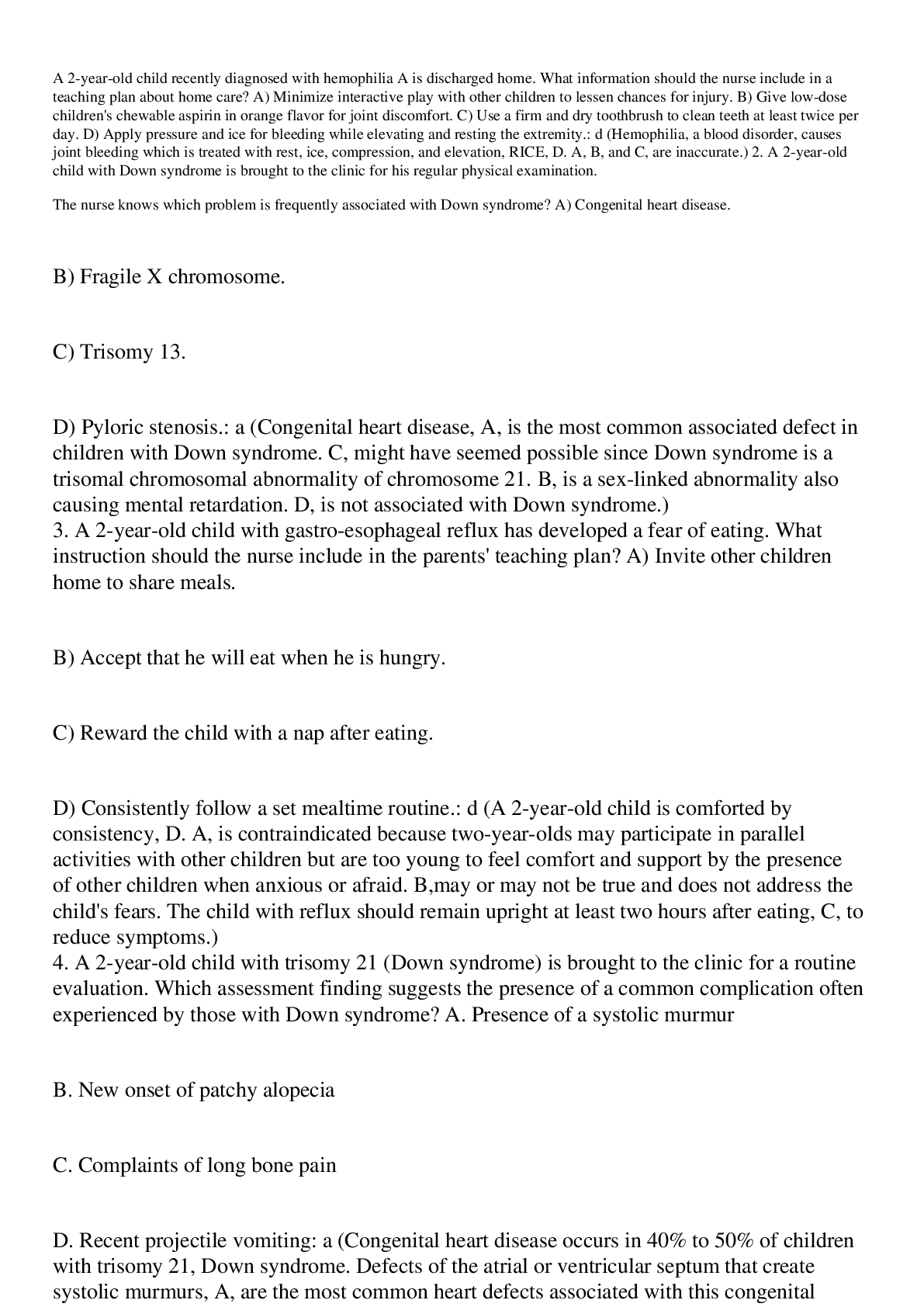


.png)

.png)






.png)


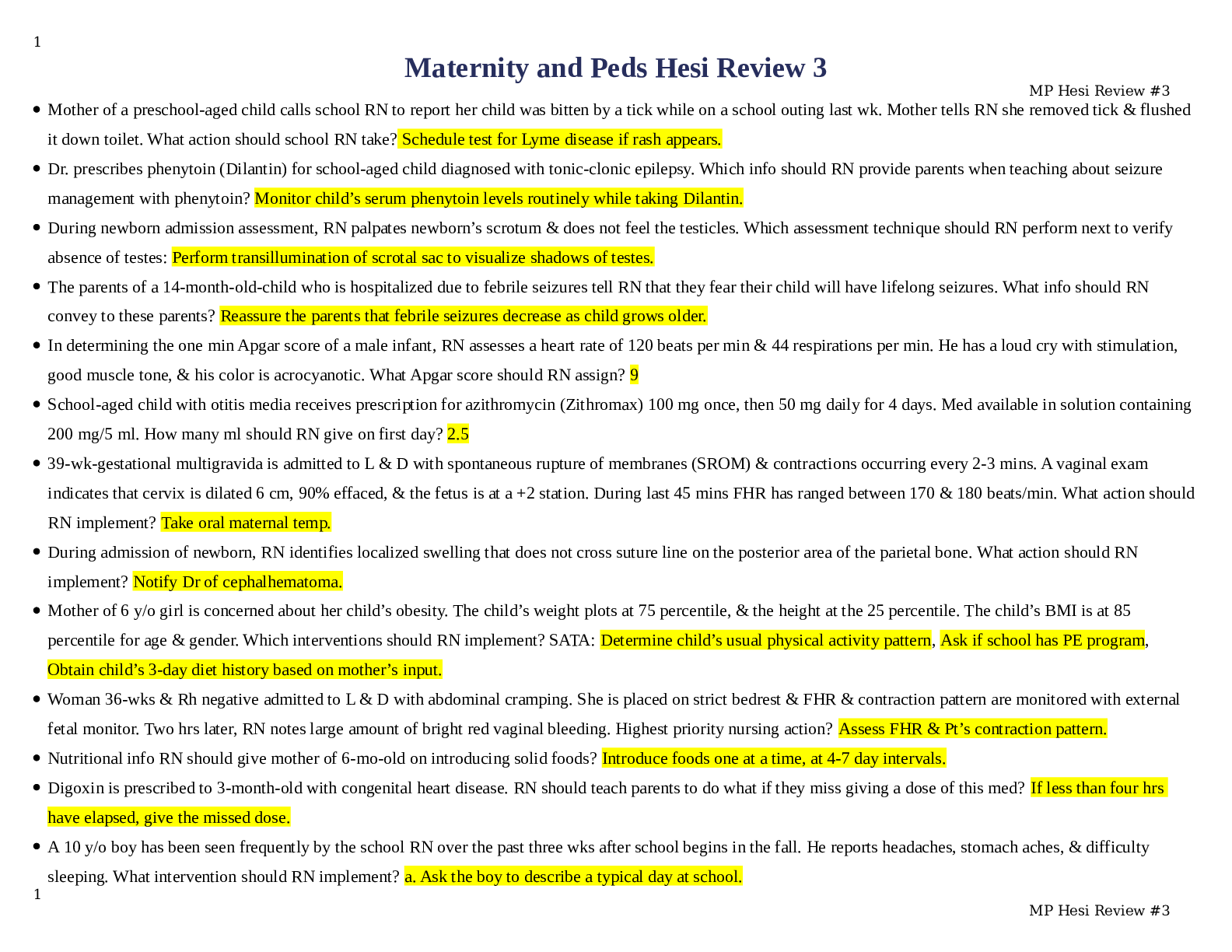

.png)