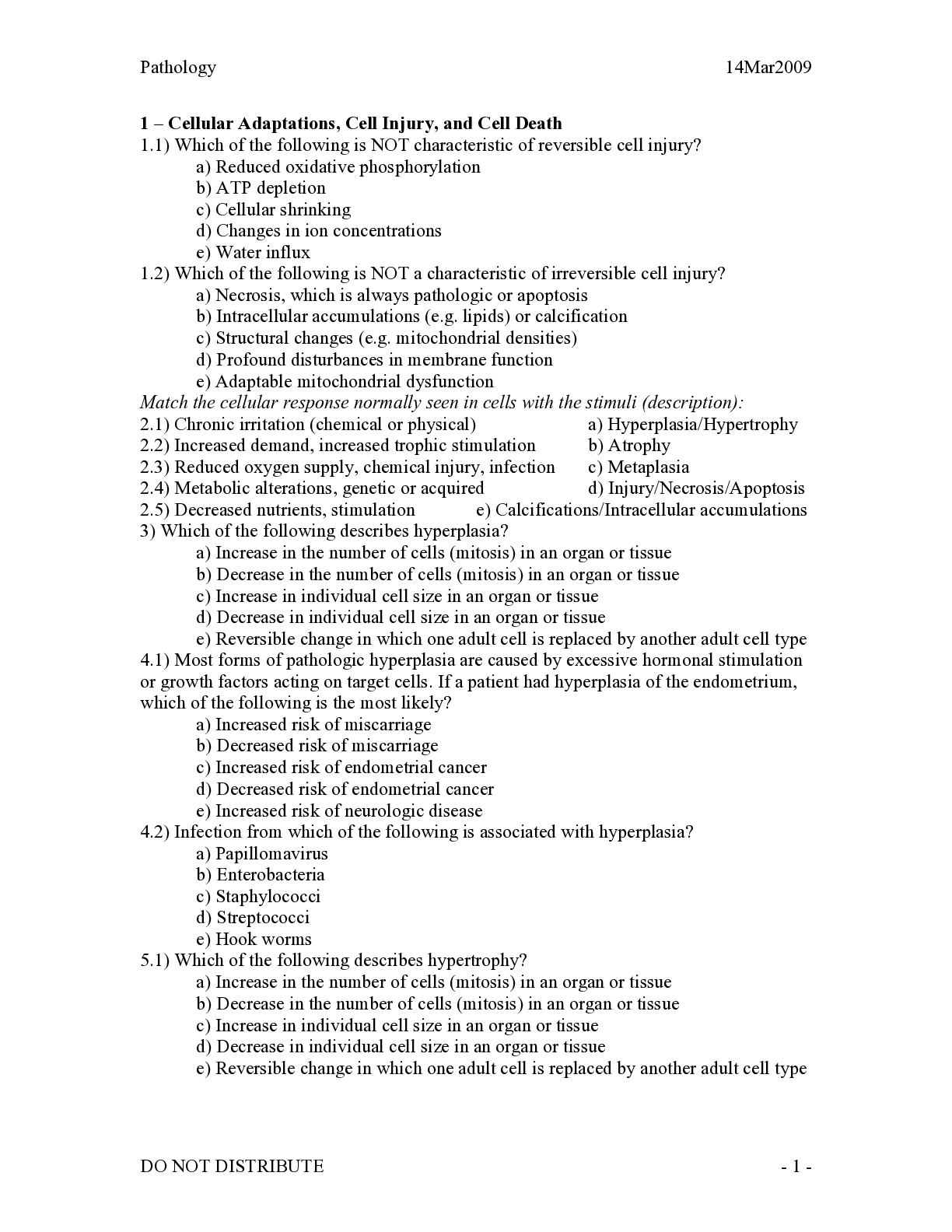
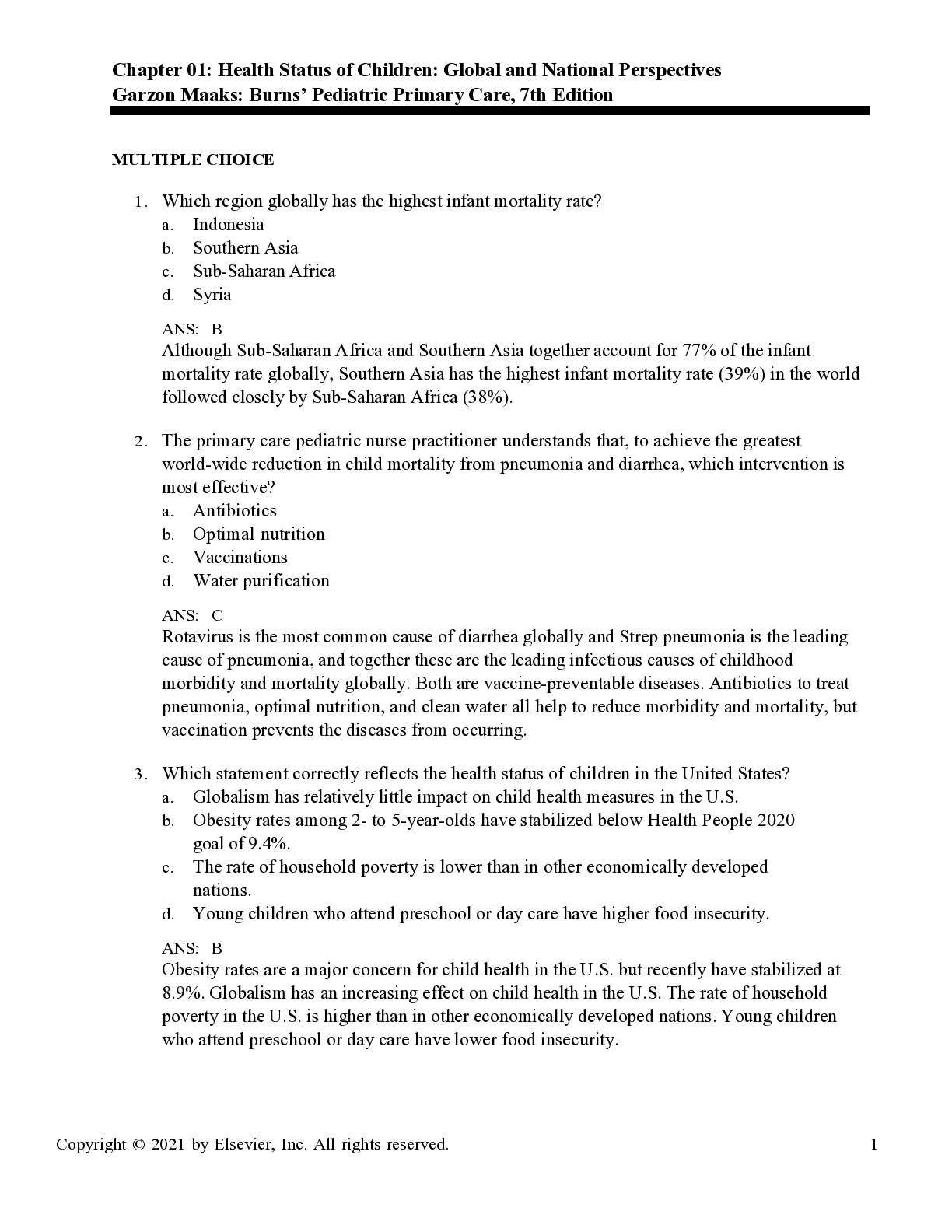
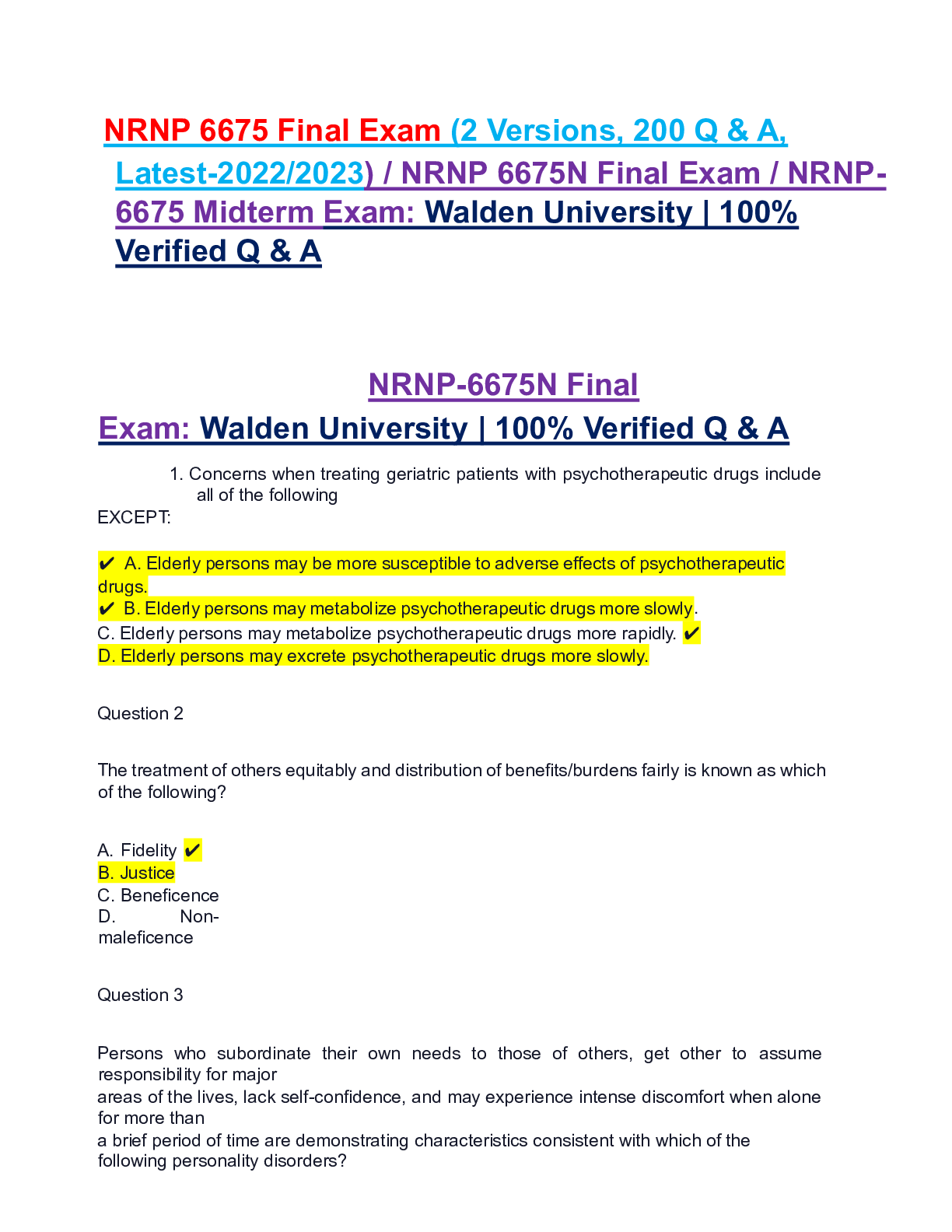
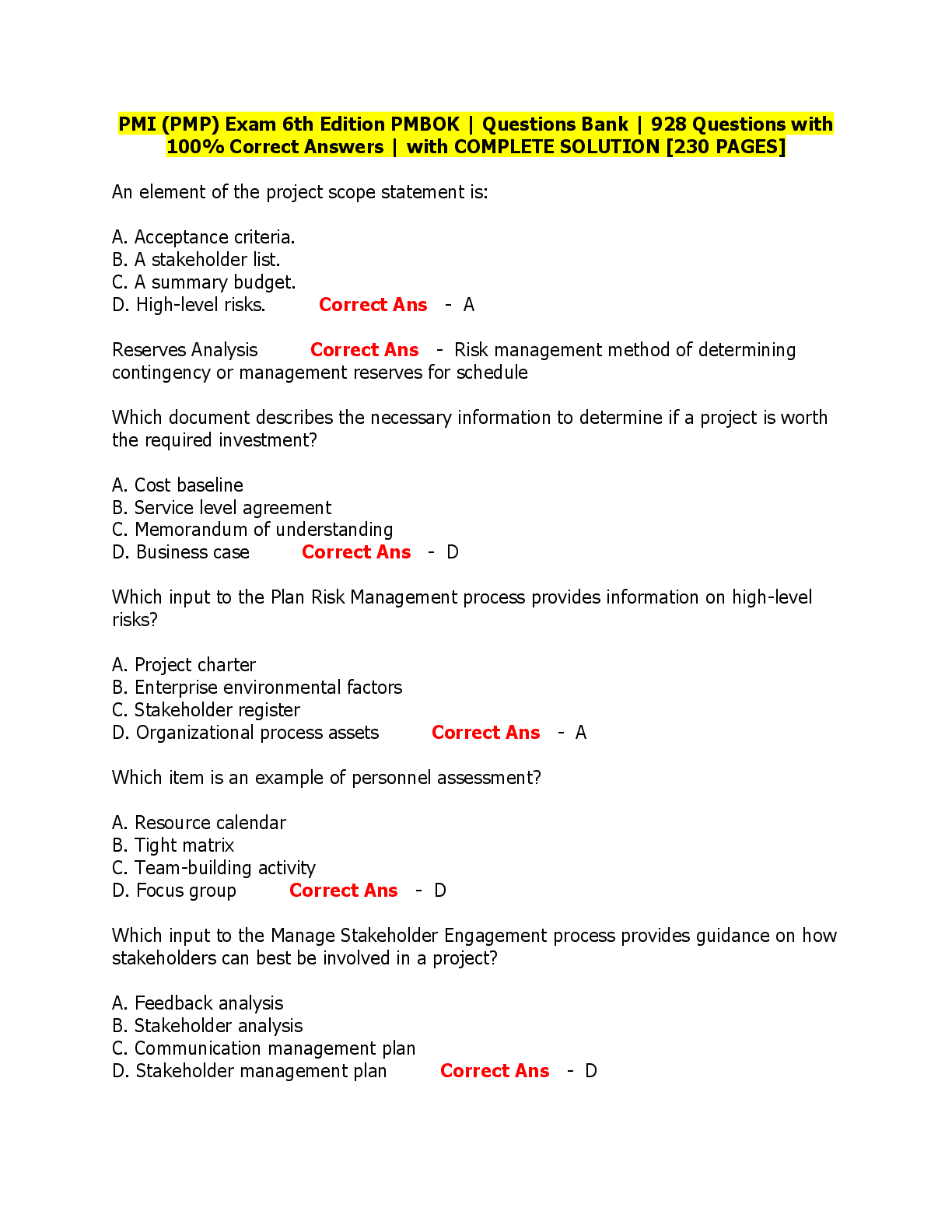
1 – Cellular Adaptations, Cell Injury, and Cell Death 1.1) Which of the following is NOT characteristic of reversible cell injury? a) Reduced oxidative phosphorylation b) ATP depletion c) Cellul ... ar shrinking d) Changes in ion concentrations e) Water influx 1.2) Which of the following is NOT a characteristic of irreversible cell injury? a) Necrosis, which is always pathologic or apoptosis b) Intracellular accumulations (e.g. lipids) or calcification c) Structural changes (e.g. mitochondrial densities) d) Profound disturbances in membrane function e) Adaptable mitochondrial dysfunction Match the cellular response normally seen in cells with the stimuli (description): 2.1) Chronic irritation (chemical or physical) a) Hyperplasia/Hypertrophy 2.2) Increased demand, increased trophic stimulation b) Atrophy 2.3) Reduced oxygen supply, chemical injury, infection c) Metaplasia 2.4) Metabolic alterations, genetic or acquired d) Injury/Necrosis/Apoptosis 2.5) Decreased nutrients, stimulation e) Calcifications/Intracellular accumulations 3) Which of the following describes hyperplasia? a) Increase in the number of cells (mitosis) in an organ or tissue b) Decrease in the number of cells (mitosis) in an organ or tissue c) Increase in individual cell size in an organ or tissue d) Decrease in individual cell size in an organ or tissue e) Reversible change in which one adult cell is replaced by another adult cell type 4.1) Most forms of pathologic hyperplasia are caused by excessive hormonal stimulation or growth factors acting on target cells. If a patient had hyperplasia of the endometrium, which of the following is the most likely? a) Increased risk of miscarriage b) Decreased risk of miscarriage c) Increased risk of endometrial cancer d) Decreased risk of endometrial cancer e) Increased risk of neurologic disease 4.2) Infection from which of the following is associated with hyperplasia? a) Papillomavirus b) Enterobacteria c) Staphylococci d) Streptococci e) Hook worms 5.1) Which of the following describes hypertrophy? a) Increase in the number of cells (mitosis) in an organ or tissue b) Decrease in the number of cells (mitosis) in an organ or tissue c) Increase in individual cell size in an organ or tissue d) Decrease in individual cell size in an organ or tissue e) Reversible change in which one adult cell is replaced by another adult cell type Pathology 14Mar2009 DO NOT DISTRIBUTE - 2 - 5.2) In the heart, the stimulus for hypertrophy is usually chronic hemodynamic overload, resulting from either hypertension or faulty valves. During cardiac muscle hypertrophy, ____ myosin heavy chains are replaced by ____ myosin heavy chains, which leads to ____ ATPase activity and a slower, more efficient contraction. a) !; "; Increased b) !; "; Decreased c) "; !; Increased d) "; !; Decreased 5.3) Atrial natriuretic factor (ANF) serves to reduce hemodynamic load. In the embryonic heart, the gene for ANF is expressed in both the atrium and the ventricle. After birth, ____ expression of the gene is down regulated. Cardiac hypertrophy is associated with a(n) ____ of ANF gene expression. a) Atrial; Decrease b) Atrial; Increase c) Ventricular; Decrease d) Ventricular; Increase 6.1) Which of the following types of atrophy is involved in marasmus? a) Decreased workload b) Loss of innervation c) Diminished blood supply d) Inadequate nutrition (protein-calorie) e) Loss of endrocrine stimulation f) Aging (senile atrophy) g) Pressure 6.2) Which of the following types of atrophy is involved in ischemia? a) Decreased workload b) Loss of innervation c) Diminished blood supply d) Inadequate nutrition (protein-calorie) e) Loss of endrocrine stimulation f) Aging (senile atrophy) g) Pressure 6.3) Which of the following is associated with cachexia, seen in patients with chronic inflammatory diseases and cancer? a) Decreased workload b) Loss of innervation c) Diminished blood supply d) Inadequate nutrition (protein-calorie) e) Loss of endrocrine stimulation f) Aging (senile atrophy) g) Pressure 6.4) Which cellular organelle contains acid hydrolases (e.g. cathepsins) and other enzymes to degrade endocytosed proteins from the extracellular environment and the cell surface as well as some cellular components during atrophy? a) Smooth ER b) Rough ER [Show More]
Last updated: 2 years ago
Preview 1 out of 28 pages
Buy this document to get the full access instantly
Instant Download Access after purchase
Buy NowInstant download
We Accept:
A PACKAGE DEAL FOR PATHOLOGY EXAMS WITH VERIFIED ANSWERS 2023/SYSTEMATIC PATHOLOGY PRACTICE QUESTIONS [EMQs AND MCQs] WITH VERIFIED ANSWERS UPDATE 2023
By EXCELLENCE NURSING LIBRARY 2 years ago
$202
14
Can't find what you want? Try our AI powered Search
Connected school, study & course
About the document
Uploaded On
Dec 12, 2023
Number of pages
28
Written in
All
This document has been written for:
Uploaded
Dec 12, 2023
Downloads
0
Views
101
Scholarfriends.com Online Platform by Browsegrades Inc. 651N South Broad St, Middletown DE. United States.
We're available through e-mail, Twitter, and live chat.
FAQ
Questions? Leave a message!
Copyright © Scholarfriends · High quality services·