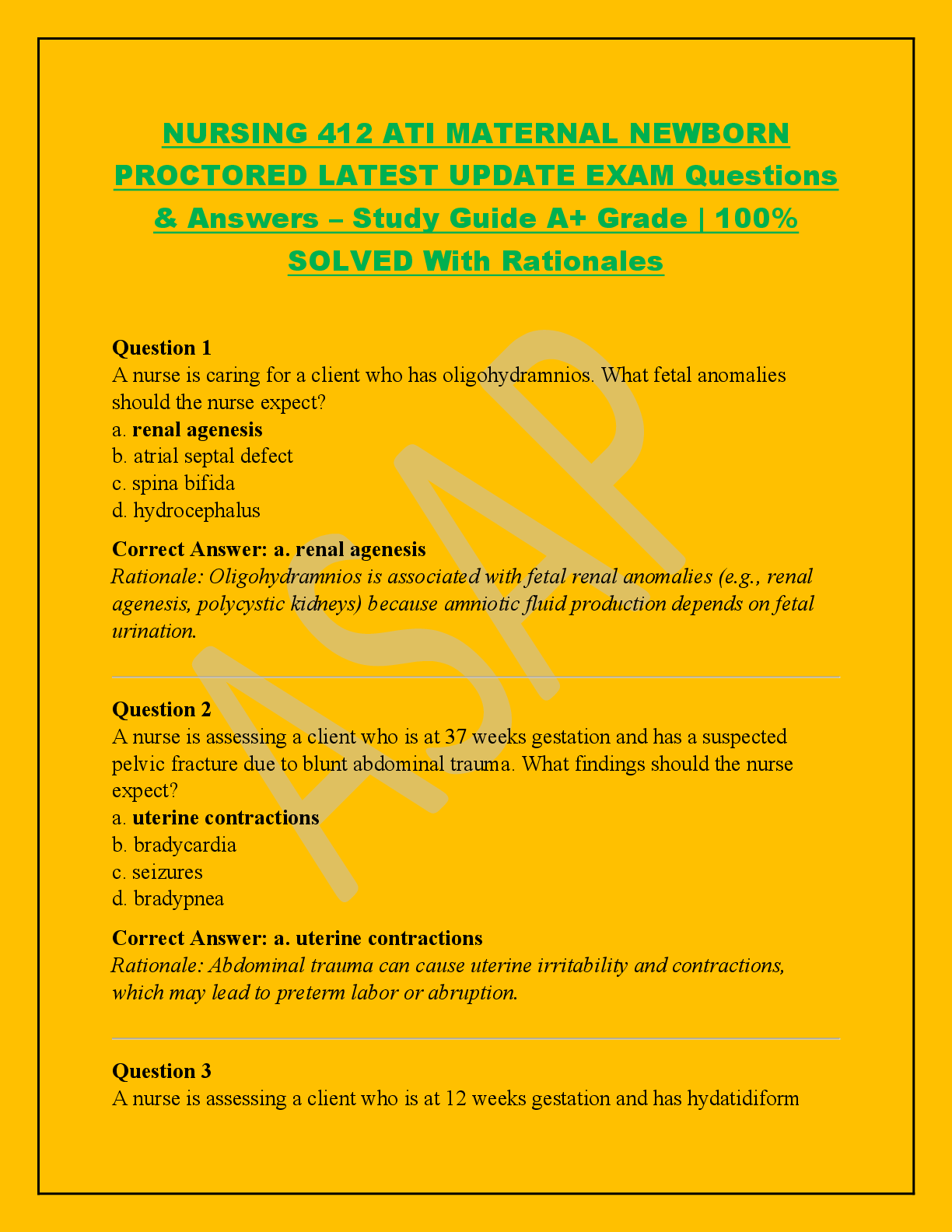
NURSING > EXAM PROCTORED > ATI Maternal Newborn Proctored Study Guide: This study guide contains 7 pages of the most relevant a (All)
ATI Maternal Newborn Proctored Study Guide: This study guide contains 7 pages of the most relevant and highly tested materials needed for a quick read for exam in all the 27 chapters listed here below.
Document Content and Description Below
Last updated: 4 years ago
Preview 1 out of 7 pages
Instant download

Buy this Document to get the Full Access Instantly
Provided by Students Who Aced it
We Verify Document Content to Gurantee Accuracy
Reviews( 0 )
Document information
Connected school, study & course
About the document
Uploaded On
Feb 27, 2021
Number of pages
7
Written in
All

Additional information
This document has been written for:
Uploaded
Feb 27, 2021
Downloads
0
Views
212
Topic Tags
Recommended For You
Get more on EXAM PROCTORED »
eBook Artificial Intelligence in HCI, 6th International Confer...

ATI MATERNAL NEWBORN PROCTORED EXAM | 33 VERSIONS Contains 260...
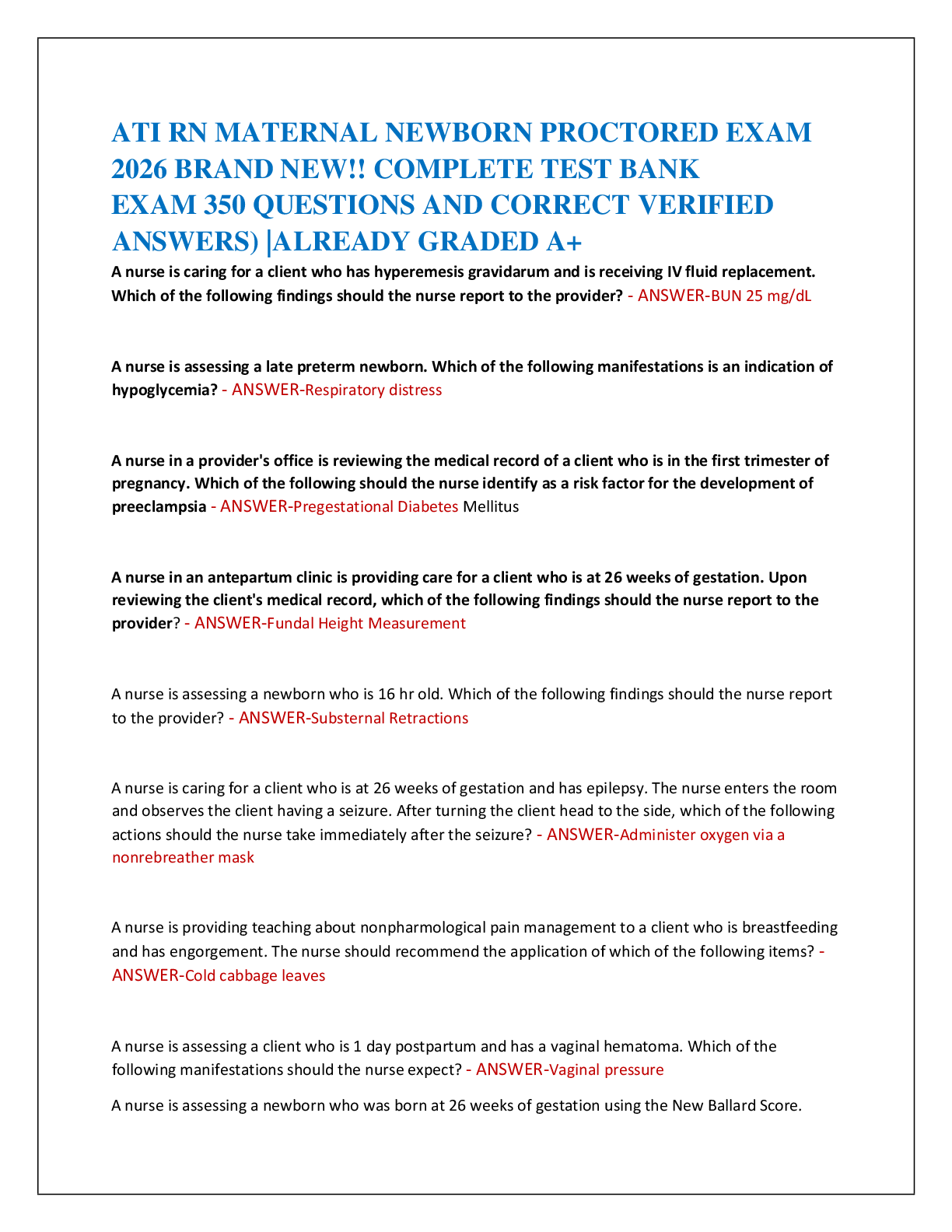
ATI RN MATERNAL NEWBORN PROCTORED EXAM 2026 BRAND NEW!! COMP...
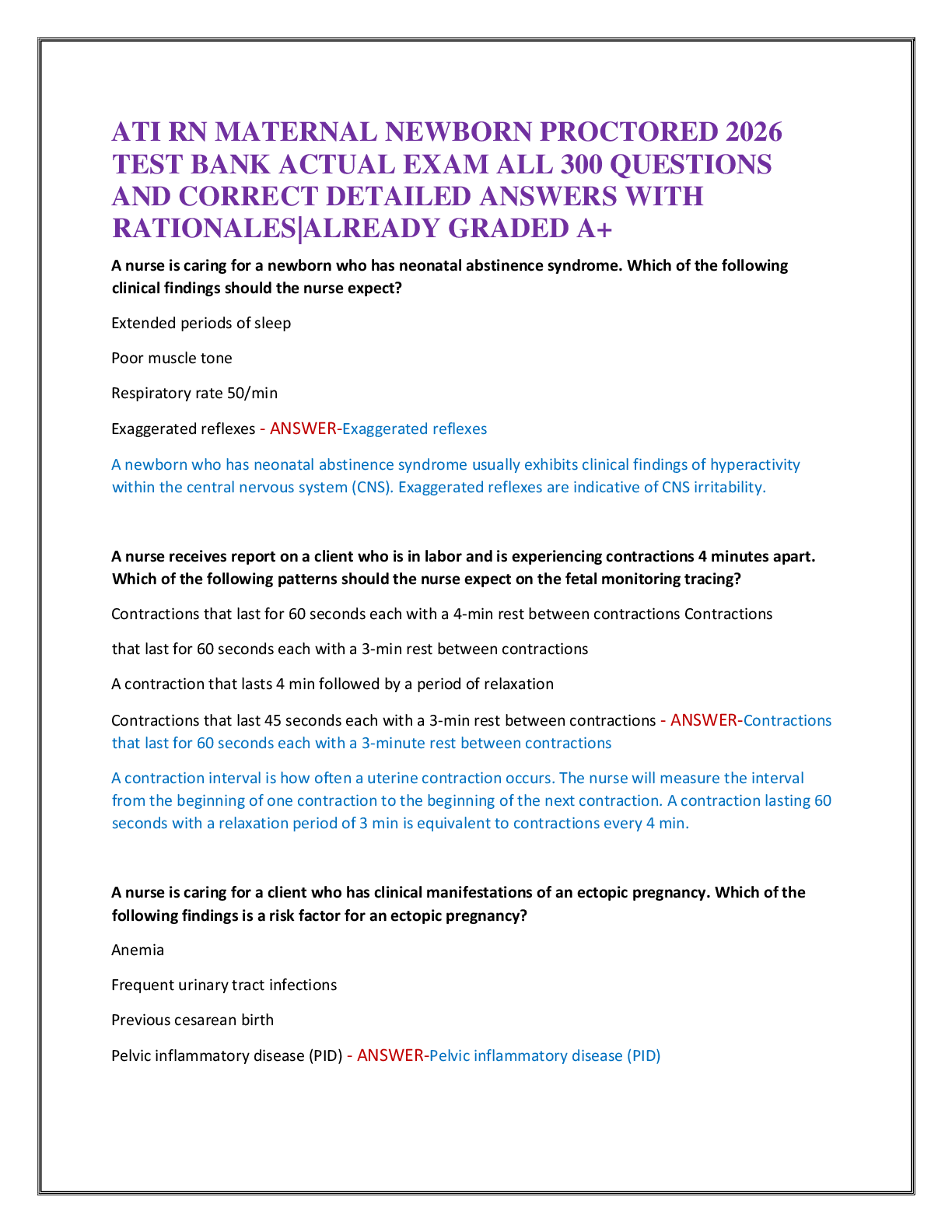
ATI RN MATERNAL NEWBORN PROCTORED 2026 TEST BANK ACTUAL EXAM...

ATI MATERNAL NEWBORN PROCTORED Version 1,2 Questions and Answ...
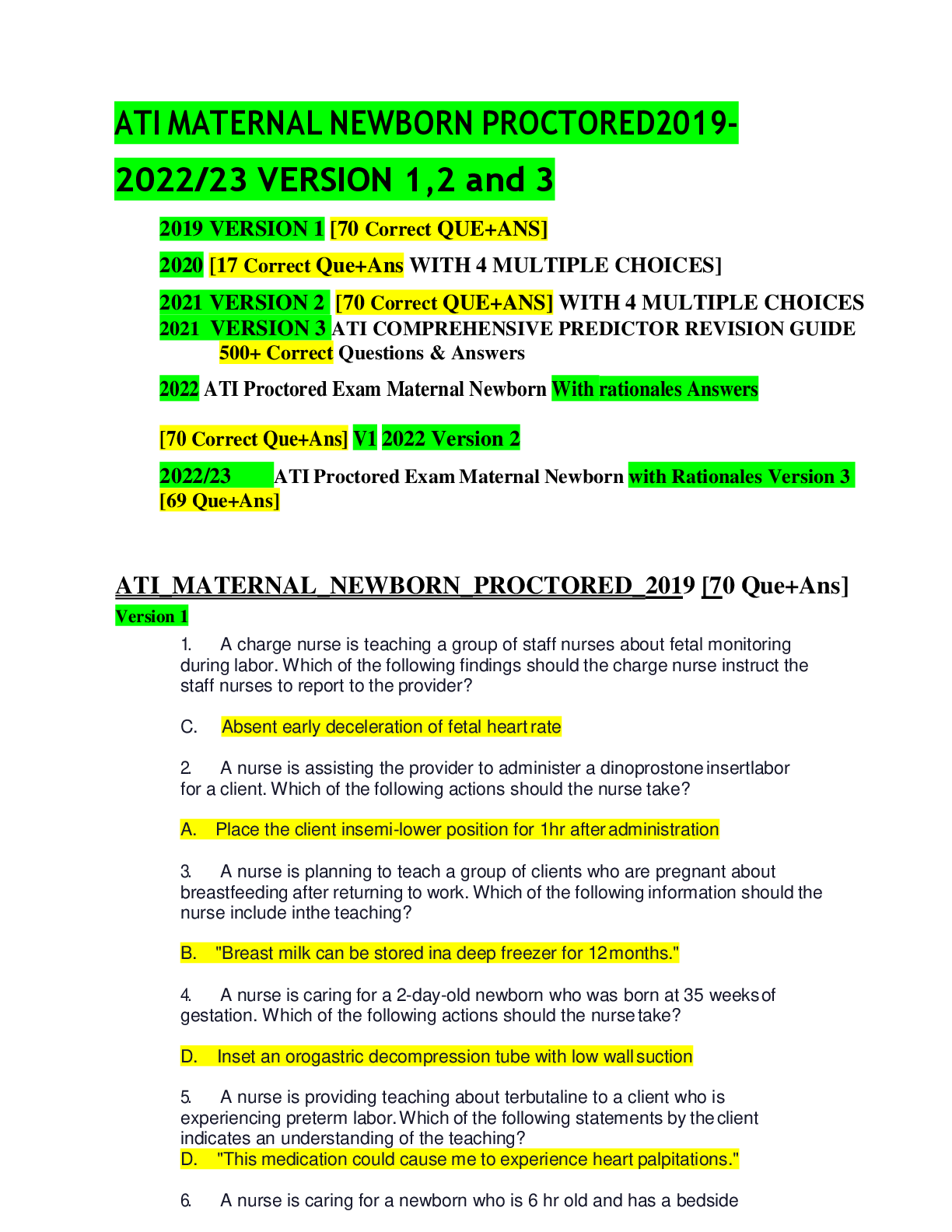
ATI MATERNAL NEWBORN PROCTORED EXAM WITH RATIONALES Version...
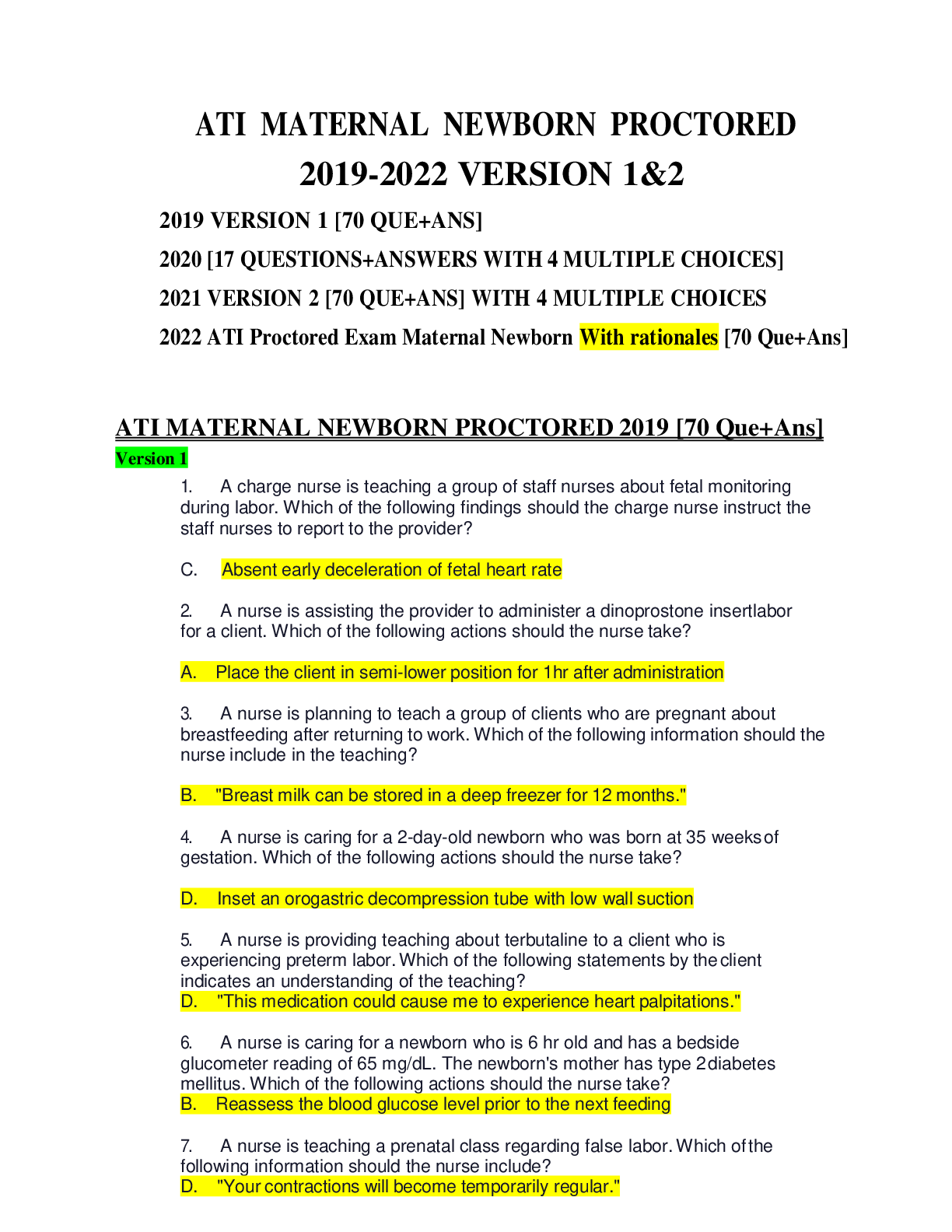
ATI MATERNAL NEWBORN PROCTORED EXAM WITH RATIONALES Version...
NR 668 CEA MIDTERM EXAM 2026/2027 | 460 HIGH-YIELD QUESTIONS &...
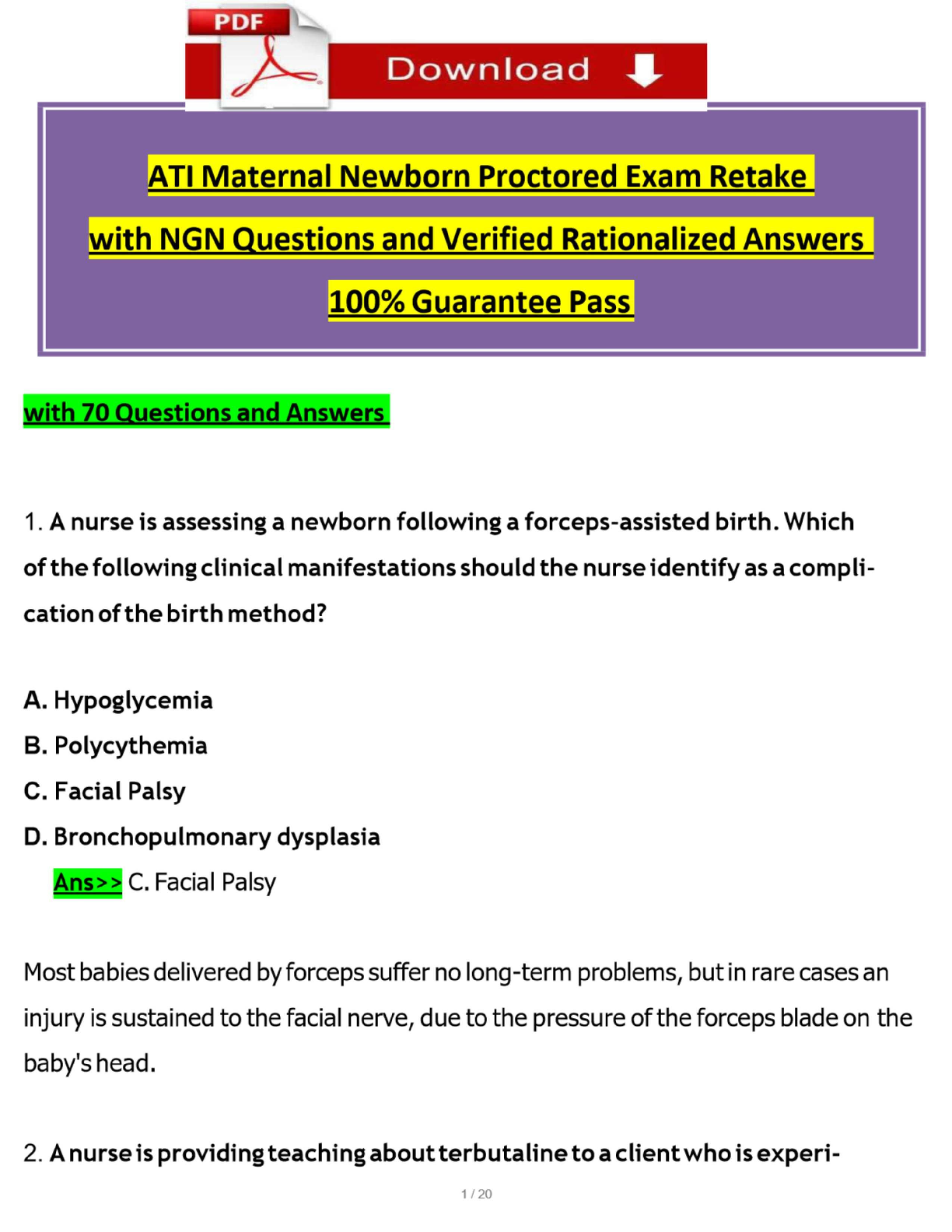
ATI Maternal Newborn Proctored Exam Retake with NGN Qu;stions...
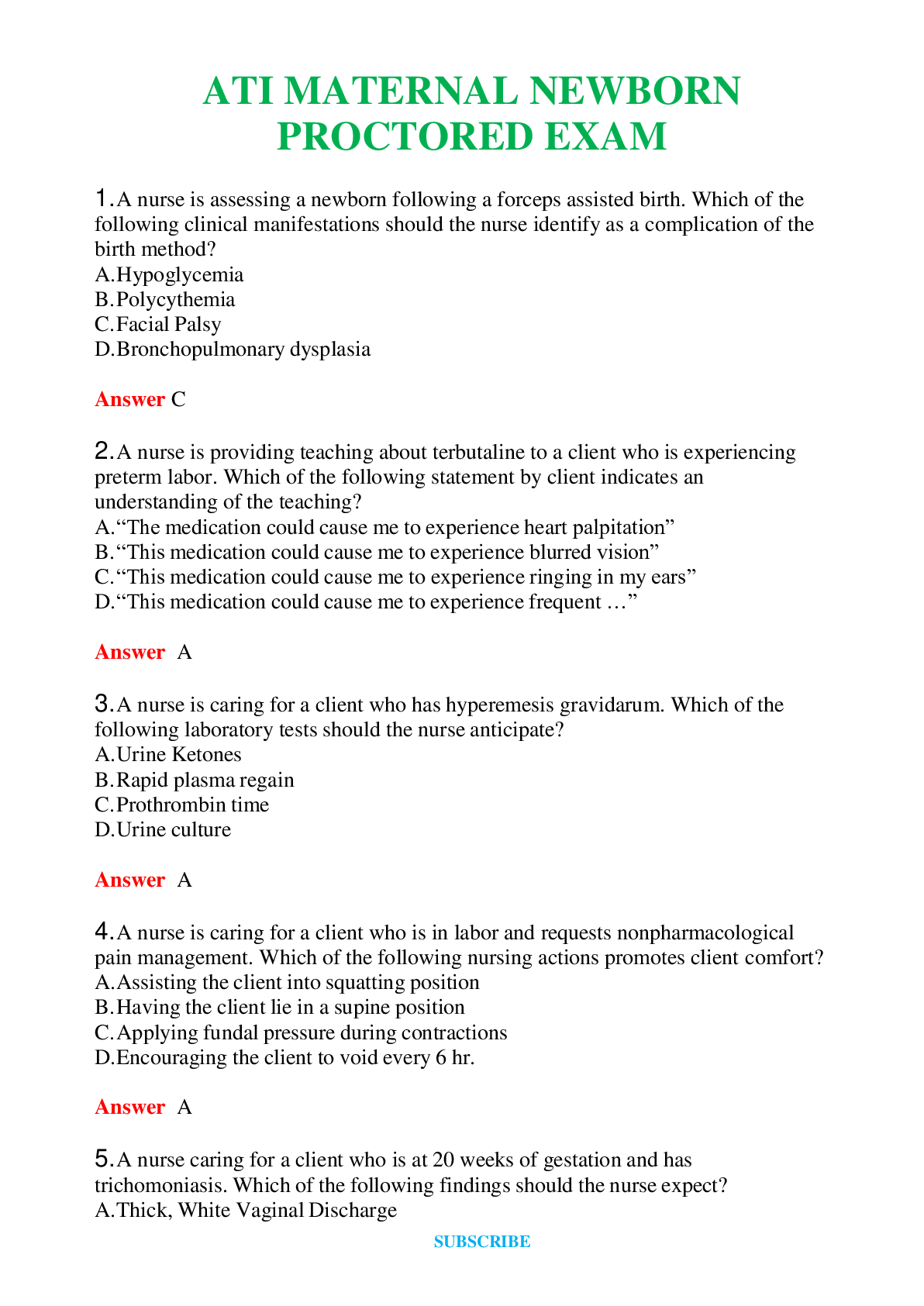
ATI MATERNAL NEWBORN PROCTORED EXAM Questions and Answers (Ve...
HESI A2 REVIEW Anatomy and Physiology, HESI A2 Science, HESI A...
Test Bank for Pathophysiology Biologic Basis for Disease in Ad...
Test Bank for Role Development in Professional Nursing Practic...

Basic Geriatric Nursing, 8th Edition By Patricia Williams [PDF...
Applied Pathophysiology For Advanced Practice Nurses 2nd Editi...

NURS 4325 Maternal-Child Nursing | Healthy Newborn, Infant Car...