NURSING > QUESTIONS & ANSWERS > West Coast University, Orange County - NURS 307OB prework week 4 latest 2020 (All)
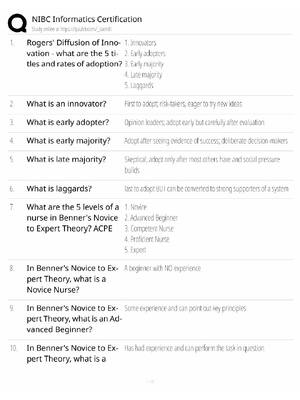
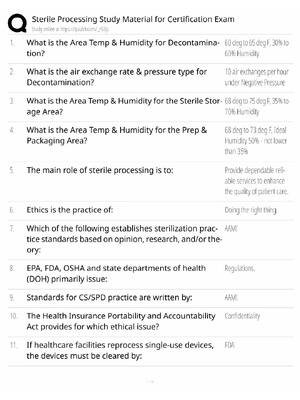
West Coast University, Orange County - NURS 307OB prework week 4 latest 2020
Document Content and Description Below
Last updated: 4 years ago
Preview 1 out of 27 pages
Instant download

Buy this Document to get the Full Access Instantly
Provided by Students Who Aced it
We Verify Document Content to Gurantee Accuracy
Reviews( 0 )
Document information
Connected school, study & course
About the document
Uploaded On
Mar 05, 2021
Number of pages
27
Written in
All

Additional information
This document has been written for:
Uploaded
Mar 05, 2021
Downloads
0
Views
111
Topic Tags
Recommended For You
Get more on QUESTIONS & ANSWERS »

Lewis Medical Surgical Nursing 11th Edition Test Bank (LATEST...
Lewis Medical Surgical Nursing 11th Edition Test Bank (LATEST...

NURS 6501 / NURS6501 Final Exam Advanced Pathophysiology Lates...

NSG6435 / NSG 6435: Practicum III Family Health - Pediatrics M...
NSG6430 FINAL Exam / NSG 6430 FINAL Exam (Latest 2020/2021) gr...

FROM ANCIENT WORLD TO THE MIDDLE AGES COMPLETED QUIZ 2024 | EN...
HESI A2 REVIEW Anatomy and Physiology, HESI A2 Science, HESI A...
Test Bank for Pathophysiology Biologic Basis for Disease in Ad...
Test Bank for Role Development in Professional Nursing Practic...
TEST BANK for Essentials for Nursing Practice, 9th Edition by...
Basic Geriatric Nursing, 8th Edition By Patricia Williams [PDF...
Applied Pathophysiology For Advanced Practice Nurses 2nd Editi...
Exercises Answer Key Statistics for Nursing Research A Workboo...