NURS6501 / NURS-6501 Advanced Pathophysiology 2020/2021
Quiz - Week 6/ MIDTERM GRADED 30/30
• Question 1
1 out of 1 points
A 50-year-old diabetic male did not take his medication and is now in metabolic acidosi
...
NURS6501 / NURS-6501 Advanced Pathophysiology 2020/2021
Quiz - Week 6/ MIDTERM GRADED 30/30
• Question 1
1 out of 1 points
A 50-year-old diabetic male did not take his medication and is now in metabolic acidosis. He is experiencing Kussmaul respirations. What type of breathing will the nurse observe upon assessment?
Selected Answer: b.
A slightly increased ventilatory rate, large tidal volumes, and no expiratory pause
Correct Answer: b.
A slightly increased ventilatory rate, large tidal volumes, and no expiratory pause
• Question 2
1 out of 1 points
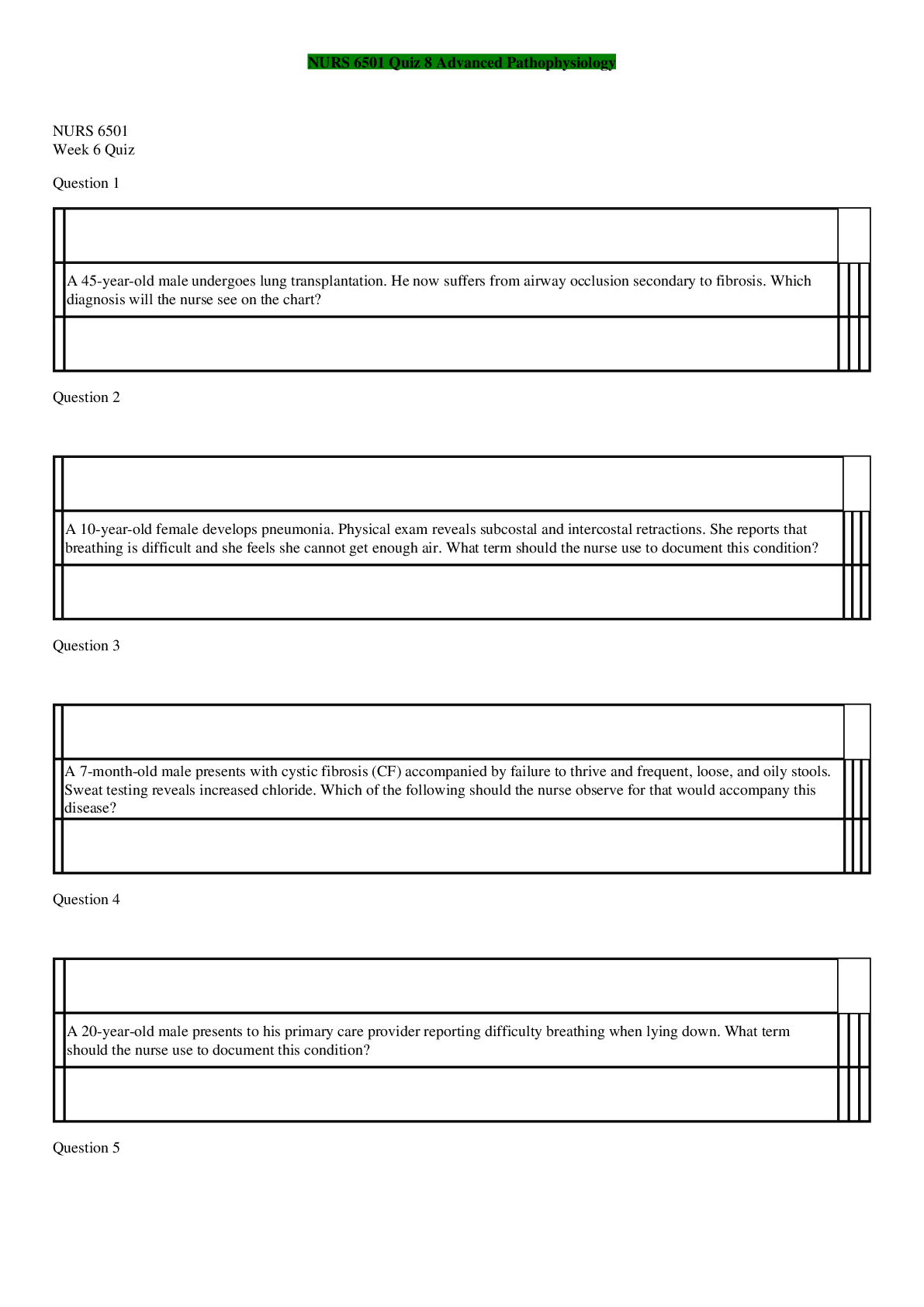
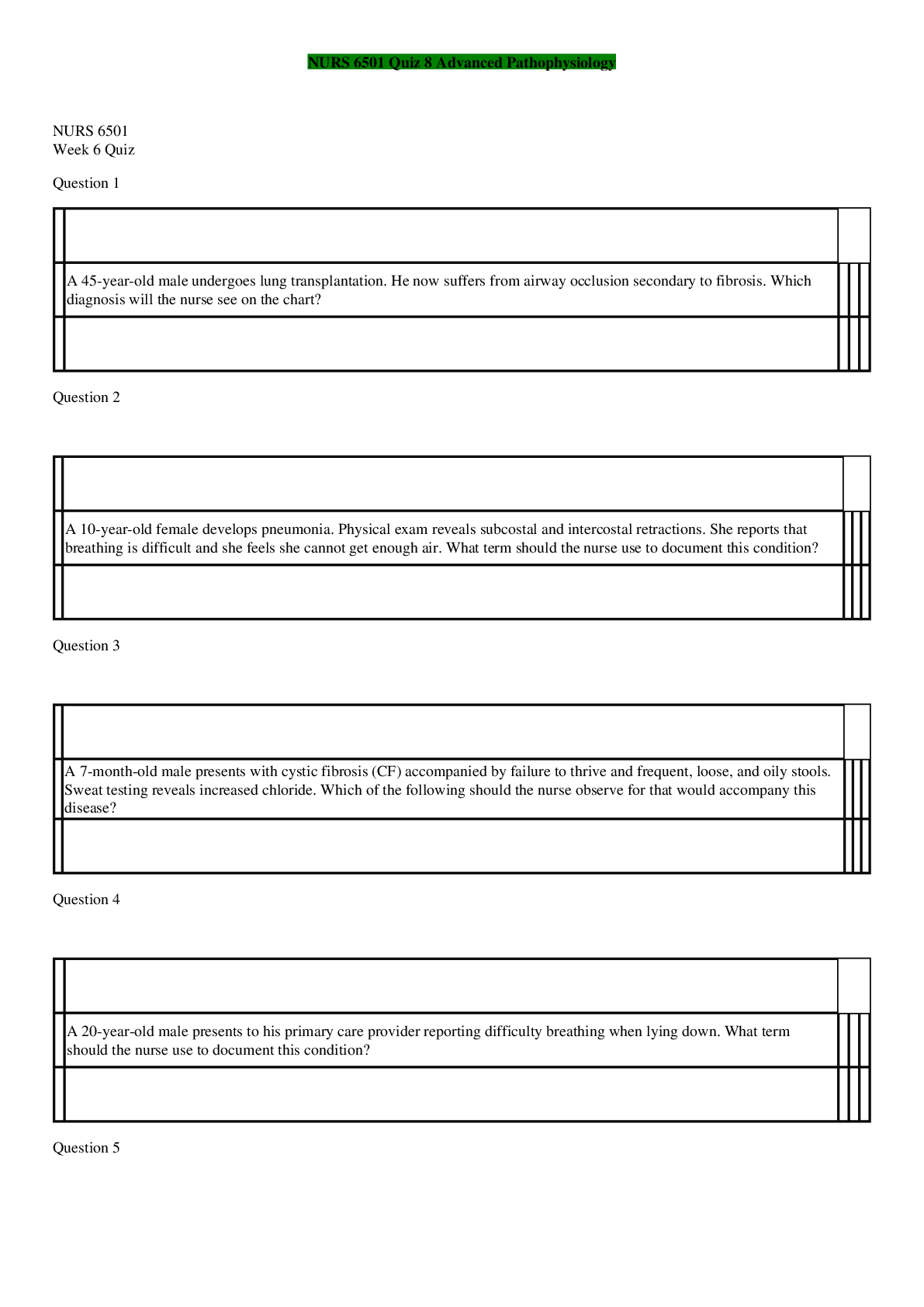
A 10-year-old female develops pneumonia. Physical exam reveals subcostal and intercostal retractions. She reports that breathing is difficult and she feels she cannot get enough air. What term should the nurse use to document this condition?
Selected Answer: b.
Dyspnea
Correct Answer: b.
Dyspnea
• Question 3
1 out of 1 points
A 15-year-old female is diagnosed with restrictive lung disease caused by fibrosis. The patient had a pulmonary functions test. Which of the following findings is expected?
Selected Answer: d.
Decreased functional residual capacity
Correct Answer: d.
Decreased functional residual capacity
• Question 4
1 out of 1 points
A 10-year-old male is brought to the ER with prolonged bronchospasm and severe hypoxemia. The most likely diagnosis on the chart is:
Selected Answer: c.
Status asthmaticus
Correct Answer: c.
Status asthmaticus
• Question 5
1 out of 1 points
A 60-year-old female with a 25-year history of smoking is diagnosed with emphysema. She has an increased anterior-posterior chest diameter. The nurse attributes this finding to:
Selected Answer: a.
Air trapping
Correct Answer: a.
Air trapping
• Question 6
1 out of 1 points
A 60-year-old female with emphysema is having difficulty expiring a given volume of air. When giving report, the nurse will relay that the patient is most likely experiencing _____ pulmonary disease.
Selected Answer: b.
Obstructive
Correct Answer: b.
Obstructive
• Question 7
1 out of 1 points
An 80-year-old female develops pneumonia in the hospital. She becomes cyanotic, tachycardic, and develops a fever and cough. Chest x-ray reveals pus in the pleural space. Which of the following is the most likely diagnosis documented on the chart?
Selected Answer: a.
Empyema
Correct Answer: a.
Empyema
• Question 8
1 out of 1 points
A 9-year-old male contracted influenza. Which of the following complications is of greatest concern to the nurse?
Selected Answer: b.
Bronchiolitis obliterans
Correct Answer: b.
Bronchiolitis obliterans
• Question 9
1 out of 1 points
A 65-year-old female with emphysema presents to the ER for difficulty breathing. Physical exam reveals bluish skin and mucous membranes. How should the nurse chart this condition? Patient has:
Selected Answer: a.
Cyanosis
Correct Answer: a.
Cyanosis
• Question 10
1 out of 1 points
A 53-year-old male with a 20-year history of smoking is diagnosed with emphysema. When the nurse is asked what causes this, what is the nurse’s best response? Changes in his lungs are caused by:
Selected Answer: c.
Obstruction to heart tissue
Correct Answer: c.
Obstruction to heart tissue
• Question 11
1 out of 1 points
A 30-year-old male is involved in a motor vehicle accident and sustains trauma to the lungs and chest wall. He experiences respiratory failure. Which of the following lab values would the nurse expect?
Selected Answer: b.
Elevated PaCO 2
Correct Answer: b.
Elevated PaCO2
• Question 12
[Show More]