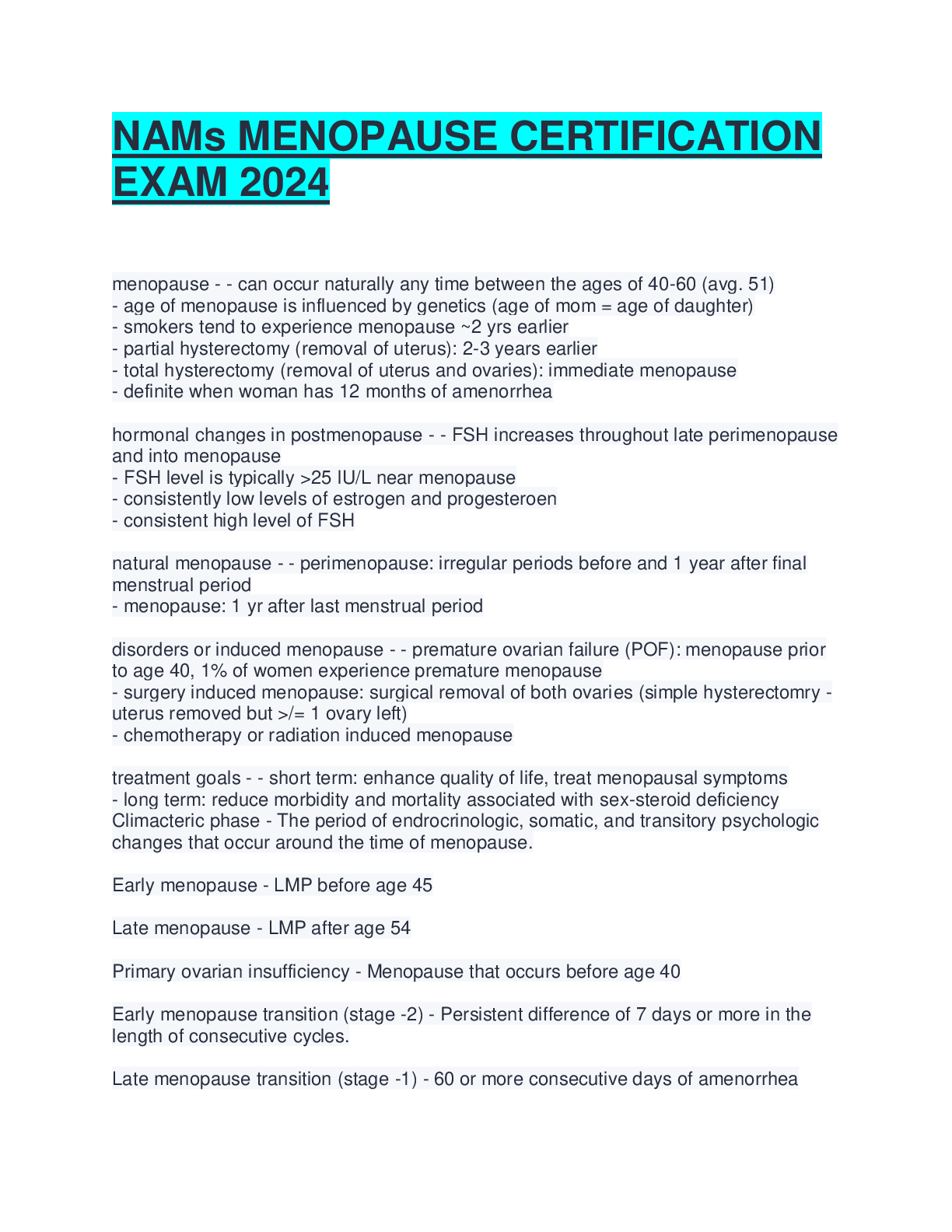
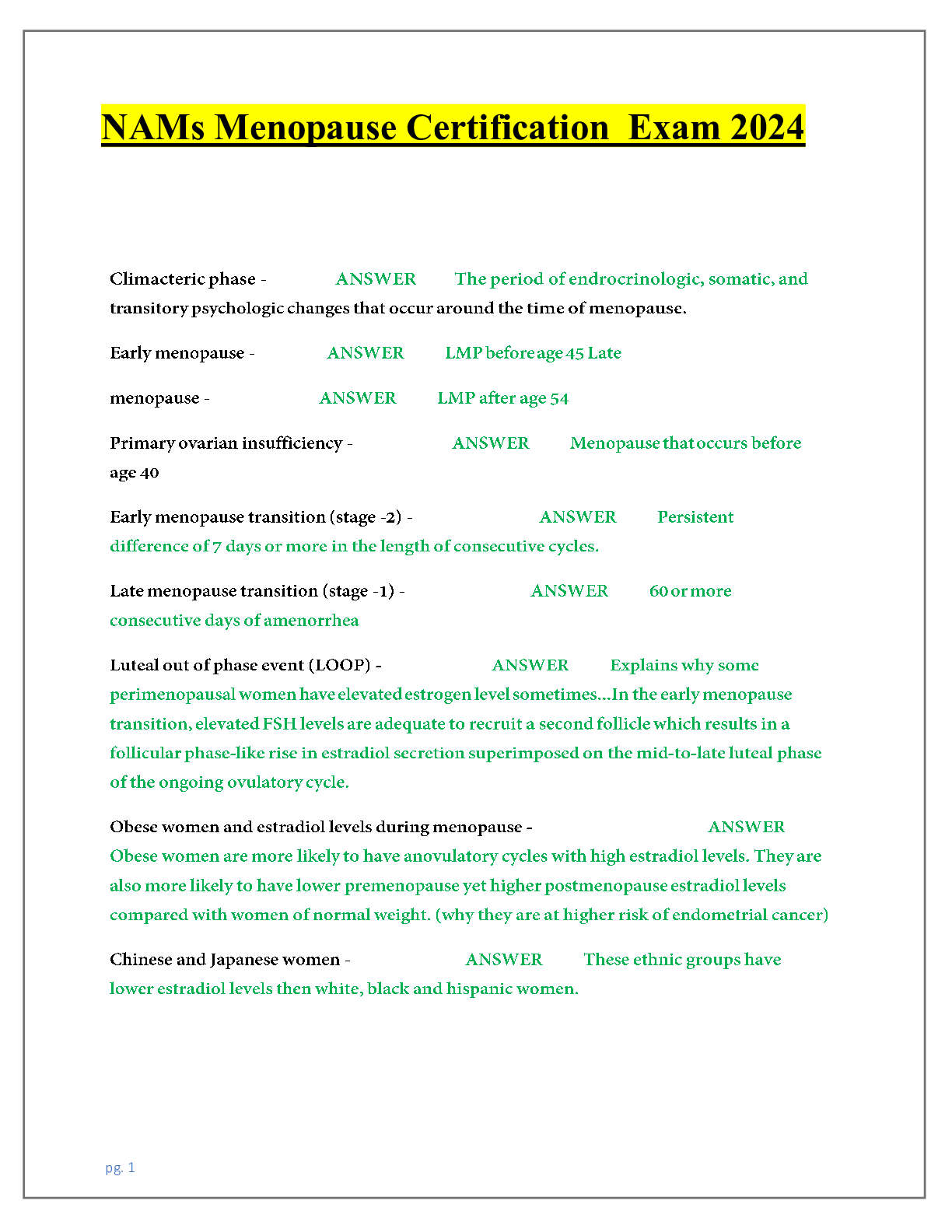
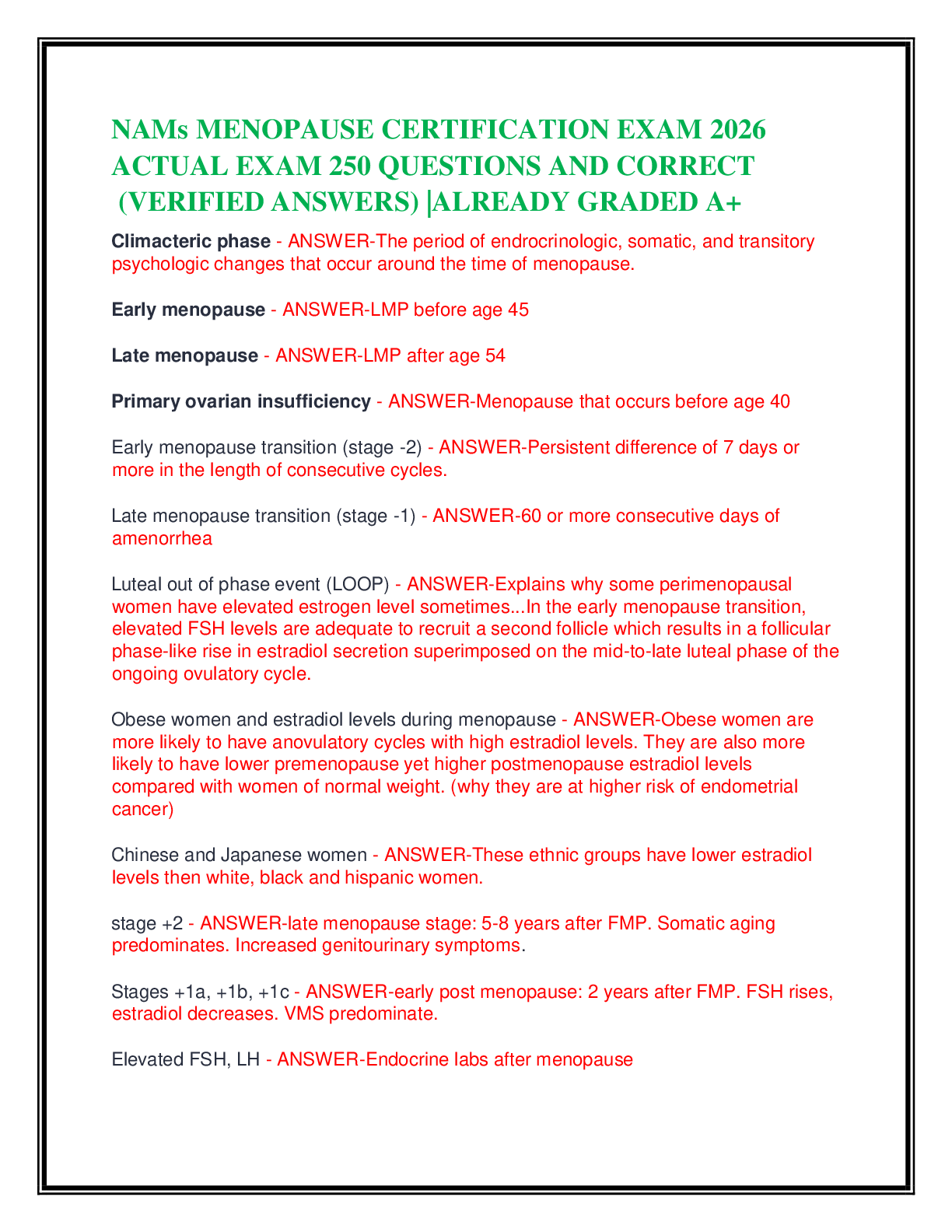
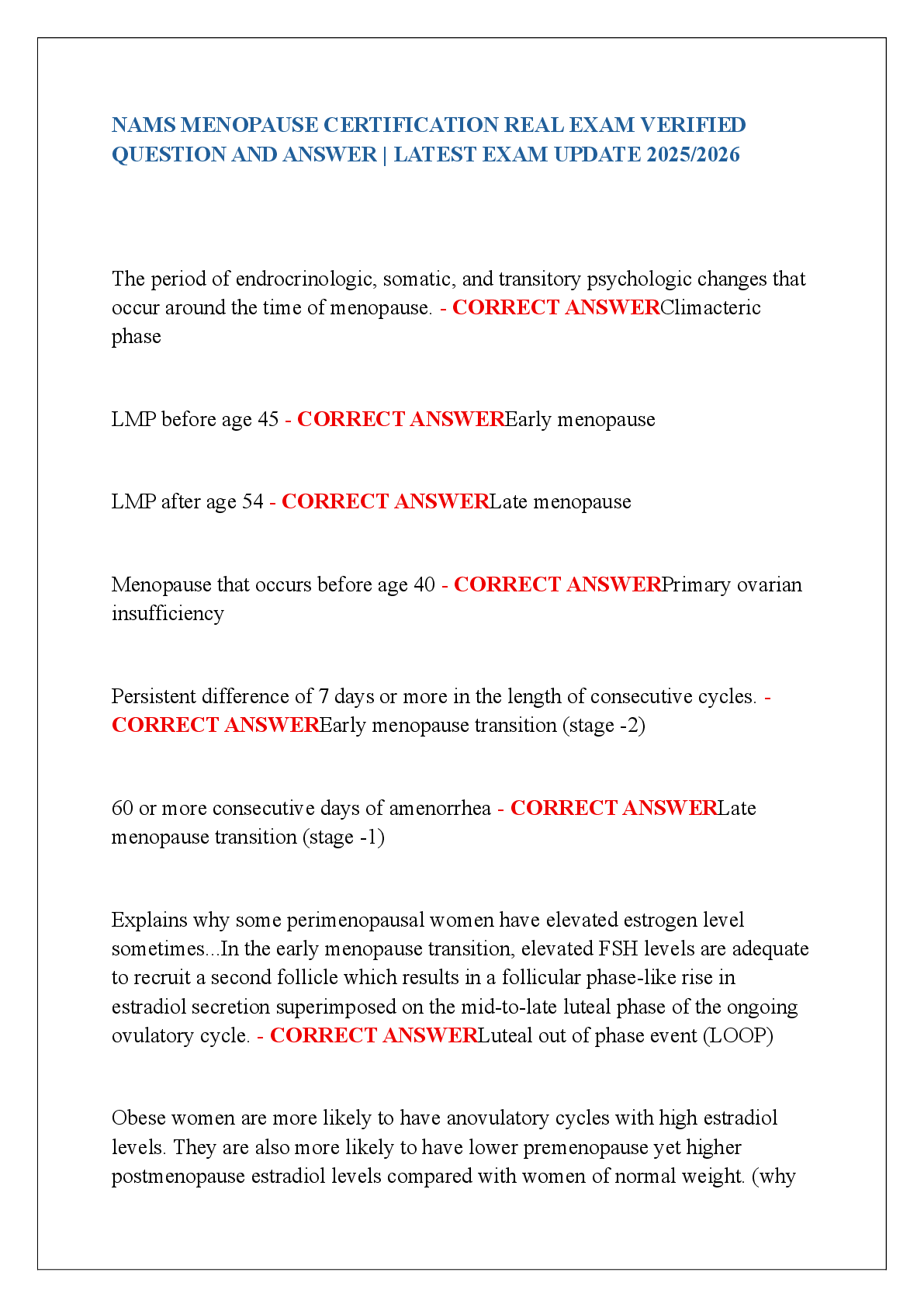
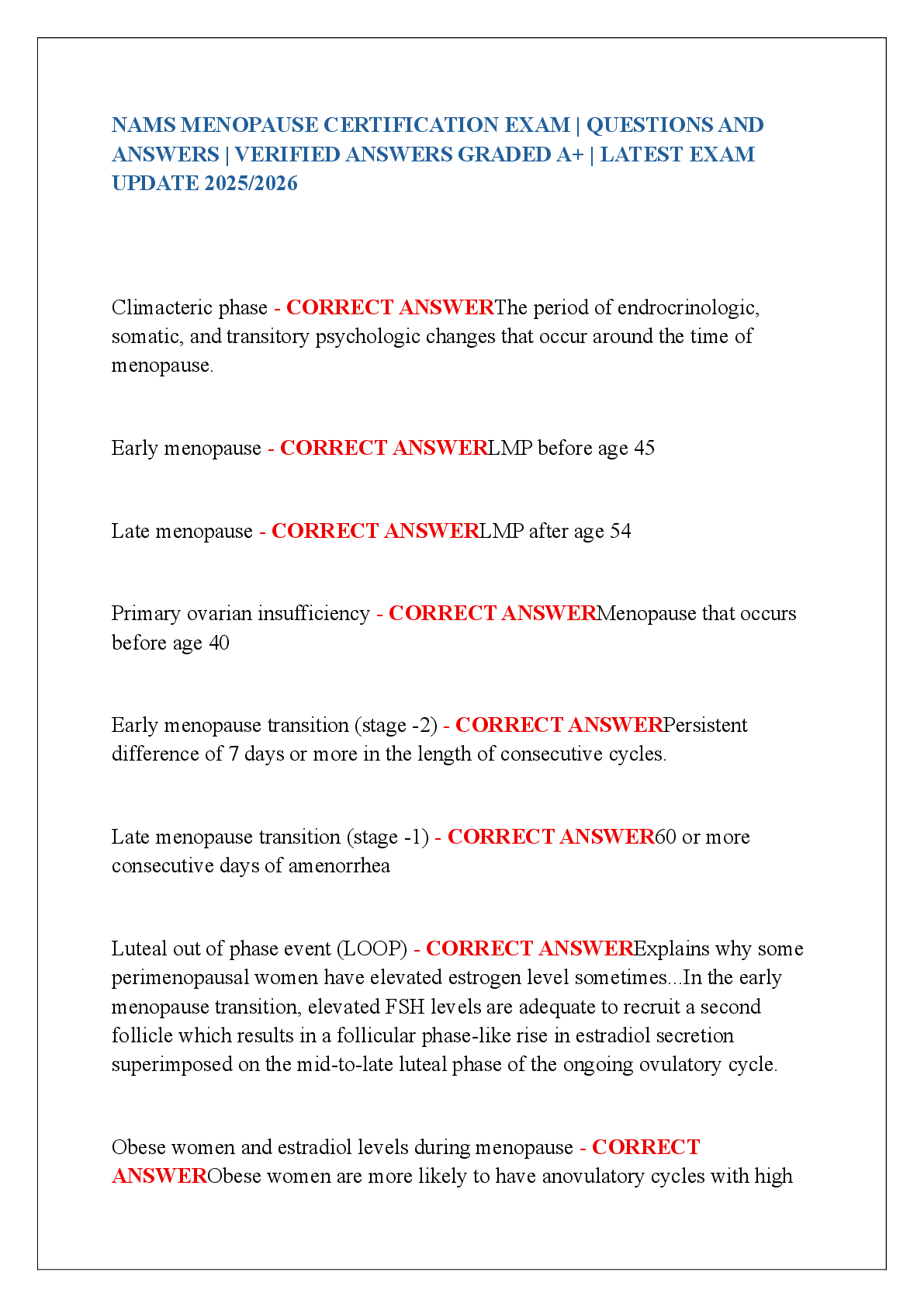
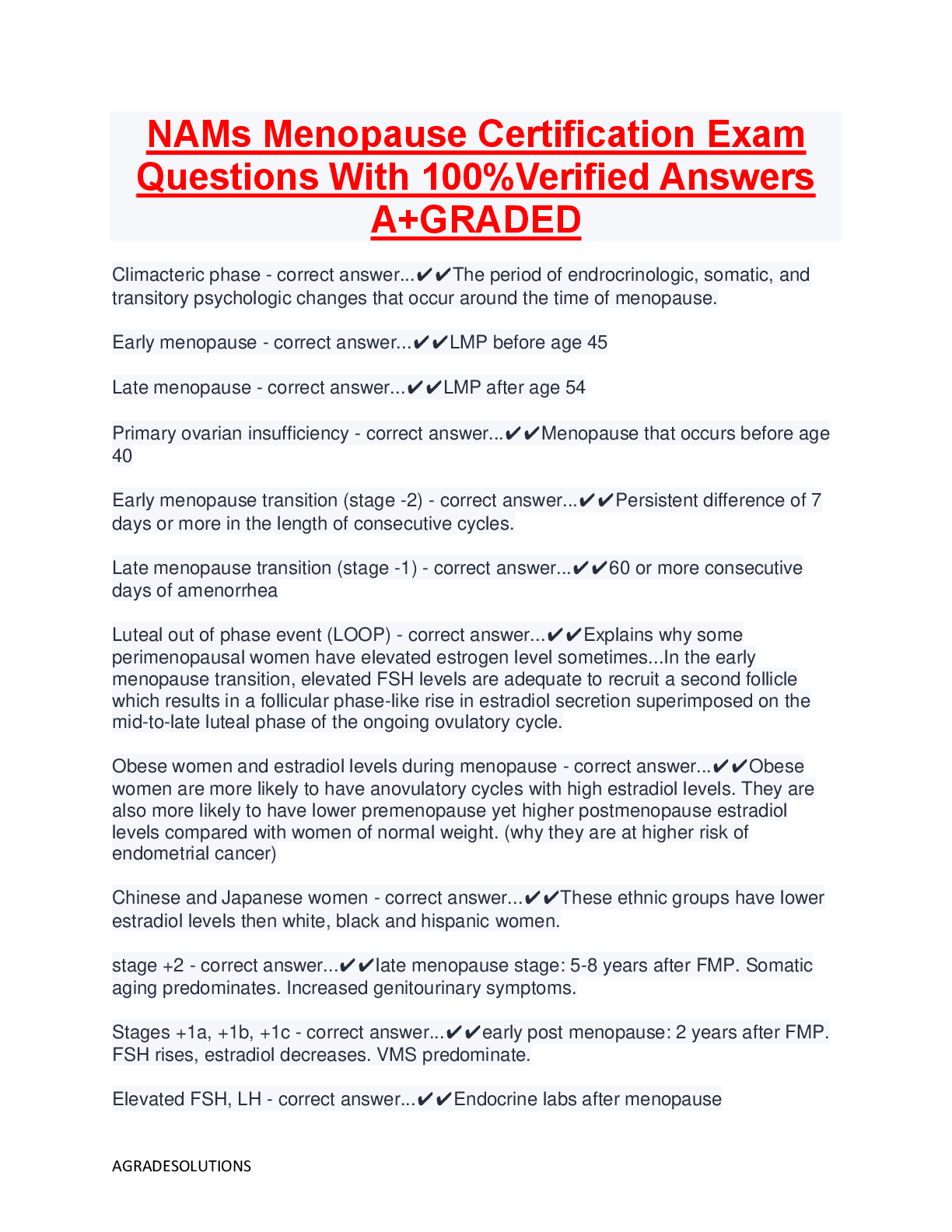
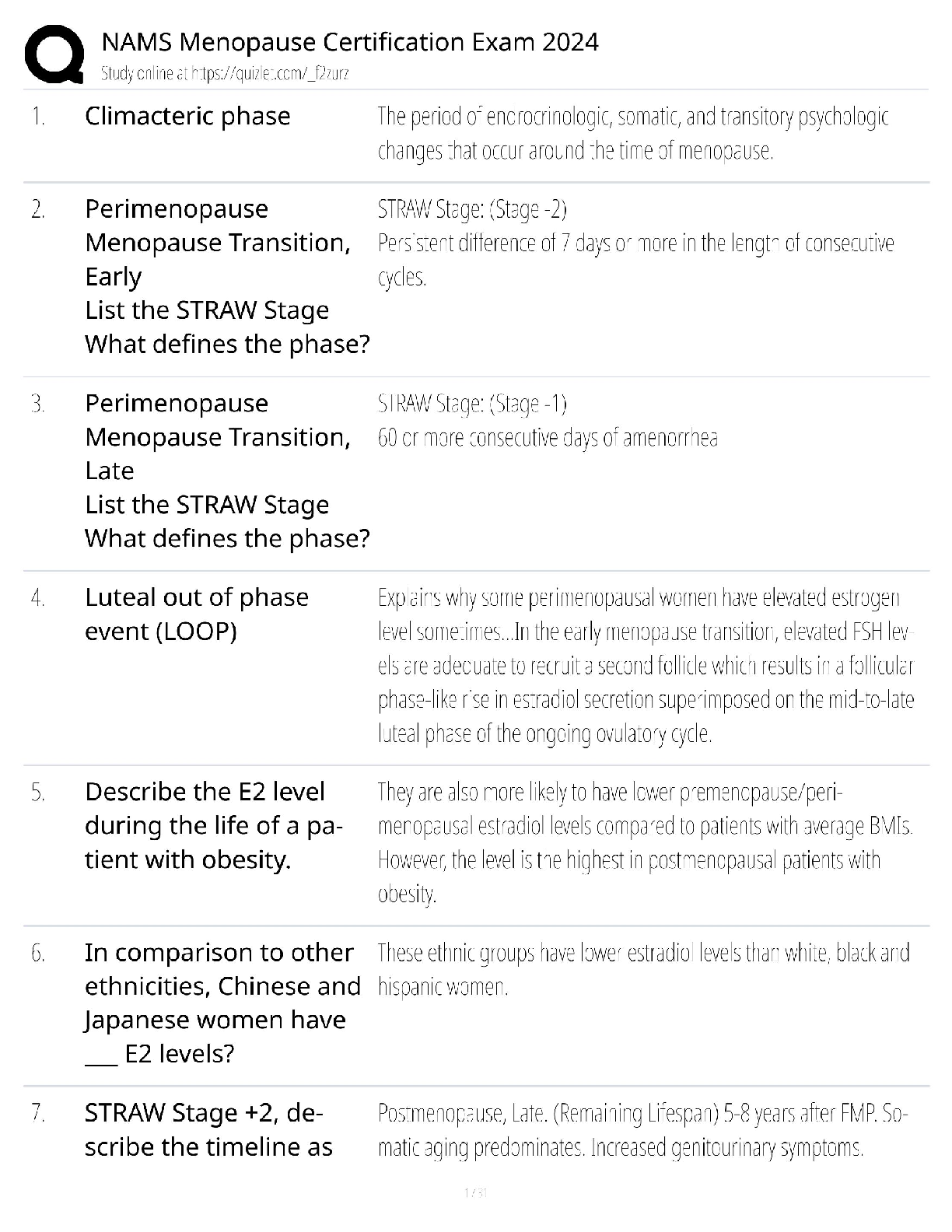
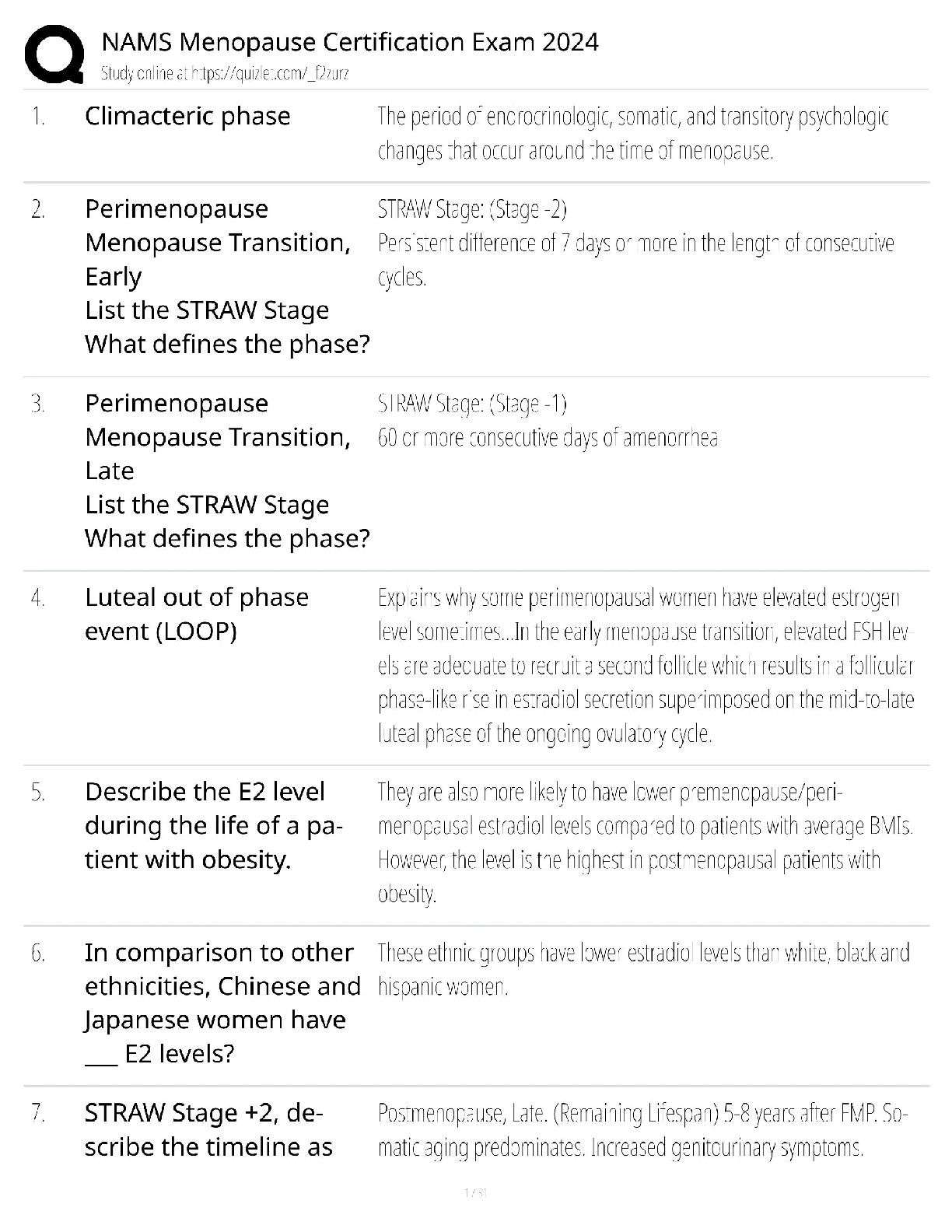
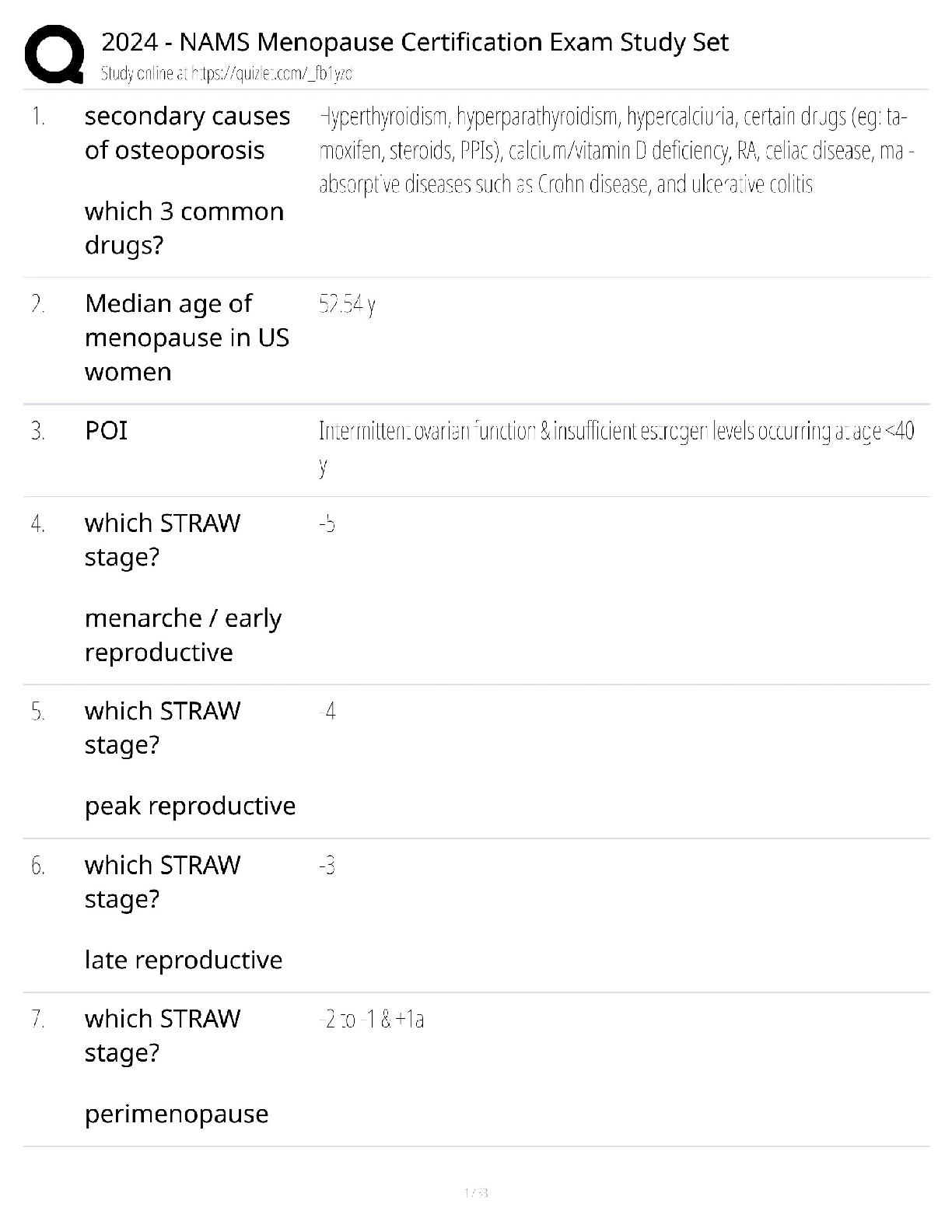
NAMs MENOPAUSE CERTIFICATION EXAM 2024 menopause - - can occur naturally any time between the ages of 40-60 (avg. 51) - age of menopause is influenced by genetics (age of mom = age of daughter) ... - smokers tend to experience menopause ~2 yrs earlier - partial hysterectomy (removal of uterus): 2-3 years earlier - total hysterectomy (removal of uterus and ovaries): immediate menopause - definite when woman has 12 months of amenorrhea hormonal changes in postmenopause - - FSH increases throughout late perimenopause and into menopause - FSH level is typically >25 IU/L near menopause - consistently low levels of estrogen and progesteroen - consistent high level of FSH natural menopause - - perimenopause: irregular periods before and 1 year after final menstrual period - menopause: 1 yr after last menstrual period disorders or induced menopause - - premature ovarian failure (POF): menopause prior to age 40, 1% of women experience premature menopause - surgery induced menopause: surgical removal of both ovaries (simple hysterectomry - uterus removed but >/= 1 ovary left) - chemotherapy or radiation induced menopause treatment goals - - short term: enhance quality of life, treat menopausal symptoms - long term: reduce morbidity and mortality associated with sex-steroid deficiency Climacteric phase - The period of endrocrinologic, somatic, and transitory psychologic changes that occur around the time of menopause. Early menopause - LMP before age 45 Late menopause - LMP after age 54 Primary ovarian insufficiency - Menopause that occurs before age 40 Early menopause transition (stage -2) - Persistent difference of 7 days or more in the length of consecutive cycles. Late menopause transition (stage -1) - 60 or more consecutive days of amenorrhea the climacteric - natural transition from reproductive life to non-reproductive life premature menopause - menopause reached at or under age 40, whether natural or induced perimenopause definition - approximately 2-6 years before and for 1 year after the final menses early menopause - natural or induced menopause that occurs well before the average age of natural menopause (51 yrs), at or under age 45 natural/spontaneous menopause - the final menstrual period, confirmed after 12 consecutive months of amenorrhea with no obvious pathologic cause early postmenopause - the time period withing 5 years after the final menstrual period (FMP) resulting from natural or induced menopause perimenopause - - ~90% of women have 4-8 years of menstrual cycle changes with heavier flow or longer duration before natural menopause occurs - onset menstrual irregularity - mean age 47.5 years - fluctuating concentrations of estrogen and progesterone - median length: 4-5 years before menopause - 1st sign - irregular vaginal bleeding symptoms of perimenopause - - irregular vaginal bleeding (rule out other causes, e.g. thyroid) - hot flashes - psychological issues (irritability, sleep disturbances, depression) - vulvovaginal atrophy (vaginal dryness, incontinence) and sexual dysfunction factors affecting onset of perimenopause - - early onset = smoking, nulliparity (never giving birth), pelvic radiation, chemo - late onset = multiparity (2 or more pregnancies), increased BMI - genetics affect early and late onset perimenopause treatment options - - non-pharmacologic therapy - combined contraceptives: very low dose oral contraceptives, vaginal ring (not well studied), 4-6x more potent than MHT, consider comorbidities and smoking status - progestin-only contraceptives: depo-provera, IUD - hormone therapy (MHT) clinical presentation of menopause - - vasomotor: hot flashes, night sweats, headache, palpitations, insomnia/sleep disturbance - genitourinary: vaginal dryness, dyspareunia (painful intercourse), UTI, urinary frequency, dysuria, urgency - other systemic: anxiety, irritability, and depression; fatigue, reduced sexual desire/arousal - up to 85% of women experience symptoms - 25% suffer severe menopausal symptoms - vasomotor symptoms last for average of 7 years three buckets of menopause - - vasomotor symptoms: hormone therapy - vulvovaginal symptoms: hormone therapy - psychological symptoms: anti-depressant hormone therapy terminology - - ET: estrogen therapy - EPT: combined estrogen-progestogen therapy - progestogen: encompassing both progesterone (natural) and progestins (synthetic) - MHT: menopausal hormone therapy (ET and EPT) - systemic ET/EPT: preparations of ET and EPT that have systemic and vaginal effects - local ET: preparations of ET that have predominantly vaginal, not systemic, effect estrogen options - - natural estrogen: estradiol, conjugated equine estrogen (CEE, horse urine) - synthetic estrogen: ethinyl estradiol (very low dose - 5 mcg), synthetic conjugated estrogen - administration: oral, topical (gel, cream, spray, emulsion), intravaginal (tablets, rings, cream, suppository) - prescription of compounded bioidentical products; worry about quality, purity and consistency vaginal administration - - Femring: reaches systemic concentrations - all other vaginal preparation are for local use progestogen - required to reduce endometrial hyperplasia and decrease risk of endometrial cancer in women with uterus continuous cycle (sequential) (EPT treatment approach) - - estrogen administered continuously (daily) - progestogen co-administered with the estrogen for at least 12 to 14 days of a 28 day cycle continuous combined (EPT treatment approach) - - continuous combined estrogen-progestogen administration - prevents monthly bleedings [Show More]
Last updated: 1 year ago
Preview 1 out of 19 pages
Buy this document to get the full access instantly
Instant Download Access after purchase
Buy NowInstant download
We Accept:
Can't find what you want? Try our AI powered Search
Connected school, study & course
About the document
Uploaded On
Mar 26, 2024
Number of pages
19
Written in
All
This document has been written for:
Uploaded
Mar 26, 2024
Downloads
0
Views
73
Scholarfriends.com Online Platform by Browsegrades Inc. 651N South Broad St, Middletown DE. United States.
We're available through e-mail, Twitter, and live chat.
FAQ
Questions? Leave a message!
Copyright © Scholarfriends · High quality services·