Counseling > EXAM > COUN 506 - WEEK 2 - EXAM 1 / Q and A GRADE A (All)
COUN 506 - WEEK 2 - EXAM 1 / Q and A GRADE A
Document Content and Description Below
Last updated: 3 years ago
Preview 1 out of 5 pages
Instant download

Buy this Document to get the Full Access Instantly
Provided by Students Who Aced it
We Verify Document Content to Gurantee Accuracy
Reviews( 0 )
Document information
Connected school, study & course
About the document
Uploaded On
Mar 06, 2021
Number of pages
5
Written in
All

Additional information
This document has been written for:
Uploaded
Mar 06, 2021
Downloads
0
Views
160
Topic Tags
Recommended For You
Get more on EXAM »
COUN 506 - WEEK 2 - EXAM 1 GRADED A 2020_ 2021(Download to sco...

COUN 506 - WEEK 2 - EXAM 1_2020 | COUN506 - WEEK 2 - EXAM 1_10...

COUN506 / COUN 506 EXAM 4 Attempt Score 100 out of 100 points

COUN506 EXAM 2 / Liberty University CEFS 506 Final Exam 2: Att...
COUN506 EXAM 2 / Liberty University CEFS 506 Final Exam 2: Att...
COUN506 EXAM 2 / Liberty University CEFS 506 Final Exam 2: Att...
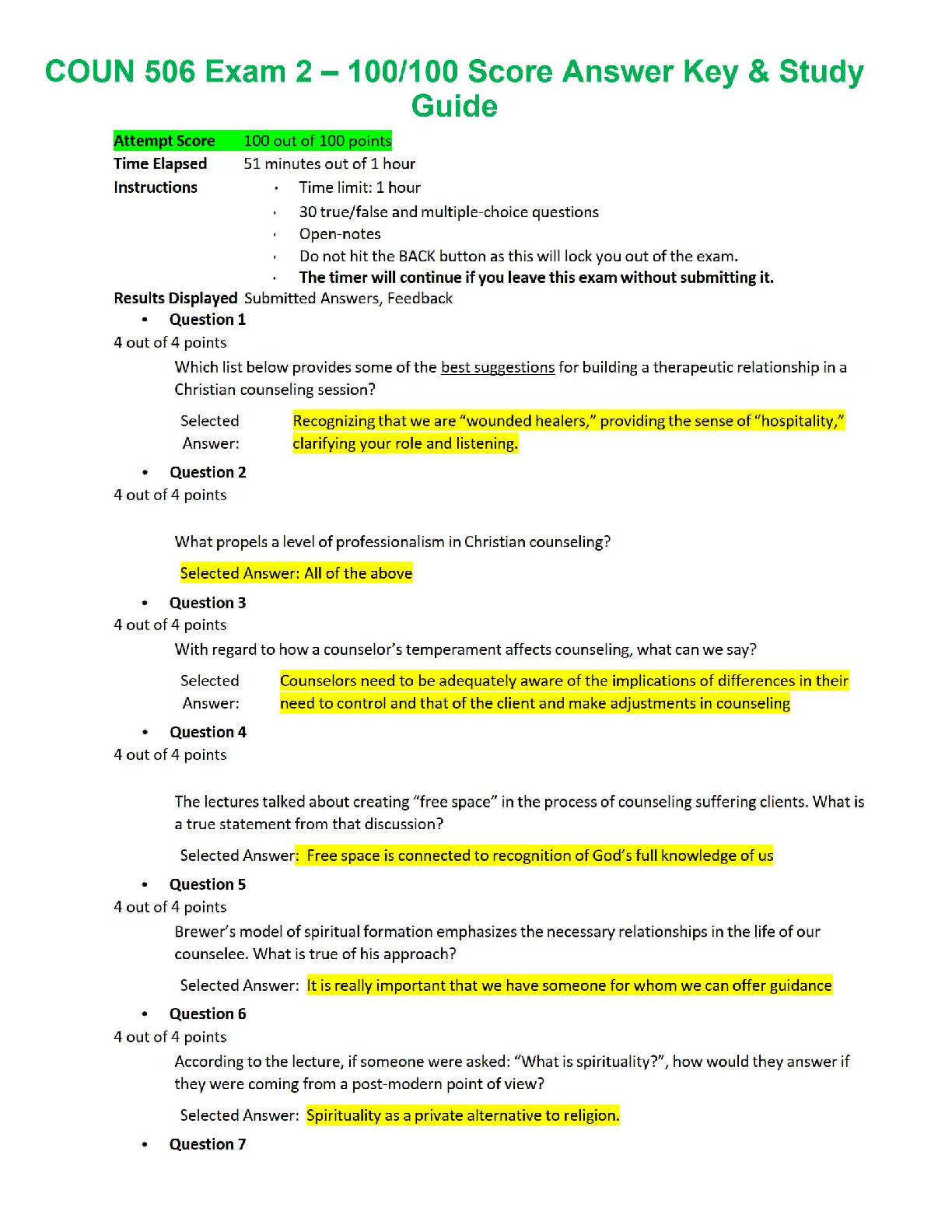
📚 COUN 506 Exam 2 – 100/100 Score Answer Key & Study Guide 📚

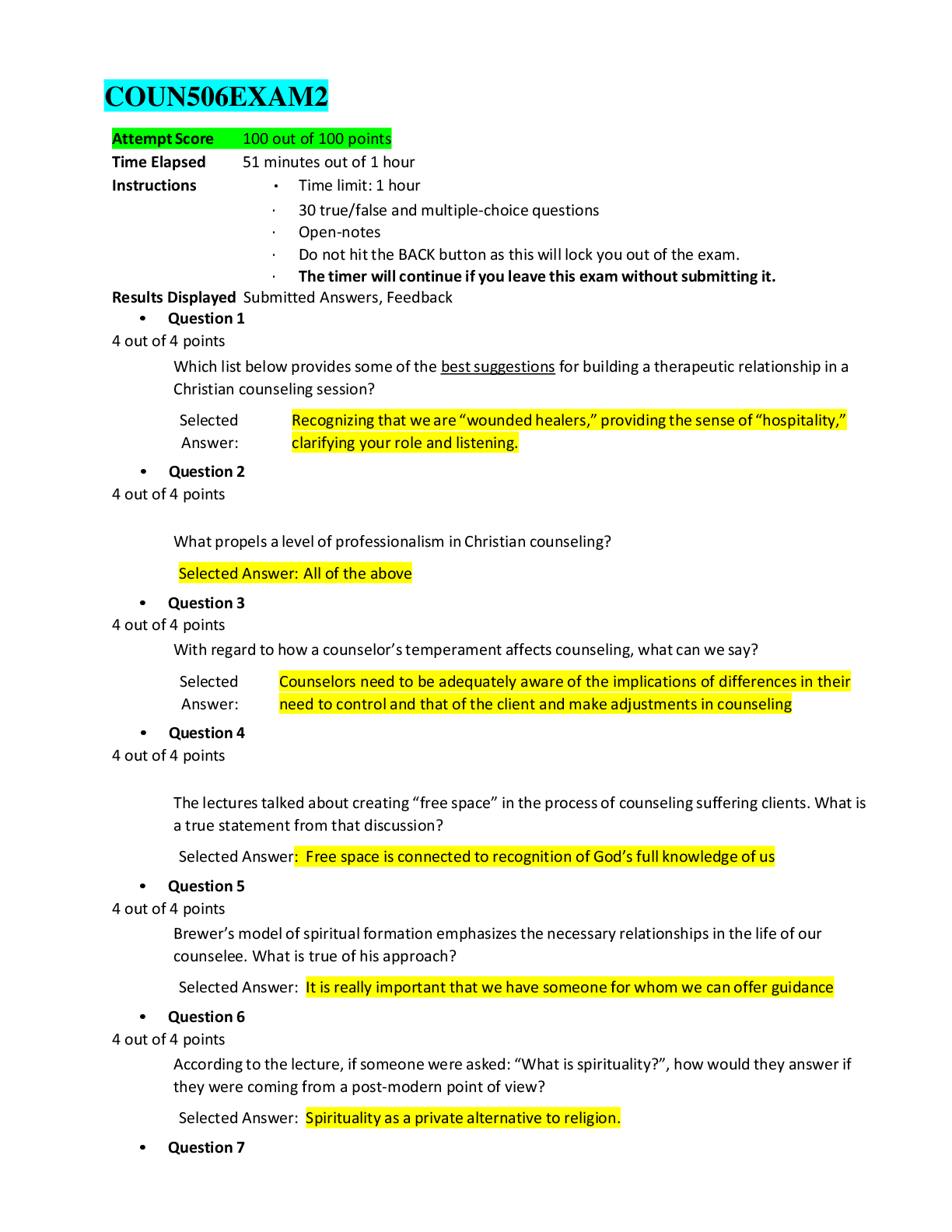
COUN506EXAM2 Attempt Score 100 out of 100 points Time Elapsed...
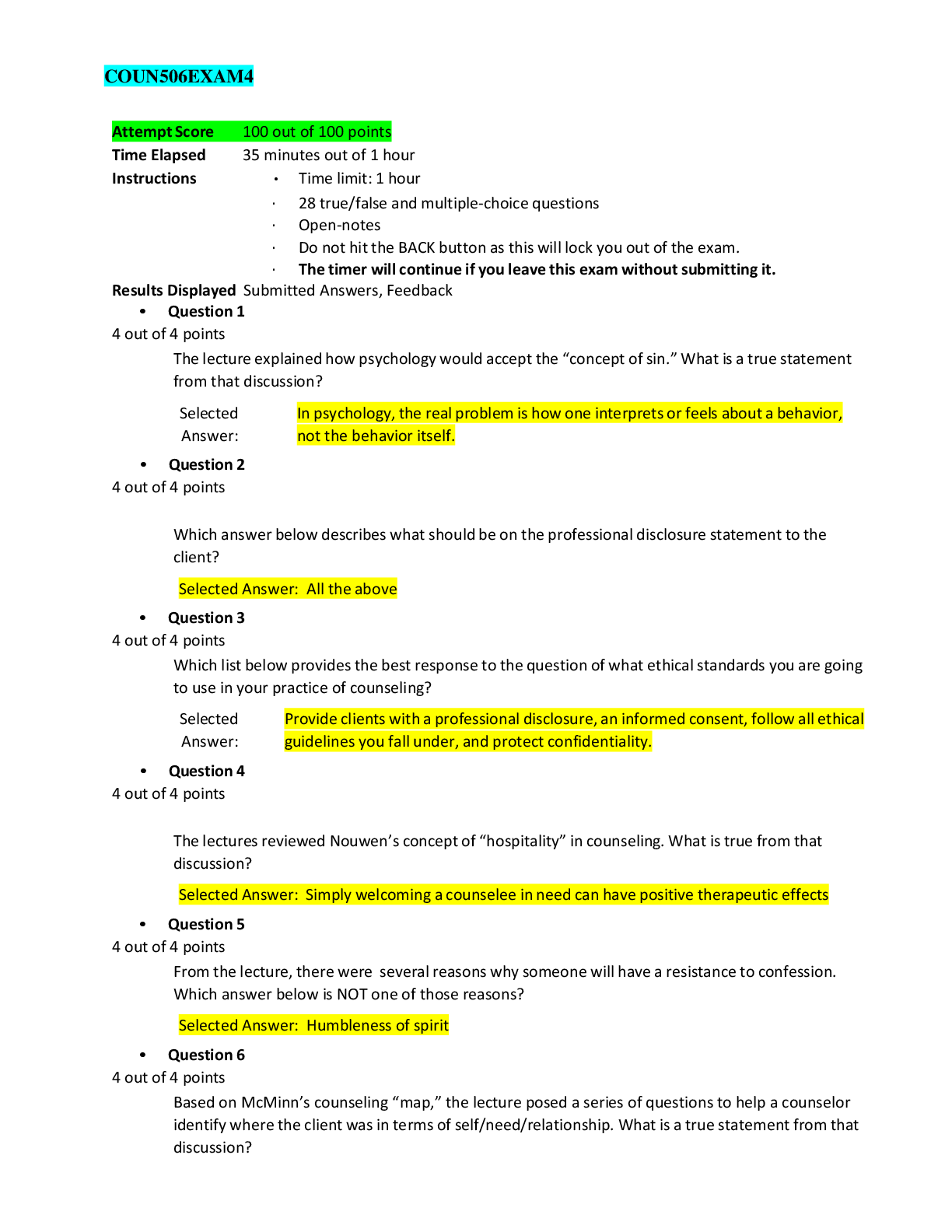
COUN506EXAM4 Attempt Score 100 out of 100 points Time Elapsed...

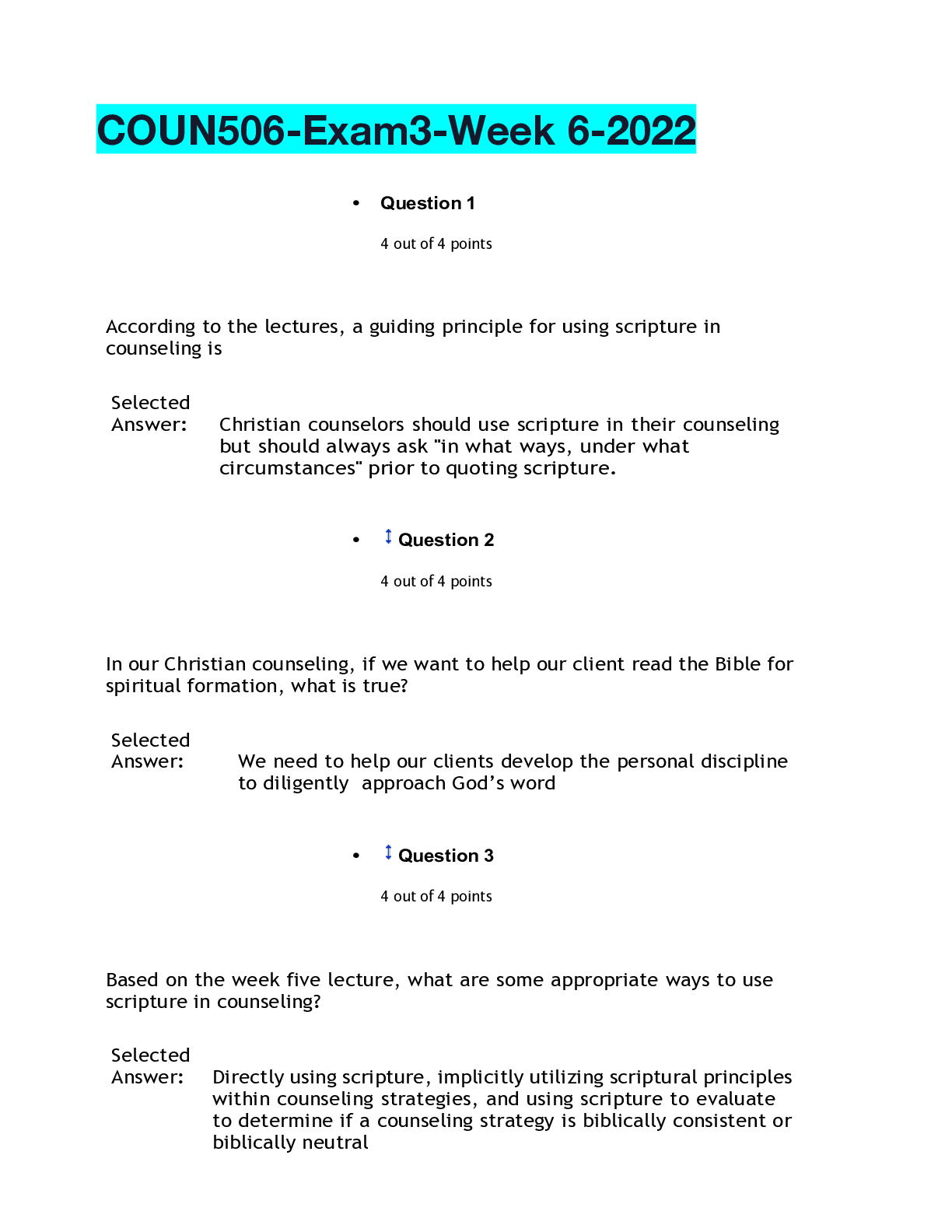
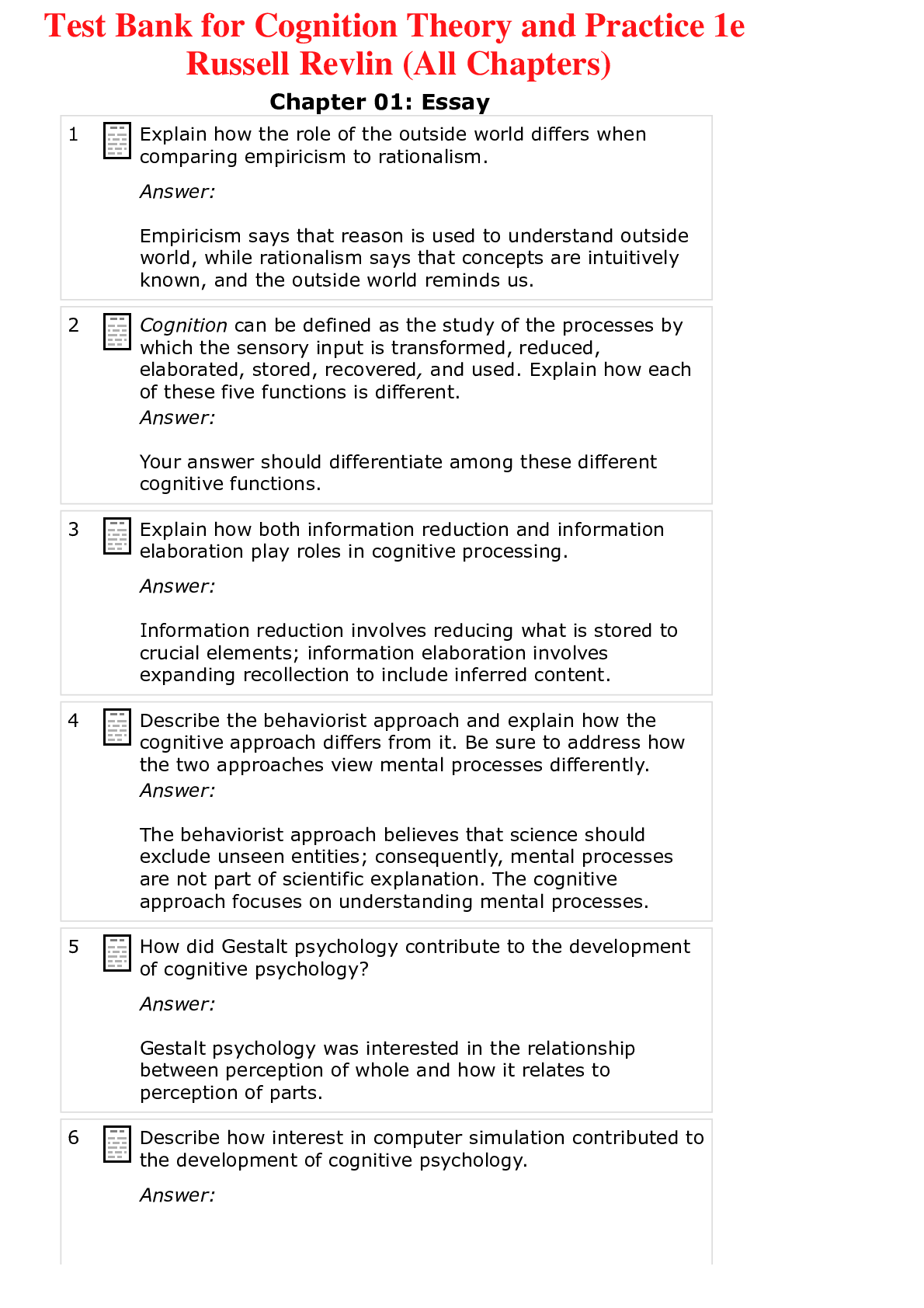
Cognition Theory and Practice 1st Edition Russell Revlin | Tes...
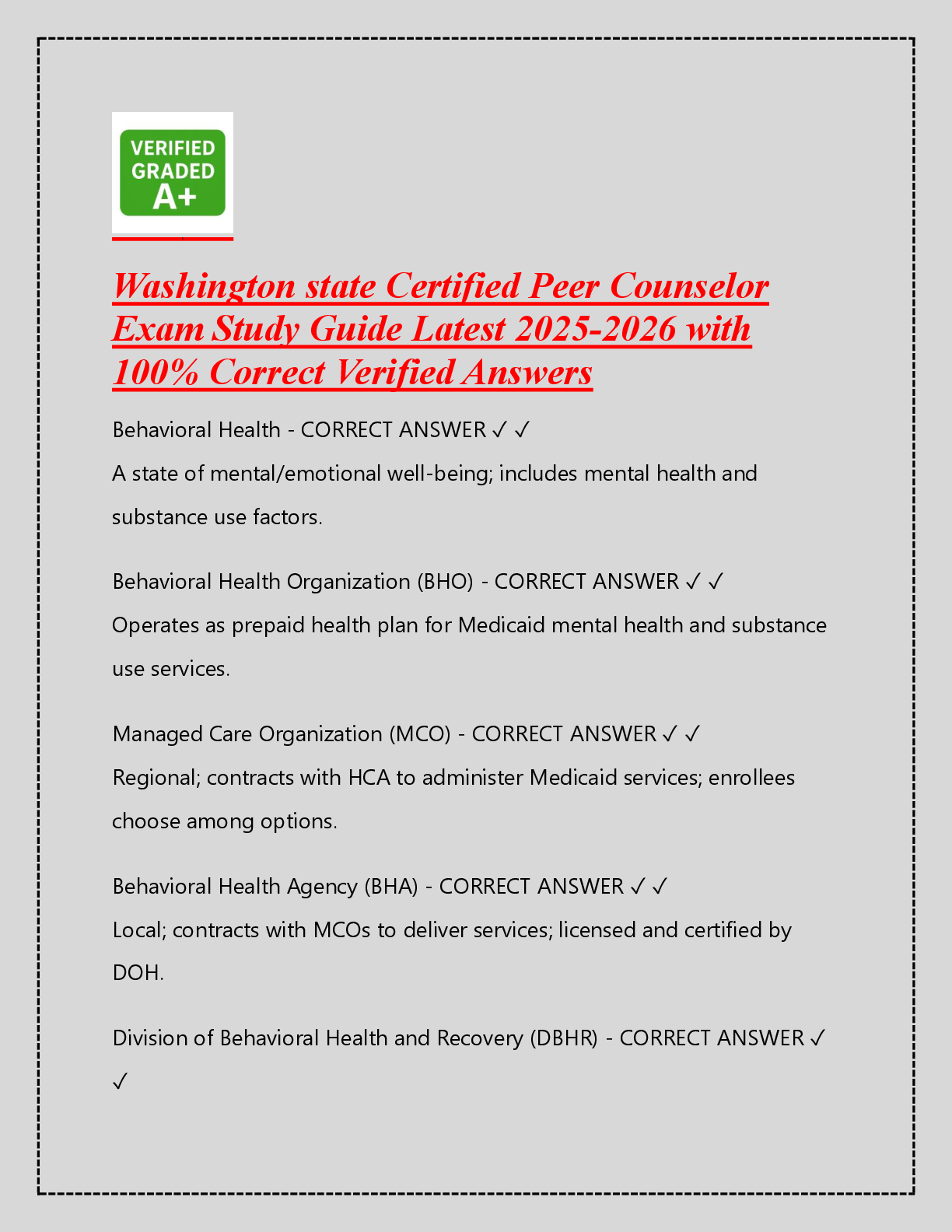
Assessment Procedures for Counselors and Helping Professionals...
Contemporary Business 2nd Canadian Edition By Louis Boone, Dav...

.png)
.png)
![Preview of NURS 6665 MIDTERM EXAM 2022 [100% correct answers & explanation]](https://scholarfriends.com/storage/NURS 6665 Midterm Exam Solutions.png)
_removed.png)
 (1)_removed.png)