NURSING > MED-SURG EXAM > NURSING 101 exam1 med / ADVANCE Q AND A GRADE A (All)
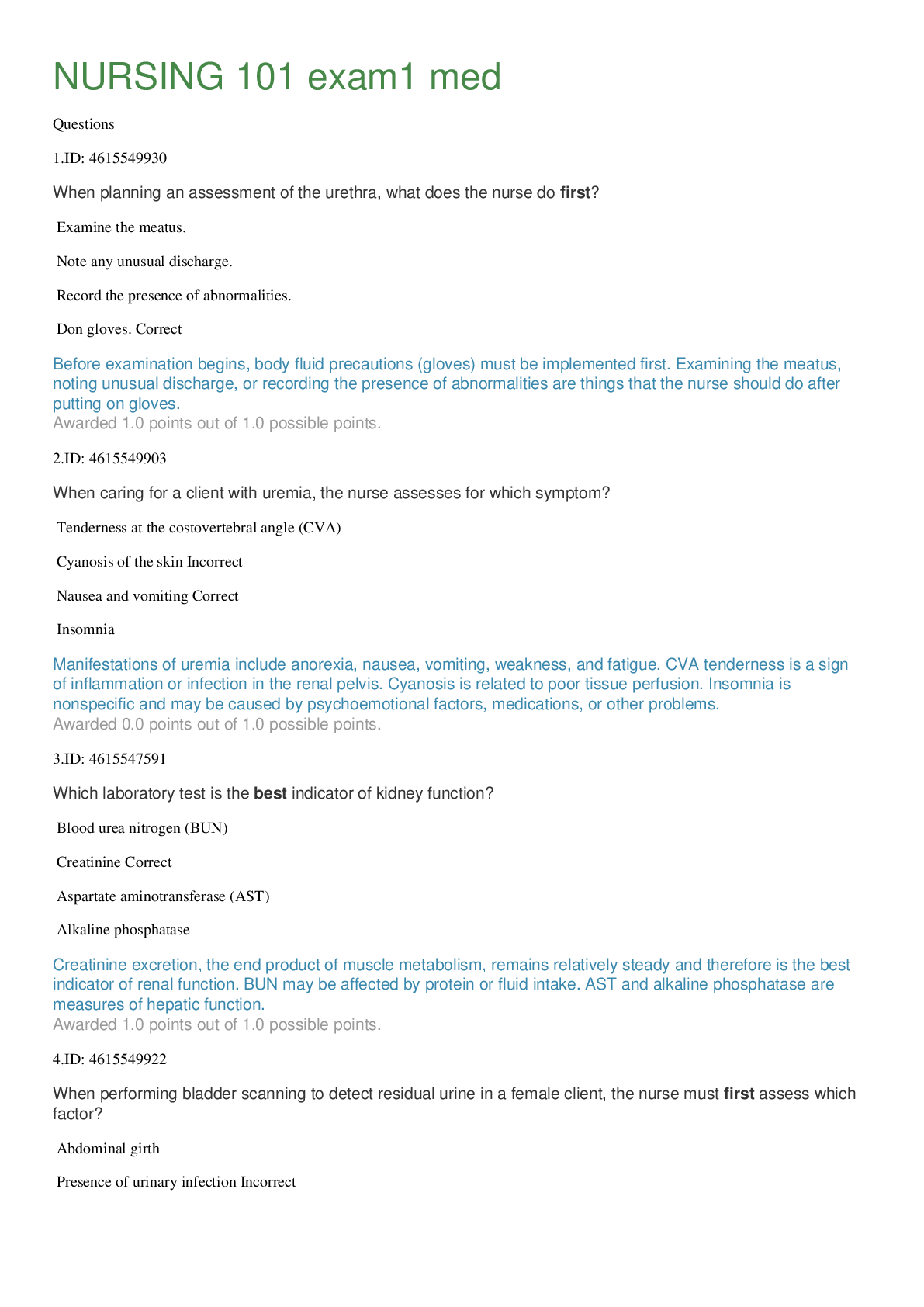
NURSING 101 exam1 med / ADVANCE Q AND A GRADE A
Document Content and Description Below
Last updated: 3 years ago
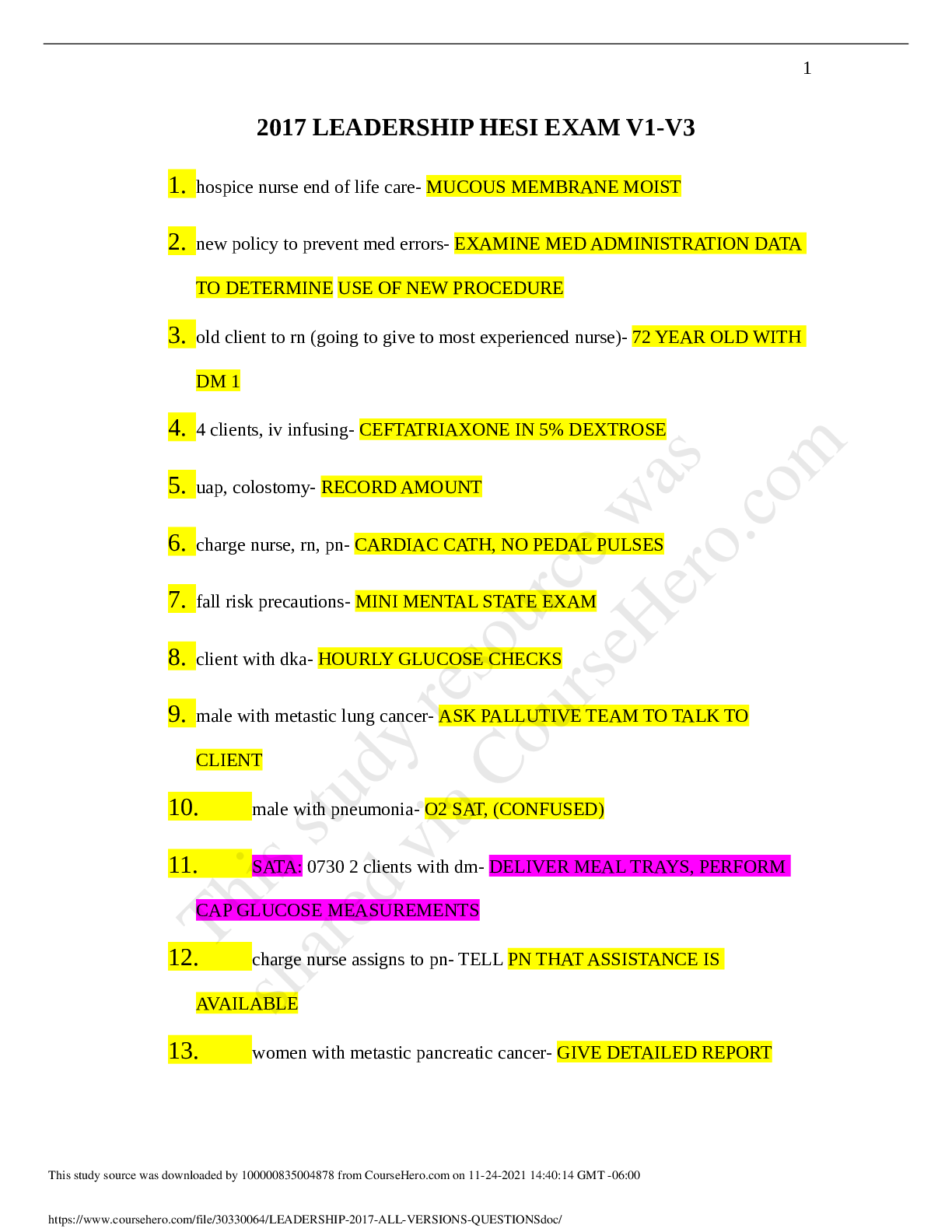
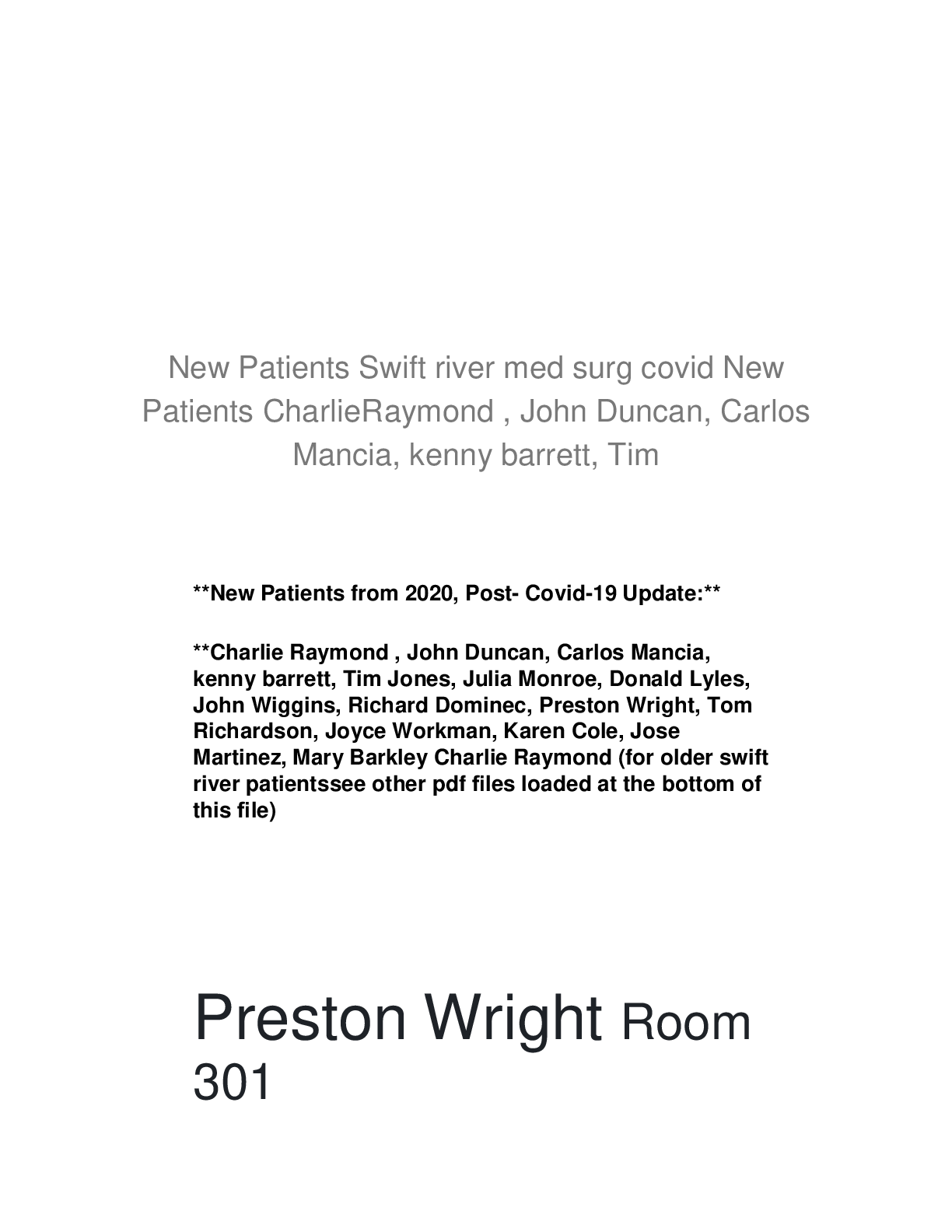
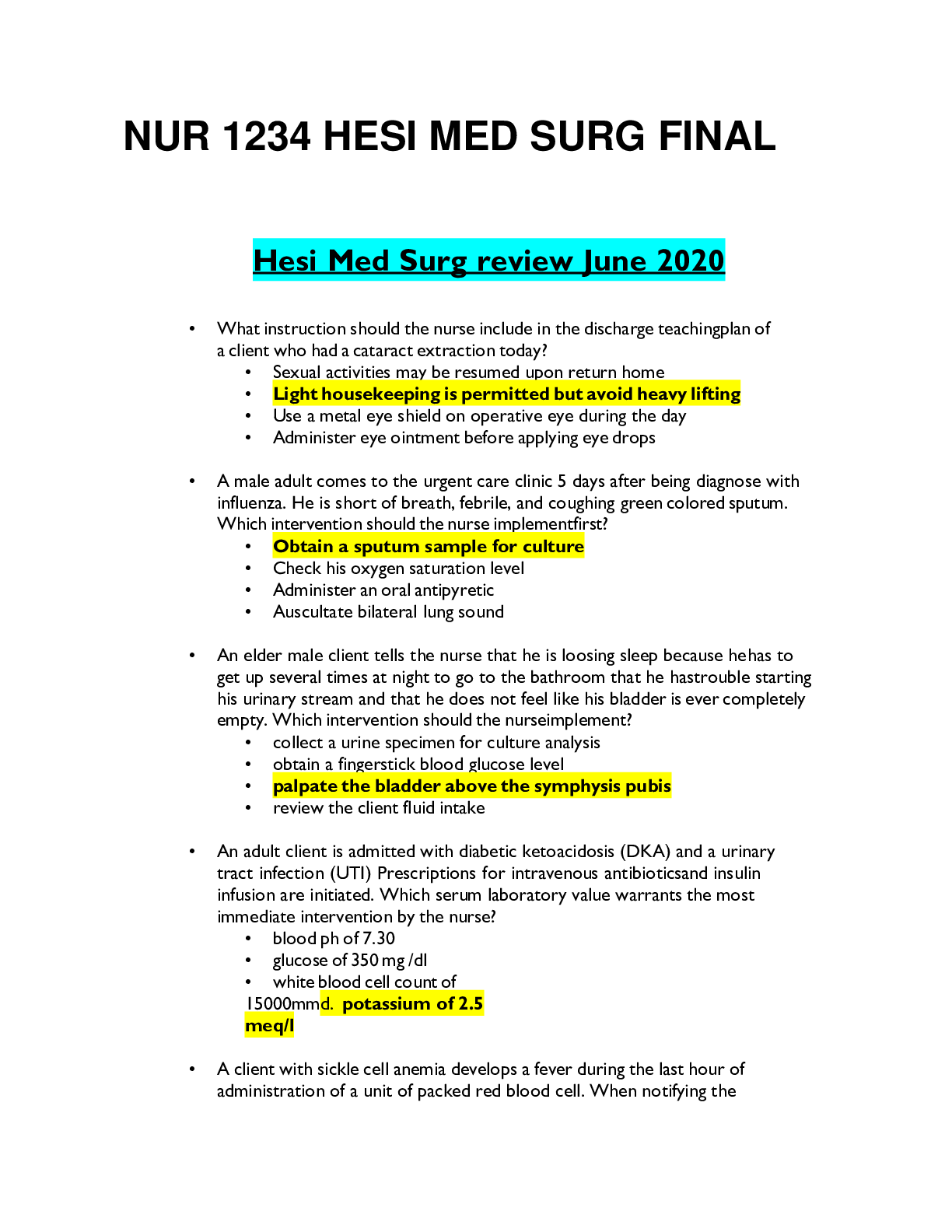
Preview 1 out of 37 pages
Instant download
Buy this Document to get the Full Access Instantly
Provided by Students Who Aced it
We Verify Document Content to Gurantee Accuracy
Reviews( 0 )
Document information
Connected school, study & course
About the document
Uploaded On
Mar 06, 2021
Number of pages
37
Written in
All

Additional information
This document has been written for:
Uploaded
Mar 06, 2021
Downloads
0
Views
227
Topic Tags
Recommended For You
Get more on MED-SURG EXAM »

TestBank-Perry-Maternal-Child-Nursing-Care-6th-2017 Lehman Col...

Nursing 101 Nursing Leadership and Management Test bank
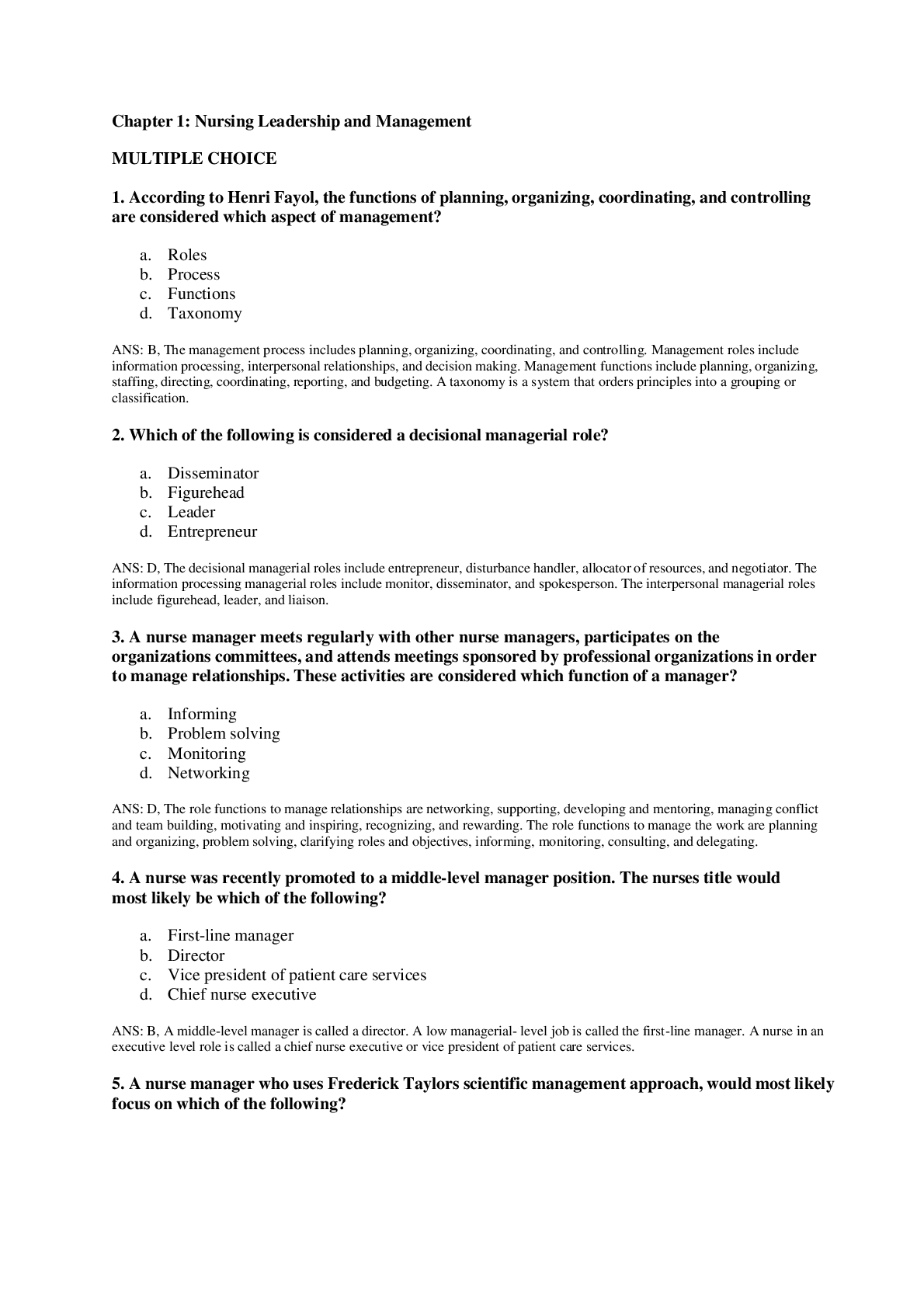
Chamberlain College of Nursing>Essentials of Nursing Leadershi...
NURSING 101 TEST BANK Perry-Maternal-Child-Nursing-Care 6TH ED...
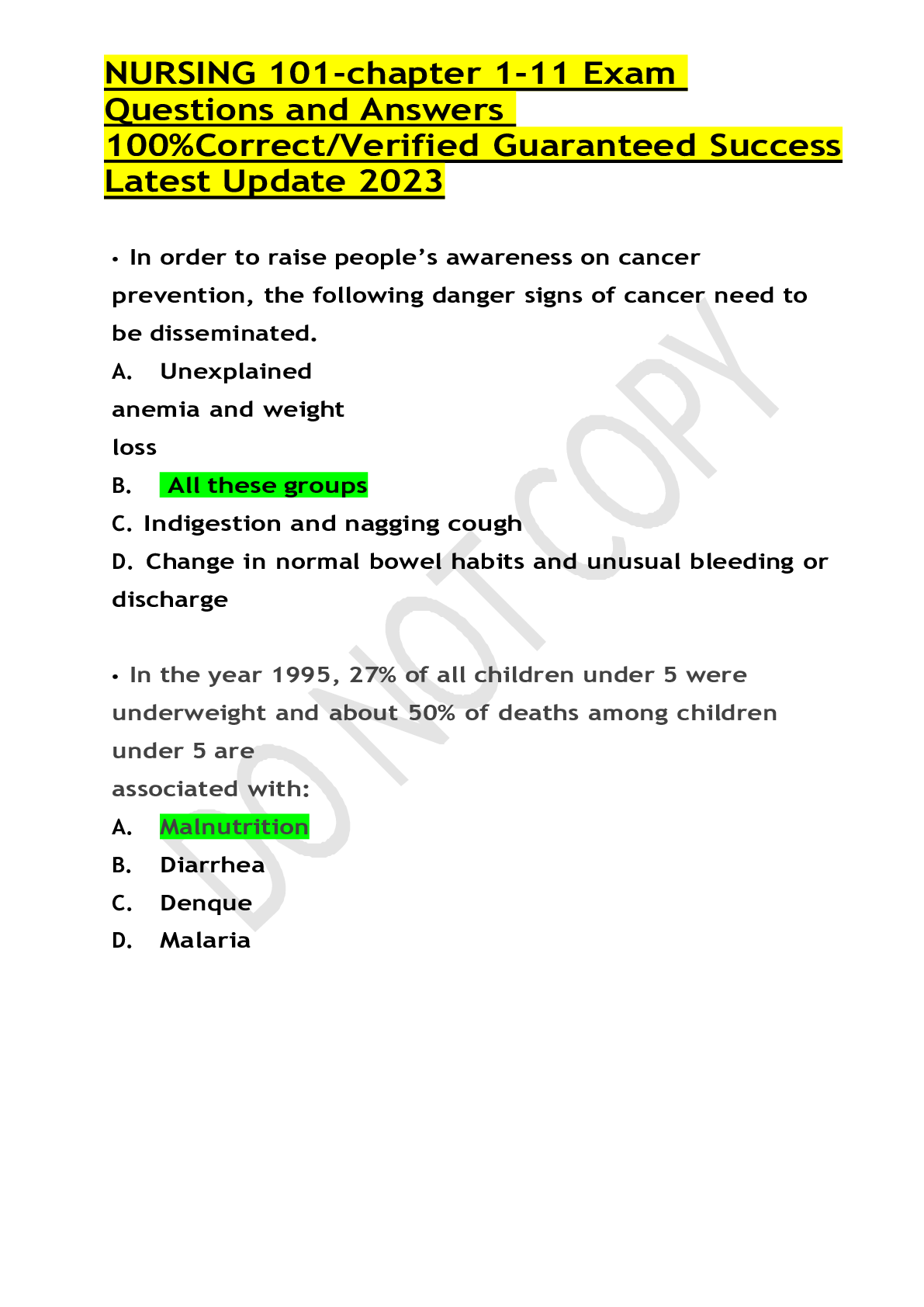
NURSING 101-chapter 1-11 Exam Questions and Answers 100%Correc...
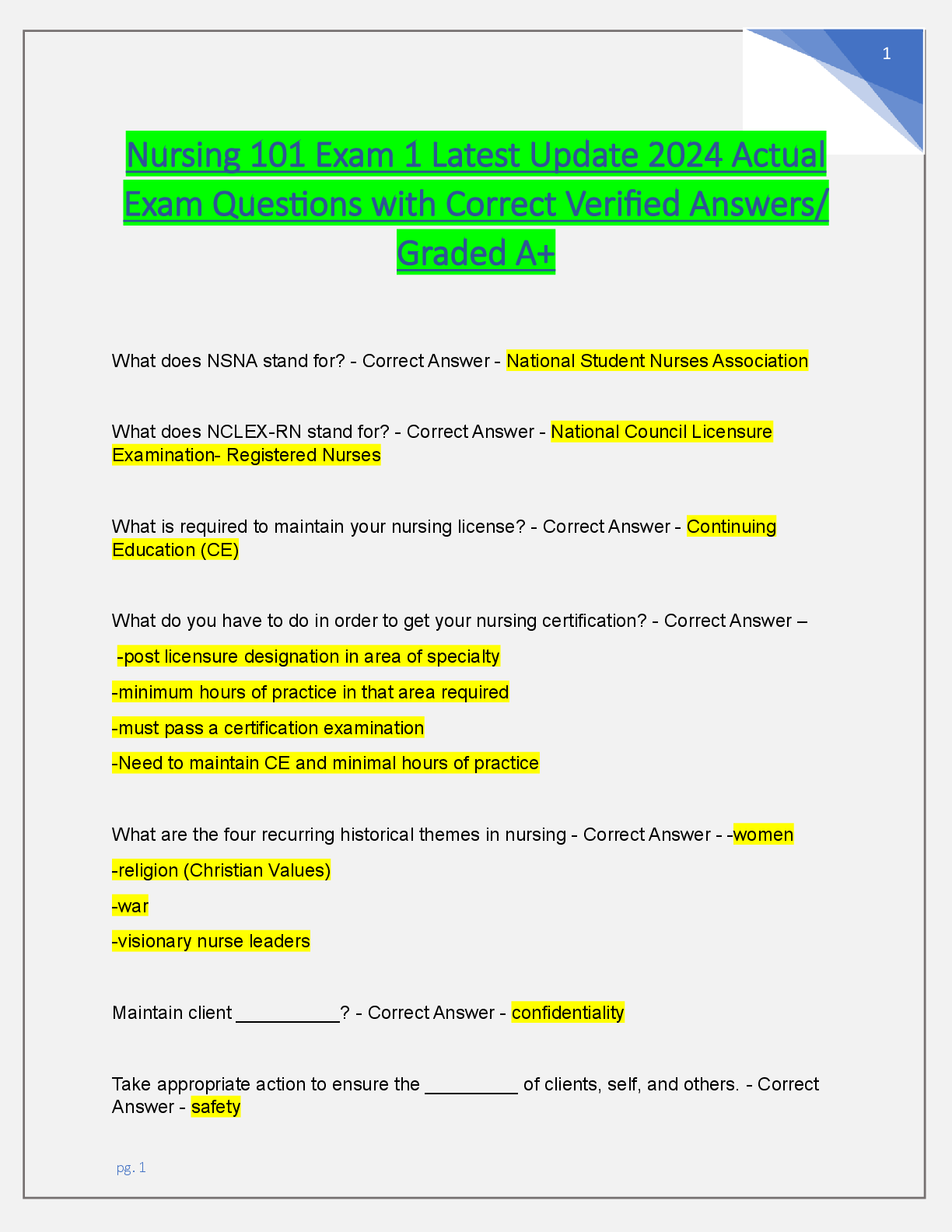
Nursing 101 Exam 1 Latest Update 2024 Actual Exam Questions wi...

VATI Pharmacology Remediation|complete latest solution guide;...

Nursing 101 - Fundamental Saunders 206; latest 2020 complete a...
NURSING 101 Enjoy Psychiatric Mental Health- Varcarolis Questi...
 (1).png)
ATI Comprehensive Practice Exam B Focused Review_NURSING 101_...
.png)
Bryant & Stratton College NURSING 101 ATI Comprehensive Practi...

NURSING 101 - Complete Hurst Packet; Latest updated solution g...
Western Nevada College NURSING 101 Enjoy Psychiatric Mental He...

NURSING 101Pharmacology Proctored ATI Study Guide.BEST REVISIO...
NURSING 101 - Pharmacology Proctored ATI Study Guide ASSURED G...


.png)