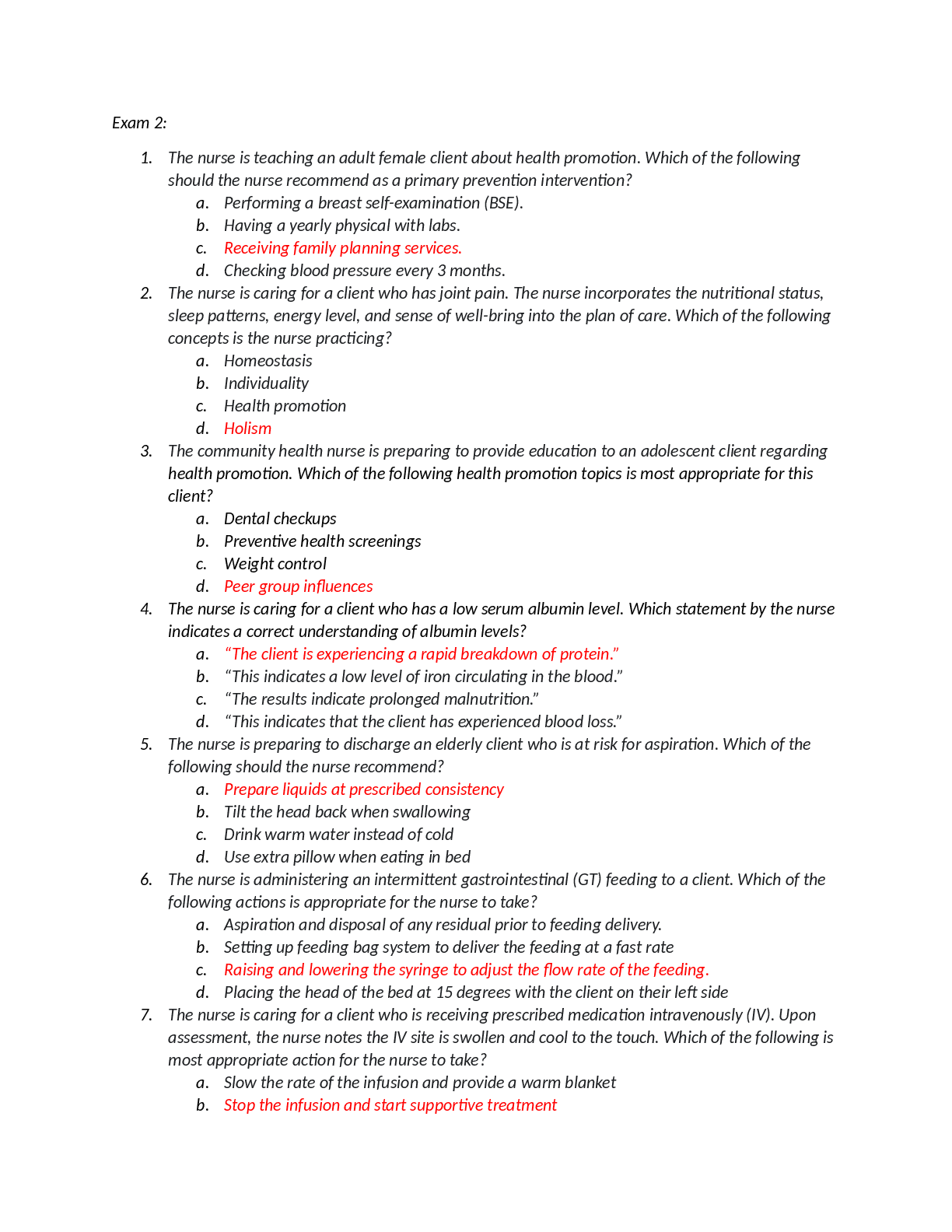
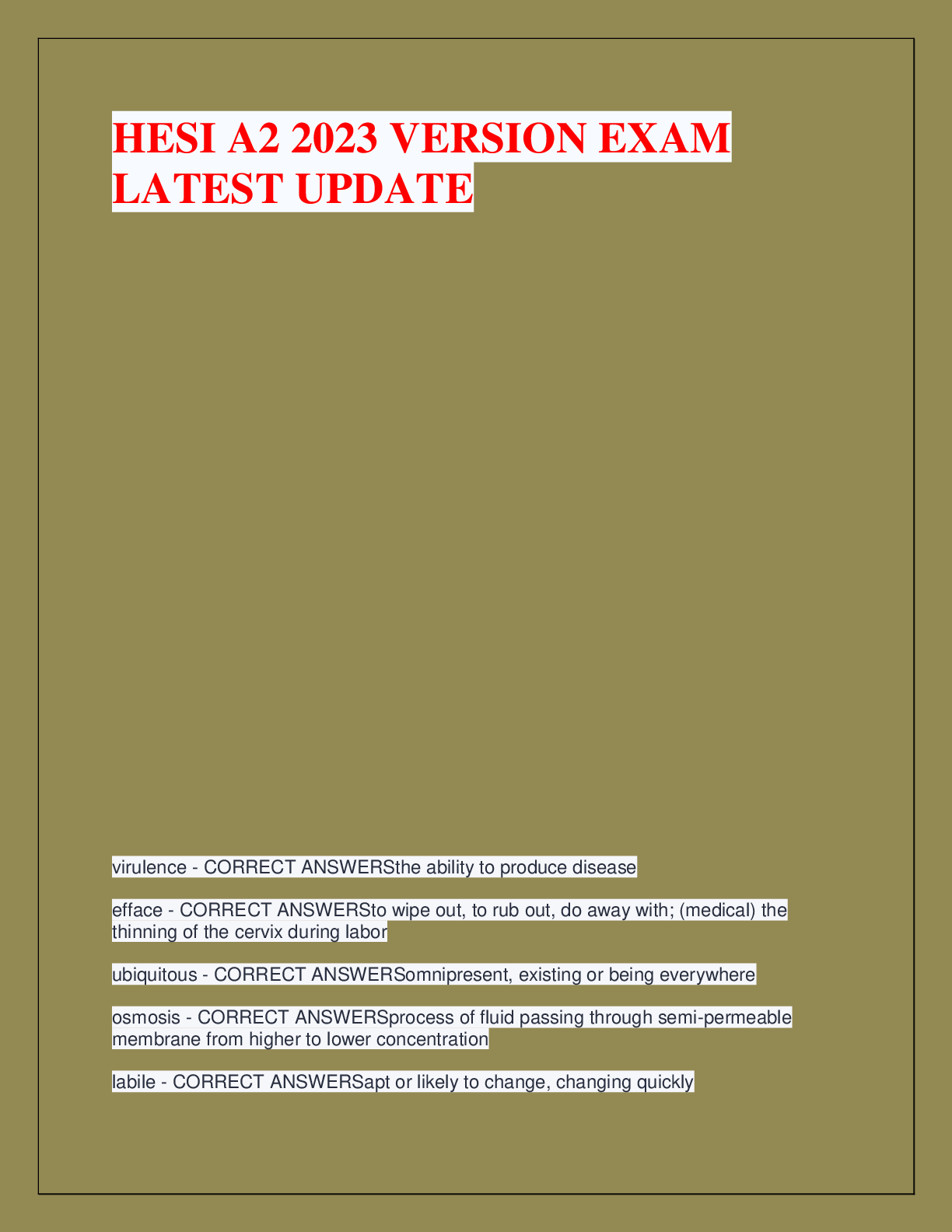
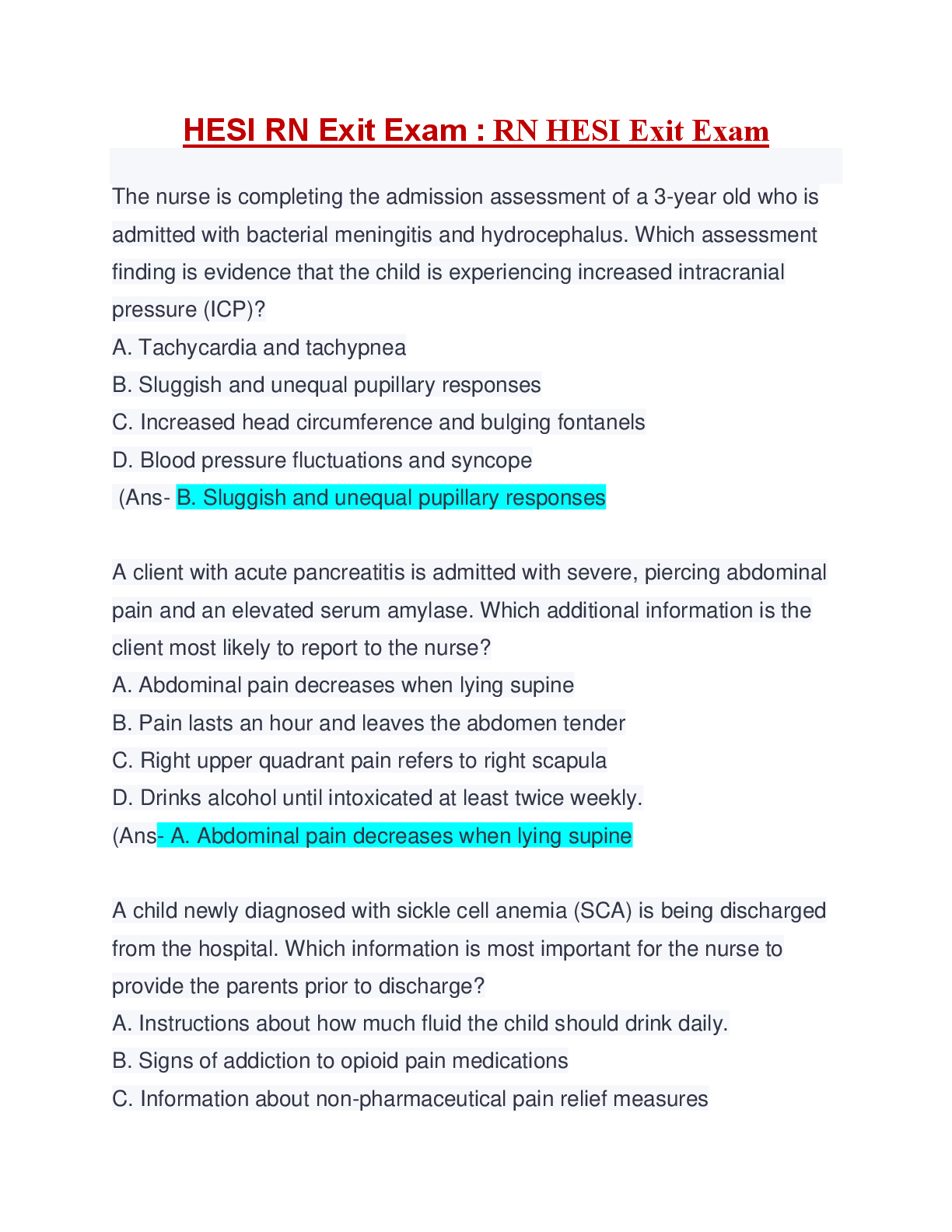
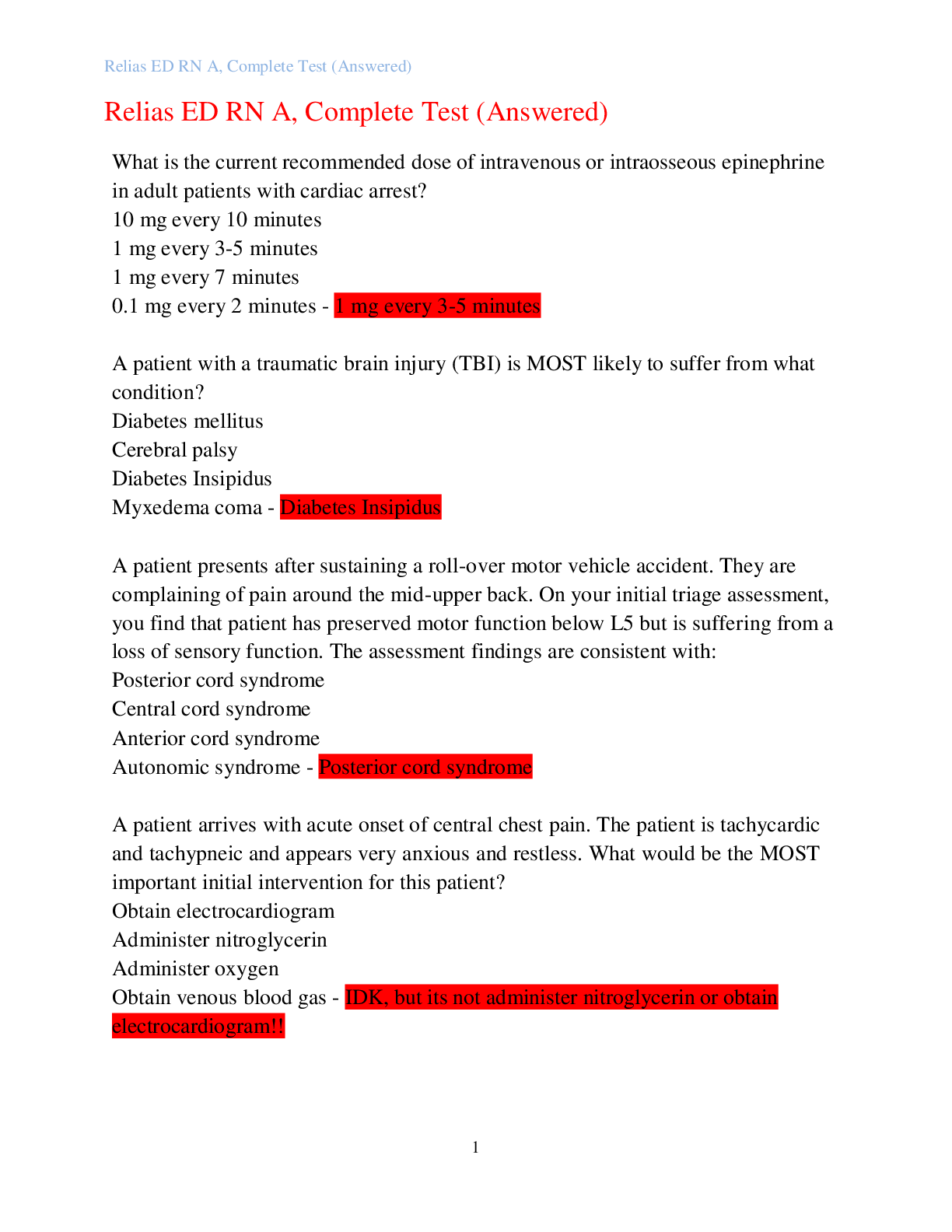
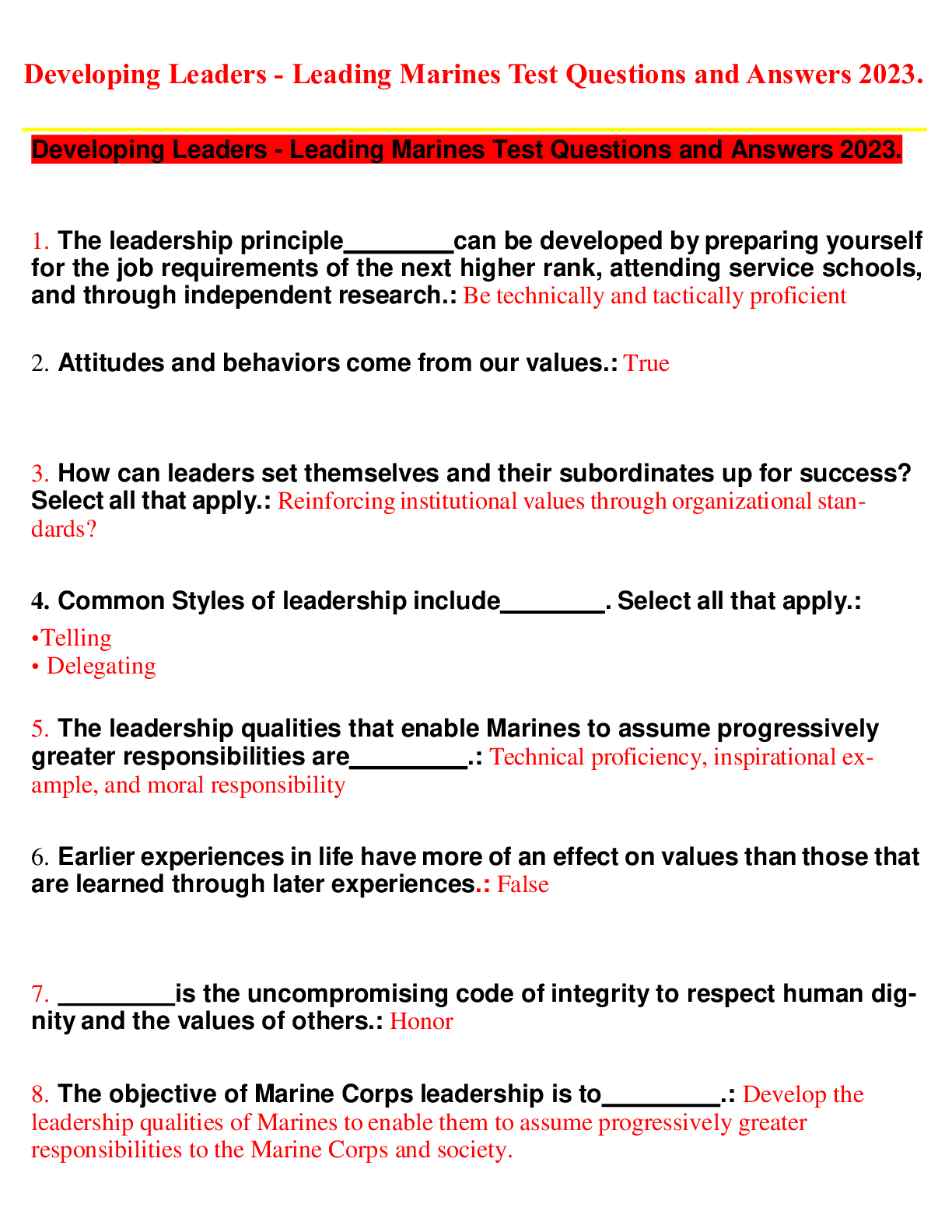
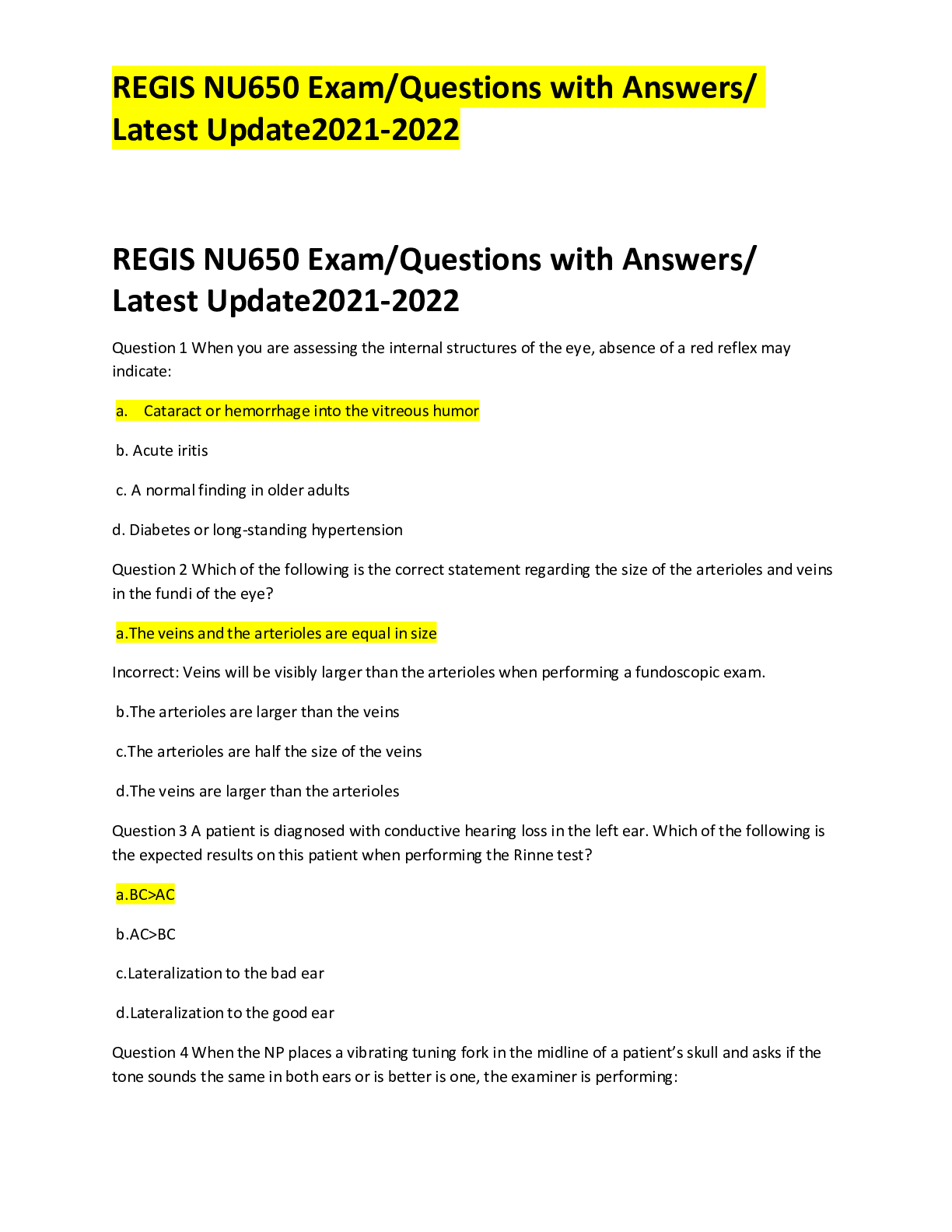
• A male client reports dysuria, nocturia, and difficulty starting the urinary stream. A cystoscopy and biopsy of the prostate gland have been scheduled. After the procedure the client reports an in ... ability to void. What should the nurse do? Rationale: Palpate above the pubic symphysis A full bladder is palpable with urinary retention and distention, which are common problems after a cystoscopy because of urethral edema. Fluids dilute the urine and reduce the chance of infection after cystoscopy and should not be limited. Although urinary retention can occur, it is not expected; the nurse must assess the extent of bladder distention and discomfort. More conservative nursing methods, such as running water or placing a warm cloth over the perineum, should be attempted to precipitate voiding; catheterization carries a risk of infection. • A nurse is obtaining a health history from the mother of a 15-month-old toddler with celiac disease. The nurse expects the mother to indicate what about her toddler? Rationale: Has bulky, foul, frothy stools Steatorrhea (fatty, foul-smelling, frothy, bulky stools) occurs with celiac disease because of an intolerance to gluten; toxic substances, which can damage the intestinal mucosal cells, accumulate and cause diarrhea. Drinking large amounts of fluid is a response to dehydration. With celiac disease some thirst may occur, but it is not continuous. Although infants with celiac disease are irritable, this sign is too vague for accurate evaluation. Irritability is symptomatic of a variety of problems, ranging from cutting of teeth to leukemia. Concentrated urine is associated with a urinary tract infection or dehydration; this sign is too vague to permit accurate evaluation. • A client with an ileal conduit is being prepared for discharge. As part of the discharge teaching, what does the nurse instruct the client to do? Rationale: Maintain fluid intake of at least 2L daily High-fluid intake flushes the ileal conduit and prevents infection and obstruction caused by mucus or uric acid crystals. Alcohol is not contraindicated with an ileal conduit. Notifying the health care provider if the stoma size decreases is expected; as edema decreases, the stoma will become smaller. Soap and water on the peristomal area help prevent irritation from waste products. • A client is scheduled for a transurethral resection of the prostate (TURP). Which statement made by the client most indicates the need for further preoperative teaching? Rationale: "My incision will probably be painful" [Show More]
Last updated: 1 year ago
Preview 1 out of 65 pages
Buy this document to get the full access instantly
Instant Download Access after purchase
Buy NowInstant download
We Accept:
Can't find what you want? Try our AI powered Search
Connected school, study & course
About the document
Uploaded On
Apr 09, 2024
Number of pages
65
Written in
All
This document has been written for:
Uploaded
Apr 09, 2024
Downloads
0
Views
34
Scholarfriends.com Online Platform by Browsegrades Inc. 651N South Broad St, Middletown DE. United States.
We're available through e-mail, Twitter, and live chat.
FAQ
Questions? Leave a message!
Copyright © Scholarfriends · High quality services·