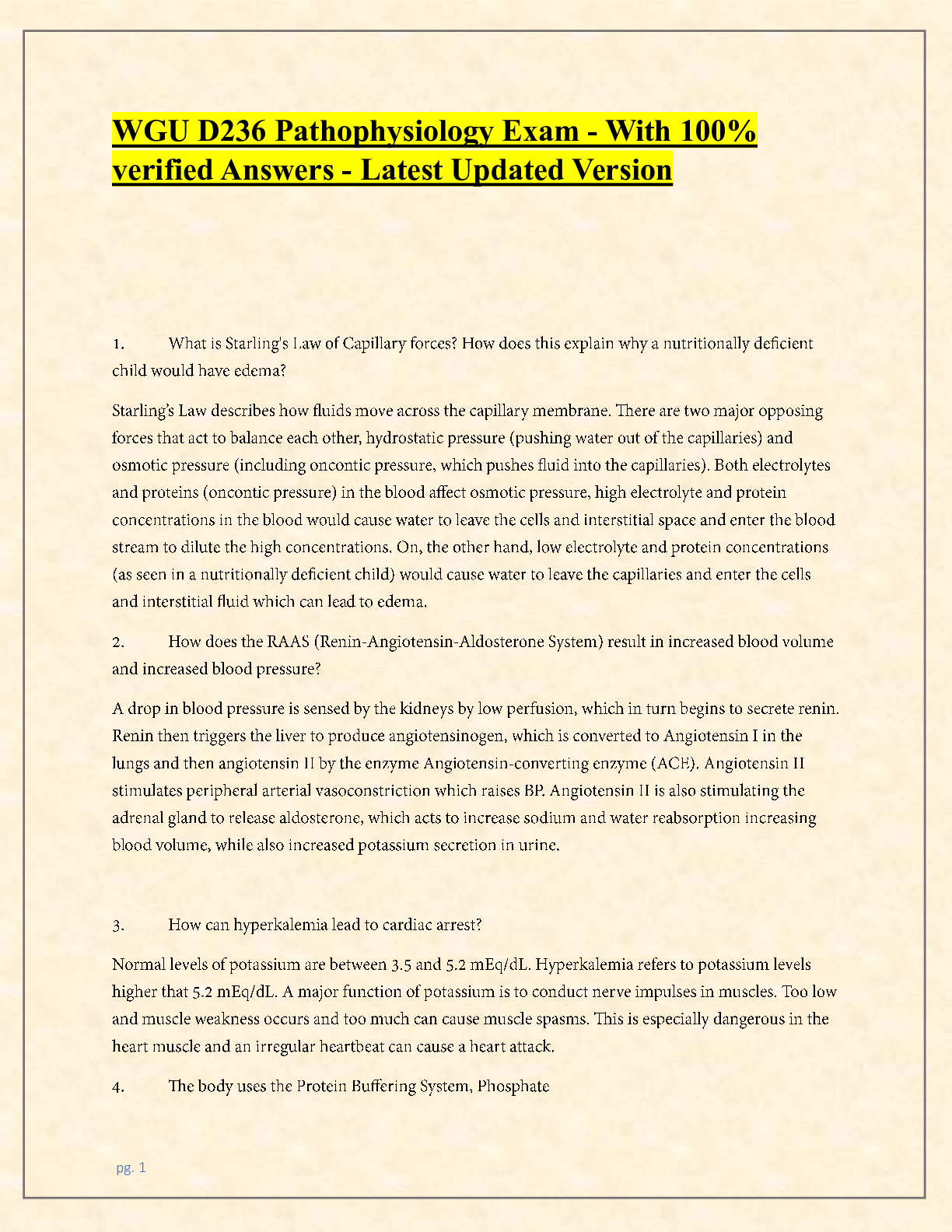
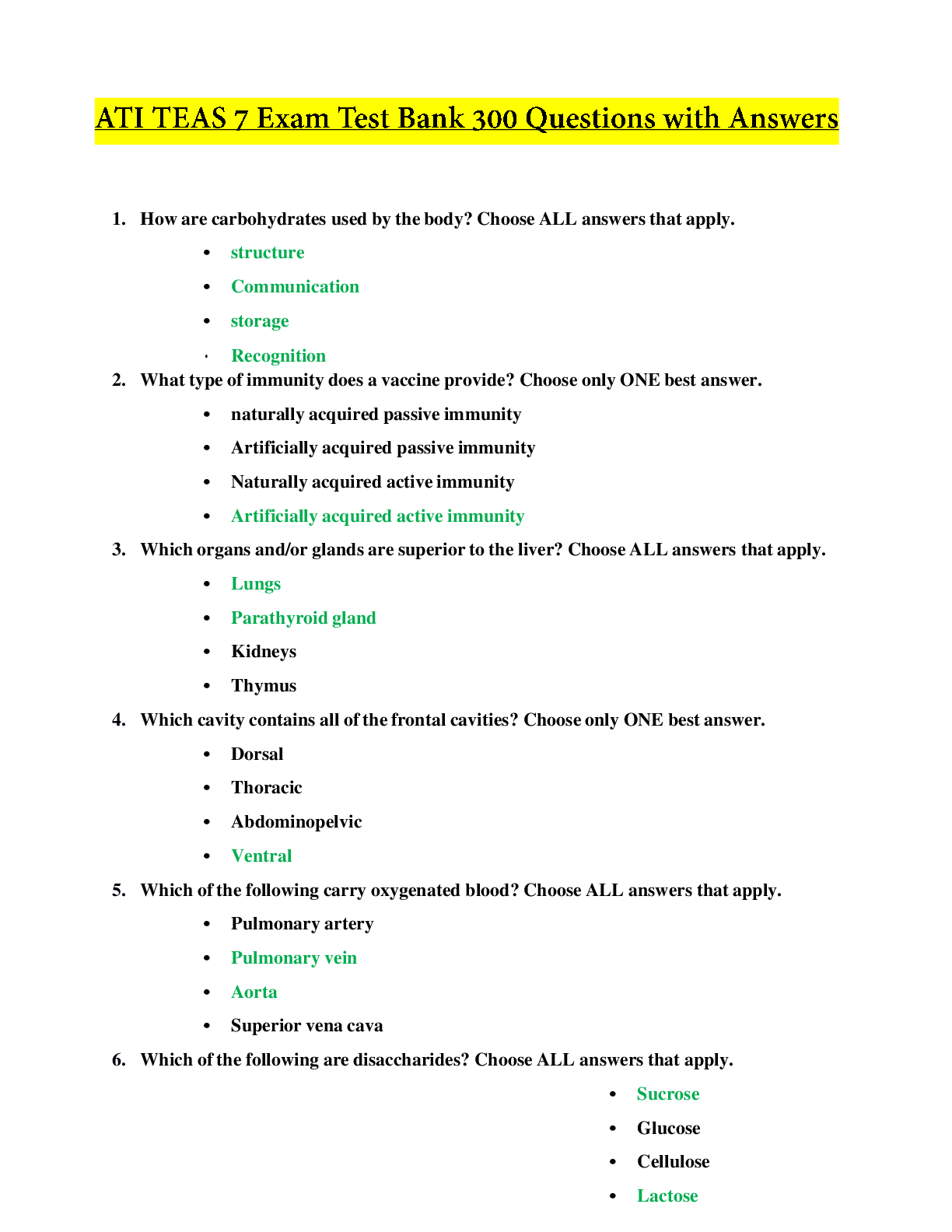
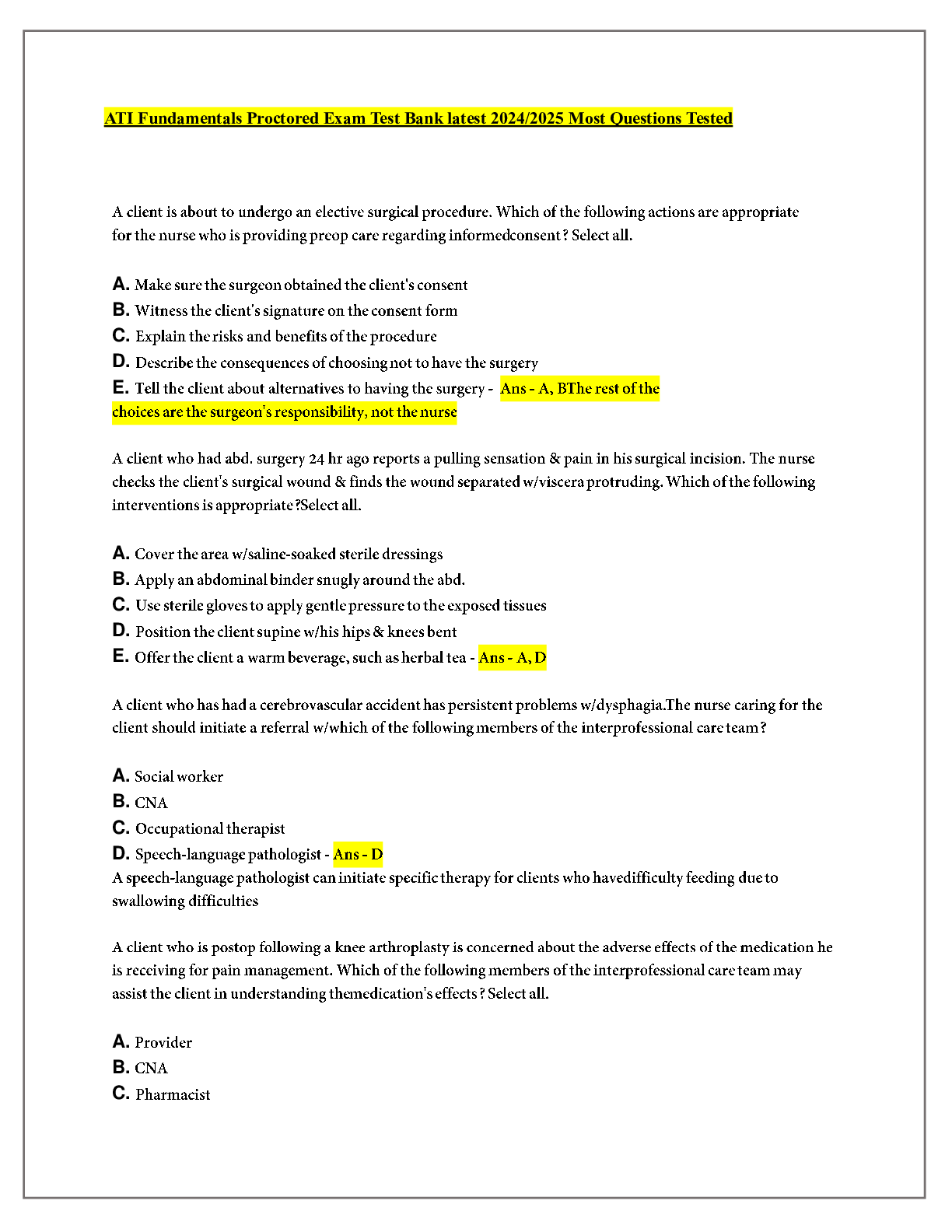
WGU D236 Pathophysiology pre-test |
100% Correct Answers | Verified | Latest
2024 Version
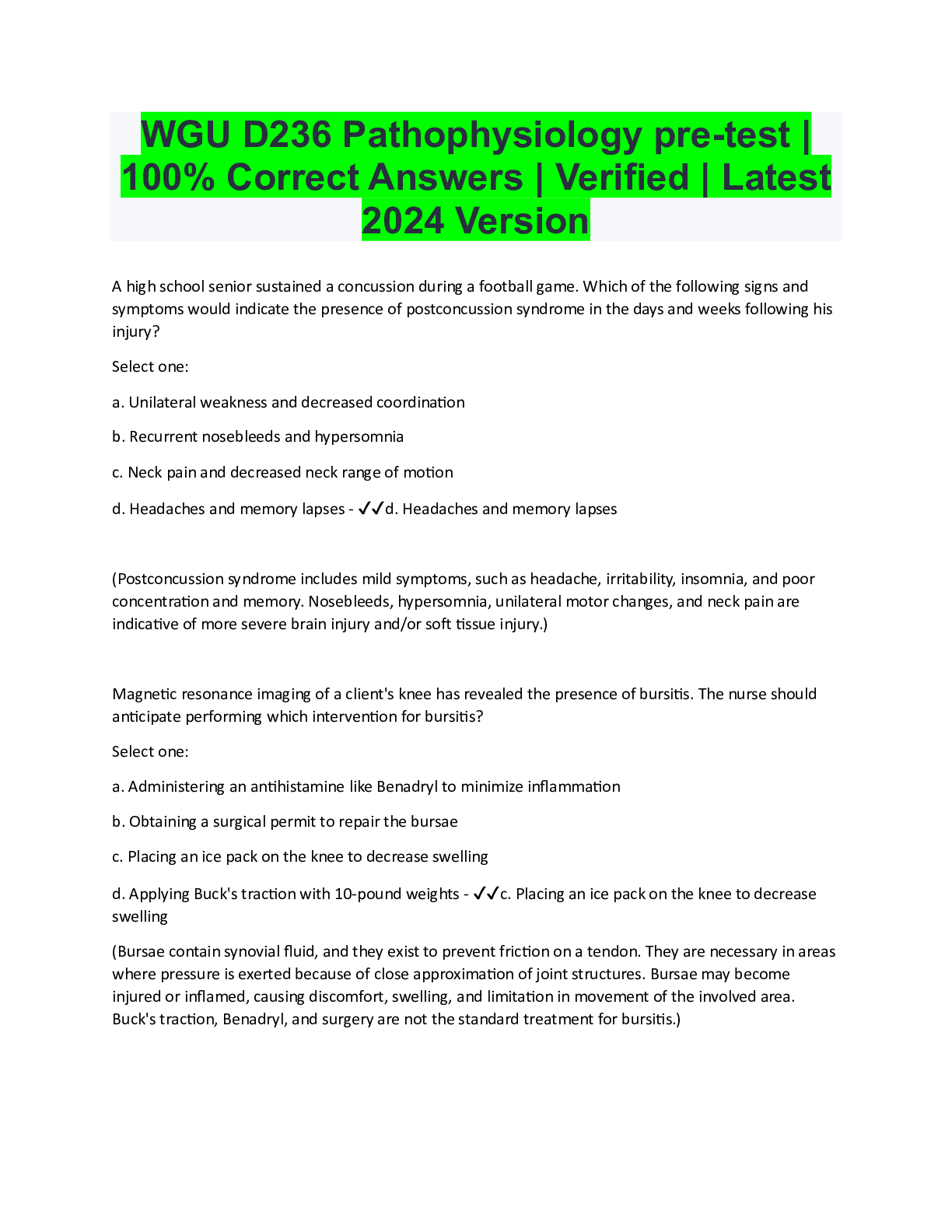
A high school senior sustained a concussion during a football game. Which of the following signs and
symptoms would indicate t
...
WGU D236 Pathophysiology pre-test |
100% Correct Answers | Verified | Latest
2024 Version
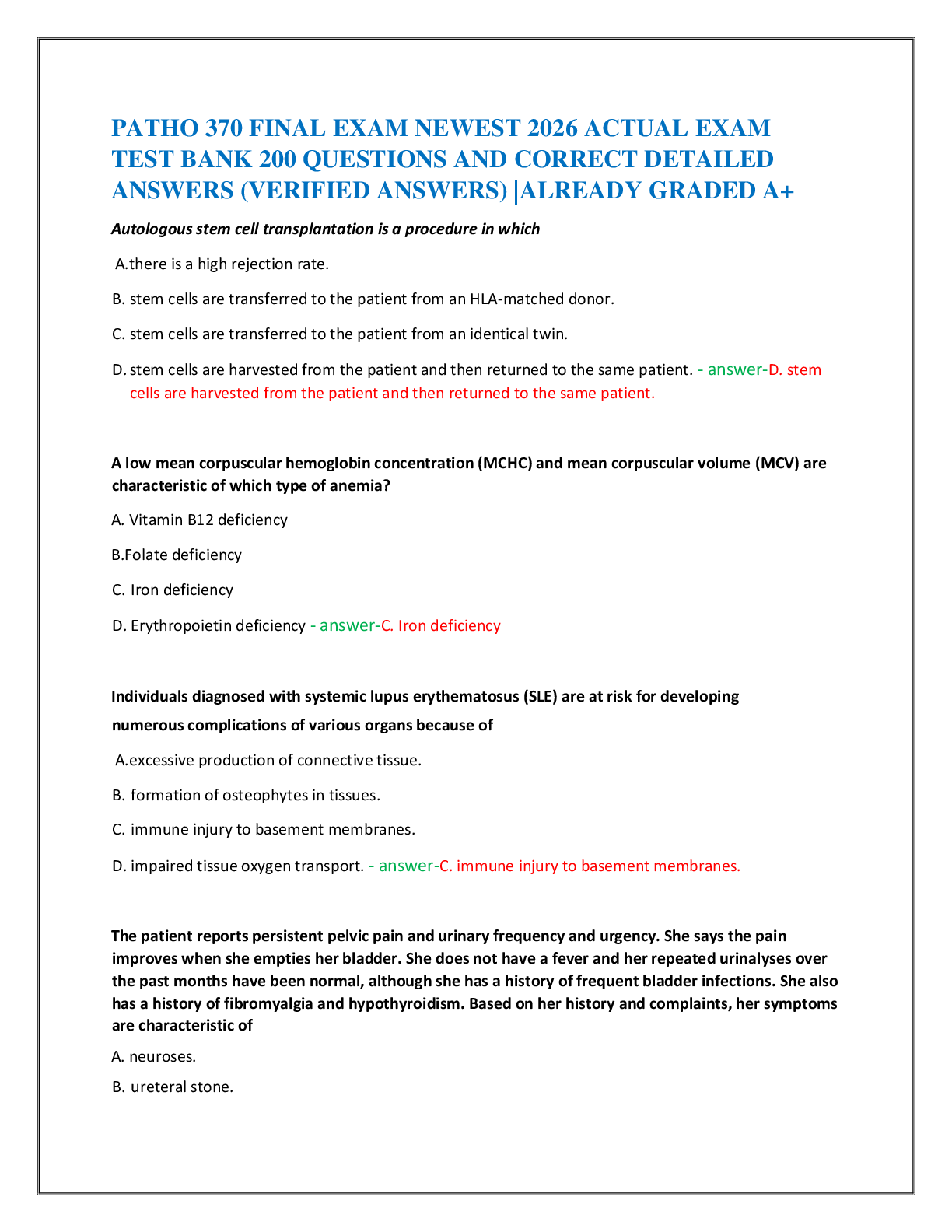
A high school senior sustained a concussion during a football game. Which of the following signs and
symptoms would indicate the presence of postconcussion syndrome in the days and weeks following his
injury?
Select one:
a. Unilateral weakness and decreased coordination
b. Recurrent nosebleeds and hypersomnia
c. Neck pain and decreased neck range of motion
d. Headaches and memory lapses - ✔✔d. Headaches and memory lapses
(Postconcussion syndrome includes mild symptoms, such as headache, irritability, insomnia, and poor
concentration and memory. Nosebleeds, hypersomnia, unilateral motor changes, and neck pain are
indicative of more severe brain injury and/or soft tissue injury.)
Magnetic resonance imaging of a client's knee has revealed the presence of bursitis. The nurse should
anticipate performing which intervention for bursitis?
Select one:
a. Administering an antihistamine like Benadryl to minimize inflammation
b. Obtaining a surgical permit to repair the bursae
c. Placing an ice pack on the knee to decrease swelling
d. Applying Buck's traction with 10-pound weights - ✔✔c. Placing an ice pack on the knee to decrease
swelling
(Bursae contain synovial fluid, and they exist to prevent friction on a tendon. They are necessary in areas
where pressure is exerted because of close approximation of joint structures. Bursae may become
injured or inflamed, causing discomfort, swelling, and limitation in movement of the involved area.
Buck's traction, Benadryl, and surgery are not the standard treatment for bursitis.)The most recent blood work of a client with a diagnosis of acute myelogenous leukemia (AML) reveals
thrombocytopenia. Where is the client most likely to experience abnormal bleeding as a result of low
platelets?
Select one:
a. Nephrons and ureters
b. Inside the brain
c. Sclerae of the eyes
d. Skin and mucous membranes - ✔✔d. Skin and mucous membranes
Common sites for spontaneous bleeding from platelet disorders are the skin and mucous membranes of
the nose, mouth, gastrointestinal tract, and uterine cavity. Intracranial hemorrhage is rare, and neither
the sclerae nor the kidneys are typical sites of spontaneous bleeding
[Show More]