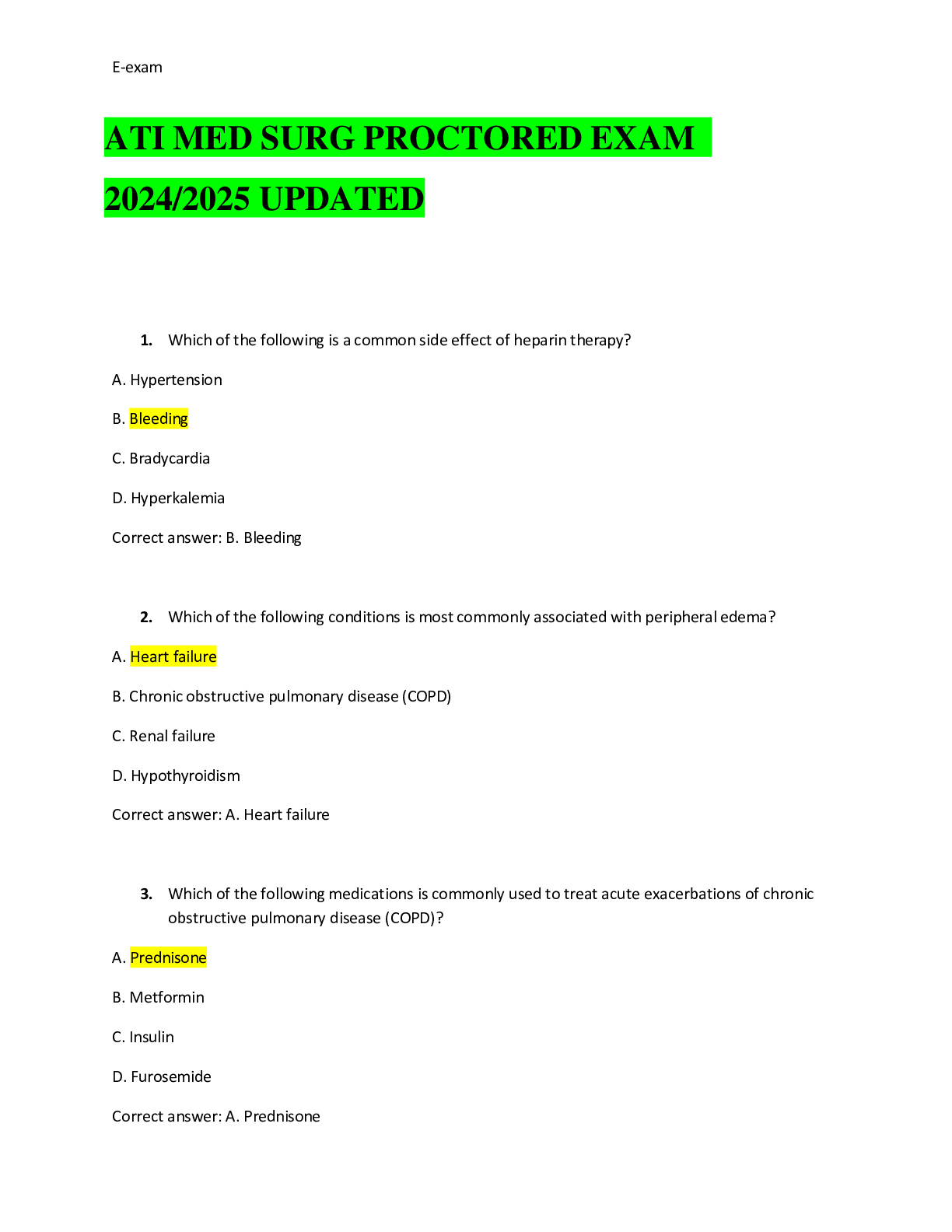
1. Which of the following is a common side effect of heparin therapy?
A. Hypertension
B. Bleeding
C. Bradycardia
D. Hyperkalemia
Correct answer: B. Bleeding
2. Which of the following conditions is most commonly ass
...
1. Which of the following is a common side effect of heparin therapy?
A. Hypertension
B. Bleeding
C. Bradycardia
D. Hyperkalemia
Correct answer: B. Bleeding
2. Which of the following conditions is most commonly associated with peripheral edema?
A. Heart failure
B. Chronic obstructive pulmonary disease (COPD)
C. Renal failure
D. Hypothyroidism
Correct answer: A. Heart failure
3. Which of the following medications is commonly used to treat acute exacerbations of chronic
obstructive pulmonary disease (COPD)?
A. Prednisone
B. Metformin
C. Insulin
D. Furosemide
Correct answer: A. Prednisone
E-exam
4. Which of the following is a common adverse effect of angiotensin-converting enzyme (ACE)
inhibitors?
A. Hypertension
B. Hypokalemia
C. Dry cough
D. Hyperglycemia
Correct answer: C. Dry cough
5. Which of the following laboratory values is most commonly associated with acute pancreatitis?
A. Elevated amylase and lipase
B. Elevated creatinine and blood urea nitrogen (BUN)
C. Elevated liver function tests (LFTs)
D. Elevated white blood cell (WBC) count
Correct answer: A. Elevated amylase and lipase
6. Which of the following nursing interventions is most appropriate for a client experiencing acute
chest pain?
A. Administer a beta-blocker
B. Encourage deep breathing exercises
C. Apply heat to the affected area
D. Administer nitroglycerin as ordered
Correct answer: D. Administer nitroglycerin as ordered
7. Which of the following is a common risk factor for the development of deep vein thrombosis
(DVT)?
A. Hypertension
E-exam
B. Hyperglycemia
C. Immobility
D. Hypokalemia
Correct answer: C. Immobility
8. Which of the following medications is commonly used to treat hyperkalemia?
A. Furosemide
B. Sodium polystyrene sulfonate (Kayexalate)
C. Naloxone
D. Nitroglycerin
Correct answer: B. Sodium polystyrene sulfonate (Kayexalate)
9. A client with a history of heart failure is admitted with dyspnea, orthopnea, and paroxysmal
nocturnal dyspnea. Which of the following positions would be most beneficial in improving the
client's breathing?
A. High Fowler's position
B. Trendelenburg position
C. Supine position
D. Prone position
Correct answer: A. High Fowler's position
10. Which of the following laboratory values would be most indicative of dehydration in a client?
A. Elevated hematocrit
B. Decreased blood urea nitrogen (BUN)
C. Elevated sodium level
D. Decreased creatinine level
[Show More]