NURSING 255Chronic Exam Questions 4
Parkinson’s Disease
1. Why are dysphagia and muscle rigidity major concerns for this patient?
• Dysphagia is a major concern because the patient will have difficulty consuming all t
...
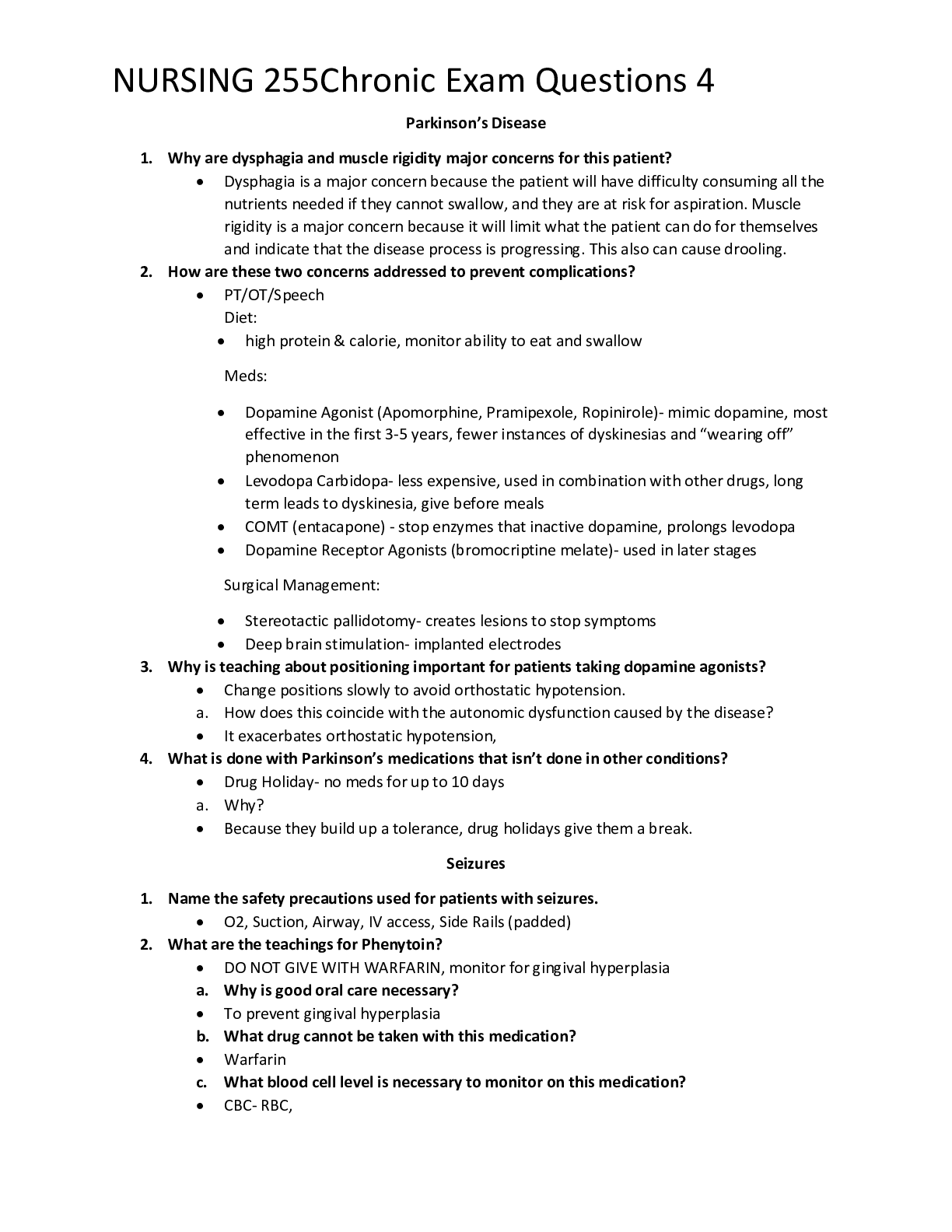
NURSING 255Chronic Exam Questions 4
Parkinson’s Disease
1. Why are dysphagia and muscle rigidity major concerns for this patient?
• Dysphagia is a major concern because the patient will have difficulty consuming all the
nutrients needed if they cannot swallow, and they are at risk for aspiration. Muscle
rigidity is a major concern because it will limit what the patient can do for themselves
and indicate that the disease process is progressing. This also can cause drooling.
2. How are these two concerns addressed to prevent complications?
• PT/OT/Speech
Diet:
• high protein & calorie, monitor ability to eat and swallow
Meds:
• Dopamine Agonist (Apomorphine, Pramipexole, Ropinirole)- mimic dopamine, most
effective in the first 3-5 years, fewer instances of dyskinesias and “wearing off”
phenomenon
• Levodopa Carbidopa- less expensive, used in combination with other drugs, long
term leads to dyskinesia, give before meals
• COMT (entacapone) - stop enzymes that inactive dopamine, prolongs levodopa
• Dopamine Receptor Agonists (bromocriptine melate)- used in later stages
Surgical Management:
• Stereotactic pallidotomy- creates lesions to stop symptoms
• Deep brain stimulation- implanted electrodes
3. Why is teaching about positioning important for patients taking dopamine agonists?
• Change positions slowly to avoid orthostatic hypotension.
a. How does this coincide with the autonomic dysfunction caused by the disease?
• It exacerbates orthostatic hypotension,
4. What is done with Parkinson’s medications that isn’t done in other conditions?
• Drug Holiday- no meds for up to 10 days
a. Why?
• Because they build up a tolerance, drug holidays give them a break.
Seizures
[Show More]