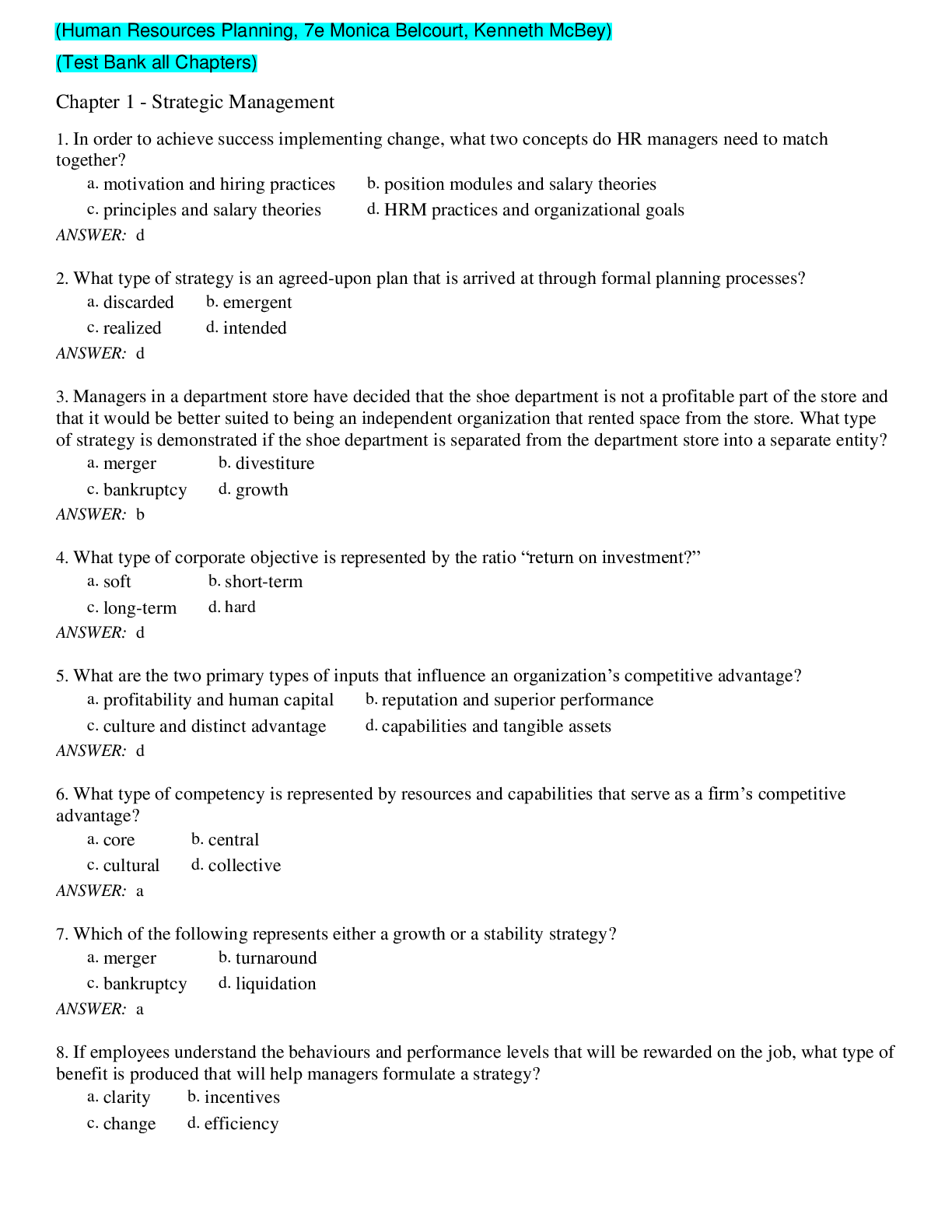
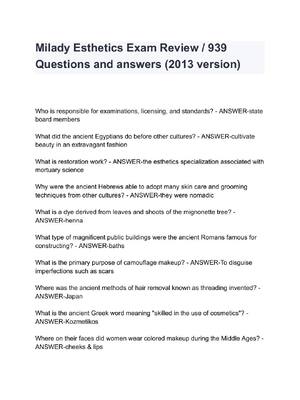
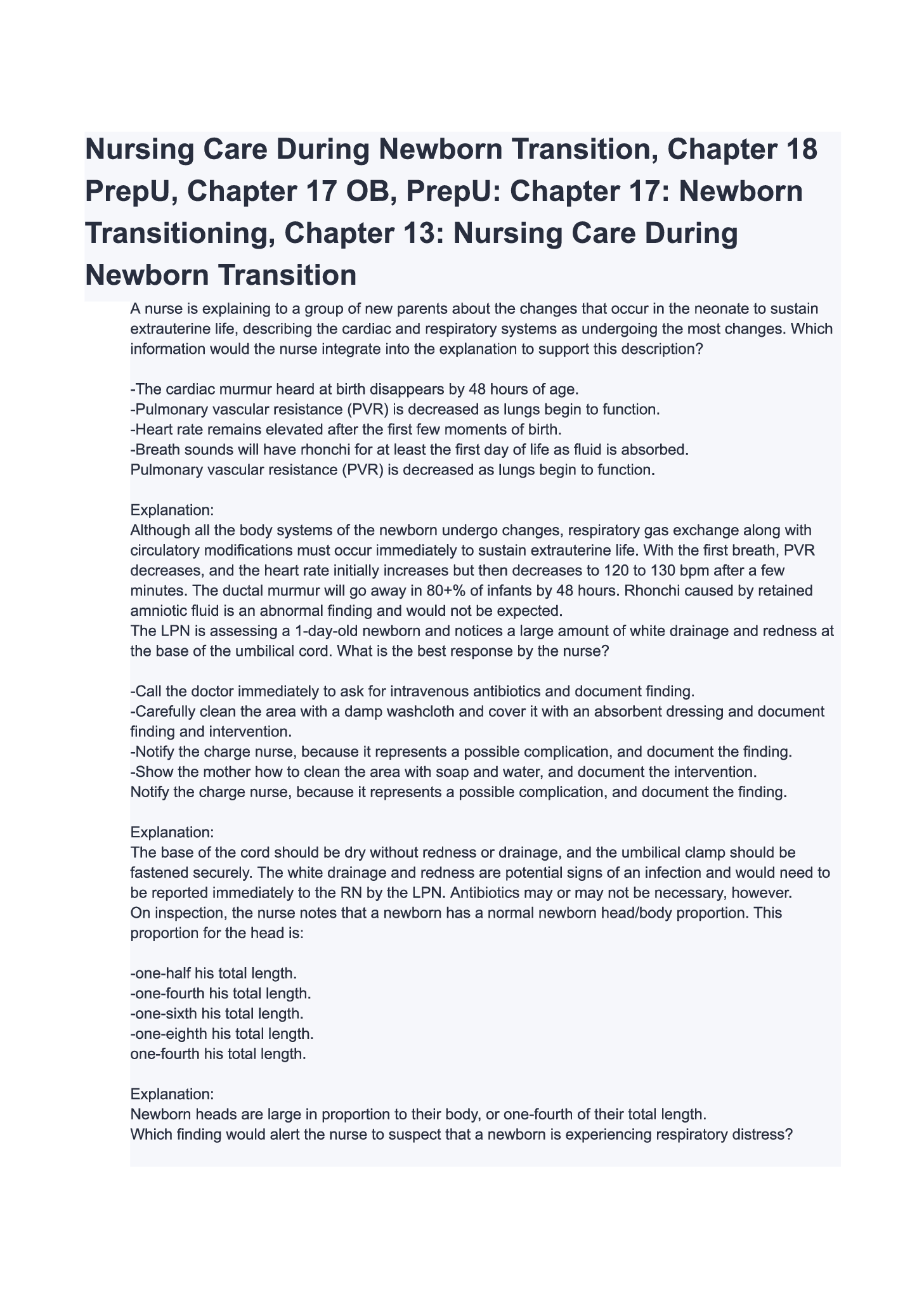
Human Resource Management > QUESTIONS & ANSWERS > Chapter 3 Human Resource Management (All)
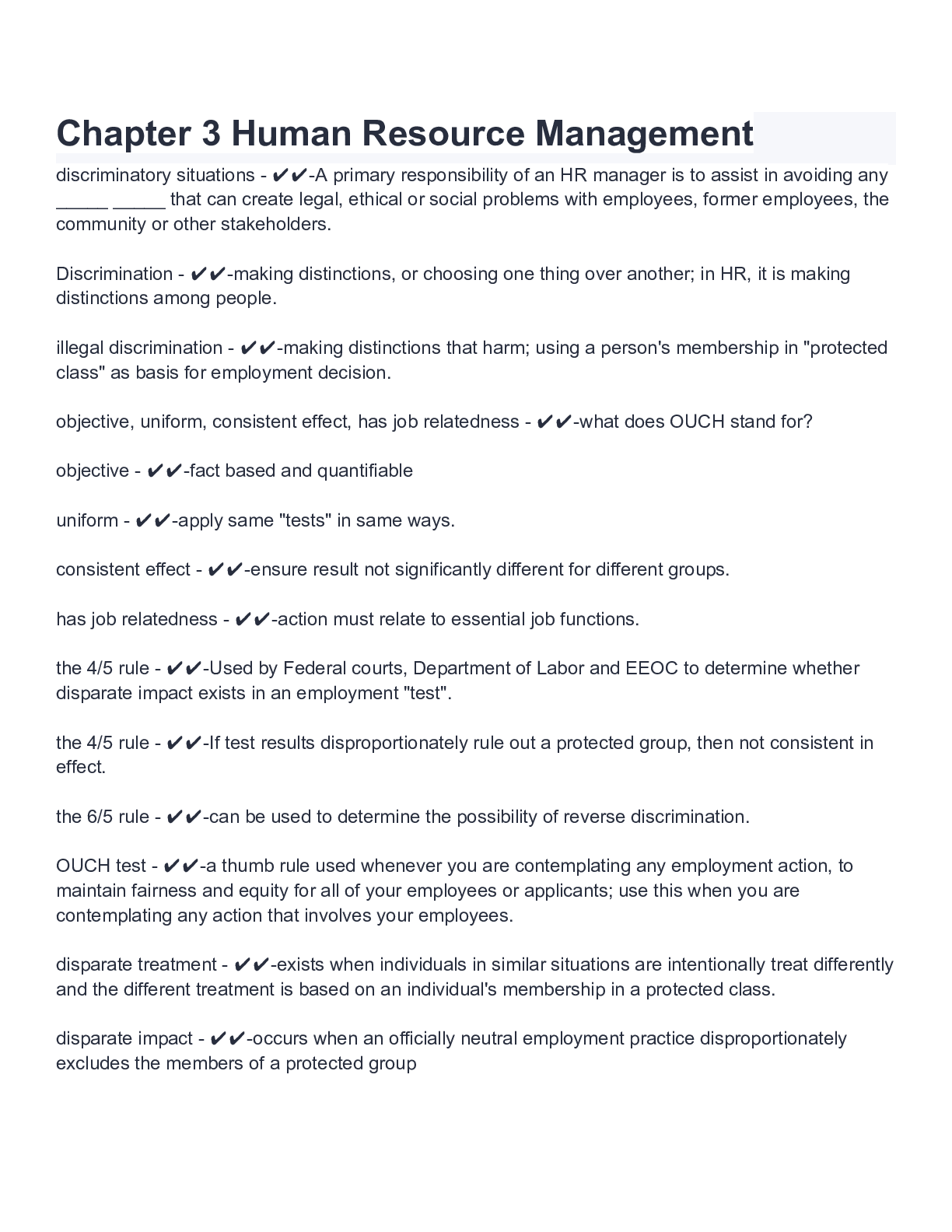
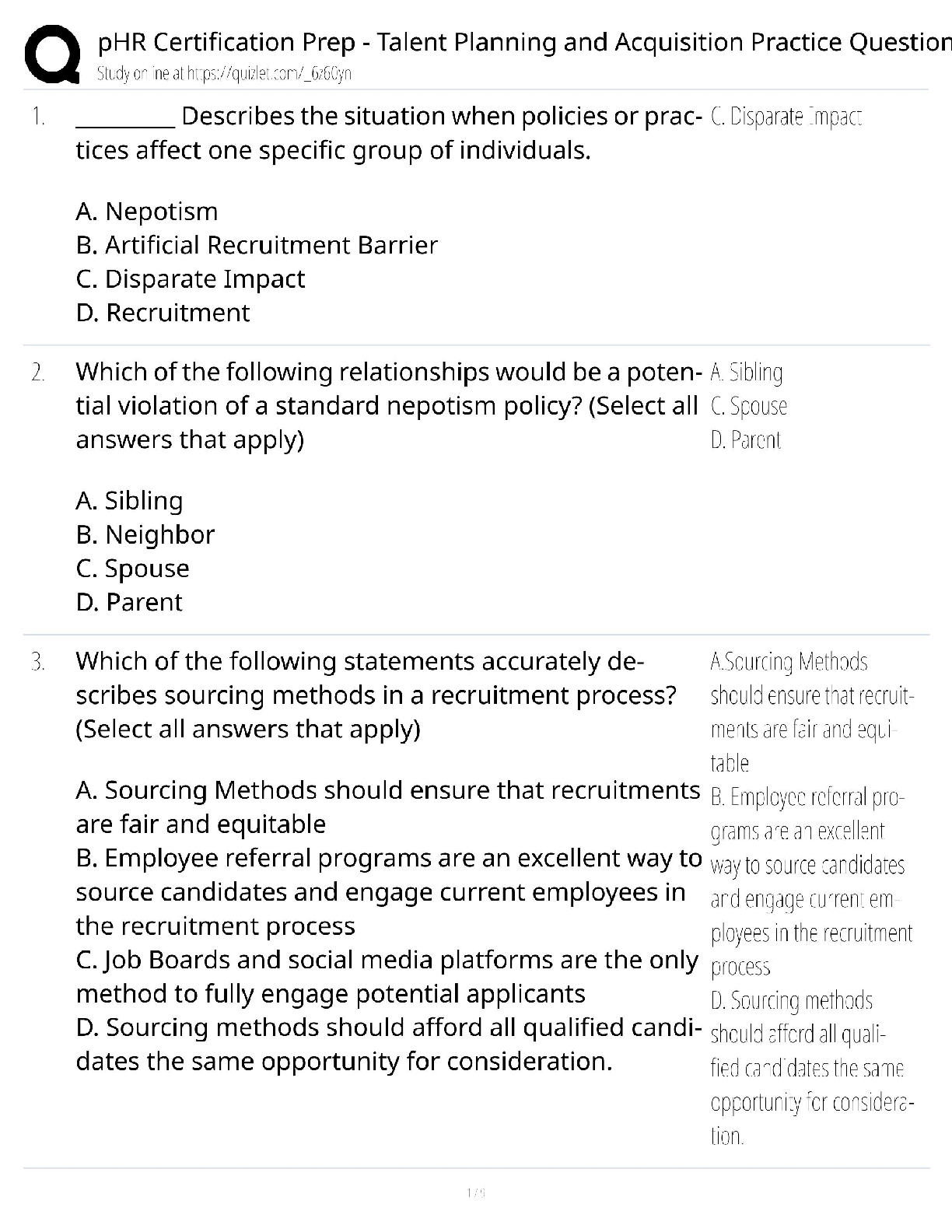
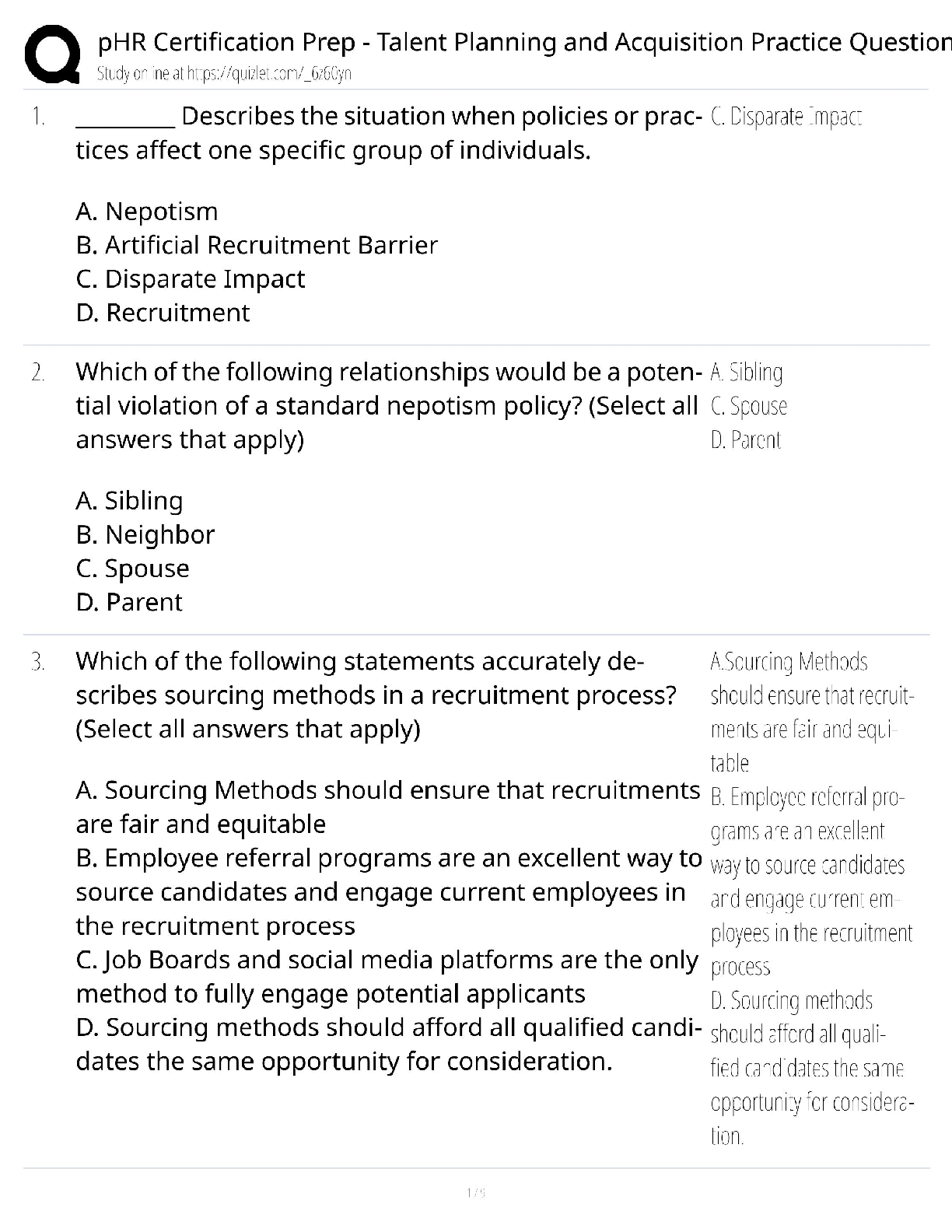
Chapter 3 Human Resource Management
Document Content and Description Below
Last updated: 2 years ago
Preview 1 out of 9 pages
Instant download
Buy this Document to get the Full Access Instantly
Provided by Students Who Aced it
We Verify Document Content to Gurantee Accuracy
Reviews( 0 )
Document information
Connected school, study & course
About the document
Uploaded On
Jul 28, 2024
Number of pages
9
Written in
All

Additional information
This document has been written for:
Uploaded
Jul 28, 2024
Downloads
0
Views
85
Topic Tags
Related Subjects & Courses
Explore similar study resources and related concepts.
Recommended For You
Get more on QUESTIONS & ANSWERS »
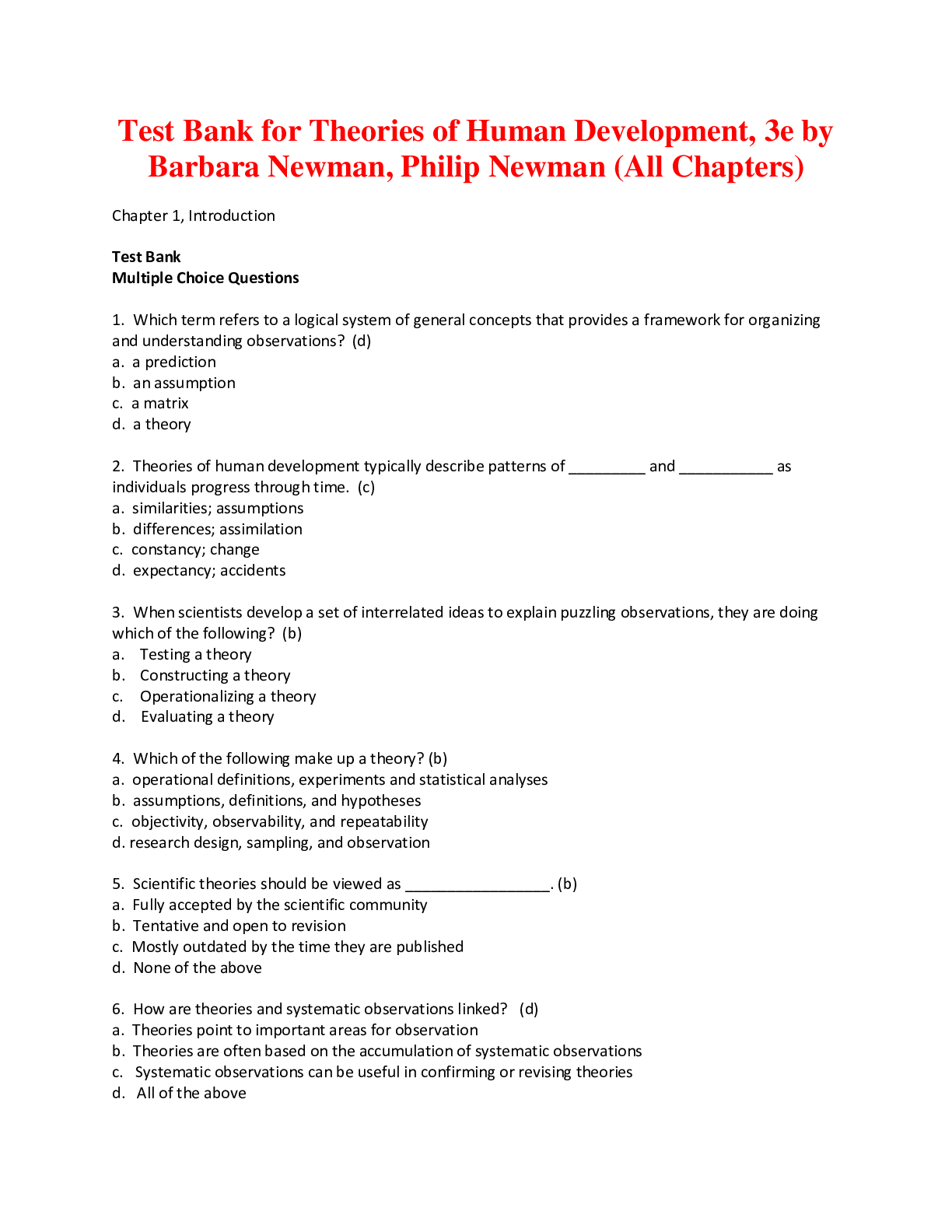
Theories of Human Development, 3e by Barbara Newman, Philip Ne...
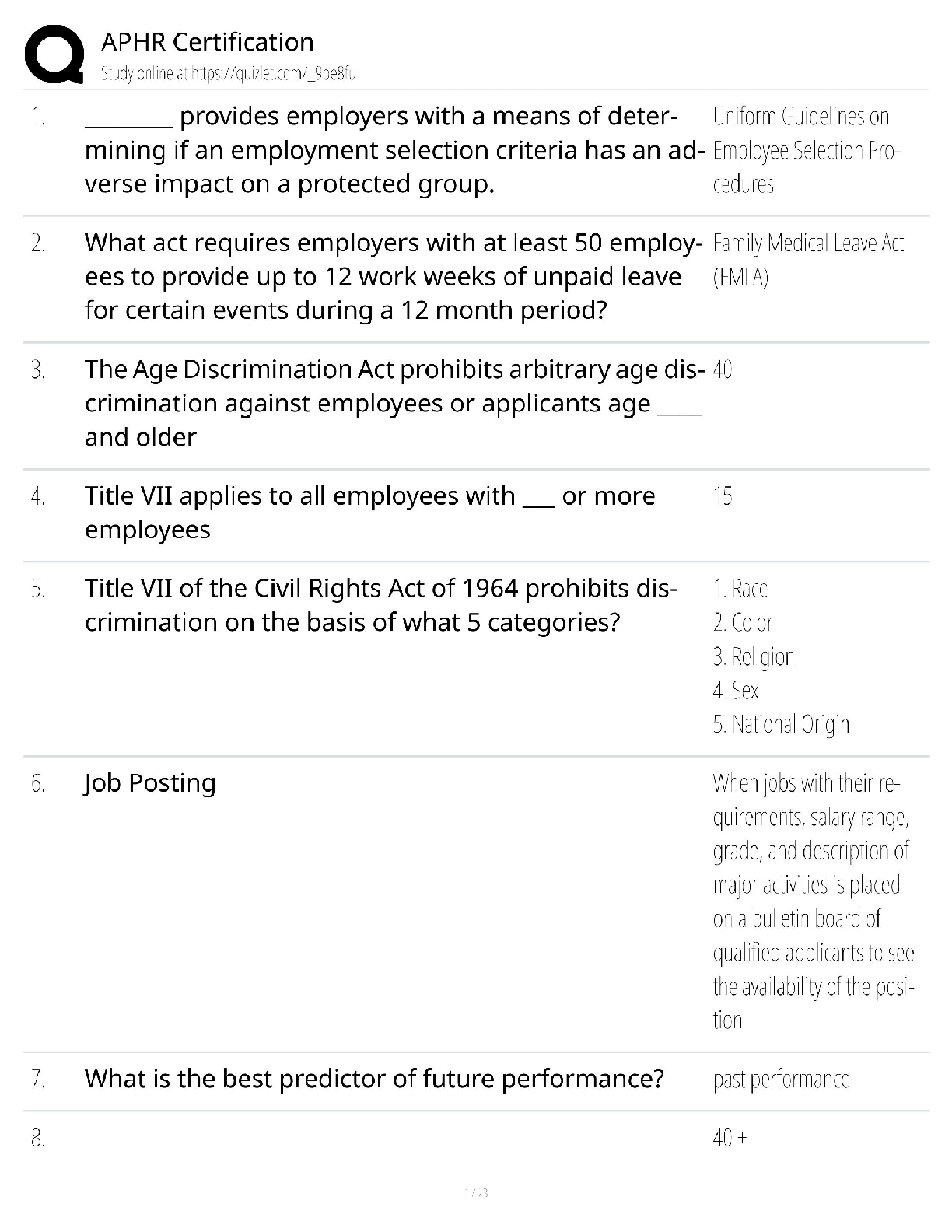
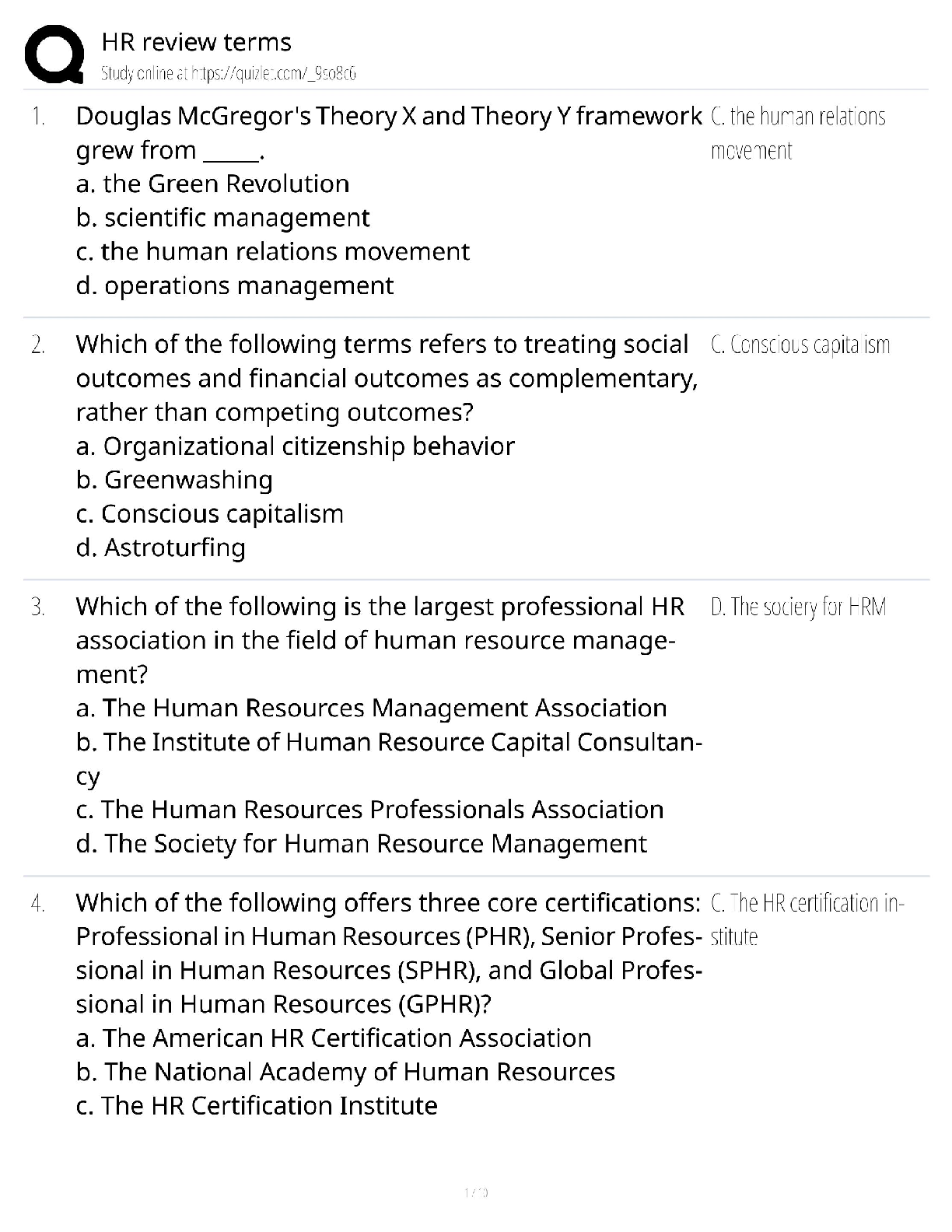
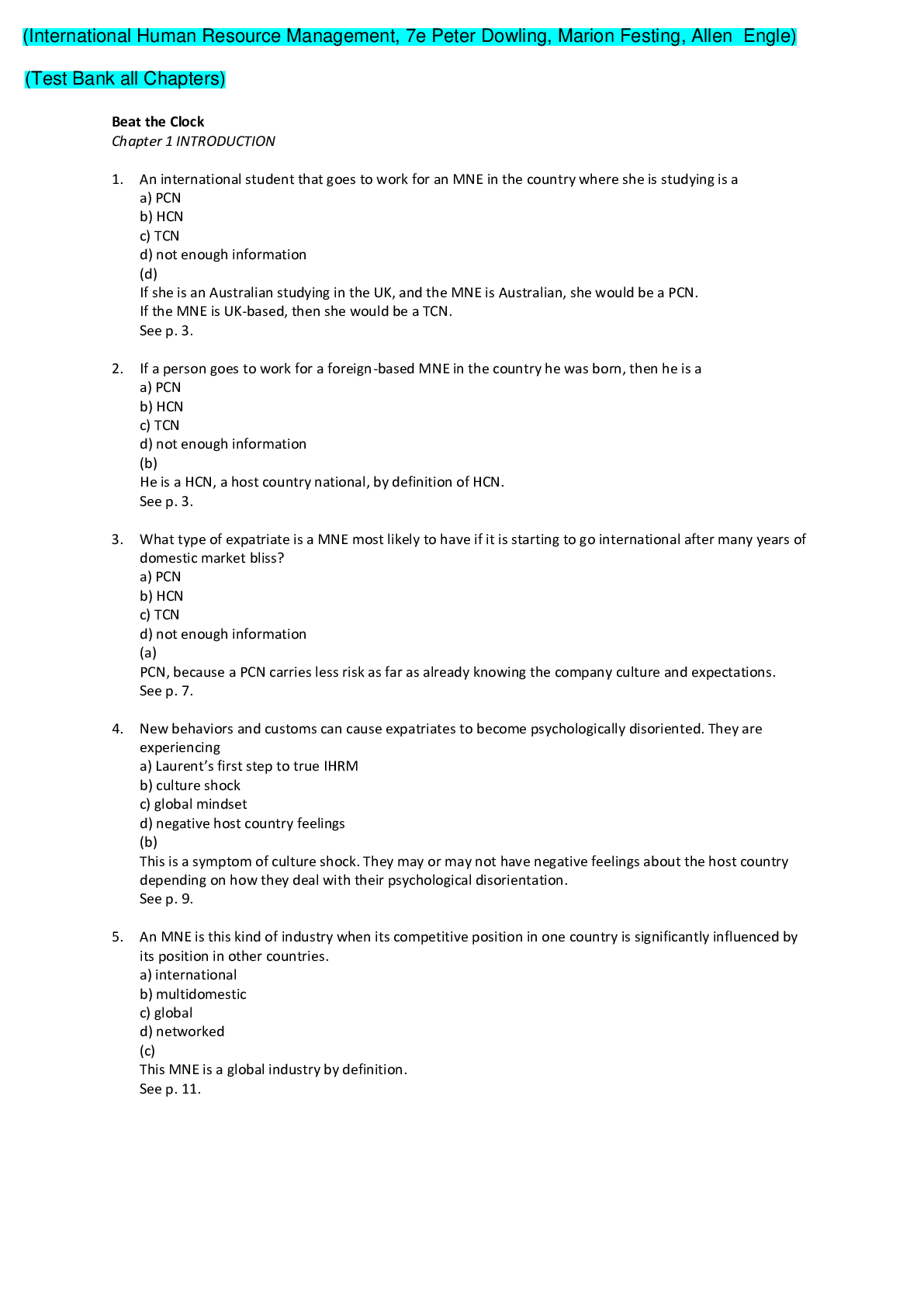
International Human Resource Management, 6e Peter Dowling, Mar...

Human Resource Management Strategy and Practice, 9th Australia...
HR (Human Resources), 5e Angelo DeNisi, Ricky Griffin (Solutio...

Human Resources Law 5e John Remington, Richard Heiser, Cyrus...

Human Resource Management Functions, Applications, Skill Devel...
HR (Human Resources), 5e Angelo DeNisi, Ricky Griffin (Test Ba...
Healthcare Human Resource Management, 4e Walter Flynn, Sean Va...

Human Resource Management, 5th Canadian Edition By Sandra Stee...

Human Resource Management Strategy and Practice, 11e (Asia Pac...

Human Resource Information Systems, Basics, Applications, and...

Human Resource Management 15e Robert Mathis, John Jackson, Sea...

Human Resource Management (Arab World Edition) 1e Akram Al Ari...