• Question 1
Which plane divides the body/organ into anterior and posterior sections?
• Question 2
Which plane divides the body/organ into superior and inferior sections?
• Question 3
Which term best
...
• Question 1
Which plane divides the body/organ into anterior and posterior sections?
• Question 2
Which plane divides the body/organ into superior and inferior sections?
• Question 3
Which term best describes the body maintaining a constant internal balance despite changes in the external environment?
• Question 4
Physiology refers to the study of the body’s structure, whereas anatomy refers to the study of the body’s function.
• Question 5
The axilla region is medial compared to the nose.
• Question 6
What organelle or structure is the DNA, our genetic material, found within?
• Question 7
Which phase of the cell cycle does the cell divide into two new cells?
• Question 8
What is the state of balance in which the body’s internal environment (factors) remains within normal ranges?
• Question 9
Which organelle is responsible for producing our body’s energy source, ATP?
• Question 10
Where is our body’s DNA, genetic material, located?
. Question 11
Which cellular structure is selectively permeable for specific items to freely pass through it?
• Question 12
The processes of diffusion and osmosis require energy, ATP, for it to occur.
• Question 13
Cells have to replicate, or make a copy of, their DNA prior to going through mitosis and dividing into two new cells.
• Question 14
Which type of tissue allows for allows for the transmission of electrical impulses that provide communication signals with the body?
• Question 15
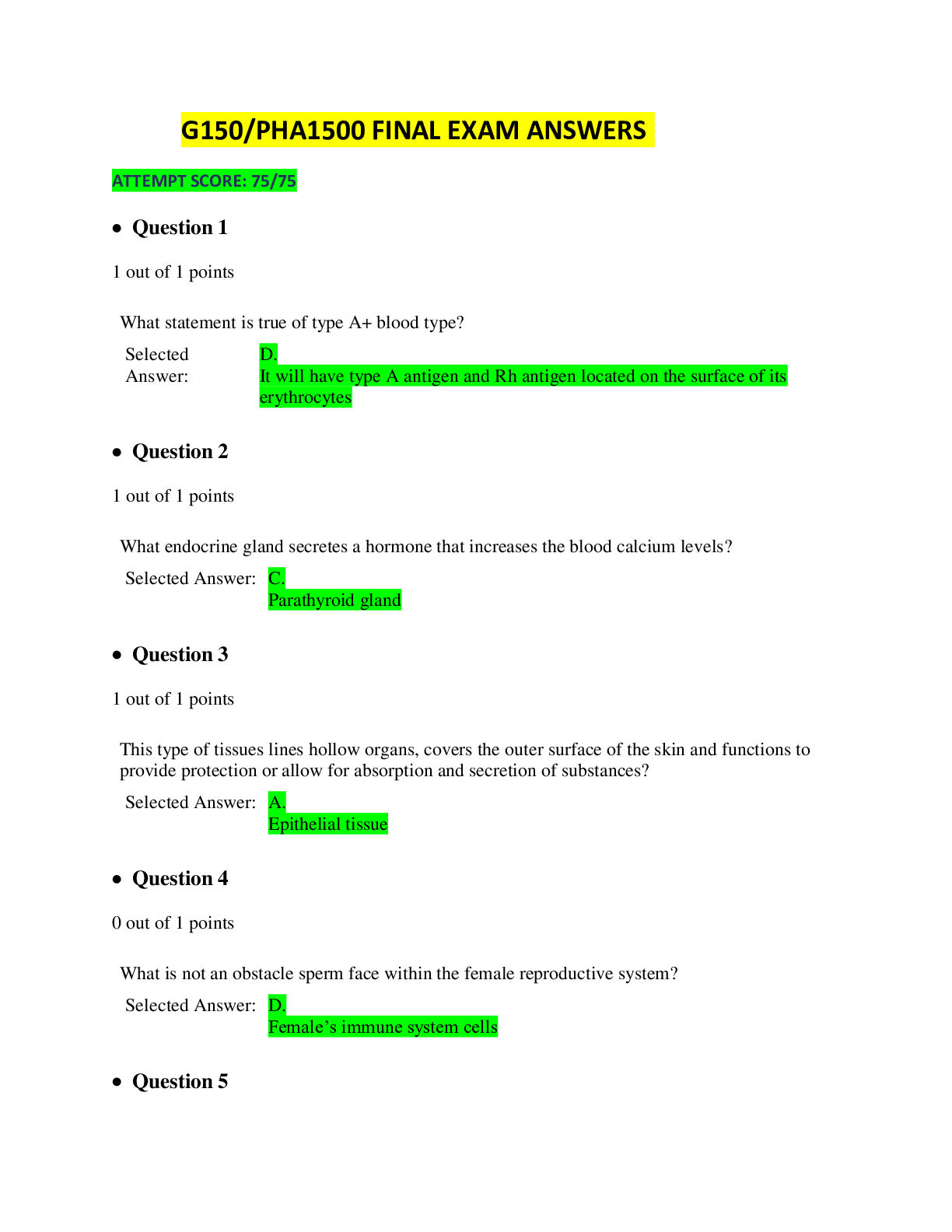
Which type of tissues lines hollow organs, covers the outer surface of the skin and functions to provide protection or allow for absorption and secretion of substances?
• Question 16
What statement is true of the skin?
• Question 17
A permanent tattoo will have ink in which layer or layers of the skin?
• Question 18
Which type of skin cell is involved in regulating our overall skin tone and color?
• Question 19
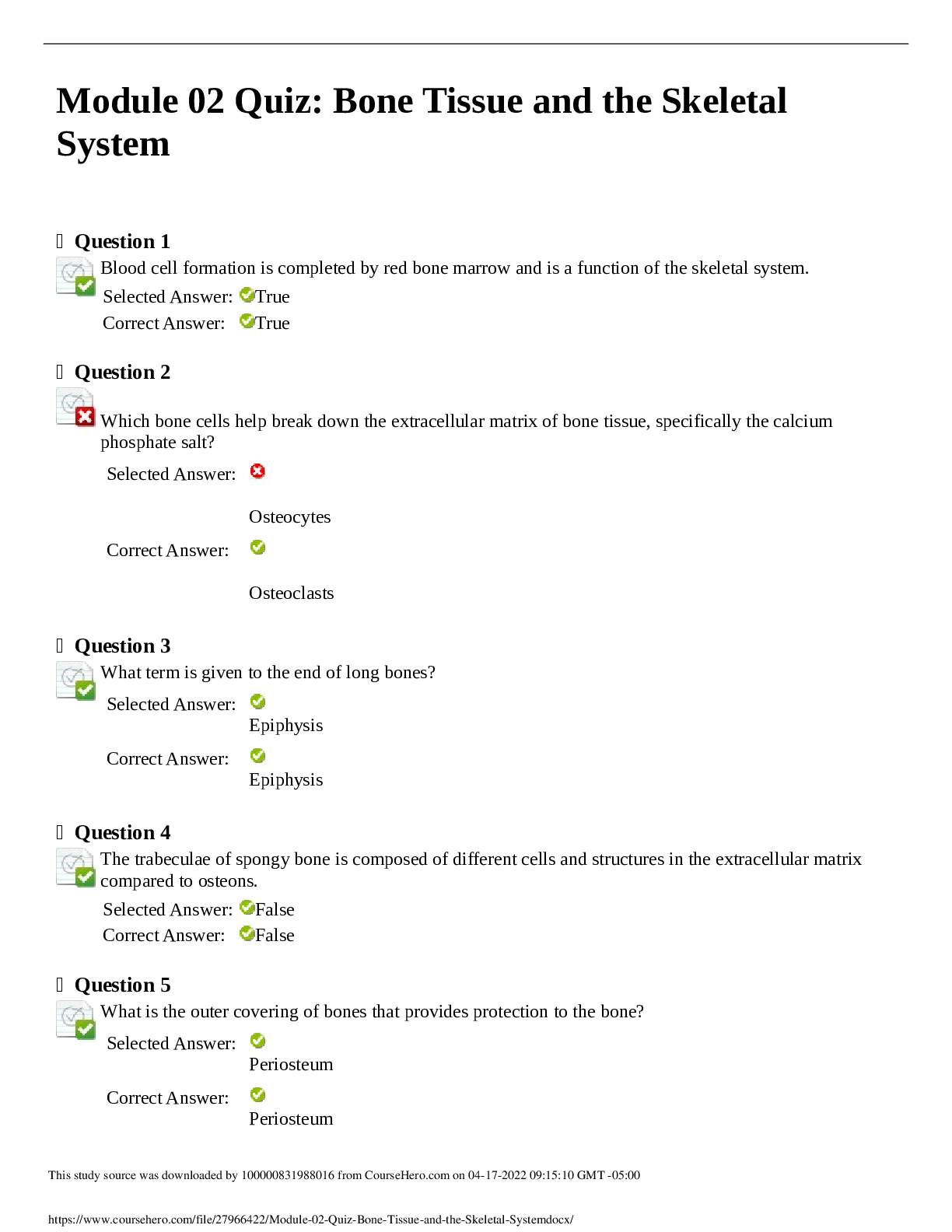
Blood cell production is a function of the skeletal system.
• Question 20
A sarcomere stores calcium within the muscle cell.
• Question 21
What term is given to the end of long bones?
• Question 22
Which section of the vertebral column contains seven vertebrae?
• Question 23
Calcium is a vital component for muscle contraction to occur.
• Question 24
Osteoporosis is a bone disease that occurs when bone tissue loses enough mass to become extremely brittle.
• Question 25
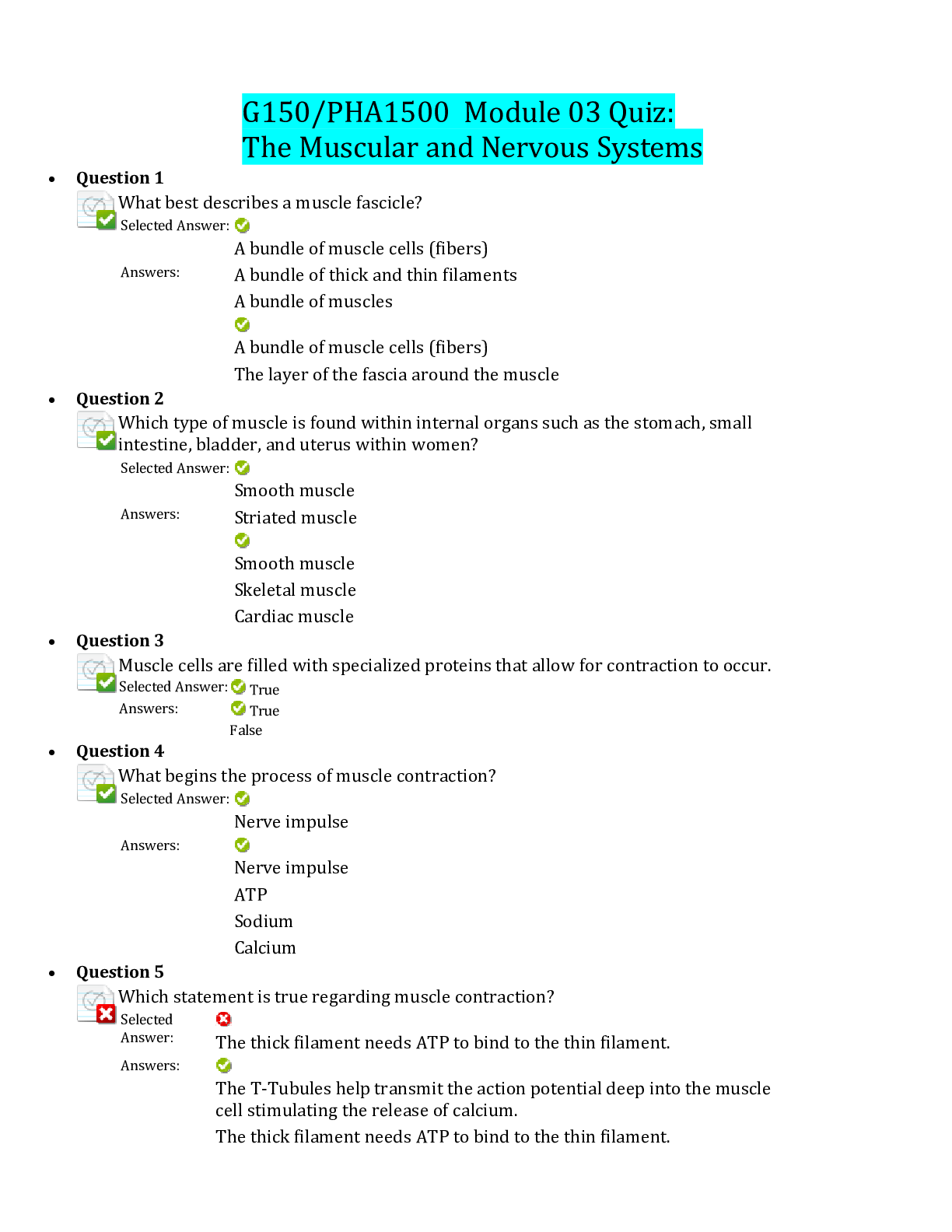
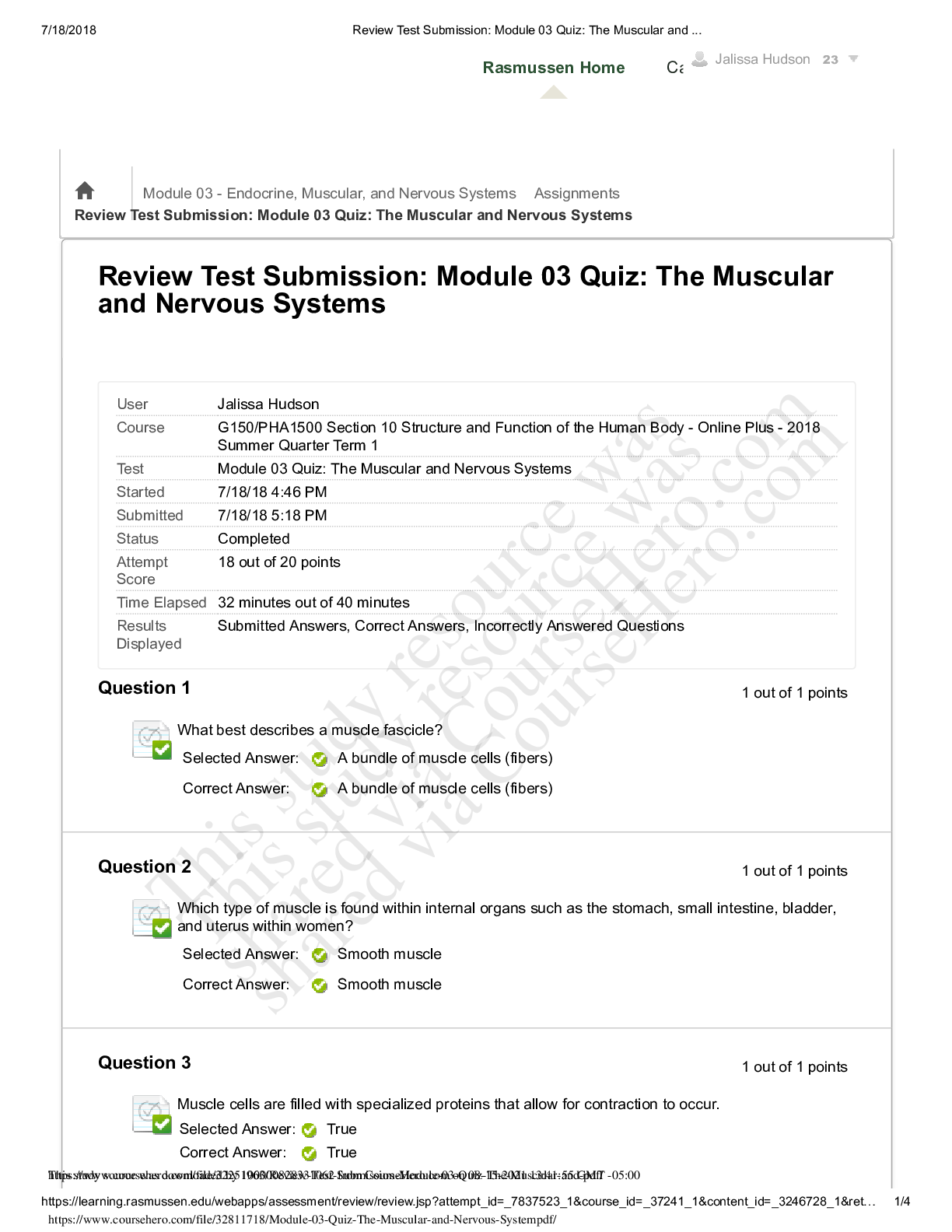
What best describes a muscle fascicle?
• Question 26
ATP is needed in muscle contraction for what process?
• Question 27
Muscle cells are filled with specialized proteins that allow for contraction to occur.
• Question 28
Which neurons carry information from the central nervous system to the target gland, organ, or muscle?
• Question 29
Which cerebral lobe of the brain is involved in our ability to see?
• Question 30
Which region of the brain is involved in coordinated movement of large muscle groups, posture, and balance?
• Question 31
The sympathetic nervous system will cause an increase to the heart rate and respiration rate. It will also cause the pupils to dilate.
• Question 32
What lobe of the cerebrum controls our consciousness, intelligence and conscious movement of muscles?
• Question 33
A neurotransmitter is a chemical released from the soma (cell body) of the neuron.
• Question 34
The spinal cord transmits information from the body to the brain only.
• Question 35
Which region of the brain controls primitive functions of the body such as respiration rate, heart rate, sneezing, and coughing?
• Question 36
Which hormone controls the body’s metabolism?
• Question 37
Which endocrine gland secretes hormones that help the body adapt to stressful situations and release hormones that can reduce inflammation?
• Question 38
The hormone insulin increases blood glucose (sugar) levels.
• Question 39
Which receptors respond to factors such as pressure and stretch?
• Question 40
Pain originating from the skin or joint that’s perceived as pain coming from an organ, such as the liver, is called referred pain.
• Question 41
The general senses are only found in localized areas of the body, such as the head, and includes pain, touch, and temperature sensation.
• Question 42
What endocrine gland secretes a hormone that increases the blood calcium levels?
• Question 43
What blood vessel carries blood away from the heart out to the body and typically carries oxygenated blood?
• Question 44
What blood vessel carries blood back to the heart?
• Question 45
Which type of blood vessel allows nutrient exchange between the blood vessel and body’s cells and tissues?
• Question 46
Which heart chamber receives deoxygenated blood from the body?
• Question 47
1
Which heart chamber will pump oxygenated blood out to the body?
• Question 48
The AV bundle, also called the pacemaker, assists in setting the heart rate of the heart?
• Question 49
What type of blood cell assists in transporting oxygen throughout the body?
• Question 50
What statement is true of type A+ blood type?
• Question 51
Which disorder is characterized by an excessive white blood cell count?
• Question 52
The myocardium of the heart contains the heart muscle that allows for muscle contraction.
• Question 53
Congestive heart failure occurs when a ventricle fails to effectively pump blood.
• Question 54
When the immune system overreacts to a normal, non-harmful antigen as in the case of allergies, what type of immune disorder is this called?
• Question 55
When the immune system is weaken and cannot optimally perform is normal function, what type of immune disorder is this called?
• Question 56
When a person contracts and gets a cold or infection, what type of immunity is this?
• Question 57
Specific immunity is more effective when it has been previously been exposed to a specific bacteria or virus.
• Question 58
The pancreas makes bile and stores in the gallbladder, which assists in the digestion of lipids (fat).
• Question 59
The majority of nutrient absorption occurs in what digestive organ?
• Question 60
Which nutrient is the primary source of energy (ATP) production for the body?
• Question 61
The diaphragm and abdominal muscles are the main muscle that initiates the pulmonary respiration process to occur.
• Question 62
Where does gas exchange occur within the respiratory system?
• Question 63
What part of the nephron is involved in the glomerular filtration process of urine formation?
• Question 64
The ureter transport urine from the bladder to the outside or external portion of the body.
• Question 65
The stomach main function is to mechanical digest food into a substance called chyme.
• Question 66
It is the inner layer of the vagina that is sloughed off during the uterine (menstrual) cycle.
• Question 67
What organ will produce estrogen and progesterone in the female reproductive system?
• Question 68
Fertilization of an egg typically occurs here (first answer), while implantation of a fertilized egg occurs here (second answer)?
• Question 69
What statement best describes the role of the epididymis?
• Question 70
What is not an obstacle sperm face within the female reproductive system?
• Question 71
Which organ of the female reproductive system produces the eggs and sex hormones estrogen and progesterone?
• Question 72
The primary organ of the digestive system that produces digestive enzymes is the:
• Question 73
What structure secretes progesterone during the last half of the ovarian cycle?
• Question 74
Which type of nutrient is considered sugars and is the primary energy source for the body?
• Question 75
Mechanical digestion is dependent upon digestive enzymes.
[Show More]