COMPREHENSIVE NCLEX-RN LATEST PRACTICE
EXAM 2024/2025 60Q&A’S WITH RATIONALES
(GUARANTEED PASS) | RATED A+
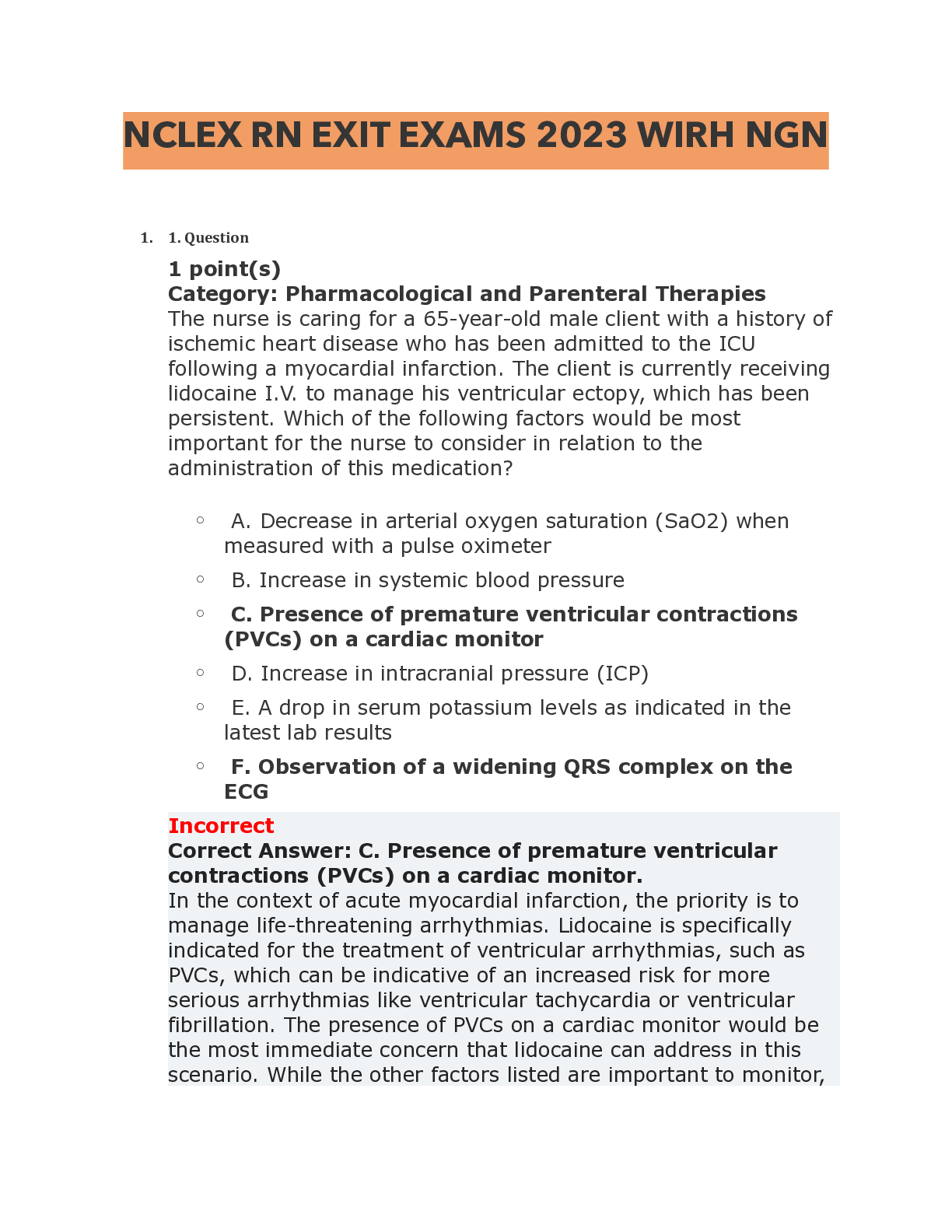
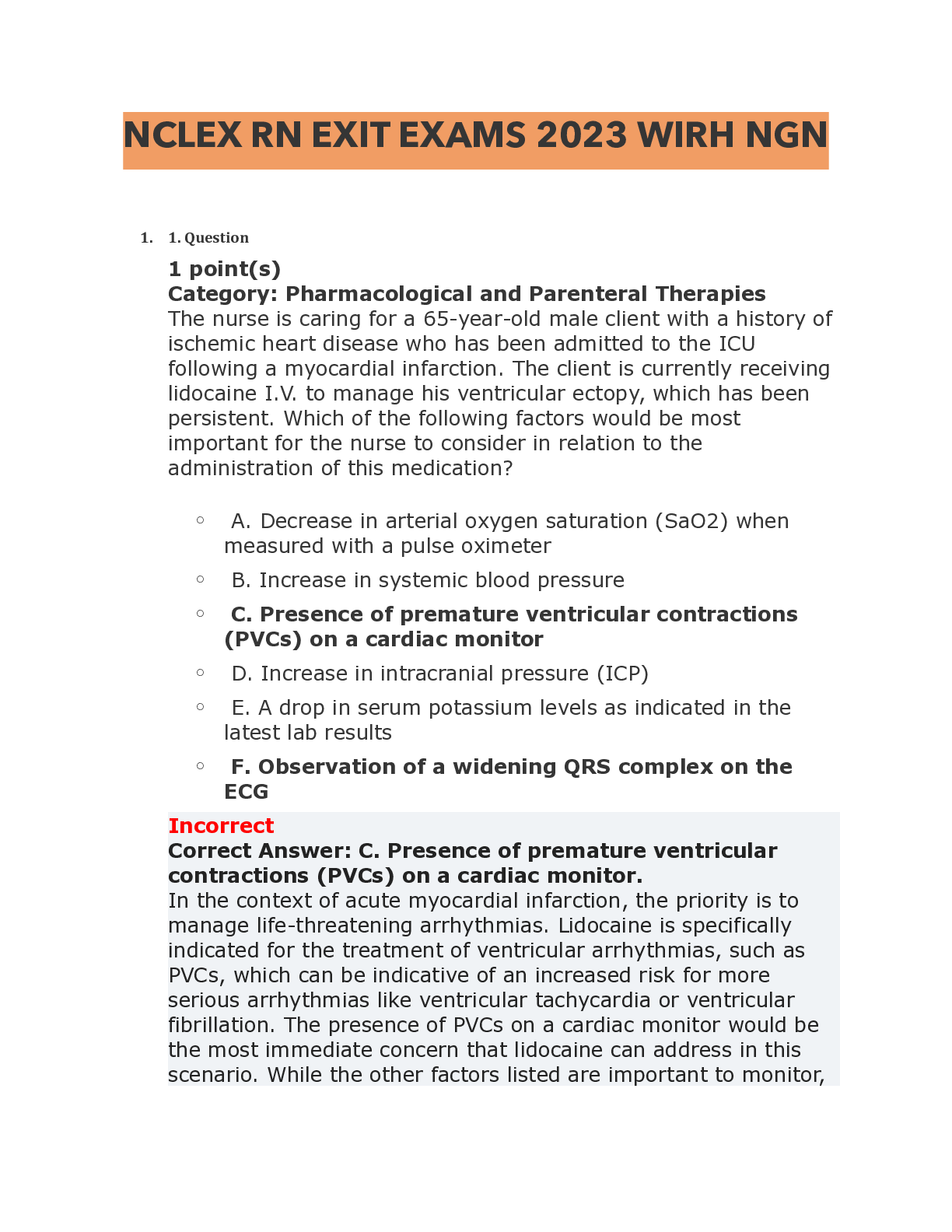
1. The nurse is providing discharge teaching for the client with leukemia. The client should be
told to avoid
...
COMPREHENSIVE NCLEX-RN LATEST PRACTICE
EXAM 2024/2025 60Q&A’S WITH RATIONALES
(GUARANTEED PASS) | RATED A+
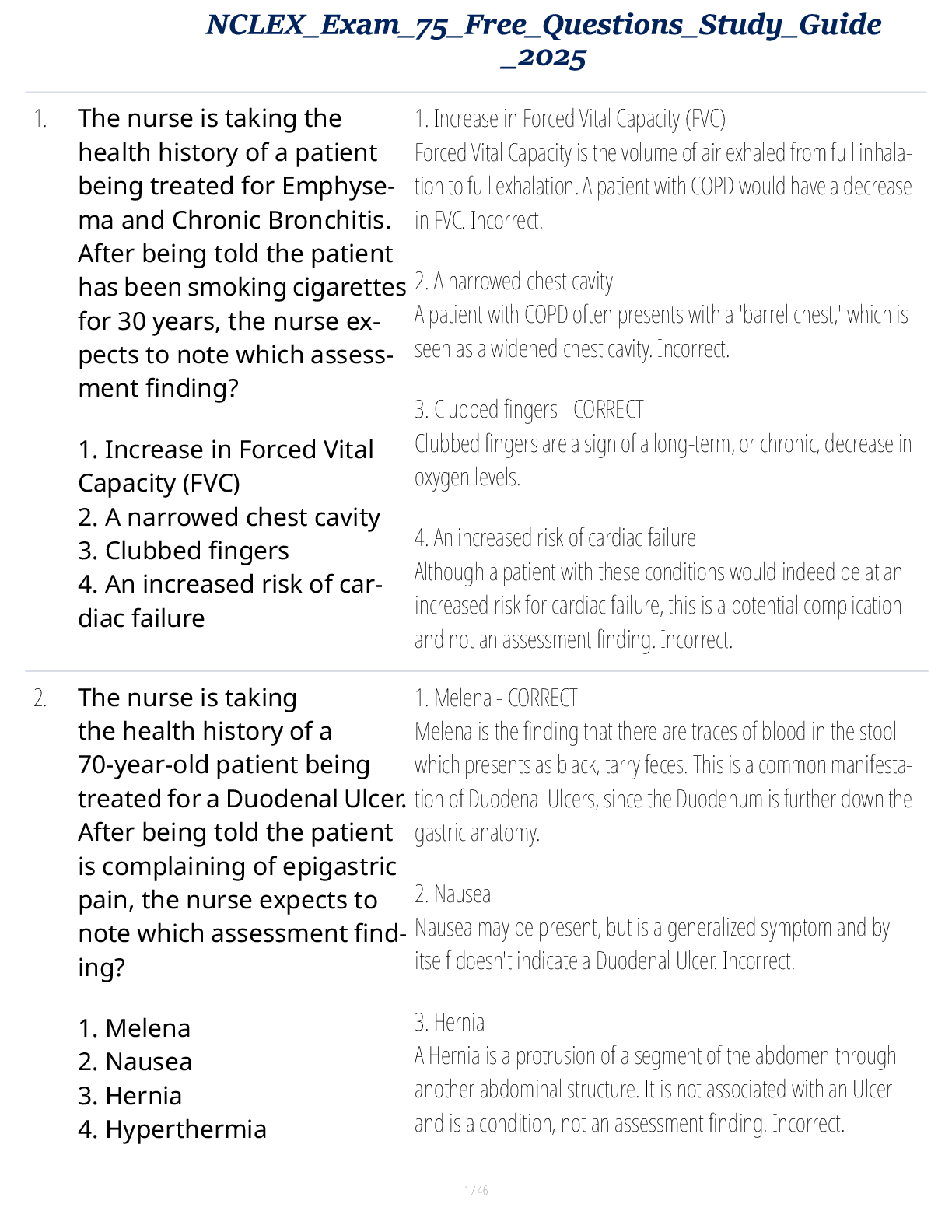
1. The nurse is providing discharge teaching for the client with leukemia. The client should be
told to avoid:
o A. Using oil- or cream-based soaps
o B. Flossing between the teeth
o C. The intake of salt
o D. Using an electric razor
Correct Answer: B. Flossing between the teeth
The client who is immune-suppressed and has bone marrow suppression should be taught not to
floss his teeth because platelets are decreased.
Option A: Oil or cream-based soap is allowed for leukemia patients because
these will prevent dry skin, which predisposes to skin injury.
Option C: A healthy amount of salt in the patient’s food is allowed.
Option D: The use of an electric razor is recommended because it reduces the
risk of injury to the skin that can cause bleeding.
2. The nurse is changing the ties of the client with a tracheostomy. The safest method of
changing the tracheostomy ties is to:
A. Apply the new tie before removing the old one.
B. Have a helper present.
C. Hold the tracheostomy with the nondominant hand while removing the old
tie.
D. Ask the doctor to suture the tracheostomy in place.
Correct Answer: A. Apply the new tie before removing the old one.
Leaving the old ties in place while securing the clean ties prevents inadvertent dislodging of the
tracheostomy tube.
Option B: Having a helper is good, but the helper might not prevent the client
from coughing out the tracheotomy.
Option C: Hold the tracheostomy with the nondominant hand while removing the
old tie is not the best way to prevent the client from coughing out the
tracheotomy.
Option D: Asking the doctor to suture the tracheostomy in place is unnecessary.
3. The nurse is monitoring a client following a lung resection. The hourly output from the chest
tube was 300mL. The nurse should give priority to:
A. Turning the client to the left side
B. Milking the tube to ensure patency
C. Slowing the intravenous infusion
D. Notifying the physician
Correct Answer: D. Notifying the physician
The output of 300 mL is indicative of hemorrhage and should be reported immediately.
Option A: Turning the client to the left side does nothing to help the client.
Options B and C: Milking the tube is done only with an order and will not help
in this situation, and slowing the intravenous infusion is not an appropriate action.
4. The infant is admitted to the unit with tetralogy of fallot. The nurse would anticipate an order
for which medication?
A. Digoxin
B. Epinephrine
C. Aminophylline
D. Atropine
Correct Answer: A. Digoxin
The infant with Tetralogy of Fallot involves four heart defects: A large ventricular septal defect
(VSD), Pulmonary stenosis, Right ventricular hypertrophy and, An overriding aorta. He will be
treated with digoxin to slow and strengthen the heart.
Option B: One of the side effects of epinephrine is the pounding, fast, or irregular
heartbeat, which is detrimental to a patient with Tetralogy of Fallot.
Option C: Increased or rapid heart rate is an adverse effect of aminophylline and
should be avoided for a patient with Tetralogy of Fallot.
Option D: Atropine prevents or abolishes bradycardia.
[Show More]