NURSING > EXAM > Hesi a2 module 2024 section i reading comprehensio n contains all complete 90 questions with ans (All)
Hesi a2 module 2024 section i reading comprehensio n contains all complete 90 questions with ans
Document Content and Description Below
Last updated: 2 years ago
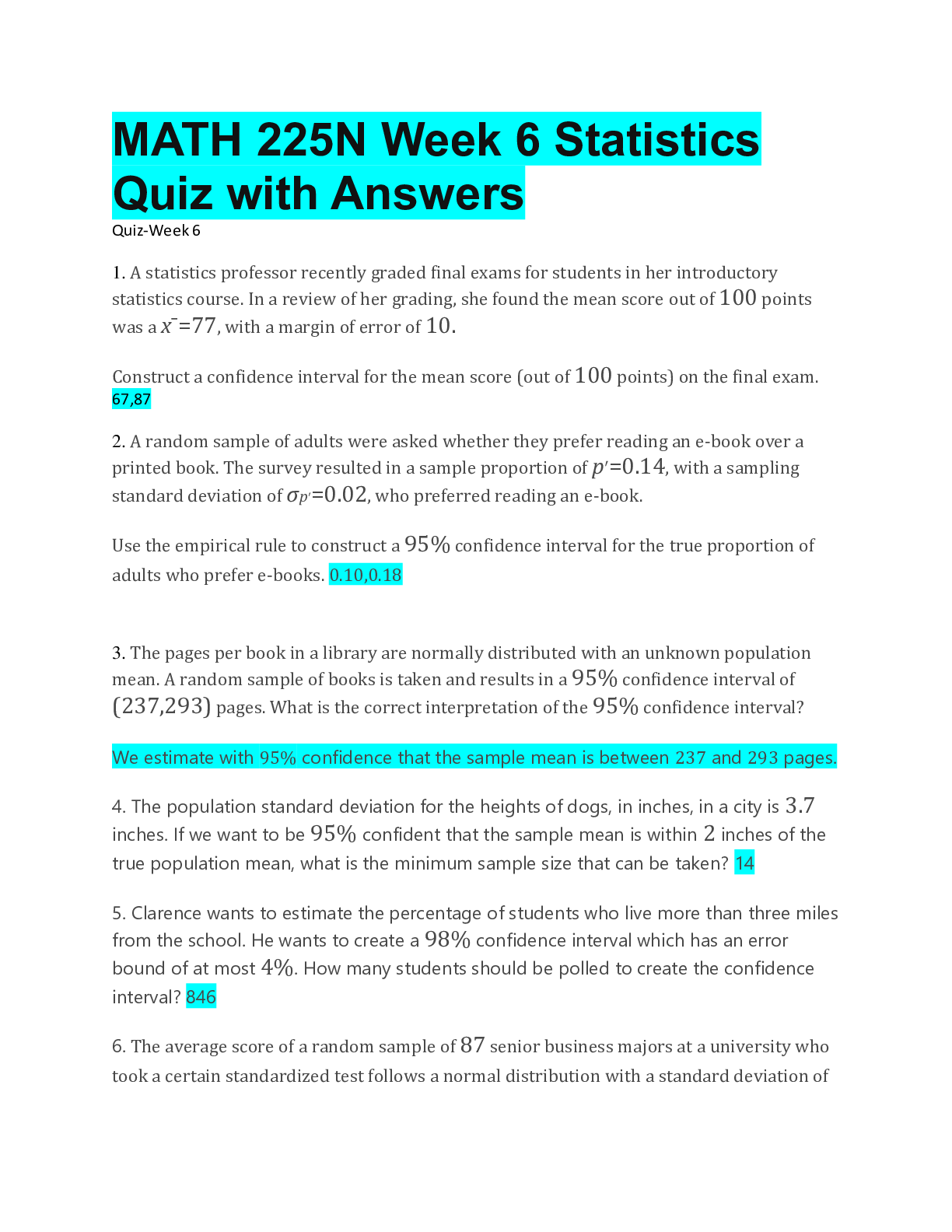
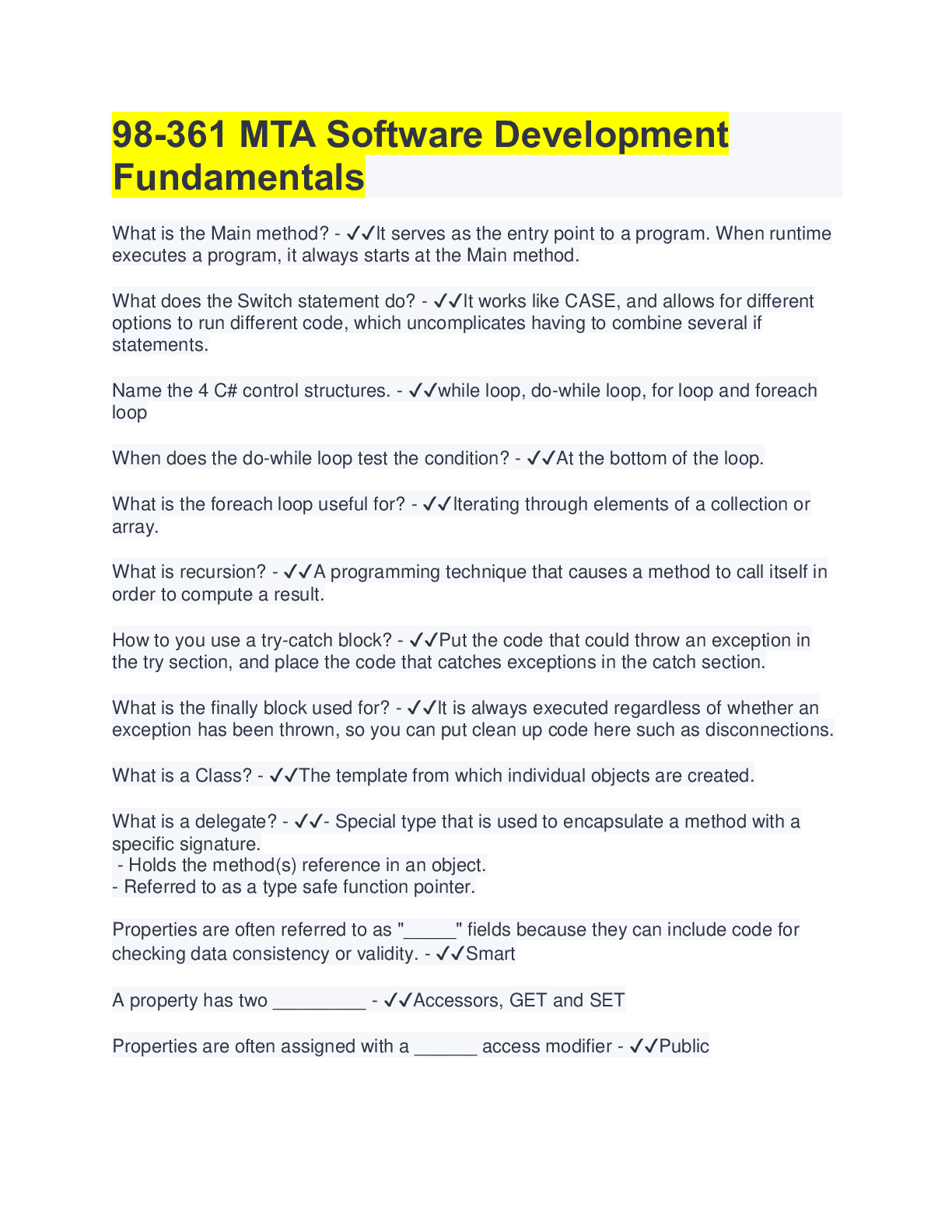
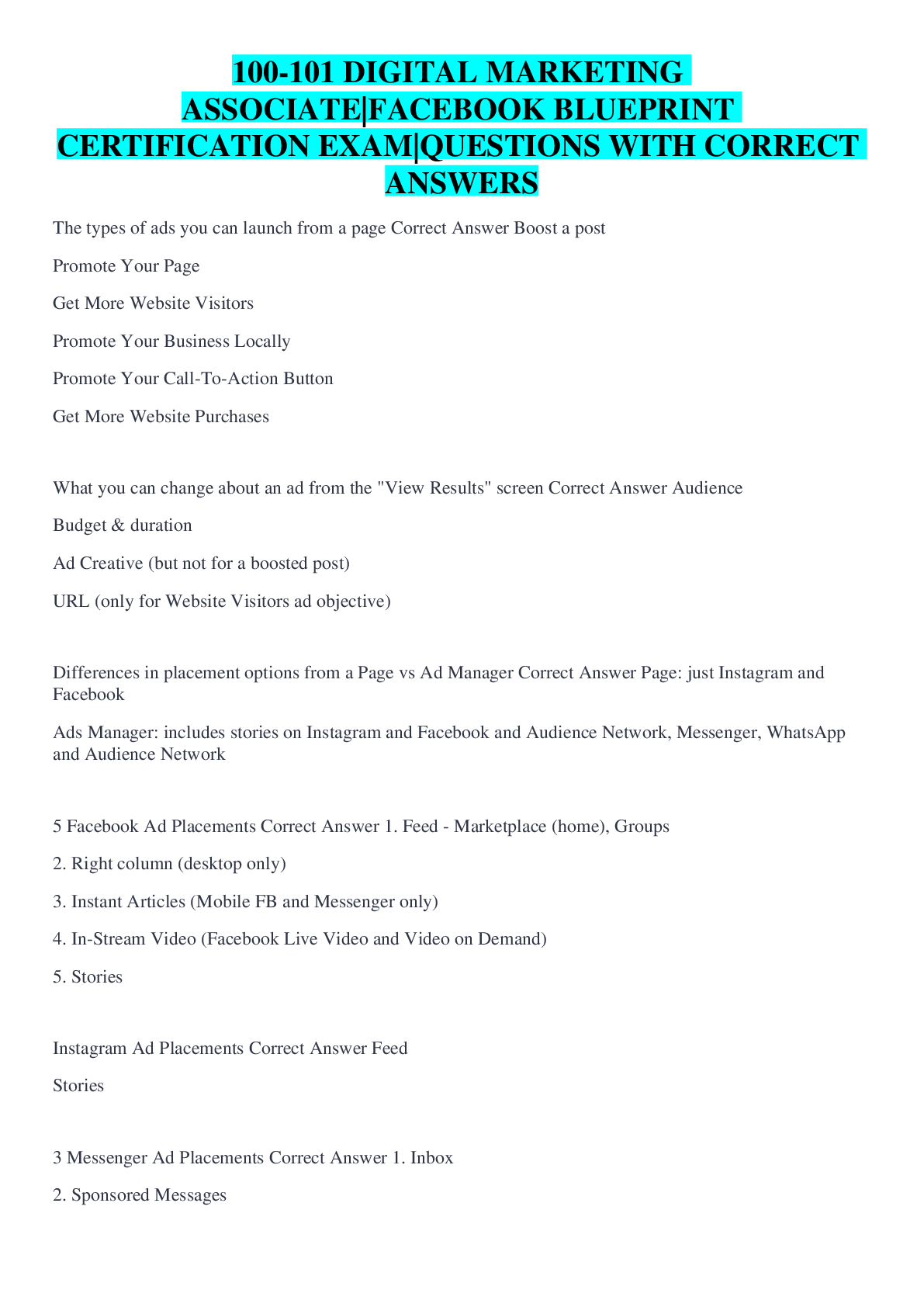
Preview 5 out of 69 pages
Instant download

Loading document previews ...
Buy this Document to get the Full Access Instantly
Provided by Students Who Aced it
We Verify Document Content to Gurantee Accuracy
Reviews( 0 )
Document information
Connected school, study & course
About the document
Uploaded On
Oct 16, 2024
Number of pages
69
Written in
All

Additional information
This document has been written for:
Uploaded
Oct 16, 2024
Downloads
0
Views
68
Topic Tags
Recommended For You
Get more on EXAM »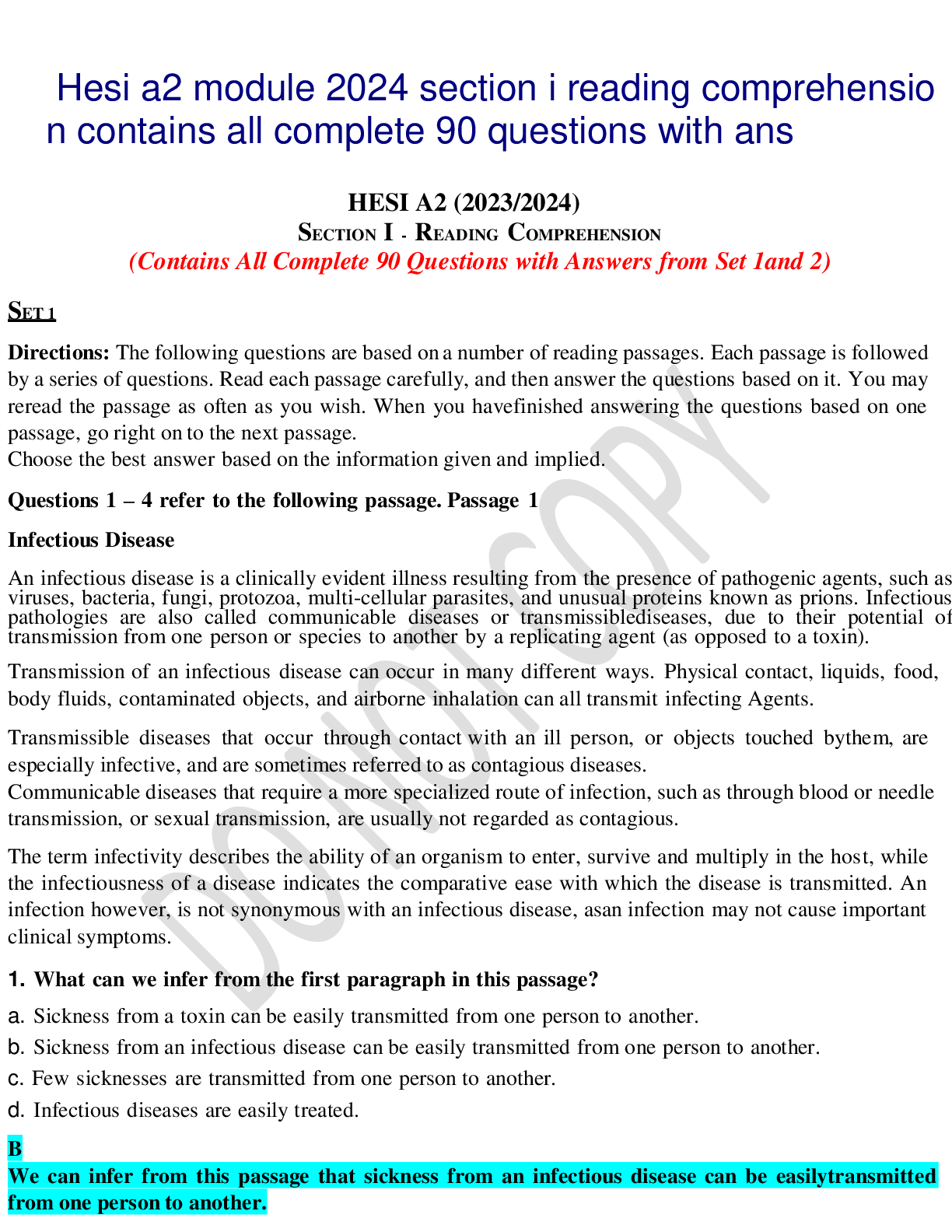
 SECTION I - READING COMPREHENSION (Contains All Complete 90 Questions with Answers from Set 1and 2).png)
HESI A2 Module (2021) SECTION I - READING COMPREHENSION (Conta...
CompTIA A+ Certification Exam Core 2 (220-1102) LATEST 2024 G...
(Complete 90 Q&A) Med Surg 2(II) – Exam 3 Questions with Corre...
ATI RN MED SURG PROCTORED EXAM 2023 LATEST EXAM; COMPLETE 90 Q...

TEST BANK for Essentials of Psychiatric Mental Health Nursing:...
Essentials of Psychiatric Nursing 2nd Edition Boyd TEST BANK

TEST BANK for Essentials of Psychiatric Nursing 2nd Edition by...
Test Bank for Essentials of Psychiatric Nursing 2nd Edition by...