Nutrition > TEST BANKS > Test Bank For Nutrition Through the Life Cycle, 7e Judith E. Brown, Answered (All)
Test Bank For Nutrition Through the Life Cycle, 7e Judith E. Brown, Answered
Document Content and Description Below
Last updated: 2 years ago
Preview 5 out of 319 pages
Instant download

Loading document previews ...
Buy this Document to get the Full Access Instantly
Provided by Students Who Aced it
We Verify Document Content to Gurantee Accuracy
Reviews( 0 )
Document information
Connected school, study & course
About the document
Uploaded On
Oct 17, 2024
Number of pages
319
Written in
All

Additional information
This document has been written for:
Uploaded
Oct 17, 2024
Downloads
0
Views
61
Topic Tags
Recommended For You
Get more on TEST BANKS »
Nutrition Through the Life Cycle 7th Edition By Judith E. Brow...
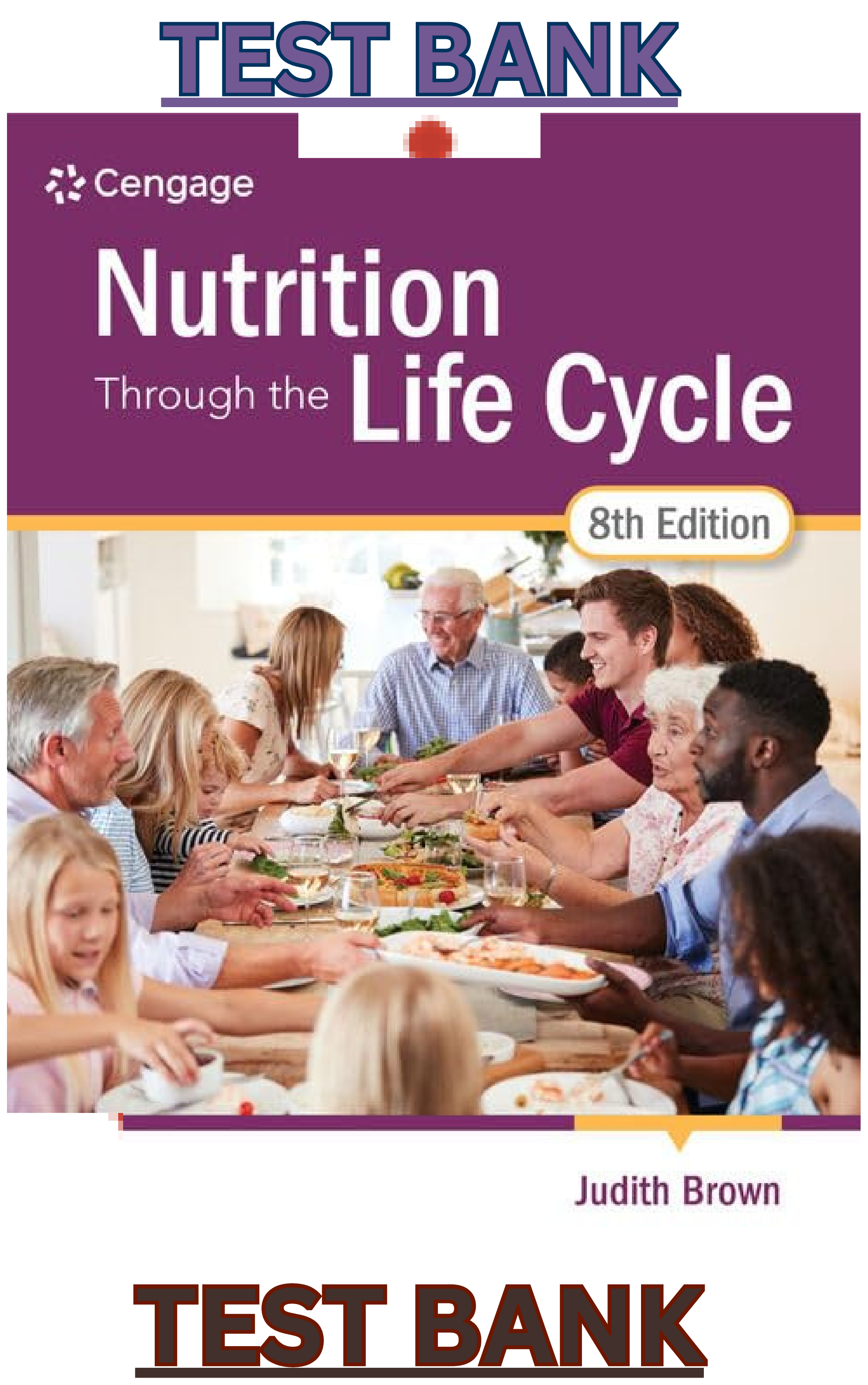
TEST BANK for Nutrition Through the Life Cycle 8th Edition by...
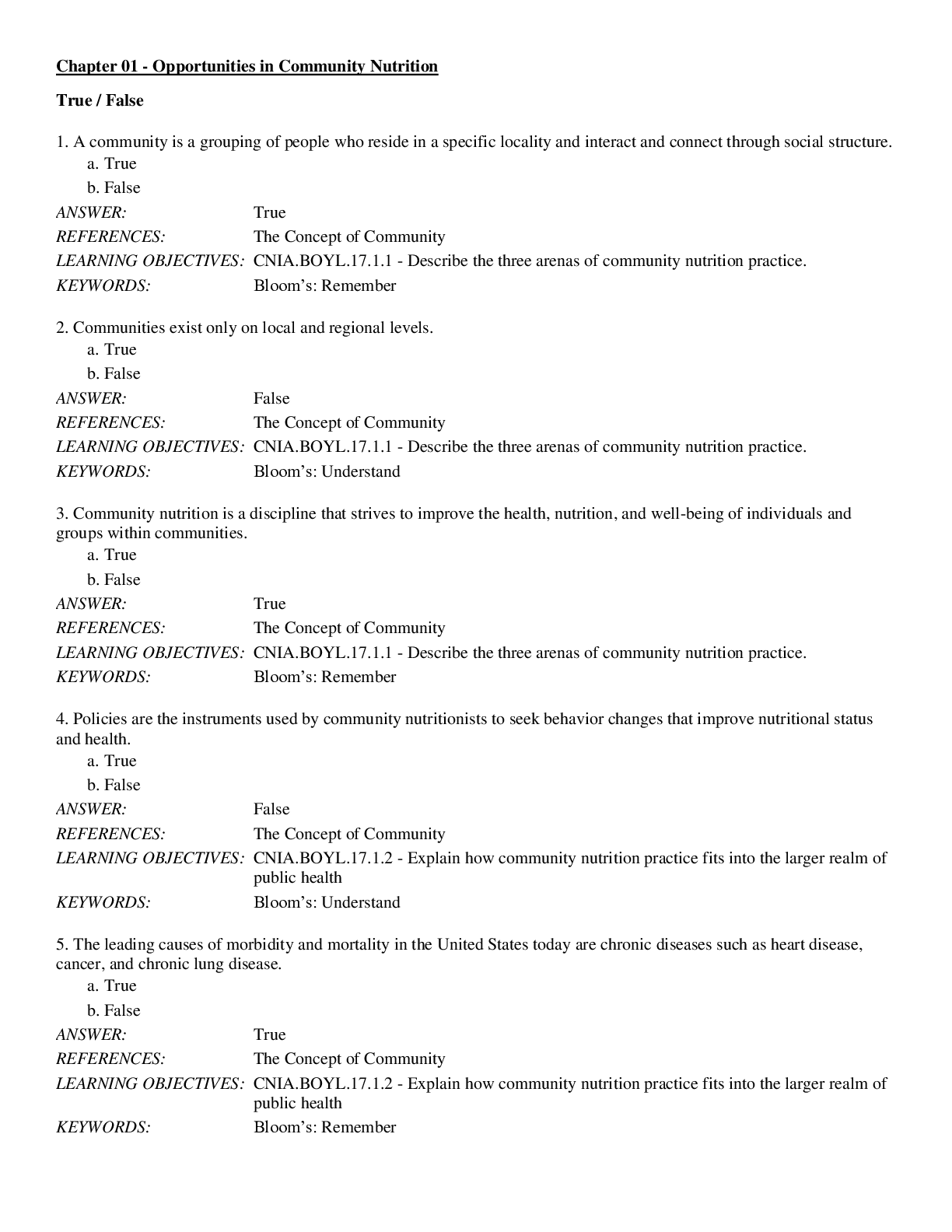
Community Nutrition in Action An Entrepreneurial Approach, 7e...
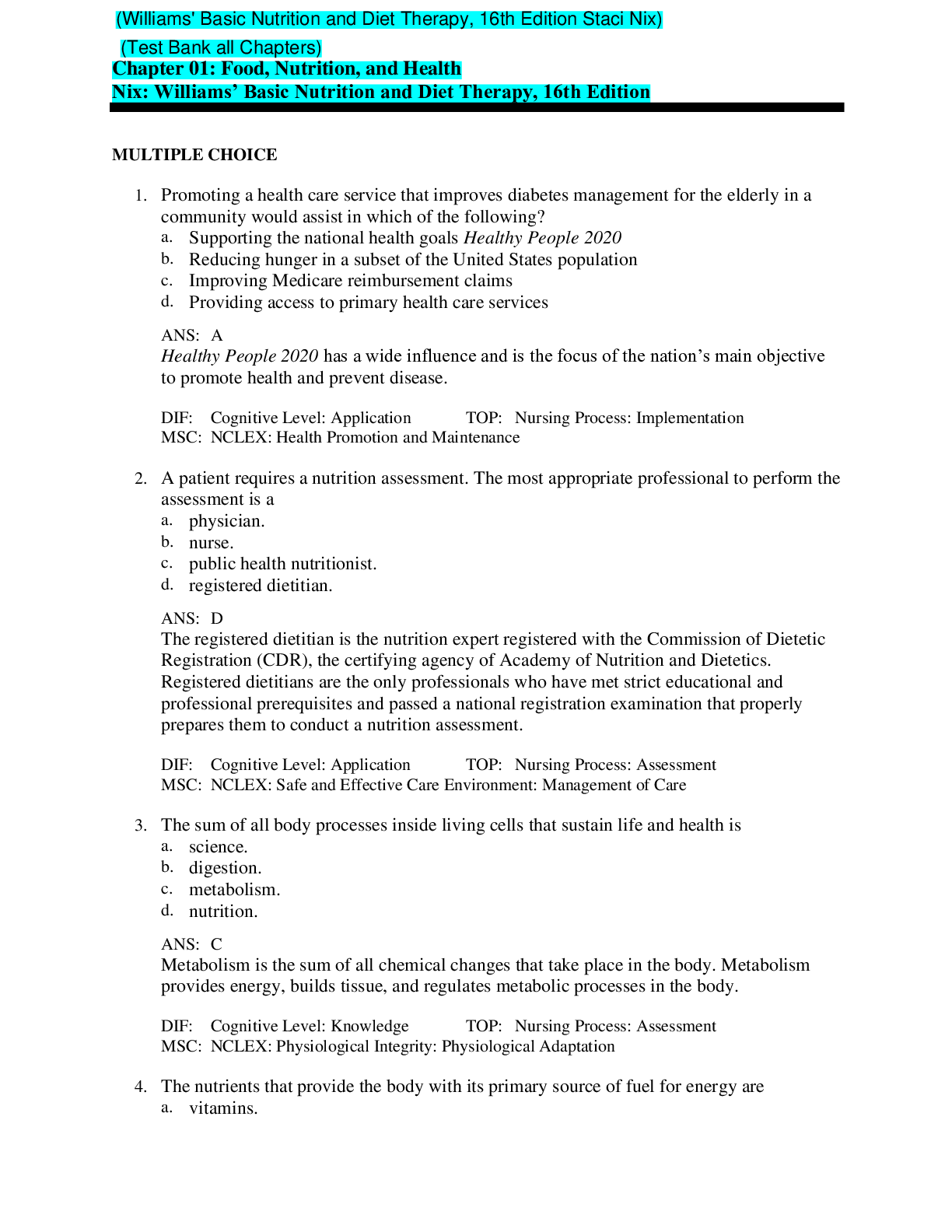
Williams' Basic Nutrition and Diet Therapy 16th Edition Staci...
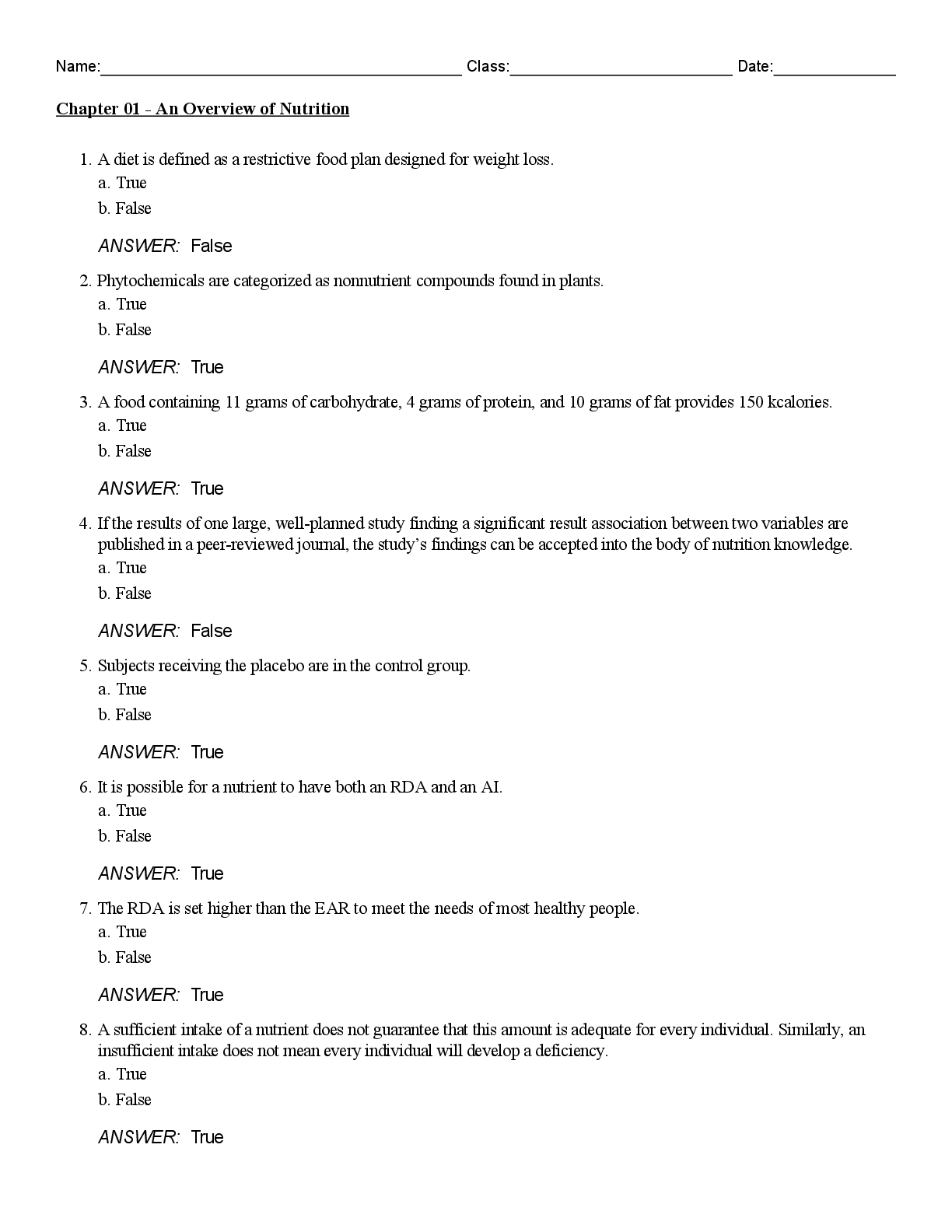
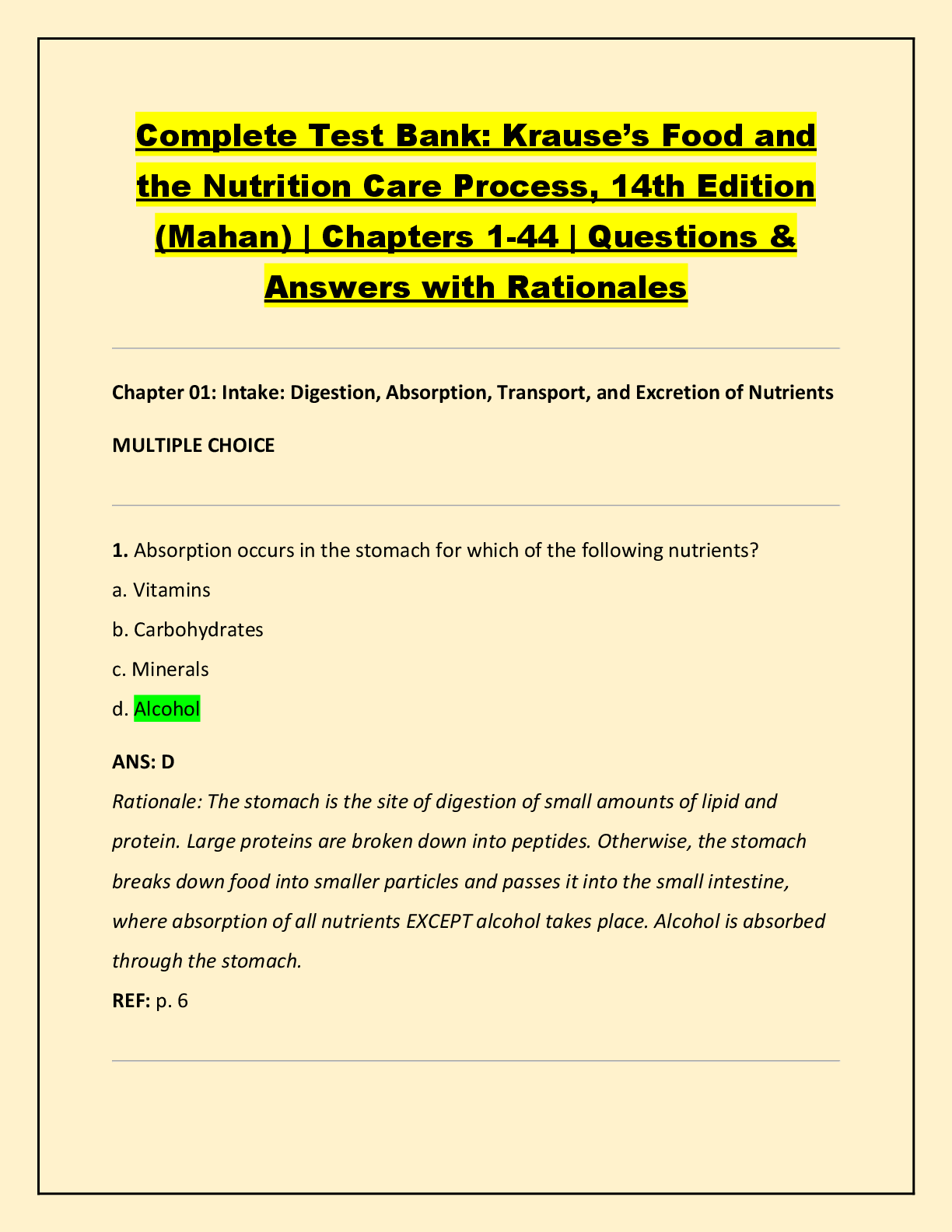
Lutz's Nutrition and Diet Therapy 7th Edition By Erin Mazur, N...
Nutrition Essentials A Personal Approach 3rd Edition By Wendy...
Advanced Nutrition and Human Metabolism 8th Edition By Saree...
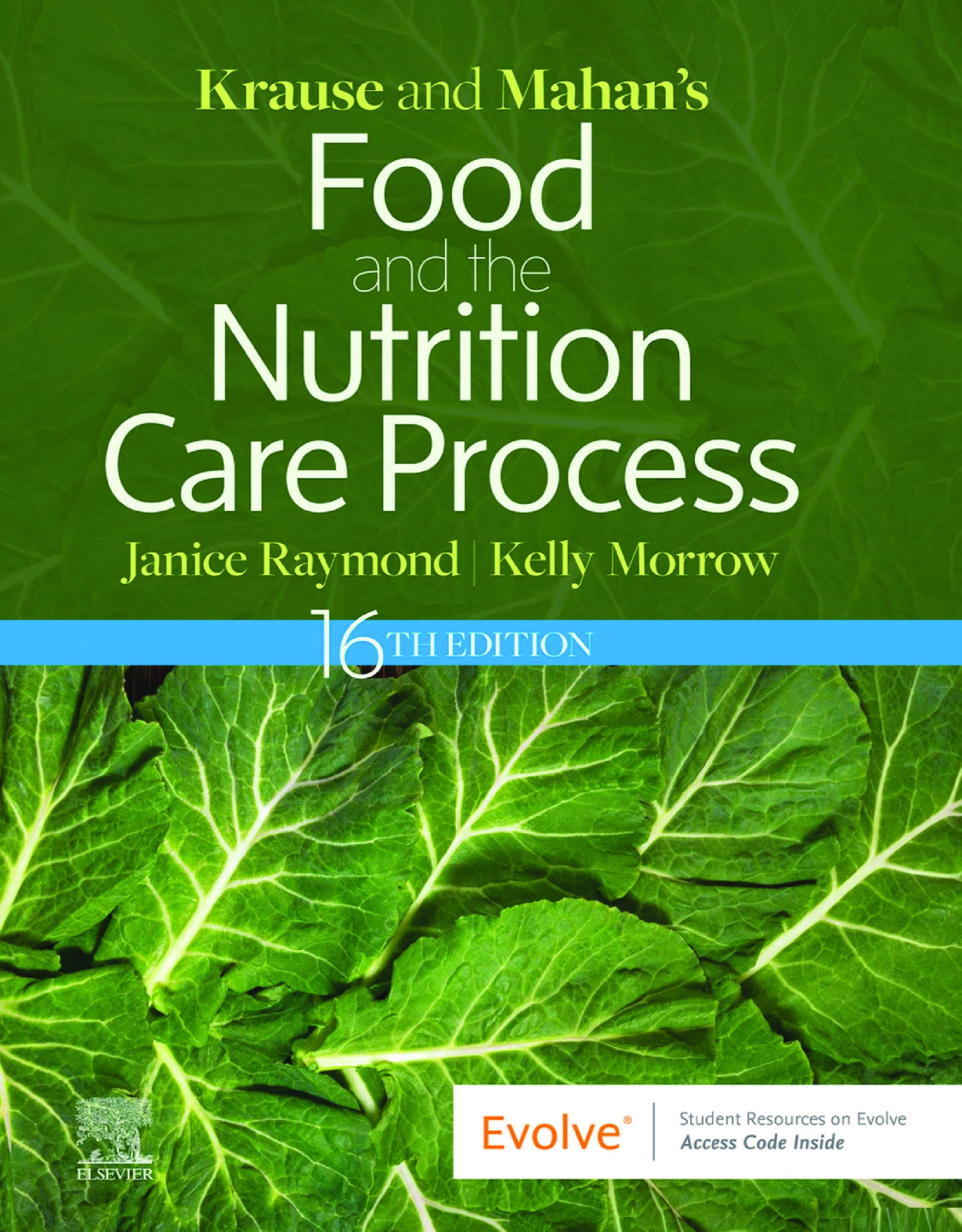
eBook Krause and Mahan’s Food and the Nutrition Care Process,...
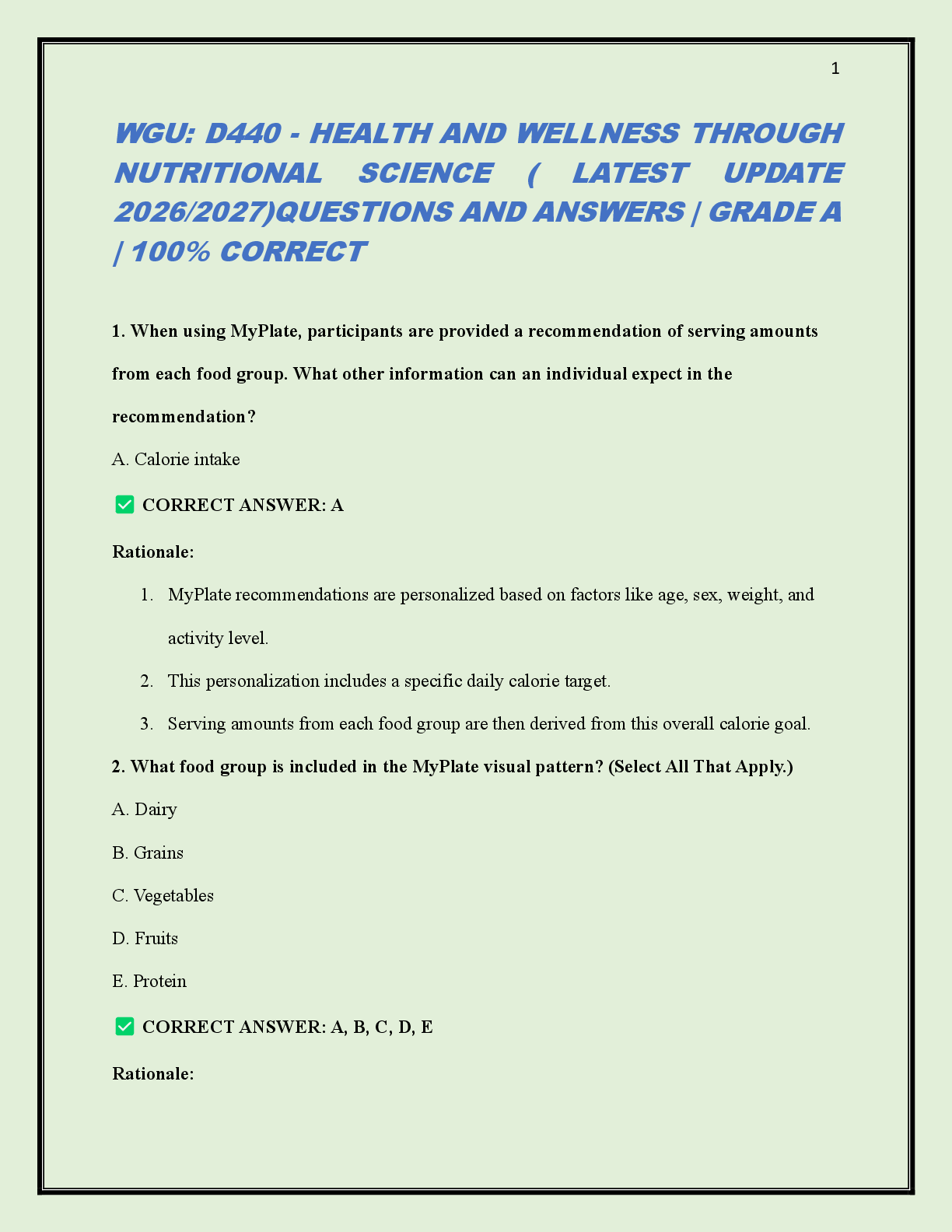
WGU D440 Health and Wellness Through Nutritional Science 2026/...

eBook EPUB [PDF] Sport Nutrition 4th Edition By Asker Jeukendr...