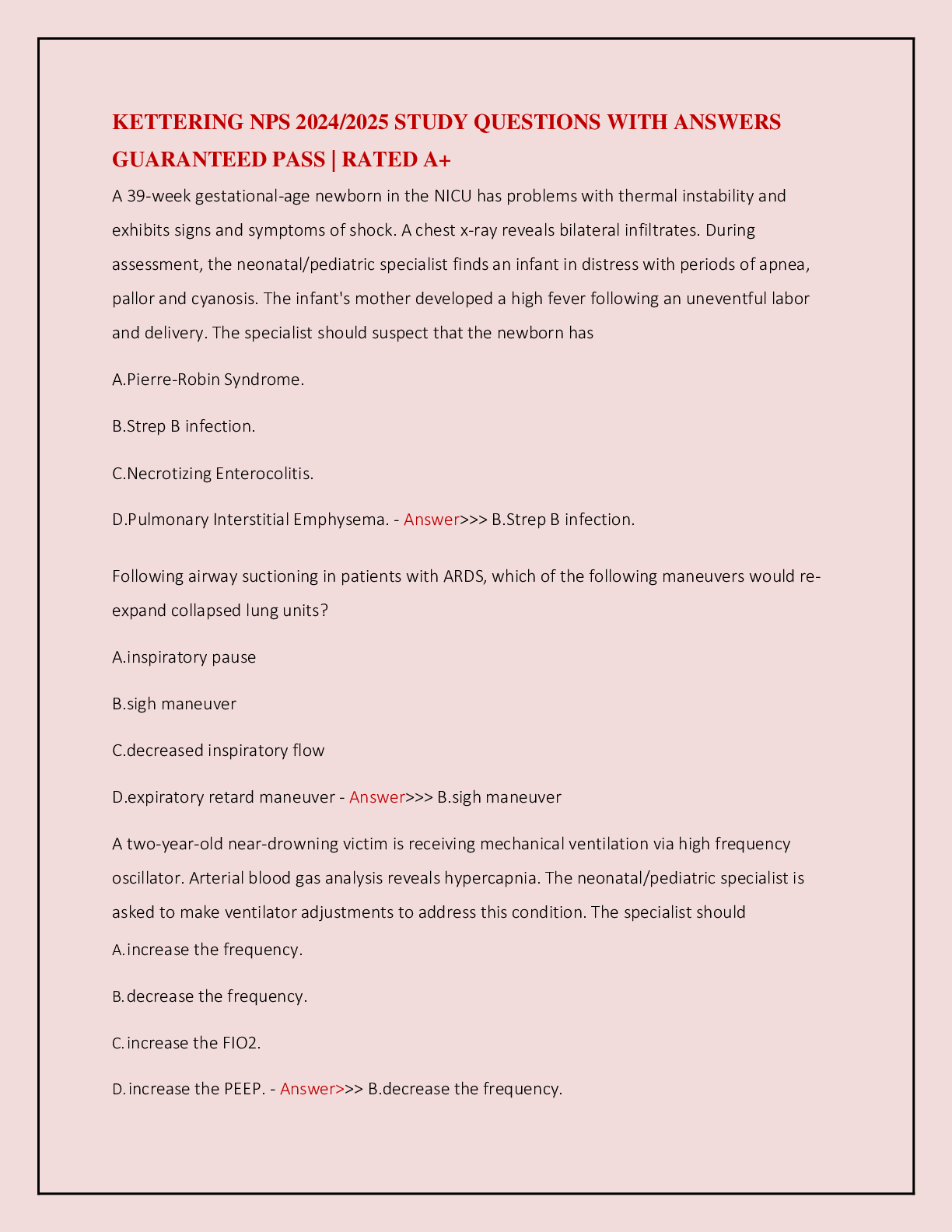
KETTERING NPS 2024 STUDY QUESTIONS WITH ANSWERS
GUARANTEED PASS | RATED A+
An infant born to a mother who smoked cigarettes during pregnancy is at a greater risk of
A. central nervous system dysfunction
B. intrauteri
...
KETTERING NPS 2024 STUDY QUESTIONS WITH ANSWERS
GUARANTEED PASS | RATED A+
An infant born to a mother who smoked cigarettes during pregnancy is at a greater risk of
A. central nervous system dysfunction
B. intrauterine growth retardation
C. teratogenic effects
D. lower intellectual level - Answer>>> B. intrauterine growth retardation (also low birth weight
and preterm birth)
Central nervous system dysfunction: alcohol consumption
teratogenic effects: alcohol consumption
lower intellectual level: maternal malnutrition or diabetes
Which of the following suction catheters would be most appropriate to use for a pediatric
patient with a size 6 mm ID ETT?
A. 6 Fr
B. 8 Fr
C. 10 Fr
D. 12 Fr - Answer>>> B. 8 Fr
While suctioning a 10-year old child receiving mechanical ventilation, the neonatal/ pediatric
specialist is unable to pass the suction catheter through the ETT. The specialist should
A. attempt to insert a smaller catheter
B. increase the suction pressure
C. remove and replace the ETT
D. deflate and reinflate the ETT cuff - Answer>>> C. remove and replace the ETT( the tube is
obstructed, airway emergency!)
The neonatal/ pediatric specialist is preparing to extubate a 14- year old patient who required
mechanical ventilation because of a sever exacerbation of asthma. The specialist has obtained
the equipment necessary for the procedure. in what sequence should the specialist perform the
procedure?
A. suction the airway, deflate the cuff, encourage the patient to cough, remove the tube during
exhalation, observe the patient for complications, and administer oxygen.
B. suction the airway, deflate the cuff, remove the tube at peak inspiration, encourage the
patient to cough, administer oxygen, and observe the patient for complications.
C. Deflate the cuff, suction the airway, remove the tube while suctioning, encourage the patient
to cough, administer oxygen, and observe the patient for complications.
D. Deflate the cuff, suction the airway, remove the tube at peak inspiration, encourage the
patient to cough, and observe t - Answer>>> B. suction the airway, deflate the cuff, remove the
tube at peak inspiration, encourage the patient to cough, administer oxygen, and observe the
patient for complications.
[Show More]