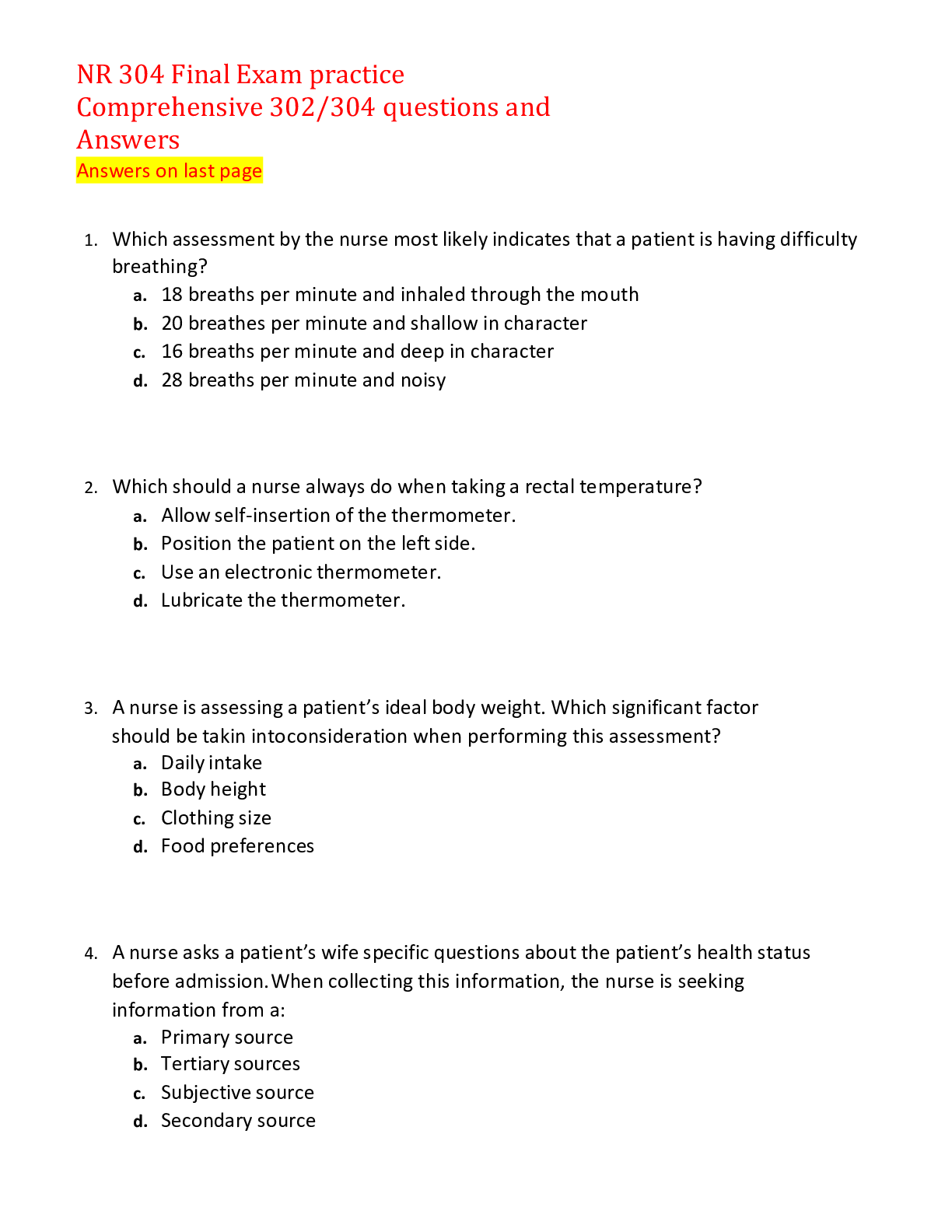
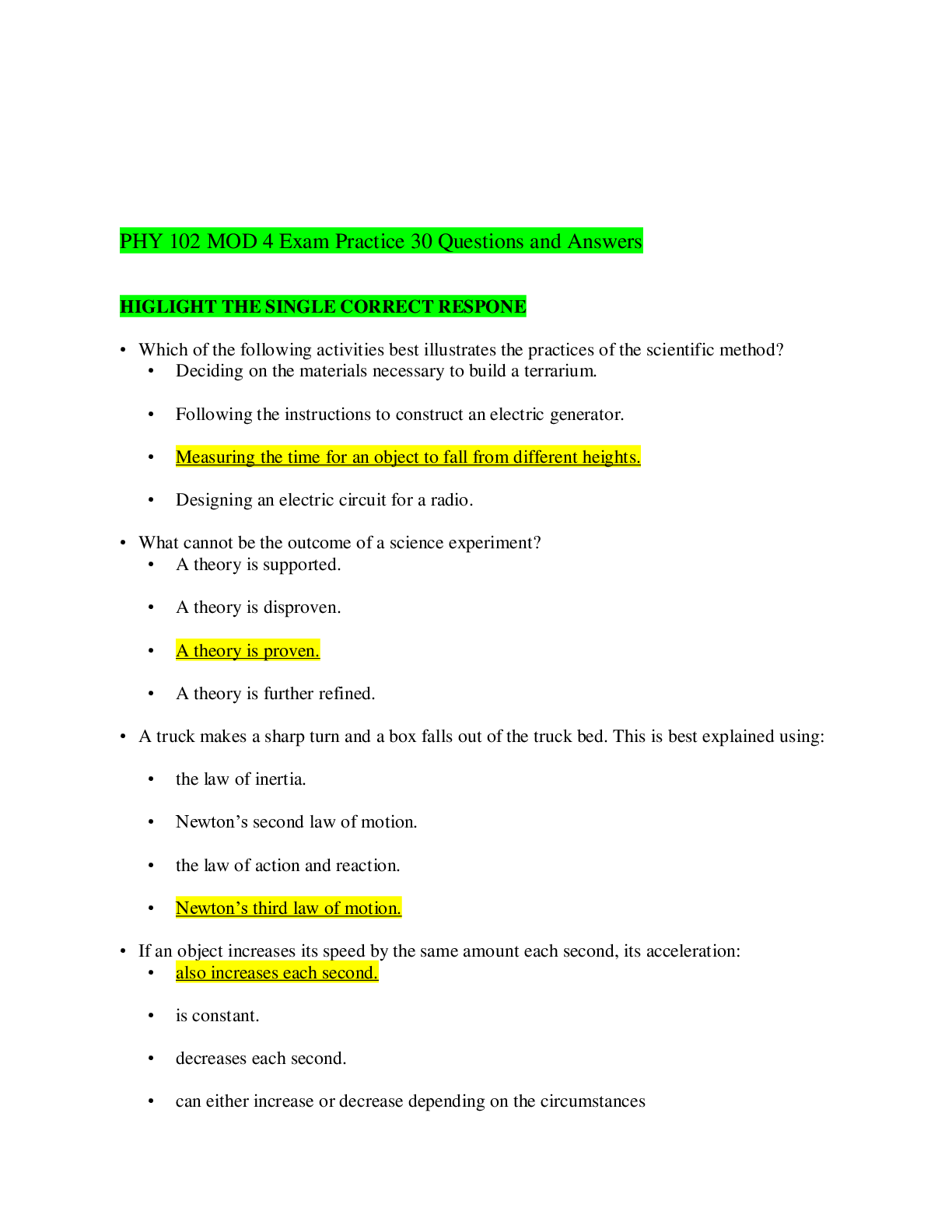
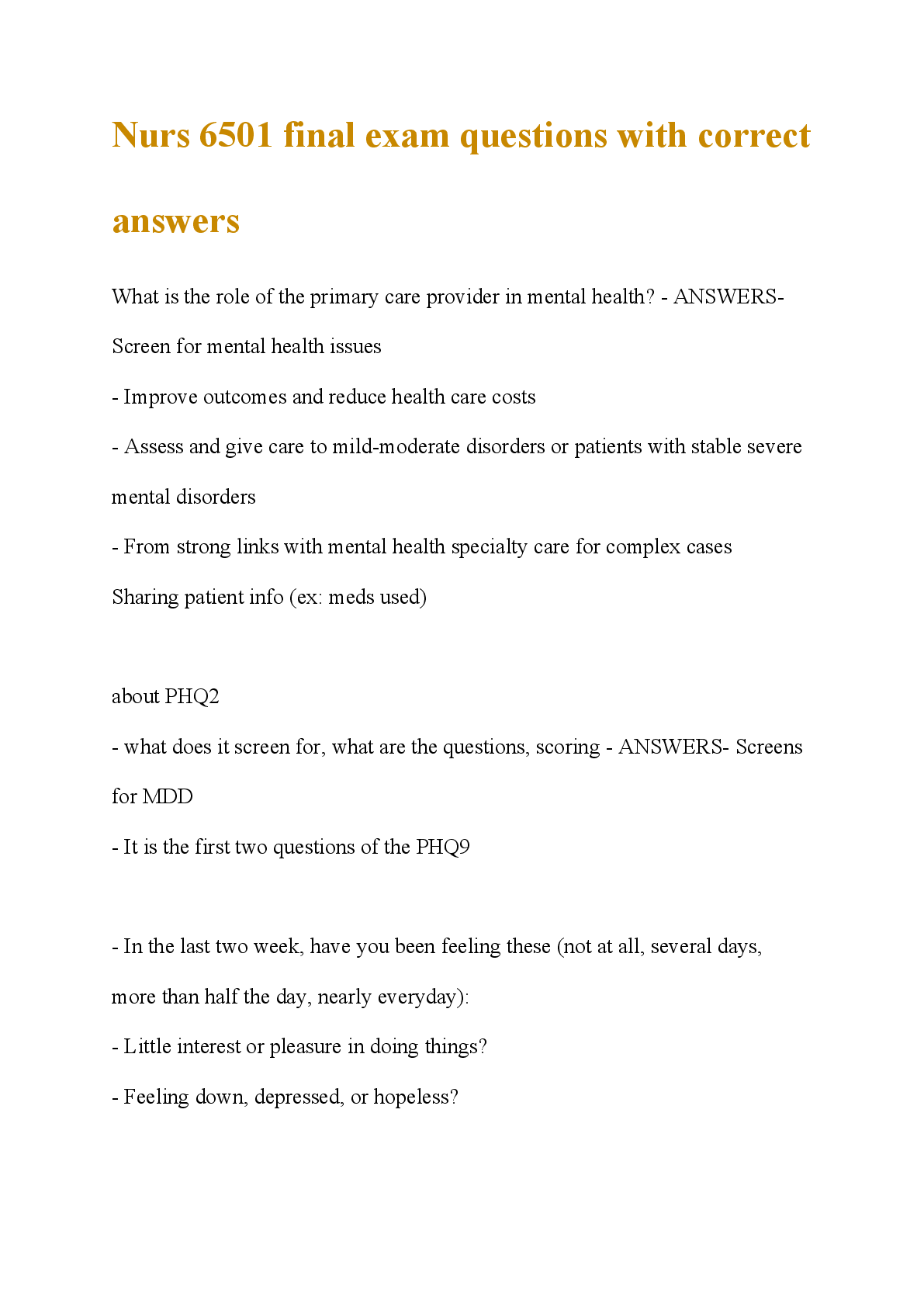
NURS 6501 MIDTERM EXAM REVIEW GUIDE (WEEKS 1-6) 2021 ALL SOLVED QUESTIONS
Document Content and Description Below
NURS 6501 Midterm Exam Review Guide (Weeks 1-6)
Cellular Processes and the Genetic Environment
• Describe cellular processes and alterations within cellular processes
The eight specialized cellular functions are mov
...
[Show More]
Last updated: 3 years ago
Preview 1 out of 53 pages
Instant download

Buy this Document to get the Full Access Instantly
Provided by Students Who Aced it
We Verify Document Content to Gurantee Accuracy
Reviews( 0 )
Document information
Connected school, study & course
About the document
Uploaded On
Mar 14, 2021
Number of pages
53
Written in
All

Additional information
This document has been written for:
Uploaded
Mar 14, 2021
Downloads
0
Views
77
Topic Tags
Recommended For You
Get more on EXAM »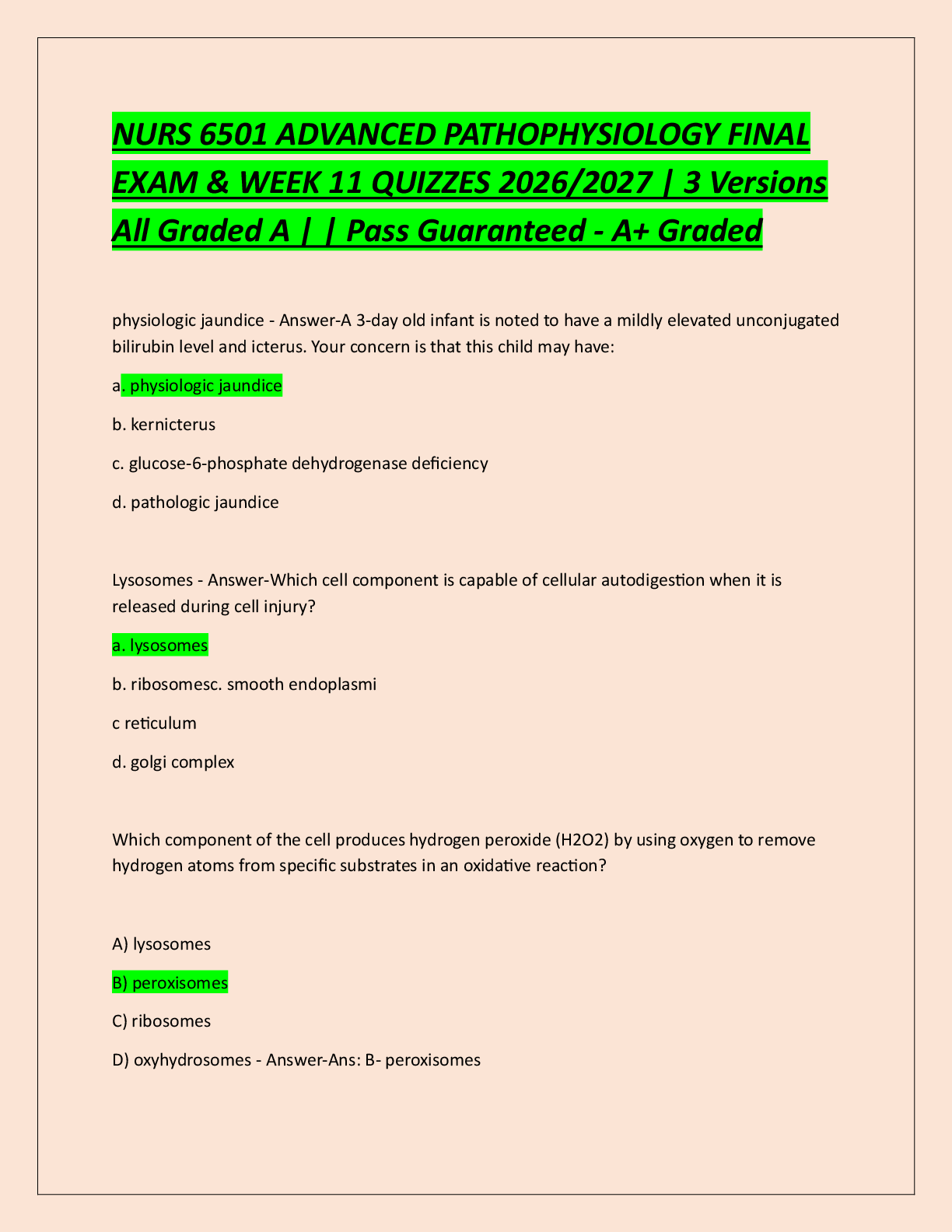
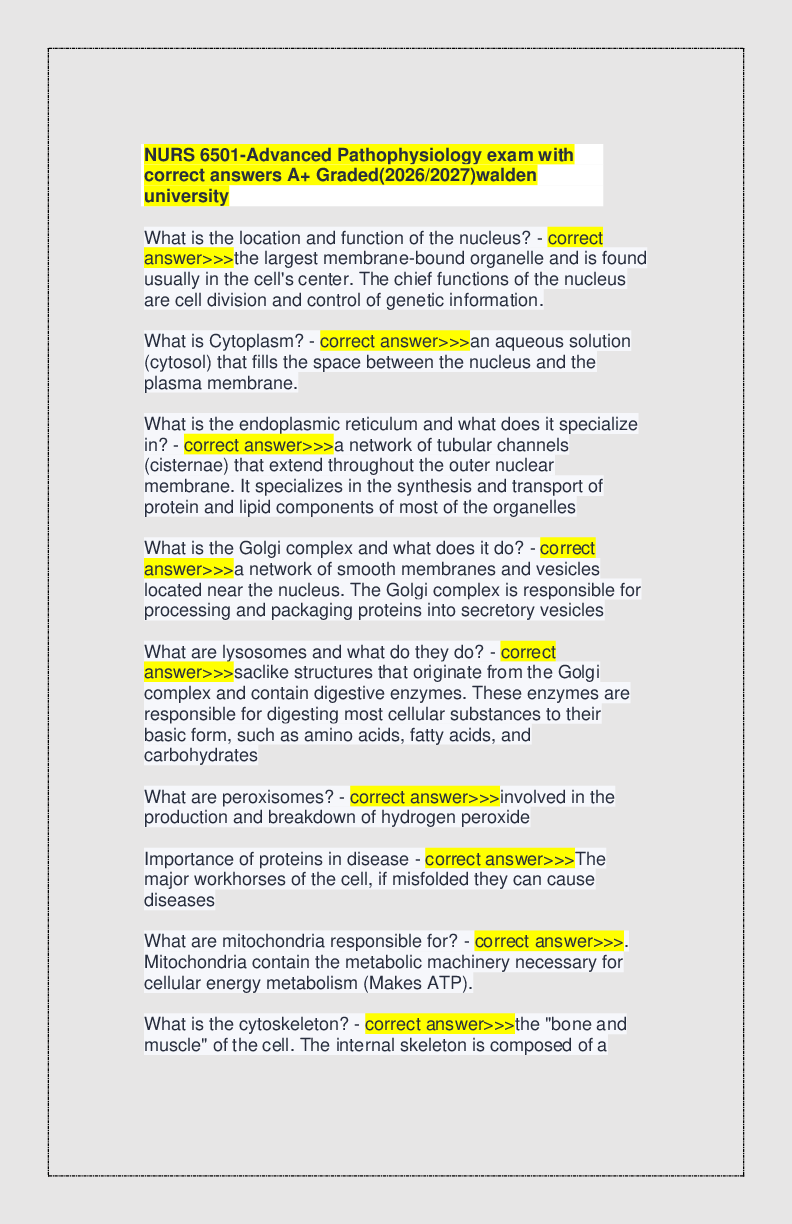
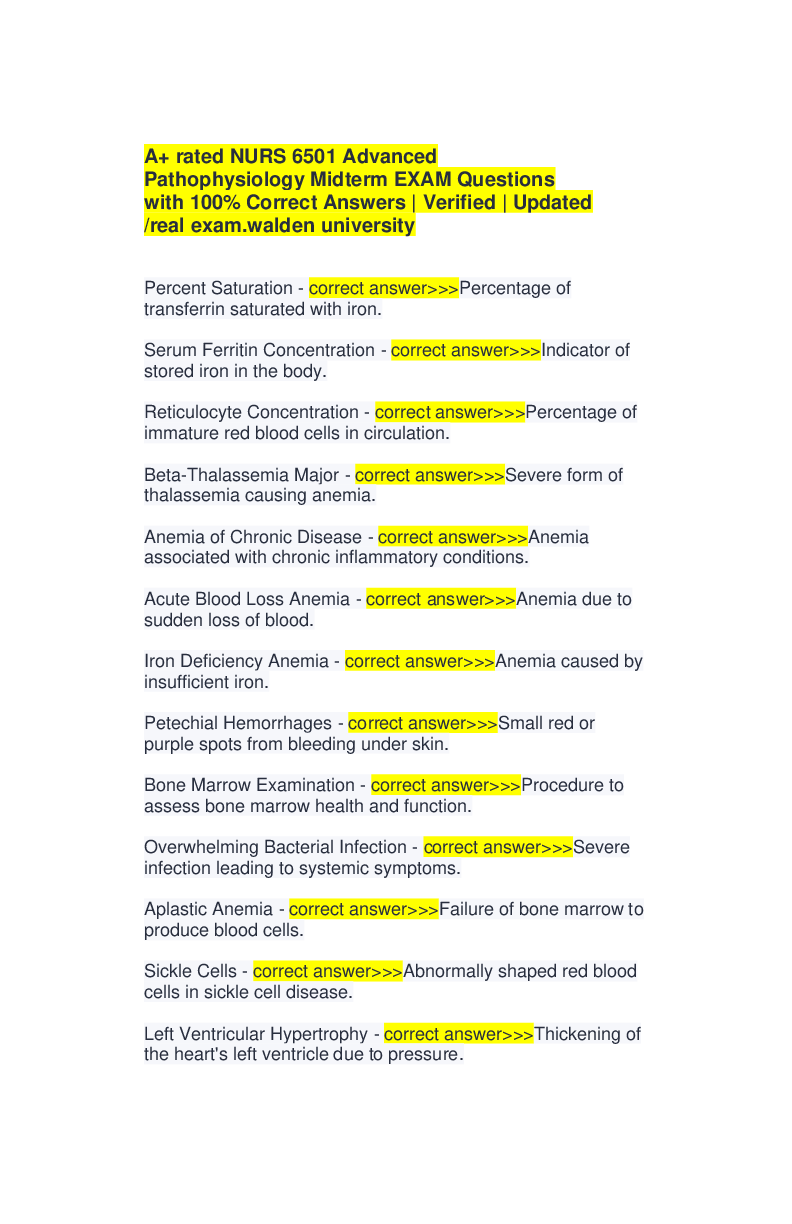

$15
11 Pages
NURS6501 Advanced Pathophysiology Midterm & Final Exam Part 1...

$9
25 Pages
NURS 6501 / NURS6501 Final Exam Advanced Pathophysiology Lates...
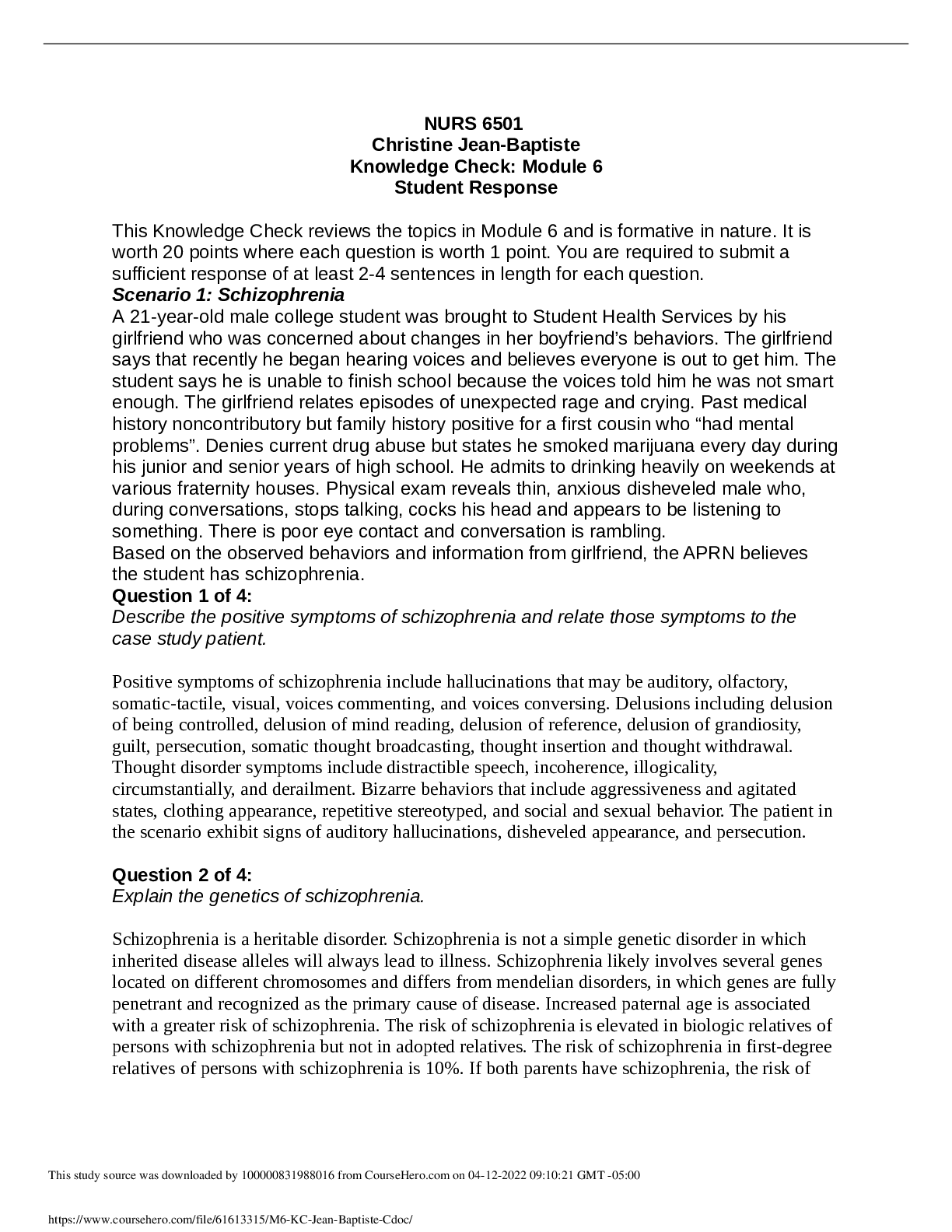
$7
8 Pages
NURS 6501 Christine Jean-Baptiste Knowledge Check: Module 6 St...
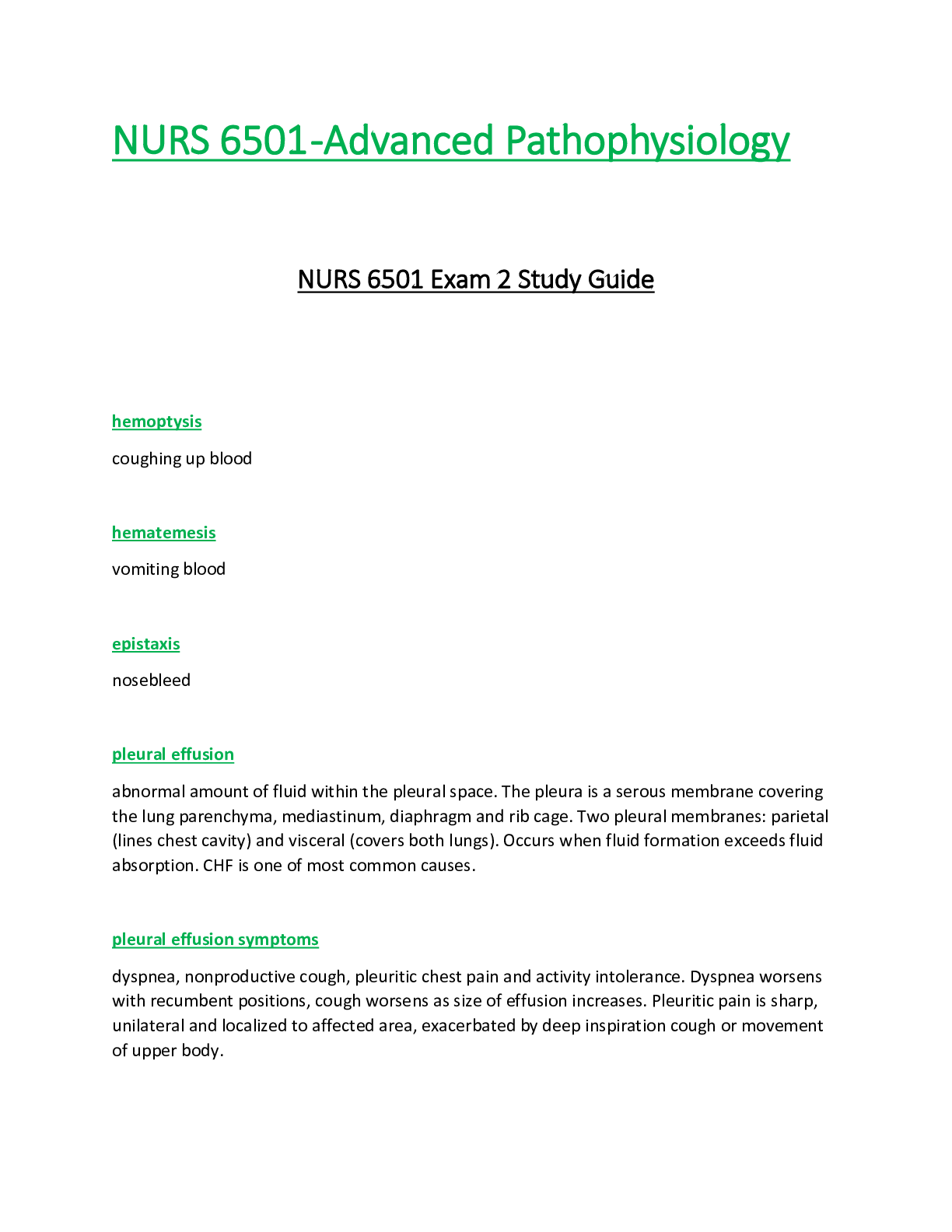
$8.5
16 Pages
NURS 6501 / NURS6501 Exam 2 Study Guide : Advanced Pathophysi...

$8
9 Pages
NURS 6501 / NURS6501: Advanced Pathophysiology - Module 2 Know...
$29
435 Pages
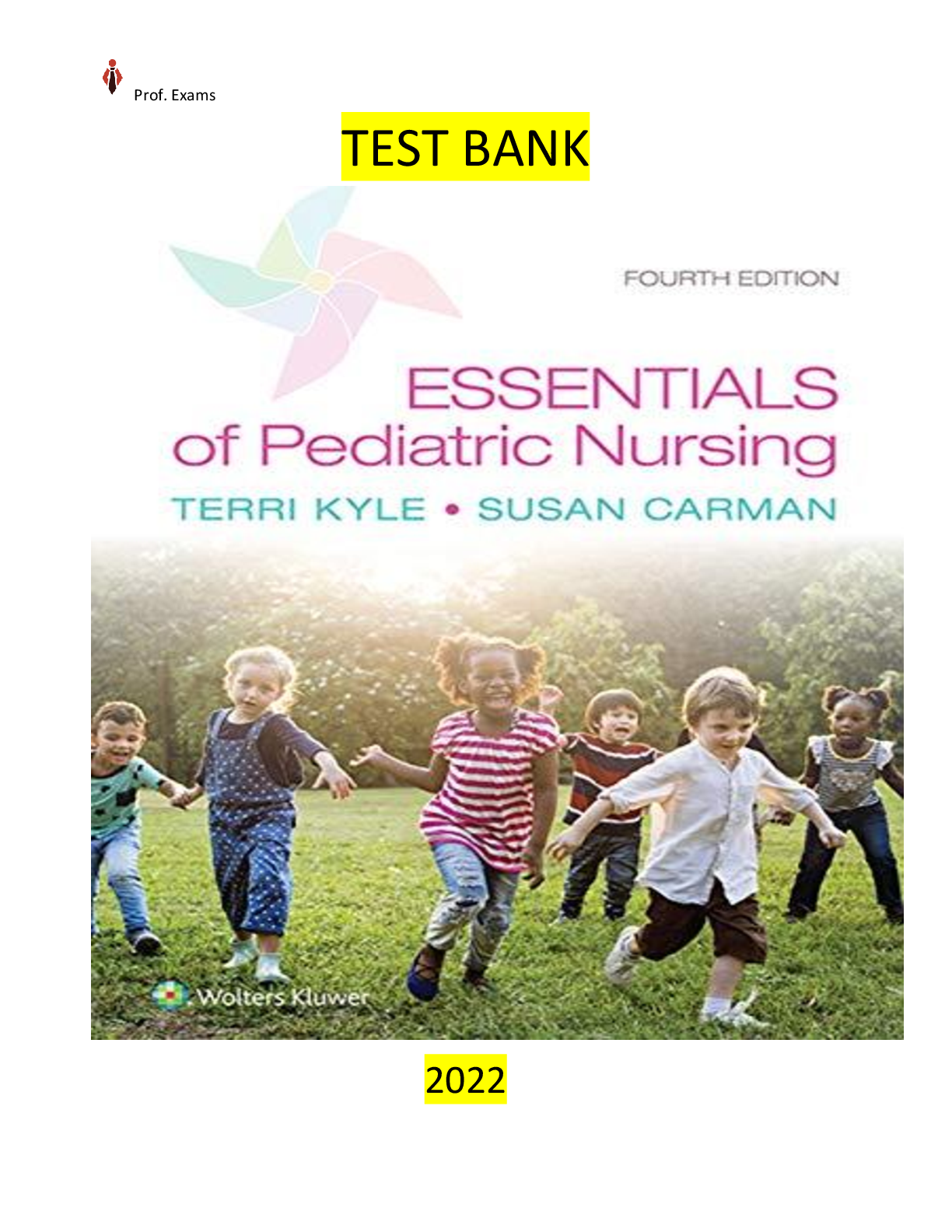
Test Bank for Essentials of Pediatric Nursing 4Ed.by Theresa K...
$11
16 Pages
.png)
.png)
_removed.png)
 (1)_removed.png)