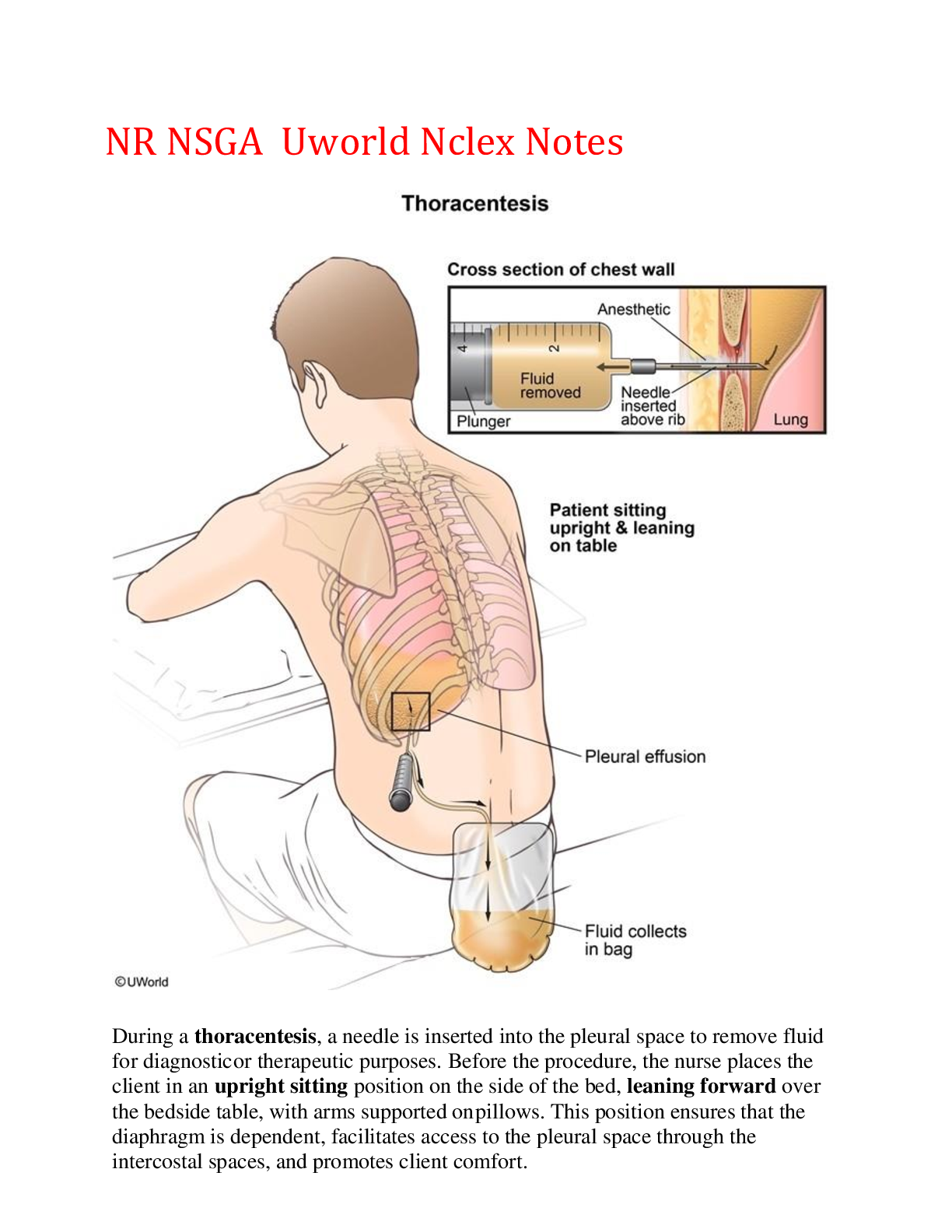
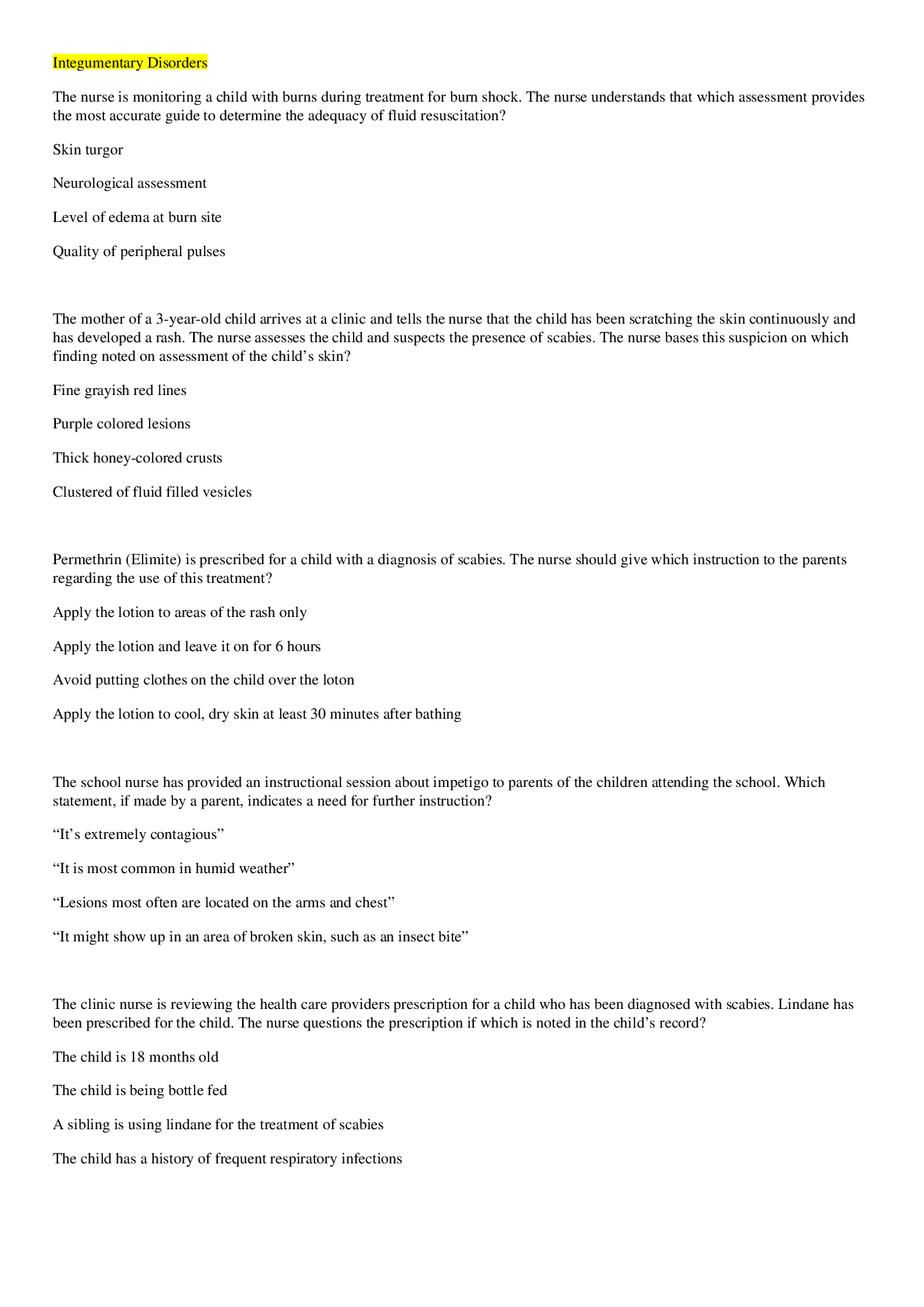
BSN 101 - Nclex review Uworld
Document Content and Description Below
•Clozapine is an atypical antipsychotic medication used to treat schizophrenia that has not responded to standard, more traditional treatment. Clozapine is associated with a risk for agranulocytosis and is therefore used
...
[Show More]
Last updated: 3 years ago
Preview 1 out of 143 pages
Instant download

Buy this Document to get the Full Access Instantly
Provided by Students Who Aced it
We Verify Document Content to Gurantee Accuracy
Reviews( 0 )
Document information
Connected school, study & course
About the document
Uploaded On
Mar 15, 2021
Number of pages
143
Written in
All

Additional information
This document has been written for:
Uploaded
Mar 15, 2021
Downloads
0
Views
228
Topic Tags
Recommended For You
Get more on NCLEX »

$20.5
841 Pages
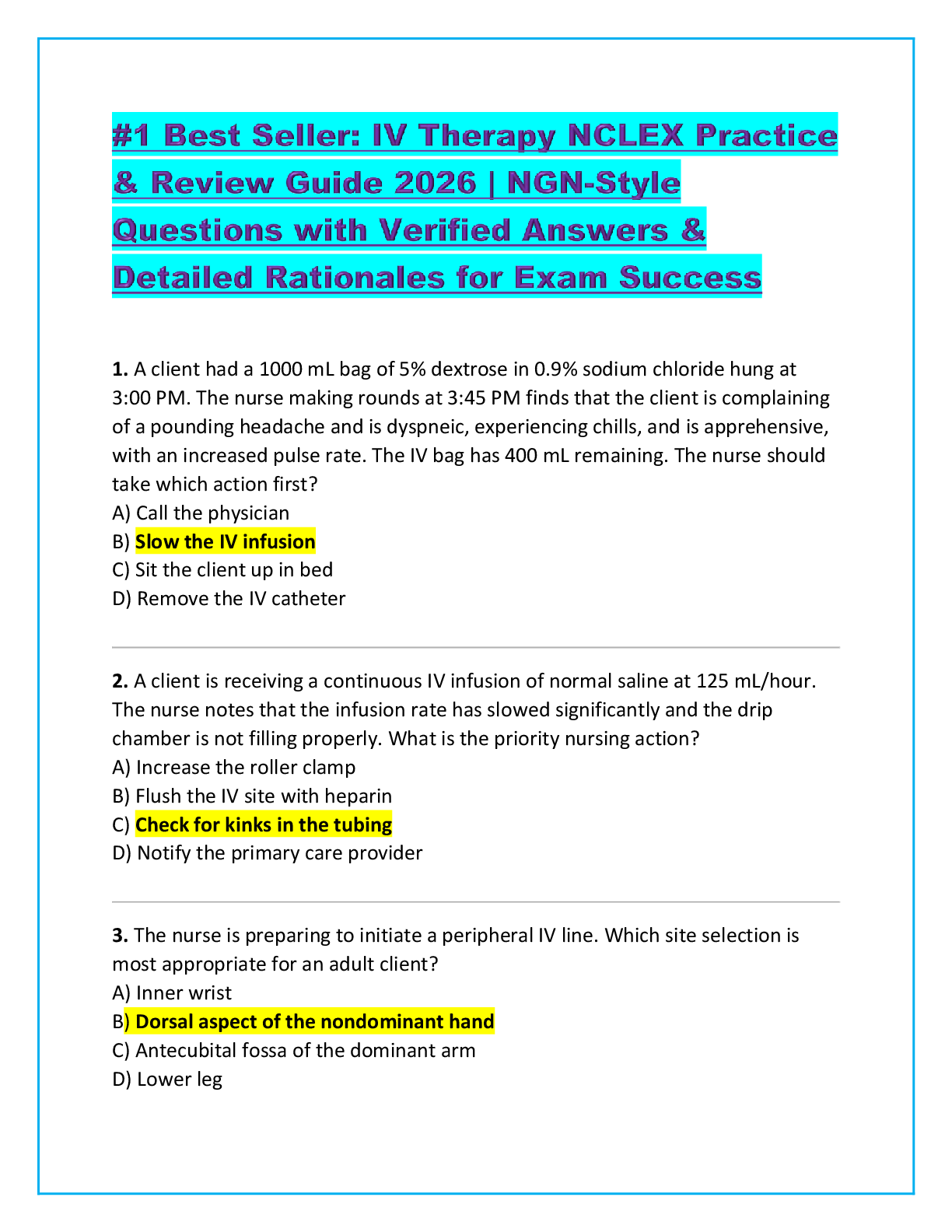
NCSBN TEST BANK FOR THE NCLEX RN (NGN) 2024/2025 VERIFIED QUES...
$22
1219 Pages
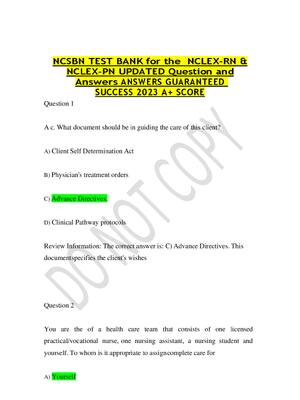
NCSBN TEST BANK for the NCLEX-RN & NCLEX-PN UPDATED Question...

$25
277 Pages
SAUNDERS COMPREHENSIVE REVIEW FOR NCLEX TEST BANK latest 2022/...

$22.5
307 Pages
TEST BANK for Davis Advantage for Psychiatric Mental Health Nu...

$17
588 Pages
Test Bank For Fundamentals of Nursing 11th Edition Potter Perr...

$16
496 Pages
TEST BANK for Essentials of Psychiatric Mental Health Nursing:...
More related documents below