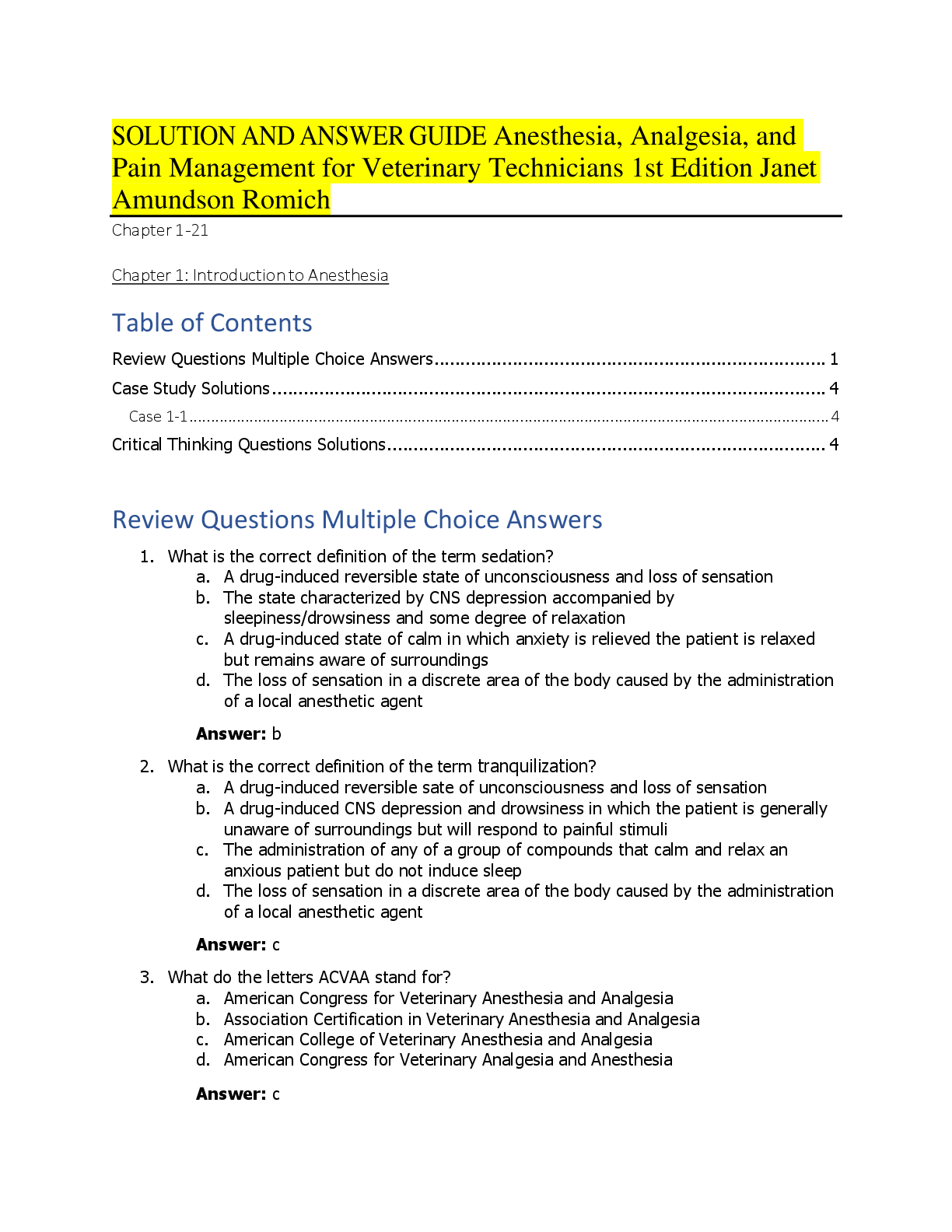
Instructor Manual For Nutrition Through the Life Cycle, 7e Judith E. Brown, All Chapters Covered-Resources Included in This Document
1. Lists of chapter learning objectives and key terms
2. “Lecture launcher”: true/fal
...
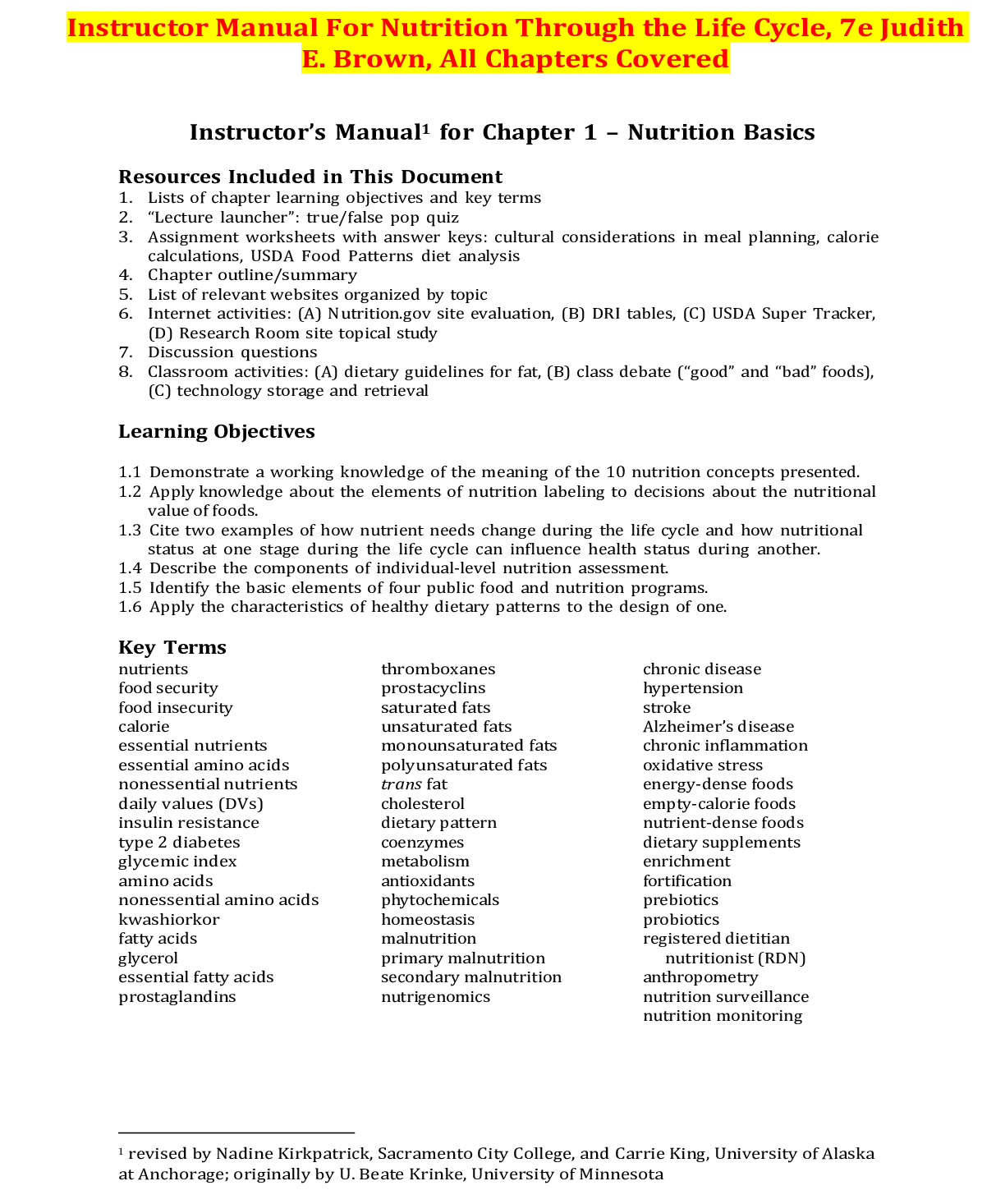
Instructor Manual For Nutrition Through the Life Cycle, 7e Judith E. Brown, All Chapters Covered-Resources Included in This Document
1. Lists of chapter learning objectives and key terms
2. “Lecture launcher”: true/false pop quiz
3. Assignment worksheets with answer keys: cultural considerations in meal planning, calorie
calculations, USDA Food Patterns diet analysis
4. Chapter outline/summary
5. List of relevant websites organized by topic
6. Internet activities: (A) Nutrition.gov site evaluation, (B) DRI tables, (C) USDA Super Tracker,
(D) Research Room site topical study
7. Discussion questions
8. Classroom activities: (A) dietary guidelines for fat, (B) class debate (“good” and “bad” foods),
(C) technology storage and retrieval
Learning Objectives
1.1 Demonstrate a working knowledge of the meaning of the 10 nutrition concepts presented.
1.2 Apply knowledge about the elements of nutrition labeling to decisions about the nutritional
value of foods.
1.3 Cite two examples of how nutrient needs change during the life cycle and how nutritional
status at one stage during the life cycle can influence health status during another.
1.4 Describe the components of individual-level nutrition assessment.
1.5 Identify the basic elements of four public food and nutrition programs.
1.6 Apply the characteristics of healthy dietary patterns to the design of one.
Key Terms
nutrients
food security
food insecurity
calorie
essential nutrients
essential amino acids
nonessential nutrients
daily values (DVs)
insulin resistance
type 2 diabetes
glycemic index
amino acids
nonessential amino acids
kwashiorkor
fatty acids
glycerol
essential fatty acids
prostaglandins
thromboxanes
prostacyclins
saturated fats
unsaturated fats
monounsaturated fats
polyunsaturated fats
trans fat
cholesterol
dietary pattern
coenzymes
metabolism
antioxidants
phytochemicals
homeostasis
malnutrition
primary malnutrition
secondary malnutrition
nutrigenomics
chronic disease
hypertension
stroke
Alzheimer’s disease
chronic inflammation
oxidative stress
energy-dense foods
empty-calorie foods
nutrient-dense foods
dietary supplements
enrichment
fortification
prebiotics
probiotics
registered dietitian
nutritionist (RDN)
anthropometry
nutrition surveillance
nutrition monitoring
1 revised by Nadine Kirkpatrick, Sacramento City College, and Carrie King, University of Alaska
at Anchorage; originally by U. Beate Krinke, University of Minnesota
Lecture Launchers
Ask students to identify themselves by sharing why they enrolled in the class (interest or
requirement) and what they would like to gain from this course.
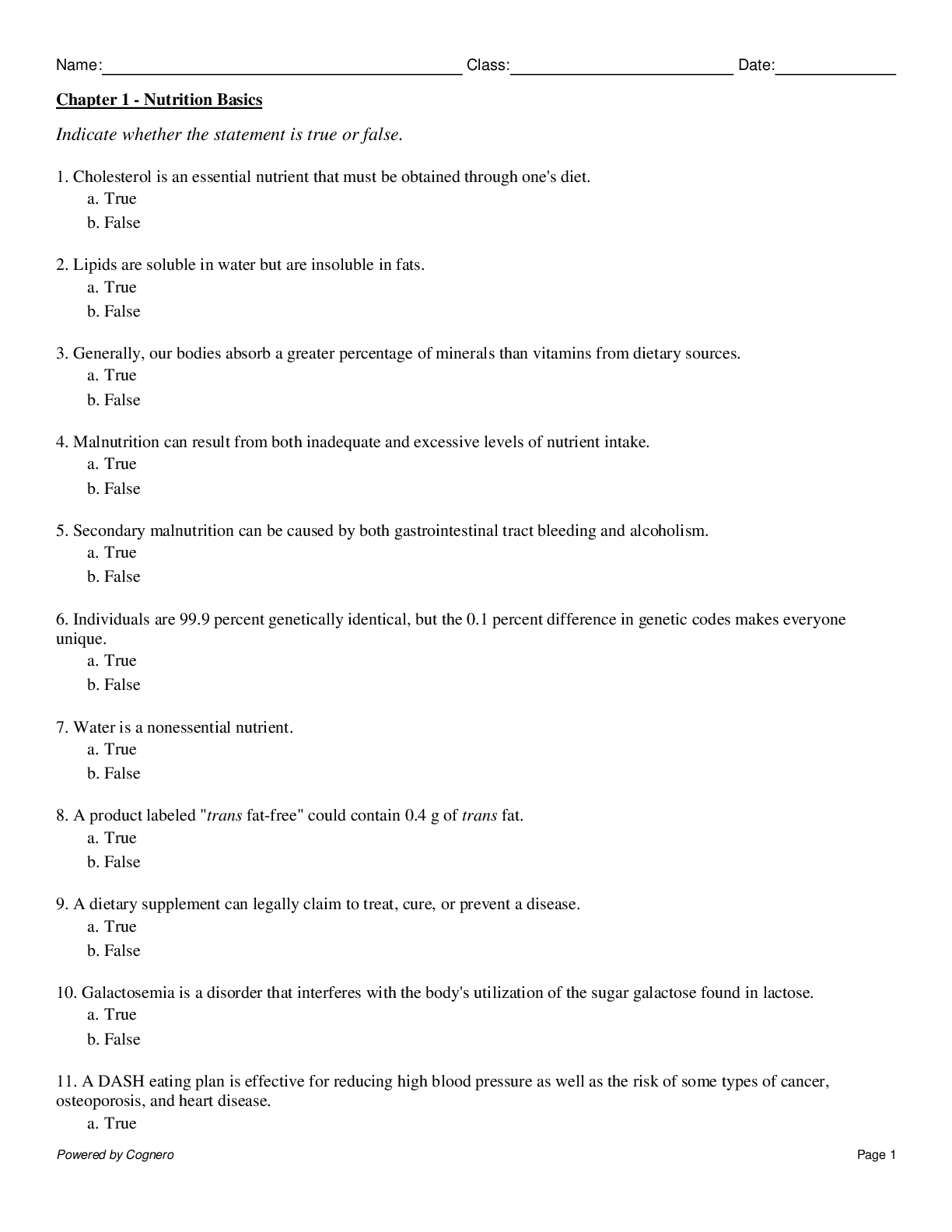
Pop Quiz: Welcome to the genomic era! True or False?
As our understanding of the specific influences of food components on genetics and
health through the lifespan advances, nutritional advice will become individualized
based on a person’s genetic makeup. (True, p. 33)
High alcohol intake during pregnancy sharply increases the risk of fetal alcohol
syndrome in some women, but not others. (True, p. 34)
Herbal remedies don’t have to be proven to be safe or effective before they are allowed to
be marketed in the U.S. (True, p. 38)
Worksheet Answer Key (worksheets appear at the end of this document)
Worksheet 1-1: Case Study—Cultural Considerations in Menu Planning
Suggested answers (answers will vary):
Breakfast
1 cup rice
1 cup fat-free or low-fat yogurt
1 small banana
½ cup mango juice
Lunch
Lamb pita sandwich:
2 ounces whole-wheat pita bread
3 ounces grilled lamb
1 ounce feta cheese
1 tbsp hummus spread
1 cup tomato salad (tomatoes, olive oil,
parsley, red wine vinegar, salt and pepper)
¼ cup dates
Dinner
5 ounces grilled top loin steak (kosher or
halal)
1 cup lentils
½ cup cucumbers
2 ounces Matzoh bread
1 tsp olive oil
Snacks
1 cup low-fat yogurt
½ cup guava
Worksheet 1-2: Calculating Calories
Calories 150 Calories from fat 18
Amount/Serving %DV* Amount/Serving %DV
Total Fat 2 g 3% Total Carbohydrate 28 g 9%
Saturated 0 g 0% Dietary Fiber 3 g 11%
Cholesterol 0 g 0% Sugars 2 g
Sodium 240 mg 10% Protein 5 g
1. 18
2. 112
3. 20
4. 150
Worksheet 1-3: How Does Your Dietary Intake Compare to the Recommendations?
Answers will be individualized.
Chapter Outline
I. Introduction
Nutrition is a growing, interdisciplinary science. Nutrition knowledge sometimes is referred
to as “the art and science of nutrition.” This chapter links principles of the science of
nutrition with applications that can enhance the public’s nutritional health.
II. Principles of the Science of Nutrition
Chapter 1 gets students up to speed on basic nutrition. This section is a crash course. The
10 principles of human nutrition, listed in Table 1.1 (p. 2), beginning with “food is a basic
need of humans,” constitute the thread that links the many concepts presented in this
chapter. Six major nutrient categories (carbohydrate, protein, fats [lipids], vitamins,
minerals, and water) are defined in Table 1.2 (p. 3). Dietary intake standards for each of the
essential nutrients in the six nutrient categories depend on an individual’s age, gender,
growth pattern and other factors listed on p. 3-4. A thorough list of food sources of vitamins
is provided in Table 1.10 (p. 18 – 22) and a list of food sources of minerals is presented in
Table 1.14 (p. 28 - 31). Examples of diseases and disorders that are linked to diet are given
in Table 1.16 (p. 35). The discussion questions and activities for Chapter 1 highlight
essential nutrients, providing students with practice opportunities to evaluate their own
personal nutrient needs.
[Show More]


.png)