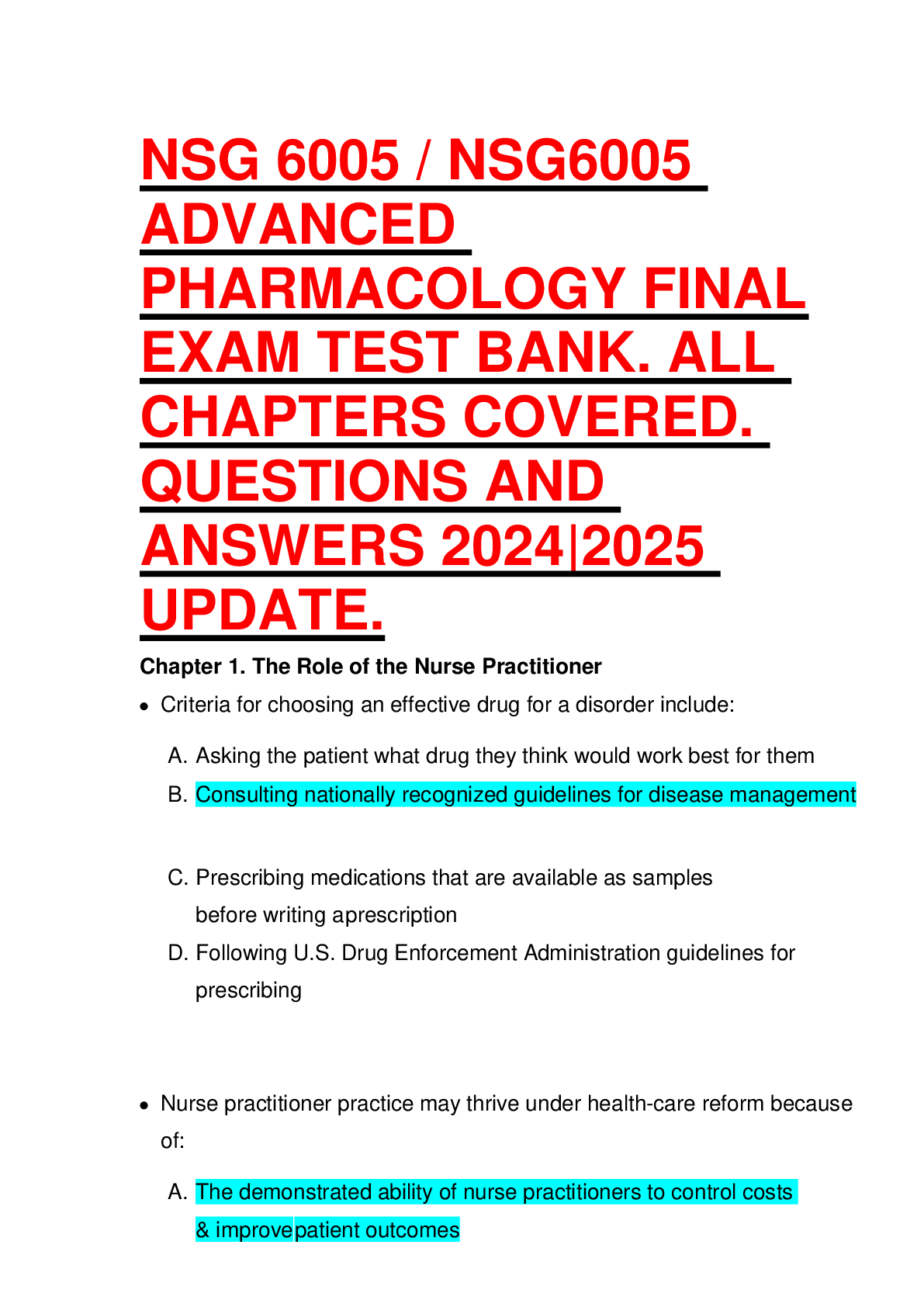
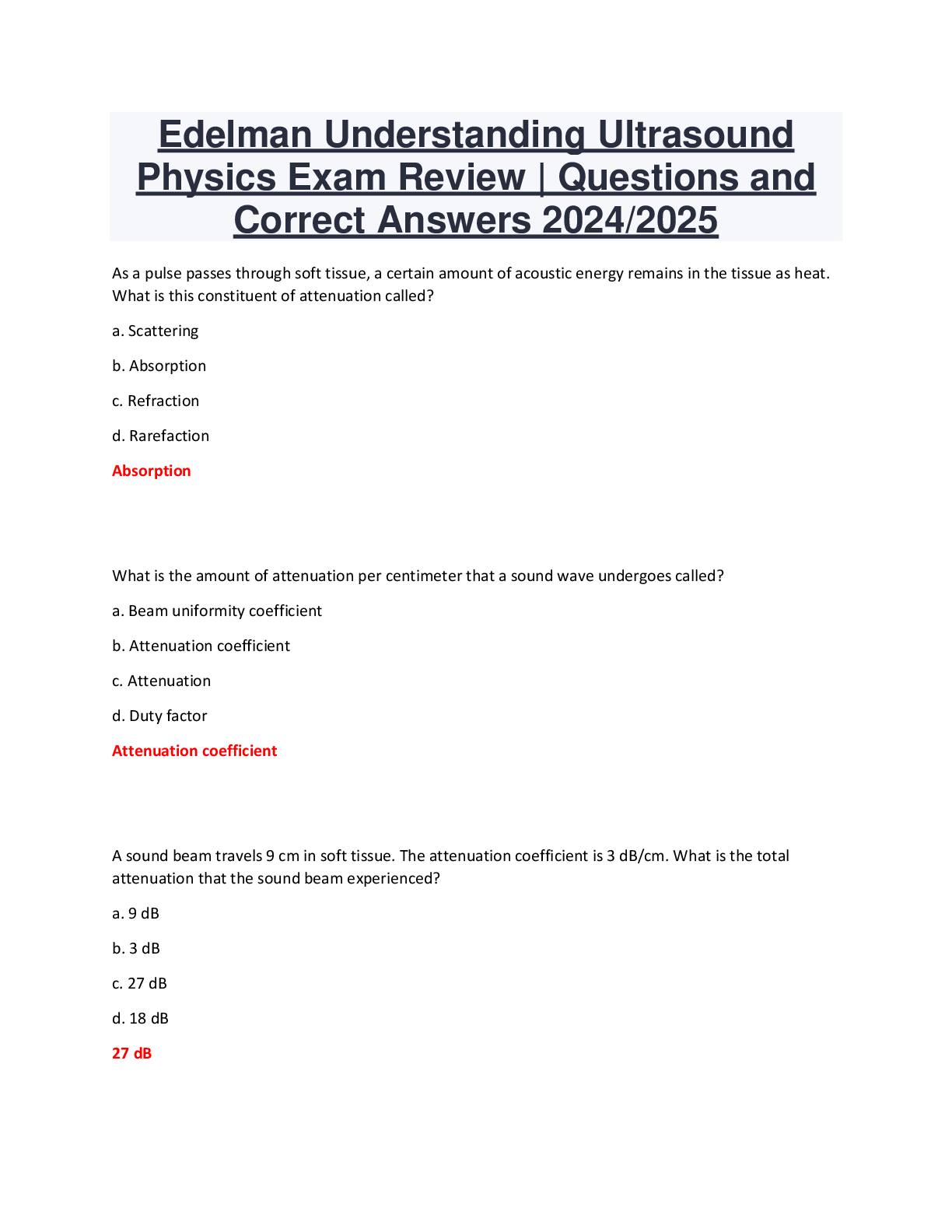
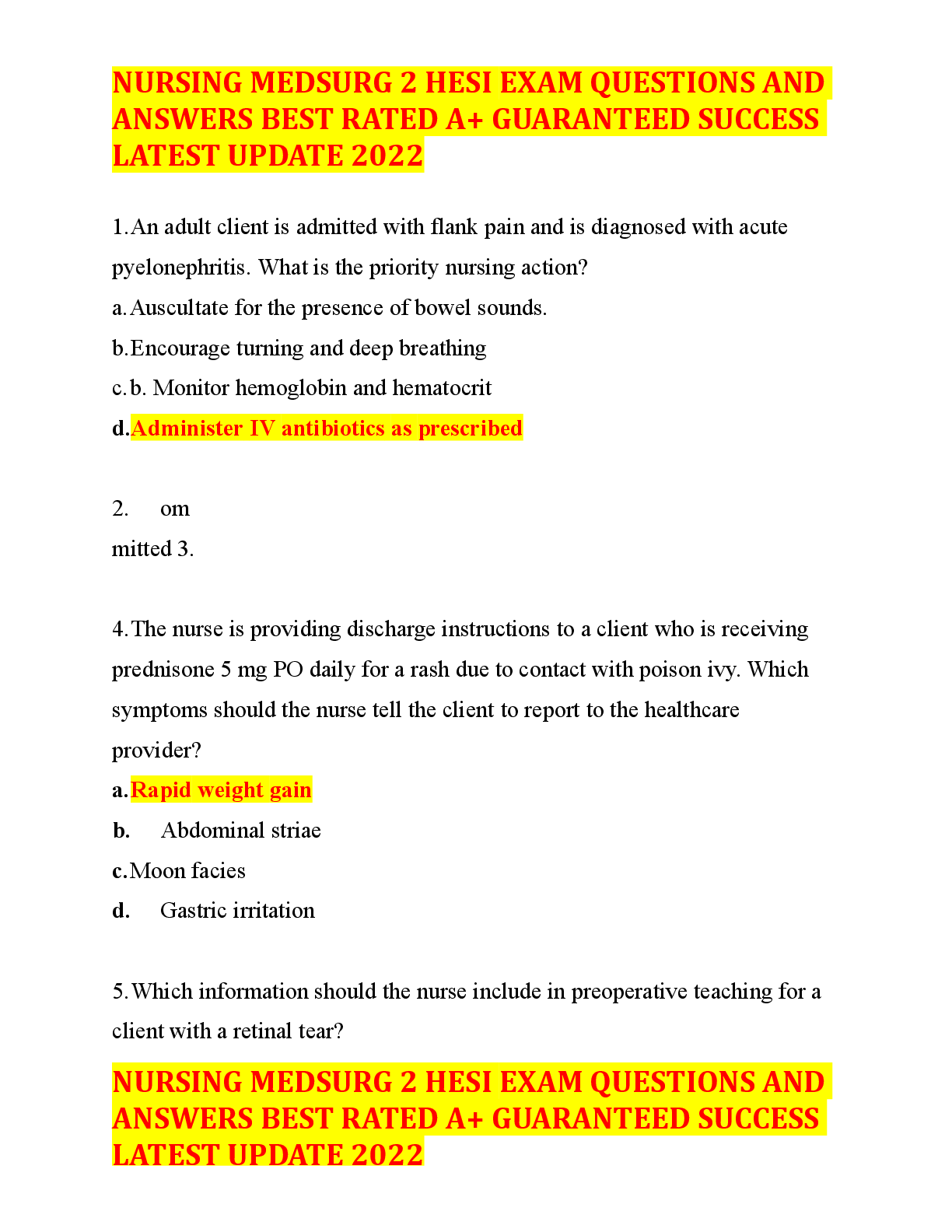
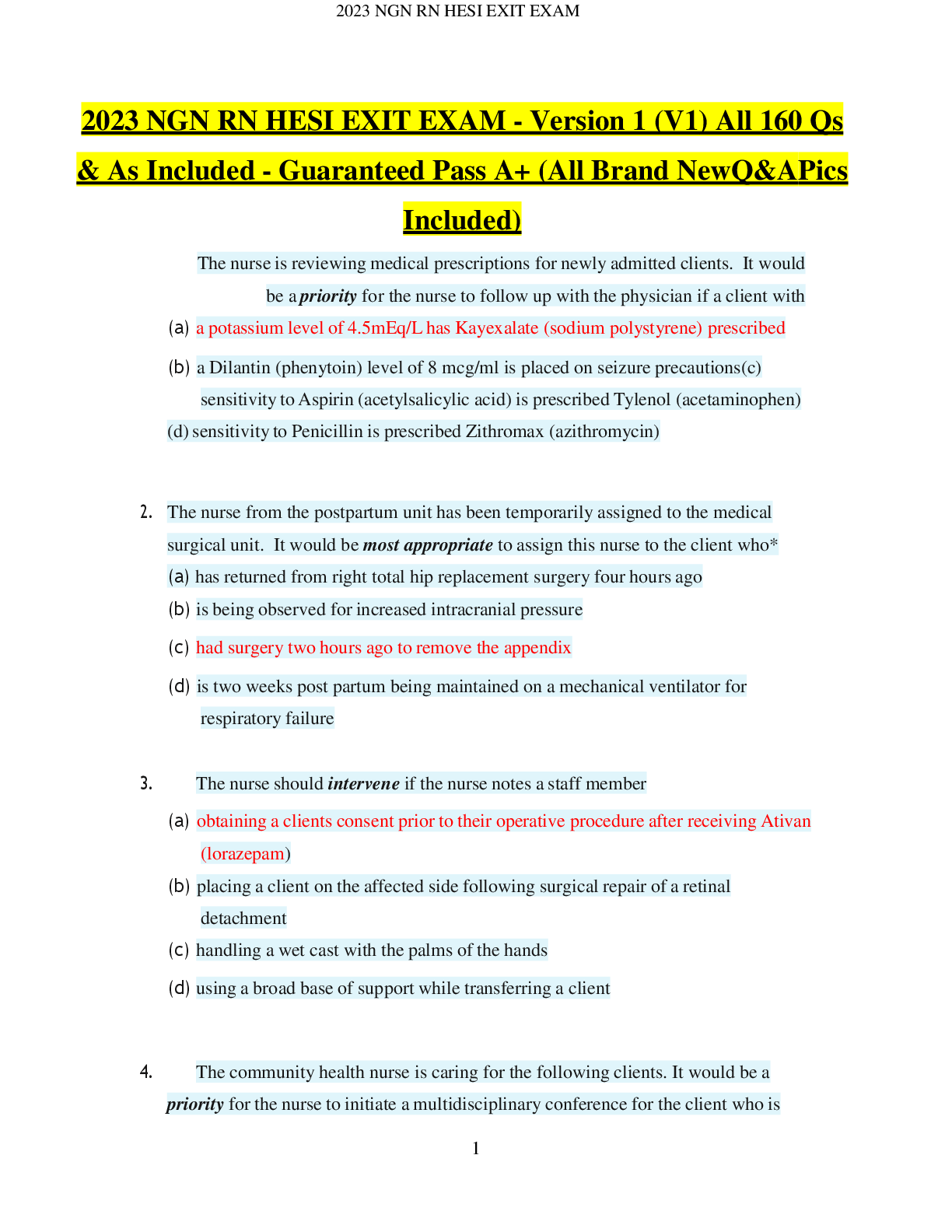
NURSING > QUESTIONS and ANSWERS > GERD & Hiatal Hernia NCLEX Update Questions& Correct Answers With Rationale 2024/2025 Solved 100% (All)
GERD & Hiatal Hernia NCLEX Update Questions& Correct Answers With Rationale 2024/2025 Solved 100%
Document Content and Description Below
Last updated: 1 year ago
Preview 4 out of 14 pages
Instant download

Loading document previews ...
Buy this Document to get the Full Access Instantly
Provided by Students Who Aced it
We Verify Document Content to Gurantee Accuracy
Reviews( 0 )
Document information
Connected school, study & course
About the document
Uploaded On
Dec 03, 2024
Number of pages
14
Written in
All

Additional information
This document has been written for:
Uploaded
Dec 03, 2024
Downloads
0
Views
67
Topic Tags
Recommended For You
Get more on QUESTIONS and ANSWERS »
CMS - Certified Sommelier Exam / WSET Advanced Exam 2024/25 So...
ASA 104 BAREBOAT CRUISING | QUESTIONS AND ANSWERS | SOLVED 100...
SERVSAFE-7th-Edition-Test-Bank | Updated 2023 | Graded A+ Solv...

CNL Certification Exam Test Bank. (Solved 100%). Clinical Nur...
(solved 100%) Clinical nurse leader certification exam (CNL) T...
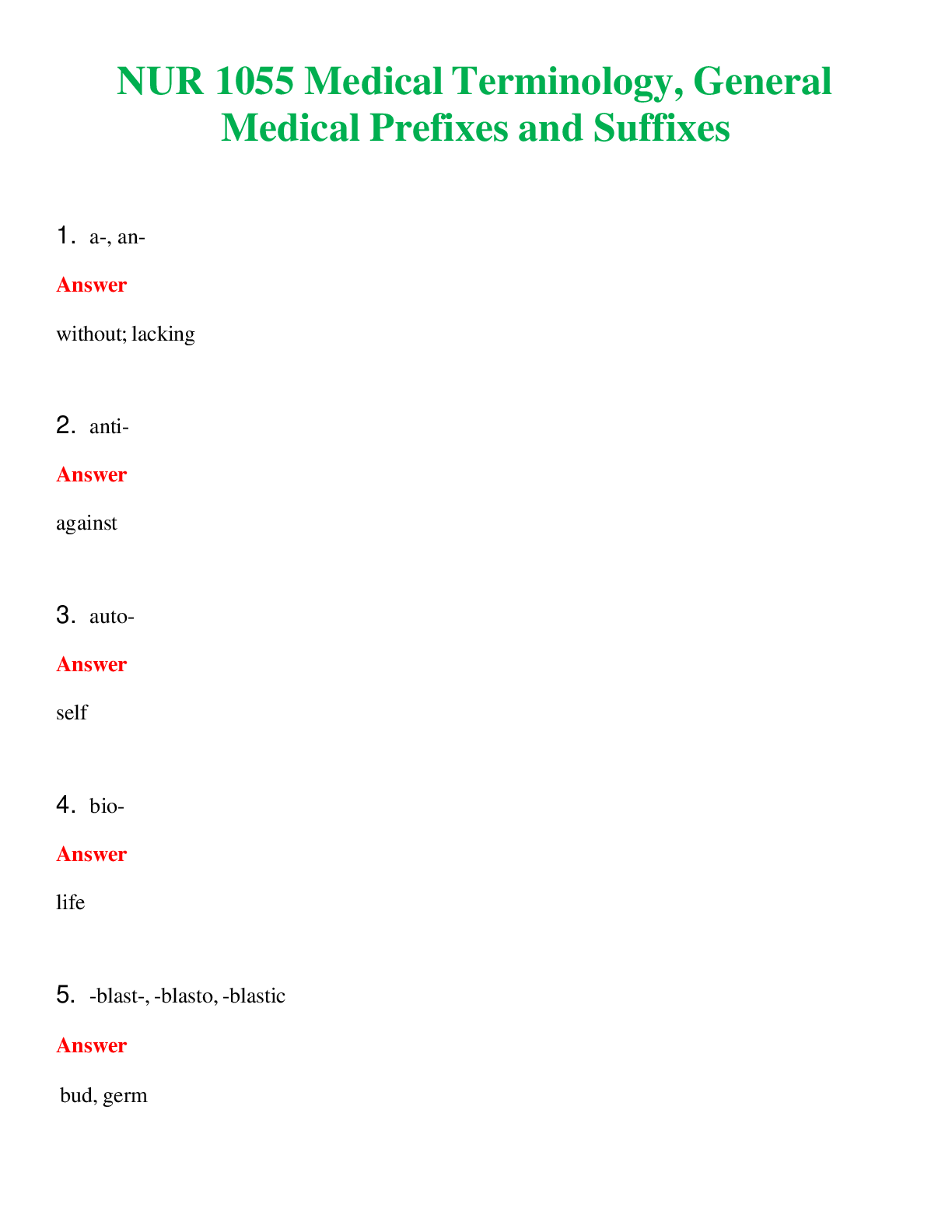
NUR 1055 MEDICAL TERMINOLOGY, GENERAL MEDICAL PREFIXES AND S...
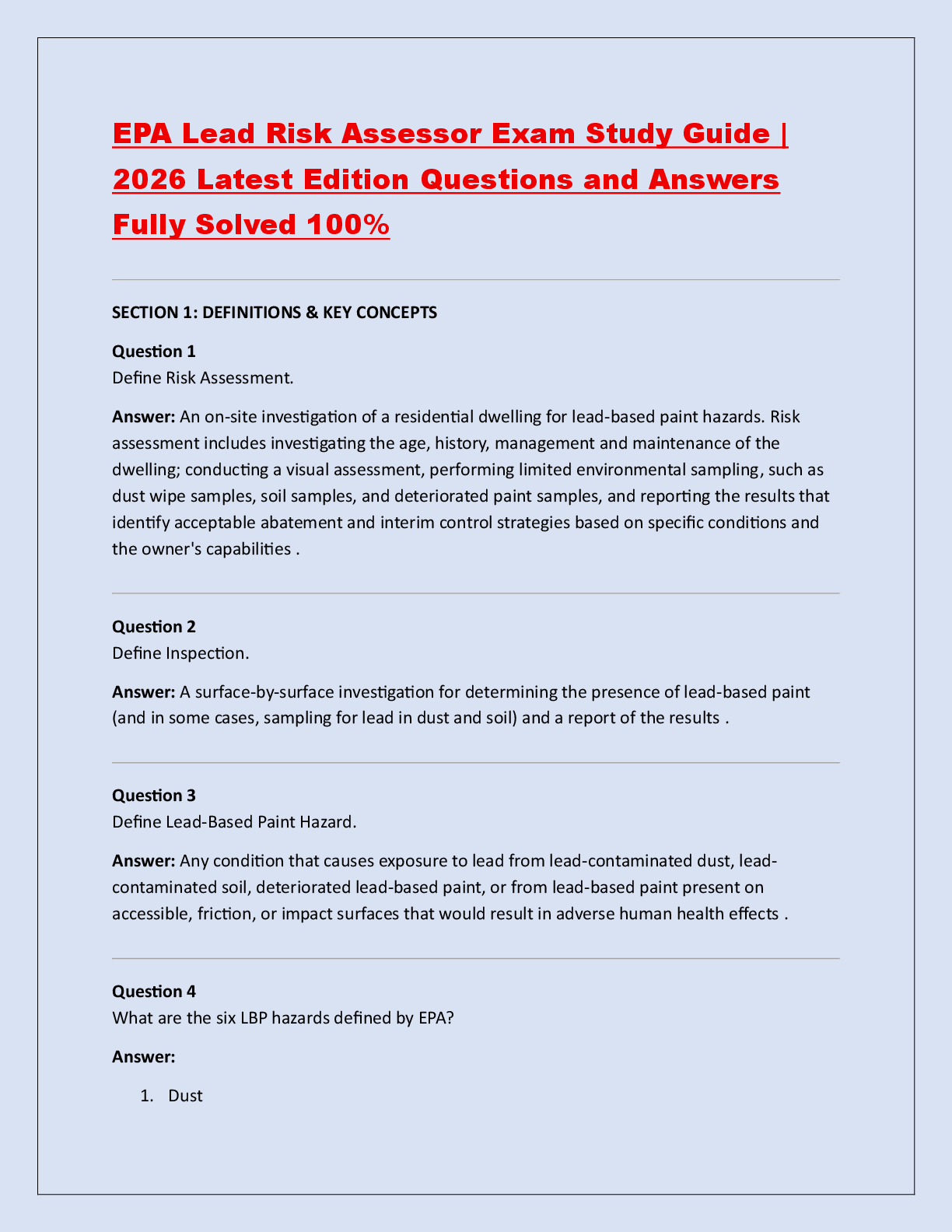

Bloomberg market concepts test, solved 100%; distinction solut...
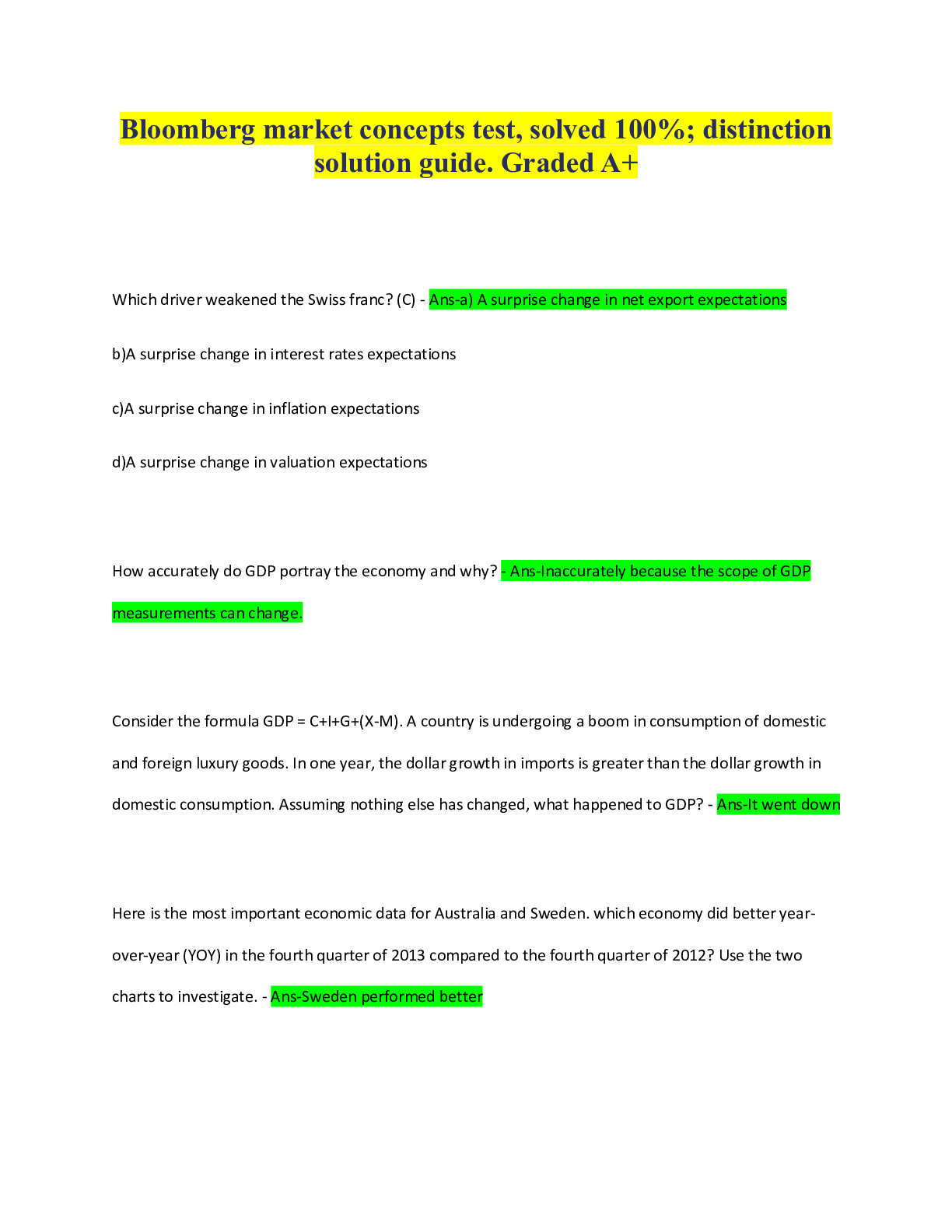
Bloomberg market concepts test, solved 100%; distinction solut...
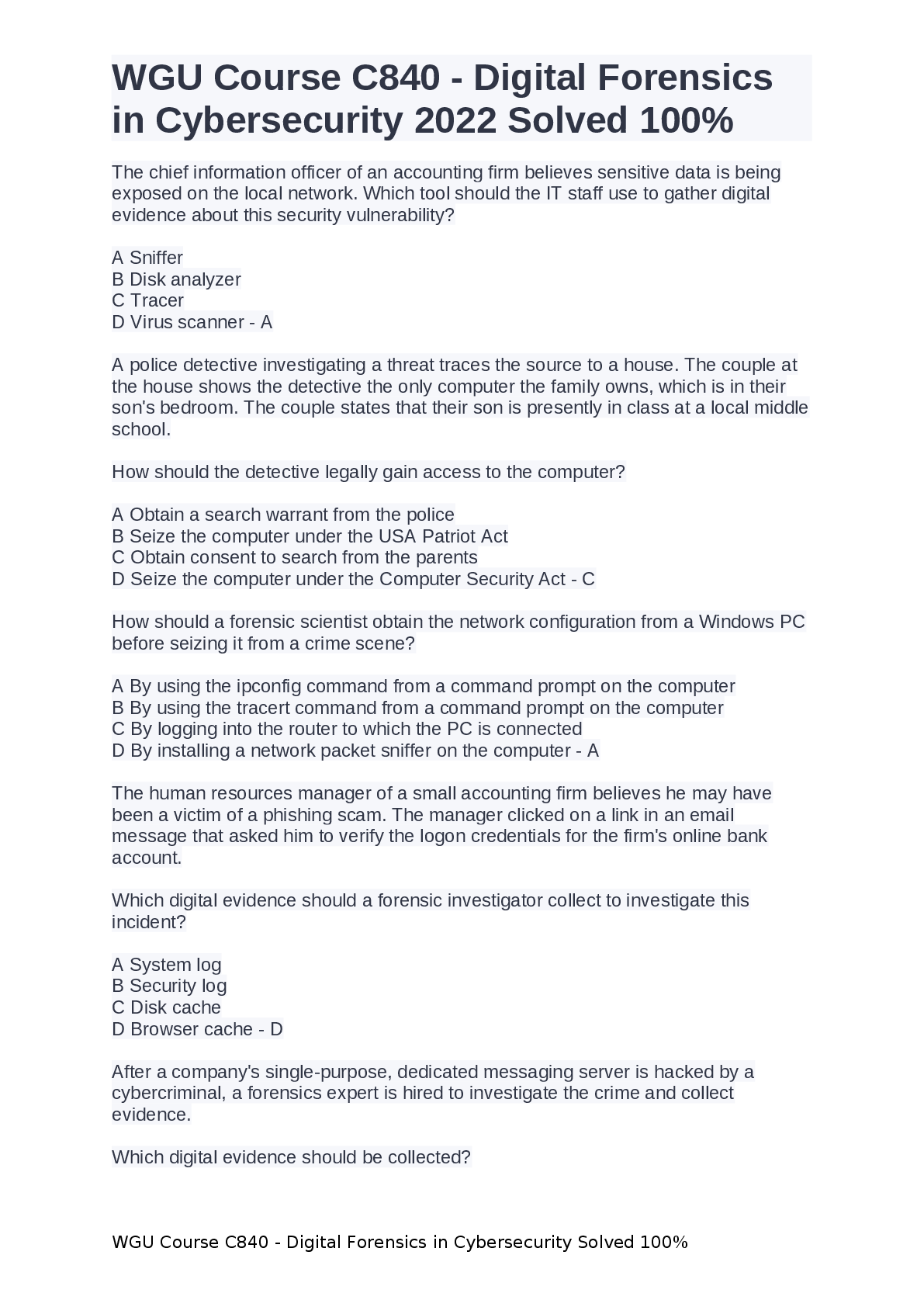
WGU Course C840 - Digital Forensics in Cybersecurity Solved 10...
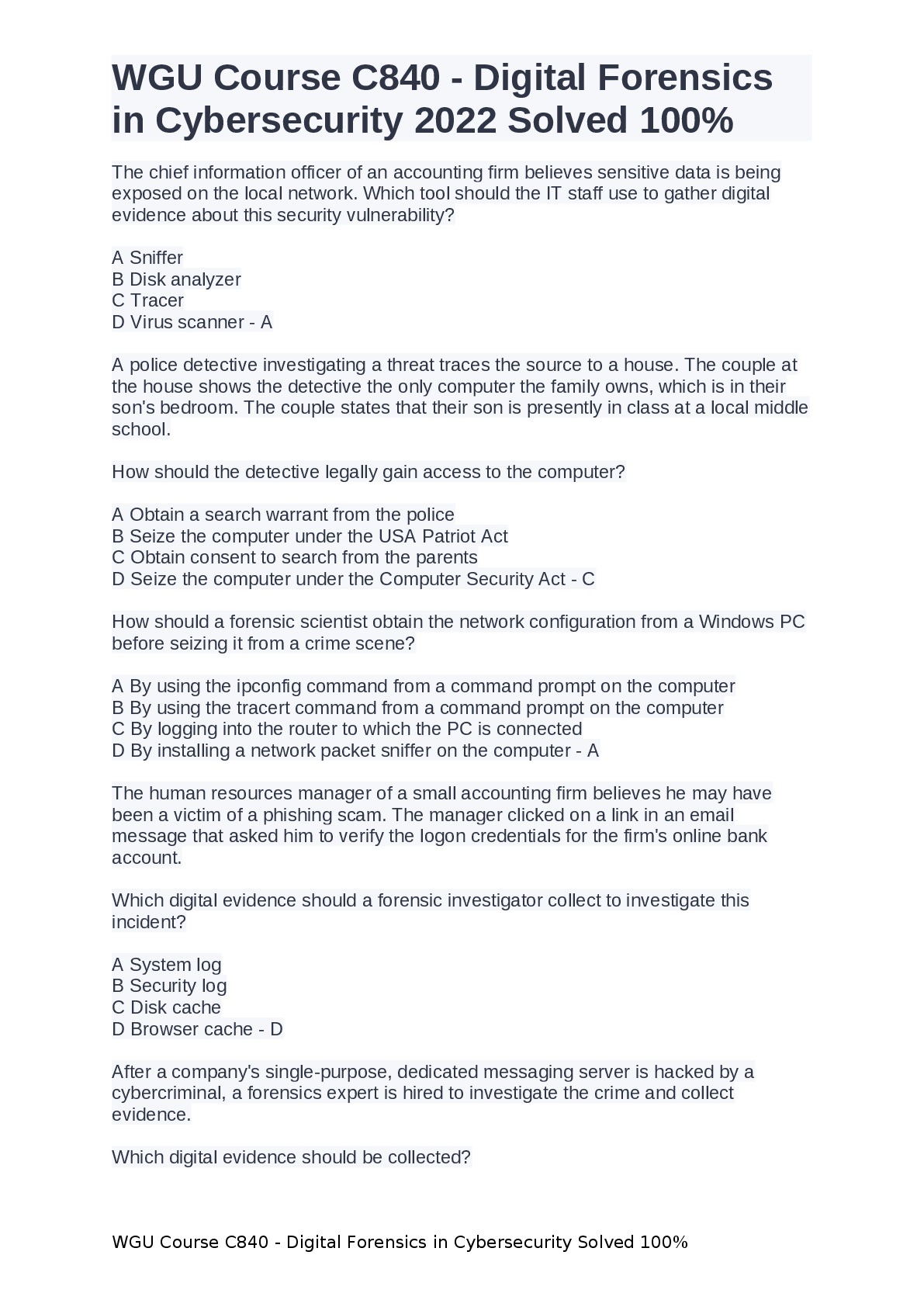
WGU Course C840 - Digital Forensics in Cybersecurity Solved 10...