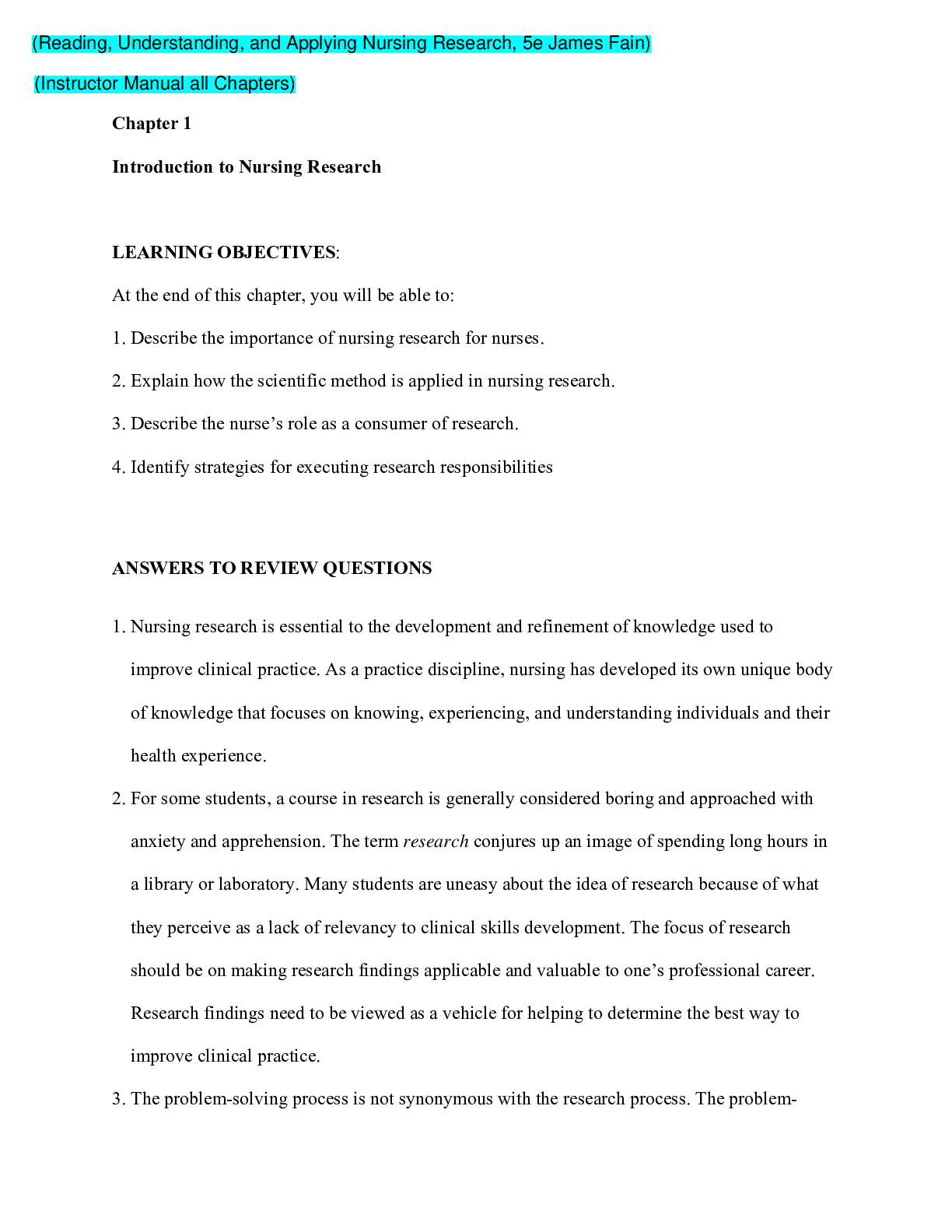
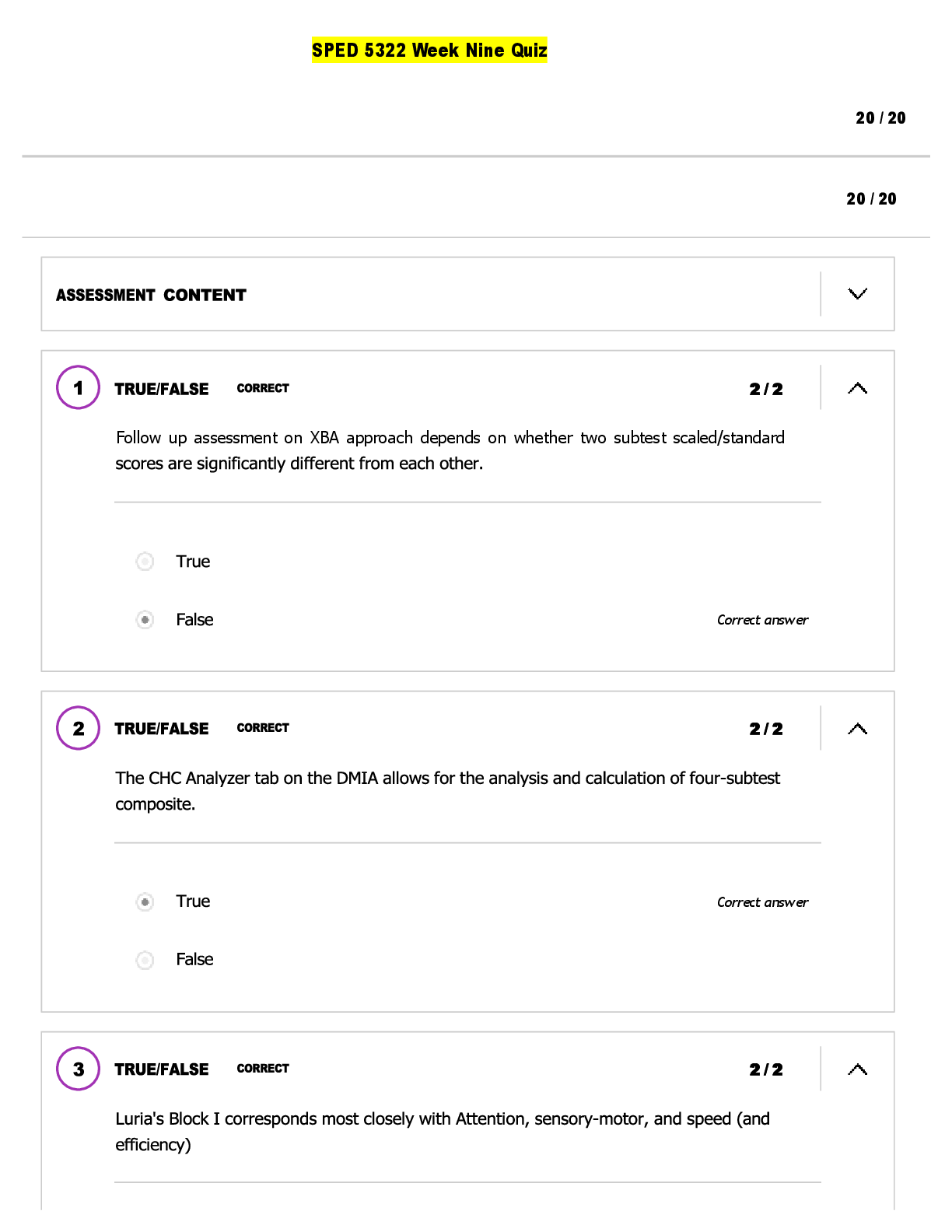
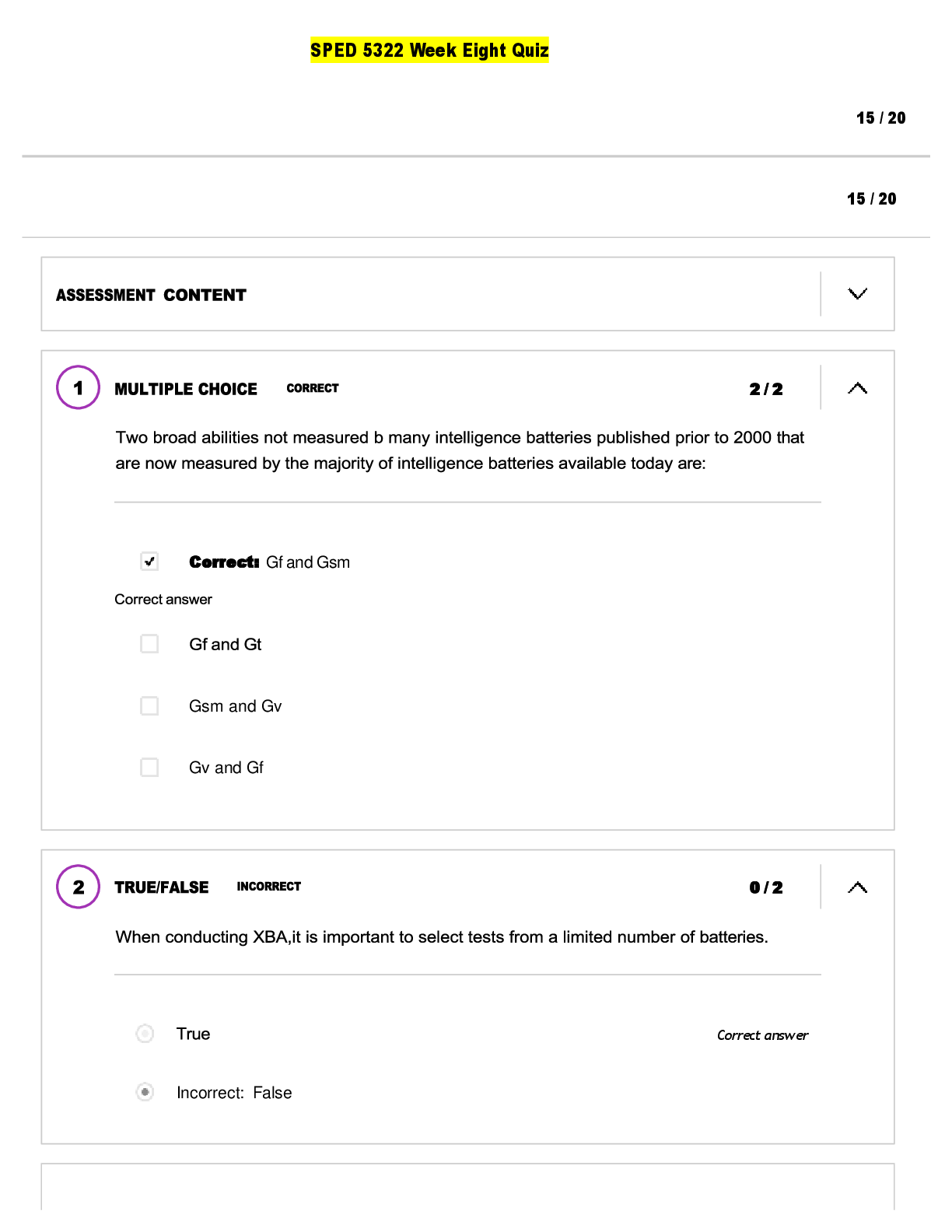
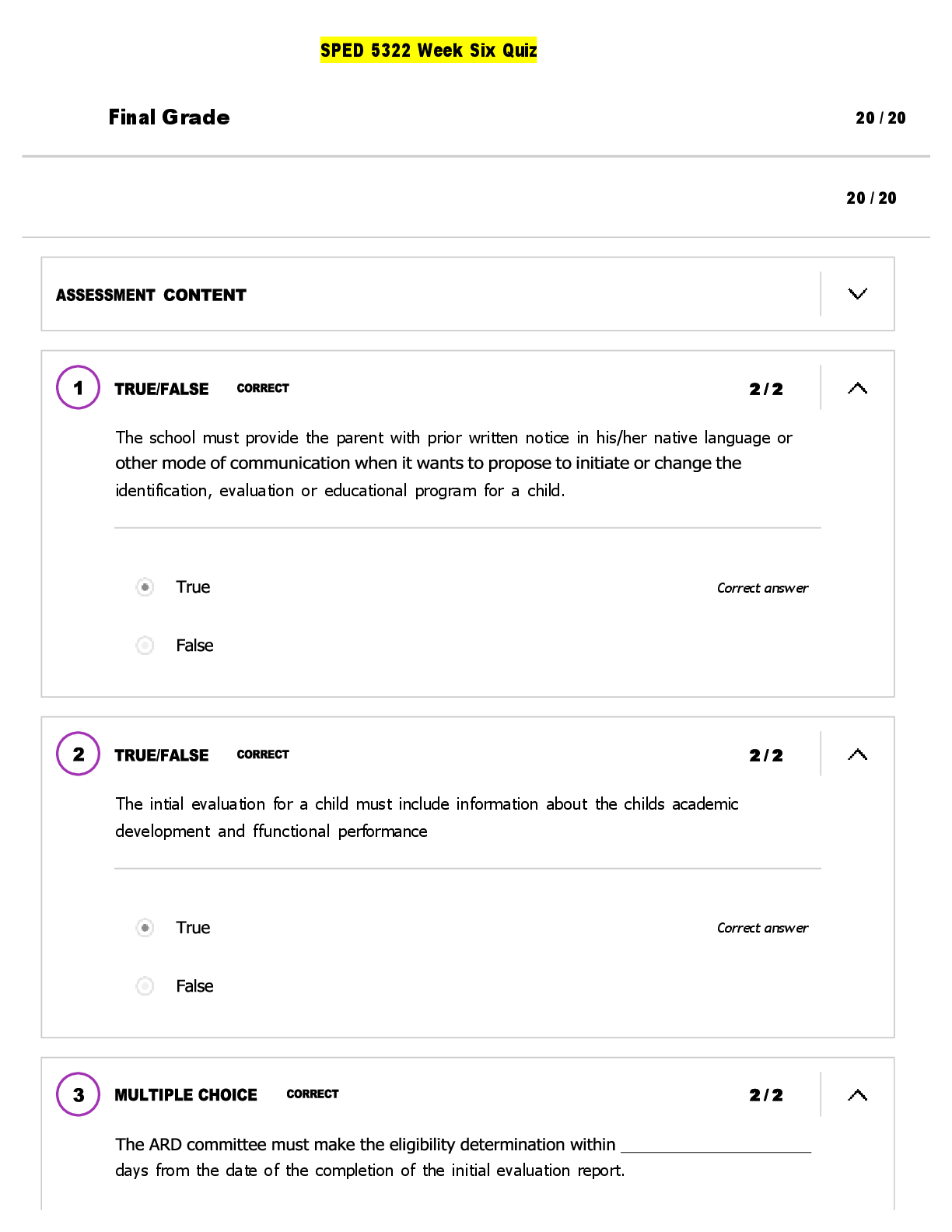
NSG6020 Final Exam Questions & Answers, Latest Update Rated 100%
Document Content and Description Below
Last updated: 1 year ago
Preview 4 out of 11 pages
Instant download

Loading document previews ...
Buy this Document to get the Full Access Instantly
Provided by Students Who Aced it
We Verify Document Content to Gurantee Accuracy
Also available in bundle (1)
Click Below to Access Bundle(s)

BUNDLE: NSG6020 Final Exam | Final Exam Review Questions & Answers, Latest Update Rated 100%, All Exams Updated
BUNDLE: NSG6020 Final Exam | Final Exam Review Questions & Answers, Latest Update Rated 100%, All Exams Updated
By PROF 1 year ago
$24.5
3
Reviews( 0 )
Document information
Connected school, study & course
About the document
Uploaded On
Dec 18, 2024
Number of pages
11
Written in
All

Additional information
This document has been written for:
Uploaded
Dec 18, 2024
Downloads
0
Views
66
Topic Tags
Recommended For You
Get more on EXAM »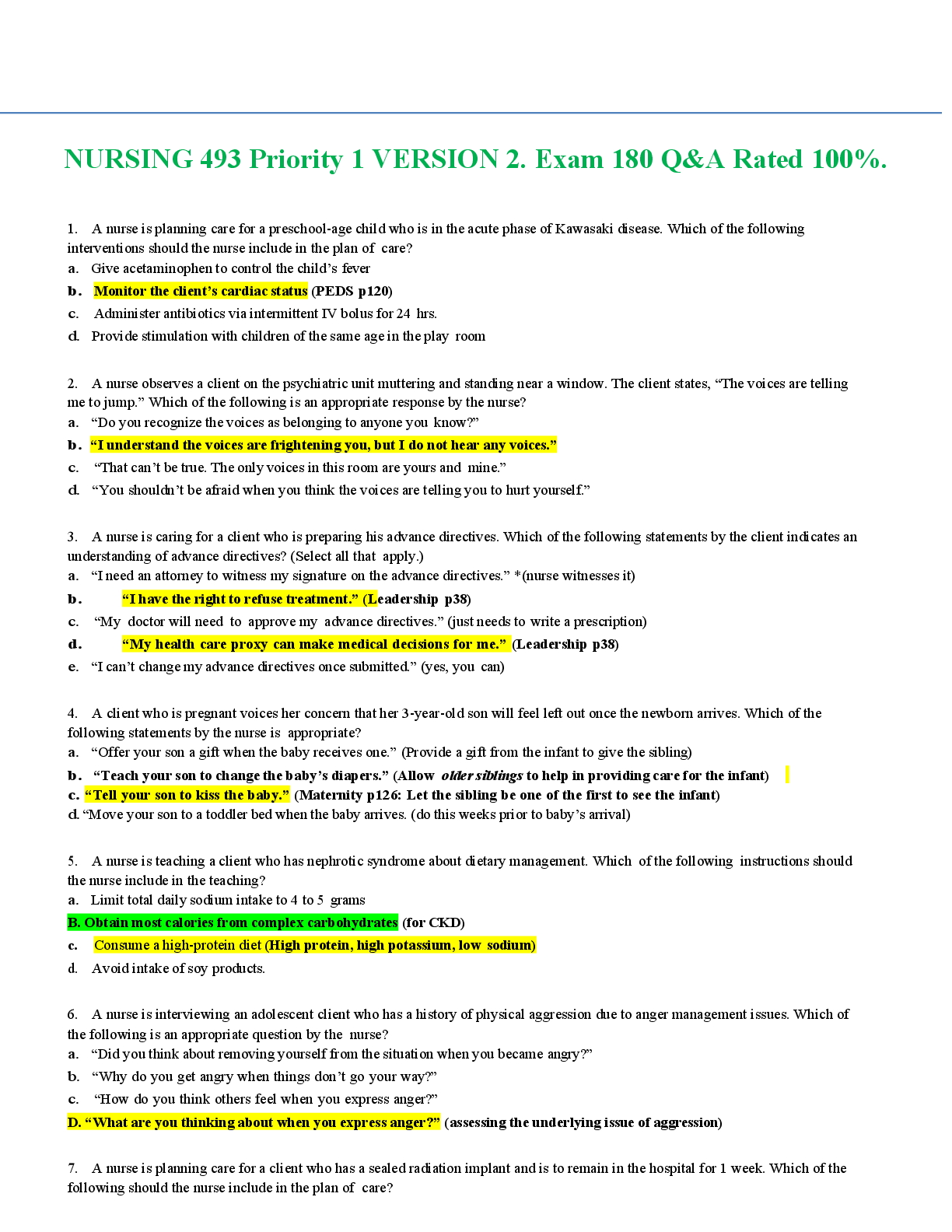
NURSING 493 Priority 1 VERSION 2. Exam 180 Q&A Rated 100%.
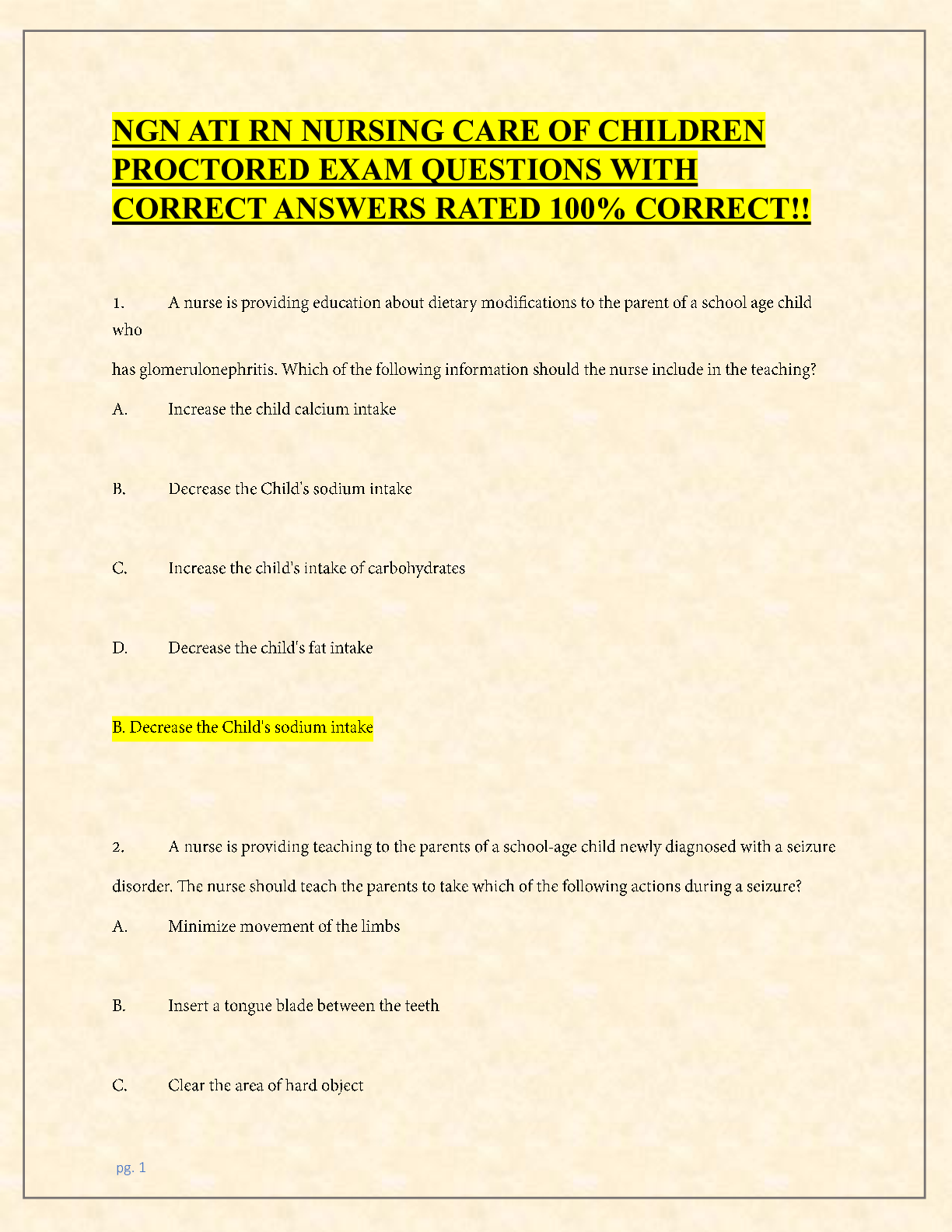
NGN ATI RN NURSING CARE OF CHILDREN PROCTORED EXAM || 2023/202...

NSG6020 / NSG 6020 Advanced Health and Physical Assessment Fin...
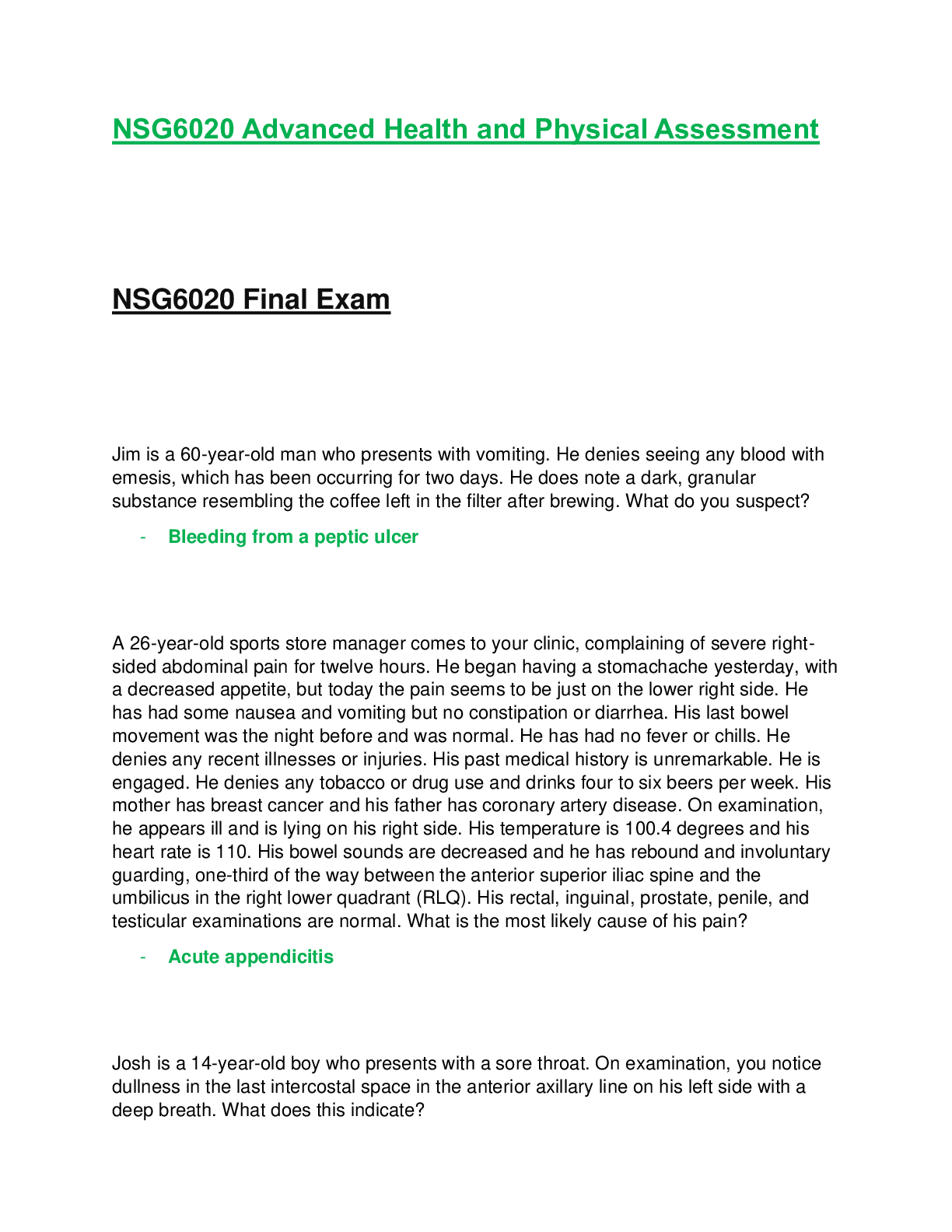
NSG6020 / NSG 6020: Advanced Health and Physical Assessment Fi...

NSG6020 / NSG 6020: Advanced Health and Physical Assessment Fi...

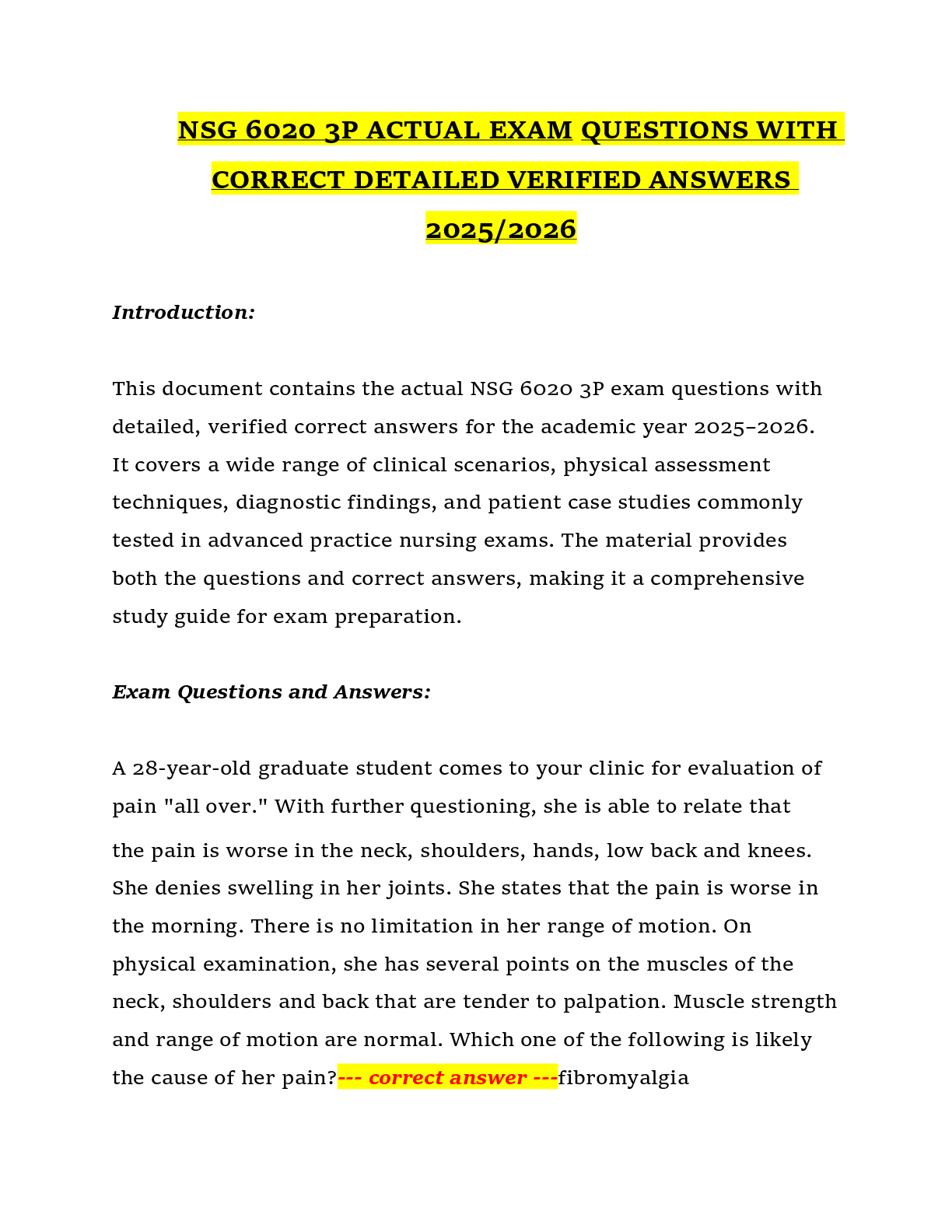
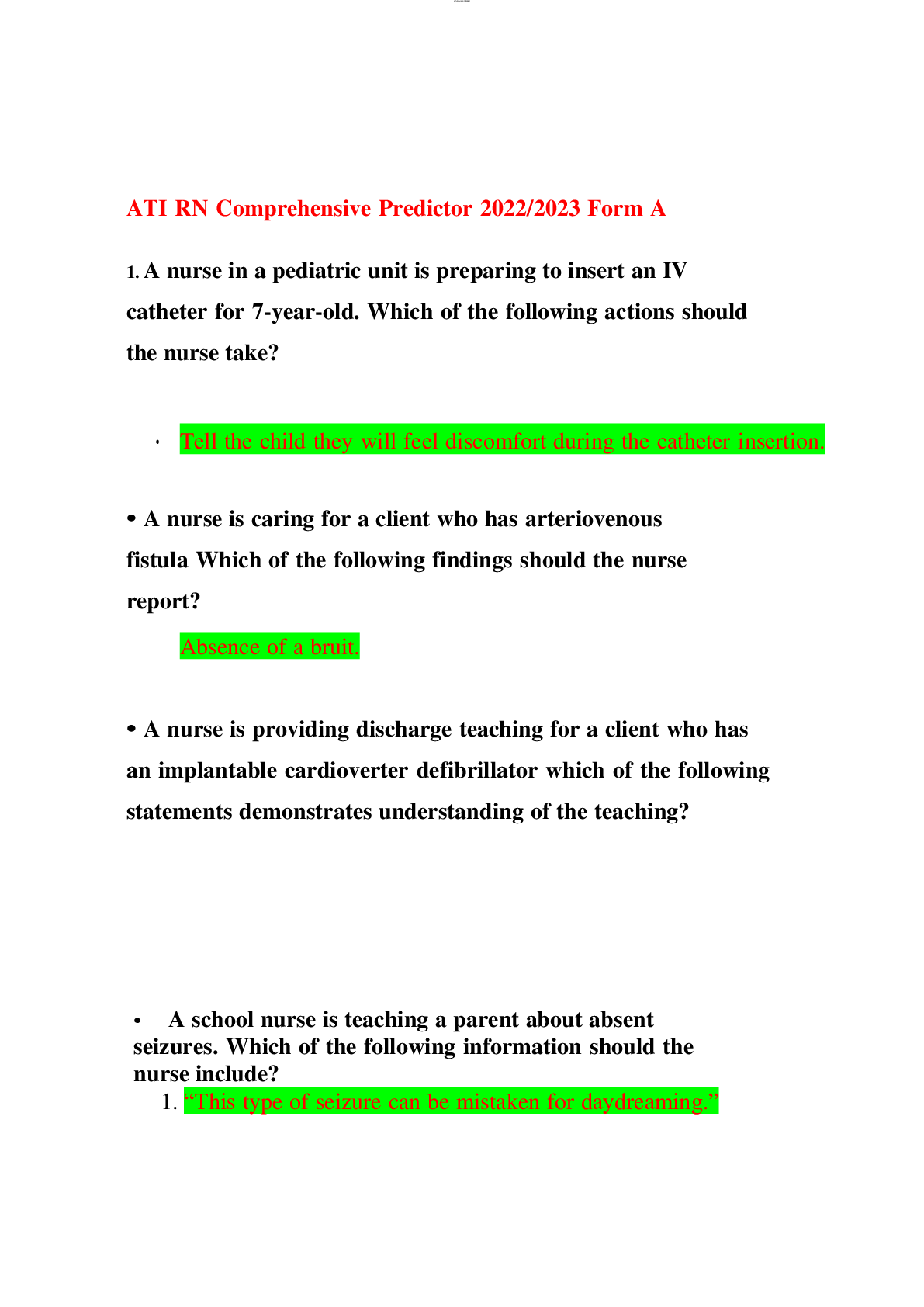
(NGN) ATI RN Comprehensive Predictor 2022/2023 / RN Comprehen...
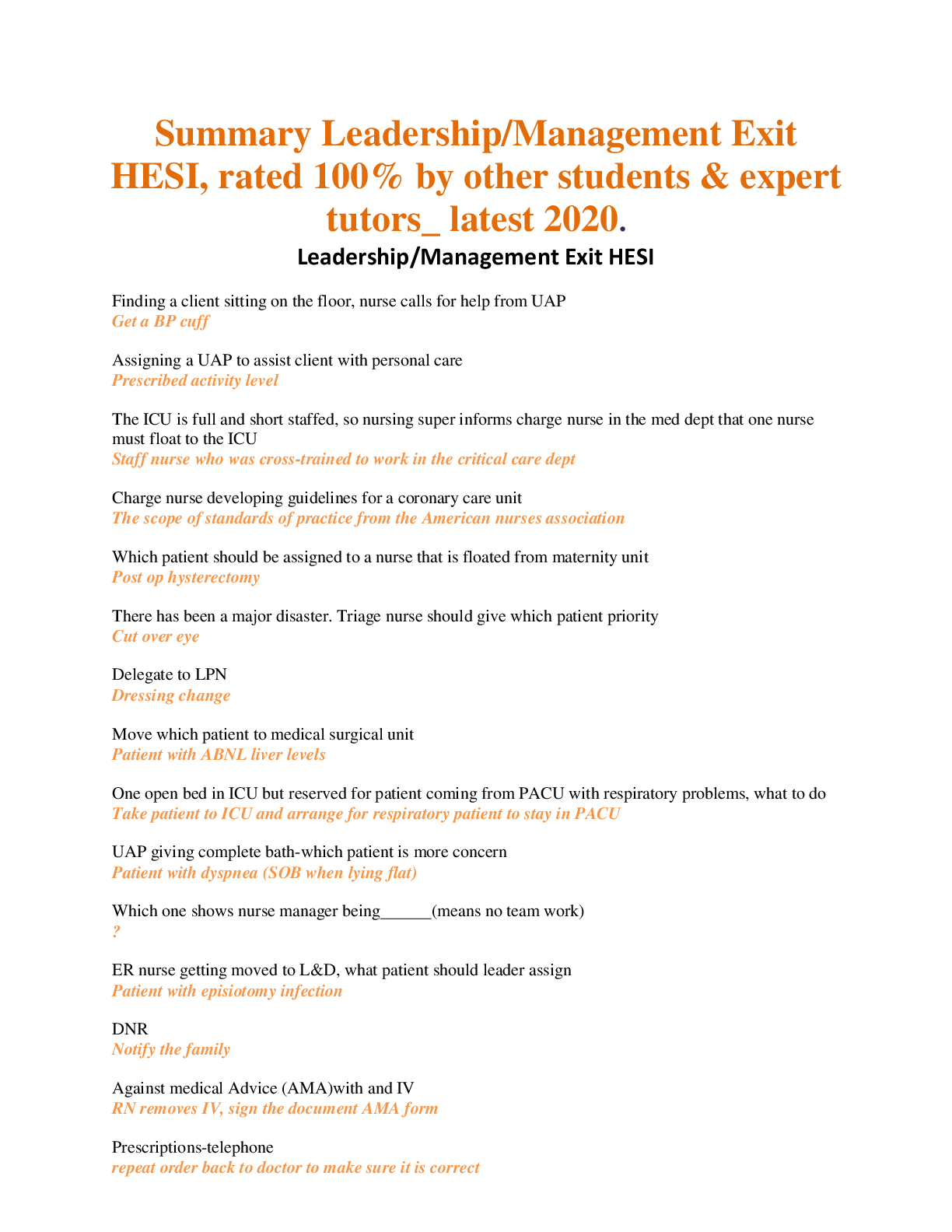
 100% CORRECT VERIFIED AND RATED 100%.png)
ATI RN Comprehensive Predictor 2019 Form A RN Comprehensive A...
.png)
Week 5 Midterm Study Guide (HIGHLY RATED STUDY GUIDE ) A+ Sout...

NSG 6020 / NSG6020 WEEK 4 QUIZ 3 CARDIAC STUDY GUIDE QUESTIONS...


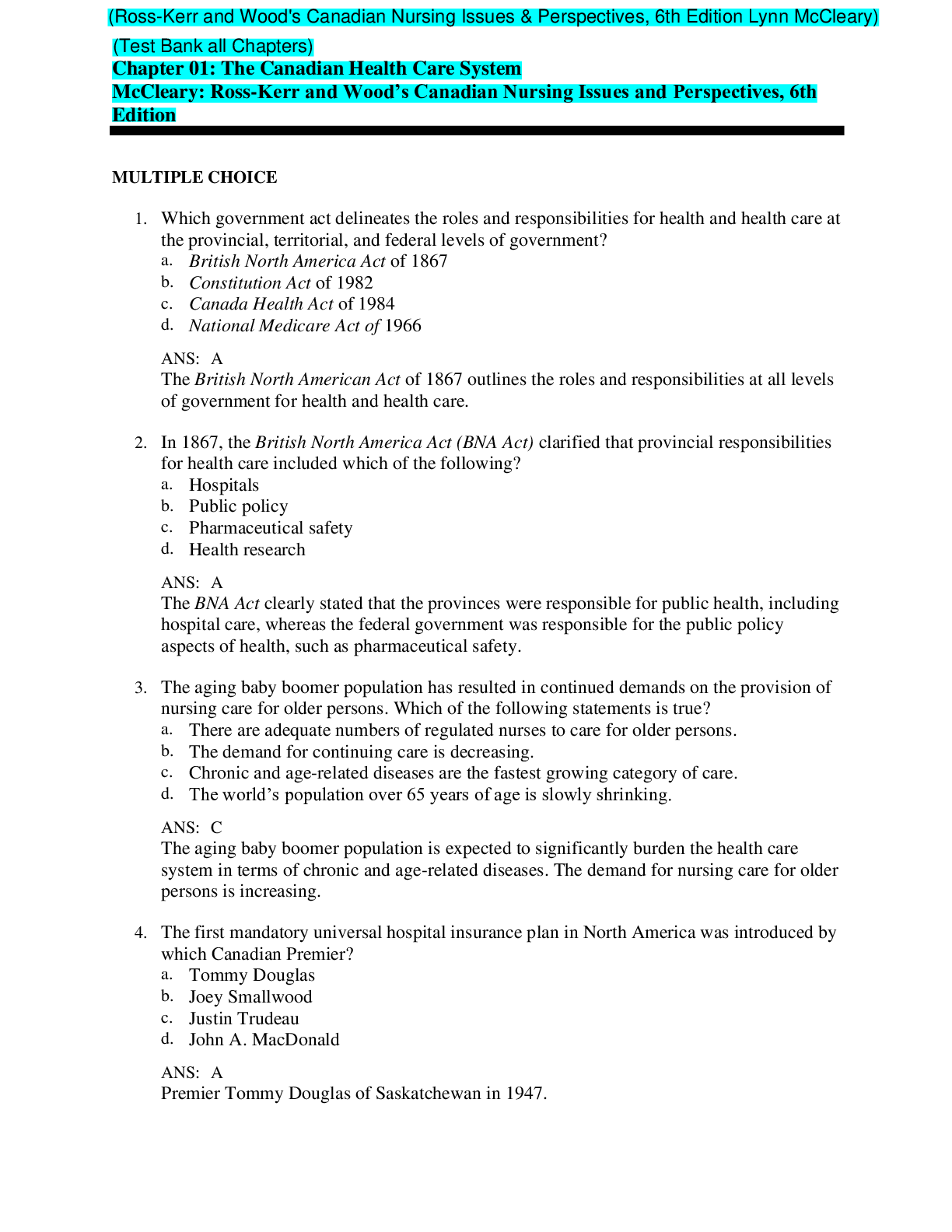
Test Bank for Ross-Kerr and Wood's Canadian Nursing Issues & P...

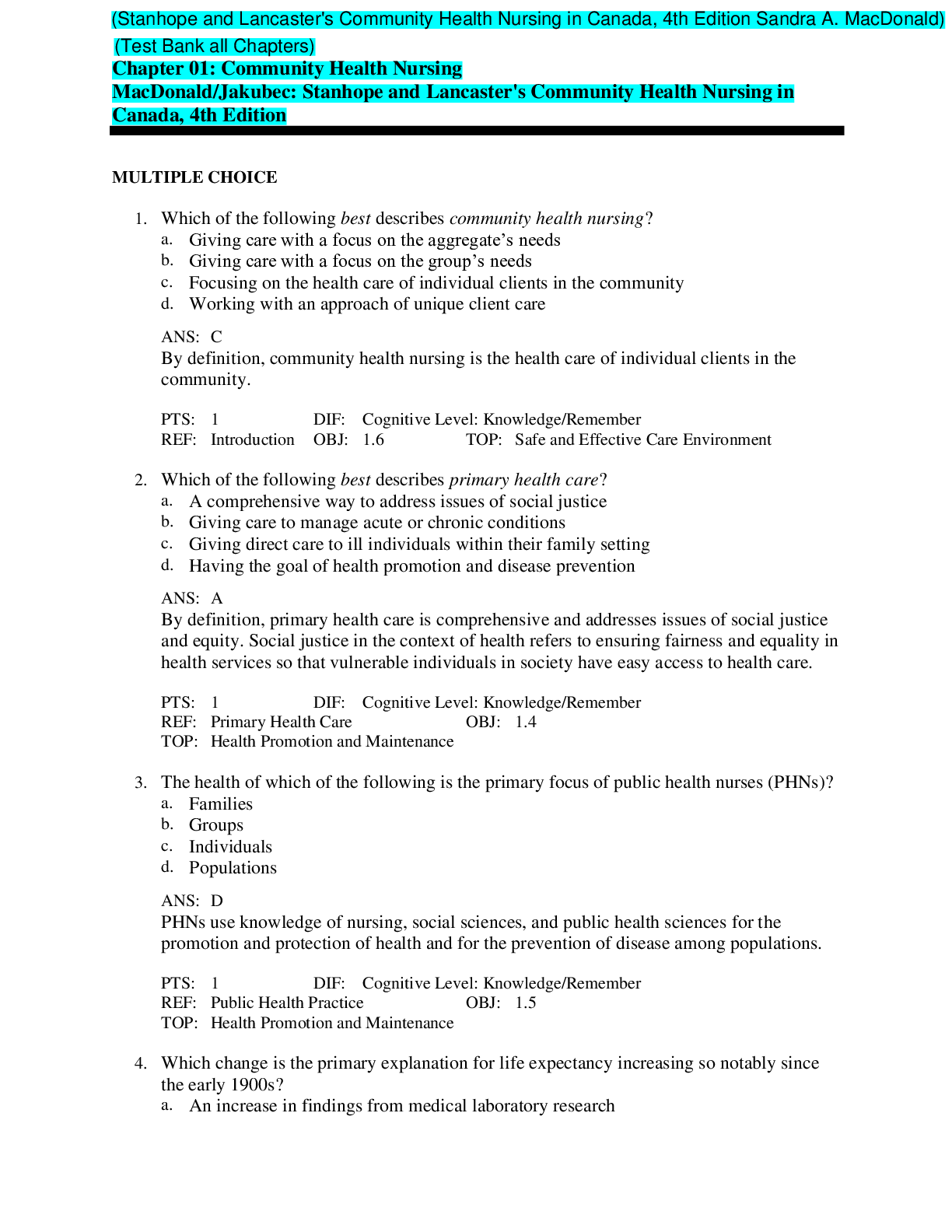
Test Bank for Stanhope and Lancaster's Community Health Nursin...