ATI RN COMPREHENSIVE PREDICTOR > EXAMs > ATI RN COMPREHENSIVE NCLEX-PRACTICE EXAM 2024/2025 COMPLETE STUDY Q&A’S WITH RATIONALES (GUARANTEE (All)
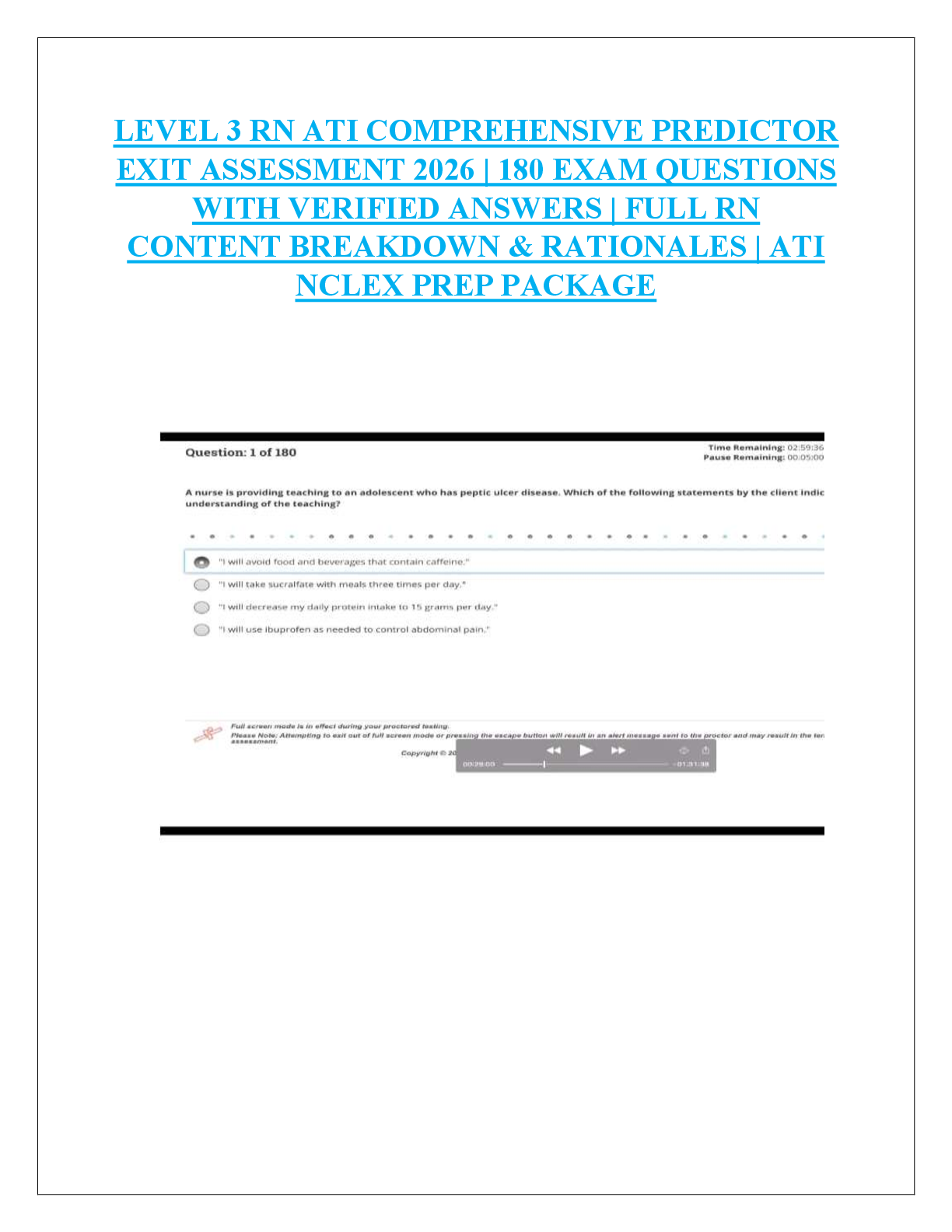
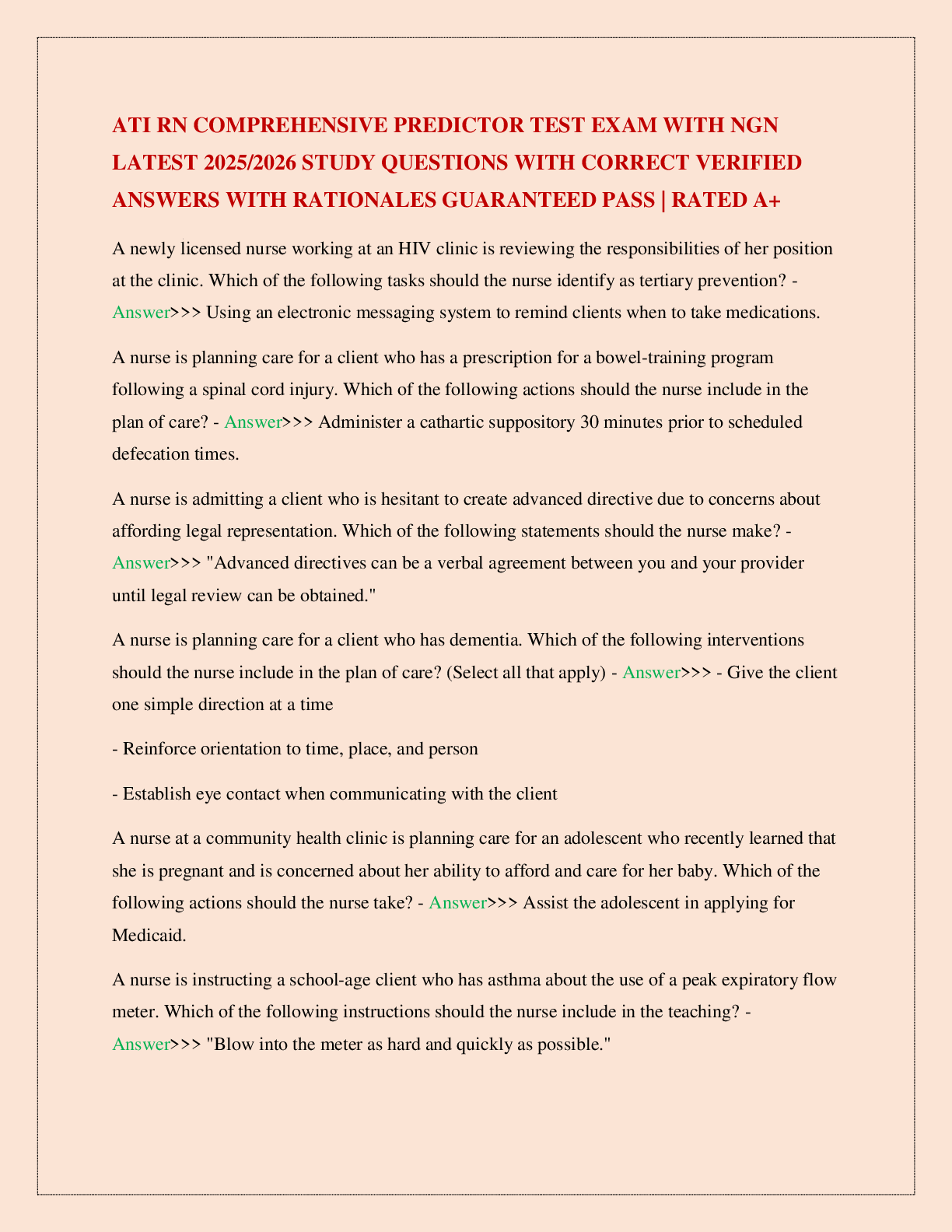
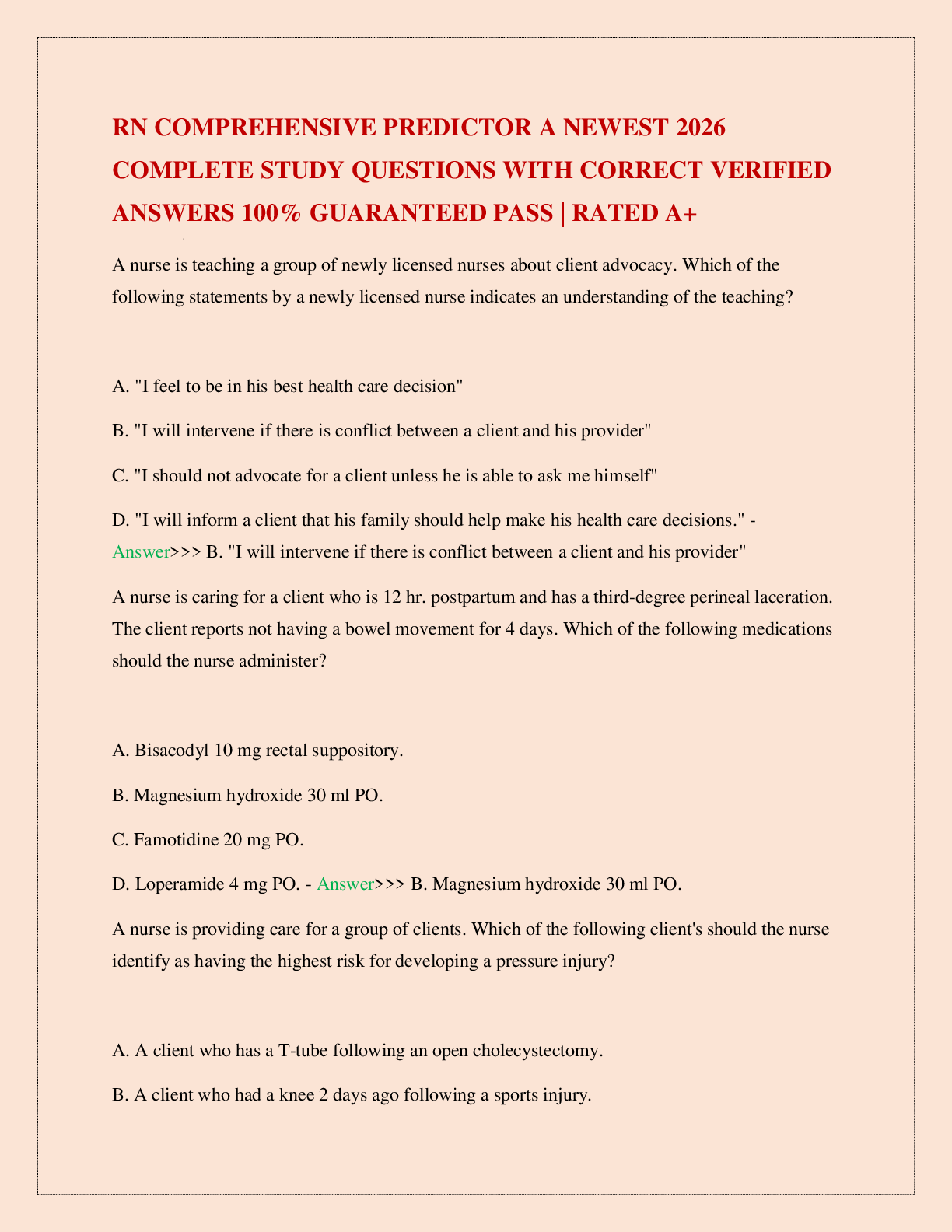
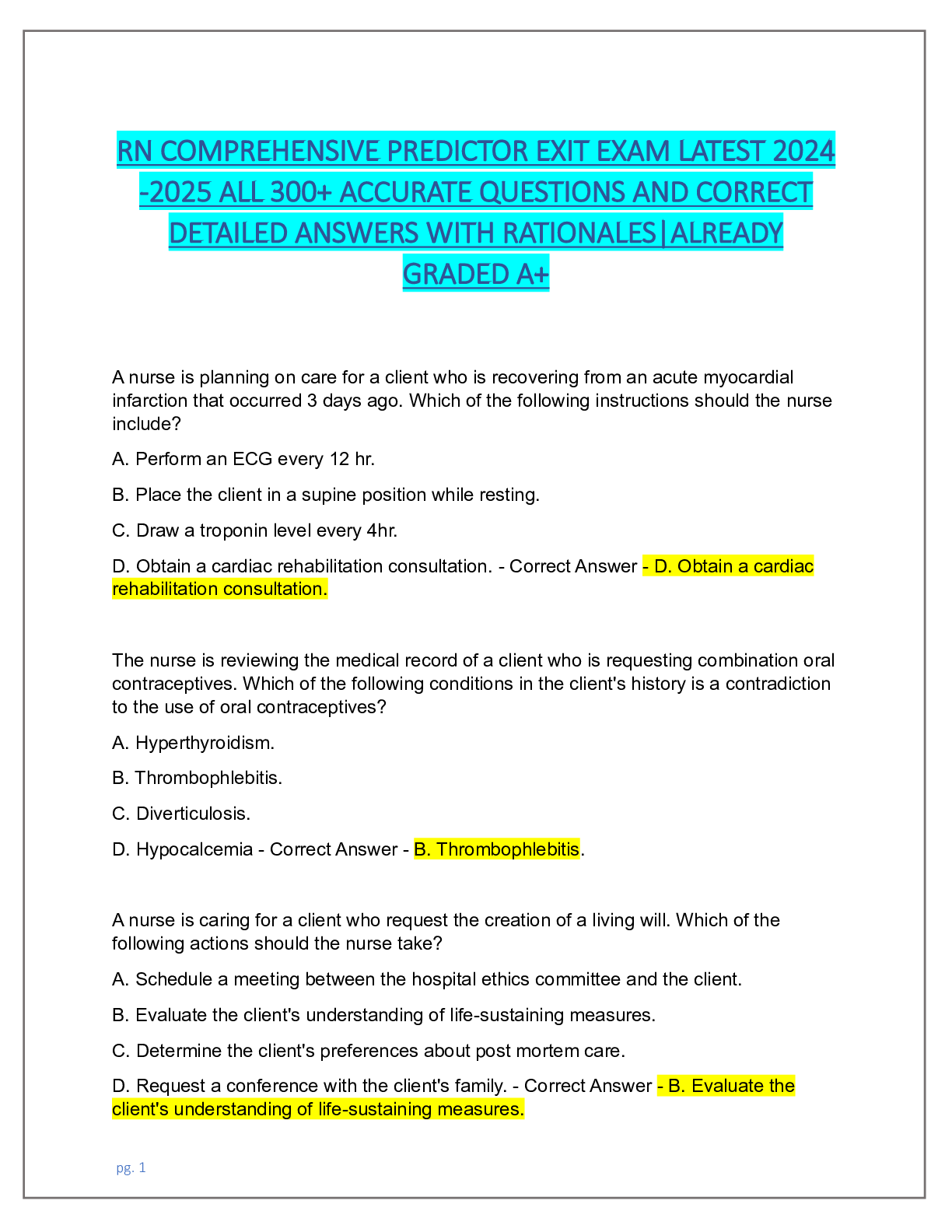
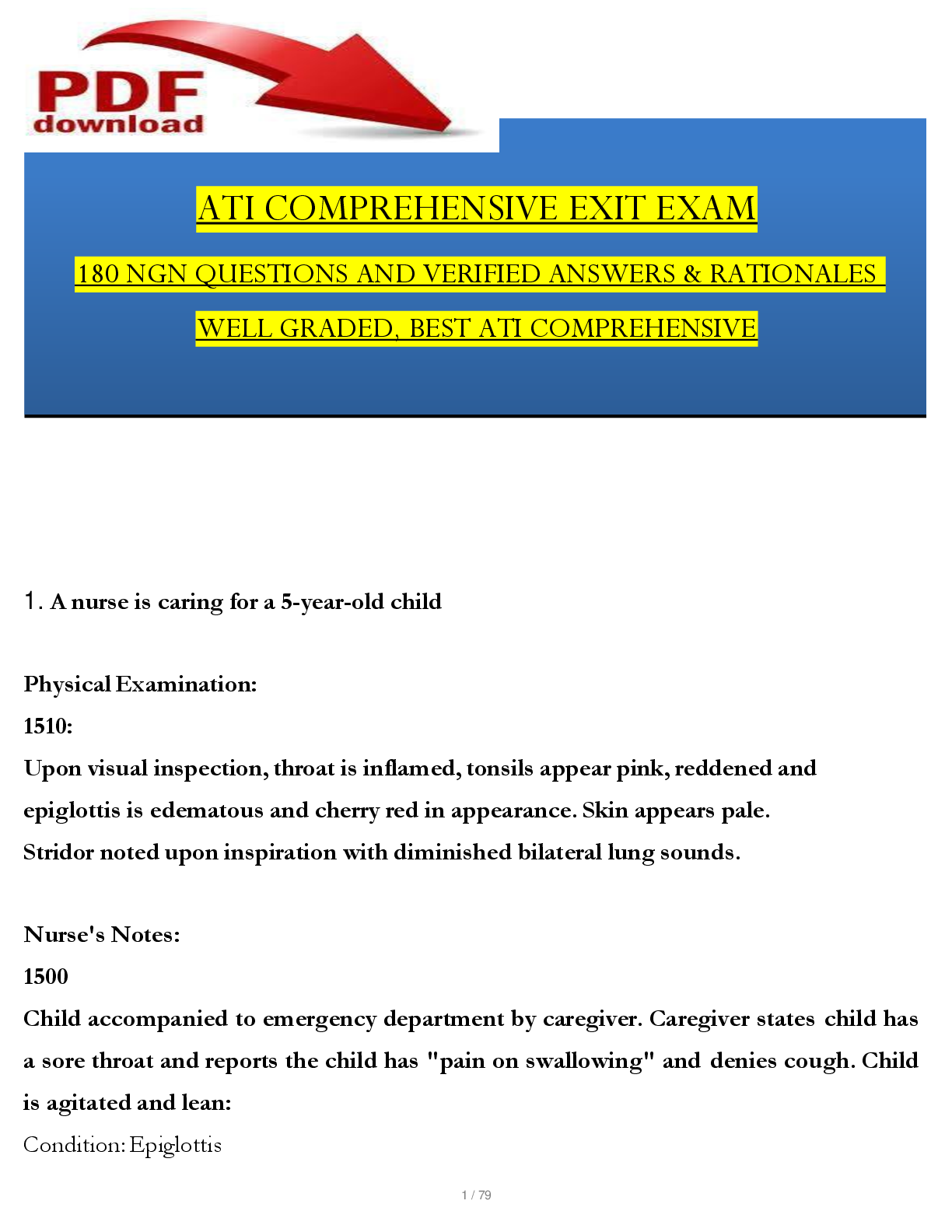
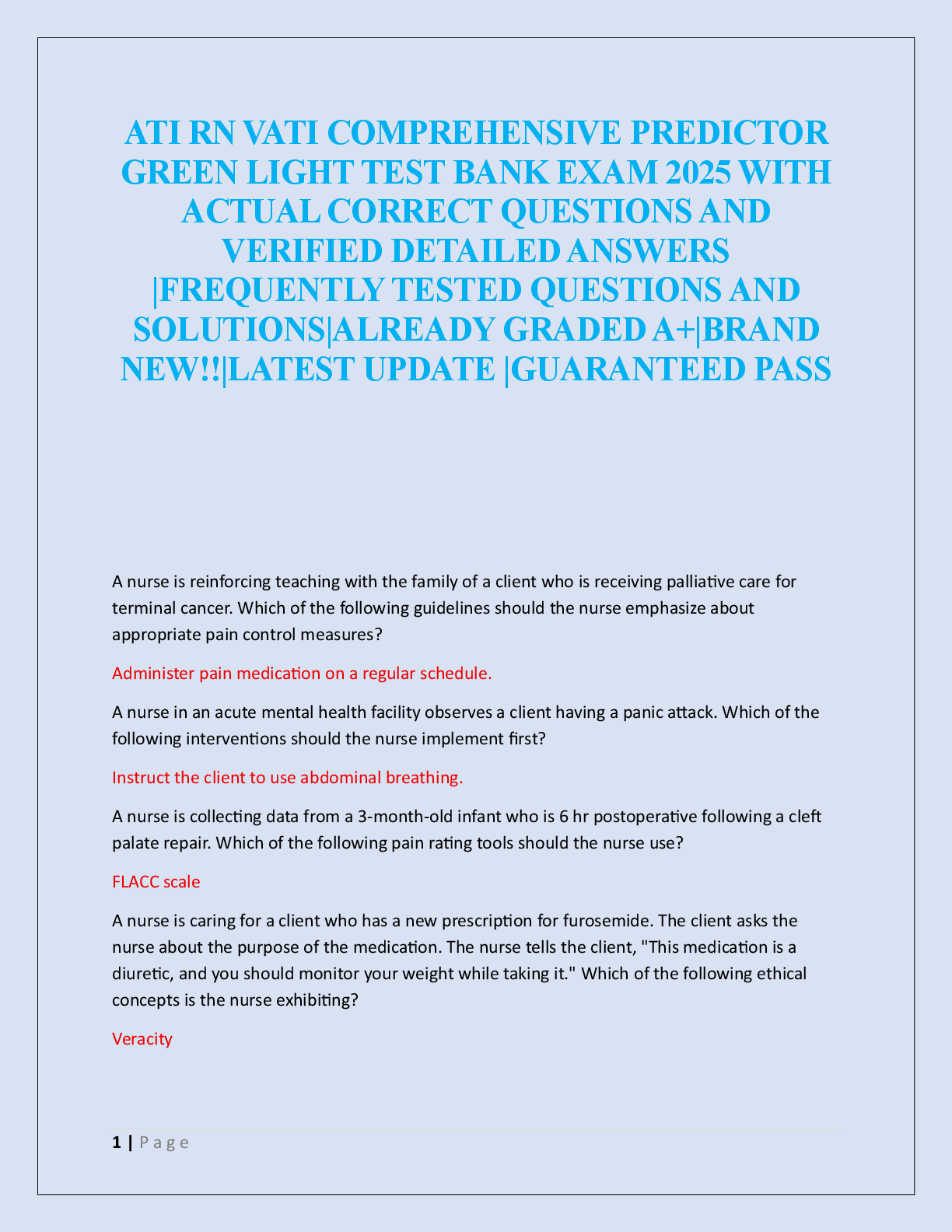
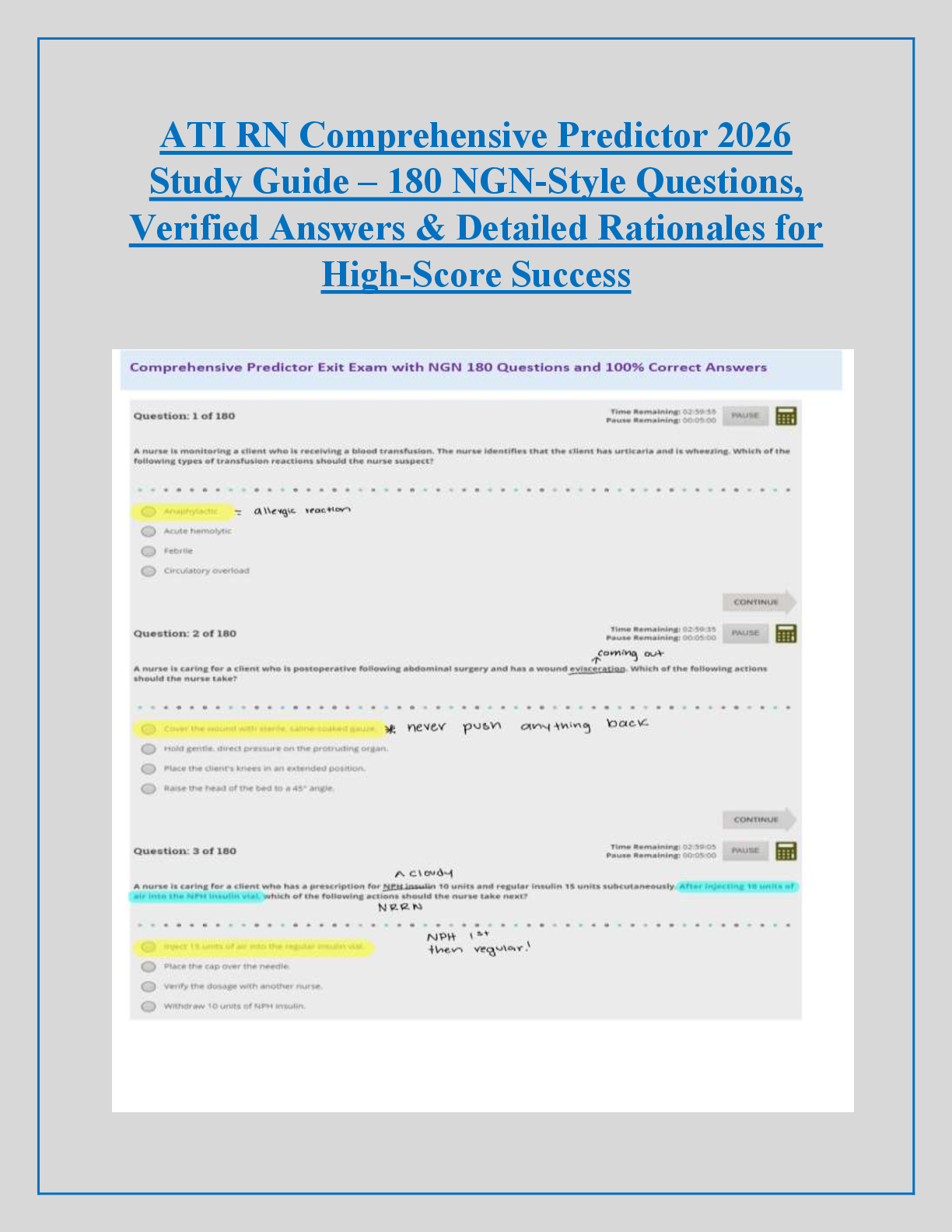
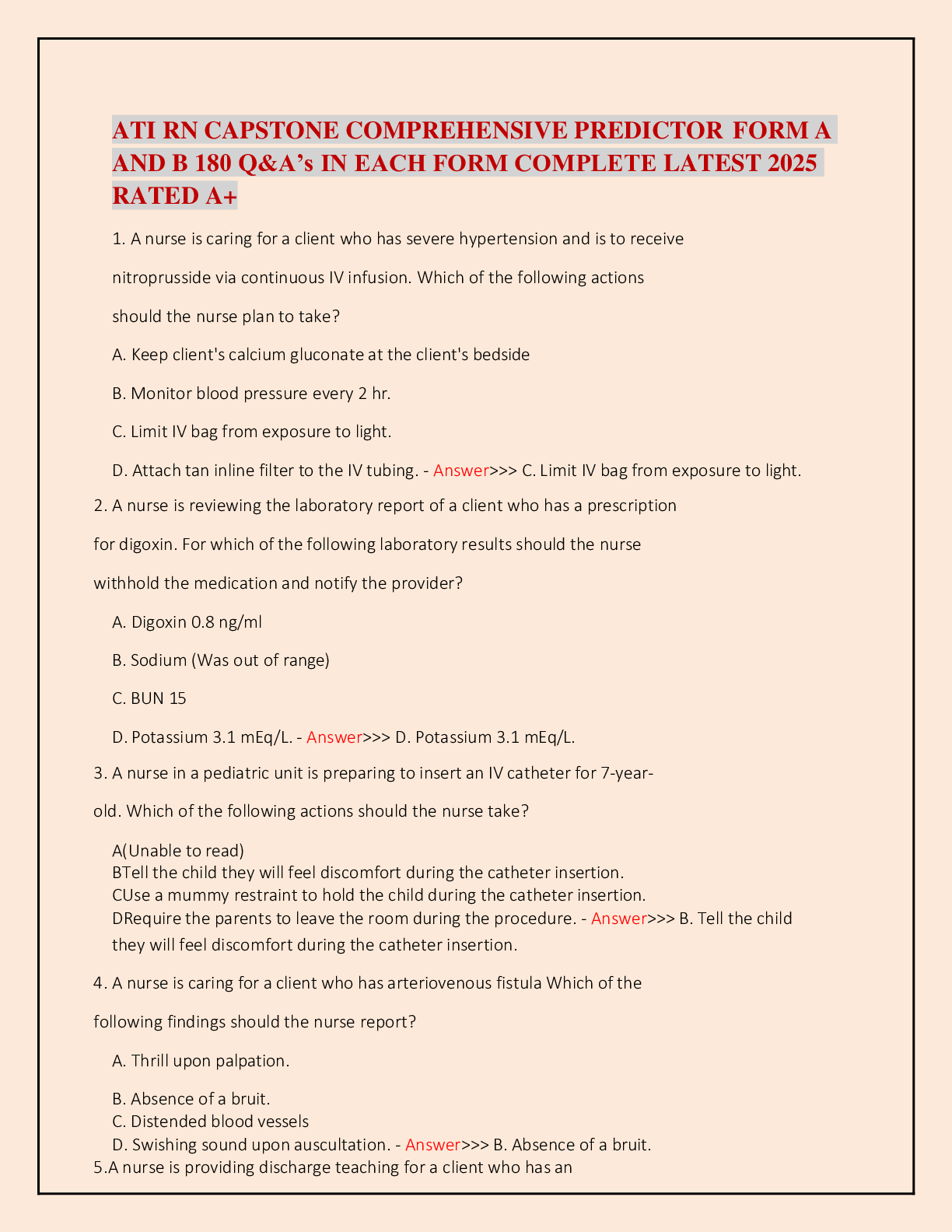
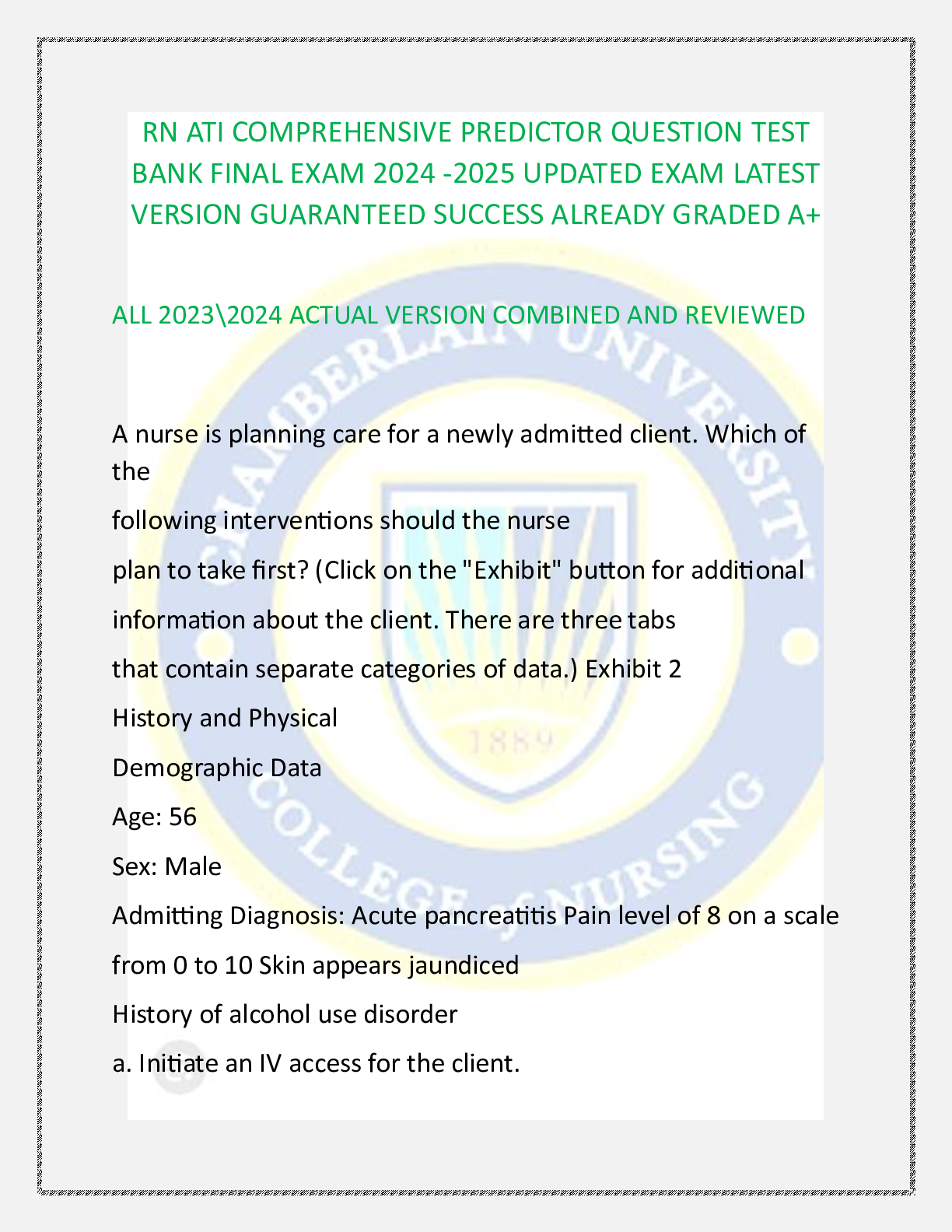
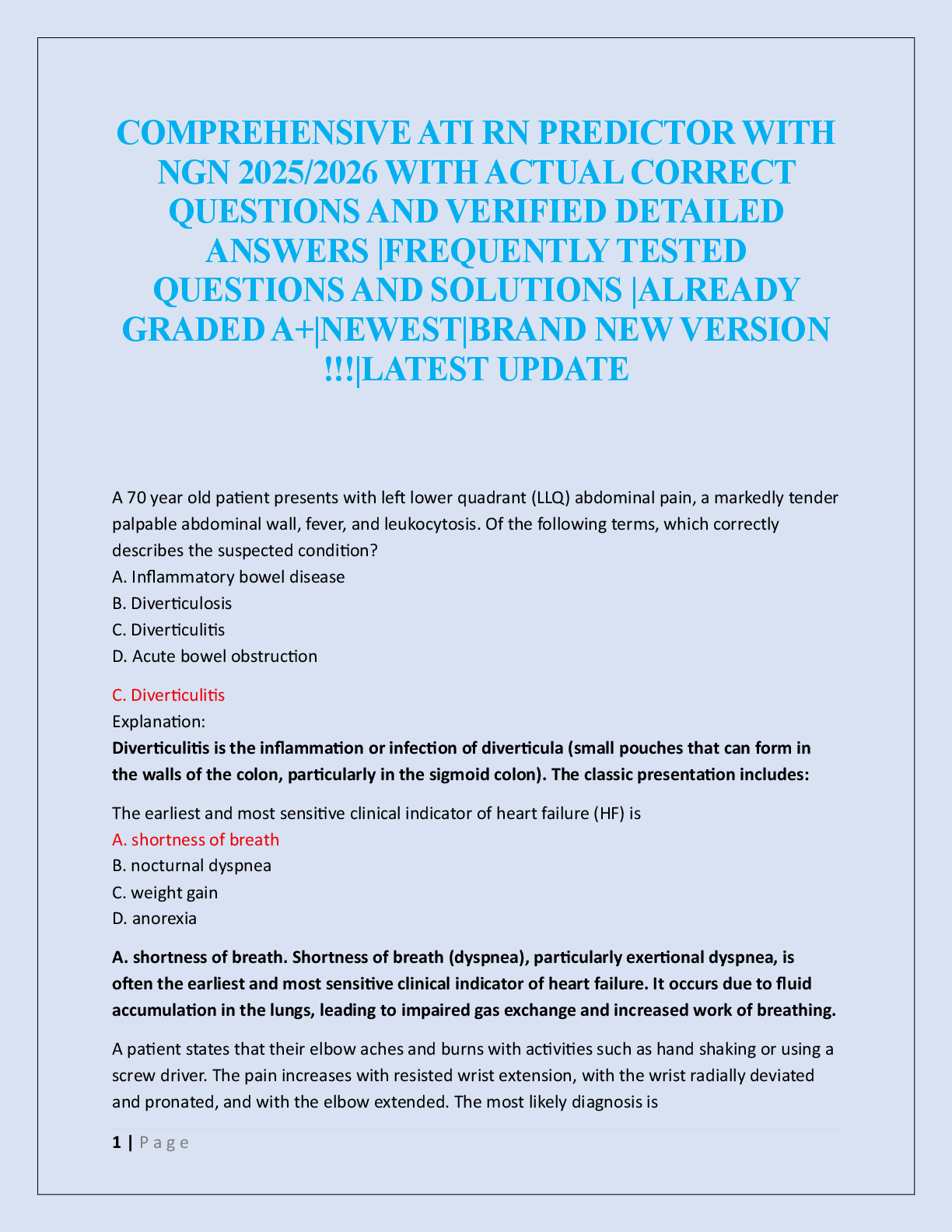
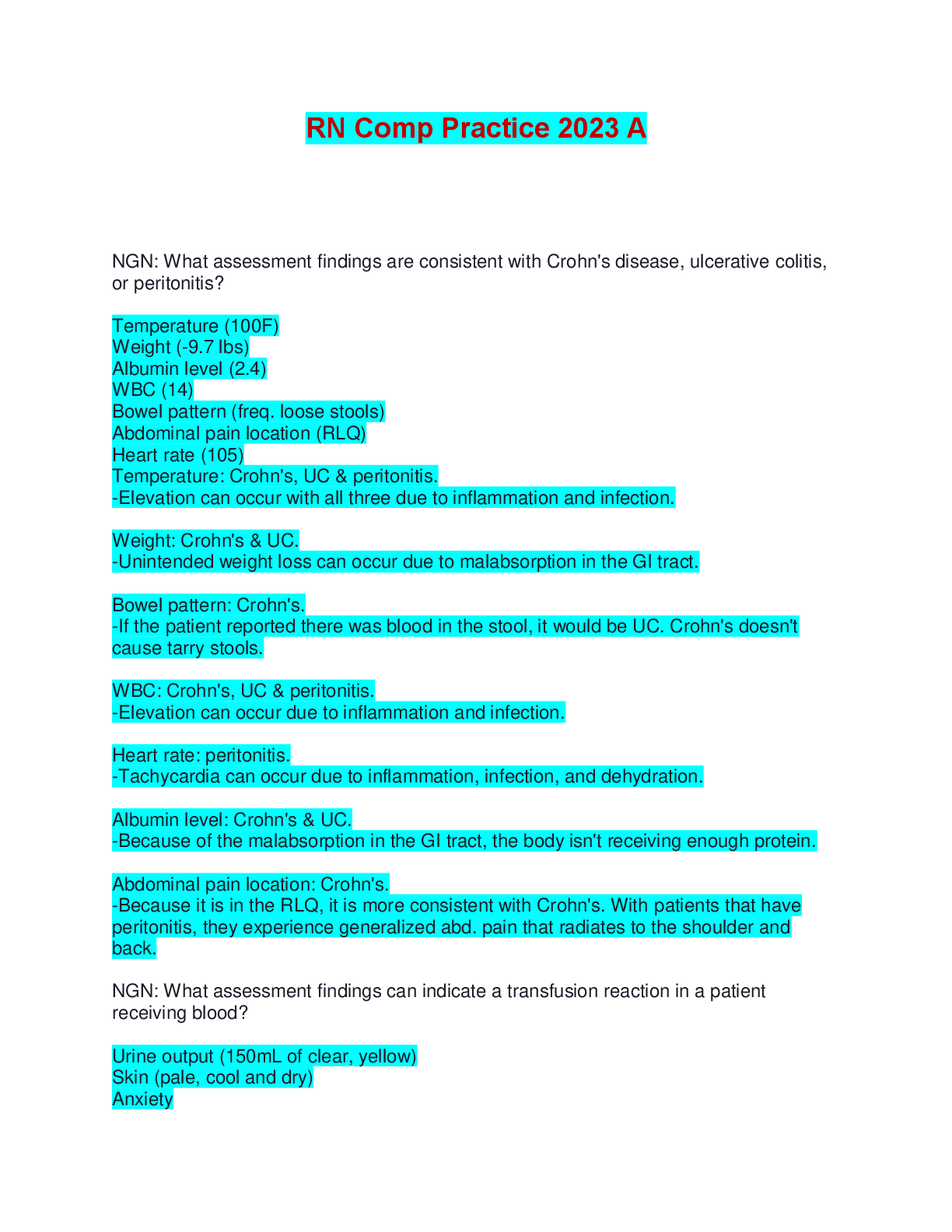
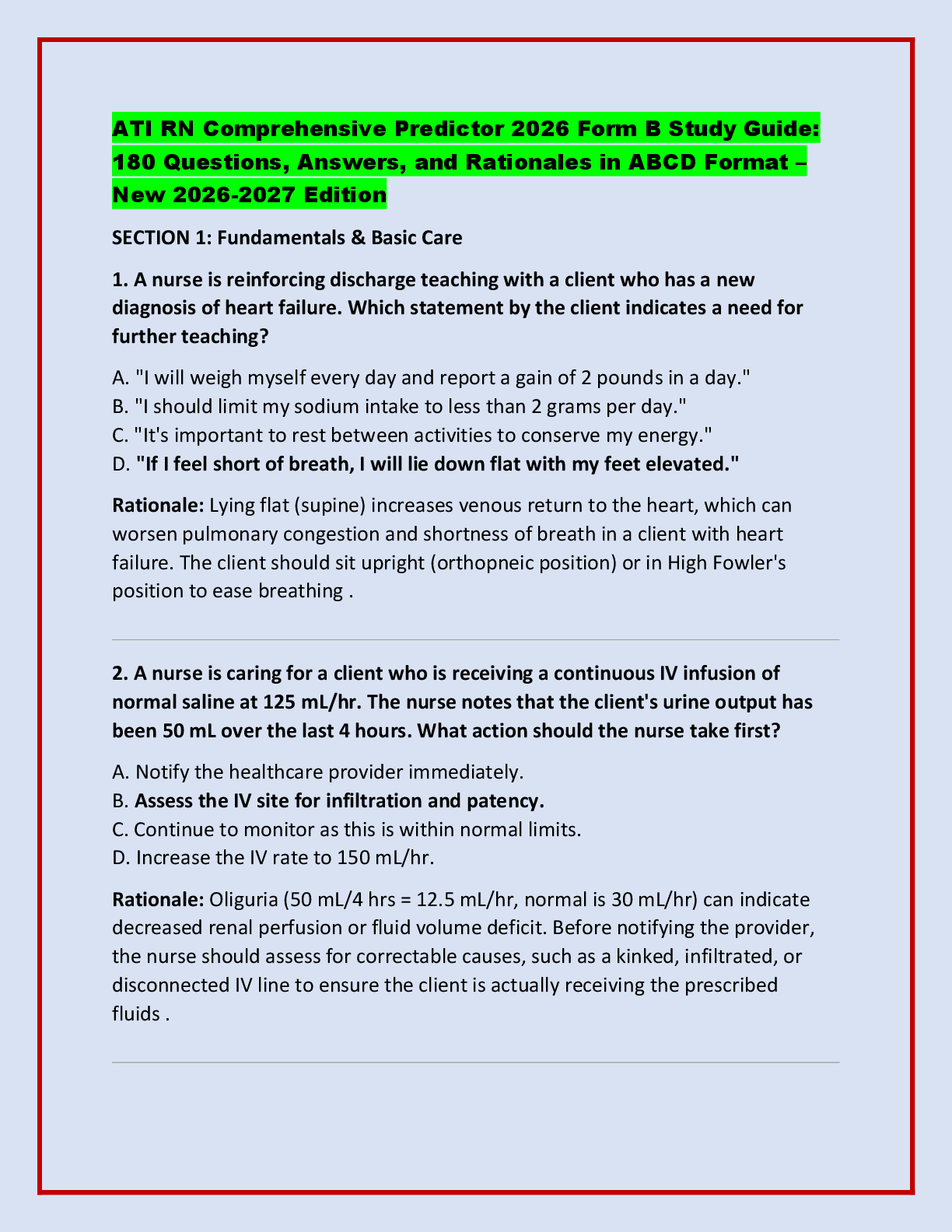
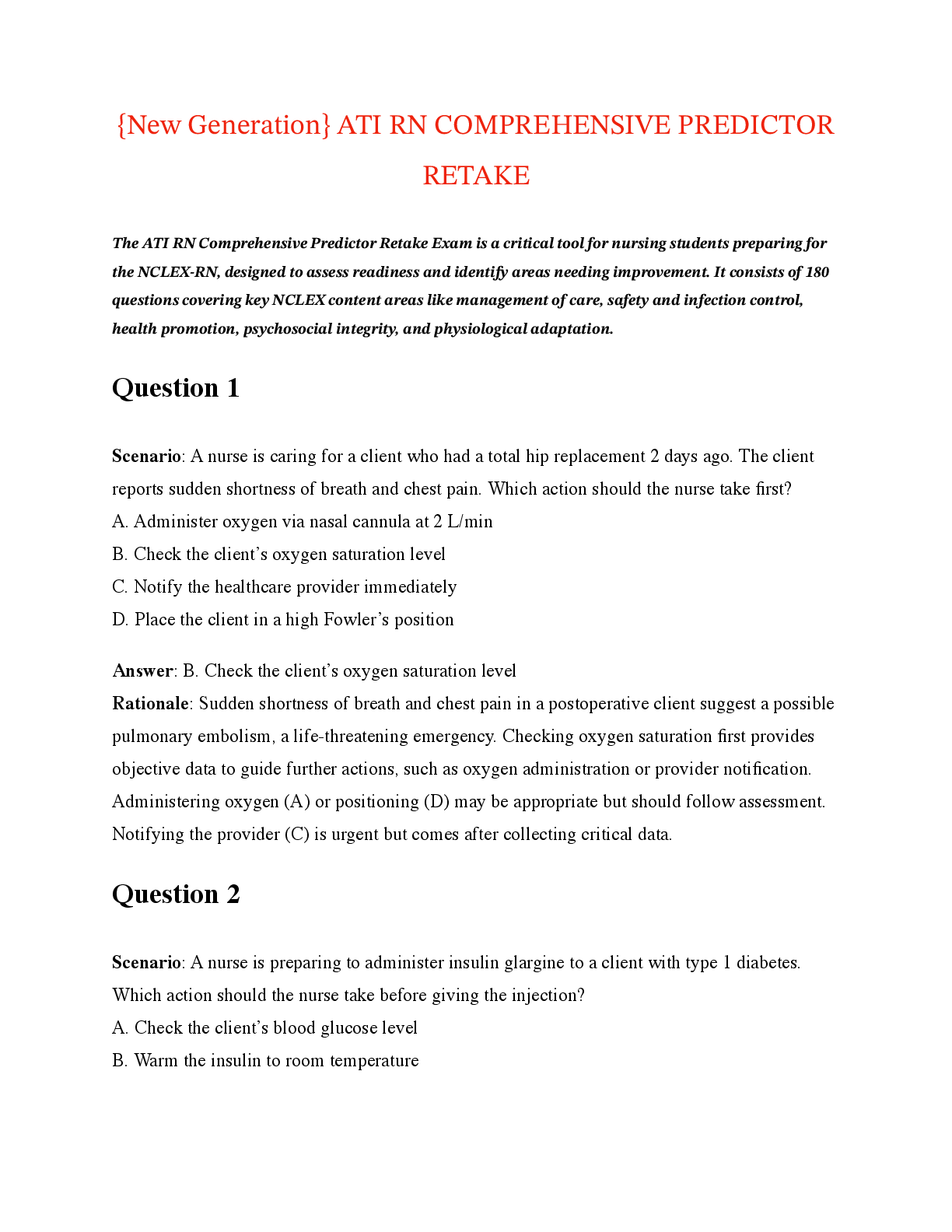
ATI RN COMPREHENSIVE NCLEX-PRACTICE EXAM 2024/2025 COMPLETE STUDY Q&A’S WITH RATIONALES (GUARANTEED PASS) | RATED A+ 1. A 55-year-old client, who is a renowned pianist, is admitted to the neurolo ... gy unit after a right-sided cerebrovascular accident (CVA) following a high-pressure concert performance. The client’s family is anxious about the potential implications on his career. The nurse is performing a neurological assessment while considering the client’s profession and the family’s concerns. Amidst the assessment, which finding should prompt the nurse to take immediate action and possibly escalate care? A. Decrease in the level of consciousness B. Loss of bladder control C. Altered sensation to stimuli, especially in the fingers D. Emotional lability, with episodes of sudden crying E. Difficulty in coordinating finger movements F. Complaints of a persistent headache Correct Answer: A. Decrease in the level of consciousness A decrease in the level of consciousness is a critical sign that indicates potential deterioration in a client’s neurological status, especially after a cerebrovascular accident (CVA). It can suggest increasing intracranial pressure, further brain injury, or other serious complications. Immediate action and escalation of care are essential when there’s a decline in consciousness to prevent further complications and potentially life-threatening situations. 2. Nurse Matthews is caring for Mr. Turner, a 72-year-old client with chronic heart failure and recent episodes of pulmonary edema. Given Mr. Turner’s deteriorating condition, the cardiology team has decided to insert a pulmonary artery catheter (Swan-Ganz catheter) to obtain more specific information about his heart’s functionality. When explaining the procedure and its purpose to Mr. Turner, Nurse Matthews should emphasize that the catheter will primarily be inserted to provide information about: A. Stroke volume B. Cardiac output C. Venous pressure D. Left ventricular functioning Correct Answer: D. Left ventricular functioning The catheter is placed in the pulmonary artery. Information regarding left ventricular function is obtained when the catheter balloon is inflated. Option A: Stroke volume is calculated using measurements of ventricle volumes from an echocardiogram and subtracting the volume of the blood in the ventricle at the end of a beat (called end-systolic volume) from the volume of blood just prior to the beat (called end-diastolic volume). Option B: Cardiac output is calculated by multiplying the stroke volume by the heart rate. Option C: The CVP can be measured manually using a manometer or electronically using a transducer. [Show More]
Last updated: 1 year ago
Preview 5 out of 27 pages
Loading document previews ...
Buy this document to get the full access instantly
Instant Download Access after purchase
Buy NowInstant download
We Accept:
Can't find what you want? Try our AI powered Search
Connected school, study & course
About the document
Uploaded On
Jan 01, 2025
Number of pages
27
Written in
All
This document has been written for:
Uploaded
Jan 01, 2025
Downloads
0
Views
16
Scholarfriends.com Online Platform by Browsegrades Inc. 651N South Broad St, Middletown DE. United States.
We're available through e-mail, Twitter, Facebook, and live chat.
FAQ
Questions? Leave a message!
Copyright © Scholarfriends · High quality services·