Health Care > EXAM > NURS 6002 EXAM 1-3 LATEST 2024-2025 QUESTIONS WITH CORRECT ANSWERS (All)
NURS 6002 EXAM 1-3 LATEST 2024-2025 QUESTIONS WITH CORRECT ANSWERS
Document Content and Description Below
Last updated: 1 year ago
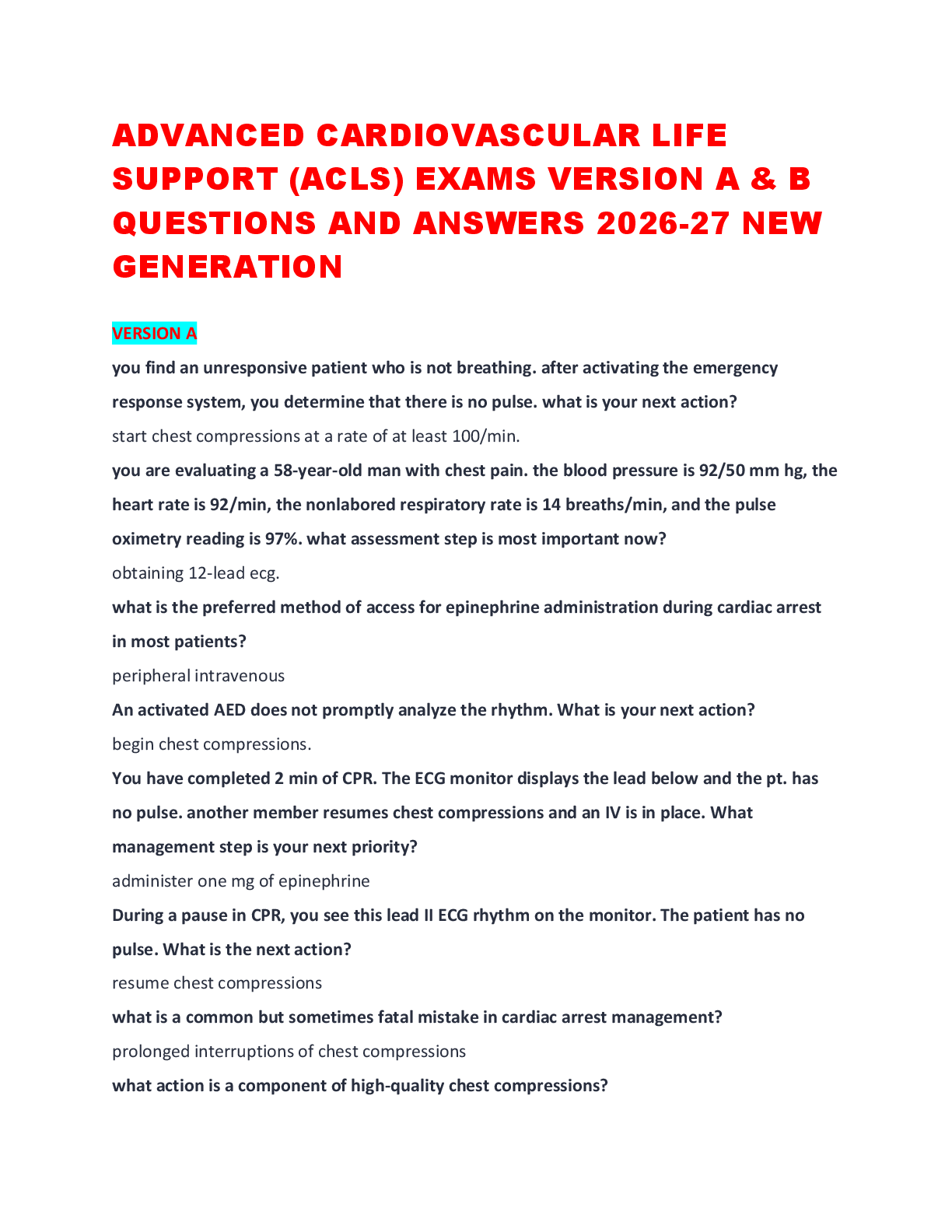
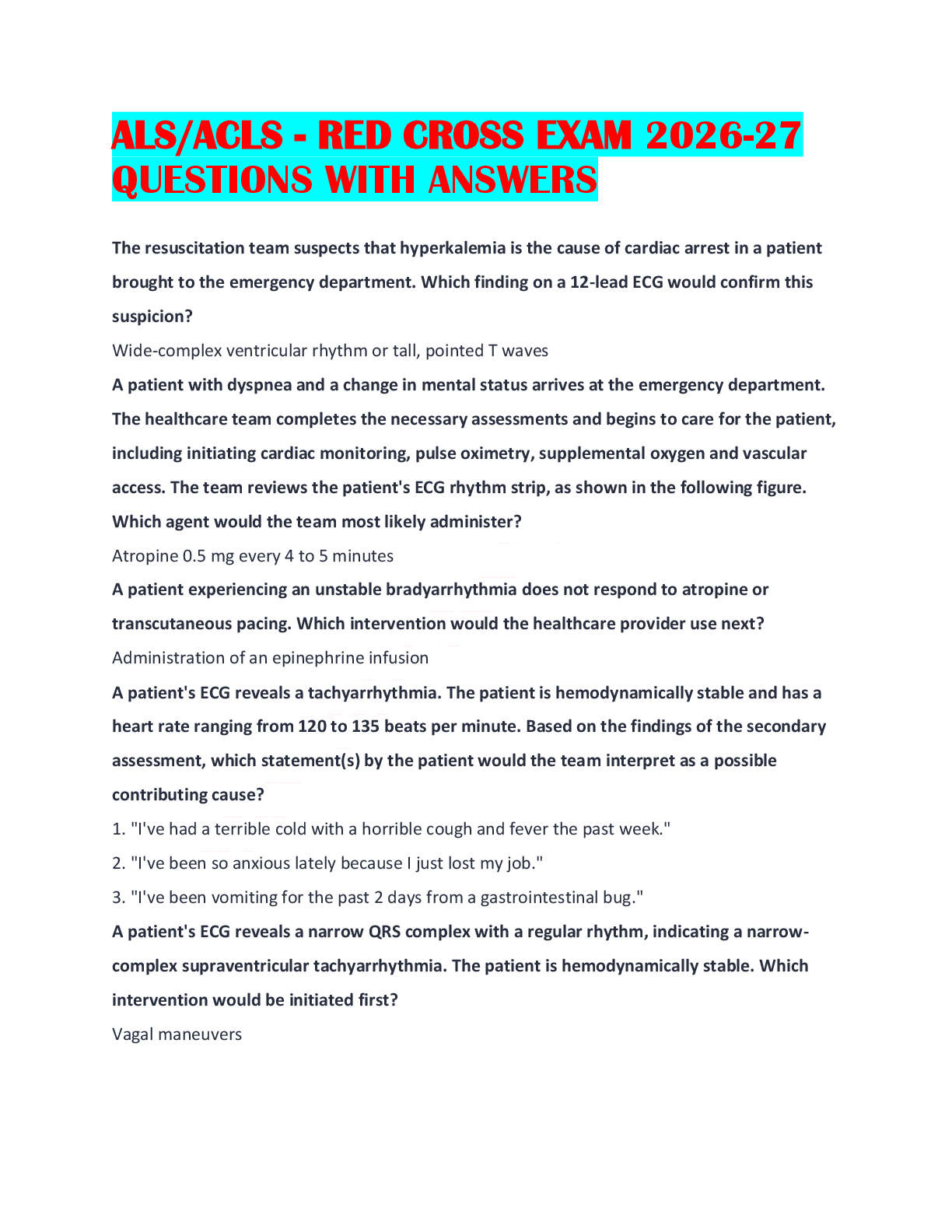
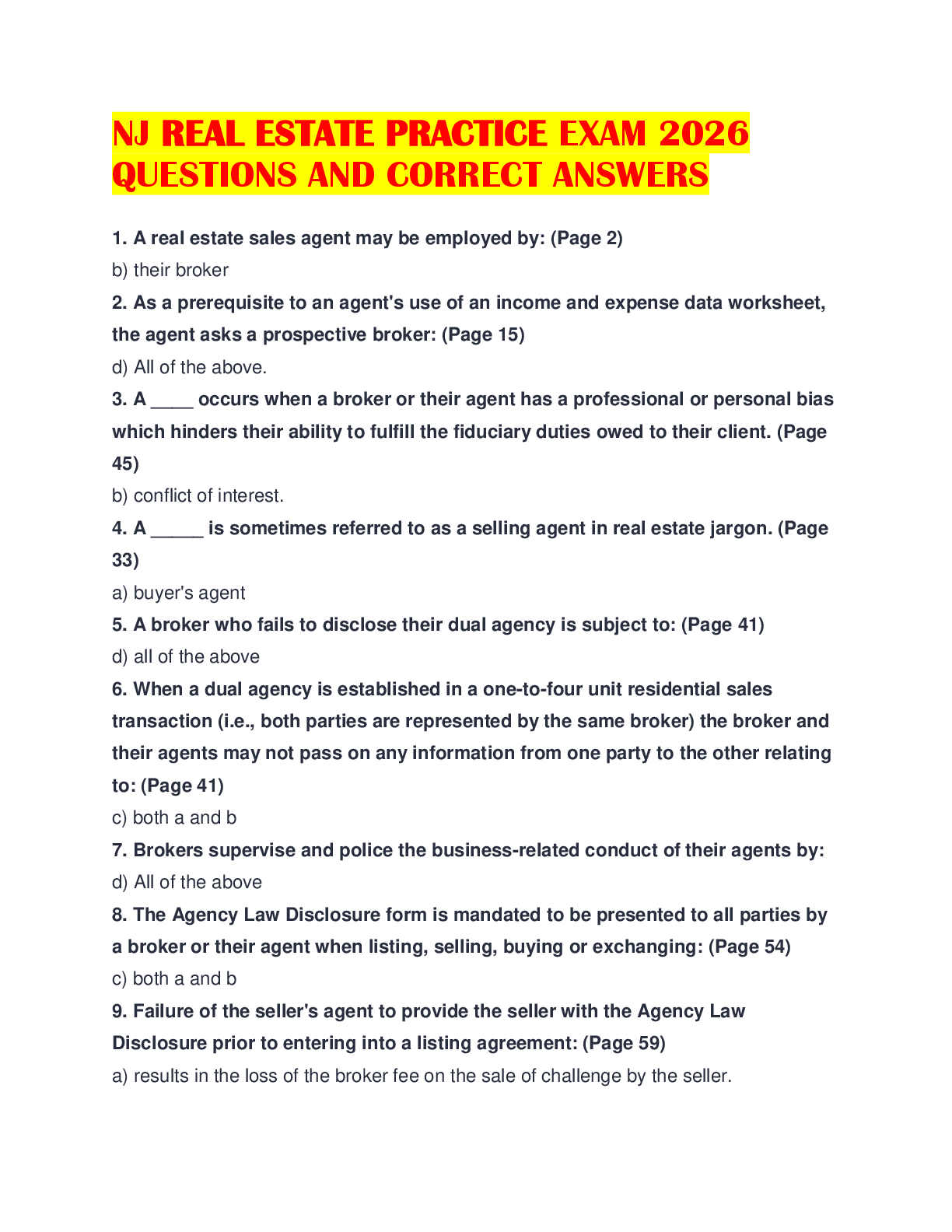
Preview 5 out of 80 pages
Instant download

Loading document previews ...
Buy this Document to get the Full Access Instantly
Provided by Students Who Aced it
We Verify Document Content to Gurantee Accuracy
Reviews( 0 )
Document information
Connected school, study & course
About the document
Uploaded On
Feb 24, 2025
Number of pages
80
Written in
All

Additional information
This document has been written for:
Uploaded
Feb 24, 2025
Downloads
0
Views
76
Topic Tags
Recommended For You
Get more on EXAM »
(WGU C919) NURS 6002 Fcilitation of Context-Based Student-Cent...
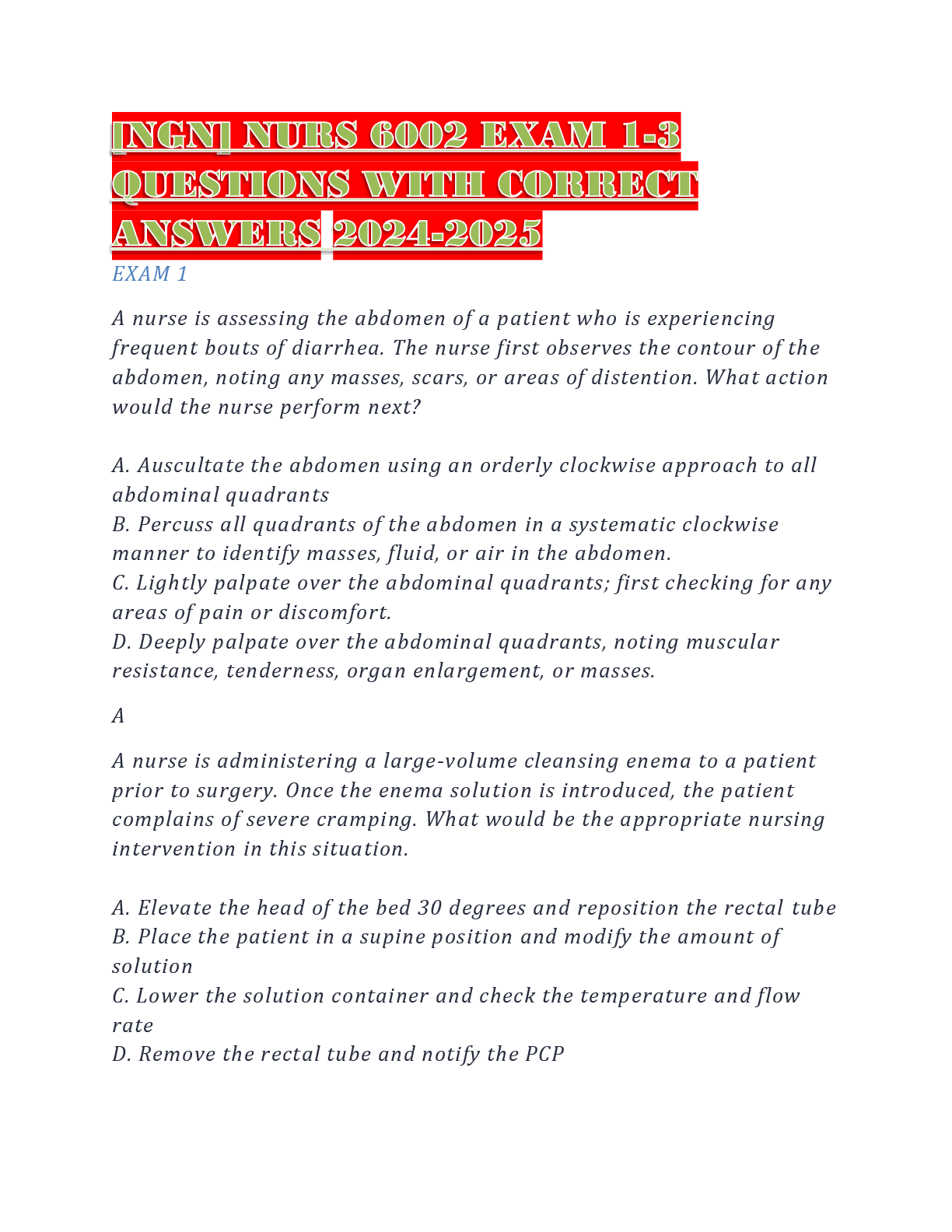
[NGN] NURS 6002 EXAM 1-3 QUESTIONS WITH CORRECT ANSWERS 2024-2...
(C919-NURS 6002) FA Readiness Exam Q & S - Facilitation of Con...


(WGU C919) NURS 6002 Fcilitation of Context-Based Student-Cent...

NURS 6002 Summary : Foundations of Graduate Study Academic and...

WK3Assgn Pruett P - Week 3 Assignment using APA format/NURS 60...
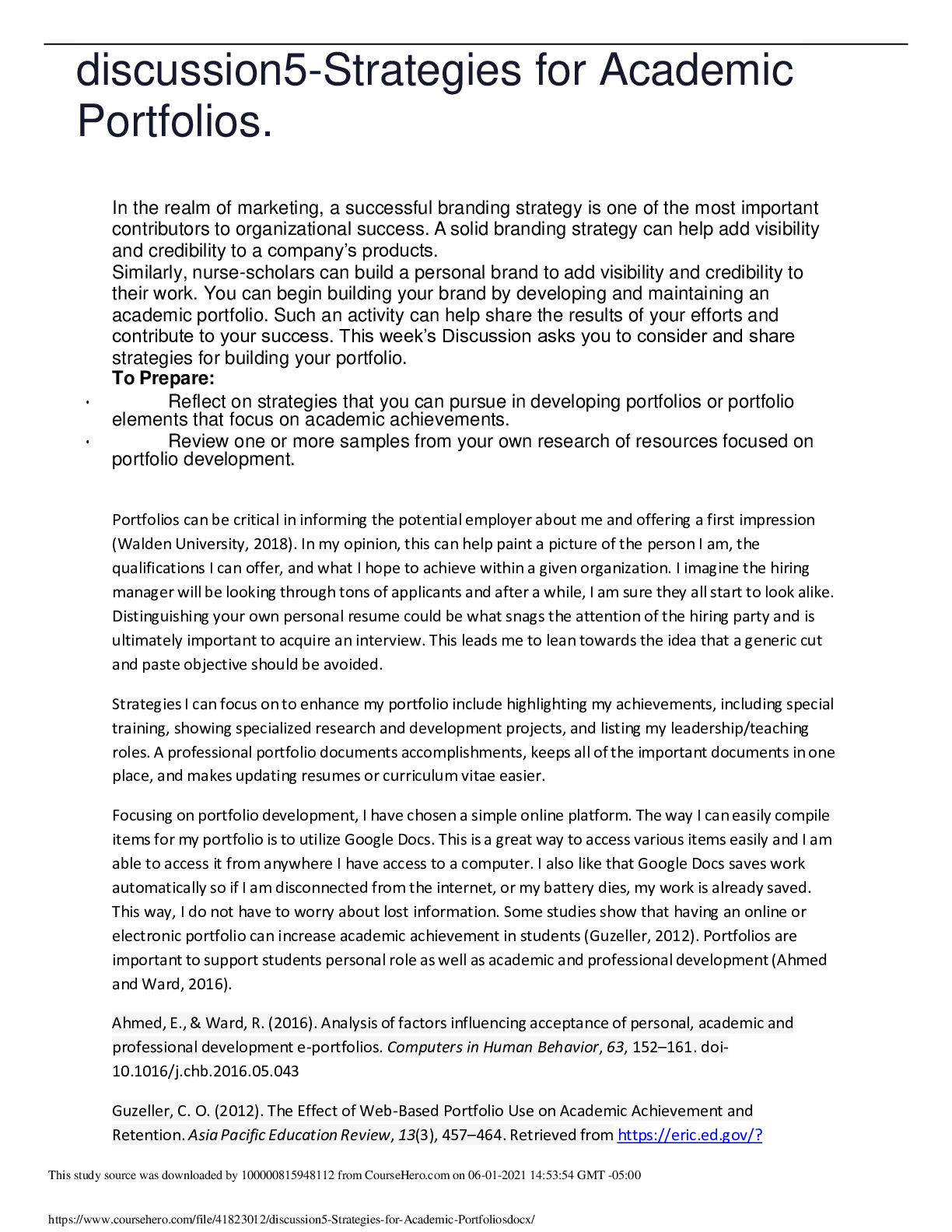
WALDEN UNIVERSITY NURS 6002N DISCUSSION 5STRATEGIES FOR ACADEM...
WALDEN UNIVERSITY NURS 6002N DISCUSSION 5STRATEGIES FOR ACADEM...
🩺 NURS 6002 – Nursing Specialty Comparison Table | Complete S...
(C919 NURS 6002) Facilitation of Context - Based Student cente...
Walden University - NURS 6002C Week 3 Assign (Latest 2021) 100...