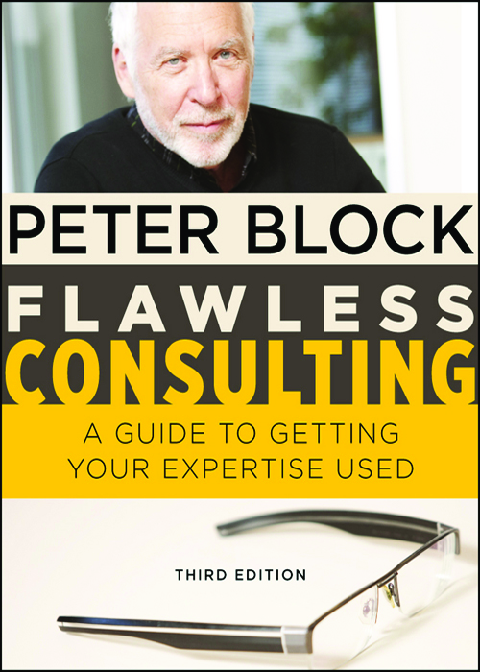
Flawless Consulting A Guide to Getting Your Expertise Used 3rd Edition BY Peter BlockKey Concepts
The Flawless Consultant: Act with integrity, tell the truth, and trust your own experience.
The Tripartite Role: Balan
...
Flawless Consulting A Guide to Getting Your Expertise Used 3rd Edition BY Peter BlockKey Concepts
- The Flawless Consultant: Act with integrity, tell the truth, and trust your own experience.
- The Tripartite Role: Balance technical expertise, interpersonal skills, and consulting sequence mastery.
- The Ultimate Goal: Establish collaborative relationships so your expertise is actually implemented.
The Three Consulting Roles
- Expert: Consultant acts as the decision-maker. Client is passive.
- Pair-of-Hands: Client retains full control. Consultant simply executes tasks.
- Collaborative: Consultant and client work as partners. Responsibility is shared equally. [1, 2]
5 Phases of Flawless ConsultingPhase 1: Contracting
- Set expectations: Define mutual wants, ground rules, and deliverables.
- Establish boundaries: Discuss operational constraints and project scope.
- Secure commitment: Ensure both parties agree to the formal contract. [1, 2]
Phase 2: Discovery and Dialogue
- Identify problems: Surface the root causes of organization issues.
- Gather data: Collect facts through interviews, surveys, and observations.
- Assess readiness: Determine the client's psychological readiness for change. [1]
Phase 3: Feedback and the Decision to Act
- Report findings: Present data clearly, concisely, and without judgment.
- Manage resistance: Expect and acknowledge emotional pushback from clients.
- Facilitate choice: Guide the client to select the next steps. [1]
Phase 4: Engagement and Implementation
- Design actions: Create the specific change interventions needed.
- Involve employees: Engage the broader organization to build ownership.
- Execute plans: Roll out the agreed-upon strategies.
Phase 5: Extension, Termination, or Reclearing [1]
- Evaluate results: Measure the overall impact of the intervention.
- Learn lessons: Review what went well and what failed.
- Define next steps: Choose to extend the project, pivot, or exit. [1, 2]
Overcoming Client Resistance
- Expect resistance: Recognize it as a natural reaction to hard truths.
- Identify faces: Notice compliance, silence, intellectualizing, or constant methodology questioning.
- Name the resistance: State your observation calmly to the client.
- Be authentic: Do not take the resistance personally or get defensive. [1, 2, 3]
[Show More]