Economics > STUDY GUIDE > ECO 550 All Chapters micro_key_answers DOWNLOAD TO SCORE A+ (All)
ECO 550 All Chapters micro_key_answers DOWNLOAD TO SCORE A+
Document Content and Description Below
Last updated: 8 months ago
Preview 1 out of 65 pages
Instant download

Buy this Document to get the Full Access Instantly
Provided by Students Who Aced it
We Verify Document Content to Gurantee Accuracy
Reviews( 0 )
Document information
Connected school, study & course
About the document
Uploaded On
Mar 23, 2021
Number of pages
65
Written in
All

Additional information
This document has been written for:
Uploaded
Mar 23, 2021
Downloads
0
Views
153
Topic Tags
Recommended For You
Get more on STUDY GUIDE ».png)
ECO 550 Final Exam|ECO550 Final Exam (500 Questions and Answer...
.png)
Strayer University, Cedar Hill - ECO 550 ECO550 final exam Tes...
.png)
Strayer University - ECO 550| ECO550 Midterm Exam, Multiple Se...

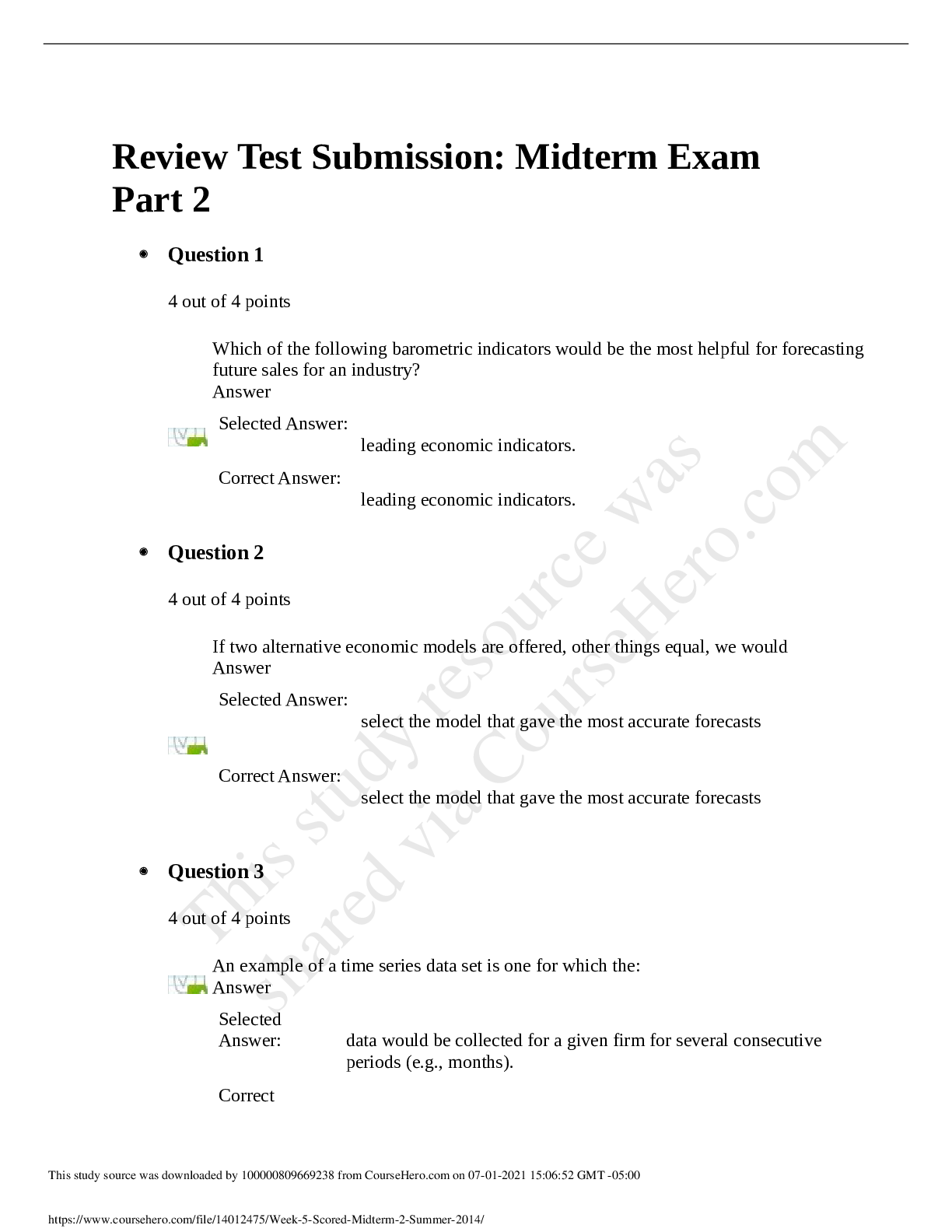
Strayer University ECO 550 Week 5 Midterm Exam Part 2. Latest...
, Questions and Answers, All Correct Study Guide, Download to Score A.png)
ECO 550 Final Exam (A Grade), Questions and Answers, All Corre...
 Week 6 Assignment 2 - Operations Decisions (Updated 2014) (A Grade), Questions and Answers, All Correct Study Guide, Download to Score A.png)
ECO 550 (Strayer NEW) Week 6 Assignment 2 - Operations Decisio...
.png)
ECO 550 Final Exam questions and multiple choice answers selec...
ECO 550 MIDTERM EXAM 1 (500 Questions and Answers) (ASSURED A)
ECO 550 MIDTERM EXAM 1 (500 Questions and Answers) (A GUARANTE...
ECO 550: Managerial Economics and Globalization /ECO 550 Case...

ECO 550 Case Study 2: Cases Analysis of Risk, Uncertainty and...

Strayer University > Case Study-Dealing with Risk and Uncertai...

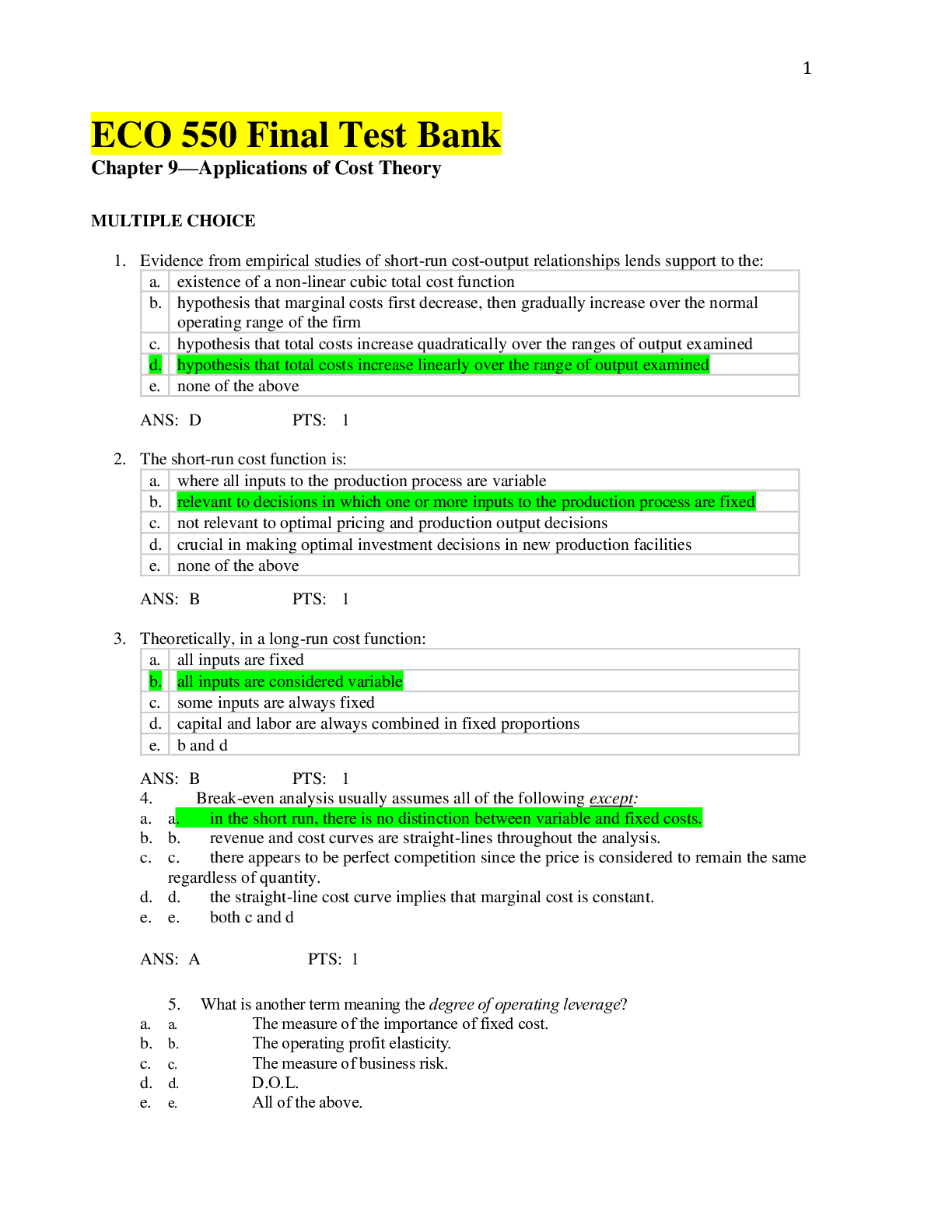

Case Study-Dealing with Risk and Uncertainty | Assignment: Dea...

Test Bank For Microeconomics, 23rd Edition by Campbell McConne...




.png)