Business Management  >  EXAMs  >  WGU D094 EXAM 2024-2025! 100% CORRECT ANSWERS (All)

WGU D094 EXAM 2024-2025! 100% CORRECT ANSWERS

Document Content and Description Below

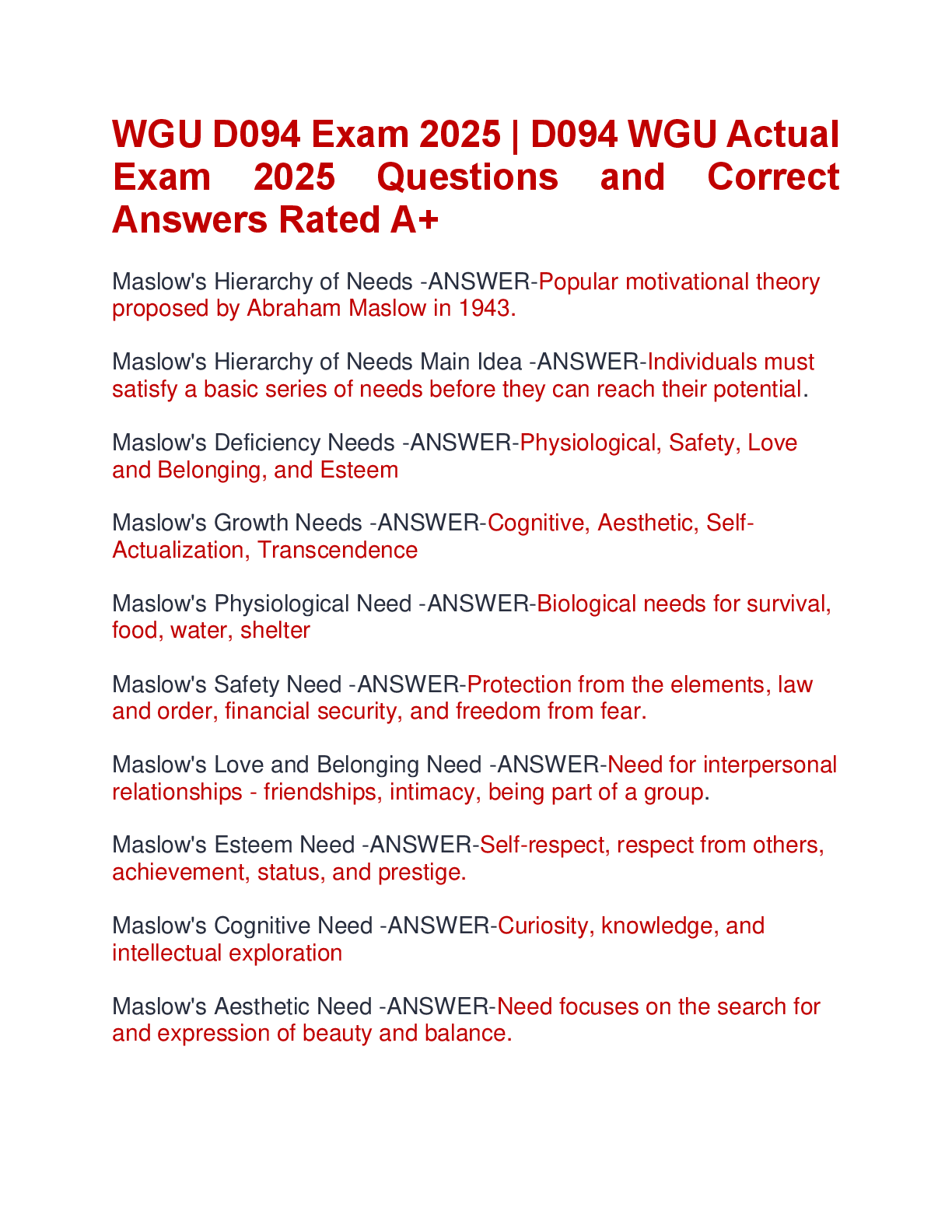
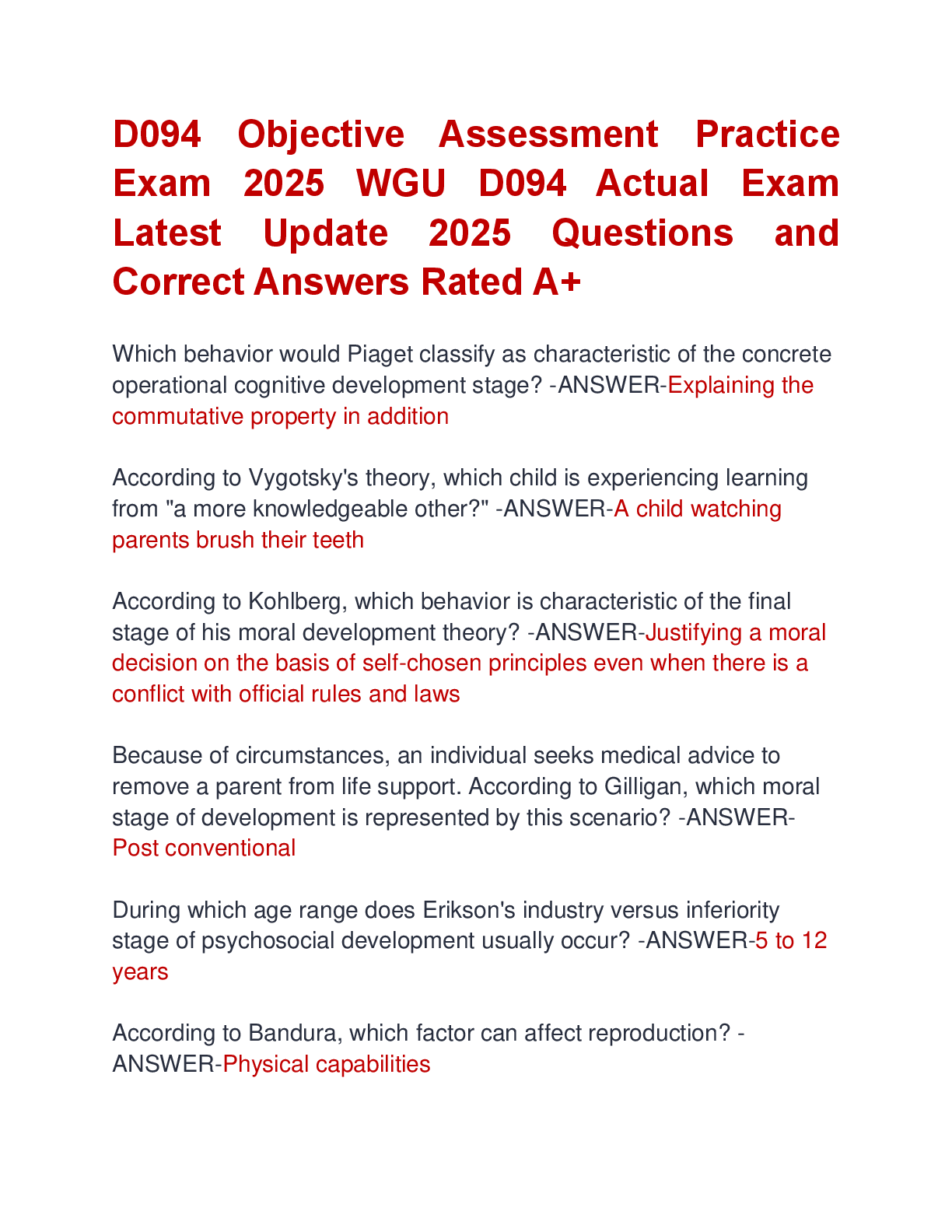
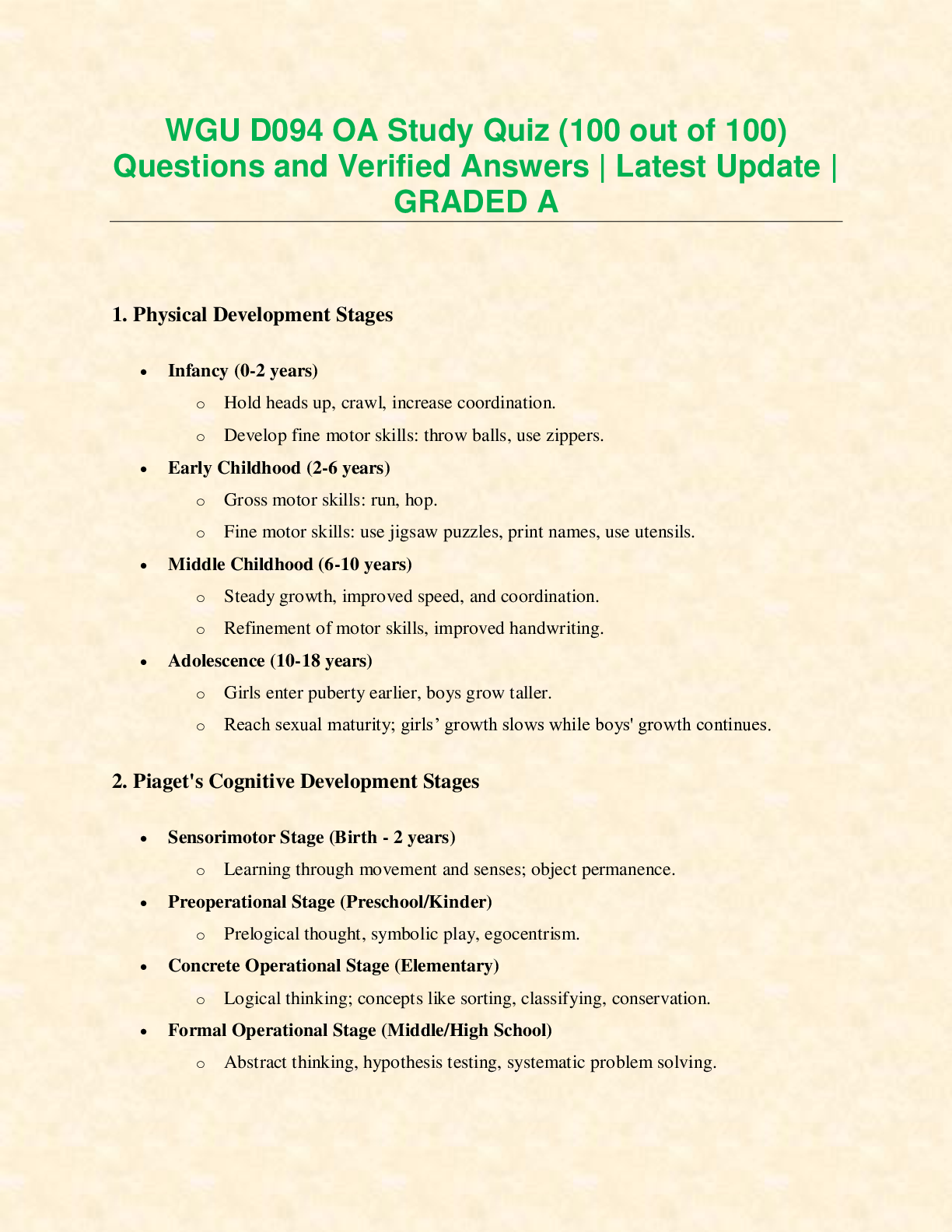
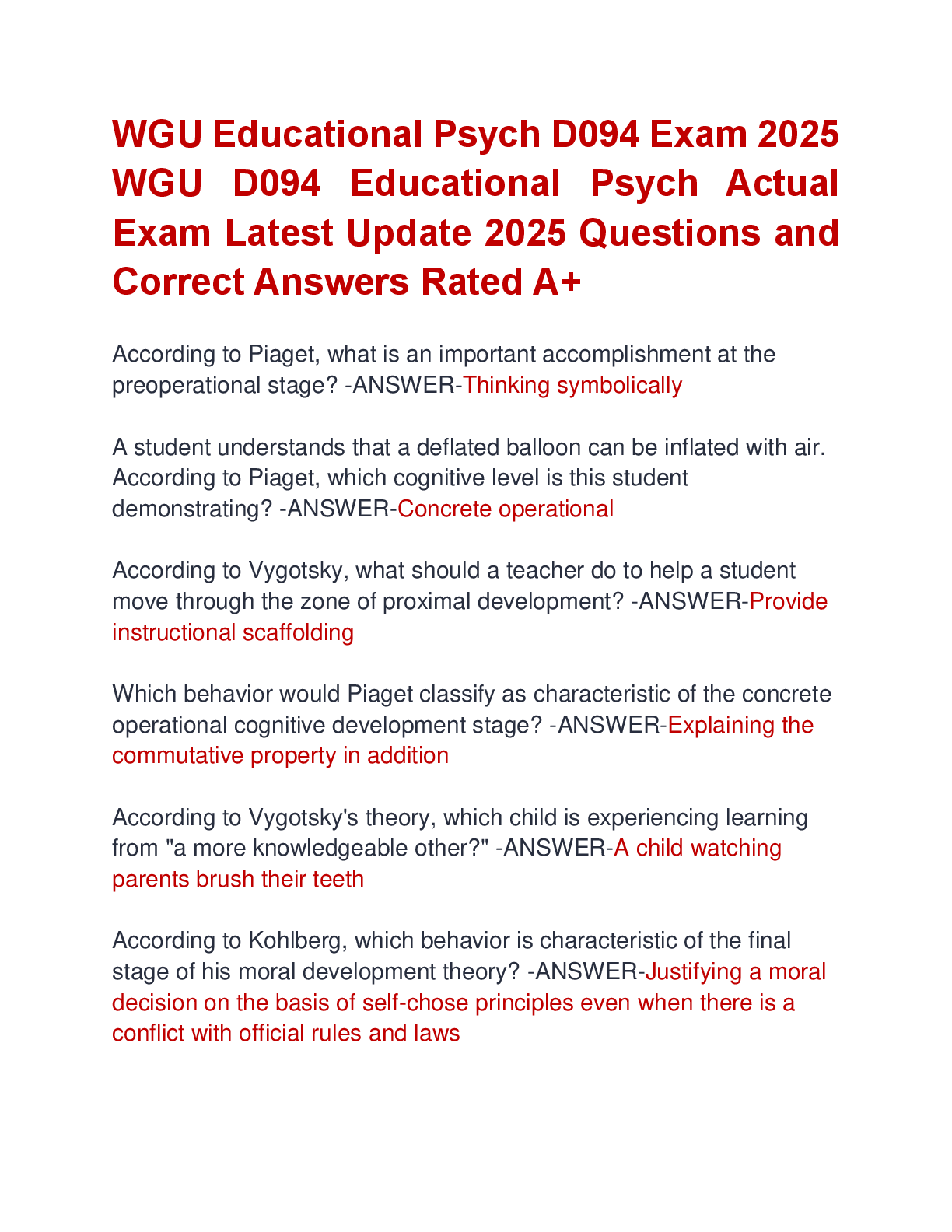
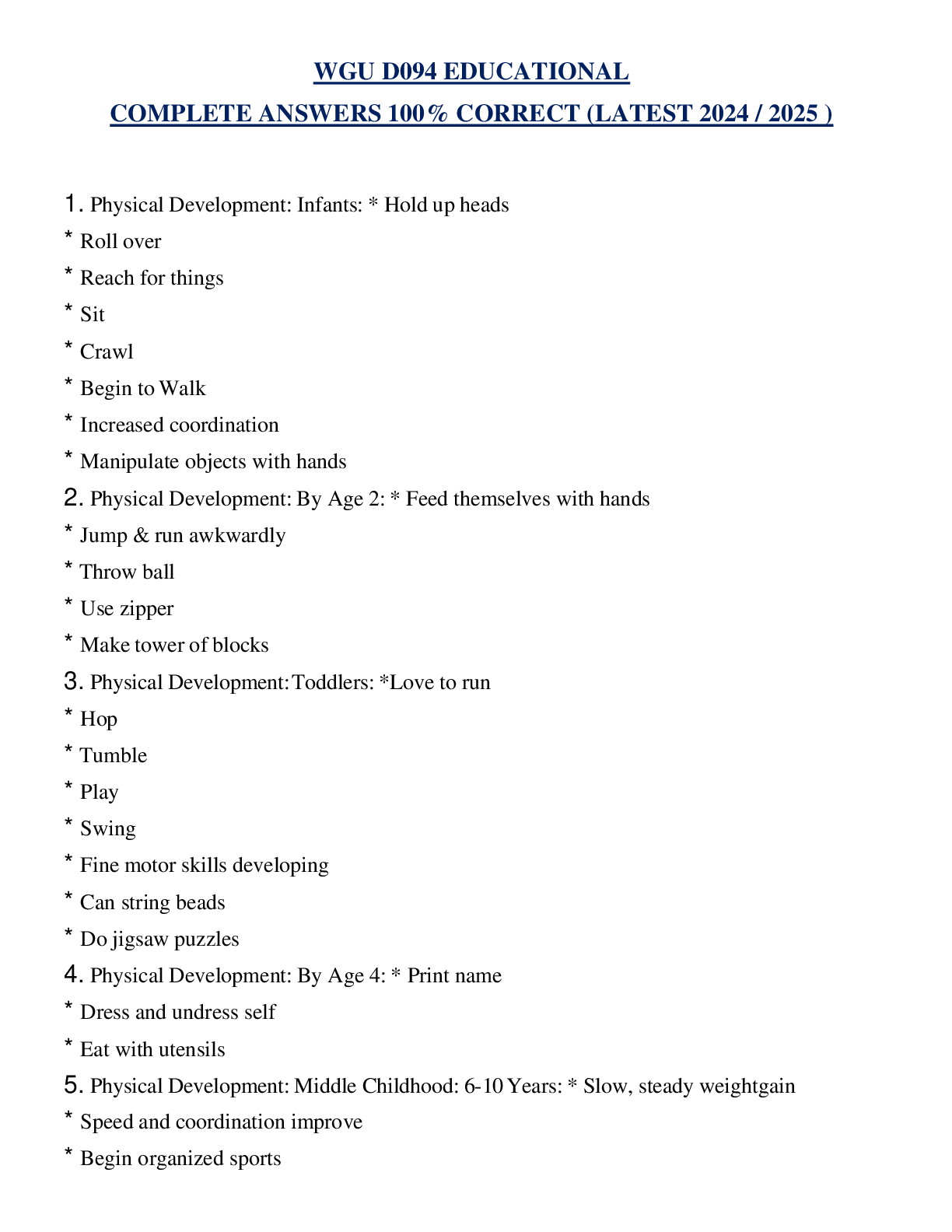
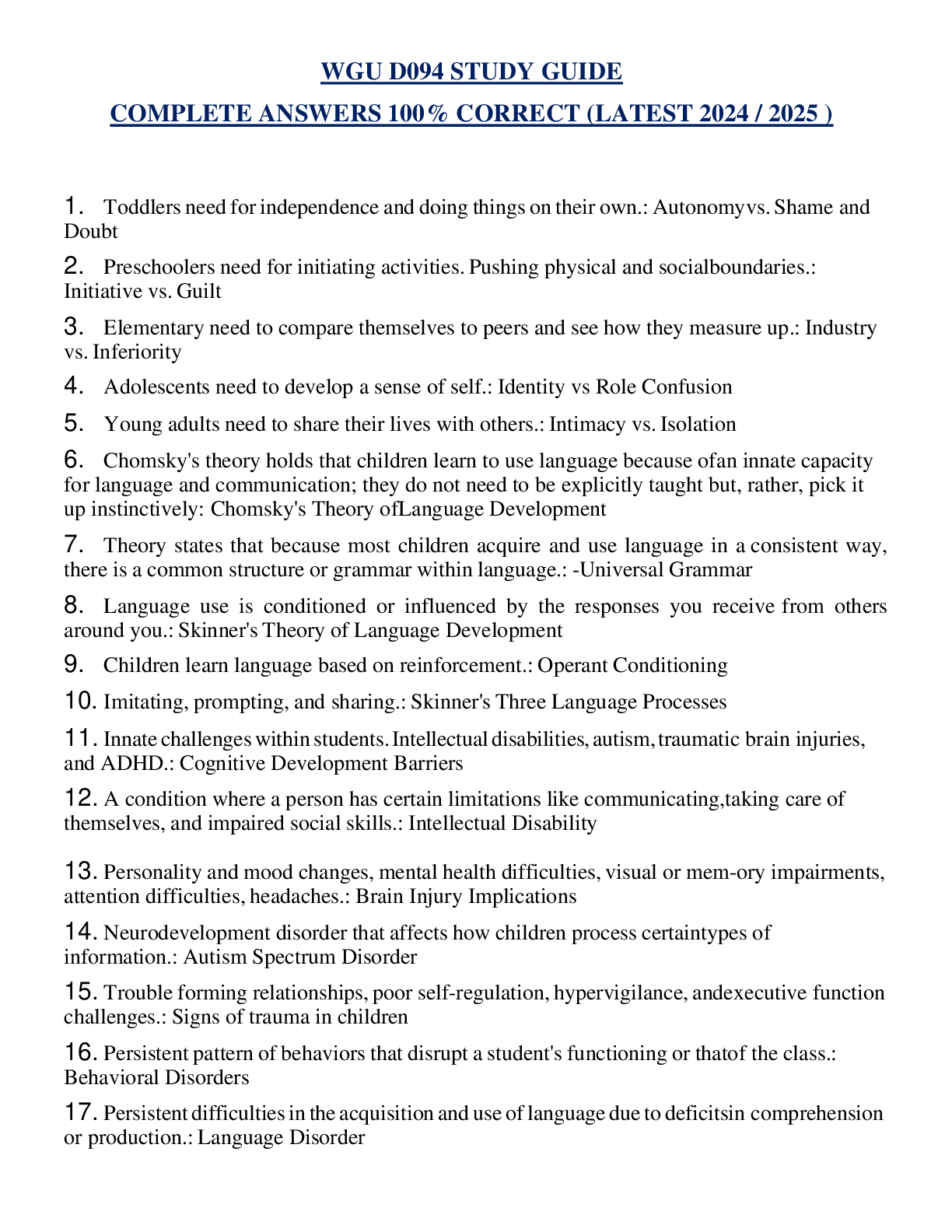
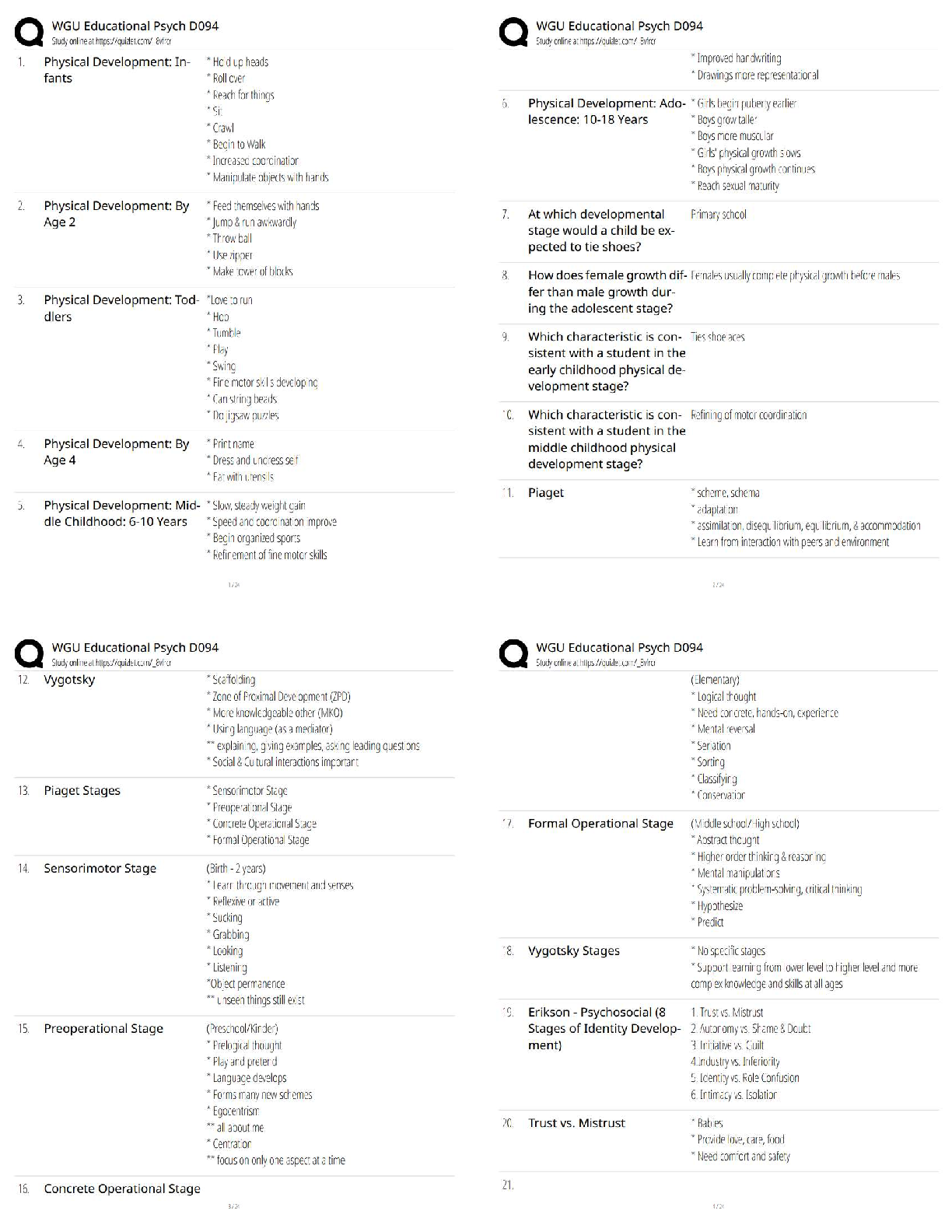
WGU D094 EXAM 2024-2025! 100% CORRECT ANSWERS Maslow's Hierarchy of Needs Popular motivational theory proposed by Abraham Maslow in 1943. Maslow's Hierarchy of Needs Main Idea Individuals must satisfy ... a basic series of needs before they can reach their potential. Maslow's Deficiency Needs Physiological, Safety, Love and Belonging, and Esteem Maslow's Growth Needs Cognitive, Aesthetic, Self-Actualization, Transcendence Maslow's Physiological Need Biological needs for survival, food, water, shelter Maslow's Safety Need Protection from the elements, law and order, financial security, and freedom from fear. Maslow's Love and Belonging Need Need for interpersonal relationships - friendships, intimacy, being part of a group. Maslow's Esteem Need Self-respect, respect from others, achievement, status, and prestige. Maslow's Cognitive Need Curiosity, knowledge, and intellectual exploration Maslow's Aesthetic Need Need focuses on the search for and expression of beauty and balance. Maslow's Self-Actualization Need Personal growth and fulfillment and the realization of one's personal potential as a human being. Maslow's Transcendence Need Meeting spiritual needs or helping others achieve self-actualization. Arnold Gesell First theorist to observe and document stages of physical development. Gesell's Maturational Theory Child's growth & development are influenced by both their environment and genes in sequential order Infancy The stage of development that begins at birth and lasts between 18 and 24 months. Dozens of motor skills are added. Early Childhood The stage of development from 2 - 6 years old. Improvements occur in both fine and gross motor skills. Middle Childhood The stage of development from 6 - 10 years old. Slow but steady gains in weight and height. Adolescence The stage of development from 10 - 18 years old. Weight and height increase rapidly and puberty begins. Jean Piaget Swiss psychologist known for his Theory of Cognitive Development. Piaget's Theory of Cognitive Development Theory that suggests children move through four different stages of development. Sensorimotor, Preoperational, Concrete Operational, and Formal Operational. Sensorimotor Stage Stage of development from birth to 2 years. Infants and toddlers acquire knowledge through sensory experiences and manipulating objects. Object Permanence The understanding that objects continue to exist even when they cannot be seen. Major development of sensorimotor stage. Preoperational Stage Stage of development from 2 to 7 years. Kids learn through pretend play. Egocentric and struggle to see others perspective. Concrete Operational Stage [Show More]

Last updated: 8 months ago

Preview 1 out of 2 pages

Buy Now

Instant download

We Accept:

Payment methods accepted on Scholarfriends (We Accept)
Loading document previews for WGU D094 EXAM 2024-2025! 100% CORRECT ANSWERS

Loading document previews ...

Buy this document to get the full access instantly

Instant Download Access after purchase

Buy Now

Instant download

We Accept:

Payment methods accepted on Scholarfriends (We Accept)

Reviews( 0 )

$9.00

Buy Now

We Accept:

Payment methods accepted on Scholarfriends (We Accept)

Instant download

Can't find what you want? Try our AI powered Search

13
0

Document information


Connected school, study & course


About the document


Uploaded On

Apr 21, 2025

Number of pages

2

Written in

All

Seller


Profile illustration for ACADEMICTUTORIAL
ACADEMICTUTORIAL

Member since 5 years

23 Documents Sold

Reviews Received
3
0
0
0
2
Additional information

This document has been written for:

Uploaded

Apr 21, 2025

Downloads

 0

Views

 13

More From ACADEMICTUTORIAL

View all ACADEMICTUTORIAL's documents »

Recommended For You

Get more on EXAMs »

$9.00
What is Scholarfriends

Scholarfriends.com Online Platform by Browsegrades Inc. 651N South Broad St, Middletown DE. United States.

We are here to help

We're available through e-mail, Twitter, and live chat.
 FAQ
 Questions? Leave a message!


Copyright © Scholarfriends · High quality services·