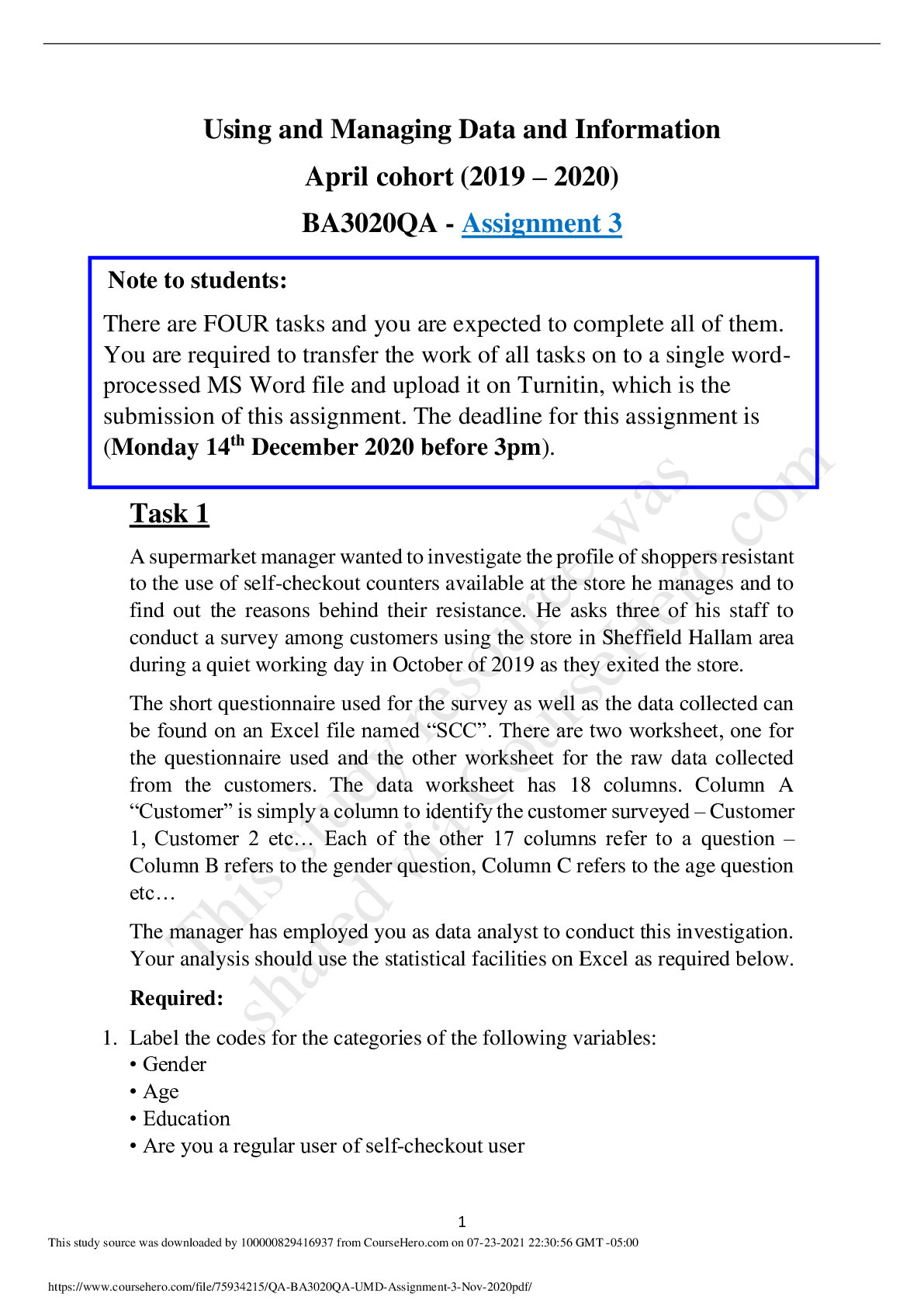
Telecommunication and Information Technology > Research Paper > Defense Information School - VPD 101JGED_paper_8773d2ec2a4fd5426728f95dc8928acb (All)
Defense Information School - VPD 101JGED_paper_8773d2ec2a4fd5426728f95dc8928acb
Document Content and Description Below
Last updated: 3 years ago
Preview 1 out of 5 pages
Instant download

Buy this Document to get the Full Access Instantly
Provided by Students Who Aced it
We Verify Document Content to Gurantee Accuracy
Reviews( 0 )
Document information
Connected school, study & course
About the document
Uploaded On
Mar 27, 2021
Number of pages
5
Written in
All

Additional information
This document has been written for:
Uploaded
Mar 27, 2021
Downloads
0
Views
189
Topic Tags
Recommended For You
Get more on Research Paper »
TEST BANK for Living Theatre A History of Theatre 7th Edition...
APCO Telecommunicator Test 2025/ 2026 Complete Test Bank and S...
COMPLETE TEST BANK For Business Data Communications and Networ...
NCLEX RN Versions 1 -12 With 850 Questions And Answers/Rationa...
Solution Manual for Responsive Web Design with HTML 5 & CSS, 9...


University of Phoenix - QNT 561: FINAL EXAM_Latest Guide. Alr...


Case Solutions/ Notes for Innovate LLP Legal Dilemmas in the S...

Case Solutions/ Notes for HARLEY-DAVIDSON MOTOR CO. ENTERPRISE...

.png)
IFSM 461: Systems Analysis and Design Precision Electronic Par...
.png)


.png)