NURSING > Text Book Notes > University of North Carolina, Charlotte - LBST 2212Ake-SPARKNOTES (All)
University of North Carolina, Charlotte - LBST 2212Ake-SPARKNOTES
Document Content and Description Below
Last updated: 4 years ago
Preview 1 out of 18 pages
Instant download

Buy this Document to get the Full Access Instantly
Provided by Students Who Aced it
We Verify Document Content to Gurantee Accuracy
Reviews( 0 )
Document information
Connected school, study & course
About the document
Uploaded On
Mar 27, 2021
Number of pages
18
Written in
All

Additional information
This document has been written for:
Uploaded
Mar 27, 2021
Downloads
0
Views
168
Topic Tags
Recommended For You
Get more on Text Book Notes »
HESI A2 REVIEW Anatomy and Physiology, HESI A2 Science, HESI A...
TEST BANK for ROACHS INTRODUCTORY CLINICAL PHARMACOLOGY, 11TH...
Test Bank For Roachs Introductory Clinical Pharmacology 11th...
Test bank For Varcarolis' Foundations of Psychiatric-Mental He...
Test Bank for Role Development in Professional Nursing Practic...
TEST BANK for Essentials for Nursing Practice, 9th Edition by...

Basic Geriatric Nursing, 8th Edition By Patricia Williams [PDF...
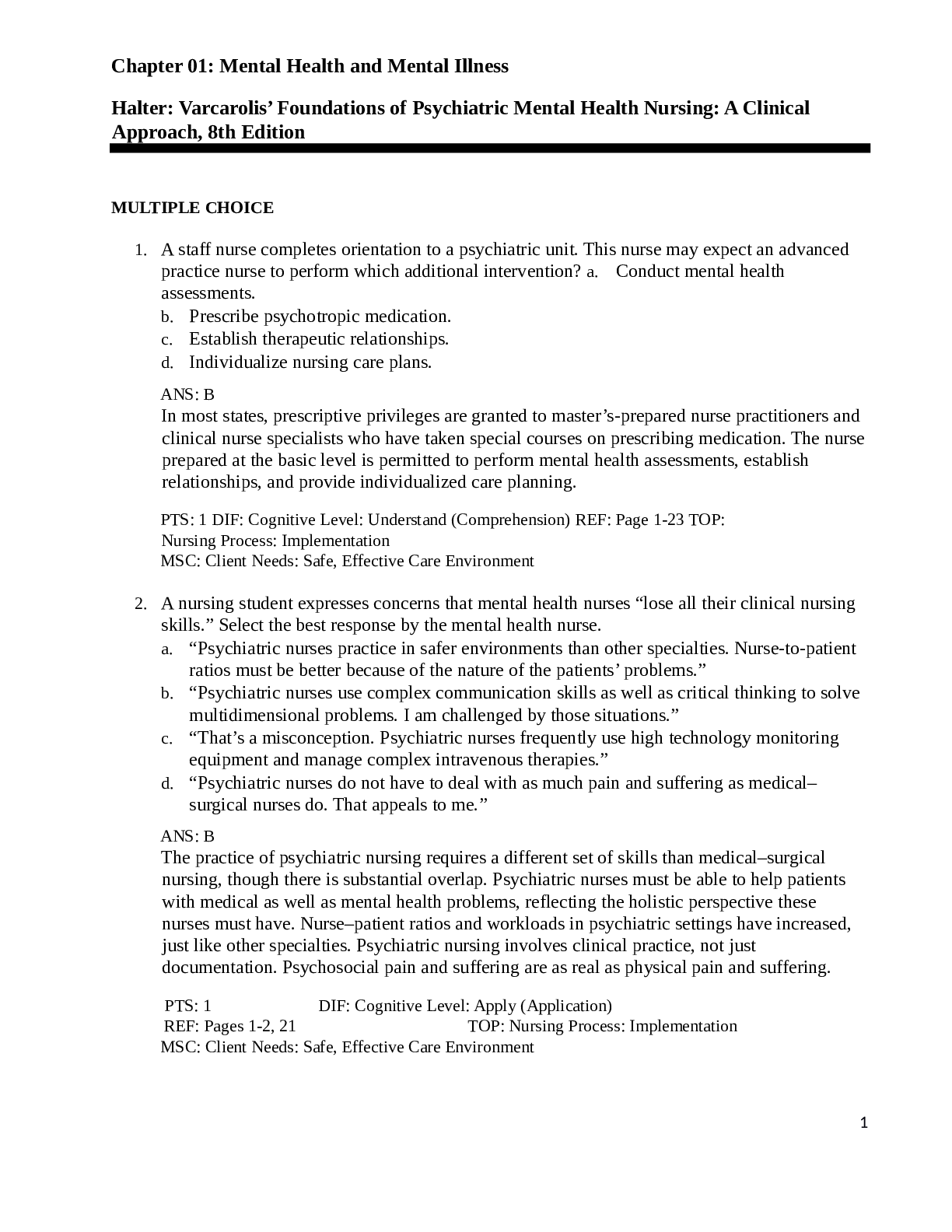
Mental Health and Mental Illness Foundations of Psychiatric Me...
Gloria Leugers, a 37-year-old female, comes to see Dr. Lewis w...
Lippincott Certification Review Medical-Surgical Nursing 6th...

Lehne's Pharmacology for Nursing Care 12th Edition By Jacque...
Legal & Ethical Issues in Nursing 7th Edition By Ginny Wacke...
Instructor Manual(Lecture Notes Only) for Principles of Pediat...
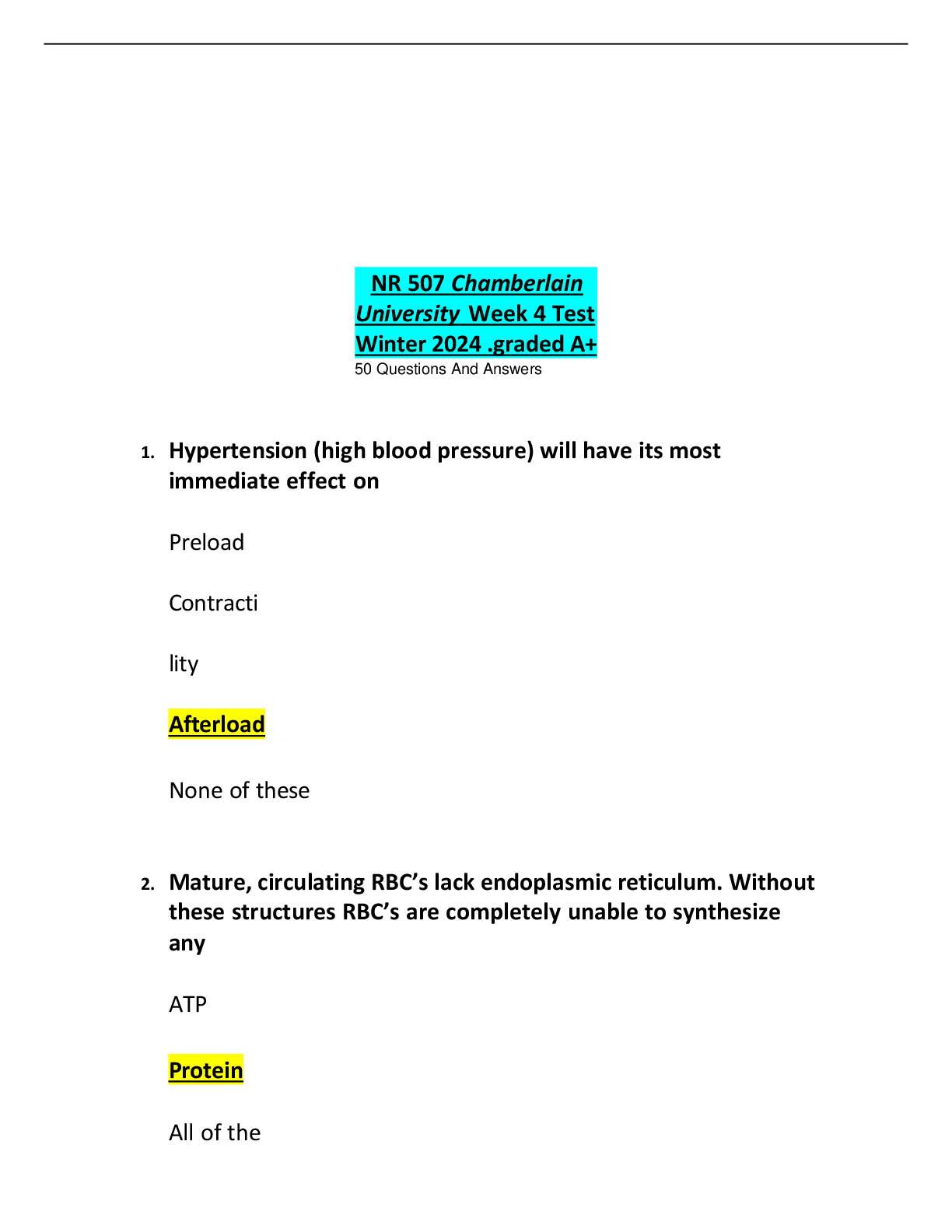
NR 507 Advanced Pathophysiology (NR-507) Week 4 Midterm Exam P...